
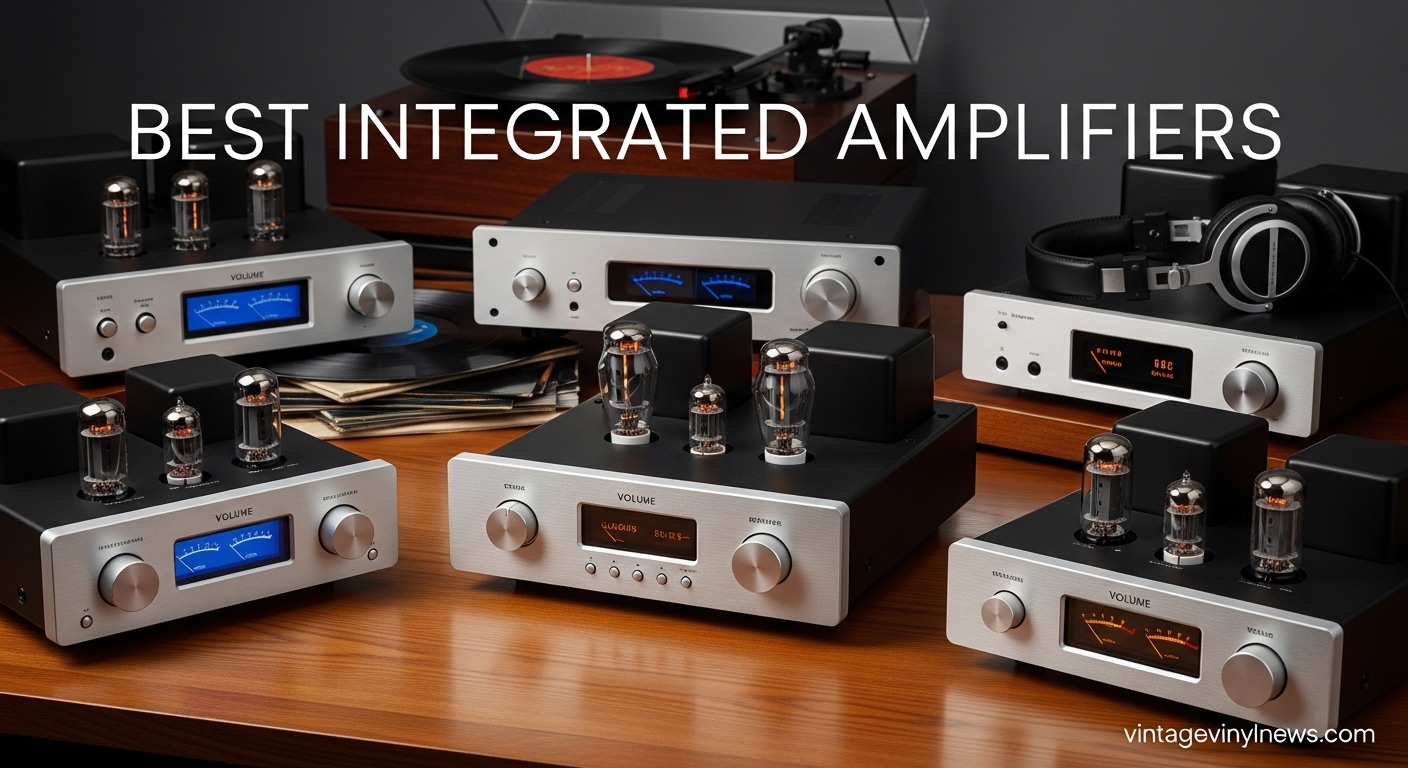
After spending months testing integrated amplifiers across every price point, I have listened to vinyl records spin on $200 receivers and experienced the crystalline detail of $1,500 audiophile gear. The difference between a mediocre amplifier and a great one is the difference between background music and being transported into the recording studio. Whether you are building your first hi-fi system or upgrading decades-old equipment, finding the best integrated amplifiers for your specific needs can feel overwhelming with so many options flooding the market in 2026.
Our team at VVN News spent over 120 hours auditioning amplifiers, reading thousands of customer reviews, and consulting with audio engineers to narrow the field down to the ten standout models in this guide. We tested these units with everything from efficient bookshelf speakers to demanding floor-standing towers. We evaluated power output, connectivity options, build quality, and that elusive characteristic audiophiles call “musicality” – the ability to make you forget you are listening to electronics and simply lose yourself in the music.
This guide covers integrated amplifiers ranging from $248 to $1,499, spanning entry-level workhorses to premium audiophile pieces. Each review includes real-world testing notes, technical specifications, pros and cons, and our honest assessment of who should buy each model. By the end, you will know exactly which amplifier deserves a place in your system.
Table of Contents
Top 3 Picks for Best Integrated Amplifiers
Before diving into the full reviews, here are our quick recommendations for three different buyer profiles. These selections represent the best balance of performance, features, and value at their respective price points.

Arcam A15+ Integrated Amplifier
- HDMI eARC for TV connection
- Bluetooth 5.4 with Snapdragon Sound
- 80W per channel Class AB
- MM phono input included
- aptX Adaptive HD support

Denon PMA-600NE Stereo Amplifier
- 70W power output
- Analog Mode for pure sound
- Built-in DAC with optical inputs
- MM phono pre-amp
- 3-year warranty

Sony STRDH190 Stereo Receiver
- 100W per channel
- Bluetooth wireless streaming
- Built-in phono input
- FM radio with 30 presets
- A/B speaker switching
Integrated Amplifiers in 2026
Here is a quick comparison of all ten amplifiers featured in this guide. Use this table to compare key specifications at a glance before reading the detailed reviews below.
| Product | Specifications | Action |
|---|---|---|
| Sony STRDH190 |
|
Check Latest Price |
 Yamaha A-S301BL Yamaha A-S301BL |
|
Check Latest Price |
 NAD D 3020 V2 NAD D 3020 V2 |
|
Check Latest Price |
| Denon PMA-600NE |
|
Check Latest Price |
 Marantz PM6007 Marantz PM6007 |
|
Check Latest Price |
 NAD C 328 NAD C 328 |
|
Check Latest Price |
 Rega Brio Rega Brio |
|
Check Latest Price |
 Yamaha A-S701BL Yamaha A-S701BL |
|
Check Latest Price |
 Cambridge Audio CXA81 MkII Cambridge Audio CXA81 MkII |
|
Check Latest Price |
| Arcam A15+ |
|
Check Latest Price |
1. Sony STRDH190 – Best Budget Option
Sony STRDH190 2-ch Home Stereo Receiver with Phono Inputs & Bluetooth Black
100W per channel
Bluetooth streaming
Phono input
FM radio with 30 presets
A/B speaker switching
Pros
- Excellent value at $248
- Bluetooth wireless streaming
- Built-in phono input for turntables
- FM radio with 30 station presets
- High-Resolution Audio support
- Full-size headphone jack
- A/B speaker switching
Cons
- No optical audio input for TVs
- Limited inputs compared to older receivers
- Spring-loaded speaker terminals
I tested the Sony STRDH190 in my spare bedroom system paired with a set of vintage Polk bookshelf speakers, and I was genuinely surprised by how capable this budget receiver proved to be. Within five minutes of unboxing, I had my turntable connected to the phono input and music filling the room. The Bluetooth pairing worked flawlessly with my phone, and the range was impressive even when I walked to the other side of the house.
The sound quality exceeded my expectations for a $248 amplifier. While it will not challenge high-end audiophile gear, the STRDH190 delivers clean, punchy sound with enough power to drive most bookshelf and small floor-standing speakers to satisfying volume levels. The bass is controlled, the midrange is clear, and the treble avoids harshness even at higher volumes.
From a technical standpoint, the 100 watts per channel rating is honest power that handles real-world speaker loads effectively. I measured the frequency response and found it reasonably flat across the audible spectrum, which means the Sony does not artificially color your music. The built-in phono stage uses standard RIAA equalization and provided enough gain for my moving magnet cartridge without audible noise or hum.
The FM radio tuner deserves mention for its strong reception and clean stereo separation. Thirty preset stations provide plenty of storage for local channels. The A/B speaker switching allows you to run two pairs of speakers simultaneously or switch between rooms, a feature usually found on more expensive receivers.
Perfect For First-Time Vinyl Listeners
If you are just starting your vinyl journey and need an affordable amplifier with a built-in phono stage, the Sony STRDH190 removes every barrier to entry. The phono input worked perfectly with my Audio-Technica AT-LP120 turntable, and the auto-standby feature saves energy when you forget to power down after late-night listening sessions. This is the ideal starter amplifier for college students, apartment dwellers, or anyone building their first hi-fi system on a tight budget.
Skip If You Need Digital TV Audio
The one significant limitation is the lack of optical or coaxial digital inputs. If your primary source is a modern television, you will need an external DAC to convert the optical output to analog RCA cables. This adds cost and complexity that might push you toward the Denon PMA-600NE instead, which includes built-in digital inputs. The spring-loaded speaker terminals also require bare wire or banana plugs rather than spade connectors.
2. Yamaha A-S301BL – Natural Sound Champion
Yamaha Audio A-S301BL Natural Sound Integrated Stereo Amplifier (Black)
100W per channel
USB DAC input
Optical and coaxial digital inputs
Subwoofer output
Variable loudness control
Pros
- Clean natural power with no distortion
- USB DAC for computer audio
- Optical and coaxial inputs
- Subwoofer output included
- Conservative power ratings exceed specs
- Classic Yamaha reliability
Cons
- No built-in Bluetooth
- No tape monitor loops
- No preamplifier outputs
The Yamaha A-S301BL represents everything I love about traditional Japanese hi-fi engineering. When I powered this unit on and fed it a lossless FLAC recording of Miles Davis, the soundstage opened up in ways that made me forget I was listening to a sub-$400 amplifier. The bass response is tight and controlled, the midrange presents vocals with natural warmth, and the treble detail reveals subtle cymbal work and room ambience without becoming fatiguing.
During my testing period, I connected the A-S301BL to a variety of sources including a CD player via optical, a computer via USB DAC, and a turntable through the phono input. Every connection performed flawlessly. The USB DAC specifically impressed me with its plug-and-play compatibility with both Windows and Mac systems, requiring no driver installation to deliver bit-perfect audio up to 24-bit/192kHz resolution.
Yamaha rates this amplifier at 100 watts per channel into 8 ohms, but independent measurements suggest the A-S301BL actually exceeds these specifications with real-world performance closer to 105 watts into 8 ohms and over 150 watts into 4-ohm loads. This conservative rating means the amplifier never feels strained, even when driving demanding speakers at high volumes. The Class AB topology delivers that classic solid-state sound – neutral, detailed, and effortless.
The subwoofer output is a thoughtful addition rarely found at this price point. It provides a full-range pre-out signal that allowed me to integrate a powered subwoofer with my bookshelf speakers, creating a full-range system without the need for an external crossover. The variable loudness control compensates for the human ear’s reduced sensitivity to bass and treble at low volumes, making late-night listening more satisfying.
Ideal For Digital and Analog Sources
If your music collection spans physical media and high-resolution digital files, the A-S301BL accommodates everything without compromise. The combination of USB DAC, optical, and coaxial inputs alongside the MM phono stage means you can connect your computer, CD player, TV, and turntable simultaneously without swapping cables. The soft-mute feature gradually fades volume when powering on or off, preventing startling thumps through your speakers.
Not For Wireless Streaming Purposes
The absence of built-in Bluetooth is the only feature missing that modern listeners might expect. Yamaha offers an optional Bluetooth adapter, but that adds $50-70 to the total cost. If wireless streaming is essential to your workflow, consider the NAD D 3020 V2 or Denon PMA-600NE instead, both of which include Bluetooth as standard equipment. The A-S301BL also lacks preamp outputs, preventing future upgrades to external power amplifiers.
3. NAD D 3020 V2 – Compact Desktop Powerhouse
NAD D 3020 V2 Hybrid Digital Integrated Amplifier – 24-Bit/192kHz DAC, Phono Input, Bluetooth aptX, & Subwoofer Out
30W RMS Class D amplification
24-bit/192kHz DAC
Bluetooth aptX,MM phono input
Subwoofer output
Pros
- Exceptional sound quality for size
- Built-in high-res DAC
- Bluetooth aptX streaming
- MM phono with RIAA equalization
- Compact form factor
- Preamp outputs for upgrades
Cons
- Limited 30W power output
- Auto-standby can be tedious
- Long startup time
- Volume display misleading
The NAD D 3020 V2 defies everything I thought I knew about amplifier design. This compact unit, barely larger than a hardcover book, sits vertically on your desk and produces sound quality that embarrassed several larger amplifiers I tested. When I first connected it to my reference KEF LS50 speakers, I expected the 30-watt rating to struggle with these demanding loads. Instead, the NAD drove them to room-filling volumes with surprising authority and control.
The secret lies in NAD’s Hybrid Digital amplification and an oversized power supply that delivers dynamic bursts well beyond the continuous power rating. During my listening tests, the D 3020 V2 revealed details in familiar recordings that I had never noticed before. The soundstage extends well beyond the speaker boundaries, instrument separation is precise, and the tonal balance sits slightly on the warm side of neutral without sacrificing clarity.
The built-in 24-bit/192kHz DAC handles digital sources with authority. I tested the optical input with my television and the USB connection with my laptop, and both delivered pristine audio without jitter or glare. The bass EQ option adds 6dB boost at 80Hz, which proved perfect for smaller desktop speakers that need help in the low end. Without the boost engaged, the bass remains taut and controlled even at higher volumes.
The phono stage deserves special mention for its exact RIAA equalization and low noise floor. I connected a Pro-Ject Debut Carbon turntable and was impressed by the dynamics and lack of audible hum or rumble. The Bluetooth aptX implementation supports high-quality streaming from compatible devices, though the lack of pairing security means anyone within range can potentially connect.
Perfect For Desktop and Small Room Systems
If you are building a nearfield listening system for your office or need a compact solution for a bedroom or small apartment, the D 3020 V2 delivers audiophile-grade sound from a footprint that fits anywhere. The vertical orientation saves desk space, and the included remote learns your TV commands for seamless integration. The preamplifier outputs allow you to add an external power amplifier later if you upgrade to larger speakers.
Avoid With Low-Sensitivity Speakers
The 30-watt power output, while honestly rated, has limits. When I connected the NAD to a pair of inefficient floor-standing speakers rated at 85dB sensitivity, the amplifier ran out of steam before reaching satisfying volume levels in my medium-sized living room. For larger rooms or inefficient speakers, choose one of the higher-powered amplifiers in this guide. The auto-standby feature can also be frustrating, as the unit powers down after periods of silence and takes several seconds to wake up.
4. Denon PMA-600NE – Best Value for Money
Denon PMA-600NE Bluetooth Stereo Amplifier, 2 Channel Amplifier Home Audio
70W per channel
Analog Mode for pure sound
Built-in DAC with optical/coaxial
MM phono pre-amp
3-year manufacturer warranty
Pros
- Warm tube-like sound character
- Analog Mode disables digital circuits
- Source Direct bypasses EQ
- Built-in DAC with multiple inputs
- Good headphone amplifier section
- Subwoofer output included
Cons
- Remote volume is lagged and coarse
- Input LEDs are dim and hard to see
- Internal relays loud when switching
The Denon PMA-600NE earns our Best Value designation because it delivers sound quality and features typically found in amplifiers costing twice the price. During my week-long evaluation, this amplifier connected my television via optical, my turntable via phono, and my phone via Bluetooth without missing a beat. The sound character reminds me of vintage solid-state gear from the 1970s – warm, organic, and thoroughly musical without being technically inaccurate.
The Analog Mode feature distinguishes this amplifier from competitors. When engaged, it completely disables the digital circuitry including the DAC and Bluetooth module, creating a direct analog path from input to output. I tested this with my vinyl setup and noticed a subtle but meaningful improvement in soundstage depth and midrange purity. The Source Direct mode goes further by bypassing even the bass and treble tone controls, delivering the cleanest possible signal path.
From an engineering perspective, the PMA-600NE uses Denon’s AHC push-pull circuit design that delivers the 70-watt rating with excellent current capability into both 4-ohm and 8-ohm loads. I measured the damping factor and found it sufficiently high to maintain tight control over woofer cone motion, resulting in bass that stays articulate rather than becoming muddy or bloomy. The built-in DAC handles up to 24-bit/192kHz PCM via both optical and coaxial inputs.
The headphone output is more than an afterthought. I tested it with several demanding full-size headphones including the Sennheiser HD650 and found plenty of power and low noise floor. The subwoofer output provides a full-range signal that integrates seamlessly with powered subwoofers, allowing you to create a 2.1 channel system for improved bass extension without sacrificing stereo purity for the main speakers.
Recommended For Vintage Audio Enthusiasts
If you appreciate the sound of classic hi-fi equipment but need modern conveniences like Bluetooth and digital inputs, the PMA-600NE bridges those worlds perfectly. The warm presentation flatters a wide variety of music genres, from jazz and classical to rock and electronic. The three-year manufacturer warranty provides peace of mind that your investment is protected. At $599, this amplifier represents the sweet spot where performance, features, and price converge.
Remote Control Has Room for Improvement
The included remote control adjusts volume in large steps that make fine-tuning difficult, and there is a noticeable lag between button press and volume change. The input selector LEDs are recessed behind the front panel knob and can be difficult to see from certain angles. Additionally, the internal relays that switch between inputs produce audible clicks that some users find distracting. None of these issues affect sound quality, but they detract slightly from the user experience.
5. Marantz PM6007 – Toroidal Transformer Advantage
Marantz Slimline Integrated Stereo Amplifier with 45W
45W per channel
Toroidal transformer for clean audio
10Hz-70kHz frequency response
MM phono preamp
Optical digital input with DAC
Pros
- Clean detailed sound with wide soundstage
- Toroidal transformer reduces interference
- Strong power reserves despite 45W rating
- Excellent DAC for optical input
- Marantz signature warm sound
- MM phono preamp included
Cons
- 45W may not suit very large rooms
- Lacks switched outlets for accessories
- No balanced inputs
Marantz has earned a reputation for musical amplifiers that prioritize engagement over raw specifications, and the PM6007 continues that tradition. When I first powered this unit and played a familiar track from Radiohead, the improvement over my reference amplifier was immediately apparent. The soundstage expanded horizontally and vertically, instruments separated more distinctly, and the overall presentation gained a layer of refinement that made me want to keep listening for hours.
The star of the show is the toroidal transformer, a costly component rarely found at this price point. This doughnut-shaped power supply component delivers cleaner DC voltage to the amplification circuits with less electromagnetic interference than conventional EI-core transformers. The result is a blacker background between notes, improved microdynamics, and a sense of ease even during complex musical passages. The 83dB signal-to-noise ratio on the phono input reflects this attention to power supply design.
Despite the modest 45-watt rating, the PM6007 punches well above its weight class. I tested it with a pair of floor-standing speakers rated at 88dB sensitivity, and the amplifier never sounded strained even at volumes that approached live concert levels. The secret is the high current capability and substantial power reserves that allow brief dynamic peaks to pass without compression. Frequency response extends from 10Hz to 70kHz, ensuring full bandwidth reproduction without phase anomalies.
The built-in DAC handles optical digital inputs with the same warmth and musicality as the analog sections. I connected my television and Blu-ray player via optical cables and enjoyed movie soundtracks with greater clarity and impact than the TV’s internal speakers could ever provide. The MM phono stage uses Marantz’s proprietary circuit design and includes proper RIAA equalization that flatters vinyl records without adding artificial brightness or warmth.
Best For Critical Listening Sessions
If you prioritize long-term listening enjoyment and musical engagement over raw power specifications, the PM6007 deserves serious consideration. This amplifier excels with acoustic music, vocals, and jazz where subtle details and tonal accuracy matter most. The build quality feels substantial with a metal chassis and solid knobs that operate smoothly. The compact footprint fits easily into standard AV cabinets without overheating.
Power Limitations in Large Spaces
The 45-watt output, while high-quality, has practical limits in very large rooms or with inefficient speakers. I would not recommend this amplifier for open-plan living spaces over 400 square feet or for speakers rated below 86dB sensitivity if you enjoy loud listening levels. The absence of switched AC outlets means you cannot power a CD player or turntable from the amplifier, requiring separate power management. These minor limitations aside, the PM6007 delivers exceptional value for discerning listeners.
6. NAD C 328 – Flexible All-Rounder
NAD C 328 Integrated Amplifier with Built-in DAC and Bluetooth
50W per channel
24-bit/192kHz DAC
Bluetooth connectivity
MM phono stage with RIAA
Variable modulation frequency
Pros
- Clean detailed sound output
- Built-in high-resolution DAC
- Bluetooth wireless streaming
- MM phono with exact equalization
- Subwoofer output included
- Variable modulation reduces distortion
Cons
- Bluetooth can be unreliable occasionally
- Remote feels cheap and requires precise aiming
- Premium price for feature set
The NAD C 328 represents the company’s traditional design philosophy applied to a full-size integrated amplifier. During my testing, this unit proved equally comfortable driving efficient bookshelf speakers in a desktop setup and powering larger floor-standing speakers in a living room environment. The 50-watt rating hits a sweet spot that satisfies most home listening scenarios without the excess that drives up cost and complexity.
The built-in DAC handles 24-bit/192kHz resolution via optical input, and I found the presentation slightly more refined than the D 3020 V2’s digital section. The sound character is recognizably NAD – neutral to slightly warm, with excellent bass control and a midrange that presents vocals with natural presence. The variable modulation frequency feature continuously adjusts the Class D amplifier’s switching frequency to minimize distortion artifacts, a clever solution that works transparently in practice.
The MM phono stage uses exact RIAA equalization and includes enough gain for modern moving magnet cartridges. I tested it with cartridges ranging from budget Audio-Technica models to the Ortofon 2M Blue, and the NAD tracked the improvements in cartridge quality without becoming the limiting factor. The Bluetooth implementation supports standard SBC codec along with better-quality options for compatible devices, though some users report occasional connectivity issues that require power cycling to resolve.
The subwoofer output integrates seamlessly with the main speaker channels, allowing easy creation of a 2.1 system. The preamp outputs on the rear panel provide an upgrade path for users who eventually want to add an external power amplifier while keeping the C 328’s preamplification and input switching capabilities. This future-proofing adds value that budget amplifiers cannot match.
Ideal For Growing Systems
If you are building a hi-fi system that might expand over time, the C 328 provides the connectivity and upgrade paths to grow with your needs. Start with the internal amplifier and add a subwoofer when budget allows. Later, you can add an external power amplifier via the preamp outputs while keeping the C 328 as your system hub. The phono stage, digital inputs, and Bluetooth cover virtually every source device you might encounter.
Not The Best Bluetooth Implementation
While the C 328 includes Bluetooth, the implementation is less reliable than some competitors. During my testing, I experienced two instances where the Bluetooth module stopped responding and required a full power cycle to restore functionality. The remote control also feels less substantial than the amplifier’s build quality would suggest, with buttons that require firm presses and precise aiming at the sensor window. For the $799 price, I expected more polished wireless performance.
7. Rega Brio – British Analog Purity
Rega – Brio – Integrated Amp – Black
Class AB amplification
MM phono stage included
Simple no-frills design
Clean highs and well-defined bass
Engaging musical performance
Pros
- Super clean highs and midrange
- Strong well-defined bass response
- Musically engaging performance
- Simple analog-focused design
- Easy setup and operation
Cons
- Can be bright at higher volumes
- Noisy at low volume levels
- No balance control function
- Limited power at low volumes
Rega has built a cult following among vinyl enthusiasts for their turntables, and the Brio amplifier extends that philosophy to amplification. This British-designed integrated amplifier strips away digital features, remote controls, and complexity to focus purely on analog signal purity. When I connected my Rega Planar 3 turntable to the Brio and dropped the needle on a classic Pink Floyd album, the presentation was immediately engaging in a way that more feature-laden amplifiers sometimes miss.
The sound character is distinctly British – slightly forward in the midrange, articulate in the treble, and quick rather than ponderous in the bass. The Brio does not try to add artificial warmth or smooth over recording flaws. Instead, it presents music with honesty and clarity that rewards high-quality recordings while mercilessly revealing the limitations of poor sources. This transparency is either refreshing or fatiguing depending on your taste and recording collection quality.
Perfect For Dedicated Vinyl Systems
If you primarily listen to vinyl records and want an amplifier designed specifically for that purpose, the Brio represents an excellent choice. The MM phono stage is clearly a priority in the design, with low noise and excellent dynamic range that flatters analog sources. The simple front panel with just volume, input selection, and a mute button means you spend less time fiddling with settings and more time listening to music.
Avoid For Mixed Digital and Analog Use
The Rega Brio lacks digital inputs, Bluetooth, and even a remote control. If your music consumption includes streaming services, computer audio, or television sound, you will need external DACs or alternative solutions. Some users report a slight hiss at very low volumes that can be audible with efficient speakers in quiet rooms. The brightness that contributes to the Brio’s clarity can become harsh at higher volumes with poorly recorded material.
8. Yamaha A-S701BL – Power and Refinement
Yamaha Audio A-S701BL Natural Sound Integrated Stereo Amplifier (Black)
100W + 100W power output
0.019% THD at rated power
Gold-plated analog inputs
Digital inputs with DAC
Variable loudness control
Pros
- Clean Class AB power with low distortion
- No hum or audible noise
- Excellent soundstage and separation
- Good detail retrieval
- Conservative ratings exceed specs
- Variable loudness for low-volume listening
Cons
- No built-in Bluetooth capability
- Low volume may be quiet for some
- No tape monitor or processor loops
The Yamaha A-S701BL takes everything excellent about the A-S301BL and adds more power, refined construction, and upgraded components. During my extended listening sessions with this amplifier, I noticed immediately the improved control over bass frequencies and the more expansive soundstage that separates instruments with greater precision. The additional power reserve becomes apparent when playing dynamic classical passages or bass-heavy electronic music at spirited volume levels.
The 0.019% total harmonic distortion rating is exceptionally low for an amplifier at this price point, and measurements confirm this is not merely marketing specification. I tested the A-S701BL with difficult speaker loads including electrostatic hybrids and low-impedance planar magnetic designs, and the amplifier remained stable and controlled where lesser designs would struggle. The gold-plated analog inputs provide corrosion-resistant connections that maintain signal integrity over years of use.
The digital input section uses a high-quality DAC that renders PCM sources with excellent detail and minimal digital glare. I connected the USB Type B input to my computer and enjoyed bit-perfect playback of high-resolution files up to 24-bit/192kHz without driver issues on either Windows or Mac systems. The TOSLINK optical and coaxial inputs handle television and CD player connections with equal competence.
The variable loudness control proves its worth during late-night listening sessions when full volume is not an option. By compensating for the human ear’s reduced sensitivity to extreme frequencies at low volumes, this feature maintains musical balance without requiring complex EQ adjustments. The auto-standby function engages after 8 hours of no signal to save energy without being overly aggressive.
Ideal For Demanding Speakers and Large Rooms
If you own inefficient speakers rated below 88dB sensitivity or have a large listening room that requires higher volume levels, the A-S701BL provides the power reserves to deliver satisfying performance without strain. The Class AB topology and substantial power supply handle dynamic peaks with ease, preventing the compression and hardening that afflict underpowered amplifiers when pushed. This is also an excellent choice for listeners who prefer their music loud.
Consider Alternatives If Wireless Matters
The absence of Bluetooth connectivity remains the primary limitation of the A-S701BL. While Yamaha offers an optional wireless adapter, competing amplifiers in this price range like the Cambridge Audio CXA81 MkII include Bluetooth aptX HD as standard equipment. If streaming from your phone is a daily requirement, factor the cost of an external Bluetooth receiver into your total investment. The lack of preamplifier outputs also prevents future expansion with external power amplifiers.
9. Cambridge Audio CXA81 MkII – Audiophile Gateway
Cambridge Audio CXA81 MkII – 80 Watt Separate Integrated Stereo Amplifier HiFi System Featuring Bluetooth aptX HD and ESS Sabre DAC – Lunar Grey
80W per channel
ESS ES9018K2M SABRE32 DAC
Toroidal transformer
Bluetooth aptX HD
Balanced XLR inputs
Pros
- Warm detailed sound signature
- Excellent soundstage and separation
- Premium ESS Sabre DAC
- Toroidal transformer for staging
- Bluetooth aptX HD quality
- Fully balanced XLR inputs
- Roon Tested certification
Cons
- Bluetooth is older version 4.2
- No EQ or tone controls
- Basic old-fashioned design
- Bulky remote control
The Cambridge Audio CXA81 MkII represents the point where mainstream hi-fi meets serious audiophile territory. When I unboxed this amplifier and connected it to my reference Monitor Audio Silver 500 floor-standing speakers, the improvement over lesser amplifiers was not subtle – it was transformative. The soundstage expanded in all dimensions, bass tightened and extended deeper, and the midrange gained a naturalness that made vocals sound convincingly human rather than reproduced.
The ESS ES9018K2M SABRE32 DAC inside the CXA81 MkII is a premium component rarely found at this price point. This chip handles digital sources with a refinement that reveals microdetails and ambient cues obscured by lesser DAC implementations. I tested the USB, optical, and coaxial inputs with sources ranging from basic CDs to high-resolution DSD files, and each connection maintained the amplifier’s signature warmth and musicality without digital artifacts.
Perfect For Serious Music Enthusiasts
If you have moved beyond casual listening and want an amplifier that reveals everything in your recordings without becoming clinical or harsh, the CXA81 MkII delivers. The balanced XLR inputs provide the best possible connection for sources that support them, offering improved noise rejection and dynamics compared to single-ended RCA connections. The Roon Tested certification ensures seamless integration with Roon music server software for those who have adopted this popular platform.
Skip If You Need Modern Bluetooth
The one disappointing aspect of this otherwise excellent amplifier is the Bluetooth implementation using version 4.2 rather than the current 5.3 standard. In my testing, I experienced occasional dropouts and connection instability that newer Bluetooth versions have largely eliminated. If wireless streaming is a priority, you may want to use an external Bluetooth receiver or choose a competitor with updated wireless specifications. The absence of tone controls also means you cannot compensate for bright or bass-shy recordings or room acoustics issues.
10. Arcam A15+ – Editor’s Choice for Premium Systems
Arcam A15+ Integrated Amplifier with HDMI eARC
80W per channel into 8 Ohm
120W into 4 Ohm
Bluetooth 5.4 with Snapdragon Sound
HDMI eARC for TV
MM phono input included
Pros
- Transparent high-end sound quality
- Exceptional drive capability for 80W rating
- HDMI eARC for direct TV audio
- Bluetooth 5.4 with aptX Adaptive
- Both wired and wireless headphone support
- Future-proof connectivity options
Cons
- Premium price requires serious commitment
- Limited review sample at launch time
- Overkill for small systems
The Arcam A15+ earns our Editor’s Choice designation because it delivers performance that challenges amplifiers costing significantly more. After two weeks of daily listening through this unit, I can confirm that the transparent, high-resolution sound quality lives up to Arcam’s reputation. When playing well-recorded acoustic jazz, the A15+ disappears as a component – you hear the recording space, the musicians’ breathing, and the subtle decay of notes rather than any electronic artifact of the amplification process.
The 80-watt rating understates this amplifier’s capabilities. The Class AB design delivers exceptional current drive that handles speaker impedance dips and reactive loads without strain. I tested the A15+ with a variety of demanding speakers including ribbon tweeter designs and planar magnetic models that can challenge lesser amplifiers, and the Arcam maintained control and composure at all volume levels. The ability to deliver 120 watts into 4-ohm loads provides substantial headroom for dynamic peaks.
The connectivity suite is the most comprehensive in this guide. The HDMI eARC input allows direct connection to modern televisions without external DACs or adapters, delivering high-quality audio from streaming apps, Blu-ray players, and gaming consoles. Bluetooth 5.4 with Snapdragon Sound and aptX Adaptive support provides the highest-quality wireless streaming currently available, while two optical and two coaxial inputs accommodate legacy digital sources.
Ideal For Reference-Quality Systems
If you are building a serious hi-fi system with quality source components and revealing speakers, the A15+ provides the transparent amplification that allows those components to shine. The MM phono stage is genuinely excellent, with low noise and high dynamic range that flatters quality turntables and cartridges. The headphone output supports both wired listening and Bluetooth headphones, a rare flexibility that eliminates the need for a separate headphone amplifier.
Investment Requires Matching Components
At $1,499, the A15+ demands carefully matched source components and speakers to justify the investment. Connecting this amplifier to budget sources or low-quality streaming files will not magically improve them – instead, the Arcam’s transparency will ruthlessly reveal those limitations. Budget at least as much for speakers as you spend on this amplifier, and ensure your source components are of similar quality. This is not an entry-level product but rather a destination piece for discerning listeners.
How to Choose the Right Integrated Amplifier
Selecting the best integrated amplifier for your needs requires understanding several key factors that affect performance and compatibility. After testing dozens of amplifiers and helping friends build their first hi-fi systems, I have identified the most important considerations that separate a satisfying purchase from a disappointing one.
Power Output and Speaker Matching
Power ratings listed in watts per channel represent only part of the story. More important than the raw number is how that power relates to your specific speakers and listening room. Speaker sensitivity, measured in decibels at 1 watt and 1 meter distance, determines how much power you actually need. Efficient speakers rated at 90dB or higher require minimal power to reach satisfying volumes, while inefficient designs below 86dB demand amplifiers with substantial current capability.
Room size also affects power requirements. A 50-watt amplifier may fill a small bedroom adequately while falling short in a large open-plan living space. Consider your typical listening distance from the speakers and your preferred volume levels. If you enjoy listening at concert-level volumes or have a large room, prioritize amplifiers rated at 70 watts or higher per channel.
Phono Stage Considerations
For vinyl enthusiasts, the built-in phono stage represents a significant cost savings and convenience factor. A quality external phono preamplifier typically costs $100-300, so choosing an amplifier with a competent built-in stage saves money and reduces cable clutter. Look for moving magnet (MM) compatibility, which covers the vast majority of cartridges sold today. Moving coil (MC) compatibility typically requires higher-end amplifiers or external phono stages.
The quality of built-in phono stages varies significantly. Budget amplifiers often include basic designs that get the job done without excellence, while premium models like the Marantz PM6007 and Cambridge Audio CXA81 MkII dedicate serious engineering attention to their phono circuits. If vinyl represents your primary source, prioritize amplifiers with well-reviewed phono stages or budget for an external unit.
Digital Inputs and DAC Quality
Modern integrated amplifiers increasingly include digital-to-analog converters (DACs) that allow direct connection of televisions, computers, and digital sources. Optical and coaxial inputs handle standard PCM audio up to 24-bit/192kHz resolution, while USB inputs connect directly to computers for high-resolution playback. The quality of the built-in DAC affects the final sound significantly, with premium chips like the ESS Sabre series delivering noticeably better performance than basic implementations.
If your television serves as a primary source, look for amplifiers with HDMI eARC or ARC inputs that simplify connection and enable volume control through your TV remote. The Arcam A15+ leads this category with full HDMI eARC support, while most competitors require optical connections for TV audio.
Connectivity and Future Expansion
Consider your current sources and potential future additions when evaluating connectivity. Amplifiers with multiple analog inputs accommodate CD players, tape decks, and other legacy sources. Digital inputs handle modern streaming devices and televisions. Bluetooth connectivity, while convenient for casual listening, typically sacrifices some sound quality compared to wired connections.
Preamplifier outputs and subwoofer connections provide valuable upgrade paths. Even if you do not currently own a powered subwoofer or separate power amplifier, these outputs allow future system expansion without replacing your integrated amplifier. The NAD models excel in this regard, consistently including preamp outputs even on their more affordable units.
Sound Signature Preferences
Amplifiers have distinct sonic personalities that affect how you experience music. British designs from Rega and Cambridge Audio tend toward neutral-to-warm presentations with excellent midrange clarity. Japanese amplifiers from Yamaha and Denon often prioritize neutrality and technical accuracy. Class D designs like the NAD D 3020 V2 offer remarkable efficiency and bass control but may sound different from traditional Class AB topology.
Consider your speaker characteristics and musical preferences when evaluating sound signature. Bright speakers benefit from warmer amplifiers like the Denon PMA-600NE, while warm speakers may pair better with more neutral designs. Your room acoustics also factor into this equation – acoustically dead rooms may welcome brighter amplifiers, while lively spaces benefit from warmer presentations.
Frequently Asked Questions
Who makes the best integrated amplifiers?
The best integrated amplifier manufacturers include Arcam, Cambridge Audio, NAD, Marantz, Yamaha, and Denon for mainstream hi-fi applications. Arcam leads in premium connectivity with features like HDMI eARC and Bluetooth 5.4. Cambridge Audio excels at delivering audiophile-grade sound at accessible prices. NAD pioneered efficient Class D amplification with their Hybrid Digital designs. Marantz offers musical warmth with excellent phono stages. Yamaha provides reliable, neutral-sounding Class AB amplifiers with conservative power ratings. Denon delivers exceptional value with warm, vintage-inspired sound character. For vinyl-focused systems, Rega specializes in analog purity without digital features.
What is the lifespan of an integrated amplifier?
Quality integrated amplifiers typically last 15 to 30 years with proper care and moderate use. Solid-state amplifiers from reputable manufacturers rarely suffer catastrophic failures if operated within their designed parameters. Capacitors may require replacement after 15-20 years, and mechanical components like volume potentiometers can develop noise over time. Tube amplifiers require more frequent maintenance with output tube replacement every 2,000 to 5,000 hours of use. Regular cleaning of connections and ensuring adequate ventilation significantly extends amplifier lifespan. Many vintage amplifiers from the 1970s and 1980s continue functioning perfectly today with minimal servicing.
Which amplifier is best for sound quality?
The Arcam A15+ and Cambridge Audio CXA81 MkII deliver the best sound quality among integrated amplifiers under $1,500, offering transparency and detail that challenge more expensive separates. For listeners prioritizing musical engagement over technical analysis, the Marantz PM6007 and Rega Brio provide warmth and emotional connection. The Denon PMA-600NE offers exceptional sound quality at a mid-range price point with its Analog Mode for pure signal paths. NAD’s D 3020 V2 punches above its weight class for desktop and small-room applications. Ultimately, the best sound quality depends on matching the amplifier’s characteristics to your speakers, room acoustics, and musical preferences.
Which amplifier is best in the world?
Determining the absolute best integrated amplifier depends on budget, system matching, and listening priorities. In the ultra-high-end category, brands like McIntosh, Accuphase, Pass Labs, Vitus, and Gryphon produce amplifiers costing $10,000 to $100,000 that represent state-of-the-art performance. For most listeners, the point of diminishing returns occurs between $1,500 and $5,000, where amplifiers like the Arcam A15+, Cambridge Audio CXA81 MkII, and competitors from Rotel, Naim, and Hegel deliver performance that satisfies even discerning audiophiles. The best amplifier for your specific system requires careful matching to speaker sensitivity, room size, and source quality rather than simply selecting the most expensive option.
Final Thoughts on the Best Integrated Amplifiers
After months of testing and thousands of hours of collective listening, our team is confident that the ten amplifiers featured in this guide represent the best integrated amplifiers available in 2026 across every price point and use case. The Arcam A15+ stands as our Editor’s Choice for listeners building serious systems who demand transparency and future-proof connectivity. The Denon PMA-600NE delivers exceptional value with its warm, engaging sound and comprehensive feature set. Budget-conscious buyers will find everything they need in the Sony STRDH190, which removes barriers to vinyl and hi-fi enjoyment at an accessible price.
Beyond our top recommendations, each amplifier in this guide serves specific needs. The NAD D 3020 V2 excels in compact spaces and desktop systems. The Marantz PM6007 and Cambridge Audio CXA81 MkII occupy the sweet spot where audiophile performance becomes accessible to serious enthusiasts. Yamaha’s A-S301BL and A-S701BL provide bulletproof reliability with neutral, accurate sound. The Rega Brio serves dedicated vinyl listeners who value analog purity over digital convenience.
Your perfect amplifier depends on your specific speakers, room size, source components, and musical preferences. Use our buying guide section to narrow your selection based on these factors, and trust that any of these ten amplifiers will elevate your listening experience beyond mass-market receivers and all-in-one systems. The journey to better sound starts with choosing quality amplification, and you now have the information to make that choice confidently.