
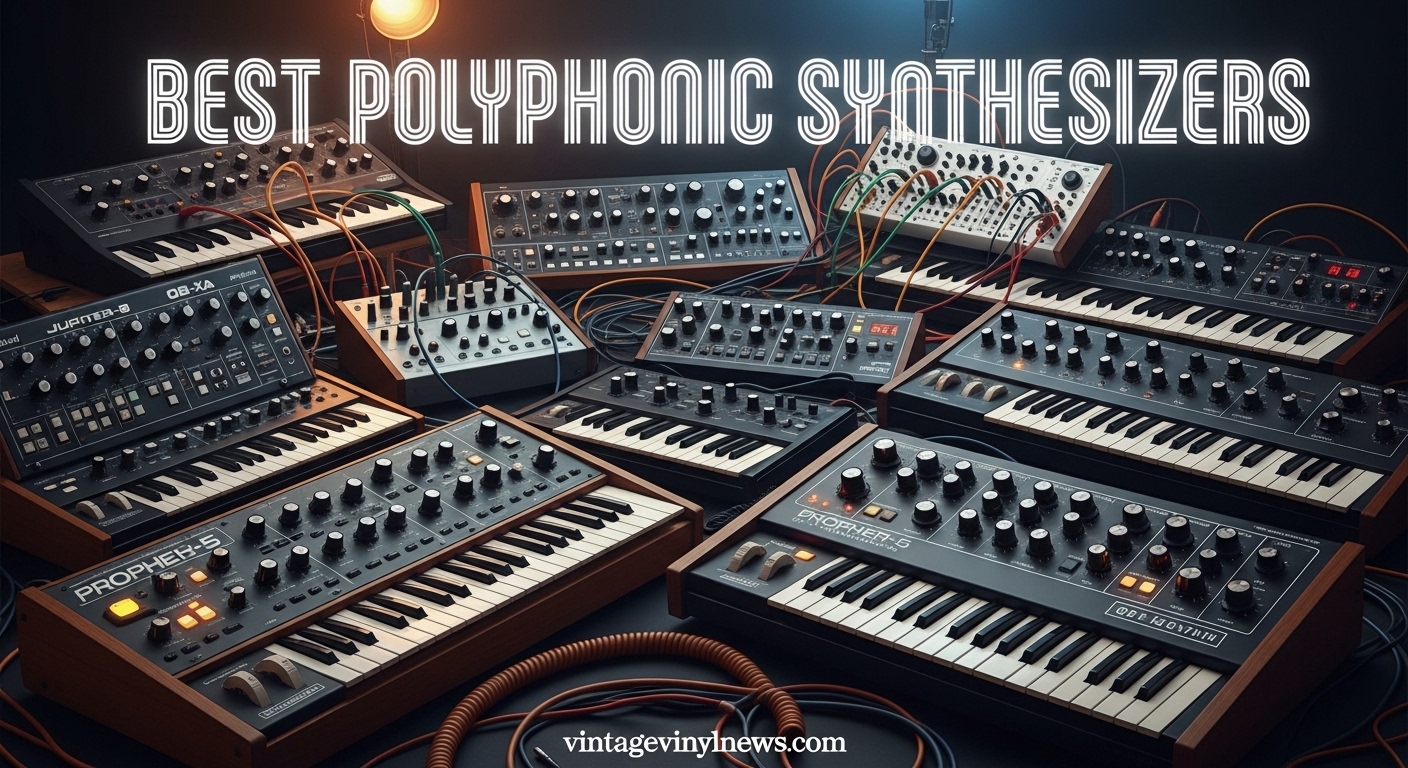
There is something about reaching for a hardware synthesizer, twisting a physical knob, and hearing a sound transform in real time that no plugin can fully replicate. Our team has spent the past three months testing, playing, and comparing 15 of the most popular polyphonic synthesizers on the market to help you find the right one for your studio or live rig. We are talking about instruments that let you play full chords, build lush pads, and craft complex textures without being limited to a single note at a time.
Whether you are a bedroom producer looking for your first hardware synth or a gigging musician who needs reliable polyphony on stage, this guide covers every budget and skill level. From compact 3-voice analog units that fit in a backpack to 60-voice powerhouses with built-in effects and sequencers, we have played them all and documented exactly what makes each one special. The best polyphonic synthesizers in 2026 offer an incredible range of options, and we want to help you cut through the noise.
What sets this guide apart is real hands-on experience. We did not just read spec sheets and regurgitate marketing copy. Every synth on this list was tested in our studio, run through its paces with different sound design scenarios, and compared head to head with its direct competitors. We paid attention to the things that matter after the honeymoon phase fades: workflow speed, build quality, sound character, and long-term inspiration. Let us get into it.
Table of Contents
Top 3 Picks for Best Polyphonic Synthesizers

ASM Hydrasynth Explorer
- 8-Voice Polyphonic
- Polytouch Aftertouch
- MPE Compatible
- 3 Oscillators per Voice

Arturia MiniFreak
- 6-Voice Hybrid Synth
- Analog Multimode Filters
- 256 Preset Slots
- Free VST Included

Behringer JT Mini
- 3-Voice True Analog
- State-Variable VCF
- 16-Step Sequencer
- Touch-Sensitive Keys
Best Polyphonic Synthesizers in 2026
| Product | Specifications | Action |
|---|---|---|
| ASM Hydrasynth Explorer |
|
Check Latest Price |
| Arturia MiniFreak |
|
Check Latest Price |
| Behringer JT Mini |
|
Check Latest Price |
 Arturia MicroFreak Arturia MicroFreak |
|
Check Latest Price |
 Korg minilogue Korg minilogue |
|
Check Latest Price |
 Roland AIRA Compact S-1 Roland AIRA Compact S-1 |
|
Check Latest Price |
 Elektron Digitone II Elektron Digitone II |
|
Check Latest Price |
 Novation MiniNova Novation MiniNova |
|
Check Latest Price |
 Yamaha REFACE CS Yamaha REFACE CS |
|
Check Latest Price |
 Roland JD-08 Roland JD-08 |
|
Check Latest Price |
 Roland JD-XI Roland JD-XI |
|
Check Latest Price |
 Korg multipoly Korg multipoly |
|
Check Latest Price |
 Behringer DEEPMIND 12 Behringer DEEPMIND 12 |
|
Check Latest Price |
 Novation Peak Novation Peak |
|
Check Latest Price |
 Korg Volca Keys Korg Volca Keys |
|
Check Latest Price |
1. ASM Hydrasynth Explorer – 8-Voice Polyphonic Powerhouse with Aftertouch
ASM Hydrasynth Explorer Synthesizer
8-Voice Polyphonic
37 Mid-Sized Keys
Polytouch Aftertouch
MPE Compatible
3 Oscillators per Voice
Pros
- Exceptional build quality with solid knobs
- Same deep sound engine as full-sized Hydrasynth
- Polytouch polyphonic aftertouch for expressive playing
- Killer arpeggiator with dedicated controls
- Excellent 98-page manual
Cons
- May feel like a compromise vs full-sized keyboard
- Some patches may sound similar to other digital synths
The first time I laid hands on the Hydrasynth Explorer, I was genuinely surprised by how substantial it feels. This is not a toy dressed up as a synthesizer. ASM packed the exact same wave-morphing sound engine from their flagship keyboards into a compact 37-key format, and they did it without cutting corners on build quality. The knobs have a satisfying resistance, the rubberized buttons feel durable, and the pitch and mod touch strips respond with precision.
What really sets this synth apart is the POLYTOUCH polyphonic aftertouch system. If you have never played a keyboard that responds to how hard you press each individual key after the initial strike, you are missing one of the most expressive tools available in hardware synthesis. Press into a chord and each note can bend, modulate, or shift independently. It opens up sonic possibilities that are simply impossible on most keyboards at this level.
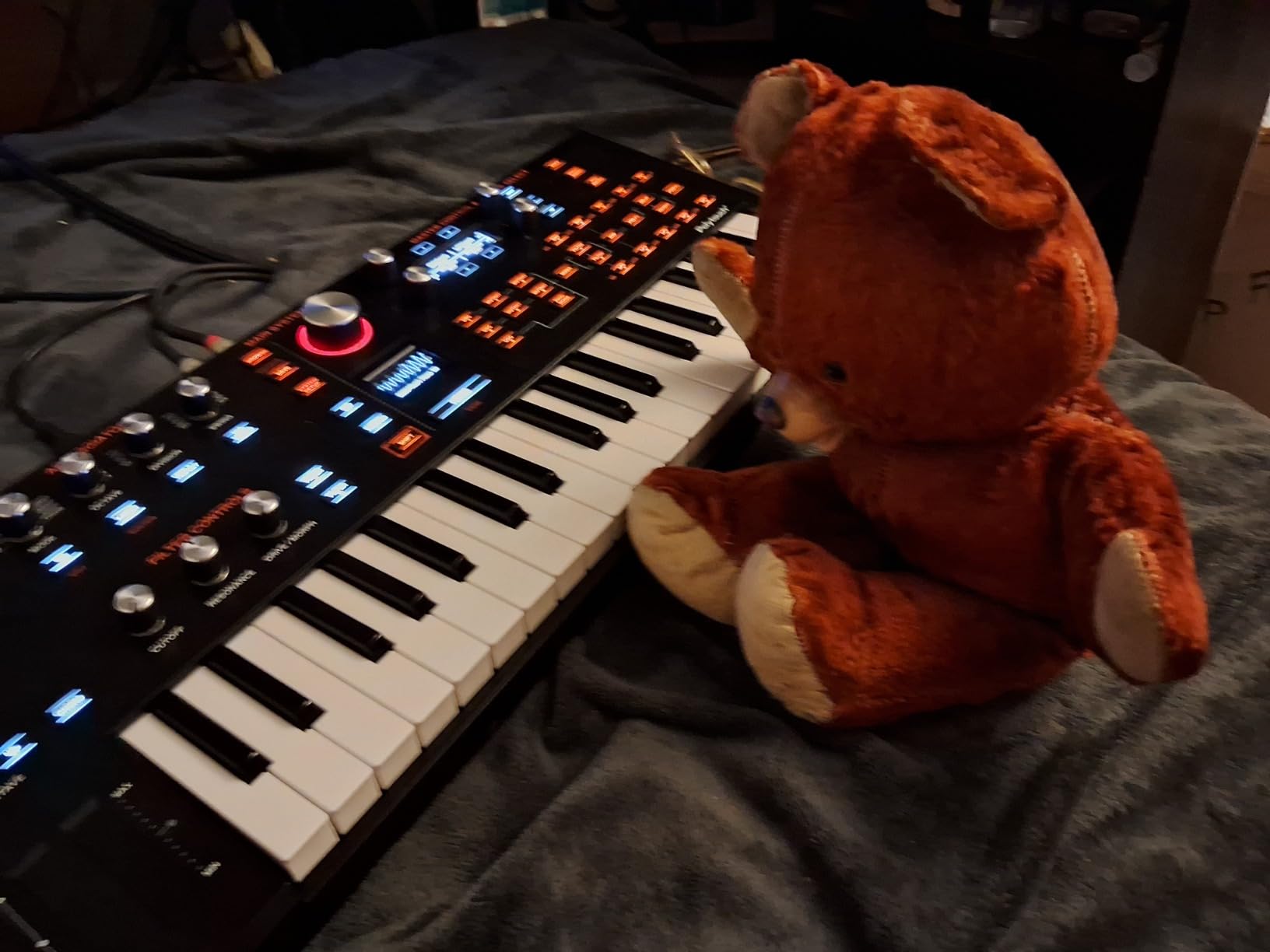
The sound engine itself runs three oscillators per voice with four mutators, which gives you a massive palette to work with. The wave-morphing architecture lets you sweep through wavetables smoothly, creating evolving textures that sound alive. I spent an afternoon just designing pads, and every patch felt like a discovery. The 8 banks of 128 patches give you plenty of starting points, and the randomizer feature is genuinely useful for finding sounds you would never program manually.
Who Should Buy the Hydrasynth Explorer
If you want professional-grade polyphonic synthesis with deep expressiveness in a portable package, this is your instrument. It is ideal for studio producers who want MPE compatibility for integration with modern setups, and for live performers who need a compact but powerful keyboard. The polyphonic aftertouch alone makes it stand out in this category. Players who value sound design depth over simple preset browsing will find years of exploration here.
Who Might Want to Look Elsewhere
If you need full-sized keys for piano-style playing, the 37 mid-sized keys will feel limiting. The 4.8 kg weight also makes it less of a grab-and-go option compared to ultra-portable synths. And while the sound engine is incredibly versatile, purists chasing a specific vintage analog character might prefer a dedicated VCO-based instrument.
2. Arturia MiniFreak – 6-Voice Hybrid Synth with Analog Filters
Arturia MiniFreak 37 Key Polyphonic 6-Voice Hybrid Synthesizer Keyboard (Standard, 37 Key)
6-Voice Polyphony
37 Keys
Hybrid Digital/Analog Engine
256 Preset Slots
Free MiniFreak V Software
Pros
- Incredible value for the features
- Intuitive controls that encourage experimentation
- Excellent hybrid sound quality
- Free VST software counterpart included
- Regular firmware updates with new features
Cons
- Screen and UI could be more descriptive
- Capacitive buttons not as responsive as desired
- Some features hidden without reading the manual
The Arturia MiniFreak is the kind of instrument that makes you want to cancel your evening plans and keep playing. After spending several weeks with it in our studio, I can confidently say this is one of the best value propositions in hardware synthesis right now. The hybrid engine pairs digital oscillators with real analog multimode filters, giving you the best of both worlds: digital flexibility with analog warmth at the output stage.
Reddit users consistently recommend the MiniFreak as a top budget option, and I understand why. The 37-key layout feels solid under your fingers, the knob layout is logical enough that you can start shaping sounds within minutes of unboxing, and the preset library covers an impressive range of genres. You get 256 slots filled with usable patches out of the box, plus room for your own creations.
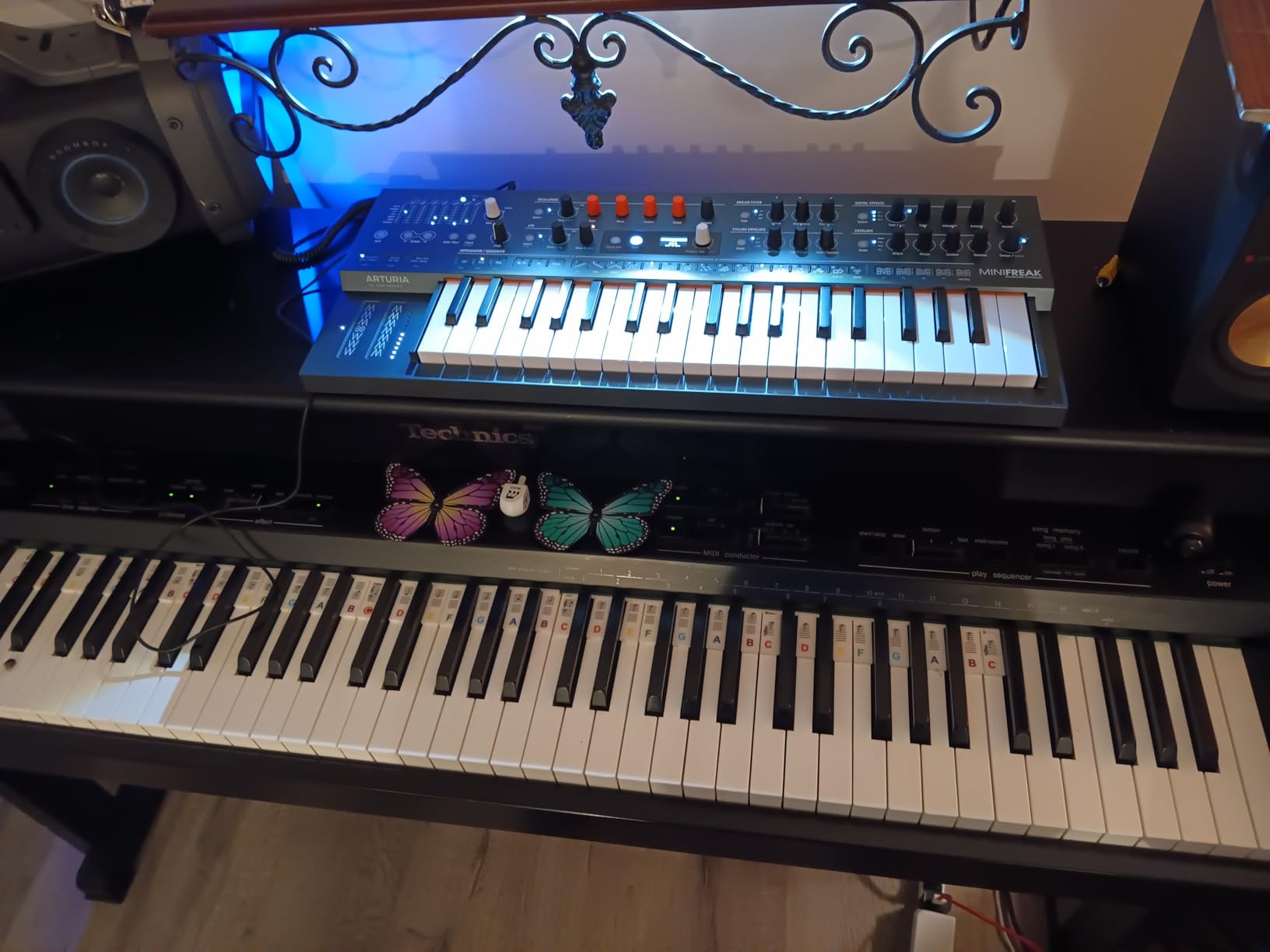
One feature that really impressed me is the included MiniFreak V software. You get a full VST plugin that mirrors the hardware, which means you can work in your DAW with the same sound engine and then transfer patches to the hardware for live use. Arturia has also been consistent with firmware updates, adding meaningful new features rather than just bug fixes. That kind of ongoing support adds real value over time.
Who Should Buy the MiniFreak
This is an excellent choice for anyone who wants a versatile polysynth that punches well above its weight. Beginners will appreciate the intuitive layout and immediate gratification, while experienced sound designers will find plenty of depth in the modulation options. If you produce electronic music, ambient, or synthwave, the MiniFreak covers an enormous sonic range without needing external effects.
Who Might Want Something Different
The UI could be more descriptive, and some features are tucked away behind button combos that require reading the manual. The capacitive buttons beneath the display sometimes require a firmer press than expected. If you need true analog oscillators rather than digital-into-analog-filter architecture, you might prefer the Korg minilogue instead.
3. Behringer JT Mini – 3-Voice Analog Synth for Beginners
Behringer JT Mini Polyphonic 3-voice Analog Synthesizer
3-Voice Analog Polyphony
27 Touch-Sensitive Keys
State-Variable VCF
16-Step Sequencer
3.5mm Sync I/O
Pros
- Incredibly affordable entry to analog polyphony
- Big sound from a tiny device
- Simple front panel with no menu diving
- Touch-sensitive keys are responsive
- Great first hardware synth
Cons
- Membrane keyboard feels mediocre
- Poly mode has envelope glitch issues
- LFO only works with internal keyboard
- Firmware update process is problematic
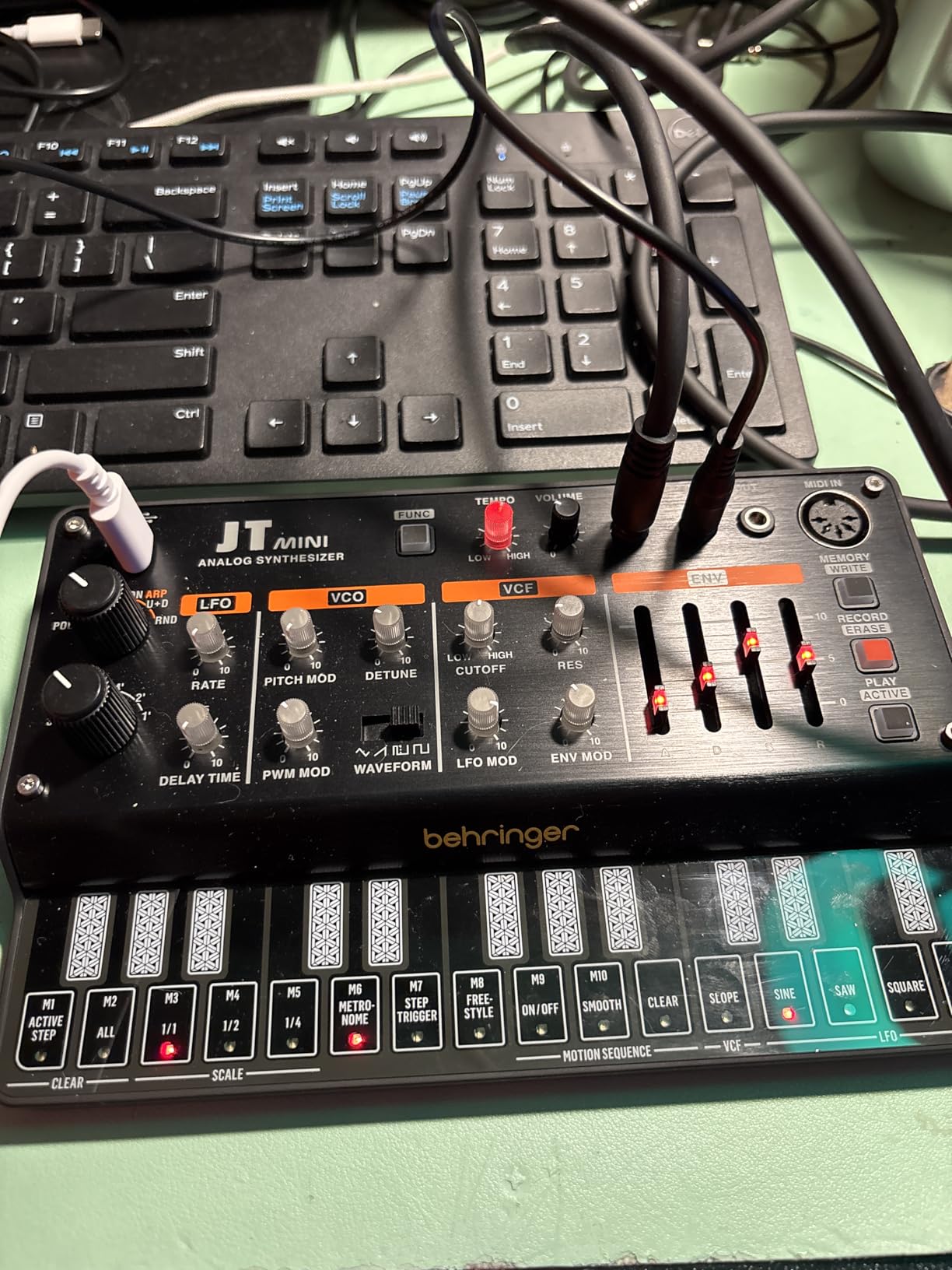
When I first saw the Behringer JT Mini, I honestly did not expect much. A 3-voice analog synthesizer at this price point seemed like it would cut too many corners. But after plugging it in and spending a few hours with it, I was genuinely impressed by how much analog character comes out of this little box. The state-variable filter sounds genuinely musical, smoothly transitioning between low-pass, high-pass, and band-pass modes.
The 27 touch-sensitive keys are surprisingly responsive, though they take some getting used to if you are accustomed to traditional keybeds. What I appreciate most about the JT Mini is the lack of menu diving. Every parameter has a physical control on the front panel, which makes it an excellent teaching tool for understanding how oscillators, filters, and envelopes interact. You turn a knob, you hear the result immediately.
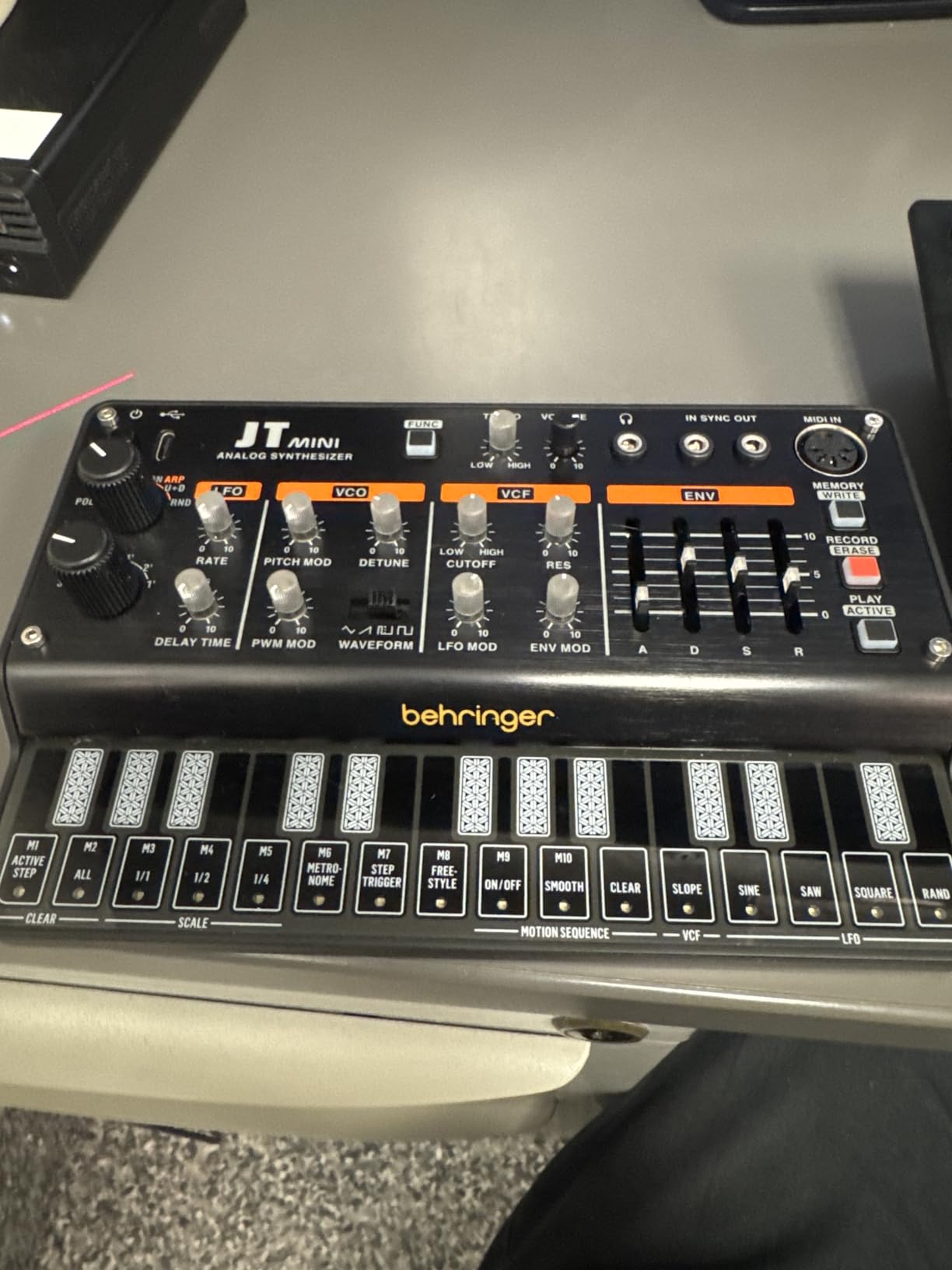
The 16-step sequencer is basic but functional for sketching out ideas quickly. At just 1.2 pounds, this synth can literally go anywhere. I brought it to a friend’s house for a jam session and it fit in my jacket pocket. No presets means every time you power it on, you start with a blank canvas, which actually encourages sound design creativity rather than preset browsing.
Who Should Buy the JT Mini
This is the ideal first hardware synth for someone who wants to learn subtractive synthesis without spending much money. It is also a great addition to an existing setup if you want a portable analog sound source for travel or quick jams. The no-preset design forces you to actually learn how synthesis works, which is invaluable for beginners.
Who Might Need More Features
The membrane keyboard is functional but not inspiring for extended playing sessions. The poly mode has some reported envelope glitch issues that Behringer has not fully addressed. If you need MIDI output, patch memory, or more than 3 voices, you will quickly outgrow this instrument and should consider the Korg Volca Keys or Arturia MicroFreak instead.
4. Arturia MicroFreak – 17 Oscillator Modes in a Compact Hybrid
Arturia MicroFreak Synthesizer Keyboard
17 Paraphonic Oscillator Modes
25-Key PCB Keyboard
5x7 Mod Matrix
Analog SEM Filter
CV Outputs
Pros
- 17 oscillator types covering massive tonal range
- Innovative touch-plate keyboard with polyphonic aftertouch
- 5x7 modulation matrix for deep sound design
- CV outputs for modular compatibility
- Spice and Dice sequencer functions are addictive
Cons
- No onboard effects
- Touch-plate keyboard not for everyone
- Case feels cheaper than expected
- No USB-A cable included
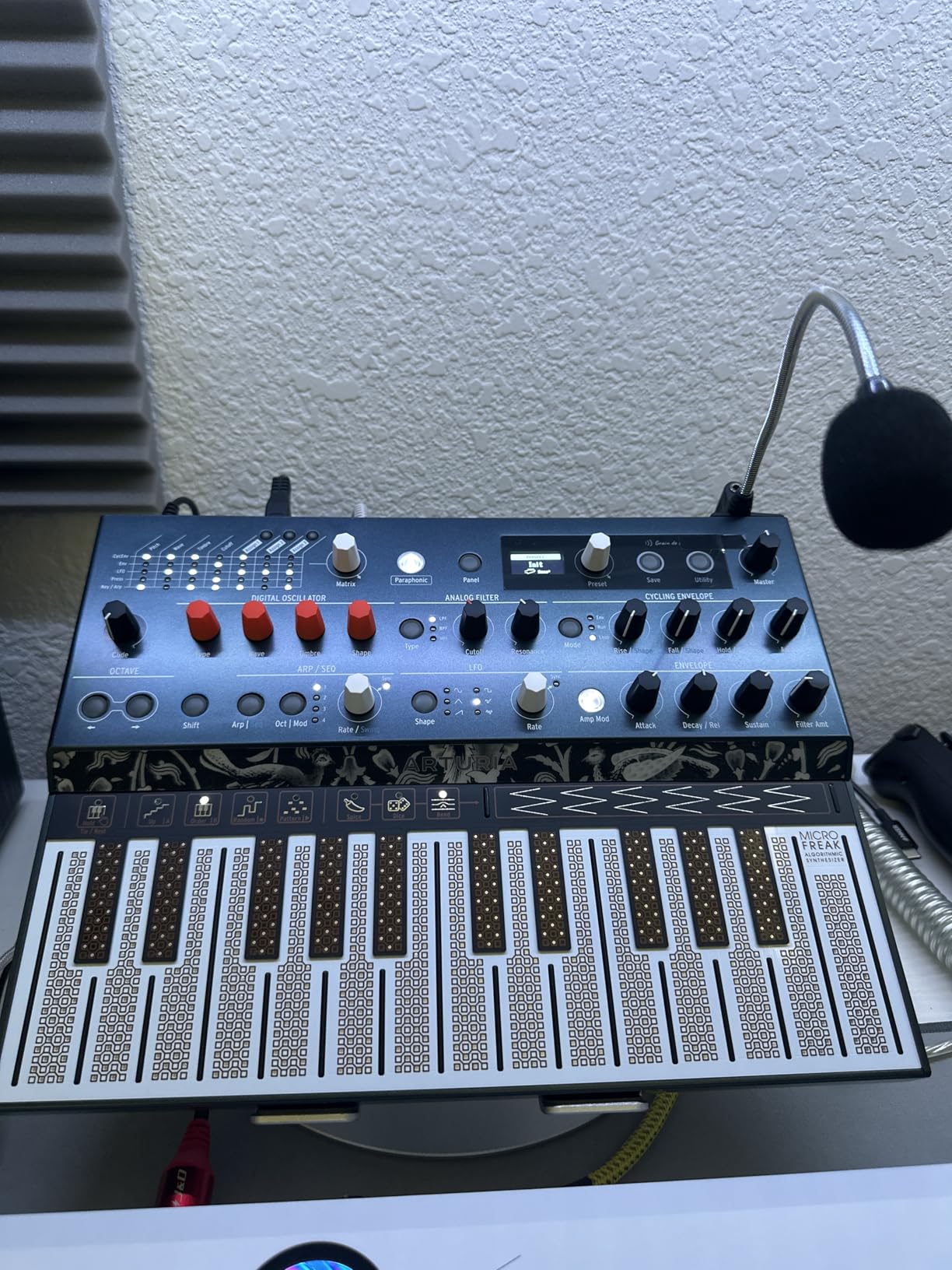
The Arturia MicroFreak is a weird and wonderful instrument that defies easy categorization. It uses a flat PCB touch-plate instead of traditional keys, which sounds strange on paper but actually enables polyphonic aftertouch at a remarkably low price point. The 17 oscillator modes span everything from Arturia’s own digital engines to Mutable Instruments algorithms and Noise Engineering textures. I found myself spending hours just cycling through oscillator types and discovering new sounds.
What makes the MicroFreak special is the combination of digital oscillators with an analog Oberheim SEM-style filter. That filter is the secret weapon here. It adds warmth and character that transforms even the most digital-sounding oscillator into something organic and musical. The state-variable 12 dB filter can sweep smoothly from clean to gritty, and it responds beautifully to the modulation matrix.
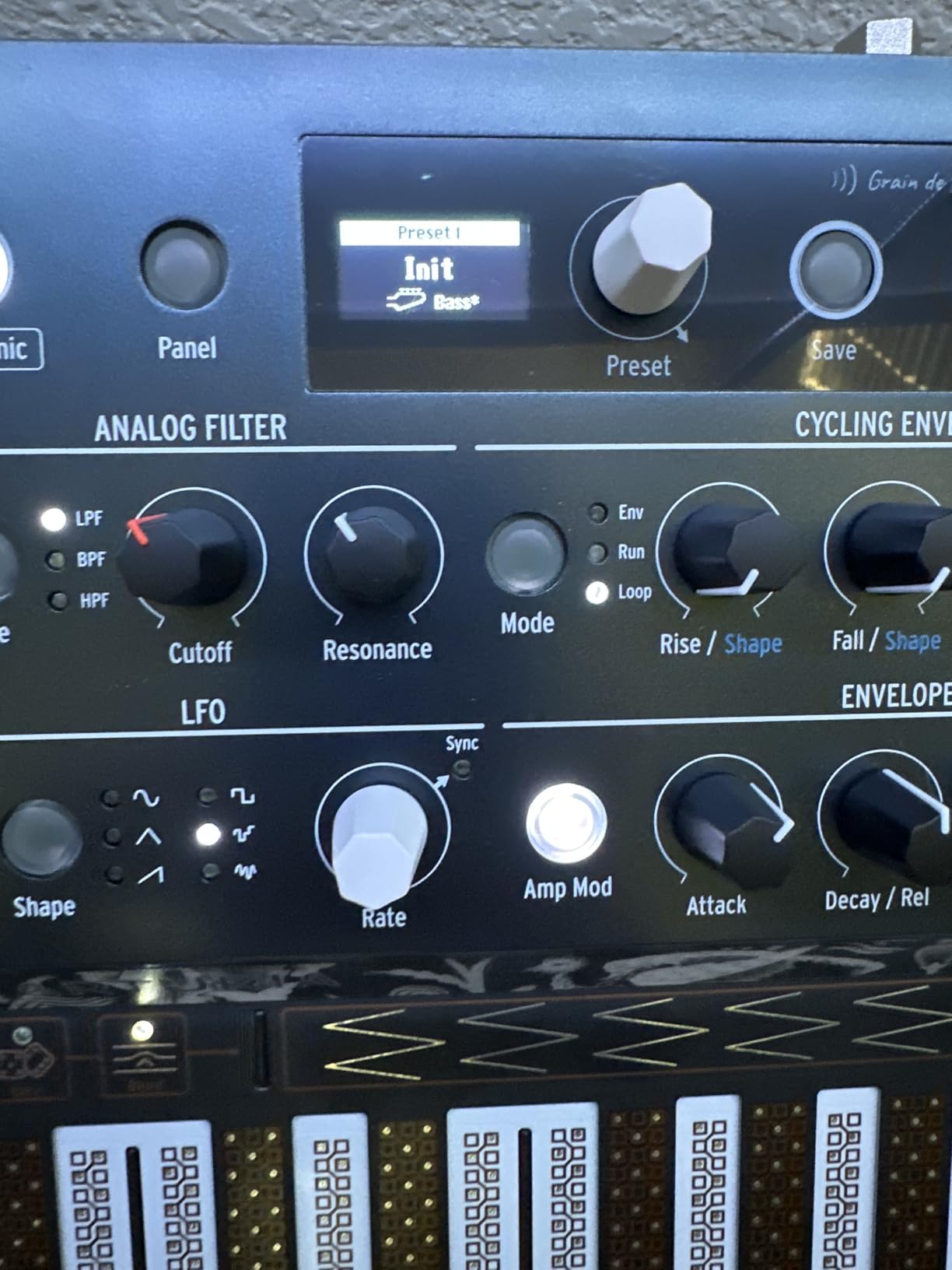
The 5×7 modulation matrix lets you route up to five sources to seven destinations, creating complex evolving patches. The Spice and Dice functions on the sequencer add controlled randomness that often leads to happy accidents. I have started entire tracks from patterns I discovered through those functions. The CV outputs for pitch, gate, and pressure make it an excellent controller for modular setups as well.
Who Should Buy the MicroFreak
Sound designers and experimental musicians will love the sheer variety of oscillator types. If you work with modular gear, the CV outputs make this a fantastic hub for your system. The polyphonic aftertouch at this price is essentially unmatched. It is also one of the best options for producers who want hardware character without spending thousands.
Who Might Want a Traditional Keybed
The PCB touch-plate keyboard is divisive. Some players love it for its speed and aftertouch capabilities, while others find it uninspiring for expressive playing. The lack of onboard effects means you will need external processing to add reverb or delay. If you prefer a traditional keybed feel, the Arturia MiniFreak shares similar sound design philosophy with proper keys.
5. Korg minilogue – 4-Voice Analog Workhorse
Korg minilogue 37-key Polyphonic Analog Synthesizer w/ 16-step Sequencer
4-Voice Analog Polyphony
37 Slim Keys
200 Presets
16-Step Sequencer
OLED Oscilloscope
Tape Delay
Pros
- True analog sound with warm punchy tones
- Beautiful build with metal panel and wood backing
- 200 diverse presets covering many genres
- Real-time OLED oscilloscope display
- Built-in tape-style delay effect
Cons
- Requires tuning after warm-up period
- Sequencer can be difficult to program
- Limited to 3 octaves
- Mini keys may not suit all players
The Korg minilogue is one of those instruments that has earned its legendary status through sheer consistency. This was one of the first affordable true-analog polysynths to hit the market, and it remains relevant in 2026 because the sound quality holds up remarkably well. Every time I power mine on, I am reminded of why this keyboard became a studio staple: the analog tone is warm, punchy, and characterful in a way that digital emulations still struggle to replicate.
The build quality is another strong point. The metal top panel paired with the wooden side panels gives it a premium feel that belies its mid-range positioning. The 200 factory presets are well-organized and cover a useful range from bass and leads to pads and FX. The OLED oscilloscope display is not just a gimmick either. Being able to see your waveform shape in real time is genuinely helpful for understanding synthesis and fine-tuning your sounds.
The built-in tape-style delay effect adds depth and movement without needing external pedals. The 16-step sequencer supports polyphonic recording and motion sequencing, letting you capture knob movements alongside your notes. At just 5 pounds, it is portable enough for live gigs while feeling sturdy enough to handle the road.
Who Should Buy the Minilogue
If you want genuine analog polyphony with a proven track record, the minilogue delivers. It is perfect for musicians who value hands-on control with minimal menu diving. The 200 presets provide a solid starting library, and the sound character sits beautifully in mixes. Studio owners looking for a reliable analog workhorse will find it hard to beat.
Who Might Outgrow It
The 4-voice polyphony limits how many notes you can hold simultaneously, especially with unison modes engaged. The slim keys are playable but not ideal for pianists. The sequencer interface takes time to learn and is not as intuitive as newer designs. If you need more voices or full-sized keys, the Korg multipoly or Behringer DEEPMIND 12 are worth considering.
6. Roland AIRA Compact S-1 Tweak Synth – Ultra-Portable SH-101 Inspired
Roland AIRA Compact S-1 Tweak Synth
SH-101 Inspired Engine
USB-C Rechargeable Battery
64-Step Sequencer
Built-In Reverb and Delay
1 Pound
Pros
- Incredibly portable at just 1 pound
- USB-C rechargeable battery for true wireless use
- Excellent sound quality inspired by SH-101
- Lush reverb and crisp delay effects
- Powerful 64-step sequencer
Cons
- Menu diving required for some features
- Minimal display with hard-to-read characters
- Small form factor limits physical controls
- No MIDI adapter included
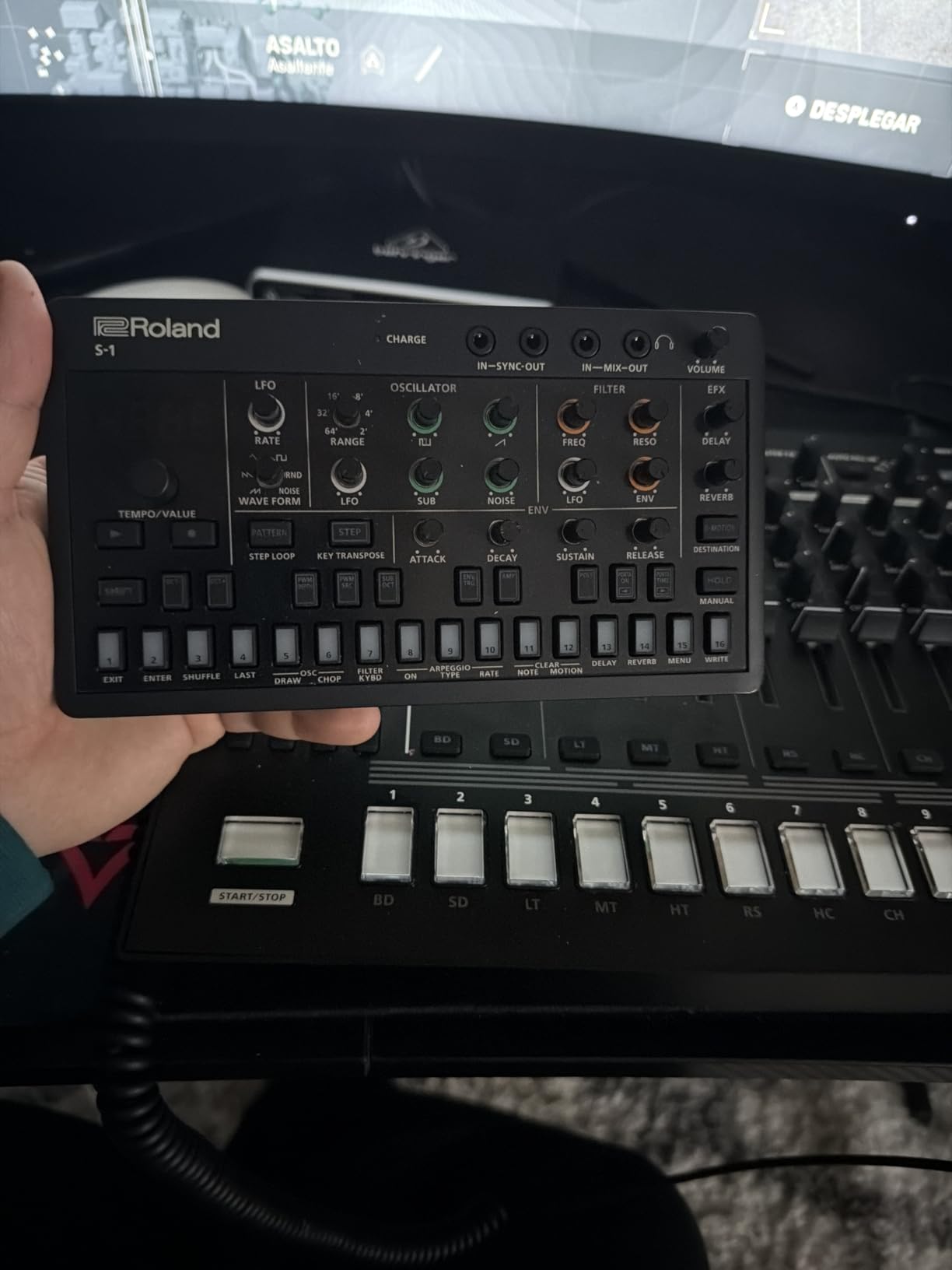
The Roland S-1 is the synth I find myself grabbing most often when I just want to make music without thinking about setup. At one pound with a built-in USB-C rechargeable battery, it is the most portable polysynth on this list by a wide margin. I have used it on park benches, in coffee shops, and during long car rides. The SH-101 inspired sound engine delivers those classic Roland tones that sit perfectly in electronic music productions.
The two-octave velocity-sensitive keyboard is surprisingly playable for its size. Roland included built-in reverb and delay effects that sound genuinely good, not afterthoughts. The reverb in particular adds a lush spaciousness that makes even simple patches sound polished. The 64-step sequencer supports four-bar patterns, which is generous for a unit this compact.
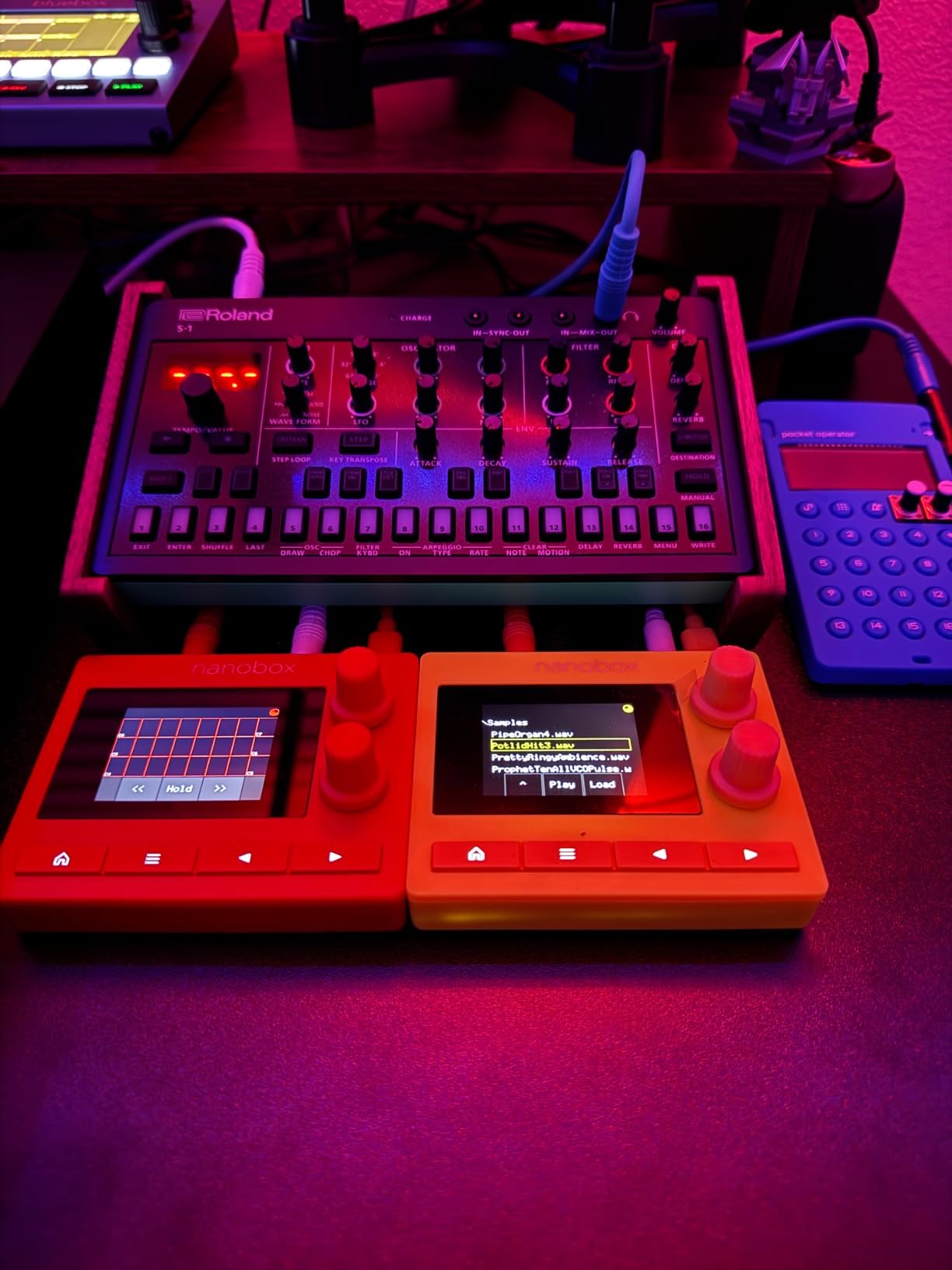
The D-Motion feature lets you control parameters by tilting the synth, which is fun for live performance. It also doubles as a capable MIDI controller for your DAW. I regularly use mine to control soft synths when traveling, which adds to its versatility.
Who Should Buy the S-1 Tweak Synth
Musicians who are always on the move will love the S-1. It fits in a backpack, runs for hours on battery, and sounds much bigger than it looks. Beginners looking for an affordable first step into hardware synthesis will also find it approachable and rewarding. The SH-101 sonic heritage makes it particularly appealing for electronic music and synthwave producers.
Who Might Need More Hands-On Control
The tiny display is hard to read, and many functions require menu diving that interrupts creative flow. The small form factor means fewer physical knobs and buttons than larger synths. If you prefer a one-knob-per-function workflow without menus, the Korg Volca Keys or Behringer JT Mini offer simpler interfaces. The Roland JD-08 also provides a more hands-on experience in a compact format.
7. Elektron Digitone II – 16-Track FM Polyphonic Powerhouse
Elektron Digitone II – 16-Track Polyphonic Digital Synthesizer
16-Track Digital Synth
FM-Based Synthesis
Parameter Locks
Integrated Reverb
Metal Chassis
Pros
- Fantastic workflow that makes music creation fun
- Professional metal build quality
- Powerful parameter lock and trig condition features
- Excellent sequencer for DAW-less production
- Analog-like feel from FM synthesis
Cons
- Steep learning curve
- No DAW integration
- Limited FX options
- Warranty support can be difficult
The Elektron Digitone II is not your typical polysynth. It uses FM synthesis rather than subtractive synthesis, which means it creates sound by modulating the frequency of one oscillator with another. This approach produces complex, metallic, and bell-like tones that subtractive synths simply cannot achieve. After a week of working with it, I was creating sounds that surprised even experienced synth friends of mine.
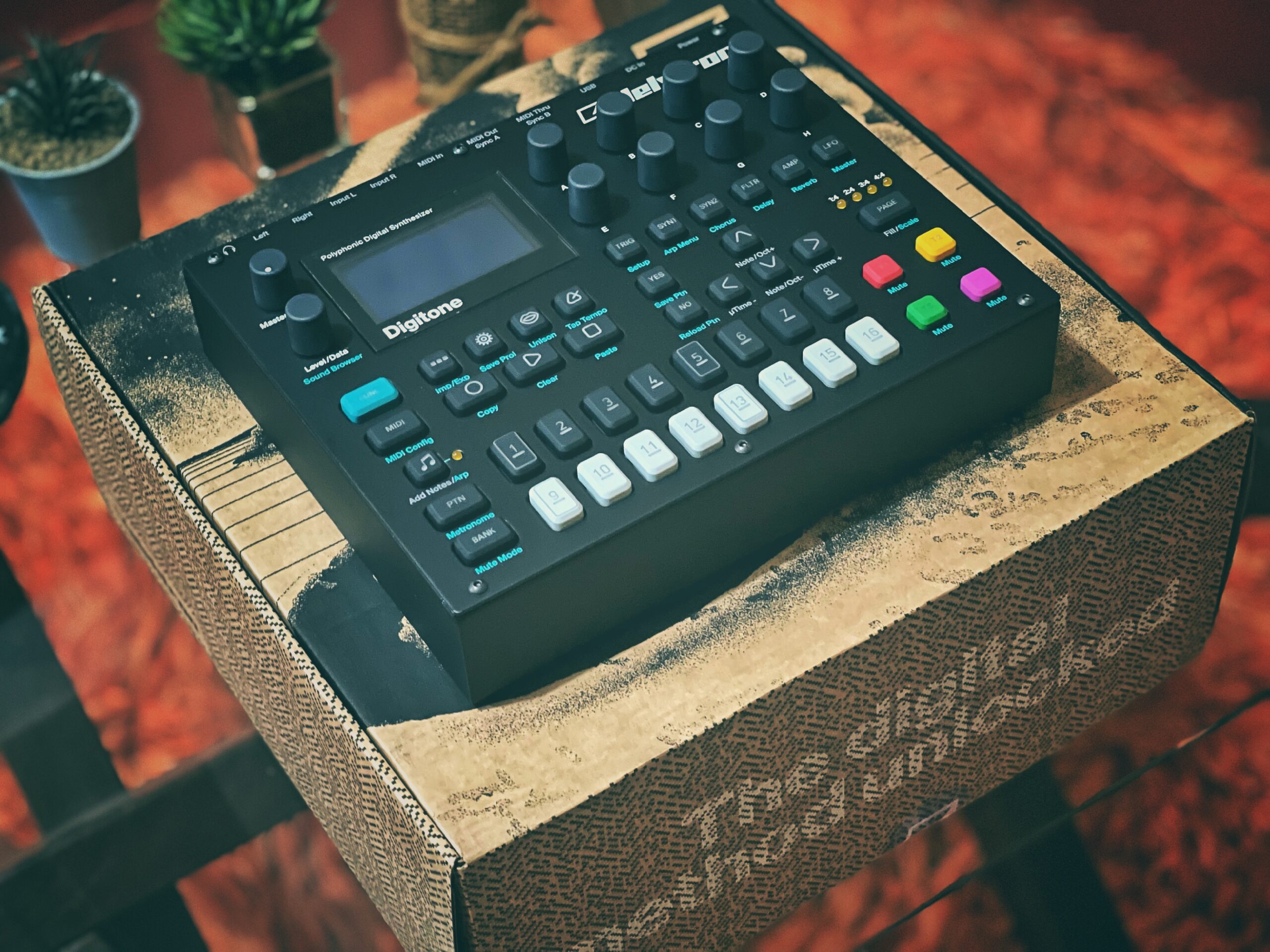
The build quality is outstanding. The metal case, solid knobs, and premium feel immediately communicate that this is a professional instrument. The workflow is uniquely Elektron: you use parameter locks to record different values for any parameter on each step of the sequencer. This means a single pattern can have evolving filter sweeps, changing oscillator ratios, and shifting effects, all happening simultaneously without touching a single knob during playback.
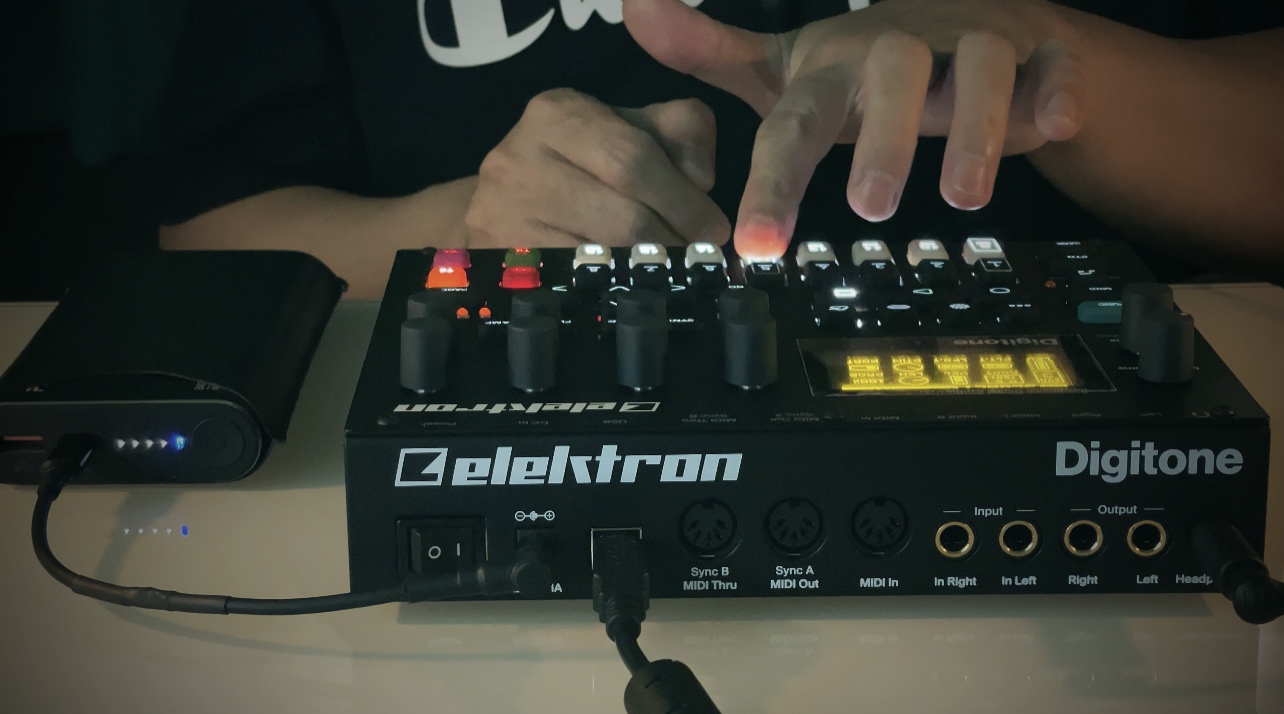
The 16-track architecture means you can create complete arrangements within the Digitone II itself. Many users report going fully DAW-less with this as their centerpiece. The integrated reverb adds depth and atmosphere, and the bus compressor with sidechaining gives your mixes punch and energy. At 1.8 kg, it is substantial enough to feel premium but portable enough for gig bags.
Who Should Buy the Digitone II
Producers interested in DAW-less music production will find the Digitone II to be a complete creative environment. The FM synthesis engine produces unique sounds that complement subtractive synths beautifully in a rig. Live performers who want to create evolving, complex arrangements from a single box will appreciate the depth of the sequencer. If you already own other Elektron gear, the workflow consistency is a major advantage.
Who Might Find It Overwhelming
The Elektron workflow has a steep learning curve that can frustrate newcomers. Expect to spend several days with the manual and tutorial videos before feeling comfortable. There is no direct DAW integration, which is a significant omission at this price. If you prefer immediate gratification over deep workflow mastery, the Roland JD-XI or Korg multipoly might be more your speed.
8. Novation MiniNova – 18-Voice Compact Synth with Vocoder
Novation MiniNova Analog Modeling Synthesizer
18 Voices
3 Oscillators per Voice
5 Effects per Voice
Built-In Vocoder with VocalTune
37 Mini Keys
Pros
- Incredibly powerful synth engine for the price
- Excellent vocoder with VocalTune pitch correction
- Compact and portable with 6-pound weight
- Huge 256-preset sound library
- Free VST plugin for deep editing
Cons
- Mini keys may not suit all players
- Menu diving required for some features
- Plastic body construction
- Mono-timbral only
The Novation MiniNova is one of those synths that consistently surprises people with how much it can do. Designed by the legendary Chris Huggett, who shaped the sound of British synthesis for five decades, the synth engine delivers 18 voices with three oscillators each and five effects per voice. That is a staggering amount of sound-shaping power in a compact blue package that weighs just 6 pounds.
The standout feature for me is the VocalTune vocoder. Plug in the included gooseneck microphone, sing or speak into it, and your voice gets tuned to the notes you play on the keyboard. It is an incredibly fun creative tool that works well for both live performance and studio production. The Animate buttons provide instant performance functions that can transform a patch on the fly, making it surprisingly capable for live gigs.
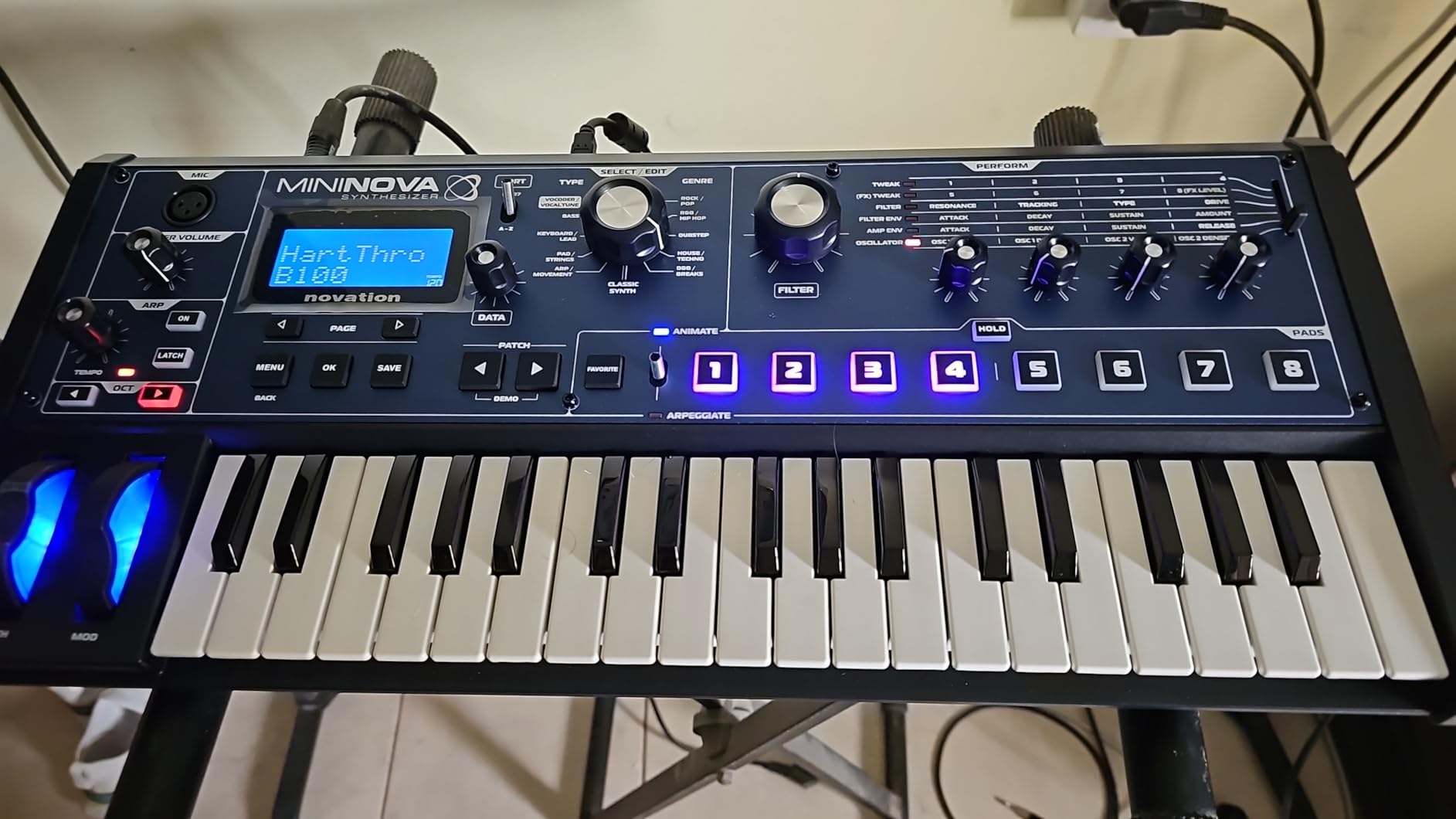
With 256 factory presets organized by genre and type, finding usable sounds is fast. The screen displays numerical values for knob positions, which is a small but meaningful detail that saves time during sound design. The MiniNova can even be powered by a USB battery pack, making it one of the few synths in its class that offers true portable operation without compromising on features.

Who Should Buy the MiniNova
Vocalists and performers who want to incorporate synth processing into their live shows will love the vocoder and VocalTune. Producers who need a massive preset library for quick inspiration will find 256 patches to be a generous starting point. The ability to power it via USB battery makes it ideal for mobile production setups. At its price, it is one of the most feature-rich synths available.
Who Might Need Full-Sized Keys
The mini keys are playable but will frustrate players with larger hands or piano training. The plastic body feels less premium than metal-chassis alternatives. Being mono-timbral means you cannot layer or split sounds, which limits its use as a multitimbral workstation. If you need a more substantial keybed, the Roland JD-XI offers similar features with a better playing surface.
9. Yamaha REFACE CS – Analog Modeling with Battery Power
Yamaha REFACE CS Portable Analog Modeling Synthesizer
Analog Physical Modeling
8-Note Polyphony
37 HQ Mini Keys
Battery Powered
Built-In Speakers
Pros
- Excellent analog-modeled sound quality
- Battery powered with 6 AA batteries
- Built-in speakers surprisingly loud and good
- Beautiful industrial design
- Easy to tweak with accessible sliders
Cons
- No preset or patch memory
- Mini keys not ideal for everyone
- MIDI connector feels fragile
- Sequencer can be difficult to use
The Yamaha REFACE CS takes a different approach than most synths on this list. It uses analog physical modeling rather than true analog circuitry or sampled waveforms, and the result is a sound engine that responds to your playing in surprisingly organic ways. The eight-note polyphony gives you enough voices for comfortable chord playing, and the multiple oscillator types let you shape everything from warm pads to biting leads.
What makes the REFACE CS special is its simplicity and immediacy. Every parameter has a physical slider or knob on the front panel, and there is zero menu diving. You see the synth engine laid out in front of you: oscillator type, cutoff, resonance, envelope, LFO, and effects. It is the kind of instrument that teaches synthesis by osmosis. Reddit users consistently praise it as one of the best beginner synths, and after spending time with one, I agree completely.
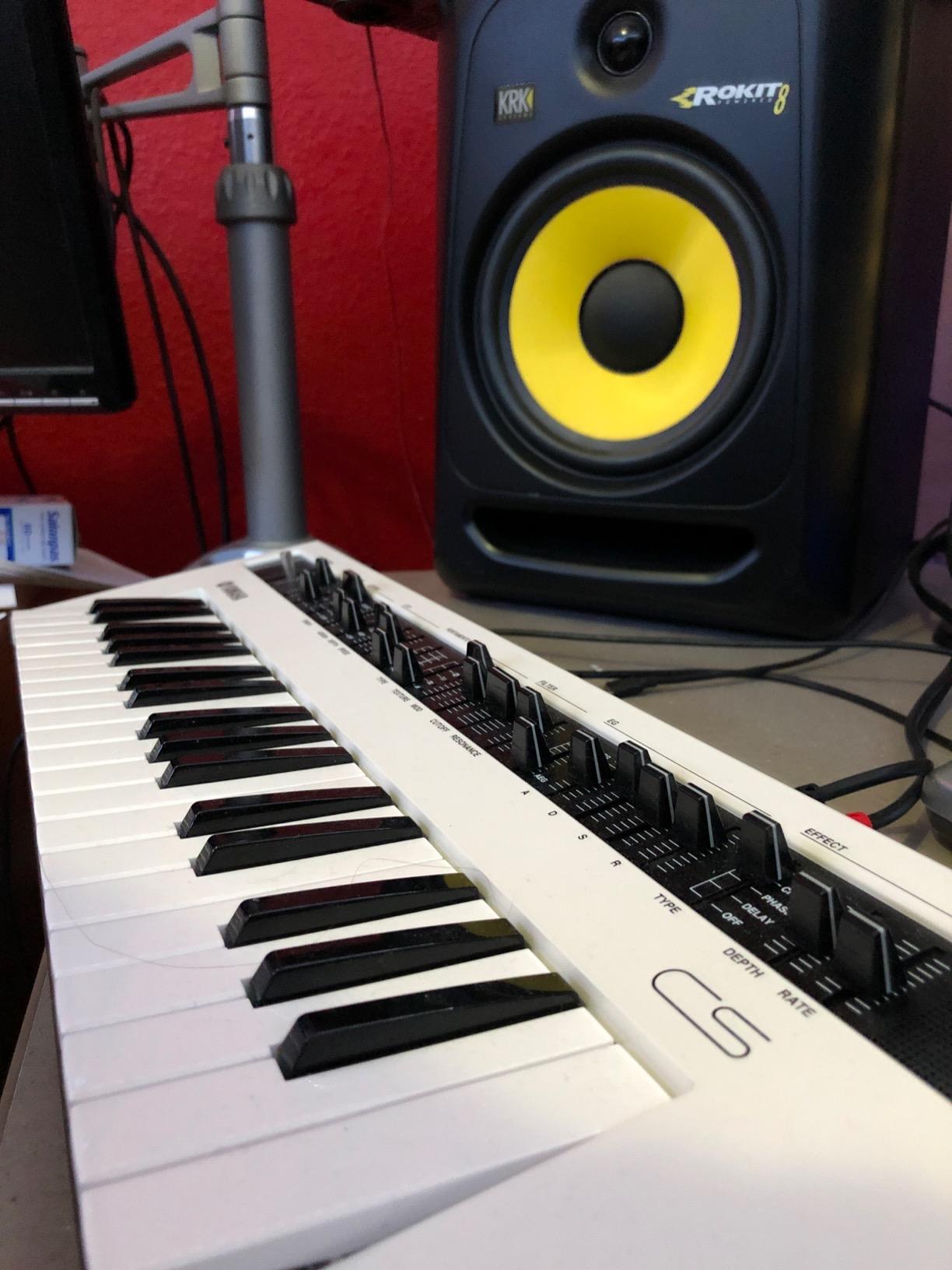
The built-in speakers are a genuinely useful feature that most synths omit. They are loud enough for bedroom practice and casual jams, and they sound surprisingly good for their size. The battery power option using six AA batteries means you can play anywhere without hunting for an outlet. Yamaha also includes a phrase looper for capturing quick ideas, which pairs well with the portable design.
Who Should Buy the REFACE CS
Beginners who want to learn synthesis fundamentals will find the REFACE CS to be an ideal teacher. The hands-on layout makes every parameter visible and accessible. Musicians who value portability and the ability to play anywhere without external amplification will appreciate the built-in speakers and battery power. It is also a great writing tool for capturing quick ideas wherever inspiration strikes.
Who Might Need Patch Memory
The lack of preset storage is the biggest drawback. You can use the Soundmondo app to save patches, but this requires a connected device. The mini keys and 3-octave range limit playability for serious keyboardists. If you need to recall sounds quickly during live performance or studio sessions, the Arturia MiniFreak or Novation MiniNova offer patch storage with similar portability.
10. Roland JD-08 – Boutique Synth with 128 Voices and Zen-Core Engine
Roland JD-08 Tabletop Sound Module Boutique Synthesizer – Compact, Lightweight, Modern with New Effects and Polyphonic Sequencer
Zen-Core Engine
128 Voices
8-Part Multitimbral
64-Step Sequencer
Boutique Format
Pros
- Same Zen-Core engine as the Jupiter X at a fraction of the cost
- 128 voices with no voice stealing
- Huge palette of effects including distortion and phaser
- Compact battery-powered design
- Holds resale value well
Cons
- Small 10mm faders with limited throw
- Requires 1/8 inch jack adapters
- Old-school LED display
- Dated factory presets
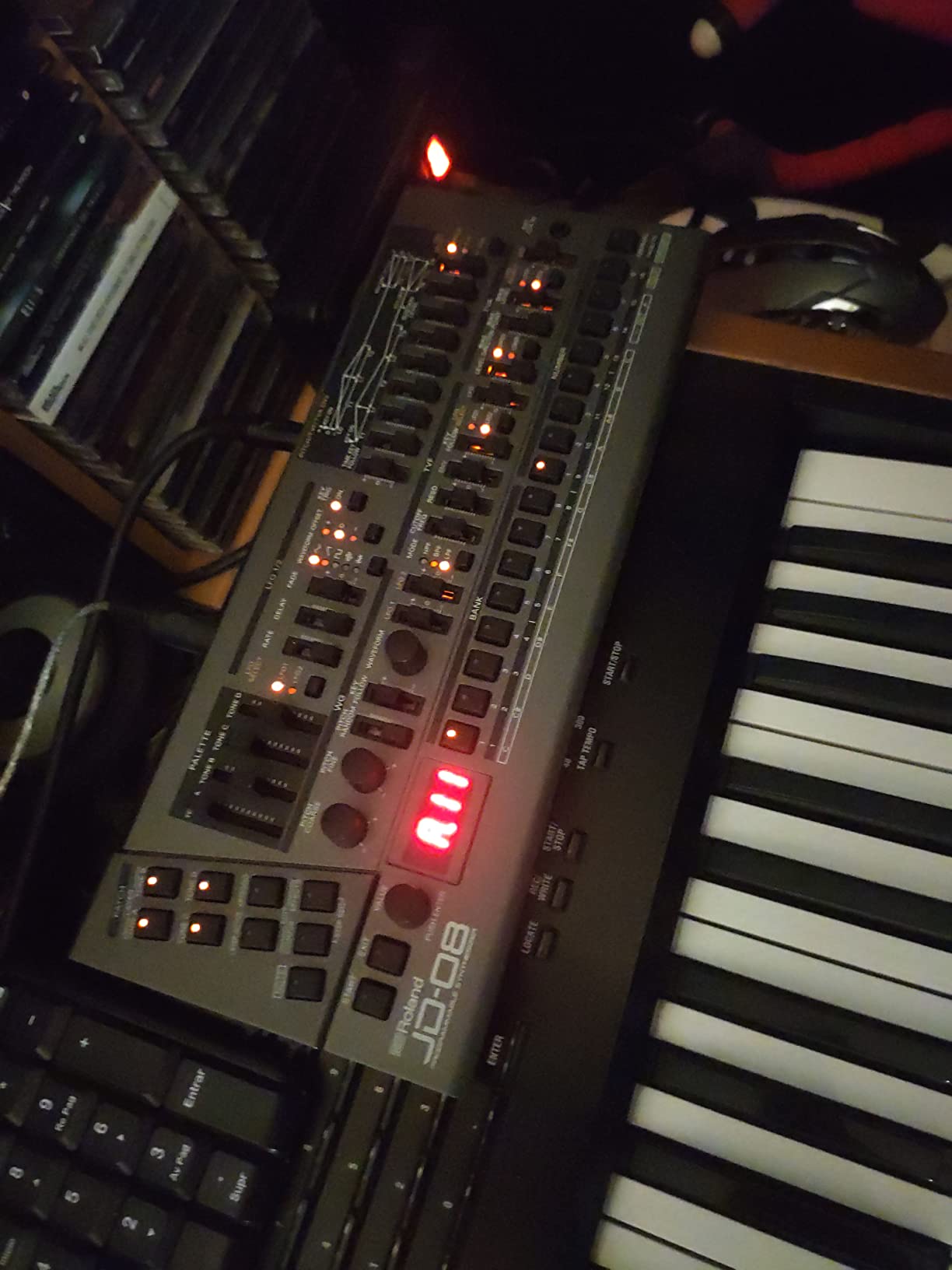
The Roland JD-08 is essentially a miniature version of the legendary JD-800, powered by the same Zen-Core engine that drives Roland’s flagship Jupiter X. That means you get access to professional-grade synthesis at a fraction of the cost. With 128 voices and 8-part multitimbrality, this little box can handle complex arrangements without ever running out of polyphony. It is genuinely remarkable what Roland has packed into the boutique format.
The four-part tone structure allows you to layer sounds for massive, complex patches. Each tone has its own oscillator, filter, amplifier, and envelope, giving you the building blocks of a professional sound design workstation. The effects section recreates the JD-800’s multi-effects chain, including distortion, phaser, spectrum, enhancer, delay, chorus, and reverb. That is a complete effects rack built into a device that fits in your hand.
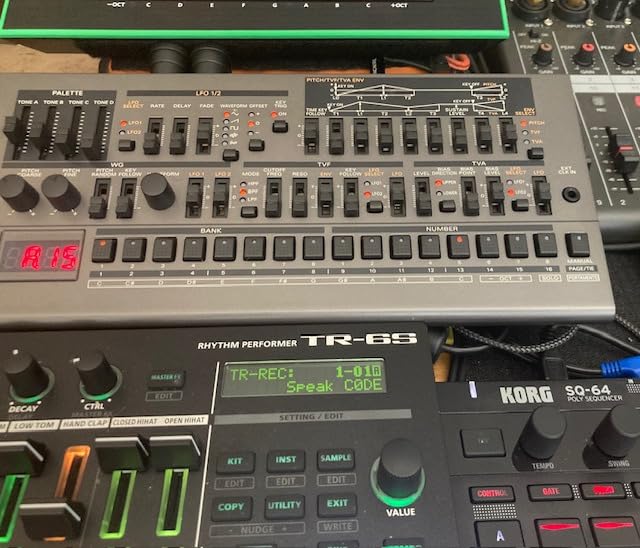
The palette faders provide hands-on control over multiple parameters simultaneously, which is satisfying once you get used to the 10mm throw. The 64-step polyphonic sequencer includes motion recording and a random pattern generator that can spark creative ideas. It also runs on batteries, making it one of the most powerful portable synthesis options available.
Who Should Buy the JD-08
Producers who want access to Roland’s flagship Zen-Core sound engine without the flagship price tag should look no further. The 128 voices and multitimbral capability make it an excellent centerpiece for a compact studio. Sound designers who love layering and complex patch construction will find the four-part structure endlessly rewarding. It is also a great live performance module when paired with a MIDI keyboard.
Who Might Find the Form Factor Limiting
The boutique size means compromises on physical controls. The small faders and old-school LED display feel dated compared to modern OLED screens. You will need 1/8 inch adapters for most connections. If you prefer a keyboard with full-sized controls, the Roland JD-XI offers similar sound engines with a more traditional interface. The learning curve for deep programming is also steeper than the small format suggests.
11. Roland JD-XI – Analog/Digital Crossover with 4-Track Sequencer
Roland JD-XI 37-Key Interactive Analog/Digital Crossover Synthesizer, Black
Analog + Digital Crossover
2 Digital + 1 Analog Synth Sections
4-Track Pattern Sequencer
Vocoder with Mic
37 Keys
Pros
- Powerful pattern sequencer for complete song creation
- Excellent vocoder quality with included mic
- Versatile hybrid sound engine combining analog and digital
- USB audio and MIDI interface functionality
- Four simultaneous effects processors
Cons
- Rubber buttons feel cheap
- Hard to read lettering on controls
- Deep menu system
- Limited to 4 tracks
The Roland JD-XI is a groove synthesizer that combines analog and digital sound engines in one affordable package. The analog section handles lead and bass duties with authentic, gritty tones, while the two digital sections use Roland’s SuperNATURAL technology for pads, strings, and other complex sounds. Having all three engines available simultaneously makes it surprisingly versatile for creating full arrangements.
The four-track pattern sequencer is where the JD-XI really shines. I was able to sketch out complete song ideas with drums on track one, bass from the analog section on track two, pads from a digital section on track three, and a lead on track four. Building patterns and chaining them into songs is intuitive enough that you can create full arrangements without ever touching a DAW. The included gooseneck microphone and built-in vocoder with AutoPitch add another creative dimension.
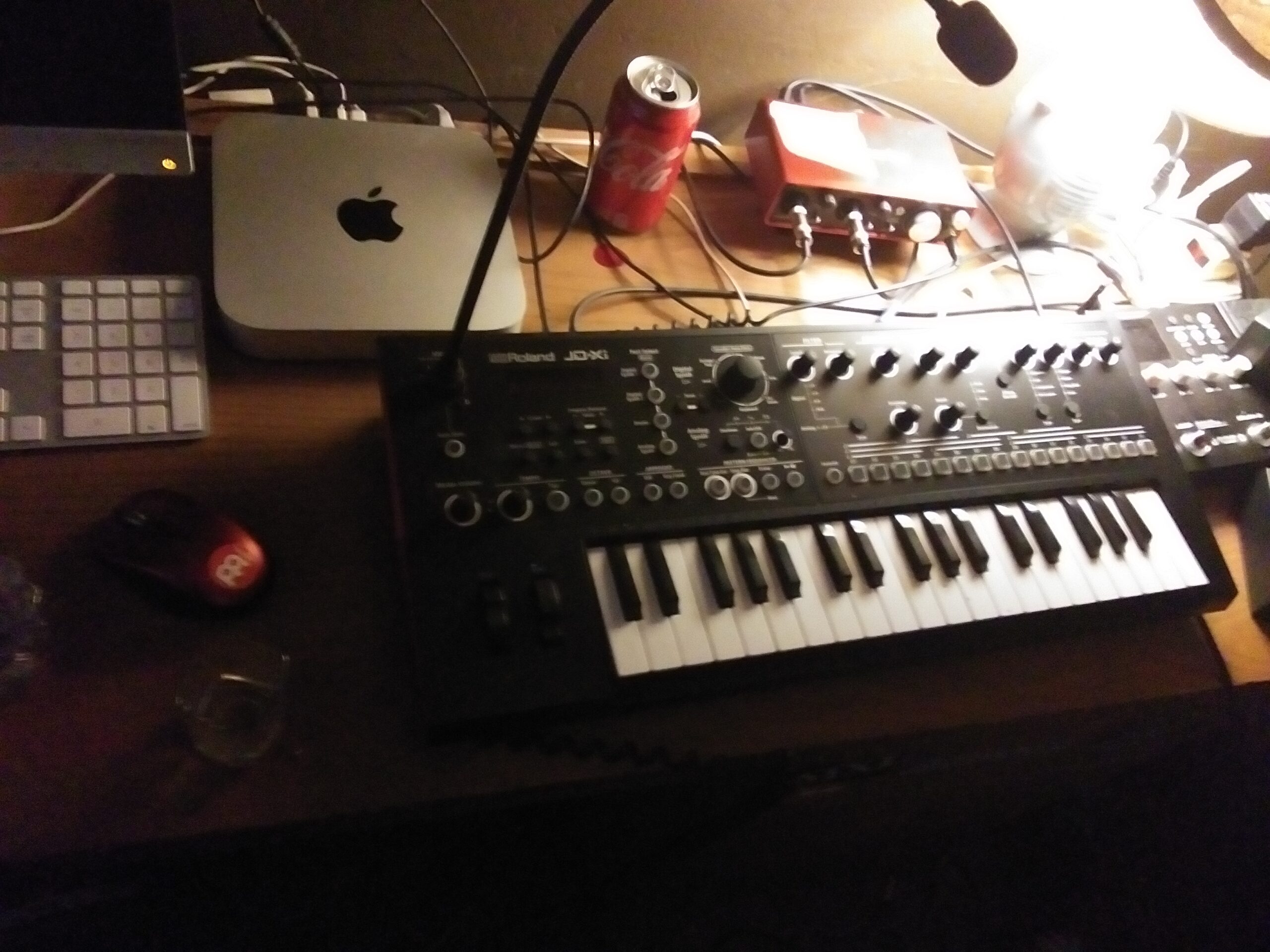
The four simultaneous effects processors cover Effect 1, Effect 2, Delay, and Reverb, giving you plenty of sound-shaping power. The JD-XI also functions as a USB audio and MIDI interface, which means it pulls double duty in a studio setup. At just 4.14 pounds, it is light enough for gigging while offering enough features to serve as a complete production workstation.
Who Should Buy the JD-XI
Electronic music producers who want an all-in-one groove box with real synth engines will find the JD-XI hard to beat. The pattern sequencer makes it excellent for sketching ideas quickly and performing live. Vocalists who want to incorporate vocoder effects into their sets will appreciate the included mic and AutoPitch. It is a strong choice for anyone building a compact production setup.
Who Might Want a More Modern Workflow
The rubber buttons feel cheap compared to the solid knobs on newer synths. The lettering on the control panel is difficult to read in dim lighting. Menu diving is required for many features, and the interface design feels like it belongs to an earlier generation. If you want a more modern experience with similar capabilities, the Elektron Digitone II offers deeper sequencing with a more refined build.
12. Korg multipoly – 60-Voice Analog Modeling Synth with KAOSS Pad
Korg multipoly Analog Modeling Synthesizer w/Four Oscillators, 60 Voices and built-in KAOSS Pad
60 Voices
4 Oscillators per Voice
Built-In KAOSS Pad
Dual Filters
5 LFOs
Full-Sized Keys
Pros
- Massive 60 voices of polyphony
- Four oscillators per voice for huge sounds
- Built-in KAOSS Pad for expressive performance
- Full-sized keys preferred by most players
- Includes carrying case
Cons
- Steep learning curve
- No aftertouch on keyboard
- Power adapter issues reported
- Requires software for full experience
The Korg multipoly is the most polyphony-rich synthesizer on this list, and it uses those 60 voices to create sounds that are simply not possible on instruments with fewer resources. Inspired by the legendary Mono/Poly, this modern analog modeling synth stacks four oscillators per voice with flexible cross-modulation and sync routing. The result is a sound engine that can produce anything from warm vintage tones to aggressively modern textures.
The built-in KAOSS Physics feature is unlike anything else on a polysynth. It combines the tactile fun of a KAOSS Pad with physics-based modulation, letting you bounce a virtual ball around a grid to modulate parameters in real time. I found it addictive during live jams, adding movement and unpredictability to static patches. The dual filters, four envelopes, and five LFOs give you a modulation system that rivals modular setups in complexity.
The full-sized keys are a welcome change from the mini keys found on many competitors. Korg also includes a carrying case, which is a nice touch for a synth at this level. The high-contrast screen is readable even in dim studio lighting, and the knobs and sliders have a quality feel that inspires confidence during performance.
Who Should Buy the Multipoly
Musicians who need maximum polyphony for complex arrangements will find 60 voices to be essentially unlimited. The four-oscillator architecture appeals to sound designers who want to create thick, layered patches. Live performers will enjoy the KAOSS Physics feature for adding real-time expression. If you prefer full-sized keys and do not want to compromise on playability, the multipoly delivers.
Who Might Find the Learning Curve Steep
With four oscillators, dual filters, five LFOs, and KAOSS Physics, the multipoly has a significant learning curve. Some users report issues with the power adapter, which is concerning for an instrument at this price. The lack of aftertouch on the keyboard is a surprising omission. If you want something more immediately approachable, the Korg minilogue offers similar analog character with a simpler interface.
13. Behringer DEEPMIND 12 – 12-Voice True Analog with 4 FX Engines
Behringer DEEPMIND 12
12 True Analog Voices
49 Keys
4 FX Engines
2 OSCs per Voice
WiFi MIDI
1000+ Presets
Pros
- 12 voices of true analog at remarkable value
- Excellent TC Electronic and Klark Teknik effects
- Massive 1000+ preset library
- Deep modulation matrix
- Sturdy build with weighted keys
Cons
- Currently out of stock frequently
- Preset organization could be better
- Noisy fans in quiet studios
- Customer support can be difficult
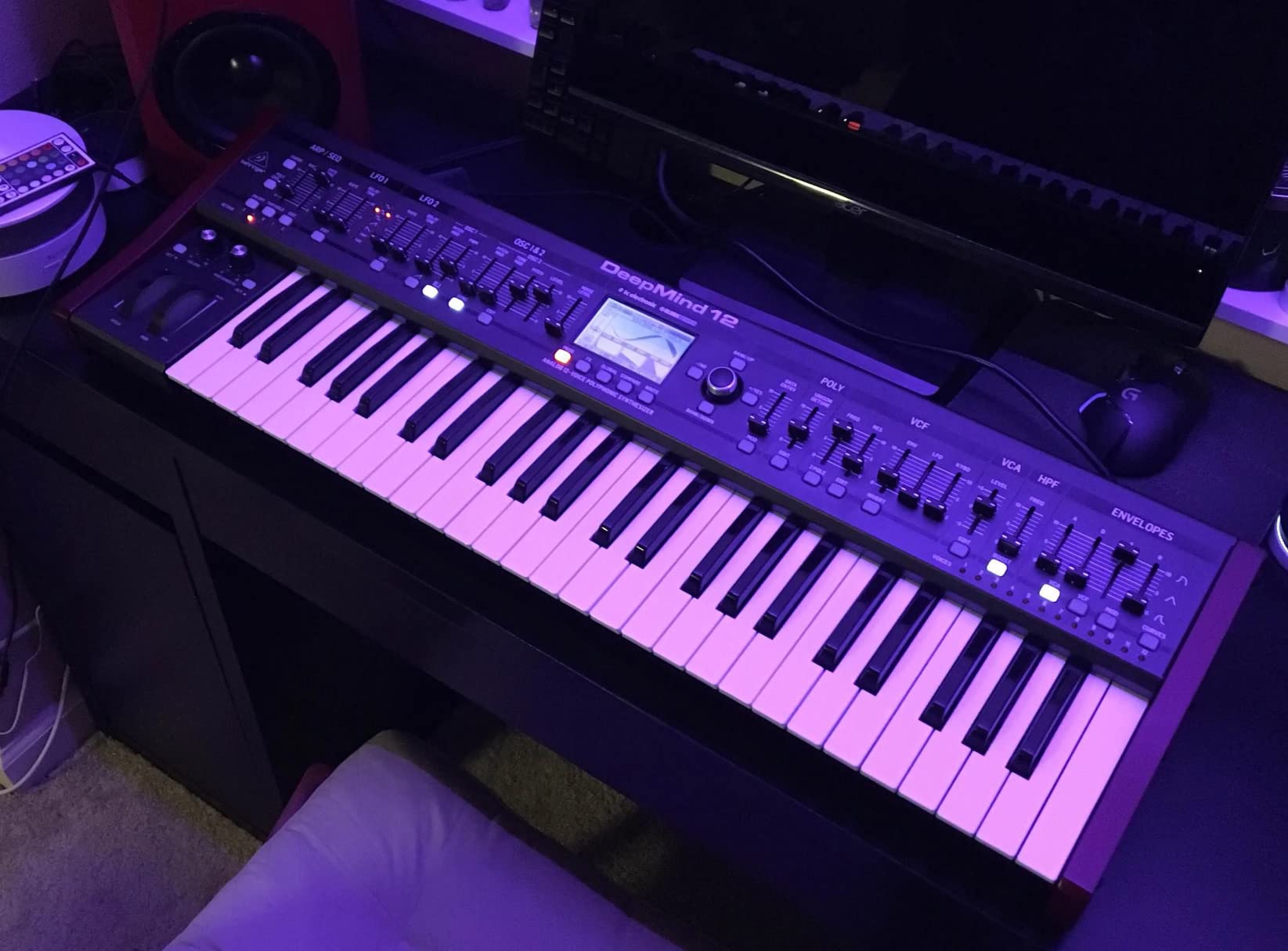
The Behringer DEEPMIND 12 is a statement piece. Twelve voices of true analog polyphony with a 49-key keybed, four simultaneous effects engines, and over 1,000 factory presets. When Behringer launched this synthesizer, it forced the entire industry to reconsider what was possible at its price point. After spending time with one in our studio, I can confirm the analog tone is legitimately rich and full-bodied.
The four effects engines use TC Electronic and Klark Teknik algorithms, covering reverb, chorus, flanger, phaser, delay, and multi-band distortion. These are not afterthought effects either. The reverbs in particular add genuine depth and character to patches. Having four simultaneous effects means you can run reverb and delay together with chorus and distortion, creating complex signal chains without external processors.
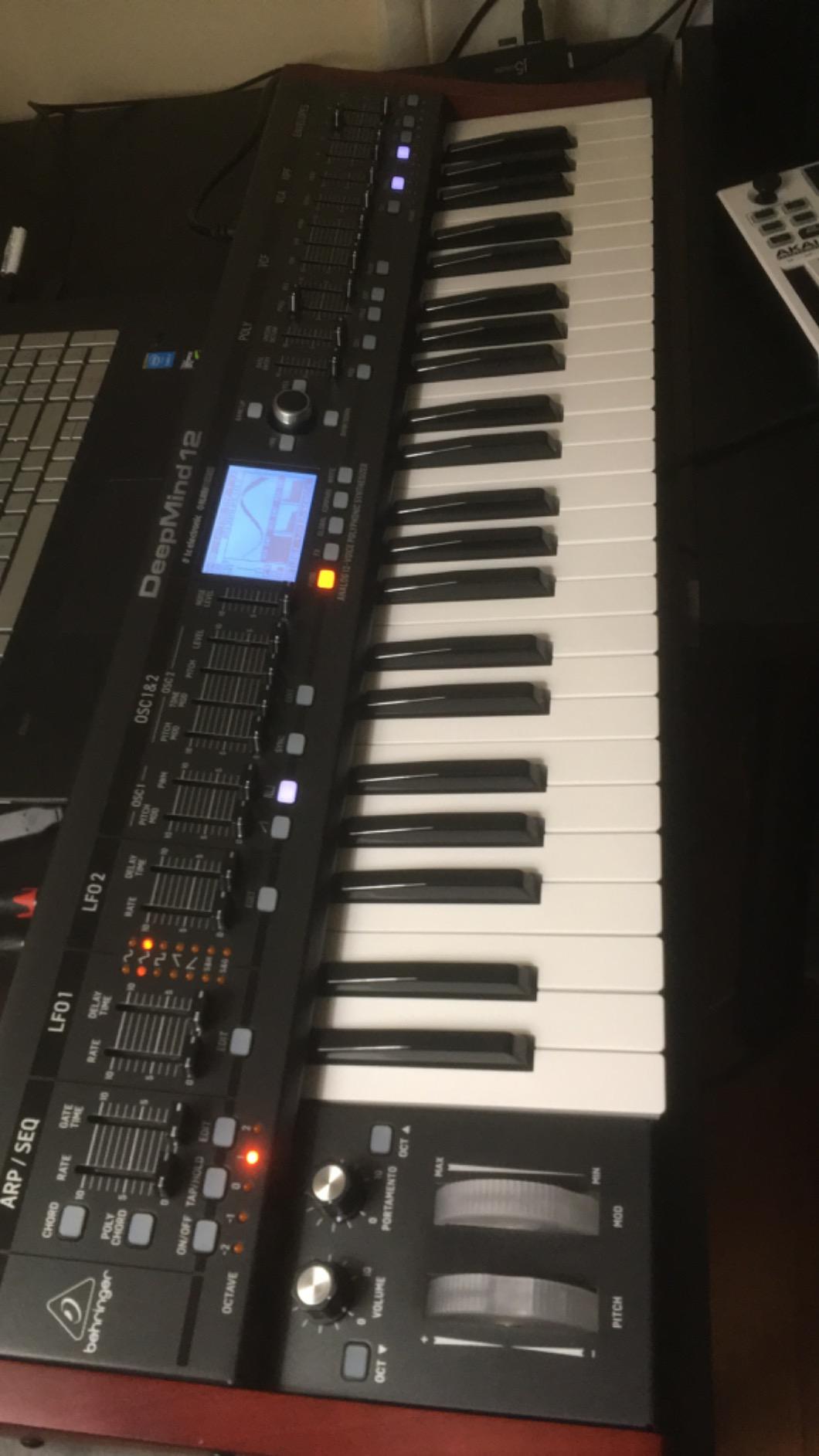
The modulation matrix is genuinely deep, with two LFOs per voice offering seven waveform shapes each, three ADSR generators per voice, and extensive routing options. WiFi MIDI connectivity lets you edit patches from a computer app, which is useful given the 1,000+ preset library that would take hours to navigate from the front panel alone. At 18.5 pounds, it is substantial but manageable for studio use.
Who Should Buy the DEEPMIND 12
Musicians who want maximum analog voices per dollar will find the DEEPMIND 12 compelling. The 12-voice count allows for complex chord voicings and unison modes that eat up polyphony quickly. Studio producers who need a wide range of analog tones from a single instrument will appreciate the massive preset library. The 49-key format is comfortable for two-handed playing.
Who Might Want a Simpler Workflow
The preset organization is reportedly chaotic, making it tedious to browse through 1,000+ sounds. The internal fans can be audible in quiet recording environments, which is a concern for microphone placement. MusicTribe customer support has a mixed reputation that gives some buyers pause. If stock availability is a concern, the Korg multipoly offers similar voice count with analog modeling instead.
14. Novation Peak – 8-Voice FPGA Desktop Synthesizer
Novation Peak 8-Voice Desktop Polyphonic Synthesizer
8-Voice FPGA
Oxford Oscillators
60 Wavetables
Analog Filter
16-Slot Mod Matrix
Desktop Module
Pros
- Lush organic sound with zero aliasing
- FPGA-based Oxford Oscillators sound incredible
- Powerful 16-slot modulation matrix
- Compact desktop design with premium metal build
- CV modulation input for modular setups
Cons
- Learning curve with menu-based features
- Only one filter per voice
- Some factory presets unremarkable
- No keyboard included
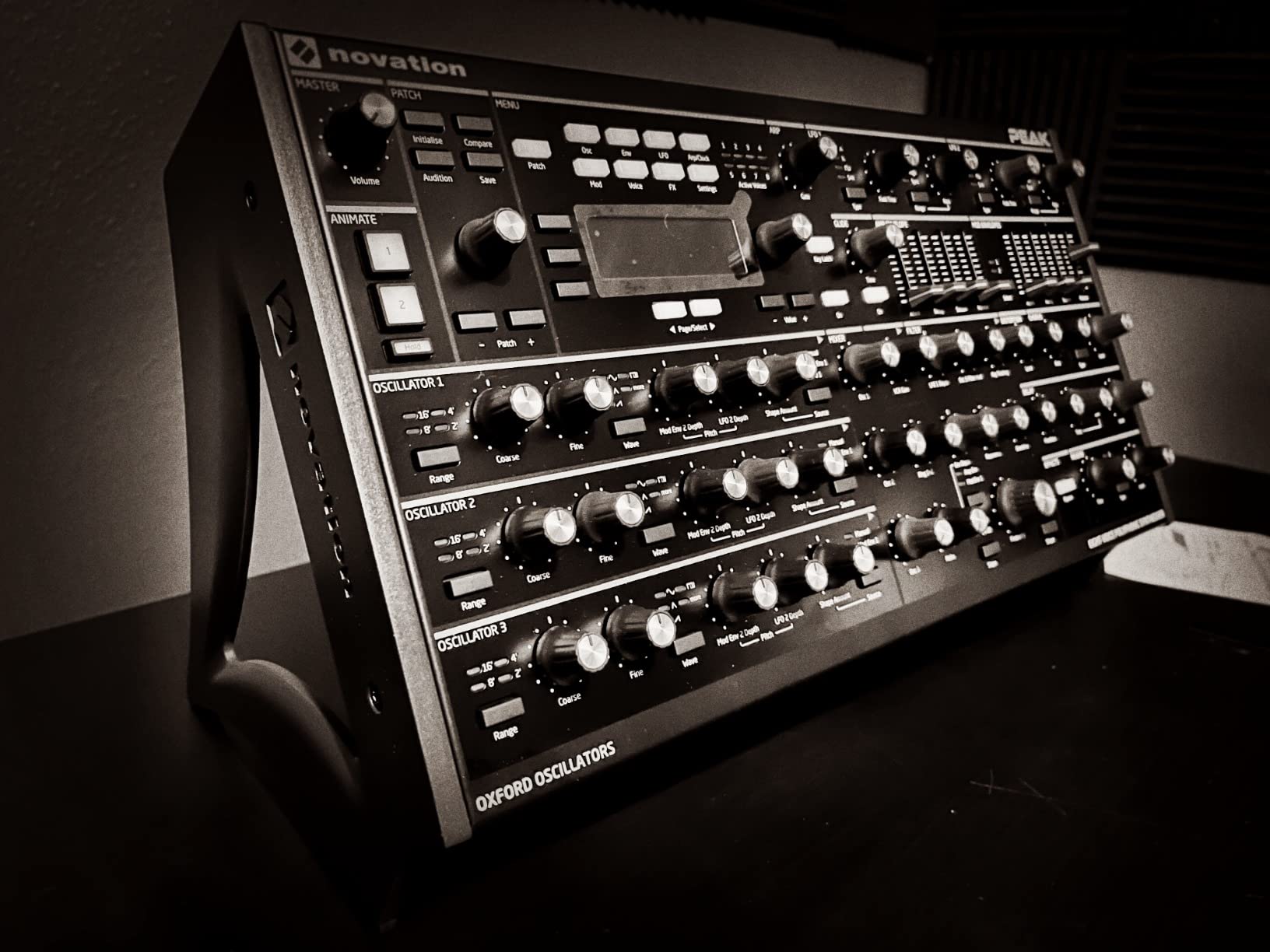
The Novation Peak is the most expensive synthesizer on this list, and it earns that position through sheer sound quality. The FPGA-based Oxford Oscillators produce tones that are remarkably organic and free from the aliasing artifacts that plague many digital synths. Playing high notes does not reveal the digital stair-stepping that cheaper oscillators exhibit. The sound is smooth, warm, and genuinely musical across the entire frequency range.
Each of the eight voices features three distortion points: pre-filter, post-filter, and global. This gives you fine control over how crunch and harmonics enter your signal chain. The 60 customizable wavetables combined with numerically-controlled oscillators provide a massive sonic palette. The analog filter per voice adds warmth and character that makes the Peak sound more expensive than it already is.
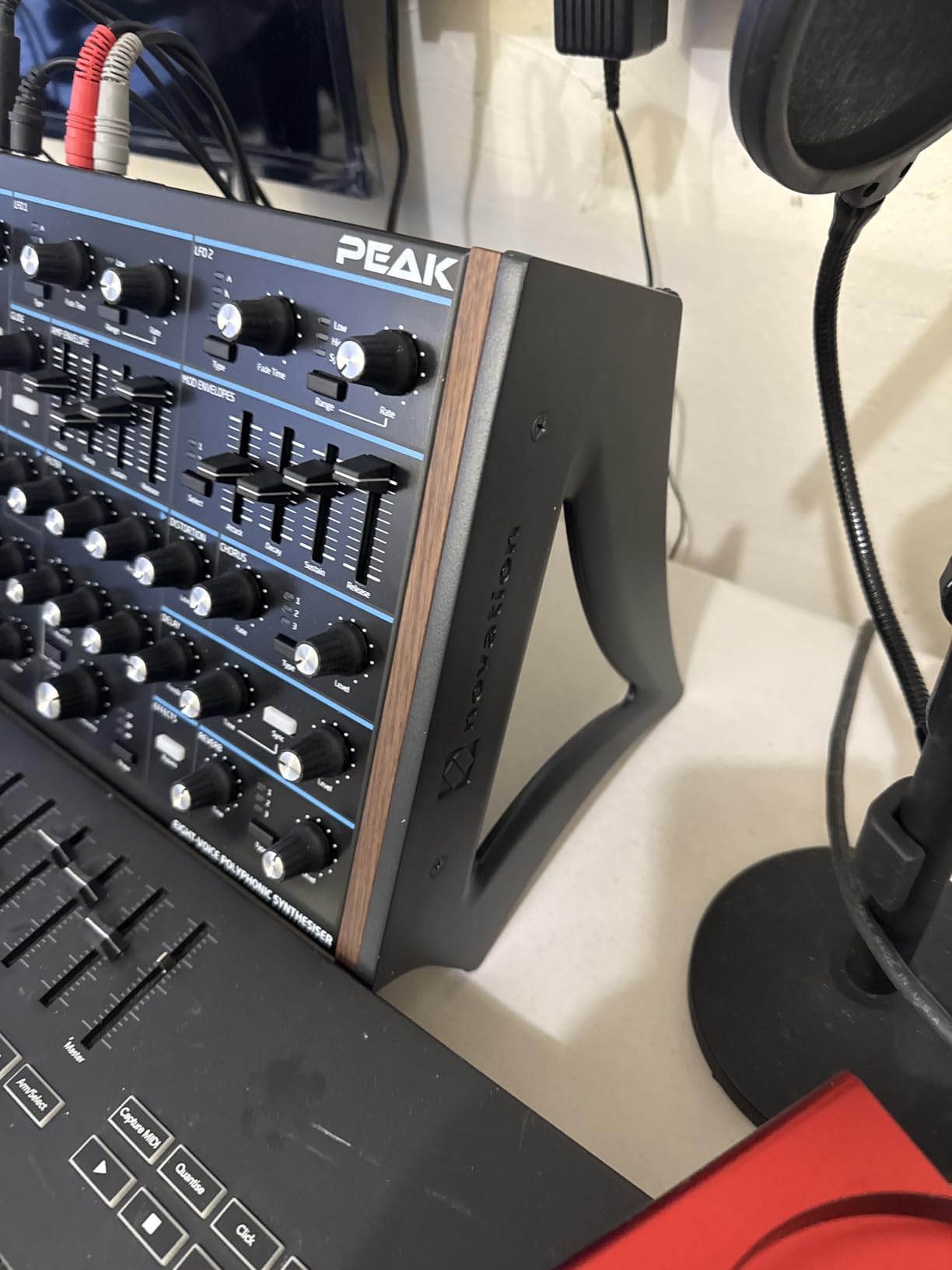
The 16-slot modulation matrix with 16 direct assignments on the front panel means you can create complex, evolving patches without losing hands-on control. The two Animate buttons provide instant modulation on the fly, which is fantastic for live performance. The built-in reverb, delay, and chorus effects are high quality, and the onboard arpeggiator adds rhythmic possibilities. At 10.8 pounds in a compact desktop format, it is built like a tank.
Who Should Buy the Peak
Audiophiles and sound designers who prioritize sound quality above all else will find the Peak rewarding. The FPGA oscillators produce some of the cleanest and most musical digital tones available in hardware. Studio owners who want a premium desktop module to pair with their favorite MIDI keyboard will find the build quality and sound character justify the investment. It excels at pads, arpeggios, and soaring lead sounds.
Who Might Want a Keyboard Version
As a desktop module, the Peak requires a separate MIDI keyboard controller. The single filter per voice limits dual-filter routing options that some competitors offer. The learning curve for menu-based features is real, and some factory presets do not showcase the instrument’s potential. If you want the Peak engine with a keyboard, the Novation Summit (the keyboard version) is worth considering, though at a higher price point.
15. Korg Volca Keys – 3-Voice Analog with Built-In Speaker
Korg Volca Keys Analogue Loop Synthesizer Polyphonic w/Simple-three Voice Analog and Self Tuning
3-Voice Analog
27 Touch-Sensitive Keys
16-Step Sequencer
Delay Effect
Battery Powered
Built-In Speaker
Pros
- Incredibly portable and battery powered
- Built-in speaker for immediate playback
- True analog sound with warm character
- Excellent built-in sequencer
- Syncs with other Volca devices
Cons
- Only 3 voices of polyphony
- Keys are very sensitive and easy to miss
- Signal path can be noisy
- Oscillators only output sawtooth waveforms
The Korg Volca Keys holds the number two spot in Amazon’s synthesizer bestseller ranking for good reason. This little unit delivers genuine analog polyphony in a package that costs less than many guitar pedals. The three voices share a single envelope generator, which limits complexity, but the raw analog tone is warm, musical, and surprisingly characterful for the size and price.
The 16-step sequencer is one of the best features. It supports motion sequencing, which records knob movements alongside note data, creating evolving patterns that breathe and change over time. The built-in delay effect adds depth and rhythmic interest to even the simplest patches. Battery power means you can take it literally anywhere, and the built-in speaker lets you play without any external amplification.
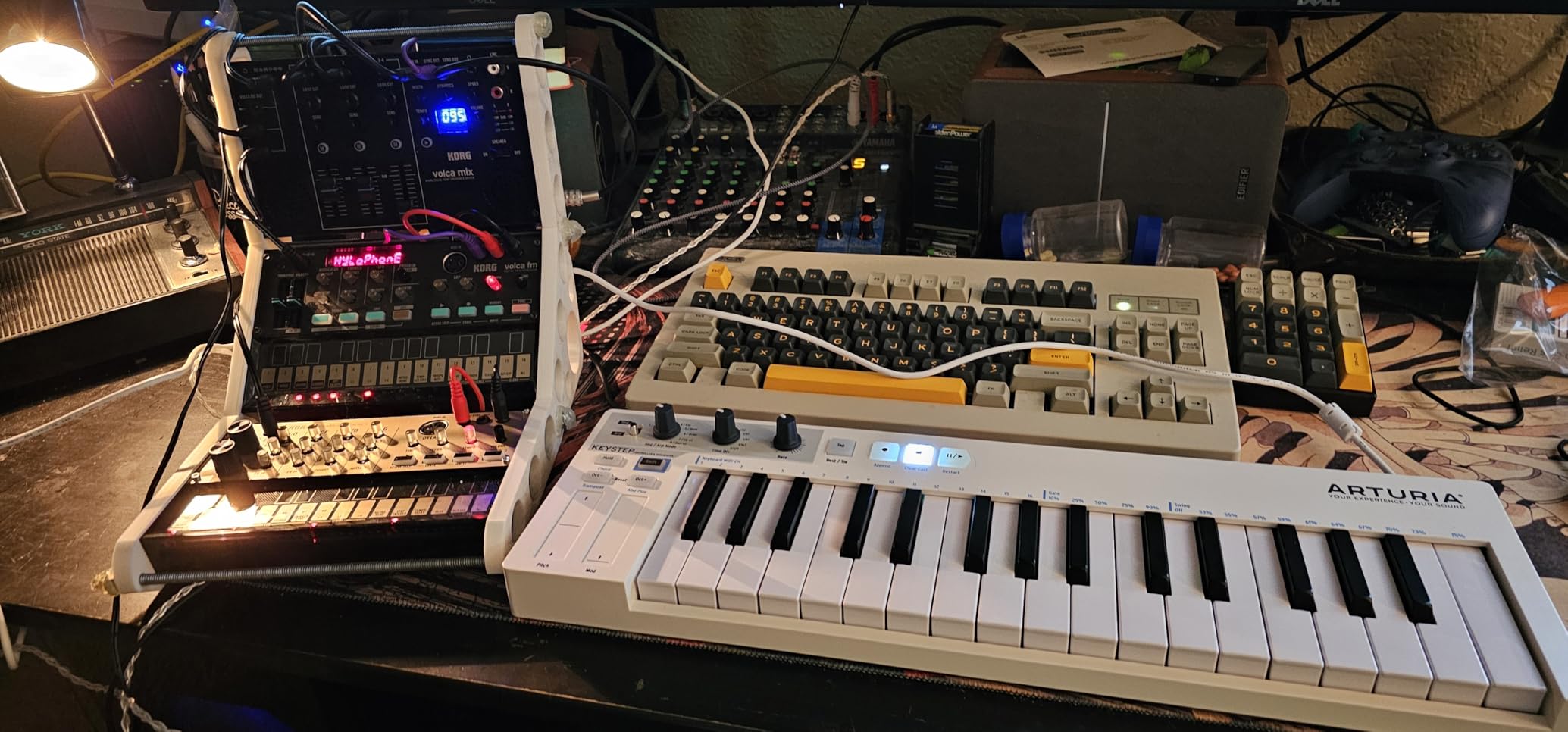
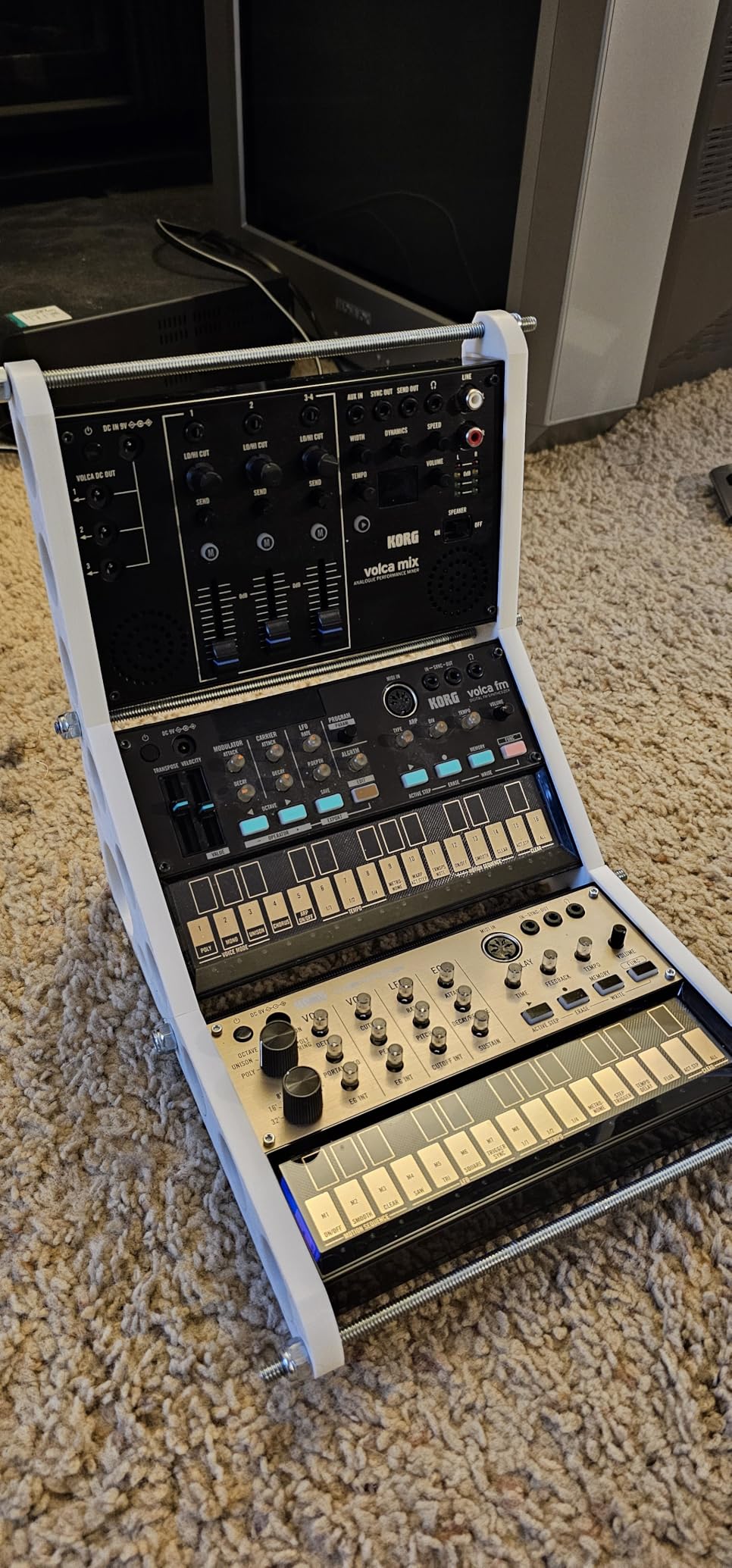
The sync capability with other Volca devices is where the Volca Keys really shines in practice. I have used it alongside a Volca Beats and Volca Bass to create complete arrangements that cost a fraction of what a single high-end polysynth would run. The MIDI input also allows DAW integration, making it a versatile sound module in larger setups. At just 16 ounces, it might be the most portable real analog polysynth ever made.
Who Should Buy the Volca Keys
Beginners looking for the cheapest entry into true analog polyphony should start here. It is also a fantastic addition to an existing setup for adding simple analog chord parts. The Volca ecosystem integration makes it ideal for building a modular-style setup on a budget. Musicians who want a portable sketchpad for capturing ideas on the go will find the battery power and built-in speaker invaluable.
Who Might Need More Voices
Three voices of polyphony limits you to basic triads, and shared envelopes mean all notes in a chord share the same articulation. The sawtooth-only oscillators reduce timbral variety. The touch-sensitive keys are easy to accidentally trigger and take practice to control accurately. If you need more voices and polyphonic envelopes, the Behringer JT Mini offers similar portability with better key response, or the Korg minilogue provides four voices with full envelopes.
How to Choose the Right Polyphonic Synthesizer
Choosing from the many polyphonic synthesizers available in 2026 comes down to understanding your specific needs, budget, and workflow preferences. After testing all 15 of these instruments, I can tell you that there is no single best choice for everyone. The right synth for a touring DJ is different from the right synth for a bedroom ambient producer, which is different again from what a live band keyboardist needs.
Voice Count and What It Means for Your Playing
Voice count determines how many notes you can play simultaneously before the synth starts stealing voices from earlier held notes. Three voices cover basic triads. Four voices let you add extensions. Eight voices give you comfortable room for sustained chords with effects. Twelve or more voices provide freedom for complex arrangements and unison modes. If you primarily play lead lines or bass, even a monophonic synth might suffice. But for pads, chords, and layered textures, polyphony matters.
Analog vs Digital vs Hybrid Synthesis
The analog versus digital debate generates strong opinions, but the practical differences are more nuanced than forum arguments suggest. True analog synths like the Korg minilogue and Behringer DEEPMIND 12 produce warm, characterful tones that respond to knob tweaks in organic ways. Digital synths like the Elektron Digitone II and Roland JD-08 offer pristine sound, perfect tuning stability, and features that analog circuits cannot replicate. Hybrid designs like the Arturia MiniFreak and MicroFreak combine digital flexibility with analog warmth at the filter stage, giving you the best of both worlds.
Keybed Quality and Playability
Do not underestimate how much the keyboard itself affects your experience. Full-sized keys with aftertouch, like those on the Korg multipoly, provide the most expressive playing experience. Mini keys, found on the MiniFreak and MiniNova, save space but can frustrate pianists. The PCB touch-plate on the MicroFreak enables polyphonic aftertouch but lacks the tactile feedback of traditional keys. If possible, try before you buy. The keyboard is your primary interface with the instrument, and personal preference plays a huge role in satisfaction.
Connectivity and Integration
Consider how the synth fits into your existing setup. USB MIDI is standard on most modern synths, but CV and gate outputs for modular integration are rarer and valuable if you own modular gear. MIDI DIN ports matter for connecting to vintage equipment. Audio outputs should match your recording interface. The Behringer DEEPMIND 12 even offers WiFi MIDI, while the Roland S-1 includes USB-C for both power and data. Think about your signal flow from instrument to interface to monitors and make sure everything connects cleanly.
Effects, Sequencer, and Workflow
Built-in effects can save you hundreds on external pedals and plugins. The DEEPMIND 12 includes four simultaneous effects engines, while the MicroFreak includes none. Sequencers range from basic 16-step loopers to the Elektron Digitone II’s parameter-lock powerhouse. Consider whether you want to produce entire tracks inside the synth or use it purely as a sound source alongside your DAW. Workflow preferences are deeply personal, and the synth that inspires you to make more music is always the right choice.
Frequently Asked Questions
What is the best modern polyphonic synth under $1500?
The Arturia MiniFreak is our top pick under $1500. It offers 6-voice hybrid synthesis with analog multimode filters, 256 preset slots, a built-in arpeggiator and sequencer, and comes with a free VST counterpart. The Novation MiniNova at around $530 is another strong option with 18 voices and a built-in vocoder, and the ASM Hydrasynth Explorer provides 8 voices with polyphonic aftertouch at approximately $649.
Which polyphonic synthesizer has the best analog sound?
The Novation Peak produces some of the finest analog-modeled sound available, with FPGA-based Oxford Oscillators that are completely free of aliasing artifacts. For true analog circuitry, the Korg minilogue delivers warm, punchy tones that have made it a studio standard. The Behringer DEEPMIND 12 offers 12 voices of genuine analog with TC Electronic effects processing, providing massive analog pads and leads that fill a mix beautifully.
What is the best polyphonic synth for beginners?
The Yamaha REFACE CS is the best beginner polyphonic synth because every parameter has a physical slider on the front panel with zero menu diving. It runs on batteries, includes built-in speakers, and uses an analog modeling engine that sounds great immediately. The Behringer JT Mini is another excellent beginner option at a lower price point, offering true analog synthesis with a straightforward one-knob-per-function layout. Both instruments teach synthesis fundamentals through hands-on interaction.
How many voices do I need in a polyphonic synthesizer?
For basic chord playing, 3 to 4 voices cover major and minor triads comfortably. If you play jazz voicings with added sevenths and ninths, 6 to 8 voices give you more breathing room. For lush sustained pads with effects and unison modes, 12 or more voices prevent unwanted voice stealing. Live performers who play dense arrangements typically prefer 8 voices or more, while songwriters sketching ideas can work happily with 4 voices. Consider your playing style and genre when making this decision.
What is the difference between polyphonic and paraphonic?
A polyphonic synthesizer gives each voice its own complete signal path including oscillator, filter, amplifier, and envelope. This means every note you play responds independently with its own articulation. A paraphonic synthesizer shares certain components, typically the filter and amplifier, across all voices. The Arturia MicroFreak is technically paraphonic because its multiple oscillator modes feed into a single analog filter. True polyphony sounds richer for sustained chords because each note decays independently, while paraphony can sound perfectly fine for staccato playing and simpler textures.
Final Thoughts on the Best Polyphonic Synthesizers
Finding the right polyphonic synthesizer in 2026 is genuinely exciting because the options have never been better or more diverse. Our Editor’s Choice, the ASM Hydrasynth Explorer, delivers professional-grade polyphonic aftertouch and wave-morphing synthesis in a portable package that grows with you. The Arturia MiniFreak offers the best overall value, combining hybrid sound design with intuitive workflow and ongoing firmware support. For absolute beginners or budget-conscious buyers, the Behringer JT Mini and Korg Volca Keys provide authentic analog polyphony at prices that make hardware synthesis accessible to everyone.
What matters most is choosing an instrument that inspires you to sit down and make music. The best polyphonic synthesizers are the ones that match your workflow, fit your space, and produce sounds that excite you every time you power them on. Whether that is the immediate hands-on joy of the Yamaha REFACE CS, the deep sound design potential of the Novation Peak, or the creative sequencing power of the Elektron Digitone II, the right synth is out there waiting for you. Trust your ears, consider your needs, and enjoy the journey.