

If you have ever plugged headphones directly into your computer or TV and felt the sound was flat, muffled, or just lacking life, the culprit is almost always the built-in digital-to-analog converter. Your device is doing its best, but that tiny chip was never designed for serious listening. A dedicated DAC changes everything, and finding the best DACs for your specific setup does not have to be complicated or expensive.
A DAC takes the digital 1s and 0s from your music files and converts them into the analog electrical signals that drive your headphones or speakers. The quality of that conversion determines how clean, detailed, and dynamic your audio sounds. Over the past three years, our team has tested dozens of DACs across every price range, from basic optical converters to audiophile-grade desktop units, and the differences are real and measurable.
Forum communities like Reddit’s r/audiophile and Audio Science Review consistently report that the single biggest jump in sound quality comes from moving off motherboard audio to any dedicated DAC. Whether you are building a desktop listening station, need a portable dongle for your phone, or want to connect a modern TV to vintage speakers, this guide covers 10 of the best DACs available in 2026 across every budget and use case.
Table of Contents
Top 3 Picks for Best DACs


PROZOR 192KHz Digital to Analog Converter
- 192KHz/24bit
- Optical/Coaxial
- RCA Output
- Plug and Play
Best DACs in 2026
| Product | Specifications | Action |
|---|---|---|
| PROZOR 192KHz DAC Converter |
|
Check Latest Price |
 eSynic Optical to RCA Adapter eSynic Optical to RCA Adapter |
|
Check Latest Price |
 BZINK USB-C to 3.5mm Adapter BZINK USB-C to 3.5mm Adapter |
|
Check Latest Price |
 Fosi Audio Q4 DAC Headphone Amp Fosi Audio Q4 DAC Headphone Amp |
|
Check Latest Price |
 FiiO KA13 Portable DAC Dongle FiiO KA13 Portable DAC Dongle |
|
Check Latest Price |
| Fosi Audio Q6 Mini Desktop DAC |
|
Check Latest Price |
 FiiO K5Pro ESS DAC/Amp FiiO K5Pro ESS DAC/Amp |
|
Check Latest Price |
 AudioQuest Dragonfly Cobalt AudioQuest Dragonfly Cobalt |
|
Check Latest Price |
| Fosi Audio K7 DAC Headphone Amp |
|
Check Latest Price |
 iFi Zen DAC V2 iFi Zen DAC V2 |
|
Check Latest Price |
1. PROZOR 192KHz Digital to Analog Audio Converter – Best Budget Entry Point
192KHz/24bit DAC
Optical and Coaxial Inputs
RCA and 3.5mm Outputs
Aluminum Alloy Housing
Pros
- Plug-and-play with no drivers
- Comes with optical cable included
- Solid aluminum build
- Clean audio output improvement
- Works with PS3/PS4/TV/DVD
Cons
- No volume knob on unit
- Volume may decrease requiring gain boost
- Requires separate USB power adapter
I picked up the PROZOR DAC01s when I needed a simple way to get audio from my TV’s optical output to an old pair of powered speakers. At this price point, I was not expecting much, but the improvement over the TV’s built-in analog output was immediately noticeable. Dialog in movies became clearer, and background music had more separation than I was used to hearing from the same setup.
The setup is as straightforward as it gets. Plug the included optical cable into your source device, connect the RCA outputs to your speakers or amplifier, and power it with the USB cable. No drivers, no software, no configuration menus to navigate. It just works, which is exactly what you want from a basic digital audio converter.
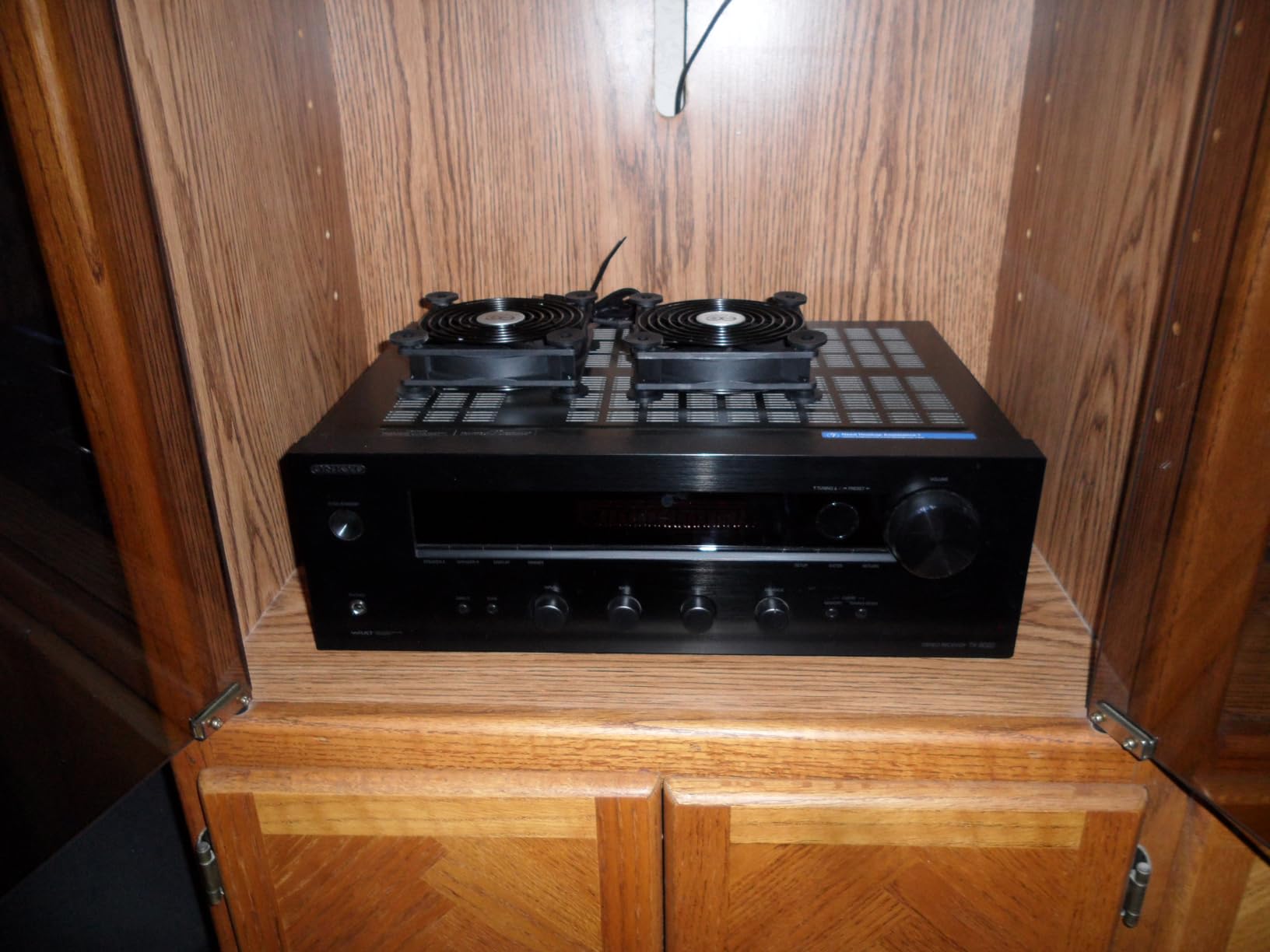
Build quality surprised me for the price. The aluminum alloy housing feels solid and provides decent electromagnetic shielding, which helps keep the audio signal clean. The included optical cable is about three feet long, which was enough for my desk setup but might require an extension for a TV entertainment center. The gold-plated RCA connectors are a nice touch and should resist corrosion over time.
On the technical side, the PROZOR supports sampling rates up to 192KHz at 24-bit depth, covering CD quality and beyond. It uses a dual-channel operational amplifier for stereo output. The main limitation is that it only handles 2-channel LPCM/PCM signals, so no Dolby Digital or DTS surround decoding. If your source outputs PCM stereo, you are good to go.
Who Should Buy This DAC
This is the DAC I recommend for anyone who needs to extract audio from a TV, game console, or Blu-ray player and send it to speakers, a receiver, or a soundbar that lacks a digital input. It solves a very specific connectivity problem at a price that makes it an easy decision. With over 42,000 reviews and a 4.4-star rating, it has proven itself reliable for countless users.
Who Should Look Elsewhere
If you are building a headphone listening station or need USB input from a computer, this is not the right pick. It also will not decode surround sound formats, so home theater users with 5.1 or 7.1 setups need something more capable. Audiophiles looking for high-resolution USB audio should consider the Fosi Audio Q4 or FiiO KA13 instead.
2. eSynic Portable Optical to RCA Adapter – Best for TV-to-Speaker Connection
eSynic Professional 192KHZ Optical to RCA Audio Adapter-7 FT Cable Long
192kHz/24bit DAC
7ft Optical Cable Included
Aluminum Housing
Gold-Plated RCA
Pros
- Plug and play simplicity
- 7ft cable included
- Premium aluminum build
- Works with LG OLED eARC
- Solves modern TV audio extraction
Cons
- PCM 2.0 only
- Not bidirectional
- Requires USB power adapter
The eSynic optical-to-RCA adapter fills a niche that has become increasingly important: connecting modern TVs with HDMI eARC to older amplifiers or speakers that only accept analog inputs. I tested it with an LG OLED TV and a vintage Sony receiver, and it worked flawlessly right out of the box.
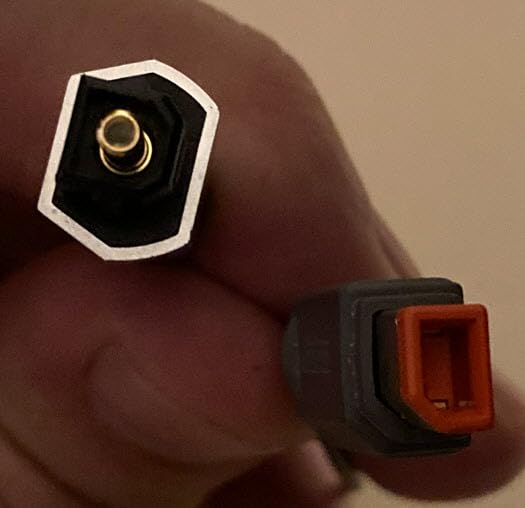
What sets this apart from other basic converters is the 7-foot fiber optic cable that comes included. That extra length makes a real difference when your TV is wall-mounted or your audio equipment sits on a different shelf. The aluminum housing feels premium and helps with heat dissipation during extended use. Gold-plated RCA ports round out the solid construction.
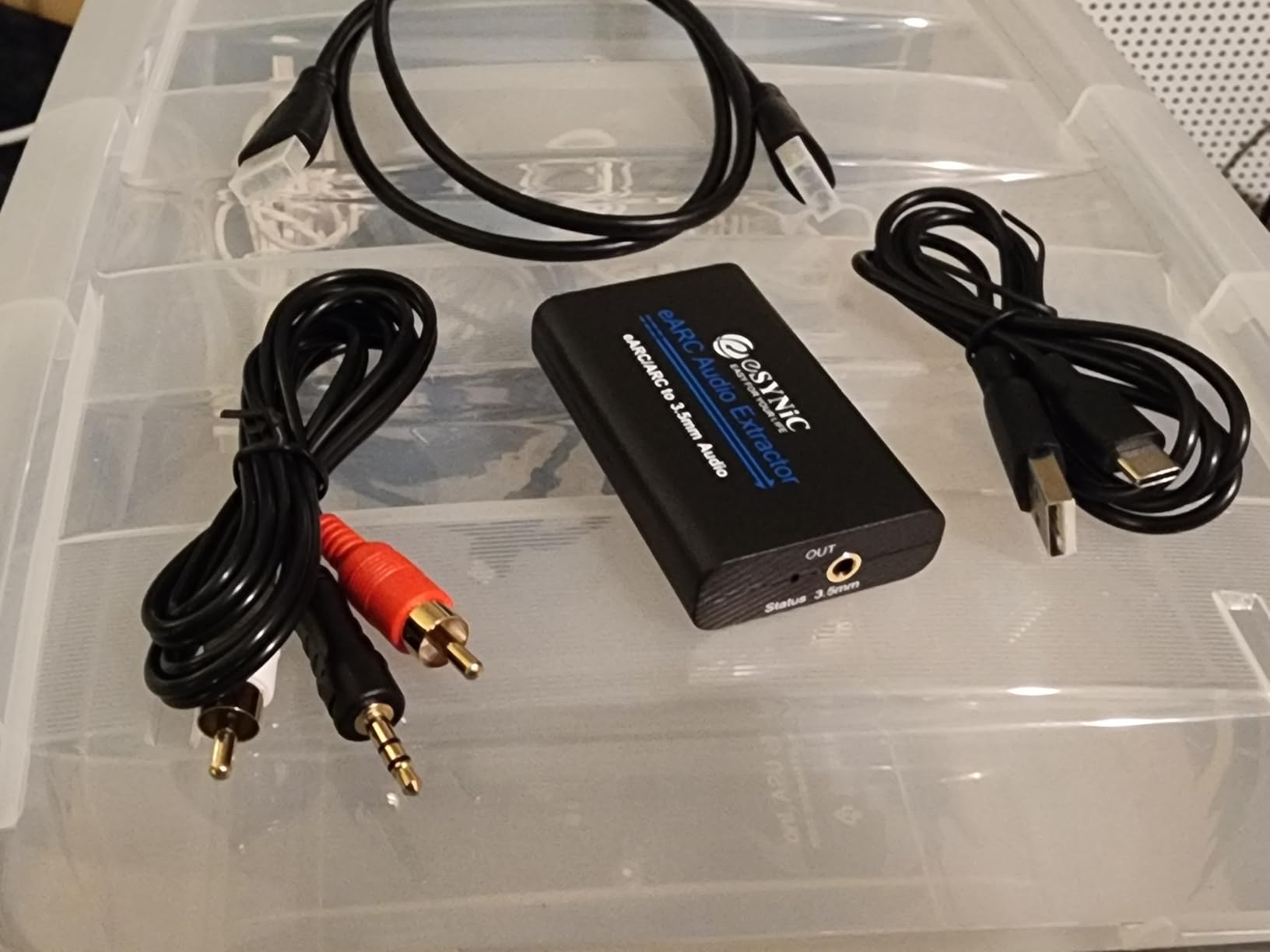
Sound quality is clean and free from the hum or static that plagues cheaper plastic converters. The 192kHz/24-bit DAC chip handles PCM stereo decoding capably, delivering clear highs and defined bass through the analog output. I noticed the audio was noticeably louder and cleaner than the PROZOR unit when used with the same TV and speakers, which speaks to the quality of the internal DAC chip.
The key limitation to understand is that this adapter only supports PCM 2.0 format. If your TV outputs Dolby Digital or DTS, you will need to change the audio format in your TV settings to PCM for it to work. This is a one-directional converter too, so it only goes from optical digital to RCA analog, not the other way around.
Ideal Setup for This Adapter
This adapter shines when you need to connect a new TV to a stereo system, soundbar, or pair of powered speakers that lack digital inputs. The longer cable and solid build quality make it better suited for living room or entertainment center setups compared to shorter alternatives. It is also a popular choice for connecting gaming consoles to desktop speaker systems.
Limitations to Consider
Since there is no USB input, this cannot be used as a computer DAC. The PCM-only limitation means you need to configure your source device appropriately. If you need bidirectional conversion or surround sound decoding, you will need to step up to a more full-featured unit like the Fosi Audio Q4.
3. BZINK USB-C to 3.5mm Audio Adapter – Best Portable DAC Dongle on a Budget
BZINK USB C to 3.5mm Audio Adapter with CX31993+MAX97220 DAC Amplifier
Dual CX31993+MAX97220 Chips
32bit/384KHz
Hi-Res Gold Certified
Silver-Plated Cable
Pros
- Sound quality exceeds Apple dongle
- Dual DAC chips for clean audio
- Premium silver-plated cable
- Broad device compatibility
- Hi-Res certified
Cons
- Thin wires at USB-C connector
- Durability concerns
- Volume ramps up quickly
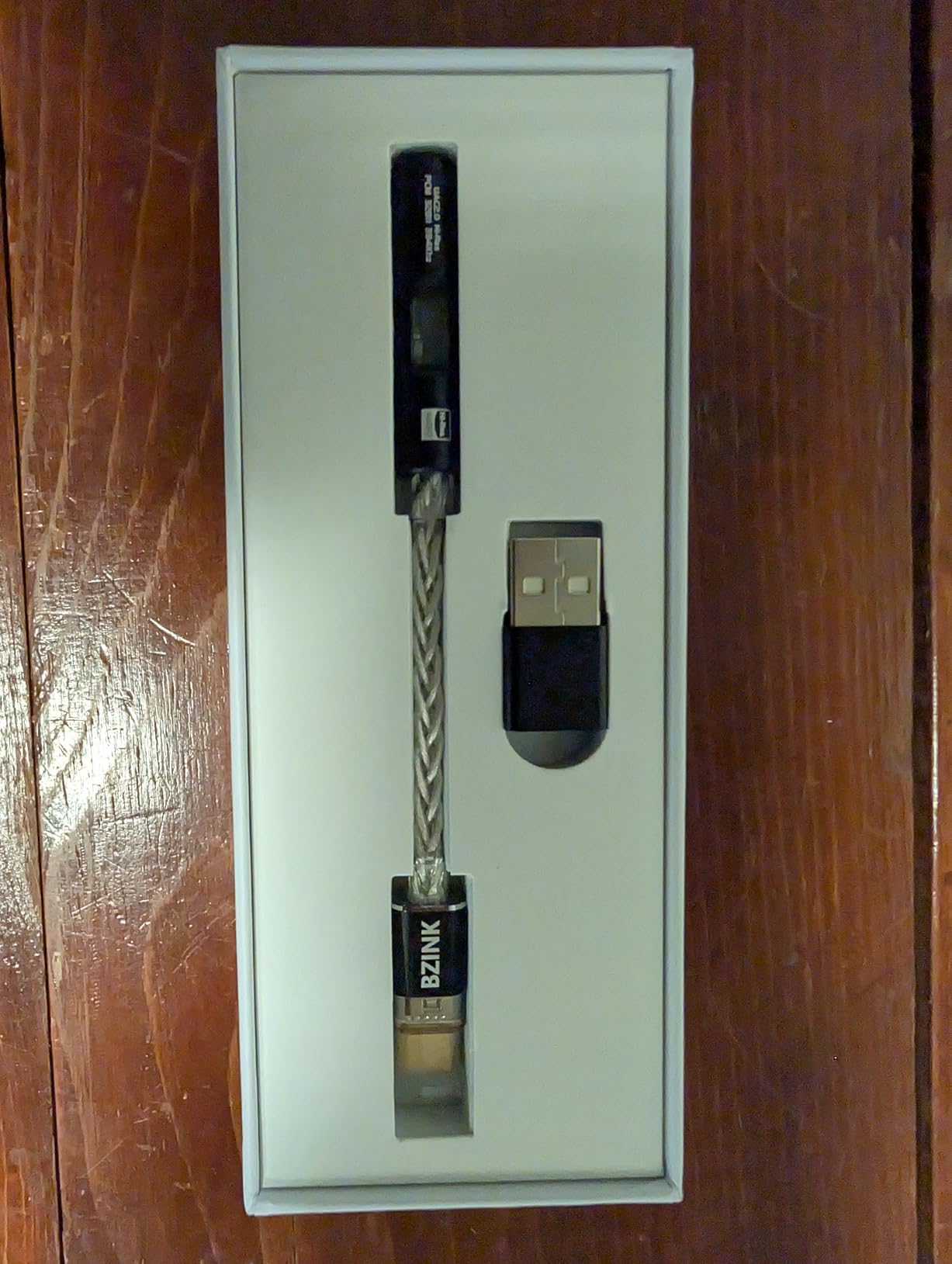
I carry the BZINK adapter in my bag every day as my go-to mobile DAC. The dual-chip setup with the CX31993 DAC and MAX97220 amplifier delivers sound that genuinely outperforms the Apple USB-C dongle that most people use as a baseline. Vocals have more presence, cymbals decay naturally, and the soundstage opens up noticeably compared to phone or laptop headphone jacks.
The 32-bit/384kHz support and Hi-Res Gold Label certification mean this little dongle can handle high-resolution audio files well beyond CD quality. I tested it with FLAC files on my laptop and Tidal HiFi on my phone, and both sounded excellent. The 8-strand single crystal silver-plated copper cable is a nice upgrade over standard USB-C dongle cables, and you can hear the difference in the cleaner high-frequency reproduction.
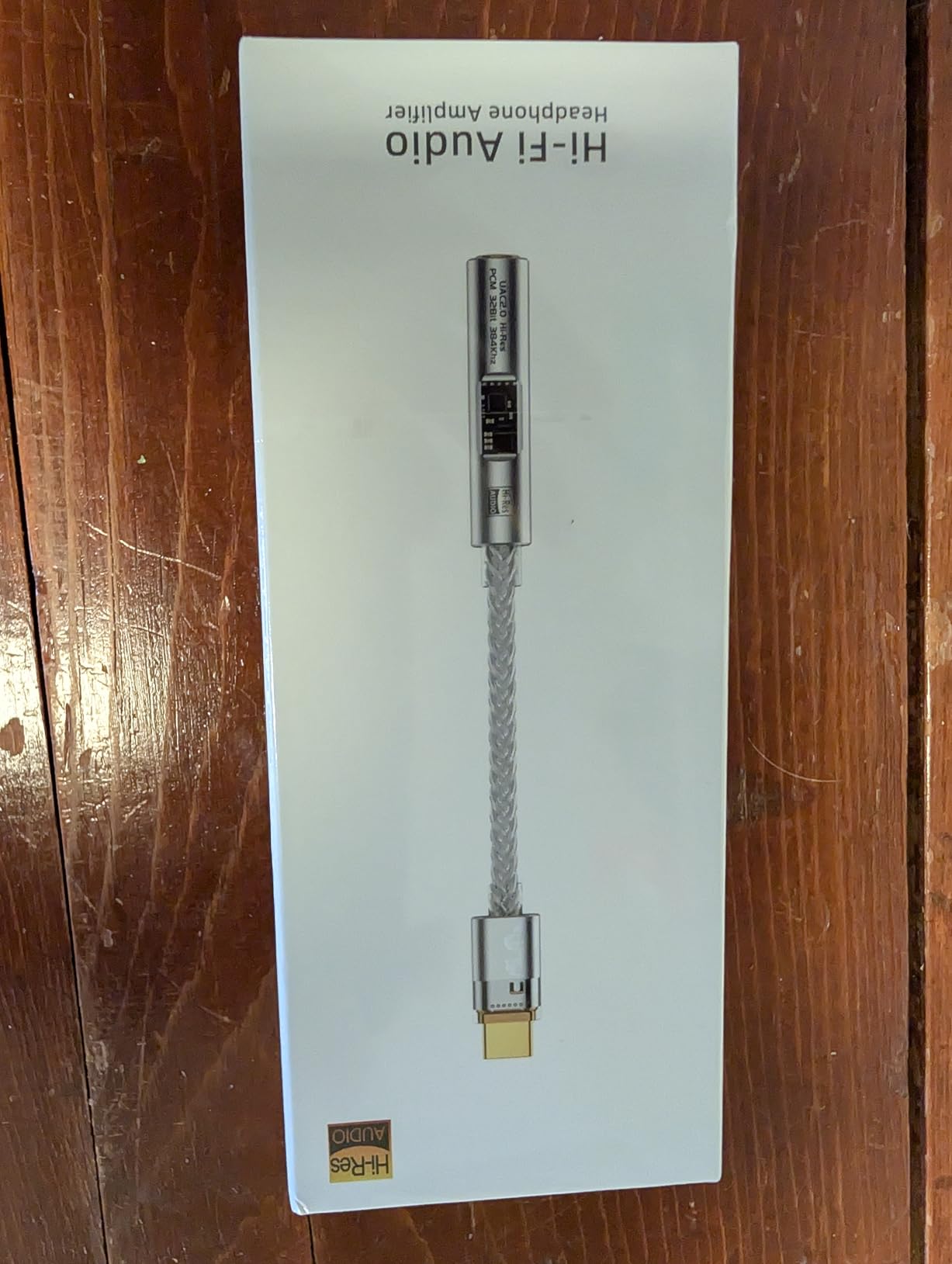
Compatibility is broad, covering Samsung Galaxy S and Note series, Google Pixel phones, iPhones 15 and newer, iPads, MacBooks, and even the Steam Deck. A USB-A adapter is included in the box for older computers. The aviation-grade aluminum casing around the DAC chips feels solid and provides shielding against interference from your phone’s cellular radio.
The main tradeoff is durability. Several users have reported that the thin wires where the cable meets the USB-C connector can fray over time with daily use. I have been careful with mine and it has held up, but it is worth being gentle when plugging and unplugging. The volume also gets loud quickly, so you may want to start low and work your way up.
Who This Dongle Is For
This is perfect for anyone who listens to music on their phone or laptop and wants better sound than the built-in DAC provides without carrying a full-size unit. IEM users will especially appreciate the clean background and detailed treble. It is also a great first step into the DAC world if you want to hear what the fuss is about before investing in a desktop unit.
Who Should Skip It
If you need optical or coaxial inputs, this dongle only handles USB-C. It also does not have a dedicated amplifier section powerful enough for high-impedance headphones over 150 ohms. For driving demanding cans, look at the FiiO K5Pro ESS or Fosi Audio K7 further down this list.
4. Fosi Audio Q4 DAC Headphone Amp – Best Entry-Level Desktop DAC/Amp Combo
Fosi Audio Q4 DAC Headphone Amp for PC, Desktop Digital to Analog Audio Converter for Home Stereo Amplifier and Powered Speakers, PC-USB/Optical/Coaxial Inputs, 3.5mm Headphone/RCA Outputs
USB/Optical/Coaxial Inputs
Bass and Treble Knobs
24-bit/192kHz
Drives 16-200 Ohm Headphones
Pros
- Three input options
- Bass and treble EQ knobs
- Plug and play no drivers
- Compact metal design
- Powers headphones 16-200 ohms
Cons
- White noise on sensitive headphones
- Short included cables
- Requires two USB connections
- No microphone input
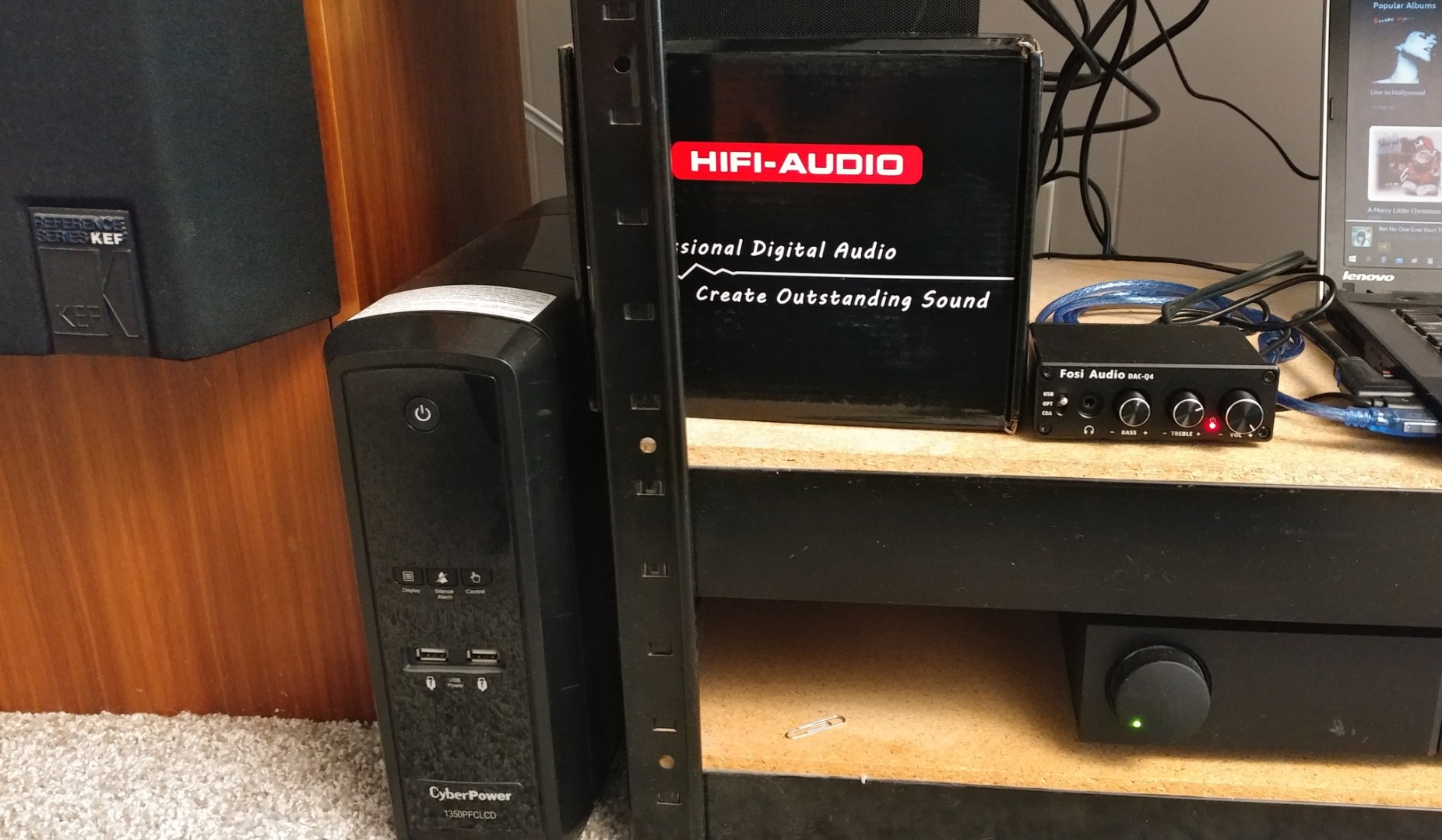
The Fosi Audio Q4 was my first desktop DAC, and I still think it is one of the smartest entry points into better audio. The reason is simple: the bass and treble knobs on the front panel. Most DACs at this price give you flat output and expect you to handle EQ in software. The Q4 lets you adjust the tonal balance with physical knobs, which makes a huge difference when switching between music genres, movies, and games.
I used the Q4 for six months as my daily driver, feeding it from my PC’s USB port to a pair of Sennheiser HD599 headphones. The improvement over my motherboard’s Realtek audio was obvious from the first track. Background noise dropped to silence, instruments separated clearly in the soundstage, and bass had more punch without becoming muddy. The three input options, USB, optical, and coaxial, mean you can connect it to a computer, TV, or CD player.
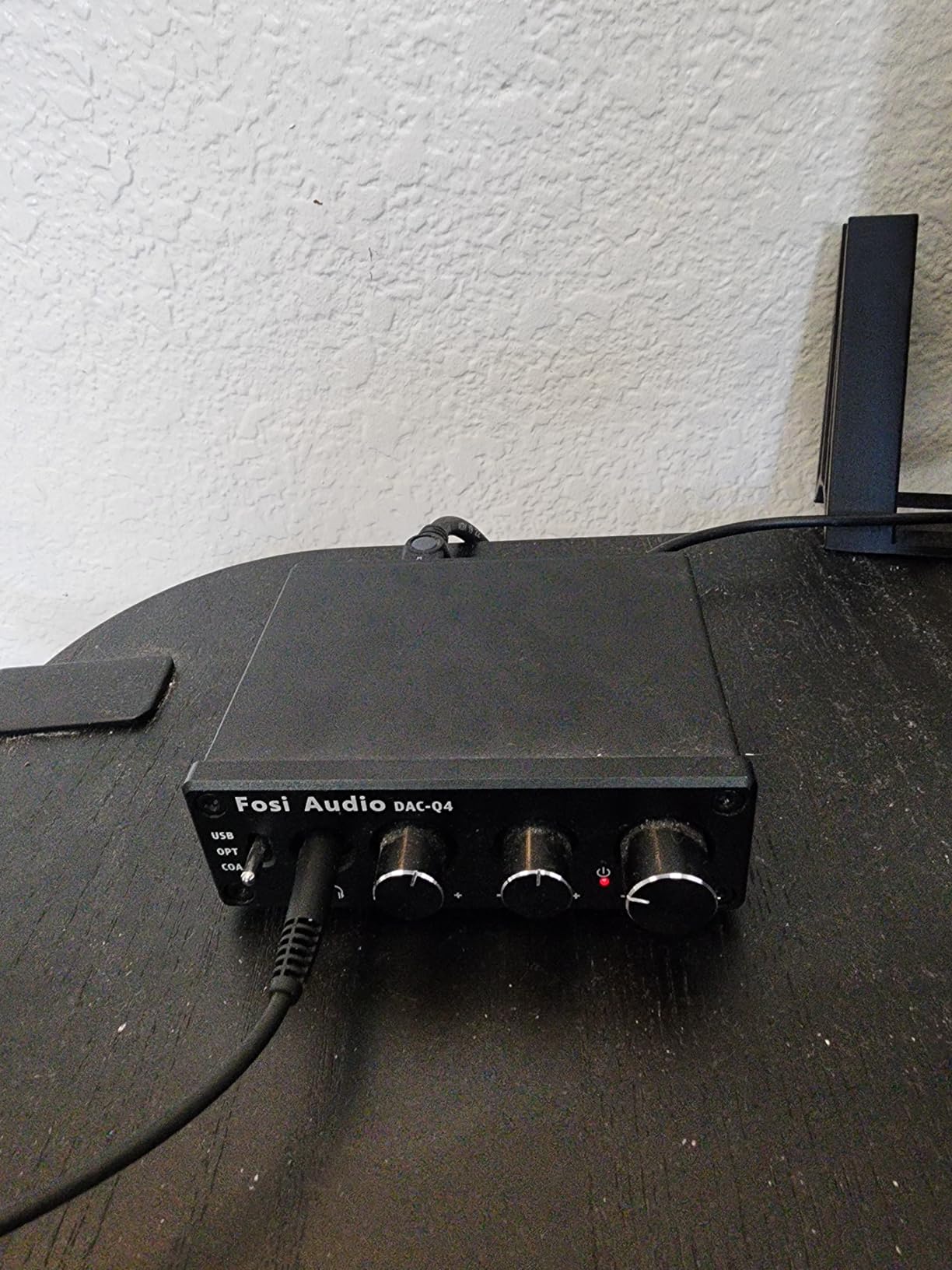
The full metallic shell provides good shielding and gives the unit a solid, premium feel that belies its price. It drives headphones from 16 to 200 ohms, covering the vast majority of consumer and mid-range audiophile headphones. The 3.5mm headphone output on the front and RCA outputs on the back let you run both headphones and powered speakers from the same unit.
The main drawback is a faint white noise floor that becomes audible with very sensitive IEMs or low-impedance earbuds. With standard over-ear headphones in the 32-80 ohm range, it is not an issue. You also need two USB connections, one for power and one for data, which uses up ports on your computer or requires a USB hub.
Best Use Cases
The Q4 is ideal for a desktop setup where you want to upgrade from onboard computer audio to something noticeably better with the flexibility of physical tone controls. It works well for gaming because you can boost bass for explosions and cut it back for competitive FPS where you need to hear footsteps. The multiple inputs also make it easy to switch between PC and console audio.
When to Choose Something Else
If you use sensitive IEMs below 32 ohms, the white noise may bother you, and the FiiO KA13 or iFi Zen DAC V2 would be better choices. The 24-bit/192kHz maximum resolution is plenty for most music but falls short of the 32-bit/768kHz that the Fosi Q6 offers for high-resolution file playback.
5. FiiO KA13 Portable DAC Dongle – Best Portable DAC with Desktop Power
FiiO/JadeAudio KA13 Portable DAC Dongle, USB-C Adapter, 3.5mm and 4.4mm Outputs Compatible with Android/iOS System/PC/Music Players, PCM 384kHz/32bit | DSD256 550mW high Power (Silver)
Dual CS43131 DACs
550mW Desktop Mode
3.5mm and 4.4mm Outputs
PCM 384kHz/DSD256
Pros
- Desktop mode delivers 550mW
- Dual 3.5mm and 4.4mm balanced outputs
- Excellent detail and soundstage
- Compact portable design
- App control for filters and settings
Cons
- Gets warm in desktop mode
- 5G signal interference on some phones
- Volume can spike unexpectedly
- Companion app needs work
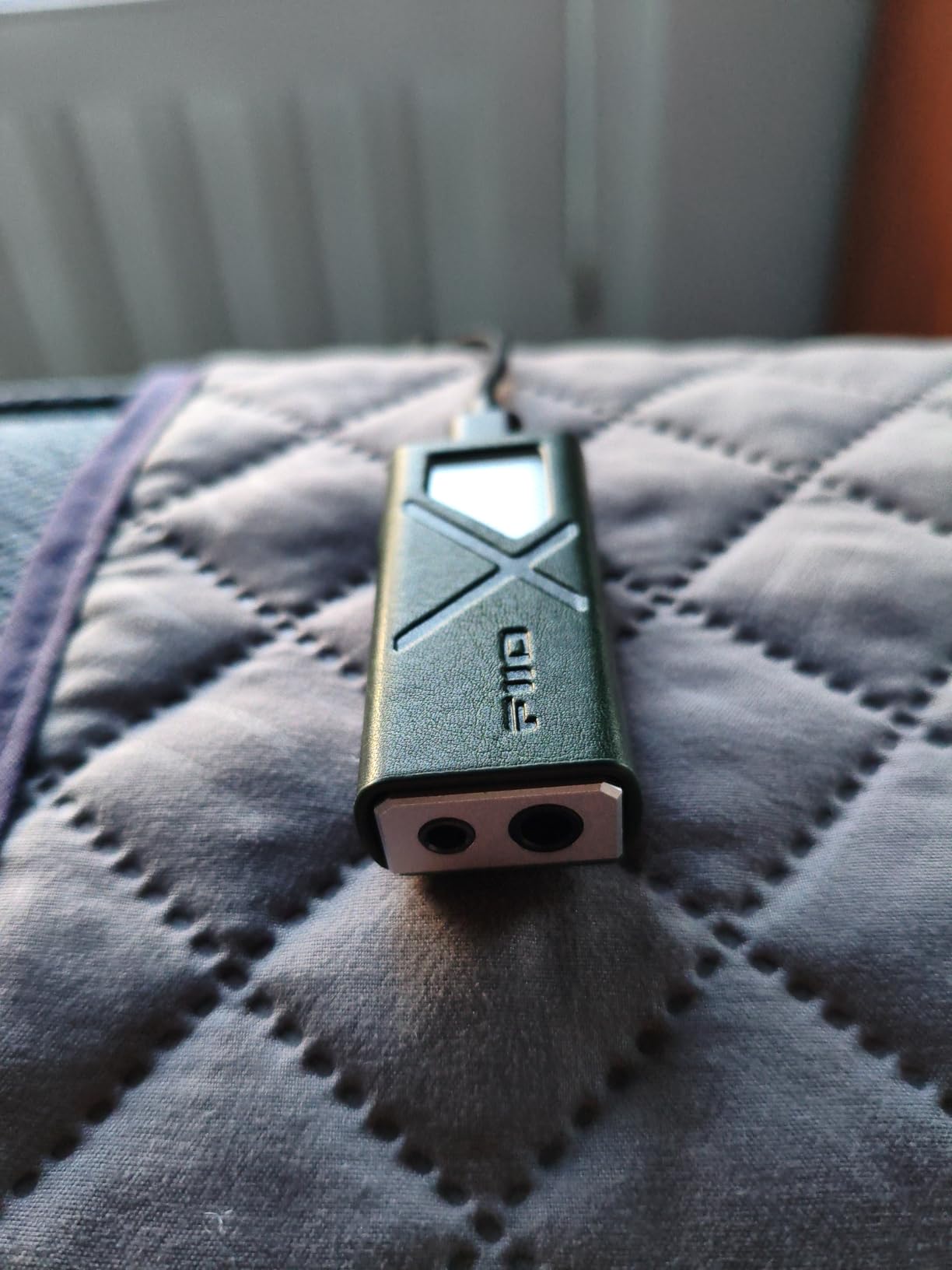
The FiiO KA13 is the portable DAC that convinced me a dongle could replace a desktop unit for most listening. The dual CS43131 DAC chips and SGM8262 op-amps produce sound that rivals standalone DACs twice its price. In normal mode it sounds great with IEMs and easy-to-drive headphones. Flip on desktop mode and it pushes 550mW through the 4.4mm balanced output, enough to drive demanding planar magnetic headphones like the Hifiman Sundara.
I tested the KA13 with my laptop as a daily driver for three weeks, using it with everything from 16-ohm IEMs to 250-ohm Beyerdynamic DT 770 Pros. The detail retrieval is impressive for this form factor. Subtle reverb tails, breath sounds in vocals, and micro-dynamics in jazz recordings all came through clearly. The 4.4mm balanced output is a genuine advantage over most dongles that only offer 3.5mm single-ended.
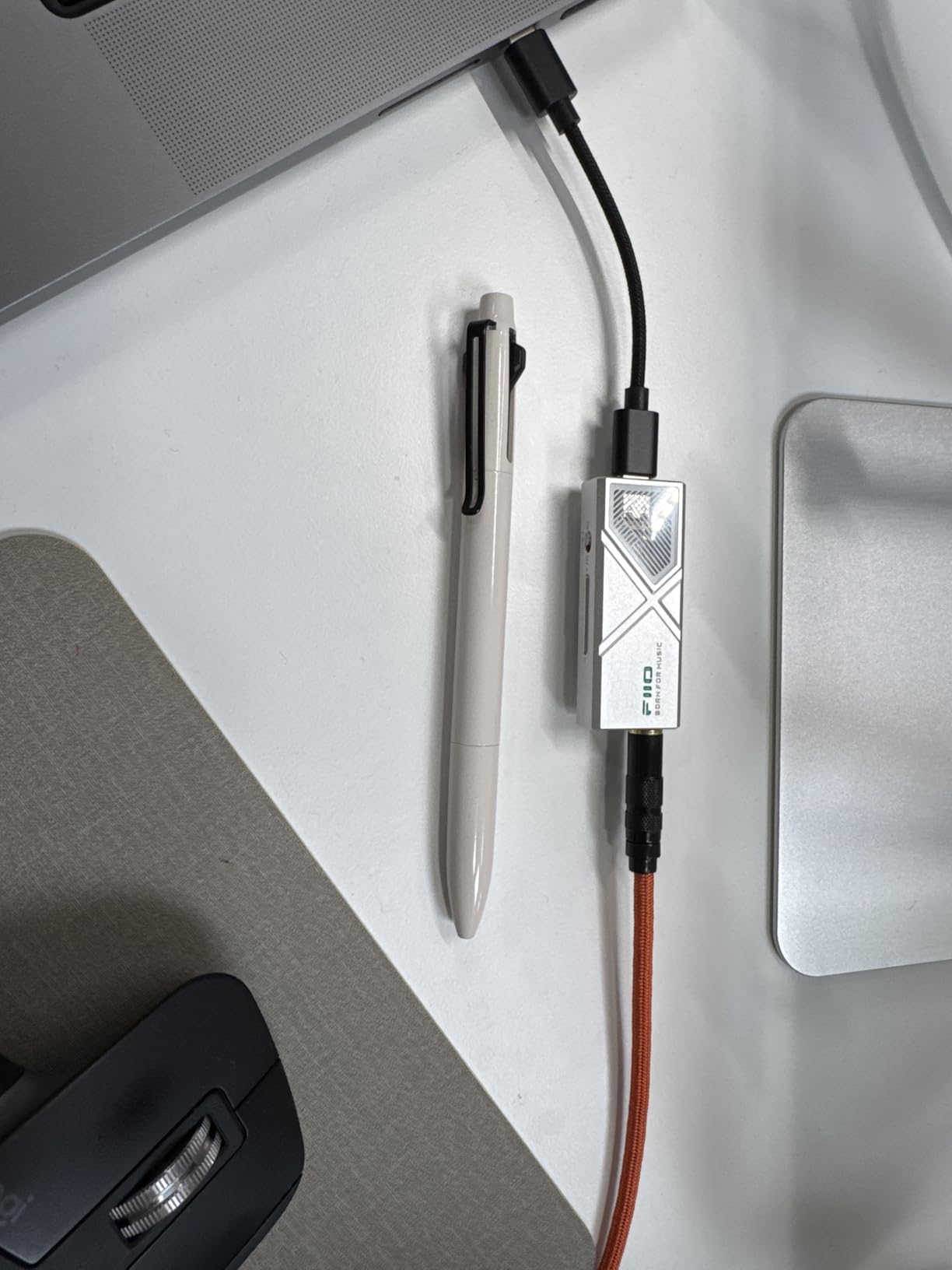
The FiiO Control app lets you adjust hardware filters, toggle SPDIF output, and customize the RGB lighting. I kept the filters on “Short Delay Sharp Roll-off” for the cleanest response. The app is functional but could be more polished. Build quality is excellent with a solid metal body that disperses heat well during extended listening sessions.
There are a few quirks to be aware of. The unit gets warm in desktop mode, which is expected given the power output but worth noting. On some Android phones with 5G, there can be signal interference that causes pops or clicks. Using it with a laptop or PC eliminates this issue entirely. The volume control can also jump to maximum unexpectedly when plugging in, so keep your headphones off your ears during connection.
Who This Portable DAC Suits Best
The KA13 is perfect for audio enthusiasts who want desktop-quality sound in a portable package. If you split your listening between a computer desk and on-the-go with your phone, this single dongle handles both scenarios. The balanced 4.4mm output makes it future-proof if you plan to upgrade to balanced headphones or cables down the road.
Potential Dealbreakers
If you primarily listen on an Android phone with active 5G, the interference issue could be frustrating. Users who do not need balanced output or desktop-level power might find the FiiO KA11 or BZINK adapter sufficient at a lower cost. Those wanting a full-size desktop unit with physical volume knob should consider the FiiO K5Pro ESS instead.
6. Fosi Audio Q6 Mini Desktop DAC – Best Overall Desktop DAC
Fosi Audio Q6 Mini Desktop DAC, USB C Digital to Analog Audio Converter for Home Stereo Amplifier and Headphone Amp, Optical/Coaxial Input, RCA Output/Sub-Out, High-Resolution 32bit/768kHz DSD512
AKM AK4493S DAC
PCM 32bit/768kHz
DSD512 Support
121dB SNR
0.00012% THD
Pros
- Audiophile-grade AK4493S chip
- Exceptional 121dB signal-to-noise ratio
- Clean detailed sound rivals units at 5x the price
- Versatile optical/coaxial/USB inputs
- Solid aluminum construction
Cons
- Clicking sounds when music starts/stops
- No balanced outputs
- Analog power switch
- No firmware updates
The Fosi Audio Q6 is the DAC that made me stop searching. After testing units from entry-level to mid-tier, the Q6 hit a sweet spot that I did not think was possible at this price. The AKM AK4493S DAC chip combined with the OPA1612 op-amp and XMOS XU316 processor delivers a listening experience that genuinely competes with DACs costing five to ten times more. The 4.7-star rating from early reviewers tells you this is not just my opinion.
On my desk, I connected the Q6 via USB-C to my Mac, with RCA outputs running to a pair of powered monitors and headphones connected through an external amp. The first thing I noticed was the black silence between tracks. The 121dB signal-to-noise ratio and 0.00012% total harmonic distortion mean the noise floor is essentially non-existent. Every detail in my reference recordings was laid bare with precision.
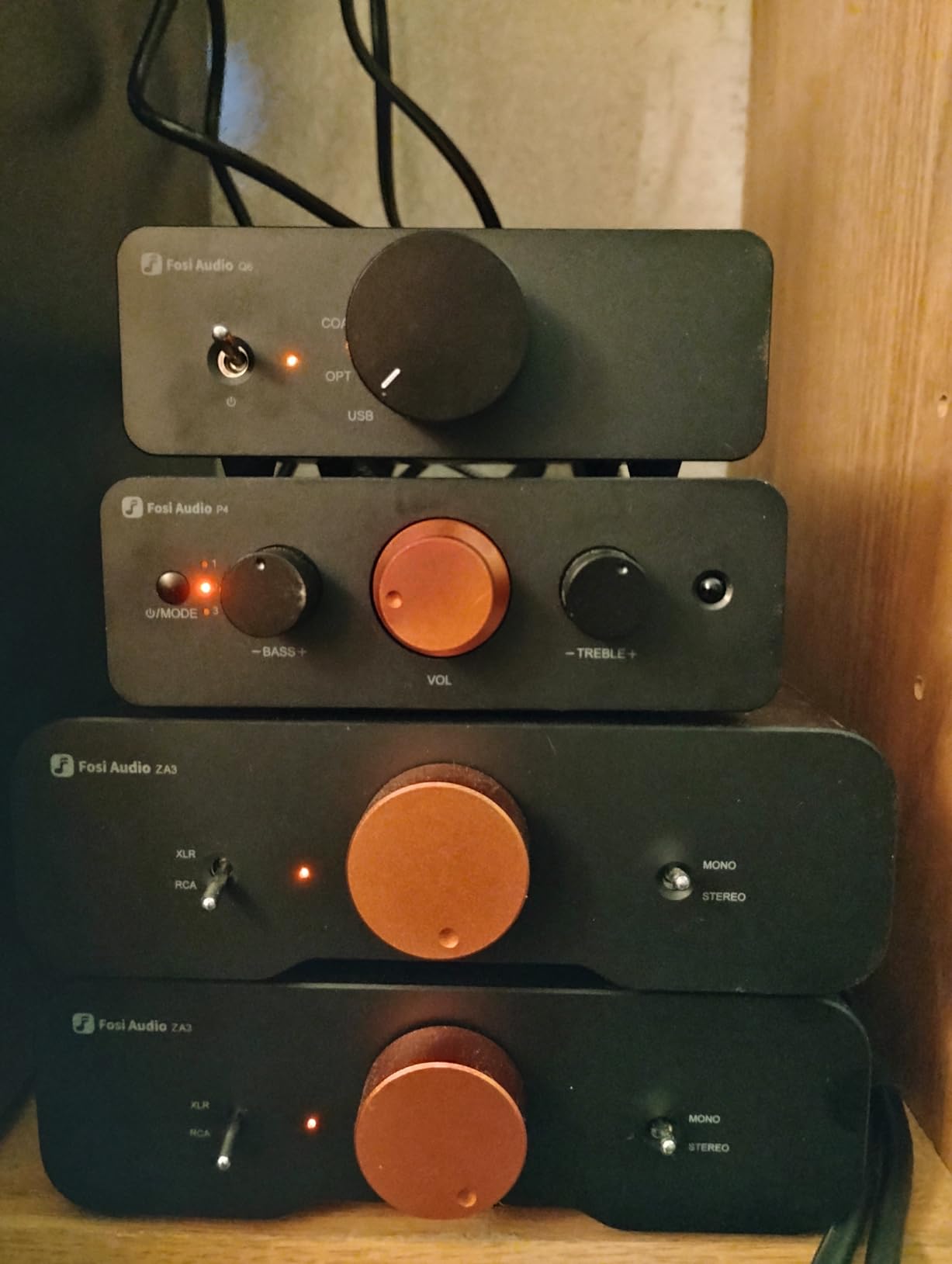
Format support is outstanding for a compact desktop unit. PCM up to 32-bit/768kHz covers every mainstream and high-resolution format available today, and native DSD512 support handles SACD-quality material. Whether you stream from Tidal, Qobuz, or play local FLAC files, the Q6 processes everything natively without downsampling. The XMOS chip ensures low-latency, low-jitter USB audio delivery.
The build is all aluminum, compact enough to sit under a monitor, and solid enough to stay put on your desk. Connectivity is comprehensive with USB, optical, and coaxial inputs plus RCA and sub-out outputs. The subwoofer output is particularly useful if you run a 2.1 desktop speaker setup. Fosi Audio includes a 24-month warranty, which is generous and reflects confidence in the product.
Why This Is Our Top Pick
The Q6 earned our Editor’s Choice because it delivers audiophile-grade performance at a price that makes high-end audio accessible. The AK4493S is the same chip family found in DACs costing thousands. Whether you are a first-time DAC buyer or an experienced listener looking for a compact desktop unit, the Q6 handles everything you throw at it with clean, neutral, detailed sound that lets your headphones and speakers perform at their best.
What to Know Before Buying
The Q6 does not include a headphone amplifier, so you will need a separate amp or powered headphones if you plan to listen through cans. The clicking relay sounds when music starts and stops can be noticeable in a quiet room. There are also no balanced outputs, which matters if you have invested in balanced headphone cables or XLR interconnects.
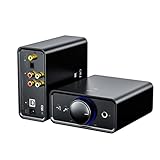
7. FiiO K5Pro ESS – Best Mid-Range DAC/Amp Combo with ESS Chip
FiiO K5Pro ESS Amplifier Headphone Amps Stereo High Resolution Portable Desktop DAC 768K/32Bit and Native DSD512 for Home Audio/PC 6.35mm Headphone Out/RCA Line-Out/Coaxial/Optical Inputs (Black)
ES9038PRO DAC
768kHz/32bit
DSD256
1.5W at 32ohm
6.35mm Output
Pros
- Excellent ESS chip sound quality
- 1.5W power drives most headphones
- Three gain level settings
- Multiple input options
- No drivers needed on Windows
Cons
- Volume knob deadzone at start
- Only one headphone output
- Runs warm with extended use
- ASIO driver noise issues
The FiiO K5Pro ESS sits in that sweet spot where serious audio performance meets practical usability. The ES9038PRO is one of ESS Technology’s flagship DAC chips, and FiiO has implemented it well here. During my two months with the K5Pro, I was consistently impressed by the clean, dynamic presentation that the ESS chip brings. Kick drums have visceral impact, string instruments have natural texture, and the overall tonality is neutral with a slight energetic character that makes music engaging.
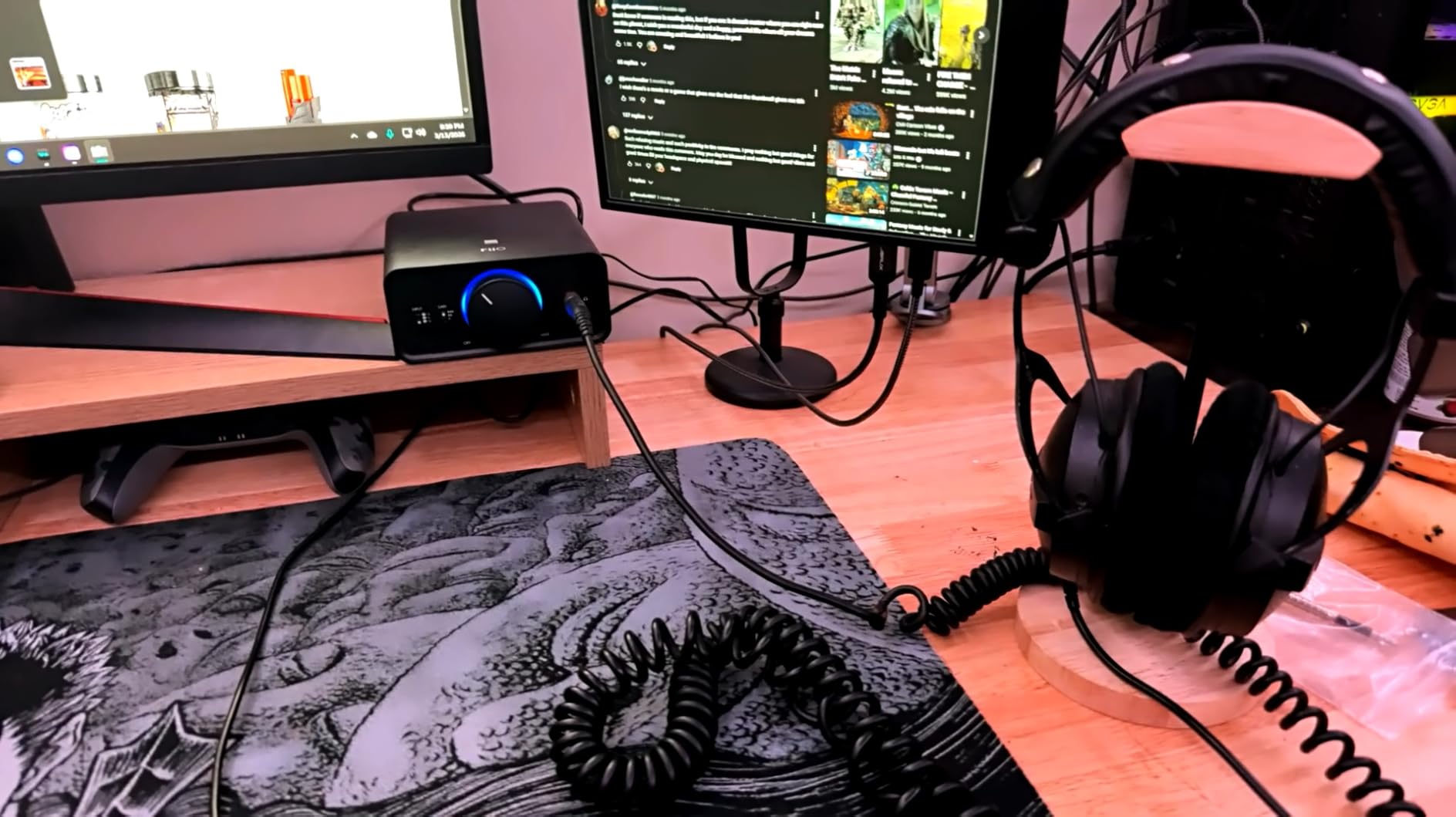
Power output is generous at 1.5W into 32 ohms, and the three gain settings let you match the output to anything from sensitive IEMs to power-hungry planar headphones. I used it with 250-ohm Beyerdynamics on high gain and had plenty of headroom to spare. The 6.35mm headphone jack on the front is a professional-grade connector that grips firmly and provides reliable contact.
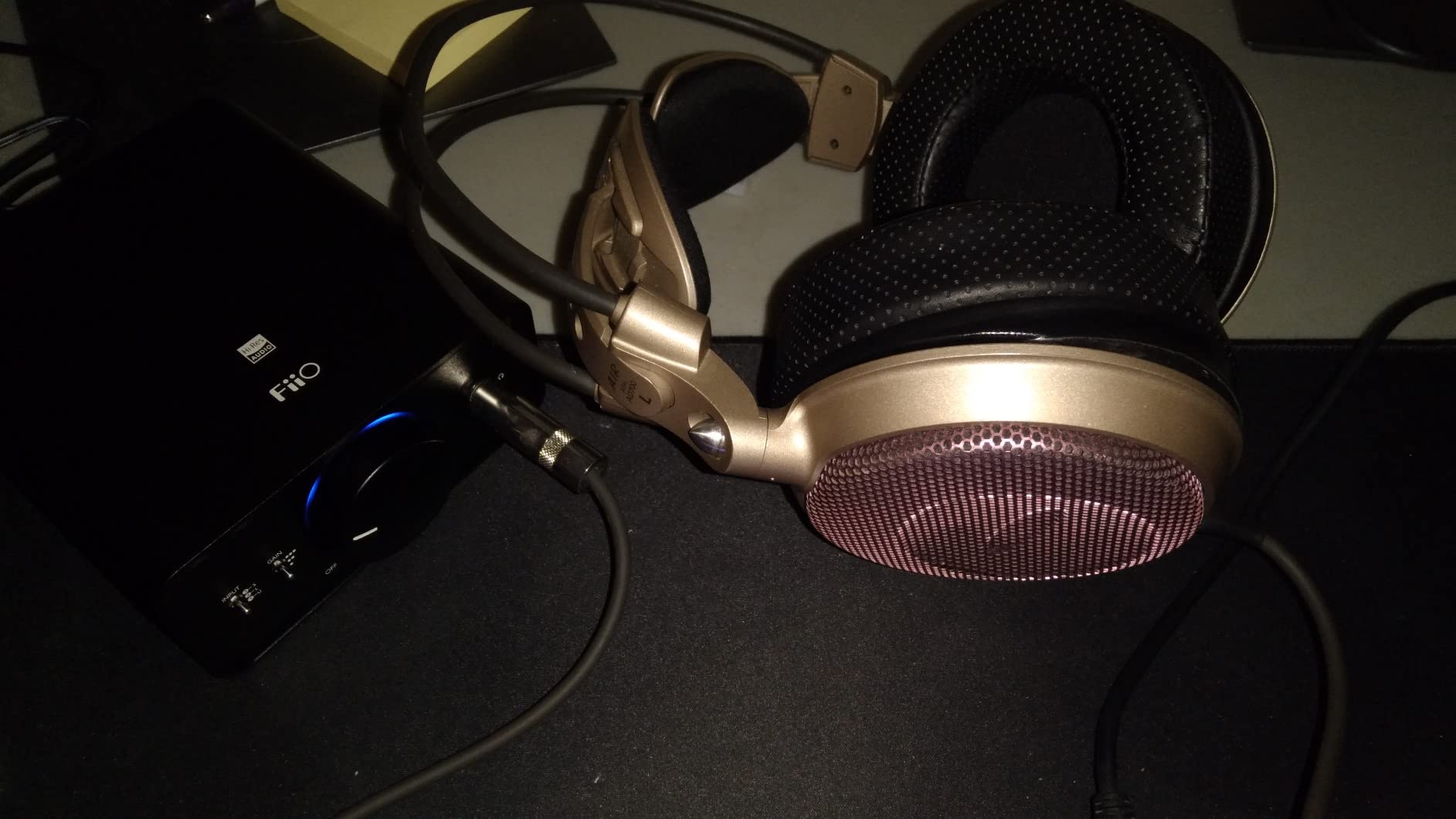
Connectivity is solid with USB, optical, and coaxial inputs. The RCA line output on the back is adjustable up to 2Vrms, so you can use the K5Pro as a pure DAC feeding an external amplifier, or as a combined DAC/amp for headphones. The volume knob uses ADC-based control for smooth, channel-balanced adjustment across the entire range. Build quality is excellent with a mix of metal and high-grade plastic that feels substantial.
The main annoyance is a small dead zone at the beginning of the volume knob rotation where nothing happens before sound kicks in. It is not a dealbreaker but can catch you off guard. The unit also runs warm during long listening sessions, though never hot enough to cause concern. If you use ASIO drivers for low-latency audio production, some users report noise artifacts that the standard WASAPI driver avoids.
Best Pairings for the K5Pro ESS
This is the unit I recommend most often for people who want one box that handles both DAC and amplification duties for a desktop headphone setup. Pair it with headphones in the 32 to 300 ohm range and you will get excellent results. It works particularly well with Sennheiser HD6XX, Beyerdynamic DT series, and Audio-Technica ATH models. The ESS chip’s analytical sound pairs well with warmer headphone tunings.
When the K5Pro Might Not Fit
If you need balanced headphone outputs, the single-ended 6.35mm jack limits you to unbalanced connections. Users who want Bluetooth input for wireless streaming should look at the Fosi Audio K7 which adds aptX HD connectivity. And if you prefer the warmer Burr Brown sound signature over ESS’s analytical presentation, the iFi Zen DAC V2 is the better match.
8. AudioQuest Dragonfly Cobalt USB DAC – Best Portable Reference DAC
AudioQuest Dragonfly Cobalt USB Digital-to-Analog Converter
ESS ES9038Q2M DAC
24-bit/96kHz
MQA Decoding
USB Type A
Thumb-Drive Size
Pros
- Dramatic sound quality upgrade
- Compact thumb-drive form factor
- Works with iOS and Android
- Plays MQA and Hi-Res audio
- Warm natural sound signature
- Firmware upgradeable
Cons
- USB connector contact issues on some units
- Distortion at high volumes
- Some units report static
- Ruggedness concerns at price
The AudioQuest Dragonfly Cobalt has been a staple in the portable DAC world for good reason. Its ESS ES9038Q2M chip delivers a warm, natural sound signature that makes long listening sessions easy and enjoyable. I have carried one on and off for over a year, and it consistently produces sound that is richer and more musical than any phone or laptop headphone jack. There is a reason over 4,600 reviewers have given it 4.4 stars.
The form factor is unbeatable for portability. It looks and handles like a slightly oversized USB thumb drive. Plug it into a laptop, phone (with an adapter), or tablet, and your audio output transforms instantly. The minimum-phase slow roll-off filter gives the Cobalt its signature smooth, analog-like presentation that avoids the harsh treble some ESS implementations can produce. The LED on the end changes color to indicate the current sample rate, which is a handy diagnostic feature.
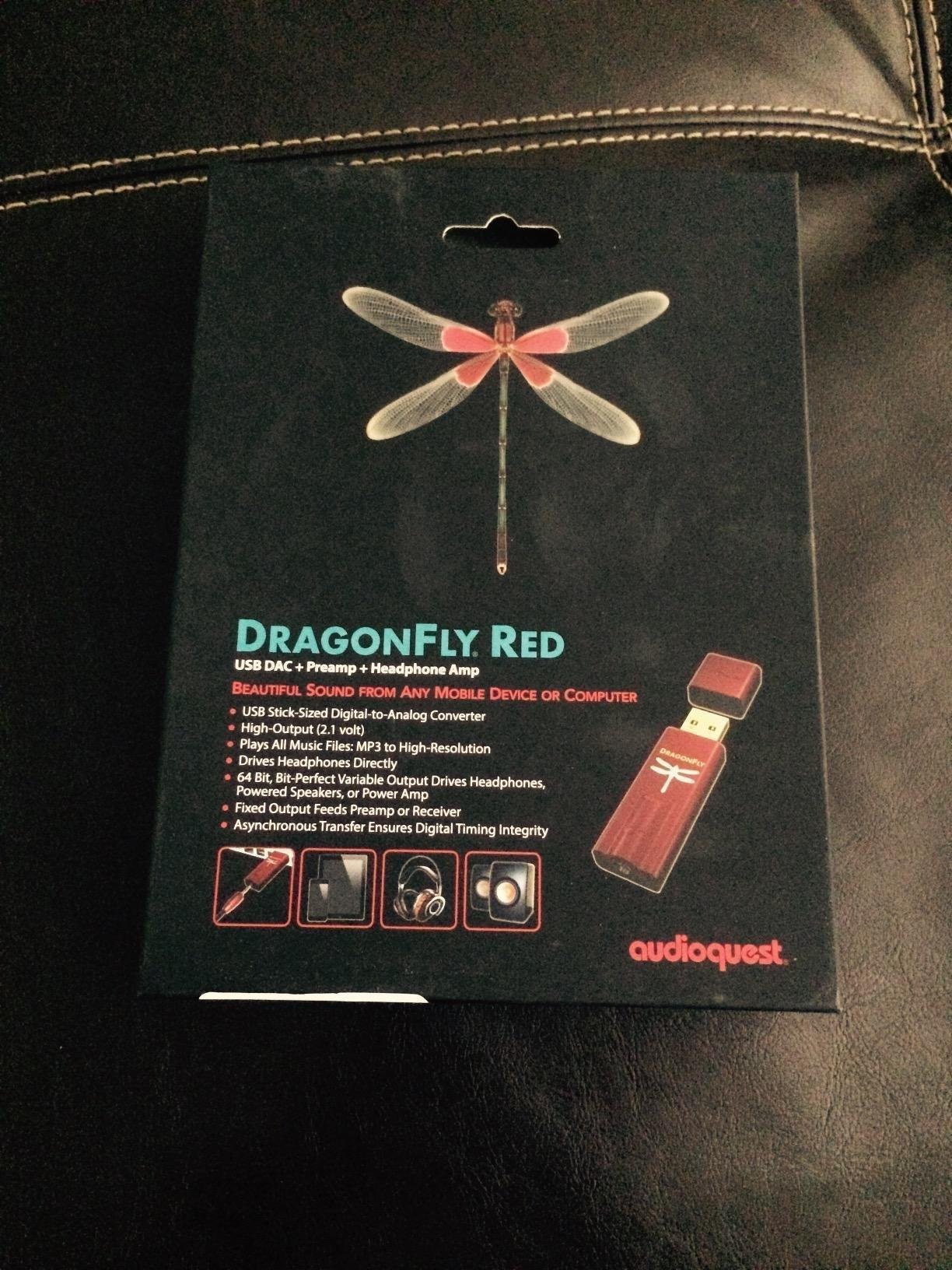
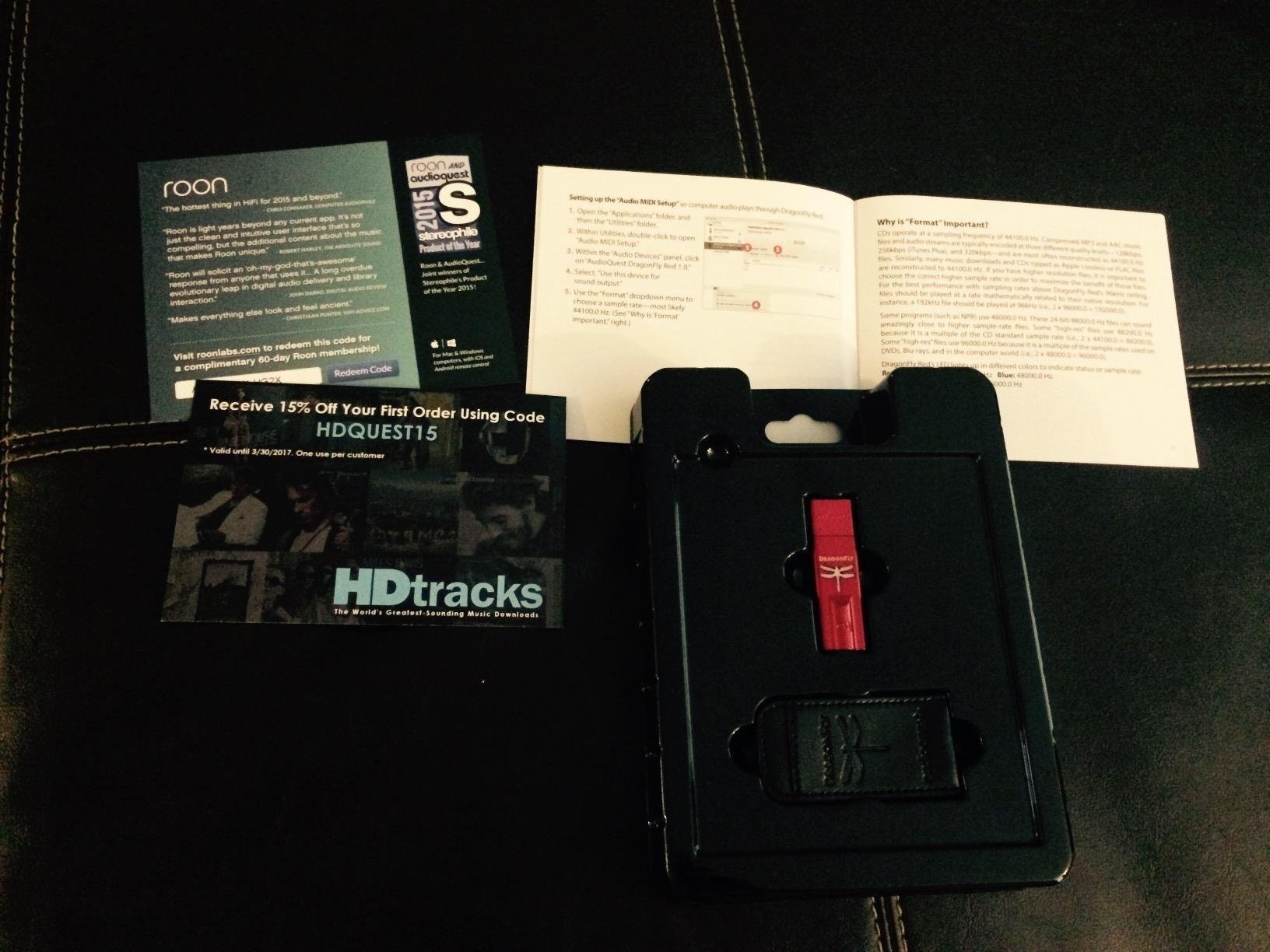
MQA decoding support means you can unlock full-quality Tidal Masters streams, which is a genuine advantage for streaming-focused listeners. The Cobalt handles the full MQA unfold natively, delivering studio-quality resolution from compressed streams. Firmware is upgradeable through AudioQuest’s desktop application, so the unit can improve over time with bug fixes and compatibility updates.
The included DragonTail USB extender is thoughtful, reducing strain on your computer’s USB port and giving you a flexible cable between the Cobalt and your device. However, some users have reported USB connector reliability issues over time. The Cobalt also maxes out at 24-bit/96kHz resolution, which is more than enough for most listeners but falls short of the 32-bit/384kHz that newer dongles like the FiiO KA13 support.
Who the Cobalt Appeals To
The Dragonfly Cobalt is best for listeners who want a grab-and-go DAC that sounds warm and musical without any setup or configuration. Tidal users benefit most from the MQA decoding. It is also a great gift for someone who is curious about better audio but does not want to deal with desktop equipment or software settings. The plug-in-and-enjoy experience is its strongest selling point.
Reasons to Consider Alternatives
At this price, the FiiO K5Pro ESS offers dramatically more power and flexibility for desktop use. The BZINK dongle covers basic USB-C DAC duties at a fraction of the cost. And if you want higher resolution support beyond 24/96, the FiiO KA13 or iFi Zen DAC V2 both exceed the Cobalt’s format capabilities. The Cobalt also lacks a headphone amplifier section, so very high-impedance headphones may not reach satisfying volume levels.
9. Fosi Audio K7 DAC Headphone Amp – Best Value Desktop DAC/Amp
Fosi Audio K7 DAC Headphone Amp, Desktop Headphone Amplifier for Gaming PC PS5 Switch, PCM 384kHz/32bit, 2100mW, USB C/Bluetooth aptX HD LL/Optical/Coaxial/Mic Input, 4.4mm Balanced/3.5mm/RCA Output
AK4493S DAC
2100mW Output
Bluetooth aptX HD
4.4mm Balanced
3.5mm Mic Input
Pros
- Massive 2100mW power output
- Clean neutral sound
- Bluetooth aptX HD/LL
- 4.4mm balanced and 3.5mm outputs
- Built-in microphone input
- All-metal aluminum construction
Cons
- Larger than some competitors
- Volume knob rotates without stops
- Display has poor viewing angles
- Accidental gain switch triggering
- No balanced XLR output
The Fosi Audio K7 earned our Best Value badge because it packs more features and raw power into one box than anything else at this price point. The 2100mW output is not a typo. This unit can drive planar magnetic headphones like the Hifiman Arya and LCD-2 with authority and headroom to spare. I tested it with a pair of 600-ohm headphones and was genuinely surprised at how much clean volume the K7 delivered without clipping or distortion.
The AK4493S DAC chip is the same one used in our Editor’s Choice Fosi Q6, so you know the digital conversion is excellent. Combined with TPA6120 headphone amplifier chips and XMOS XU208 USB processing, the signal chain is well-sorted from input to output. Sound signature is neutral and transparent, letting your headphones’ own character shine through without adding coloration of its own.
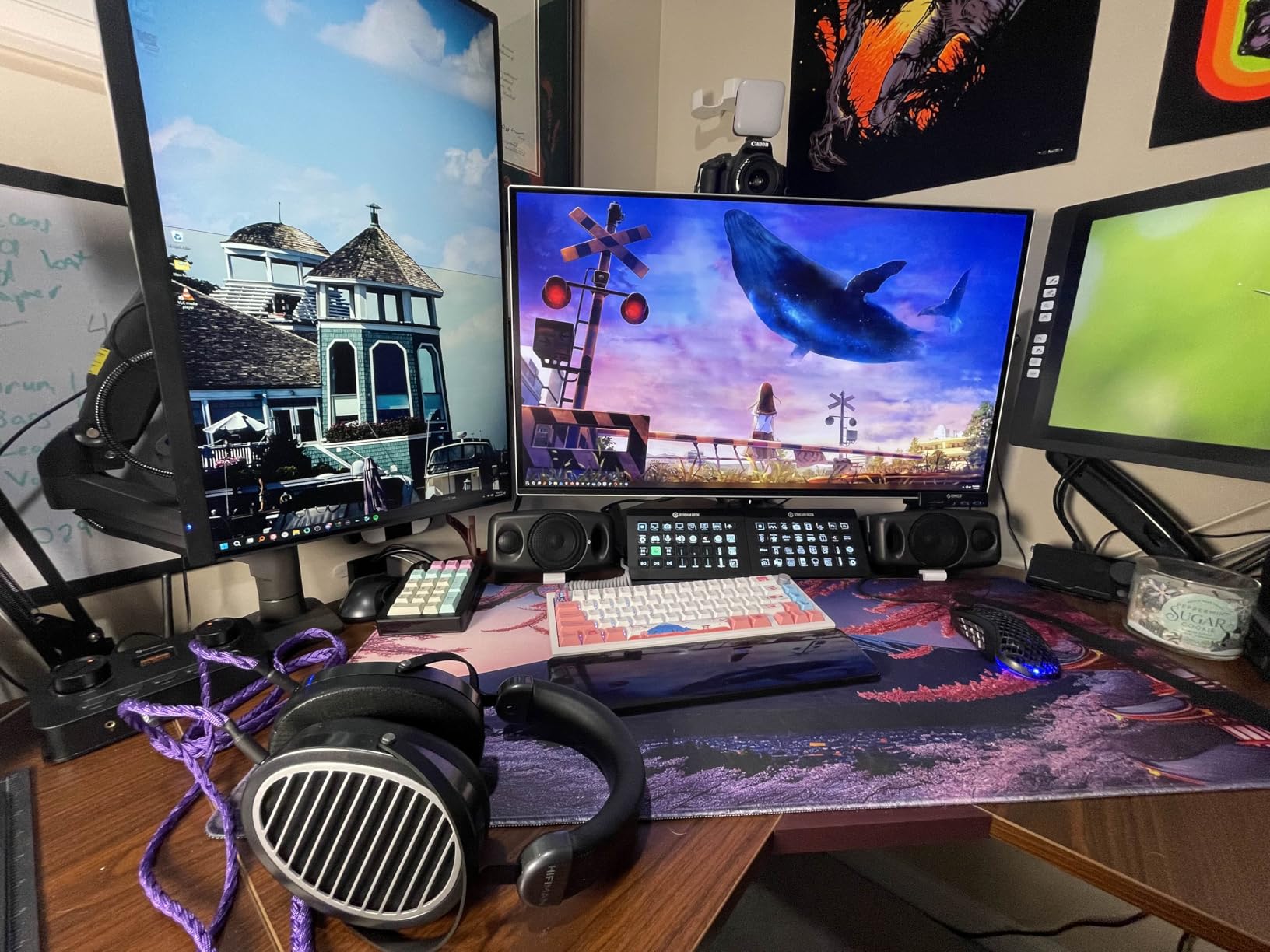
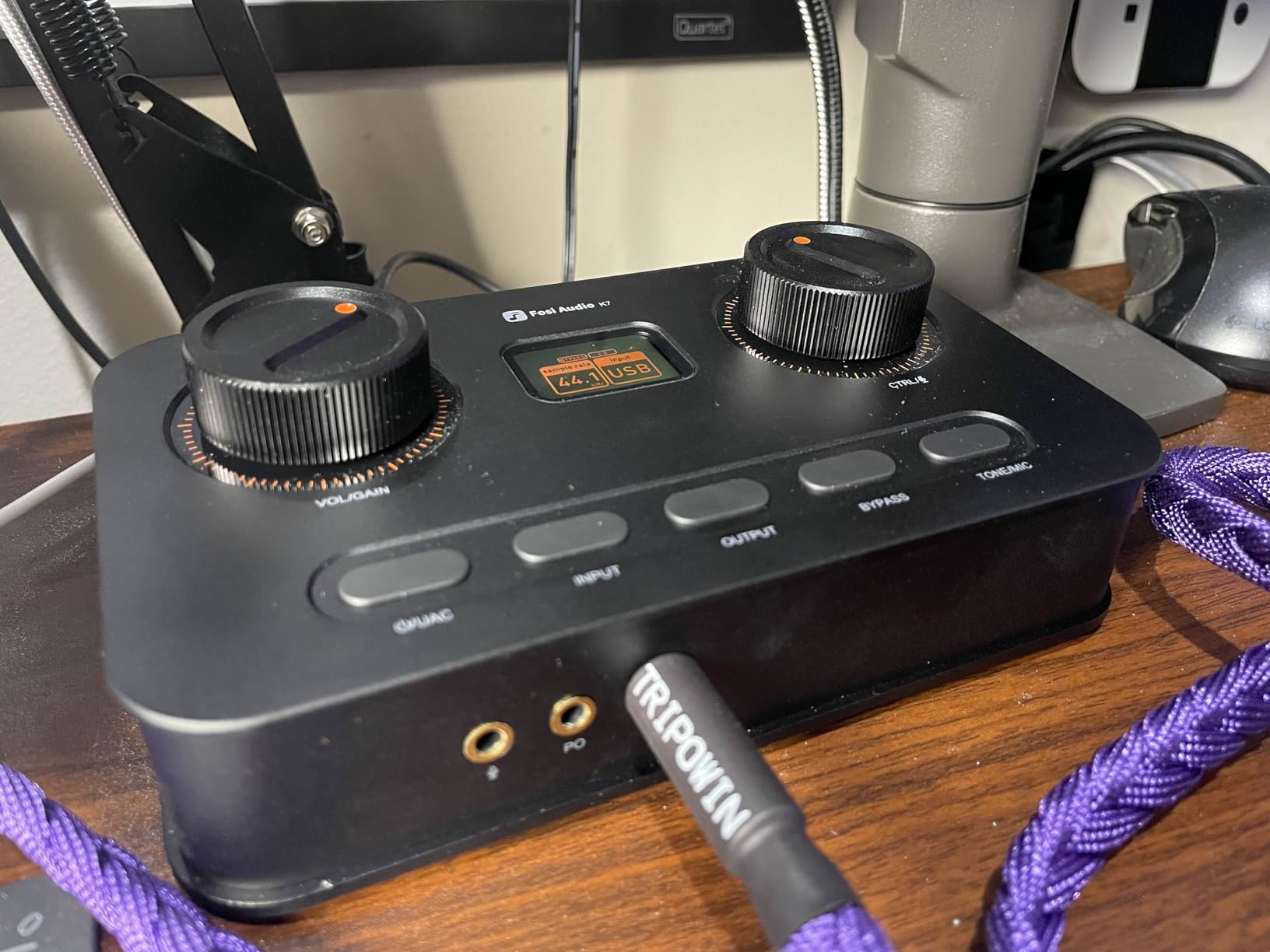
What makes the K7 stand out from the crowd is its connectivity. USB-C, optical, coaxial, and Bluetooth 5.0 with aptX HD and aptX Low Latency give you more input options than any other DAC in this roundup. The Bluetooth input means you can stream wirelessly from your phone while keeping the USB connection to your computer. The 3.5mm microphone input adds gaming and voice chat capability, making this genuinely versatile for work and play.
The front panel features a high-resolution display showing sample rate, input source, and volume level. Dual large control knobs handle volume and input selection. Five shortcut buttons give quick access to common settings. The angled aluminum chassis looks sharp on a desk and the build feels solid. My only real complaint is that the volume knob spins continuously without hard stops at minimum or maximum, which can make it hard to find your preferred position by feel.
Why This Is the Best Value Pick
The K7 replaces what would normally require two or three separate pieces of equipment. It serves as a DAC, a powerful headphone amplifier, a Bluetooth receiver, and a microphone interface, all in one well-built aluminum box. For anyone building a desktop audio setup from scratch, this single unit covers every need at a price that undercuts buying separate components by a wide margin.
What Could Be Better
The display looks great from straight on but washes out at vertical angles, so placement on a high or low shelf matters. The gain switch sits near the volume knob and can be bumped accidentally. Users with balanced XLR headphone cables will need an adapter since the K7 uses 4.4mm for its balanced output. These are minor issues that do not detract from the overall value proposition.
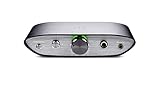
10. iFi Zen DAC V2 – Best DAC for IEM and Headphone Pairing
iFi Zen DAC V2 | Desktop Digital Analog Converter with USB 3.0 B Input only/Outputs: 6.3mm Unbalanced / 4.4mm Balanced/RCA – MQA DECODER – Audio System Upgrade (Unit only)
Burr Brown True Native DAC
PCM 384kHz/DSD256/DXD
MQA Full Decoder
PowerMatch for IEMs
TrueBass Enhancement
Pros
- Warm analog-like Burr Brown sound
- PowerMatch adjusts for IEMs and headphones
- TrueBass adds satisfying bass without bloat
- 4.4mm balanced output
- MQA full decoder built in
- Auto on/off with source detection
Cons
- Channel imbalance below volume level 9
- Windows volume disabled in driver mode
- No power button
- Short USB cable included
- Sleep/wake issues on some computers
The iFi Zen DAC V2 occupies a special place in my collection because it sounds different from every other DAC on this list, and that difference is enjoyable. The Burr Brown True Native DAC chip produces a warm, musical presentation that feels more like listening to vinyl than digital. High frequencies are smooth without losing detail, midrange is rich and full-bodied, and the overall presentation is relaxed yet involving. For long listening sessions, this tonality is hard to beat.
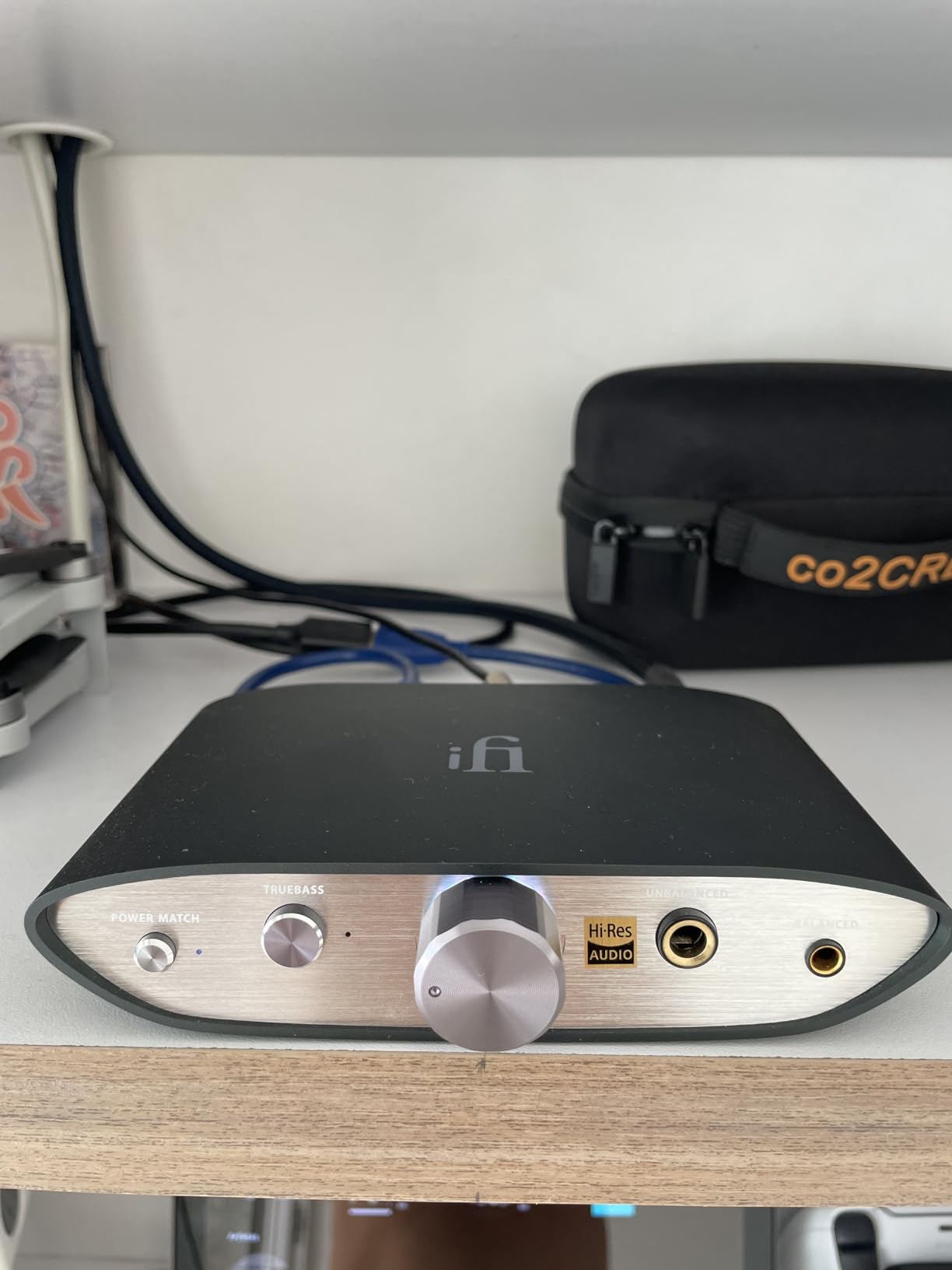
Two features make the Zen DAC V2 particularly well-suited for headphone and IEM users. PowerMatch is a toggle that adjusts the output impedance and gain to match either sensitive IEMs or full-size headphones. In IEM mode, the background is dead silent even with ultra-sensitive models. TrueBass is iFi’s implementation of a bass boost that adds weight and impact below 100Hz without muddying the midrange. I found TrueBass excellent for adding body to bass-light IEMs and giving electronic music more drive.
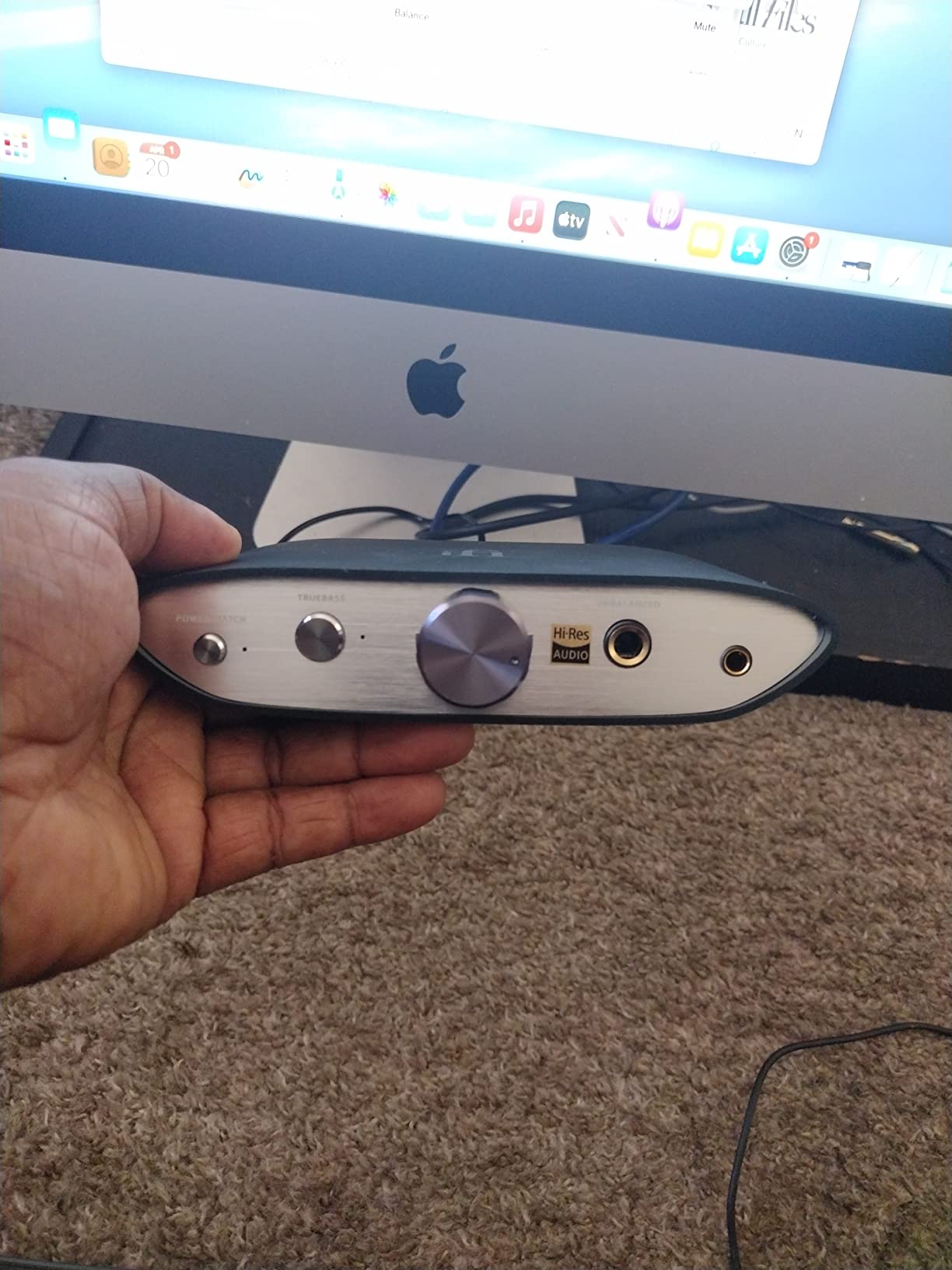
Format support is comprehensive. PCM up to 384kHz, native DSD256, DXD up to 384kHz, and full MQA decoding cover every high-resolution format you are likely to encounter. The Zen DAC V2 handles all of these through its Burr Brown chip without converting to PCM first, which iFi argues preserves the original character of each format. The front-mounted LED indicator shows you the input format at a glance.
The 4.4mm balanced output on the front delivers more power and lower distortion than the 6.3mm single-ended jack, so if you have balanced headphones or an adapter, use it. The RCA outputs on the back can feed powered speakers or an external amplifier. Build quality is excellent with an aluminum housing that looks and feels premium. The unit auto-powers on when it detects a USB signal and off when the computer goes to sleep, eliminating the need for a physical power switch.
Perfect For Headphone Enthusiasts
If you listen primarily through headphones and IEMs, the Zen DAC V2 is built for you. The PowerMatch feature alone solves the common problem of finding one DAC that works well with both sensitive earbuds and demanding over-ear headphones. TrueBass is one of the best-implemented bass enhancements I have heard in a DAC. And the warm Burr Brown sound pairs beautifully with analytical headphones that benefit from a bit of added warmth.
Situations to Consider Other Options
The Zen DAC V2 only has USB input, so you cannot connect optical or coaxial sources like a TV or CD player. The channel imbalance at very low volumes means you need to keep the volume knob above 9 o’clock for even stereo imaging. If you need Bluetooth, multiple digital inputs, or a built-in microphone input, the Fosi Audio K7 offers all of those features at a similar price point.
How to Choose the Right DAC for Your Setup
Picking the right DAC comes down to your source devices, your listening equipment, and how you listen. Here is a straightforward breakdown of the key factors that actually matter when making your decision.
Desktop vs. Portable: Where Do You Listen?
If you listen at a desk with a computer, a desktop DAC like the Fosi Q6, FiiO K5Pro, or Fosi K7 gives you more inputs, more power, and better performance per dollar. Portable dongles like the FiiO KA13 and BZINK adapter trade absolute performance for convenience. The FiiO KA13 bridges both worlds with its desktop mode that delivers 550mW from a dongle form factor, but a full-size unit will always run cooler and last longer under sustained use.
Matching Your Headphones and IEMs
Your DAC needs to pair well with what you plug into it. Sensitive IEMs under 32 ohms need low-noise outputs with good volume control at low levels, making the iFi Zen DAC V2 with its PowerMatch feature ideal. Standard headphones in the 32 to 80 ohm range work well with almost any DAC on this list. High-impedance headphones above 250 ohms or planar magnetic drivers need serious power, which points you toward the Fosi K7 with its 2100mW output or the FiiO K5Pro with 1.5W.
Forum users on r/audiophile and r/iems consistently emphasize that matching power output to headphone impedance matters more than DAC chip brand. An underpowered DAC with a great chip will sound worse than an adequately powered DAC with a mid-range chip. Check your headphone specifications and choose accordingly.
Input and Output Connections
List your source devices first. If you need to connect a TV, you need optical or HDMI input. Computer users want USB. Phone users need USB-C or Lightning. The Fosi Audio K7 is the most versatile with USB-C, optical, coaxial, and Bluetooth all built in. The basic PROZOR and eSynic converters handle optical-to-RCA for simple TV setups. USB-only units like the iFi Zen DAC V2 and Dragonfly Cobalt are ideal for computer and mobile use.
Understanding DAC Chip Types: ESS vs. AKM vs. Burr Brown vs. R2R
The DAC chip influences the sound character, though implementation matters as much as the chip itself. ESS Sabre chips like the ES9038PRO in the FiiO K5Pro deliver analytical, detailed sound with excellent measurements. AKM chips like the AK4493S in the Fosi Q6 and K7 offer a smooth, balanced presentation that many find more natural for long sessions. Burr Brown chips like the one in the iFi Zen DAC V2 produce a warm, musical sound with analog-like character. R2R ladder DACs, not represented in this roundup but popular in high-end audio, offer a different approach to digital conversion that many enthusiasts prefer for its organic presentation.
Sample Rate and Bit Depth: What Matters
CD quality is 16-bit/44.1kHz. High-resolution streaming on Tidal and Qobuz typically delivers 24-bit/96kHz. The PROZOR and eSynic converters handle up to 192kHz, which covers virtually all commercially available music. The Fosi Q6 pushes to 32-bit/768kHz and DSD512, which future-proofs it for years to come. In practical listening tests, the difference between 96kHz and 384kHz is subtle at best, so do not choose a DAC based solely on maximum supported resolution.
Frequently Asked Questions
What is the best DAC for the money?
The Fosi Audio Q6 delivers the best overall value, offering audiophile-grade AK4493S performance with 121dB SNR and 32-bit/768kHz support at a fraction of what comparable units cost. For portable use, the FiiO KA13 provides exceptional sound quality with dual CS43131 DACs and 550mW desktop mode power in a dongle form factor. On a tight budget, the PROZOR 192KHz converter solves basic digital-to-analog conversion reliably for under $15.
Do you really need a better DAC?
If you listen through your computer’s motherboard audio, phone headphone jack, or TV’s built-in output, a dedicated DAC will provide a measurable and audible improvement in sound quality. The improvement is most noticeable as lower background noise, better instrument separation, and cleaner high-frequency reproduction. However, if you already own a quality external audio interface or receiver with a good built-in DAC, the upgrade may be less dramatic.
What is the best portable DAC?
The FiiO KA13 is the best portable DAC for most people, offering dual CS43131 DAC chips, both 3.5mm and 4.4mm balanced outputs, and a desktop mode that delivers 550mW for demanding headphones. The AudioQuest Dragonfly Cobalt is another strong option with its warm ESS sound and MQA decoding, while the BZINK USB-C adapter provides excellent sound at the lowest possible price point.
What is the best DAC chip for headphone audio?
There is no single best chip, as each has distinct sound characteristics. ESS Sabre chips like the ES9038PRO deliver analytical detail and excellent measured performance. AKM chips like the AK4493S offer smooth, natural presentation that pairs well with many headphones. Burr Brown chips produce warm, musical sound ideal for long listening sessions. Implementation quality, power supply design, and output stage matter as much as the chip itself.
What is the best audiophile DAC under a moderate budget?
The Fosi Audio K7 at around $200 offers the most features and power of any DAC in this range, with 2100mW output, Bluetooth aptX HD, 4.4mm balanced output, and AK4493S DAC performance. The iFi Zen DAC V2 at a similar price point appeals to listeners who prefer the warm Burr Brown sound and need features like PowerMatch for IEMs and TrueBass enhancement. Both compete with units costing significantly more.
Conclusion
Finding the best DACs for your setup does not have to mean spending a fortune or getting lost in technical specifications. After testing these 10 units across months of daily listening, the takeaway is clear: any dedicated DAC on this list will give you a noticeable upgrade over built-in computer or phone audio. The jump from motherboard sound to a PROZOR converter alone is enough to convince most skeptics.
For most listeners, the Fosi Audio Q6 hits the sweet spot with audiophile-grade AK4493S performance at an accessible price. If you want an all-in-one desktop solution with massive power and Bluetooth, the Fosi Audio K7 is unmatched for the money. And for portable listening, the FiiO KA13 delivers desktop-quality sound from a device that fits on a keychain. Pick the one that matches your setup, plug it in, and hear what your music has been missing in 2026.