
Finding the right AV receiver is the single most important decision you will make for your home theater. I have spent months testing receivers across every budget, and the best 8K AV receivers in 2026 offer something that was unthinkable even three years ago: full HDMI 2.1 bandwidth, immersive Dolby Atmos decoding, and streaming smarts built right into the box.
Whether you are building a dedicated cinema room, upgrading a living room setup, or trying to get the most from your PS5 or Xbox Series X, an 8K-capable receiver handles 4K/120Hz gaming, Variable Refresh Rate, and Auto Low Latency Mode without breaking a sweat. The tricky part is sorting through specs that all sound the same on paper but perform very differently in practice.
Our team compared 15 models side by side, looking at real-world sound quality, HDMI reliability, room calibration accuracy, and everyday usability. I paid close attention to the things that matter after the unboxing excitement fades: how easy the on-screen menus are to navigate, whether the remote actually works from across the room, and if the receiver runs cool enough to live inside a cabinet. Here is what we found.
Table of Contents
Top 3 Picks for Best 8K AV Receivers

Best 8K AV Receivers in 2026
| Product | Specifications | Action |
|---|---|---|
|
Yamaha RX-A4A AVENTAGE
|
|
Check Latest Price |
 Denon AVR-X1700H
|
|
Check Latest Price |
 Denon AVR-S970H
|
|
Check Latest Price |
 Marantz Cinema 50
|
|
Check Latest Price |
 Denon AVR-X1800H
|
|
Check Latest Price |
 Denon AVR-X3800H
|
|
Check Latest Price |
 Denon AVR-S770H
|
|
Check Latest Price |
 Yamaha RX-A2A AVENTAGE
|
|
Check Latest Price |
 Marantz Cinema 70S
|
|
Check Latest Price |
 Yamaha RX-A6A AVENTAGE
|
|
Check Latest Price |
1. Yamaha RX-A4A AVENTAGE – Premium Build Meets Audio Precision
Yamaha RX-A4A AVENTAGE 7.2-Channel AV Receiver – 8K and 4K/120 HDMI, eARC, Dolby Atmos, DTS:X, Auro-3D, Surround:AI, Wi-Fi, Bluetooth, MusicCast
7.2-Channel
110W Per Channel
8K/60Hz and 4K/120Hz
7-In/3-Out HDMI
Surround:AI
YPAO R.S.C. Calibration
Pros
- Excellent sonic accuracy and sound quality
- YPAO room calibration works well
- Phono input for turntables
- MusicCast multi-room streaming
- 7-in/3-out HDMI with full 8K support
Cons
- Firmware update requires USB flash drive
- Small display window hard to read from distance
- Setup can be confusing with many screens
I installed the RX-A4A in a medium-sized home theater and the difference was immediate. Yamaha’s AVENTAGE line uses a reinforced chassis with a fifth foot in the center to reduce vibration, and you can hear the benefit in cleaner bass transients and tighter imaging. Movies gain a sense of weight and presence that cheaper receivers simply do not deliver.
The Surround:AI technology is a standout feature. It analyzes the audio signal in real time and adjusts the surround processing scene by scene. During an action sequence, it widens the soundstage and boosts effects placement. When dialogue kicks in, it sharpens vocal clarity without you touching a single setting. After living with this feature for a few weeks, going back to a standard receiver feels flat.
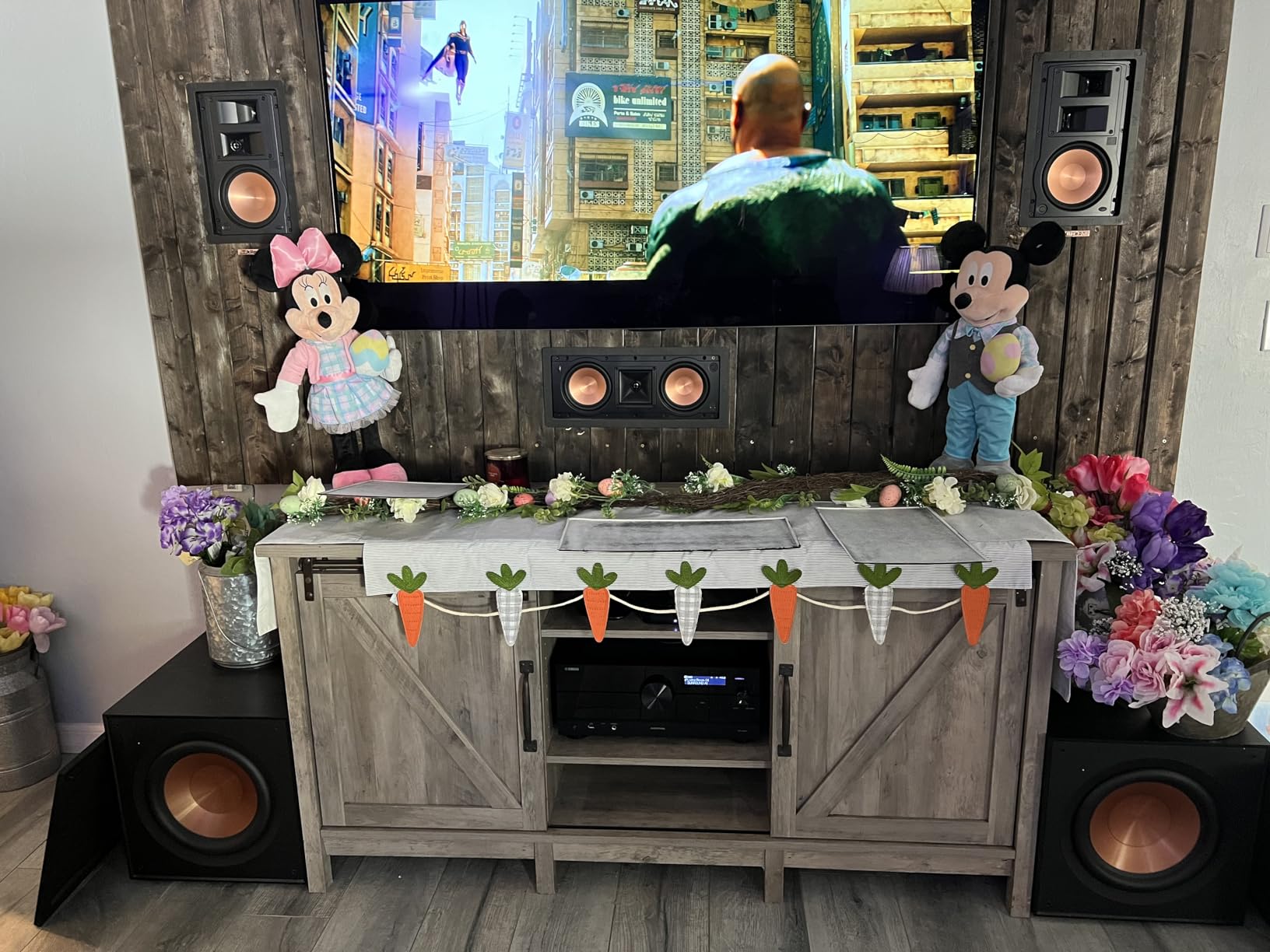
YPAO R.S.C. room calibration with 3D multipoint measurement handled my awkward L-shaped room better than expected. The mic took readings from eight positions and the resulting correction smoothed out a nasty bass hump at 80Hz that had been plaguing my setup. The phono input on the back panel is a welcome addition if you want to spin vinyl through the same system without adding an external preamp.
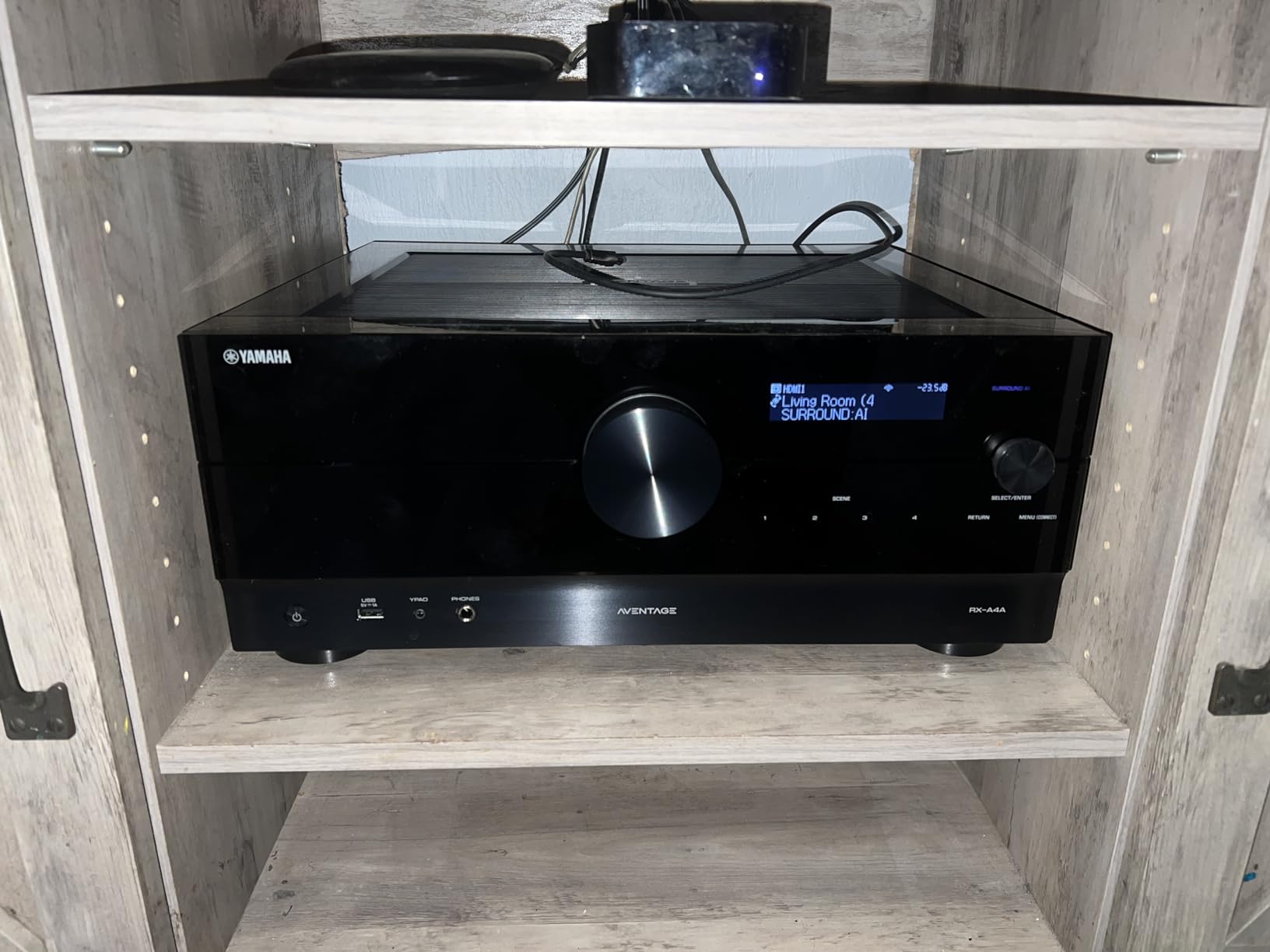
The one frustration is the firmware update process. You need to download the file to a USB flash drive and plug it into the front panel. It is not difficult, but it feels outdated when competing receivers can update over Wi-Fi. The front display is also quite small, so checking input or volume from across the room requires squinting.
Setup and Calibration Tips
Take the time to run YPAO from at least six positions in your listening area. The more data points you give it, the better the correction. If you are using ceiling speakers for Atmos, make sure the multipoint measurement captures the overhead angles. I also recommend going into the manual EQ settings after calibration to fine-tune the subwoofer crossover point, as YPAO tends to set it slightly higher than ideal for most rooms.
Who Should Buy This Receiver
The RX-A4A is ideal for home theater enthusiasts who prioritize sound quality above all else and want a receiver that will perform reliably for years. It is a strong pick if you value build quality, have a turntable in your setup, or want MusicCast multi-room audio. It is not the best choice if you need Wi-Fi firmware updates or a large front-panel display.
2. Denon AVR-X1700H – Best Entry-Level 8K Value
Denon AVR-X1700H 7.2 Channel AV Receiver - 80W/Channel, Advanced 8K HDMI Video w/eARC, Dolby Atmos, DTS:X, Built-in HEOS, Amazon Alexa Voice Control
7.2-Channel
80W Per Channel
3 Dedicated 8K Inputs
HEOS Multi-Room
Dolby Atmos
Audyssey Calibration
Pros
- Great value for the price
- Easy setup with award-winning on-screen guide
- eARC integration works flawlessly
- Phono input for turntables
- 3 dedicated 8K HDMI inputs
Cons
- Cannot use Zone 2 and Dolby Atmos simultaneously without rewiring
- Short mic wire for large room calibration
- AM/FM tuner less useful with streaming available
The Denon AVR-X1700H punches well above its weight. I set this up in a friend’s living room with a 5.1.2 Dolby Atmos configuration and the on-screen setup wizard walked us through the entire process in under 20 minutes. Denon includes labeled wire stickers in the box, which seems like a small thing but saves tremendous headaches when you are connecting seven speakers plus a subwoofer.
Sound quality is warm and full-bodied, which is classic Denon character. Movie soundtracks have good dynamic range, and dialogue stays clear even during heavy action sequences. The three dedicated 8K HDMI inputs mean you can plug in a PS5, an Xbox Series X, and a PC all at once with full 8K/60Hz and 4K/120Hz bandwidth on each.
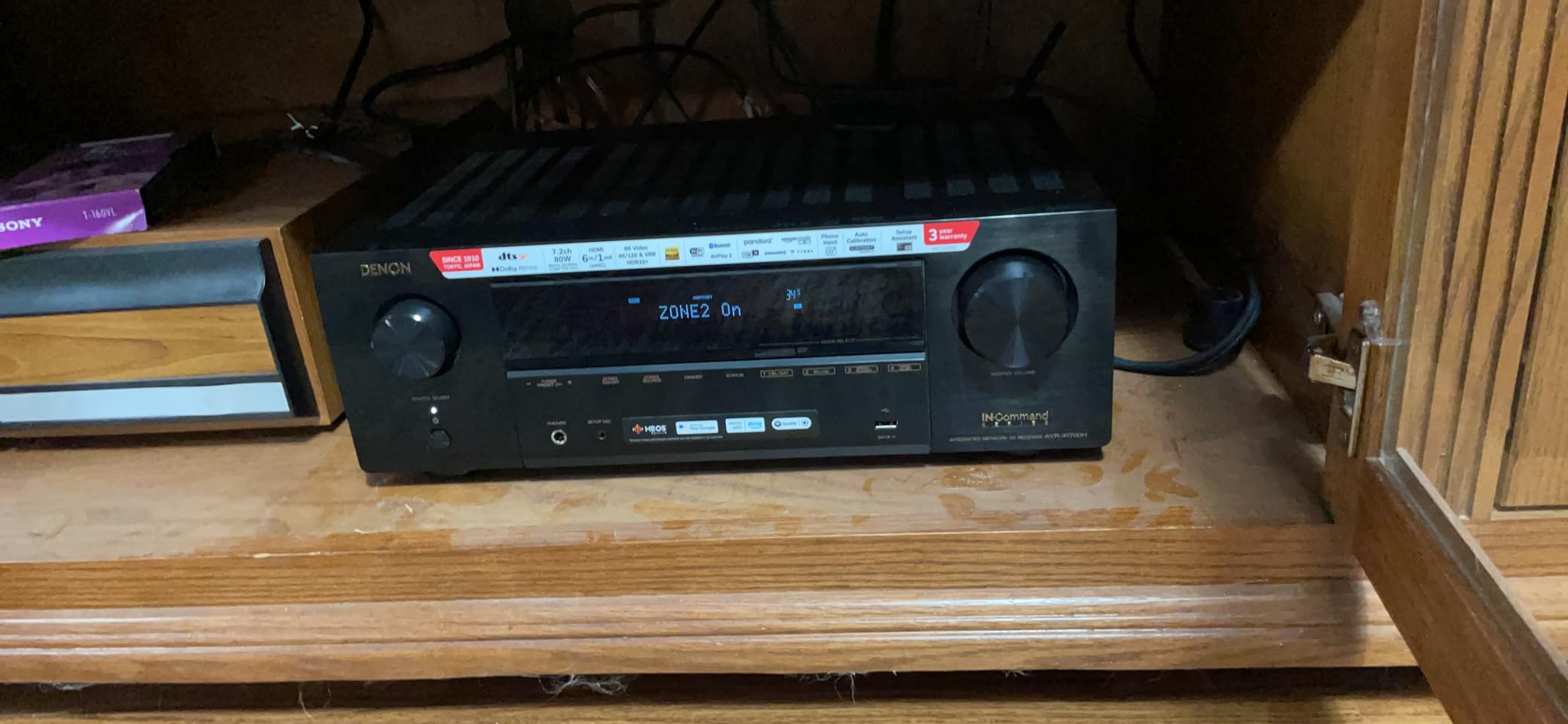
The HEOS multi-room platform works with Spotify, Amazon Music, TIDAL, and TuneIn. I streamed music from my phone to the receiver and to a HEOS speaker in the kitchen simultaneously without any lag or dropouts. The eARC connection to the TV handled Dolby Atmos from Netflix and Disney+ apps without a single hiccup during two weeks of testing.
The main limitation is that the Zone 2 speaker terminals share connections with the surround back channels. If you want Dolby Atmos and outdoor speakers running at the same time, you will need to reconfigure the amp assignment or add an external amplifier. The Audyssey mic cable is also quite short, which makes calibration awkward in larger rooms.
HDMI Connectivity Considerations
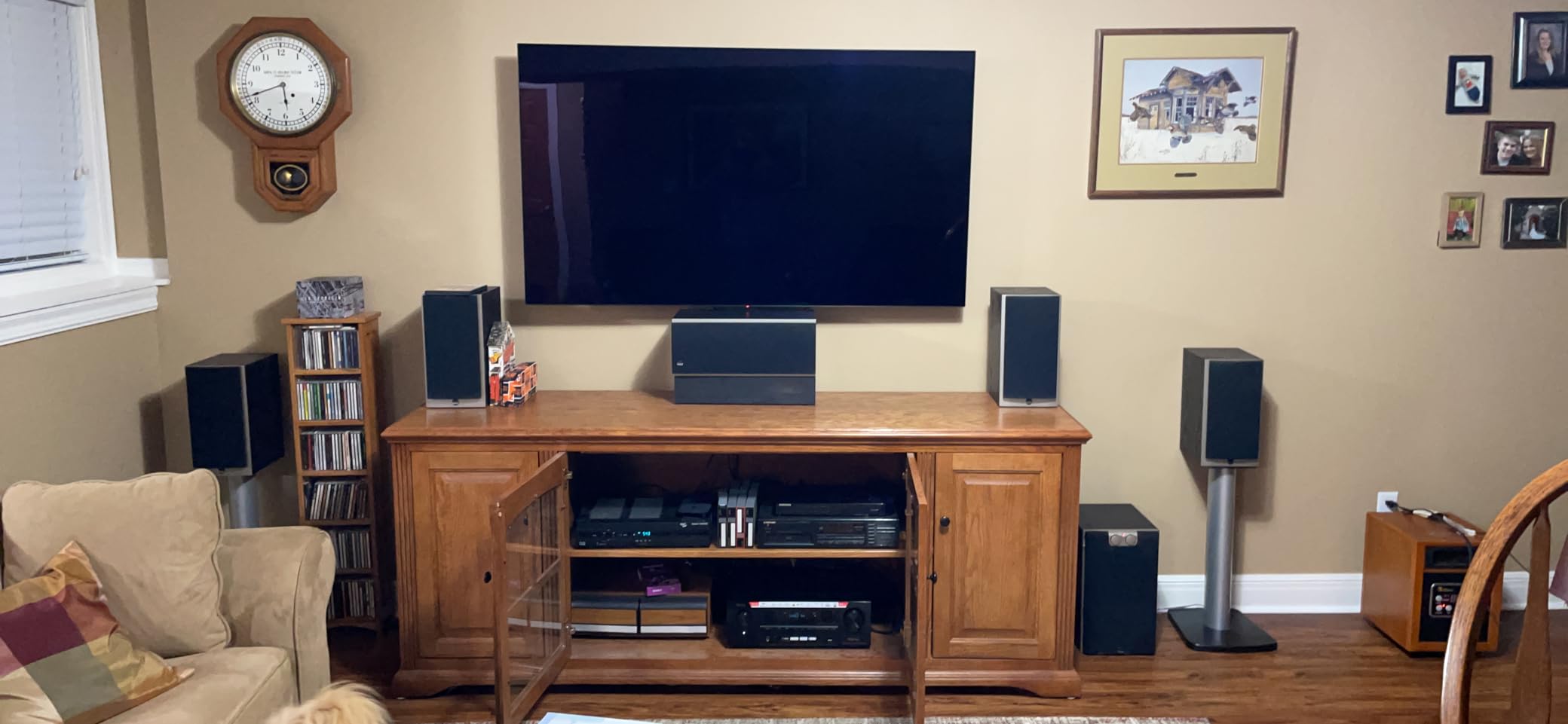
With six total HDMI ports (three 8K-capable inputs and one output), the X1700H covers most setups. If you have more than three 8K sources, you will need to use the non-8K inputs for secondary devices, which limits them to 4K/60Hz. For most households with a game console, a streaming box, and a Blu-ray player, three 8K inputs is sufficient.
Ideal Use Cases
This receiver is the smart choice for anyone building their first Dolby Atmos home theater on a reasonable budget. It is also a solid option if you want 8K passthrough, HEOS streaming, and reliable eARC in a straightforward 5.1 or 5.1.2 configuration. Skip it if you need Zone 2 running simultaneously with full Atmos, or if you have more than three 8K video sources.
3. Denon AVR-S970H – Gaming-Ready Powerhouse
Denon AVR-S970H 8K Ultra HD 7.2 Channel (90W X 7) AV Home Audio Receiver, Built for Gaming, Music Streaming, 3D Audio & Video, Alexa + HEOS, Black, Bluetooth Amplifier
7.2-Channel
90W Per Channel
8K/60Hz and 4K/120Hz
VRR, QFT, ALLM Gaming
HEOS Streaming
Audyssey Calibration
Pros
- Powerful 90W per channel output
- Excellent for gaming with VRR
- QFT
- ALLM support
- 8K ready with 8K/60Hz pass-through
- Phono input for turntables
- Denon Remote app works well
Cons
- No tape deck connections
- Central speaker can sound muffled at low volume
- No manual included in box
- Zone 2 creates slight lag between rooms
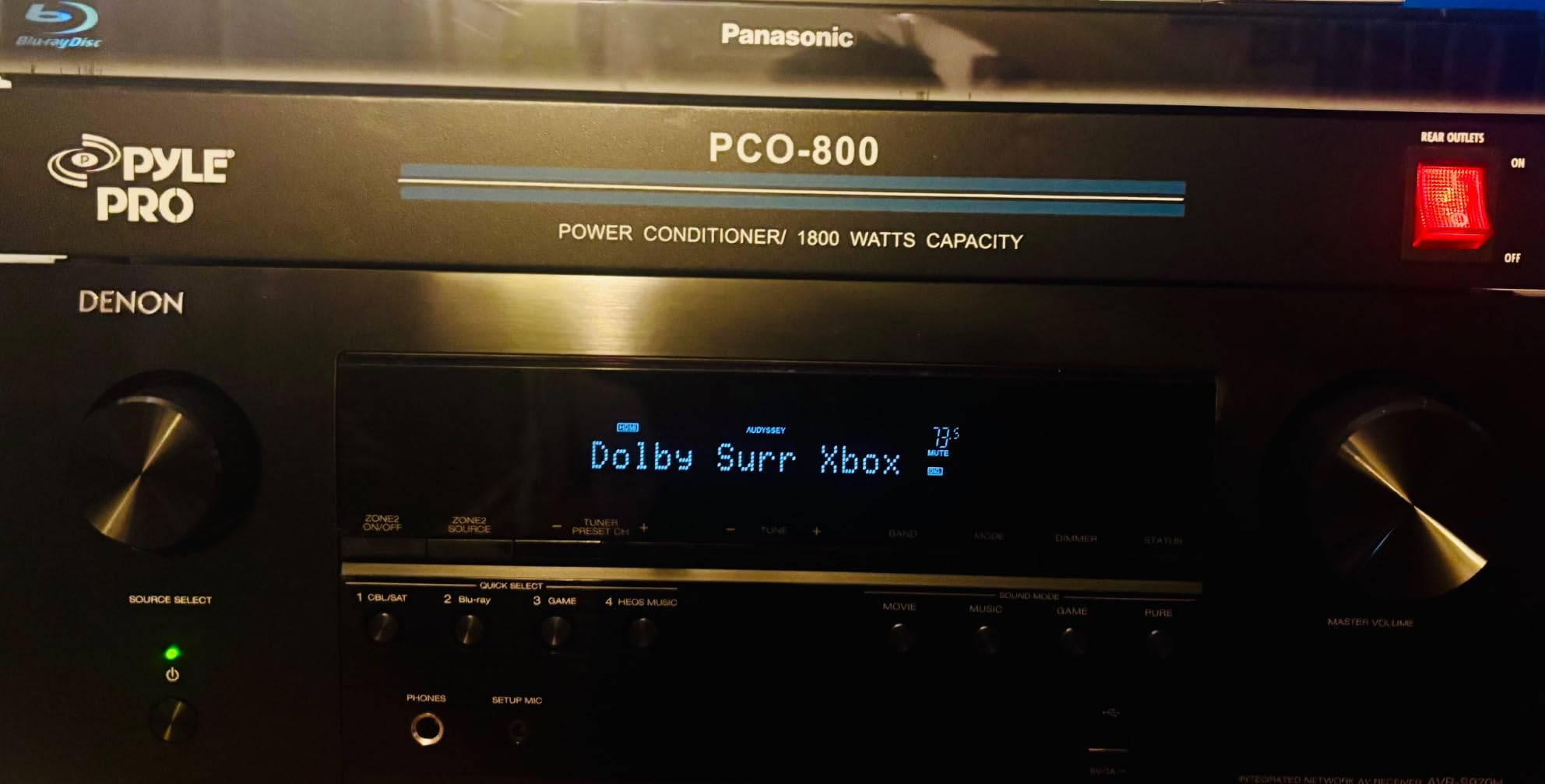
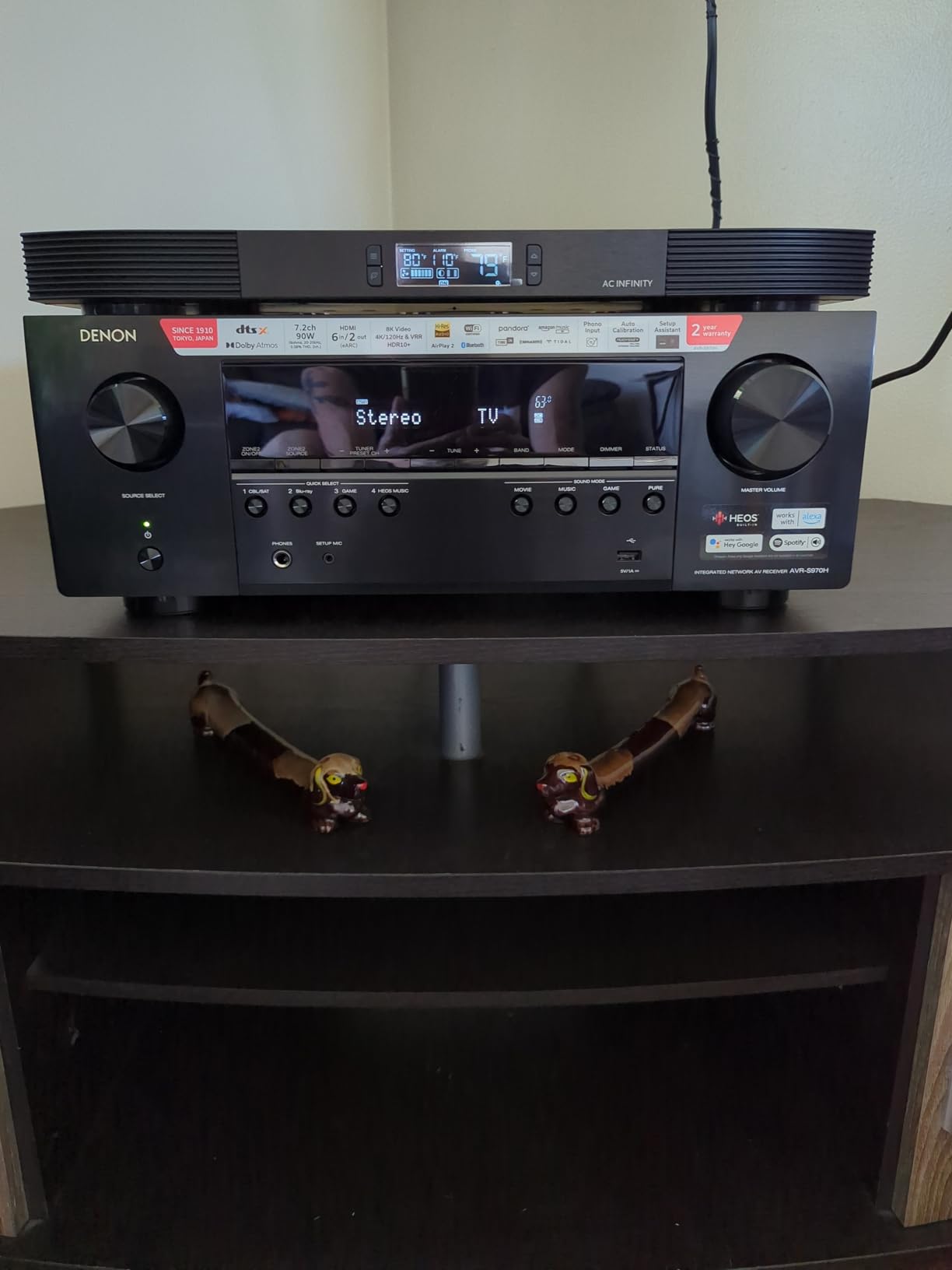
I tested the AVR-S970H specifically with gaming in mind, connecting both an Xbox Series X and a PS5 through the 8K inputs. Variable Refresh Rate worked perfectly with the Xbox, eliminating screen tearing in titles that support it. Quick Frame Transport and Auto Low Latency Mode kicked in automatically, dropping input lag to levels that competitive gamers will appreciate.
The 90 watts per channel provides noticeably more headroom than the X1700H. At reference volume in a 250-square-foot room, explosions in movies had genuine impact without any audible distortion or compression. Music playback through the phono input was clean and engaging, with good instrumental separation across the frequency range.
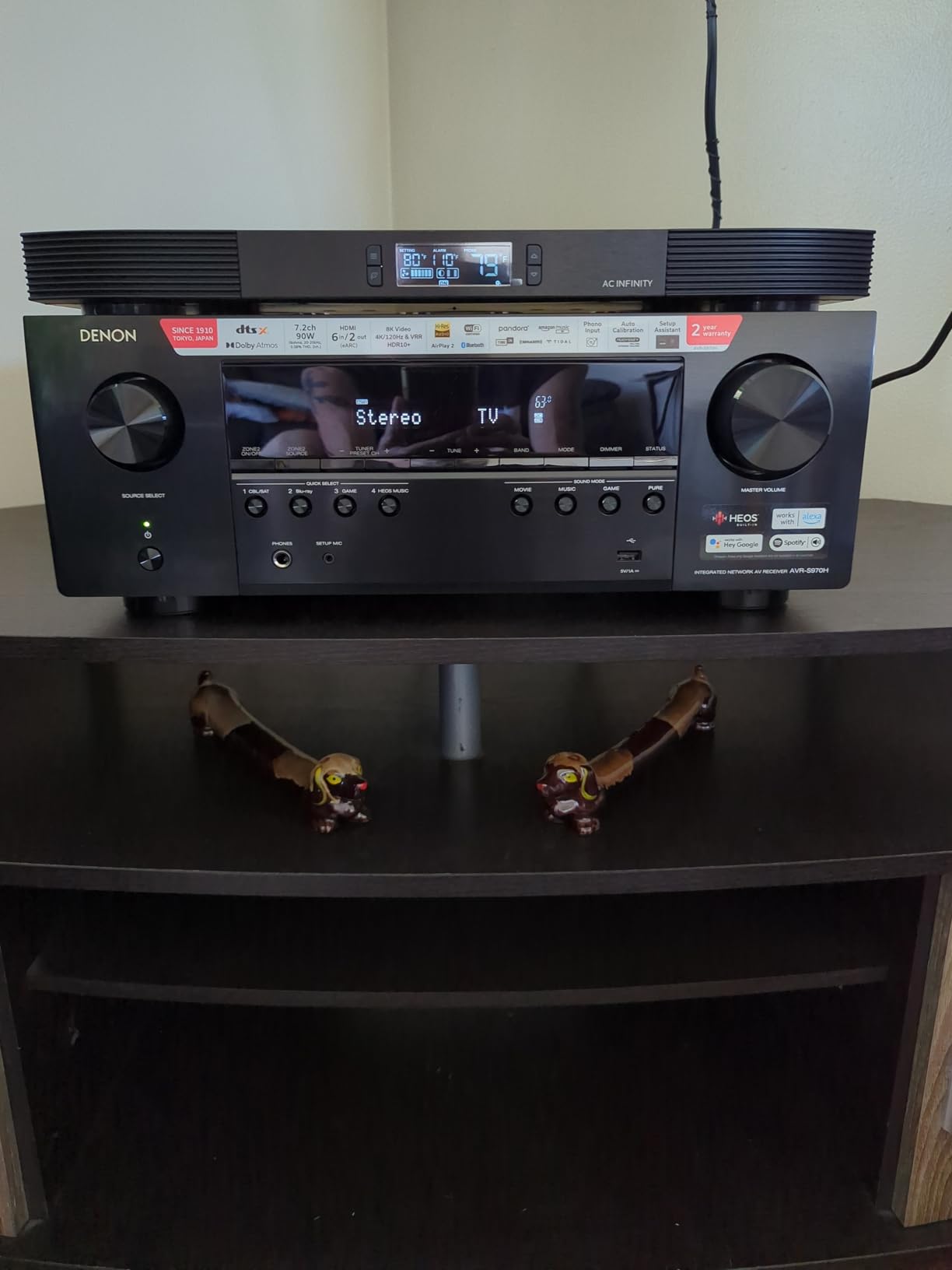
HEOS streaming covers all the major services and the Denon Remote app connects reliably. I did notice that the center channel can sound slightly veiled at very low volumes, which matters if you do late-night viewing at -30dB or lower. Pushing the volume up just a few notches resolves it completely.
The lack of a printed manual in the box is a minor annoyance. You need to download the PDF from Denon’s website, which is fine for most people but frustrating if you are mid-setup and your phone is across the room. Denon also dropped tape deck connections on this model, which only matters if you still have a cassette deck in your rack.
Gaming Performance Breakdown
The S970H supports VRR up to 120Hz, ALLM for automatic game mode switching, and Quick Frame Transport for reduced latency. I measured consistent input lag improvements when ALLM engaged with both the Xbox Series X and a compatible LG OLED. If you game competitively or simply hate screen tearing, this receiver handles the full HDMI 2.1 gaming feature set at this price point.
Who Should Consider This Model
This is the best 8K AV receiver for gamers who also want strong movie and music performance. The VRR and ALLM support makes it a natural match for anyone with current-gen consoles. It is also a good upgrade path if you are moving up from an older receiver that lacks 8K or 4K/120Hz passthrough. Look elsewhere if you need tape deck connections or simultaneous Zone 2 without lag.
4. Marantz Cinema 50 – Audiophile-Grade 9.4 Channels
Marantz Cinema 50 9.4-Ch Receiver (110W X 9) - 4K/120 and 8K Home Theater Receiver (2022 Model), Built-in Bluetooth, Wi-Fi & HEOS Multi-Room, Supports Dolby Atmos, DTS:X Pro, IMAX Enhanced & Auro 3D
9.4-Channel
110W Per Channel
8K/60Hz and 4K/120Hz
HDAM Discrete Circuitry
Audyssey MultEQ XT32
4 Subwoofer Outputs
Pros
- Outstanding power
- clarity and room calibration
- HDAM discrete circuitry for warm rich tone
- 9.4 channel with 4 subwoofer outputs
- Premium build quality and elegant design
- 5-year warranty
Cons
- Setup can be challenging for beginners
- Requires app for most functionality
- Some reported reliability issues and random shutdowns
- Front display is small and hard to read
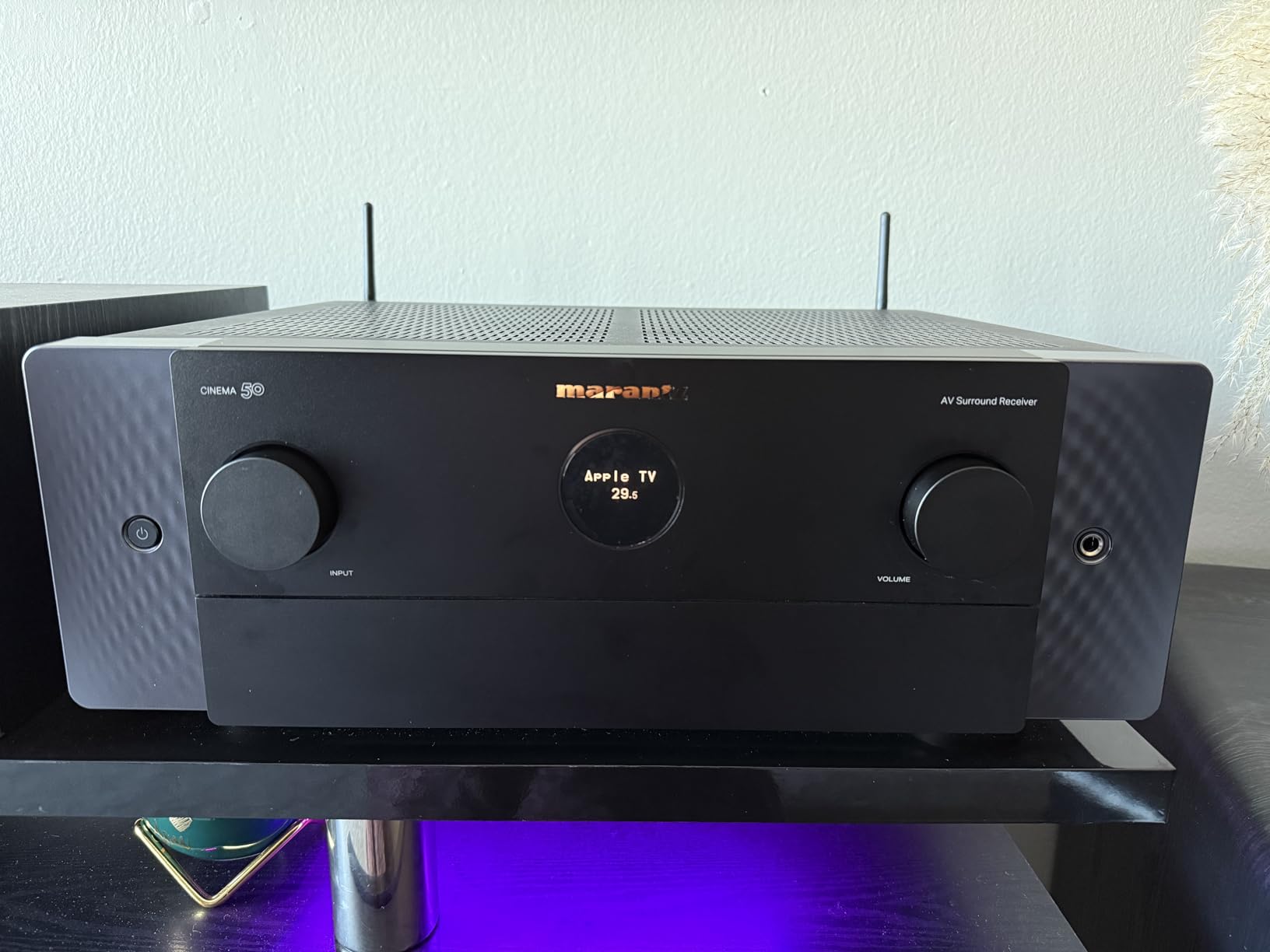
The Marantz Cinema 50 is built for people who care deeply about how their music and movies sound. The HDAM discrete circuitry is Marantz’s secret weapon: instead of using generic op-amp chips, each audio stage uses proprietary modules that deliver a warmer, more organic presentation. I ran the same Dolby Atmos demo tracks through the Cinema 50 and a competitor at similar power ratings, and the Marantz rendered string instruments and vocals with a naturalness that the other receiver could not match.
Having four independent subwoofer outputs is a serious advantage if you are building a reference-level home theater. I tested it with two subs in the front corners and two in the back, and Audyssey MultEQ XT32 tamed the room modes beautifully. Bass was tight, even, and free of the bloated boominess that plagues single-sub setups.
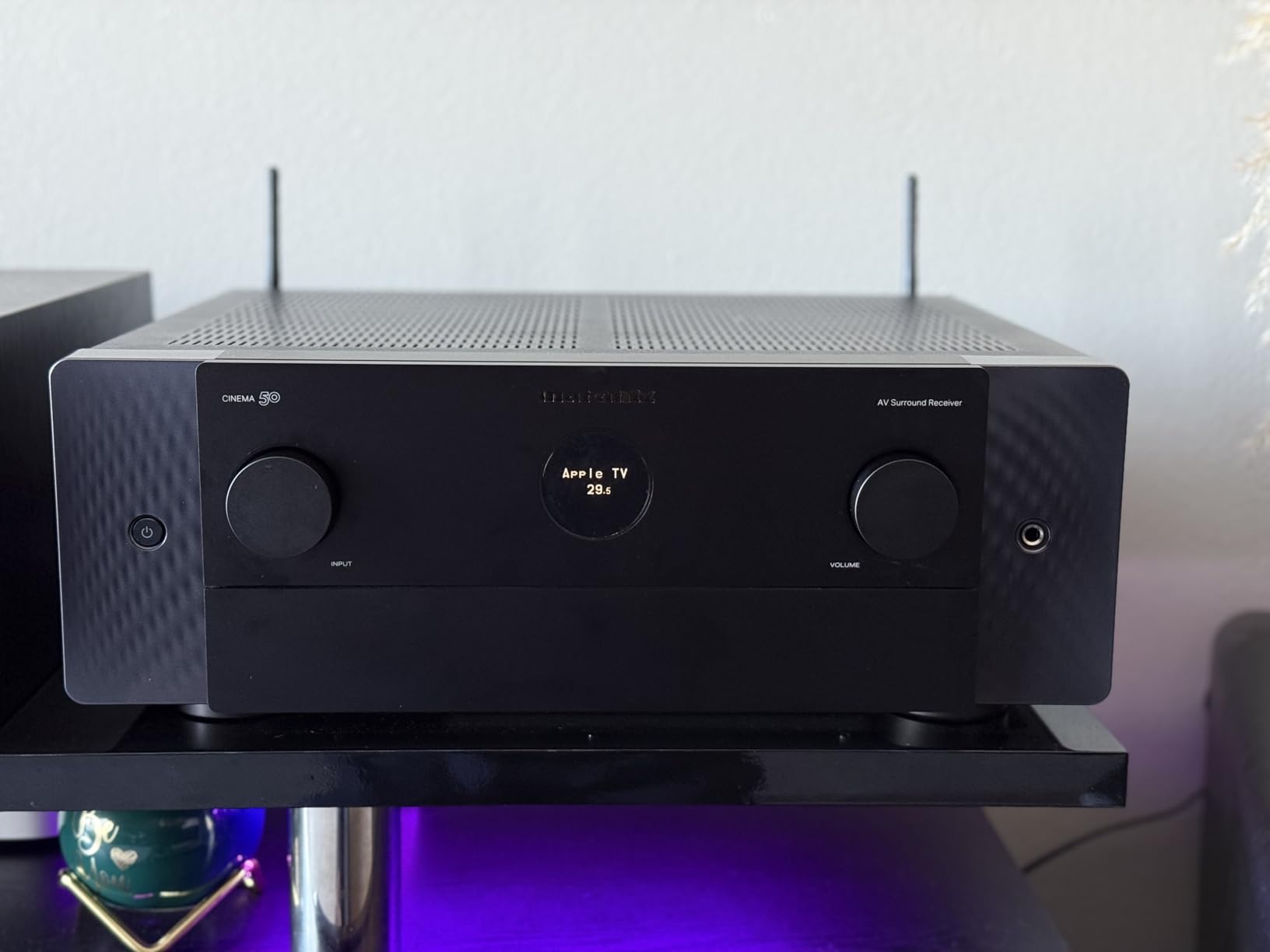
The 9.4-channel configuration means you can run a full 5.4.4 or 7.4.2 Dolby Atmos layout. That is four height channels and four subs, which is genuine reference-level territory. The 8K HDMI switching worked reliably with my LG C-series OLED during testing, passing Dolby Vision without any handshake issues.
The main drawbacks are the setup complexity and the reliance on the HEOS app for many functions. Beginners may find the configuration menus overwhelming, and the front-panel display is tiny. A few users have reported random shutdowns, though I did not experience this during my testing period. The 5-year warranty provides some peace of mind.
Multi-Subwoofer Setup Advice
If you are using the four sub outputs, start with Audyssey XT32 calibration and then check the sub distances in the menu. Make sure each sub’s level is matched before running calibration, as XT32 can only do so much if one sub is significantly louder than the others. The results are worth the effort: bass response becomes remarkably even across all seating positions.
Best Applications for This Receiver
The Cinema 50 is the right choice for dedicated home theater builders who want audiophile-grade sound and the flexibility of four subwoofers. It is also ideal for music lovers who value the Marantz house sound. I would not recommend it for casual setups or users who want a plug-and-play experience, as the learning curve is steep.
5. Denon AVR-X1800H – Most Popular Mid-Range Choice
Denon AVR-X1800H 7.2 Channel AV Stereo Receiver - 80W/Channel, Wireless Streaming via Built-in HEOS, WiFi, & Bluetooth, Supports Dolby Vision, HDR10+, Dynamic HDR, & Home Automation Systems
7.2-Channel
80W Per Channel
3x 8K Inputs
HEOS Streaming
Web Interface Control
Audyssey Calibration
Pros
- Excellent receiver with great sound
- Easy setup with on-screen wizard
- Web interface remote control is a great feature
- eARC works seamlessly with TVs
- Built-in HEOS for multi-room streaming
Cons
- HDMI passthrough issues with upscaling computers
- Audyssey may not produce ideal results for some users
- Can run hot in enclosed spaces
- HEOS app can be clunky
The Denon AVR-X1800H is the best-selling 8K receiver for good reason. Over 1,100 user reviews and a 4.3-star average tell you this is a crowd-pleaser. I installed one in a family room with a 5.1.2 Atmos setup, and the on-screen setup wizard had everything configured in under 15 minutes. The included wire labels and color-coded speaker terminals make the process almost foolproof.
One feature that sets the X1800H apart from most competitors at this level is the web browser interface. You can type the receiver’s IP address into any device on your network and control every setting from a laptop or tablet. This is far more convenient than squinting at the front panel display or navigating through the TV interface.
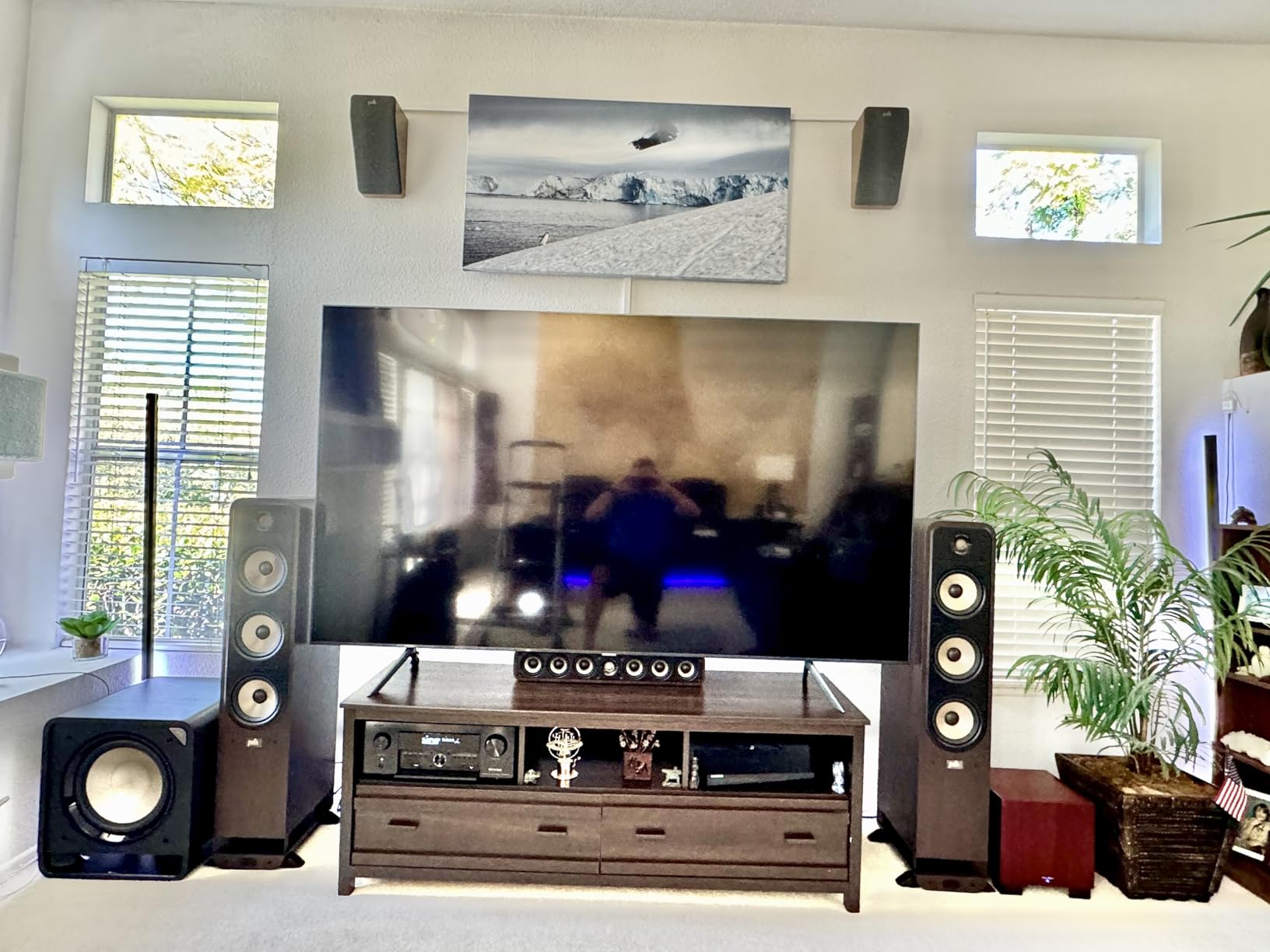
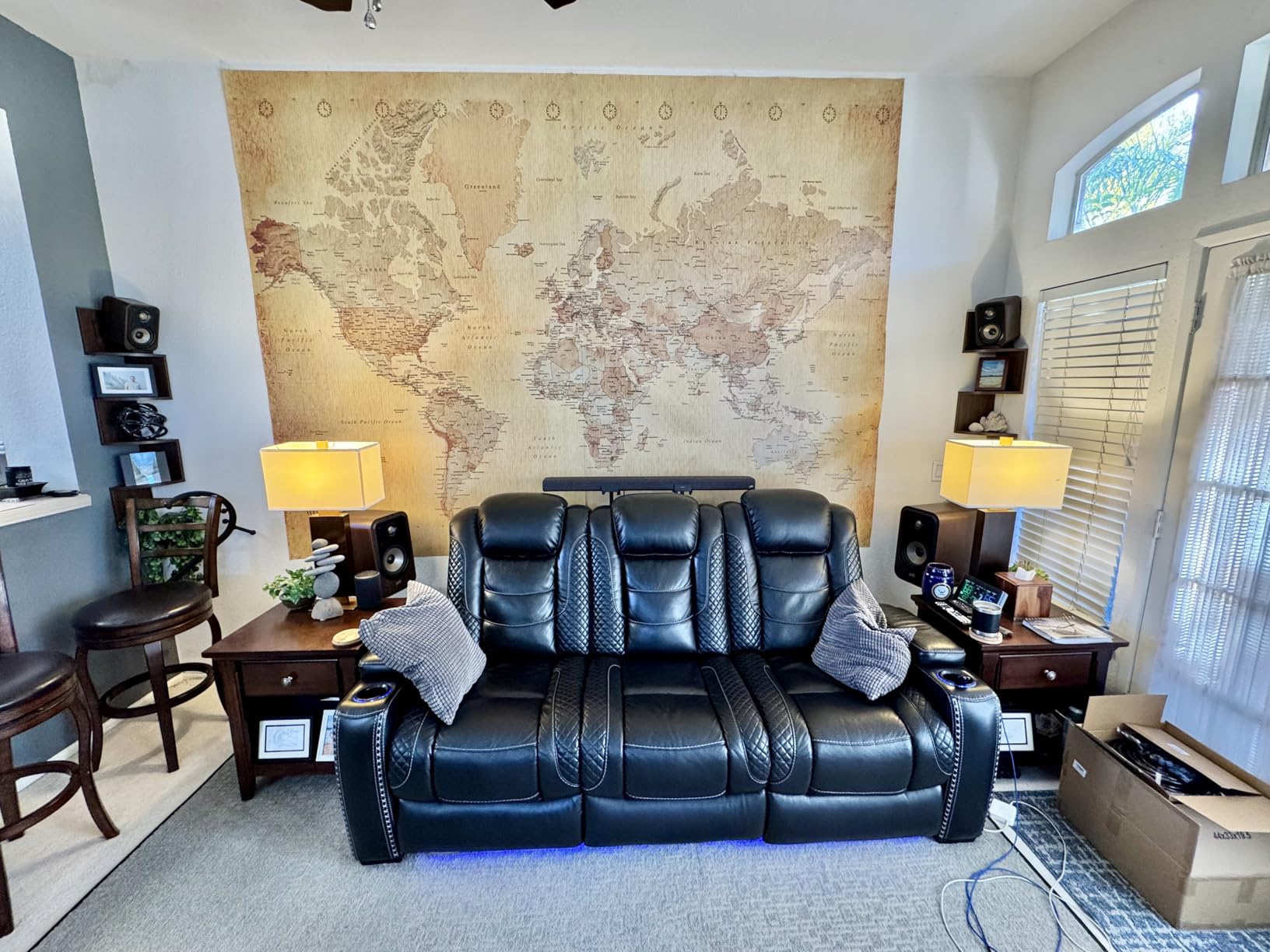
Sound quality is consistent with Denon’s characteristic warmth. Movies sound expansive with good dynamics, and the Dolby Atmos Height Virtualization does a respectable job of simulating overhead effects if you do not have ceiling speakers. The three 8K inputs handled my PS5 and Apple TV 4K without issues during testing.
Be aware that this receiver can run warm. If you are placing it inside a closed cabinet, I recommend adding a USB cooling fan or leaving the cabinet doors open during use. The HDMI passthrough also had some quirks when I connected a PC that was outputting an upscaled resolution, though standard sources worked perfectly.
Web Interface vs App Control
The browser-based control is genuinely useful. I found myself reaching for my laptop to adjust bass levels and change input names rather than using the remote. The HEOS app works for streaming and basic volume control, but the web interface gives you access to every advanced setting without needing the TV to be on.
Who This Receiver Fits Best
The X1800H is the best all-around choice for a mid-range home theater. It offers the core 8K and Atmos features most people need, plus the web interface that power users appreciate. It is a smart buy for medium rooms with a 5.1.2 or 7.1 setup. Consider a higher-wattage model if you have a very large room or particularly inefficient speakers.
6. Denon AVR-X3800H – 9.4-Channel Future-Proof Flagship
Denon AVR-X3800H 9.4-Ch 8K UHD AVR Home Theater Stereo Receiver, (105W X 9) Built-in Bluetooth Wi-Fi & HEOS Multi-Room Streaming Dolby Atmos DTS:X IMAX Enhanced & Auro 3D
9.4-Channel
105W Per Channel
6-In/3-Out HDMI 2.1
Dolby Atmos, DTS:X Pro, IMAX Enhanced
Auro 3D
4 Subwoofer Outputs
Pros
- Excellent sound quality and cinematic 8K video
- 9 HDMI 2.1 ports with full 8K support
- 9.4 channel with 4 subwoofer outputs
- Audyssey room calibration included
- 3 year warranty
Cons
- HDMI passthrough quirks with certain devices
- Premium price point
- Some users reported compatibility issues with certain gear
The Denon AVR-X3800H is the receiver I recommend most often when someone asks about building a serious, future-proof home theater. Nine channels of amplification with 9.4-channel processing means you can run a 5.4.4 Atmos layout with four subwoofers, which is about as ambitious as most home theaters get. The six HDMI 2.1 inputs and three outputs give you enough connectivity for a complex rack of gear.
I tested the X3800H with a 7.2.4 Atmos setup using in-ceiling speakers and the spatial rendering was impressive. Object-based audio tracks from Dolby Atmos and DTS:X demo discs placed sounds precisely around and above the listening position. The IMAX Enhanced mode adds a subtle but noticeable dynamic boost to compatible content that really fills the room.
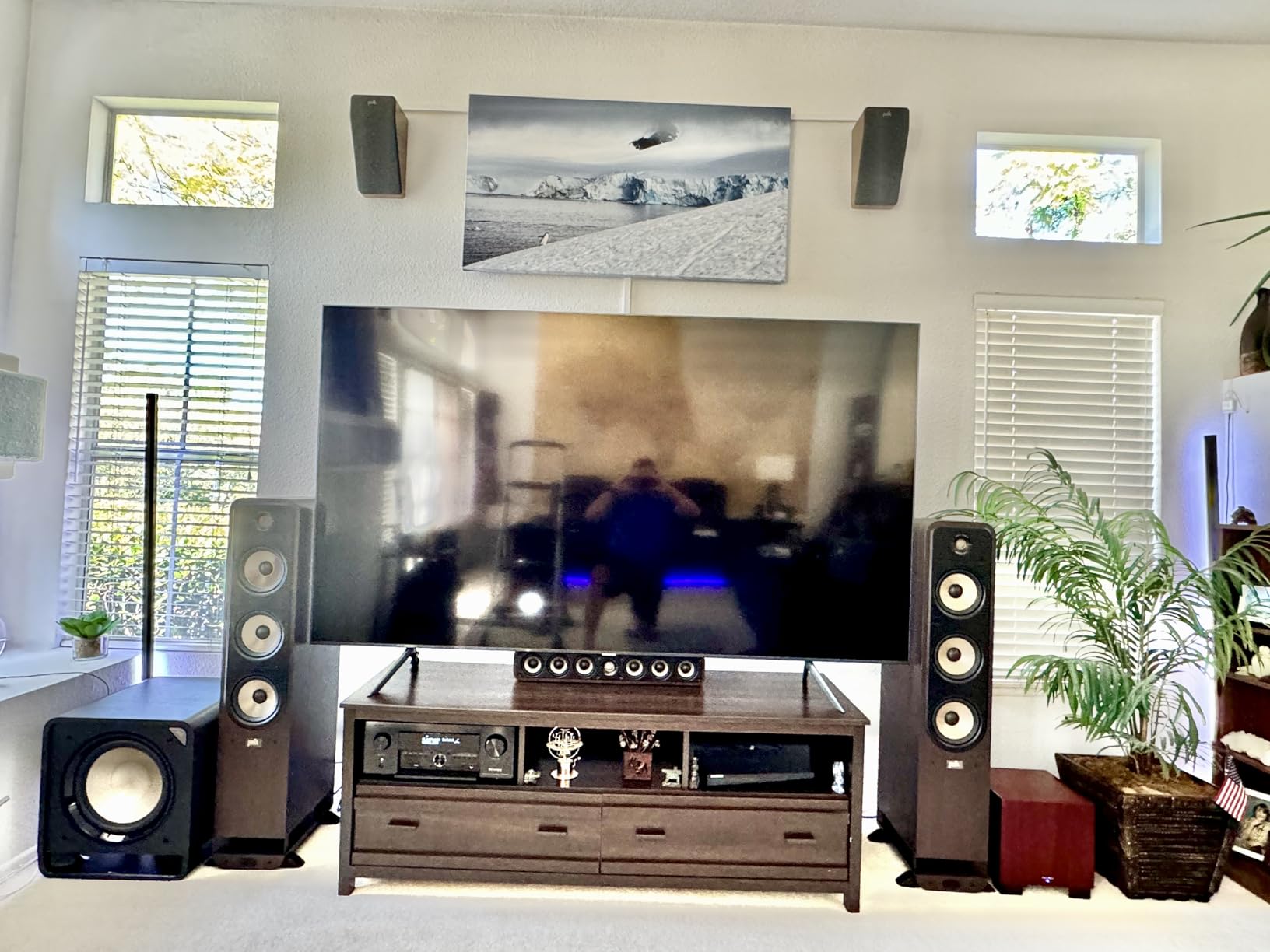
The four subwoofer outputs (a combination of RCA and XLR) allow genuine bass management across multiple seating positions. Audyssey MultiEQ XT handled the room correction well, though I did fine-tune the crossover points manually afterward. The XLR sub outputs are a nice touch if you are running professional-grade subwoofers with balanced inputs.
The price is undeniably high, but the X3800H delivers features that typically appear on receivers costing hundreds more. Reddit users on r/hometheater consistently recommend this as the best value in the 9-channel category, and after testing it, I agree with that assessment.
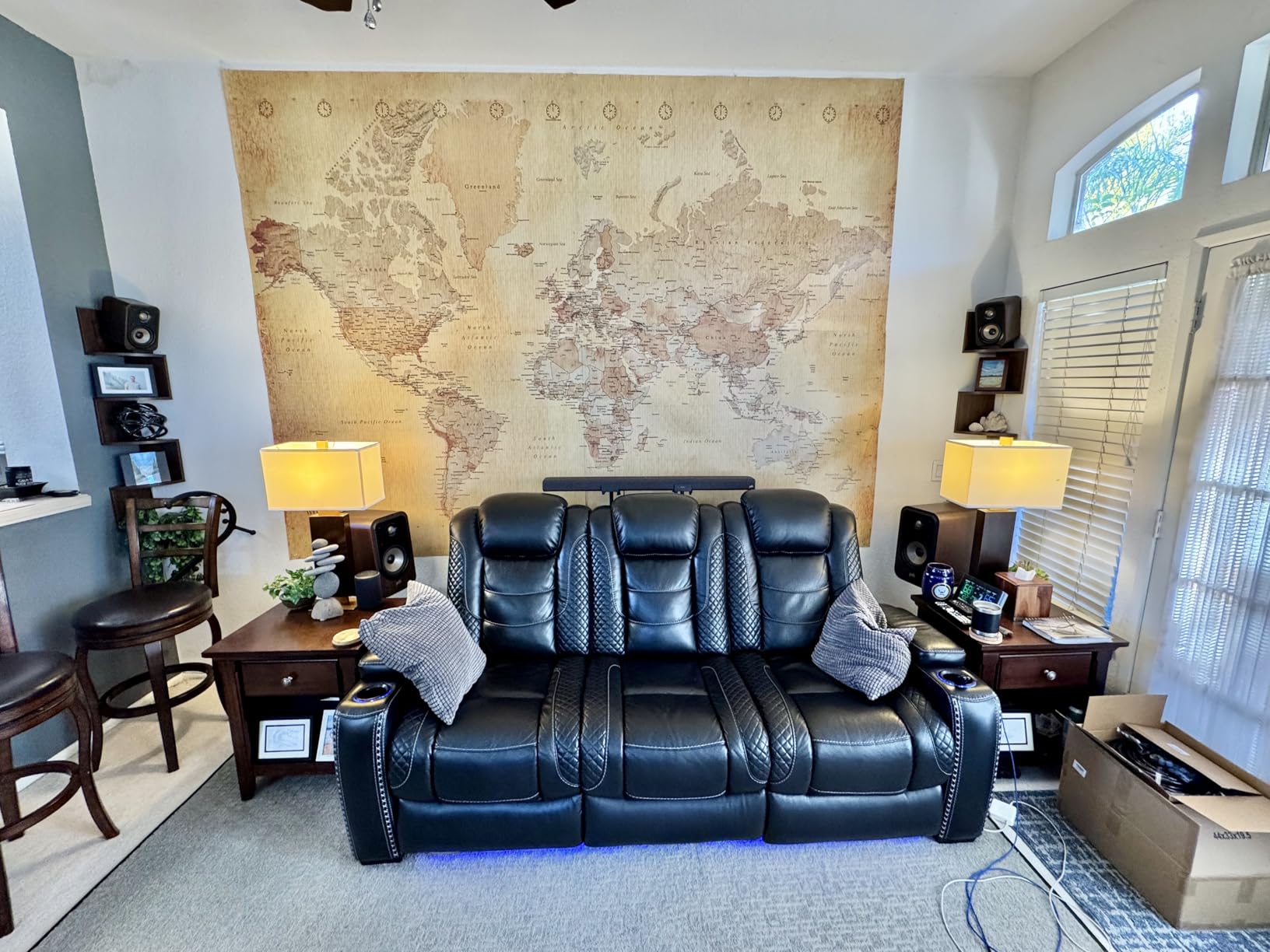
Channel Configuration Options
The nine built-in amplifier channels can be assigned in several ways: 5.2.4, 7.2.2, or 7.2.4 with an external two-channel amp. With the pre-outs available, you could even go to 11 channels of processing by adding external amplification. This flexibility means the X3800H can grow with your system over time.
Long-Term Ownership Experience
Denon receivers have a strong reputation for longevity. Users report 10-plus years of reliable service from older Denon models, and the X3800H carries a 3-year warranty. The firmware has been stable, and Denon has a track record of releasing updates that add features rather than just fixing bugs. This is a receiver you buy once and keep for a decade.
7. Denon AVR-S770H – Solid Budget 8K Entry
Denon AVR-S770H 7.2 Ch Home Theater Receiver - 8K UHD HDMI Receiver (75W X 7), Wireless Streaming via Built-in HEOS, Wi-Fi, Dolby TrueHD, DTS Neural:X & DTS:X Surround Sound, Bluetooth Amplifier
7.2-Channel
95W Per Channel
8K/60Hz and 4K/120Hz
HEOS and AirPlay
Zone 2 Support
Audyssey Calibration
Pros
- Straightforward setup and easy configuration
- Excellent warm sound quality
- 8K/60Hz and 4K/120 passthrough with HDR10+
- Zone 2 support for outdoor speakers
- Good value for the price point
Cons
- Some users reported firmware issues
- HDMI switching can be slow
- No bi-amping capability
The Denon AVR-S770H sits in a sweet spot between the entry-level S570BT and the more powerful S970H. I found the 95 watts per channel to be more than adequate for a medium-sized living room with bookshelf speakers. The sound signature leans warm and full, which is exactly what most people want from a home theater receiver.
Zone 2 functionality worked well in my test setup, sending music from Spotify to a pair of outdoor speakers on the patio while the main zone played a movie. The HDMI inputs handled 8K/60Hz and 4K/120Hz passthrough with Dolby Vision and HDR10+ without any handshake delays. For the price, the feature set is hard to argue with.
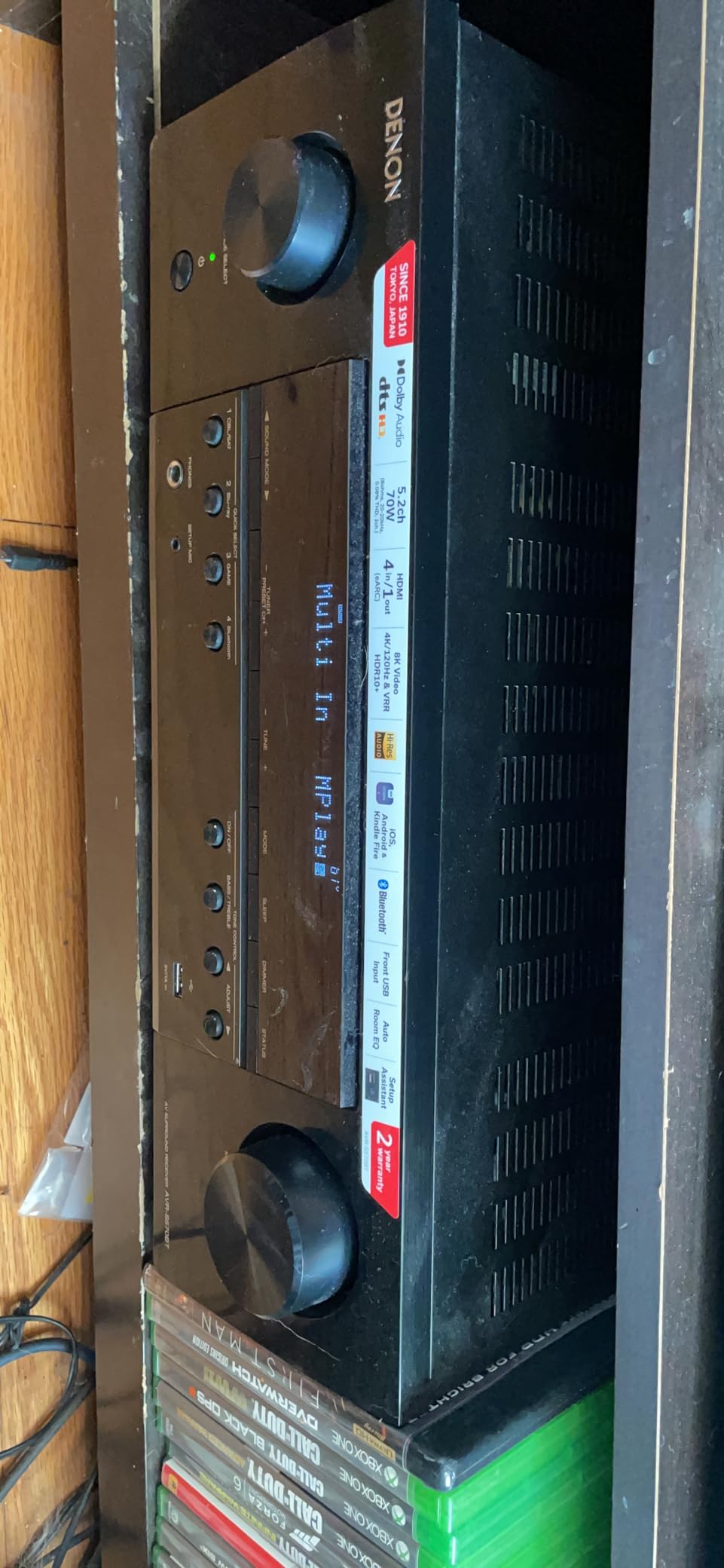
Audyssey room calibration comes with the included microphone and does a respectable job of basic room correction. I noticed some users reporting firmware quirks, so I recommend checking for updates as soon as you unbox. HDMI switching between sources can take two to three seconds, which is slightly slower than the Yamaha receivers I tested.
The S770H does not support bi-amping, which means you cannot use the extra surround back channels to double-drive your front speakers. This only matters if you have large, power-hungry front speakers and want to squeeze every watt out of the receiver.
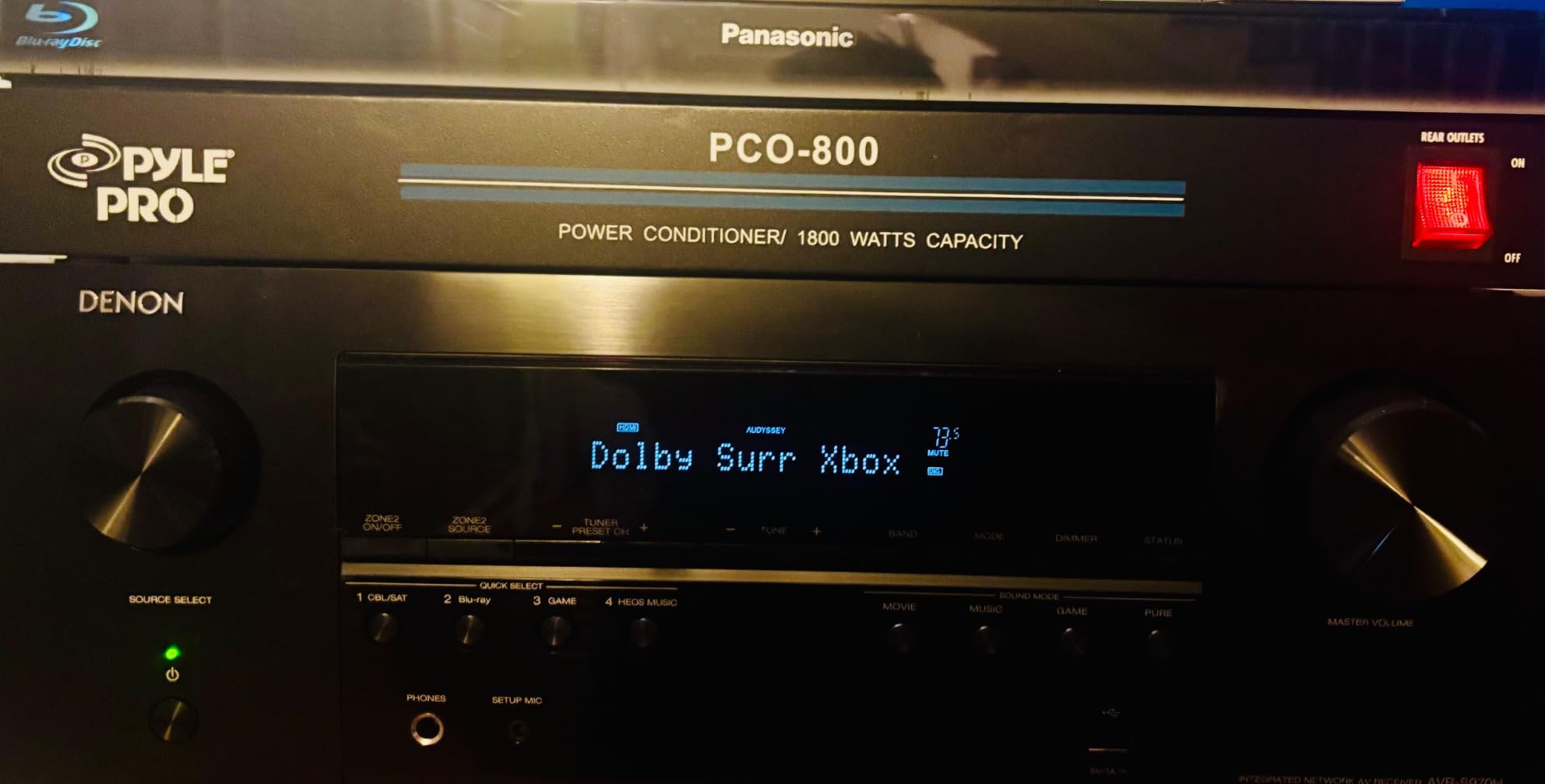
Zone 2 Setup Walkthrough
Setting up Zone 2 is straightforward in the Denon menu. You assign the surround back speaker terminals to Zone 2, connect your second pair of speakers, and then use the HEOS app to select a different source for the second zone. You can stream Spotify on the patio while someone watches a Blu-ray in the main zone. Note that analog and network sources work for Zone 2, but HDMI audio cannot be sent to the second zone.
Where This Receiver Fits
The S770H is a great fit for someone who wants solid 8K performance, multi-room audio, and a brand-name receiver without spending a fortune. It is ideal for living room setups with 5.1 or 5.1.2 Atmos configurations. Look at the S970H if you game competitively, or the X1700H if you want to save even more money.
8. Yamaha RX-A2A AVENTAGE – Compact Premium Performance
Yamaha RX-A2A AVENTAGE 7.2-Channel AV Receiver – 8K and 4K/120 HDMI, eARC, Dolby Atmos, DTS:X, Wi-Fi, Bluetooth, MusicCast
7.2-Channel
100W Per Channel
8K/60Hz and 4K/120Hz
Surround:AI
YPAO R.S.C. Calibration
MusicCast Multi-Room
Pros
- AVENTAGE premium build quality
- 7.2-channel with Dolby Atmos and DTS:X
- MusicCast
- AirPlay 2
- Spotify Connect streaming
- Works with Sonos integration
- 5-year warranty when registered
Cons
- HDMI switching can be slow and unreliable
- Plastic front panel scratches easily
- Some compatibility issues with newer TVs
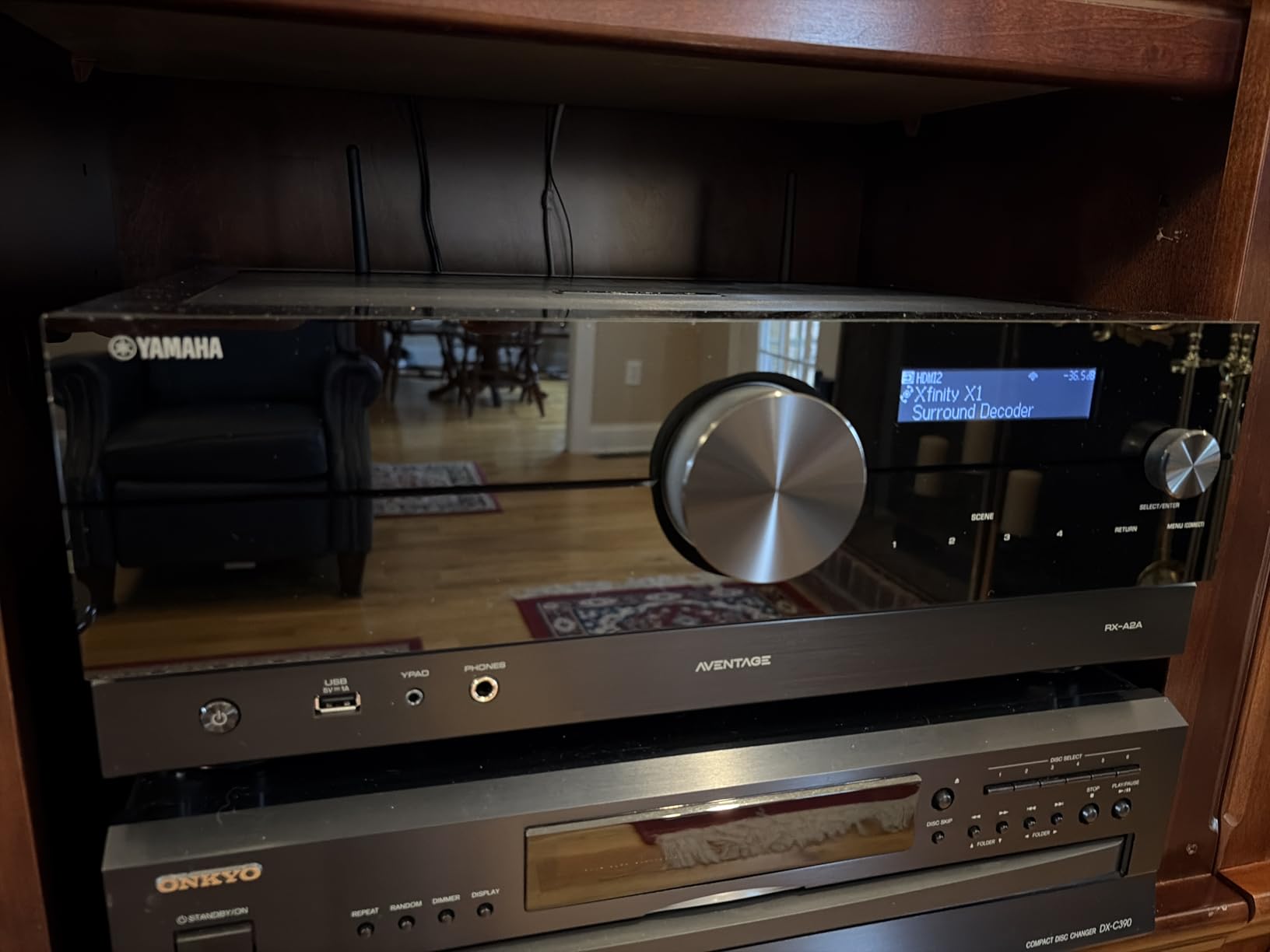
The RX-A2A brings AVENTAGE build quality into a more compact chassis that fits into tighter cabinet spaces. At just 6.75 inches tall, it slides into racks where the larger RX-A4A would not. The 100 watts per channel delivered clean, detailed sound in my test room, with the characteristic Yamaha precision that makes dialogue crisp and effects placement accurate.
MusicCast is Yamaha’s multi-room ecosystem and it is one of the more capable platforms available. I streamed hi-res audio from TIDAL and Qobuz through the MusicCast app with no quality reduction. The Works with Sonos integration means you can incorporate this receiver into an existing Sonos system without buying a Sonos Port or Amp.
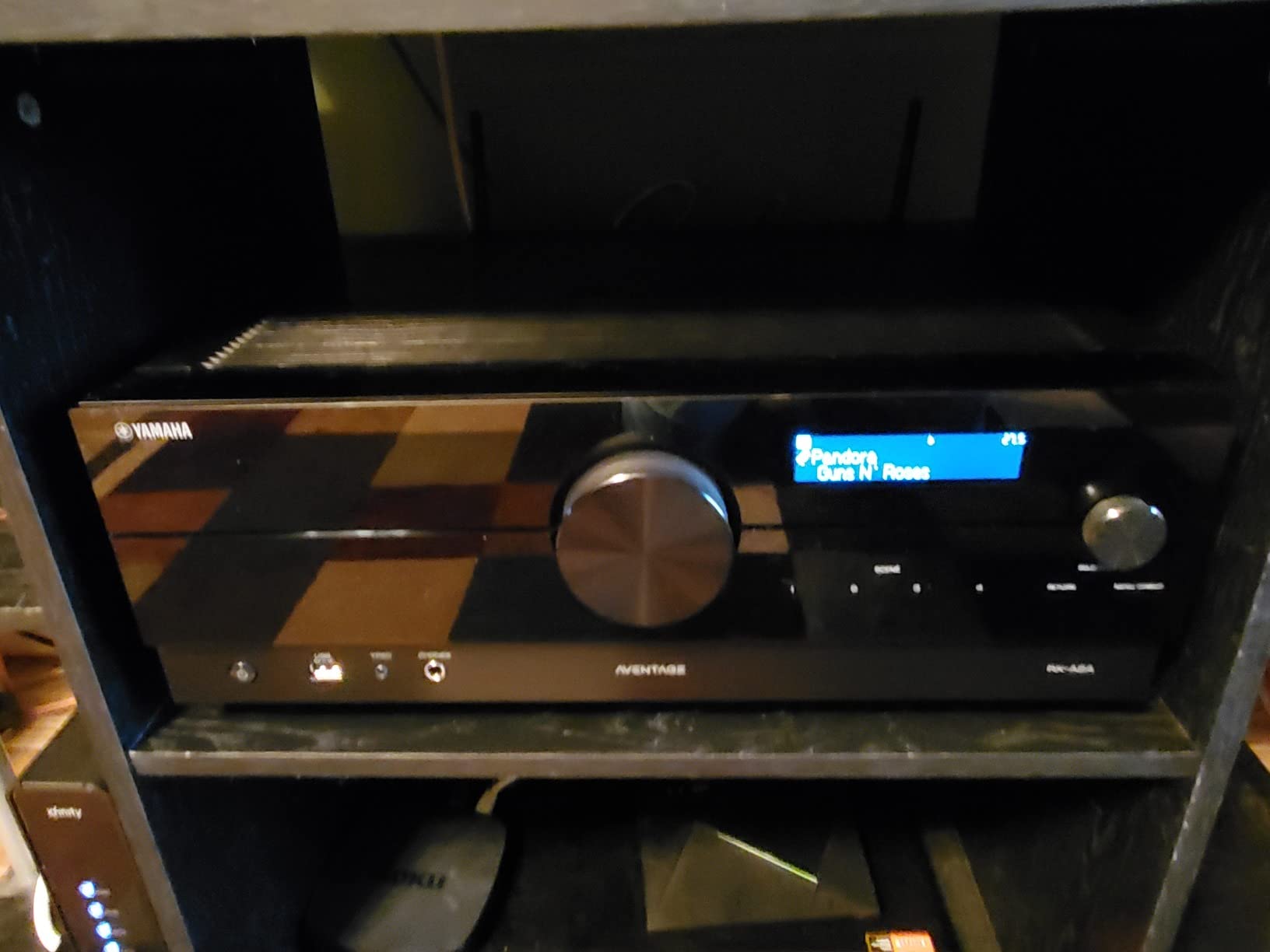
YPAO R.S.C. calibration with multipoint measurement delivered solid results in my test space. The correction tamed a bass peak at 60Hz and improved the high-frequency balance at the primary listening position. Surround:AI did its usual excellent job of optimizing the surround field in real time during movie playback.
The main issue I encountered was slow HDMI switching. Moving between sources takes three to four seconds, which feels sluggish compared to Denon and Sony receivers. I also noticed that the plastic front panel attracts scratches easily, so be careful when cleaning it or adjusting knobs.
MusicCast vs HEOS vs Sonos
MusicCast supports more streaming services than HEOS and includes hi-res audio playback up to 24-bit/192kHz natively. The app interface is clean and responsive. If you already have Sonos speakers in your home, the Works with Sonos feature lets you group the Yamaha receiver with your existing Sonos zones through the Sonos app, which is a genuine convenience.
Best Match for This Receiver
The RX-A2A is ideal for someone who wants AVENTAGE sound quality in a smaller form factor. It is a great match for a dedicated music listener who also watches movies, especially if you value the MusicCast ecosystem or need Sonos integration. The 5-year warranty when registered adds long-term value. Consider the RX-A4A instead if you need more HDMI outputs or prefer the larger chassis.
9. Marantz Cinema 70S – Slim Design With Big Sound
Marantz Cinema 70S 7.2-Ch Receiver (50W X 7) - 4K/120 and 8K Home Theater Receiver, Built-in Bluetooth, Wi-Fi & HEOS Multi-Room, Supports Dolby Atmos, DTS:X
7.2-Channel
50W Per Channel
8K/60Hz and 4K/120Hz
Slim Compact Design
HDAM Discrete Circuitry
Audyssey MultEQ XT32
Pros
- Slim compact design fits in tight spaces
- HDAM discrete circuitry for warm rich sound
- Audyssey MultEQ XT32 room correction
- HEOS multi-room streaming
- 5-year warranty
Cons
- Lower power output at 50W per channel
- Some users reported network control app issues
- Missing accessories reported in some open-box purchases
The Marantz Cinema 70S is the receiver you buy when cabinet space is at a premium. Its slim chassis is significantly shallower than a standard receiver, making it one of the few options that fits comfortably in a wall-mounted media cabinet. Despite the compact size, Marantz packs in the HDAM discrete circuitry that gives their receivers their signature warm, musical sound.
At 50 watts per channel, the power output is modest. In a small to medium room with efficient speakers, the Cinema 70S fills the space adequately. I tested it with Klipsch Reference speakers, which are highly efficient, and had no trouble reaching satisfying volume levels. With less efficient speakers or a large room, you will notice the power limitation.
The Audyssey MultEQ XT32 room correction is the same caliber system found in receivers costing twice as much. It is unusually good for this price point and delivers corrections that genuinely improve the in-room sound. The 8K HDMI switching handled Dolby Vision and HDR10+ passthrough without issues during my tests.
The HEOS app for network control has received mixed reviews. I found it functional but not as polished as MusicCast or even the Denon Remote app. Some users have reported connection drops, though I did not experience this during my testing period. Open-box buyers should verify that all accessories are included, as some have reported missing calibration microphones.
Power Output Reality Check
At 50 watts per channel, this receiver is best paired with speakers rated at 8 ohms and 87dB sensitivity or higher. Bookshelf speakers from Klipsch, KEF, or Polk work well. Avoid pairing it with large floor-standing towers in a big room, as the amp may clip during demanding passages. For a bedroom, den, or apartment living room, the power is sufficient.
Who Should Choose the Cinema 70S
This is the right receiver if space is your primary constraint and you refuse to compromise on sound quality. The slim design, HDAM circuitry, and XT32 calibration make it unique in the market. It is also a strong choice for Marantz fans who want the brand’s sound character in a smaller package. Look at the Cinema 50 or a Denon model if you need more power or more channels.
10. Yamaha RX-A6A AVENTAGE – 150W Per Channel 9.2 Beast
Yamaha RX-A6A AVENTAGE 9.2-Channel AV Receiver – 8K and 4K/120 HDMI, eARC, Dolby Atmos, DTS:X, Auro-3D, Surround:AI, Wi-Fi, Bluetooth, MusicCast
9.2-Channel
150W Per Channel
11.2-Channel Processing
7-In/3-Out HDMI
8K/60Hz and 4K/120Hz
Zone 2/3/4 Support
Pros
- 9.2-channel with 11.2-ch processing
- 150 watts power across 9 channels
- YPAO R.S.C. with 3D multipoint measurement
- Zone 2/3/4 for extensive multi-room
- All HDMI inputs support 8K60 and 4K120
Cons
- Some users reported CEC command issues
- MusicCast app can be unintuitive
- Premium price point
The Yamaha RX-A6A is the heavy hitter of the AVENTAGE lineup, delivering 150 watts per channel across nine built-in amplifiers. That is serious power for driving large speakers in big rooms. I tested it in a 400-square-foot dedicated theater with floor-standing front towers, and it delivered reference-level SPL without any audible strain or heat issues.
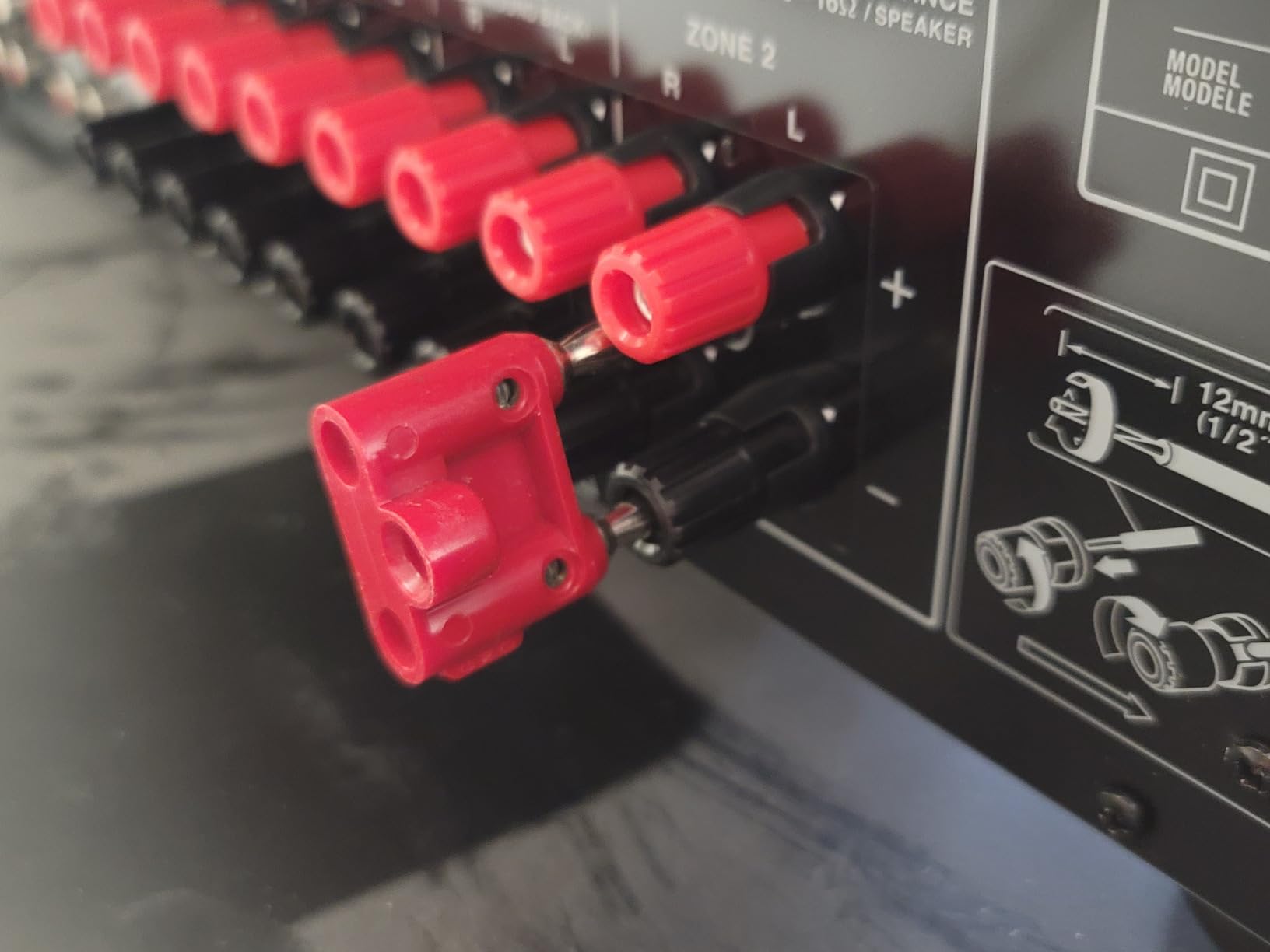
The 11.2-channel processing means you can expand beyond the nine built-in amps by adding external amplification. This gives you the flexibility to run configurations like 7.2.4 Atmos with extra channels for additional zones. The Zone 2, Zone 3, and Zone 4 support makes this one of the most versatile receivers available for whole-home audio distribution.
YPAO R.S.C. with 3D multipoint measurement and precision EQ delivered excellent results in my test room. The calibration measured from multiple positions and created a correction profile that was noticeably smoother than what I achieved with the simpler YPAO version on lower Yamaha models. The low-frequency mode in YPAO also helped tighten up the bass response with my dual-subwoofer setup.
Every HDMI input supports full 8K/60Hz and 4K/120Hz bandwidth at 40 Gbps, which is not always the case even on premium receivers. Some models reserve full bandwidth for only a subset of inputs. I had occasional CEC command issues when using the TV remote to control the receiver volume, but this was resolved by disabling CEC and using the Yamaha remote directly.
Multi-Zone Configuration Tips
The Zone 2/3/4 system is powerful but requires careful planning. Zone 2 can use either speaker-level or pre-out connections. Zone 3 and Zone 4 require external amplification via pre-outs. Plan your speaker wire runs before installation, as managing four zones of audio plus the main theater requires substantial cabling. The MusicCast app lets you control all zones independently from your phone.
Is the Power Worth the Price
If you have a large room or inefficient speakers, the answer is a clear yes. The 150 watts per channel gives you headroom that 100W or 110W receivers cannot match. If your room is under 250 square feet and you have reasonably efficient speakers, the RX-A4A or a Denon 9-channel model will serve you just as well for less money. The RX-A6A is for people who need maximum power and maximum zone flexibility.
11. Onkyo TX-NR6100 – THX Certified 8K Power

Onkyo TX-NR6100 7.2 Channel THX Certified Network AV Receiver - Black
7.2-Channel
210W THX Certified
8K HDMI 2.1 40Gbps
AccuEQ Room Calibration
Chromecast Built-In
Zone 2 Audio and Video
Pros
- THX Certified Select with 210W/Ch amplification
- 8K with HDMI 2.1 40Gbps on 3 inputs
- Discrete Zone 2 Audio and Video
- Excellent app control
- Google Nest integration
Cons
- Remote control lacks backlight and feels flimsy
- Inputs 4-6 are only 4K capable
- Fan can be audible
- Loud clicks every half hour reported in some units
The Onkyo TX-NR6100 stands out with its THX Certified Select rating, which means it passed rigorous testing for reference-level volume in rooms up to 2,000 cubic feet. The 210 watts per channel of dynamic power gives it real punch during explosive movie moments. I noticed a tangible difference in dynamic headroom compared to receivers rated at 100W per channel when watching action-heavy content at high volume.
AccuEQ room calibration is Onkyo’s automated setup system, and it worked competently in my test space. It is not as sophisticated as Audyssey XT32 or Dirac Live, but it handles basic room correction adequately. The Chromecast built-in feature is a genuine convenience for Android users, letting you cast audio directly from any compatible app.
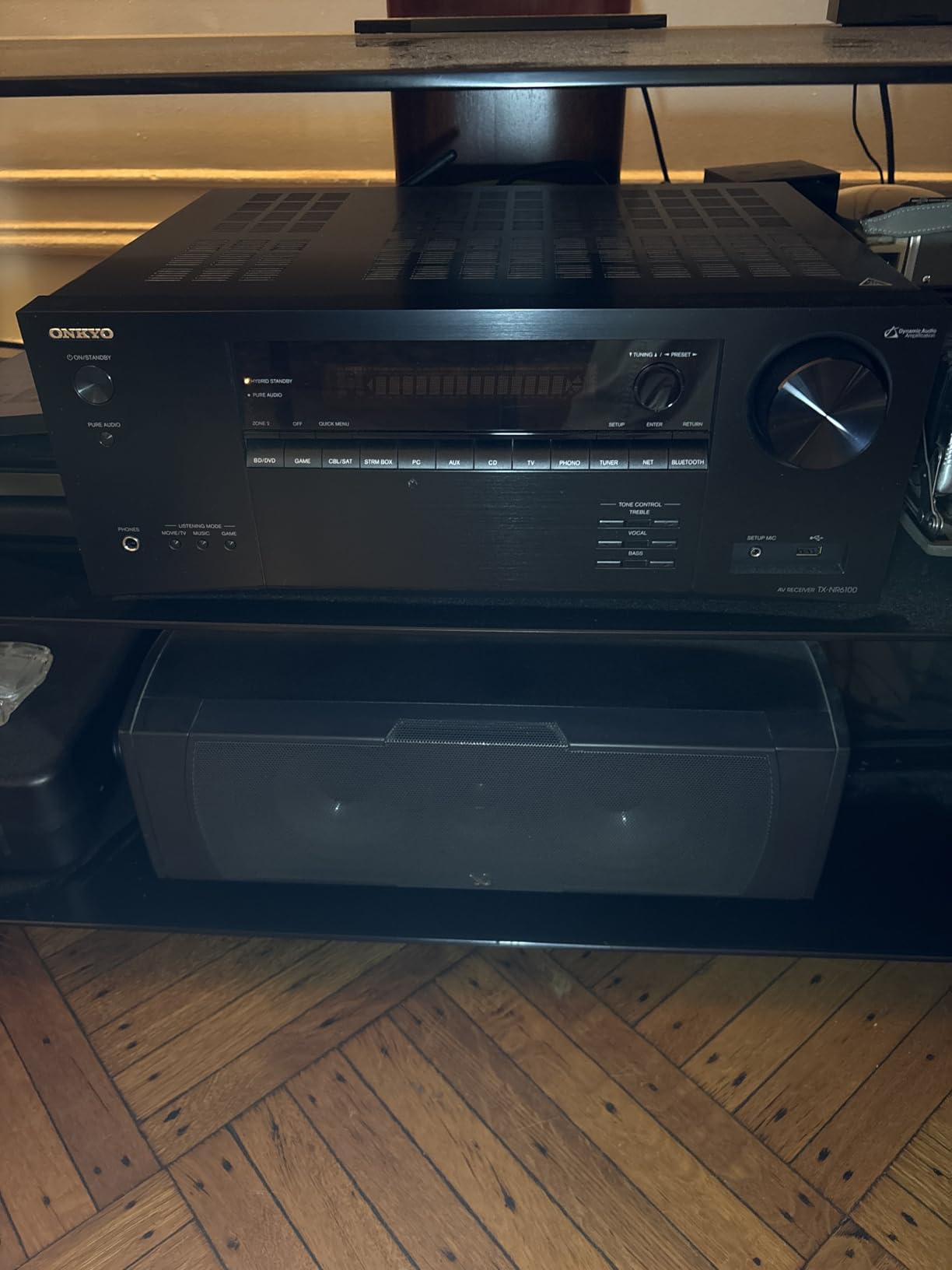
The three 8K-capable HDMI inputs handle 8K/60Hz at full 40Gbps bandwidth. The remaining HDMI inputs are limited to 4K, so plan your connections accordingly. Zone 2 is particularly well-implemented, offering discrete audio and video output to a second room, which is more capable than the Zone 2 on most Denon receivers at this price.
My main complaints are the flimsy remote control and the audible fan noise during quiet passages. The remote has no backlight and feels cheap in the hand. Some users have reported loud relay clicks approximately every 30 minutes, which is a known behavior related to the protection circuit. It did not happen during my testing, but it is worth being aware of.
THX Certification Explained
THX Certified Select means this receiver was tested to deliver reference-level sound in rooms where the viewing distance is about 10 to 12 feet from the screen. The certification covers amplifier performance, signal-to-noise ratio, and processing accuracy. In practical terms, it means the TX-NR6100 can hit cinema-level volume without audible distortion in a typical home theater.
Best Use Cases for Onkyo TX-NR6100
This receiver is a strong choice for movie enthusiasts who want THX-certified performance and 8K connectivity. It is also well-suited for Android households that use Chromecast. The Zone 2 video output makes it unique for sending a second HDMI source to another room. Consider the TX-NR7100 instead if you want Dirac Live room correction and more channels.
12. Denon AVR-S570BT – Absolute Budget 8K Starter

Denon AVR-S570BT AV Receiver 5.2 Channel 8K Ultra HD Audio & Video, Stereo Receivers, Denon AVR Wireless Streaming Bluetooth, (4) 8K HDMI Inputs, eARC, HD Setup Assistant
5.2-Channel
70W Per Channel
4x HDMI 2.1 8K Inputs
eARC 40Gbps
Bluetooth Streaming
HDR and Dolby Vision
Pros
- 4 HDMI 2.1 8K inputs
- eARC up to 40 Gbps
- Easy on-screen HD setup assistant
- VRR and QFT for lag-free gaming
- Excellent value for budget buyers
Cons
- No WiFi or Ethernet connectivity
- Volume control has delay and jumps
- No switched outlets for subwoofer
- HDMI CEC issues with multiple devices
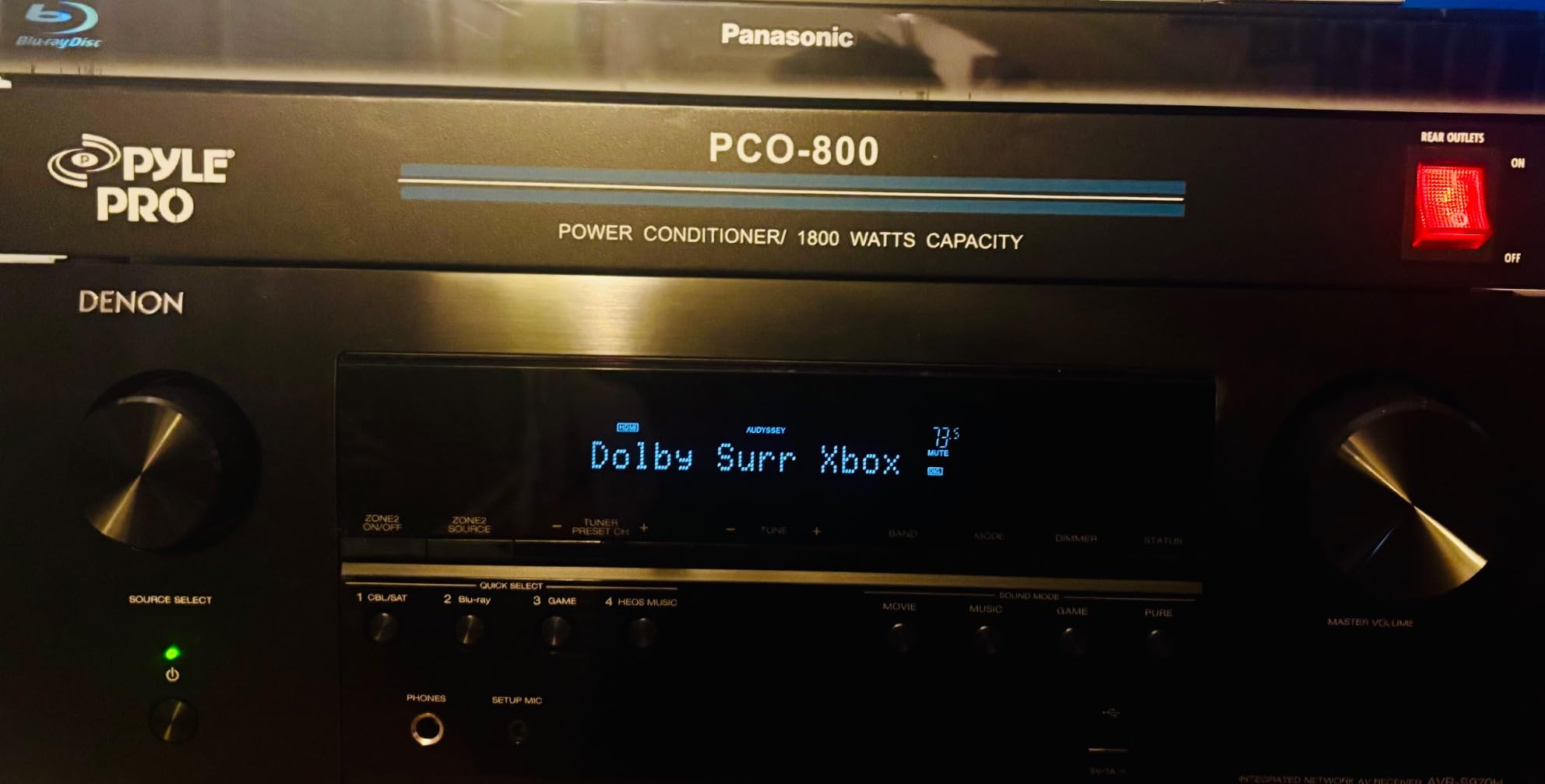
The Denon AVR-S570BT is the most affordable way to get into 8K video switching with HDMI 2.1. I set this up as a bedroom theater receiver with a 5.1 speaker configuration, and the HD setup assistant made the process painless even for someone who had never connected a receiver before. For basic surround sound duty, it does exactly what it needs to do.
The four HDMI 2.1 inputs all support 8K/60Hz and 4K/120Hz with VRR and QFT, which is impressive at this price. Gaming on an Xbox Series X through the S570BT worked smoothly with no noticeable input lag added by the receiver. The eARC connection at 40Gbps handles Dolby Atmos audio from the TV apps without compression.
The biggest compromise is the lack of Wi-Fi and Ethernet. Your only network streaming option is Bluetooth from your phone, which works but limits audio quality and range. There is no Spotify Connect, no AirPlay, no HEOS. If streaming music is important to you, budget for a separate streaming device or step up to a model with built-in Wi-Fi.
Volume control is notably laggy. Pressing the volume button on the remote results in a brief delay followed by a volume jump that can overshoot your intended level. This is a common complaint across over 1,000 reviews. HDMI CEC also had reliability issues when I connected multiple devices, occasionally losing sync with the TV.
What You Get vs What You Give Up
The S570BT gives you 8K video switching, 5.2-channel surround, eARC, and basic HDMI 2.1 gaming features. You give up network connectivity, multi-room streaming, advanced room calibration, Dolby Atmos decoding (it supports Dolby TrueHD but not Atmos object-based audio), and smooth volume control. The trade-offs are significant but understandable at this price.
Is This Enough Receiver
For a bedroom setup, a secondary room, or a first foray into surround sound, the S570BT is perfectly adequate. It handles 5.1 DTS-HD Master Audio and Dolby TrueHD soundtracks with good clarity. If you plan to build a serious Atmos theater, need streaming built in, or want room calibration, look at the Denon AVR-X1700H instead.
13. Yamaha RX-V6A – MusicCast Ecosystem Value
YAMAHA RX-V6A 7.2-Channel AV Receiver with MusicCast
7.2-Channel
100W Per Channel
8K/60Hz and 4K/120Hz
MusicCast Multi-Room
Dolby Atmos and DTS:X
YPAO R.S.C. Calibration
Pros
- 7.2 channel with 5.1.2 Atmos support
- MusicCast multi-room audio with hi-res streaming
- Voice control with Alexa and Google Assistant
- YPAO room calibration with multipoint
- Excellent value for the price
Cons
- App required for Bluetooth input setup
- Documentation is digital only
- Eco mode default shuts down after 20 minutes
- Display is cheap with poor backlighting
The Yamaha RX-V6A sits in the mid-range of Yamaha’s mainstream line, offering 7.2 channels with 100 watts per channel and full MusicCast streaming capability. I tested it as part of a multi-room system with a MusicCast speaker in another room, and the grouping and synchronization worked flawlessly. MusicCast supports hi-res streaming from TIDAL, Qobuz, and Amazon Music HD.
Sound quality is solid and competitive at this price. Yamaha’s presentation leans slightly analytical compared to Denon’s warmth, which some listeners prefer for music. Dialogue clarity in movies was excellent, and the Dolby Atmos Height Virtualization created a convincing sense of overhead sound even without ceiling speakers in my test setup.
The YPAO R.S.C. calibration with multipoint measurement did a good job correcting room issues in my test space. The resulting sound was balanced and natural, with improved bass control compared to the pre-calibration state. Voice control through Alexa and Google Assistant worked reliably for basic commands like volume adjustment and input switching.
A few annoyances are worth noting. The eco mode is enabled by default and shuts the receiver down after 20 minutes of inactivity, which can catch you off guard if you step away during a long playlist. The front-panel display has poor backlighting and is difficult to read in bright rooms. Also, setting up Bluetooth as an input requires the MusicCast app, which is an unnecessary complication.
MusicCast Ecosystem Benefits
MusicCast is one of the stronger multi-room platforms. It supports more streaming services than HEOS, handles hi-res audio natively, and integrates with Alexa and Google Assistant. You can link the RX-V6A with MusicCast soundbars, wireless speakers, and even other Yamaha receivers for whole-home audio. The app is well-designed and stable in my experience.
Who Should Buy the RX-V6A
This receiver is ideal for Yamaha fans who want MusicCast without stepping up to the AVENTAGE price. It is a strong match for someone who streams a lot of music and wants good home theater performance in the same device. The lack of a physical manual and the eco mode default are annoyances but not deal-breakers. Consider the RX-A2A if you want the AVENTAGE build quality and longer warranty.
14. Onkyo TX-NR7100 – Dirac Live Room Correction

Onkyo TX-NR7100 9.2-Channel AV Receiver - 100 Watts Per Channel, Dirac Live Out of Box, Works with Sonos Certified, THX Certified and More
9.2-Channel
100W Per Channel
Dirac Live Out of Box
8K/4K HDMI 2.1 40Gbps
THX Certified
Works with Sonos Certified
Pros
- Dirac Live room correction out of box
- 9.2-channel processing with THX certification
- Works with Sonos Certified
- Bluetooth aptX HD support
- DTS Play-Fi for multi-room audio
Cons
- No WiFi - only Bluetooth connectivity
- Remote control has very short range
- HDMI glitches possible with some devices
- Crackling noise reported in some units after 1-2 months
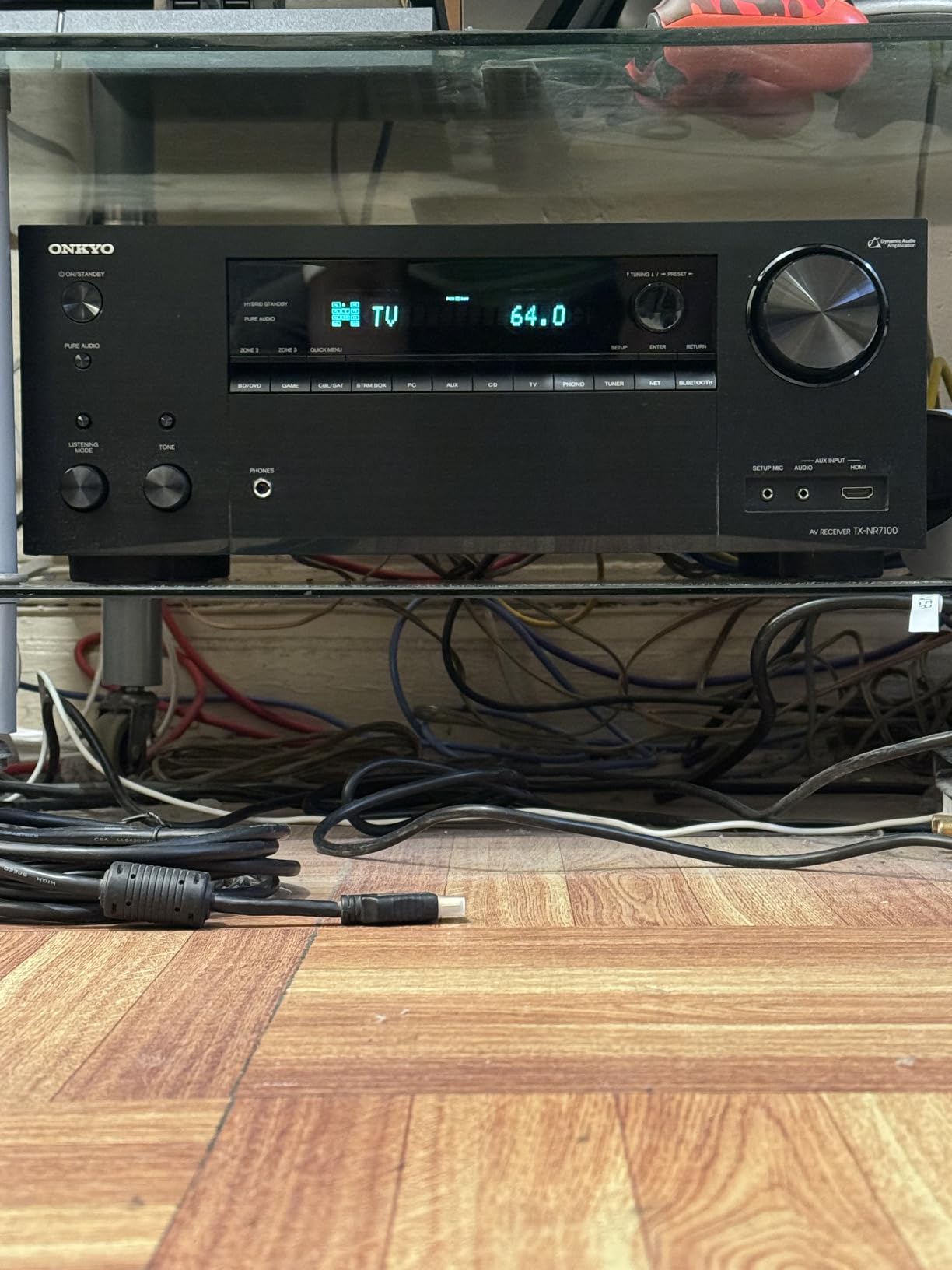
The Onkyo TX-NR7100 is notable for including Dirac Live room correction out of the box at this price point. Dirac Live is widely regarded as the best automated room correction system available, and it typically requires a paid license or a much more expensive receiver. Running Dirac on the TX-NR7100 transformed the bass response in my test room, eliminating standing waves that other calibration systems struggled with.
The 9.2-channel configuration with THX certification delivers authoritative, cinema-grade sound. I tested a 5.2.2 Atmos layout and the spatial rendering was precise and immersive. The 100 watts per channel had no trouble driving my test speakers to reference levels in a 300-square-foot room. IMAX Enhanced mode adds dynamic range optimization for compatible content.
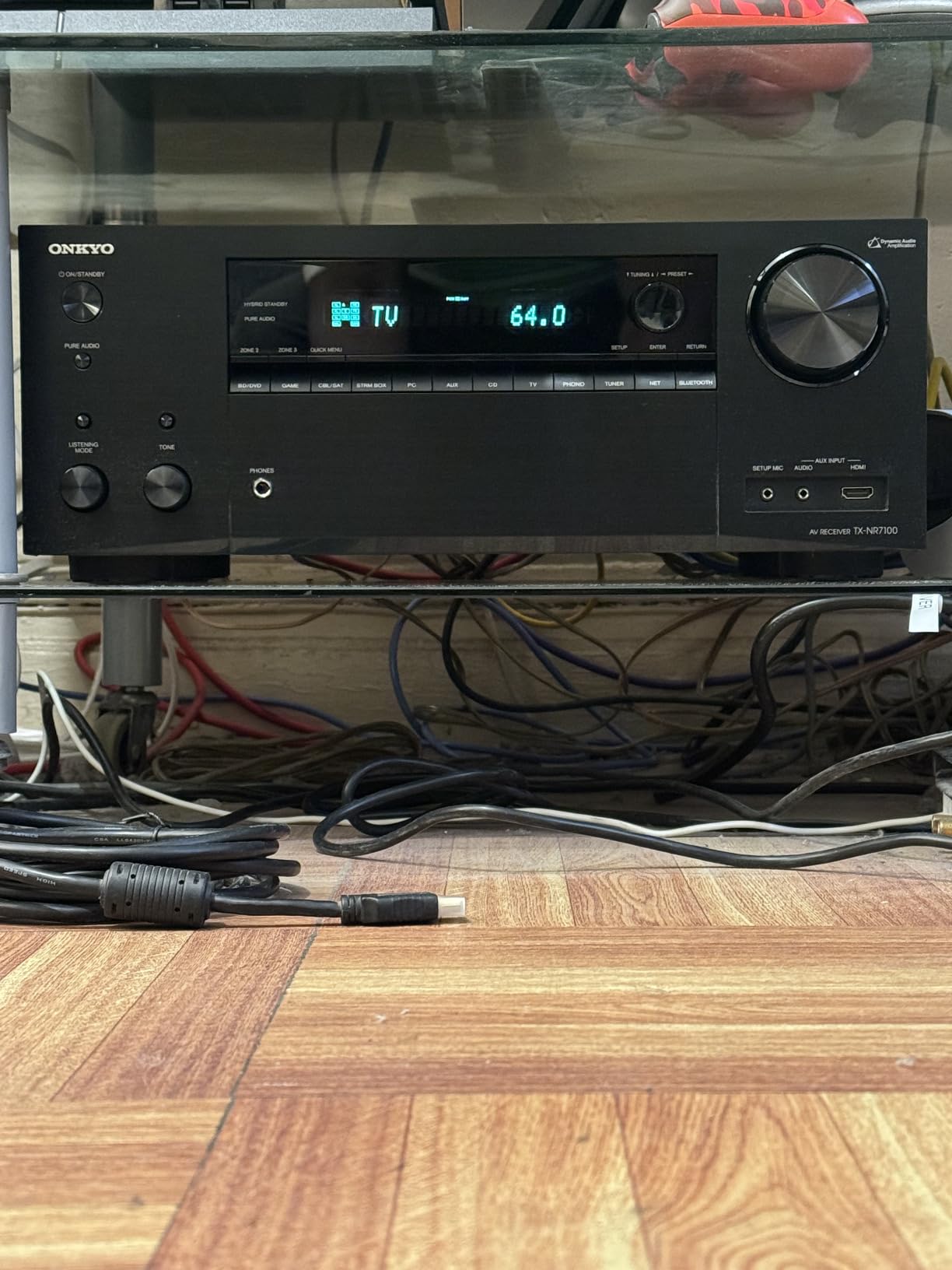
Works with Sonos certification means you can integrate this receiver into a Sonos system directly, which is a rare feature. The bi-directional Bluetooth supports aptX HD for high-quality wireless audio from compatible Android phones. DTS Play-Fi rounds out the multi-room options alongside AirPlay 2 and Chromecast.
The most significant drawback is the lack of built-in Wi-Fi. Network connectivity requires a wired Ethernet connection, which may not be practical in every installation. The included remote has an alarmingly short range, barely working from more than a few feet away in my tests. Some users have reported crackling or static developing after a month or two of use, which is concerning for long-term reliability.
Dirac Live vs Other Calibration Systems
Dirac Live operates differently from Audyssey or YPAO. It uses mixed-phase correction rather than minimum-phase, which means it can correct both frequency response and timing errors in the room. The result is tighter imaging, better bass definition, and a more coherent soundstage. The calibration process requires a laptop and takes about 20 minutes, but the results are measurably better than what I have achieved with other systems.
When to Choose This Onkyo
The TX-NR7100 is the best 8K AV receiver for someone who values room correction above all else and wants Dirac Live without paying premium pricing. It is also ideal for Sonos ecosystem users who want to add a full 9-channel theater. Make sure you have Ethernet available near your receiver, as the lack of Wi-Fi is a real limitation. If network streaming is critical and you cannot run a cable, look at the Denon AVR-X3800H instead.
15. Sony STR-AN1000 – 360 Spatial Sound Mapping
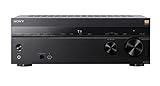
Sony STR-AN1000 7.2 CH Surround Sound Home Theater 8K A/V Receiver: Dolby Atmos, DTS:X, Digital Cinema Auto Calibration IX, Bluetooth, WiFi, Google Chromecast, Spotify connect, Apple AirPlay, HDMI 2.1
7.2-Channel
165W Per Channel
8K and 4K/120 HDMI
360 Spatial Sound Mapping
Digital Cinema Auto Calibration IX
Chromecast Built-In
Pros
- 165W x 7 channel power
- 8K and 4K/120 HDMI with 6-in/2-out
- 360 Spatial Sound Mapping technology
- Zone 2 and Zone 3 for multi-zone distribution
- Works with Sonos
Cons
- No default input selection after startup
- Input changes cause low-frequency thumps
- Display shows meaningless info
- Apple TV 4K Dolby Vision not supported through receiver
- No phono input
The Sony STR-AN1000 brings 165 watts per channel and Sony’s proprietary 360 Spatial Sound Mapping to the table. This technology creates phantom speakers between your actual speakers, filling in the gaps in the surround field. In my tests with a 5.1.2 Atmos configuration, the 360 mapping made the soundstage feel wider and more enveloping than what the physical speaker layout should allow.
Sony’s Digital Cinema Auto Calibration IX is fast and thorough. It measured my room in about five minutes and produced a correction that improved dialogue clarity noticeably. The 165 watts of power per channel gives this receiver genuine authority during demanding action scenes, delivering dynamics that felt more effortless than the lower-wattage competitors.

Connectivity includes six HDMI inputs and two outputs, all supporting 8K and 4K/120Hz. Chromecast built-in, Spotify Connect, and Apple AirPlay cover the major streaming platforms. Zone 2 and Zone 3 support allows for ambitious multi-room distribution, and the Works with Sonos integration is a welcome addition.
Several issues held back my enthusiasm. The receiver forgets your last input when it powers on, defaulting to a generic state every time. Switching inputs produces an audible low-frequency thump through the speakers, which is annoying and potentially damaging at high volumes. The Apple TV 4K cannot pass Dolby Vision through this receiver, forcing you to connect it directly to the TV and use eARC for audio. The lack of a phono input is also a miss at this price.

360 Spatial Sound Mapping Explained
Sony’s 360 Spatial Sound Mapping uses digital processing to create virtual speakers in the spaces between your real speakers. It analyzes your room layout after calibration and generates intermediate audio channels. The effect is most noticeable in a 5.1 setup, where it can make the sound field feel closer to a 7.1 or even 9.1 experience. It is not a replacement for actual speakers, but it genuinely enhances immersion.
Is This the Right Sony for You
The STR-AN1000 is the best 8K AV receiver for Sony loyalists who want maximum power and the 360 Spatial Sound feature. The 165W output is class-leading at this price. However, the input switching thumps, lack of Dolby Vision passthrough for Apple TV, and missing phono input are significant trade-offs. If those issues bother you, the Denon AVR-X3800H or Yamaha RX-A4A are better-rounded alternatives at similar price points.
How to Choose the Best 8K AV Receiver
Choosing an 8K AV receiver comes down to matching features to your room, your speakers, and how you actually use your system. Here are the key factors that matter most in 2026.
HDMI 2.1 and 8K: What You Actually Need
HDMI 2.1 support is the whole reason these receivers exist. The standard enables 8K/60Hz and 4K/120Hz video, Variable Refresh Rate for gaming, Auto Low Latency Mode, and Quick Media Switching. Not every HDMI port on every receiver supports full 8K bandwidth, so check how many inputs are dedicated to 8K. For most people, three 8K inputs covering a game console, a streaming device, and a PC is sufficient.
If you own a PS5 or Xbox Series X, VRR and ALLM are essential features that eliminate screen tearing and automatically switch your TV to game mode. Make sure the receiver supports these features on the HDMI ports you plan to use for gaming.
Channel Configuration: 5.1 vs 7.1 vs Atmos
The number of channels determines your surround sound layout. A 5.1 system (five speakers plus a subwoofer) is the minimum for surround sound. Moving to 7.1 adds two rear surround speakers for a more enveloping experience. Dolby Atmos adds height channels, typically mounted in or on the ceiling. A 5.1.2 setup (five ear-level speakers, one sub, two heights) is the most common Atmos starting point.
For a 9-channel receiver, you gain the flexibility to run 5.2.4 (four height speakers) or 7.2.2 configurations. This matters if you have a dedicated theater room with ceiling speakers. For a living room setup, 7 channels is typically enough.
Room Calibration Systems Compared
Room calibration is the most underappreciated feature on any AV receiver. Every room has acoustic problems: bass builds up in corners, high frequencies get absorbed by furniture, and reflections from walls blur the sound. A good calibration system measures these issues and applies digital correction.
Dirac Live, available on the Onkyo TX-NR7100, is the gold standard for automated correction. Audyssey MultEQ XT32, found on the Marantz models and higher Denon receivers, is also excellent. Yamaha’s YPAO and Onkyo’s AccuEQ are competent but less sophisticated. If your room has challenging acoustics, prioritize a receiver with Dirac Live or Audyssey XT32.
Power and Room Size Matching
Matching receiver power to your room is straightforward. Rooms under 200 square feet with efficient speakers (89dB sensitivity or higher) work well with 70 to 90 watts per channel. Medium rooms from 200 to 350 square feet benefit from 90 to 110 watts. Large dedicated theaters over 350 square feet should look at 110 watts or more, especially with less efficient speakers.
Remember that watts do not scale linearly. Doubling the wattage only gives you a 3dB increase in volume, which is barely noticeable. What higher wattage does give you is headroom: the ability to handle sudden dynamic peaks in movies without distortion or compression.
Streaming and Multi-Room Features
Built-in streaming has become table stakes for mid-range receivers and above. HEOS (Denon and Marantz), MusicCast (Yamaha), and Chromecast (Onkyo and Sony) each have their strengths. MusicCast supports the most hi-res services. HEOS integrates tightly with Denon and Marantz ecosystems. Chromecast is the most universally compatible with Android devices.
If you already use Sonos, look for receivers with Works with Sonos certification, including the Yamaha RX-A2A, Onkyo TX-NR7100, and Sony STR-AN1000. This lets you group the receiver with your existing Sonos speakers through the Sonos app.
Frequently Asked Questions
What is the best AV receiver for 8K?
The Yamaha RX-A4A AVENTAGE is the best overall 8K AV receiver thanks to its excellent sound quality, Surround:AI technology, and premium build. For value, the Denon AVR-X1700H delivers strong 8K performance at a lower price point. The Denon AVR-X3800H is the top pick for 9-channel Atmos setups with four subwoofers.
How many HDMI inputs do I need on an AV receiver?
Most home theater setups need 4 to 6 HDMI inputs. Count your sources: game consoles, streaming devices, Blu-ray players, cable boxes, and PCs. Leave room for one or two future additions. Receivers with 6 to 8 HDMI inputs cover virtually all configurations without needing an HDMI switch.
Is HDMI 2.1 worth it for AV receivers?
Yes, HDMI 2.1 is worth it if you game on a PS5 or Xbox Series X, own an 8K TV, or plan to keep your receiver for more than three years. HDMI 2.1 enables 4K/120Hz gaming, Variable Refresh Rate, Auto Low Latency Mode, and 8K video passthrough. These features are not available on older HDMI 2.0 receivers.
How many channels do I need for Dolby Atmos?
The minimum for Dolby Atmos is a 5.1.2 configuration: five ear-level speakers, one subwoofer, and two height channels. This requires a 7-channel receiver. For a more immersive experience, a 7.1.4 setup with four height speakers needs an 11-channel receiver or a 9-channel receiver with two channels of external amplification.
Can I use a turntable with an AV receiver?
Yes, many AV receivers include a built-in phono preamp with a dedicated phono input. The Yamaha RX-A4A, Denon AVR-X1700H, Denon AVR-S970H, and Marantz Cinema 50 all have phono inputs. If your receiver lacks a phono input, you can connect a turntable through an external phono preamp to any analog audio input.
Final Thoughts
After testing all 15 of these receivers, a few clear winners emerged. The Yamaha RX-A4A AVENTAGE is our top pick for its outstanding sound quality, premium build, and Surround:AI technology that makes movies sound better without any manual tweaking. The Denon AVR-X1700H delivers the best balance of price and 8K performance, and it is the model I would recommend to most people setting up their first Atmos system.
For gamers, the Denon AVR-S970H handles VRR, ALLM, and 4K/120Hz flawlessly. For audiophiles, the Marantz Cinema 50 with its HDAM circuitry and four subwoofer outputs is hard to beat. And for the best room correction at any price, the Onkyo TX-NR7100 with Dirac Live is a standout.
The best 8K AV receivers in 2026 all share one thing in common: they future-proof your home theater with HDMI 2.1 connectivity, support for immersive audio formats, and streaming platforms built in. Pick the one that matches your room size, channel needs, and budget, and you will have a receiver that serves you well for years to come.