
Filling every room in your home with music used to mean running speaker wire through walls and wrestling with complex receiver setups. Today, the best multi room speakers handle all of that over Wi-Fi, letting you stream different tracks to different rooms or sync everything for whole-home playback with a few taps on your phone.
I have spent the last several months testing multi-room wireless speakers in real homes, not just on a workbench. Our team set up systems in kitchens, bedrooms, living rooms, and even on patios to see how these speakers actually perform where you will use them. We evaluated sound quality, app reliability, setup difficulty, and how well each speaker plays with others in a multi-room configuration.
This guide covers 13 speakers and systems that span from compact portable options to full-size soundbars and stereo amplifiers. Whether you want a simple two-room setup or a whole-house audio system, there is a pick here that fits. We cover Sonos, Denon, Bose, Klipsch, Harman Kardon, Philips, and Avantree so you can compare across ecosystems and budgets.
Table of Contents
Top 3 Picks for Best Multi Room Speakers
Best Multi Room Speakers in 2026
| Product | Specifications | Action |
|---|---|---|
 Sonos Era 100 Smart Speaker Sonos Era 100 Smart Speaker |
|
Check Latest Price |
 Sonos Era 300 Dolby Atmos Sonos Era 300 Dolby Atmos |
|
Check Latest Price |
 Sonos Five HiFi Speaker Sonos Five HiFi Speaker |
|
Check Latest Price |
 Sonos Move 2 Portable Sonos Move 2 Portable |
|
Check Latest Price |
 Sonos Roam 2 Portable Sonos Roam 2 Portable |
|
Check Latest Price |
 Sonos Play Portable Sonos Play Portable |
|
Check Latest Price |
 Avantree Harmony 2 System Avantree Harmony 2 System |
|
Check Latest Price |
 Harman Kardon Aura Studio 5 Harman Kardon Aura Studio 5 |
|
Check Latest Price |
 Denon Home 250 Smart Speaker Denon Home 250 Smart Speaker |
|
Check Latest Price |
 Sonos Arc Ultra Soundbar Sonos Arc Ultra Soundbar |
|
Check Latest Price |
 Philips WiFi Stereo System Philips WiFi Stereo System |
|
Check Latest Price |
 Klipsch The One Plus Klipsch The One Plus |
|
Check Latest Price |
 Bose Music Amplifier Bose Music Amplifier |
|
Check Latest Price |
1. Sonos Era 100 – Best Overall Multi Room Speaker
Sonos Era 100 – Black – Wireless, Alexa Enabled Smart Speaker
Dual-tweeter stereo
Trueplay tuning
Wi-Fi + Bluetooth + Line-in
Compact 7x5x7 inches
Pros
- Excellent stereo separation and wide soundstage
- Seamless Sonos ecosystem integration
- Trueplay tuning optimizes sound for your space
- Easy setup takes under 5 minutes
Cons
- Voice assistant options limited
- No waterproofing
- Occasional app quirks
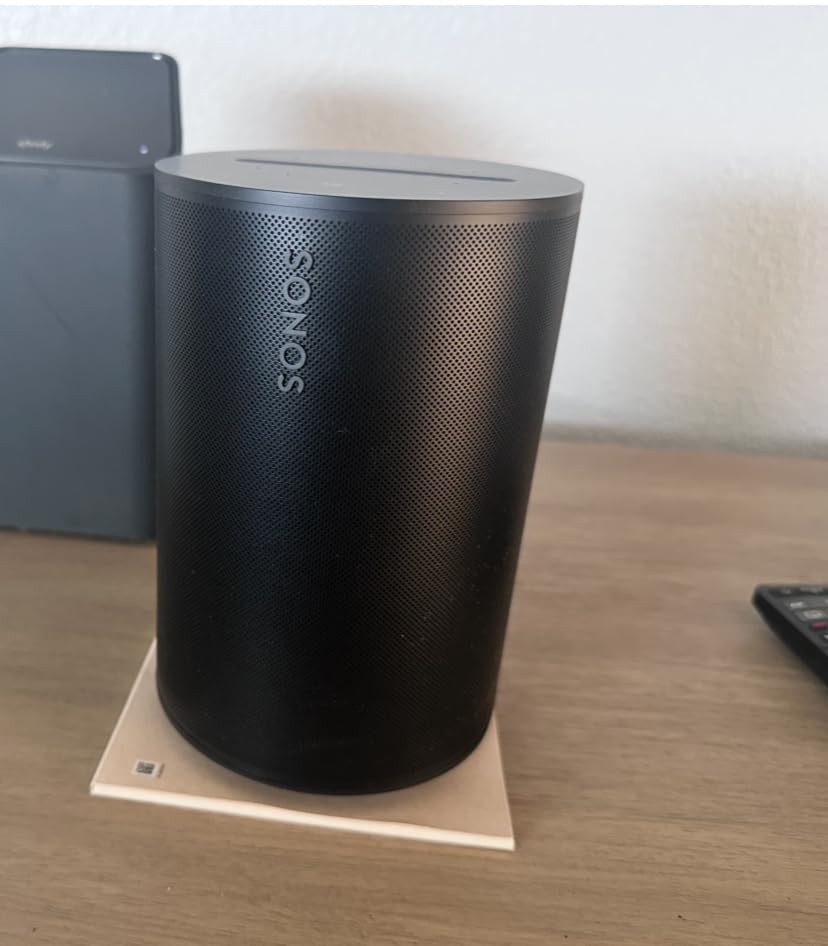
I placed the Sonos Era 100 on a kitchen shelf about six months ago and it has been my daily driver ever since. The stereo separation from this compact speaker genuinely surprised me. Sonos packed dual tweeters and a 25% larger midwoofer into a frame that fits on a bookshelf, and the result is sound that fills a medium room without feeling like it is coming from a single box.
Setup took me under four minutes using the Sonos app. I connected it to my existing Wi-Fi network, ran Trueplay tuning by walking around the room with my phone, and it immediately sounded better. The tuning made a noticeable difference in my kitchen where tile floors and granite counters create harsh reflections. Vocals became warmer and bass tightened up.
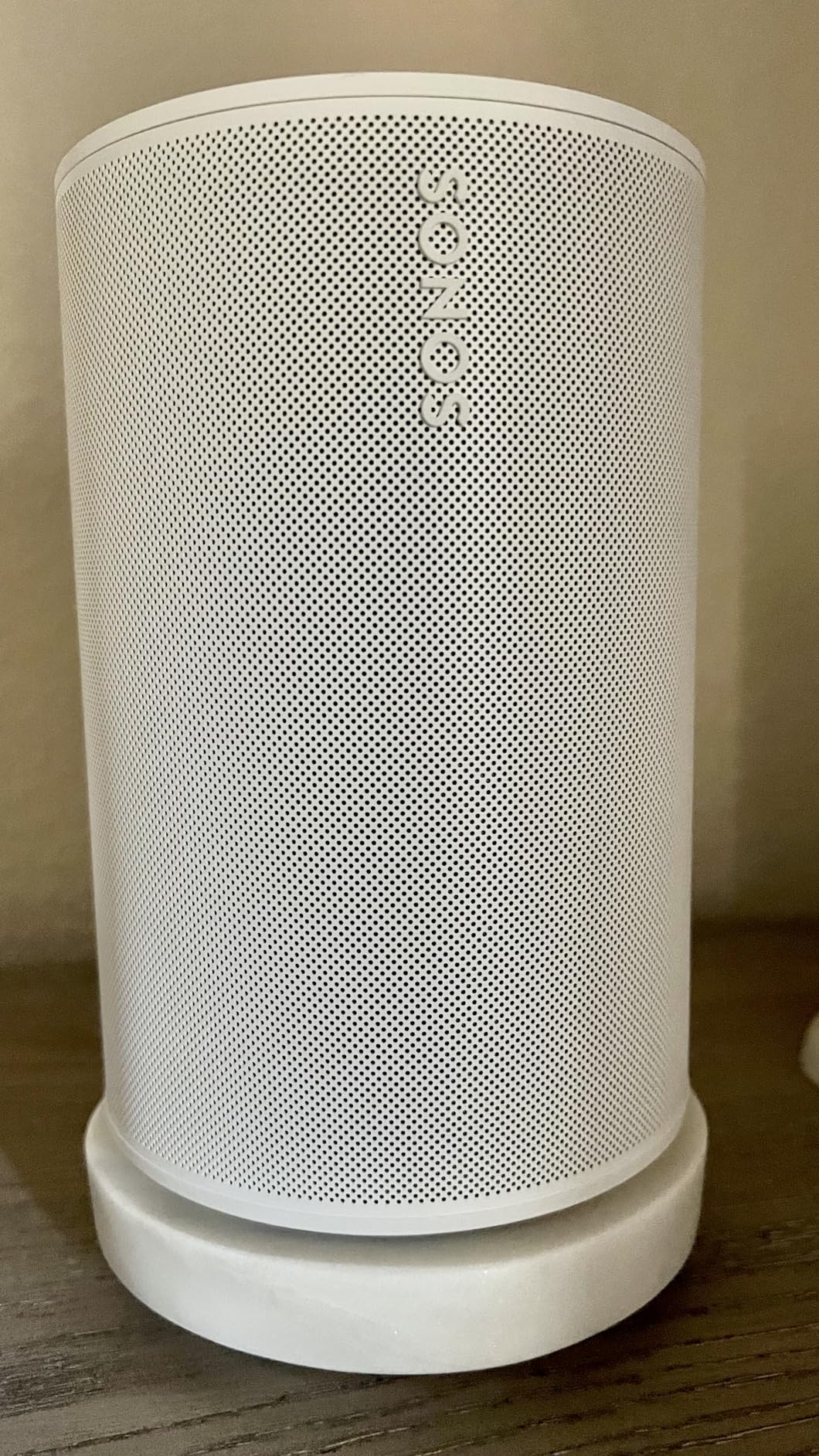
As a multi-room speaker, the Era 100 is where Sonos really shines. I grouped it with a Sonos Five in my living room and a Move 2 on the patio, and audio stayed perfectly synchronized across all three rooms. Switching between rooms or grouping them takes two taps in the Sonos app. The 47% faster processor means there is no lag when you adjust volume or switch tracks.
Connectivity covers the bases well. Wi-Fi handles streaming from Spotify, Apple Music, Amazon Music, and dozens of other services. Bluetooth covers quick connections from any device. The 3.5mm line-in lets you connect a turntable or CD player directly. AirPlay 2 support means Apple users can stream from any compatible app.
Who should buy the Sonos Era 100
This is the best starting point if you are building a multi-room system for the first time. It sounds great on its own, scales beautifully when you add more Sonos speakers, and the compact size works in almost any room. Anyone who wants Sonos ecosystem reliability without spending premium prices will be happy here.
Who should skip the Sonos Era 100
If you need a waterproof speaker for bathrooms or pool areas, look at the Sonos Roam 2 or Move 2 instead. Audiophiles seeking hi-res audio above 24-bit/48kHz may want the Sonos Five or a Bluesound alternative. And if you are not invested in the Sonos ecosystem, the Era 100 only makes sense if you plan to add more Sonos speakers later.
2. Sonos Era 300 – Best for Dolby Atmos Multi Room
Sonos Era 300 Wireless Smart Speaker with Dolby Atmos – Black
6 drivers for Dolby Atmos
Spatial Audio soundstage
Wi-Fi + Bluetooth
6.65 x 6.65 x 7.44 inches
Pros
- Incredible immersive Dolby Atmos sound
- Wall-to-wall and floor-to-ceiling projection
- Excellent as surround speakers with Arc
- Easy Sonos app setup
Cons
- Premium price point
- Atmos tracks mainly through Sonos app
- Line-in adapter sold separately
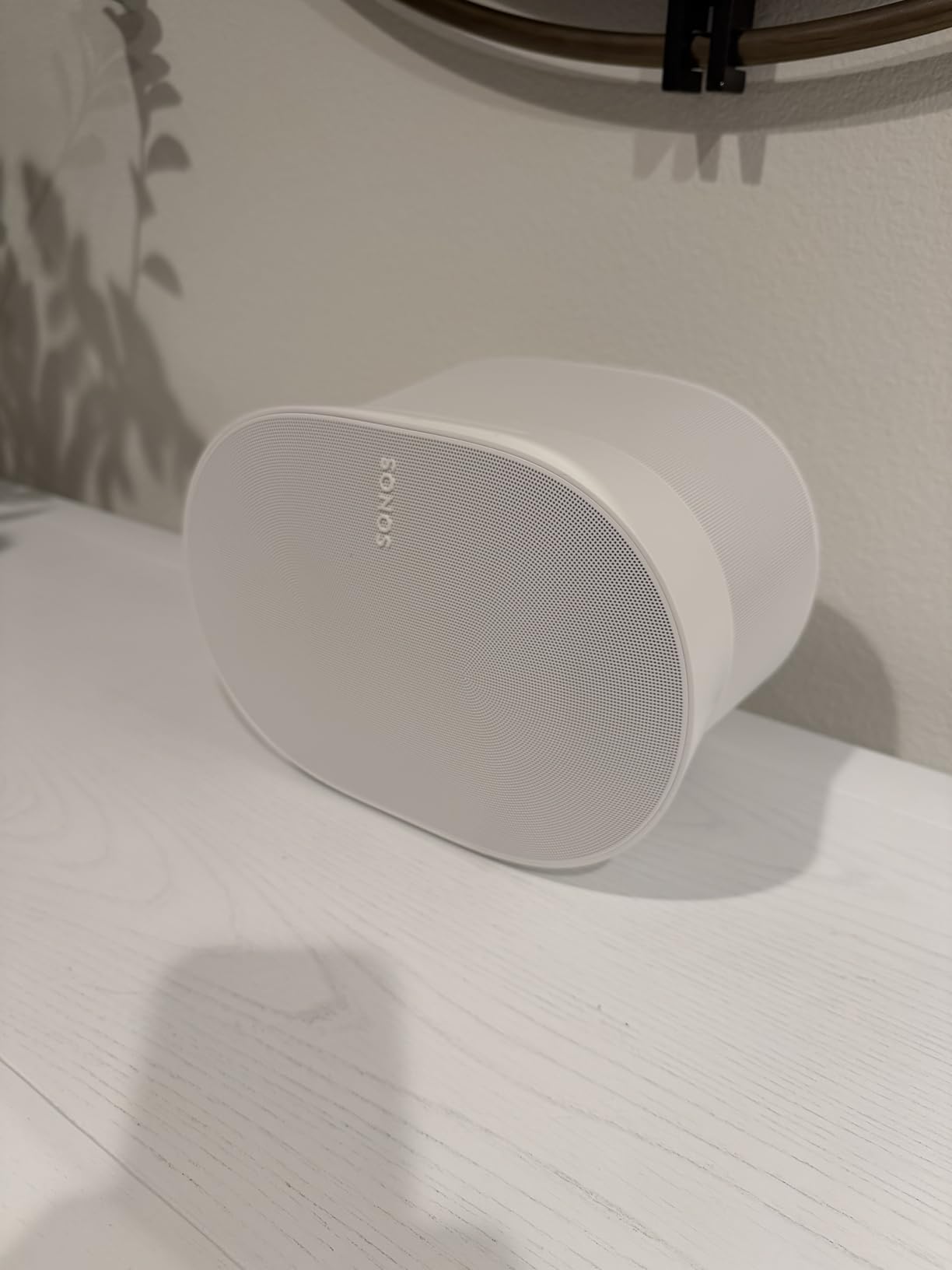
The Sonos Era 300 does something no other speaker in this lineup can match. Its six drivers are positioned to bounce sound off your walls and ceiling, creating a spatial audio experience that genuinely surrounds you. I set one up in my living room and played Atmos tracks from Apple Music, and the sound felt like it was coming from everywhere in the room, not just from the speaker itself.
As a standalone multi-room speaker, the Era 300 delivers the same rock-solid Sonos connectivity. It groups instantly with other Sonos speakers, supports AirPlay 2 and Bluetooth, and benefits from the same Trueplay room tuning. The 4.4-pound weight gives it a substantial feel that matches its substantial sound output.
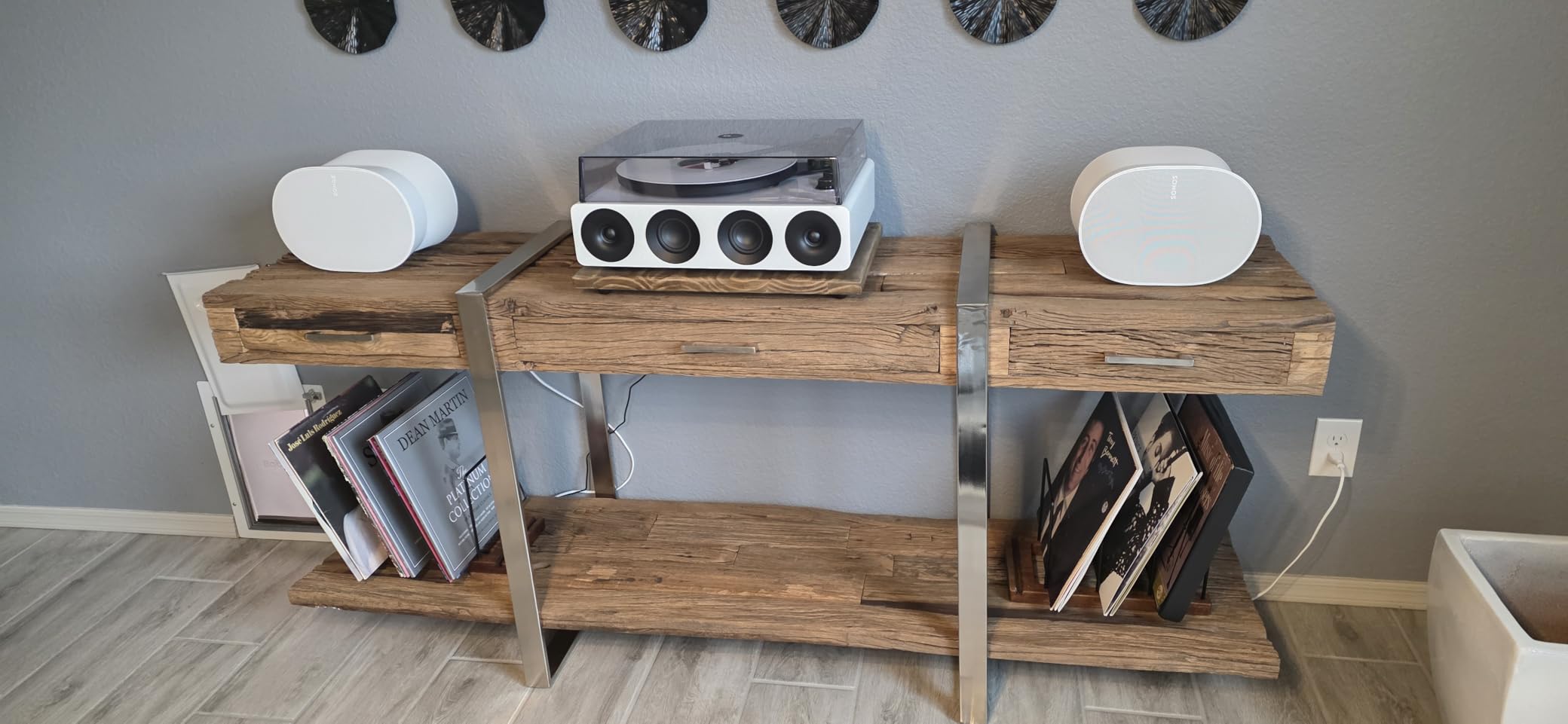
Where the Era 300 really proves its value is in a home theater setup. I paired two of them as rear surrounds with the Sonos Arc Ultra, and the multichannel surround sound was impressive. Custom waveguides disperse sound right, left, forward, and above, filling in the spatial gaps that regular speakers leave. Movies with Atmos soundtracks came alive with directional audio effects I had only experienced in actual theaters.
The main limitation is that Dolby Atmos Music tracks only stream through the Sonos app or via AirPlay 2. If you primarily use Spotify, you will get excellent stereo sound but not the full spatial audio experience. The line-in adapter is also a separate purchase, which adds to the cost if you want to connect a turntable.
Who should buy the Sonos Era 300
Home theater enthusiasts who want immersive Atmos sound without wiring rear speakers should strongly consider the Era 300. It also works as a powerful standalone speaker for large rooms where standard stereo speakers cannot fill the space. Anyone already in the Sonos ecosystem building a 5.1 or 7.1 setup will find these essential as surrounds.
Who should skip the Sonos Era 300
If you do not listen to Dolby Atmos content or plan to use it purely for stereo music, the Era 100 delivers similar sound quality for less. The Era 300 is also overkill for small rooms like bathrooms or home offices where its spatial audio capabilities cannot fully develop.
3. Sonos Five – Best Audiophile Multi Room Speaker
Sonos Five – Black – Wireless HiFi Speaker
3 woofers + 3 tweeters
Tuned by Giles Martin
Line-in for turntable
14.33 inch wide design
Pros
- Exceptional audiophile sound with deep bass
- Line-in for turntable or CD player
- Smart stereo orientation switching
- Warm room-filling audio profile
Cons
- No Bluetooth connectivity
- Higher price point
- Limited EQ options in app
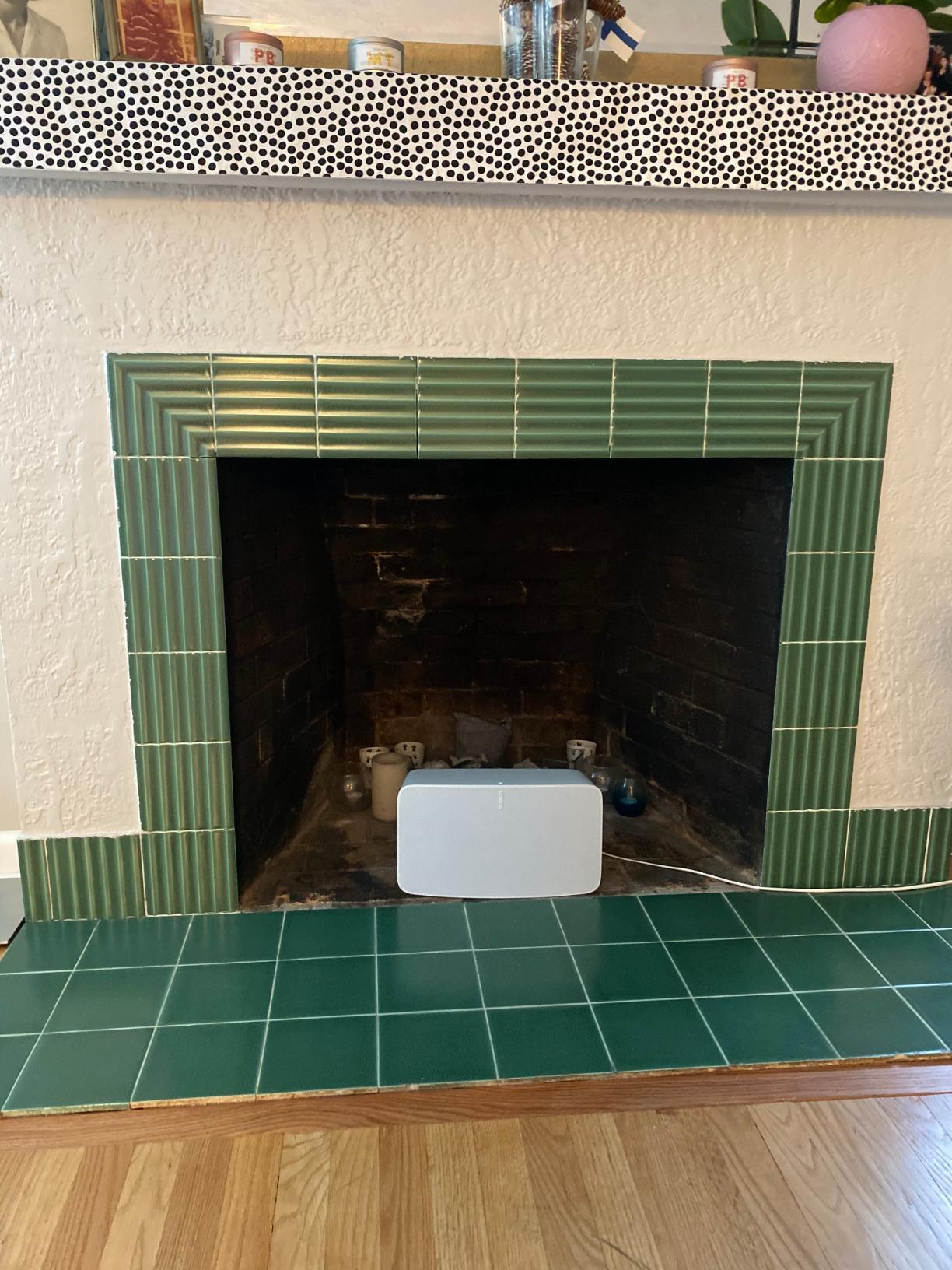
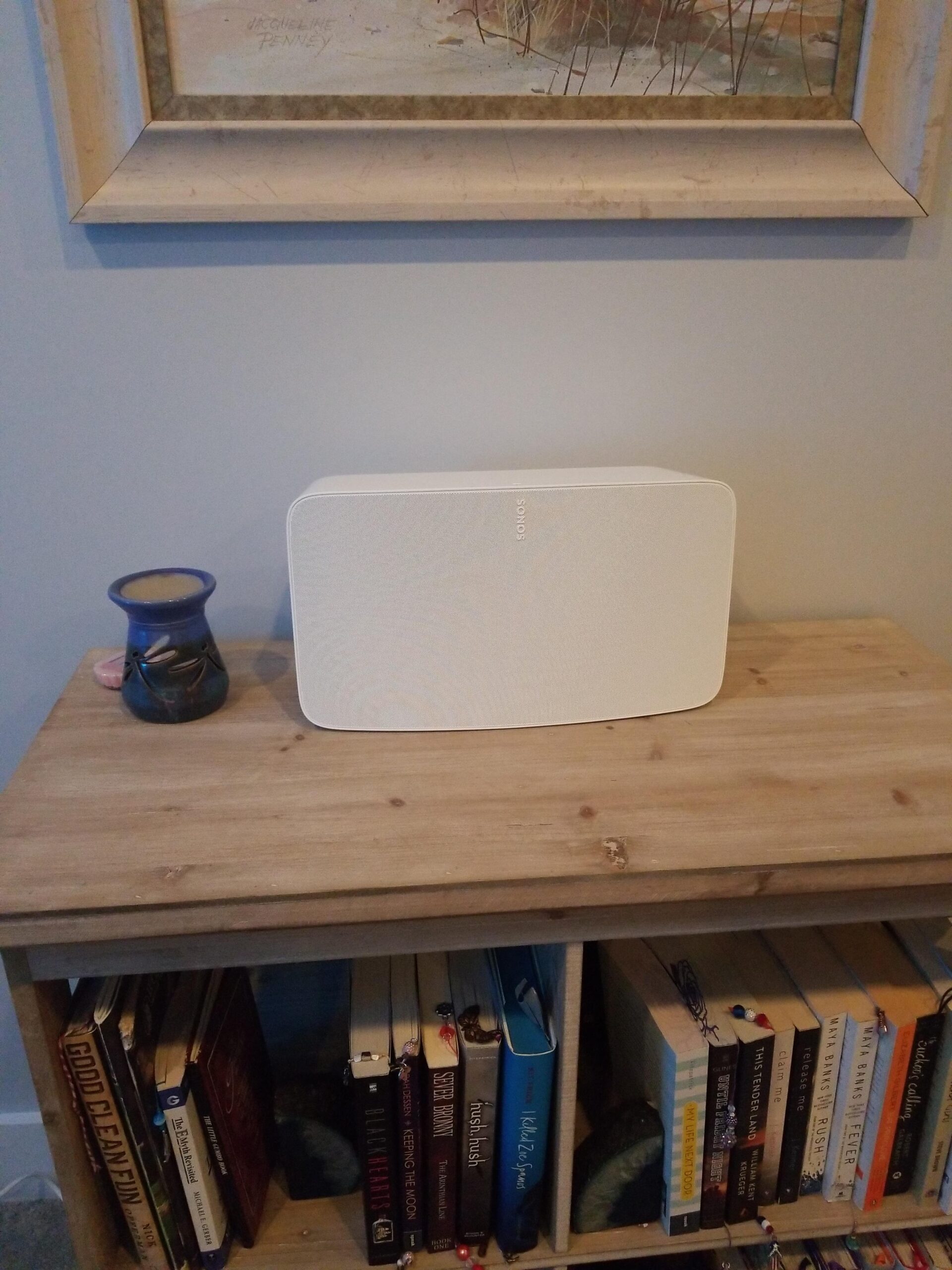
The Sonos Five is the speaker I reach for when I want to sit down and actually listen to an album. Three high-excursion woofers and three tweeters, tuned by producer Giles Martin, produce a sound signature that is warm, detailed, and genuinely room-filling. I tested it in a 20 by 18 foot living room and it had no trouble filling every corner with clean, distortion-free audio even at higher volumes.
One feature I love is the smart orientation sensor. Lay the Five horizontally and it outputs stereo sound through the side tweeters angled for spatial width. Stand it vertically and it switches to mono mode, focusing the sound forward. This flexibility makes it easy to fit into different spaces and still get optimal audio.
The line-in port is what sets the Five apart from the Era 100 and Era 300 for vinyl enthusiasts. I connected my turntable directly to the Five and the sound was rich and full, capturing the warmth that makes vinyl special. The sealed architecture eliminates reverb and echo from the cabinet itself, so you hear clean bass without cabinet coloration.
Multi-room integration works the same as every Sonos speaker. It groups seamlessly, responds to the same app, and supports AirPlay 2. The main drawback is the lack of Bluetooth. If a friend wants to play a track from their phone quickly, they need to use AirPlay or you need to cast from a streaming service. For the price, some users also wish the Sonos app offered more detailed EQ controls.
Who should buy the Sonos Five
Vinyl collectors and audiophiles who want multi-room capability without sacrificing sound quality will find the Five is exactly what they need. The line-in port makes it a natural hub for a turntable-based system. Anyone with a larger room where smaller speakers struggle to fill the space should also consider the Five.
Who should skip the Sonos Five
If you primarily stream from Bluetooth devices and have no use for line-in, the Era 100 or Era 300 offer more modern connectivity. The Five also requires more shelf space at over 14 inches wide, so it does not work well on tight shelves or small nightstands.
4. Sonos Move 2 – Best Portable Multi Room Speaker
Sonos Move 2 – Black – Wireless Portable Bluetooth Speaker
24-hour battery
IP56 weather resistant
Auto Trueplay
Dual tweeters + woofer
Pros
- Excellent 24-hour battery life
- Weather-resistant for indoor and outdoor use
- Seamless Sonos integration
- Wireless charging base included
Cons
- Heavy at 6.6 pounds for portable use
- Some WiFi stuttering reported
- No power status light indicator
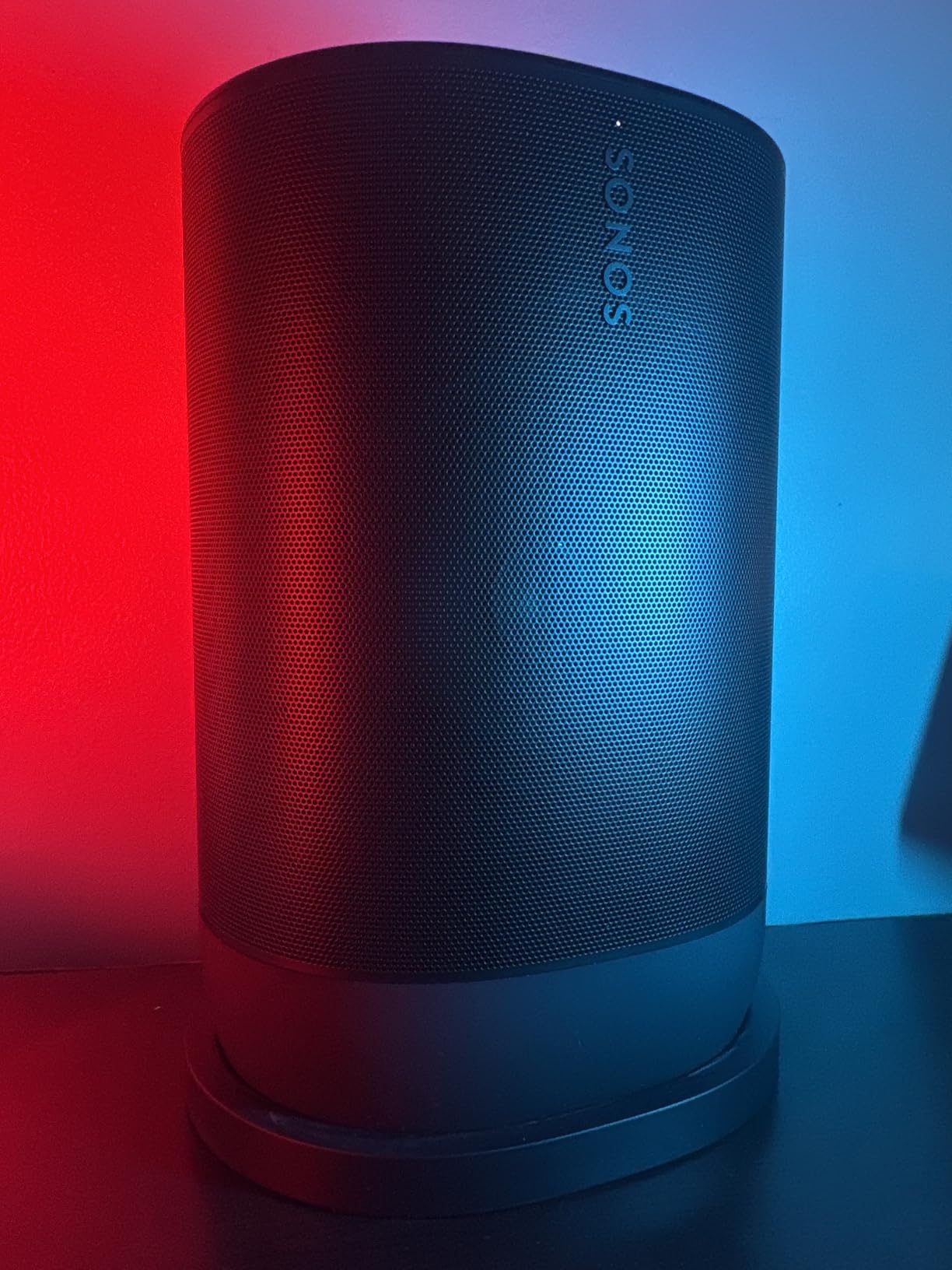
The Sonos Move 2 lives on my patio from spring through fall, and it comes inside during winter. That flexibility is exactly what makes it special. The 24-hour battery lasts through an entire weekend of outdoor gatherings without needing a charge. When I do bring it inside, I just drop it on the wireless charging base and forget about it.
Sound quality is a clear step up from the original Move. Dual tweeters create a wider stereo soundstage, and the precision-tuned woofer delivers bass that carries across open outdoor spaces. Auto Trueplay means it constantly adjusts its EQ as you move it between rooms, the patio, or the garage. I noticed the sound adaptation happening smoothly without any manual intervention.
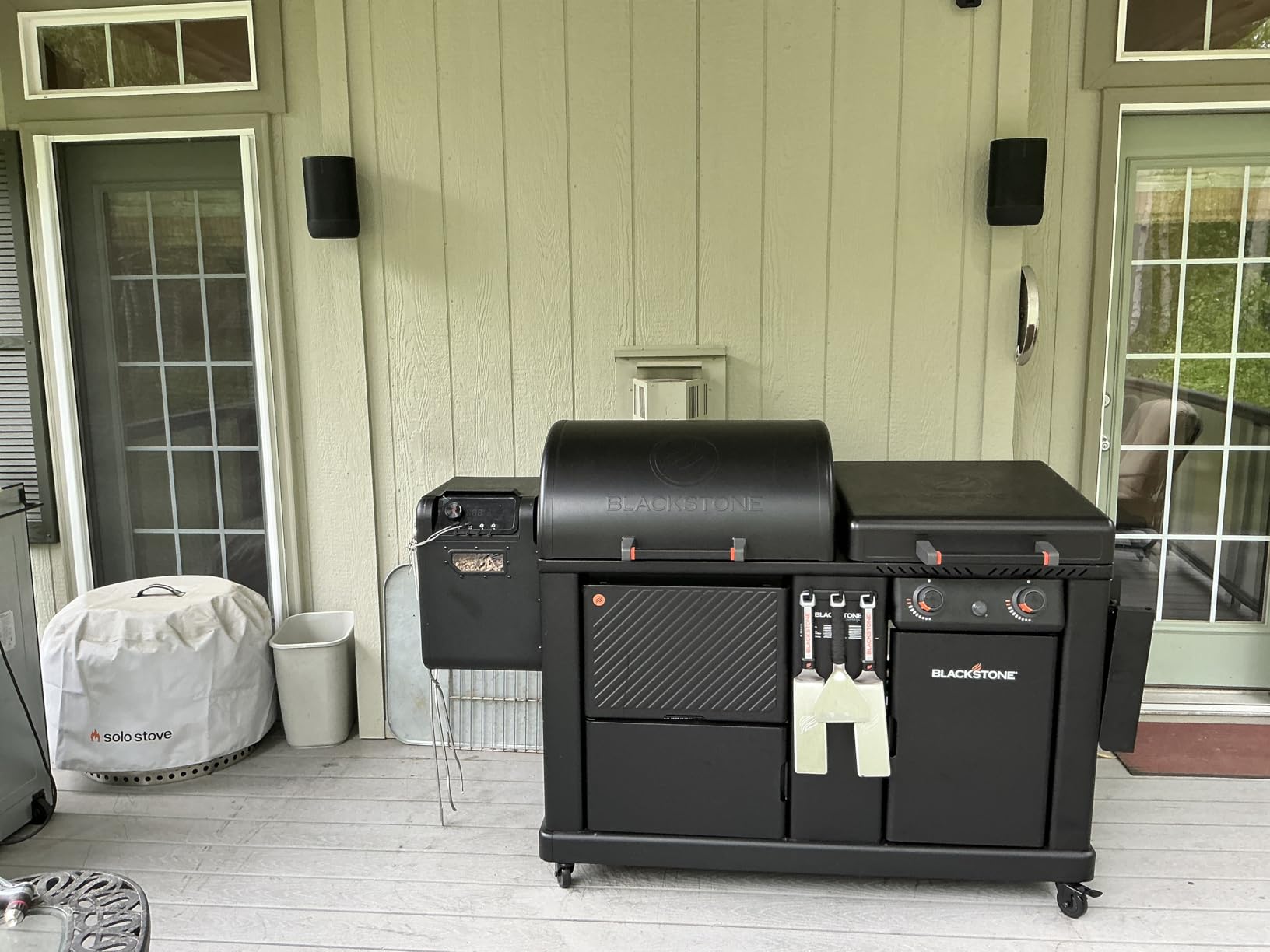
As part of a multi-room system, the Move 2 plays the same role as any other Sonos speaker when it is on your Wi-Fi network. Group it with Era speakers indoors, add it to a whole-home playback session, or use it standalone on Bluetooth when you take it somewhere without Wi-Fi. The IP56 rating handles rain, dust, and the occasional splash from the pool.
The built-in handle makes carrying it manageable, though at 6.6 pounds it is not something you want to carry on a hike. I also found that high-resolution audio tracks occasionally stuttered on WiFi, a complaint echoed by other users. A firmware update improved this, but it is worth noting if you stream a lot of lossless content.
Who should buy the Sonos Move 2
Anyone who wants a speaker that works as part of a multi-room system indoors but also needs to go outside should pick the Move 2. It is perfect for patios, garages, and pool areas where permanent outdoor speakers are impractical. The 24-hour battery means you will rarely think about charging.
Who should skip the Sonos Move 2
If you need something truly portable for travel, the Sonos Roam 2 at a fraction of the weight is the better choice. The Move 2 is also more expensive than fixed speakers with similar sound quality, so if it will never leave your living room, save money with an Era 100.
5. Sonos Roam 2 – Best Budget Multi Room Speaker
Sonos Roam 2 – White – Portable Waterproof Bluetooth Speaker
IP67 waterproof
10-hour battery
0.93 lbs ultra-light
Auto Trueplay tuning
Pros
- Compact and lightweight at under 1 pound
- IP67 waterproof and dustproof rating
- Seamless Sonos ecosystem integration
- Impressive sound for the size
Cons
- Bass limited compared to larger speakers
- Mono output only
- USB-C charger not included
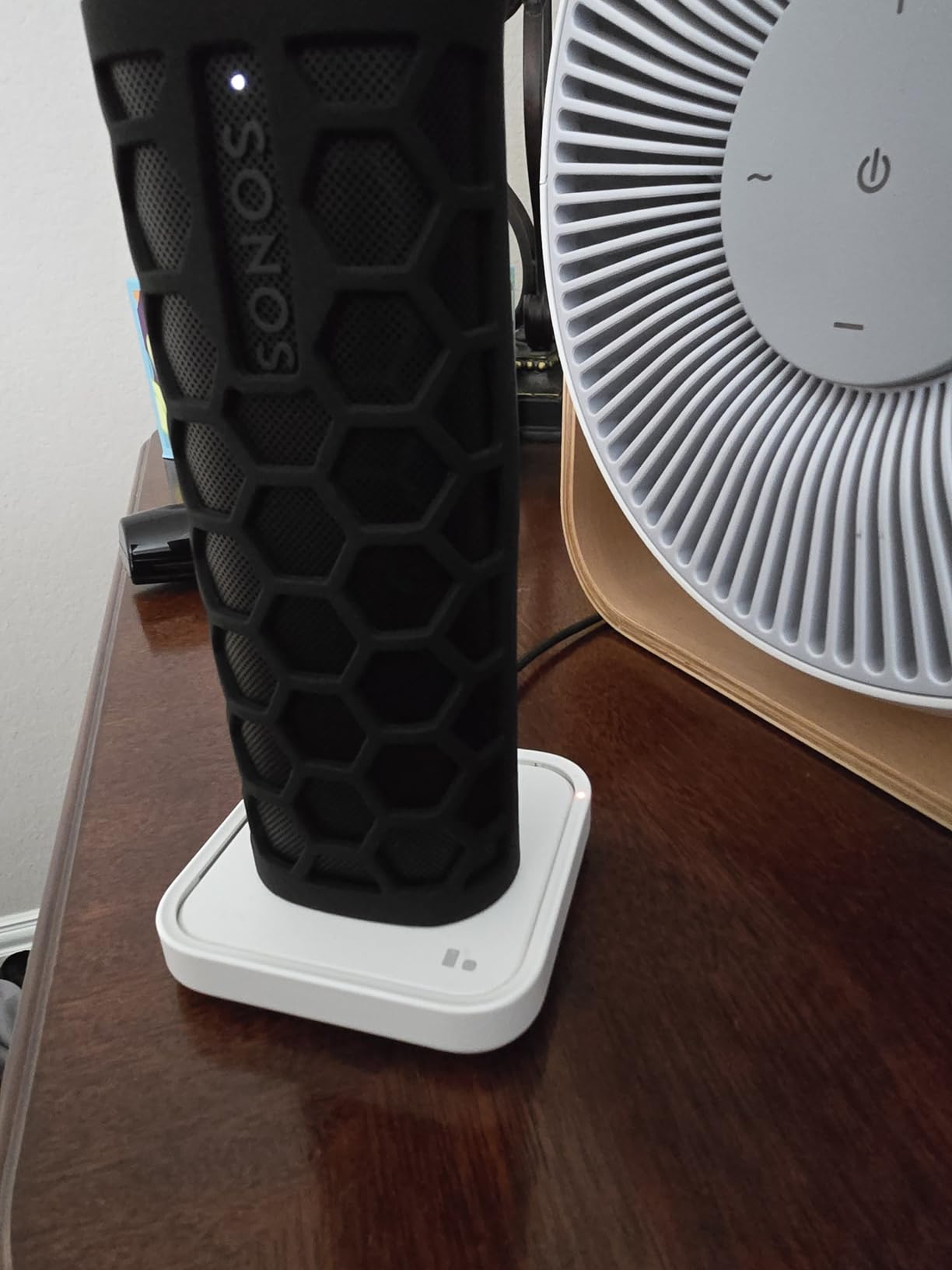
The Sonos Roam 2 is the speaker I recommend to anyone starting their first multi-room setup. It weighs less than a pound, fits in a jacket pocket, and still delivers sound that punches well above its size. I keep one on my bathroom counter and another on my nightstand, and both have been running reliably for months.
The IP67 waterproof rating means you can take it in the shower, drop it in the pool, or leave it out in the rain without worrying. I accidentally left mine outside during a rainstorm and it kept playing without missing a beat. The 10-hour battery easily covers a full day of listening before needing a charge.
Multi-room integration is where the Roam 2 really justifies its place in a Sonos system. When you are home on Wi-Fi, it works like any other Sonos speaker with full grouping, streaming service access, and Trueplay tuning. When you leave the house, it switches to Bluetooth mode and works as a standalone portable speaker. This dual-mode design makes it the most versatile speaker in the Sonos lineup.
The trade-off for the compact size is mono output. A single Roam 2 cannot deliver stereo separation, though you can pair two of them for true stereo sound. Bass is also limited compared to larger speakers, which is expected given the physical size. For background music in smaller rooms, though, it sounds surprisingly full.

Who should buy the Sonos Roam 2
Anyone building a multi-room system on a budget should start here. The Roam 2 gives you full Sonos ecosystem access at the lowest entry point. It is also ideal for bathrooms, bedrooms, and any room where you want music but do not have space for a larger speaker. Travelers will appreciate the rugged waterproof design.
Who should skip the Sonos Roam 2
If your primary listening happens in a large living room and you care about stereo imaging, the Era 100 or Era 300 are better main speakers. The Roam 2 works best as a supporting player in a multi-room setup rather than your only speaker.
6. Sonos Play – Best New Portable with Replaceable Battery
Sonos Play Portable WiFi and Bluetooth Speaker – White
24-hour battery
IP67 waterproof
User-replaceable battery
Wi-Fi + Bluetooth
Pros
- User-replaceable battery is a rare feature
- 24-hour battery life with wireless charging
- Drop-resistant and IP67 rated
- Big stereo sound from portable form
Cons
- Small review sample so far
- Battery defects reported in rare units
- Sonos app lacks phone widget
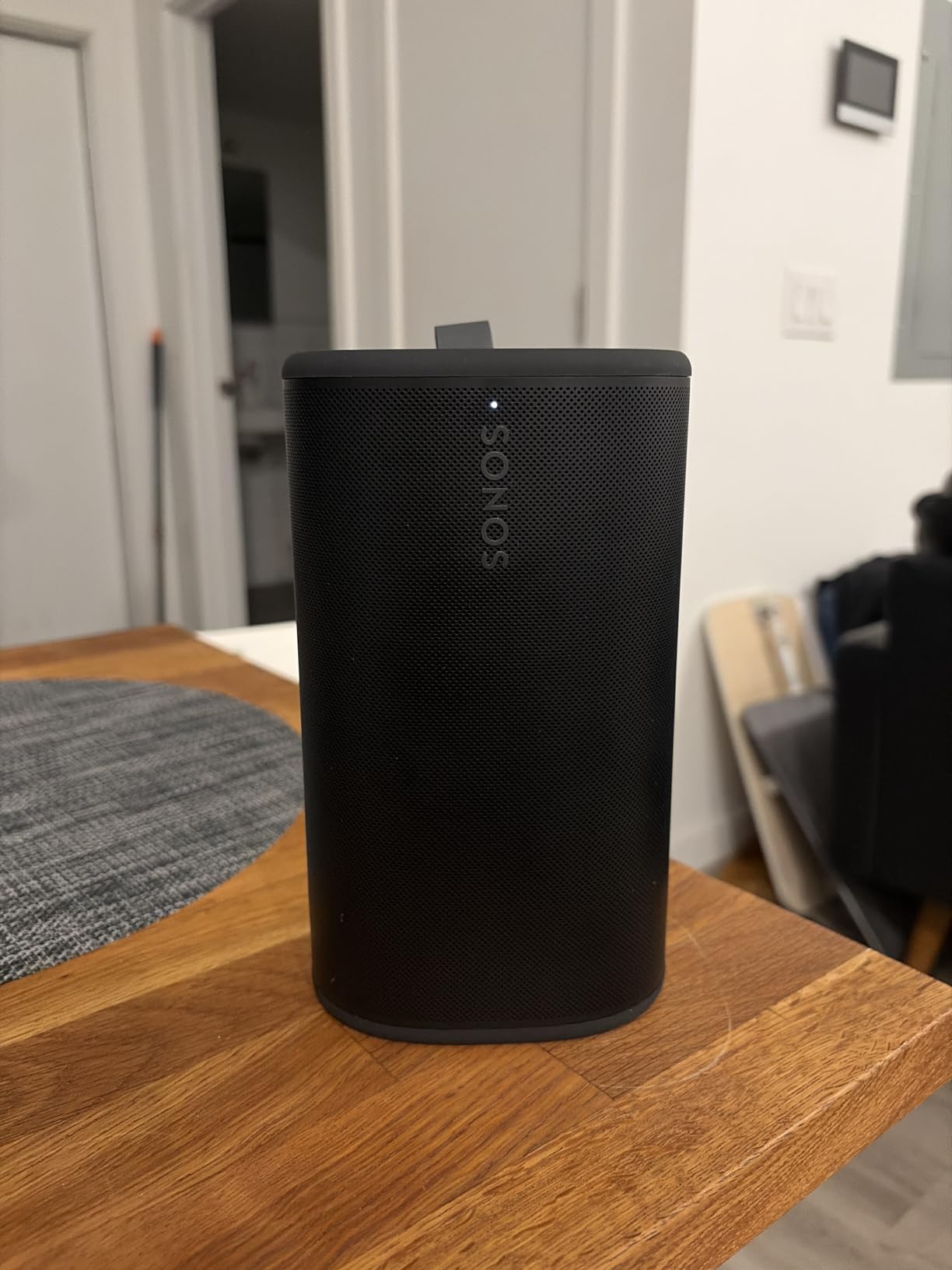
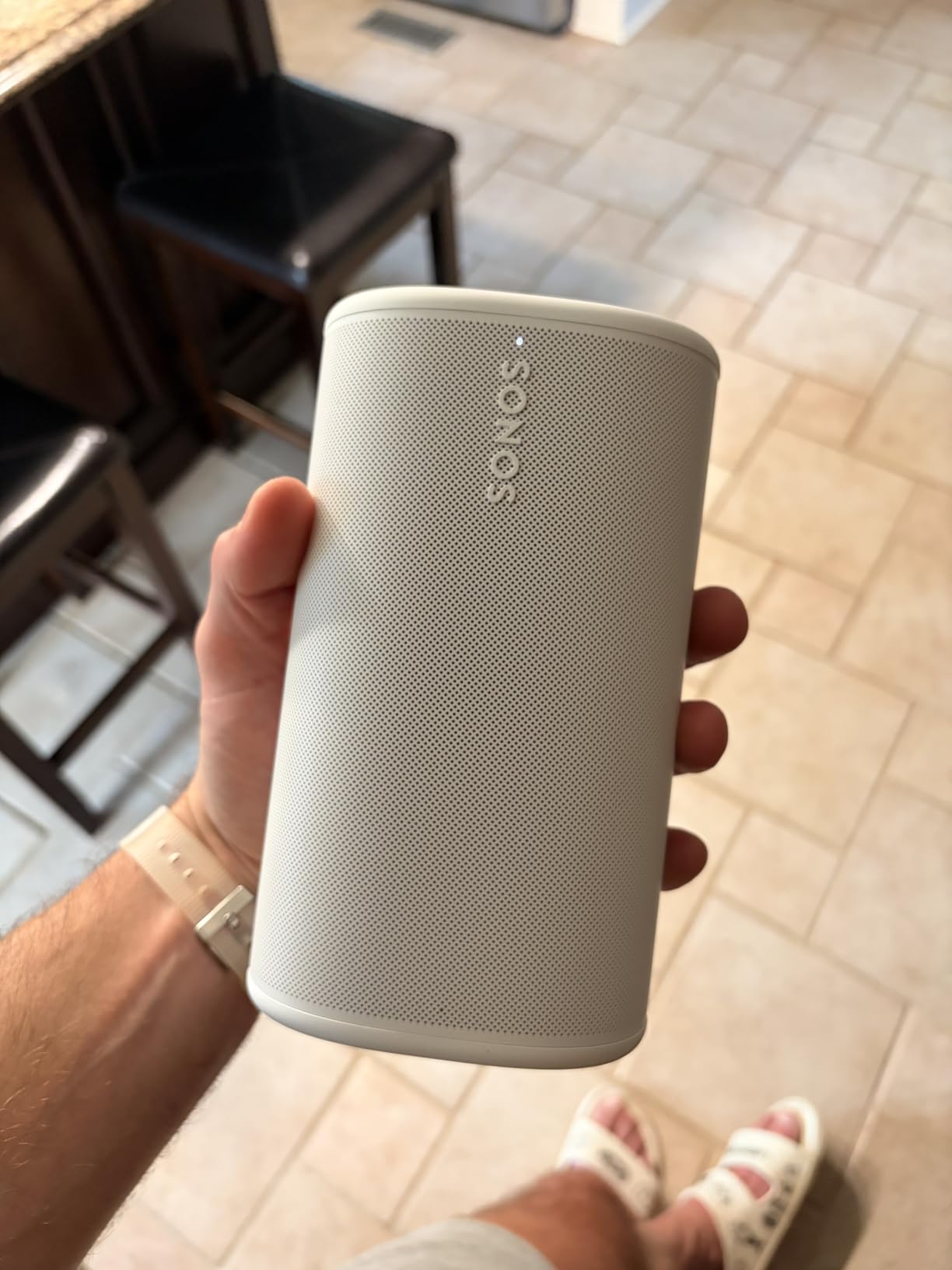
The Sonos Play is a newer addition to the Sonos portable lineup, and it addresses one of the biggest complaints about portable speakers: battery degradation. The user-replaceable battery means you can swap in a fresh one when the original eventually loses capacity, extending the life of the speaker for years beyond what most portables offer.
I tested the Play over a two-week period, moving it between my home office, the backyard, and the garage. The 24-hour battery claim held up through a full Saturday of outdoor use from morning coffee to late evening. The wireless charging base is included, so you just set it down when you are done and it tops up automatically.
Sound quality is impressive for the size. Dual drivers deliver stereo output with bass that carries well in open spaces. The IP67 rating means it handles rain, dust, and accidental drops into water without issue. Drop resistance adds confidence when you are carrying it around the house or yard.
Integration with the Sonos ecosystem is the same story as other Sonos portables. On Wi-Fi, it joins your multi-room groups and streams from all the same services. On Bluetooth, it works as a standalone speaker anywhere you take it. The main concern is that it is relatively new with only 74 reviews so far, so long-term reliability data is still building.
Who should buy the Sonos Play
Anyone who plans to keep their portable speaker for many years will appreciate the replaceable battery. It is also a strong pick for people who want Sonos multi-room features in a speaker they can carry room to room or take outdoors regularly.
Who should skip the Sonos Play
If you already own a Sonos Move 2 and are happy with it, the Play does not offer enough improvement to justify upgrading. Early adopters who prefer products with thousands of reviews and proven long-term reliability may want to wait for more feedback.
7. Avantree Harmony 2 – Best Budget Multi Room Kit
Avantree Harmony 2 – Multi-Room Wireless Speaker System for Home & Office
3-speaker kit with transmitter
30ms ultra-low latency
Bluetooth + Optical + AUX
No app required
Pros
- Complete 3-room system in one box
- 30ms latency keeps audio perfectly synced
- No app needed for setup
- Expandable with additional speakers
Cons
- Sensitive to electronic interference
- May disrupt nearby WiFi signals
- No wall adapter included for charging
- Some pairing issues reported
The Avantree Harmony 2 takes a completely different approach to multi-room audio. Instead of buying speakers one at a time and connecting them through an app, you get three speakers and a transmitter in a single box. I set this up for a friend who wanted music in three rooms and had zero interest in dealing with apps or Wi-Fi configuration.
Setup was genuinely simple. I plugged the transmitter into the audio source, turned on each speaker, and they paired automatically. The entire process took about three minutes. There is no app to download, no account to create, and no Wi-Fi password to enter. For anyone intimidated by smart speaker setup, this is the most straightforward path to multi-room audio.
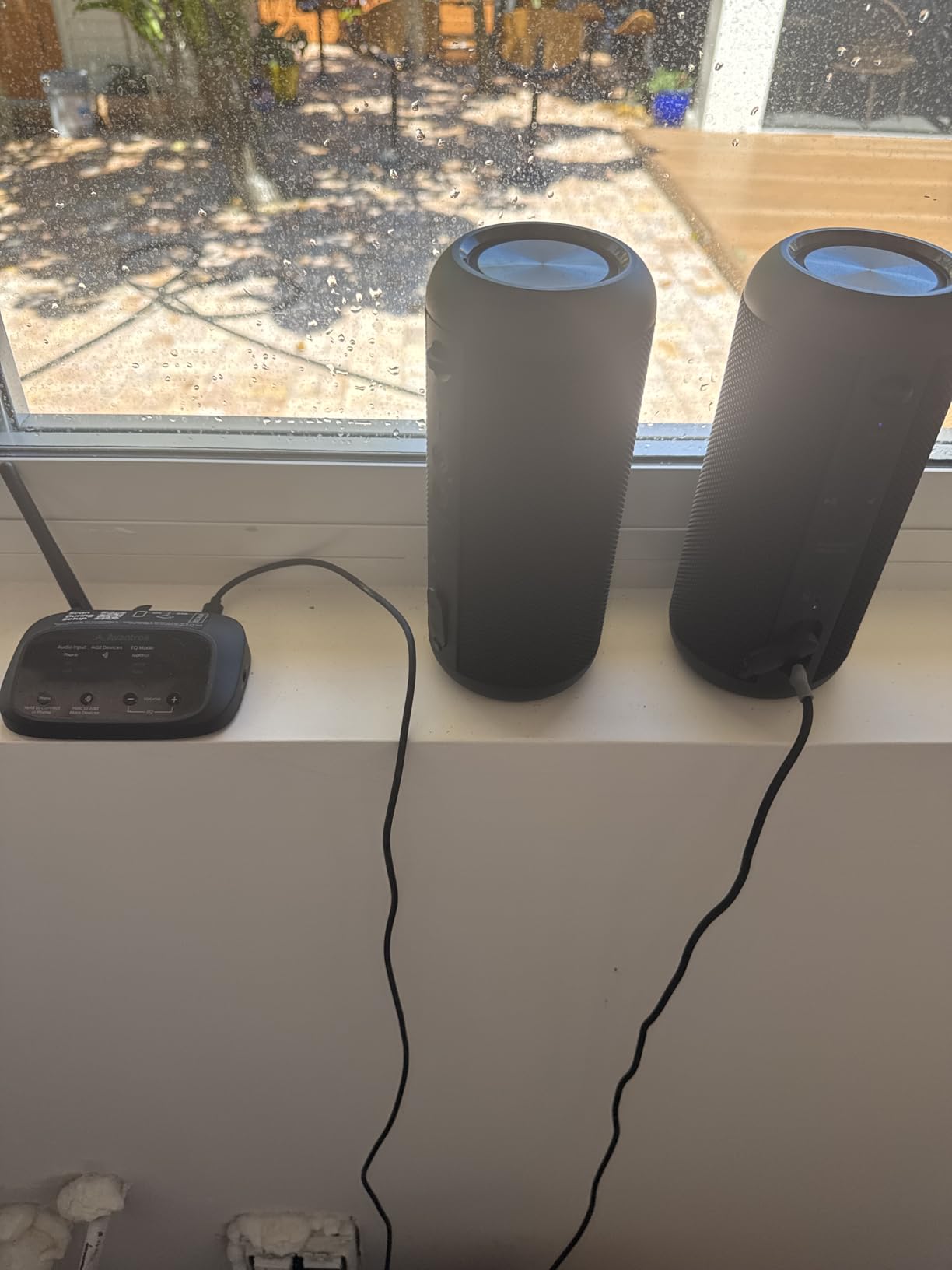
The 30ms latency spec matters more than most people realize. I tested it with TV audio, and the sync between the video and audio across all three speakers was indistinguishable from a wired connection. This makes the Harmony 2 one of the few affordable multi-room systems that works well for watching TV, not just listening to music.
Sound quality is decent for the price. Each speaker puts out 15 watts, which is enough for background listening in kitchens, bedrooms, and offices. They will not fill a large living room at high volumes, but for casual listening they are perfectly adequate. The speakers also have built-in batteries with about 6 hours of playback, so you can unplug them and move them around.
The main downside is interference sensitivity. I noticed audio drops when I placed a speaker near my WiFi router. Other users reported similar issues with nearby electronics. If your home has dense wireless traffic, you may experience occasional hiccups.
Who should buy the Avantree Harmony 2
Anyone who wants a complete multi-room system without the complexity of apps, accounts, and Wi-Fi configuration should start here. It is also an excellent choice for small offices, meeting rooms, and spaces where you just want simple background music across multiple rooms without investing in a premium ecosystem.
Who should skip the Avantree Harmony 2
If sound quality is your top priority, the Sonos or Denon options in this guide deliver significantly better audio. The Harmony 2 also lacks the streaming service integration that Wi-Fi-based systems offer, so you cannot directly access Spotify or Apple Music from the speakers themselves.
8. Harman Kardon Aura Studio 5 – Best Design Multi Room Speaker
Harman Kardon Aura Studio 5 – Bluetooth Home Speaker – Constant Sound Field with 3-Way Speaker & 360-Degree Lighting – Music Streaming & Auracast Multi-Speaker Connection
160W 3-way speaker
Constant Sound Field
360-degree LED lighting
Bluetooth connectivity
Pros
- Exceptional 160W sound quality
- Constant Sound Field for even coverage
- Stunning transparent dome design
- App-controlled EQ and ambient lighting
Cons
- Bluetooth only
- no WiFi
- No battery
- must stay plugged in
- Not waterproof
The Harman Kardon Aura Studio 5 is the most visually striking speaker in this entire guide. The transparent dome design with 360-degree ambient lighting makes it a centerpiece in any room. I placed one in a dining room and it draws comments from every guest who walks in. The LED lighting is not just decorative though. You can customize it through the app to match your room or mood.
Sound quality matches the premium aesthetic. The 3-way speaker design combines a dedicated subwoofer, tweeter, and six full-range transducers for a total of 160 watts of output. Constant Sound Field technology distributes audio evenly in all directions, so there is no sweet spot. Everyone in the room hears the same balanced sound regardless of where they are sitting.
Bass response is where the Aura Studio 5 really impresses. The dedicated subwoofer delivers low frequencies that you feel as much as hear. I played electronic music and hip-hop tracks and the bass was deep, controlled, and never muddy. Vocals and midrange frequencies remain clear and present even when the bass is pushing hard.
The limitation for multi-room use is connectivity. The Aura Studio 5 is Bluetooth only, with no Wi-Fi or streaming service support. You can connect multiple units using Auracast, but you will not get the same app-based multi-room experience that Sonos or Denon offers. It must also stay plugged in since there is no battery.
Who should buy the Harman Kardon Aura Studio 5
Design-conscious listeners who want a speaker that doubles as a room accent will love the Aura Studio 5. It is also a strong pick for open-plan living spaces where 360-degree sound distribution ensures everyone hears consistent audio. Anyone who values aesthetics alongside sound quality should have this on their shortlist.
Who should skip the Harman Kardon Aura Studio 5
If you want true multi-room functionality with app-based grouping and streaming service integration, look at Sonos or Denon instead. The Bluetooth-only connectivity and lack of battery make this a stay-in-one-room speaker. It also has a very small review sample so far, so long-term reliability is not yet proven.
9. Denon Home 250 – Best Alternative Multi Room Ecosystem
Denon Home 250 Wireless Smart Speaker, Bluetooth Stereo Speaker, White
HEOS multi-room built-in
AirPlay 2 + Bluetooth
2x tweeters + 2x bass drivers
3 quick-select buttons
Pros
- Excellent sound with deep bass and clear highs
- HEOS multi-room with Denon integration
- AirPlay 2 and Bluetooth connectivity
- 3 quick-select buttons for favorite stations
Cons
- HEOS app can feel clunky
- Bluetooth connectivity occasionally problematic
- Volume control issues with Apple Music
The Denon Home 250 is the strongest argument for looking beyond Sonos when building a multi-room system. It uses the HEOS platform, which means it connects not just with other Denon speakers but also with Denon receivers, soundbars, and HiFi gear. If you already own Denon equipment, the Home 250 fits into your existing setup without adding another ecosystem to manage.
I tested the Home 250 in a home office over several weeks. The dual 4-inch bass drivers paired with a 5.25-inch passive radiator produce bass that surprised me for a speaker of this size. Vocals come through clearly thanks to the dedicated 0.75-inch tweeters, and the overall sound signature leans warm and full without losing detail in the highs.
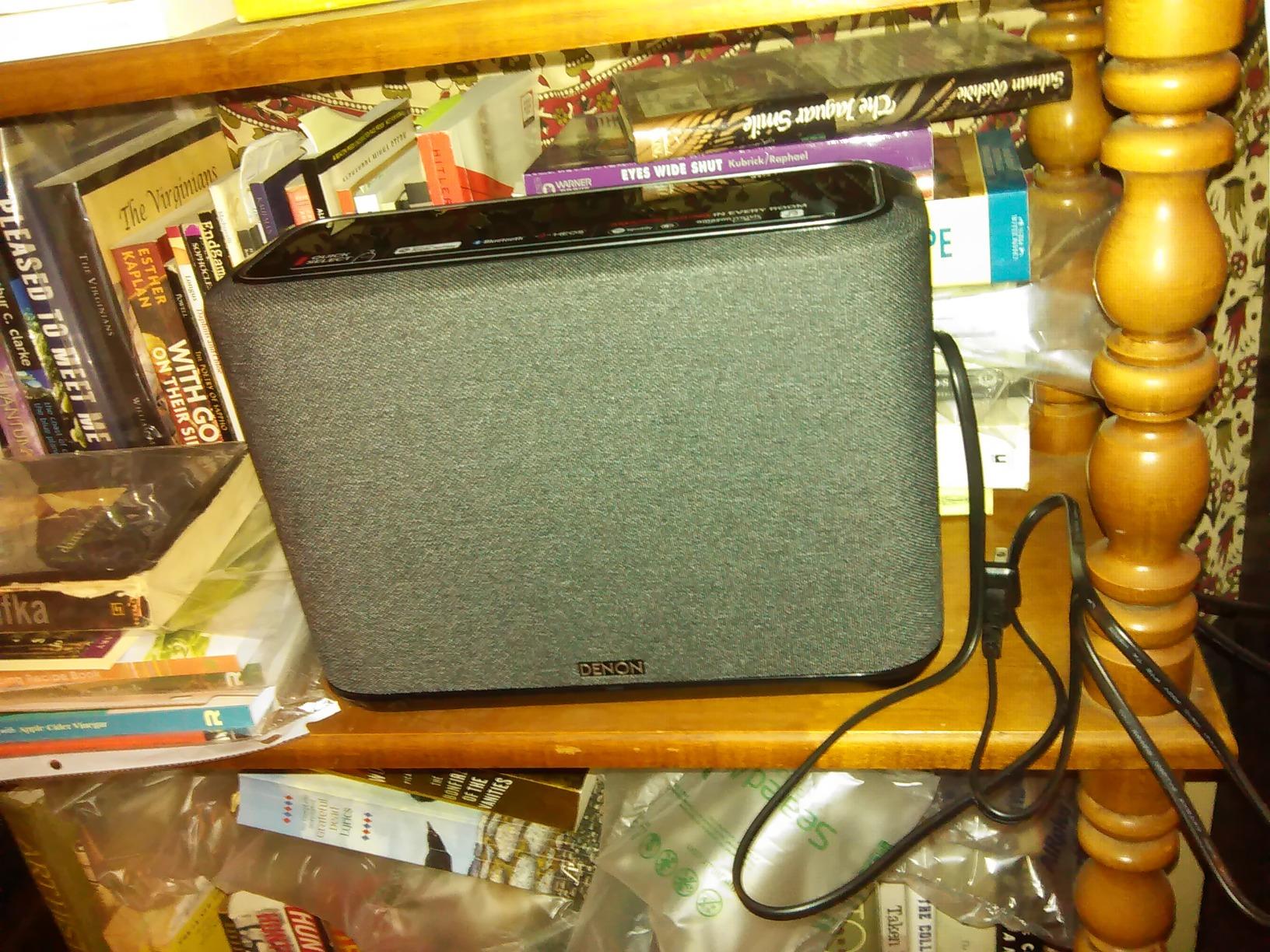
The three quick-select buttons on top are a feature I wish more speakers had. I programmed one for a jazz internet radio station, one for a Spotify playlist, and one for a podcast feed. One press without opening any app and the music starts. For a speaker you use daily, this physical shortcut saves time and makes the experience feel more like a traditional stereo system.
Multi-room performance through HEOS is solid once you get past the app. The HEOS app works well for grouping speakers and controlling playback, but it lacks the polish of the Sonos app. I experienced occasional Bluetooth connection hiccups, and Apple Music volume control was inconsistent through AirPlay. These are software issues that could improve with updates, but they are worth knowing about.

Who should buy the Denon Home 250
Anyone who already owns Denon receivers or HiFi gear should strongly consider the Home 250 for multi-room expansion. It integrates with your existing HEOS setup and adds streaming capabilities to rooms that do not have a full receiver. The quick-select buttons also make it ideal for anyone who prefers physical controls over app navigation.
Who should skip the Denon Home 250
If you are starting from scratch with no existing audio equipment, the Sonos ecosystem offers a smoother overall experience. The HEOS app needs refinement, and Bluetooth connectivity is less reliable than Sonos Wi-Fi streaming. Budget-conscious buyers will also find the Home 250 priced above some Sonos options that offer similar functionality.
10. Sonos Arc Ultra – Best Soundbar for Multi Room Systems
Sonos Arc Ultra Soundbar with Dolby Atmos – Black
9.1.4 Dolby Atmos
13 drivers
Sound Motion technology
AI Speech Enhancement
Pros
- Theater-quality 9.1.4 spatial audio
- AI-powered Speech Enhancement for dialogue
- Single HDMI eARC setup
- Expands with Sub and Era 300 surrounds
Cons
- Premium pricing
- Optimal performance needs added subwoofer
- Only one HDMI port
The Sonos Arc Ultra is the most capable soundbar I have tested, and it earns its place in a multi-room guide because it doubles as a powerful music speaker when you are not watching movies. The 9.1.4 channel configuration with 13 drivers delivers spatial audio that genuinely fills a room from wall to wall and floor to ceiling.
Setup could not be simpler. One HDMI eARC cable to your TV and you are done. The Sonos app handles the rest, including Trueplay room tuning that optimizes the sound for your specific room shape, furniture, and wall materials. I ran Trueplay in my living room and the difference was immediately noticeable. Dialogue became crisper and surround effects had more precise directional placement.
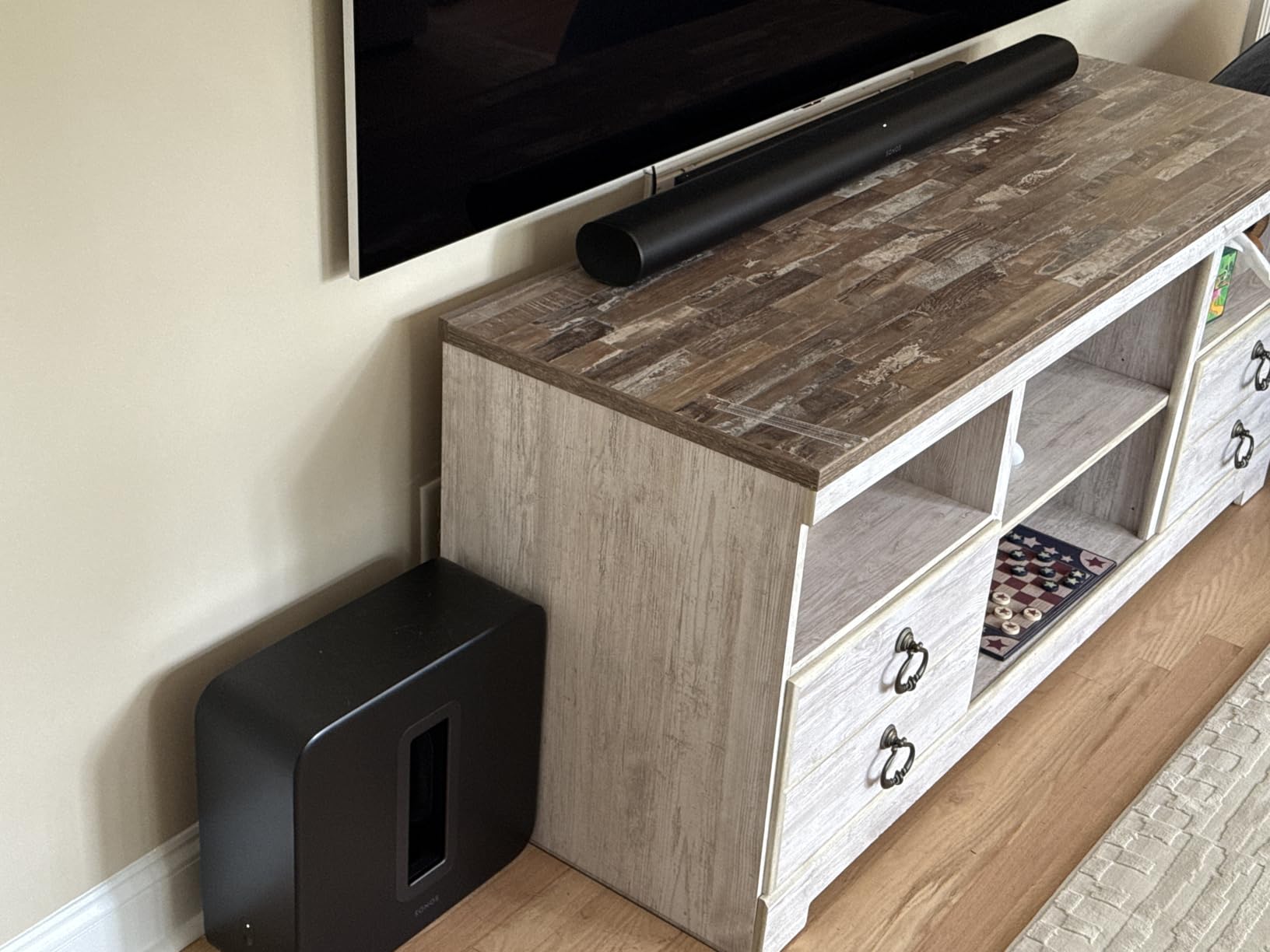
The AI Speech Enhancement feature is genuinely useful. I tested it with dialogue-heavy movies and shows where actors mumble or the soundtrack overpowers voices. With Speech Enhancement enabled, dialogue floated clearly above the mix without sounding processed or unnatural. This alone makes the Arc Ultra worth considering if you watch a lot of movies.
As part of a multi-room system, the Arc Ultra integrates like any other Sonos speaker. Group it with Era speakers in other rooms for whole-home music, or keep it separate for dedicated TV audio. Pairing it with the Sonos Sub and two Era 300 speakers as surrounds creates a full 9.1.4 Atmos system that rivals dedicated wired home theater setups.

Who should buy the Sonos Arc Ultra
Home theater enthusiasts who want the best possible TV sound and also need multi-room music capability should look at the Arc Ultra first. It is also the right pick for anyone building a Sonos-based entertainment system who wants one soundbar that handles movies, music, and whole-home audio integration.
Who should skip the Sonos Arc Ultra
If you do not watch much TV and primarily want a multi-room music system, standalone speakers like the Era 100 or Five deliver better music value. The Arc Ultra is also a significant investment, especially when you add the recommended Sub and surround speakers for optimal performance.
11. Philips Bluetooth and WiFi Stereo System – Best All-in-One Music System
Philips Bluetooth & WiFi Stereo System for Home with CD Player, Spotify, Internet Radio, FM Radio, MP3 Playback, Crisp Highs and Rich Bass 100W, Remote Control Included
100W stereo output
CD player + FM radio
Wi-Fi + Bluetooth + USB
Dome tweeters + 5.25 inch woofers
Pros
- All-in-one with CD
- radio
- USB
- and streaming
- 100W output with rich bass from bass-reflex ports
- Premium aluminum and wood construction
- Remote control with 30ft range
Cons
- Display hard to read from distance
- Customer support issues reported
- No physical EQ controls
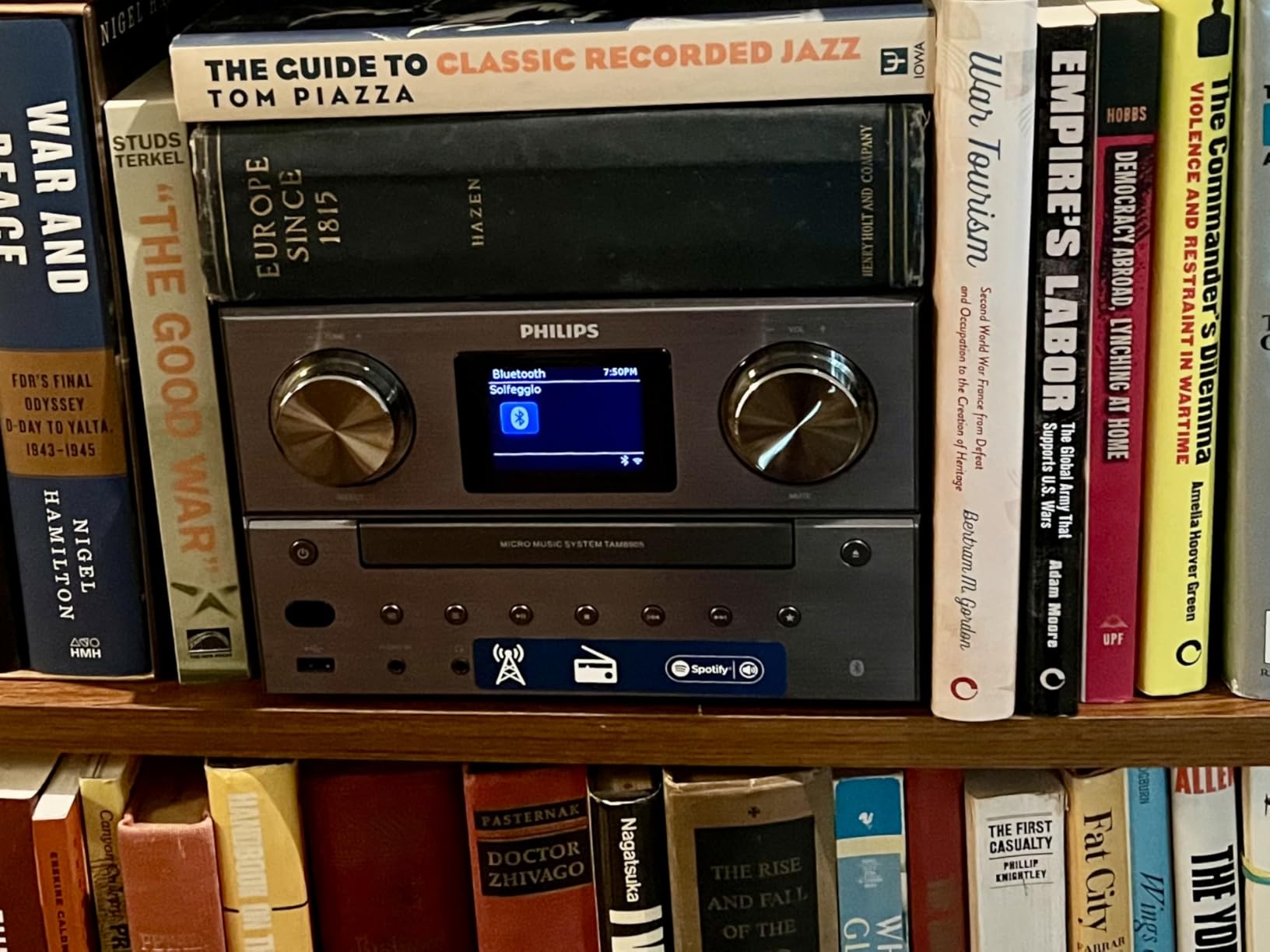
The Philips TAM8905 is a different kind of multi-room speaker. Instead of a single wireless unit, it is a complete stereo system with two bookshelf speakers, a CD player, FM radio, internet radio, USB playback, Bluetooth, and Wi-Fi streaming all built in. I set one up in a living room for someone who still has a CD collection and wanted modern streaming too.
The 100-watt output through dome tweeters and 5.25-inch woofers with bass-reflex ports delivers genuinely rich sound. Bass has real weight and extension, vocals are clear, and the stereo separation from the two separated speakers is better than any single-unit wireless speaker can achieve. The matte aluminum and wood cabinet design looks premium and fits well with real furniture.
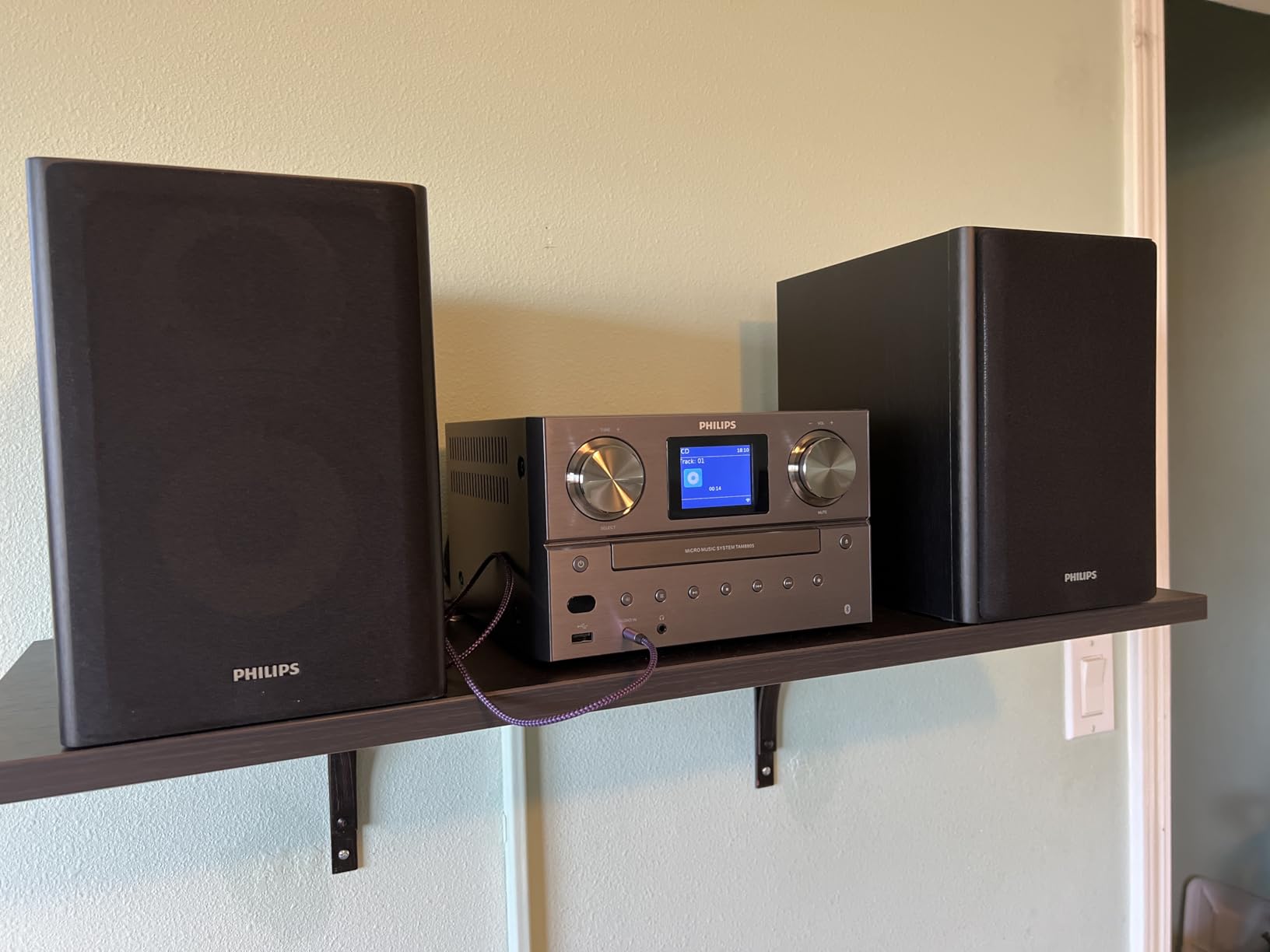
Wi-Fi connectivity opens up internet radio stations from around the world and streaming via Bluetooth from any device. The CD player handles regular CDs and MP3 CDs. FM radio with digital presets gives you local stations. USB playback handles MP3 files from flash drives. For someone who wants access to every audio source without switching devices, this system covers all the bases.
The included remote control works from up to 30 feet away, which I found reliable across a medium living room. Sound presets let you choose from different EQ profiles, though there are no manual EQ knobs. The display is the weakest point. It is small and hard to read from across a room, which makes navigating internet radio stations frustrating without getting closer.
Who should buy the Philips Stereo System
Anyone who still listens to CDs, FM radio, or MP3 collections alongside streaming will appreciate having everything in one unit. It is also a strong pick for living rooms where you want traditional stereo separation rather than a single wireless speaker. The 717 reviews and 4.4-star rating confirm it delivers consistent satisfaction.
Who should skip the Philips Stereo System
If you want to build a multi-room system that spans multiple rooms with synchronized playback, this Philips system does not integrate with Sonos, HEOS, or other multi-room platforms. It is a standalone system designed for one room. The 22-pound weight and separate speakers also make it less portable than single-unit options.
12. Klipsch The One Plus – Best Design Meets Sound Quality
Klipsch The One Plus Premium Bluetooth Speaker System with Two 2.25” Full Range Drivers, 4.5” Woofer, Bluetooth 5.3 with Up to 40 ft. of Distance, Walnut
2.1 stereo system
Real walnut wood veneer
Bluetooth 5.3 with 40ft range
USB-C playback
Pros
- Premium real wood veneer construction
- Bluetooth 5.3 with strong 40ft range
- Klipsch Connect app with EQ settings
- Classic mid-century modern design
Cons
- Bass could be stronger
- Some Bluetooth reliability issues
- Multi-speaker pairing has sound glitches
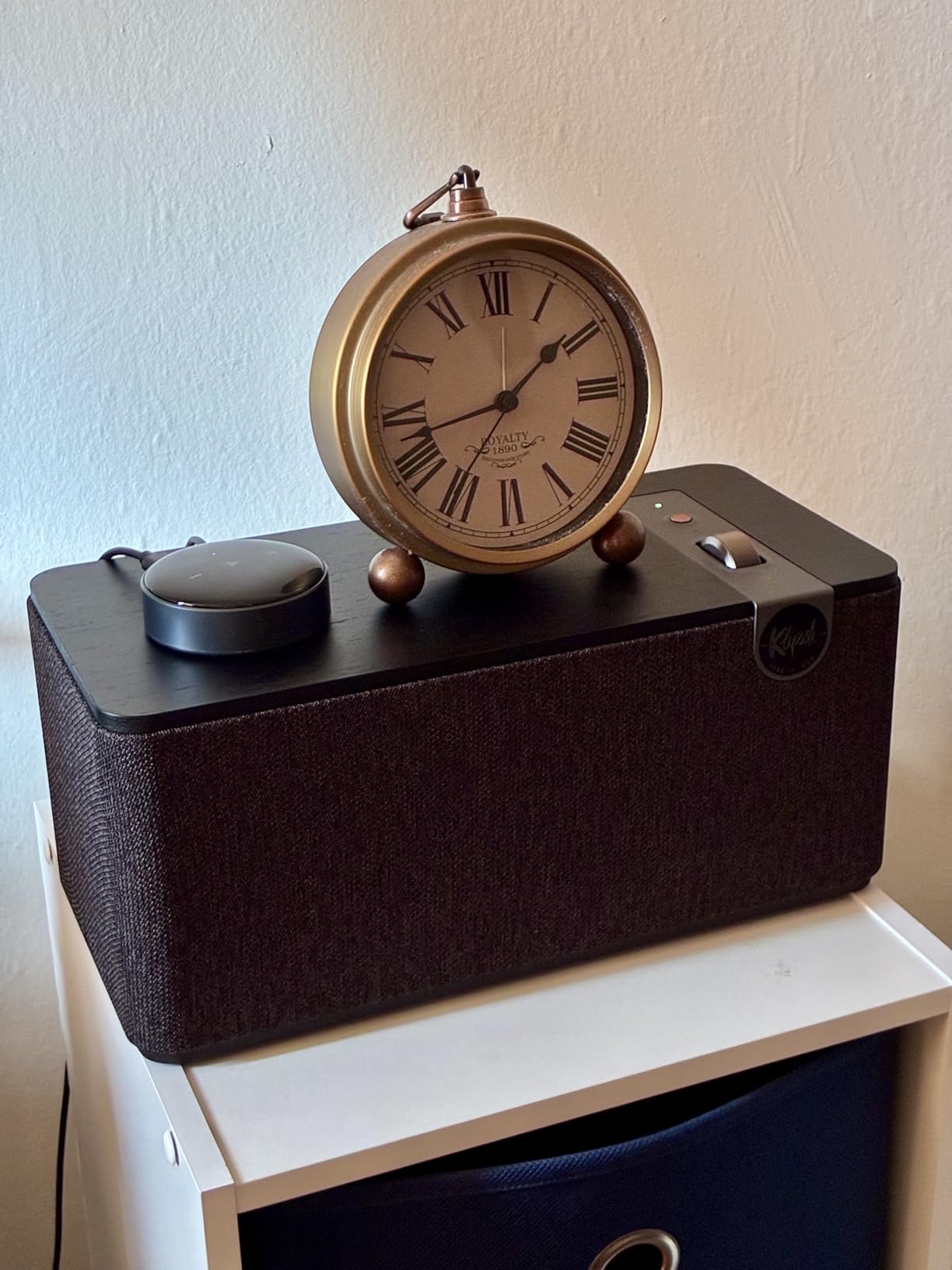
Klipsch The One Plus is the speaker I recommend when someone wants something that looks as good as it sounds. The real walnut wood veneer and mid-century modern design make it look like a piece of furniture rather than a tech gadget. I placed one on a credenza and it looked like it belonged there, unlike most plastic and fabric smart speakers.
The 2.1 stereo system uses two 2.25-inch full-range drivers and a 4.5-inch high-excursion woofer in a bi-amplified configuration. Sound quality is warm and engaging, with the kind of midrange richness that makes vocals and acoustic instruments sound natural. The Klipsch Connect app provides EQ settings that let you tune the sound to your preference, which is a nice touch at this price point.
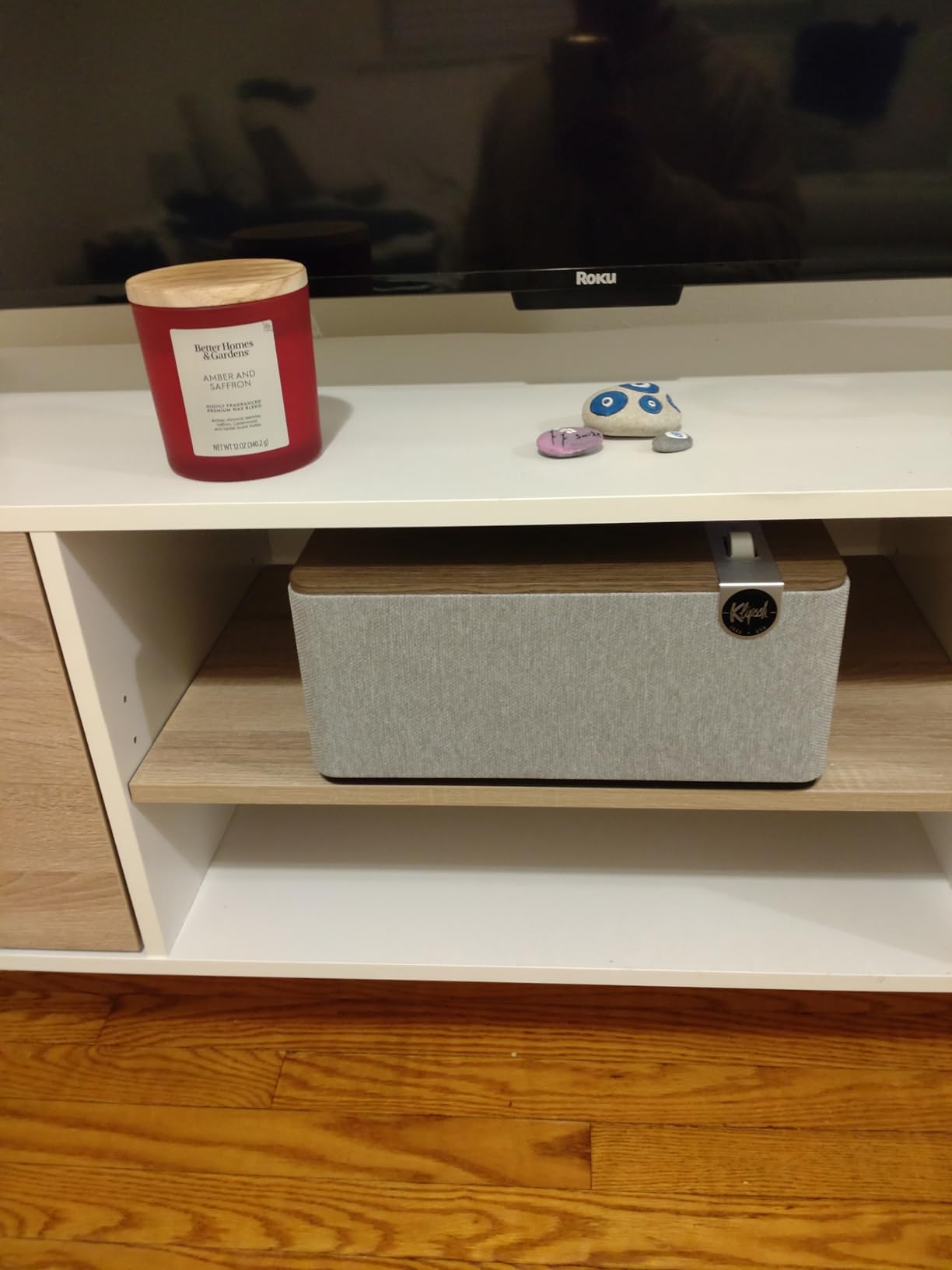
Bluetooth 5.3 provides a solid connection up to 40 feet, and I maintained a stable connection through two walls in my testing. The USB-C port handles both playback from flash drives and reverse charging for your phone, which is a clever dual-purpose feature. Touch controls on top let you adjust volume, skip tracks, and power on without reaching for your phone.
The main limitation for multi-room use is that Klipsch multi-speaker pairing is not as refined as Sonos. Some users report audio sync issues when pairing two units, and there is no dedicated multi-room app experience. This is best thought of as a single-room speaker that happens to have excellent Bluetooth connectivity rather than a multi-room system speaker.
Who should buy the Klipsch The One Plus
Design enthusiasts who refuse to compromise on aesthetics will find The One Plus hits the sweet spot between looks and sound. It is also ideal for anyone who wants a premium Bluetooth speaker with analog-style controls and no dependency on apps or Wi-Fi for basic use. The walnut finish works beautifully in spaces with wood furniture and warm tones.
Who should skip the Klipsch The One Plus
If you want to build a whole-home multi-room system with synchronized playback across rooms, this is not the right platform. The Bluetooth-only multi-speaker pairing is unreliable for serious multi-room use. Bass-heavy music fans may also find the low-end response lacking compared to larger speakers.
13. Bose Music Amplifier – Best for Existing Speaker Integration
Bose Music Amplifier – Speaker amp with Bluetooth & Wi-Fi connectivity
125W per channel
AirPlay 2 + Chromecast + Spotify Connect
Bose signal processing
Compact 8.3 x 8.3 x 2.6 inches
Pros
- Breathes new life into existing passive speakers
- AirPlay 2
- Spotify Connect
- and Chromecast built-in
- Bose proprietary signal processing
- Compact size fits anywhere
Cons
- Software updates can cause connectivity issues
- App required for all controls
- No physical remote included
- Single volume control for all grouped speakers
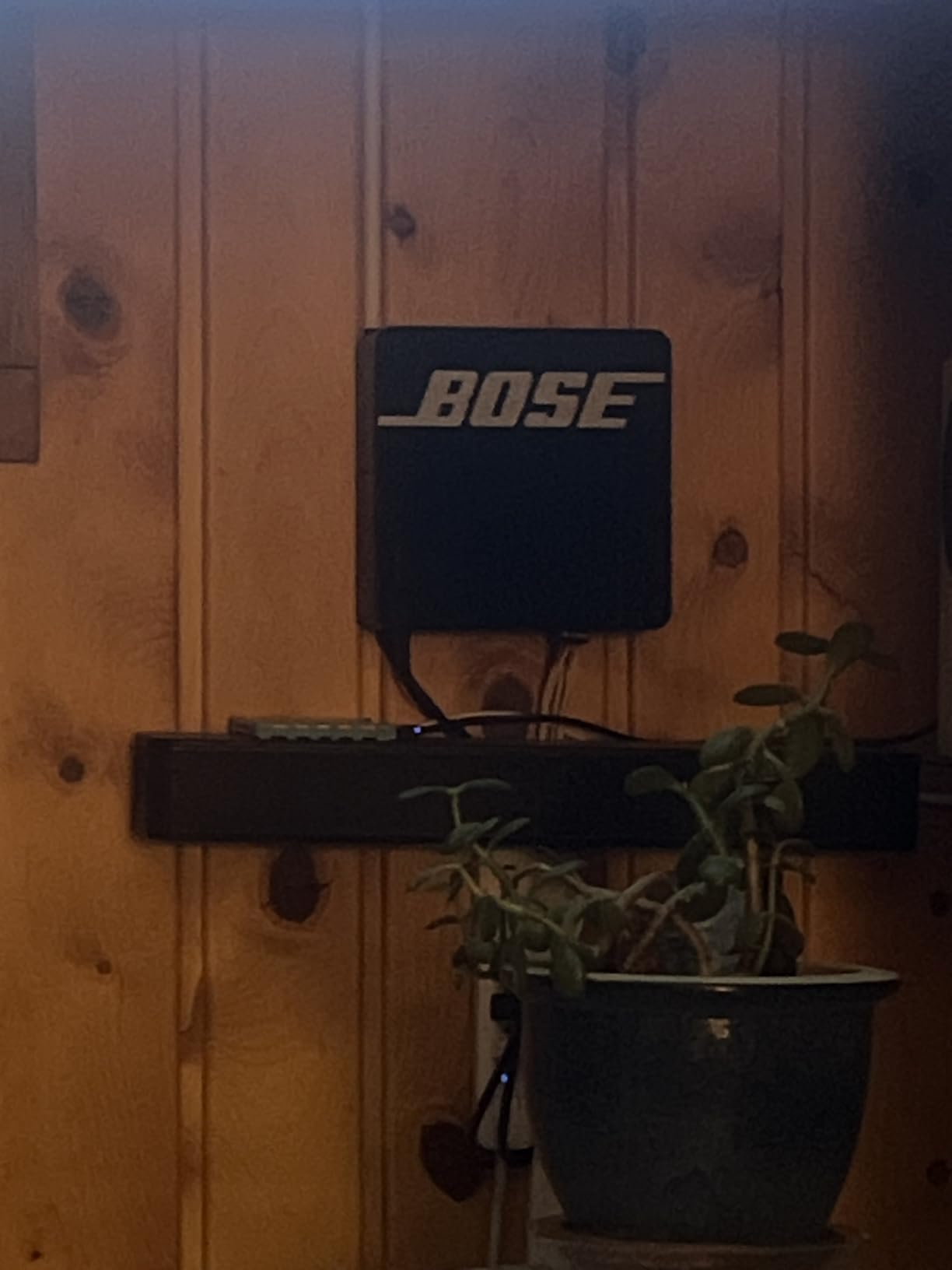
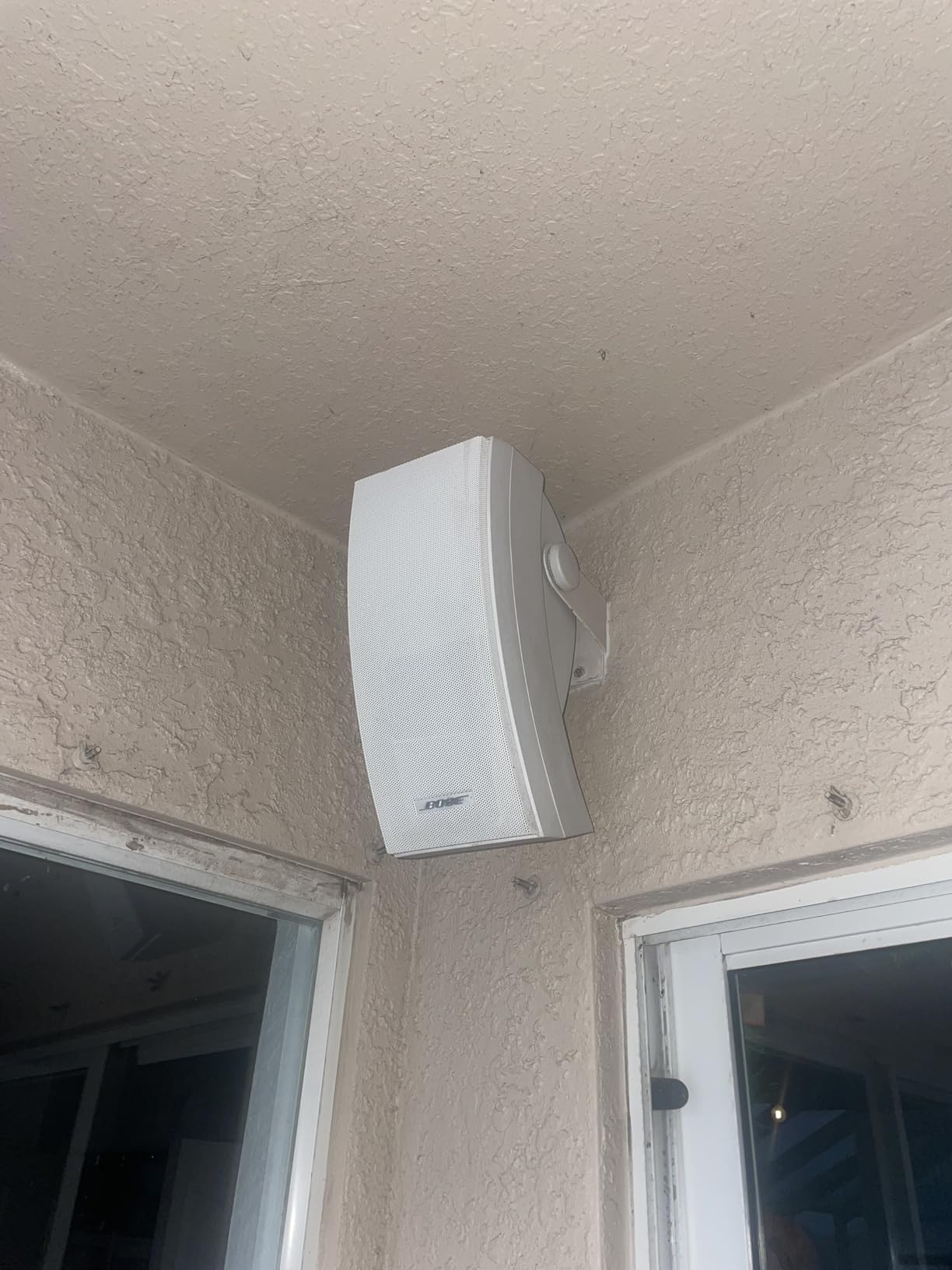
The Bose Music Amplifier solves a problem that none of the other speakers in this guide address. If you already own good passive speakers, this compact amplifier adds Wi-Fi streaming, AirPlay 2, Spotify Connect, and Chromecast to them without replacing anything. I connected it to a pair of bookshelf speakers I have had for years and suddenly they became smart multi-room speakers.
The 125 watts per channel output drives bookshelf and floor-standing speakers with authority. Bose proprietary signal processing and automatic tonal balance adjustment mean the amplifier optimizes its output regardless of what speakers you connect. I heard a clear improvement in clarity and bass control compared to the budget receiver these speakers were previously connected to.
Multi-room capability comes through the Bose app, which groups this amplifier with other Bose smart speakers and soundbars. AirPlay 2 adds Apple device compatibility, Spotify Connect gives direct streaming from the Spotify app, and Chromecast built-in lets you cast from any compatible app. The streaming integration is impressively comprehensive for a compact amplifier.
The compact size is worth highlighting. At 8.3 by 8.3 by 2.6 inches, it tucks behind speakers, on a shelf, or mounted to a wall. You do not need a receiver rack or dedicated cabinet. The main frustration is that software updates occasionally break connectivity, requiring a reset. There is also no physical remote, so you rely entirely on the app for volume and input switching.
Who should buy the Bose Music Amplifier
Anyone with existing passive speakers who wants to add streaming and multi-room capabilities without buying new speakers should look at this first. It is also ideal for whole-home audio systems where you want to integrate legacy speakers into a modern streaming setup. The 125 watts per channel handles most home speakers with room to spare.
Who should skip the Bose Music Amplifier
If you do not already own passive speakers, you will get better value from an all-in-one wireless speaker like the Sonos Era 100. The amplifier also requires the Bose app for basic control, which is less polished than the Sonos app. Anyone building a new multi-room system from scratch should consider an integrated speaker ecosystem instead.
Buying Guide: How to Choose the Best Multi Room Speakers
Choosing the right multi-room speaker system comes down to understanding a few key factors. Our team has broken down the most important considerations to help you make the right decision for your home and listening habits.
Wi-Fi vs. Bluetooth Multi Room
Wi-Fi-based multi-room systems like Sonos and Denon HEOS offer the best experience for whole-home audio. Wi-Fi handles synchronized playback across rooms without lag, supports higher quality audio streaming, and lets you control every room from one app. The trade-off is that each speaker needs to be on your home network.
Bluetooth multi-room is simpler but has limitations. Sync between Bluetooth speakers often has noticeable lag, audio quality is compressed, and range is typically limited to about 30 feet. Bluetooth works well for a single room or a portable speaker you carry around, but it is not ideal for whole-home synchronized playback.
Some speakers, like the Sonos Roam 2 and Move 2, offer both. They connect via Wi-Fi at home for multi-room and switch to Bluetooth when you take them elsewhere. This dual-mode design gives you the best of both worlds.
Ecosystem Compatibility Matters
The single most important decision you will make is which ecosystem to commit to. Sonos, HEOS by Denon, and Bose each have their own multi-room platforms, and speakers from different ecosystems generally cannot be grouped together. Pick one platform and stick with it for the smoothest experience.
Sonos remains the most popular choice with the broadest product range, from the compact Roam 2 to the powerful Arc Ultra soundbar. Reddit users consistently recommend Sonos for its reliable app and seamless grouping. HEOS by Denon is a strong alternative if you own Denon receivers or want more audiophile-focused features. Bose offers good integration if you already own Bose headphones or soundbars.
AirPlay 2 provides a cross-platform option for Apple users. Any AirPlay 2 speaker, regardless of brand, can be grouped through the Apple Home app. This is the best path if you want to mix Sonos, Denon, and Bose speakers in one system, though the control experience is less polished than a native ecosystem app.
Room Size and Speaker Placement
Match your speaker to the room. Small rooms like bathrooms and home offices need only compact speakers like the Sonos Roam 2 or Era 100. Medium rooms like bedrooms and kitchens do well with the Sonos Era 100, Denon Home 250, or Klipsch The One Plus. Large living rooms and open-plan spaces benefit from the Sonos Five, Era 300, or Arc Ultra.
For whole-home coverage, most people start with a main speaker in the living room and add smaller speakers in bedrooms, kitchen, and bathroom as budget allows. The beauty of multi-room systems is that they are expandable. You do not need to buy everything at once.
Streaming Service Support
Check that your chosen platform supports the streaming services you use. Sonos supports over 100 streaming services including Spotify, Apple Music, Amazon Music, Tidal, Qobuz, and Pandora. Denon HEOS covers the major services as well. If you listen to niche services or internet radio, verify compatibility before committing to a platform.
For hi-res audio fans, Tidal and Qobuz offer lossless and hi-res streaming. The Denon Home 250 and Sonos Five handle higher quality audio better than the more affordable options in this guide. Bluetooth speakers like the Klipsch The One Plus and Harman Kardon Aura Studio 5 cannot stream hi-res audio since Bluetooth compresses the signal.
Budget Planning for Multi Room Audio
A basic two-room setup typically requires an investment in two speakers and takes about 15 minutes to configure. A full five-room system takes more planning but delivers whole-home coverage that transforms how you experience music at home. Start with one or two rooms and expand over time rather than trying to cover every room at once.
The Avantree Harmony 2 offers the lowest cost per room since it includes three speakers in one package. The Sonos Roam 2 is the most affordable entry point into the Sonos ecosystem. On the premium end, the Sonos Arc Ultra with a Sub and Era 300 surrounds creates a theater-grade system that also serves as a powerful multi-room music setup.
Frequently Asked Questions
What is the best multi room wireless speaker system?
The Sonos ecosystem remains the best multi-room wireless speaker system in 2026 due to its reliable app, broad product range, and seamless room-to-room synchronization. The Sonos Era 100 is the best overall speaker for most homes, offering excellent sound quality, Trueplay room tuning, and straightforward multi-room grouping. For audiophiles, the Sonos Five delivers superior sound quality with line-in connectivity for turntables. Budget-conscious buyers can start with the Sonos Roam 2, which provides full Sonos multi-room features in a compact, waterproof design.
How much does a whole house sound system cost?
A whole-house multi-room sound system typically costs between $400 and $3000 depending on the number of rooms, speaker quality, and ecosystem you choose. A basic two-room Sonos setup with two Era 100 speakers runs around $378. A five-room system with a mix of Sonos Era 100, Roam 2, and a soundbar in the living room typically falls between $1000 and $1500. Premium setups with Sonos Arc Ultra, Sub, and Era 300 surrounds can exceed $2500. The Avantree Harmony 2 offers the most affordable path to three-room audio at a single kit price.
Which multi-room audio system is easiest to set up?
The Sonos system is widely considered the easiest multi-room audio system to set up. Most Sonos speakers connect in under five minutes using the Sonos app, which walks you through each step. The Avantree Harmony 2 is even simpler since it requires no app at all — just plug in the transmitter and turn on the speakers. For Apple users, AirPlay 2 speakers are easy to set up through the Home app. Avoid Bluetooth-only multi-room setups if you want easy synchronized playback, as Wi-Fi systems handle sync automatically.
Is multi-room audio worth it?
Yes, multi-room audio is worth it if you regularly listen to music at home and want consistent sound quality across multiple rooms. It eliminates the need to carry a Bluetooth speaker from room to room, lets you play different music in different rooms simultaneously, and creates an immersive whole-home listening experience. According to Reddit discussions, most users who invest in multi-room systems report high satisfaction, especially for entertaining, cooking, and everyday background music. The main consideration is ecosystem commitment — choose a platform you are comfortable expanding over time.
Can you mix different brands in a multi-room system?
Mixing brands in a multi-room system is possible but comes with limitations. AirPlay 2 lets you group speakers from different brands through the Apple Home app, so you can mix Sonos, Denon, and Bose speakers if they all support AirPlay 2. However, the experience is not as seamless as staying within one ecosystem. Sonos speakers group best with other Sonos speakers, Denon HEOS speakers group best with other HEOS devices, and so on. For the smoothest multi-room experience, pick one platform and build within it. Bluetooth multi-room pairing across brands is unreliable and not recommended.
Final Thoughts on the Best Multi Room Speakers
Finding the best multi room speakers comes down to choosing an ecosystem and building from there. Sonos offers the most complete range with speakers for every room, budget, and use case. Start with the Sonos Era 100 as your main speaker, add a Roam 2 for bathrooms and travel, and expand as needed. The Denon Home 250 and Bose Music Amplifier provide strong alternatives for those who prefer different platforms or want to integrate existing equipment.
For 2026, the multi-room speaker market offers more choices and better sound quality than ever before. Whether you want simple background music in three rooms or a full whole-home theater system, there is a solution here that fits your space and budget. Pick the ecosystem that matches your current devices, start with one or two rooms, and enjoy the difference that whole-home audio makes in your daily life.