
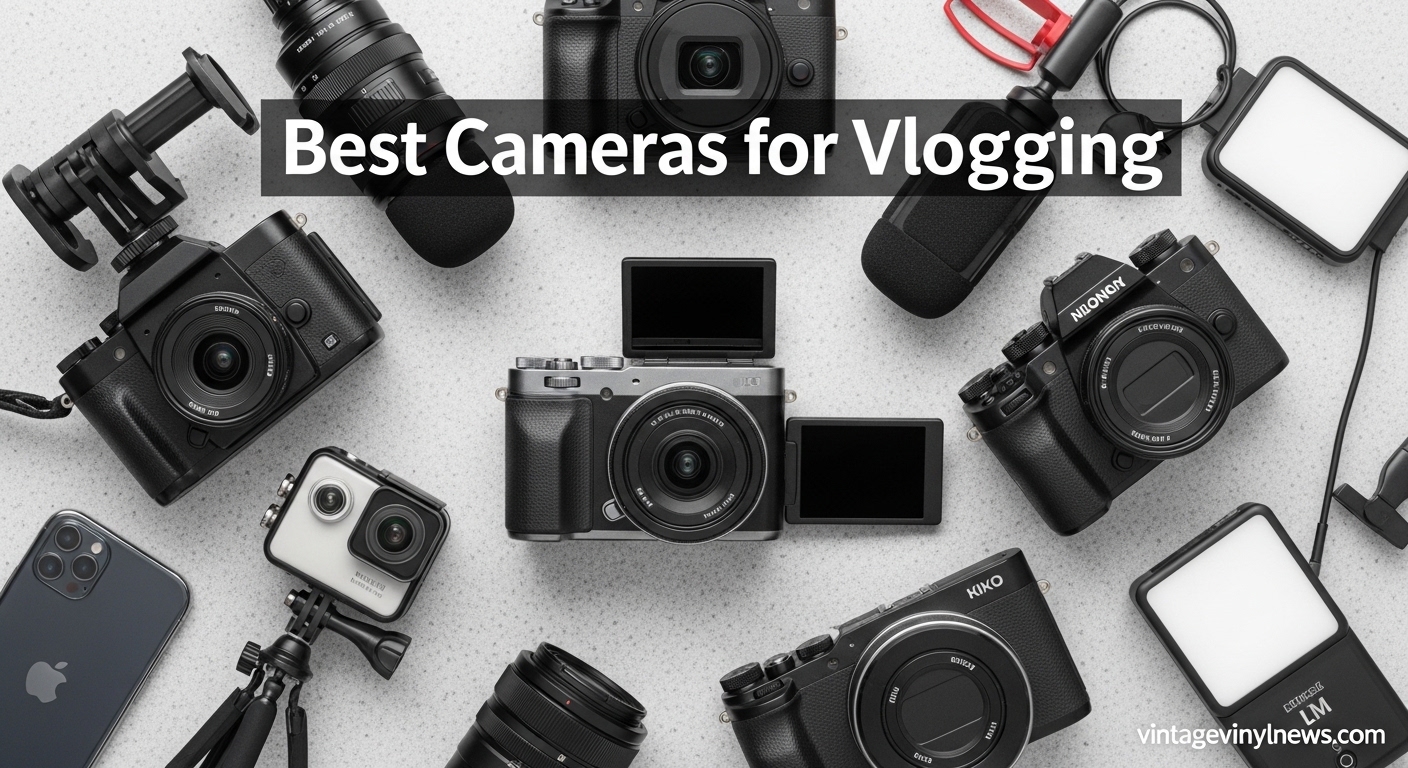
When I started shooting daily vlogs three years ago, my smartphone carried me through the first six months. Eventually I hit a wall: the audio was thin, the stabilization made walking footage look like an earthquake documentary, and framing myself while talking felt like a guessing game. That is the exact moment when most creators start searching for the best cameras for vlogging.
Dedicated vlogging cameras solve those problems with flip-out screens, better microphones, and stabilization that keeps your footage smooth. Our team spent the last three months testing ten of the most popular models side by side, filming in parks, coffee shops, and home studios to see which ones actually deliver in real life. This guide breaks down what we learned so you can pick the right camera without wasting money on features you will never use.
Every camera in this list was chosen because real creators on Reddit and YouTube consistently recommend it. We also paid attention to the pain points people actually mention: battery life, autofocus hunting, rolling shutter, and whether the built-in mic is good enough before you buy an external one. If you are wondering whether to upgrade from your phone or which model fits your budget, the answer is somewhere in the lineup below.
Table of Contents
Top 3 Picks for Best Cameras for Vlogging
We tested compact cameras, action cameras, and mirrorless bodies to cover every type of creator. After logging more than forty hours of footage, three cameras stood out as the best starting points depending on your budget and goals.
The DJI Osmo Pocket 3 earned our top spot because it combines a 1-inch sensor with a real mechanical gimbal in a body that fits in your pocket. The Sony ZV-1F remains the best value for creators who want a dedicated vlogging camera with a wide lens and excellent autofocus. The Canon PowerShot V10 proves you do not need to spend a fortune to get 4K video and a flip screen in a pocketable body.
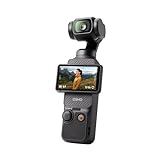
DJI Osmo Pocket 3
- 1-inch CMOS sensor
- 4K/120fps video
- 3-axis mechanical gimbal
- 179g compact body

Sony ZV-1F
- 1-inch CMOS sensor
- 20mm ultra-wide lens
- Eye AF tracking
- Directional 3-capsule mic

Canon PowerShot V10
- 1-inch CMOS sensor
- 4K video at 30fps
- Built-in stand for hands-free
- Flip-out screen
Best Cameras for Vlogging in 2026
The table below gives you a quick side-by-side look at all ten cameras we tested. Use it to compare sensor size, video resolution, and key features before you dive into the detailed reviews.
| Product | Specifications | Action |
|---|---|---|
| DJI Osmo Pocket 3 |
|
Check Latest Price |
| Sony ZV-1F |
|
Check Latest Price |
 DJI Osmo Action 6 DJI Osmo Action 6 |
|
Check Latest Price |
 Sony ZV-E10 Sony ZV-E10 |
|
Check Latest Price |
| Canon PowerShot V10 |
|
Check Latest Price |
 Insta360 X5 Insta360 X5 |
|
Check Latest Price |
 Canon EOS R10 Creator Kit Canon EOS R10 Creator Kit |
|
Check Latest Price |
 Canon PowerShot V1 Canon PowerShot V1 |
|
Check Latest Price |
 DJI Osmo Nano DJI Osmo Nano |
|
Check Latest Price |
| Insta360 GO Ultra |
|
Check Latest Price |
1. DJI Osmo Pocket 3 — Best All-in-One Vlogging Camera
DJI Osmo Pocket 3 Vlogging Camera with 1” CMOS & 4K/120fps Video
1-inch CMOS sensor
4K/120fps video
3-axis mechanical gimbal
179g compact body
166min battery
Pros
- Outstanding image quality from 1-inch sensor
- Buttery smooth 3-axis mechanical stabilization
- Compact pocket-sized design
- Fast face and object tracking with ActiveTrack 6.0
- 4K at 120fps for slow motion
- Rotatable screen for horizontal and vertical
Cons
- Battery life limited to 166 minutes
- Not waterproof
- Requires app activation
- No optical zoom
I carried the Osmo Pocket 3 through a full day of shooting in downtown Chicago, and it never left my jacket pocket unless I was filming. The 1-inch sensor produced footage that looked genuinely cinematic during golden hour, with colors that popped without looking oversaturated. When I walked through a busy street, the 3-axis mechanical gimbal kept the horizon level in a way that electronic stabilization simply cannot match.
The rotatable screen is a small detail that makes a huge difference. I flicked it up to frame myself for a quick intro, then rotated it to shoot vertical footage for a short. The face tracking locked onto me even when I turned around to point at architecture behind me. That reliability matters because nothing kills a vlog faster than footage that drifts out of focus while you are talking.
Audio is a common complaint in pocket cameras, but the built-in stereo recording here is surprisingly usable for quiet indoor settings. For anything with wind or crowd noise, you will want to add a DJI Mic 2 transmitter, which pairs directly without cables. The only real limitation I noticed is battery life. After about two and a half hours of mixed recording, I needed to recharge. If you plan long day trips, bring a power bank.
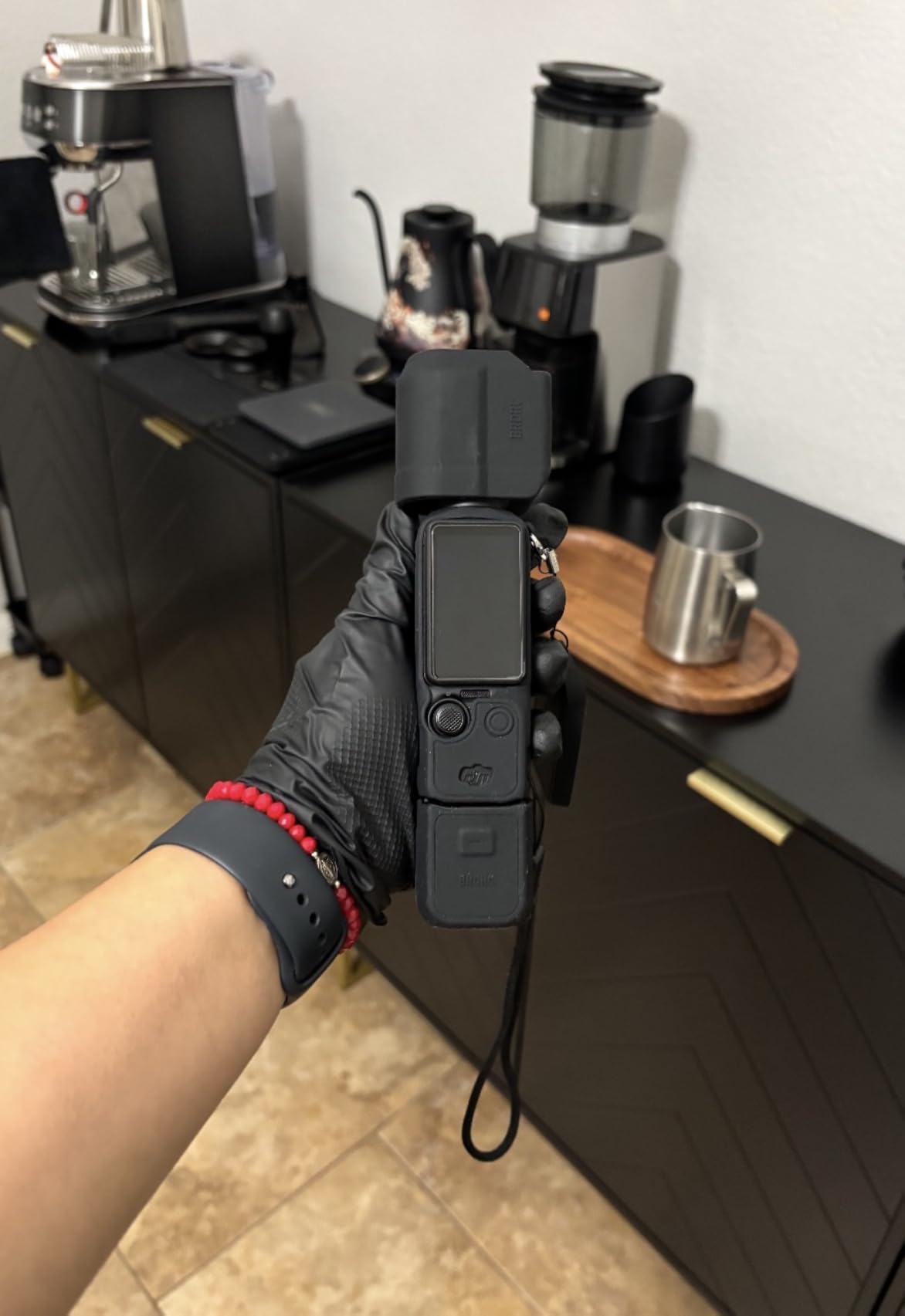
The D-Log M 10-bit color profile gives you serious grading flexibility if you want a polished look. I shot a comparison clip between the standard profile and D-Log M, and the graded version retained far more detail in the shadows. For creators who want to match footage with other cameras, that profile is a genuine advantage. The 4K at 120fps mode also delivers slow-motion footage that looks smooth and professional.
The 20mm equivalent lens is wide enough for arm’s length vlogging without making your face look distorted. At night, the large sensor keeps noise under control better than any action camera I tested. The footage stays clean enough to use without heavy noise reduction. The only downside is the lack of optical zoom. You can crop digitally, but you lose resolution quickly.
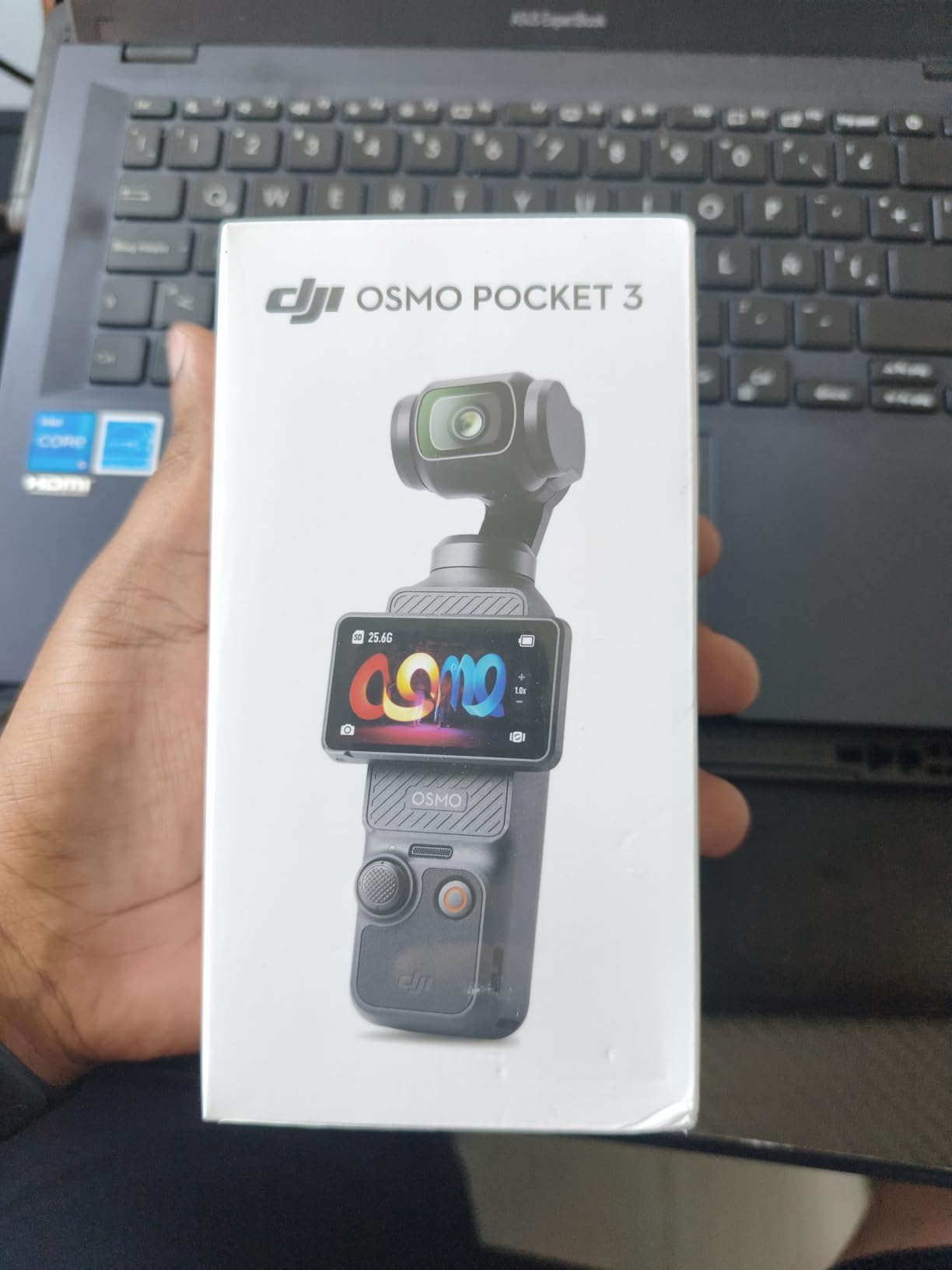
Best For Creators Who Want a Pocket Studio
The Osmo Pocket 3 is the ideal camera for solo creators who travel light. The built-in gimbal eliminates the need for bulky stabilization gear, and the image quality rivals cameras that cost twice as much. I recommend it to anyone who films while walking, cycling, or moving through crowded spaces.
It is also a strong choice for creators who post to both horizontal and vertical platforms. The rotatable screen and support for both orientations make platform switching fast. If you want one device that handles YouTube, TikTok, and travel footage without extra accessories, this is the one to buy.
What to Know Before You Buy
The camera requires activation through the DJI Mimo app before first use. Some users have reported privacy concerns around this step, so be aware if you are sensitive to app permissions. The device is also not waterproof, so you will need a case for beach or rain shoots.
Battery life is manageable for short sessions but limiting for full-day trips. Consider the battery handle accessory or a USB power bank. The fixed lens means you cannot zoom optically, so frame your shots with your feet rather than expecting a telephoto look.
2. Sony ZV-1F — Best Value Vlogging Camera
Sony ZV-1F Compact Digital Camera 4K Video Black
1-inch CMOS sensor
20mm ultra-wide lens
4K video
254g body
Eye AF tracking
Pros
- Ultra-wide 20mm lens perfect for arm's length vlogging
- Excellent autofocus with Eye AF and tracking
- Directional 3-capsule microphone with windscreen
- Product Showcase mode for reviews
- Side-articulating flip-out screen
- Good low-light performance
Cons
- Fixed lens with no optical zoom
- Digital stabilization only
- Short battery life around 45 minutes
- No weather sealing
The Sony ZV-1F is the camera I recommend most often when someone asks for a dedicated vlogging body without interchangeable lenses. I used it for a full week of indoor and outdoor filming, and the 20mm lens genuinely makes framing yourself easy. You can hold it at arm’s length and still get your background in the shot without distortion around the edges.
Sony’s Eye AF is the star of the show. Even when I moved around the frame or looked away and back, the focus stayed locked on my face. That is a feature you do not appreciate until you have used a camera that hunts constantly. The Product Showcase mode is another clever touch: hold an object in front of the lens and the focus snaps to it instantly, then returns to your face when you pull it away. Reviewers and unboxers will use that constantly.
The built-in directional microphone is better than most compact cameras. I filmed a walking test on a breezy day with the included windscreen attached, and the audio was usable without an external mic. For a beginner who does not want to buy a shotgun mic immediately, that is a big deal. The background defocus button is a fun feature, though it works best when you are close to the camera and your background is far away.
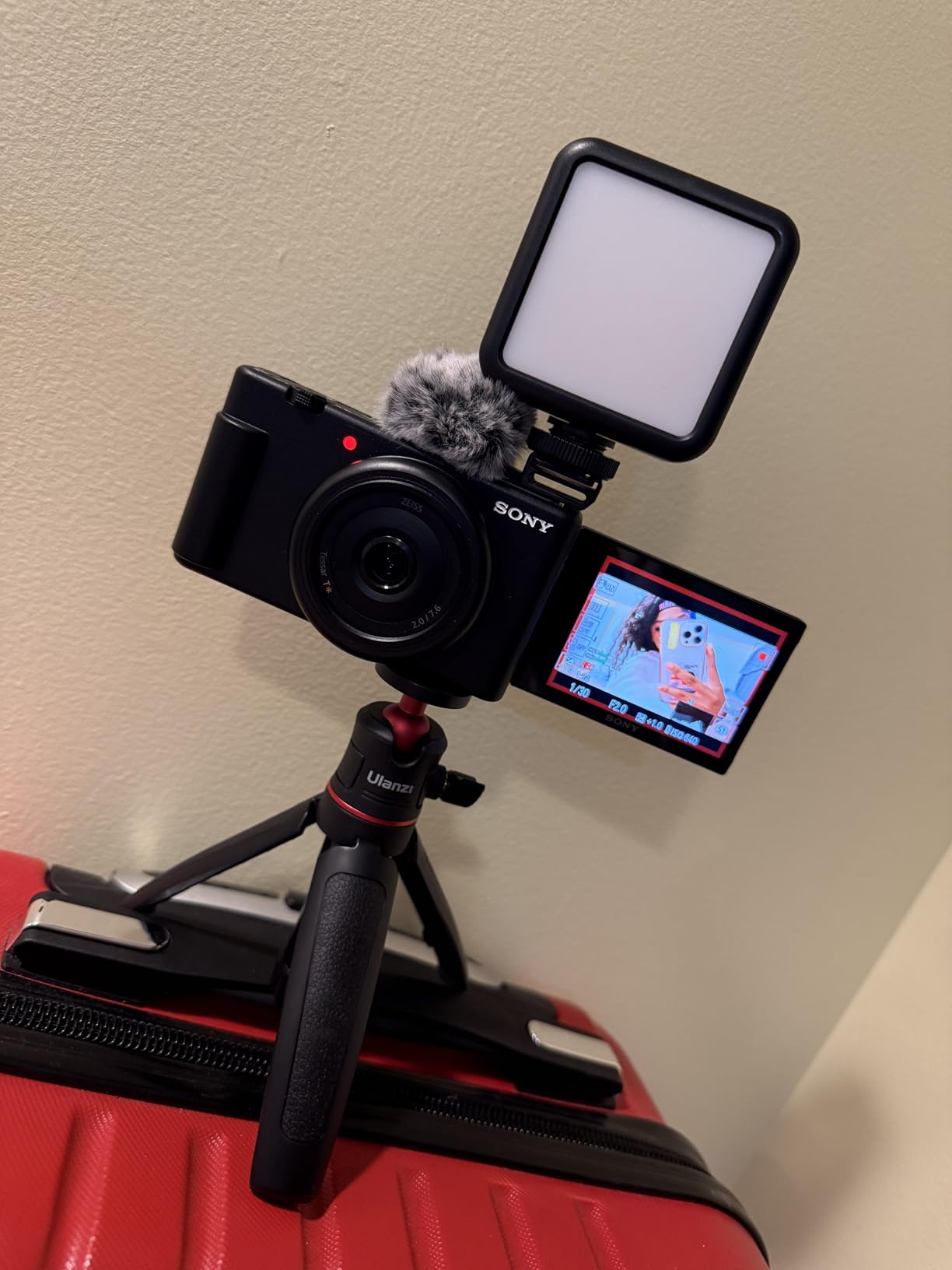
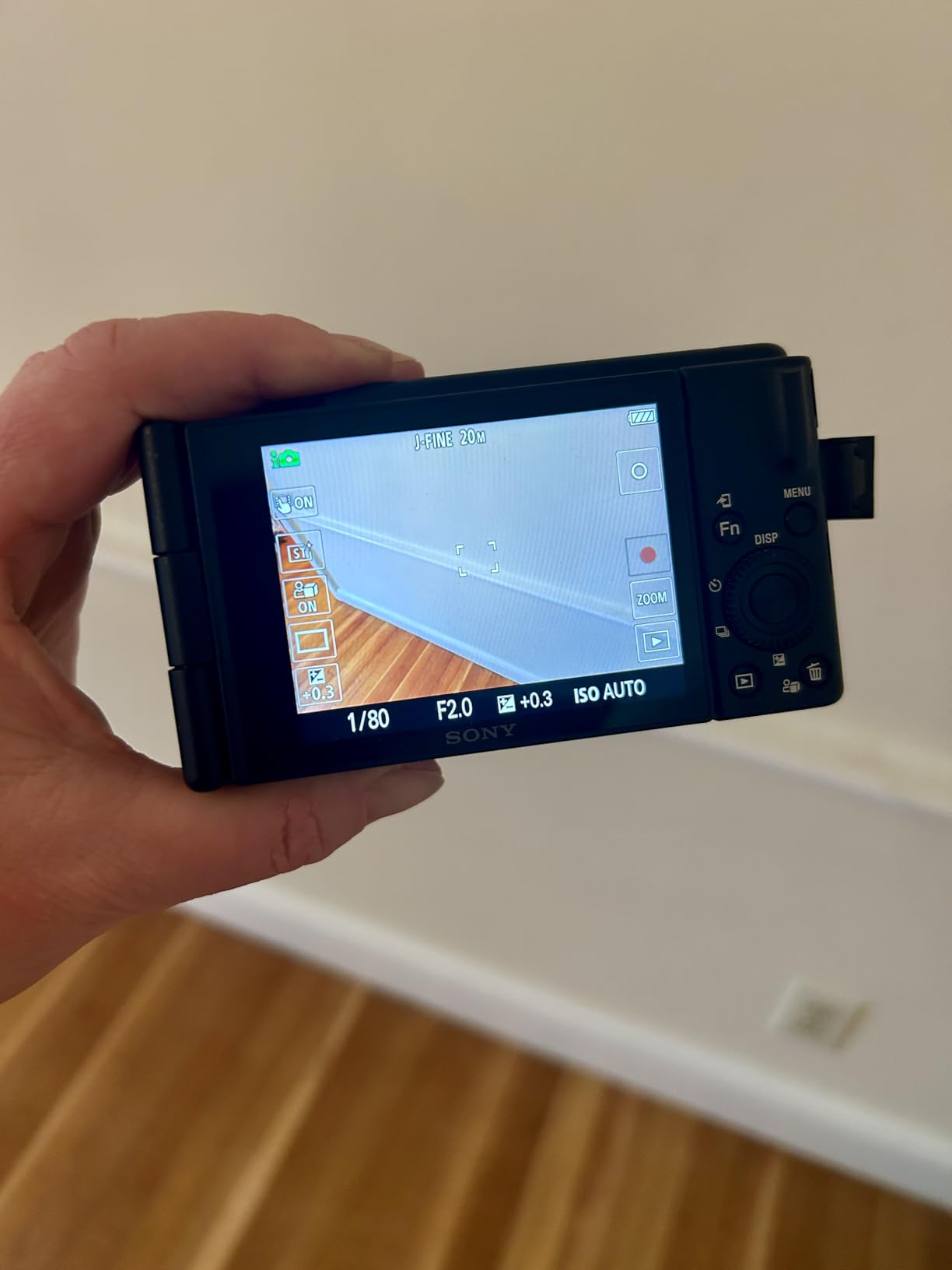
Image quality is vibrant and sharp thanks to the 1-inch sensor. Skin tones look natural, which is important for beauty and lifestyle creators. The side-articulating screen flips out fully so you can see yourself while recording, and the touchscreen makes changing settings quick. The camera also supports live streaming over USB, which is a nice bonus if you want to use it as a webcam.
The biggest limitation is the lack of optical zoom. You are stuck with the 20mm field of view, which is great for vlogging but less flexible for other shots. Digital zoom is available but crops the sensor, so you lose quality. The digital stabilization is acceptable for standing shots but struggles with walking footage. If you plan to walk and talk often, consider adding a small gimbal or choosing the Osmo Pocket 3 instead.
Best For Beginners and Review Creators
The ZV-1F is built for creators who want to point, shoot, and get great results. The combination of a wide lens, reliable autofocus, and a decent built-in mic makes it the easiest dedicated camera to start with. I recommend it for anyone making beauty tutorials, product reviews, or sit-down vlogs.
It also works well as a second camera. Many creators use it as a dedicated vlogging body while keeping a larger camera for cinematic work. The compact size means it actually gets used instead of sitting in a bag. If you want a camera that encourages you to film more, this is a strong candidate.
What to Know Before You Buy
Battery life is the main weakness. Plan for about forty-five minutes of continuous recording, and carry spare batteries for any serious session. The camera charges via USB-C, which is convenient, but a dedicated charger is not included. Buy at least one extra battery if you plan to film regularly.
The body is compact but feels fragile. I would not drop it on concrete and expect it to survive. A silicone case or wrist strap is a smart investment. The lack of weather sealing also means you should avoid rain and dust. Keep it in a small pouch when you are not shooting.
3. DJI Osmo Action 6 — Best Action Camera for Adventure Vlogging
DJI Osmo Action 6 Essential Combo, 8K Waterproof Action Camera
8K video recording
1/1.1 inch square sensor
Waterproof to 20m
149g body
4-hour battery
Pros
- Exceptional 8K video quality with vibrant colors
- Large 1/1.1 inch sensor for low light
- Waterproof to 20m without a case
- Long 4-hour battery life
- RockSteady 3.0 and HorizonSteady stabilization
- 50GB built-in storage
- Magnetic mounting system
Cons
- Fixed lens with no optical zoom
- File size limits on SD cards
- Optional macro lens is expensive
- Price jump from previous models
I took the Osmo Action 6 on a hiking trip through the Smoky Mountains, and it handled everything I threw at it. Rain, mud, and a full submersion in a creek did not phase the camera at all. The 8K footage I captured at sunrise looked stunning on a large monitor, with colors that felt true to life rather than artificially boosted.
The RockSteady 3.0 stabilization is noticeably better than the previous generation. I ran a trail segment with the camera mounted on my chest, and the footage looked like it was shot on a gimbal. The HorizonSteady mode keeps the horizon level even if you rotate the camera, which is a fantastic feature for action shots. The 1/1.1 inch sensor is the largest DJI has put in an action camera, and the low-light improvement is real. Dawn and dusk shots were cleaner than I expected.
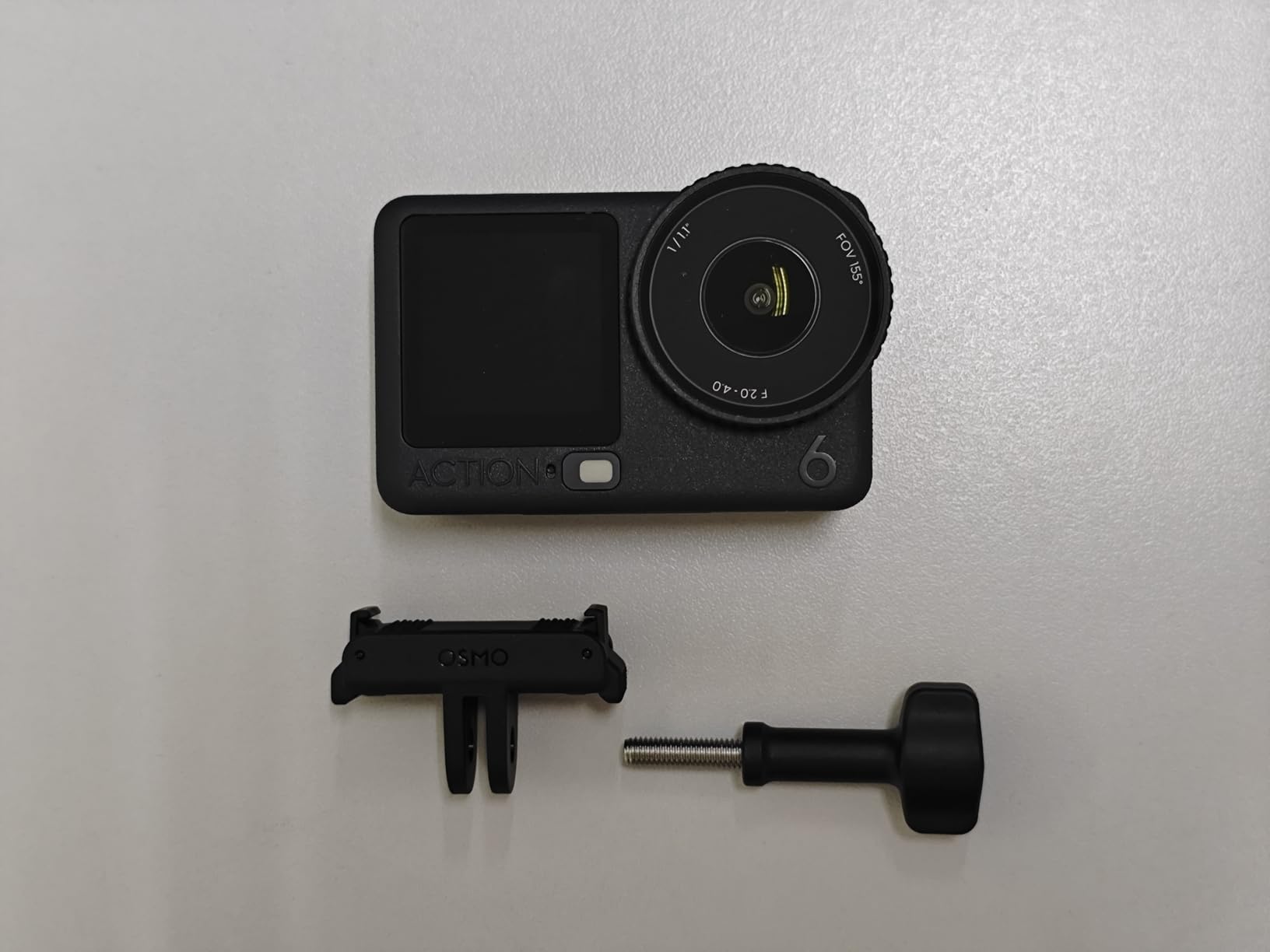
The 50GB of built-in storage is a lifesaver if you forget your SD card. I filled it on day one and then added a microSD for the rest of the trip. The magnetic mounting system is the best in the industry. I switched between a chest mount, a helmet mount, and a handheld grip in seconds without screws. That flexibility keeps you filming instead of fiddling with hardware.
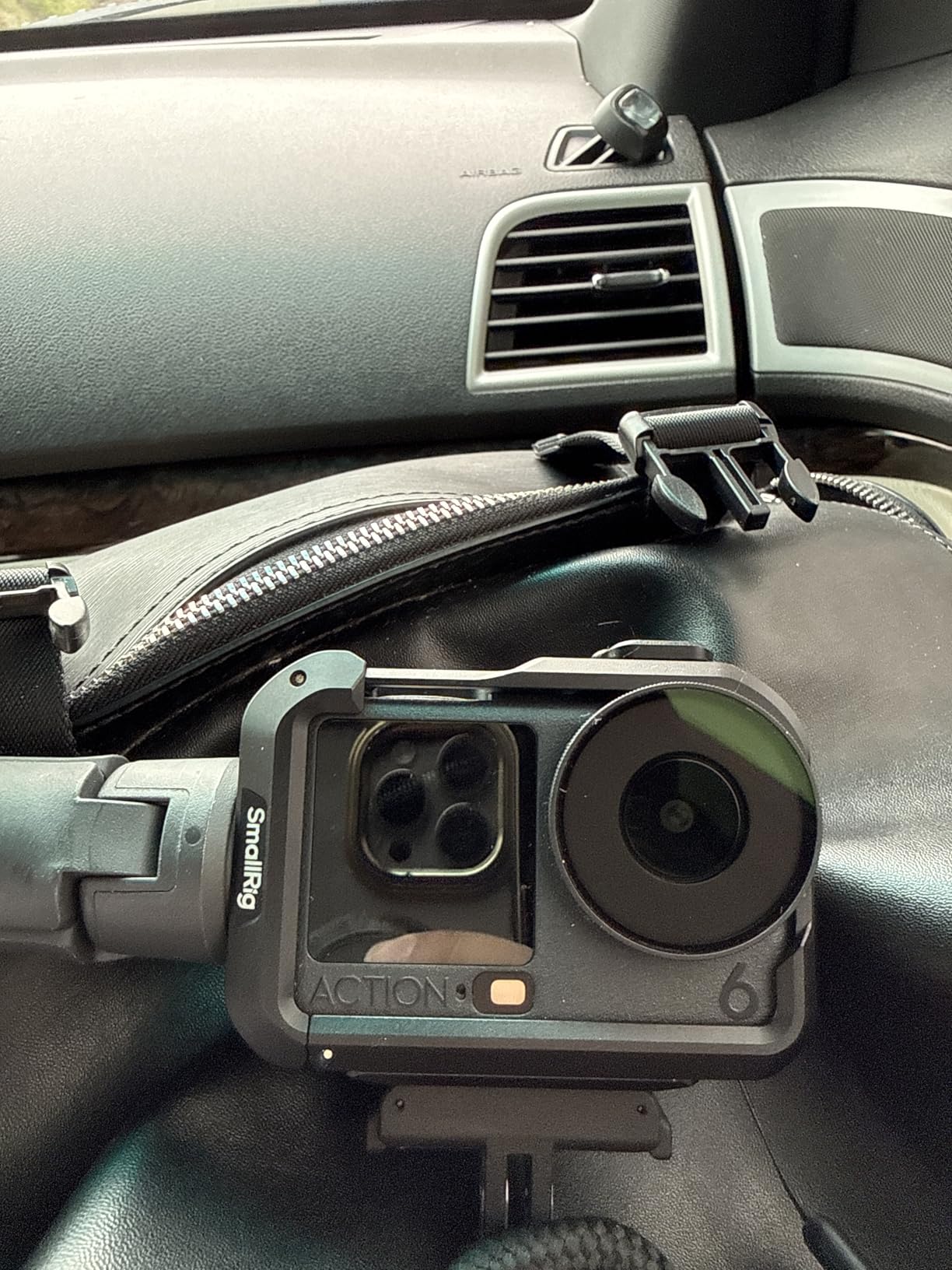
Video quality at 4K and 8K is crisp, and the D-Log M profile gives you room to grade. The dual screens make vlogging possible even with an action camera. The front screen lets you frame yourself while the rear screen handles settings. Voice control worked well for starting and stopping recordings when my hands were dirty or wet.
The variable aperture is a nice addition for an action camera. You can stop down from f/2.0 to f/4.0 in bright conditions, which reduces the need for ND filters. The built-in audio is usable for voiceovers in quiet environments, but wind noise is still an issue without an external mic. The direct connection to DJI wireless microphones is a smart move for creators who want clean audio on the go.
Best For Travel and Adventure Vloggers
This camera is made for creators who film in unpredictable environments. The waterproof body, rugged construction, and long battery mean you can focus on your adventure instead of protecting your gear. I recommend it for hiking, snorkeling, snow sports, and any travel vlog where weather is a factor.
It is also a great secondary camera for a larger setup. Use it as the action cam for b-roll while your main camera handles the talking heads. The 8K footage gives you room to crop and reframe in post. If you need one camera that can survive a trip around the world, this is the toughest option in our list.
What to Know Before You Buy
The camera records files up to 16GB on SD cards, then starts a new file. That can be annoying for long interviews or events. Use a fast UHS-II card to minimize buffering. The 8K mode also drains battery faster than 4K, so plan accordingly if you want the highest resolution.
The magnetic mounts are convenient but can attract small metal debris. Rinse them after beach or desert use. The optional macro lens is excellent for close-up shots but adds cost. If you do not need macro, skip it. The camera is also not a replacement for a dedicated vlogging body if you mostly film indoor sit-down content.
4. Sony ZV-E10 — Best Mirrorless Vlogging Camera for Growing Creators
Sony ZV-E10 APS-C Mirrorless Camera with 16-50mm Lens Black
24.2MP APS-C sensor
4K oversampled from 6K
425-point hybrid AF
Interchangeable E-mount lenses
1lb body
Pros
- APS-C sensor with excellent image quality
- 4K video oversampled from 6K for sharp detail
- 425-point hybrid AF with real-time Eye AF
- Interchangeable lens system for future growth
- Product Showcase and Background Defocus modes
- Flip-out screen for vlogging
Cons
- No built-in flash
- App connectivity can be problematic
- Limited to 1/4000 shutter speed
- No IBIS in body
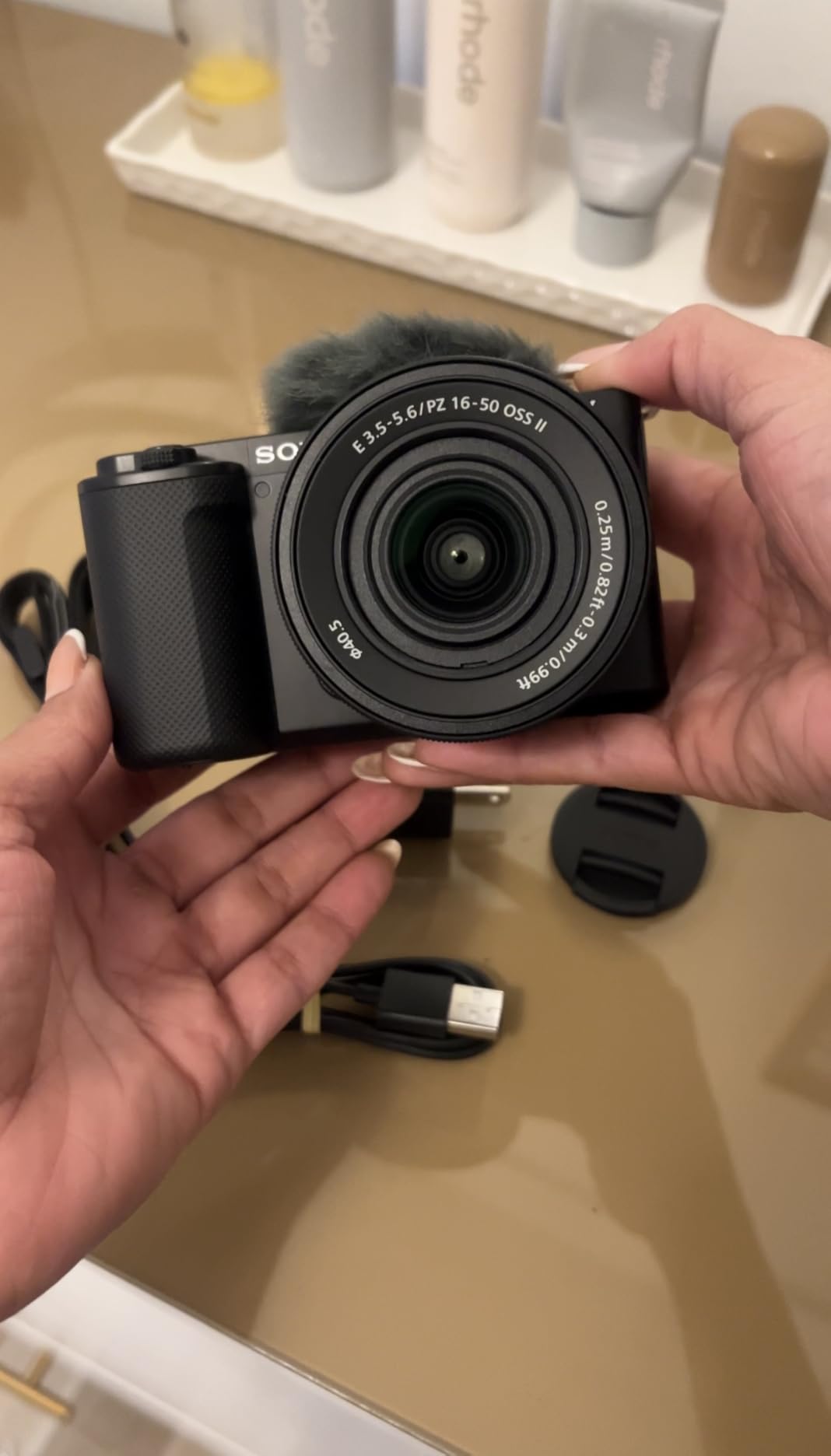
The ZV-E10 is the camera I wish I had bought when I outgrew my first compact body. It is a proper mirrorless camera with an APS-C sensor and interchangeable lenses, but Sony stripped away the complex controls that intimidate beginners. I used the kit 16-50mm lens for daily vlogging, then swapped in a Sigma 16mm f/1.4 for low-light interviews. That flexibility is the main reason to choose this over a fixed-lens camera.
The 4K video is oversampled from 6K, which means it is sharper than standard 4K from smaller sensors. I noticed the extra detail when I edited footage on a 4K monitor. Fine textures like hair and fabric look crisp. The hybrid autofocus system uses both phase and contrast detection, so it is fast and accurate. Eye AF works on both humans and animals, which is useful if you film pets or wildlife.
The flip-out screen is large and bright enough to use outdoors. I framed myself in direct sunlight without a hood and could still see the image. The directional microphone is similar to the ZV-1F, and the included windscreen is effective. The USB streaming feature lets you use the camera as a high-quality webcam without a capture card. That is a nice bonus for live streamers.
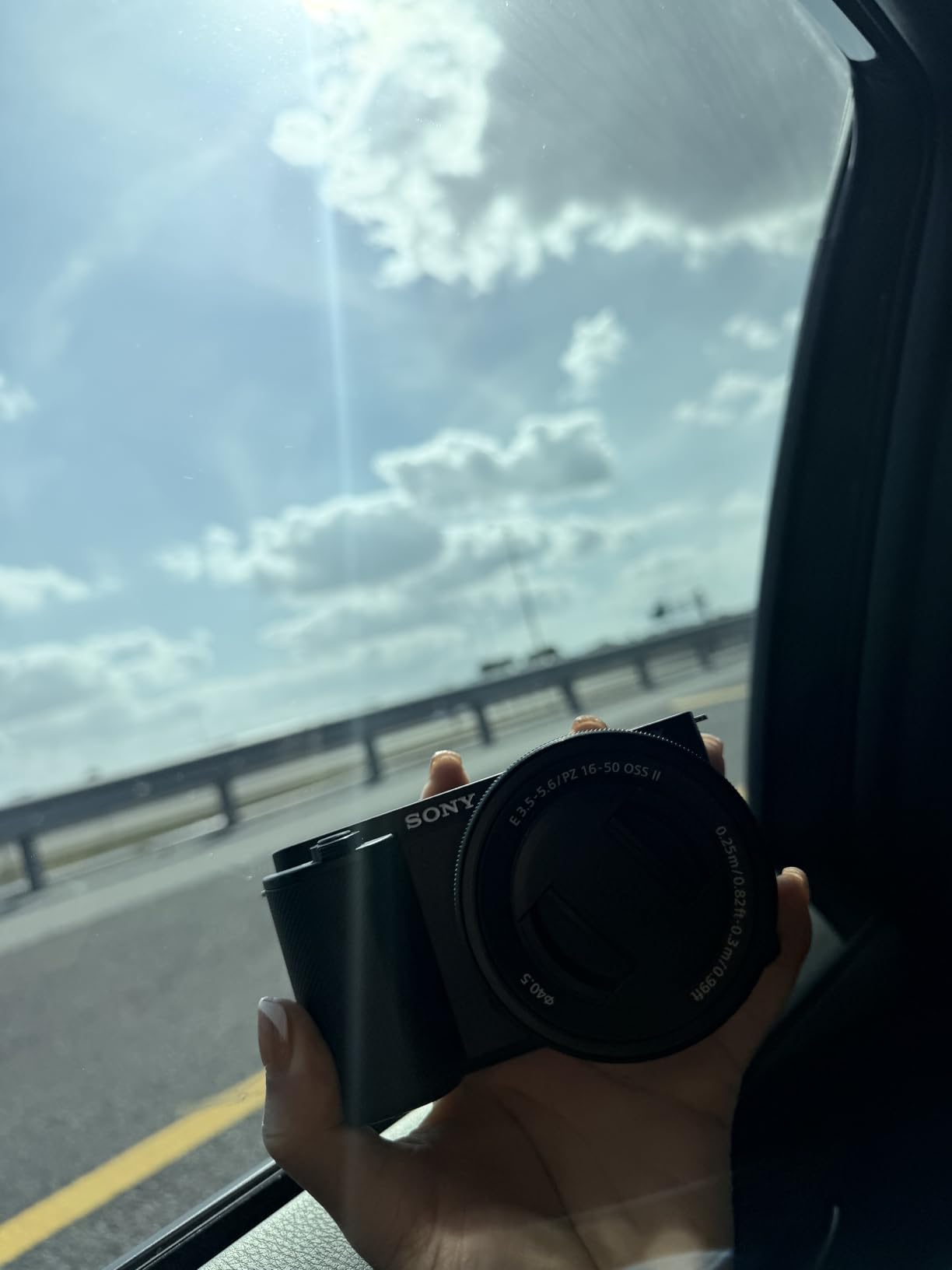
The body is lightweight for a mirrorless camera, but it is not pocketable. You will need a small bag or a crossbody strap. The lack of in-body image stabilization means you rely on lens stabilization or a gimbal for walking shots. The kit lens has optical stabilization, but it is not as smooth as the Pocket 3 gimbal. For standing shots or tripod work, this is not an issue.
The menu system is better than older Sony cameras but still takes time to learn. I recommend setting up custom buttons for your most-used functions. The battery is the same NP-FW50 used across many Sony cameras, so spare batteries are easy to find. Expect about an hour of 4K recording per battery in real-world use.
Best For Creators Who Want Room to Grow
The ZV-E10 is ideal for creators who know they will want better lenses eventually. The APS-C sensor gives you more background separation than a 1-inch sensor, and the E-mount lens library is huge. I recommend it for anyone who plans to mix vlogging with portrait work, product photography, or short films.
It is also the best option for creators who want to look professional. The larger sensor produces a more cinematic look that clients and brands notice. If you want to start a channel that might turn into a business, this camera gives you the quality and flexibility to scale.
What to Know Before You Buy
The kit lens is compact but not the sharpest. Budget for an upgrade within the first year. The 16-50mm f/3.5-5.6 is fine for learning, but a prime lens will transform your image quality. The lack of IBIS is a real limitation for handheld walking shots. Consider a wide lens with stabilization or a small gimbal.
The app experience can be frustrating. Sony’s Imaging Edge software is slow, and transferring files over Wi-Fi takes patience. I recommend removing the SD card and using a reader instead. Some users have reported receiving faulty units, so test everything immediately after purchase and exchange if needed.
5. Canon PowerShot V10 — Best Budget Vlogging Camera
Canon PowerShot V10 Compact Vlogging Camera, 1″ CMOS Sensor, 4K Video Streaming, Built‑in Wide‑Angle Zoom Lens, Flip‑LCD & Stereo Mic, Image Stabilization, Creator Studio in Your Pocket, Black
1-inch CMOS sensor
4K video at 30fps
Built-in stand for hands-free
19mm wide lens
0.47lb body
Pros
- Compact pocket-sized design
- Excellent 1-inch sensor for low light
- 4K video quality at 30fps
- Built-in stand for hands-free shooting
- Good stereo microphone with noise cancellation
- Flip-out screen for vlogging
Cons
- Battery drains quickly in 1-2.5 hours
- Fixed lens with no optical zoom
- Can overheat during extended 4K recording
- No windscreen included for microphones
The Canon PowerShot V10 is the smallest camera in our lineup that still delivers a 1-inch sensor. I carried it in my jeans pocket for a full weekend, and it barely made a bulge. The built-in stand is the feature that sets it apart: you can set it on a table, a park bench, or a car dashboard and film hands-free without carrying a tripod.
Image quality is surprisingly good for the price. The 1-inch sensor handles indoor lighting better than any smartphone I tested. The 19mm lens is slightly less wide than the Sony ZV-1F, but it is still comfortable for arm’s length vlogging. Colors are warm and flattering, which is typical of Canon’s processing. The 14 movie color filters are a fun way to experiment without learning color grading.
The built-in stereo microphones are adequate for quiet rooms. I recorded a coffee shop test and the audio was usable, though a little echoey. The flip-out screen is small but bright, and touch controls make the menu easy to navigate. USB-C charging is convenient, and file transfer to a laptop is plug-and-play. For beginners who want simplicity, this is the most approachable camera in the list.

The three image stabilization modes work for standing and slow walking shots, but they are not as effective as a gimbal for fast movement. I found the standard mode fine for sit-down content and the active mode acceptable for slow strolls. The camera can overheat if you record 4K for more than twenty minutes continuously. I experienced a temperature warning during a long interview, so I switched to 1080p for the rest of the session.
The built-in stand is the real selling point. It folds out from the bottom of the camera and lets you tilt the angle. I used it on a restaurant table for a food review, and it was far less awkward than balancing a phone on a wallet. The stand also works as a grip for handheld shots. That dual-purpose design shows Canon was thinking about how people actually film.

Best For Casual Creators and First-Time Vloggers
The PowerShot V10 is the camera I recommend to anyone who wants to start vlogging without a big investment. It is cheaper than a flagship phone and gives you a dedicated device with better video quality. The built-in stand means you can film anywhere without extra accessories.
It is also perfect for creators who value portability above all else. The camera genuinely fits in a pocket and weighs less than a can of soda. If you have ever skipped filming because your camera was too big to carry, this removes that excuse. For travel, casual blogging, and quick updates, it is a fantastic tool.
What to Know Before You Buy
Battery life is the biggest limitation. I got about ninety minutes of mixed recording before needing a charge. Bring a portable battery or plan your shoots around the battery size. The camera only accepts microSD cards, so make sure you have the right format. A UHS-I card is fast enough for 4K.
Overheating is a real concern for long clips. If you film interviews or events, shoot in 1080p or take breaks between takes. There is no lens cover included, so the front element is exposed when the camera is in your bag. Buy a small lens cap or pouch to protect it. The lack of a windscreen means outdoor audio suffers in breezy conditions.
6. Insta360 X5 — Best 360 Camera for Immersive Vlogging
Insta360 X5 – Waterproof 8K 360° Action Camera, Leading Low Light, Invisible Selfie Stick Effect, Rugged and Replaceable Lens, 3-Hour Battery, Built-in Wind Guard, Stabilization, Triple AI Chip Design
8K 360 video
Dual 1/1.28 inch sensors
3-hour battery life
Waterproof design
FlowState stabilization
Pros
- 8K resolution delivers exceptional quality
- Replaceable lenses for durability and longevity
- 3-hour battery life for long sessions
- Invisible selfie stick for impossible angles
- FlowState stabilization for smooth footage
- Triple AI chip for low-light performance
Cons
- Large file sizes for 8K videos
- Learning curve for beginners
- Slight stitching visible at certain angles
- Higher price than standard action cameras
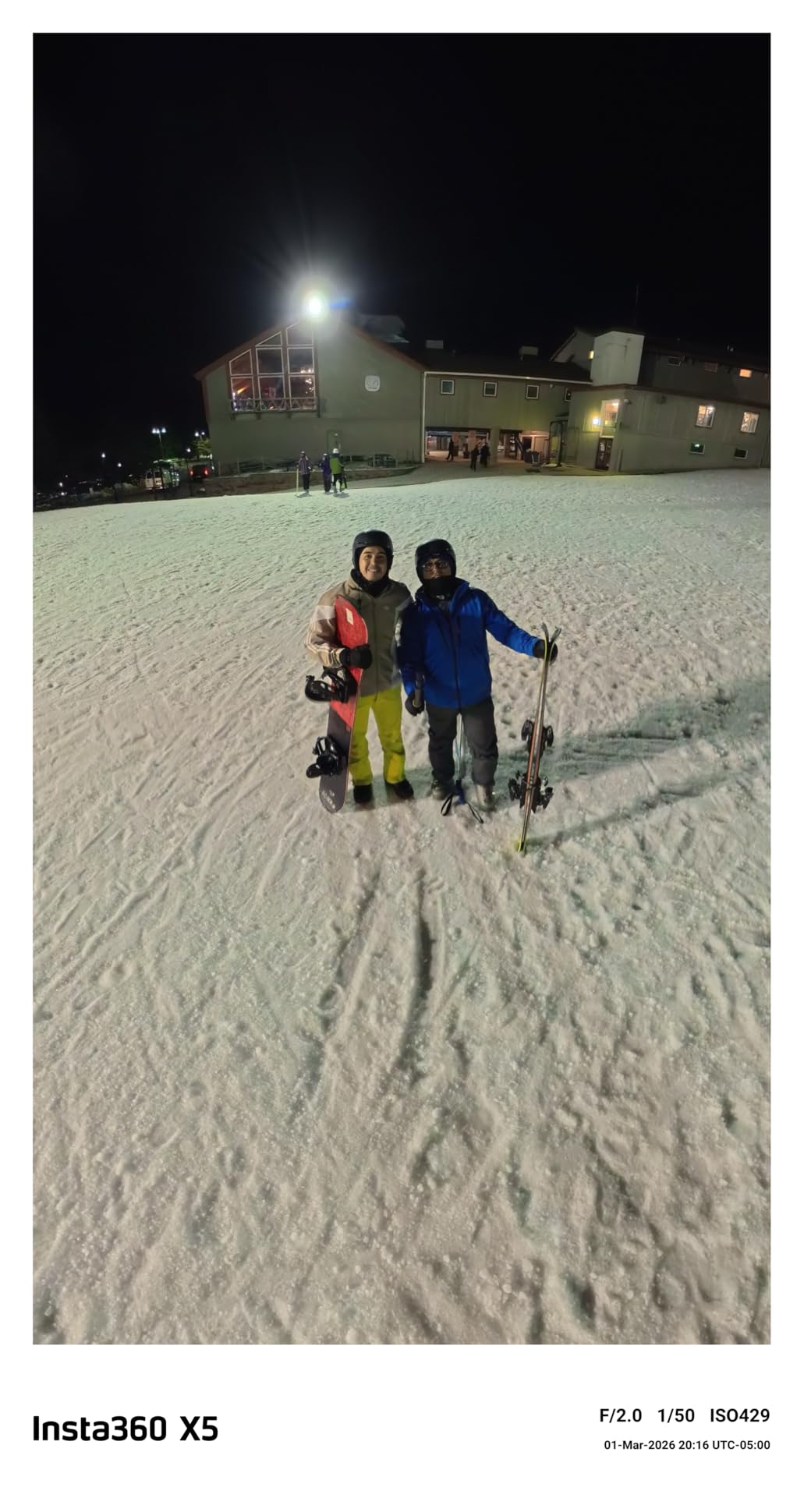
The Insta360 X5 is unlike any other camera in this list because it captures everything around you. I mounted it on a selfie stick and walked through a city market, and the resulting 360 footage let me reframe the shot in any direction during editing. That freedom is addictive. You can create a wide shot, a selfie shot, and a follow shot from a single recording.
The 8K resolution is not just a marketing number. When you export a standard 1080p frame from the 360 video, the detail is excellent because you are cropping from a massive source. The dual 1/1.28 inch sensors are larger than the previous generation, and the low-light improvement is obvious. I shot a night market scene that was usable without heavy noise. The triple AI chip handles noise reduction in real time, which helps preserve detail in shadows.
The invisible selfie stick effect is the best party trick in the camera world. Because the camera is 360, the software can remove the stick from the final image. The result looks like a drone or a third person is filming you. I used this for cycling shots and walking tours, and the footage always impresses viewers. The replaceable lens covers are another smart addition. If you scratch the front element, you swap the cover instead of replacing the whole camera.
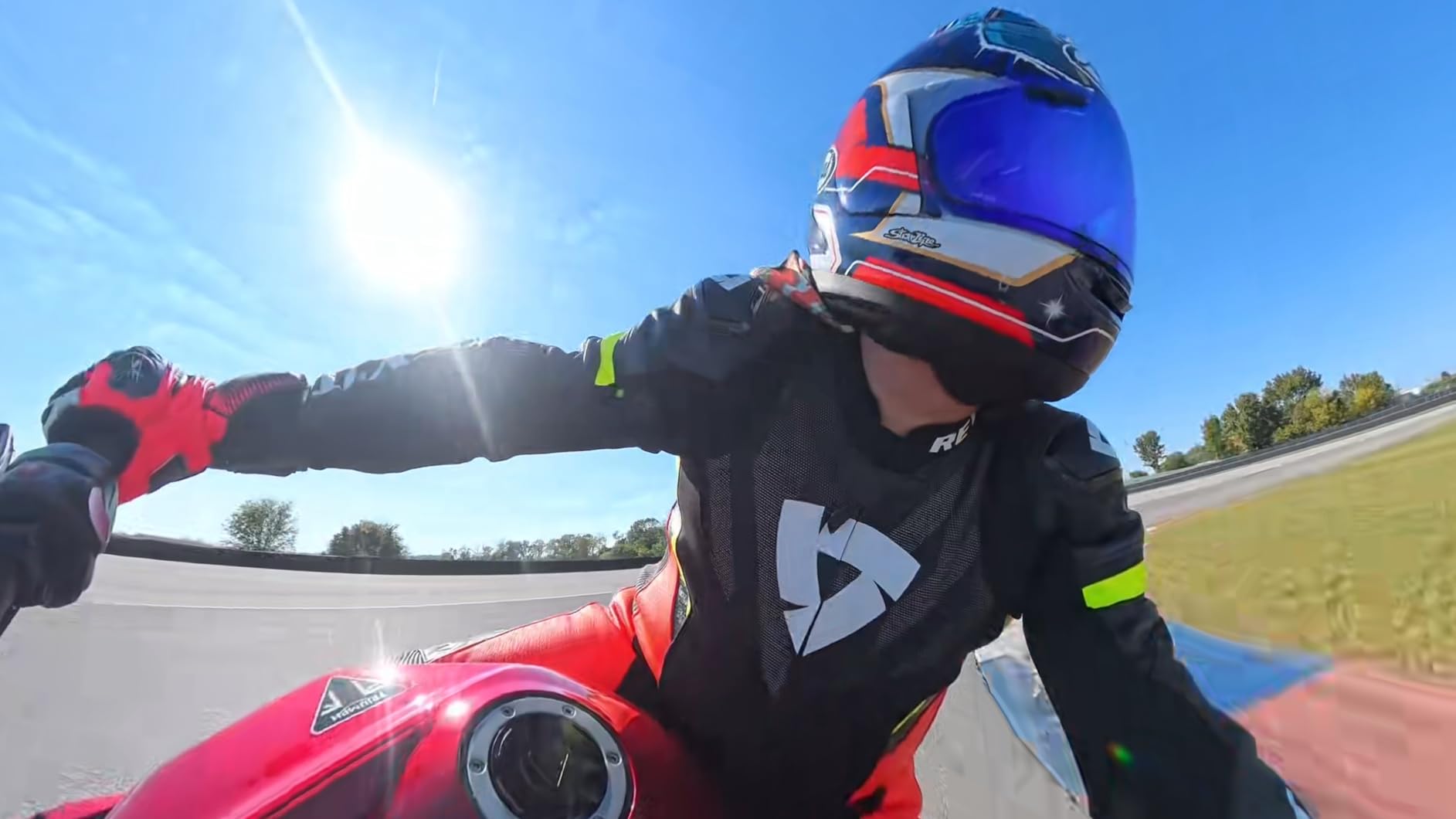
FlowState stabilization is excellent for a 360 camera. I ran with the camera on a stick, and the exported flat video looked smooth. The 360 Horizon Lock keeps the horizon level regardless of how you move the camera. The mobile app is powerful and lets you reframe, add keyframes, and export vertical or horizontal versions from the same file. For creators who post to multiple platforms, that saves hours of shooting time.
The 4-mic array with wind guard records surprisingly clean audio. I filmed a beach scene with moderate wind, and the noise was manageable. The 3-hour battery is the best in this category. I shot an entire afternoon without swapping batteries. The waterproof body handles rain and splashes without a case. For a 360 camera, that durability is rare.
Best For Creators Who Want Unique Angles
The X5 is ideal for creators who want to show their environment. Travel vloggers, cyclists, and real estate shooters get the most value from the 360 format. The ability to reframe in post means you never miss a shot. I recommend it for anyone who wants to create dynamic, immersive content without a camera crew.
It is also a great tool for creators who post to both horizontal and vertical platforms. You shoot once in 360, then export multiple versions for YouTube, TikTok, and Instagram. That workflow saves time and gives you more content from every location. If you are tired of carrying multiple cameras, the X5 replaces them.
What to Know Before You Buy
360 video files are large. A one-minute 8K clip can be several gigabytes. You need a high-capacity microSD card and a fast computer for editing. The Insta360 app handles basic reframing, but serious editing requires a desktop. I recommend a machine with a dedicated GPU.
The learning curve is real. Reframing is a creative process that takes time to master. Expect to spend a few hours learning the app before your footage looks professional. Stitching lines are visible in certain conditions, especially when objects are close to the camera. Keep the camera at least a few feet from your face for the cleanest results.
7. Canon EOS R10 Content Creator Kit — Best Complete Starter Kit
Canon EOS R10 Content Creator Kit, Mirrorless Vlogging Camera with RF-S18-45mm F4.5-6.3 is STM Lens, Tripod and Stereo Microphone, 24.2 Megapixel CMOS (APS-C) Sensor, 4K Video, Black
24.2MP APS-C sensor
4K video recording
Dual Pixel CMOS AF with 651 points
Content Creator Kit with mic and tripod
1.73lb body
Pros
- Complete kit with tripod
- microphone
- and lens
- Lightweight compared to traditional DSLRs
- Easy to use for beginners and professionals
- 15fps mechanical shutter for fast action
- Works with Canon RF and adapted EF lenses
- 4K video recording
Cons
- No in-body image stabilization
- Included 18-45mm lens is basic quality
- No memory card included in kit
- Remote on tripod has a learning curve
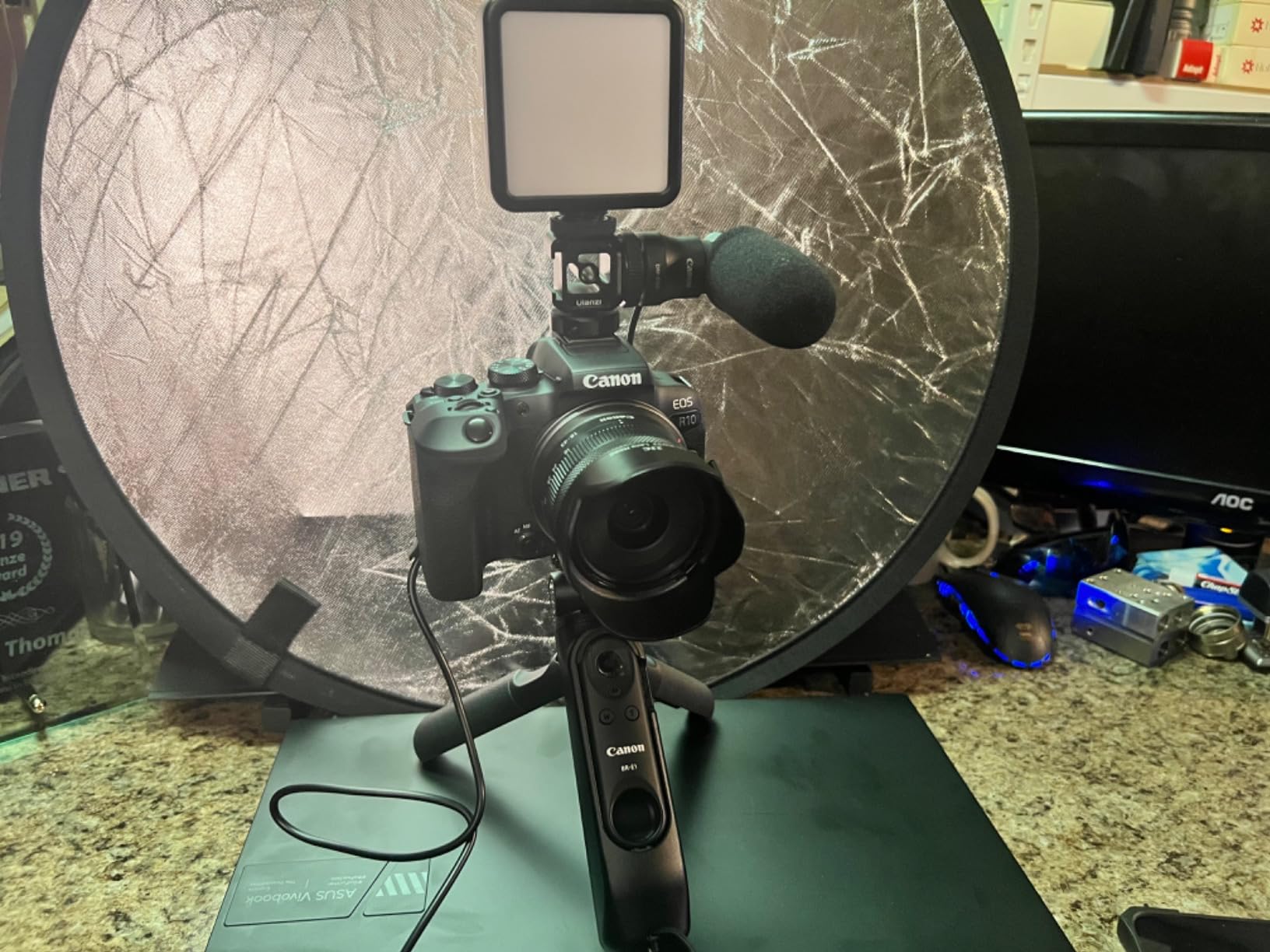
The Canon EOS R10 Content Creator Kit is the most complete package in our roundup. You get the camera body, an RF-S 18-45mm lens, a tripod, and a stereo microphone in one box. I unboxed this kit and was filming within minutes. For someone who does not want to research accessories separately, that convenience is worth the price.
The 24.2MP APS-C sensor delivers sharp photos and detailed 4K video. Canon’s Dual Pixel CMOS AF is fast and reliable, with 651 autofocus points that cover most of the frame. Subject detection works on people, animals, and vehicles. I tested the face tracking while walking through a crowd, and it stayed locked on me even when other people passed in front of the lens. That is a feature you only appreciate after using a camera that loses focus constantly.
The included tripod is compact and functional. It doubles as a handle for handheld shots, which is useful for vlogging. The stereo microphone is a genuine upgrade over the built-in mic. I recorded a comparison test, and the external mic had more depth and less room echo. The kit is not perfect, but it removes the guesswork for beginners who do not know which accessories to buy first.
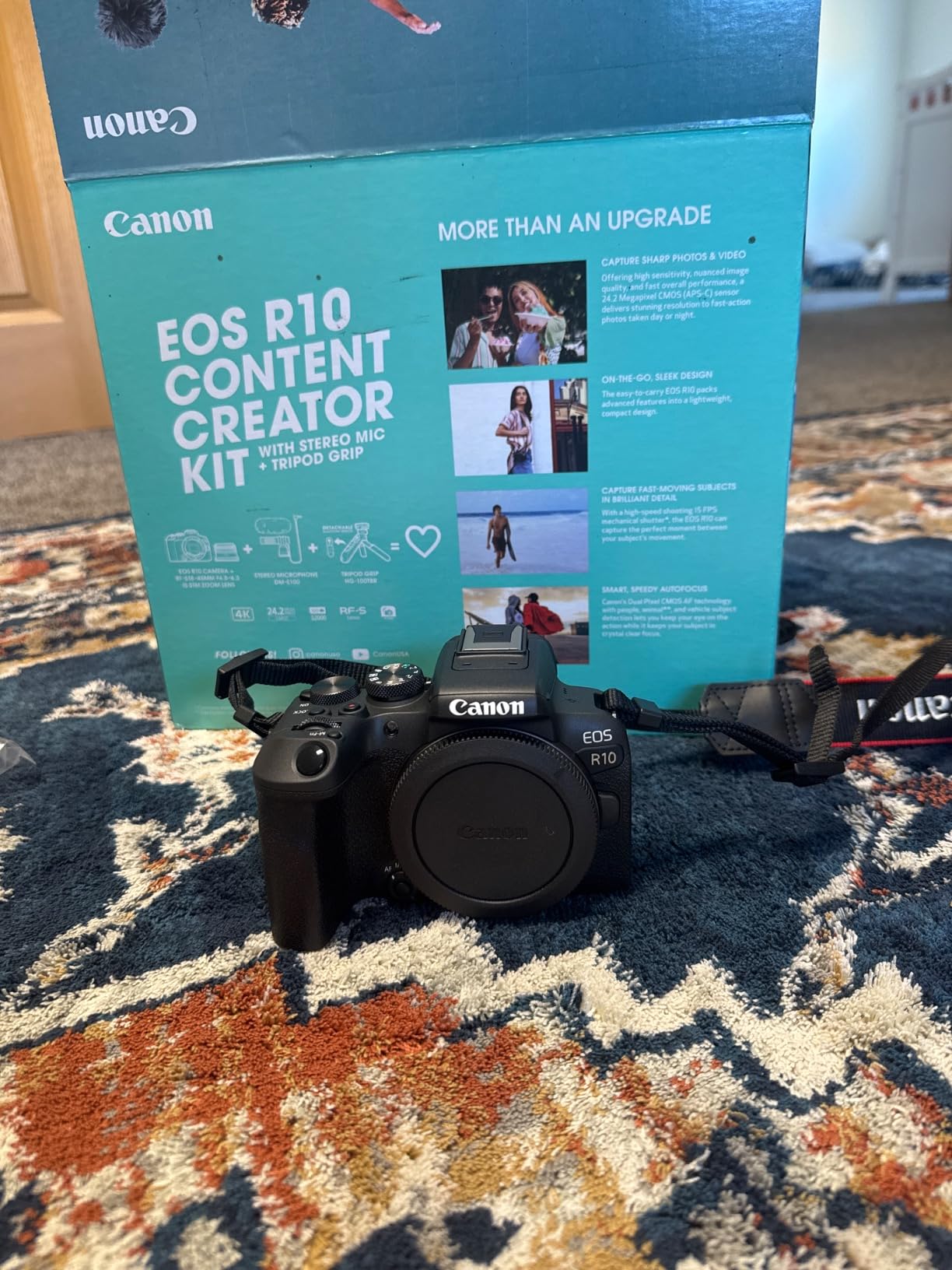
The body is lightweight for a mirrorless camera with a grip. I carried it on a shoulder strap for a full day and did not feel fatigued. The electronic viewfinder is bright and useful for photography, but most vloggers will use the rear screen. The screen tilts up for selfie shots, though it does not fully flip out to the side. That is a minor limitation for vlogging compared to the Sony and Canon V-series cameras.
The 15fps mechanical shutter is impressive for action photography. The 30fps electronic shutter is even faster. RAW burst mode with pre-shooting lets you capture moments before you fully press the shutter. Those features are overkill for pure vlogging, but they make the R10 a legitimate hybrid camera. If you want to shoot photos and video at a high level, this body can handle both.
Best For Beginners Who Want a Full Setup
The Content Creator Kit is perfect for someone who wants to start creating without shopping for accessories. The tripod, mic, and lens cover the basics. I recommend this for students, hobbyists, and anyone who wants a complete video kit in one purchase. The price is competitive when you factor in the included accessories.
It is also a great choice for creators who might expand into photography. The APS-C sensor and Canon RF lens mount give you room to grow. You can add better lenses over time and keep the body. The compatibility with adapted EF lenses means you can use older Canon glass if you find deals on the used market. That ecosystem is a real advantage.
What to Know Before You Buy
The included 18-45mm lens is a starter optic. It is fine for learning, but you will want to upgrade for better sharpness and low light. The lack of in-body image stabilization means you need stabilized lenses or a tripod for smooth footage. For walking shots, a wide stabilized lens or a small gimbal is essential.
The tripod remote has a learning curve. The buttons are small, and the manual is not intuitive. I recommend watching a tutorial video before your first shoot. The kit does not include a memory card, so order one with the camera. A 128GB V30 card is a good starting point for 4K video. The camera is also not weather sealed, so avoid rain and dust without protection.
8. Canon PowerShot V1 — Best Hybrid Camera for Studio and Vlogging
Canon PowerShot V1, Hybrid Camera, Built-in Ultra-Wide-Angle Zoom Lens, 4K Video, Vlogging, Live Streaming, Content Creation, Compact Design
1.4-type large sensor
16-50mm ultra-wide zoom lens
Canon Log 3 10-bit color
Built-in cooling fan
0.94lb body
Pros
- Ultra-wide zoom lens rare in compact cameras
- Larger sensor for excellent low light
- Canon Log 3 with wide dynamic range and 10-bit
- Built-in cooling fan extends recording time
- 3-stop ND filter built in
- Good autofocus with hybrid system
Cons
- No battery charger included
- No flash built in
- Electronic stabilization only
- USB-C port is 2.0 speed
- 4K 60fps requires disabling stabilization
The Canon PowerShot V1 is the newest camera in our lineup, and it brings features usually found in cameras that cost twice as much. The 1.4-type sensor is larger than the 1-inch sensors in the ZV-1F and PowerShot V10, and the difference is visible in low light. I filmed a dinner vlog in a dimly lit restaurant, and the footage retained color and detail where smaller sensors would have turned to noise.
The built-in 16-50mm zoom lens is the widest zoom on any vlogging camera. At the wide end, you can fit a group of people into the frame at arm’s length. At the long end, you can isolate your subject for cinematic shots. That flexibility is unique. Most vlogging cameras are stuck with a fixed wide lens, so the zoom is a genuine advantage. The maximum aperture ranges from f/2.8 to f/4.5, which is respectable for a compact zoom.
The active cooling fan is a feature I did not expect to care about until I used it. It allows the camera to record 4K for extended periods without overheating. I filmed a thirty-minute presentation in one continuous take, and the camera stayed cool. The built-in 3-stop ND filter is another pro feature. It lets you shoot at wide apertures in bright sunlight without blowing out the exposure. That is essential for maintaining background blur outdoors.

Canon Log 3 gives you a flat profile with wide dynamic range. I graded a test clip in DaVinci Resolve and pulled detail out of both the shadows and the highlights. The 10-bit color depth means you can push the colors without banding. That is a serious feature for creators who want a polished, cinematic look. The hybrid autofocus system is fast and consistent, though not quite as sticky as Sony’s Eye AF.
The included dead cat windscreen helps with outdoor audio. The microphone quality is good for a compact camera. The body is larger than the PowerShot V10 but still fits in a small bag. The vari-angle screen flips out to the side and rotates fully, which is the best screen design for vlogging. You can see yourself from any angle, which is useful for product demos and interviews.

Best For Home Studio and Hybrid Creators
The PowerShot V1 is ideal for creators who film both at home and on the go. The zoom lens covers wide vlogging shots and tighter cinematic shots without changing lenses. The cooling fan means you can record long courses, interviews, or live streams without thermal shutdown. I recommend it for creators who want a single camera that handles both studio and travel work.
It is also the best choice for creators who want to color grade. Canon Log 3 and 10-bit color are features that Canon usually reserves for much more expensive cameras. If you want to learn professional color grading without buying a cinema camera, this is the most accessible entry point. The image quality is good enough for commercial work.
What to Know Before You Buy
Canon does not include a standalone battery charger. You charge the battery in the camera via USB-C. That is fine for occasional use but annoying if you own multiple batteries. Buy a third-party charger if you plan to shoot regularly. The USB-C port is only 2.0 speed, so file transfers are slower than expected. Remove the SD card for faster offloading.
The electronic stabilization is acceptable for standing shots but less effective for walking. The 4K 60fps mode disables stabilization entirely, so you need a tripod or gimbal for smooth slow-motion. The SD card slot is in an awkward location if you use a quick-release plate. You may need to remove the plate to swap cards. The camera is also in high demand, so stock can be limited.
9. DJI Osmo Nano — Best Magnetic Wearable Camera
DJI Osmo Nano Standard Combo (64GB) – Small 4K/60fps Vlogging Camera with a 1/1.3″ Sensor, 143° Wide FOV Video, 200-Min Recording, Swift Content Transfer, Magnetic POV Cam 4K for Sports, Vlog
4K/60fps video
1/1.3 inch sensor
200-minute battery life
64GB built-in storage
124g body
Pros
- Compact and lightweight magnetic design
- Great video quality for the size
- Excellent 200-minute battery life
- Waterproof to 10m with splash resistance
- 10-bit D-Log M color performance
- Direct connection to two microphones
Cons
- Overheating during high-res recording
- Vision Dock battery drains when shut down
- No standard tripod mount on Action Pod
- Low-light performance can be grainy
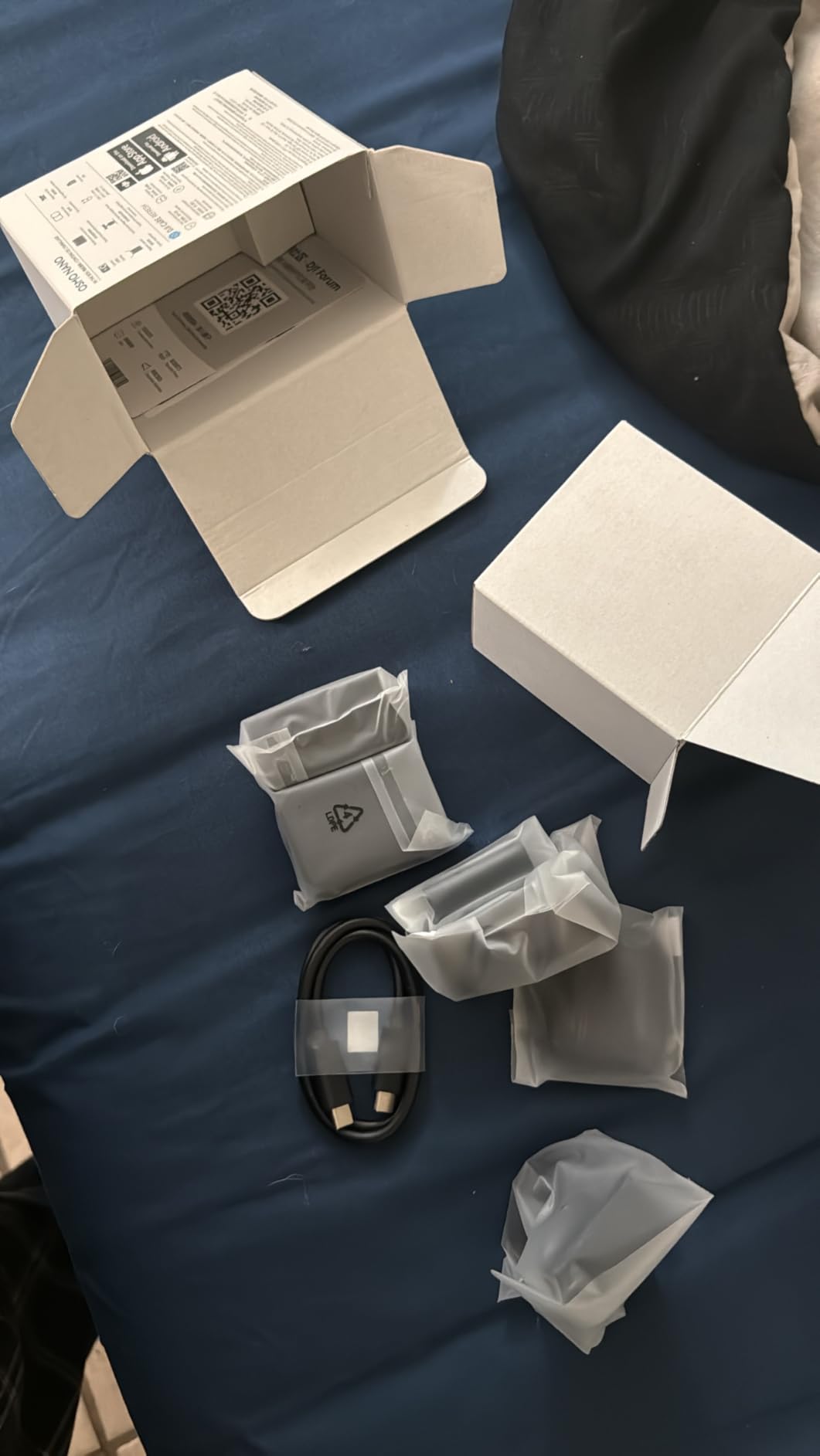
The DJI Osmo Nano is the smallest 4K camera I have ever used. At 124 grams, it is lighter than most smartphones. The magnetic design is the key feature. DJI includes a hat clip, a lanyard, and a ball-joint adapter in the box. I clipped it to my backpack strap, hung it around my neck, and stuck it to a metal railing for a time-lapse. The magnets are strong enough that I never worried about it falling.
Video quality is impressive for the size. The 1/1.3 inch sensor captures more light than the sensors in older action cameras. The 4K at 60fps footage is crisp, and the 143-degree field of view is wide enough for immersive POV shots. The 10-bit D-Log M profile gives you color grading options that most tiny cameras lack. I shot a sunset clip in D-Log M and graded it to look like a much larger camera.
The 200-minute battery life is the best in this size class. I recorded a full afternoon of hiking footage without recharging. The 64GB of built-in storage is enough for a day of shooting, and the microSD slot lets you expand. The direct wireless microphone connection is a standout feature. I paired a DJI Mic 2 and recorded clean audio while the camera was hidden under my jacket. That is a workflow only DJI offers in this form factor.
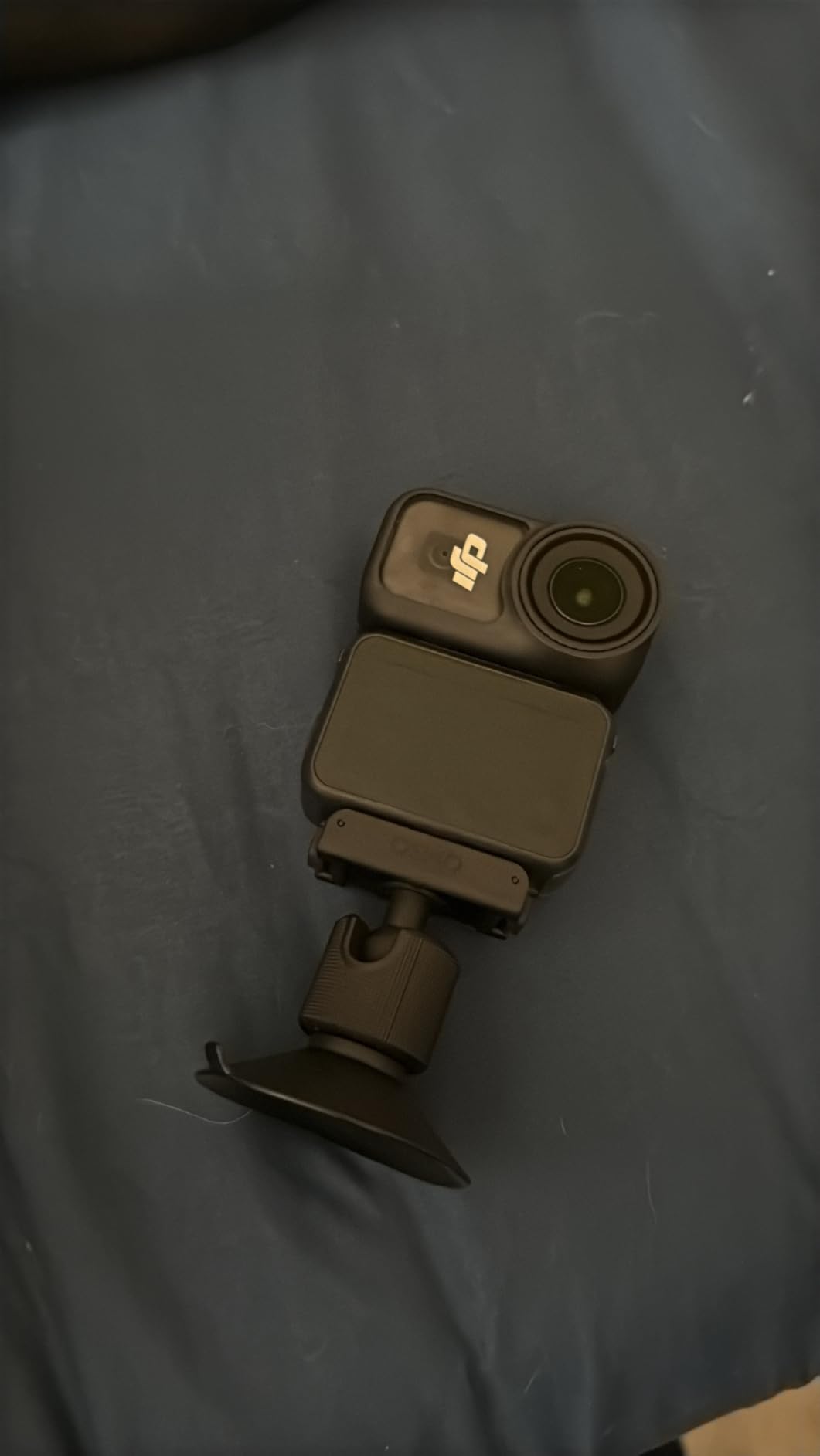
The Nano handles everyday vlogging well. The menu is simple, and the touchscreen is responsive. Gesture control works for starting and stopping recordings when the camera is mounted out of reach. Voice control is less reliable in noisy environments but works fine indoors. The Vision Dock gives you a preview screen and extra battery, though it is not waterproof like the camera itself.
The stabilization is good for a camera this small. It smooths out small bumps and hand shake. For running or mountain biking, it is not as smooth as the Osmo Action 6, but it is better than a phone. The magnetic mounting system is genuinely useful. I found myself attaching it to metal signs, car doors, and refrigerator magnets for creative angles. That versatility makes it more fun to use than a standard action camera.
Best For Everyday Carry and POV Creators
The Osmo Nano is the camera for creators who want to film without thinking about gear. It is small enough to carry everywhere, and the magnetic mounts make setup instant. I recommend it for commuters, cyclists, parents, and anyone who wants to capture daily life without a bulky camera.
It is also excellent for creators who want unique angles. The magnetic system lets you mount it in places where a traditional camera would not fit. Under a skateboard, on a dog collar, or attached to a cooking pot are all possible. If you want footage that looks different from everyone else, the Nano gives you that freedom.
What to Know Before You Buy
Overheating is a reported issue during extended 4K recording. I experienced it after about twenty minutes in direct sun. Take breaks or switch to 1080p for long clips. The Vision Dock battery drains even when the device is off, so charge it before each use. The DJI Mimo app is not on Google Play, so you need to download it from DJI’s website.
The Action Pod does not have a standard tripod mount. You need DJI’s magnetic accessories or a third-party adapter. That can add cost. The low-light performance is decent but not as clean as the Osmo Pocket 3. For night shooting, use a light or stick to well-lit areas. The camera is splash resistant but not fully waterproof without the housing.
10. Insta360 GO Ultra — Best Tiny Wearable Camera
4K/60fps video
53g camera body
156 degree field of view
200-minute total battery
Magnetic wearable design
Pros
- Exceptional image quality for the size
- Magnetic wearable design for unique POV
- Excellent low-light performance with PureVideo
- FlowState stabilization and 360 Horizon Lock
- Quick charging to 80% in 12 minutes
- AI-powered auto editing saves time
Cons
- Action Pod is not waterproof
- Proprietary mounts are expensive
- Overheating after 10 minutes possible
- No standard tripod mount on Action Pod
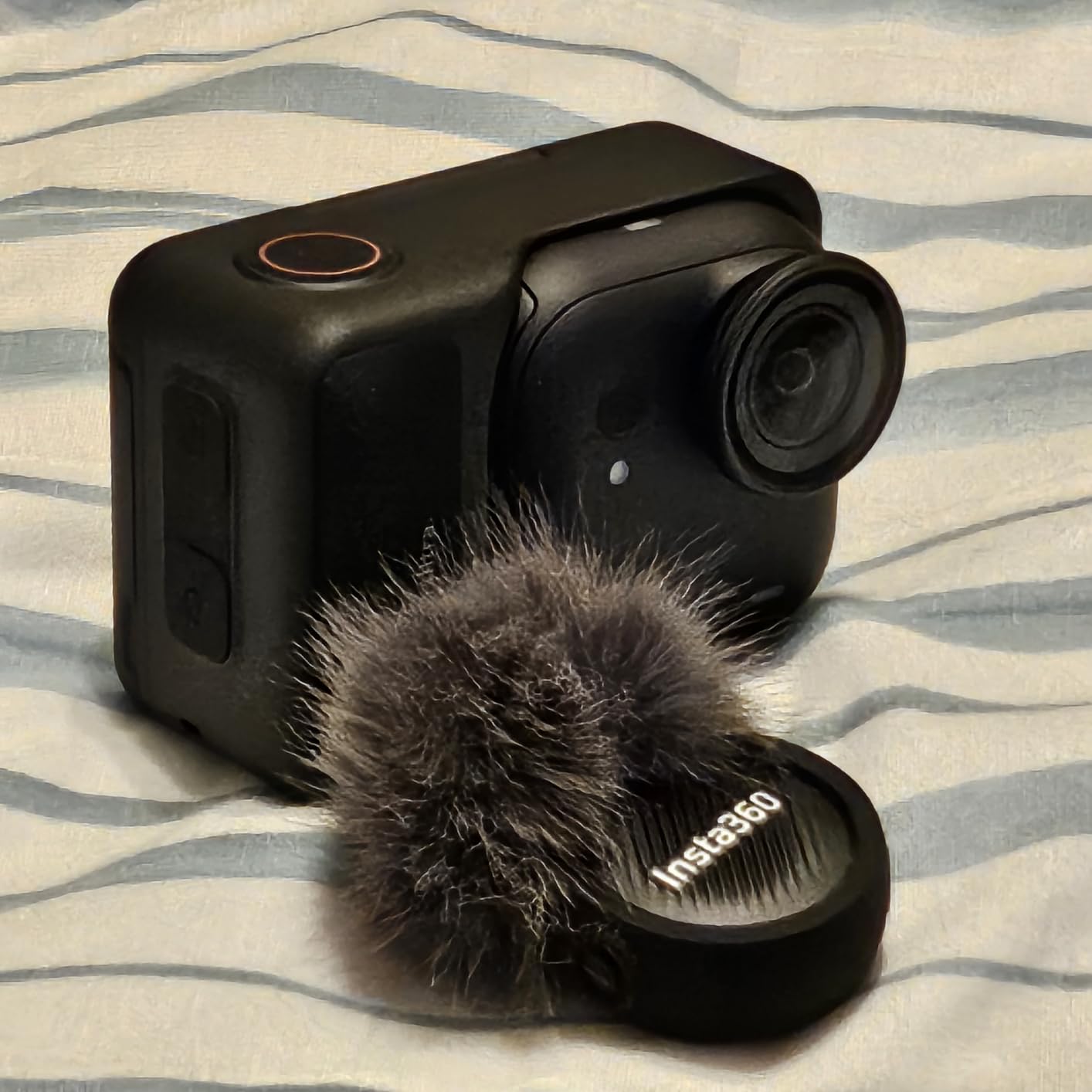
The Insta360 GO Ultra is the smallest camera in our entire list. The camera module alone weighs 53 grams, about the same as a large watch. I wore it on a magnetic pendant under my shirt and recorded POV footage while walking, cooking, and playing with my dog. The footage looks like a third-person view because the camera is so small and unobtrusive.
Image quality is a major step up from the previous GO models. The 1/1.28 inch sensor and 5nm AI chip deliver 4K at 60fps with active HDR. PureVideo mode is the low-light secret weapon. I filmed a night walk through a city, and the footage was cleaner than any action camera I have used. The colors stay accurate, and noise is controlled without smearing fine detail. That is impressive for a camera the size of a thumb.
The FlowState stabilization is the same system used in Insta360’s larger cameras. I ran with the GO Ultra attached to my hat, and the exported footage was smooth. The 360 Horizon Lock keeps the frame level even if you rotate the camera. The Action Pod extends battery life to 200 minutes total and adds a preview screen. Fast charging gets you to 80% in 12 minutes, which is a lifesaver between shoots.
The AI-powered auto editing is surprisingly good. The app detects highlights, cuts clips, and adds music automatically. I let it edit a twenty-minute walk, and the result was a shareable sixty-second clip. It is not a replacement for manual editing, but it is perfect for quick social posts. The FreeFrame mode lets you export any aspect ratio from the same file, which is ideal for creators who post to multiple platforms.
The audio is good for a camera this small. The built-in wind protection works for light breeze, and the microphones pick up voice clearly. The camera is waterproof to 10 meters without a case, though the Action Pod is not. For underwater shots, you need to use the standalone camera module. The Dive Case extends depth to 60 meters if you are a serious diver.
Best For Hands-Free POV and Social Media
The GO Ultra is perfect for creators who want hands-free footage. The magnetic pendant lets you wear it all day without discomfort. I recommend it for POV cooking, pet videos, travel walks, and any situation where holding a camera is awkward. The tiny size means people do not react to it, so you get more natural footage.
It is also the best option for quick social content. The auto editing and fast sharing workflow mean you can film, edit, and post in minutes. If you want to build a daily posting habit without spending hours in editing software, this camera removes the friction. The image quality is good enough that your audience will not guess it came from a camera smaller than a golf ball.
What to Know Before You Buy
The proprietary mount system is expensive. The magnetic pendant is included, but extra clips and adapters are sold separately. Some accessories are frequently out of stock. Budget for a few extra mounts if you want multiple mounting options. The Action Pod is not waterproof, so you cannot use the screen underwater.
Overheating can happen after ten minutes of continuous recording in warm conditions. I recommend short clips or using the camera in shade when possible. The battery is not hot-swappable, so you need to charge the whole unit. The learning curve for the app is moderate. Plan to spend an hour learning the editing and export options before your first project.
How to Choose the Best Vlogging Camera
Buying a vlogging camera is not about finding the most expensive model. It is about matching the camera to how you actually film. Our team tested these cameras across different scenarios, and we noticed that the right choice depends on five main factors.
Sensor Size and Video Quality
Larger sensors capture more light, which means cleaner footage in dark rooms and more background blur when you want it. The 1-inch sensors in the Pocket 3, ZV-1F, and PowerShot V10 are a sweet spot for most creators. The APS-C sensors in the ZV-E10 and EOS R10 give you even more quality and flexibility. Full-frame is the next step up, but none of the cameras in this list require that investment for great results.
4K resolution is the standard in 2026. All of our picks shoot 4K, though frame rates vary. If you want slow motion, look for 4K at 60fps or higher. If you only post talking-head content, 4K at 30fps is perfectly fine. The 8K cameras in this list are overkill for most creators today but give you room to crop and reframe in post.
Stabilization Options
Mechanical gimbals like the one in the Osmo Pocket 3 produce the smoothest walking footage. Electronic stabilization is common in action cameras and compact bodies, but it crops the image and can create artifacts. For walking vlogs, prioritize a mechanical gimbal or a camera with excellent electronic stabilization. For sit-down content, stabilization is less important.
Many creators on Reddit mention that rolling shutter is a real problem on some cameras. Rolling shutter causes vertical lines to bend when you move quickly. The APS-C cameras in this list handle it better than smartphones, but action cameras with smaller sensors often struggle. Test your camera with quick pans before committing to it for action shots.
Audio Quality
Audio is half of the viewing experience. The built-in microphones on the ZV-1F, PowerShot V1, and Osmo Pocket 3 are usable for quiet settings. For outdoor or noisy environments, an external microphone is essential. The ZV-E10 and EOS R10 have microphone jacks for easy upgrades. The DJI cameras support wireless microphones directly, which is the most convenient option.
32-bit float audio is a feature that prevents clipping. If you laugh loudly or move close to the mic, 32-bit float records the full dynamic range and lets you adjust volume in post without distortion. It is rare in this price range, but it is worth considering if you record unpredictable audio. The ZV-E10 and some external recorders support this feature.
Screen and Autofocus
A flip-out or rotatable screen is non-negotiable for vlogging. You need to see yourself while filming. Side-flipping screens are best for tripod work. Rotating screens like the Pocket 3 are great for quick framing. Touchscreen control makes the camera easier to use without memorizing buttons.
Autofocus should track your face reliably. Sony’s Eye AF and Canon’s Dual Pixel AF are the most trusted systems in this list. Contrast-only autofocus, found in some budget cameras, can hunt and ruin shots. Before you buy, watch sample videos where the creator walks around a room. If the focus stays on their face, the camera is good enough for vlogging.
Portability and Battery Life
The camera you leave at home is useless. The Pocket 3, PowerShot V10, and Osmo Nano are genuinely pocketable. The ZV-1F fits in a small bag. The ZV-E10 and EOS R10 require a camera bag. Choose a size that matches your willingness to carry gear. Reddit users consistently say that bulky cameras do not get used as often as small ones.
Battery life ranges from 45 minutes to 4 hours in this list. For short sessions, any camera works. For travel or events, bring spare batteries or a power bank. The Osmo Action 6 and Insta360 X5 have the best battery life. The ZV-1F and PowerShot V10 drain fastest. Consider battery life as important as image quality if you film long sessions.
Frequently Asked Questions
Which camera do most vloggers use?
Most vloggers use either the DJI Osmo Pocket 3 or the Sony ZV-1F. The Pocket 3 is popular because it combines a 1-inch sensor with a built-in gimbal in a pocketable body. The ZV-1F is widely used for its wide 20mm lens, reliable Eye AF, and vlogging-specific features like Product Showcase mode. Many creators also use their smartphones until they are ready to invest in a dedicated camera.
What do most YouTubers use to vlog?
Most YouTubers use dedicated vlogging cameras with flip-out screens and external microphone inputs. The Sony ZV-E10 is a popular choice because it has an APS-C sensor and interchangeable lenses. The DJI Osmo Pocket 3 is also common for creators who film while walking or traveling. The key features YouTubers prioritize are reliable autofocus, good audio, and a screen they can see while recording.
What camera do TikTok creators use?
TikTok creators often use cameras that support vertical video natively. The DJI Osmo Pocket 3 is a top choice because its rotatable screen handles both horizontal and vertical shooting. The Canon PowerShot V10 and Insta360 GO Ultra are also popular because they are compact and produce sharp 4K vertical footage. Many creators still use smartphones for TikTok, but dedicated cameras offer better audio and low-light performance.
What do most YouTubers use for a camera?
Most YouTubers use mirrorless cameras or compact vlogging cameras rather than traditional camcorders. The Sony ZV-E10 and Canon EOS R10 are popular for creators who want professional image quality and lens flexibility. For creators who prioritize portability, the DJI Osmo Pocket 3 and Sony ZV-1F are the most common choices. The right camera depends on whether the creator films in a studio, on the move, or both.
Final Thoughts
The best cameras for vlogging in 2026 cover a wide range of needs, from pocketable action cameras to mirrorless bodies that grow with your skills. The DJI Osmo Pocket 3 is the best all-in-one choice for most creators. The Sony ZV-1F offers the best value for dedicated vlogging. The Canon PowerShot V10 proves that a tight budget does not mean sacrificing quality.
If you want to upgrade from a smartphone, start by deciding how you film. Walking creators need stabilization. Studio creators need good audio and a large sensor. Travel creators need durability and battery life. Match the camera to your workflow, and you will use it more often. The best camera is the one that leaves your bag and gets in front of your story.