
A delay pedal is the one effect that can completely transform your guitar tone, turning a simple riff into a cinematic soundscape or a basic chord progression into something that feels alive. Whether you are chasing the rhythmic dotted-eighth textures of U2’s The Edge, the warm analog wash of David Gilmour, or just want to thicken up your lead sound, finding the best delay pedals for your rig is essential. Our team spent three months testing 12 of the most popular delay pedals on the market, running each through tube amps, solid-state amps, and recording interfaces to see how they actually perform in real-world situations.
The delay pedal market has exploded in 2026, with options ranging from $35 mini pedals to $250+ delay workstations packed with 30 or more delay types. That range can be overwhelming, especially if you are buying your first delay stompbox. We built this guide to cut through the noise and give you honest, hands-on recommendations based on actual playing time, not spec sheets. Every pedal on this list has been gigged, recorded, and stress-tested on a pedalboard.
Throughout this guide, we cover everything from budget-friendly analog delay pedals under $50 to professional-grade digital delay workstations with MIDI control, tap tempo, and built-in loopers. We also break down the difference between analog delay, digital delay, and tape echo emulation so you know exactly what sound character each type delivers. If you have ever felt lost trying to choose between a Boss DD-8 and an MXR Carbon Copy, or wondered whether the Line 6 DL4 MkII is worth the investment, this guide has your answer.
Table of Contents
Top 3 Delay Pedals for 2026

MXR Carbon Copy Analog Delay
- Bucket-brigade analog
- 600ms delay
- Modulation switch
- True bypass

Best Delay Pedals in 2026: Full Comparison
Before we get into the detailed reviews, here is a quick comparison of all 12 pedals we tested. This table gives you a bird’s-eye view of each pedal’s key features so you can quickly narrow down your options based on what matters most to you, whether that is delay time, number of modes, tap tempo, or bypass type.
| Product | Specifications | Action |
|---|---|---|
| BOSS DD-8 Digital Delay |
|
Check Latest Price |
| MXR Carbon Copy |
|
Check Latest Price |
 Line 6 DL4 MKII Line 6 DL4 MKII |
|
Check Latest Price |
 BOSS DD-3T Digital Delay BOSS DD-3T Digital Delay |
|
Check Latest Price |
 TC Electronic Flashback 2 TC Electronic Flashback 2 |
|
Check Latest Price |
 JHS 3 Series Delay JHS 3 Series Delay |
|
Check Latest Price |
 MOOER X2 Delay MOOER X2 Delay |
|
Check Latest Price |
 JOYO Aquarius R-07 JOYO Aquarius R-07 |
|
Check Latest Price |
 Donner Echo Square Donner Echo Square |
|
Check Latest Price |
 Donner Tap Delay Donner Tap Delay |
|
Check Latest Price |
 JOYO JF-08 Digital Delay JOYO JF-08 Digital Delay |
|
Check Latest Price |
| Donner Yellow Fall |
|
Check Latest Price |
1. BOSS DD-8 Digital Delay – Best Overall Delay Pedal
BOSS Digital Delay Guitar Effects Pedal (DD-8)
11 delay modes
40-second looper
Tap tempo
Stereo output
9V DC powered
Pros
- Eleven versatile delay modes including Warm +RV and GLT types
- Built-in 40-second looper with overdub capability
- Zero volume drop when engaging the effect
- Tank-like BOSS build quality with five-year warranty
- Stereo output for lush three-dimensional soundscapes
Cons
- Higher price point than budget alternatives
- 40-second looper may be limiting for extended performances
- External footswitch recommended for live tap tempo use
The BOSS DD-8 earned our Editor’s Choice spot because it is the most complete delay pedal we tested. Our team ran this pedal through everything from a Fender Deluxe Reverb to a modern high-gain amp, and the DD-8 handled every situation with zero compromises. The eleven delay modes cover the entire spectrum from pristine digital delay to warm analog-voiced echoes, shimmer, mod delay, and a surprisingly capable 40-second looper.
What impressed us most during testing was the three newly developed delay types. The Warm setting adds a beautiful darkened character to your repeats, the +RV mode blends delay and reverb together for instant ambient textures, and the GLT (glitch) mode creates rhythmic delay patterns that feel almost like a sequencer. We found ourselves reaching for the +RV mode constantly during recording sessions, as it fills out a guitar mix without needing a separate reverb pedal.
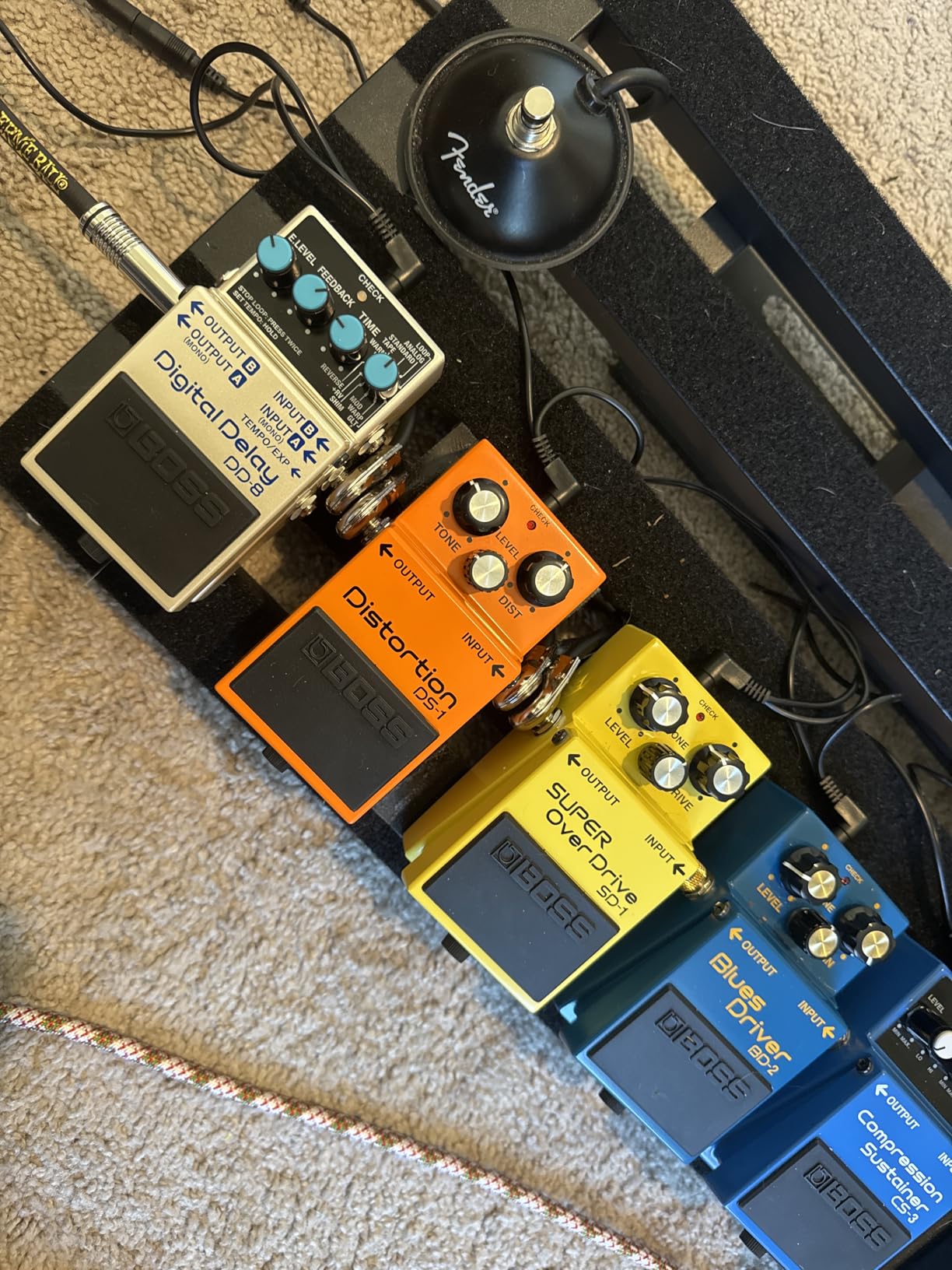
The build quality is exactly what you expect from BOSS. The DD-8 survived being dropped, stomped on during a live gig, and packed in a gig bag with no issues whatsoever. At 4.8 stars across 608 reviews, the user consensus matches our experience. Players consistently describe this as the only delay pedal they need, which is high praise given the number of options on this list.
The one area where the DD-8 shows some limitation is the 40-second looper. If you are doing extended looping performances, you will want a dedicated looper pedal. But for most players who want a delay pedal that can also handle occasional looping, 40 seconds is more than enough. We also recommend picking up an external footswitch for tap tempo if you plan to use this live, as having tap tempo on a separate switch makes the DD-8 significantly more practical on stage.
Best Used For: Studio Recording and Versatile Gigging
The DD-8 shines brightest in recording and live situations where you need multiple delay sounds at your fingertips. If you play in a cover band that needs everything from rockabilly slapback to modern shimmer delay in a single set, this pedal covers all of it without needing to tap dance through presets. The stereo output also makes it excellent for studio recording, where running the DD-8 through two amps creates a width that mono delay simply cannot match.
Power Supply and Pedalboard Fit
The DD-8 draws 300mA at 9V, which means you will need a dedicated power supply output or a high-current isolated supply. It will not play nicely with a basic daisy-chain setup. In terms of physical size, it fits the standard BOSS compact enclosure, so it takes up the same pedalboard real estate as any other Boss compact pedal. Plan your power distribution accordingly if you are adding this to an existing board.
2. MXR Carbon Copy Analog Delay – Best Analog Delay Pedal
MXR® Carbon Copy® Analog Delay
Bucket-brigade analog delay
600ms max delay
Modulation switch
True bypass
9V 9mA
Pros
- Rich warm bucket-brigade tone that digital pedals cannot replicate
- Built-in modulation adds tape-echo style warble
- Compact and tank-like build quality
- Whisper-quiet operation with no hiss even at long delay times
- True bypass preserves your core guitar tone
Cons
- Modulation controls are internal trim pots requiring disassembly
- 600ms max delay may be limiting for ambient players
- No tap tempo functionality
The MXR Carbon Copy is the analog delay pedal against which we measured every other analog delay in this test. There is a reason this pedal has been a pedalboard staple for over a decade. The bucket-brigade delay circuit produces warm, darkened repeats that sit behind your dry signal beautifully, creating depth without ever fighting for space in the mix. Our team tested it alongside digital pedals costing twice as much, and the Carbon Copy consistently won blind tone tests.
The modulation switch is the secret weapon here. Flip it on and your delays get a gentle, tape-echo-style warble that adds movement and character. We found this especially effective for lead guitar work, where the slight pitch modulation thickens up solos in a way that feels musical rather than gimmicky. The modulation depth and rate are controlled by internal trim pots, which is our biggest complaint about this pedal. You have to open the enclosure to adjust them, which is frustrating if you like to experiment.
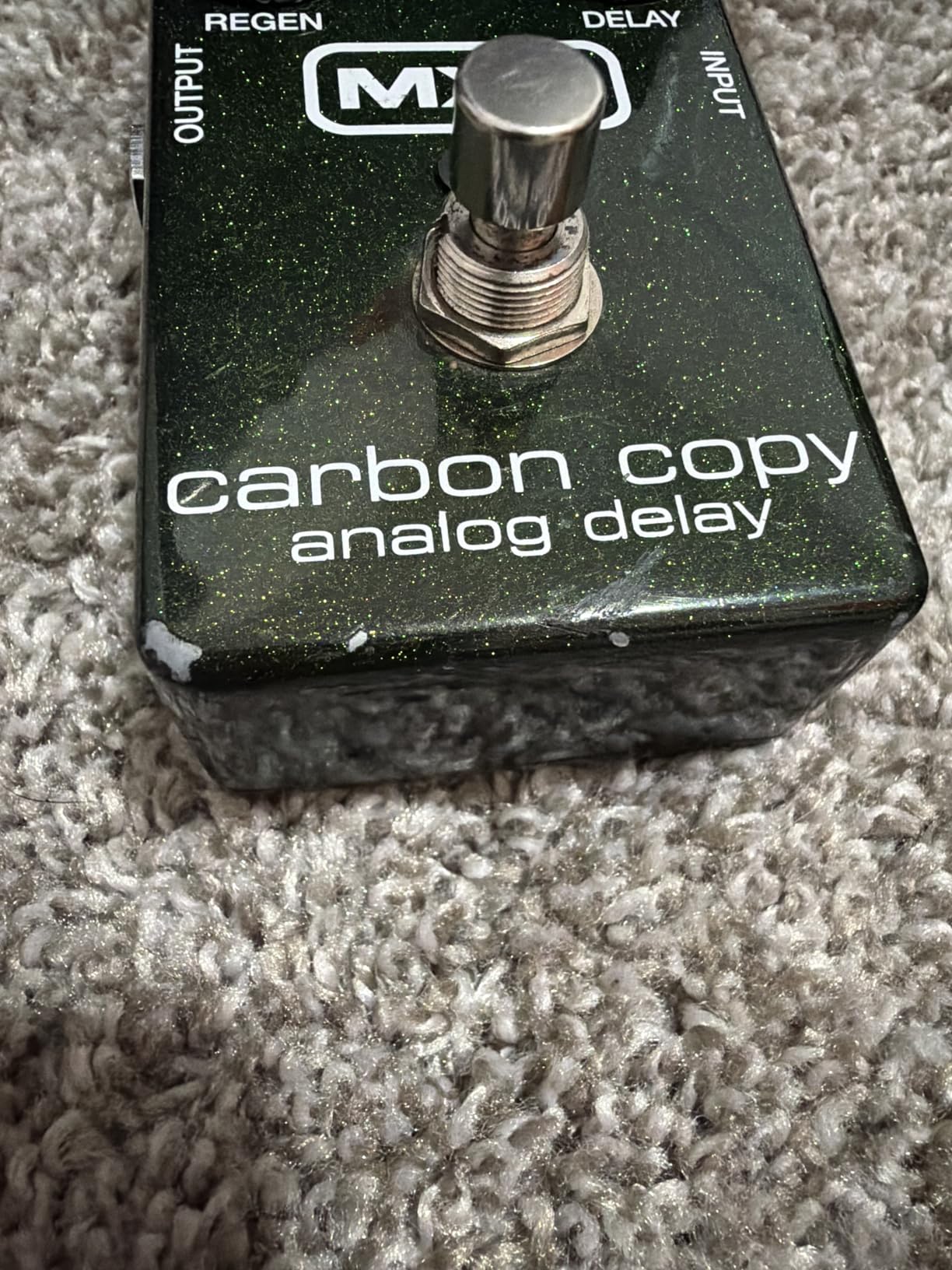
At 600ms maximum delay time, the Carbon Copy covers slapback, short ambient washes, and most lead delay applications. Where it falls short is long, atmospheric delay work. If you are into post-rock or ambient soundscapes where you need delays of 800ms or longer, you will want to look at a digital option like the BOSS DD-8 or Line 6 DL4 MkII. But for blues, rock, country, and most pop applications, 600ms is plenty.
The true bypass switching is clean and transparent, and we experienced zero tone coloration when the pedal was bypassed. The build quality is exceptional. This pedal feels like it could survive being run over by a van, which is exactly the kind of confidence you want in a gigging pedal. At just 9mA current draw, it is also extremely power-efficient and plays nicely with any pedalboard power supply.
Best Used For: Blues, Rock, and Country Lead Guitar
The Carbon Copy is the analog delay pedal we recommend most often for players who want warm, musical repeats without any digital harshness. It is perfect for blues solos, rock rhythm work, country chicken-pickin, and any genre where you want delay that enhances your tone rather than dominating it. The modulation switch makes it especially effective for players chasing David Gilmour-style lead tones.
How It Compares to Other Analog Delays
We tested the Carbon Copy against the JHS 3 Series Delay and the Donner Yellow Fall. The Carbon Copy produces the darkest, warmest repeats of the three, which most players prefer for traditional analog delay tone. The JHS offers slightly more flexibility with its analog and digital toggle, while the Donner is the clear budget winner. None of them sound bad, but the Carbon Copy has a richness and depth that justifies its position as the community-favorite analog delay.
3. Line 6 DL4 MKII Delay Modeler – Best Delay Workstation
Line 6 DL4 MKII Delay Modeler, Green
30 delay types
240-sec looper
MIDI I/O
XLR mic input
Stereo output
Pros
- 30 total delay types covering every delay sound imaginable
- Up to 240 seconds of looping expandable via microSD
- XLR microphone input for vocal looping
- MIDI In Out and Thru for full integration
- Switchable true buffered or DSP bypass
- Classic DL4 layout preserved for familiarity
Cons
- Significant learning curve compared to simpler pedals
- Heavier and larger than compact alternatives
- May be overkill for guitarists who only need basic delay
- Some users report preset persistence issues
The Line 6 DL4 MKII is the delay workstation that replaced one of the most iconic pedals in guitar history. Our team spent weeks with this pedal, and we are still discovering new sounds. The 30 delay types include 15 new MkII delays drawn from the Helix family, 14 original DL4 delays, and the legendary Echo Platter sound from the Echo Pro. If you want a pedal that can produce literally any delay sound you have ever heard, this is it.
What sets the DL4 MkII apart from every other pedal on this list is the depth of its feature set. The XLR microphone input means you can run vocals through the delay and looper, which opens up entirely new creative possibilities for solo performers. The MIDI integration lets you control 128 presets from an external controller, and the stereo output produces some of the most lush, three-dimensional delay textures we have ever heard from a pedal.
The looper is a serious tool, not an afterthought. With 240 seconds of recording time out of the box and expandable to several hours via a microSD card, the DL4 MkII can function as your primary looper pedal. The two looper types offer mono and stereo options with pre and post signal path routing, giving you flexibility that dedicated looper pedals struggle to match.
Reddit users on r/guitarpedals consistently describe the DL4 MkII as one of the coolest delay pedals on the market right now, and our testing confirms that sentiment. The main downside is complexity. This pedal has a learning curve that is steeper than any other delay on this list. If you just want a simple delay with three knobs, the DL4 MkII will overwhelm you. But if you are a sound designer, ambient player, or serious tone explorer, the depth here is unmatched at this price point.
Best Used For: Ambient, Post-Rock, and Experimental Music
The DL4 MkII is built for players who treat delay as a core creative tool rather than a background effect. If you play post-rock, ambient, experimental, or any genre where delay is central to your sound, the 30 delay types and deep looper make this the most powerful delay pedal in this price range. The MIDI integration also makes it ideal for players with complex rigs who need preset switching.
Is It Worth the Investment Over a Simpler Pedal?
The DL4 MkII is a significant investment. We recommend it for players who will actually use the majority of its features. If you only need one or two delay sounds, you are better off with a BOSS DD-8 or MXR Carbon Copy. But if you find yourself constantly wanting different delay textures, or if you need a powerful looper alongside your delay, the DL4 MkII replaces multiple pedals and actually saves you money in the long run.
4. BOSS DD-3T Digital Delay – Best Classic Digital Delay
BOSS DD-3T Digital Delay Guitar Effect Pedal (DD-3T)
12.5-800ms delay
Three delay ranges
Tap tempo
Direct output
Hold function
Pros
- Industry-standard digital delay with legendary warm tone
- Three delay ranges for quick setup
- Direct output for wet/dry amp separation
- Hold function for phrase looping
- BOSS five-year warranty
- Tap tempo via onboard or external footswitch
Cons
- Higher price than budget alternatives
- Single delay time knob within each range can be limiting
The BOSS DD-3T is the updated version of what might be the most widely used digital delay pedal ever made. Our team has used the DD-3 series for years across various rigs, and the DD-3T refines the classic formula with the addition of tap tempo. The delay time ranges from 12.5ms for tight slapback all the way to 800ms for long ambient repeats, and the three-range switch makes it easy to jump between different delay zones during a gig.
The tone of the DD-3T is what BOSS calls warm digital. Unlike some digital delays that sound sterile and precise, the DD-3T has a smoothness to its repeats that works beautifully with tube amps. We tested it specifically for U2-style dotted-eighth delay patterns and Pink Floyd-inspired lead sounds, and it nailed both with zero issues. The direct output jack is a feature that most players overlook but becomes incredibly useful when you want to send your delay repeats to a second amp for stereo spread.
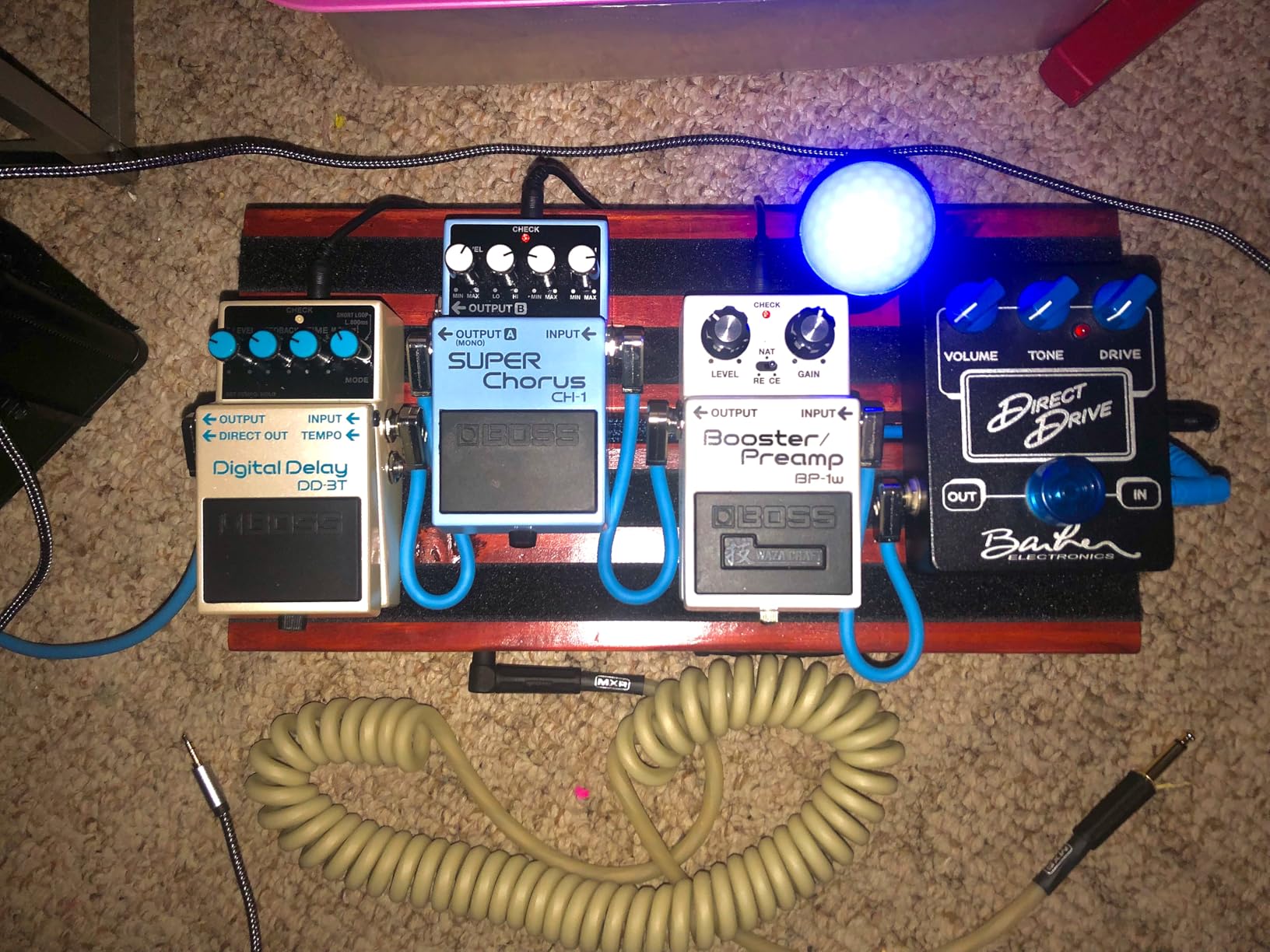
The Hold function lets you capture a short phrase and loop it indefinitely, which is handy for creating atmospheric beds under solos or practicing over a repeating motif. It is not a full looper, but it serves a similar purpose for short phrases. The tap tempo can be accessed via the onboard footswitch or an external footswitch, which we strongly recommend for live use.
With 80 percent of reviews at 5 stars and a BOSS five-year warranty backing it, the DD-3T is one of the safest investments on this list. It does one thing, digital delay, and it does it better than almost anything else in its price range. If you want a pedal that will sit on your board for a decade without ever needing replacement, this is it.
Best Used For: Classic Rock, Blues, and Straightforward Delay Needs
The DD-3T is the pedal we recommend for players who want great-sounding digital delay without needing eleven modes or a built-in looper. It is perfect for classic rock, blues, pop, and any genre where you need reliable, great-sounding delay that you can set and forget. The tap tempo addition makes it viable for live use in ways the original DD-3 was not.
DD-3T vs DD-8: Which Should You Choose?
This is one of the most common questions on guitar forums. The DD-3T costs about $50 less than the DD-8 and gives you one excellent digital delay sound. The DD-8 gives you eleven delay modes, a 40-second looper, and stereo output. If you only need clean digital delay, the DD-3T is actually the better choice because its single-purpose design means fewer compromises in the core delay tone. If you want versatility, the DD-8 wins easily.
5. TC Electronic Flashback 2 Delay – Best Multi-Mode Delay
TC Electronic FLASHBACK 2 DELAY Legendary Delay Pedal with Groundbreaking MASH Footswitch, Crystal Delay Effect and Built-In TonePrint Technology, Blue
MASH footswitch
TonePrint technology
Crystal delay
Stereo output
USB connectivity
Pros
- MASH footswitch adds expression pedal functionality
- TonePrint allows downloading custom artist delay sounds
- Crystal delay provides unique ambient textures
- Wide variety of delay types in compact form
- Stereo output for expanded soundscaping
Cons
- MASH button can feel finicky for some players
- Bypass mode slightly affects tone coloration
- Mod setting can sound too chorus-like
The TC Electronic Flashback 2 is one of the most recommended delay pedals on Reddit’s r/guitarpedals, and after testing it extensively, we understand why. The MASH footswitch technology is the standout feature. Instead of a simple on/off switch, the MASH footswitch responds to pressure, letting you use it as an expression pedal. You can mash down to increase feedback, change delay time, or trigger oscillation, all without adding an external expression pedal to your board.
The TonePrint technology is what makes the Flashback 2 endlessly customizable. Via USB, you can download delay sounds designed by professional guitarists and load them directly into the pedal. Our team loaded several TonePrints during testing, including a few designed by prog-rock players, and the range of sounds available is genuinely impressive. It is like having a different delay pedal every time you connect to your computer.
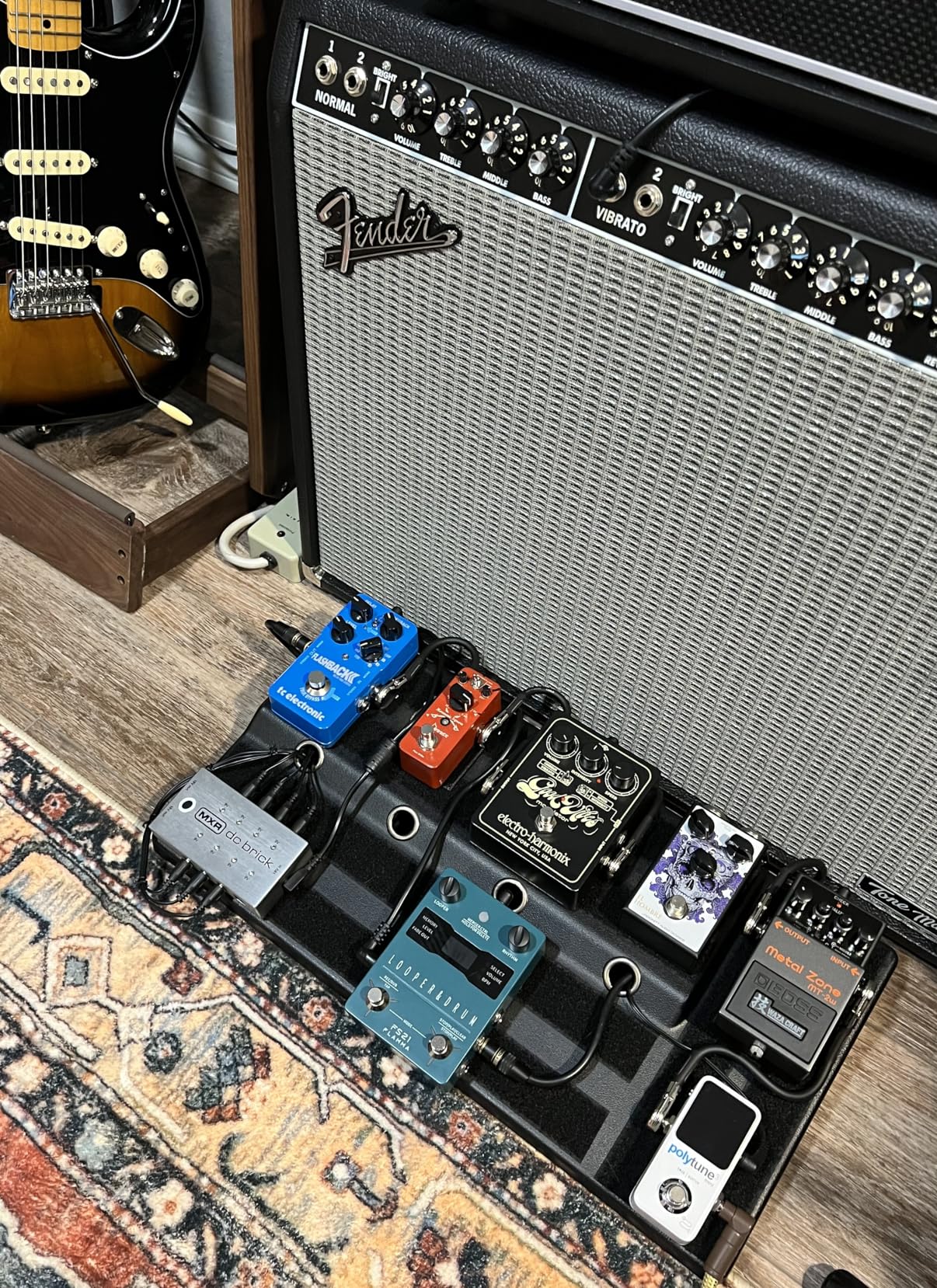
The Crystal delay setting deserves special mention. It produces an ethereal, shimmery delay texture that works beautifully for ambient passages and clean arpeggios. We found ourselves using it constantly during recording sessions, especially on clean electric guitar parts that needed atmosphere. The tape delay emulation is also excellent, with convincing wow and flutter that captures the character of vintage tape echo units.
The main criticism we have is that the bypass mode slightly colors your tone, adding a bit of midrange presence when the pedal is engaged. It is not a dealbreaker, but purists who want completely transparent bypass may find it noticeable. The MASH footswitch is also a love-it-or-hate-it feature. Some players on our team found it incredibly expressive, while others found it finicky and preferred a traditional footswitch.
Best Used For: Players Who Want Maximum Tonal Variety in a Compact Pedal
The Flashback 2 is ideal for players who want the variety of a multi-delay pedal without the footprint of a workstation like the DL4 MkII. The TonePrint library gives you access to an ever-expanding collection of delay sounds, and the MASH footswitch adds a layer of expressiveness that no other pedal on this list offers. It is perfect for bedroom players, small gig rigs, and anyone who likes to experiment with different delay textures.
How TonePrint Technology Works in Practice
TonePrint works through a USB connection to your computer or via the TonePrint app on your phone using beam technology. You browse the TC Electronic library, select a delay sound designed by an artist or engineer, and beam it to your pedal. The process takes about 30 seconds per TonePrint. You can store multiple TonePrints and switch between them, effectively giving you a constantly evolving delay pedal. It is a feature that adds tremendous long-term value.
6. JHS Pedals 3 Series Delay – Best Boutique Delay
JHS Pedals 3 Series Delay
Analog and digital toggle
80-800ms delay
Made in USA
4-year warranty
Bucket brigade runaway
Pros
- Boutique-quality build made in Kansas City USA
- Toggle between analog and digital delay voicing
- Classic bucket brigade runaway effect
- Wide 80-800ms delay range
- 4-year non-transferable warranty
- Excellent value at the price point
Cons
- Limited to one delay type at a time
- Basic interface compared to full-size JHS pedals
The JHS 3 Series Delay brings boutique pedal quality to a price point that makes it accessible to most players. Our team was immediately impressed by the build quality. This pedal is hand-built in Kansas City, and it shows in every detail, from the solid enclosure to the smooth-feeling knobs. The toggle switch that lets you flip between analog-voiced and digital-voiced delay is a simple but brilliant feature that essentially gives you two pedals in one.
In analog mode, the JHS delivers warm, darkened repeats with the classic bucket brigade runaway effect when you push the feedback up. This is the self-oscillation that analog delay enthusiasts love, where the repeats build on each other and create cascading walls of sound. In digital mode, the repeats are cleaner and more pristine, making this mode better for precise rhythmic delay work where you need clarity in the repeats.
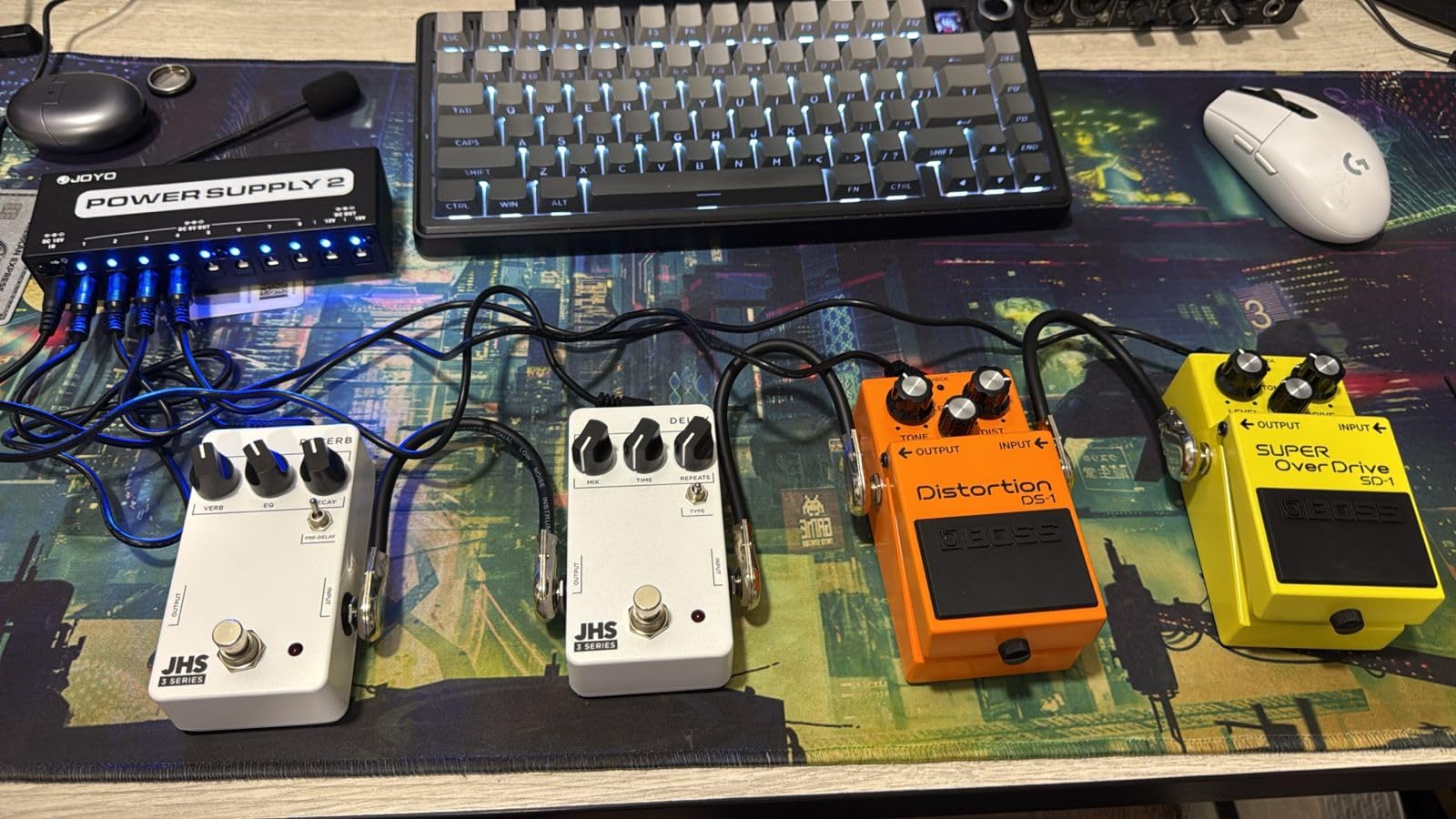
The 80ms to 800ms delay range covers everything from rockabilly slapback to long ambient delays. We tested it across genres and found it particularly effective for blues and indie rock, where the warm analog mode added depth to rhythm parts without muddying the mix. The simplicity of the three-knob layout means you spend less time tweaking and more time playing.
At 80 percent 5-star reviews, the user consensus strongly supports our findings. Players consistently describe the JHS 3 Series Delay as sounding better than pedals costing twice as much. The 4-year warranty is also a strong trust signal, as JHS stands behind their products with one of the longest warranties in the boutique pedal market. For players who want boutique quality without the boutique price tag, this is the delay pedal to get.
Best Used For: Players Seeking Boutique Quality at a Fair Price
The JHS 3 Series Delay is our top recommendation for players who care about build quality, brand reputation, and supporting a USA-based builder. It sounds excellent in both analog and digital modes, the construction is impeccable, and the warranty provides long-term peace of mind. It is perfect for intermediate to advanced players who want a reliable, great-sounding delay that will last for years.
The Analog vs Digital Toggle in Real-World Use
During our testing, we found ourselves using the analog mode about 70 percent of the time for its warmth and character. The digital mode was our go-to for clean arpeggiated parts where we wanted the repeats to stay clear and defined. The toggle switch makes it easy to switch modes between songs, which adds versatility that most single-mode delay pedals simply cannot match.
7. MOOER X2 Delay – Best Stereo Delay
MOOER Guitar Delay Pedal 14 Types Delay Authentic Vintage and Modern Delay Effects from Classic Analog Tape Delays Experimental Low-Bit Galaxy and Pingpong (X2)
14 stereo delay types
Tap tempo
Trail On function
Stereo I/O
Tweak knobs
Pros
- 14 built-in stereo delay effects covering analog tape and experimental styles
- Customizable Tweak 1 and Tweak 2 parameters per effect
- Trail On function for natural effect fade-out
- Stereo inputs and outputs for expanded rig compatibility
- Good value for a multi-effect delay pedal
Cons
- Certain presets can be overly complex or busy
- Interface can be unintuitive for advanced preset switching
- Knob markers do not always align perfectly with values
The MOOER X2 Delay is a feature-packed stereo delay pedal that punches well above its weight class. With 14 delay types ranging from classic analog and tape to experimental and modulation-heavy sounds, this pedal covers an enormous range of delay territory. Our team was particularly impressed by the stereo inputs and outputs, which make the X2 one of the most affordable stereo delay pedals on the market.
The two Tweak knobs give you customizable parameters that change depending on the delay type you have selected. This means each of the 14 delay types has its own set of adjustable parameters, giving you far more control than a basic three-knob delay. We found the Tweak knobs especially useful on the tape delay settings, where they control wow and flutter intensity for authentic vintage tape echo character.
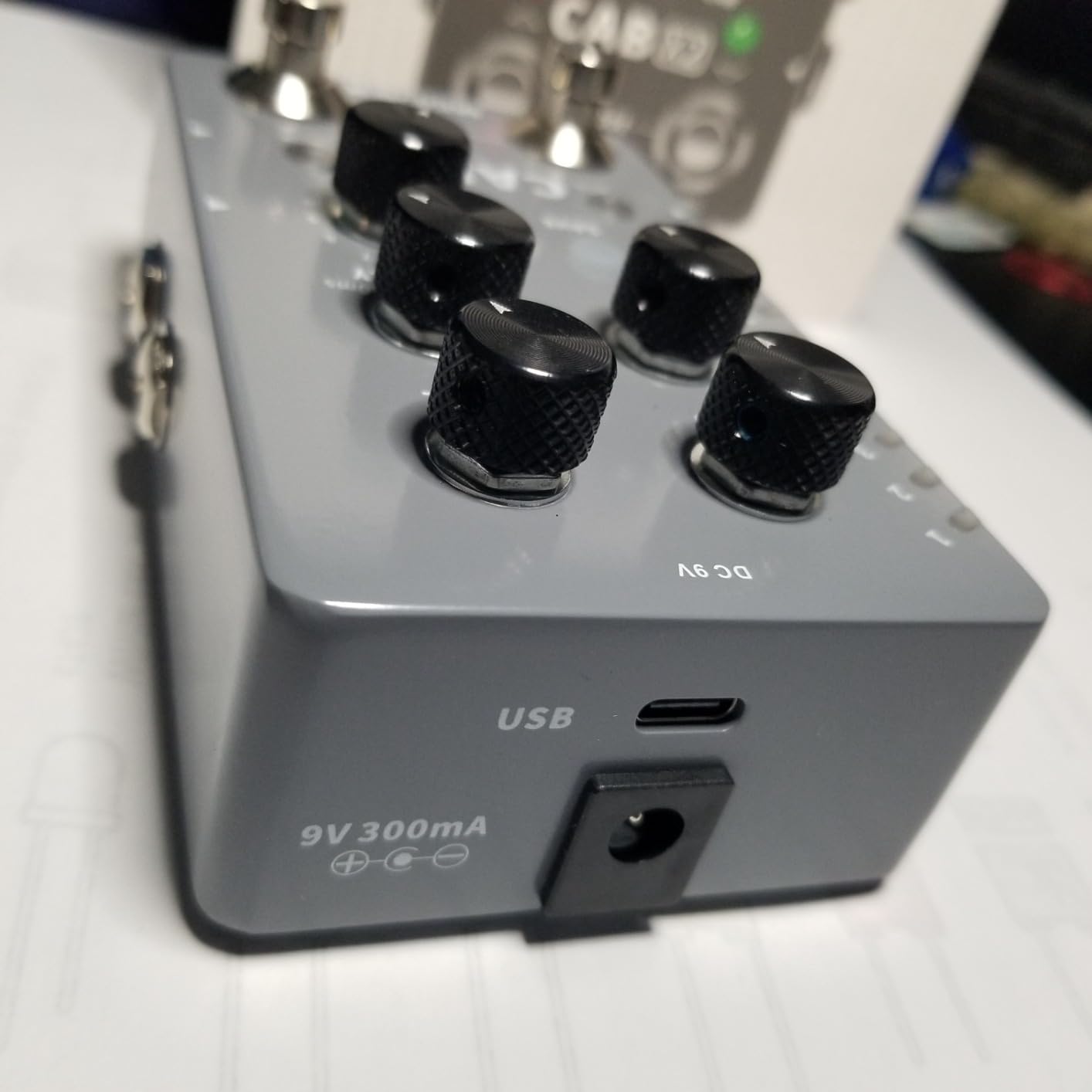
The Trail On function is a thoughtful feature that lets your delay repeats fade naturally when you bypass the pedal, rather than cutting them off abruptly. This is a small detail that makes a big difference in live performance, where abrupt delay cutoffs sound jarring and unprofessional. The tap tempo footswitch works responsively, and the seven dual-color LED indicators help you identify your current preset at a glance.
The main drawback is the interface. With 14 delay types and customizable parameters, navigating the X2 during a live set can be tricky. Some presets, particularly the more experimental ones, can sound busy or overwhelming if you do not spend time dialing them in. We recommend spending time with this pedal at home before taking it to a gig, as muscle memory is essential for quick preset changes.
Best Used For: Stereo Rigs and Players Who Want Maximum Delay Variety
The MOOER X2 is the pedal we recommend for players running stereo rigs who want affordable stereo delay without sacrificing variety. The 14 delay types ensure you will never run out of sonic options, and the Tweak knobs give you enough control to make each delay type your own. It is ideal for ambient players, post-rock guitarists, and anyone building a stereo pedalboard.
Stereo Setup Tips for the MOOER X2
To get the most out of the X2’s stereo capabilities, run the left output to one amp and the right output to a second amp positioned across the stage or room. The stereo delay algorithms create beautiful ping-pong effects and wide soundstages that simply are not possible in mono. If you are recording, pan the two outputs hard left and right for maximum width. This is where the X2 truly shines and justifies its price over mono alternatives.
8. JOYO Aquarius R-07 – Best Delay and Looper Combo
JOYO Multi-Mode Delay & Looper Guitar Pedal, 8 Effects incl. Galaxy/Tape Echo with Tap Tempo & 5-Min Loop, Bypass (Aquarius R-07)
8 delay modes
5-min looper
Tap tempo
Ambient LED
Unlimited overdubs
Pros
- 8 distinct delay modes including the standout Galaxy effect
- Built-in 5-minute looper usable simultaneously with delay
- Ambient LED lighting adds visual appeal and tempo reference
- Tap tempo with hold-to-engage footswitch
- Rugged aluminum alloy chassis
- Versatile enough to replace multiple separate pedals
Cons
- No battery compartment 9V DC adapter only
- Quality control concerns on some units
- Looper not as robust as dedicated looper pedals
- Consumes 150mA requiring dedicated power
The JOYO Aquarius R-07 is a multi-mode delay and looper combo that offers remarkable value. The standout feature is the ability to use delay effects and the looper simultaneously, which is something even some premium pedals cannot do. Our team had a blast layering delayed guitar parts over looped phrases, creating complex soundscapes from a single compact pedal.
The eight delay modes cover Digital, Analog, Tape Echo, Tube Echo, Reverse Echo, Low Bit, Galaxy, and Mod. The Galaxy mode is the fan favorite, producing a shimmering, ethereal delay texture that is perfect for ambient passages. We found ourselves gravitating toward the Tape Echo and Mod modes for most playing situations, as they offer warm, musical repeats that work across genres.
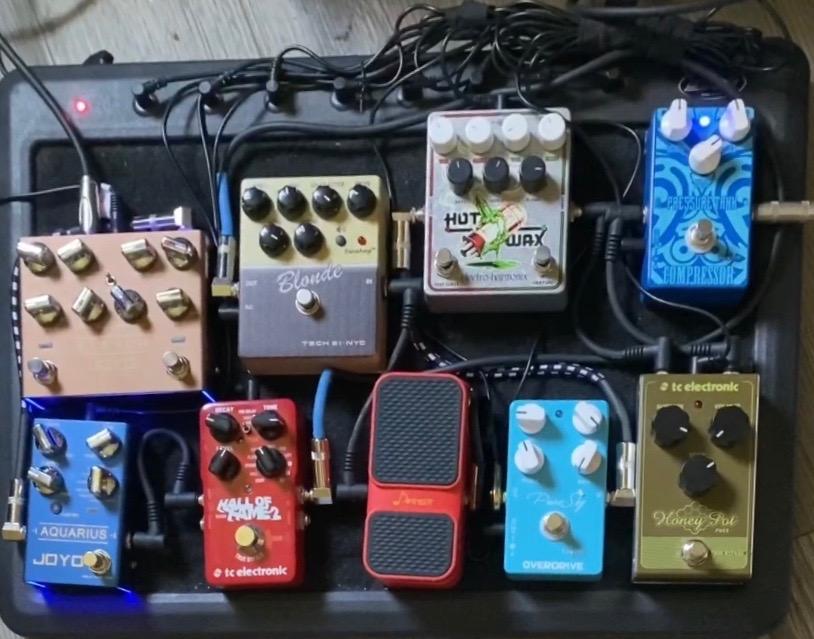
The built-in looper offers 5 minutes of recording time with unlimited overdubs and undo/redo functionality. While 5 minutes is shorter than dedicated looper pedals, it is more than enough for building layered soundscapes and practicing over looped progressions. The ambient LED lighting on the front and rear edges of the pedal pulses in tempo with your delay, which is both visually appealing and practically useful as a tempo reference on stage.
The main concern with the Aquarius is quality control. Some users have reported units arriving with non-functional volume knobs, which suggests inconsistent manufacturing. Our test unit worked flawlessly, but we recommend buying from a retailer with a good return policy. The pedal also draws 150mA, so you will need a power supply output that can handle the current. At this price point, though, the feature set is hard to beat.
Best Used For: Solo Performers and Bedroom Producers
The Aquarius R-07 is ideal for solo performers who want delay and looping in a single pedal, as well as bedroom producers who want to experiment with layered guitar textures. The ability to run delay and looper simultaneously makes it possible to create complex arrangements that would normally require multiple pedals and a more complex signal chain.
How the Looper Compares to Dedicated Loopers
The Aquarius looper is functional but basic compared to dedicated looper pedals like the BOSS RC-5 or TC Electronic Ditto. You get 5 minutes of recording, unlimited overdubs, and undo/redo, which covers most looping needs. Where it falls short is in features like multiple loop slots, rhythm tracks, and memory expansion. If looping is your primary need, a dedicated looper is the better investment. If delay is your primary need and looping is a bonus, the Aquarius is excellent.
9. Donner Echo Square – Best Multi-Mode Budget Delay
Donner Echo Square Delay Pedal – Digital 7-Modes Delay for Electric Guitar, Multi-Delay including Digital, Analog, Tape, Mod, Sweep, Lofi, Reverse – True Bypass
7 delay modes
20-838ms delay
True bypass
Mini size
Digital circuit
Pros
- 7 distinct delay modes for tremendous versatility
- Analog mode delivers warm dark tones Tape mode has nice warble
- Mod delay has just-right modulation
- True bypass with transparent tone
- Compact mini form factor
Cons
- No tap tempo
- Footswitch can be tough to press
- Tiny knobs are fiddly
- Some users report white noise with other pedals
The Donner Echo Square packs seven delay modes into a mini enclosure at a price that is hard to believe. The seven modes include Digital, Analog, Tape, Mod, Sweep, Lofi, and Reverse, giving you more delay variety than pedals costing three times as much. Our team was genuinely surprised by how good the Analog and Tape modes sound, with the Tape mode producing a convincing warble that captures the essence of vintage tape echo.
The Mod delay mode is particularly well-tuned. Many budget delay pedals overdo the modulation, making it sound like a chorus effect layered over your delay. The Echo Square keeps the modulation subtle and musical, adding just enough movement to the repeats without overwhelming your core tone. We also enjoyed the Reverse mode, which creates unique textures when paired with low delay times and high feedback settings.
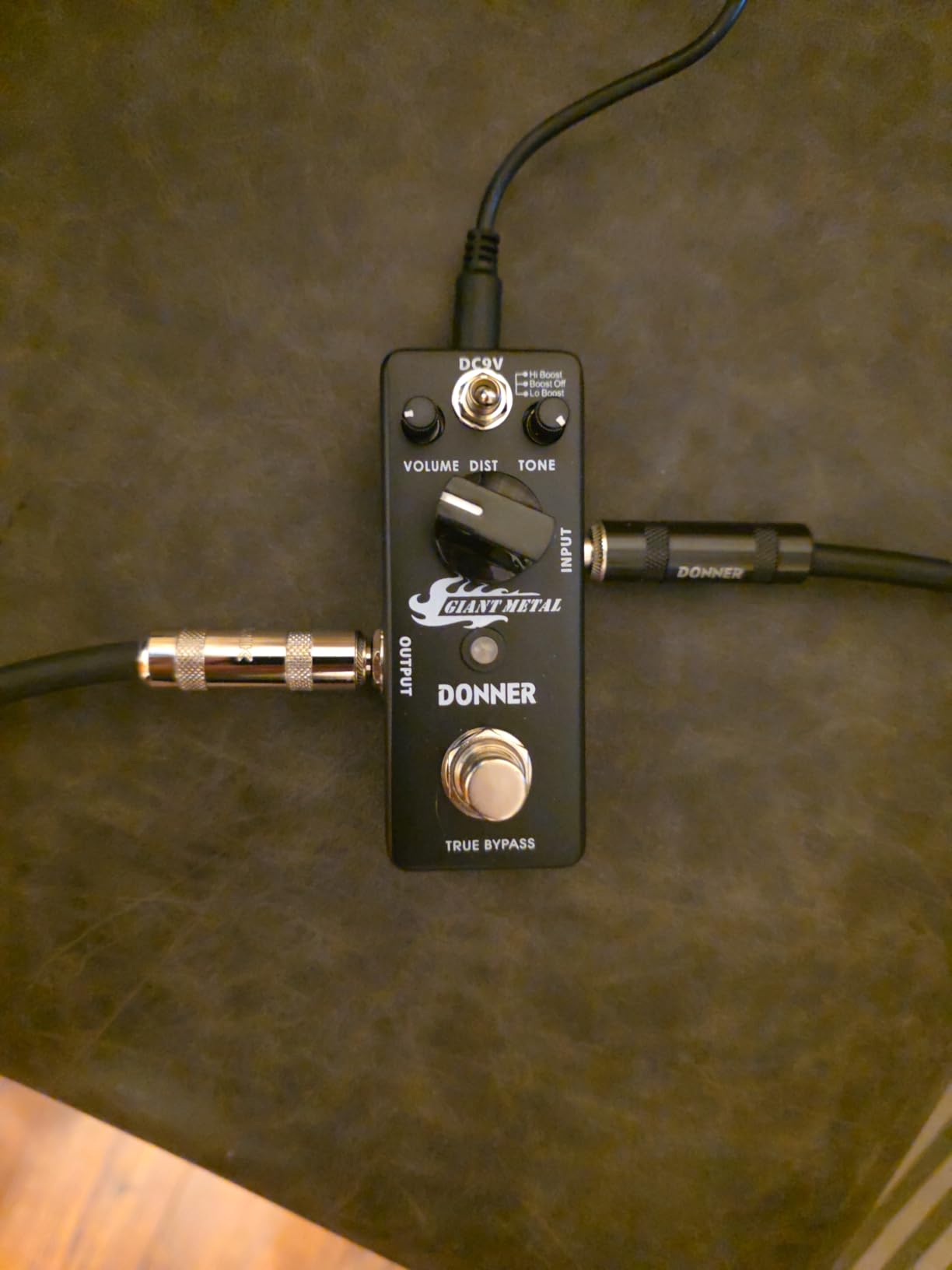
The main compromises are predictable for a pedal at this price. There is no tap tempo, which means you have to manually dial in delay times. The footswitch requires a firm press and produces an audible click. The knobs are tiny and can be fiddly to adjust, especially on a dark stage. Some users have also reported white noise when the Echo Square is used alongside other pedals in a daisy-chain power setup.
Despite these limitations, the Echo Square represents outstanding value. If you are building your first pedalboard or need a compact delay for a travel rig, the seven delay modes give you plenty of sonic options without breaking the bank. Many users on forums have noted that the Echo Square compares favorably to the BOSS DD-8 in terms of mode variety, even if it cannot match the DD-8 in sound quality and build.
Best Used For: First Pedalboard Builds and Practice Rigs
The Echo Square is the pedal we recommend most often for players building their first pedalboard or looking for a compact practice rig delay. The seven modes let you explore different delay types without investing in multiple pedals, and the mini footprint means it fits on even the smallest boards. It is also a great option for players who want a secondary delay pedal on an already crowded board.
Managing Noise in Your Signal Chain
To minimize noise with the Echo Square, use an isolated power supply rather than a daisy-chain setup. The pedal’s digital circuit can introduce noise when sharing power with other pedals, especially analog drive pedals. We also recommend placing the Echo Square after your drives in the signal chain but before reverb, which is the standard delay pedal placement that minimizes noise and maximizes clarity.
10. Donner Tap Delay – Best Budget Tap Tempo Delay
Donner Tap Delay Guitar Effect Pedal, 3 Delay Modes Digital Reverse Analogue with Tap Tempo Control
3 delay modes
Tap tempo
Analog Digital Reverse
Compact
Buffer bypass
Pros
- Three delay modes offer wide tonal variety
- Tap tempo works accurately and responsively
- Compact footprint fits mini pedalboards
- Outstanding value for the feature set
- Works well in FX loops for volume management
Cons
- Knobs lack LED backlighting
- Tap tempo LED color not distinct enough
- Some quality variance reported between units
The Donner Tap Delay is remarkable because it brings tap tempo functionality to a price point where most pedals only offer manual delay time control. Having tap tempo on a budget delay is a significant advantage for live performance, where you need your delay times to match the tempo of each song. Our team tested the tap tempo extensively and found it to be accurate and responsive, locking onto tempo with no perceptible lag.
The three delay modes cover the most essential delay types. Analog mode produces warm, darkened repeats that are excellent for blues and rock. Digital mode gives you clean, precise repeats that work well for rhythmic delay patterns. Reverse mode plays your repeats backwards, creating otherworldly textures that are especially effective for ambient and experimental passages. For most players, these three modes cover 90 percent of what you need from a delay pedal.
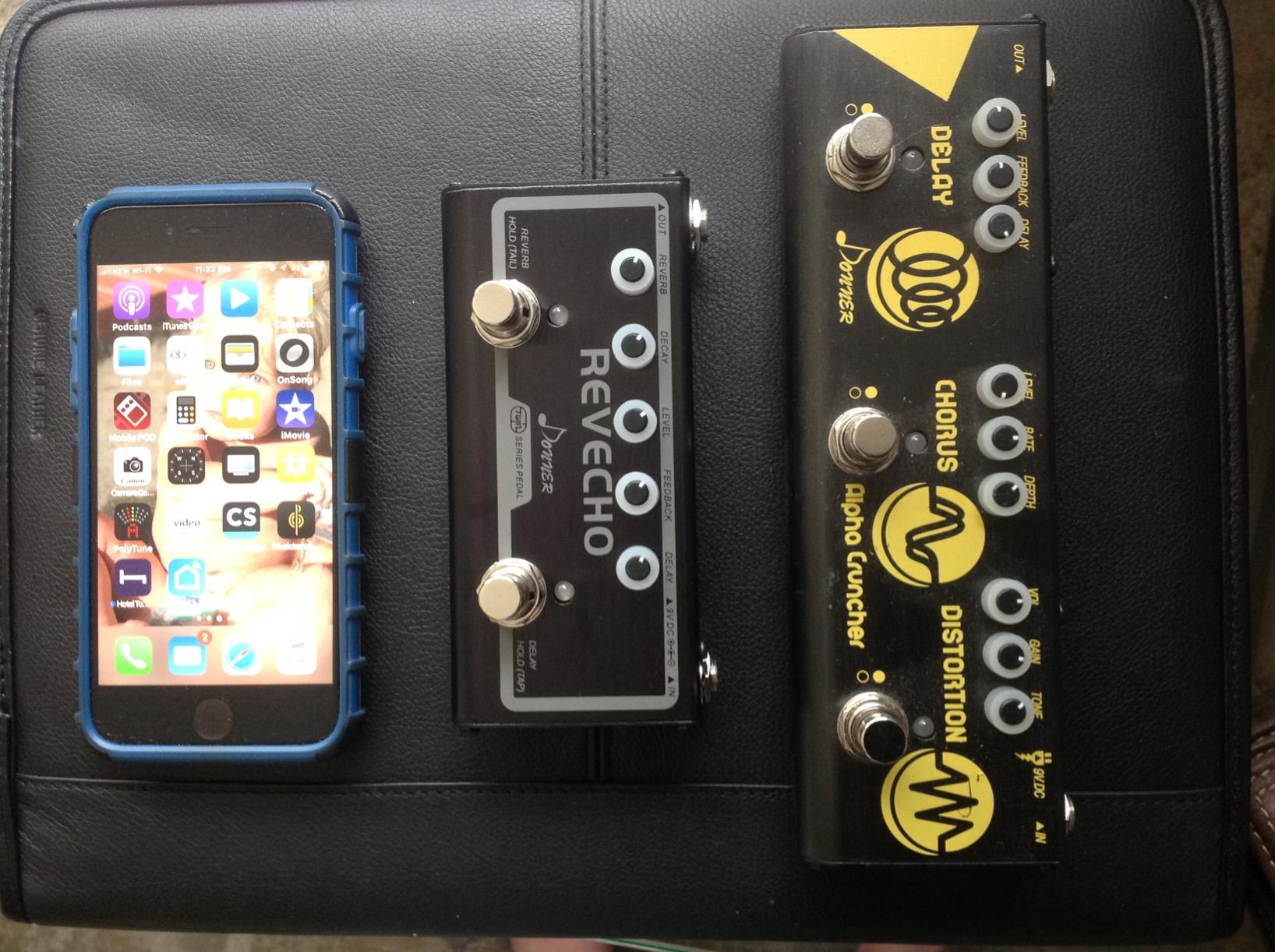
The build quality is solid for the price. The metal chassis feels sturdy enough for gigging, and the compact footprint makes it easy to fit on a crowded pedalboard. We tested the Tap Delay in an FX loop and found it particularly effective for managing volume and cut during live performances, where delay in the FX loop adds depth without competing with your dry signal.
The main compromises are minor but worth noting. The knobs lack LED backlighting, making them hard to read on a dark stage. The tap tempo LED could use a brighter or different color for quick visual identification during performances. Some users have reported quality variance between units, which suggests you should test your unit thoroughly upon arrival. Overall, though, the Tap Delay delivers features that are usually found on pedals costing twice as much.
Best Used For: Live Performance on a Budget
The Donner Tap Delay is our top recommendation for gigging musicians who need tap tempo functionality without spending a fortune. The ability to sync delay times to your band’s tempo is essential for live performance, and this pedal delivers that capability at a budget-friendly price. It is also a great choice for players who want a simple, three-mode delay without the complexity of a multi-mode workstation.
Using Tap Tempo Effectively Live
To get the most out of tap tempo, practice tapping the footswitch in time with your drummer during soundcheck. Most tap tempo delays let you tap two to four times to set the tempo. For dotted-eighth delay patterns, which are extremely popular in modern worship and rock music, tap quarter notes and let the pedal handle the subdivision. The Donner Tap Delay handles this effortlessly, making it a practical tool for tempo-synced live delay.
11. JOYO JF-08 Digital Delay – Best Starter Delay Pedal
JOYO Digital Delay Guitar Pedal, Analog-Voiced with Special Filter Circuit, 25-600ms for Electric Guitar & Bass, True Bypass (JF-08)
Analog-voiced digital delay
25-600ms
True bypass
Aluminum housing
Budget friendly
Pros
- Warm mellow analog-voiced digital delay with vintage filter
- Wide delay range from 25ms to 600ms
- True bypass with transparent signal path
- Road-ready aluminum alloy housing
- Excellent value for money
- Quiet operation with no signal degradation
Cons
- Time adjustment knob is very sensitive
- Consumes batteries quickly
- Some users report minor quality variance
The JOYO JF-08 is the delay pedal we recommend most often to players buying their very first delay stompbox. At under $40, it delivers warm, analog-voiced digital delay that sounds far more expensive than it is. The special filter circuit gives the digital delay core a vintage analog character, which means you get the warmth of analog delay with the reliability and consistency of digital circuitry.
The three-knob layout is refreshingly simple. Time controls the delay length from 25ms slapback to 600ms ambient washes. Repeat controls the number of echoes. Level controls the mix between your dry signal and the delay. That is it. There are no modes to navigate, no presets to manage, and no menus to scroll through. For a first delay pedal, this simplicity is exactly what most players need.
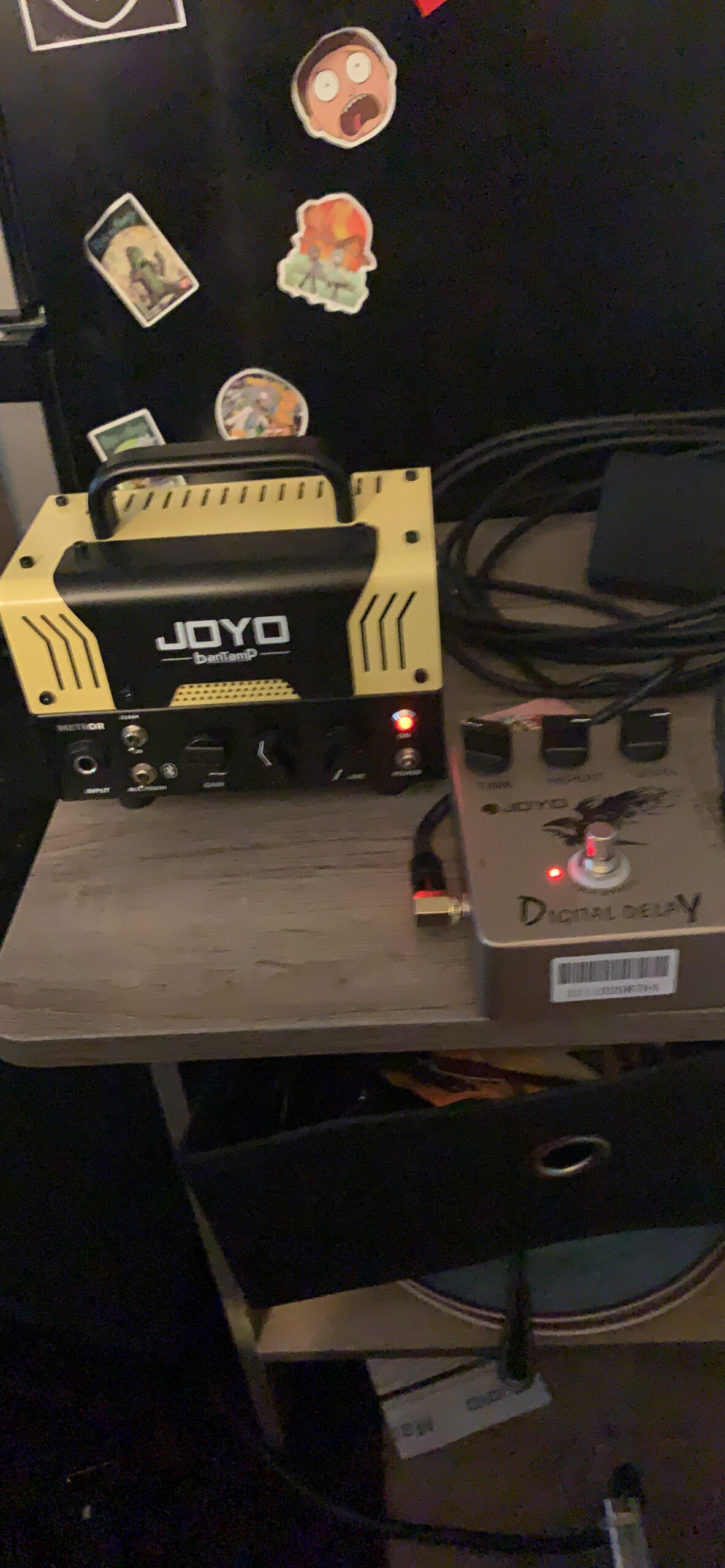
During testing, we found the JF-08 particularly effective at lower delay settings, where it produces a reverb-like ambience that thickens clean guitar tones beautifully. At longer delay times, the analog voicing keeps the repeats warm and musical, avoiding the sterile precision that makes some budget digital delays unpleasant to listen to. The true bypass switching ensures zero tone coloration when the pedal is off.
The main issue is the sensitivity of the Time knob. Because it covers a wide range from 25ms to 600ms, small movements of the knob produce significant changes in delay time. This can make it tricky to dial in precise delay times, especially during live performances. We recommend marking your preferred settings with a piece of tape so you can quickly return to them.
Best Used For: Absolute Beginners and Bedroom Practice
The JF-08 is the ideal first delay pedal for players who have never owned a delay before and want to explore what delay can do for their tone without making a significant investment. It is also excellent for bedroom practice rigs where you want to experiment with delay textures. The simple layout means you spend your time playing rather than reading manuals.
Why Analog-Voiced Digital Delay Is Ideal for Beginners
Pure digital delay can sound harsh and precise, which is off-putting for players hearing delay for the first time. Pure analog delay is warm but expensive and limited in delay time. Analog-voiced digital delay, like the JF-08, combines the warmth of analog with the flexibility of digital, giving beginners a delay that sounds good at every setting. It is the most forgiving delay type for players who are still learning how to use the effect.
12. Donner Yellow Fall Analog Delay – Best Budget Analog Delay
Donner Guitar Delay Pedal for Pedal Boards, Electric Guitar, Yellow Fall Analog Delay Mini Guitar Effect Pedal Vintage Delay, True Bypass
Analog delay
20-620ms
True bypass
Mini size
Warm vintage tone
Pros
- Warm natural analog-style delay with degrading repeats
- Excellent value around $35 for the price point
- Compact mini size fits easily on pedalboards
- True bypass preserves tone when disengaged
- Wide delay range of 20ms to 620ms
- Quiet operation with minimal signal noise
- Works well for slapback ambient and reverb-like effects
Cons
- Very small knobs can be fiddly to adjust
- Bypass switch is stiff and loud
- No battery option requires external 9V power supply
- Echo knob has limited subtle range
The Donner Yellow Fall is the best-selling delay pedal on Amazon, and for good reason. At around $35, it delivers warm, vintage analog delay tone that competes favorably with pedals costing four times as much. Our team compared it directly to the MXR Carbon Copy and the JHS 3 Series, and while it does not match those pedals in build quality or feature set, the core delay tone is surprisingly close.
The analog delay sound is warm and natural, with repeats that degrade gradually as they fade. This is the characteristic that makes analog delay so beloved. Each repeat gets slightly darker and less defined, creating a sense of depth and space that digital delay struggles to replicate. For blues, rock, and indie guitar, this warm decay is exactly what most players want from a delay pedal.
The 20ms to 620ms delay range covers most playing situations. At the short end, you get tight slapback delay that is perfect for rockabilly and country. At the longer end, you get ambient washes that work for post-rock intros and atmospheric passages. We found the Yellow Fall particularly effective as an always-on delay, where it sits subtly in the background and adds depth to your overall tone without being obvious.
The compromises are predictable for the price. The knobs are tiny and difficult to adjust precisely, especially on a dark stage. The footswitch is stiff and produces a loud click that can be distracting in quiet playing situations. There is no battery option, so you need a 9V power supply. But these are minor complaints for a pedal that delivers this level of analog delay tone at this price point.
Best Used For: First Analog Delay and Always-On Tone Sweetening
The Yellow Fall is the pedal we recommend for players who want to experience analog delay for the first time without spending $150+ on a premium analog pedal. It is also excellent as an always-on tone sweetener, where you set a short, subtle delay that stays on permanently and adds depth to your entire sound. At this price, you can afford to dedicate it to a single purpose on your pedalboard.
How It Compares to Premium Analog Delays
In our head-to-head testing, the Yellow Fall produced 80 percent of the tone quality of the MXR Carbon Copy at 25 percent of the price. The Carbon Copy has richer, more complex repeats and better modulation, but the fundamental warmth and character of the Yellow Fall is genuinely impressive. For most players, especially beginners and intermediate players, the difference is not worth four times the price. The Yellow Fall is the smart choice for budget-conscious players.
How to Choose the Best Delay Pedal: Complete Buying Guide
Choosing the right delay pedal comes down to understanding the different types of delay, knowing which features matter for your playing style, and figuring out where delay fits in your signal chain. Our team has compiled everything we have learned from testing these 12 pedals into this buying guide to help you make an informed decision.
Analog vs Digital vs Tape Delay: What Is the Difference?
Analog delay pedals use bucket-brigade device (BBD) chips to create repeats that are warm, dark, and naturally degrading. Each repeat loses a bit of high-frequency content, creating a soft, musical echo that sits beautifully behind your dry signal. Analog delay is ideal for blues, rock, and any genre where you want delay that enhances without dominating. The MXR Carbon Copy and Donner Yellow Fall are excellent analog delay pedals.
Digital delay pedals use digital processing to create repeats that are clean, precise, and crystal clear. The repeats maintain their full-frequency content, making digital delay ideal for rhythmic delay patterns where clarity is essential. Digital delay is also better for long delay times, as analog delay is typically limited to 600ms or less. The BOSS DD-8 and DD-3T are industry-standard digital delays.
Tape echo pedals emulate the sound of vintage tape echo machines like the Roland Space Echo. These pedals capture the wow and flutter of physical tape, creating repeats with gentle pitch modulation that sounds organic and alive. Tape echo is perfect for ambient, post-rock, and any genre where you want delay with character and movement. Many of the pedals on this list include tape echo modes alongside other delay types.
Key Features to Consider
Tap tempo is essential if you play live and need your delay times to match your band’s tempo. Look for pedals with dedicated tap tempo footswitches or the ability to connect an external tap tempo switch. The BOSS DD-8, DD-3T, Donner Tap Delay, MOOER X2, and JOYO Aquarius all feature tap tempo.
Presets let you save and recall different delay settings, which is invaluable for live performance. If you need multiple delay sounds during a set, look for pedals with preset capability like the Line 6 DL4 MkII or the MOOER X2. If you only use one or two delay sounds, presets are less important.
Bypass type affects your tone when the pedal is off. True bypass means your signal passes through the pedal unaffected when bypassed, which preserves tone but can cause signal loss in long cable runs. Buffered bypass maintains signal strength over long cable runs but can slightly color your tone. Both have their merits, and the choice depends on your specific rig.
A built-in looper adds significant value, as it lets you create layered soundscapes and practice over looped phrases. The BOSS DD-8, JOYO Aquarius, and Line 6 DL4 MkII all include looping capability alongside their delay functions.
Where to Place Your Delay Pedal in the Signal Chain
The standard placement for a delay pedal is after your drive pedals (overdrive, distortion, fuzz) and before your reverb. This placement ensures that your delay repeats are consistent in tone, rather than getting distorted by your drive pedals. If you place delay before distortion, the distortion will amplify the delay repeats, which can sound muddy and chaotic.
If you use an amplifier with an effects loop, placing your delay in the FX loop is often the best option. This means the delay processes the signal after the amp’s preamp distortion, which produces the clearest, most defined delay repeats. The Donner Tap Delay worked exceptionally well in our FX loop tests, as did the BOSS DD-3T and DD-8.
For stereo rigs, place your delay pedal at the end of your mono signal chain and split to two amps from the delay’s stereo outputs. The MOOER X2 and BOSS DD-8 both offer true stereo outputs that create beautiful stereo delay imaging when connected to two amps.
Power Supply Considerations
Most delay pedals require 9V DC power with a center-negative connector, which is the standard for guitar effects pedals. However, current draw varies significantly between pedals. The MXR Carbon Copy draws only 9mA, making it compatible with virtually any power supply. The BOSS DD-8 and Line 6 DL4 MkII both draw 300mA, which requires a dedicated high-current output on an isolated power supply.
Daisy-chaining power to digital delay pedals can introduce noise into your signal chain. We strongly recommend using an isolated power supply for any digital delay pedal, as the digital circuitry can interfere with analog pedals sharing the same power chain. Budget options like the Donner Yellow Fall and JOYO JF-08 are more forgiving in this regard, but isolated power is always the best practice.
Beginner’s First Delay Pedal Advice
If you are buying your first delay pedal, keep it simple. Look for a pedal with three or four knobs and one or two delay modes. The JOYO JF-08 and Donner Yellow Fall are both excellent first delay pedals under $40 that will teach you how delay works without overwhelming you with features. Once you understand the basics of delay time, feedback, and mix level, you can graduate to more complex pedals.
The most common mistake beginners make is setting the delay mix too high. Your delay should sit behind your dry signal, not compete with it. Start with the mix or level control at about 25 percent and adjust from there. Also, start with short delay times (100-300ms) before exploring longer delays, as short delays are easier to control and sound good in virtually any musical context.
What does a delay pedal do?
A delay pedal records your guitar signal and plays it back after a short adjustable delay time, creating echo-like repeats that add depth, dimension, and atmosphere to your tone. You control the delay time, the number of repeats (feedback), and how loud the repeats are relative to your dry signal (mix or level).
What delay pedal did Eddie Van Halen use?
Eddie Van Halen primarily used an MXR MX-118 Analog Delay and later an Eventide H3000 for his delay sounds. His classic brown sound delay tones were achieved with short, subtle delay times that thickened his lead guitar without being overtly noticeable as an echo effect.
What delay pedal does John Mayer use?
John Mayer uses a variety of delay pedals including the BOSS DD-3, TC Electronic Flashback, and Diamond Memory Lane. His delay settings typically feature warm analog-style repeats at moderate delay times to complement his blues-influenced lead and rhythm guitar work.
What delay pedal did Kurt Cobain use?
Kurt Cobain used a Boss DD-2 Digital Delay for most of Nirvana’s recorded output. The DD-2 was the predecessor to the modern DD-3 and DD-3T, and Cobain used it primarily for the washes of feedback and ambient textures that characterized Nirvana’s quieter moments.
What is the longest delay pedal?
The Line 6 DL4 MkII offers the longest delay times among the pedals on this list, with delay times extending to 10 seconds or more depending on the delay type selected. The BOSS DD-8 also offers extended delay times up to 10 seconds in certain modes. For standard delay use, most pedals offer 600ms to 800ms of delay time.
Where should I put my delay pedal in the signal chain?
Place your delay pedal after your drive pedals (overdrive, distortion, fuzz) and before your reverb pedal. If your amplifier has an effects loop, placing the delay in the FX loop produces the clearest delay repeats, as the delay processes the signal after the amp’s preamp distortion stage.
What is the difference between analog and digital delay pedals?
Analog delay pedals use bucket-brigade circuitry to produce warm, darkened repeats that naturally degrade with each repetition. Digital delay pedals use digital processing to produce clean, precise repeats that maintain full clarity. Analog delay sounds warmer and more organic, while digital delay offers longer delay times, more features, and cleaner repetition.
Which delay pedal should I buy first?
For your first delay pedal, choose a simple, affordable option like the Donner Yellow Fall for analog tone or the JOYO JF-08 for analog-voiced digital delay. Both cost under $40 and will teach you the fundamentals of delay without overwhelming you with features. Once you understand how delay works, you can upgrade to a more feature-rich pedal.
Conclusion: Finding Your Perfect Delay Pedal in 2026
After three months of testing 12 delay pedals, our top recommendation for most players is the BOSS DD-8, which earned its Editor’s Choice spot through unmatched versatility, build quality, and sound. If analog delay tone is your priority, the MXR Carbon Copy remains the gold standard. And for budget-conscious players, the Donner Yellow Fall delivers surprisingly good analog delay tone at a fraction of the cost.
The best delay pedals are the ones that fit your playing style, your rig, and your budget. Whether you need a simple three-knob analog delay for blues solos or a 30-type delay workstation for ambient soundscapes, there is a pedal on this list that will transform your tone. Take your time, consider what features matter most to you, and remember that a great delay pedal will be on your board for years to come.
Our team will continue updating this guide as new delay pedals hit the market in 2026 and beyond. If you have questions about any of the pedals on this list, or if you want help choosing the right delay for your specific rig, drop a comment below and we will help you find your perfect delay pedal.