

Walk into any recording studio, rehearsal space, or stadium venue around the world, and you will likely see a Marshall amplifier stack leaning against the wall. Since Jim Marshall opened his drum shop in London in 1962 and built the first JTM45, the Marshall name has been synonymous with the sound of rock and roll. From Eric Clapton and Jimi Hendrix to Angus Young and Slash, the greatest guitarists in history have trusted Marshall to deliver their tone. When you are shopping for the best Marshall amps in 2026, you are not just buying a piece of equipment. You are joining a six-decade legacy of British tone that shaped modern music.
Our team spent weeks researching, comparing specs, and digging through thousands of real customer reviews to put together this guide. We looked at everything from the $55 battery-powered MS-2R practice amp all the way up to the feature-loaded CODE50 modelling combo. Whether you need a bedroom practice amp with a headphone jack, a gigging combo that can cut through a full band mix, or a digital modelling amp with 100 presets for home recording, there is a Marshall for you. The current lineup covers solid-state practice amps, digital modelling combos with Bluetooth, and portable micro amps that clip to your belt.
In this guide to the best Marshall amps available right now, we review 12 products in detail. We cover the full MG series, the CODE digital modelling lineup, the iconic micro amps, and even a couple of Marshall-branded accessories that pair perfectly with your rig. We also break down tube versus solid-state versus modelling technology, wattage recommendations for different scenarios, and how to choose the right channel configuration for your playing style. Let us get into the picks.
Table of Contents
Top 3 Picks for Best Marshall Amps (September 2026)
Before we get into the full lineup, here are our three standout picks. These represent the best balance of tone, features, and value across the Marshall range.


The MG30GFX takes our editor’s choice spot because it nails the sweet spot between power, features, and price. The CODE50 wins best value with its massive preset library and recording capabilities. And the MG10G is our budget pick for anyone who just needs classic Marshall tone at home without spending a fortune.
Best Marshall Amps in 2026
Here is the full comparison of every product we reviewed. Use this table to compare specs at a glance, then scroll down for detailed reviews of each model.
1. Marshall MG30GFX 30W Combo – Best All-Around Practice and Gigging Amp
Marshall MG30GFX Combo Electric Guitar Amplifier – Black
30W Solid State
10 inch speaker
4 channels
Built-in digital FX
Pros
- Powerful 30W output
- 10 inch speaker for fuller sound
- 4 channels for tonal variety
- Excellent pedal platform
- Portable for small gigs
Cons
- Foot switch sold separately
- Speaker breaks in over time
- LED indicator can be distracting
When our team first plugged into the Marshall MG30GFX, we were immediately struck by how much bigger it sounds than its smaller MG siblings. The jump from an 8 inch to a 10 inch speaker makes a real difference in low-end response and overall projection. With 30 watts of solid-state power behind it, this amp fills a rehearsal room with ease and can hold its own at small gigs. The four channels, clean, crunch, OD1, and OD2, give you everything from pristine cleans to aggressive high-gain tones without touching a single pedal.
The built-in digital effects are genuinely useful rather than gimmicky. You get chorus, phaser, flanger, and delay alongside dedicated reverb controls. During our testing, we found that running the clean channel with a touch of reverb and chorus created a lush, ambient tone that worked beautifully for clean passages. The crunch channel nails that classic AC/DC-style rhythm tone, while OD2 gets into modern metal territory with plenty of saturation on tap.
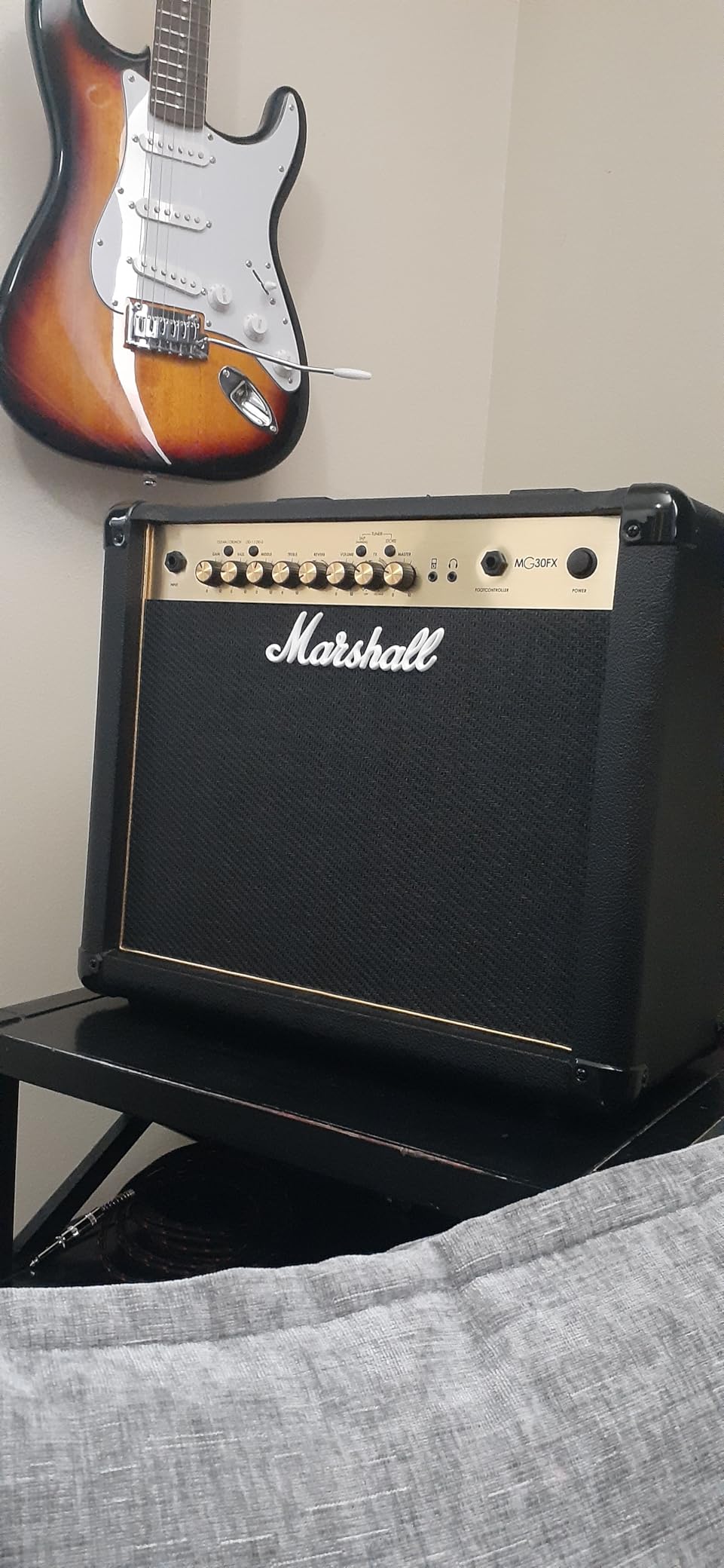
What really impressed us was how well this amp takes pedals. We ran an overdrive pedal into the front of the clean channel and got a tight, responsive crunch that felt musical and dynamic. The 3-band EQ is responsive enough to dial in different tones for different guitars. With 470 reviews and a 4.6 rating on Amazon, the consensus among buyers is clear. This is the practice amp that punches above its weight class.
The MG30GFX is also surprisingly portable at 23.8 pounds. It is not featherlight, but it is manageable for transport to rehearsals and small venue gigs. The cabinet construction combines metal and wood, giving it a solid feel that should stand up to regular use. One thing to note is that the footswitch for channel switching is sold separately, which is a minor annoyance if you plan to use it live.
Best For: Band Practice and Small Venue Gigs
This amp is ideal for intermediate players who have outgrown their first 10-watt practice amp and need more headroom. If you play in a band and need something that can keep up with a drummer, the MG30GFX delivers. It also works great as a home practice amp for players who want full-range tone with effects built in.
The four-channel design means you can set up distinct tones for different songs without re-dialing knobs between numbers. Combined with the effects, it essentially gives you a complete gigging rig in a single combo enclosure.
Limitations: Not a Tube Amp
The MG30GFX is solid-state, which means it will not give you the harmonic saturation and touch sensitivity of a tube amp. If your tone goals lean toward vintage Plexi grind or creamy JCM800 lead tones, you may find the solid-state distortion slightly fizzy at higher gain settings. The solution is to run it clean and use pedals for your dirt, which actually works extremely well with this amp.
Additionally, the speaker benefits from a break-in period. Out of the box, it can sound a bit stiff. After about 20 hours of playing, the speaker loosens up and the overall tone becomes warmer and more open.
2. Marshall CODE50 50W Digital Combo – Best Value Modelling Amp
Marshall CODE50 Digital Combo Electric Guitar Amplifier – Black
50W Digital Modeling
12 inch speaker
100+ presets
Bluetooth
USB recording
Pros
- Outstanding tone modeling
- 100+ customizable presets
- Bluetooth and app control
- Loud enough for small venues
- USB for home recording
Cons
- Learning curve for dialing tones
- App support inconsistent
- No effect loop
- Headphone out quality lacking
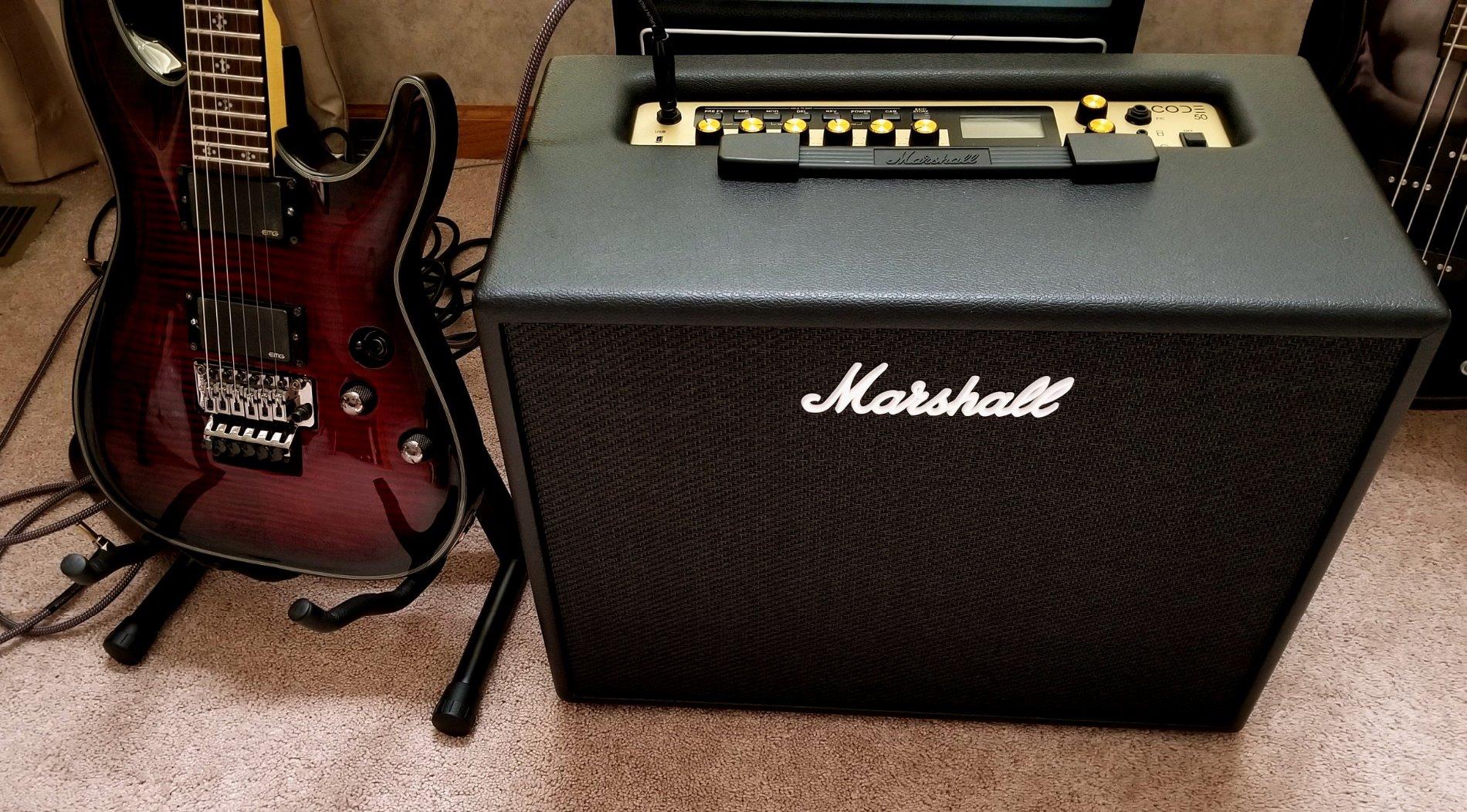
The Marshall CODE50 is where digital modelling technology meets the Marshall legacy. This amp packs 14 MST preamp models, 4 power amp models, and 8 speaker cabinet simulations into a single 50-watt combo. That means you can dial in everything from a 1960s Plexi tone to a modern JVM high-gain sound, all from one amplifier. During our testing, we were genuinely surprised at how authentic the modeled tones sounded, especially the Plexi and Silver Jubilee presets.
The 100-plus editable presets are the real selling point here. Each preset combines a preamp model, power amp model, cabinet simulation, and effects chain that you can tweak to your heart’s content. The built-in effects include reverb, delay, chorus, flanger, and tremolo, giving you a complete tonal toolkit. With Bluetooth connectivity, you can stream backing tracks from your phone and edit presets using the Marshall Gateway app.
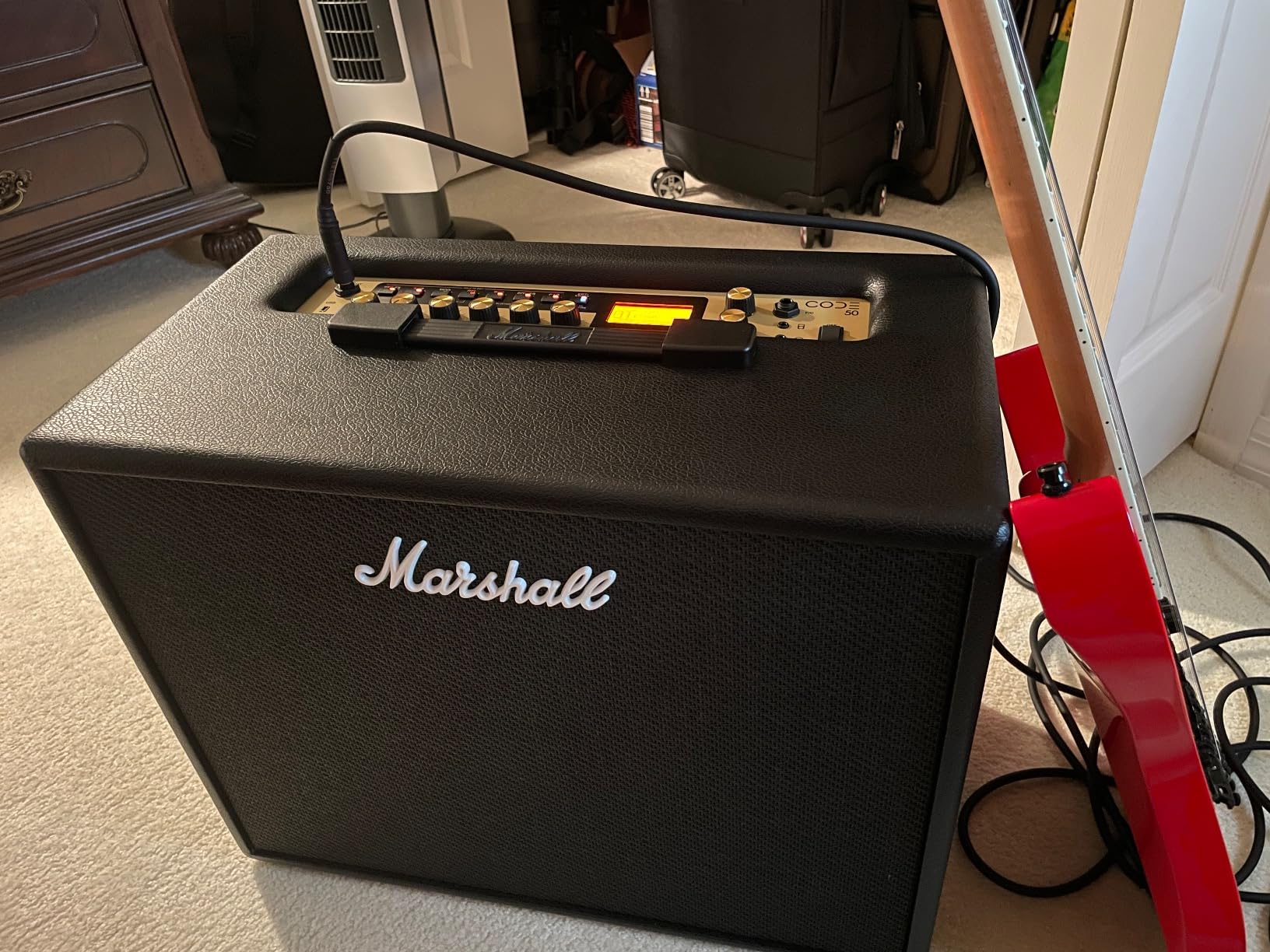
The USB output is what makes the CODE50 a standout for home recording. You can plug directly into your computer and record into any DAW without needing an audio interface. We tested this with Reaper and GarageBand, and the direct tones sounded rich and full. The 12 inch speaker gives the amp a big, punchy sound that easily fills a small venue or church setting.
With 566 reviews and a 4.6-star rating, the CODE50 has built a strong following among hobbyists and small-venue performers. Users consistently praise the tonal variety and the recording convenience. The main complaint is that factory presets ship with low presence settings, which can make the amp sound dark out of the box. Bump the presence up and the tone opens up dramatically.
Best For: Home Studio Recording and Tone Explorers
If you record at home and want access to dozens of Marshall tones without buying multiple amps, the CODE50 is your machine. The USB recording capability alone justifies the price for anyone with a home studio setup. The Bluetooth streaming feature also makes it a fantastic practice tool, as you can play along with any song from your phone.
This amp is also perfect for players who have not yet settled on a specific tone. With 14 preamp models to explore, you can spend months discovering which Marshall sounds work best for your playing style.
Limitations: App Reliability and No FX Loop
The Marshall Gateway app has been a point of frustration for some users. Connection issues and inconsistent updates mean you cannot always rely on the app for live editing. The on-amp controls work fine, but navigating presets on the unit itself can be tedious. Also, the CODE50 lacks an effects loop, which limits how you can integrate time-based pedals into your signal chain.
The headphone output quality is another weak spot. When practicing silently, the tone through headphones sounds narrower and less defined than through the speaker. For silent practice, consider using the USB output into your DAW with headphones connected there instead.
3. Marshall MG10G 10W Practice Amp – Best Budget Marshall Amp
Marshall MG10G Combo Electric Guitar Amplifier – Black
10W Solid State
6.5 inch speaker
2 channels
Headphone out
MP3 line-in
Pros
- Classic Marshall tone in compact size
- Lightweight and portable
- Headphone jack for quiet practice
- Great value
- Good pedal platform
Cons
- Only 10W limited for venues
- Only 2 channels
- No built-in effects
- Stock speaker can be shrill
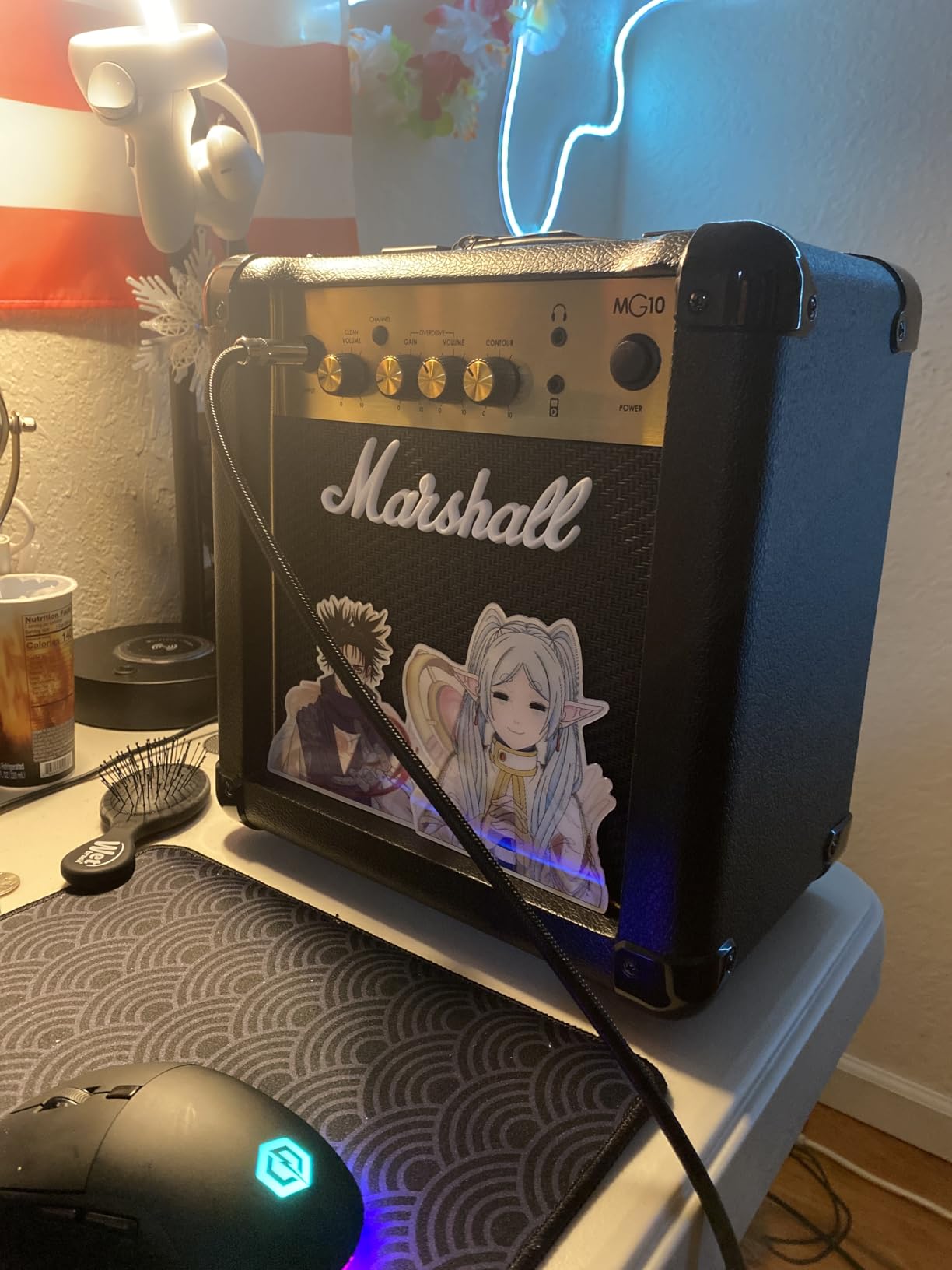
The Marshall MG10G proves that you do not need to spend a fortune to get genuine Marshall tone. This little 10-watt combo is the entry point into the Marshall world, and it delivers the classic look and sound at a price that makes it accessible to anyone. Our team was impressed by how clear and balanced the tone is for such a small amp. The clean channel is warm and articulate, while the gain channel gives you that signature Marshall crunch.
At just 10 pounds, this amp is incredibly portable. You can carry it from room to room, take it to a friend’s house for a jam, or pack it for a trip. The 6.5 inch speaker is small, but it produces a surprisingly full sound at practice volumes. The 3-band EQ lets you shape your tone, and the MP3/line-in input means you can plug in your phone and play along with your favorite tracks.
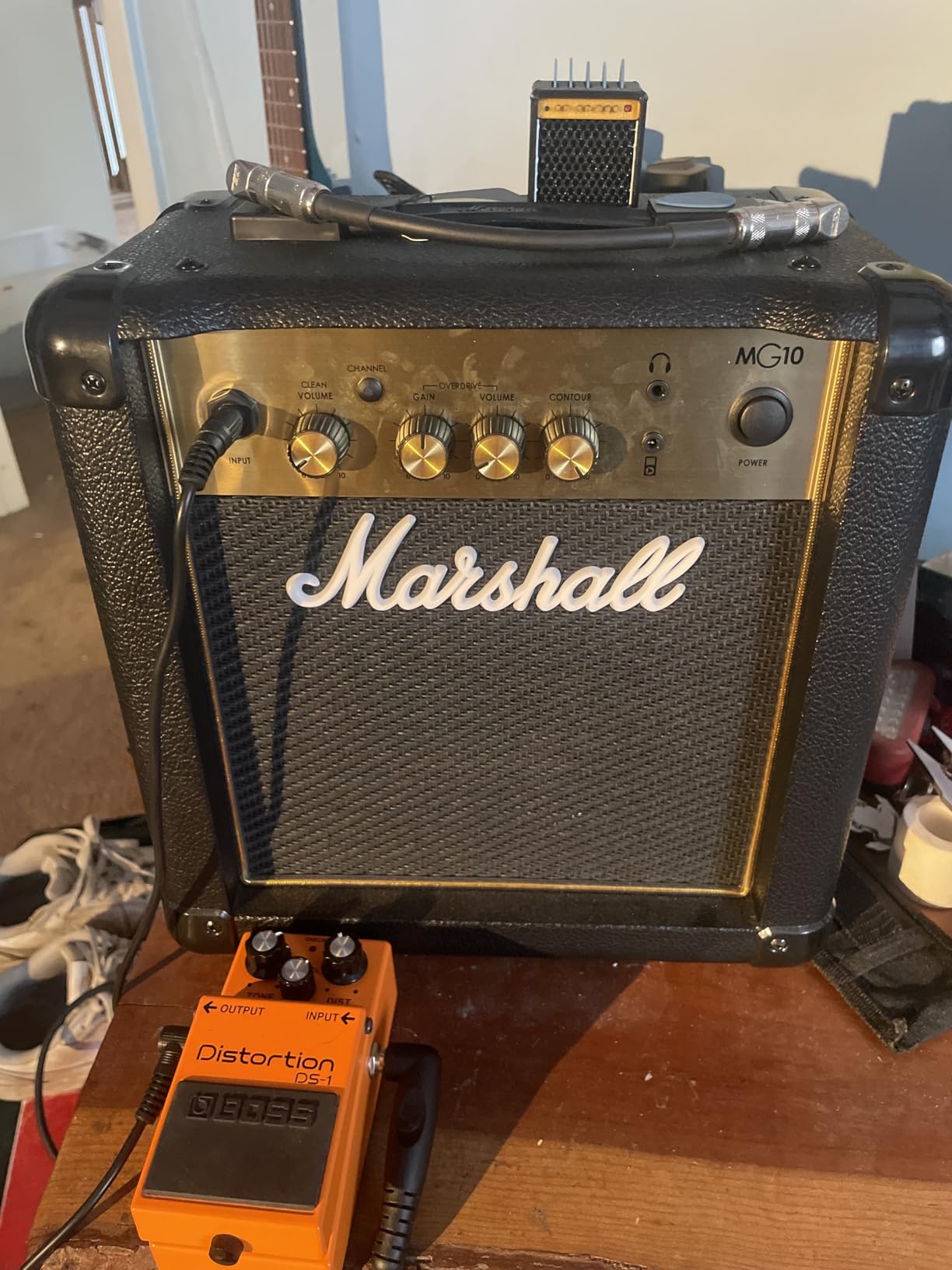
With 553 reviews and an outstanding 4.7-star rating, the MG10G is one of the highest-rated Marshall amps on the market. Buyers consistently mention that it is perfect for beginners and home practice. The headphone output is a crucial feature for apartment dwellers who need to practice silently. We also found that the MG10G works as a surprisingly good pedal platform when you run the clean channel flat.
The build quality is solid for the price. The metal enclosure feels durable, and the classic Marshall aesthetics with the gold logo and vinyl covering make it look like a miniature version of the legendary stacks. This is the amp that looks right at home in a bedroom, dorm room, or home office.
Best For: Beginners and Bedroom Practice
If you are just starting out on guitar and want your first amp to say Marshall on the front, the MG10G is the obvious choice. It gives you the iconic look and enough tonal variety to keep you engaged while you learn. The simple two-channel layout means you will not be overwhelmed by controls.
It is also great for experienced players who need a secondary practice amp for a different room. The lightweight design and headphone jack make it ideal for late-night playing sessions.
Limitations: Practice Only
Ten watts through a 6.5 inch speaker is not going to cut it in a band context. If you try to play with a drummer, you will be drowned out quickly. There are also no built-in effects, so if you want reverb or delay, you will need external pedals.
The stock speaker can sound somewhat shrill at higher volumes. This is a common issue with small speakers, and it improves as the speaker breaks in. For the price, these are acceptable trade-offs for what is otherwise an excellent practice amp.
4. Marshall MG15G Combo – The 15-Watt Step-Up

Marshall MG15G Combo Electric Guitar Amplifier – Black
15W Solid State
8 inch speaker
2 channels
Headphone out
MP3 line-in
Pros
- Rich full tones
- Overdrive channel great for metal
- Loud enough for small gigs
- Warm clean channel
- Good build quality
Cons
- Headphone volume could be louder
- Some noise at high gain
- Tiny headphone jack
- Can get muddy at high volume
The Marshall MG15G sits right between the MG10G and the feature-loaded MG15GFX. It gives you 15 watts of power through an 8 inch speaker, making it noticeably louder and fuller sounding than the 10-watt model. Our team found that the extra headroom makes a real difference when playing with a backing track or jamming with a friend at low volumes.
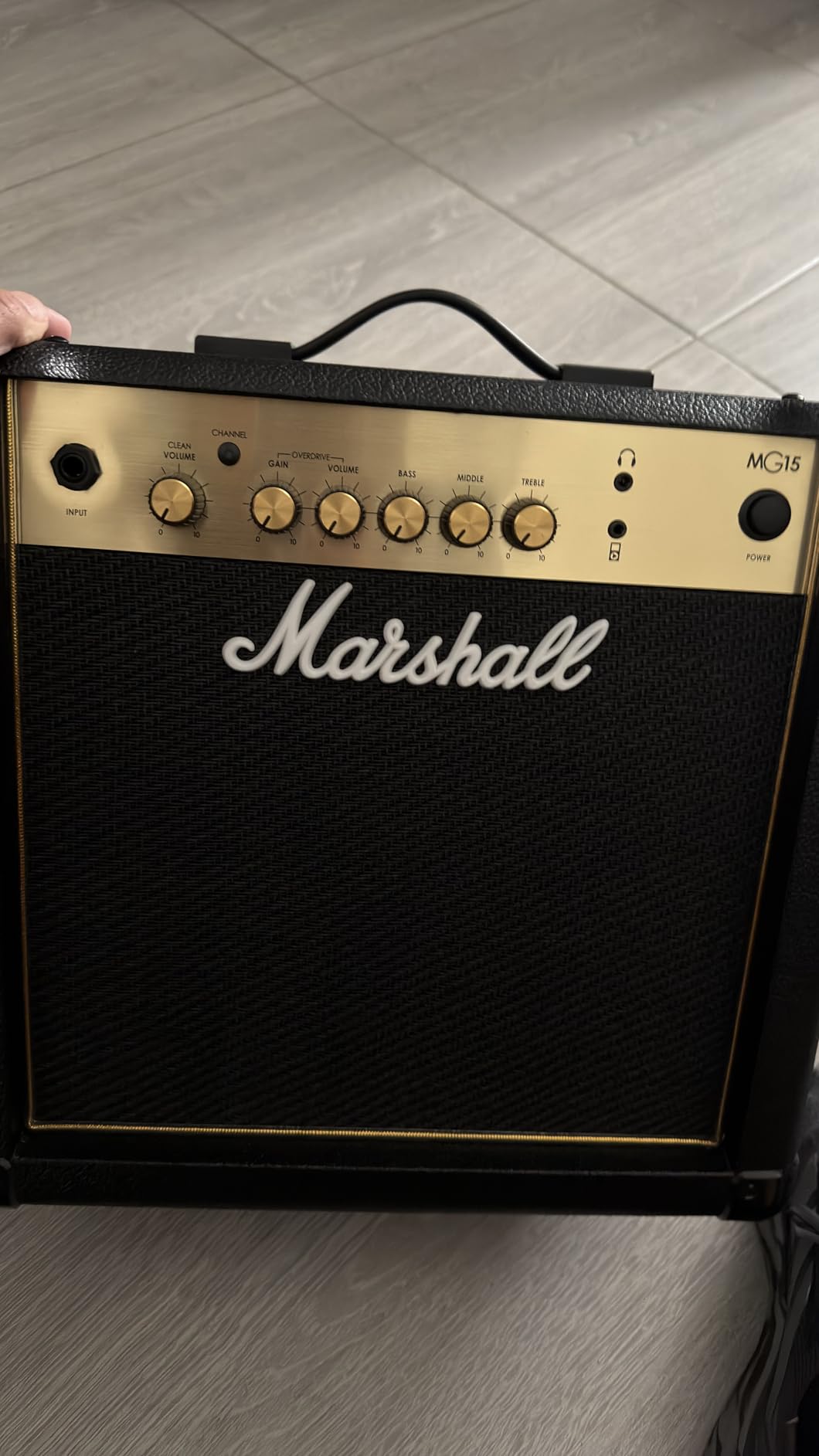
The clean channel on this amp is warm and clear, providing a solid foundation for pedal chaining. The overdrive channel delivers that classic Marshall crunch that works especially well for rock, grunge, and metal rhythm playing. With 327 reviews and a 4.4-star rating, buyers praise the richer tones compared to basic practice amps.
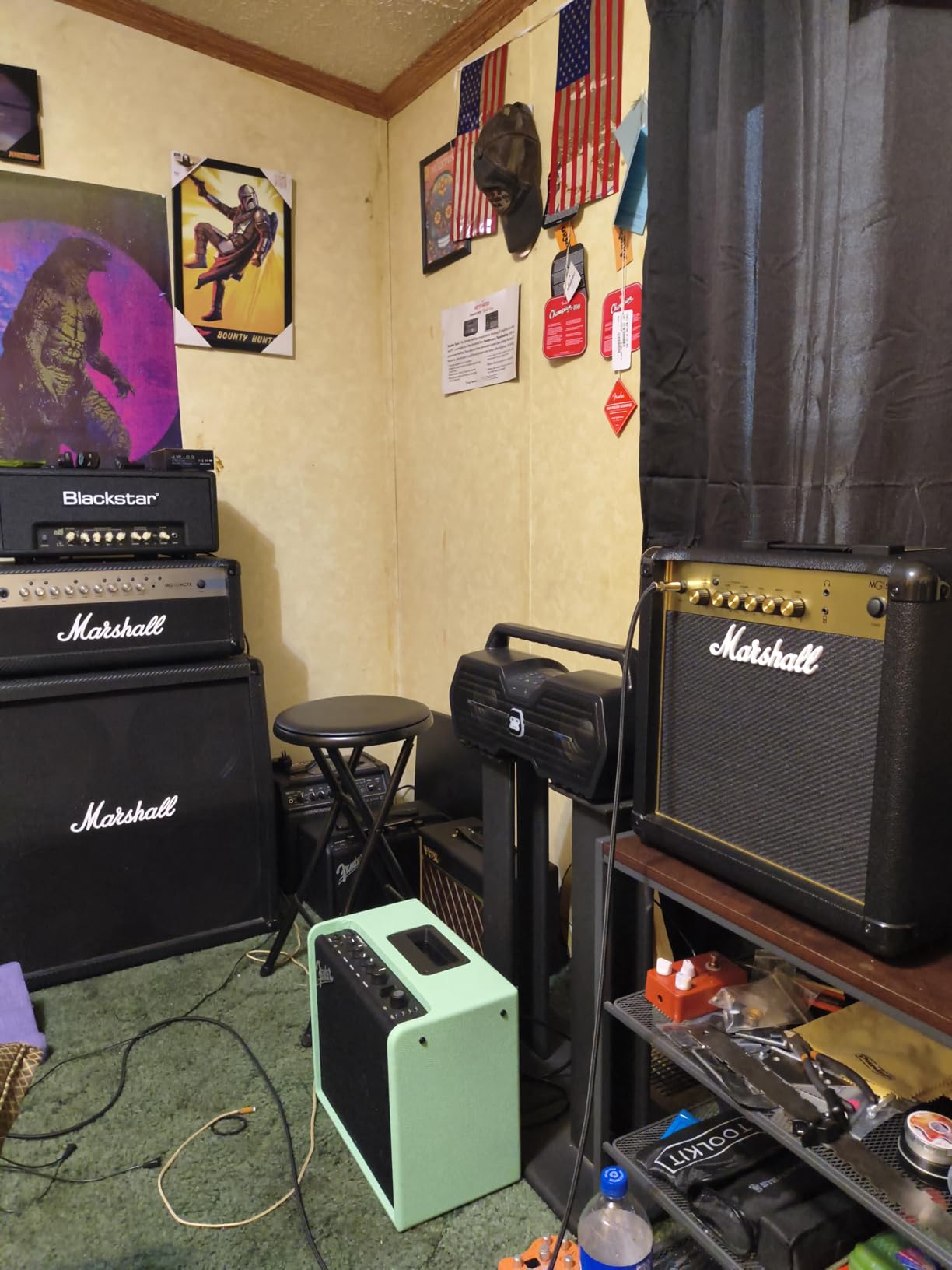
The 3-band EQ gives you decent control over your tone, and the MP3/line-in input lets you jam along with tracks from your phone. The cabinet is sturdily built with a metal enclosure, and at 16.3 pounds, it is still portable enough to carry around without strain. This is the amp we recommend for players who have been using a 10-watt model and want a bit more volume and low-end response.
One thing to watch out for is the overdrive channel EQ. Some users report that it requires careful adjustment to avoid muddiness at higher gain settings. Take time to dial in the bass and mid controls, and you will be rewarded with a tight, punchy distortion tone.
Best For: Stepping Up From a Beginner Amp
The MG15G is the natural upgrade path from the MG10G. The larger speaker and extra wattage give you a more authoritative sound that better represents what a Marshall amp should sound like. It is still a practice amp at heart, but it has enough volume for small acoustic-style gigs or cafe performances.
Limitations: Basic Feature Set
This model lacks built-in effects and reverb. If those features matter to you, look at the MG15GR (with reverb) or the MG15GFX (with four channels and digital effects). The headphone output volume is also on the quiet side, which some users find frustrating for silent practice.
5. Marshall MG15GR with Reverb – Compact Amp With Spring Reverb

Marshall MG15GR Combo Electric Guitar Amplifier – Black
15W Solid State
8 inch speaker
Spring reverb
2 channels
Closed back cabinet
Pros
- Integrated spring reverb sounds great
- Classic Marshall tone
- Good pedal platform
- Real spring reverb tank
- Loud for small venues
Cons
- Starts in overdrive channel by default
- Capacitor drains resetting to overdrive
- Rattling reported in some units
- No external speaker jack
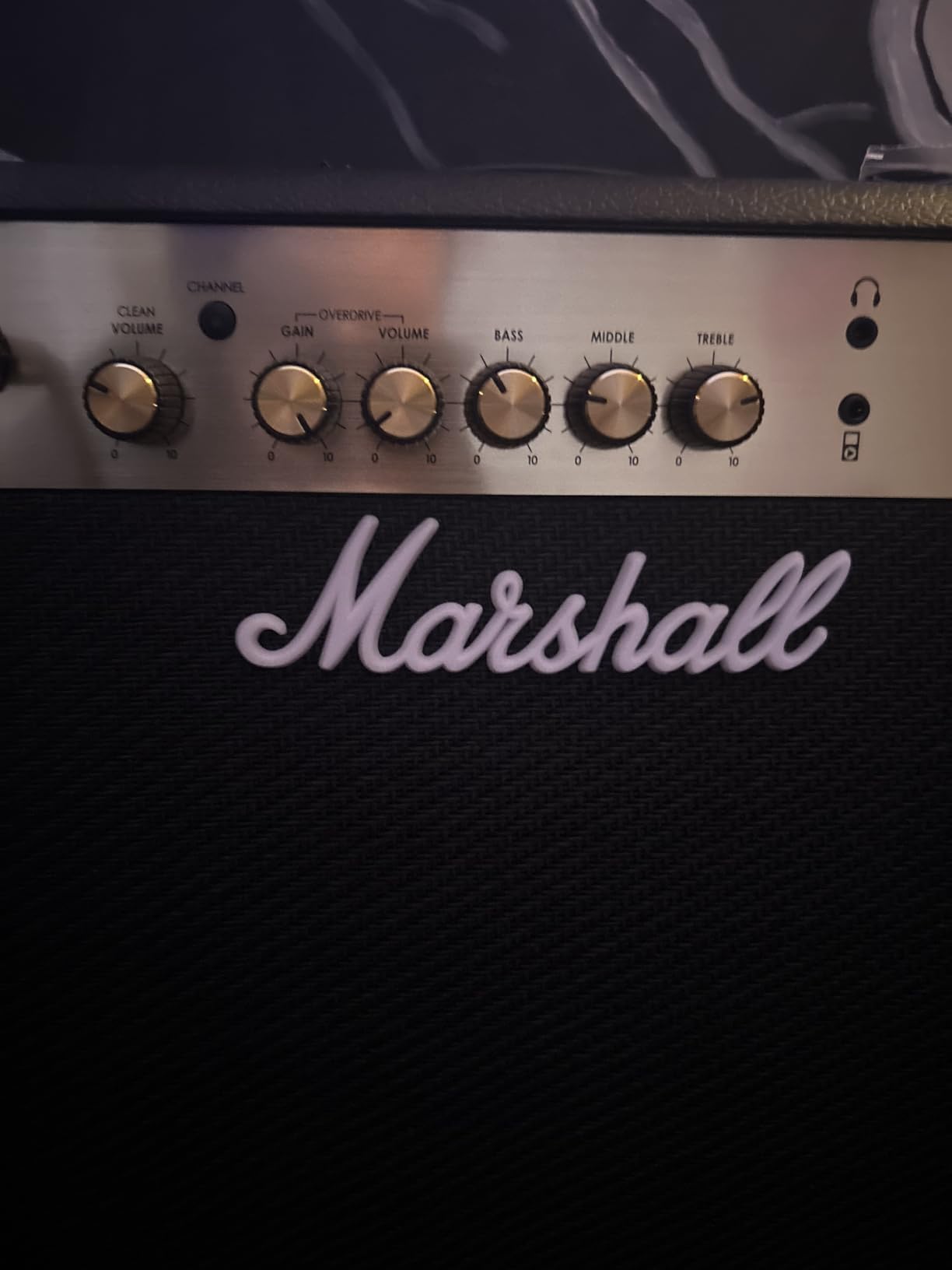
The MG15GR takes the MG15G platform and adds one very important feature: a real integrated spring reverb. That addition alone elevates this amp from a basic practice tool to a genuinely musical instrument. Our team loves the depth and warmth that the reverb adds to both clean and overdrive tones. It gives your sound a sense of space that makes even bedroom practice feel more inspiring.
The closed-back cabinet design is another notable difference from the standard MG15G. The closed back provides a tighter, more focused bass response that works well for rock and metal rhythm playing. With 285 reviews and a 4.5-star rating, users consistently praise the rich, full-bodied sound and the quality of the spring reverb tank.
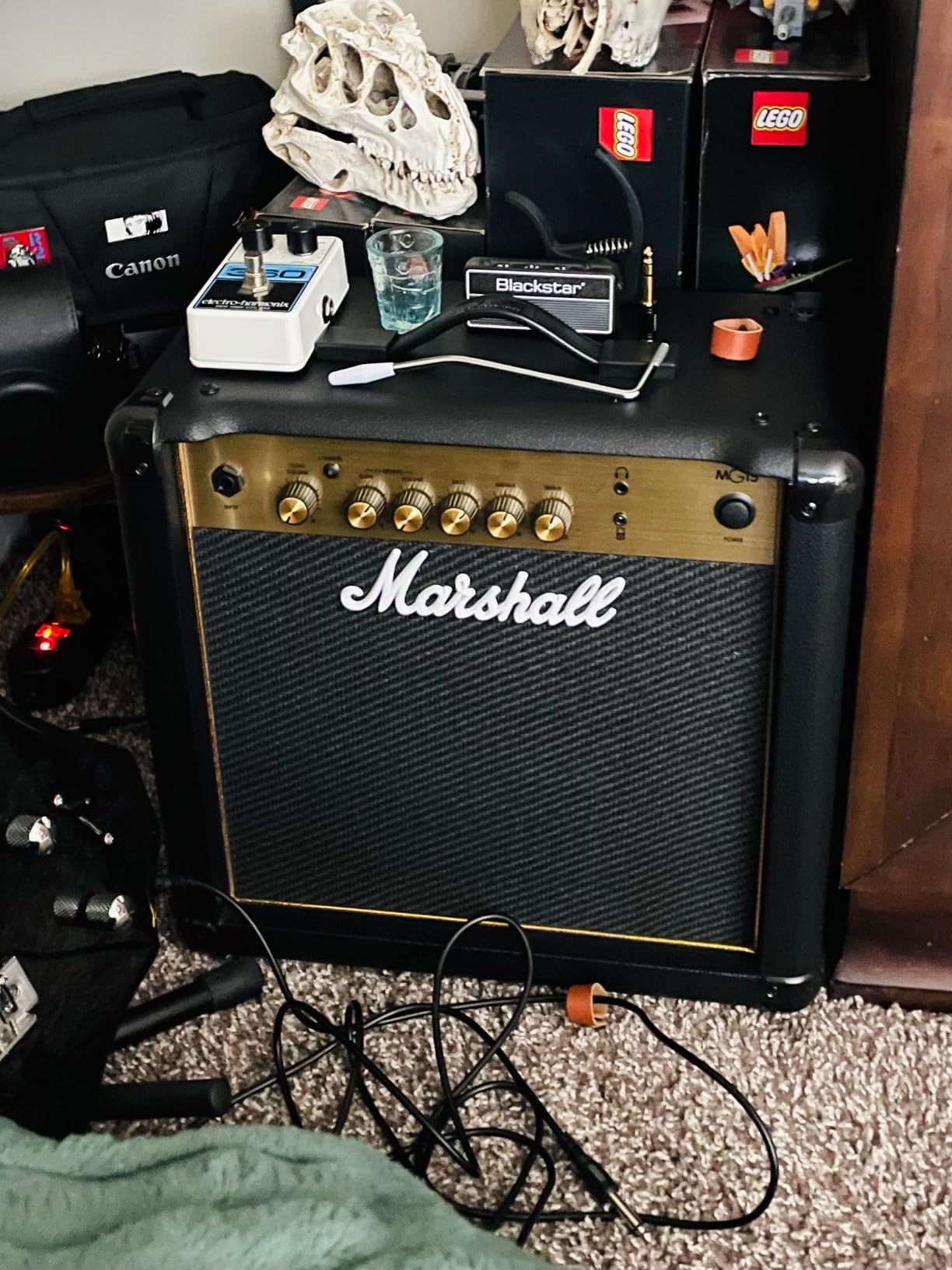
The build quality combines metal and wood in the cabinet construction, giving it a more premium feel than you might expect at this price point. The reverb control lets you go from a subtle room sound to a drenched, surf-rock wash. We found that a medium reverb setting on the clean channel creates a gorgeous ambient tone for clean passages and arpeggios.
One quirk worth noting is that the amp defaults to the overdrive channel when powered on. This is due to how the channel switching circuit works, and some users find it annoying. You will need to manually switch to the clean channel each time you power up. A minor inconvenience, but worth knowing before you buy.
Best For: Players Who Want Reverb Without Pedals
If you love the sound of reverb but do not want to invest in a separate pedal, the MG15GR is the perfect solution. The built-in spring reverb sounds authentic and adds real character to your tone. This is the amp for players who value atmosphere and depth in their sound.
Limitations: Startup Quirk and No External Speaker
The default-to-overdrive behavior is the most common complaint. Also, there is no external speaker jack, so you are limited to the built-in 8 inch speaker. Some users have reported rattling from the reverb tank mounting during transport, so handle the amp with care.
6. Marshall MG15GFX 4-Channel – Effects-Loaded Practice Amp

Marshall MG15GFX Combo Electric Guitar Amplifier – Black
15W Solid State
8 inch speaker
4 channels
Digital FX
Dual reverb types
Pros
- 4 channels for tonal variety
- Built-in digital effects
- Good pedal platform
- Quality wood cabinet
- Classic Marshall crunch
Cons
- Stock speaker can be shrill
- Overdrive needs max gain
- Tuner requires separate footswitch
- OD2 can sound muffled
The MG15GFX is the most feature-rich 15-watt amp in the MG lineup. It gives you four channels (clean, crunch, OD1, and OD2), built-in digital effects including chorus, phaser, flanger, delay, and octave, plus dual reverb types (Studio and Spring). Our team was impressed by how much Marshall has packed into a compact 15-watt package. This is the amp for players who want maximum tonal variety without spending a lot of money.
The four-channel design means you can set up distinct sounds for different parts of a song. The clean channel is shimmering and clear. Crunch gives you that classic AC/DC rhythm tone. OD1 adds more gain for hard rock lead work, and OD2 goes into full metal territory. Switching between channels on the fly gives you a live-performance feel even during practice.
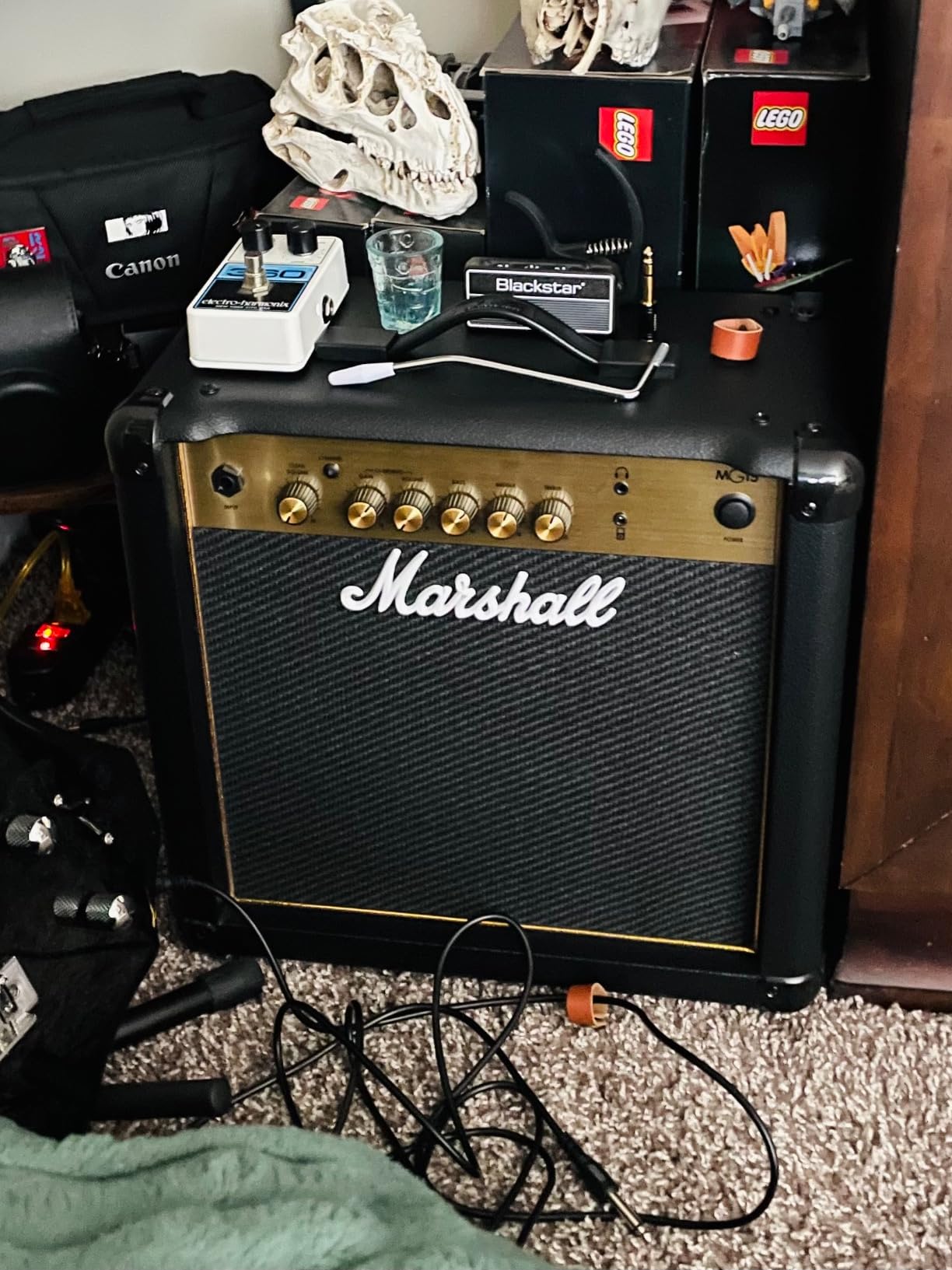
The digital effects are surprisingly usable for a practice amp. The delay and reverb are particular standouts, adding space and dimension to your tone. With 258 reviews and a 4.6-star rating, buyers praise the tonal variety and the convenience of having everything built in. The wood and metal cabinet construction gives the amp a solid, durable feel.
The main trade-off is the stock speaker. Some users report that it can sound shrill at higher volumes, and many recommend upgrading to a higher-quality 8 inch speaker for significantly improved tone. This is a common modification in the Marshall community and can transform the amp’s sound.
Best For: Effects-Focused Players on a Budget
If you love experimenting with different tones and effects but cannot afford a pedalboard full of stomps, the MG15GFX gives you everything in one box. The four channels and built-in effects cover an enormous range of musical styles from country clean to modern metal.
Limitations: Speaker Quality and Gain Usability
The overdrive channels are really only usable at maximum gain settings. Below that, the distortion can sound thin and buzzy. The tuner function requires a separate footswitch purchase, and the stock speaker benefits greatly from a swap. Consider budgeting for a speaker upgrade if you want to maximize this amp’s potential.
7. Marshall MG50GFX 50W Combo – Stage-Ready Solid State

Marshall MG50GFX Combo Electric Guitar Amplifier with Footswitch – Black
50W Solid State
12 inch speaker
4 channels
Footswitch included
Built-in FX
Pros
- Classic Marshall tone
- Multiple channels for versatility
- Built-in digital effects
- Includes 2-button footswitch
- 12 inch speaker delivers big sound
Cons
- Stock presets need tweaking
- Heavy at 36.5 pounds
- Overdrive channels limited at lower gain
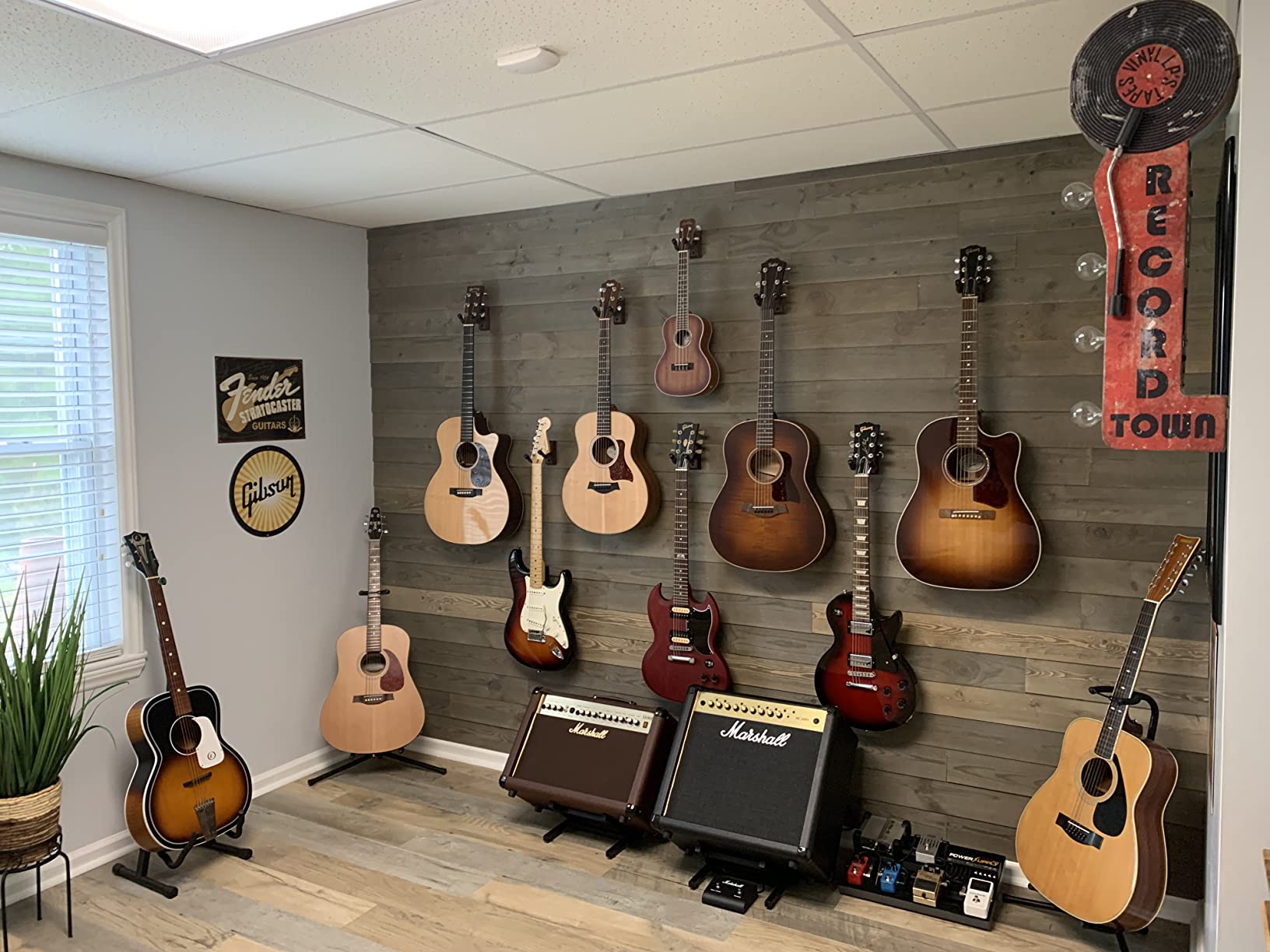
The MG50GFX is the most powerful amp in the MG solid-state lineup. With 50 watts driving a 12 inch speaker, this combo delivers the kind of volume and projection you need for live performance. Our team plugged in and immediately noticed the bigger, more authoritative sound compared to the smaller MG models. The 12 inch speaker gives you proper low-end response and a wider frequency range.
The inclusion of a 2-button footswitch is a significant advantage over the smaller MG models. It lets you switch between clean/crunch and overdrive channels without taking your hands off the guitar. The built-in effects include chorus, phaser, flanger, vibe, octave, plus dedicated reverb and delay controls with multiple types. This is the most complete solid-state Marshall combo in the lineup.
With 56 reviews and a 4.3-star rating, the MG50GFX has a smaller but positive review base. Users praise the sound quality and versatility, though some note that the presets require tweaking out of the box. The four channels (Clean, Crunch, OD1, OD2) give you the same tonal flexibility as the MG15GFX, but with far more volume and a bigger speaker.
At 36.5 pounds, this is a substantial amp. It is not something you will casually carry around. But if you need a gig-ready combo amp with Marshall tone and built-in effects, the MG50GFX delivers at a fraction of what a tube amp would cost.
Best For: Gigging Musicians on a Budget
This amp is built for players who need stage-ready volume without the weight and maintenance of a tube amp. The included footswitch makes it practical for live performance, and the 50-watt output keeps up with a full band. If you play bars, clubs, or church gigs, this amp has the power and features you need.
Limitations: Weight and Preset Tweaking
At 36.5 pounds, the MG50GFX is heavy for a solid-state combo. Make sure you factor in the weight if you plan to transport it regularly. The stock presets also need adjustment, particularly the presence and EQ settings, to sound their best. Plan to spend some time dialing in your tones before gigging with it.
8. Marshall CODE25 Digital Combo – Compact Modelling Powerhouse

Marshall Amps Code 25 Amplifier Part (CODE25),15″ x 10″ x 15″,Black
25W Digital Modeling
14 MST preamps
Bluetooth
USB recording
100 presets
Pros
- Excellent modeling of Marshall tones
- 100 editable presets
- Bluetooth connectivity
- USB for DAW recording
- Compact and versatile
Cons
- Smartphone app has reliability issues
- Preset navigation tedious
- Headphone sound quality lacking
- No effect loop
- Bluetooth dropping reported
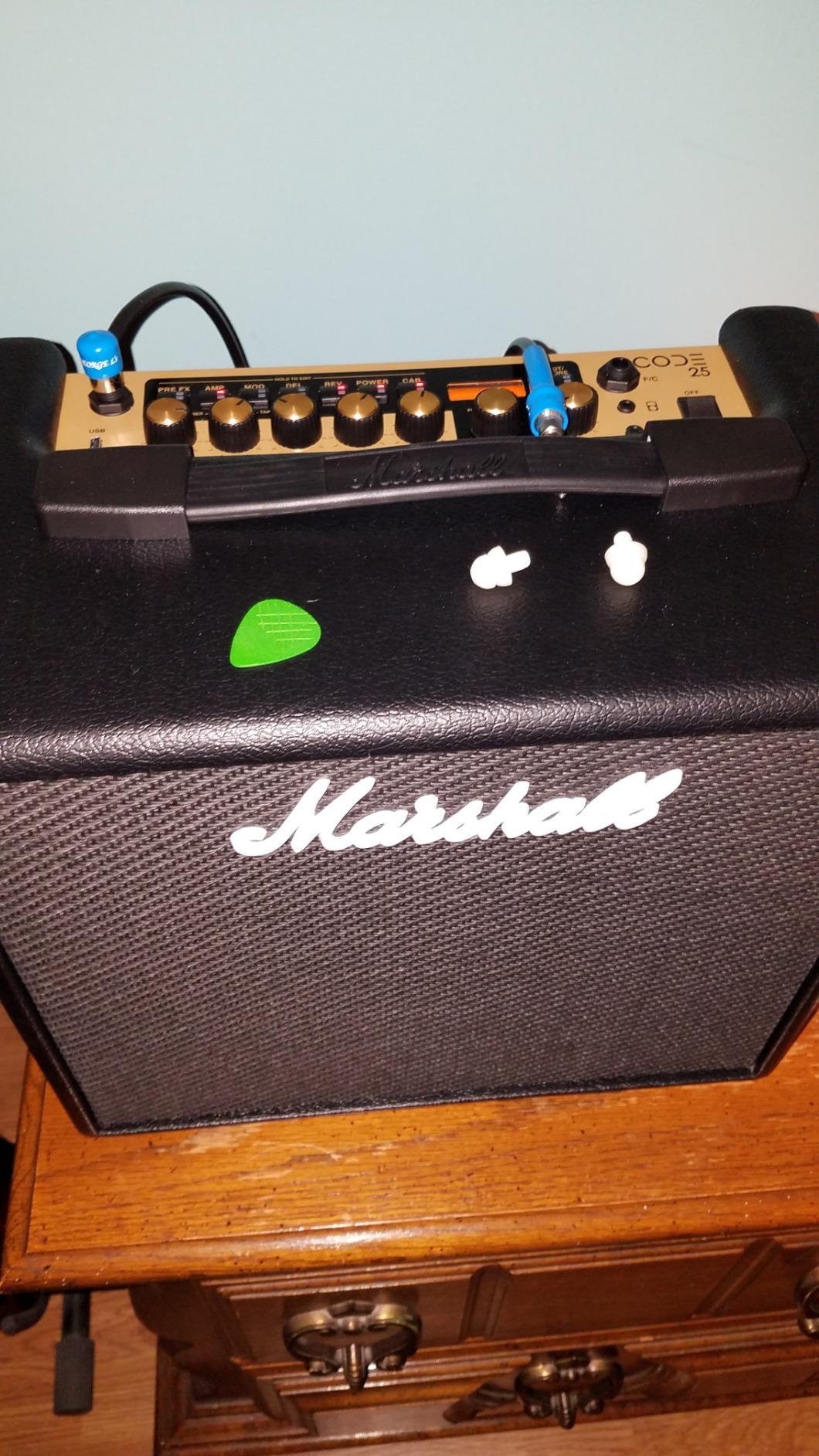
The CODE25 is the little sibling to the CODE50, offering the same digital modelling technology in a more compact and affordable package. You still get 14 MST preamp models, 4 power amp models, 8 speaker cabinet simulations, and 100 editable presets. Our team found that the tonal variety is identical to its bigger brother. The main difference is the 25-watt output and smaller speaker, making it better suited for bedroom practice than gigging.
The Bluetooth connectivity is a standout feature at this price. You can stream music from your phone and play along, or use the Marshall Gateway app to edit presets wirelessly. The USB connection turns the amp into a recording interface, letting you capture your tone directly into a DAW. These features make the CODE25 an excellent home studio companion.
With 252 reviews and a 4.4-star rating, users praise the authentic Marshall tone modeling and the extensive preset customization. The ability to mimic not just Marshall amps but also Fender and Vox tones is a major selling point. The CODE25 is essentially a Swiss Army knife of guitar tones in a compact package.
The main drawbacks mirror those of the CODE50. The app has reliability issues, preset navigation on the unit is tedious, and there is no effects loop. The headphone output quality is also lacking compared to the speaker sound. But for the price, the modelling capabilities and recording features make this amp hard to beat.
Best For: Bedroom Producers and Tone Tinkerers
If you want the modelling power of the CODE50 but do not need 50 watts of volume, the CODE25 is the smart choice. It is perfect for home recording, headphone practice, and exploring different amp models. The smaller size also makes it easier to fit in a bedroom or home office.
Limitations: Not Stage-Ready
The 25-watt output is fine for home use but will struggle in a band context. If you plan to gig, step up to the CODE50. The app reliability issues can also be frustrating if you rely on wireless preset editing.
9. Marshall MS-2R Micro Amp – The Iconic Pocket Marshall

Marshall Mini Stack Series MS-2R Micro Guitar Amplifier
1W Solid State
2 inch speaker
Battery powered
Clean and OD modes
Headphone jack
Pros
- Classic Marshall tone in tiny package
- Great for private headphone practice
- Surprisingly loud for size
- Portable clips to belt
- Excellent value for beginners
Cons
- Limited clean headroom
- Bass response limited by small speaker
- 6.35mm headphone jack needs adapter
- Quality control issues on some units
The Marshall MS-2R is the most portable Marshall amp ever made. This tiny 1-watt micro amp fits in the palm of your hand and runs on a single 9V battery. Despite its minuscule size, it delivers authentic Marshall tone through a 2 inch speaker. With over 7,300 reviews and a 4.3-star rating, this is one of the most popular Marshall products of all time. Our team found it genuinely fun to play and surprisingly loud for something that weighs less than a pound.
The MS-2R features clean and overdrive modes, plus volume and tone controls. The overdrive mode gives you that classic Marshall crunch, though it benefits from a pedal for the best results. The belt clip design means you can attach it to your waist and play anywhere. The headphone jack allows for completely silent practice.

This amp is not going to replace your main rig. It is a novelty, a travel companion, and a practice tool all in one. Guitarists everywhere use the MS-2R for hotel room practice, backstage warm-ups, and casual jamming. The red version is particularly iconic, looking like a miniature version of the classic Marshall stack.
Quality control can be inconsistent. Some users report issues with the switch and jack on certain units. But at this price, most buyers consider the MS-2R a worthwhile investment for portable practice capability.
Best For: Travel Practice and Beginners
If you travel frequently and want to keep practicing guitar on the road, the MS-2R is the perfect solution. It is also an excellent first amp for a child or teenager who is just starting to learn. The battery power means you can play anywhere without needing an outlet.
Limitations: It Is a Toy Compared to Full Amps
The 1-watt output and 2 inch speaker mean the MS-2R cannot compete with any real amplifier in terms of sound quality. The bass response is inherently limited by the tiny speaker. Think of this as a practice convenience tool, not a primary amplifier.
10. Marshall MS4 Micro Stack – The Full Stack Miniature

Marshall MS4 Battery-Powered Mini Micro Full Stack Guitar Amplifier
1W Solid State
2 inch speaker
Battery powered
Full stack design
Gain volume tone controls
Pros
- Compact lightweight and portable
- Surprisingly loud for 1W
- Full stack visual design
- Works well with acoustic
- Takes pedals well
Cons
- Sound quality not comparable to full amps
- No battery included
- Quality control issues
- Headphone and guitar jack share 1/4 inch size
- Durability concerns
The Marshall MS4 takes the micro amp concept and turns it into a full stack. With its tall, two-section design, it looks like a miniature version of the classic Marshall half-stack that has graced countless stages. But unlike the MS-2R, the MS4 has functional gain, volume, and tone controls that give you more tonal flexibility. Our team found that the extra control makes a noticeable difference in dialing in a usable tone.
Like the MS-2R, the MS4 is battery powered and puts out about 1 watt through a 2 inch speaker. With over 1,156 reviews and a 4.3-star rating, buyers praise its portability and the satisfying full-stack aesthetic. Some users even report using it successfully with acoustic guitars, thanks to the gain control that lets you dial in a cleaner tone.
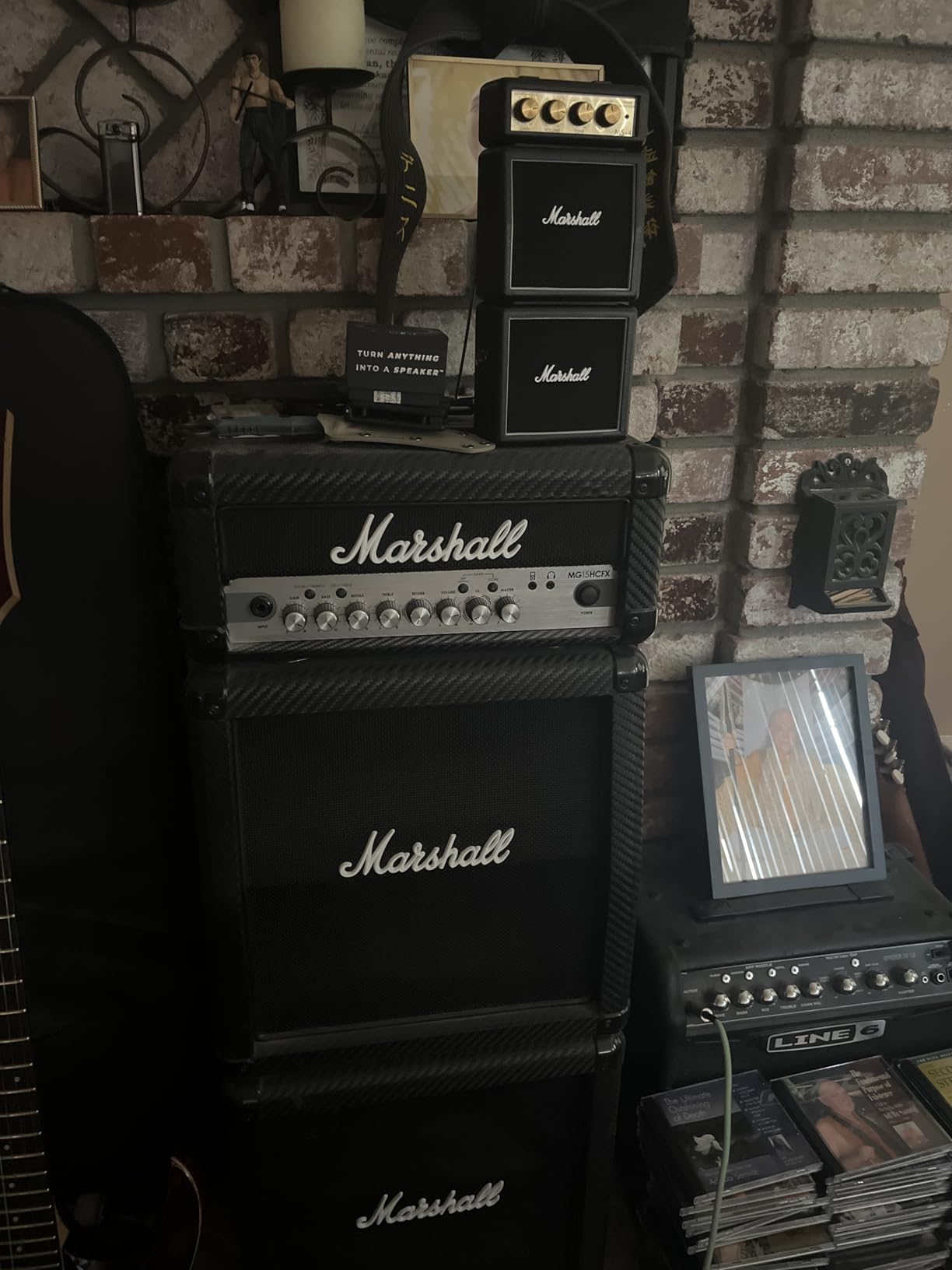
The MS4 also takes pedals surprisingly well. Plug an overdrive or distortion pedal into the front, and you get a much beefier tone than the amp produces on its own. This makes it a fun practice tool for experimenting with different pedal combinations.
The main complaint is quality control. Some users report damaged mesh screens and durability issues over time. The headphone and guitar jacks share the same 1/4 inch size, which can be confusing. No battery is included, so you will need to supply your own 9V.
Best For: Decoration Meets Function
The MS4 is perfect for guitarists who want a cool-looking practice amp that doubles as a conversation piece. The full-stack design makes it a great desk or shelf display item. It is also a popular gift for guitar players of all skill levels.
Limitations: Novelty First, Performance Second
Like the MS-2R, the MS4 is not a serious performance tool. The sound quality is limited by the tiny speaker, and the construction quality can be inconsistent. Treat it as a fun accessory that happens to make sound, not as your main amplifier.
11. Marshall DriveMaster Overdrive Pedal – Classic Marshall Tone in a Stompbox

Marshall DriveMaster Overdrive/Distortion Pedal
Overdrive/Distortion pedal
Analog signal
1/4 inch jack
Compact design
Warm distorted tone
Pros
- Real Marshall amplifier classic rock sound
- Warm distorted tone quality
- Compact design
- 9V battery and DC adaptor option
Cons
- Price may be high compared to alternatives
- Limited availability
- Only 8 reviews
The Marshall DriveMaster is not an amplifier, but it deserves a place in this guide because it delivers authentic Marshall overdrive tone in a pedal format. This is the pedal to get if you already have a clean amplifier and want to inject that classic Marshall crunch into your signal chain. Our team tested it through a clean solid-state amp and was impressed by the warm, saturated distortion that genuinely sounds like a cranked Marshall tube head.
The pedal features a simple control layout with knobs for gain, tone, and output level. The analog signal path preserves the warmth and dynamics of your playing, which is something digital modelling pedals often struggle with. The compact design takes up minimal pedalboard space, and the 1/4 inch jack connectivity is standard for guitar pedal setups.
With only 8 reviews on Amazon, the DriveMaster does not have the large review base of the other products in this guide. However, the reviews that exist are positive, praising the authentic Marshall tone and the warm distortion quality. This pedal is particularly popular among players who use Fender or Vox amps but want access to that Marshall overdrive character for certain songs.
Best For: Non-Marshall Amp Owners Who Want Marshall Tone
If your main amplifier is a Fender, Vox, or another brand, the DriveMaster pedal is an affordable way to add Marshall overdrive to your tonal palette. It is also useful for recording, where you might want to layer a Marshall-style tone alongside your primary amp sound.
Limitations: Price and Availability
The DriveMaster is priced higher than many competing overdrive pedals, and availability is often limited. If you cannot find one in stock, consider it a specialized tool rather than an everyday purchase.
12. Marshall JCM800 Jack Rack – The Ultimate Guitarist Gift
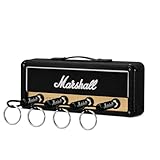
P Pluginz Marshall JCM800 Jack Rack® Reissue
Key holder
Stainless steel
Wall mount
Marshall licensed
2 jacks
Satisfying click
Pros
- Good quality construction
- Iconic Marshall style
- Easy wall mount
- Satisfying click when plugging in
- Perfect gift for guitarists
Cons
- Cables may wear over time
- Jacks can be bulky
- Pricey for a key holder
The Marshall JCM800 Jack Rack rounds out our list as a Marshall-branded accessory rather than an amplifier. But with over 5,548 reviews and a stellar 4.8-star rating, it is one of the most popular Marshall products on the market. This wall-mounted key holder uses authentic 1/4 inch audio jacks as hangers, so you plug in your keys just like you would plug a cable into an amp. The satisfying click when the jack locks into place is a detail that guitarists absolutely love.
The stainless steel construction is solid and well-built. The officially licensed Marshall design means it looks authentic, with the classic Marshall aesthetic that makes it a perfect addition to any music room, studio, or home. Our team found the mounting process straightforward, and the included hardware makes installation easy.

This is the gift that keeps on giving for guitar players. Every guitarist who sees it wants one. The jack inputs accept the included key fobs, which attach to your keychain. The visual of a mini Marshall head on the wall, with keys hanging from audio jacks, is both functional and decorative.
The main concern is long-term wear. The cables connecting the key fobs to your keys can degrade over time, especially with heavy keychains. Some users also note that the jacks can be bulky to carry in a pocket. But as a decorative and functional piece, the Jack Rack is hard to beat.
Best For: Guitarists Who Need a Cool Key Holder
This is the perfect gift for the Marshall enthusiast who already has all the amps and pedals they need. It is also great for music studios, rehearsal spaces, and homes where a Marshall-themed decor piece would be appreciated. At this price, it makes an excellent stocking stuffer or birthday present.
Limitations: It Is Not an Amp
The Jack Rack is purely decorative and functional as a key holder. It does not produce any sound, and the jacks are purely mechanical. If you are looking for an amplifier, refer to the other products in this guide.
How to Choose the Best Marshall Amp for Your Needs
Choosing the right Marshall amp comes down to understanding your needs as a player. In this section, we break down the key factors you should consider before making a purchase. Whether you are a beginner shopping for your first amp or an experienced player adding to your collection, these guidelines will help you make the right choice.
Tube vs Solid-State vs Modelling: Which Is Right for You?
The amplifier technology you choose has the biggest impact on your tone. Tube amplifiers, which use ECC83 preamp tubes and EL34 power tubes in Marshall’s case, produce warm, harmonically rich overdrive that responds dynamically to your playing. They sound best when pushed hard, which means they can be very loud. Marshall’s tube amps include the DSL, Origin, Studio, JVM, and Jubilee series, though these were not in our current product set.
Solid-state amplifiers use transistor-based circuitry instead of tubes. They are more affordable, lighter, and more reliable than tube amps. The MG series represents Marshall’s solid-state lineup. While they do not have the same harmonic saturation as tube amps, modern solid-state circuits are much improved and deliver convincing Marshall tone at a fraction of the cost. Solid-state amps are ideal for beginners and practice.
Digital modelling amps like the CODE series use DSP (digital signal processing) to simulate the sound of various tube amplifiers. They offer enormous tonal variety, built-in effects, and recording connectivity. The trade-off is that some players feel the modeled tones lack the warmth and responsiveness of real tubes. For home recording and practice, modelling amps are hard to beat.
Wattage Guide: Matching Power to Your Playing Situation
Wattage determines how loud your amp can get, but the relationship is not linear. A 50-watt amp is not five times louder than a 10-watt amp. In fact, it takes about ten times the wattage to double the perceived volume. Here is a practical guide.
For bedroom practice and headphone use, 1 to 15 watts is plenty. The MG10G (10W), MG15G (15W), and CODE25 (25W with master volume) are all excellent choices. For band practice and small gigs, look at 30 to 50 watts. The MG30GFX (30W), MG50GFX (50W), and CODE50 (50W) have the headroom to keep up with a drummer. For large venues and professional gigs, you will want to look at Marshall’s tube amp lineup, which includes 100-watt heads and full stacks.
Remember that tube watts and solid-state watts are not equivalent. A 15-watt tube amp can be significantly louder than a 50-watt solid-state amp because tube amps are measured differently and their distortion is more musical, allowing them to be pushed harder without sounding harsh.
Understanding Channels and Gain Structure
The number of channels on your amp determines how many distinct tones you can access. Single-channel amps (like the classic Plexi) give you one sound and rely on your guitar’s volume knob and pedals for variation. Two-channel amps, like the MG10G and MG15G, typically offer a clean channel and an overdrive channel. This is the minimum we recommend for most players.
Four-channel amps like the MG15GFX, MG30GFX, and MG50GFX give you clean, crunch, OD1, and OD2. This covers everything from sparkling cleans to saturated metal tones. The ability to switch between these channels mid-song is essential for live performance. Make sure the amp includes or supports a footswitch for hands-free channel changing.
Gain structure refers to how the amp builds distortion. Marshall amps are famous for their gain staging, where the preamp tubes (or solid-state equivalent) progressively add more distortion as you turn up the gain control. Understanding where your amp’s sweet spot is, the point where the tone transitions from clean to crunch to full distortion, is key to getting great sounds.
Features That Matter: FX Loop, Reverb, and Connectivity
An effects loop (FX loop) allows you to place time-based effects like delay and reverb after the preamp distortion, which produces a cleaner, more defined effect sound. The MG and CODE series amps in our lineup do not include FX loops, which means all your pedals go through the front of the amp. For most practice and small-gig scenarios, this is fine. But if you use complex pedal setups, you may eventually want an amp with an FX loop.
Built-in reverb adds depth and space to your tone. The MG15GR includes a real spring reverb, while the MG15GFX, MG30GFX, and MG50GFX offer digital reverb with selectable types. Reverb is one of the most universally useful effects, and having it built in saves you from buying a separate pedal.
For recording, the CODE series offers USB output for direct connection to your DAW. Bluetooth connectivity on the CODE series enables wireless preset editing and music streaming. These modern features make the CODE amps incredibly versatile for home studio use.
Speaker Size and Cabinet Considerations
Speaker size has a major impact on your amp’s tone. The 6.5 inch speaker on the MG10G produces a focused, mid-range-heavy sound. The 8 inch speakers on the MG15 series give you a bit more low end. The 10 inch on the MG30GFX adds noticeable warmth and projection. The 12 inch speakers on the MG50GFX and CODE50 deliver full-range tone with proper bass response.
For practice, smaller speakers are fine. But as you play louder and with other musicians, larger speakers become essential for a balanced sound. If you plan to gig, we recommend at least a 10 inch speaker, with 12 inch being ideal for full-band situations.
Cabinet construction also matters. Closed-back cabinets (like the MG15GR) provide tighter, more focused bass response. Open-back designs give a wider, more ambient sound dispersion. Most practice amps use closed-back designs for better low-end projection in small enclosures.
FAQ’s
Which Marshall amp is the best?
The best Marshall amp depends on your needs. For overall value, the MG30GFX offers the best balance of power, features, and price. For digital modelling and recording, the CODE50 is outstanding. For budget practice, the MG10G delivers classic Marshall tone at an entry-level price.
Why is the JCM800 so popular?
The JCM800, introduced in 1981, became legendary for its raw, aggressive overdrive tone that defined 1980s hard rock and metal. Artists like Kerry King, Zakk Wylde, and Jeff Hanneman relied on its single-channel, high-gain sound. The JCM800 is popular because it delivers pure, unadorned Marshall tube tone with no compromises.
What is Marshall’s flagship amp?
Marshall’s flagship amplifier is the JVM410H, a 100-watt, four-channel all-tube head with the most extensive feature set in the Marshall lineup. It offers 12 separate tones across four channels (Clean, Crunch, OD1, OD2) and represents the pinnacle of Marshall’s tube amp engineering.
What does JCM stand for in Marshall?
JCM stands for Jim Marshall’s initials (Jim Marshall, founder of Marshall Amplification), combined with the year the series was launched. The JCM800 was introduced in 1981 and was the first Marshall amp series to carry Jim Marshall’s personal name on the panel.
What is the holy grail of guitar amps?
The holy grail of guitar amps is widely considered to be a 1959 Marshall Plexi Super Lead. This amplifier, used by Eric Clapton, Jimi Hendrix, and Jimmy Page, defined the sound of rock guitar. Original Plexi heads from the late 1960s command premium prices among collectors.
Conclusion: Finding Your Perfect Marshall Amp
After reviewing all 12 products in detail, our top recommendation for most players is the Marshall MG30GFX. It hits the perfect balance of power, features, and value, with 30 watts, four channels, built-in effects, and a 10 inch speaker that produces genuinely satisfying tone. For players who want digital modelling and recording capabilities, the CODE50 is the clear winner with its 100-plus presets, Bluetooth connectivity, and USB output. And for beginners on a budget, the MG10G delivers authentic Marshall tone at a price anyone can afford.
The best Marshall amps are the ones that match your specific needs. If you practice quietly in an apartment, a 10 or 15-watt combo with a headphone jack is ideal. If you record at home, the CODE series with USB connectivity will transform your workflow. If you gig regularly, step up to the MG50GFX or look at Marshall’s tube amp lineup for stage-worthy tone. Whatever your situation, there is a Marshall amp with your name on it.
Marshall has been defining the sound of rock guitar for over 60 years, and the current lineup proves that the brand continues to evolve. From solid-state practice amps to digital modelling combos, every product in this guide carries the Marshall DNA that changed music forever. Pick the one that fits your playing, plug in, and let it rip. The best time to get your Marshall tone is 2026, and the options have never been better.