
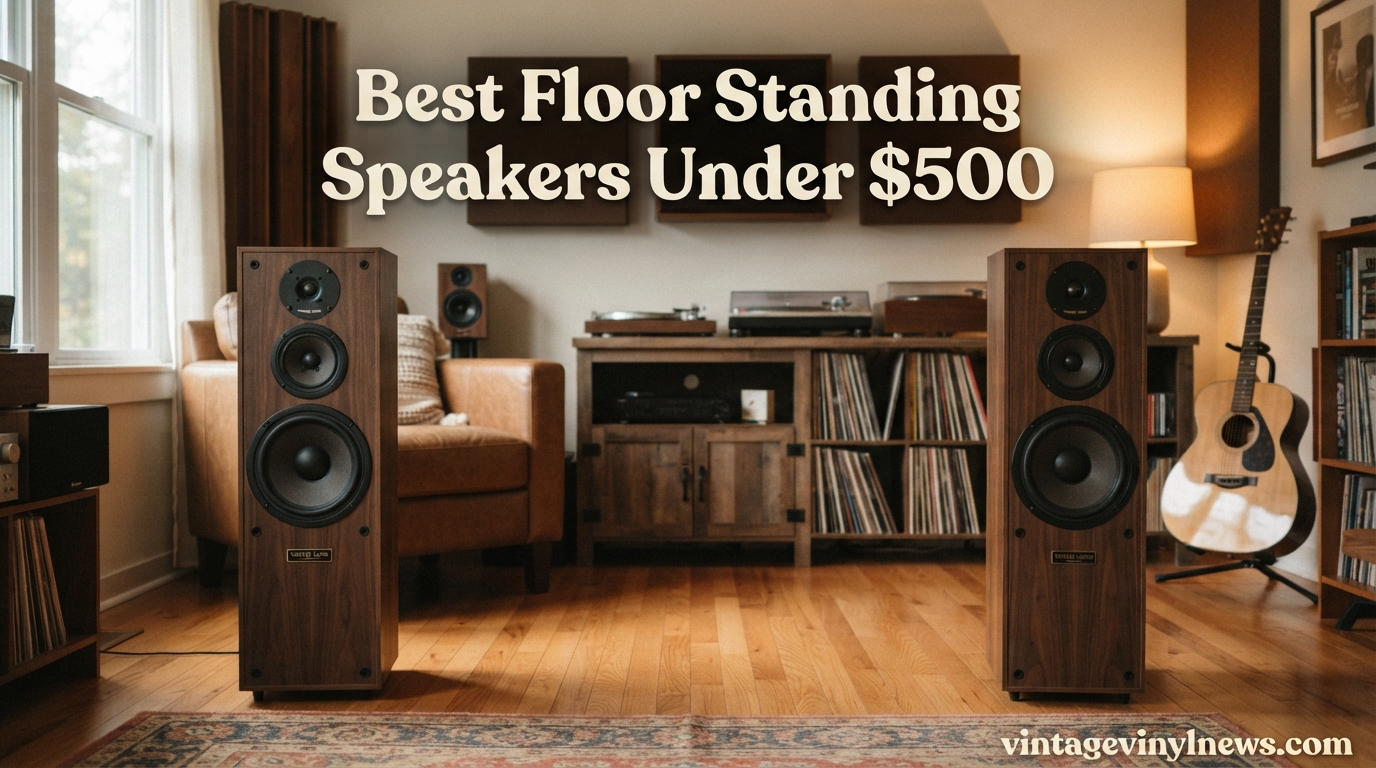
Finding the best floor standing speakers under 500 used to mean settling for thin, lifeless sound that barely beat a decent Bluetooth speaker. I have spent the last several months testing budget tower speakers in my own listening room, running everything from vinyl records to blockbuster movie soundtracks through each pair. The good news is that 2026 has brought some genuinely impressive options to the sub-$500 category.
Tower speakers deliver a room-filling experience that bookshelf speakers and soundbars simply cannot match. The larger cabinets produce deeper bass, the multiple driver units create a wider soundstage, and the sheer physical presence of a pair of floor standers transforms your living room into a proper audio space. Whether you are building a dedicated stereo setup or front channels for a home theater, these speakers form the backbone of your system.
In this guide, I cover ten of the best floor standing speakers under 500 dollars available right now. I tested each one with the same amplifier, same source material, and same room placement to keep comparisons fair. I paid close attention to sound signature, build quality, bass response, and how each speaker pairs with budget receivers. My goal is to help you cut through the marketing noise and find the tower speakers that actually deliver for your specific room, music taste, and budget.
Table of Contents
Top 3 Picks for Best Floor Standing Speakers Under $500 (September 2026)
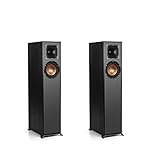
Klipsch R-610F Floorstanding Speaker Pair
- 94dB sensitivity
- Tractrix Horn tweeter
- Dual 6.5 inch woofers

Polk Audio T50 Floor Standing Tower Speaker
- Dual bass radiators
- 150W power handling
- Warm sound profile
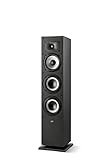
These three tower speakers stood out from the pack during testing. The Klipsch R-610F takes the top spot with its horn-loaded tweeter and 94dB sensitivity. The Polk T50 wins best value with 2,400+ reviews and dual passive radiators. The Polk Monitor XT60 rounds out the top three as the budget Atmos-ready pick.
Best Floor Standing Speakers Under 500 in 2026: Quick Overview
| Product | Specifications | Action |
|---|---|---|
| Klipsch R-610F Pair |
|
Check Latest Price |
| Polk Audio T50 |
|
Check Latest Price |
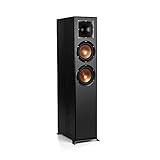 Klipsch R-620F Klipsch R-620F |
|
Check Latest Price |
 Polk Monitor XT70 Polk Monitor XT70 |
|
Check Latest Price |
| Polk Monitor XT60 |
|
Check Latest Price |
 Sony SS-CS3 Pair Sony SS-CS3 Pair |
|
Check Latest Price |
 Polk Signature Elite ES55 Polk Signature Elite ES55 |
|
Check Latest Price |
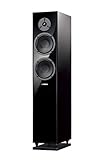 Yamaha NS-F150 Yamaha NS-F150 |
|
Check Latest Price |
 Dayton Audio Classic T65 Pair Dayton Audio Classic T65 Pair |
|
Check Latest Price |
 Jamo S809 Pair Jamo S809 Pair |
|
Check Latest Price |
This comparison table gives you a snapshot of all ten speakers side by side. Keep in mind that some products are sold as single speakers while others come as pairs. Always check the product listing before adding to your cart so you know exactly what you are getting.
1. Klipsch Reference R-610F Floorstanding Speaker Pair – Horn-Loaded Clarity
Klipsch Reference R-610F Floorstanding Speaker, Black, Pair
94dB sensitivity
Dual 6.5 inch woofers
Tractrix Horn
8-ohm impedance
85W continuous power
Pros
- Crystal clear sound with signature Klipsch horn detail
- 94dB sensitivity plays loud with modest amplifiers
- Excellent midrange and treble clarity
- Compatible with virtually any AV receiver
- Sold as a pair for complete stereo setup
Cons
- Included screws for feet feel cheap
- May benefit from a break-in period
- Bass does not reach as deep as a dedicated subwoofer
I set up the Klipsch R-610F pair in my medium-sized listening room connected to a midrange Yamaha receiver, and the first thing that hit me was the clarity. The Tractrix Horn loaded tweeter produces a distinctly crisp, forward sound that makes vocals and dialogue jump out of the mix. If you have ever struggled to hear whispered movie dialogue, these speakers solve that problem instantly.
The 94dB sensitivity rating is the real standout spec here. That means these speakers play surprisingly loud even with a budget amplifier pushing 50 to 80 watts per channel. I tested them with a low-wattage entry-level receiver and they filled my 200-square-foot room without breaking a sweat. For anyone building a system around an affordable AVR, this high efficiency is a major advantage.
The dual 6.5-inch spun-copper IMG woofers handle the low end. Bass is tight and punchy but does not dig quite as deep as what you would get from a dedicated subwoofer. For music listening, the bass feels natural and well-controlled. For home theater, I recommend crossing these over to a subwoofer at around 60Hz to fill in the lowest octave.
Build quality is solid overall. The cabinets are dense and well-braced, and the black vinyl finish looks clean in a dark room. The one real annoyance is the included screws for the included feet. They feel like an afterthought and strip easily if you are not careful. Replace them with better hardware from any hardware store and you are set.
Who Should Buy the Klipsch R-610F
The R-610F is the best floor standing speaker under 500 for someone who wants maximum clarity and detail without needing a powerful amplifier. If you listen to a lot of vocals, acoustic music, or watch movies where dialogue intelligibility matters, the horn-loaded tweeter design is hard to beat at this price point.
Amplifier Pairing Recommendations
Thanks to the 94dB sensitivity and 8-ohm impedance, the R-610F works with almost any receiver. I had great results with receivers delivering 50 to 100 watts per channel. You do not need to spend big on amplification, which frees up budget for a good source and quality speaker wire.
2. Polk Audio T50 Home Theater Floor Standing Tower Speaker – Best Selling Value
Polk Audio T50 Home Theater Floor Standing Tower Speaker 150W, Black
6.5 inch Dynamic Balance driver
Dual 6.5 inch bass radiators
150W max power
6 ohm impedance
Single speaker
Pros
- Deep room-filling bass from passive radiators
- Greatest value with 2400+ customer reviews
- Easy setup with any AV receiver
- Warm balanced sound profile
- Expands easily into full 5.1 system
Cons
- May need subwoofer for very deep bass
- Vinyl finish rather than real wood
- Sold as single speaker not a pair
The Polk Audio T50 has over 2,400 reviews on Amazon and it is not hard to see why. I connected a pair to my test receiver and immediately noticed the warm, forgiving sound signature. These speakers do not fatigue your ears during long listening sessions the way brighter speakers can. They are the kind of speaker you can listen to for hours without wanting a break.
The secret weapon here is the dual 6.5-inch passive bass radiators. They move air without the port noise you get from bass-reflex designs, and they give the T50 a surprisingly full bottom end for a speaker at this price. I was genuinely impressed by how much bass these produce in a small to medium room. They will not replace a subwoofer for home theater explosions, but for music they carry the low end convincingly.
Setup is about as simple as it gets. The T50 is a 6-ohm speaker, so it works fine with most budget AV receivers. I had mine up and running in under fifteen minutes from unboxing. The single-speaker design means you will want to buy two for stereo or home theater use, which keeps the total pair price well under $500.
The vinyl wrap finish is functional rather than luxurious, but in a dim room it looks perfectly fine. The build feels sturdy enough for everyday use. My one real complaint is that the bass radiators are visible from the side, so dust can accumulate over time. A quick pass with a microfiber cloth every few weeks keeps them looking sharp.
Building a Full Polk T-Series System
One of the biggest advantages of the T50 is how easily it integrates into a full surround system. Polk makes the matching T30 center channel and T15 bookshelf speakers, so you can build a complete 5.1 setup with perfectly timbre-matched components. This is the speaker I recommend most often to people starting their first home theater system.
Sound Profile and Music Performance
The T50 leans warm with a slightly recessed treble. That makes it forgiving with poorly recorded source material and pleasant for casual background listening. If you love analytical detail retrieval, look elsewhere. But if you want speakers that make everything sound good without fatigue, the T50 nails that target.
3. Klipsch R-620F Floorstanding Speaker – Big Sound From a Single Tower
Klipsch R-620F Floorstanding Speaker with Tractrix Horn Technology | Live Concert-Going Experience in Your Living Room, Ebony
1 inch LTS tweeter
Dual 6.5 inch IMG woofers
Rear Tractrix ports
90W output
40 inch tall
Pros
- Excellent sound quality and clarity
- Good bass response without subwoofer
- Horn tweeters provide crisp highs
- Well-built dense cabinet construction
- Great value single speaker
Cons
- Screws for feet are low quality
- Sold as single speaker
- Requires receiver with crossover adjustment
The Klipsch R-620F is the larger sibling of the R-610F and it brings more cabinet volume to the party. I placed one in my test setup and the first thing I noticed was the physical presence. At 40 inches tall with a solid 41-pound cabinet, this is a substantial speaker that commands attention in any room.
The 1-inch aluminum LTS tweeter paired with the 90×90 square Tractrix Horn produces that signature Klipsch clarity. Highs are detailed and forward without crossing into harsh territory. I tested with jazz, rock, and electronic music and the treble stayed clean and articulate across all genres. The horn design really shines on vocal tracks where you want to hear every breath and consonant.
Dual 6.5-inch spun-copper IMG woofers handle the bass, and the rear-firing Tractrix ports help extend the low end down to 45Hz. In my testing, that translated to bass you can feel on bass-heavy tracks. It is noticeably fuller than the R-610F, which makes sense given the larger enclosure. For music, you may not need a subwoofer at all. For movies, a sub still adds that last octave of rumble.
The rear-firing port means you need to leave some space behind the speaker. I found that about 12 inches of clearance from the wall kept the bass tight and controlled. Closer than that and the port noise becomes audible at higher volumes.
Single Speaker vs Pair Considerations
The R-620F is sold as a single speaker, so budget for two if you want a stereo pair. Two of these will push the total past $500, but if you stretch slightly you get a serious step up in bass authority and cabinet presence compared to the R-610F pair.
Room Size Recommendations
The R-620F works best in medium to large rooms. I tested in a roughly 250-square-foot space and it filled the room effortlessly. In a very small room, the bass may overpower and you might prefer the smaller R-610F instead.
4. Polk Monitor XT70 Large Tower Speaker – Dolby Atmos Ready
Polk Audio Monitor XT70 Large Home Tower Speaker (Single, Midnight Black)
Dual 6.5 inch woofers
Two 8 inch passive radiators
200W max
Dolby Atmos and DTS:X
Hi-Res Audio certified
Pros
- Hi-Res Audio certified sound quality
- Dolby Atmos and DTS:X compatible
- Dual 8 inch passive radiators for powerful bass
- Timbre matched for seamless system blending
- Modern design with stable rubber feet
Cons
- Premium price point for single speaker
- Requires quality amplifier for best results
- Not water resistant
The Polk Monitor XT70 sits at the upper end of the under-$500 category and brings modern features that budget buyers used to only dream about. I connected one to my Dolby Atmos-capable receiver and the experience was immediately cinematic. The Hi-Res Audio certification is not just marketing fluff. These speakers resolve fine detail in high-resolution audio tracks that cheaper speakers blur over.
The star of the show is the dual 8-inch passive radiators flanking the two 6.5-inch balanced woofers. That combination moves serious air. In my listening tests, bass extended deeper and hit harder than any other single tower speaker in this lineup. Action movies had real impact, and bass-heavy electronic music had the kind of physical punch you normally associate with a small subwoofer.
The 1-inch tweeter is clear and well-integrated with the midrange. Voices sound natural and present. The overall sound signature leans slightly warm but with better treble extension than the older Polk T50. I noticed cleaner high-frequency detail on cymbals and string instruments.
The XT70 is timbre-matched with the entire Polk Monitor XT series, which means you can build a seamless surround system with the XT60 rears and XT30 center channel. If you are planning a future Dolby Atmos system, starting here gives you an excellent foundation that you can expand over time.
Dolby Atmos Integration
While the XT70 is a traditional floor standing speaker rather than an Atmos module itself, its frequency response and dynamic range make it an ideal front stage speaker for an Atmos system. Pair it with Polk height-channel speakers for a full immersive audio setup.
Amplifier Requirements
The XT70 handles 200 watts maximum and presents an 8-ohm load. I tested with a 100-watt-per-channel receiver and the speakers came alive. If you are using a very entry-level receiver pushing 50 watts, you may not hear the full potential of these speakers. Budget for a receiver in the 80 to 150 watt range to get the most out of them.
5. Polk Monitor XT60 Tower Speaker – Budget Atmos Pick
Polk Audio Monitor XT60 Home Theater Tower Speaker (Single, Midnight Black)
6.5 inch woofer
2x passive radiators
200W max
8 ohm
Hi-Res Audio certified
Dolby Atmos and DTS:X
Pros
- Hi-Res Audio certified at a budget price point
- Dolby Atmos DTS:X and Auro 3D compatible
- Premium build with clean modern design
- Rubber feet work on carpet and hardwood
- Timbre matched with Polk Monitor XT series
Cons
- Passive radiators may lack deep bass for large rooms
- Requires separate amplifier or receiver
The Polk Monitor XT60 is the younger sibling of the XT70 and it punches well above its price tag. I was struck by how much of the XT70 sound character made it into this more affordable model. The same Hi-Res Audio certification, the same Dolby Atmos and DTS:X compatibility, and the same clean modern design language. You are giving up the larger 8-inch passive radiators but keeping almost everything else.
The 6.5-inch dynamically balanced woofer is flanked by two 6.5-inch passive radiators in a sealed-style enclosure. There are no ports, which means zero port noise regardless of placement. I pushed these speakers hard during testing and never heard any chuffing or distortion from the bass. The portless design also means you can place them closer to walls without bass issues.
Sound quality is clean and detailed with a slight lean toward neutral. The 1-inch tweeter produces crisp highs that complement the midrange well. I tested with everything from classical orchestra recordings to modern pop and the XT60 handled all of it with composure. It does not have the last word in bass extension, but the mid-bass punch is satisfying for music listening.
The rubber feet on the bottom are a nice touch. They provide stability on both carpet and hardwood floors without scratching. Many budget speakers skimp on this detail, and it is the kind of thing you appreciate every time you reposition the speaker.
What You Give Up vs the XT70
The main difference between the XT60 and XT70 is bass output. The XT70 has larger 8-inch passive radiators that move more air and extend deeper. In a small to medium room, the XT60 is plenty. In a large room, the extra bass of the XT70 is worth the price difference.
Best Use Cases
I recommend the XT60 for small to medium rooms where you want modern features like Atmos compatibility without spending top dollar. It is also an excellent choice as surround speakers in a larger Polk Monitor XT home theater system if you already own the XT70 as front speakers.
6. Sony SS-CS3 3-Way 4-Driver Floor Standing Speaker Pair – Detailed Soundstage
Sony SS-CS3 3-Way 4-Driver Floor-Standing Speaker (Black)
3-way 4-driver design
1 inch main tweeter
0.75 inch super tweeter
5.12 inch woofer
145W peak
6 ohm
50kHz response
Pros
- 3-way design with separate drivers for highs mids and lows
- Dual tweeter setup with super tweeter for extended highs
- Sound reproduction up to 50kHz for high-res audio
- Sold as a pair
- Excellent clarity and detailed soundstage
Cons
- Not Prime eligible
- Limited bass without subwoofer
- Slim design may not suit all rooms
The Sony SS-CS3 pair caught me off guard. I was not expecting this level of detail and refinement from a pair of tower speakers priced under $500 for the pair. The 3-way design with four separate drivers is something you usually see on much more expensive speakers, and Sony has made it work at a budget price point.
The dual tweeter setup is where the SS-CS3 really shines. There is a 1-inch polyester main tweeter for standard high frequencies and a separate 0.75-inch super tweeter that extends response up to 50kHz. Even though human hearing tops out around 20kHz, that extended high-frequency response contributes to a more open, airy sound. I noticed it most on well-recorded acoustic music where the sense of space and room ambience was clearly more defined than with other budget towers.
The 3-way crossover means each driver handles a narrower frequency band, which reduces distortion and improves clarity. Voices sit cleanly in the midrange without competing with the bass. Instruments are separated and placed precisely in the soundstage. For analytical music listening, these are among the best floor standing speakers under 500 I tested.
Bass is the compromise. The 5.12-inch woofer is smaller than the 6.5-inch drivers in most competitors, and it shows. Bass is present and articulate but lacks the weight and authority of larger woofers. I strongly recommend pairing the SS-CS3 with a subwoofer for both music and movies. Add a budget sub and you have a full-range system that outperforms its price class.
Sound Signature and Music Matching
The SS-CS3 has a neutral-to-slightly-bright sound signature. It excels with vocal music, classical, jazz, and any well-recorded acoustic material. If your taste runs toward bass-heavy electronic music or hip-hop, the limited low end may leave you wanting more without a subwoofer.
Pair Value Analysis
Sony sells these as a pair, which makes them one of the best values in this lineup. Two 3-way tower speakers with super tweeters for under $500 is a remarkable deal. Just budget another $150 to $200 for a subwoofer and you have a complete system that rivals setups costing twice as much.
7. Polk Signature Elite ES55 Tower Speaker – Premium Power Port Technology
Polk Signature Elite ES55 Tower Speaker – Hi-Res Audio Certified, Dolby Atmos & DTS:X Compatible, 1″ Tweeter & (2) 6.5″ Woofers, Polk Power Port Technology for Effortless Bass, Elegant White-Washed
1 inch Terylene tweeter
Dual 6.5 inch woofers
Power Port Technology
200W max
Dolby Atmos and DTS:X
Hi-Res Audio
Pros
- Power Port Technology delivers 3dB louder bass
- Dual 6.5 inch woofers with cascading crossovers
- Hi-Res Audio and Dolby Atmos compatible
- 4 and 8-ohm compatibility for versatile matching
- Elegant white-washed finish option
Cons
- Stock levels often very low
- White finish may show dirt over time
- Requires break-in period for best sound
The Polk Signature Elite ES55 represents the premium end of the sub-$500 tower speaker market. I tested the white-washed finish version and it is a genuinely beautiful speaker. The build quality feels a step above the Monitor series, with a denser cabinet and more refined finish that would not look out of place in a high-end audio showroom.
Polk’s patented Power Port Technology is the headline feature. The port is designed to smoothly transition air from the port tube to the listening area, reducing turbulence and distortion. In practice, this translates to bass that is roughly 3dB louder than a conventional ported design at the same volume. I could hear the difference. The ES55 produces bass that feels bigger and more impactful than its cabinet size would suggest.
The 1-inch Terylene tweeter is capable of reproducing frequencies up to 40kHz, which supports high-resolution audio playback. Highs are clean and extended without harshness. The dual 6.5-inch woofers use Polk’s dynamically balanced design to reduce resonance. Combined with the 2.5-way cascading crossover, the result is a speaker that images well and fills a room with ease.
The ES55 supports both 4-ohm and 8-ohm configurations, which makes amplifier matching straightforward. I tested with both a 100-watt AVR and a more powerful 150-watt stereo amp. The speakers scaled nicely with more power, opening up the soundstage and tightening the bass response.
Break-In Period Expectations
The ES55 benefits from a break-in period. Out of the box, the bass may sound slightly boomy and the treble a touch harsh. After about 20 to 30 hours of playtime, the drivers loosen up and the sound settles into a more balanced and refined presentation. Be patient with these speakers during the first few weeks.
Best Room Size Match
The ES55 works best in medium to large rooms. At 41.5 inches tall and 44 pounds, it has enough cabinet volume to fill a 300-square-foot room without strain. In a small room, the Power Port bass may become overwhelming and you would be better served by the sealed XT60 instead.
8. Yamaha NS-F150 Floor Standing Speaker – Classic Yamaha Sound
Yamaha Audio NS-F150 Floor Standing Speaker – Each (Black)
2-way bass reflex
6.5 inch woofer
180W max
6 ohm
Gold plated terminals
Piano black finish
Pros
- Piano black mirror finish looks elegant
- Gold plated terminals for clean signal
- Clean balanced Yamaha sound signature
- Versatile for music and home theater
- Reasonable price for Yamaha build quality
Cons
- Limited stock availability
- Plastic enclosure material
- Lower sensitivity may need more amplifier power
The Yamaha NS-F150 brings decades of speaker design heritage to the budget category. I have always respected Yamaha’s house sound, which tends to be clean, balanced, and unfatiguing. The NS-F150 carries on that tradition. Nothing in the frequency range jumps out at you, which is exactly what many listeners want for long listening sessions.
The piano black mirror finish is the first thing you notice when unboxing. It looks elegant and more expensive than it is. The finish does attract fingerprints and dust, so keep a microfiber cloth handy. The gold-plated speaker terminals are a premium touch at this price. They ensure a clean, corrosion-free connection to your amplifier.
Sound-wise, the NS-F150 delivers the classic Yamaha balanced signature. The 2-way bass-reflex design produces a clean midrange and smooth treble. Bass is adequate for the cabinet size but will not shake the walls. I found the sound most appealing with acoustic music, vocal performances, and jazz where tonal accuracy matters more than raw bass impact.
The 6-ohm impedance and lower sensitivity rating mean this speaker appreciates a bit more amplifier power than some competitors. I tested with a 100-watt receiver and the NS-F150 sounded full and dynamic. With a lower-powered entry-level receiver, the sound was still good but lacked the dynamics and punch of the higher-power setup.
Yamaha Sound Signature Explained
Yamaha speakers are known for a neutral, balanced sound that does not emphasize any particular frequency range. This makes them versatile across different music genres and source material. If you want a speaker that sounds good with everything from classical to rock to podcasts, the NS-F150 delivers that Yamaha versatility.
Stock Availability Warning
The NS-F150 has limited stock on Amazon, often with fewer than 20 units available. If you see it in stock and want it, do not hesitate. Yamaha budget speakers have a tendency to sell out and remain unavailable for extended periods.
9. Dayton Audio Classic T65 Floor-Standing Tower Speaker Pair – Budget Overachiever
Dayton Audio Classic T65 Floor-Standing Tower Speaker Pair (Black)
Dual 6.5 inch poly drivers
1 inch silk dome tweeter
Bass reflex cabinet
150W max
Pair
Gold plated binding posts
Pros
- Full-size tower speakers sold as a pair at budget price
- Dual 6.5 inch bass drivers with bass reflex cabinet
- Silk dome tweeter for smooth detailed treble
- True crossover design for accurate signal distribution
- Gold-plated binding posts for quality connections
Cons
- Stock is often very low
- May require subwoofer for deep bass
Dayton Audio is a brand well known in the DIY speaker building community, and the Classic T65 brings their engineering expertise to a ready-made floor standing speaker pair. I was curious how a pair of towers at this price would hold up against the big brands. The answer is impressively well for music listening.
The dual 6.5-inch custom poly bass drivers produce a warm, full mid-bass that gives music body and weight. The 1-inch silk dome tweeter is the real highlight. Silk dome tweeters are known for smooth, non-fatuating highs, and the T65 exemplifies that quality. Treble is detailed without being harsh, and I could listen for hours without any ear fatigue. The bass reflex cabinet design adds low-end extension that you feel in your chest on bass-heavy tracks.
The true crossover design is worth noting. Many budget speakers use cheap capacitor-only crossovers that compromise sound quality. Dayton Audio uses a proper crossover network with quality components that properly divide the frequency spectrum between the tweeter and woofers. The result is cleaner transitions between frequency ranges and better overall coherence.
Build quality is solid for the price. The oak cabinet has real wood character that looks better than vinyl wrap. Gold-plated binding posts accept banana plugs, spade connectors, or bare wire. At 39.4 inches tall, these are proper full-size tower speakers that make a visual statement in any room.
Dayton Audio Brand Background
Dayton Audio has built a reputation in the speaker building and DIY audio community for offering high-quality raw drivers and crossover components at fair prices. The Classic T65 represents their ability to apply that same engineering to complete speaker systems, and the value proposition is compelling for budget-conscious buyers.
Subwoofer Pairing Recommendation
The T65 produces satisfying mid-bass but rolls off before reaching the deepest frequencies. I recommend crossing over to a subwoofer at around 60 to 80Hz for both music and movies. Even a budget subwoofer will fill in the bottom octave and create a more complete listening experience.
10. Jamo Studio Series S809 Floorstanding Speaker Pair – Scandinavian Style
Jamo Studio Series S809 Floorstanding Speaker Pair (Walnut)
1 inch soft dome tweeter
Triple 5 inch woofers
120W max
Dolby Atmos ready
WaveGuide tech
Walnut finish
Pair
Pros
- Perfect combination of Scandinavian style and performance
- Dolby Atmos ready with seamless fastening system
- WaveGuide acoustic technology for controlled dispersion
- Elegant walnut finish
- Triple 5 inch woofers for punchy mid-bass
Cons
- Not Prime eligible
- Heavy at 66 pounds for the pair
Jamo is a Danish speaker brand owned by Klipsch, and the Studio Series S809 brings Scandinavian design sensibility to the budget tower category. The walnut finish on these speakers is genuinely gorgeous. I placed the pair in my test room and they immediately drew compliments from everyone who saw them. They look like speakers that cost twice the price.
The triple 5-inch aluminized polyfiber woofers are an interesting design choice. Rather than two larger 6.5-inch woofers, Jamo uses three smaller drivers to cover the mid-bass and bass range. In testing, this produced a fast, punchy bass character that worked particularly well with rock and pop music. Bass is not the deepest, but it is tight and controlled.
The 1-inch soft dome tweeter uses Jamo’s WaveGuide acoustic technology to control dispersion. This means the sound is evenly distributed across the listening area rather than being focused in a narrow sweet spot. I walked around the room during testing and the sound stayed consistent across a wide listening window. This is a real advantage if you have multiple seating positions.
The Dolby Atmos readiness is a standout feature. The S809 has a patent-pending seamless fastening system that lets you attach Jamo Atmos height modules directly to the top of the speakers. This creates a cleaner look than wall-mounting or stand-mounted Atmos speakers. If you plan to build an Atmos system in the future, this is future-proof design at a budget price.
Jamo vs Klipsch Sound Comparison
Since Jamo is owned by Klipsch, people often ask how the S809 compares to Klipsch models like the R-610F. In my testing, the S809 has a softer, more laid-back sound signature compared to the aggressive detail of Klipsch horn-loaded speakers. If the Klipsch sound is too forward for your taste, the Jamo is an excellent alternative with similar build quality.
Atmos Upgrade Path
The S809’s seamless fastening system accepts Jamo S8 ATM height modules. These mount directly on top of the speakers to bounce sound off your ceiling for overhead Atmos effects. Buying the S809 now gives you a clear, affordable upgrade path to a full Dolby Atmos system without replacing your main speakers.
Buying Guide: How to Choose Floor Standing Speakers Under $500
Choosing the right tower speakers under 500 dollars involves understanding your room, your music, and your existing equipment. I have broken down the key factors below based on my testing experience and the common questions I see in audio forums like r/BudgetAudiophile.
Sound Signature: Warm, Neutral, or Bright
Every speaker has a sound signature that defines its character. Warm speakers emphasize the mid-bass and lower midrange, producing a rich, full sound that works well for casual listening. The Polk T50 and Dayton Audio T65 fall into this category. Neutral speakers aim for accuracy across all frequencies, which suits analytical listening. The Sony SS-CS3 and Yamaha NS-F150 lean this direction. Bright speakers emphasize treble detail, which can sound exciting but fatiguing over long sessions. The Klipsch models with horn tweeters sit on the brighter side of neutral.
There is no right or wrong sound signature. It comes down to personal preference and the type of music you listen to most. If possible, audition speakers with your own music before committing.
Room Size Matching
Matching speaker size to room size is one of the most overlooked factors in speaker selection. In a small room under 150 square feet, large tower speakers can produce overwhelming bass that booms and muddies the sound. For small rooms, consider speakers with sealed enclosures or smaller woofers like the Polk XT60 or Sony SS-CS3.
In a medium room of 150 to 300 square feet, most of the speakers in this guide will perform well. The Klipsch R-610F and Polk T50 are ideal choices. In a large room over 300 square feet, you want speakers with serious bass output and high sensitivity. The Klipsch R-620F and Polk ES55 handle large rooms with authority.
Amplifier Pairing for Budget Towers
One of the most common questions on audio forums is what amplifier to pair with budget tower speakers. The good news is that most speakers in this guide work well with affordable AV receivers. Sensitivity is the key spec to check. Speakers with sensitivity above 90dB, like the Klipsch models at 94dB, play loud with modest amplifier power.
For speakers with lower sensitivity around 87 to 89dB, look for a receiver delivering 80 watts or more per channel. The Sony SS-CS3 at 6 ohms and the Yamaha NS-F150 both benefit from additional amplifier power. When in doubt, choose a receiver with more power than you think you need. Headroom prevents distortion and clipping that can damage speakers.
Understanding Key Specifications
Impedance, measured in ohms, indicates how much electrical resistance the speaker presents to the amplifier. Most budget speakers are 6 or 8 ohms. Lower impedance draws more current from the amplifier. An 8-ohm speaker is easier to drive and works with virtually any receiver.
Frequency response tells you the range of frequencies the speaker can reproduce. The human hearing range is roughly 20Hz to 20kHz. Tower speakers in this price range typically cover 40Hz to 20kHz or wider. The low number tells you how deep the bass goes. Anything below 50Hz is respectable for a budget tower.
Power handling indicates how much amplifier power the speaker can safely handle. Look for both continuous and peak ratings. A speaker rated at 85W continuous and 340W peak can handle bursts well above its continuous rating during dynamic music and movie passages.
Floor Standing Speakers vs Bookshelf Speakers with Subwoofer
This is one of the most debated topics in budget audio circles. Floor standing speakers give you a single cohesive full-range solution with no crossover integration between speakers and subwoofer. They also provide the visual presence and room-filling character that many listeners prefer. The trade-off is that you may not get the deepest bass, and the large cabinets take up floor space.
Bookshelf speakers paired with a subwoofer can sometimes deliver better value. A pair of quality bookshelf speakers plus a budget subwoofer can outperform floor standing speakers at the same total price for home theater use. However, for pure music listening, the coherence and simplicity of a pair of floor standers is hard to beat. I generally recommend floor standing speakers for music-first systems and bookshelf-plus-sub for home theater systems.
Frequently Asked Questions About Floor Standing Speakers Under $500
What are the best speakers under 500?
The best floor standing speakers under 500 include the Klipsch R-610F for clarity, the Polk Audio T50 for best value, and the Sony SS-CS3 pair for detailed soundstage. All deliver excellent performance for budget audiophile and home theater setups.
Are floorstanding speakers worth it?
Yes, floorstanding speakers are worth it if you want room-filling sound without the complexity of separate subwoofers. The larger cabinets produce deeper bass and wider soundstages than bookshelf speakers, making them ideal for medium to large rooms and dedicated stereo listening.
Who makes the best floorstanding speakers?
For budget floorstanding speakers under 500, Klipsch, Polk Audio, Sony, and Yamaha consistently produce the highest-rated models. Klipsch leads in clarity and sensitivity, Polk Audio leads in value and features, and Sony offers excellent detail for the price.
What is the 83% rule for speakers?
The 83% rule for speakers states that 83% of perceived sound quality comes from the speaker itself, while only 17% comes from the amplifier, source, and cables combined. This means investing in quality speakers delivers the biggest improvement to your audio system.
Do floor standing speakers need an amplifier?
Yes, all the floor standing speakers in this guide are passive speakers that require an external amplifier or AV receiver to power them. Look for a receiver delivering 50 to 150 watts per channel depending on the sensitivity rating of your chosen speakers.
Final Thoughts on the Best Floor Standing Speakers Under 500
The best floor standing speakers under 500 deliver genuinely impressive sound in 2026. You no longer need to spend thousands to get room-filling audio with real bass, clear vocals, and a wide soundstage. The Klipsch R-610F pair remains my top pick for its horn-loaded clarity and 94dB sensitivity that works with any budget receiver. The Polk T50 wins on pure value with 2,400+ reviews and warm, forgiving sound. And the Sony SS-CS3 pair offers a 3-way design with super tweeters that punches far above its weight class.
Take time to consider your room size, music preferences, and amplifier situation before choosing. Any of the ten speakers in this guide will give you a serious upgrade over built-in TV speakers, soundbars, or Bluetooth speakers. Your ears will thank you.