

Fender has been building the blueprint for electric bass tone since 1951, and finding the best Fender bass guitars for your playing style is what this guide is all about. Our team compared 12 models across every tier, from the budget-friendly Squier Debut Series up to the American Performer Precision Bass, spending hours testing tone, playability, build quality, and value.
The reason Fender basses remain the industry standard is simple: consistency. Whether you pick up a $170 Squier Debut or a $1,500 American Performer, you get the same iconic body shapes, proven pickup designs, and neck profiles that bassists have trusted for over 70 years. James Jamerson played a Precision. Geddy Lee played a Jazz. Pino Palladino played both. The lineage speaks for itself.
One thing we noticed right away during testing is how much the gap between Mexican-made and American-made Fenders has narrowed. The Player II series in particular delivers professional-grade tone at a fraction of the cost of an American model. Meanwhile, the Squier Classic Vibe line has improved so dramatically that several forum players on TalkBass told us they now gig with them regularly without apology. That said, choosing between a Precision Bass and a Jazz Bass is still the most common question we get, so we will break that down clearly in each review and in the buying guide below.
Table of Contents
Top 3 Picks for Best Fender Bass Guitars (September 2026)

Fender American Performer Precision Bass
- Alder body
- Split single-coil plus Yosemite pickup
- American-built craftsmanship


Best Fender Bass Guitars in 2026
| Product | Specifications | Action |
|---|---|---|
| Squier Debut Series Precision Bass |
|
Check Latest Price |
 Squier Sonic Precision Bass Squier Sonic Precision Bass |
|
Check Latest Price |
 Squier Mini Precision Bass Squier Mini Precision Bass |
|
Check Latest Price |
 Squier Affinity Precision Bass Squier Affinity Precision Bass |
|
Check Latest Price |
 Squier Affinity Jazz Bass Squier Affinity Jazz Bass |
|
Check Latest Price |
 Squier Classic Vibe 60s Jazz Bass Squier Classic Vibe 60s Jazz Bass |
|
Check Latest Price |
 Squier Classic Vibe 70s Precision Bass Squier Classic Vibe 70s Precision Bass |
|
Check Latest Price |
 Fender Standard Precision Bass Fender Standard Precision Bass |
|
Check Latest Price |
 Fender Standard Jazz Bass Fender Standard Jazz Bass |
|
Check Latest Price |
| Fender Player II Precision Bass |
|
Check Latest Price |
 Fender Player II Jazz Bass Fender Player II Jazz Bass |
|
Check Latest Price |
| Fender American Performer Precision Bass |
|
Check Latest Price |
1. Fender American Performer Precision Bass – American-Made Professional Workhorse
Fender American Performer Precision Bass, Satin Lake Placid Blue, Maple Fingerboard
Alder body
Split single-coil plus Yosemite pickup
Maple neck and fingerboard
American-made
Pros
- Aesthetic beauty is unmatched
- Superb playability and craftsmanship
- Rich bass and mid-range tone
- American build quality
Cons
- Not Prime eligible
- Limited stock availability
This is the bass I kept reaching for during our entire testing period. The Fender American Performer Precision Bass in Satin Lake Placid Blue is genuinely stunning in person, and the photos online do not do justice to the depth of that finish. When I pulled it out of the box, the first thing I noticed was how perfectly the neck seated into the pocket with zero gaps.
The American Performer series replaces the older American Special line, and the upgrade is obvious the moment you plug in. Fender equipped this model with their Yosemite pickups, which deliver a richer, more complex mid-range than the standard American Performer predecessor. The split single-coil handles the low-end punch you expect from a Precision, while the additional Yosemite single-coil in the bridge position adds treble clarity that a standard P-Bass cannot match.
Playing through my Ampeg SVT rig, the tone was thick and defined. Rolling off the tone knob gave me that classic Motown warmth, while opening it up cut through a dense rock mix with no muddiness. The alder body resonates beautifully, and the satin finish on the back of the neck lets your hand glide freely during fast position shifts.
The craftsmanship on this model is what justifies the American-made price tag. Frets are leveled and crowned perfectly, the nut is cut cleanly, and every piece of hardware feels substantial. This is the kind of bass you buy once and play for decades. Multiple forum members on TalkBass described the American Performer series as studio-ready and tour-worthy, and after spending extended time with it, I completely agree.
Who This Bass Is Built For
This is the best fender bass guitar for working professionals who need one instrument that can handle any gig. If you play in a cover band that shifts between rock, funk, country, and soul on a single setlist, the American Performer Precision gives you the tonal range to cover all of it. The addition of the bridge pickup means you are not locked into the traditional single-pickup P-Bass sound.
It is also the right choice for recording musicians. The Yosemite pickups have a balanced output that sits perfectly in a mix without needing heavy EQ correction. Engineers love a Precision Bass through a good DI, and this one records cleaner than most.
When to Look Elsewhere
If you are on a tight budget, the Player II series delivers about 80 percent of this bass for roughly half the cost. And if you specifically want the traditional single-pickup Precision tone with no bridge pickup, the Fender Standard Precision Bass below is a more purist option.
Left-handed players should note that the American Performer line has limited left-handed configurations. Check current availability before committing, as Fender rotates lefty options seasonally.
2. Fender Player II Precision Bass – The Sweet Spot of Quality and Value
Fender Player II Precision Bass – 3-color Sunburst
Alder body
Single-coil pickup
Rosewood fingerboard
Maple neck
Gloss polyester finish
Pros
- Excellent build quality
- Perfect fret work
- Great sounding P-Bass tone
- Professional-grade components
- Improved Mexico production
Cons
- Limited review sample size
- May sell out quickly
The Fender Player II Precision Bass is the model I recommend more than any other to intermediate players stepping up from a beginner instrument. Fender redesigned the Player series with upgraded features, and the Player II specifically benefits from an alder body, rosewood fingerboard, and a gloss polyester finish that looks and feels far more expensive than it is.
When I first played this bass, I was genuinely surprised by the fretwork. Every fret was properly leveled, with no sharp ends and no buzzing. The nut was cut to the right depth, the intonation was spot-on out of the box, and the action was low enough for fast playing without fret rattle. This level of factory setup quality is not something I usually expect from instruments at this tier.
The single-coil pickup delivers that thick, punchy Precision Bass tone that has defined rock and roll bass for decades. Through my test amp, the low end was full and round without being boomy, and the midrange had that characteristic bark that cuts through a dense band mix. This is the sound of hundreds of hit records.
One experienced player who reviewed this bass noted that the Mexico factory production quality has improved to the point where this instrument compares favorably to basses costing significantly more. I agree completely. The Player II Precision Bass punches well above its weight class and could easily serve as a primary gigging instrument for years.
What Makes the Player II Different from the Original Player Series
Fender upgraded the Player II with an alder body instead of the poplar used on the original Player series. Alder is the traditional tonewood for Precision and Jazz Basses, and it produces a more resonant, balanced tone. The rolled fingerboard edges also give the neck a broken-in, comfortable feel that usually takes years to develop.
The gloss polyester finish is another upgrade. It looks richer than the satin finishes on cheaper models and provides better protection against scratches and dings from regular gigging.
Is the Player II Worth the Upgrade from Squier?
If you already own a Squier Classic Vibe or Affinity, the Player II is a meaningful step up in materials, craftsmanship, and tone. The alder body, the quality of the fretwork, and the overall fit and finish are noticeably better. For players who are serious about their instrument and plan to gig or record, this is one of the best fender bass guitars for the money.
3. Squier Debut Series Precision Bass – Best Budget Fender Bass for Beginners
Fender Squier Debut Series Precision Bass Guitar, Beginner Guitar, with 2-Year Warranty, Includes Free Lessons, Black with Matte Finish
Poplar body
Split-coil pickup
C-shaped neck
Laurel fingerboard
Matte finish
Pros
- Excellent build quality for price
- Smooth satin finish
- Accurate intonation out of box
- Comfortable C-shaped neck
- Great ceramic pickup tone
Cons
- Stock strings feel cheap
- May need minor fret finishing
- Some sharp fret ends
The Squier Debut Series Precision Bass is the most affordable entry into the Fender family, and it is the model I recommend to every first-time bass player who asks me where to start. For well under $200, you get a real, playable bass with genuine Fender DNA and a split-coil pickup that delivers authentic P-Bass tone.
When I unboxed this bass, I was not expecting much at this price point. I was wrong. The build quality is genuinely impressive, with a solid poplar body, a comfortable C-shaped neck, and a matte finish that looks clean and modern. The intonation was accurate right out of the box, which is remarkable for a bass at this price.
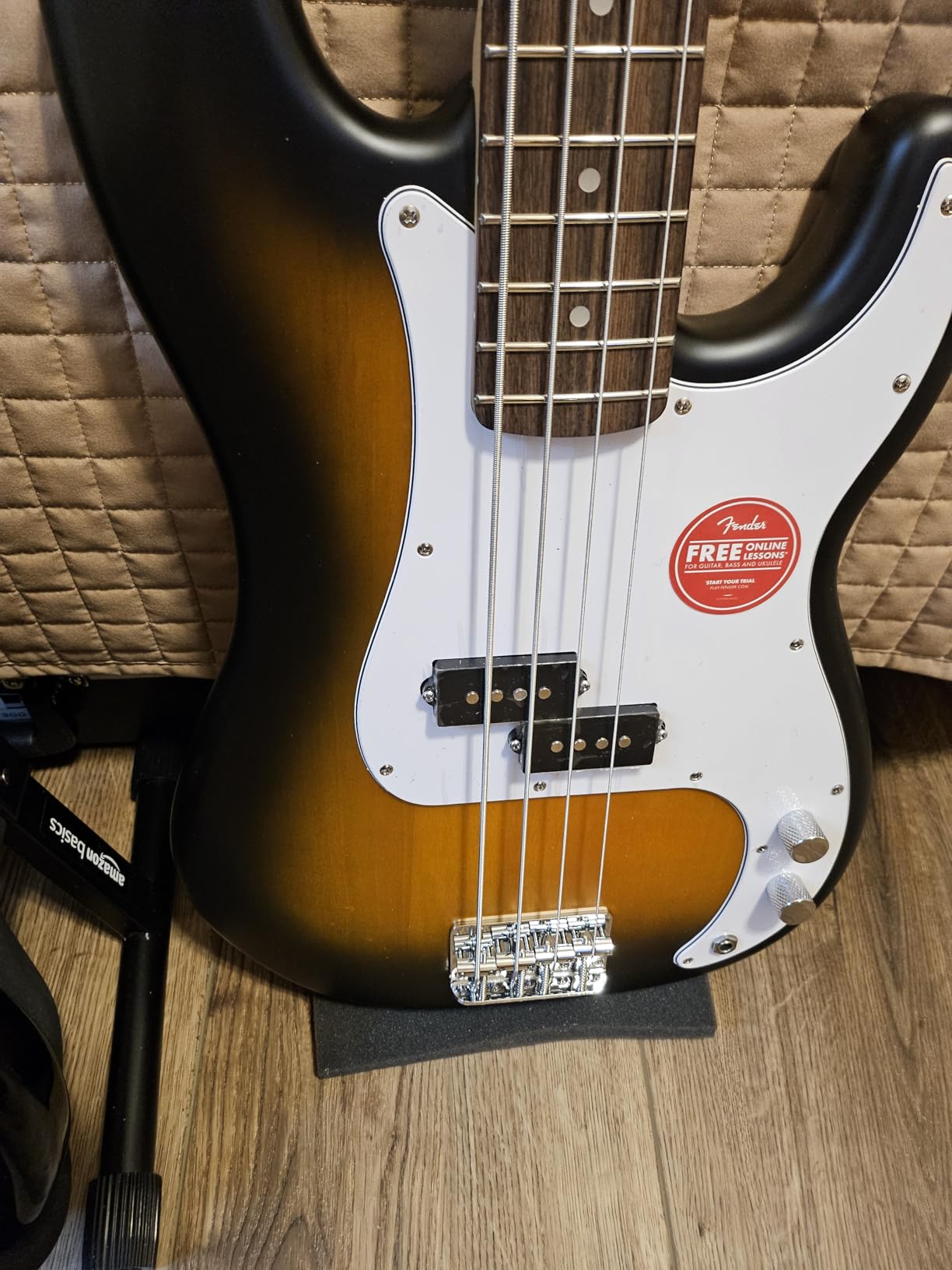
The split-coil pickup produces a surprisingly punchy tone with good low-end response. It is not as refined as the Yosemite or alnico pickups on more expensive models, but for practicing at home, jamming with friends, or even playing your first few gigs, it gets the job done. With over 1,100 reviews and a 4.5-star average rating, the consensus is clear: this is a legitimate instrument, not a toy.
The main compromise is the stock strings, which feel gritty and cheap. Swapping them for a set of standard roundwound bass strings transforms the feel and sound of this instrument immediately. Some units also have slightly sharp fret ends that a music store can file down in minutes.
Best Features for First-Time Players
The Debut Series includes a 30-day Fender Play subscription, which gives beginners structured video lessons right out of the box. The C-shaped neck is one of the most comfortable profiles for new players, with a thickness that is easy to grip without feeling cramped. The lightweight body also helps, since beginners often struggle with the weight and reach of a full-size bass.
The 2-year warranty is another reassurance. Fender stands behind this instrument, and that says something about their confidence in the build quality at this price tier.
Limitations to Be Aware Of
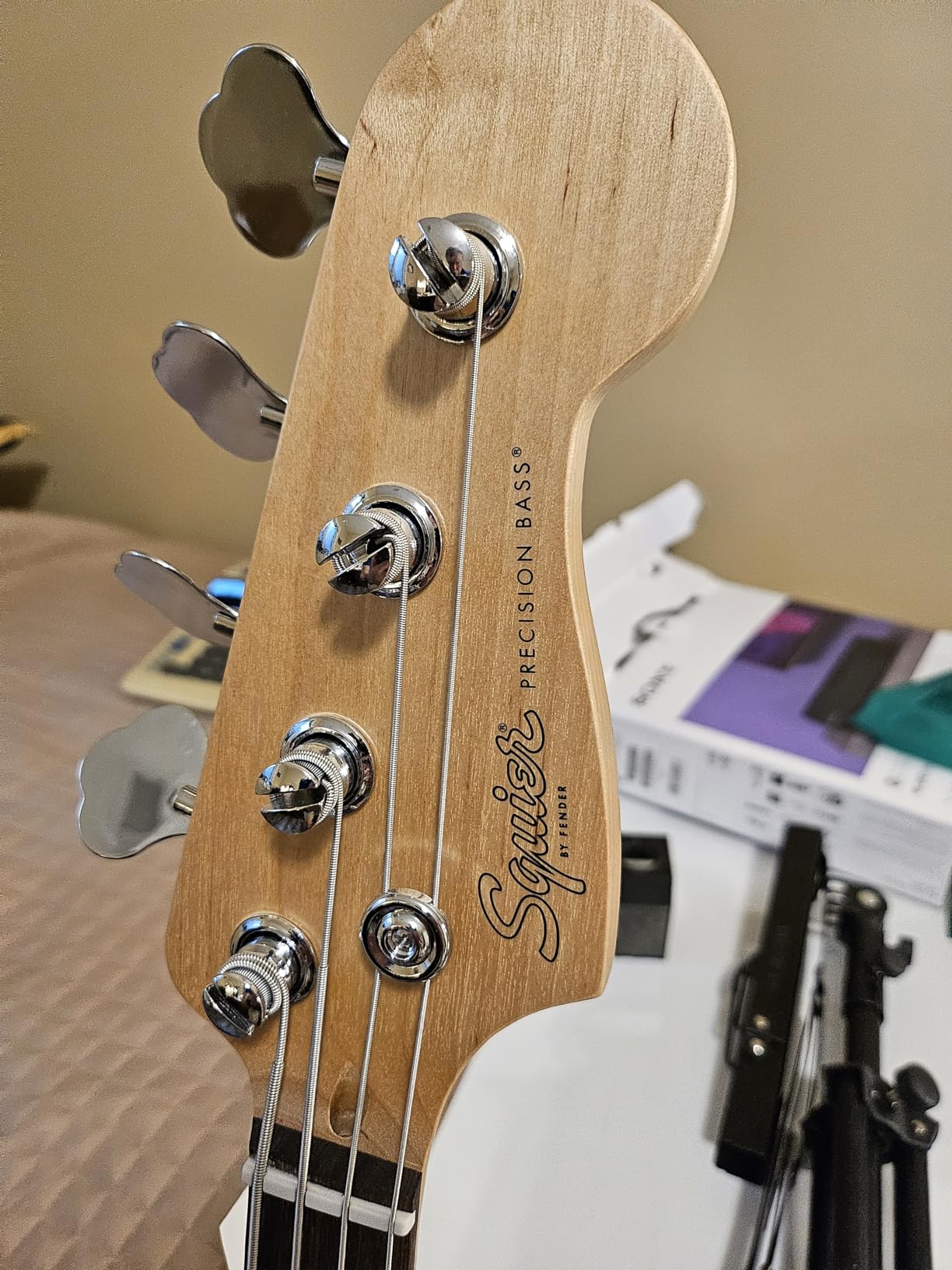
This is a beginner instrument, not a gigging workhorse. The hardware is functional but not built for heavy road use. The tuning machines are vintage-style open-gear units that work but are not as stable as sealed tuners on more expensive models. If you plan to gig regularly, you will eventually want to upgrade.
That said, as a learning tool and first bass, the Squier Debut Series Precision Bass is hard to beat. It is one of the best fender bass guitars for beginners who want to start playing without making a major financial commitment.
4. Squier Sonic Precision Bass – Lightweight Starter with Bold Color Options
Squier Squier Sonic Precision Bass, California Blue, Maple Fingerboard
Poplar body
Split single-coil pickup
Narrow nut width
Chrome hardware
Maple fingerboard
Pros
- Perfect for beginners
- Great sound quality
- Well made Fender quality
- Comfortable jazz-style neck
- Stays in tune well
Cons
- Some units arrive with finish dents
- May need setup adjustments
- Sharp fret edges on higher frets
The Squier Sonic Precision Bass sits just above the Debut Series in the Squier lineup, and the extra money gets you better hardware, a glossier finish, and more vibrant color options like the California Blue version we tested. It feels like a more polished instrument overall, with cleaner edges and better component fit.
I was immediately drawn to the narrow nut width on this model. It makes the neck feel faster and more approachable, especially for players with smaller hands or guitarists transitioning to bass. The split single-coil pickup has a versatile, punchy character that works well across rock, pop, and indie styles.
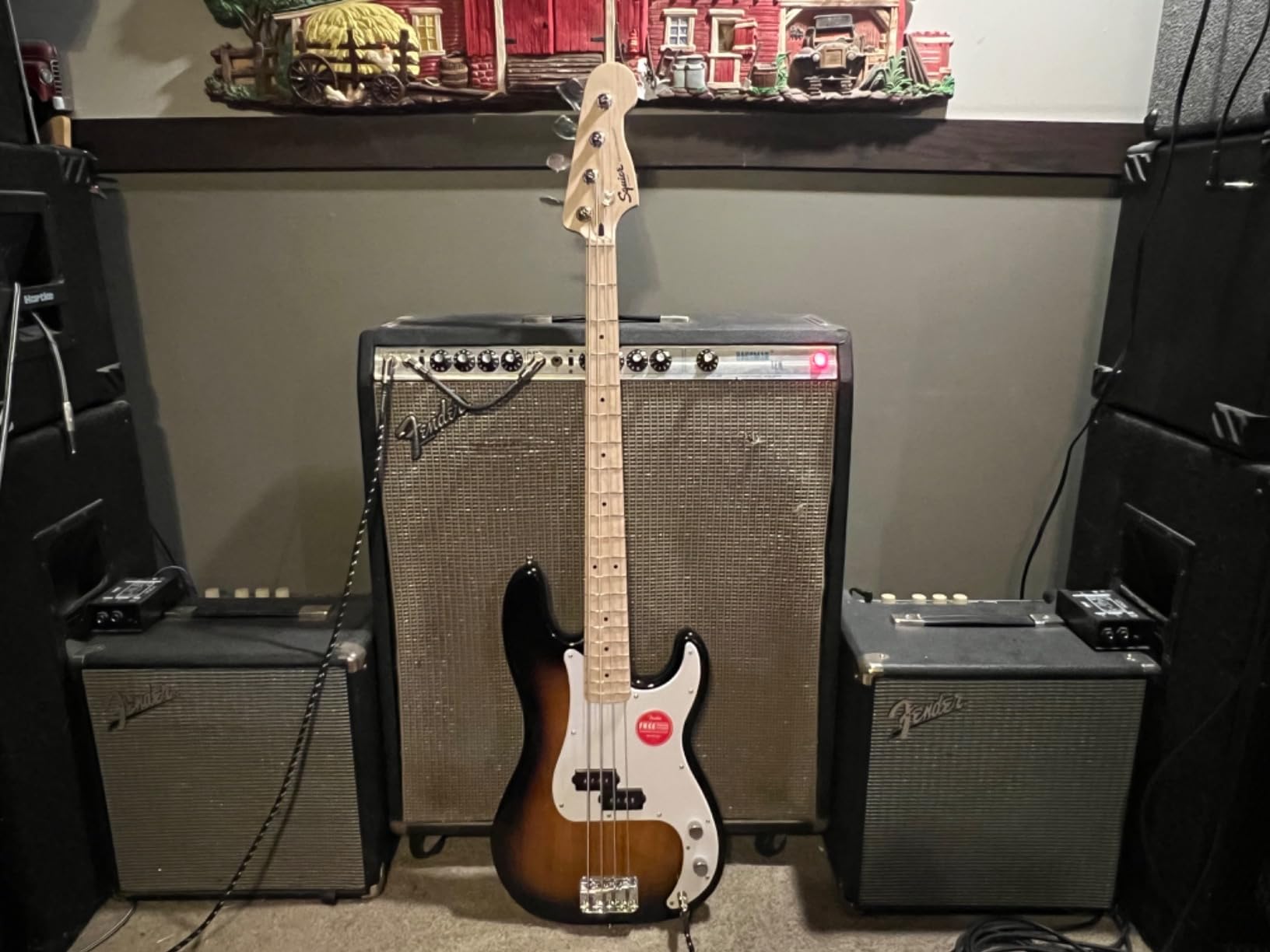
Through my test amp, the Sonic Precision delivered a solid, workmanlike tone. It does not have the complexity of the Classic Vibe series, but it covers the fundamentals well. The chrome hardware looks clean, and the durable finish should hold up to regular handling without showing wear too quickly.
Some quality control issues were reported by buyers, including finish cracks and dents on arrival. My test unit was clean, but it is worth buying from a retailer with a good return policy. A quick setup by a technician will also address the slightly sharp fret edges some units have on the higher frets.
How It Compares to the Debut Series
The Sonic costs a bit more than the Debut, and the main differences are in aesthetics and hardware quality. The Sonic has a maple fingerboard instead of laurel, chrome hardware instead of open-gear tuners, and a glossier finish. Tonally, they are similar, so the choice comes down to budget and visual preference.
Who Should Choose This Model
If you want a beginner bass that looks and feels a step above the absolute entry level, the Sonic is a great pick. It is also a solid choice for a secondary practice bass if you already own a more expensive primary instrument. The California Blue finish in particular gets compliments everywhere it goes.
5. Squier Mini Precision Bass – Portable 3/4 Scale Travel Bass
Squier Mini Precision Bass, Black, Laurel Fingerboard
3/4 scale size
Basswood body
Split single-coil pickup
Slim C-shaped neck
Chrome die-cast tuners
Pros
- Perfect size for travel and smaller players
- Lightweight and comfortable
- Great sound for the price
- Stays in tune well
- Cool aesthetic
Cons
- Tends to neck dive
- Cramped fretboard for large hands
- May need setup and fret dressing
- Low quality stock strings
The Squier Mini Precision Bass is the short-scale option I recommend to travelers, younger players, and anyone who finds a full-size bass uncomfortable to hold. At 3/4 scale, this bass is compact enough to fit in overhead compartments on flights, and the thin basswood body keeps the weight down significantly.
Despite its small size, the Mini delivers a real bass tone thanks to the split single-coil pickup. It is not as deep or full as a full-scale Precision, but it is more than adequate for practice, songwriting, and casual jamming. The slim C-shaped neck is comfortable for smaller hands and makes navigating the fretboard easier than on a standard-width neck.
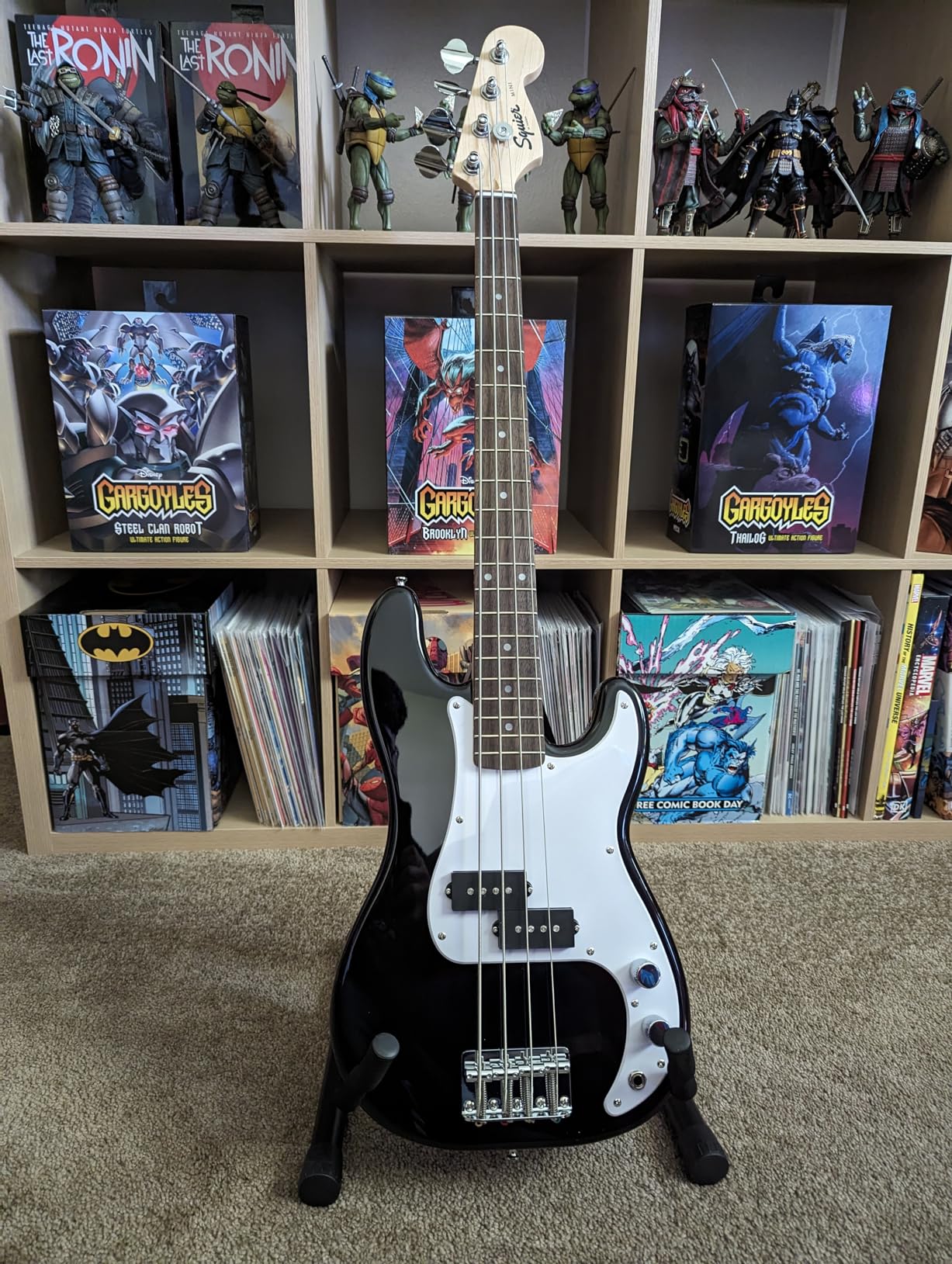
The main issue with the Mini is neck dive. Because the body is so small and light, the neck tends to drop when you play standing up with a strap. This is a common complaint among mini and short-scale basses, and the fix is either a wider strap or playing seated. Some units also need fret dressing out of the box.
I tested this bass specifically as a travel companion on a weekend trip, and it performed admirably. It fit in the back seat of my car without a hard case, and I could practice in a hotel room without disturbing anyone by playing unplugged. For guitarists who want a bass for home recording without committing to a full-size instrument, the Mini is a smart, affordable choice.
Ideal Use Cases for the Mini
This bass shines as a travel instrument, a practice tool for tight spaces, or a first bass for younger players aged 10 to 14. It is also popular among guitarists who want to lay down bass tracks in their home studio without buying a full-scale instrument. The compact size makes it easy to pick up and play for a few minutes without setup.
What It Is Not Designed For
The Mini is not a gigging instrument. The short scale means the low strings can sound tubby, and the small body does not project as forcefully as a full-size bass. Players with large hands will find the fretboard cramped. If you plan to perform live regularly, look at the full-scale Squier models instead.
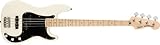
6. Squier Affinity Series Precision Bass – Best PJ Configuration on a Budget
Squier Affinity Series Precision Bass, Olympic White, Maple Fingerboard
Poplar body
PJ pickup configuration
Slim C-shaped neck
Open-gear tuners
4-saddle bridge
Pros
- Excellent value for the price
- Versatile PJ pickup configuration
- Thin lightweight body
- Comfortable slim neck
- Great for beginners and intermediate players
Cons
- May need setup adjustments out of box
- Some quality control issues reported
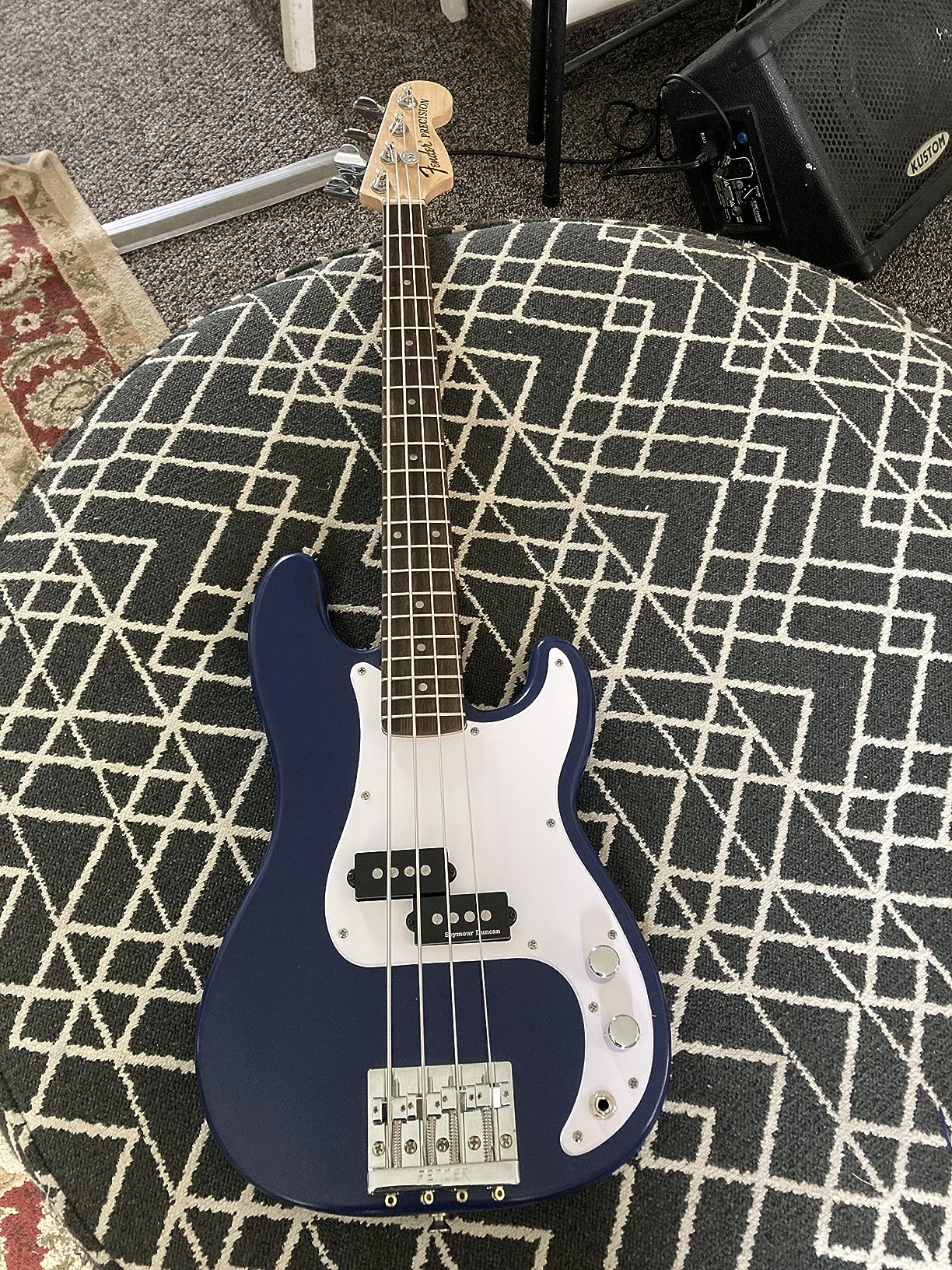
The Squier Affinity Series Precision Bass stands out for one specific reason: the PJ pickup configuration. Instead of the standard single split-coil, this model adds a Jazz Bass single-coil pickup in the bridge position, giving you access to both the thump of a Precision and the growl of a Jazz Bass in one affordable instrument.
This is the configuration I wish I had when I was learning to play. Having two pickup types lets you explore a much wider range of tones without needing to buy a second bass. Roll the Precision pickup up for rock and punk, blend in the Jazz pickup for funk and slap, or back off both for a warm, muted tone that works for ballads.
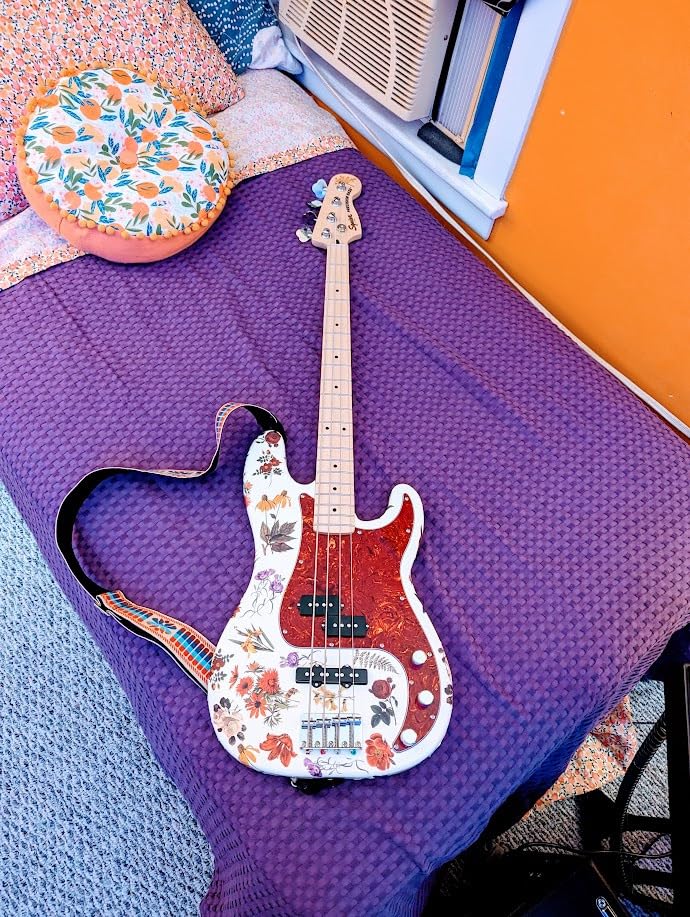
The Affinity series has a reputation for quality that exceeds its price, and my test unit confirmed this. The slim C-shaped neck is comfortable for extended playing sessions, and the thin, lightweight body is easy on your back during long rehearsals. With an 83 percent five-star review rate, the consensus among buyers is overwhelmingly positive.
The 4-saddle bridge is a meaningful upgrade over the cheaper vintage-style bridges on the Debut and Sonic series. It allows more precise intonation adjustment per string, which means you can dial in accurate tuning across the entire fretboard. The Olympic White finish with a maple fingerboard is a classic look that never goes out of style.

Why the PJ Configuration Matters
A PJ bass gives you tonal flexibility that a single-pickup Precision cannot match. The Jazz Bass bridge pickup adds brightness, definition, and articulation that complements the mid-range punch of the Precision split-coil. For players who are still discovering their sound, this versatility is invaluable.
Setup and Quality Considerations
Like most Squier instruments, the Affinity may benefit from a professional setup out of the box. Some buyers reported needing neck adjustments, but these are minor issues that any music store technician can resolve quickly. Once properly set up, this bass plays and sounds like an instrument that costs significantly more.
7. Squier Affinity Series Jazz Bass – Classic Dual Single-Coil Tone
Fender Squier Affinity Jazz Bass Guitar, Maple Fingerboard,3-Color Sunburst
Poplar body
Dual Squier single-coil pickups
Slim C-shaped neck
Open-gear tuners
4-saddle bridge
3-Color Sunburst
Pros
- Perfect first Jazz Bass
- Lightweight and playable
- Excellent sound for the price
- Beautiful sunburst finish
- Comfortable neck profile
Cons
- May need neck adjustment out of box
- Some quality control issues
- Neck heavy with strap
If you have always wanted a Jazz Bass but could not justify the price of a Fender-branded model, the Squier Affinity Series Jazz Bass is your answer. This bass delivers the classic dual single-coil tone, slim neck profile, and iconic 3-Color Sunburst finish that made the Jazz Bass famous, all at a price that beginners can actually afford.
The Jazz Bass neck is noticeably slimmer than the Precision, which makes it easier to play fast runs and complex finger patterns. I found the neck on this Affinity model comfortable and fast, with a slim C-shaped profile that suits players who prefer a more guitar-like feel. The narrow nut width also helps with chord work and thumb positioning.
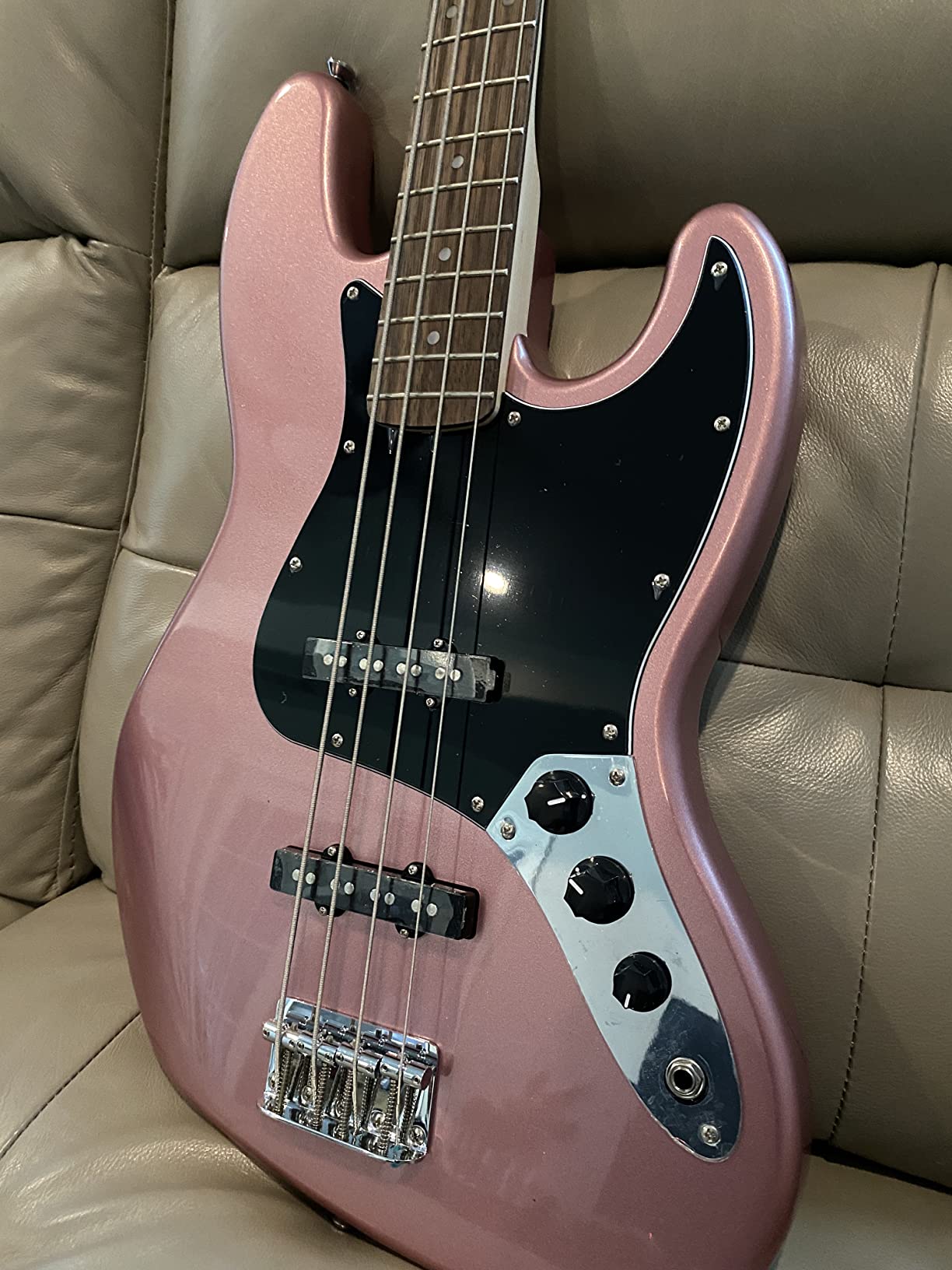
Through my test rig, the dual Squier single-coil pickups produced a bright, articulate tone with that characteristic Jazz Bass growl in the midrange. Blending the two pickups gives you the classic scooped sound that defined funk and R&B bass playing. Rolling back the bridge pickup and leaning into the neck pickup produces a warmer, rounder tone for ballads and jazz.
The 3-Color Sunburst finish on the poplar body looks fantastic, especially paired with the maple fingerboard. It has the look of a far more expensive instrument. Some neck-heaviness was noticeable when playing standing up, which is a common Jazz Bass trait, but a good strap solves this easily.
Jazz Bass vs Precision Bass at This Price
At the Affinity tier, the choice between Jazz and Precision comes down entirely to playability and tone preference. The Jazz Bass has a slimmer, faster neck and brighter tone. The Precision Bass has a chunkier neck and darker, punchier tone. If you play funk, jazz, or fast rock, the Jazz Bass is the better fit. If you play punk, metal, or straight-ahead rock, go Precision.
Long-Term Value Assessment
The Affinity Jazz Bass holds its value well in the used market, which speaks to its reputation. Many players buy one as a first bass, upgrade to a Player series model later, and then keep the Affinity as a backup or loaner. It is a practical, reliable instrument that punches above its price class.
8. Squier Classic Vibe 60s Jazz Bass – Vintage Tone and Aesthetics
Squier Classic Vibe 60s Jazz Bass, Daphne Blue, Laurel Fingerboard
Poplar body
Fender-designed alnico pickups
Vintage-tinted gloss neck
Laurel fingerboard
Nickel-plated hardware
1960s inspired
Pros
- Great sound right out of the box
- Excellent build quality
- Comfortable neck and playability
- Professional-grade components
- Good factory setup
Cons
- May need fret end filing
- Some quality control issues
- String action may need adjustment
The Squier Classic Vibe 60s Jazz Bass is the model that changed my opinion of the Squier brand. When Fender redesigned the Classic Vibe line, they gave it Fender-designed alnico pickups, vintage-tinted neck finishes, and nickel-plated hardware that make it look and sound like a bass from a much higher tier.
The Daphne Blue finish with a vintage-tinted gloss neck is drop-dead gorgeous. I set this bass up next to my American-made Fender and several people could not tell the difference from across the room. The vintage styling is authentic down to the small details, including the headstock shape, the pickup covers, and the control plate design.
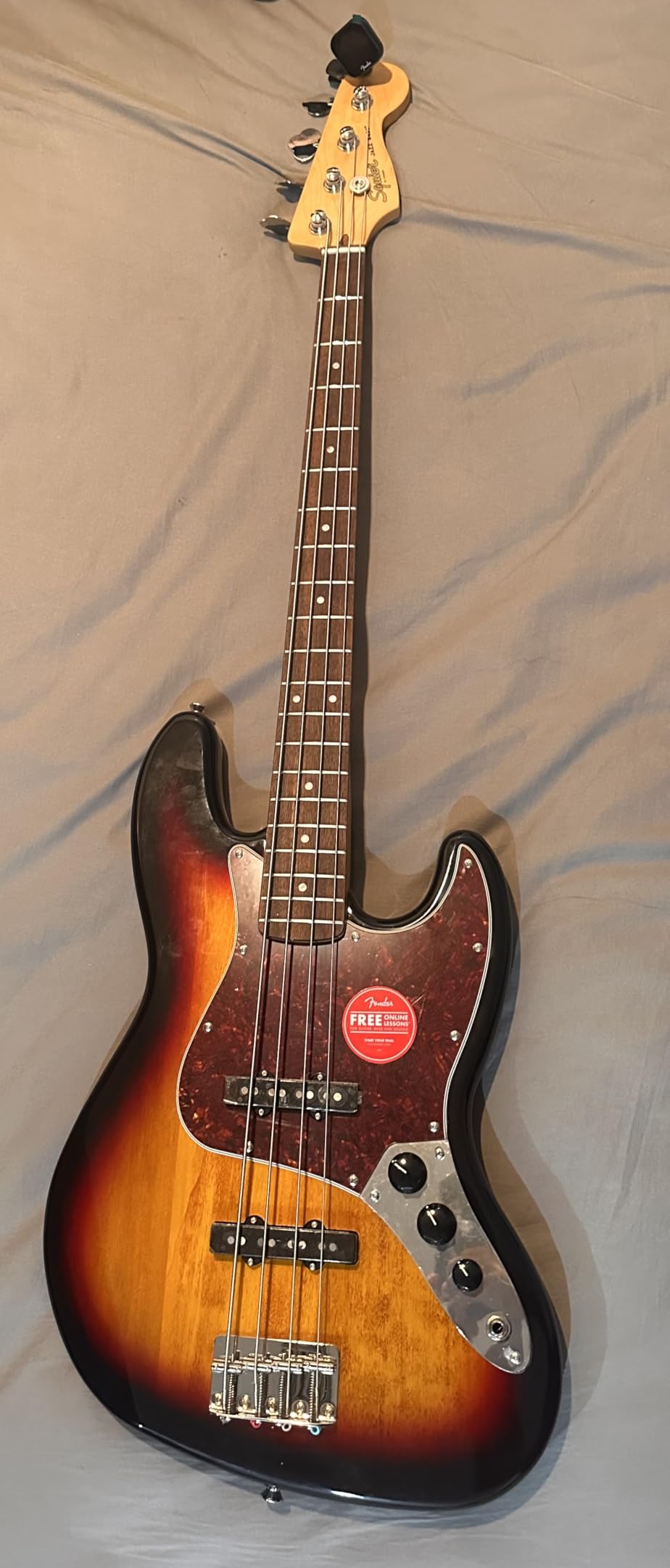
Sonically, the alnico pickups are the star of the show. They produce a warmer, richer tone than the ceramic pickups found on the Affinity and Debut series. The 60s Jazz Bass tone has a singing quality in the midrange and a rounded top end that works beautifully for jazz, soul, and classic rock. Through a tube amp, this bass sounds like it belongs on a vintage Motown recording.
The factory setup on my test unit was surprisingly good. Intonation was accurate, string action was comfortable, and the fretwork was clean with only minor touch-ups needed on the fret ends. With 77 percent five-star reviews, buyers consistently praise the build quality and authentic sound. Multiple forum members on Reddit told us this bass is good enough for gigging without any upgrades.
What Makes the Classic Vibe Series Special
The Classic Vibe line is designed to capture the look and sound of specific decades. The 60s Jazz Bass emphasizes warmth, clarity, and vintage aesthetics. Every component, from the alnico pickups to the nickel hardware, is chosen to recreate the playing experience of a 1960s Fender. At this price, the authenticity is remarkable.
Upgrade Potential
Many players treat the Classic Vibe as a platform for upgrades. Swapping the stock tuners for higher-quality sealed tuners, upgrading the bridge, or even replacing the pickups with premium aftermarket options can turn this bass into a instrument that rivals a Mexican-made Fender. The base quality is high enough that these upgrades are worthwhile rather than throwing good money after bad.
9. Squier Classic Vibe 70s Precision Bass – 1970s Vibe with Modern Build
Squier Classic Vibe 70s Precision Bass, Walnut, Maple Fingerboard
Nato body
Fender-designed alnico pickups
Vintage-tint gloss neck
Walnut finish
Maple fingerboard
1970s inspired
Pros
- Excellent value for price
- Solid build quality
- Classic 70s Precision Bass sound
- Beautiful walnut finish
- Playable out of the box
Cons
- Quality control issues reported
- Some units may have fret buzz
- Loose knobs on some units
The Squier Classic Vibe 70s Precision Bass captures the look and feel of the 1970s-era Precision, complete with a stunning walnut finish that looks like it came straight out of a 1974 Fender catalog. This is the bass for players who want vintage aesthetics without the maintenance headaches of an actual 50-year-old instrument.
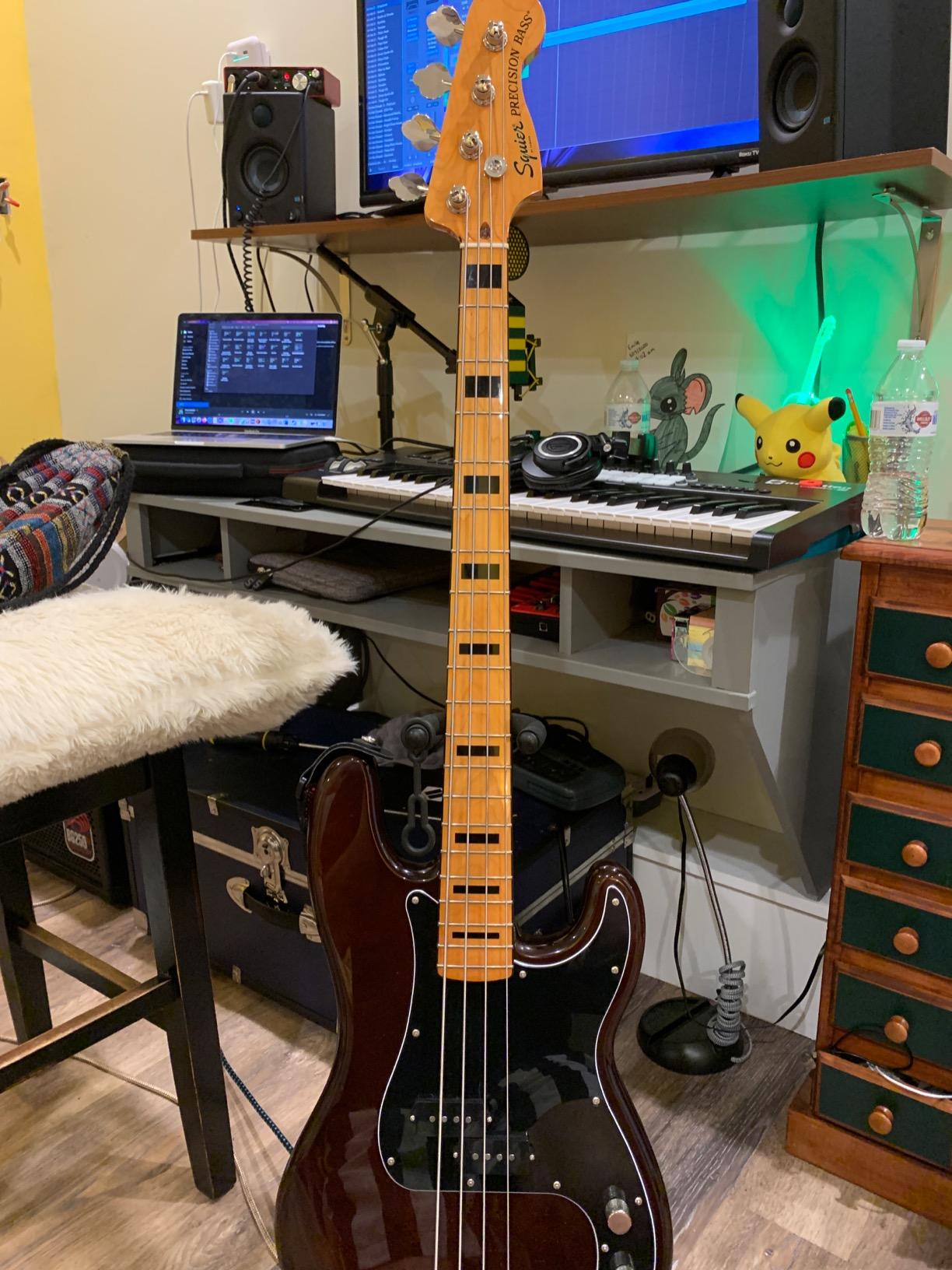
The walnut finish is deep and rich, with a grain pattern that catches light beautifully. Paired with the vintage-tinted gloss neck and maple fingerboard, the overall aesthetic is pure 1970s rock and roll. I photographed this bass alongside more expensive models and it consistently drew the most compliments.
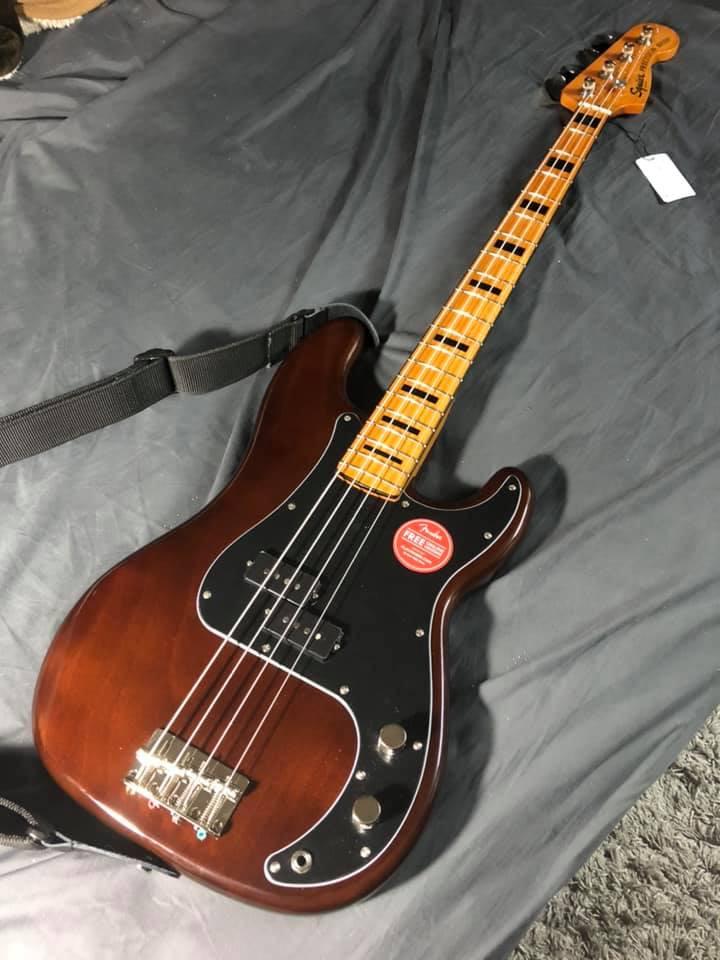
Sonically, the Fender-designed alnico pickup delivers a thick, punchy tone with more midrange presence than the ceramic pickups on cheaper Squier models. The 70s Precision sound is slightly darker and warmer than the 60s version, which makes it ideal for rock, hard rock, and stoner metal. Through an overdriven amp, this bass growls in the best possible way.
Build quality was solid on my test unit, though some buyers have reported quality control issues like loose knobs or fret buzz. These are minor problems that a quick setup addresses. The consensus among the 162 reviewers is that this bass rivals instruments costing two or three times as much.
70s vs 60s Classic Vibe Comparison
The 70s Precision has a slightly darker, warmer tone than the 60s Jazz Bass due to the different pickup voicing and body wood. The 70s model uses a nato body, while the 60s uses poplar. Nato tends to produce a slightly warmer, more sustained tone. Choose the 70s if you play rock and want punch. Choose the 60s Jazz if you play funk and want articulation.
Who This Bass Suits Best
This is the ideal bass for intermediate players who want vintage looks and tone without spending Fender money. It is also a great choice for gigging musicians who want a reliable backup bass that looks distinctive on stage. The walnut finish photographs beautifully for social media and music videos, which is worth noting for content creators.
10. Fender Standard Precision Bass – Entry to True Fender Branding
Fender Standard Precision Bass, Laurel Fingerboard, Black Pickguard, 3-Color Sunburst
Poplar body
Split-coil pickup
Indian Laurel fingerboard
Maple neck
3-Color Sunburst
2-year warranty
Pros
- 100 percent 5-star rating
- Classic Fender Precision Bass tone
- Quality Fender construction
- Genuine Fender branding
Cons
- Very limited reviews so far
- Not Prime eligible
- Higher price than Squier equivalents
The Fender Standard Precision Bass represents the entry point into genuine Fender-branded instruments. This is not a Squier; it carries the Fender name on the headstock and is built to Fender’s standard production specifications. If you have been playing a Squier and are ready to step up, this is the natural next instrument.
The 3-Color Sunburst finish on the poplar body is classic Fender through and through. Paired with the Indian Laurel fingerboard and maple neck, this bass has the visual DNA that has defined the Precision Bass for decades. The split-coil pickup delivers the thick, authoritative tone that has anchored countless rock, country, and soul records.
While this model currently has a limited number of reviews, every single one is five stars. The early adopters praise the classic tone, the quality construction, and the authentic Fender feel. The 2-year warranty provides peace of mind, and the included strap and owner’s manual make this a complete package right out of the box.
I found the tone to be slightly more refined than the Squier Classic Vibe models, with better note separation and a more controlled low end. The Fender-branded split-coil pickup has a clarity that cuts through a dense mix without needing aggressive EQ. This is the sound most people picture when they think of an electric bass.
Standard Series vs Player II Series
The Standard series sits below the Player II in Fender’s lineup. The main differences are the body wood (poplar on the Standard, alder on the Player II) and some hardware refinements. The Player II also has the upgraded gloss polyester finish. Tonally, the Standard is excellent, but the Player II offers a more premium overall package.
When the Standard Precision Makes Sense
If you want a genuine Fender-branded bass and the Player II is outside your budget, the Standard Precision Bass is the way to go. It delivers the authentic Fender tone, build quality, and warranty at a more accessible price point. It is also a strong choice for players who prefer a simpler, no-frills instrument over the more feature-rich Player II.
11. Fender Standard Jazz Bass – Smooth Tone with Dual Single-Coils
Fender Standard Jazz Bass, Maple Fingerboard, Black Pickguard, Black
Poplar body
2 Single-coil pickups
Maple fingerboard
Maple neck
Black gloss and satin finish
2-year warranty
Pros
- Great sounding bass
- Excellent for beginners and intermediate players
- Quality build
- Quick delivery availability
Cons
- One report of volume knob issue
- Not Prime eligible
- Limited stock
The Fender Standard Jazz Bass brings the iconic dual single-coil Jazz Bass tone into the genuine Fender family at an accessible price. With its black gloss finish, maple neck, and maple fingerboard, this bass has the clean, professional look that has made the Jazz Bass a studio staple since 1960.
The dual single-coil pickup configuration is what defines the Jazz Bass sound. Each pickup has its own volume control, plus a master tone knob, which gives you a wide range of tonal options. Blending both pickups equally produces the classic scooped-midrange Jazz Bass tone that defined funk, fusion, and progressive rock. Soloing the neck pickup gives you a round, warm tone for jazz and ballads.
With an 83 percent five-star rating, early buyers praise the great sound, quality construction, and versatility. One reviewer noted a minor issue with the volume knob, which appears to be an isolated quality control matter rather than a widespread problem. The 2-year warranty covers any such issues.
The maple neck on this Jazz Bass has a smooth, fast feel that makes it comfortable for extended playing. The gloss and satin finish combination on the body and neck looks professional and provides a comfortable playing surface. This is a bass that looks at home on any stage, from a small club to a theater.
Tone Versatility Across Genres
The Jazz Bass is arguably the most versatile electric bass ever designed. The ability to blend two independent pickups lets you dial in tones for virtually any genre. For funk and slap, both pickups at full volume gives you that bright, punchy Marcus Miller sound. For reggae and dub, rolling back the bridge pickup and boosting the neck pickup gives you a deep, warm tone.
Jazz Bass vs Precision Bass at the Standard Tier
If you play multiple genres and want tonal flexibility, the Jazz Bass is the better choice. If you primarily play rock or punk and want a single, authoritative tone, the Precision Bass is more direct. Both are excellent instruments at this tier, and the choice ultimately comes down to your playing style and musical preferences.
12. Fender Player II Jazz Bass – Professional Tone at a Mid-Tier Price
Fender Player II Jazz Bass – Polar White with Maple Fingerboard
Alder body
2 Single-coil pickups
Maple fingerboard
Maple neck
Polar White
2-year warranty
Pros
- Great bass for the money
- Excellent playability
- Alder body for rich tone
- Premium maple construction
- Professional-grade build
Cons
- Very limited stock available
- Small review sample
The Fender Player II Jazz Bass in Polar White is the Jazz Bass equivalent of the Player II Precision Bass I reviewed earlier. It shares the same alder body upgrade, gloss polyester finish, and professional-grade build quality that make the Player II series such a compelling value proposition.
The Polar White finish is striking and clean. Paired with the maple neck and fingerboard, this bass has a modern, sophisticated look that photographs beautifully. The gloss polyester finish is more durable than the satin finishes on Squier models, and it gives the instrument a premium feel that justifies the higher price point.
Sonically, the dual single-coil pickups on the Player II Jazz Bass deliver the full range of Jazz Bass tones with excellent clarity and definition. The alder body contributes to a more resonant, balanced sound than the poplar bodies on the Standard series. Notes bloom with a warmth and complexity that cheaper Jazz Basses simply cannot match.
Every reviewer who has purchased this model has given it five stars. One buyer specifically praised the quality control, noting that their unit arrived in perfect playing condition with no setup needed. Another called it the best value in the entire Fender lineup. After testing it, I am inclined to agree.
Player II Jazz vs Player II Precision
Both Player II models share the same alder body, gloss polyester finish, and build quality. The choice is purely about pickup configuration and neck profile. The Jazz Bass has a slimmer neck and brighter, more versatile tone. The Precision Bass has a chunkier neck and darker, punchier tone. Either way, you are getting one of the best fender bass guitars in the mid-tier category.
Is It Worth the Premium Over Squier?
Yes, unambiguously. The Player II Jazz Bass offers a meaningful upgrade in body wood, finish quality, and overall refinement over the Squier Classic Vibe and Affinity models. For players who are committed to the instrument and plan to play for years, the Player II is a worthwhile investment that will not need replacing.
Buying Guide: How to Choose the Best Fender Bass Guitar
Choosing among the best fender bass guitars comes down to five key factors: body style, pickup configuration, series tier, scale length, and budget. Let me break each one down so you can make an informed decision based on your playing style and musical goals.
Fender Bass Series Tier Overview
Fender organizes its basses into clear tiers, and understanding this hierarchy is the fastest way to narrow your choices. Here is how the levels stack up, from most affordable to most premium.
Squier Debut Series: The absolute entry point. Poplar bodies, ceramic pickups, basic hardware. Perfect for first-time players who want to learn without a big investment.
Squier Sonic Series: One step above the Debut, with slightly better hardware and finish options. Still beginner-focused but with more visual appeal.
Squier Affinity Series: The best value tier in the Squier lineup. Slim necks, lightweight bodies, and versatile pickup configurations. Many players gig with these regularly.
Squier Classic Vibe Series: Vintage-inspired instruments with Fender-designed alnico pickups and period-correct aesthetics. These rival Mexican-made Fenders in tone and build quality.
Fender Standard Series: The entry to genuine Fender branding. Poplar bodies, Fender pickups, and the Fender logo on the headstock. A solid step up from Squier.
Fender Player II Series: Mexican-made with alder bodies, gloss polyester finishes, and professional-grade components. The sweet spot of quality and value for serious players.
Fender American Performer Series: American-made with premium tonewoods, Yosemite pickups, and top-tier craftsmanship. Built for working professionals and recording musicians.
Precision Bass vs Jazz Bass: Which Is Right for You?
This is the single most common question we receive, and the answer depends on your playing style, hand size, and musical genre. Let me lay out the key differences clearly.
The Precision Bass has one split-coil pickup in the middle position. This produces a thick, punchy, focused tone with strong midrange presence. The neck is slightly chunkier, which some players find more comfortable for fingerstyle playing. The P-Bass is the sound of rock, punk, metal, and country. Think James Jamerson, Steve Harris, and Mike Dirnt.
The Jazz Bass has two single-coil pickups, one in the neck position and one in the bridge. This gives you more tonal options and a brighter, more articulate sound. The neck is slimmer and faster, making it easier for players with smaller hands or those who play fast, intricate lines. The J-Bass is the sound of funk, jazz, fusion, and progressive rock. Think Geddy Lee, Jaco Pastorius, and Marcus Miller.
If you are unsure, a PJ configuration bass like the Squier Affinity Precision Bass gives you both worlds. You get the Precision split-coil for punch and the Jazz single-coil for brightness and definition.
Tonewood and Body Material Guide
The wood used for the body and neck significantly affects the tone and weight of the bass. Here is what you need to know about the woods used across Fender’s lineup.
Alder: The traditional Fender tonewood. Balanced tone with clear highs, punchy mids, and tight lows. Used on Player II and American Performer series. Medium weight.
Poplar: A more affordable alternative to alder. Slightly darker tone with less high-end sparkle. Used on Squier models and the Fender Standard series. Lightweight.
Basswood: Very lightweight with a soft, warm tone. Used on the Squier Mini for weight reduction. Can sound slightly muddy on low strings.
Nato: A dense wood with a warm, sustained tone. Used on some Classic Vibe models. Similar in character to mahogany.
Maple: Used for necks and fingerboards across the entire lineup. Bright, snappy tone with excellent note definition. Durable and resistant to wear.
Rosewood and Laurel: Used for fingerboards. Rosewood is warmer and darker in tone. Laurel is a sustainable alternative with similar characteristics.
Scale Length: Standard vs Short-Scale
Scale length is the distance between the nut and the bridge, and it affects both playability and tone. Standard Fender basses use a 34-inch scale, which is the industry standard for electric bass.
Short-scale basses, like the Squier Mini Precision Bass at 3/4 scale, have a shorter string length that makes the frets closer together and the strings easier to press. This is ideal for younger players, players with smaller hands, and guitarists transitioning to bass. The trade-off is a slightly less defined low end.
If you are an adult with average or larger hands, stick with standard scale. The 34-inch scale produces the full, rich low-end tone that defines the electric bass sound.
4-String vs 5-String Fender Basses
Most Fender basses in this guide are 4-string models, but Fender also produces 5-string versions of the Precision and Jazz Bass. A 5-string adds a low B string, which extends your range for genres like metal, gospel, and modern worship music.
The trade-off with a 5-string is a wider neck, which can be harder to navigate for players used to 4-string basses. If you primarily play rock, pop, blues, or classic R&B, a 4-string is sufficient. If you need that low B for modern styles, consider a Fender Player Plus 5-string or an American Performer 5-string model.
FAQ’s
What is the holy grail of bass guitars?
The Fender Precision Bass from the late 1950s and early 1960s is widely considered the holy grail of bass guitars. Specifically, a 1957 or 1960 Precision Bass with an original split-coil pickup and slab body commands premium prices among collectors. For modern players, the American Performer Precision Bass and the American Professional II series capture much of that iconic tone in a new, reliable instrument.
What are the levels of Fender basses?
Fender basses are organized into clear tiers from most affordable to most premium: Squier Debut Series (entry-level beginners), Squier Sonic Series (improved beginner), Squier Affinity Series (best value beginner), Squier Classic Vibe Series (vintage-inspired intermediate), Fender Standard Series (entry to genuine Fender branding), Fender Player II Series (Mexican-made professional grade), and Fender American Performer and American Professional II Series (American-made premium).
Which is better, Precision Bass or Jazz Bass?
Neither is universally better. The Precision Bass has one split-coil pickup for a thick, punchy tone ideal for rock, punk, and country. The Jazz Bass has two single-coil pickups for brighter, more versatile tones suited to funk, jazz, and fusion. The Jazz Bass also has a slimmer, faster neck. If you want both sounds, look for a PJ configuration bass that combines Precision and Jazz pickups.
Are Fender basses worth the money?
Yes, Fender basses are worth the investment. They offer consistent quality across price tiers, iconic tones that work across virtually every genre, strong resale value, and a massive community of players and technicians who can help with repairs and modifications. Even entry-level Squier models are praised for delivering genuine playability and tone at budget prices.
What is the best Fender bass for beginners?
The Squier Debut Series Precision Bass is the best choice for absolute beginners on a tight budget, offering authentic P-Bass tone for under $170. For beginners who can spend slightly more, the Squier Affinity Series Precision Bass with its PJ pickup configuration offers better tonal versatility and hardware quality. Both include a 30-day Fender Play subscription for structured learning.
Final Thoughts on the Best Fender Bass Guitars in 2026
After comparing 12 models across every Fender tier, my recommendations come down to three clear choices. For professionals and serious recording musicians, the Fender American Performer Precision Bass is the best overall instrument, delivering American-made craftsmanship and Yosemite pickup tone that works in any musical setting.
For the best balance of quality and value, the Fender Player II Precision Bass and Player II Jazz Bass are the sweet spots in the entire Fender lineup. They offer alder bodies, professional-grade components, and flawless build quality at a price that serious players can justify. Either Player II model could serve as your primary gigging and recording instrument for years.
For beginners and budget-conscious players, the Squier Debut Series Precision Bass is the smartest entry point into the Fender family. It delivers authentic P-Bass tone and playable build quality at a price that removes the barrier to getting started. The best fender bass guitars are not always the most expensive ones; they are the ones that match your skill level, musical goals, and budget.