

Left handed guitars are mirrored instruments: the neck, strings, cutaway, and controls are arranged so a left-handed player frets with the left hand and picks with the right. That sounds simple, but it matters when you are reaching the high frets, using a tremolo arm, or trying to keep a cable and volume knob out of your picking hand.
Finding the best left handed guitars can still be frustrating. Left-handed players regularly report that a large shop may have only a few southpaw instruments, so this guide compares 12 real listings across solid-body electric, steel-string acoustic, acoustic-electric, and beginner-kit options.
I ranked these by the construction and hardware actually listed, the intended use, and buyer feedback rather than by a vague brand hierarchy. Check the orientation in the listing before ordering: two listings below have a left-handed title but a contradictory orientation field, and that is exactly the kind of detail a lefty should confirm.
Table of Contents
Top 3 picks give most left-handed players a clear starting point (September 2026)
The Yamaha Pacifica PAC112JL is my all-round electric pick because its alder body, H-S-S pickups, and tremolo cover clean, crunchy, and higher-output sounds. The Fender CD-60S is the straightforward acoustic choice for a full dreadnought voice, while the Vangoa kit makes sense when a new player needs a gig bag and adjustable truss rod in the same package.

These left handed guitars in 2026 cover electric, acoustic, and starter needs
Use the comparison below to narrow the body style and feature set first. A fixed-bridge acoustic is the simpler choice for unplugged practice, while pickup layouts, tremolos, and onboard EQ matter more if you want electric tones or amplified performance.
| Product | Specifications | Action |
|---|---|---|
 Yamaha Pacifica PAC112JL Yamaha Pacifica PAC112JL |
|
Check Latest Price |
 Jackson JS22 Dinky LH Jackson JS22 Dinky LH |
|
Check Latest Price |
 Yamaha Revstar RSE20L Yamaha Revstar RSE20L |
|
Check Latest Price |
 Fender CD-60S LH Fender CD-60S LH |
|
Check Latest Price |
| Vangoa 41 Inch Acoustic Kit |
|
Check Latest Price |
 ESP LTD KH-202 LH ESP LTD KH-202 LH |
|
Check Latest Price |
 Ibanez AEG70L Ibanez AEG70L |
|
Check Latest Price |
 GLARRY Electric Kit GLARRY Electric Kit |
|
Check Latest Price |
 STRICH SST-S20L Kit STRICH SST-S20L Kit |
|
Check Latest Price |
 WINZZ Electro-Acoustic Set WINZZ Electro-Acoustic Set |
|
Check Latest Price |
 Ashthorpe Cutaway Bundle Ashthorpe Cutaway Bundle |
|
Check Latest Price |
 Yamaha FG820L Yamaha FG820L |
|
Check Latest Price |
1. Yamaha Pacifica PAC112JL is the versatile left-handed electric choice
Yamaha Pacifica PAC112JL YNS Left-Handed Electric Guitar, Yellow Natural Satin
Alder body
H-S-S pickups
Vintage tremolo
Pros
- Solid alder body
- Versatile H-S-S pickup layout
- Rosewood fretboard
- Vintage-style tremolo
Cons
- Stock may be limited
- No gig bag listed
The PAC112JL is the best place to start if you want one electric guitar to cover several styles. Its bridge humbucker provides a fuller drive sound, while the two single coils give the brighter positions that make an H-S-S layout more flexible than a two-humbucker-only setup.
The verified specification sheet names an alder body, maple neck, rosewood fretboard, steel strings, and a vintage-style tremolo. At 3.4 kilograms, it is not an unusually light solid body, but the double-cutaway form gives practical access above the middle of the neck.
The pickup layout gives you broad sound options
The five-way switching typical of an H-S-S format lets a beginner learn what each pickup position does without buying another guitar. Choose this Yamaha if you want clean rhythm tones, sharper single-coil attack, and a humbucker option for gain in one left-handed instrument.
The tremolo needs basic tuning discipline
A vintage tremolo offers expressive pitch movement, but it adds moving parts compared with a fixed bridge. If you use the arm heavily, stretching fresh strings and checking tuning after setup is part of ownership.
2. Jackson JS22 Dinky is the 24-fret heavy-sound option
Jackson JS Series 6 String Dinky Arch Top JS22 DKA LH Electric Guitar
Poplar body
24 frets
Dual humbuckers
Pros
- 24-fret fingerboard
- High-output humbuckers
- 25.5 inch scale
- Two-point tremolo
Cons
- Case not included
- Listing orientation field conflicts
The Jackson JS22 Dinky listing is aimed at players who want a fast-looking, extended-range electric layout without moving to seven strings. It combines a poplar archtop body, bolt-on maple neck, 24-fret amaranth fingerboard, two high-output humbuckers, and a two-point fulcrum tremolo.
The listing title identifies this as a left-handed Dinky, but its product-detail orientation field says “Right.” I would treat that conflict as a required pre-order question for the seller rather than assume the title settles it.
The 24 frets suit lead-focused playing
Two full octaves give more notes before a player must shift position, which is useful for rock and metal lead work. The 25.5-inch scale also supplies the familiar string tension of many bolt-on, double-cutaway electric guitars.
The hardware favors a player ready to learn setup basics
Dual humbuckers are a logical match for thicker driven sounds, and the tremolo expands expression. The tradeoff is that a tremolo-equipped guitar requires more attention when changing strings or altering tuning.
3. Yamaha Revstar Element RSE20L is the chambered humbucker alternative
Yamaha Revstar Element RSE20L BL Left-Handed Electric Guitar, Black
Chambered mahogany
Alnico V humbuckers
Dry Switch filter
Pros
- Chambered mahogany body
- Alnico V humbuckers
- Push-pull Dry Switch
- Gig bag included
Cons
- Limited listed stock
- Shorter 24.75 inch scale
The Revstar Element RSE20L takes a different route from the Pacifica: it uses a chambered mahogany body, a mahogany neck, two Alnico V humbuckers, and a Tune-O-Matic bridge. That fixed-bridge arrangement is a sensible option for players who prefer tuning stability over tremolo effects.
Its push-pull Dry Switch is described as a high-pass filter, giving a way to reduce low-end weight without changing guitars. Yamaha also lists a gig bag, a useful inclusion for anyone carrying a left-handed guitar to lessons or rehearsal.
The chambered body pairs warmth with a managed feel
Mahogany is commonly sought for a warm, mid-present voice, while chambering removes some body material. The product data supports the construction claim, but tone remains dependent on the amplifier, strings, pickup height, and player.
The fixed bridge makes regular tuning changes simpler
With no locking tremolo system in the specification, changing strings and experimenting with alternate tunings is more straightforward. This model is a strong fit for rhythm players who want humbuckers but do not need a tremolo arm.
4. Fender CD-60S is the traditional solid-top left-handed acoustic
Fender Left-Handed Acoustic Guitar, CD-60S, with 2-Year Warranty, Dreadnought Classic Design with Rounded Walnut Fingerboard and Phosphor Bronze Strings, Glossed Natural Finish, Mahogany Construction
Solid spruce top
Dreadnought body
Scalloped X bracing
Pros
- Solid spruce top
- Scalloped X bracing
- Mahogany back and sides
- Two-year warranty
Cons
- No onboard pickup listed
- Large dreadnought body
The Fender CD-60S is a full-size steel-string acoustic with a solid spruce top, scalloped X bracing, mahogany back and sides, and a mahogany neck with walnut fingerboard. It is a classic dreadnought format intended for bold bass and projection rather than a small, couch-friendly body.
For players comparing left handed acoustic guitars, the solid top is the key specification here. A solid spruce top has one piece of wood at the soundboard rather than a laminated top, though the listing identifies mahogany back and sides without describing them as solid.
The dreadnought body rewards confident strumming
Dreadnought guitars have a broad lower bout and generally favor volume and bass response. That makes this Fender a natural choice for country, folk, bluegrass, and open-chord accompaniment.
The unplugged design keeps the signal path simple
No under-saddle pickup or preamp is listed, so plan on an external microphone or pickup solution if amplification is a priority. For home practice and acoustic sessions, that simplicity is often a benefit.
5. Vangoa 41 Inch Acoustic Kit is the prepared beginner package
Vangoa Left Handed Guitar, Full Size Cutaway Left Handed Acoustic Guitar Kit for Adult Beginner 41 Inch Lefty Acustica Guitarra Set, Black
Sitka spruce top
Dual-action truss rod
Padded gig bag
Pros
- Sitka spruce top
- Bone nut and saddle
- Adjustable truss rod
- 10mm padded gig bag
Cons
- Aimed at beginner to intermediate players
- Engineered-wood fingerboard
Vangoa supplies a full-size, 41-inch left-handed acoustic package with a Sitka spruce top, sapele back and sides, okoume neck, phosphor bronze strings, and a fixed bridge. The listing describes balanced low and mid frequencies rather than a heavily bass-led dreadnought voice.
The practical feature is the dual-action truss rod, which permits neck-relief adjustment as humidity and string choice change. It also includes a 10 mm shock-absorbing gig bag, reducing the number of immediate add-ons a new player needs.
The adjustable neck is useful after the first season
Action height affects whether chords feel discouraging or manageable. A truss rod does not replace a professional setup, but it gives a technician a direct way to correct neck relief when needed.
The included bag favors lessons and storage
A padded bag is not a hard case, but it is useful protection against routine knocks on the way to class. This is a practical fit for an adult beginner who wants a steel-string acoustic and a carry solution from day one.
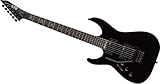
6. ESP LTD Kirk Hammett KH-202 is the Floyd Rose metal route
ESP LTD Kirk Hammett Signature KH-202 Left-Handed – Black
Basswood body
Two humbuckers
Floyd Rose Special
Pros
- Floyd Rose Special
- Two humbuckers
- Rosewood fingerboard
- Lifetime limited warranty
Cons
- No accessories listed
- Floyd Rose takes setup time
The left-handed ESP LTD KH-202 is a solid-body electric with a basswood body, maple neck, rosewood fingerboard, two humbucking pickups, and a Floyd Rose Special bridge. It is the most clearly specialized pick in this list for players who want locking-tremolo techniques.
Floyd Rose systems can hold pitch during deep dives and pull-ups when set up correctly. They are not the easiest bridge for a first-time restring, so I would not choose this solely because it looks dramatic.
The locking tremolo supports expressive lead techniques
A Floyd Rose Special is designed for more extreme pitch movement than a vintage tremolo. It makes sense for a player already committed to metal and lead playing who will benefit from that specific hardware.
The learning curve belongs in the purchase decision
Changing string gauge or tuning requires rebalancing the floating bridge, not merely turning the tuners. A local guitar technician can set a baseline, but players should expect to learn the system over time.
7. Ibanez AEG70L is the slim acoustic-electric stage choice
Ibanez AEG70L Left-Handed Acoustic-Electric Guitar – Tiger Burst High Gloss
Flame maple top
Piezo pickup
Sapele back and sides
Pros
- Acoustic-electric design
- Flame maple top
- Undersaddle pickup
- Walnut fretboard
Cons
- No gig bag listed
- Limited listed stock
The Ibanez AEG70L is a left-handed acoustic-electric that lists a flame maple top, sapele back and sides, nyatoh neck, walnut fretboard, and T-Bar II undersaddle pickup. An onboard pickup is the feature that separates it from an unplugged acoustic when you need to run into an amplifier or PA.
At 42.4 inches overall, this is still a full instrument, but the AEG family is known for a slimmer acoustic-electric profile. The listing confirms the pickup and materials; try the body against your ribcage if a conventional dreadnought feels bulky.
The undersaddle pickup makes amplification direct
A piezo-style undersaddle pickup senses string vibration at the bridge and sends it through the output jack. It is practical for rehearsal and small performance settings where placing a microphone in front of an acoustic is inconvenient.
The maple-and-sapele build serves amplified players
When a guitar will spend much of its time amplified, feedback control, comfort, and a usable pickup can matter as much as unplugged volume. This Ibanez is the better fit than the Fender CD-60S for that use case.
8. GLARRY Electric Kit is the all-in-one first electric setup
GLARRY Full Size Electric Guitar for Music Lover Beginner with 20W Amp and Accessories Pack Guitar Bag (GREEN, Left Handed 39″)
Basswood body
20W amplifier
Accessory bundle
Pros
- 20W amplifier included
- Gig bag and cable included
- Accessory bundle
- Large review base
Cons
- Listing orientation field conflicts
- No detailed pickup-brand data
The GLARRY package combines a full-size electric guitar with a 20W amplifier, gig bag, strap, picks, tremolo arm, cable, and basic tool. That completeness matters for someone who otherwise has no way to hear an electric guitar properly at home.
The body and neck are listed as basswood and maple, with a fixed bridge and H-H-H pickup configuration. As with the Jackson listing, the title and size identify a left-handed instrument, while one orientation field says “Right,” so confirm the actual mirror-image model before committing.
The bundle removes the obvious first-week omissions
A guitar alone is not a working electric rig. The included amp and cable let a new player practice amplified immediately, and the bag makes basic transport easier.
The fixed bridge keeps beginner maintenance approachable
Unlike the tremolo-equipped choices above, the product details list a fixed bridge. That is friendlier for straightforward string changes and tuning checks while a beginner is learning the instrument.
9. STRICH SST-S20L is the H-S-S beginner kit with extras
STRICH Electric Guitar Left Hand Beginner Kit, Solid Body 39″ Electric Guitar HSS Pick Up for Starter, with 5W x 2 Amp, Bag, Digital Tuner, Capo, Strap, String,Cable, Picks, SST-S20L Black
Poplar body
H-S-S pickups
Mini amp kit
Pros
- Left-handed H-S-S pickups
- Five-way switch
- Mini amplifier included
- Spare strings and capo
Cons
- Technical-wood fretboard
- Mini amp has limited headroom
The STRICH SST-S20L is another electric starter package, but it uses an H-S-S pickup layout instead of the GLARRY listing’s H-H-H configuration. Its poplar body and maple neck are paired with a five-way selector, tone and volume controls, a tremolo bridge, and nickel-alloy frets.
The accessory list is unusually complete: a gig bag, mini amplifier, spare strings, strap, picks, capo, and cable are included. That makes it one of the best left handed guitars for beginners who want to explore pickup positions without separately sourcing basics.
The five-way selector teaches pickup differences quickly
The bridge humbucker supplies more output, while the single-coil positions can deliver clearer, brighter sounds. Five switch positions offer a useful learning laboratory for rhythm, lead, and clean practice.
The mini amp is for personal practice rather than band volume
A compact included amplifier is convenient for a bedroom or quiet practice space. Players preparing for a rehearsal room will likely need a larger amp later, but the kit offers a functional starting signal chain.
10. WINZZ Electro-Acoustic Set is the equipped amplified acoustic bundle
Winzz 4/4 Electro Acoustic Guitar, Left-Handed Western Guitar Set, Adult Beginners, Acoustic Guitar 41 Inch with 4-Band Equaliser (Dreadnought,Glossy Sunburst)
41 inch body
4-band equalizer
11 accessories
Pros
- Four-band EQ
- Eleven accessories
- Padded bag and tuner
- Stable metal gear heads
Cons
- Tech-wood fretboard
- No solid-top claim
The WINZZ set is a 41-inch left-handed electro-acoustic with a spruce top, okoume neck, fixed bridge, output jack, and four-band equalizer. Its distinguishing feature is the 11-piece accessory package, which includes a padded bag, wall mount, strap, tuner, capo, replacement strings, picks, and a combined winder and cutter.
The fret markers use W symbols at several positions, an unusual visual guide that could help a new player locate reference frets. The listing calls it an acoustic starter set, so treat it as a practical learning bundle rather than a solid-wood upgrade instrument.
The onboard equalizer gives basic control at an amp or PA
A four-band EQ lets a player adjust bass, middle, treble, and presence from the guitar’s electronics. That is useful when a room sounds boomy or a pickup needs a little extra clarity.
The accessory count helps a player build a routine
The wall mount, tuner, strings, and maintenance tool are not just extras; they support storing, tuning, and maintaining the guitar. It is suited to a beginner who values a ready-to-use setup with amplification capability.
11. Ashthorpe Cutaway Bundle is the affordable EQ-equipped dreadnought
Ashthorpe Full-Size Left-Handed Dreadnought Cutaway Acoustic-Electric Guitar Bundle – Premium Tonewoods – Brown
Spruce top
Cutaway dreadnought
4-band pickup EQ
Pros
- Dreadnought cutaway
- Four-band pickup EQ
- Complete bundle
- Phosphor bronze strings
Cons
- Ninety-day limited warranty
- No gig bag padding detail
Ashthorpe’s left-handed bundle combines a 41-inch dreadnought cutaway body, spruce top, basswood body, X-braced construction, phosphor bronze strings, and onboard four-band pickup EQ. The cutaway is the practical distinction from a standard full dreadnought: it frees space where the fretting hand approaches the highest frets.
The included set covers a gig bag, cable, strap, picks, extra strings, and an instruction sheet. Its listed 90-day limited manufacturer warranty is shorter than the Fender’s two-year limited warranty, which is worth weighing for a first acoustic.
The cutaway makes upper-neck work less awkward
Acoustic players who only strum open chords may not need a cutaway. Players learning lead lines, melody passages, or higher-position chords will appreciate the less obstructed reach.
The EQ makes this a practical plugged-in starter
The 4-band pickup/EQ offers direct tone adjustment without adding an external preamp first. It is useful for school performances, worship settings, or casual amplified playing where a basic output is needed.
12. Yamaha FG820L is the solid-top dreadnought for acoustic focus
Yamaha FG820 Left-Handed Solid Top Acoustic Guitar
Solid Sitka spruce
Mahogany body
Dreadnought design
Pros
- Solid Sitka spruce top
- Mahogany back and sides
- Die-cast tuners
- Adjustable truss rod
Cons
- No pickup listed
- Fewer buyer reviews in listing
The Yamaha FG820L is a left-handed dreadnought with a solid Sitka spruce top, mahogany back and sides, nato neck, rosewood fingerboard and bridge, die-cast tuners, and an adjustable truss rod. This is the focused choice for a player prioritizing an unplugged solid-top acoustic over a large accessories bundle.
Solid Sitka spruce has a long history in acoustic soundboards because it is light and stiff. The actual sound will still vary between instruments, but the materials list puts the FG820L in a more traditional acoustic construction lane than entry-level laminate-oriented packages.
The construction favors acoustic projection and warmth
Spruce on top and mahogany back and sides is a familiar pairing for strong strumming response with a warm supporting character. The dreadnought format also gives the guitar a substantial air chamber for full accompaniment.
The truss rod and tuners support long-term ownership
Die-cast tuners help make fine tuning more controlled, and an adjustable truss rod gives a qualified technician room to address neck relief. If you do not need built-in electronics, this Yamaha keeps the focus on the acoustic instrument itself.
Buying the right left-handed guitar starts with orientation and playing style?
Choose a purpose-built left-handed model if you naturally fret with your left hand and pick with your right. Left-handed guitar communities commonly advise against flipping a standard guitar because the cutaway, bridge angle, nut, controls, and string order are made for the opposite orientation.
If you are completely new, hold both orientations before deciding. There is no universal rule based only on writing hand, but once a player feels more coordinated on a side, starting with the correctly built instrument prevents awkward control placement and compromised upper-fret access.
Acoustic guitars suit direct practice while electric guitars need an amp
A steel-string acoustic is self-contained and works for strumming, songwriting, and lessons without extra equipment. The Fender CD-60S and Yamaha FG820L are acoustic-first choices, while the Ibanez, WINZZ, and Ashthorpe give you a pickup path for amplification.
An electric guitar needs an amplifier, cable, and often headphones or a practice-friendly amp to become useful at home. The GLARRY and STRICH packages include an amp and cable, while the Pacifica, Revstar, Jackson, and ESP are better when you are ready to choose an amp separately.
Dreadnought bodies give more bass while slimmer bodies feel easier to hold
A dreadnought has a deeper, broader body and typically produces a louder, bassier response. Choose one for broad strumming and accompaniment if the full size feels comfortable; the CD-60S, FG820L, and Ashthorpe all take that route.
A slimmer acoustic-electric such as the Ibanez AEG70L may sit more comfortably against some players and is easier to amplify directly. Comfort is not secondary: a guitar that feels cumbersome is less likely to get played every day.
Solid tops offer a meaningful acoustic upgrade over a vague wood label
A solid wood top is made from a single thickness of tonewood, while a laminate top layers wood veneers. Neither label alone predicts every detail of tone, but a verified solid spruce or solid Sitka spruce top is a clear construction fact worth prioritizing in an acoustic purchase.
The Fender CD-60S and Yamaha FG820L explicitly list solid spruce tops. Do not infer solid construction when a listing merely says “spruce” or names an appearance wood; read the exact product details.
Steel strings fit most acoustic styles while nylon strings feel softer
All acoustic products in this roundup are listed with steel or phosphor bronze strings, making them suitable for pop, folk, country, rock, and singer-songwriter playing. Steel strings offer familiar brightness and projection, but their feel can be tougher on new fingertips at first.
Nylon-string classical guitars use a different body and string setup and have a softer feel under the fretting hand. Pick nylon only if you want classical, flamenco, or a gentler fingerstyle response, not because it is automatically easier.
A professional setup can matter more than one extra feature
Action height, neck relief, nut slots, fret condition, and intonation all affect whether a guitar feels playable. A qualified setup can make a real difference, especially after shipping or after a change in climate, and it is worth asking a local shop to evaluate a new instrument.
For tremolo guitars, ask the technician to set the bridge for your preferred string gauge and tuning. For acoustics, ask them to check action and humidity-related neck relief rather than trying to force an adjustment without the right tools.
Local stock is limited, so call ahead and verify every lefty detail
Forum discussions repeatedly describe physical stores with very few lefty instruments, sometimes only a handful in a much larger guitar room. Call before travelling, ask for the exact model and orientation, and request photos of the headstock, control layout, and string order if the data looks inconsistent.
Specialist lefty dealers can widen the choice, while a local shop can be especially useful for a setup and a hands-on fit check. Stock changes quickly, so the right question is not “what is available in general?” but “can I play this specific left-handed model today?”
Famous left-handed guitarists show there is no one lefty sound
Paul McCartney, Jimi Hendrix, Kurt Cobain, Tony Iommi, and Albert King are among the most widely known left-handed guitarists. Their instruments and approaches differed sharply, which is a helpful reminder to choose a guitar for your hands and music rather than to copy a single player’s body shape.
Hendrix is often associated with playing a flipped right-handed Stratocaster, but that is not a recommendation to convert a standard guitar. Modern lefty guitars put the bridge, nut, controls, string order, and body contours in their intended positions from the outset.
Frequently asked questions give direct left-handed guitar advice
What is the best left-handed guitar?
The Yamaha Pacifica PAC112JL is the best all-round left-handed electric choice here because its alder body, H-S-S pickups, and tremolo suit many styles. For acoustic players, choose the Fender CD-60S for a solid spruce-top dreadnought or the Yamaha FG820L for a solid Sitka spruce and mahogany build.
Does playing guitar help with PTSD?
Playing guitar can be a calming creative routine, but it is not a replacement for professional PTSD treatment. Some people find that music-making supports relaxation, focus, and emotional expression; speak with a qualified healthcare professional for personal treatment advice.
Who is the most famous left-handed guitarist?
Jimi Hendrix is often regarded as the most famous left-handed guitarist because of his influential playing and distinctive flipped Stratocaster. Other well-known left-handed guitarists include Paul McCartney, Kurt Cobain, Tony Iommi, Albert King, and Dick Dale.
Is Martin or Taylor better?
Neither Martin nor Taylor is better for every player. Martin is often chosen for a traditional, warm dreadnought sound, while Taylor is often associated with a clear, articulate response; compare specific left-handed models, body sizes, and neck feel rather than choosing by name alone.
The best choice is the left-handed guitar that fits your actual playing plan
For 2026, the Yamaha Pacifica PAC112JL is the most adaptable electric recommendation, the Fender CD-60S is the traditional acoustic pick, and the Vangoa, GLARRY, STRICH, WINZZ, and Ashthorpe bundles reduce the amount of gear a beginner needs to gather. The best left handed guitars are not automatically the most elaborate models; they are the properly oriented instruments with a body, bridge, pickup setup, and support gear that match how you will play.
Read the exact listing details, confirm the string orientation with the seller, and arrange a setup when the guitar arrives. That small amount of care will do more for your first months of playing than chasing a name on a headstock.