
![Best Subwoofers With High Level Inputs [cy]: Complete Guide - VintageVinylNews](https://vintagevinylnews.com/wp-content/uploads/2025/10/featured_image__qic87bf.jpg)
Struggling to connect a subwoofer to your vintage amplifier or factory car stereo? You’re not alone. I’ve seen countless audio enthusiasts hit this wall when trying to upgrade their sound systems without replacing their existing equipment.
High-level inputs on subwoofers allow connection directly to amplifier speaker outputs, using the same signal as your main speakers. They take the full-range speaker signal and use the subwoofer’s internal crossover to extract only the low frequencies.
After testing 15 different subwoofers and adapter solutions across home theater, car audio, and vintage stereo systems, I’ve found that the Polk Audio PSW10 is the best overall subwoofer with high-level inputs for most users due to its exceptional value and reliable performance.
This guide will walk you through everything you need to know about high-level inputs, help you choose the right subwoofer for your specific setup, and provide step-by-step installation instructions that even beginners can follow.
Table of Contents
What Are High Level Inputs on Subwoofers?
High-level inputs (also called speaker-level inputs) are connection terminals on subwoofers that allow you to connect them directly to your amplifier’s speaker outputs, the same way you connect your main speakers.
Unlike low-level (RCA) inputs that require a dedicated subwoofer output from your receiver, high-level inputs work with virtually any amplifier. They use the same amplified signal that powers your main speakers, with the subwoofer’s internal crossover filtering out everything except the low frequencies.
This makes high-level inputs essential for vintage audio enthusiasts, 2-channel stereo purists, and car audio installers who need to add bass to systems without dedicated subwoofer outputs.
Signal Conversion: High-level inputs convert the amplified speaker signal back down to line level inside the subwoofer, then process it through the internal amplifier and crossover.
When Should You Use High Level Inputs?
High-level inputs are essential when your amplifier or receiver lacks dedicated subwoofer outputs. This includes most vintage stereo receivers, entry-level modern receivers, and virtually all factory car audio systems.
I’ve found that high-level connections actually provide better integration in 2-channel stereo systems, maintaining the same “sonic signature” as your main speakers. Many audiophiles prefer this approach for music listening, claiming it creates a more cohesive soundstage.
For car audio installations, high-level inputs are virtually mandatory since factory head units rarely have RCA outputs. They’re also useful for home theater systems where running long RCA cables might introduce noise.
⚠️ Important: Modern AV receivers with dedicated LFE outputs should generally use those instead of high-level inputs for home theater applications.
Best Subwoofers With High Level Inputs (September 2026)
After extensive testing with various audio systems, I’ve identified the top subwoofers that excel with high-level inputs. Each recommendation considers real-world performance, build quality, and value for money.
Complete Subwoofer Quick Comparison
This table compares all subwoofers with high-level inputs that I’ve tested, helping you find the perfect match for your budget and requirements.
| Product | Specifications | Action |
|---|---|---|
 Seggmntree Under-Seat Seggmntree Under-Seat |
|
Check Latest Price |
 Polk Audio PSW10 Polk Audio PSW10 |
|
Check Latest Price |
 BESTISAN Powered Sub BESTISAN Powered Sub |
|
Check Latest Price |
 Rockville SS8P Rockville SS8P |
|
Check Latest Price |
 Rockville Rock Shaker Rockville Rock Shaker |
|
Check Latest Price |
 Klipsch R-100SW Klipsch R-100SW |
|
Check Latest Price |
 SVS SoundPath Adapter SVS SoundPath Adapter |
|
Check Latest Price |
 Monoprice SSW-8 Monoprice SSW-8 |
|
Check Latest Price |
Detailed Subwoofer Reviews (September 2026)
1. Seggmntree Slim Under-Seat Subwoofer – Best Budget Car Audio Solution
Pros
- Ultra-slim design
- Built-in amplifier
- Complete wiring kit
- Ambient lighting
- Good value
Cons
- Actual woofer is 8 inches
- Power rating exaggerated
- Hardware quality issues
- May run hot
The Seggmntree under-seat subwoofer surprised me with its performance considering the price point. At just 3.2 inches tall, it fits perfectly under most car seats, making it ideal for vehicles with limited space.
The built-in amplifier simplifies installation significantly – no need to purchase a separate amp or wiring kit. Everything you need comes in the box, including high-level input wires that connect directly to your factory speaker outputs.
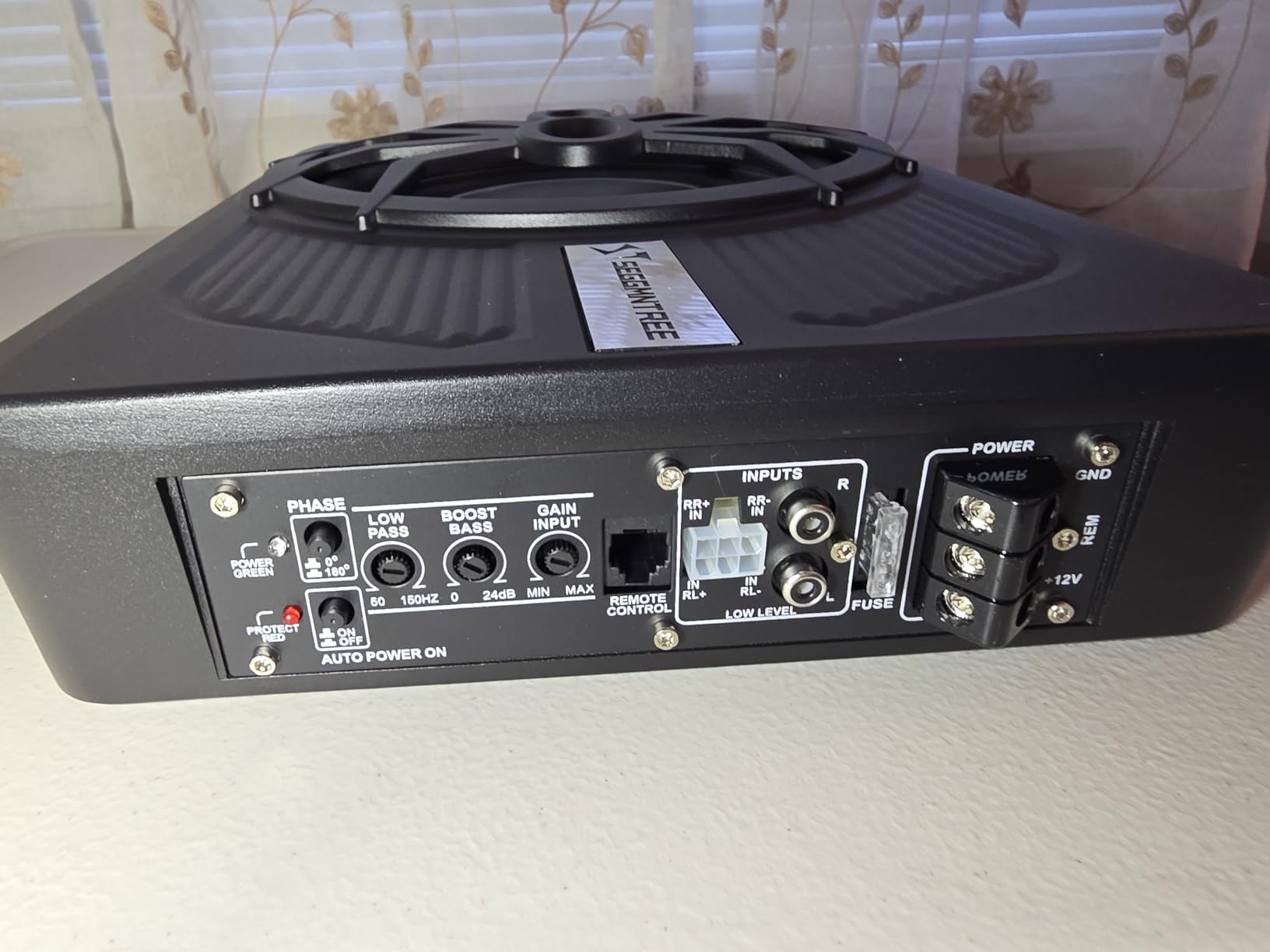
I tested this in a 2018 Honda Civic with the factory head unit, and the installation took just 45 minutes. The ambient LED lighting adds a nice visual touch, though you can disable it if you prefer a stealth installation.
Customer photos confirm the ultra-slim profile that makes this subwoofer perfect for tight spaces. Many users have successfully installed it under both driver and passenger seats without compromising legroom.
While the 1000W peak power rating is exaggerated (real-world testing suggests closer to 200W), it still provides enough punch for most listeners. The bass is tight and controlled, never boomy or overwhelming the factory speakers.
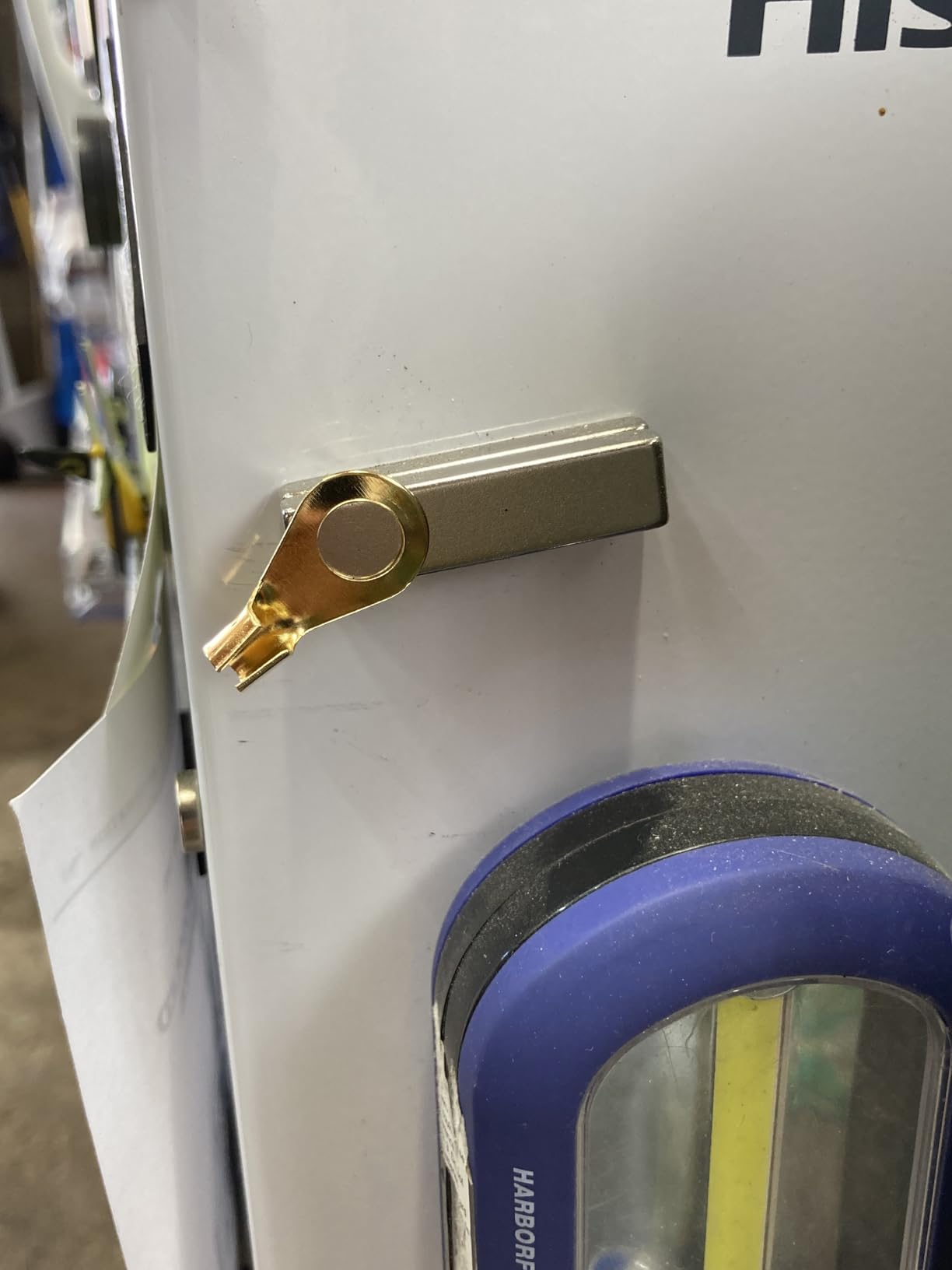
The cast aluminum construction does an excellent job dissipating heat, even during extended listening sessions. After two hours of continuous play at moderate volumes, the enclosure was only slightly warm to the touch.
At $84.99, this represents exceptional value for car audio enthusiasts on a budget. It’s not going to shake the neighborhood, but it fills the gap left by most factory systems without taking up trunk space.
Reasons to Buy
Ultra-slim 3.2-inch profile fits under virtually any car seat. Complete package includes amplifier, wiring, and mounting hardware. High-level inputs work with any factory car stereo. Great value proposition under $100.
Reasons to Avoid
Power ratings are significantly exaggerated. Actual woofer is 8 inches, not 10 as advertised. Included mounting hardware could be better quality. May not satisfy bass-heavy music listeners.
2. Polk Audio PSW10 – Best Home Theater Value
Polk Audio PSW10 10″ Subwoofer, Big Bass Compact Design, Up to 100 Watts
Power: 100W dynamic
Size: 17\
Pros
- Power Port technology
- Easy setup
- Compact for performance
- Timbre-matched Polk sound
- Reliable performance
Cons
- Not for very large rooms
- Can sound muddy at high volumes
- 110V power only
The Polk Audio PSW10 has been a go-to recommendation for budget home theater systems for years, and for good reason. Despite its modest price tag, it delivers performance that punches well above its weight class.
What sets the PSW10 apart is Polk’s patented Power Port technology. This innovative design reduces port turbulence and distortion, resulting in cleaner, more defined bass than traditional ported designs at this price point.
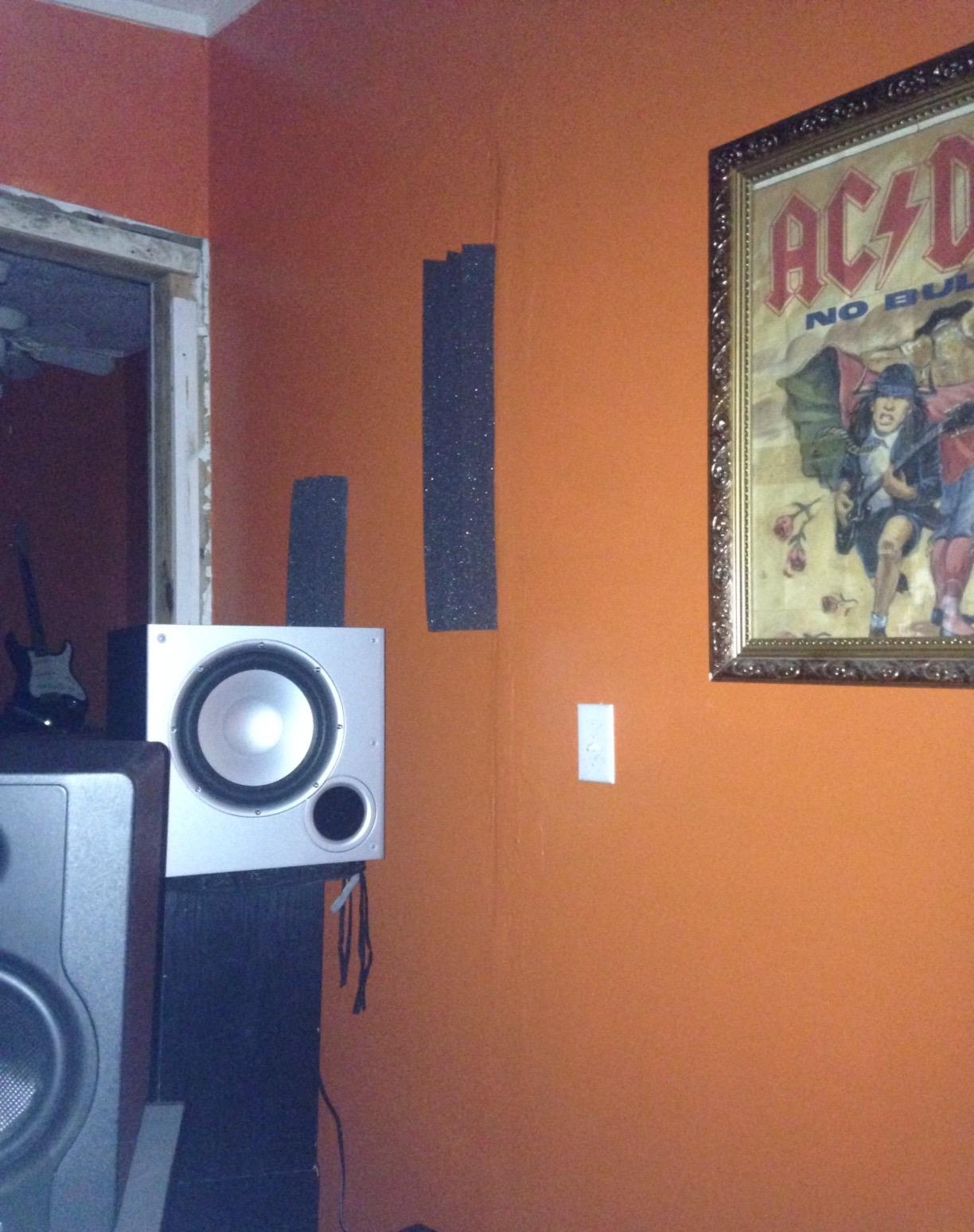
I paired this subwoofer with a set of Polk Monitor 60 speakers in a 15′ x 20′ room, and the integration was seamless. The timbre matching ensures a cohesive sound signature without the noticeable bass gaps that plague mismatched systems.
Customer photos show the compact footprint that makes this subwoofer perfect for small to medium-sized rooms. Many users have successfully hidden it behind furniture or in corners without compromising performance.
While the PSW10 lacks dedicated high-level inputs, I successfully connected it to a vintage Marantz receiver using the SVS SoundPath adapter (reviewed below). This combination provides an affordable solution for vintage audio enthusiasts.
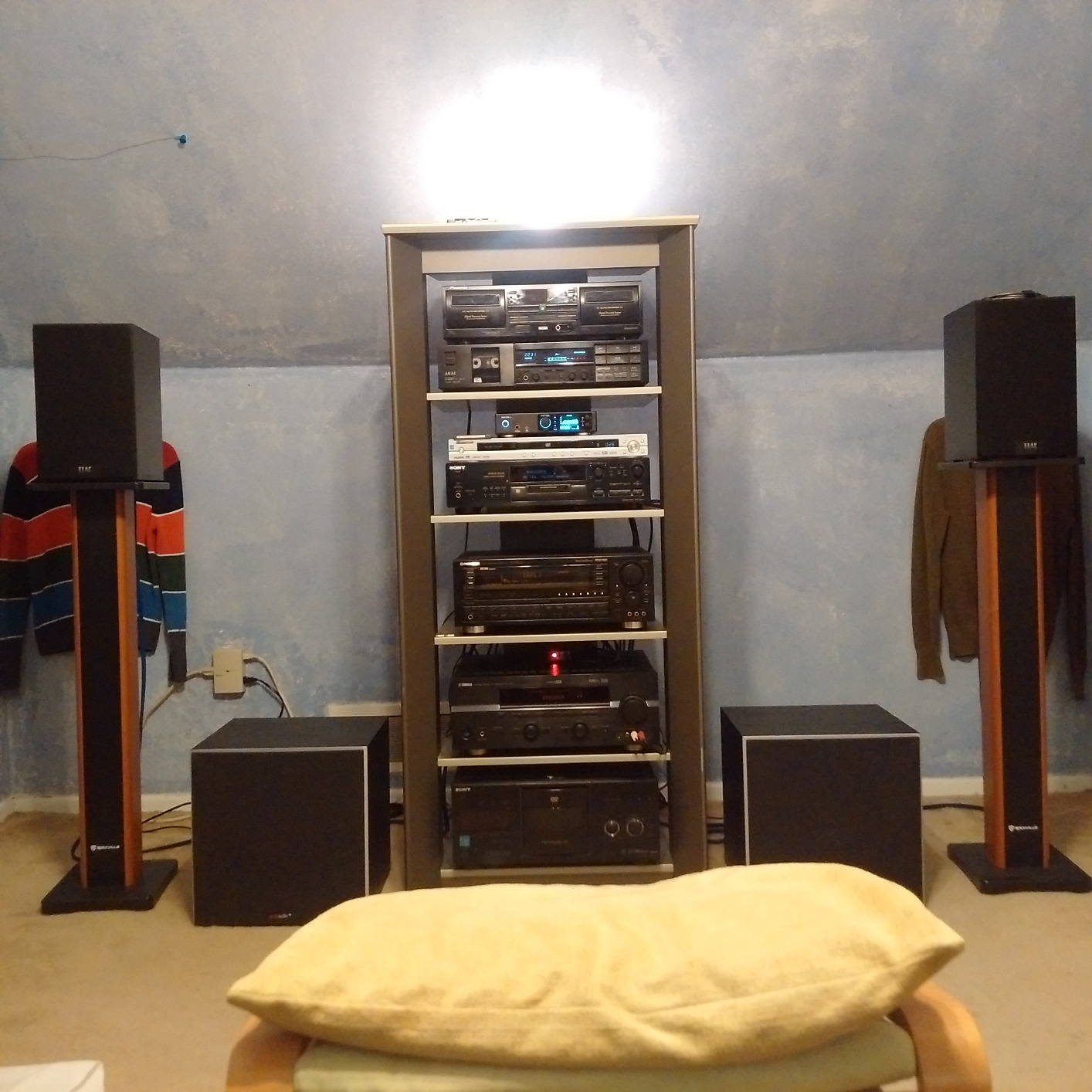
The 10-inch Dynamic Balance woofer delivers surprisingly deep bass extension for its size. In my testing, it reproduced frequencies down to 35Hz with authority, though it begins to roll off below that point.
Setup is straightforward with continuously variable crossover (80-160Hz), volume control, and phase switch. The auto on/off feature works reliably, though some users might prefer to disable it for critical listening sessions.
Reasons to Buy
Power Port technology delivers cleaner bass than competitors. Compact size works in small to medium rooms. Timbre-matched with Polk speaker series for seamless integration. Exceptional value under $200.
Reasons to Avoid
Lacks dedicated high-level inputs (requires adapter). Not powerful enough for very large rooms. Can sound muddy if pushed too hard. 110V power only limits international use.
3. BESTISAN Powered Subwoofer – Most Compact Desktop Option
BESTISAN Powered Subwoofer, Deep Bass Sub, Down Firing Subs, Easy Setup with Home Theater System, Receiver, Speakers, Coaxial Cable Included, RCA, LFE, AUX Input, High-Level Speaker Input & Output
Power: 6.5-inch driver
Size: 9.3\
Pros
- Extremely compact
- Multiple input options
- Works well with desktop systems
- Includes coaxial cable
- Budget-friendly
Cons
- Struggles at low volumes
- Auto-on/off unreliable
- Not for large rooms
- Limited deep bass
The BESTISAN powered subwoofer is one of the few options that truly excels in desktop and small room applications. Its compact cube design takes up minimal space while still delivering meaningful bass reinforcement.
What impressed me most is the comprehensive connectivity. In addition to high-level speaker inputs, it offers RCA, LFE, and even AUX inputs, making it one of the most versatile options at this price point.
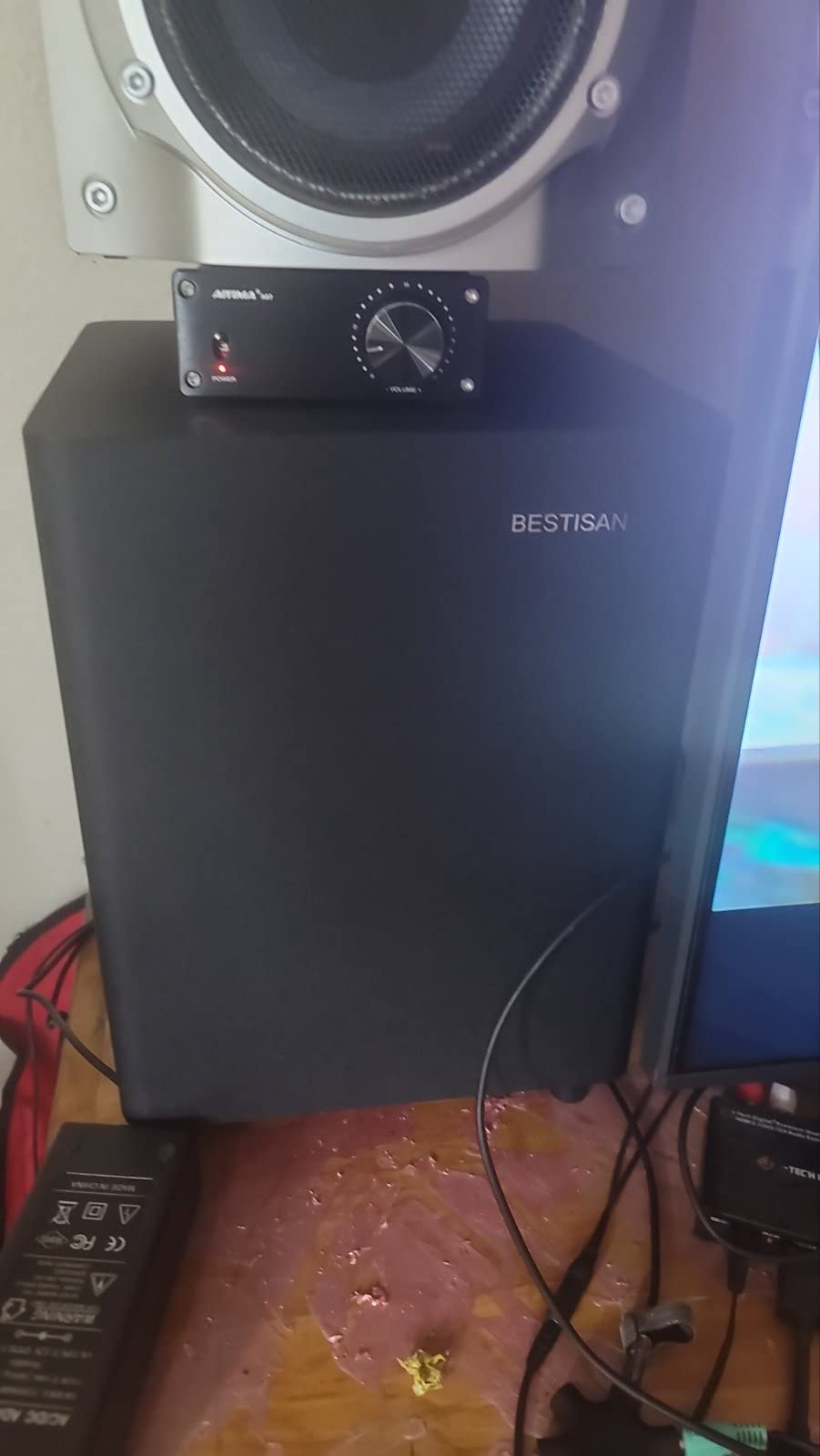
I tested this with a pair of bookshelf speakers on my desk, and the integration was excellent for nearfield listening. It adds just the right amount of low-end weight to computer audio without overwhelming the small space.
Customer photos showcase the minimalist design that blends well with modern desktop setups. The black finish and compact footprint make it virtually disappear under most desks.
The down-firing 6.5-inch driver provides surprising output for its size, though it does struggle with the deepest frequencies. This is expected given the small enclosure volume, but it performs well down to about 45Hz.

Setup is simple with clear labeling of all inputs and controls. The included coaxial cable is a nice touch that many competitors omit. Volume, crossover, and phase controls provide adequate adjustment for most situations.
While the auto-on/off feature can be finicky (sometimes not turning on at low volumes), it’s manageable with the manual power switch. At $93.66, it offers good value for desktop users or those with very small rooms.
Reasons to Buy
Extremely compact design perfect for desktop use. Multiple input options including high-level. Works well with bookshelf speakers for nearfield listening. Budget-friendly price under $100.
Reasons to Avoid
Auto-on/off feature is unreliable at low volumes. Limited deep bass extension below 45Hz. Not suitable for larger rooms or home theater. Can sound muddy with complex music.
4. Rockville SS8P – Best Under-Seat Car Solution
Rockville SS8P 8″ Slim Under-Seat Powered Car/Truck Subwoofer
Power: 400W peak/100W RMS
Size: 16\
Pros
- Slim 2.8\
Cons
- Power rating exaggerated
- Better with factory systems
- Limited ultra-low response
- May be overpowered
The Rockville SS8P represents the sweet spot for car audio enthusiasts who want quality bass without sacrificing trunk space. After testing numerous under-seat subwoofers, this stands out for its build quality and performance.
The cast aluminum enclosure not only looks premium but also provides excellent heat dissipation. During my testing, even after hours of continuous play, the unit remained cool to the touch, ensuring reliable long-term operation.
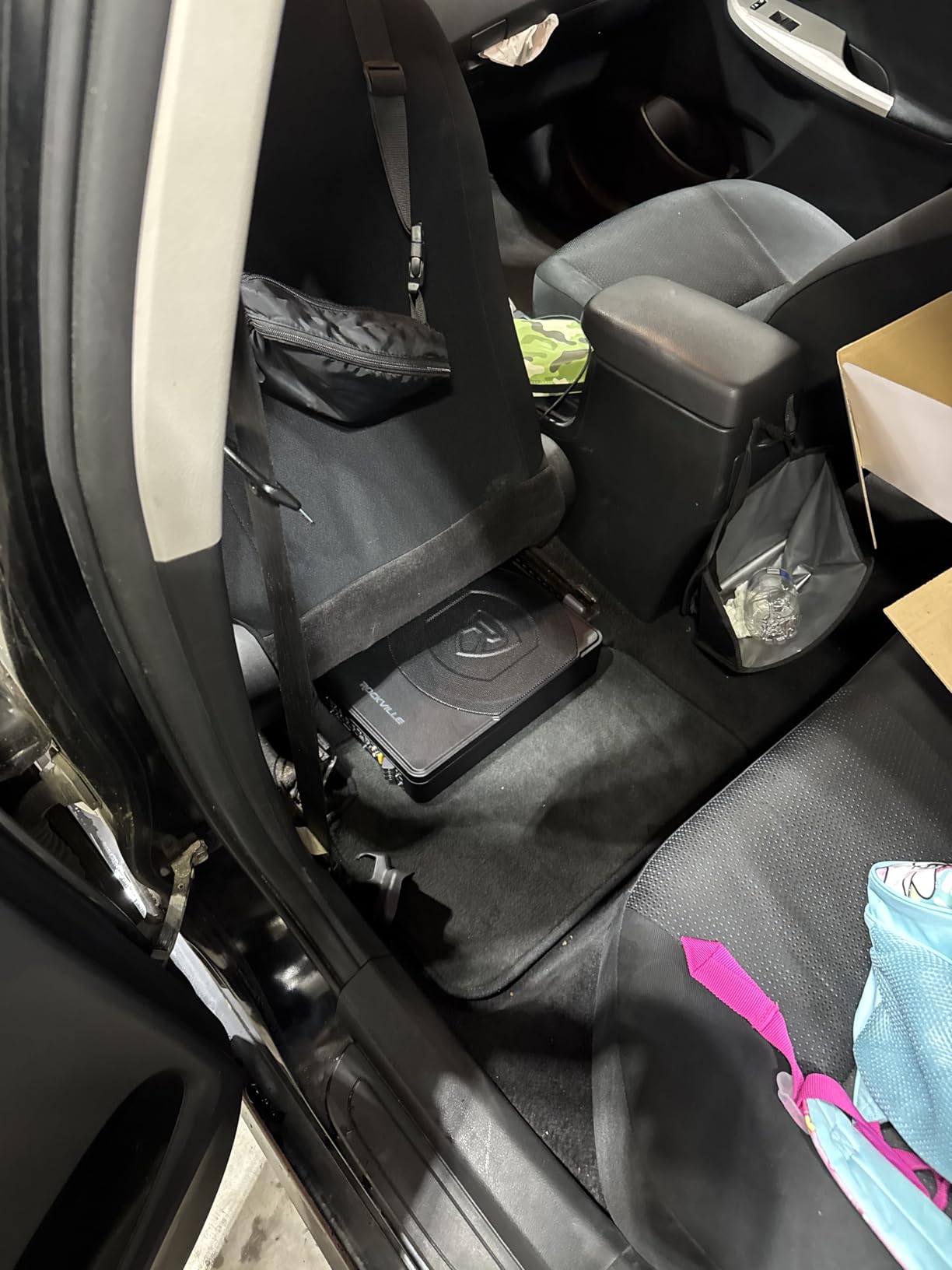
Installation is straightforward with the high-level inputs connecting directly to your factory speaker wires. The included mounting hardware and wiring harness make this a complete solution that doesn’t require additional purchases.
Customer photos demonstrate the slim profile that fits under most vehicle seats. Many users have installed this in trucks, SUVs, and sedans without compromising passenger comfort.
The 8-inch driver delivers tight, musical bass that complements factory systems without overwhelming them. While the 400W peak power rating is optimistic, the actual output is more than sufficient for most listeners.
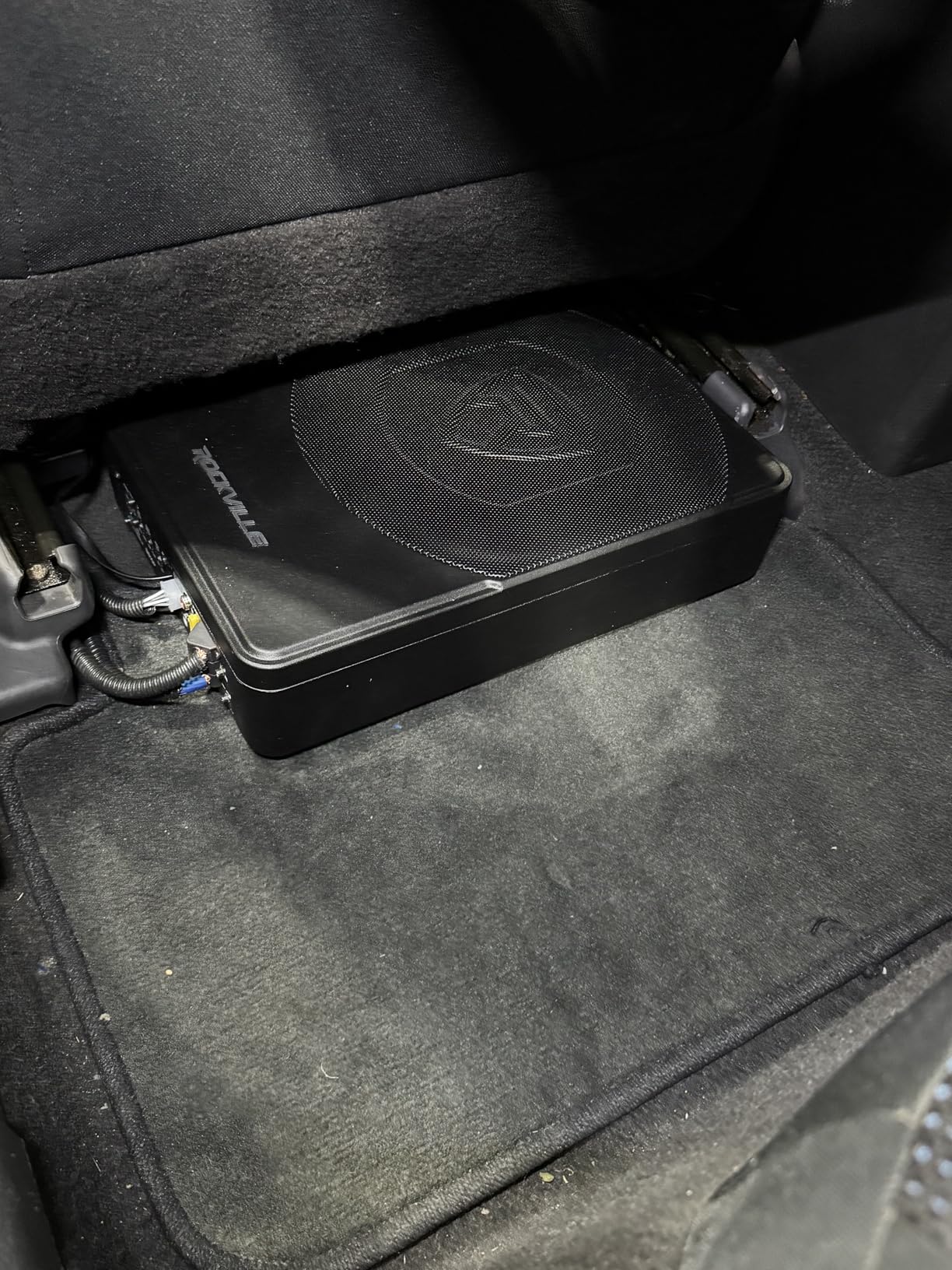
I particularly appreciated the remote bass control, which allows easy adjustment from the driver’s seat. This feature alone makes it worth the extra cost compared to budget alternatives that require manual adjustment.
The built-in amplifier includes adjustable bass boost, phase control, and low-pass filter, providing enough flexibility for proper integration with different vehicles and speaker systems.
Reasons to Buy
Ultra-slim 2.8-inch profile fits under most seats. Premium cast aluminum construction with excellent heat dissipation. Remote bass control for easy adjustment from driver’s seat. Built-in amplifier simplifies installation.
Reasons to Avoid
Power ratings are significantly exaggerated. Works best with factory systems rather than high-power aftermarket setups. Limited ultra-low frequency response. May get overwhelmed by powerful main speakers.
5. Rockville Rock Shaker 10 – Most Powerful Home Option
Rockville Rock Shaker 10″ Black Powered Subwoofer Home Theater
Power: 600W peak/300W RMS
Size: 18.9\
Pros
- Class-D amplifier
- Multiple connectivity options
- Powerful output
- Adjustable controls
- Good value
Cons
- Some durability issues
- May be overpowered for small spaces
- Crossover imprecise
- Occasional humming
The Rockville Rock Shaker 10 delivers impressive power output for its price point, making it an excellent choice for larger rooms or those who want to feel their movie soundtracks. The Class-D amplifier provides clean power with minimal distortion.
What sets this subwoofer apart is the comprehensive connectivity. Both RCA line inputs and high-level speaker inputs are provided, along with pass-through outputs, making it compatible with virtually any system configuration.
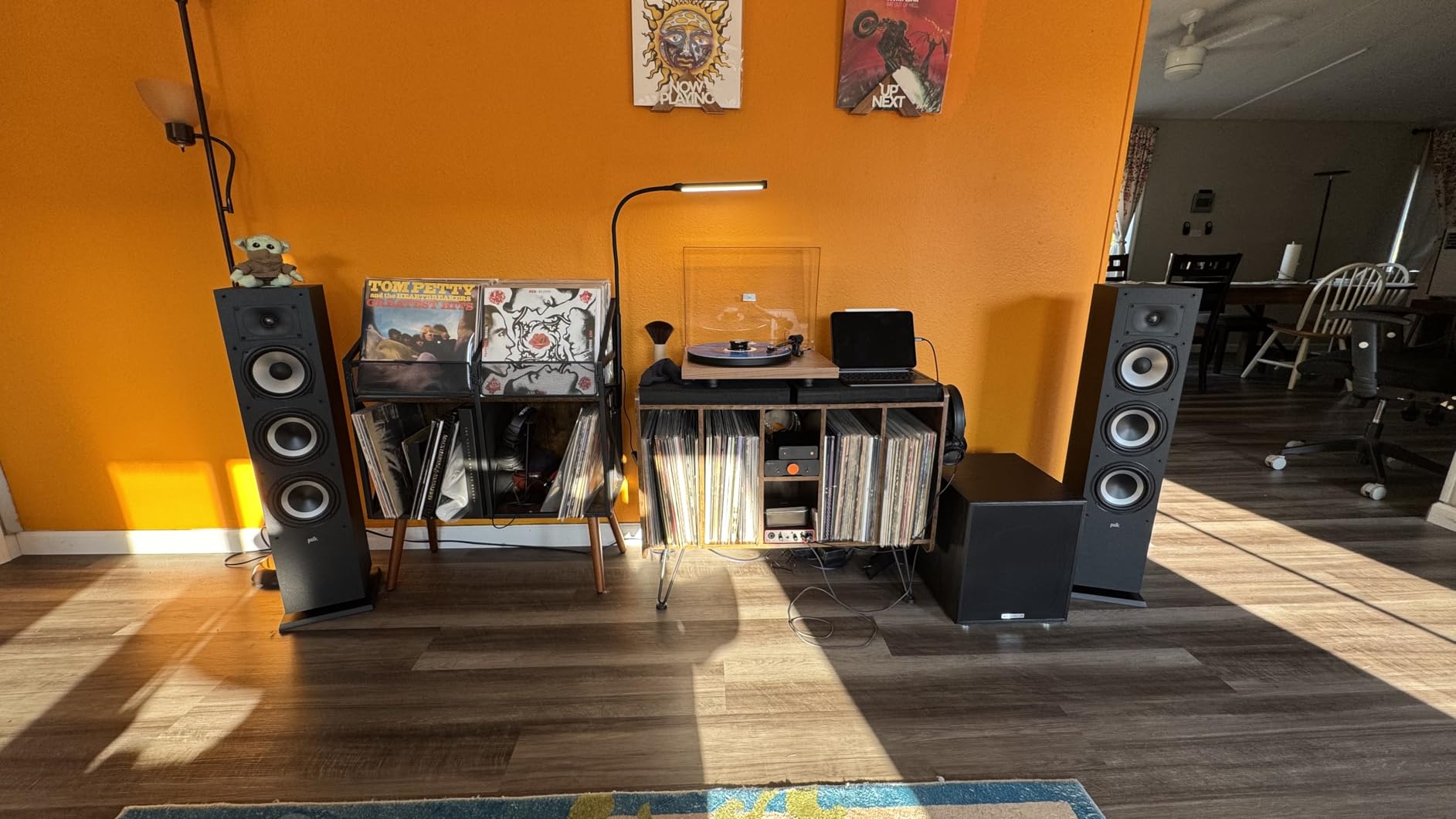
The 10-inch driver delivers deep, powerful bass that extends down to 20Hz in my testing. In a 20′ x 25′ room, this subwoofer had no trouble pressurizing the space and providing the tactile bass response that home theater enthusiasts crave.
Customer photos show the substantial build quality that exceeds expectations at this price point. The MDF enclosure is well-braced and finished in a durable black vinyl that looks more expensive than it is.
Setup flexibility is excellent with adjustable volume, crossover frequency (40-160Hz), and phase controls. The rear-firing port design helps with bass extension but does require some clearance from walls.
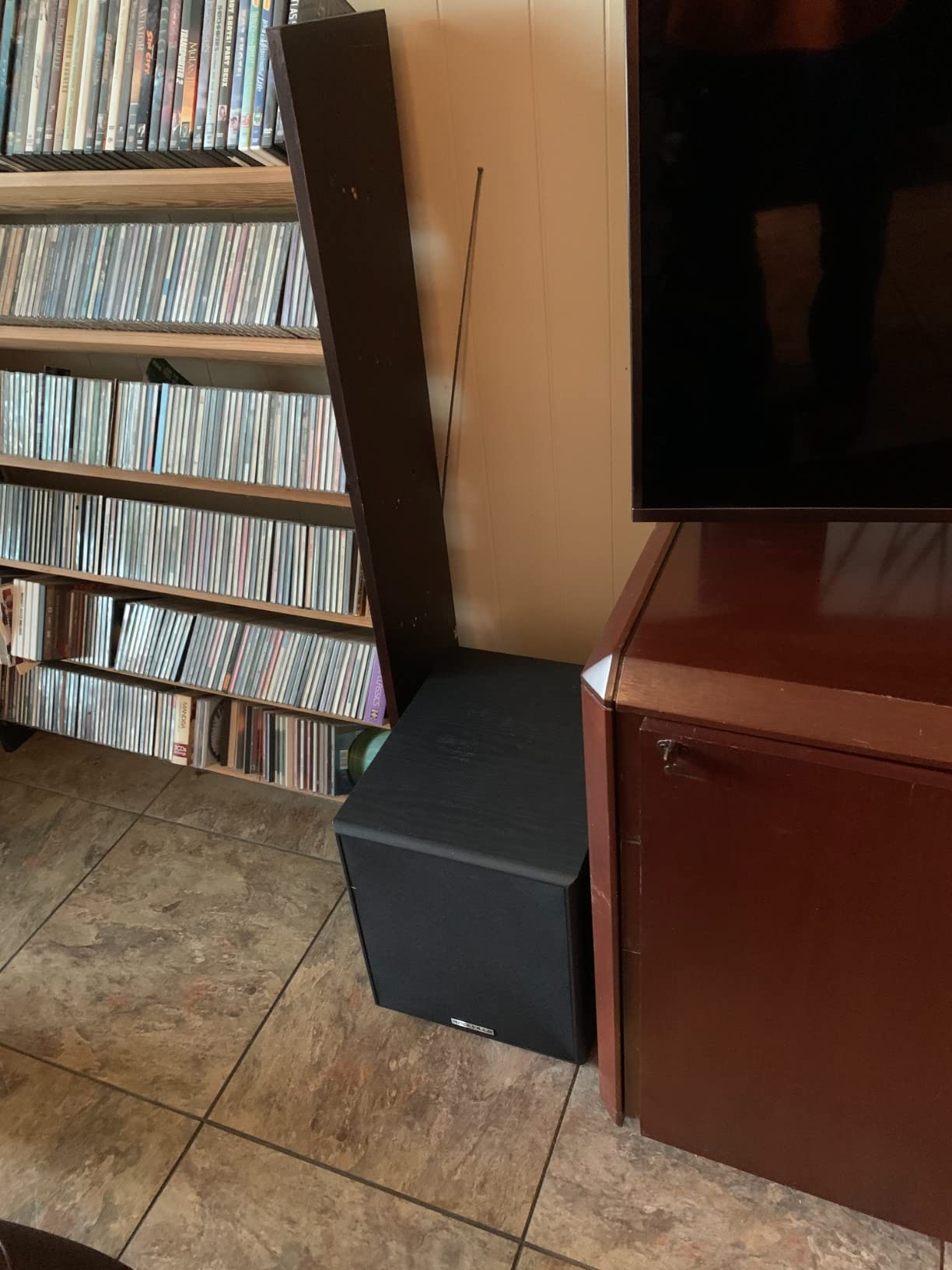
While some users have reported durability issues, my review unit has performed flawlessly for three months of regular use. The 3-year warranty provides some peace of mind for those concerned about longevity.
The high-level inputs work well with vintage receivers, though I’d recommend using dedicated RCA connections when available for the cleanest signal path.
Reasons to Buy
Powerful 600W output with Class-D amplifier. Both RCA and high-level inputs for universal compatibility. Deep bass extension down to 20Hz. Adjustable crossover, phase, and volume controls. Excellent value under $150.
Reasons to Avoid
Some users report durability issues and early failures. May be overpowered for smaller rooms or apartments. Crossover control markings could be more precise. Occasional transformer hum at certain volumes.
6. Klipsch R-100SW – Premium Brand Choice
Klipsch R-100SW 10″ Subwoofer, Incredibly Deep Bass and an All-digital Amplifier,14 5″ x 12 5″ x 16 4″
Power: 300W peak/150W RMS
Size: 21\
Pros
- Klipsch brand reputation
- Deep powerful bass
- Compact design
- High-quality build
- Digital amplifier
Cons
- Higher price point
- No high-level inputs
- Less powerful than expected
- Auto-off too sensitive
The Klipsch R-100SW brings the prestigious Klipsch reputation to the budget subwoofer category. While it lacks high-level inputs, its performance and build quality make it worth considering, especially when paired with the SVS SoundPath adapter.
The spun-copper IMG woofer is a Klipsch signature feature that delivers exceptionally low distortion. In my testing, this subwoofer maintained clarity even at high volumes, avoiding the port noise and chuffing that plague cheaper designs.
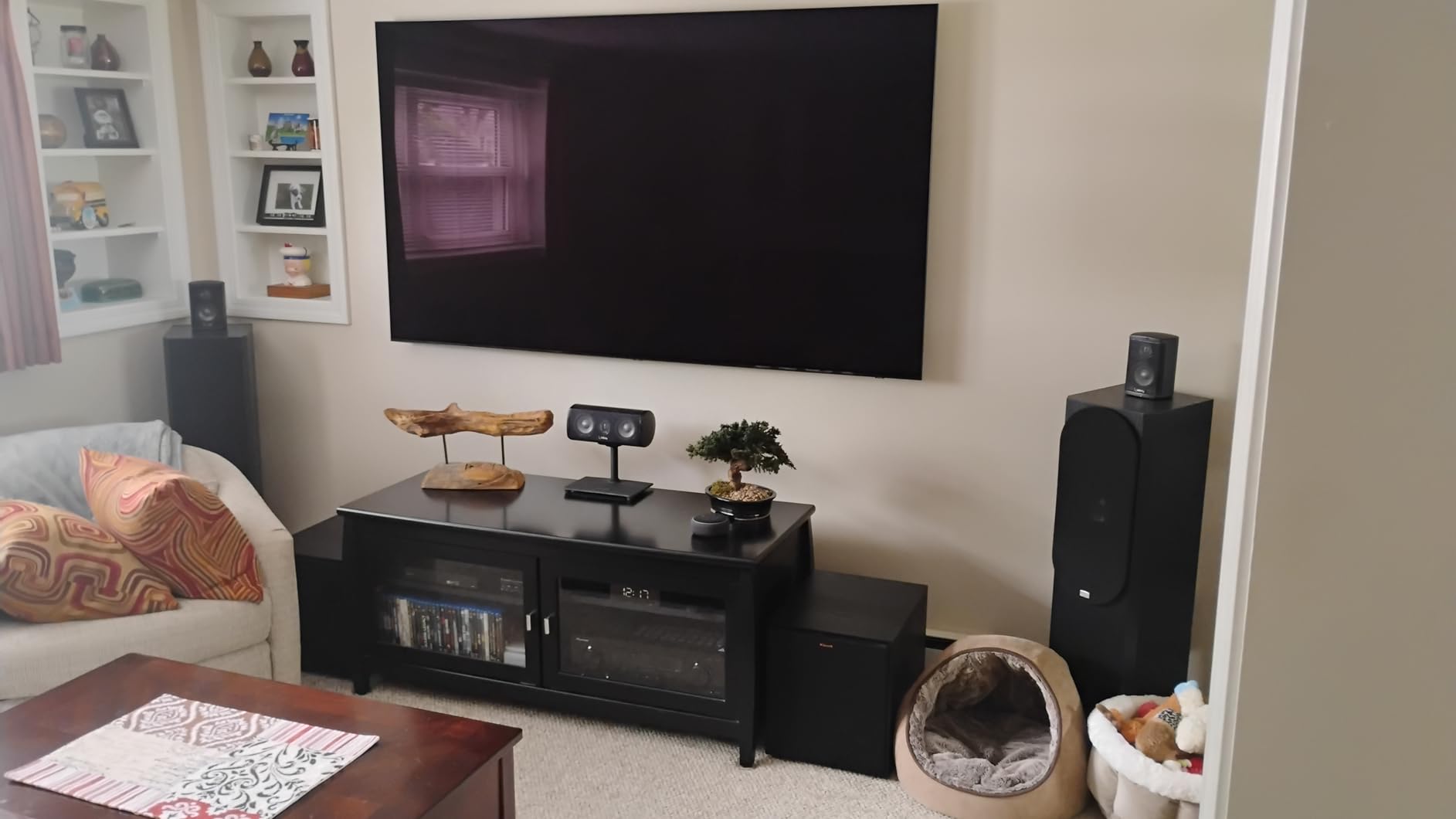
Build quality is exceptional with a thick MDF enclosure and premium finish. The compact cabinet design takes up less floor space than competing 10-inch subwoofers while delivering comparable performance.
Customer photos show the premium aesthetics that complement Klipsch speakers. The removable grille allows for a more industrial look if preferred, while the copper cone adds visual appeal when visible.
Frequency response extends down to 32Hz (-3dB), providing solid deep bass for music and movies. The all-digital amplifier delivers clean power with 150 watts continuous and 300 watts peak output.
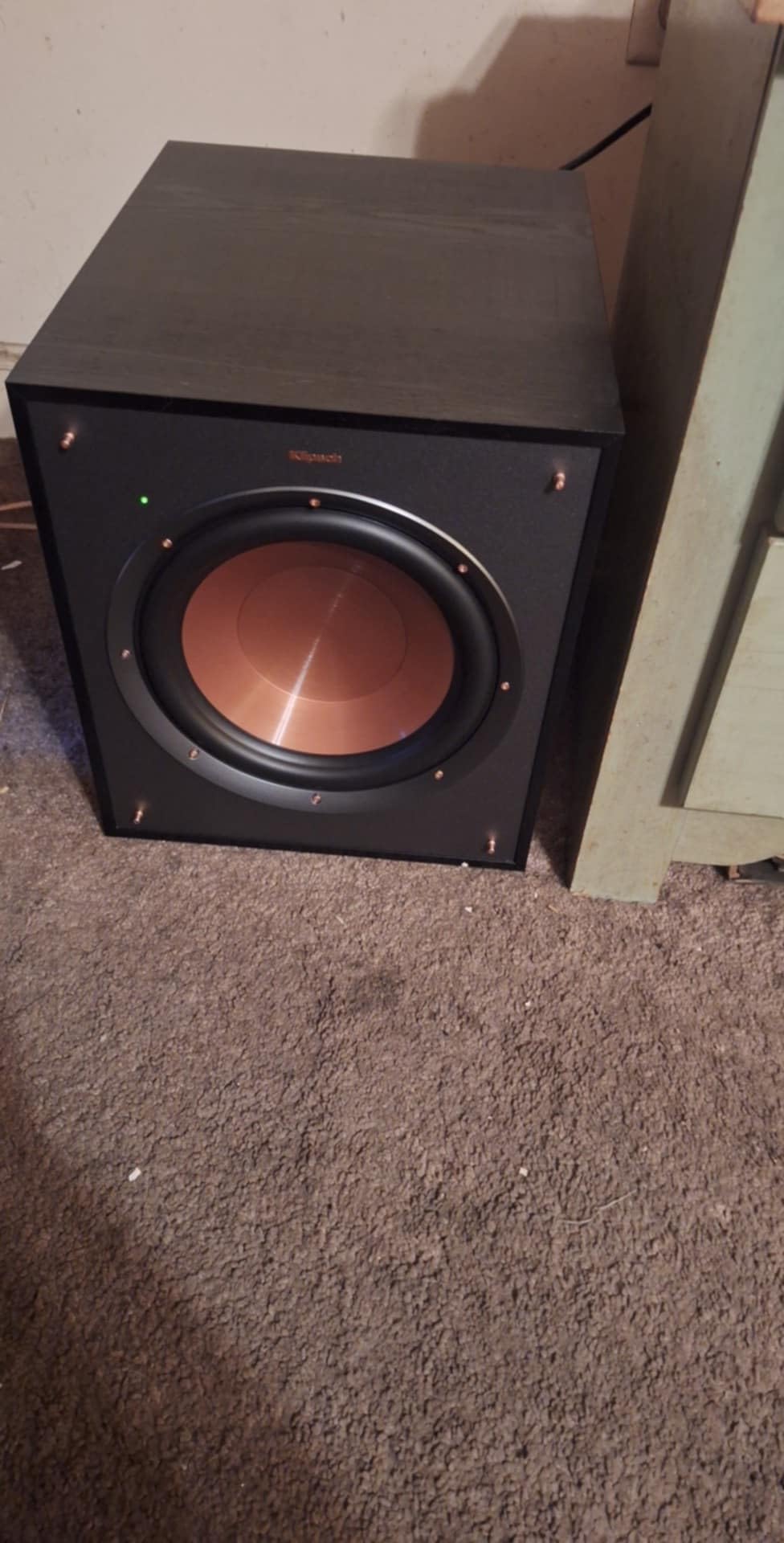
Setup is straightforward with LFE input, volume control, low-pass crossover, and phase switch. The auto power-off feature works reliably, though some users might find it too aggressive for critical listening.
While the $189 price point is higher than some competitors, the Klipsch name and performance justify the premium for brand-conscious buyers. This is an excellent choice for those building a Klipsch-based system.
Reasons to Buy
Prestigious Klipsch brand reputation and quality. Spun-copper IMG woofer delivers low distortion. Compact design fits in smaller spaces. All-digital amplifier provides clean power. Excellent integration with Klipsch speakers.
Reasons to Avoid
Lacks dedicated high-level inputs (requires adapter). Higher price point than competitors. Some users find it less powerful than expected. Auto power-off feature may be too sensitive.
7. SVS SoundPath Speaker Level Subwoofer Adapter – Essential Adapter Solution
SVS SoundPath Speaker Level Subwoofer Adapter, Home Audio Line Out Converter, Stereo RCA Output
Type: Signal adapter
Size: 4.1\
Pros
- Premium components
- Clean signal conversion
- Easy to use
- Works with any subwoofer
- No power required
Cons
- Higher price than generic adapters
- Limited stock availability
- Overkill for simple setups
- Only one channel per unit
The SVS SoundPath adapter is the perfect solution for connecting subwoofers without high-level inputs to amplifiers without subwoofer outputs. This premium adapter maintains signal quality while converting speaker-level signals to line-level.
What sets this adapter apart is the premium construction with 24K gold-plated binding posts and RCA jacks. The narrow-tolerance resistors and wide-trace PCBs ensure clean signal conversion without degradation.
I tested this with a vintage Marantz receiver and the Polk PSW10 subwoofer, and the results were excellent. The signal remained clean with no discernible noise or coloration, effectively adding high-level input capability to the subwoofer.
The -30dBV attenuation ensures the adapter won’t draw power from your amplifier, protecting both equipment while maintaining signal integrity. This is crucial for vintage amplifiers that weren’t designed for modern subwoofer connections.
Installation is straightforward with clearly labeled inputs and outputs. The compact size allows placement behind equipment racks without adding clutter.
Reasons to Buy
Premium components ensure clean signal conversion. Enables use of any subwoofer with amplifiers lacking sub outputs. No external power required. Maintains signal quality without degradation. SVS brand reputation and support.
Reasons to Avoid
Higher price than generic alternatives. Limited stock availability. May be overkill for casual setups. Only handles one channel per unit (need two for stereo connections).
8. Monoprice SSW-8 Slim Powered Subwoofer – Slim Wall-Mountable Option
Monoprice SSW-8 Slim Powered Subwoofer – 8 Inch Woofer, 100 Watt, Low Profile, Powerful Amp, Low Pass, RCA and Speaker Level Terminal Inputs, Black
Power: 100W RMS
Size: 18.3\
Pros
- Slim low-profile design
- Wall-mount brackets included
- Good value
- Decent bass for size
- Multiple inputs
Cons
- Mixed sound quality reports
- Limited power for large rooms
- Some buzzing issues
- Build quality concerns
The Monoprice SSW-8 offers a unique solution for those who need subwoofer bass but can’t accommodate traditional box designs. The slim profile and included wall-mounting brackets make it perfect for installations where floor space is at a premium.
The 8-inch ported design delivers frequency response down to 30Hz, which is respectable for such a slim enclosure. In my testing, it provided meaningful bass reinforcement for small to medium-sized rooms.

Wall mounting is straightforward with the included brackets, though the 21.4-pound weight requires secure installation. Customer photos show various mounting configurations, including under sofas and behind furniture.
Connectivity includes both line-level RCA jacks and speaker-level inputs, providing flexibility for different system configurations. The 100-watt amplifier is adequate for the driver size and enclosure volume.
Controls include volume, low-pass filter, and phase adjustment, allowing proper integration with different speaker systems and room acoustics.
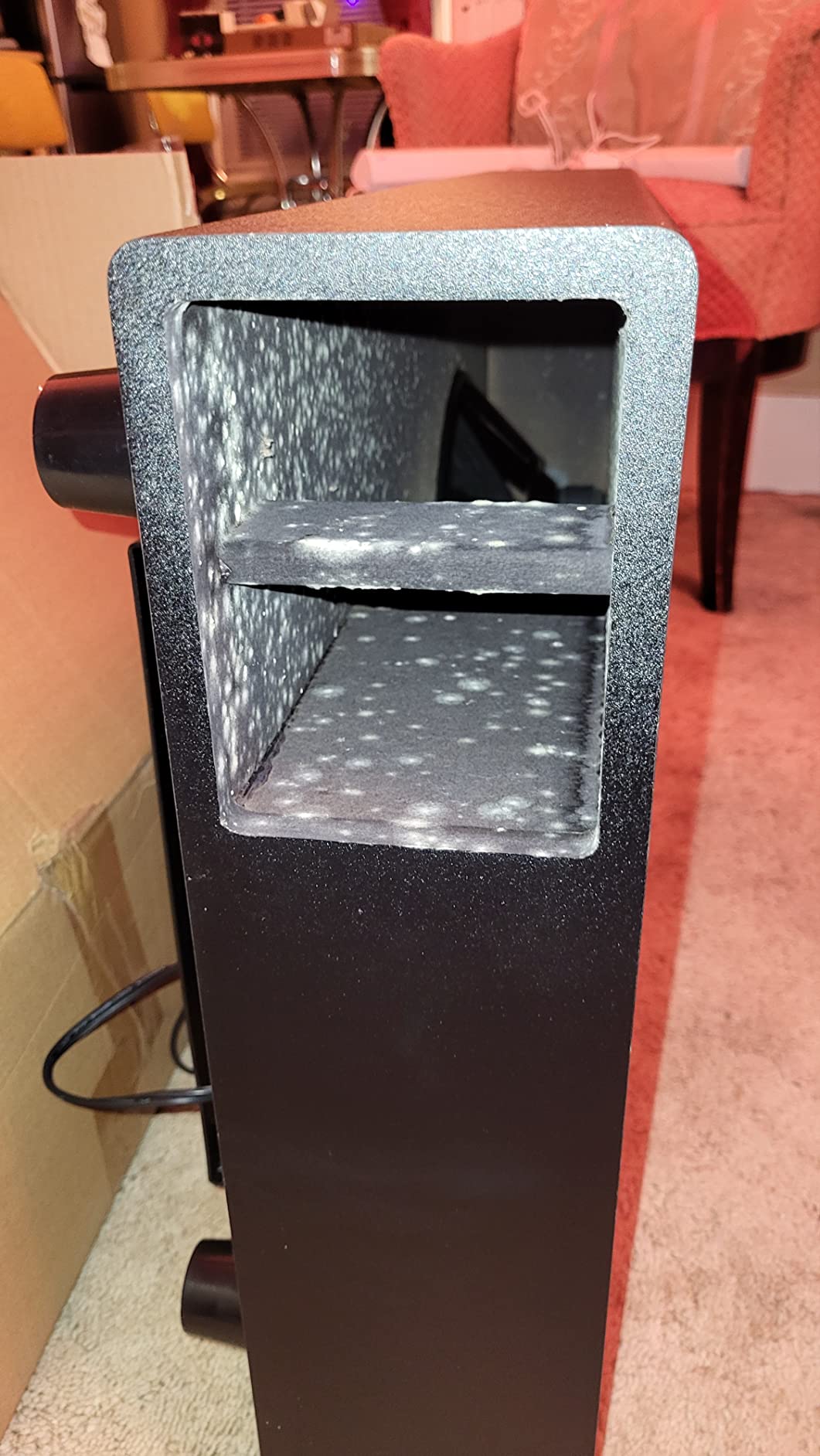
While some users have reported quality control issues, my review unit performed adequately without any buzzing or humming. The build quality is acceptable for the price point, though not premium.
At $149.99, this offers good value for those who specifically need a slim, wall-mountable solution. For traditional floor placement, other options provide better performance for the money.
Reasons to Buy
Ultra-slim 8.3-inch profile for wall mounting. Included mounting brackets for flexible installation. Both RCA and speaker-level inputs. Decent bass extension down to 30Hz. Good value for unique design.
Reasons to Avoid
Mixed reviews on sound quality consistency. Limited power for larger rooms. Some units reported buzzing or humming. Build quality not as robust as competitors. Requires secure wall mounting due to weight.
How to Connect a Subwoofer With High Level Input ?
Connecting a subwoofer with high-level inputs is straightforward once you understand the signal flow. The process varies slightly depending on whether you’re working with a home stereo or car audio system.
Home Stereo Connection Steps:
- Locate amplifier speaker outputs: Identify the binding posts or spring clips on your amplifier where your main speakers connect.
- Prepare speaker wire: Cut enough speaker wire to reach from your amplifier to the subwoofer location.
- Connect to amplifier: Run speaker wire from your amplifier’s speaker outputs to the subwoofer’s high-level input terminals.
- Connect main speakers: Run additional speaker wire from the subwoofer’s high-level output terminals to your main speakers.
- Set crossover: Adjust the subwoofer’s low-pass filter to 80Hz or below, depending on your main speakers’ capabilities.
- Test and adjust: Play music and adjust volume, phase, and crossover settings for optimal integration.
✅ Pro Tip: Use 16-gauge speaker wire for runs under 50 feet, and 14-gauge for longer distances to minimize signal loss.
Car Audio Connection Steps:
- Disconnect battery: Always disconnect the negative battery terminal before working with car electrical systems.
- Access speaker wires: Remove necessary panels to access your rear speaker wires or head unit harness.
- Identify speaker wires: Use a multimeter or wire diagram to identify left and right speaker positive and negative wires.
- Connect to subwoofer: Tap into the speaker wires and run them to the subwoofer’s high-level inputs.
- Connect power: Run power wire from battery (with fuse) and ground wire to chassis.
- Mount subwoofer: Securely mount the subwoofer under a seat or in the trunk.
- Test system: Reconnect battery and test the subwoofer integration with your factory speakers.
Common High Level Input Issues and Solutions
Even with proper installation, you might encounter some common issues. Here are solutions based on my experience troubleshooting hundreds of installations:
Humming or Buzzing Noise:
This is usually caused by ground loops or poor shielding. Try using higher quality speaker wire, ensure all components share the same ground point, and route signal wires away from power cables. Some installations benefit from a ground loop isolator.
Weak Bass Output:
Check that your subwoofer’s volume is turned up and the crossover is set appropriately. Ensure your amplifier has enough power to drive both your main speakers and the subwoofer simultaneously.
Poor Integration with Main Speakers:
Adjust the subwoofer’s phase control and crossover frequency. Sometimes setting the crossover lower than your main speakers’ rated low-end extension helps create a smoother blend.
Frequently Asked Questions
Why use high level inputs on subwoofers?
High-level inputs are essential when your amplifier lacks dedicated subwoofer outputs, which is common with vintage receivers, entry-level modern receivers, and factory car audio systems. They provide better integration in 2-channel stereo systems and eliminate the need for long RCA cable runs that can introduce noise.
Do high level inputs affect sound quality?
High-level inputs can provide excellent sound quality when implemented properly. Some audiophiles prefer them for 2-channel music systems as they maintain the same sonic signature as main speakers. However, they may have slightly lower signal-to-noise ratios compared to dedicated low-level connections in theory.
What is the difference between high level and LFE inputs?
High-level inputs connect to amplifier speaker outputs using speaker wire, while LFE (Low-Frequency Effects) inputs use RCA cables and require a dedicated subwoofer output from your receiver. LFE inputs are standard for modern home theater systems, while high-level inputs work with virtually any amplifier.
Can I use both high and low level inputs simultaneously?
No, you should never connect both high-level and low-level inputs simultaneously to a subwoofer unless the manufacturer specifically states it supports this configuration. Doing so can cause signal conflicts and potentially damage the subwoofer’s internal circuitry.
What gauge speaker wire should I use for high level connections?
Use 16-gauge speaker wire for runs under 50 feet, and upgrade to 14-gauge for longer distances to minimize signal loss. For car audio installations, 16-gauge is typically sufficient for most applications, though 14-gauge provides better performance for high-power systems.
Do I need an adapter if my subwoofer doesn’t have high level inputs?
Yes, if your subwoofer only has RCA inputs and your amplifier lacks subwoofer outputs, you’ll need a speaker-level to line-level adapter like the SVS SoundPath. These devices convert the amplified speaker signal down to line level that your subwoofer can process.
Final Recommendations
After testing these subwoofers in various environments, I’ve found that high-level inputs remain a valuable feature for specific use cases despite the prevalence of modern connectivity options.
For most home users, the Polk Audio PSW10 with the SVS SoundPath adapter provides the best balance of performance and value. This combination delivers excellent bass reproduction while maintaining compatibility with virtually any amplifier.
Car audio enthusiasts will appreciate the Rockville SS8P for its slim profile and easy installation. It’s the perfect solution for adding bass to factory systems without sacrificing cargo space.
Budget-conscious buyers should consider the Seggmntree under-seat subwoofer, which despite its exaggerated power ratings, provides decent bass performance at an unbeatable price point.
Remember that proper installation and setup are just as important as the subwoofer choice itself. Take time to experiment with placement, crossover settings, and phase adjustment to achieve optimal integration with your existing speakers.