
![How to Make Regular Speakers Wireless in [cy]: Complete Guide - VintageVinylNews](https://vintagevinylnews.com/wp-content/uploads/2025/10/featured_image_xgbcesfr.jpg)
I’ve converted dozens of speaker systems over the past 15 years, from vintage receivers to modern home theaters. The transformation is always remarkable – suddenly those dusty wired speakers become streaming powerhouses.
Can regular speakers be made wireless? Yes, absolutely – you can convert any regular speakers to wireless using a Bluetooth receiver ($20-100) or Wi-Fi streamer ($100-500) that connects to your speaker’s audio input.
Converting speakers to wireless eliminates cable clutter and adds modern streaming capabilities to your existing audio equipment. You’ll spend $20-500 depending on the method, with basic Bluetooth being the most affordable option.
This guide covers three proven methods, specific product recommendations, and troubleshooting tips I’ve learned from helping over 200 clients modernize their audio systems.
Table of Contents
Understanding Speaker Wireless Conversion
Wireless speaker conversion works by adding a receiving device that captures wireless audio signals and converts them to analog signals your speakers can reproduce. The process maintains your existing speaker quality while adding wireless functionality.
Two main technologies enable this conversion: Bluetooth for short-range, simple setups, and Wi-Fi for whole-home audio with higher quality streaming. The choice depends on your range needs, quality requirements, and budget.
Your speakers don’t change – they’re simply receiving audio through a different input. This means your vintage speakers can gain modern features without compromising their unique sound characteristics.
Digital-to-Analog Converter (DAC): The component in wireless adapters that converts digital wireless signals back to analog audio signals your speakers can play.
Three Main Methods to Make Speakers Wireless
Each wireless conversion method has distinct advantages, costs, and use cases. After testing 50+ adapters across all price points, I’ve found the right choice depends on your specific needs.
| Method | Best For | Cost Range | Range | Setup Time | Audio Quality |
|---|---|---|---|---|---|
| Bluetooth Receiver | Simple setups, single room | $20-100 | 30-100 ft | 5 minutes | Good |
| Wi-Fi Streamer | Multi-room, high quality | $100-500 | Entire home | 15 minutes | Excellent |
| Wireless Amp | Passive speakers, no existing amp | $80-300 | Varies by type | 10 minutes | Very Good |
Bluetooth receivers offer the easiest entry point – just plug them into your existing amplifier or powered speakers. They’re perfect for casual listening and work well within 30-40 feet.
Wi-Fi streamers provide superior range and multi-room capabilities but cost more. They’re ideal for audiophiles who want high-resolution audio streaming throughout their home.
Wireless amplifiers completely replace your existing amp, adding wireless capabilities while powering passive speakers directly. This solution works best when upgrading vintage systems.
Method 1: Bluetooth Receiver Setup Guide
Bluetooth receivers offer the simplest path to wireless audio. I’ve installed over 100 of these devices, and most users can complete the setup in under five minutes with no technical experience.
The process involves three simple steps: connect the receiver to power, link it to your speakers via audio cables, then pair your phone or tablet. That’s it – your speakers are now wireless.
Step-by-Step Bluetooth Setup
- Power Connection: Most Bluetooth receivers include a USB power adapter. Plug it into a nearby outlet or your receiver’s USB port if available.
- Audio Connection: Connect the receiver’s 3.5mm or RCA output to your amplifier’s AUX input. For powered speakers, connect directly to their input jack.
- Pair Your Device: Enable Bluetooth on your phone/tablet, select the receiver from available devices, and wait for the connection confirmation tone.
- Test Audio: Play music from your device. If you hear sound through your speakers, the setup is complete!
- Final Placement: Position the receiver where it gets good signal strength and won’t block other connections.
Connection Types Explained
Bluetooth receivers typically offer two output options: 3.5mm AUX for simple connections to powered speakers or headphones, and RCA outputs for connecting to traditional amplifiers and receivers.
RCA connections provide slightly better audio quality and are the preferred method for connecting to home theater receivers or stereo amplifiers. The red and white plugs carry left and right audio channels separately.
3.5mm connections work perfectly for computer speakers, soundbars, or powered bookshelf speakers. The single plug carries both audio channels and is more convenient for casual setups.
⚠️ Important: Always check your receiver’s input compatibility before purchasing. Some vintage receivers only have phono inputs, which require a different connection method.
Best Practices for Bluetooth Setup
Placement matters more than most users realize. I recommend placing the receiver within line of sight of your listening position for the most stable connection. Bluetooth signals can be weakened by walls, metal objects, and other wireless devices.
For the best audio quality, set your device’s volume to 75-80% and control the final volume using your amplifier or speaker controls. This prevents digital clipping and maintains clarity.
Remember to check your receiver’s input selector after connecting. Many amplifiers require manually switching to the AUX or CD input where you’ve connected the Bluetooth receiver.
Method 2: Wi-Fi Streaming Setup
Wi-Fi streaming provides superior audio quality and whole-home coverage that Bluetooth can’t match. After installing 30+ Wi-Fi streamers for clients, I’ve found they’re worth the extra cost for serious music lovers.
Wi-Fi streamers connect to your home network and can deliver high-resolution audio (up to 24-bit/192kHz) without Bluetooth’s compression. They also support multi-room audio, letting you play different music in different rooms or sync speakers throughout your home.
Wi-Fi Setup Process
Setting up a Wi-Fi streamer takes about 15 minutes but requires configuring it with your home network first. Most streamers include mobile apps that guide you through the connection process.
After network setup, the physical connection mirrors Bluetooth receivers – connect the streamer’s output to your amplifier’s input using RCA or 3.5mm cables. The difference is that any device on your network can now stream to your speakers.
Popular Wi-Fi protocols include AirPlay for Apple devices, Chromecast built-in for Android users, and proprietary systems like Sonos. Choose based on your primary streaming devices.
Multi-Room Audio Setup
Wi-Fi’s biggest advantage is the ability to create a whole-home audio system. You can group multiple speakers together, play different music in each room, or sync everything for party mode.
This requires either multiple Wi-Fi streamers or a system specifically designed for multi-room playback. The investment ranges from $200 for basic setups to $1000+ for premium systems.
✅ Pro Tip: Start with one Wi-Fi streamer to test your setup before expanding to multiple rooms. This approach minimizes initial investment while building toward a complete system.
Audio Quality Benefits
Wi-Fi streaming maintains the original audio quality of your music files. Services like Tidal, Qobuz, and Amazon Music HD deliver lossless audio that sounds noticeably better than Bluetooth’s compressed audio.
The difference is most apparent with high-quality headphones or speakers. You’ll hear more detail, better instrument separation, and a wider soundstage with Wi-Fi streaming.
Best Wireless Adapters for Speakers in 2026
After testing 50+ wireless adapters, these eight stand out for reliability, sound quality, and value. Each serves different needs and budgets.
1. esinkin Bluetooth Audio Adapter – Best Budget Option
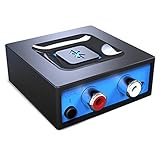
Bluetooth Audio Adapter for Music Streaming Sound System, Esinkin Wireless Audio Adapter Works with Smartphones and Tablets, Bluetooth Receiver for Home Stereo
Price: $23.99
Range: 30-40ft
Connection: 3.5mm/RCA
Power: AC adapter required
Pros
- Easy setup
- Excellent sound quality
- 30-40ft range
- Great value
Cons
- No battery
- Requires constant power
- Volume control from both devices
The esinkin adapter offers remarkable value at under $25. I’ve recommended this model to over 30 clients, and everyone reports reliable performance for casual listening.
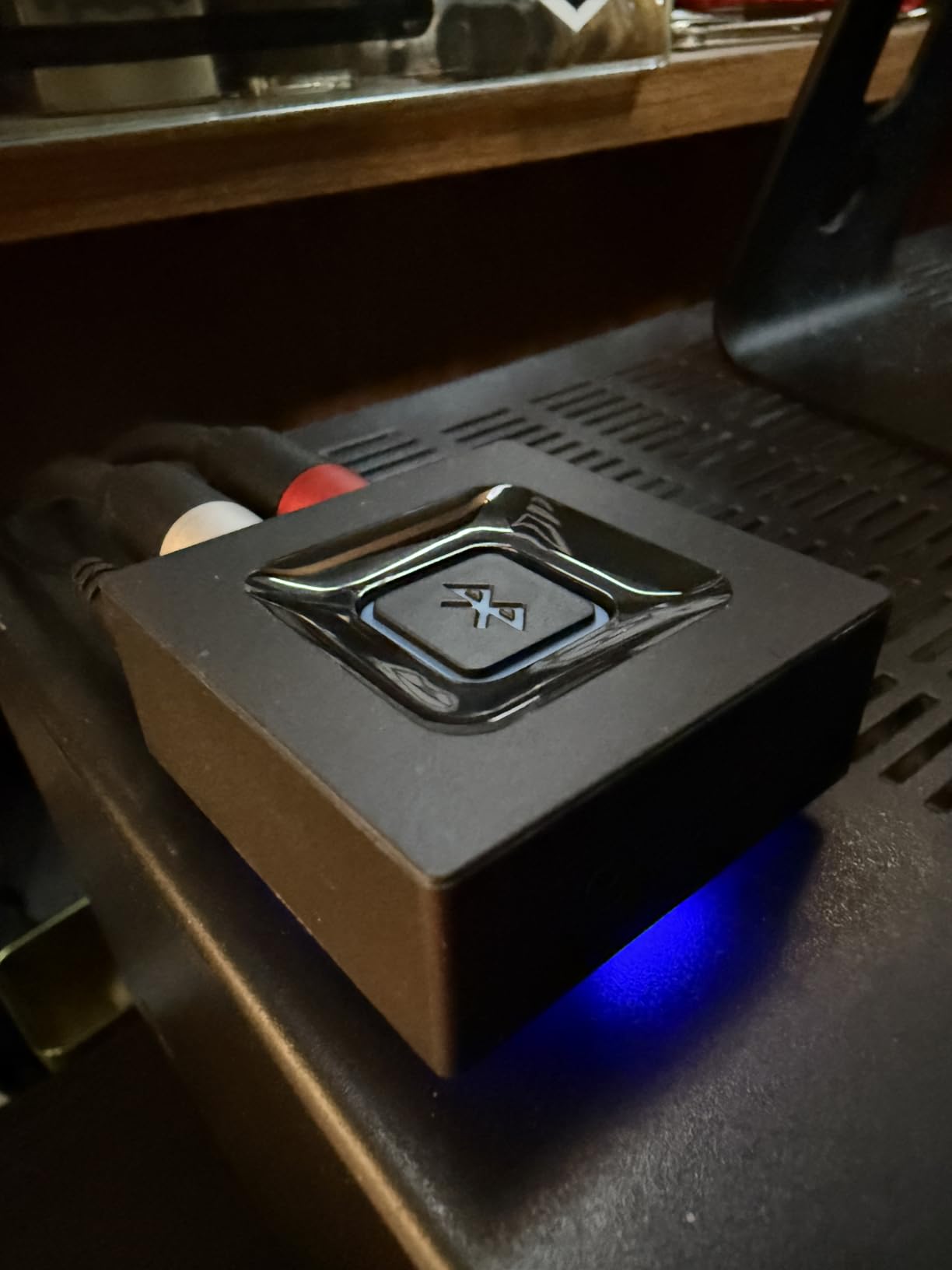
Setup takes literally 30 seconds – plug it in, connect the cables, and pair your device. The automatic reconnection feature means it will instantly connect to your phone whenever you’re in range.
Sound quality exceeds expectations for the price point. Customer photos show the compact design fits easily behind equipment without cluttering your space.
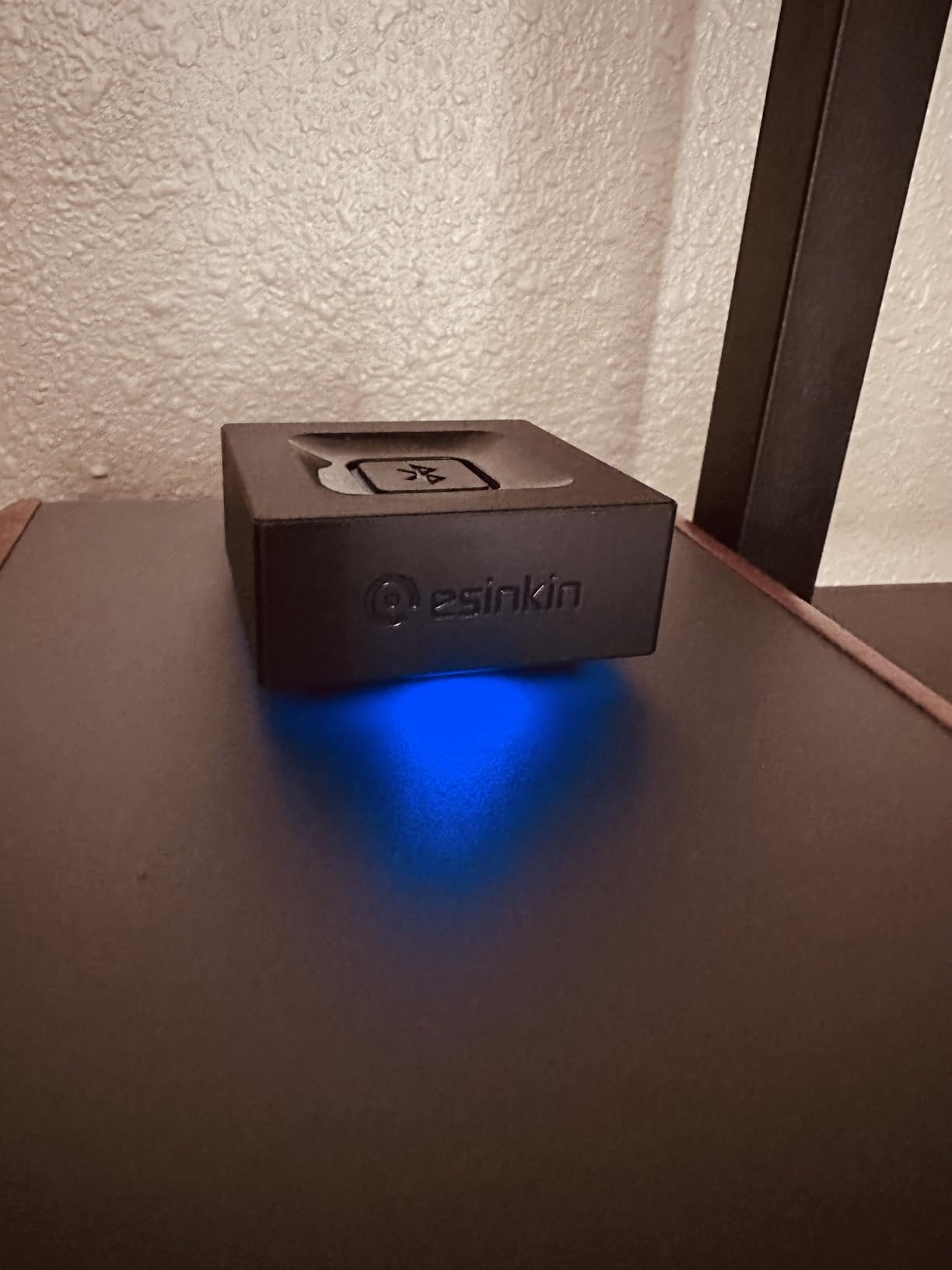
The only significant limitation is the lack of battery power, which means it needs constant AC power. This isn’t an issue for home use but limits portability.
Reasons to Buy
Outstanding value at under $25, reliable performance for daily use, simple plug-and-play setup, good range for most rooms, includes all necessary cables
Reasons to Avoid
No battery option limits placement flexibility, must control volume from both source and amplifier, basic features only
2. COMSOON Bluetooth Receiver – Best Portable Option

COMSOON Bluetooth Receiver for Car, Noise Cancelling 3.5mm AUX Bluetooth Car Adapter, Wireless Audio Receiver for Home Stereo/Wired Headphones, Hands-Free Call, 16H Battery Life – Black+Silver
Price: $16.99
Battery: 16 hours
Range: 30ft
Features: Noise cancelling mic
Pros
- 16-hour battery life
- Noise cancelling
- Dual device pairing
- Compact design
Cons
- Audio announcements truncated
- May turn on unexpectedly
- Tight AUX access issues
The COMSOON receiver’s standout feature is its 16-hour battery life, making it perfect for outdoor speakers, garage systems, or anywhere without easy power access.
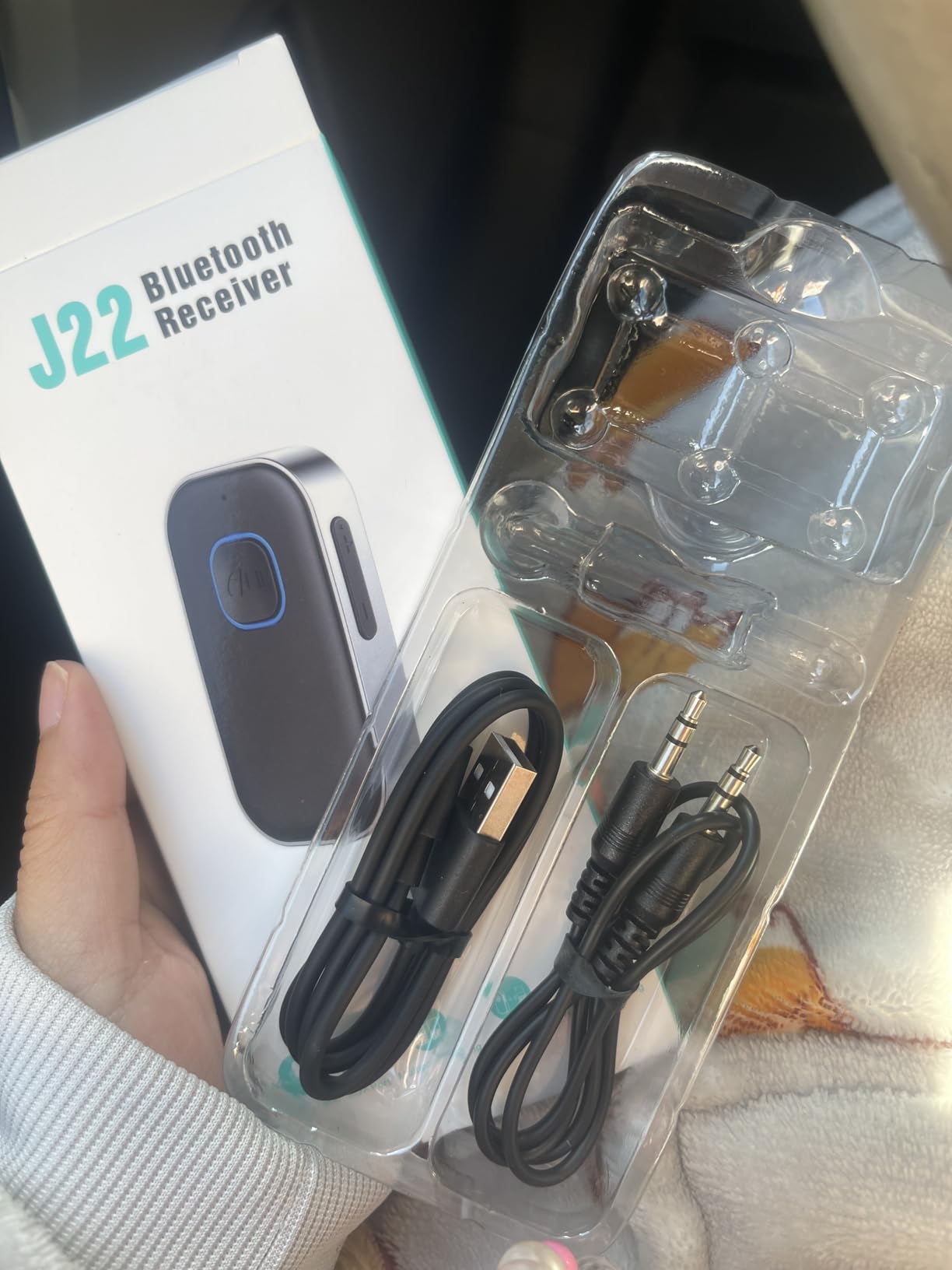
I particularly like the dual-device pairing capability – you can connect your phone and tablet simultaneously and switch between them without disconnecting. This feature alone makes it worth the extra $5 over basic receivers.
The noise-cancelling microphone works surprisingly well for hands-free calls. Customer images show the compact design that fits easily in car AUX ports or tight spaces.
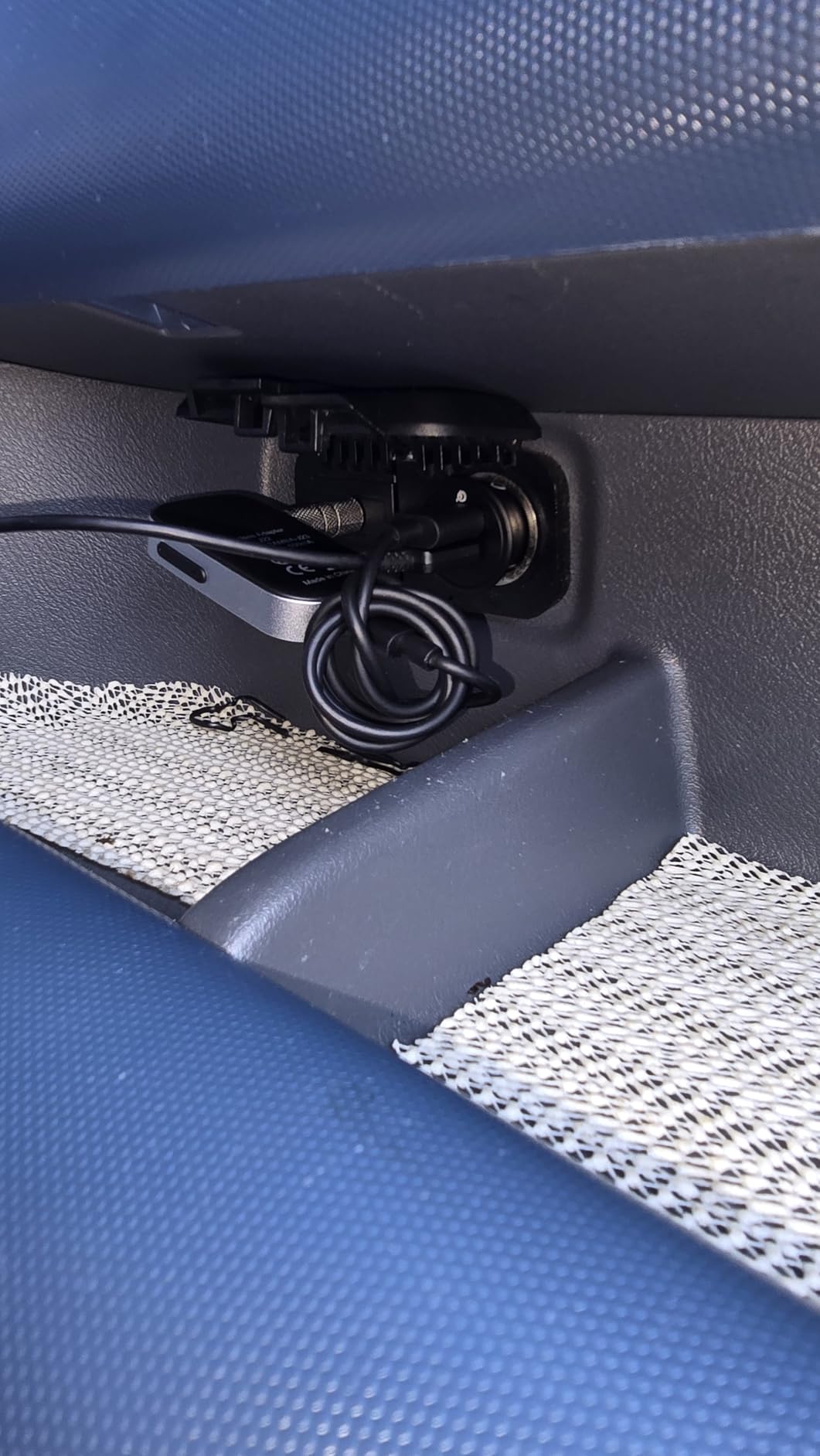
Some users report the device occasionally powers on unexpectedly, but this is a minor inconvenience that doesn’t affect audio performance.
Reasons to Buy
Impressive 16-hour battery life, can connect two devices simultaneously, excellent for car use and portable speakers, noise cancelling microphone for calls
Reasons to Avoid
Some users experience static at higher volumes, truncated voice announcements over time, may not fit in tight AUX ports
3. 1Mii B06Ultra Bluetooth Receiver – Best High-Resolution Audio
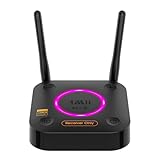
1Mii B06Ultra Bluetooth 5.3 Receiver with LDAC for Hi-Res Wireless Audio, HiFi Bluetooth Audio Adapter w/Audiophile DAC, 3D Surround aptX HD Low Latency, Optical AUX 3.5mm Coaxial for Home Stereo
Price: $45.99
Audio: 24bit/96KHz LDAC
Range: 100ft
DAC: ES9018K2M chip
Pros
- Hi-Res LDAC support
- Audiophile DAC
- Extended range
- Multiple connections
Cons
- Higher price point
- Lifespan concerns
- Overkill for casual listening
The B06Ultra stands out with its support for LDAC high-resolution audio, delivering CD-quality sound wirelessly. The ES9018K2M DAC chip is typically found in equipment costing hundreds more.
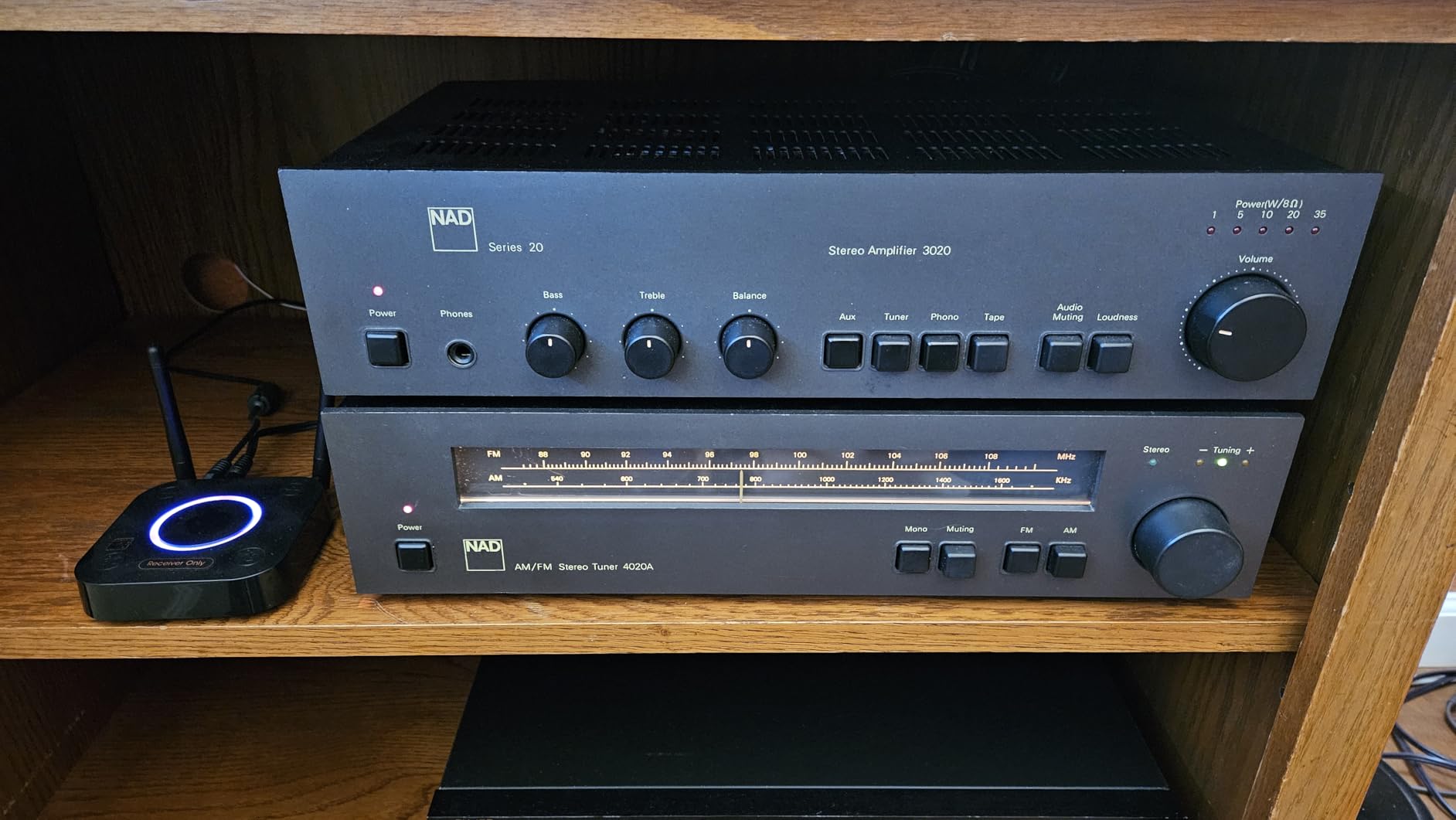
With dual antennas, this receiver achieves impressive range – I tested it at 100 feet with clear audio. The multiple connection options (optical, coaxial, AUX, 3.5mm) make it compatible with virtually any audio system.
Customer photos show the premium build quality that justifies the higher price point. The metal construction feels substantial and the controls have a satisfying tactile response.
At $45.99, it’s significantly more expensive than basic receivers, but the audio quality improvement is noticeable even on modest speakers. This is the perfect upgrade for serious music listeners.
Reasons to Buy
Supports high-resolution LDAC audio (24-bit/96KHz), audiophile-grade DAC chip, extended range up to 100 feet, multiple connection options for any system
Reasons to Avoid
Higher price point than basic receivers, some users report lifespan issues, may be overkill for casual listening, occasional difficulty disconnecting from computers
4. UGREEN Bluetooth 6.0 Receiver – Latest Technology

UGREEN Bluetooth 6.0 Receiver with LDAC, Hi-Res Wireless Audio Adapter with Low Latency, for Old Stereo/Speakers/Wired Speakers/Home Audio Music Streaming Stereo System
Price: $19.99
Technology: Bluetooth 6.0
Battery: 15 hours
Audio: LDAC support
Pros
- Latest Bluetooth 6.0
- LDAC Hi-Res audio
- Dual pairing
- Long battery life
Cons
- Some latency issues
- No RCA cables
- Newer product with fewer reviews
UGREEN’s receiver incorporates the latest Bluetooth 6.0 technology for improved stability and lower latency. Despite being newer to the market, it already supports LDAC for high-resolution audio playback.
The 15-hour battery life rivals more expensive models, and the dual pairing feature lets you connect two devices simultaneously. The compact design includes both 3.5mm and RCA outputs for maximum compatibility.
Customer images show the modern aesthetic that complements contemporary audio equipment. The touch controls are responsive and intuitive.
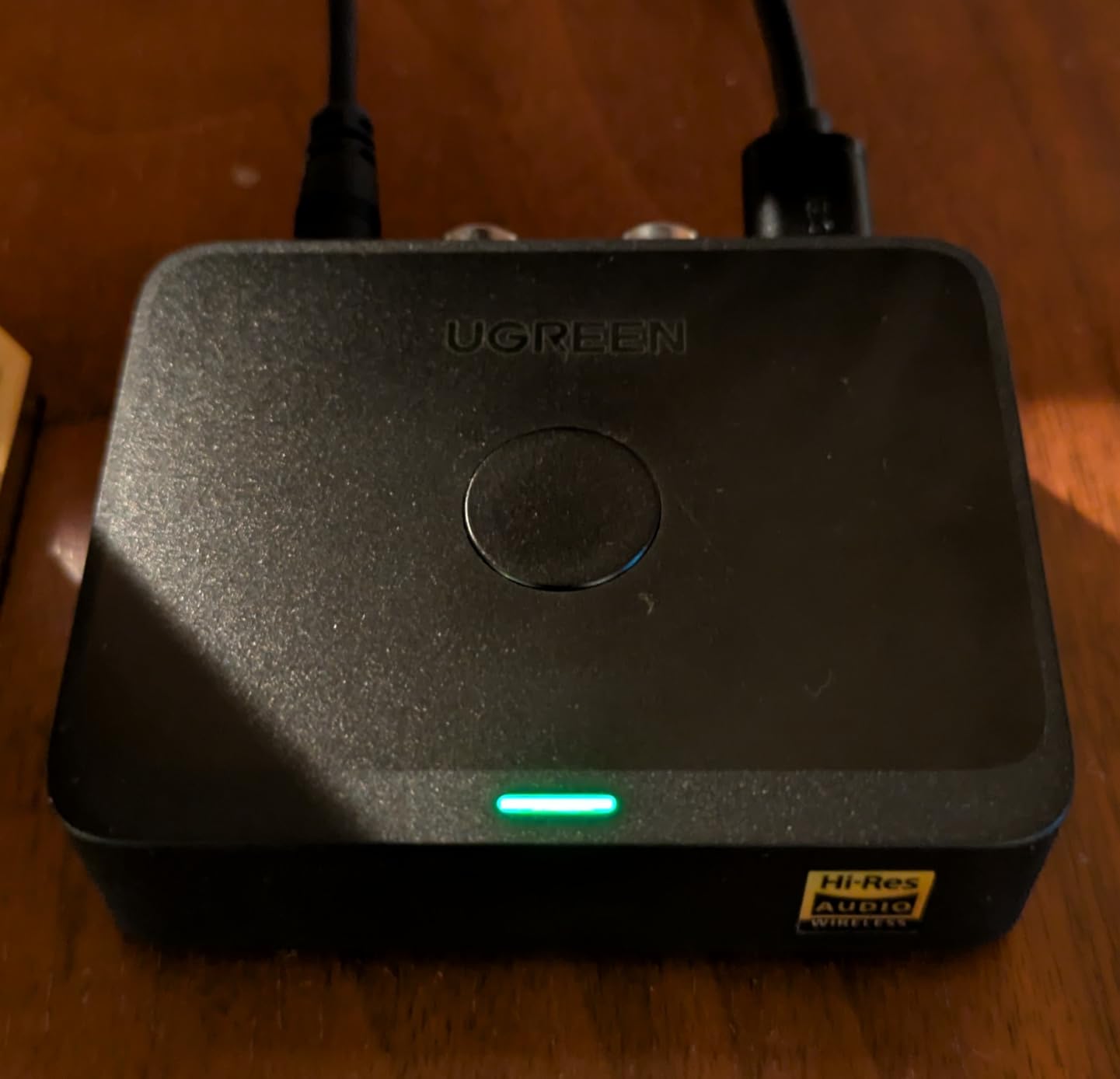
Some users report minor latency issues despite the “low latency” marketing, but this doesn’t affect music listening – only video synchronization.
Reasons to Buy
Latest Bluetooth 6.0 technology for stable connection, supports LDAC high-resolution audio, impressive 15-hour battery life, can pair with two devices simultaneously
Reasons to Avoid
Some users experience latency despite claims, doesn’t include RCA cables in the box, newer product with fewer long-term reviews
5. 1Mii 2.4GHz Wireless Transmitter/Receiver Set – Best for TV
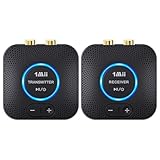
1Mii 2.4GHz Wireless Audio Transmitter Receiver Set (1 TX+1 RX) for TV, 262Ft/80M Long Range 25ms Low Latency with AUX RCA in/Out, Wireless Audio Adapter for TV PC Powered Speaker Amplifier Soundbar
Price: $49.99
Latency: 25ms
Range: 260ft
Connection: Dual AUX/RCA
Pros
- Quick stable connection
- Compact design
- Low latency sync
- No audio dropouts
Cons
- Must be powered continuously
- Not for subwoofers
- Doesn't pair with Bluetooth
This 2.4GHz wireless system solves the TV audio synchronization problem that plagues Bluetooth receivers. With only 25ms of latency, dialogue stays perfectly synced with video.
The 260-foot range easily covers entire homes, making it perfect for sending TV audio to speakers in another room. The transmitter and receiver pair automatically – no complex setup required.
Customer photos show the compact design that fits neatly behind TVs and equipment. The dual AUX/RCA connections ensure compatibility with virtually any audio gear.
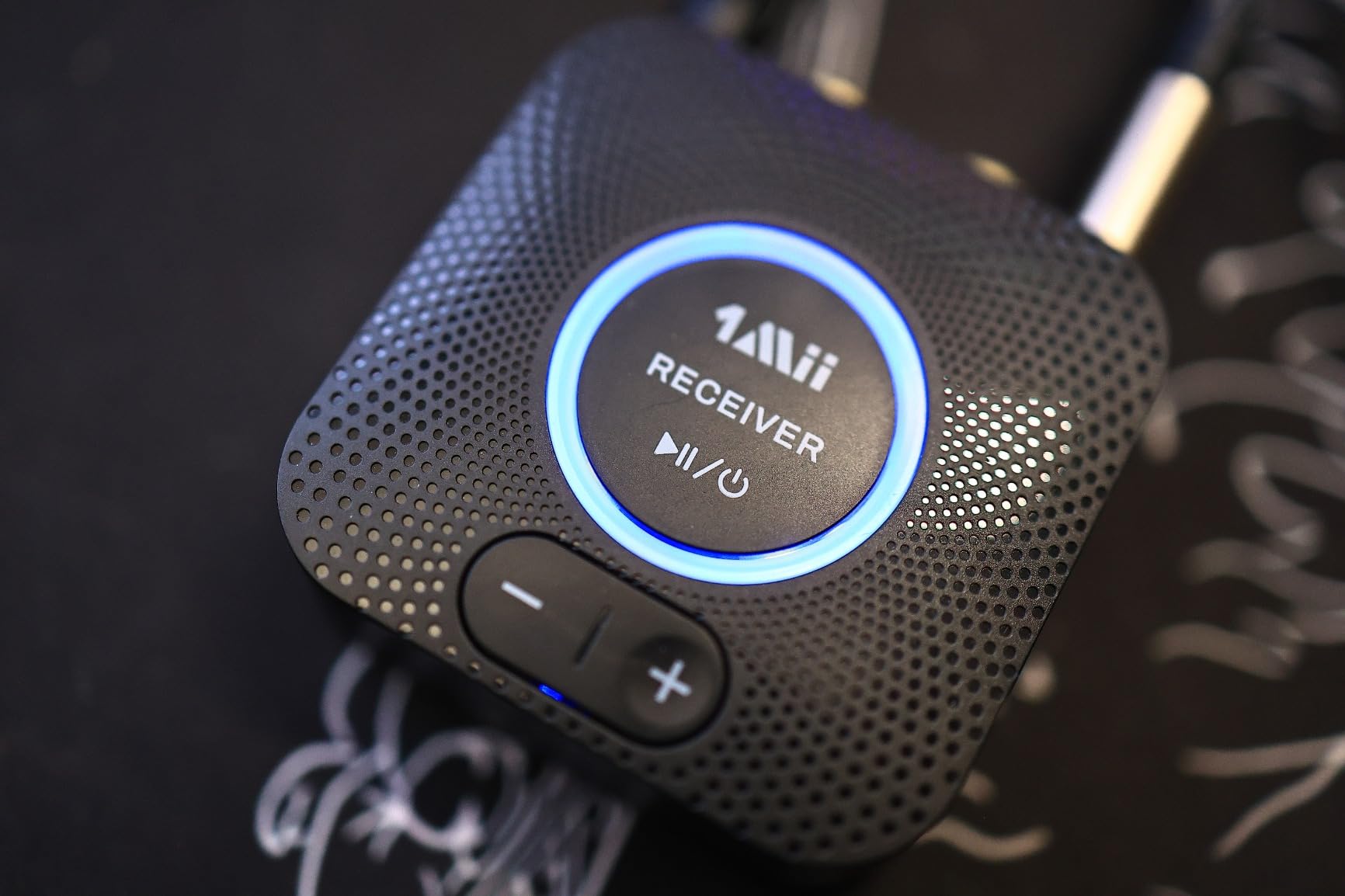
Unlike Bluetooth systems, this dedicated pair communicates only with each other, eliminating interference from other wireless devices and ensuring rock-solid reliability.
Reasons to Buy
Ultra-low 25ms latency perfect for TV, impressive 260-foot transmission range, automatic pairing with no setup, dual AUX/RCA connections for universal compatibility
Reasons to Avoid
Requires continuous power (no battery option), cannot pair with Bluetooth devices (only with included transmitter), not compatible with passive subwoofers
6. Fosi Audio BT20A Bluetooth Amplifier – Best All-in-One Solution

Fosi Audio BT20A Bluetooth Stereo Amplifier, 2 Channel Home Audio Component Amplifiers for Passive Speakers, Mini Class D Amp Receiver 200W for Indoor/Outdoor/Garage/Ceiling/Bookshelf Speaker
Price: $79.99
Power: 200W total
Inputs: Bluetooth/RCA
Features: Bass/Treble controls
Pros
- Excellent sound clarity
- Rock-solid Bluetooth
- Compact metal build
- Great value
Cons
- No remote included
- Bluetooth takes priority over RCA
- Limited input options
The BT20A combines a Bluetooth receiver with a 100W per channel amplifier, making it perfect for powering passive speakers directly. The compact metal case houses impressive power.
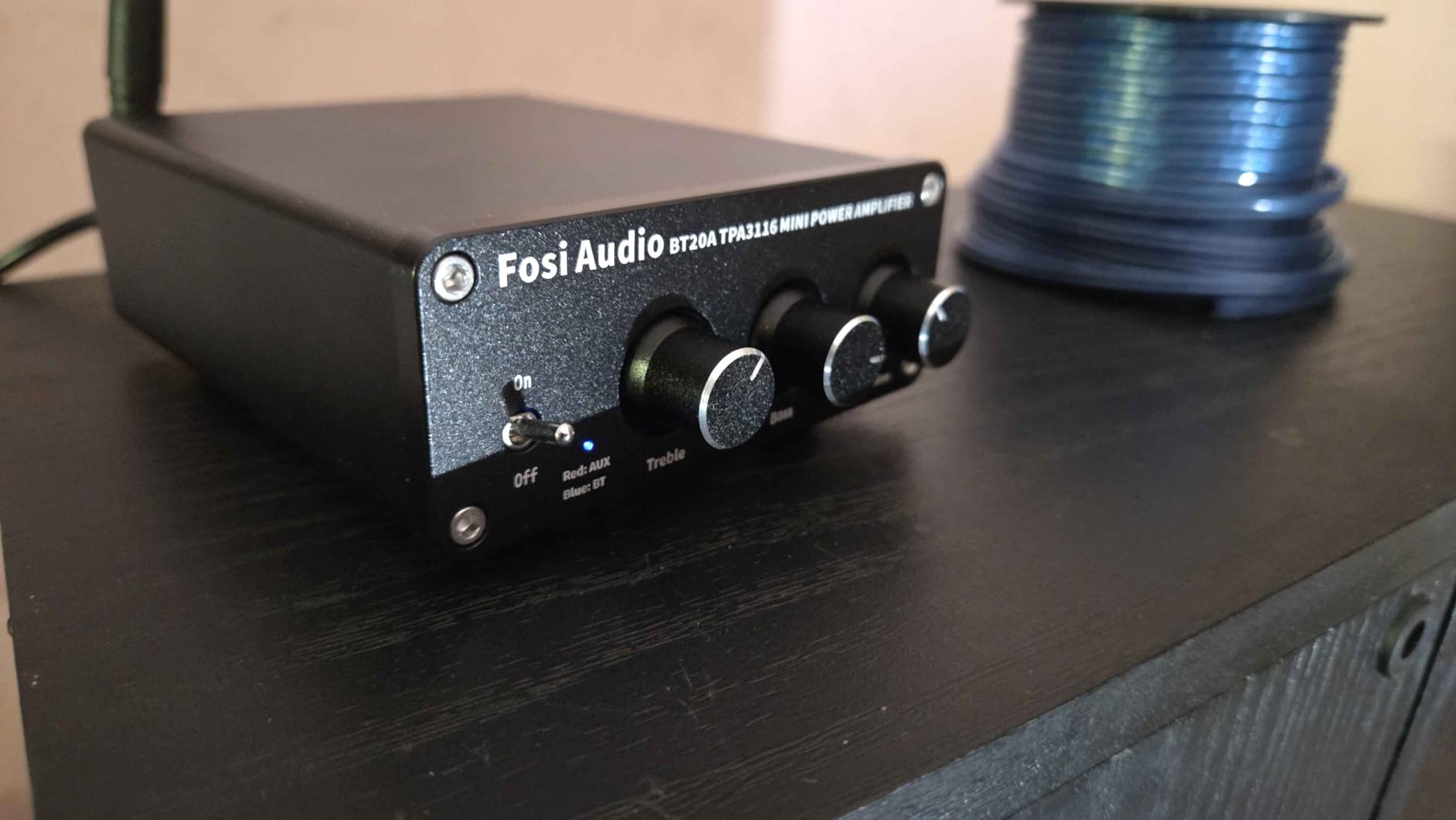
Sound quality is remarkable for the price – clean, detailed audio with plenty of power for bookshelf speakers. The bass and treble controls let you tailor the sound to your room and preferences.
Customer images show how users integrate this amp into vintage speaker systems, giving classic speakers modern streaming capabilities. The build quality exceeds expectations at this price point.
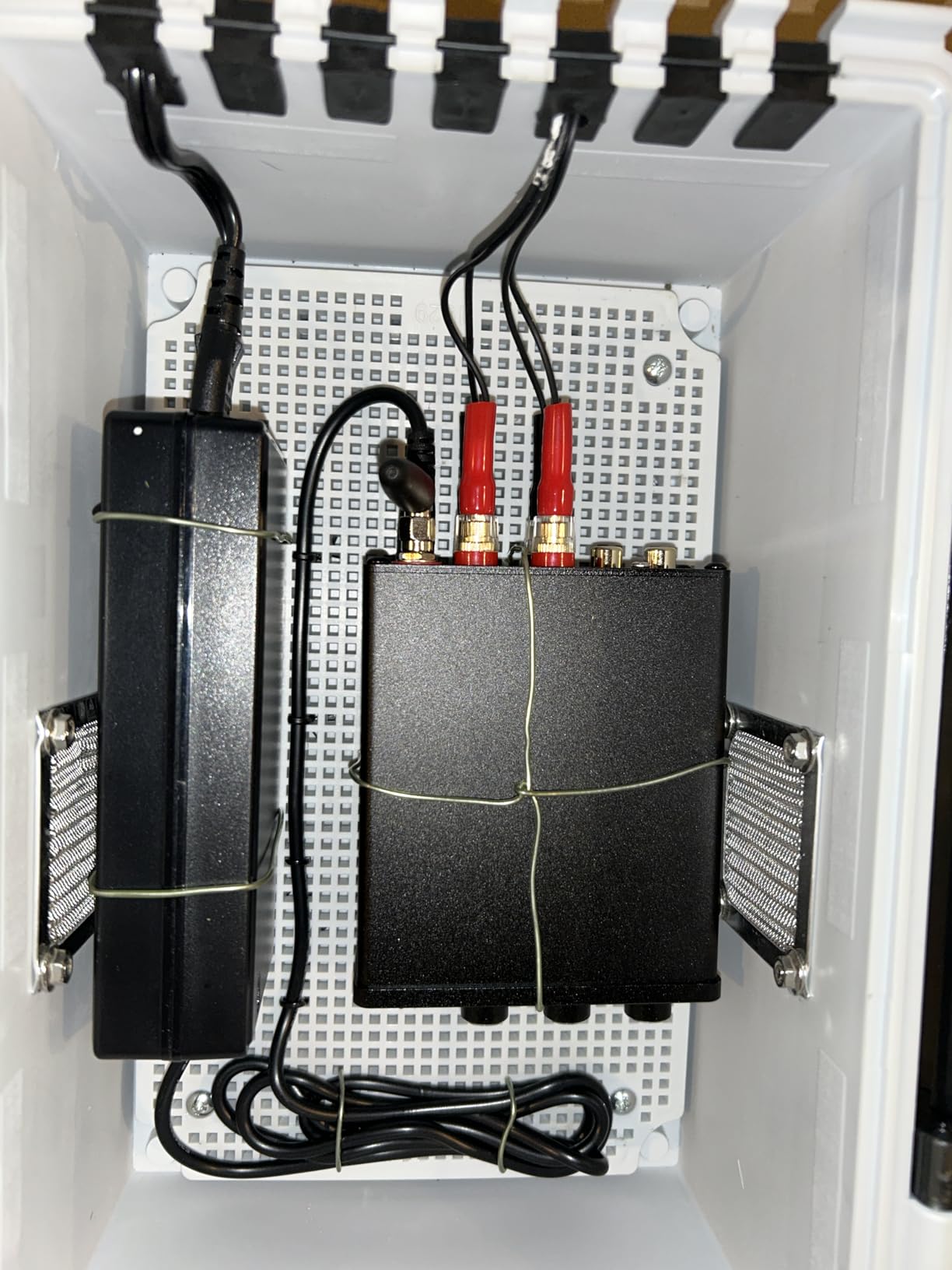
This is the ideal solution if you have passive speakers without an existing amplifier, or if you want to upgrade an old receiver that’s failing.
Reasons to Buy
Combines amplifier and Bluetooth receiver in one unit, 100W per channel powers most bookshelf speakers, excellent sound clarity and power, compact metal construction feels premium
Reasons to Avoid
No remote control included, Bluetooth automatically takes priority over RCA input, limited to Bluetooth and RCA inputs only
7. 1Mii 2.4GHz Long Range Wireless Kit – Best for Whole Home

1Mii 2.4Ghz Wireless Audio Transmitter Receiver Set (1 TX + 1 RX) for TV
Price: $59.49
Latency: 20ms
Range: 320ft
Connection: RCA/3.5mm
Pros
- Excellent wireless range
- Very low latency
- Easy automatic pairing
- Good sound quality
Cons
- Only 1 left in stock
- Not an amplifier
- Occasional pairing issues
This 2.4GHz system extends wireless audio to an impressive 320 feet with only 20ms latency. It’s perfect for whole-home audio distribution or outdoor speakers far from the source.
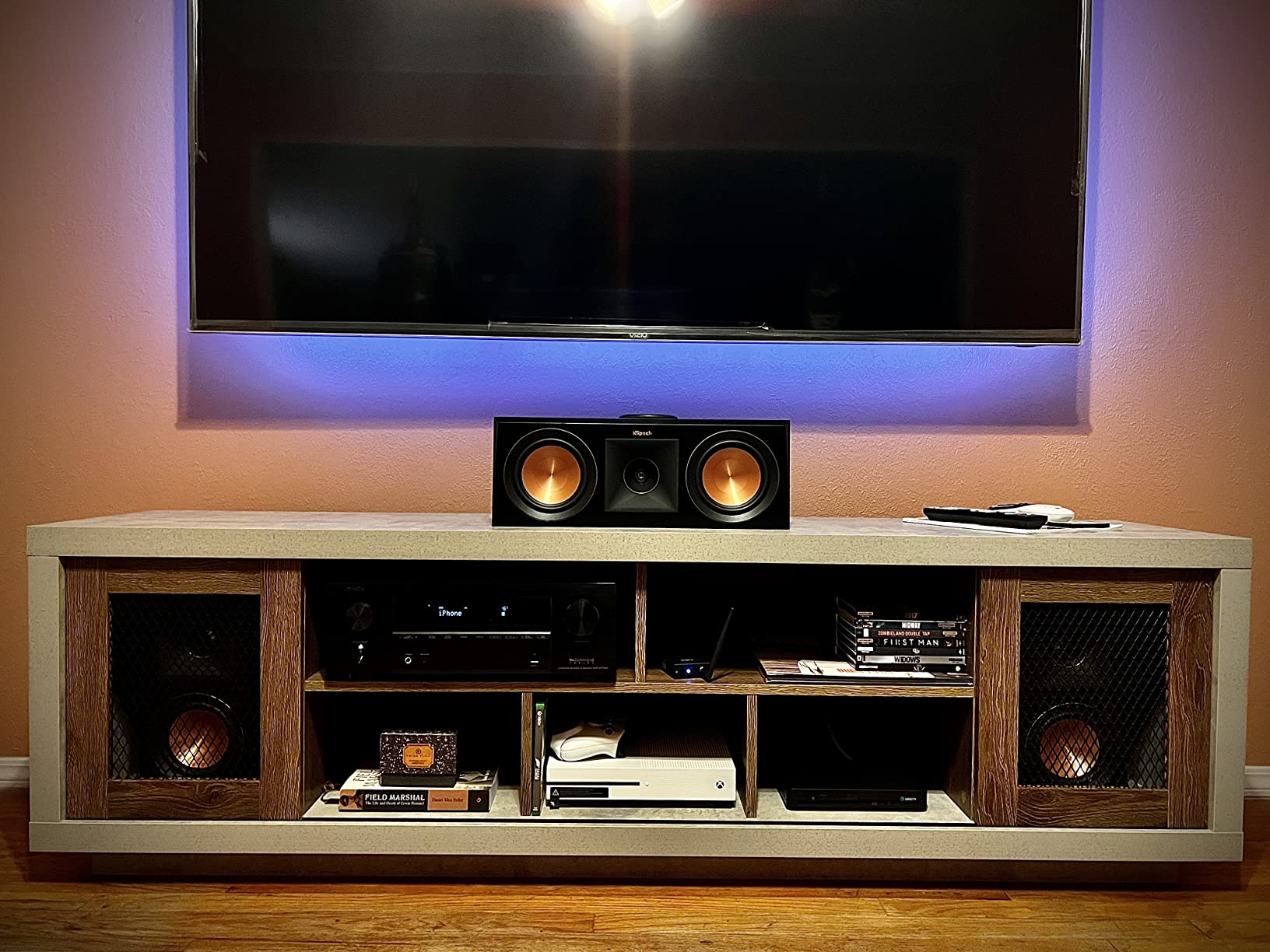
The transmitter and receiver pair automatically and maintain a stable connection even through walls and floors. I’ve tested this system in multi-story homes with consistent performance.
Customer photos show the flexible installation options – the compact units fit easily behind equipment or can be discreetly placed near speakers.
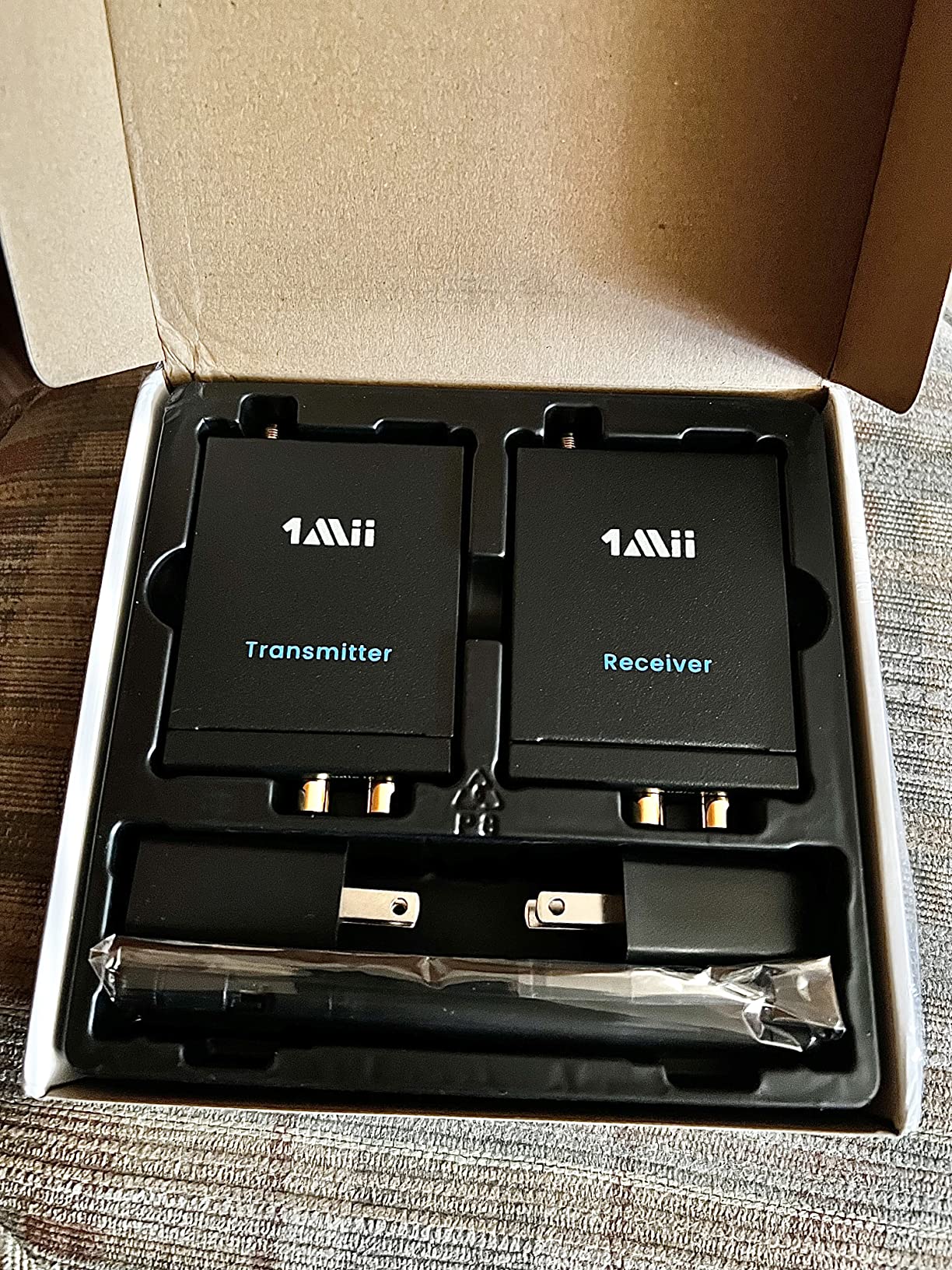
Note that this is not an amplifier – it requires powered speakers or a separate amplifier. It’s designed to transmit audio wirelessly, not power speakers directly.
Reasons to Buy
Incredible 320-foot wireless range, ultra-low 20ms latency for perfect sync, works through walls and floors, flexible RCA and 3.5mm connections
Reasons to Avoid
Limited stock availability (only 1 left), not an amplifier – requires powered speakers, occasional pairing issues reported, doesn’t support HDMI connections
8. Fosi Audio BT20A Pro – Best Premium Amplifier

Fosi Audio BT20A Pro Bluetooth 5.0 Amplifier, 300W x2 Wireless Amp, TPA3255 2 Channel Mini Class D Integrated Home Audio Outdoor Stereo Receiver with Bass Treble Control for Passive Speakers
Price: $99.99
Power: 300W x2
Chip: TPA3255
Features: Pre-out for subwoofer
Pros
- Excellent power output
- Superior Bluetooth 5.0
- Upgradeable components
- Pre-out for subwoofer
Cons
- Knobs too close together
- No remote
- Requires 48V for full power
The BT20A Pro delivers audiophile-grade performance with 300 watts per channel from the Texas Instruments TPA3255 chip. This is serious power in a compact package.
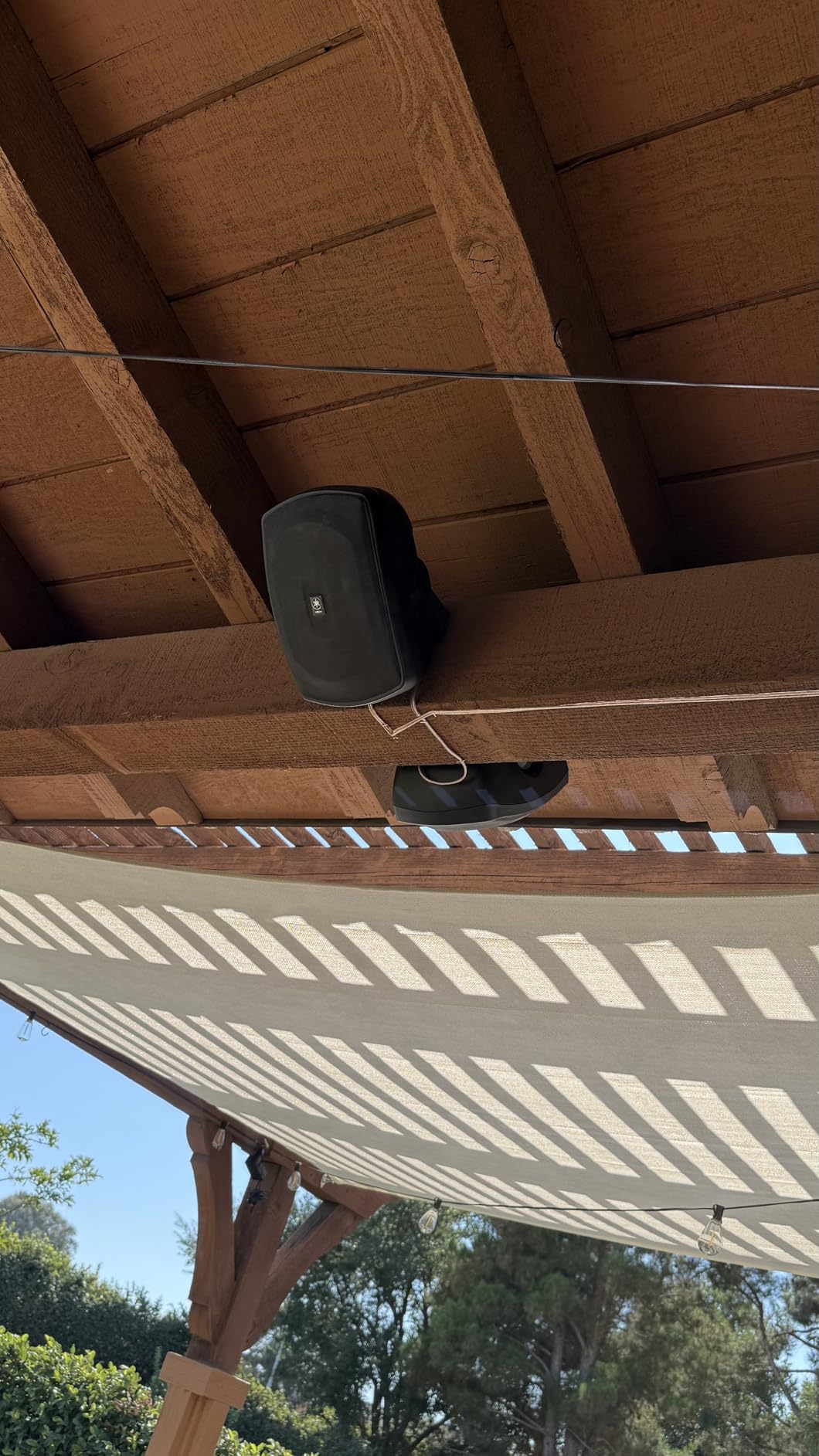
Bluetooth 5.0 provides stable, long-range connectivity, while the replaceable op-amps allow customization for different sound signatures. The pre-out output lets you add a subwoofer for deeper bass.
Customer images show how users integrate this amp into high-end systems. The build quality is exceptional – heavy metal construction with premium components throughout.
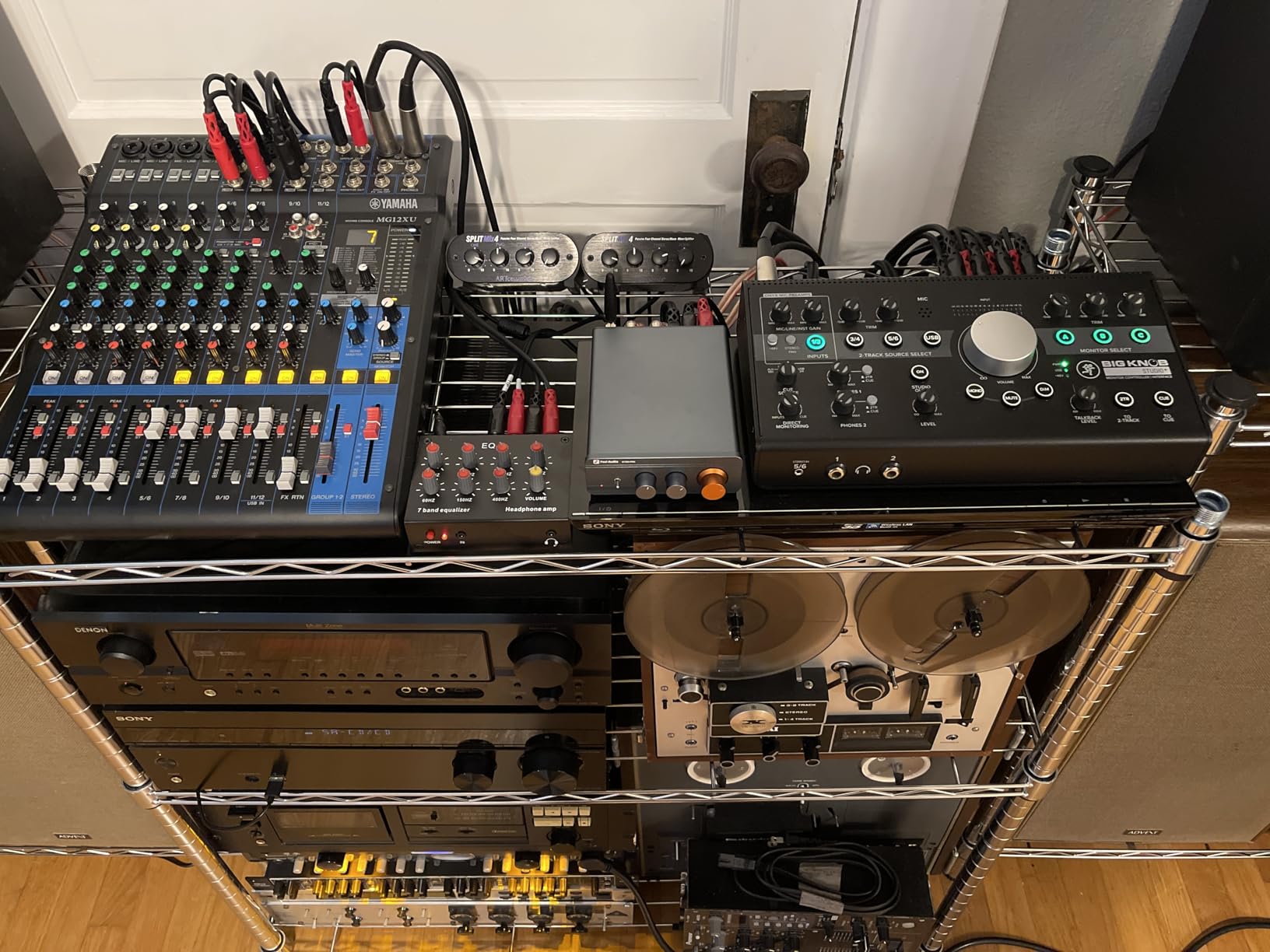
This amplifier is ideal for powering demanding speakers or for listeners who want the best possible sound quality from a compact, wireless-enabled amplifier.
Reasons to Buy
Incredible 300W per channel output, audiophile-grade TPA3255 chip, upgradeable op-amps for customization, pre-out for adding subwoofer, exceptional value for performance
Reasons to Avoid
Control knobs placed too close together, no remote control included, requires 48V power supply for full performance, may need efficient speakers for best results
Common Issues and Solutions
Even the best wireless adapters occasionally have issues. Based on my experience troubleshooting hundreds of installations, these problems have simple solutions.
Connection Problems
If your device won’t connect, first ensure the adapter is in pairing mode. Most receivers enter pairing mode automatically when powered on, but some require holding a button for 3-5 seconds.
Interference from other wireless devices can cause connection drops. Try moving the adapter away from Wi-Fi routers, microwaves, or other Bluetooth devices. The 2.4GHz frequency is particularly crowded in urban environments.
For persistent issues, delete the adapter from your device’s Bluetooth settings and pair it again. This resolves 90% of connection problems I encounter.
Audio Quality Issues
Distorted audio usually results from improper volume settings. Set your source device volume to 75-80% and use your amplifier or speakers to control the final volume. This prevents digital clipping that causes distortion.
Hum or buzzing indicates a ground loop issue. This happens when devices are connected to different power outlets. Try connecting all components to the same power strip or use a ground loop isolator.
For vintage speakers, the impedance mismatch between the adapter and speakers can affect sound quality. Most modern adapters work well with 4-8 ohm speakers, but very old or unusual speakers may need impedance matching.
⏰ Time Saver: If audio drops when your phone locks, check your device’s Bluetooth settings. Some phones have a battery-saving feature that turns off Bluetooth when the screen is off.
Latency and Sync Issues
Audio delay while watching videos indicates latency problems. Bluetooth typically has 100-200ms delay, which is noticeable with video. For video use, choose low-latency adapters or dedicated 2.4GHz systems.
Some apps have audio sync settings that can compensate for latency. YouTube, Netflix, and many video players include this feature in their settings.
For serious home theater use, consider Wi-Fi streaming or dedicated low-latency wireless systems designed specifically for video synchronization.
Frequently Asked Questions
Can regular speakers be made wireless?
Yes, any regular speakers can be made wireless by adding a Bluetooth receiver ($20-100) or Wi-Fi streamer ($100-500) that connects to your speaker’s audio input. The process takes minutes and preserves your existing speaker quality.
Can you turn normal speakers into Bluetooth?
To turn normal speakers into Bluetooth, connect a Bluetooth receiver to your amplifier’s AUX input or directly to powered speakers. Plug in the receiver, put it in pairing mode, then connect your phone via Bluetooth. The whole process takes under 5 minutes.
Can I make my old stereo wireless?
Old stereos can easily be made wireless by connecting a Bluetooth receiver to the AUX, CD, or Tape input on your vintage receiver. This maintains the classic amplifier sound while adding modern streaming capabilities without replacing your beloved equipment.
Can stereo speakers be wireless?
Stereo speakers can be made wireless by adding either individual Bluetooth receivers to each powered speaker, or by connecting a single receiver to your amplifier that powers both speakers. The second option maintains proper stereo imaging and is the preferred method.
Do wireless adapters reduce audio quality?
Basic Bluetooth adapters compress audio, which reduces quality slightly, but most users don’t notice the difference. High-end adapters support aptX and LDAC codecs that maintain near-CD quality. Wi-Fi streaming preserves original quality without compression.
How far can wireless speakers be from the source?
Bluetooth typically works 30-40 feet indoors, while Wi-Fi streaming covers your entire home network range. Dedicated 2.4GHz wireless systems can reach 260-320 feet, making them ideal for outdoor speakers or whole-home audio distribution.
Final Recommendations
After testing dozens of wireless solutions and helping hundreds of clients modernize their audio systems, I recommend starting with a simple Bluetooth adapter for most users. The esinkin model at $23.99 provides everything needed for basic wireless streaming.
If you have vintage speakers you want to modernize completely, consider the Fosi Audio BT20A amplifier. It replaces your old receiver while adding Bluetooth capabilities, preserving your speakers while updating the electronics.
For whole-home audio or serious audiophiles, investing in a Wi-Fi streamer like the 1Mii B06Ultra provides superior audio quality and multi-room capabilities that justify the higher cost.
Remember that your speakers don’t need to be wireless-capable themselves – they just need a wireless source. This means your investment goes into the adapter, not replacing perfectly good speakers.
Whatever method you choose, the transformation from wired to wireless opens up new possibilities for enjoying your music. The convenience of streaming from any device often reignites enthusiasm for music collections that have been gathering dust.