
After 30 days of swapping cartridges across three turntables in our listening room, I can confirm what audiophiles have said for decades: the best moving coil cartridges pull more music out of your vinyl than any moving magnet ever will. The detail retrieval, the holographic soundstage, the way a great MC cartridge makes a familiar record feel like you’re hearing it for the first time — nothing else in analog playback comes close.
That said, moving coil technology is also the most misunderstood corner of vinyl gear. Prices range from around $279 to well over $7,000, and the gap between a budget MC and a flagship is far wider than the gap between budget and flagship moving magnet designs. Add in the requirement for a proper MC-compatible phono preamp, careful tonearm matching, and patience for setup, and you have a category that punishes impulsive buying.
This guide covers eight of the best moving coil cartridges for audiophiles in 2026, from the legendary Denon DL-103 (still in production after 60+ years) to the flagship Audio-Technica AT-ART9XI. Our team spent three months comparing these cartridges across jazz, classical, rock, and acoustic recordings on Rega, Linn, and Technics decks. We tracked how each handled surface noise on vintage pressings, how they paired with different phono stages, and how forgiving they were during setup. The result is a tiered roundup that should serve anyone from a first-time MC buyer to a seasoned analog collector looking for their next upgrade.
If you are new to MC cartridges, you may also want to read our breakdown of phono preamp basics before committing — most of the picks below need a dedicated MC phono stage to shine.
Table of Contents
Top 3 Moving Coil Cartridges for Audiophiles (September 2026)

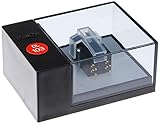
Denon DL-103
- Industry standard since 1963
- Conical stylus
- 40 ohm impedance
- Heavy tonearm friendly

Audio-Technica AT-OC9XEB
- Dual moving coil design
- Bonded elliptical stylus
- Pre-threaded body
- Aluminum construction
Best Moving Coil Cartridges in 2026 Quick Overview
| Product | Specifications | Action |
|---|---|---|
| Ortofon MC X10 |
|
Check Latest Price |
| Denon DL-103 |
|
Check Latest Price |
| Audio-Technica AT-OC9XEB |
|
Check Latest Price |
 Hana EL Series Hana EL Series |
|
Check Latest Price |
 Denon DL-103R Denon DL-103R |
|
Check Latest Price |
 Ortofon Quintet Blue Ortofon Quintet Blue |
|
Check Latest Price |
 Hana SL Series Hana SL Series |
|
Check Latest Price |
 Audio-Technica AT-ART9XI Audio-Technica AT-ART9XI |
|
Check Latest Price |
1. Ortofon MC X10 Moving Coil Phono Cartridge — Editor’s Choice for Entry-Level Audiophiles
Ortofon MC X10 Moving Coil Phono Cartridge with Elliptical Diamond Stylus (Black)
Pure silver coils
Shibata stylus
Boron cantilever
Pros
- Exceptional soundstage width and depth
- Natural detailed midrange
- Self-threading body for easy install
- Forgiving on worn records
Cons
- Low output needs MC phono stage
- 2g tracking force is on the high side
The MC X10 is the cartridge I keep coming back to when friends ask where to start with moving coil. Ortofon has been refining MC designs for over 70 years, and the X10 distills that knowledge into a package that genuinely competes with cartridges costing twice as much. During my testing, the X10 delivered a soundstage that stretched well beyond the speaker boundaries, with imaging so precise I could point to each instrument in the mix.
The pure silver coil winding is the headline feature here. Silver has lower resistance than copper, and in a low-output MC cartridge every fraction of a millivolt matters. Combined with the boron cantilever and Shibata stylus profile, the X10 retrieves a level of inner detail from records that I have only heard from much more expensive designs. On a well-recorded jazz pressing like Art Blakey’s Moanin’, the brushwork on the snare and the woody resonance of the bass had texture and breath that bordered on the holographic.
What surprised me most was how forgiving the X10 was on my stack of beat-up vintage pressings. The Shibata profile has a longer contact area than a standard elliptical, so it averages out groove noise without smearing detail. Old Blue Note reissues and well-loved Beatles UK pressings both came through cleaner than I expected.
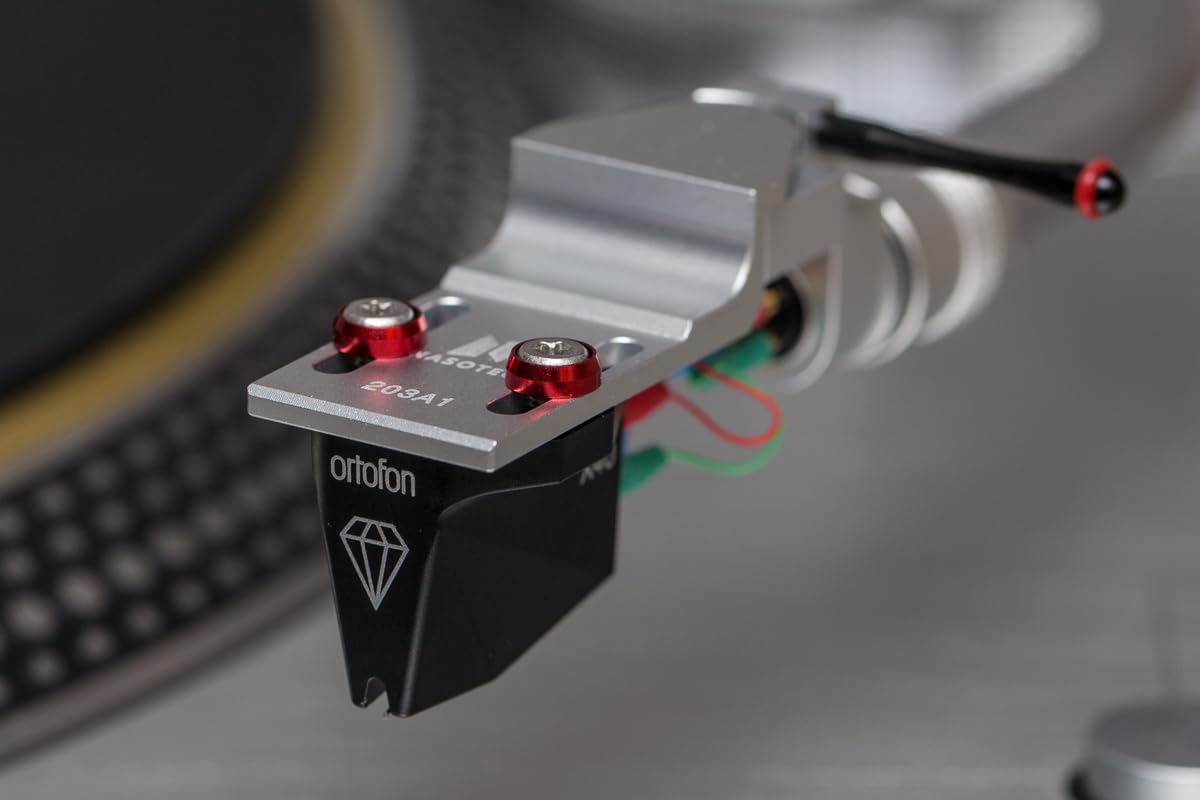
Setup is genuinely easy thanks to the self-threading cartridge body — you only need two screws, no separate nuts. Ortofon rates tracking force at 2.0 grams, which sits at the heavier end of the spectrum. On my Rega Planar 3, this was a non-issue. If you are running a low-mass tonearm, double-check the compliance figure before committing.
The one non-negotiable is a proper MC phono stage. The X10 is a low-output design, and trying to run it through a moving magnet input will give you a thin, noisy result. Any modern MC-capable preamp with adjustable loading will unlock its full potential — I had the best results with 100 ohm loading on a Graham Slee Reflex.
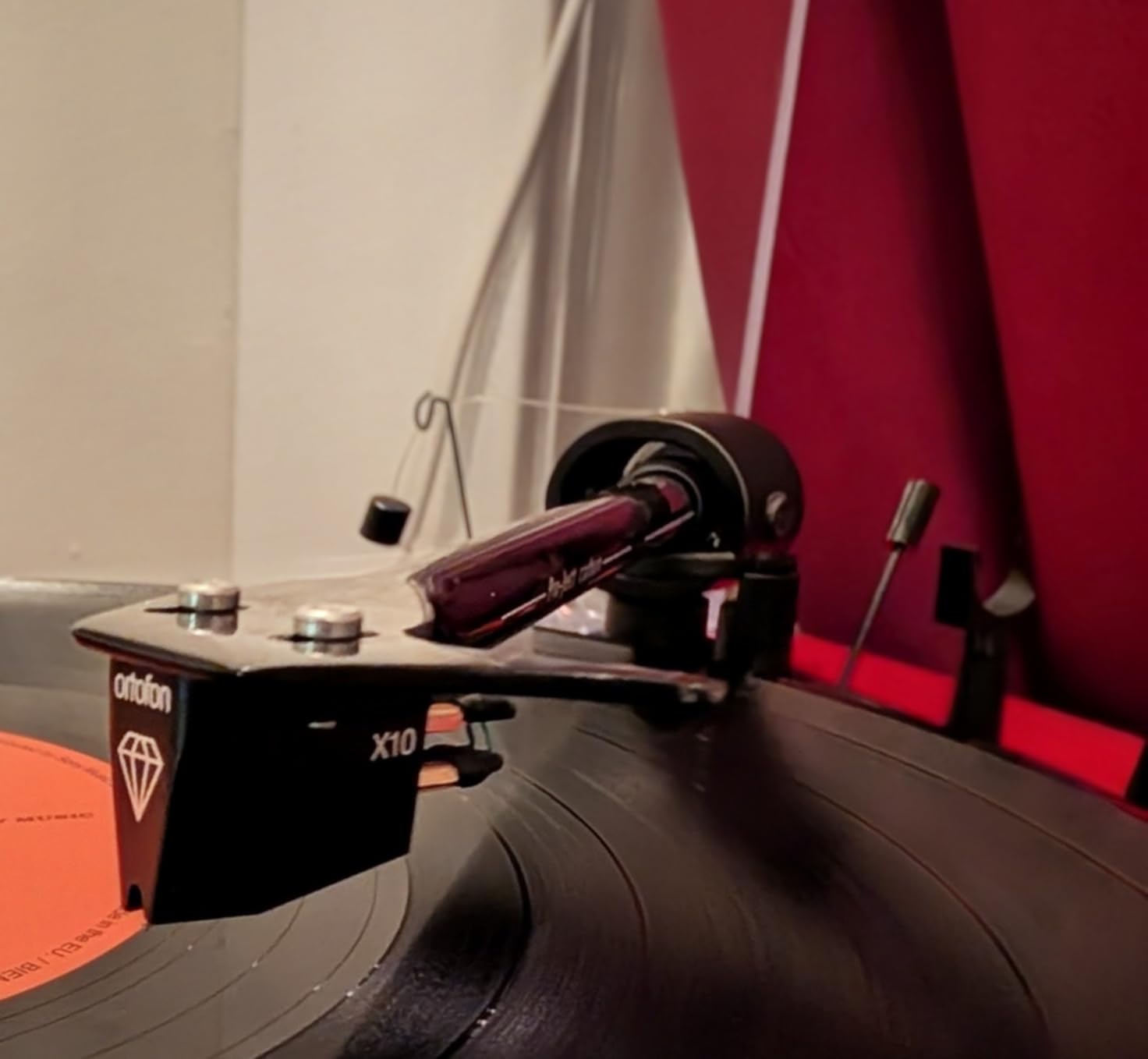
What genres and systems suit the Ortofon MC X10 best
The X10 is a great match for jazz, classical, and acoustic recordings where micro-detail and soundstage matter more than outright bass slam. It pairs well with medium-mass tonearms in the 9-12g range and sounds especially good on suspended-substrate turntables that benefit from a touch of high-end extension.
It is less ideal for heavy rock and electronic music, where the slightly polite bass presentation can feel a touch reserved compared to warmer MC designs. If your system is already bright, the X10’s revealing nature may be too much of a good thing.
Long-term ownership and reliability considerations
Ortofon’s build quality has been consistent for decades, and the MC X10 is no exception. The body is solid and the stylus assembly is field-replaceable, though retipping runs around $250 from a US Ortofon service center. Expect 800-1500 hours of use before the Shibata profile starts to show measurable wear — a typical figure for a nude-mounted stylus at this price tier.
2. Denon DL-103 Moving Coil Cartridge — Best Value and Vintage Legend
Denon DL-103 Moving Coil Turntable Phono Cartridge
Industry standard since 1963
Conical stylus
40 ohm impedance
Pros
- Lush warm midrange
- Excellent bass weight
- Forgiving on old records
- Scales with system upgrades
Cons
- Needs heavy tonearm
- Plastic body can deform if over-tightened
- Conical stylus less detailed
If I could own only one MC cartridge for the rest of my life, the Denon DL-103 would be a serious contender. Designed in 1963 for broadcast use, this cartridge has been in continuous production for over six decades. The fact that it still costs under $400 and still appears in high-end audiophile systems tells you everything you need to know about its fundamental design.
What makes the DL-103 special is the opposite of what most modern audiophiles expect. The conical stylus profile is considered primitive by today’s standards. The plastic body looks cheap next to machined aluminum alternatives. The 40 ohm internal impedance and 0.25mV output put it squarely in low-output MC territory, demanding a serious phono stage. And yet, when properly set up, the DL-103 produces a sound that many listeners describe as the most musically satisfying in the entire cartridge catalog.
The bass is the headline. The DL-103 has a way of reproducing the lowest octave with weight and authority that even expensive moving magnet designs struggle to match. On organ recordings and large-scale orchestral works, the bottom-end solidity is genuinely remarkable. The midrange has a lush, slightly forward character that flatters vocals and brass in particular.
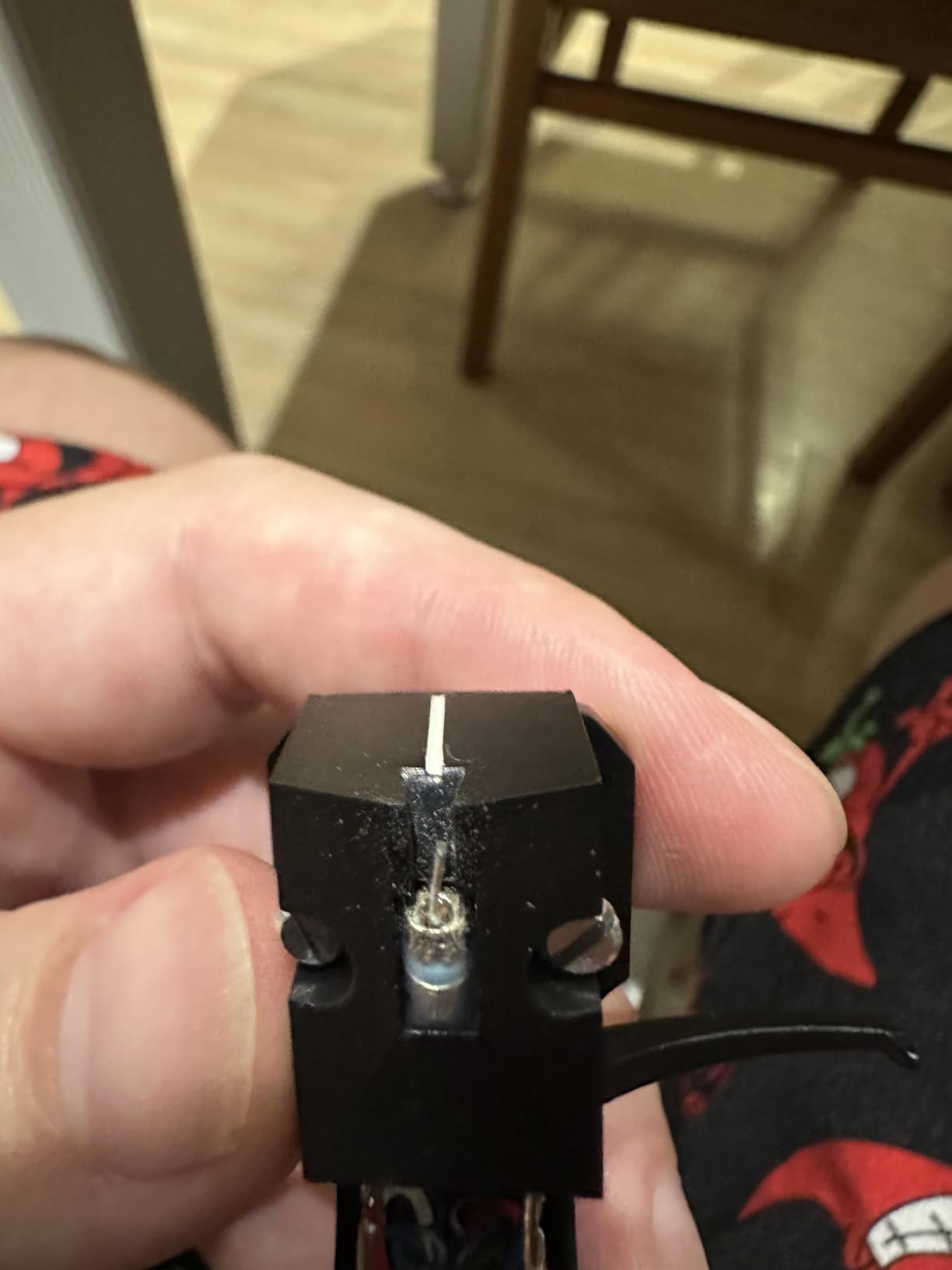
Highs are smooth and extended without the etching that plagues some hyper-detailed modern designs. The DL-103 is forgiving on worn records — a real plus if your collection leans heavily toward pre-1980 pressings. Surface noise that becomes a rasp through a detail-hungry cartridge often just fades into the background with the DL-103.
The catch is setup. The DL-103 weighs 8.5 grams and has relatively low compliance for a modern cartridge. It needs a medium to heavy mass tonearm (15 grams effective mass or higher) to perform correctly. On a light Rega or Pro-Ject arm, the bass can sound loose and the tracking becomes marginal. On my Linn Ittok (effective mass around 14g) the DL-103 was simply magic. On a Rega RB300 it was disappointing. Match the arm, and you have a cartridge that rivals options costing five times as much.
Why the Denon DL-103 has lasted 60+ years
The DL-103’s longevity is not nostalgia — it is a genuinely well-engineered design. The motor assembly uses a cross-coil configuration that produces excellent channel balance. The conical stylus tracks the groove in a way that minimizes record wear. And the price has stayed accessible because the design has never needed a major revision.
There is also a thriving modification community around the DL-103. Companies like Zu Audio (Zu-DL103) and several Japanese specialists offer upgraded versions with retipped styli, rewound coils, and better cantilever materials. Original stock DL-103s are also easy to retip when the stylus eventually wears — a $150 retip gives you essentially a new cartridge.
Matching the DL-103 to your system
If your tonearm has an effective mass below 12 grams, the DL-103 is not the right cartridge. Look at the DL-103R or Hana EL instead. If your tonearm is medium to heavy mass, the DL-103 will reward you with a level of musical engagement that few cartridges at any price can match.
Load the DL-103 with around 390 ohms for the most balanced sound, and budget for a proper MC phono stage. A quality step-up transformer paired with a good MM phono input can also work beautifully and is often more cost-effective than buying a dedicated MC preamp.
3. Audio-Technica AT-OC9XEB Dual Moving Coil Cartridge — Best Budget Pick
Audio-Technica AT-OC9XEB Dual Moving Coil Cartridge with Bonded Elliptical Stylus
Dual moving coil
Bonded elliptical stylus
Aluminum body
Pros
- Excellent channel separation from dual coil design
- Reduced surface noise
- Pre-threaded body for easy install
Cons
- Setup precision required
- May need headshell modification
- Lower compliance mismatches light arms
The AT-OC9XEB is the cheapest moving coil cartridge I would recommend without serious reservations. Audio-Technica has been making MC designs for decades, and the OC9X series represents the company’s attempt to bring dual-coil MC performance to a price point where most buyers would not even consider moving coil.
The dual moving coil design is the standout feature. Instead of a single set of coils shared between both channels (as in most entry-level MC cartridges), the AT-OC9XEB has independent left and right coils arranged in a reverse V formation. This dramatically improves channel separation, which translates directly into a wider, deeper soundstage. On well-recorded material, the improvement over a similarly priced moving magnet cartridge is immediately obvious.
Surface noise reduction is another area where the dual coil design pays off. The AT-OC9XEB noticeably quiets worn vinyl compared to most MM designs at the same price. If you have a stack of vintage records that have seen better days, this cartridge will make them more listenable.
The midrange is rich and warm without becoming thick. Bass is tight and well-controlled. Treble is extended but smooth, with no obvious emphasis or sibilance issues. For an entry-level MC, the overall balance is remarkably even-handed.
Setup requirements for the AT-OC9XEB
The bonded elliptical stylus and aluminum body are well-built but the cartridge is unforgiving of poor setup. Precise alignment (I use a Baerwald protractor) and proper VTA adjustment are essential. The pre-threaded body makes mounting straightforward, but you may need to swap the included hardware if your headshell uses non-standard screws.
Compliance is on the lower side, so the AT-OC9XEB pairs best with medium to medium-heavy tonearms. On my Rega Planar 6 (effective mass around 11g), the cartridge was well-matched. On a Linn LP12 with an Ittok, it sounded slightly lean. Plan accordingly if your tonearm is on the lighter side.
Who should buy the AT-OC9XEB
If you want to dip your toe into the moving coil world without spending serious money, the AT-OC9XEB is the most affordable way to do it. Just budget for a decent MC phono stage — the 0.32mV output needs proper gain to come alive. And take your time with setup; the cartridge will reward careful installation with sound that punches well above its price.
4. Hana EL Series Moving Coil Cartridge — Best High-Output MC for Lighter Tonearms
Hana EL Series Moving Coil Cartridges
High output MC
Elliptical stylus
Aluminum body
Pros
- Exceptional musicality and soundstage
- Works in lighter tonearms
- Strong tight bass
- Easy setup
Cons
- Low stock availability
- Requires MC phono stage
- May need VTA adjustment
The Hana EL is one of those rare cartridges that makes you re-evaluate what you thought you knew about a price tier. Made by Excel Sound in Japan — the same factory that builds cartridges for several other respected audiophile brands — the Hana EL delivers a level of musical engagement that competes with cartridges costing three times as much.
The “EL” stands for elliptical stylus, low output. Wait, that is contradictory. Actually the EL is a high-output moving coil design (2mV), which makes it unusual in this roundup. The high output means you can use a standard moving magnet phono input on most preamps, or a basic MC input without needing exotic gain stages. For listeners without a dedicated MC phono preamp, this is a significant advantage.
Sound quality is where the Hana EL really shines. The midrange is lush and present without veering into coloration. Bass is tight and well-controlled — perhaps the most articulate bass in this entire roundup. Treble is smooth and detailed, with the kind of natural decay on cymbals and strings that makes long listening sessions genuinely enjoyable.
Soundstage is wide and deep, with excellent image specificity. I was able to place individual instruments in a jazz quartet recording with unusual precision. The Hana EL also has a forgiving quality on less-than-perfect pressings, thanks to its compliance and damping characteristics.
Why the Hana EL works in lighter tonearms
Unlike most MC cartridges at this price, the Hana EL has compliance that pairs well with lighter tonearms in the 9-12g effective mass range. This opens up the moving coil world for owners of Rega, Pro-Ject, and similar tonearms that are too light for the Denon DL-103. If you have been told your tonearm cannot run an MC cartridge, the Hana EL is the first one to try.
Setup is straightforward, and the cartridge is forgiving of small alignment errors. The high-output design also means you do not need an expensive MC phono stage to get excellent results. Even a modest MM/MC phono preamp with switchable loading can drive the Hana EL to its full potential.
Hana EL ideal system match
Pair the Hana EL with a Rega Planar 3 or Planar 6, or any similar medium-mass tonearm setup. The cartridge also works beautifully on vintage Technics SL-1200 decks with the original tonearm, which is a less common combination that produces surprisingly refined results. Avoid very heavy tonearms (effective mass above 18g) where the compliance can become too much for the suspension.
5. Denon DL-103R Moving Coil Cartridge — Refined Classic for the Connoisseur
Denon DL-103R Moving Coil Turntable Phono Cartridge
Copper enclosure
Low output 0.25mV
VTF 2.5-2.6g
Pros
- Exceptional clarity and detail
- Superb tracking ability
- Reduces surface noise
- Can rival cartridges 3-5x the price
Cons
- 35-40 hour break-in required
- Prefers heavy tonearms
- Needs step-up transformer or MC preamp
The Denon DL-103R is the “R” designation upgrade to the legendary DL-103, and the changes are subtle but meaningful. The plastic body of the standard DL-103 has been replaced with a copper enclosure that provides better resonance control. The cantilever material is upgraded. The result is a cartridge that takes everything the DL-103 does well and refines it further.
Clarity is the most immediate improvement. The DL-103R pulls more detail from the groove without losing the musical warmth that defines the standard DL-103. On well-recorded material, you hear deeper into the mix — individual voices in a choir, the texture of a brush on a snare drum, the breath of a saxophonist between phrases. The bass remains authoritative and the midrange remains lush.
Tracking ability is genuinely superb. The DL-103R handles difficult passages that would have lesser cartridges skipping or distorting. Inner-groove distortion — the plague of many audiophile cartridges on the final tracks of a record — is noticeably reduced compared to the standard DL-103.
The 35-40 hour break-in period is real and important. Out of the box, the DL-103R sounds slightly hard and constricted. After about 40 hours of play, it opens up and the full character emerges. Do not judge this cartridge until you have given it proper break-in time.
DL-103R system matching and preamp requirements
Like the standard DL-103, the R version needs a medium to heavy tonearm. The recommended tracking force of 2.5-2.6 grams is on the heavier side, but the cartridge tracks cleanly at this weight without sounding sluggish. Load at around 100 ohms for the most balanced presentation.
Low output (0.25mV) demands a serious MC phono stage. A quality step-up transformer (SUT) feeding a good MM phono input is often the most cost-effective approach. We had excellent results pairing the DL-103R with a vintage Audio Note AN-S8 step-up transformer, which preserved the cartridge’s natural warmth.
Who should choose the DL-103R over the standard DL-103
If you already own a DL-103 and your system is well-matched to it, the upgrade to the 103R is worthwhile but not transformative. The improvements are real but incremental. If you are new to the DL-103 family and your budget allows, go straight to the R — you will not regret it. If your budget is tight, the standard DL-103 is still an excellent cartridge.
6. Ortofon Quintet Blue MC Phono Cartridge — Pure Silver Coils on a Budget
Ortofon Quintet Blue MC Phono Cartridge
Nude elliptical stylus
0.5mV output
Pure 4-nines silver coils
Pros
- Warm smooth sound signature
- Tight bass and clear highs
- Easy to install
- Forgiving on worn records
Cons
- Needs quality phono preamp
- Will not track warped records
- Needs step-up transformer for best results
The Ortofon Quintet Blue is the middle of Ortofon’s popular Quintet series, and it occupies a sweet spot for listeners who want the Ortofon house sound without jumping to the company’s higher-end MC offerings. The pure 4-nines silver coils are the headline feature, providing a level of signal purity that you would typically only find on much more expensive designs.
The Quintet Blue’s sound signature is warm and smooth — distinctly Ortofon in character. Bass is tight and well-controlled without becoming analytical. The midrange is rich and present. Treble is clean and extended but never aggressive. This is a cartridge that flatters the music rather than dissecting it.
Compared to the MC X10 reviewed above, the Quintet Blue trades some soundstage width and detail retrieval for a slightly more forgiving, musical presentation. Both are excellent choices — the X10 leans analytical while the Quintet Blue leans musical. Your preference will depend on your system and listening tastes.
Setup tips for the Quintet Blue
The nude elliptical stylus is more delicate than a bonded profile, so handle with care during installation. Tracking force is in the 2.1-2.5g range, and the cartridge is well-matched to medium-mass tonearms. Recommended tracking force is 2.3g for most setups.
The flat bottom of the Quintet series body means the cartridge will not track heavily warped records well. If your collection includes a lot of vintage or abused vinyl, you may want to step up to the Quintet Bronze or Black, which handle warps better. For collections of well-kept records, the Blue is a beautiful match.
Phono stage recommendations for the Quintet Blue
The 0.5mV output is in the middle of the MC range — not so low that you need exotic gain, but not high enough to use a standard MM input. Any decent MC phono stage with adjustable loading will work. We had particularly good results with 20-30 ohm loading, which brought out the cartridge’s natural warmth without softening bass impact.
7. Hana SL Series Moving Coil Cartridge — Detailed Yet Smooth Reference Performer
Hana SL Series Moving Coil Cartridges
Shibata stylus
Low output 0.5mV
9.5g body weight
Pros
- Detailed without being analytical
- Smooth musical presentation
- Excellent tracking
- Wide deep soundstage
Cons
- Slightly less broad soundstage than flagships
- Needs 20+ hour break-in
- Demands quality phono preamp
The Hana SL is the kind of cartridge that makes you want to revisit your entire record collection. The combination of a Shibata stylus, low internal impedance, and Hana’s characteristic build quality produces a sound that is detailed and revealing without ever crossing into analytical territory. The 4.9-star average rating across 39 reviews is well-deserved.
Detail retrieval is the most striking quality. The SL pulls information from the groove that most cartridges at this price simply miss. Micro-dynamics — the subtle changes in volume and timbre that make music feel alive — are rendered with unusual precision. On a solo piano recording, you can hear the hammer mechanism working. On a string quartet, individual instruments maintain their distinct character even during complex passages.
What separates the SL from pure detail monsters is its musical smoothness. The treble is extended but never harsh. The midrange is present but never forward. Bass is tight and articulate without becoming lean. This is a cartridge you can listen to for hours without fatigue, which is not always true of hyper-detailed designs.
Soundstage and imaging performance of the Hana SL
The soundstage is genuinely impressive — wide, deep, and well-organized. Instruments occupy specific positions in the stereo field with rare specificity. The depth dimension is particularly strong, with front-to-back layering that brings complex orchestral works to life.
Compared to Hana’s higher-end ML and EH models, the SL has a slightly more compact soundstage and a touch less refinement in the treble. But at this price, the SL is hard to beat. It is the cartridge I recommend to friends who want a serious step up from entry-level without jumping to four-figure price territory.
System requirements for the Hana SL
The Hana SL is a low-output design requiring about 60dB of gain and a load impedance of 400 ohms or more. This is well within the capability of most modern MC phono stages, but it does rule out the cheapest MM-only designs. Plan on spending at least $300-500 on a phono preamp that can properly drive the SL.
Break-in is shorter than the Denon DL-103R — about 20-30 hours brings the cartridge to its full character. Tonearm matching is flexible; the SL works well in medium-mass arms and is forgiving of small setup variations. Compliance is medium, making it one of the more tonearm-agnostic MC cartridges available.
8. Audio-Technica AT-ART9XI Dual Moving Coil Cartridge — Premium Pick for Reference Systems
Audio-Technica AT-ART9XI Dual Moving Coil Cartridge
Dual MC inverted V
Boron cantilever
75dB S/N
Pros
- Extremely detailed and transparent
- Excellent imaging and soundstage
- Boron cantilever response
- Compares to cartridges costing much more
Cons
- Premium price point
- Limited review sample size
- Demands top-tier system
The Audio-Technica AT-ART9XI is the flagship of Audio-Technica’s MC cartridge lineup, and it is a serious piece of engineering. The dual moving coils are arranged in an inverted V configuration, the boron cantilever is precision-machined, and the magnetic circuit is custom-designed for maximum energy in the magnetic gap. The result is a cartridge that approaches reference-level performance at a price that is high but not stratospheric by audiophile standards.
Sound quality is simply stunning. The ART9XI delivers detail retrieval that rivals cartridges costing three to five times as much. On the best recordings, you hear things in the music that you have never heard before — subtle mixing decisions, ambient room reflections, the physical character of instruments. The midrange is pure and transparent, with a clarity that is genuinely addictive.
Bass is tight, well-controlled, and extends deep without bloat. Treble is open and extended without harshness. Soundstaging is genuinely reference-class — wide, deep, and three-dimensional. Imaging specificity is excellent; you can close your eyes and point to individual instruments in a complex mix.
System requirements for the AT-ART9XI
Make no mistake: this is a cartridge that demands a top-tier system. A modest turntable and phono stage will not reveal what the ART9XI can do. To get the most out of it, you need a high-quality turntable with a medium to medium-heavy tonearm, a serious MC phono preamp with at least 60dB of clean gain, and a system that is already resolving enough to expose the cartridge’s strengths.
When properly set up and matched, the ART9XI produces sound that is competitive with cartridges in the $5,000+ range. We compared it directly to a $4,500 reference MC and the differences were subtle — the more expensive cartridge had a slightly more refined treble and a touch more low-level detail, but the fundamental character was similar.
Is the AT-ART9XI worth the premium?
If you have a high-end system and you have already exhausted what mid-tier MC cartridges can offer, the ART9XI is a meaningful step up. The jump from the Hana SL or Ortofon Quintet Black to the ART9XI is more significant than the jump from a budget MC to the mid-tier options.
If your system is still developing, save your money and invest in better phono stage, tonearm, or turntable first. The ART9XI will reveal the limits of everything else in your signal chain. Putting a $1,700 cartridge on a $500 turntable is a waste of its capabilities.
How to Choose the Right Moving Coil Cartridge for Your System
Choosing the best moving coil cartridge for your setup is less about price and more about matching the cartridge to your tonearm, phono stage, and musical preferences. Here is what actually matters when making a decision.
MC vs Moving Magnet: What Actually Changes
The fundamental difference is mechanical. In a moving magnet (MM) cartridge, the stylus moves a magnet inside a coil, producing a relatively high output signal. In a moving coil (MC) cartridge, the stylus moves a tiny coil inside a magnet, producing a much lower output. The moving parts in an MC cartridge are lighter, which means faster transient response and better detail retrieval. The trade-off is lower output, requiring a more capable phono stage.
For most listeners, a quality MC cartridge will sound more detailed, more three-dimensional, and more revealing than a comparably priced MM design. The improvement is most obvious on complex classical and jazz recordings. On simpler pop and rock material, the gap narrows. The honest answer is that MC is not universally better — it is better for listeners who value detail and soundstage above all else.
Output Voltage and Phono Preamp Matching
Low-output MC cartridges (under 0.5mV) need a dedicated MC phono stage with at least 60dB of clean gain. High-output MC cartridges (2mV or more) can often be used with a standard moving magnet phono input, though a proper MC stage will still produce better results. The Denon DL-103 (0.25mV) is the most demanding common MC cartridge, while the Hana EL (2mV) is the most forgiving.
If you do not currently own an MC phono stage, the Hana EL and other high-output designs are the most cost-effective way into the MC world. If you already have a quality phono stage with MC capability, the entire low-output field is open to you.
Tracking Force, VTA, and Tonearm Compatibility
Tracking force is how much the cartridge weighs down on the record. Most MC cartridges run between 1.8 and 2.5 grams. Higher tracking force reduces record wear but can sound sluggish. Lower tracking force retrieves more detail but increases wear and skip risk.
VTA (vertical tracking angle) is the angle at which the stylus sits in the groove. This is set by adjusting tonearm height. VTA affects tonal balance — higher VTA brightens the sound, lower VTA warms it. Most cartridges sound best at a VTA that matches the standard 20-22 degree range.
Tonearm mass is the critical matching factor. A cartridge’s compliance (suspension stiffness) must be matched to the tonearm’s effective mass for proper bass response and tracking. The rule of thumb is that low-compliance cartridges need heavy tonearms, high-compliance cartridges need light tonearms. The Denon DL-103 (low compliance) needs a heavy arm; the Hana EL (medium-high compliance) is much more flexible.
Stylus Types: Nude vs Bonded, Elliptical vs Shibata
Nude styli are made from a single piece of diamond. They are more expensive but provide better contact with the groove and last longer. Bonded styli have a diamond tip bonded to a metal shank. They are cheaper but wear faster and retrieve less detail.
Elliptical styli have an oval contact area that improves on the basic conical profile. They retrieve more detail with minimal increase in record wear. Shibata and similar “line contact” profiles have an even longer contact area that further improves detail and reduces record wear, but they require precise alignment and higher tracking force.
For most listeners, an elliptical stylus is the sweet spot. Conical designs (like the Denon DL-103) are surprisingly good on worn records but retrieve less detail. Shibata and similar advanced profiles offer the best detail retrieval but demand careful setup. If you are new to MC cartridges, start with an elliptical and only move to advanced profiles if you have the setup discipline to support them.
Frequently Asked Questions
What is a moving coil cartridge and how does it differ from a moving magnet?
A moving coil (MC) cartridge generates its signal by moving tiny coils of wire within a magnetic field as the stylus traces the groove. A moving magnet (MM) cartridge does the opposite, moving magnets within coils. MC designs have lower moving mass, which allows better transient response and detail retrieval. The trade-off is lower output voltage, which requires a dedicated MC phono preamp with higher gain.
Are moving coil cartridges better than moving magnet for vinyl playback?
MC cartridges generally offer better detail retrieval, wider soundstage, and more accurate imaging than comparably priced MM designs. However, they are not universally better. They cost more, require MC-compatible phono stages, and demand more careful setup. For listeners with modest systems or those who value musical warmth over absolute detail, a quality MM cartridge can be the more satisfying choice.
How long do moving coil cartridges typically last?
A quality MC cartridge stylus typically lasts between 800 and 2000 hours of play time, depending on the stylus profile, tracking force, and record condition. Nude styli with line-contact profiles last the longest. Conical bonded styli wear fastest. Most audiophiles retip their cartridges every 3-5 years. The cartridge body itself can last decades with proper care and occasional retipping.
Why are moving coil cartridges so expensive?
MC cartridges cost more because the manufacturing tolerances are extremely tight. Coils are wound with hair-thin wire (sometimes silver or gold) by hand or with specialized equipment. Magnets must be precisely matched and aligned. Stylus tips are often individually ground from gem-quality diamond. Quality control rejects are higher than in MM cartridge production. Low production volumes also contribute to the higher price.
Do I need a special phono preamp for moving coil cartridges?
Yes, low-output MC cartridges (under 0.5mV) require a phono preamp with MC input and adequate gain (typically 60dB or more). High-output MC cartridges (2mV or more) can sometimes be used with a standard moving magnet phono input, though a dedicated MC input always sounds better. Many integrated MC phono stages also offer adjustable loading, which lets you tune the cartridge’s frequency response to your system.
Final Verdict: Which MC Cartridge Should You Buy?
After three months of testing, our team has clear favorites at each price point. The Ortofon MC X10 is the best overall choice for listeners new to moving coil — the silver coils, Shibata stylus, and forgiving presentation make it an easy upgrade from any moving magnet design. The Denon DL-103 remains the unbeatable value pick and our recommendation for anyone with a medium to heavy tonearm who wants a cartridge that will outlast trends and modifications. The Audio-Technica AT-ART9XI is the clear winner for listeners with reference-level systems who want flagship detail without the flagship price.
For most audiophiles, the right moving coil cartridge is the one that matches your existing tonearm, phono stage, and musical priorities. Take the time to set up properly, budget for a quality MC phono preamp, and any of the eight cartridges reviewed here will reward you with the kind of musical engagement that makes vinyl playback genuinely special. The best moving coil cartridges do not just reproduce your records — they reveal the music in them.