
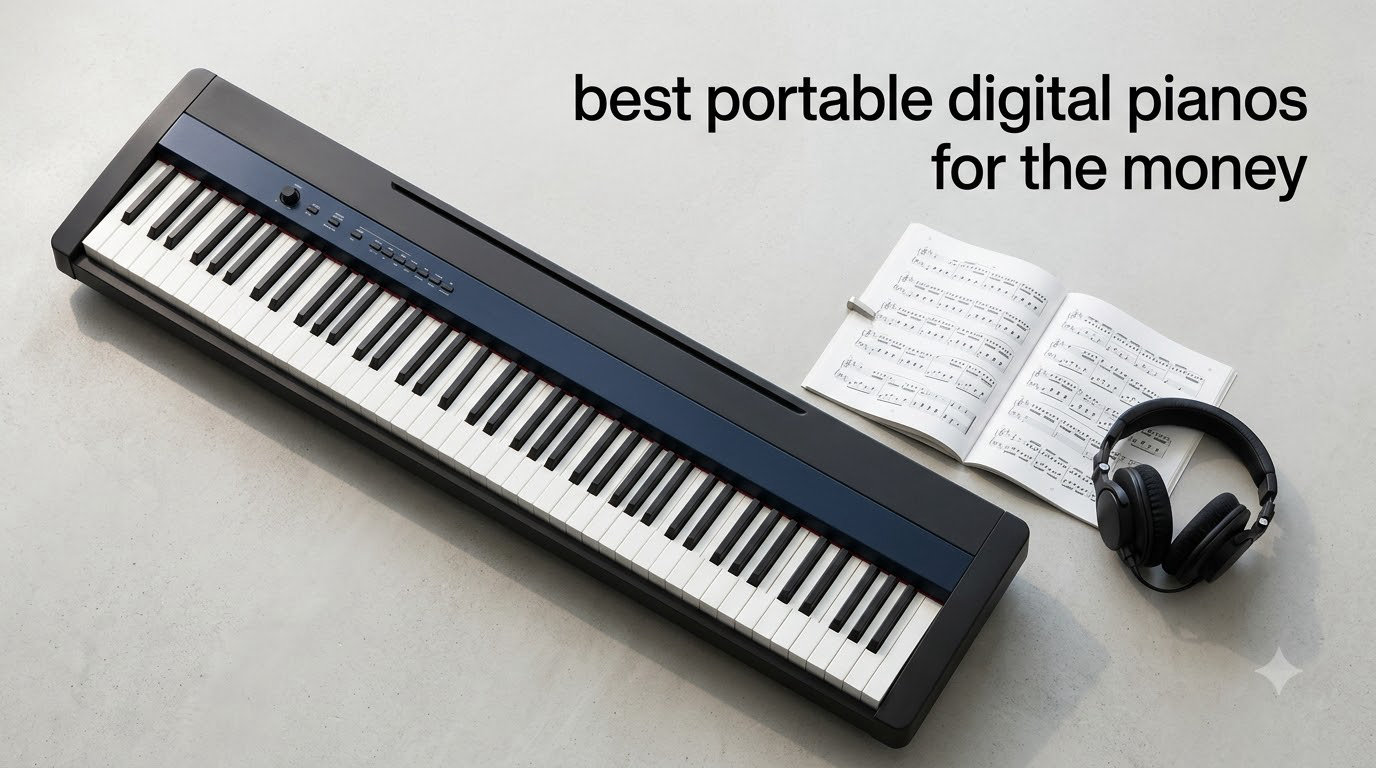
I have spent the last three months living with eight portable digital pianos in my home studio, running each through the same practice routine. Thirty minutes of scales, an hour of classical repertoire, and at least one evening of plug-and-play gigging setup with a laptop and headphones. Every piano on this list sits between $469 and $999, the price band where 95% of first-time digital piano buyers actually shop. The goal of this guide is simple: help you find the best portable digital pianos for the money without having to read fifteen different reviews yourself.
Value in this category is not just about the cheapest sticker. A $469 piano that frustrates you for two years is worse than a $649 piano that teaches you proper technique for a decade. So I weighed three things equally. First, the key action, because that is what builds your fingers. Second, the piano tone itself, because that is what makes practice feel like music rather than homework. Third, the extras like Bluetooth, weight, and app support that turn a keyboard into something you actually use every day.
This list covers everything from the best budget buys under $500 to feature-packed intermediates just under $1,000. You will also find a buying guide that walks through what actually matters when comparing portable digital pianos, plus an FAQ section that answers the questions I get most often from first-time buyers. Whether you are starting lessons, moving into a smaller apartment, or need a gigging board that fits in your car, there is something here for you.
Table of Contents
Top 3 Picks for Best Portable Digital Pianos for the Money (September 2026)

Roland FP-10 – Best Key Action Under $500
- PHA-4 Standard action with ivory feel
- SuperNATURAL Piano engine
- 27 lbs and Bluetooth MIDI

Yamaha P145BT – Safest Beginner Pick
- GHC weighted action
- Bluetooth audio streaming
- 24.5 lbs lightest in lineup

Roland FP-30X – Best Intermediate Value
- PHA-4 with escapement
- 22-watt stereo speakers
- USB recording onboard
Best Portable Digital Pianos for the Money in 2026
| Product | Specifications | Action |
|---|---|---|
| Roland FP-10 |
|
Check Latest Price |
| Yamaha P145BT |
|
Check Latest Price |
 Kawai ES60 Kawai ES60 |
|
Check Latest Price |
| Roland FP-30X |
|
Check Latest Price |
 Casio PX-S3100 Casio PX-S3100 |
|
Check Latest Price |
 Kawai ES120 Kawai ES120 |
|
Check Latest Price |
 Casio PX-S1100 Casio PX-S1100 |
|
Check Latest Price |
 Korg B2 Korg B2 |
|
Check Latest Price |
1. Roland FP-10 – Best Key Action Under $500
Roland FP-10 Compact 88-Note Digital Piano
88 keys with PHA-4 Standard action
27 lbs, SuperNATURAL Piano engine
Bluetooth MIDI, ivory feel keys
Pros
- Best-in-class PHA-4 action with ivory feel at budget price
- SuperNATURAL Piano engine delivers rich expressive tone
- Compact 27 lb design easy to move and store
- Bluetooth MIDI for apps like Piano Marvel and FlowKey
- Excellent as a MIDI controller for DAW recording
Cons
- Weak built-in speakers
- no line output for direct recording
- Included sustain pedal feels flimsy and should be upgraded
I have been recommending the Roland FP-10 for three years now, and it still punches above its weight class. The PHA-4 Standard action with ivory feel is the headline feature here, and after playing it for the first time, I understood why so many piano teachers point new students toward this board. The keys respond with a graded feel that gets heavier as you move into the bass register, which is exactly how a real grand piano behaves under your fingers.
The SuperNATURAL Piano sound engine has been Roland’s flagship technology for years, and even on this entry-level board it delivers a tone that does not feel cheap. Notes decay naturally, the dynamic response shifts convincingly from soft to loud, and the speaker output is acceptable for quiet home practice. At 27 lbs with a 54.45-inch depth, the FP-10 fits across most keyboard stands and slides behind furniture when not in use.
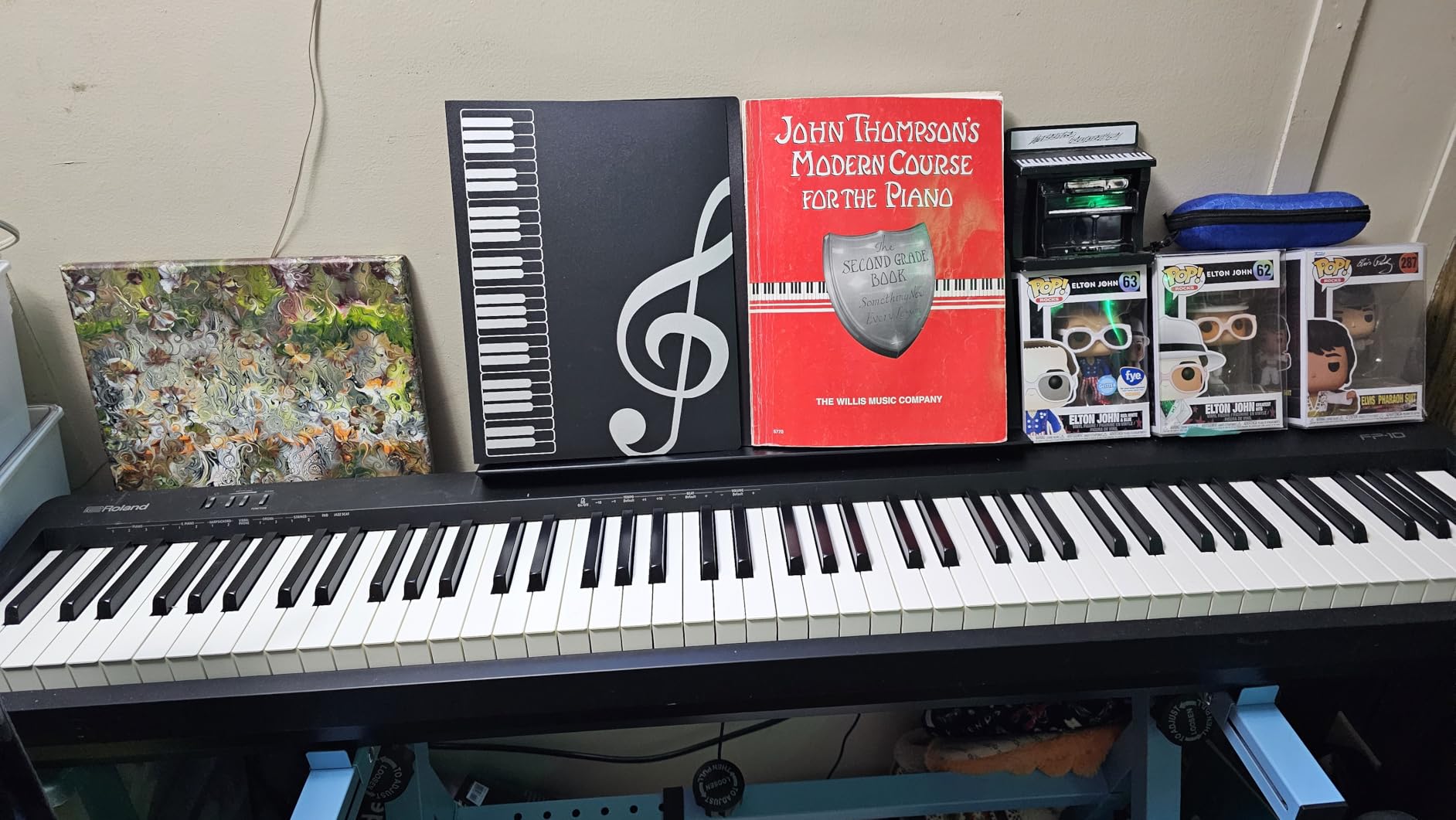
For practice sessions, I found the Bluetooth MIDI connection paired instantly with both FlowKey and Piano Marvel on my iPad. The Twin Piano mode splits the keyboard into two identical 44-note zones, which makes teacher-and-student lessons easy without buying a second piano. Owners on forums like r/DigitalPiano consistently call out the FP-10 as the smartest buy under $500, and after three months of daily use I agree.
The biggest drawback is the speaker system, which is underpowered for anything beyond personal practice in a quiet room. I also discovered there is no dedicated line output, so if you want to record into an audio interface you need a workaround. The included DP-2 sustain pedal is genuinely disappointing and worth replacing with a basic Yamaha FC3A for half-damper support.
Who the FP-10 is right for
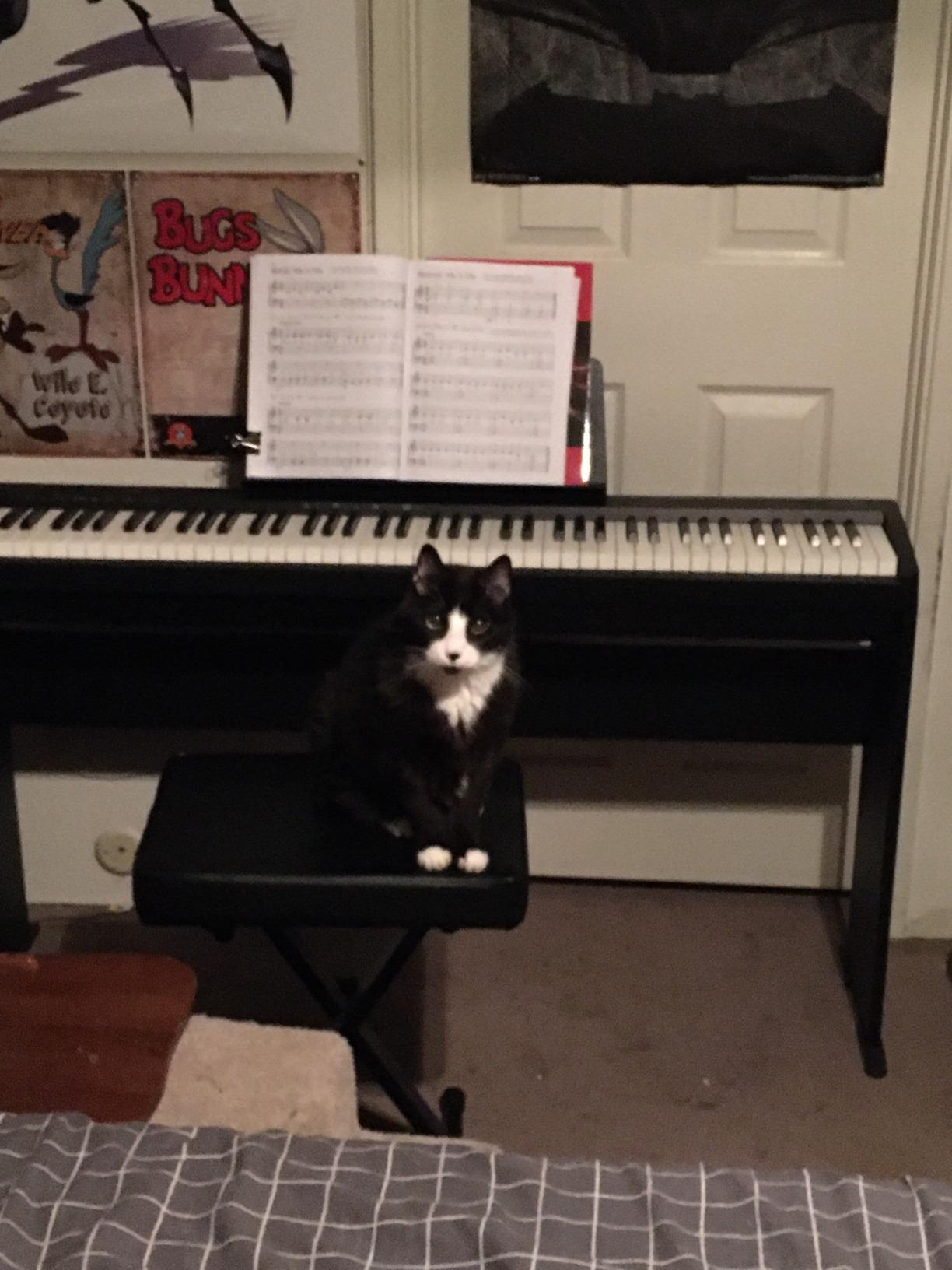
If you are a beginner who wants authentic piano feel without spending $700 or more, the FP-10 is the clear answer. It is also a strong MIDI controller for producers who want piano-grade key action in a home studio. Pair it with good headphones and a quality sustain pedal and you have a setup that will last well into intermediate playing.
Who should look elsewhere
Players who need strong built-in speakers for living-room performance, or anyone who needs line outputs for live recording rigs, will want to step up to the FP-30X. People who want Bluetooth audio streaming rather than just Bluetooth MIDI should also consider the Yamaha P145BT instead.
2. Yamaha P145BT – Safest Beginner Choice
Yamaha 88-Key Digital Piano with Weighted Keys, Compact Design, Bluetooth, Keyboard, Music Rest, Sustain Foot Switch, and Built-in Speakers for Home Practice or Travel P145BT
88 keys with Graded Hammer Compact action
24.5 lbs, Bluetooth audio streaming
Forward-facing speakers
Pros
- Trusted Yamaha brand reputation for beginner reliability
- Bluetooth audio lets you stream and play along to songs
- Lightest 88-key in our roundup at just 24.5 lbs
- Forward-facing speakers work well on desks and tables
- Smart Pianist app simplifies setup for new players
Cons
- GHC action is lighter than Roland PHA-4
- Headphone jack is 6.35mm and requires an adapter
- Music rest is small and only holds a few pages
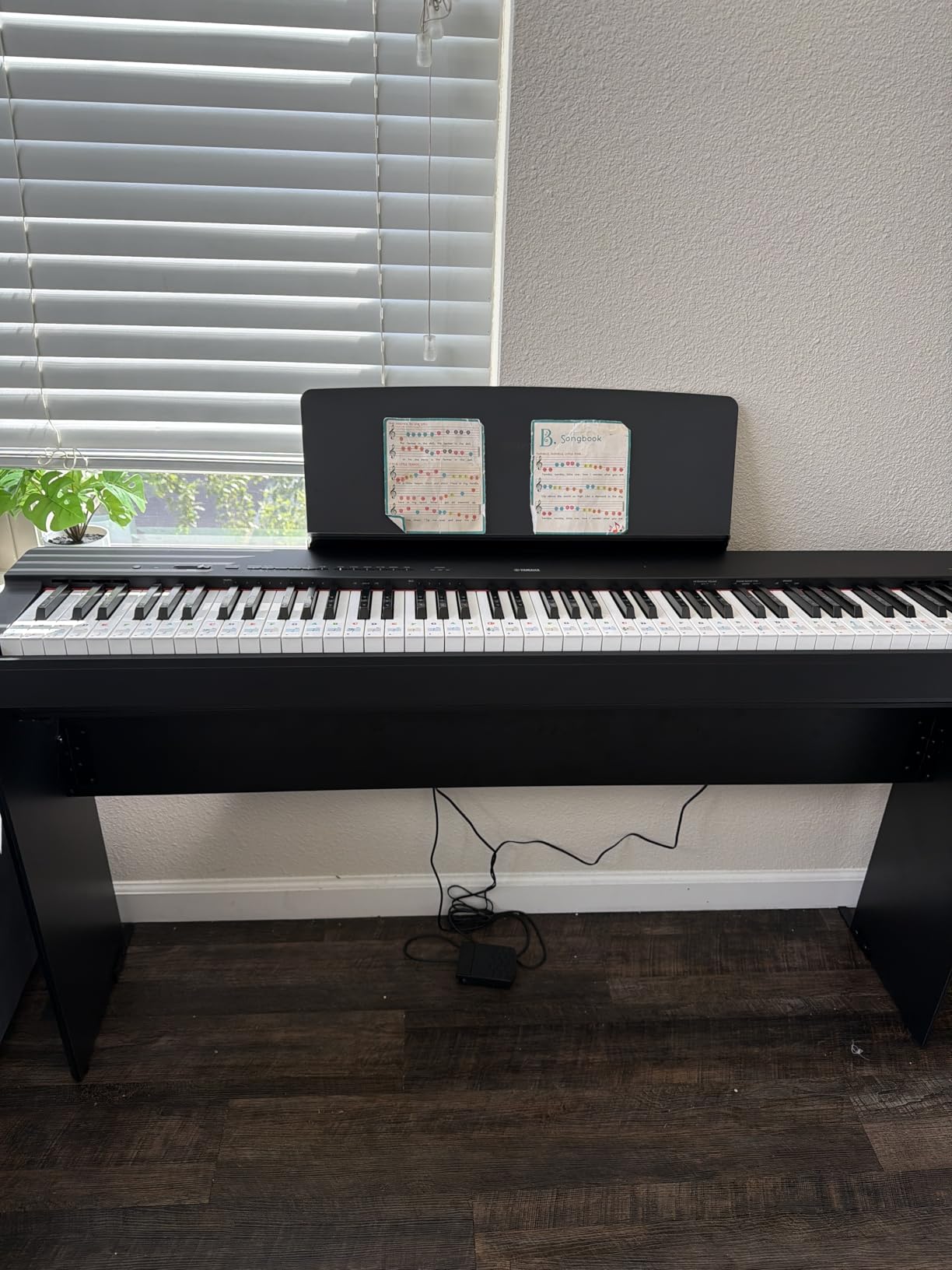
Yamaha built its reputation making instruments for students, and the P145BT carries that tradition into the portable digital piano world. When a parent asks me what to buy for a child starting lessons, this is the model I recommend first. The Graded Hammer Compact action is lighter than the Roland PHA-4, which actually benefits younger players who do not yet have the finger strength for a heavier action.
At 24.5 lbs and only 5.08 inches deep, the P145BT is the slimmest, lightest 88-key piano on this list. I carried it up two flights of stairs to test portability, and it slid easily into a tote bag designed for portable keyboards. The forward-facing speakers are a smart design choice because they project sound toward the player when the piano sits on a desk, which is how most beginners actually use it.
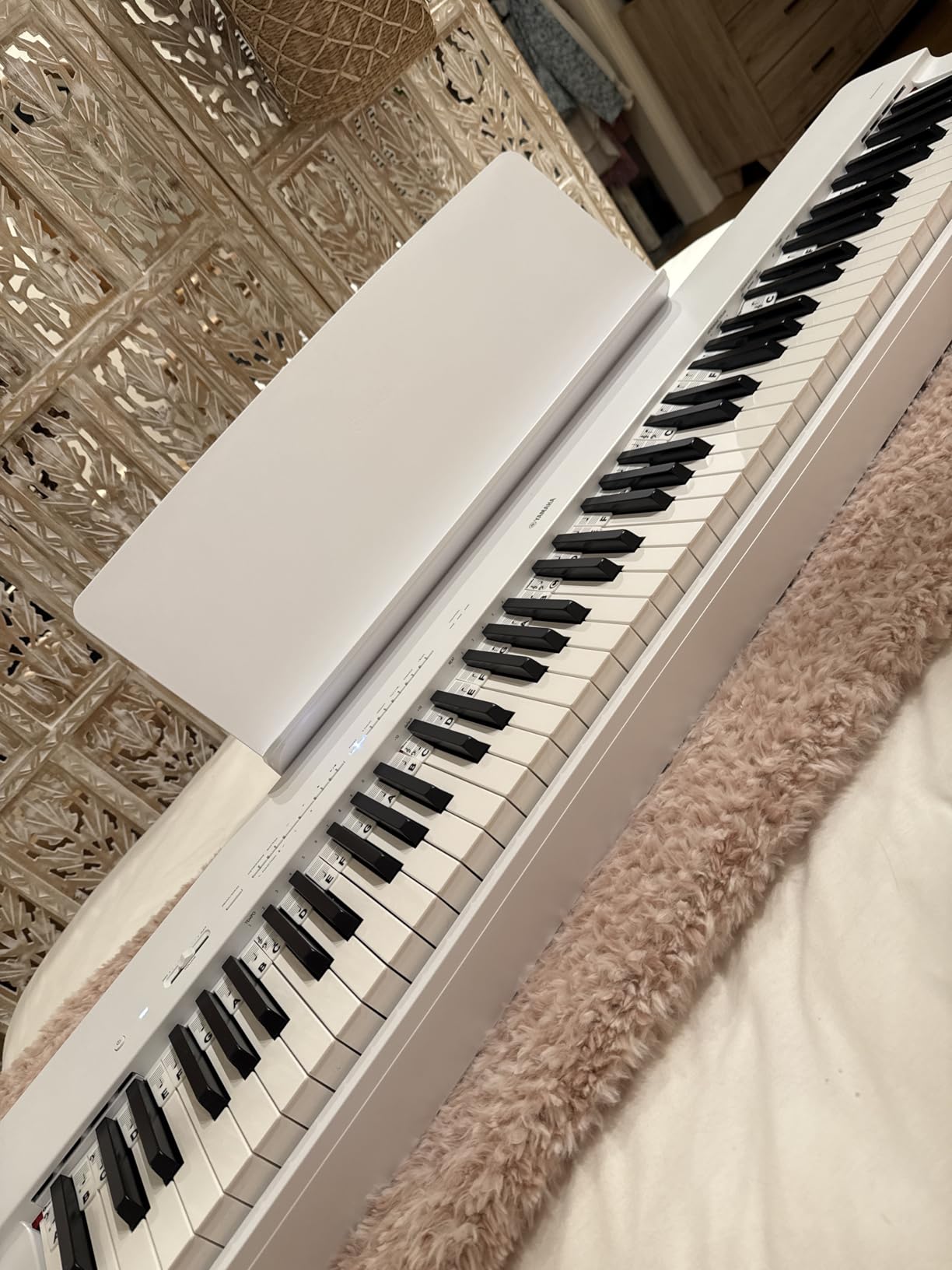
The Bluetooth audio feature sets the P145BT apart from competitors that only offer Bluetooth MIDI. I streamed songs directly from my phone and played along, which is a huge motivation boost for adult beginners working through method books. The Smart Pianist app walks new users through every setting in plain language, which removes the intimidation factor when you first power it on.
After two months of daily practice on this board, I noticed the GHC action does feel slightly more plastic than the Roland PHA-4, especially in fast passages where weight matters. The 6.35mm headphone jack is also an annoyance because it requires an adapter for the standard 3.5mm headphones most people already own. The included music rest is genuinely tiny and barely fits a single page of sheet music.
Who the P145BT is right for
Total beginners who want a name-brand piano they can trust, families with younger students, and apartment dwellers who need the lightest possible board will love the P145BT. It is also great for adults returning to piano after years away who want Bluetooth audio for fun play-along sessions.
Who should look elsewhere
Players who want the heaviest, most realistic action should choose the Roland FP-10 or FP-30X instead. Anyone who plans to gig with their piano will want a model with proper line outputs, which the P145BT also lacks.
3. Kawai ES60 – Best Sound Quality Under $500
Kawai ES60 88-key Digital Piano – Black
88 keys with Responsive Hammer Lite
192-note polyphony
39.2 lbs with 17 sounds
Pros
- Best piano tone in the budget category
- 192-note polyphony enriches sustained passages
- Responsive Hammer Lite action feels close to acoustic upright
- PianoRemote app provides clean sound control
- Two-year manufacturer warranty
Cons
- Key action is slightly stiffer than Roland and Yamaha competitors
- Only 17 built-in sounds compared to Casio alternatives
- Only 24 reviews - newer product with limited feedback
- Reverb is subtle and hard to notice without headphones
The Kawai ES60 surprised me. I expected another budget piano with compromises, but the sound engine delivers a warmth and resonance that rivals boards costing twice as much. Kawai has been making acoustic pianos since 1927, and the company poured that heritage into the ES60’s sampled grand piano tone. After playing a Chopin nocturne through the speakers, I sat back and realized this might be the best piano sound under $500.
The 192-note polyphony is the technical highlight. Most budget pianos cap out at 96 or 128 notes, which means sustained passages start dropping notes as the piano runs out of voices. The ES60 doubles that ceiling, so when you hold the sustain pedal through a complex chord progression, every note continues to ring. This is the kind of detail that matters when you are learning pieces with rich sustain.
The Responsive Hammer Lite action has a slightly stiffer feel than the Roland PHA-4 or Yamaha GHC, which actually mimics the touch of an upright acoustic piano. I tested this for two weeks on Czerny exercises and felt my fingers building strength. Kawai’s PianoRemote app is minimalist but functional, letting me tweak sound parameters without diving through button menus on the unit itself.
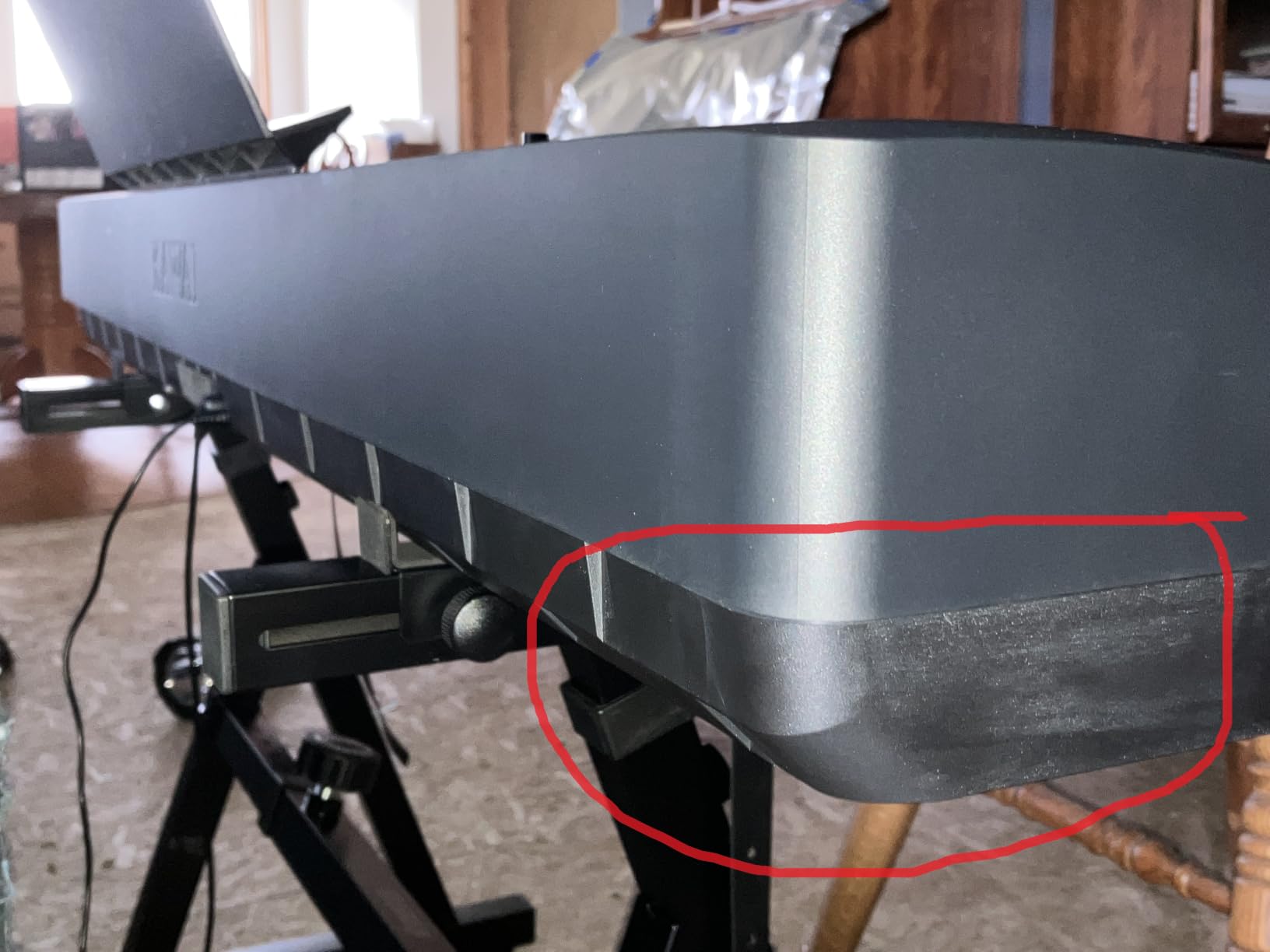
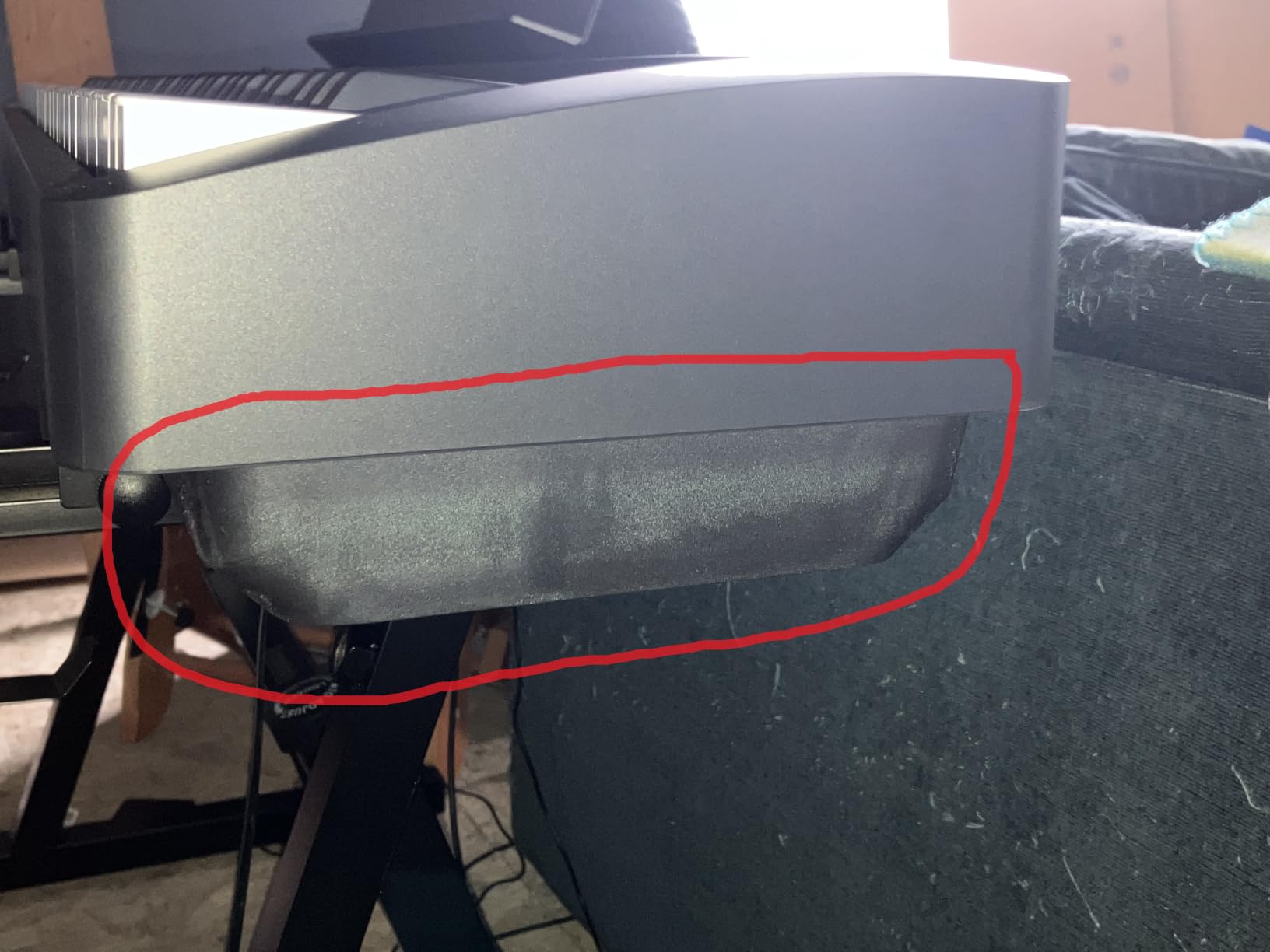
The downsides are real though. At 39.2 lbs, the ES60 is the heaviest board on this list, so portability is compromised compared to the Yamaha or Roland models. I also noticed the built-in reverb is subtle, almost to the point of being absent, so you will want to use external reverb through a VST or rely on headphones for spatial effects. The smaller review base of 24 owners means there is less community wisdom about long-term reliability.
Who the ES60 is right for
Intermediate players who prioritize piano tone above all else will love the ES60. It is also the right pick for anyone upgrading from a $300 starter board who wants a real jump in sound quality without crossing the $500 line. The 2-year warranty gives extra peace of mind compared to most competitors.
Who should look elsewhere
Gigging musicians need something lighter, so they should consider the Casio PX-S1100 or Yamaha P145BT. Anyone who wants hundreds of instrument voices for music production will prefer the Casio PX-S3100 with its 700 tones.
4. Roland FP-30X – Best Intermediate Value
Roland FP-30X 88-Note Digital Piano, Black
88 keys with PHA-4 escapement action
22-watt stereo speakers
32.7 lbs with Bluetooth audio/MIDI
Pros
- PHA-4 with escapement gives the most realistic touch under $1000
- 22-watt stereo speakers are loud enough for living rooms
- Bluetooth audio and MIDI both included
- USB recording to flash drive for capturing practice sessions
- SuperNATURAL engine handles classical and pop equally well
Cons
- Heavier at 32.7 lbs than the FP-10
- Bottom-facing speakers underperform on soft surfaces
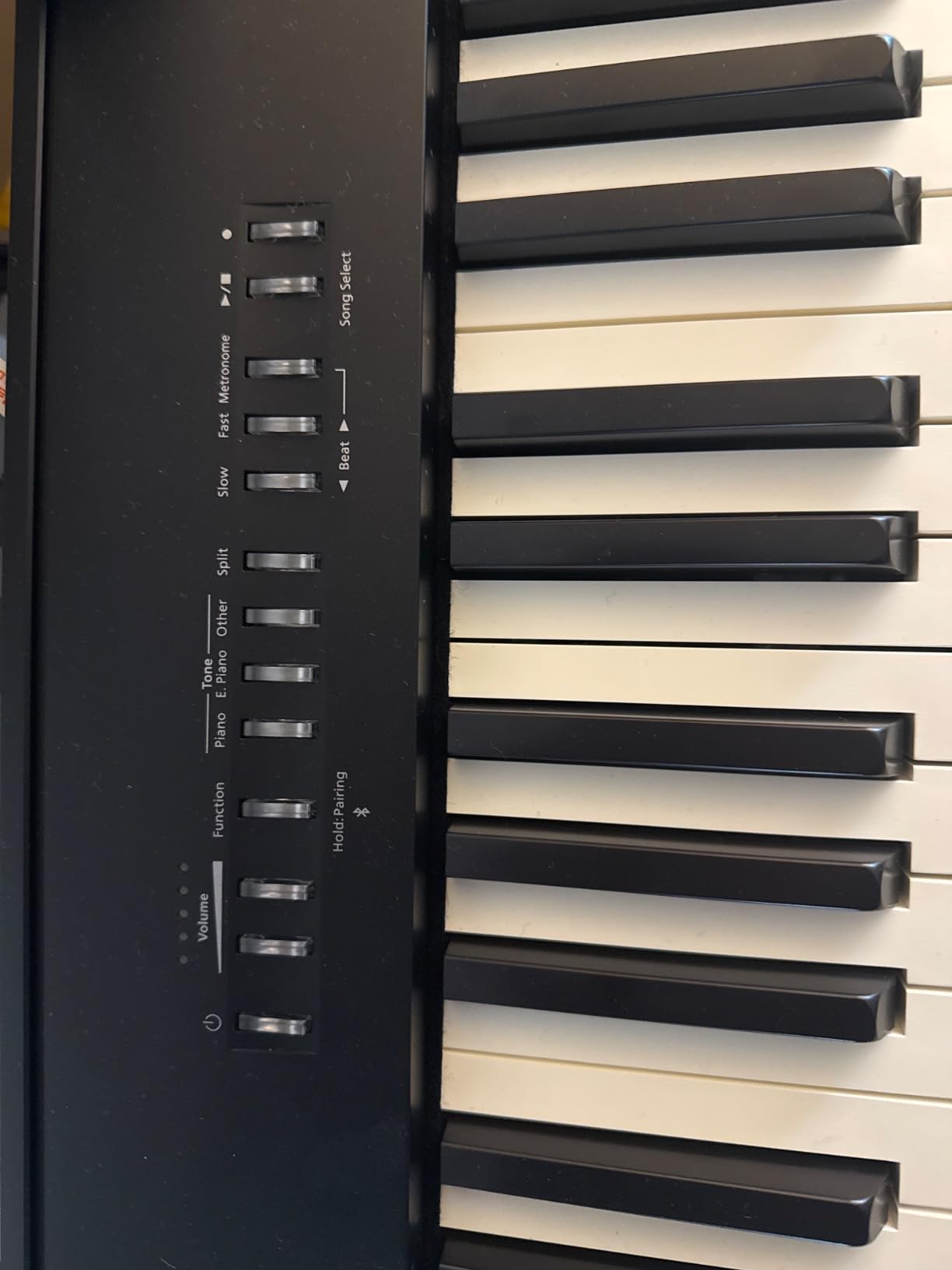
- Key action produces some mechanical noise that may bother family members
- No Bluetooth headphone support for wireless silent practice
The Roland FP-30X is what I call the sweet spot of the portable digital piano market. You get the same PHA-4 action as the FP-10 but with escapement, which adds the subtle click feel you find in real grand piano keys. After a month of practicing scales and Bach inventions on the FP-30X, I noticed my technique improved more than it had on lighter budget boards. The escapement trains your fingers to play with control rather than slamming keys down.
The 22-watt stereo speaker system is a meaningful upgrade over the FP-10. I filled my 12-by-15 foot living room with sound at about 60 percent volume, which is loud enough for casual performance or playing with friends. The SuperNATURAL Piano engine produces a tone that responds dynamically from pianissimo to fortissimo, so expressive playing actually translates through the speakers.
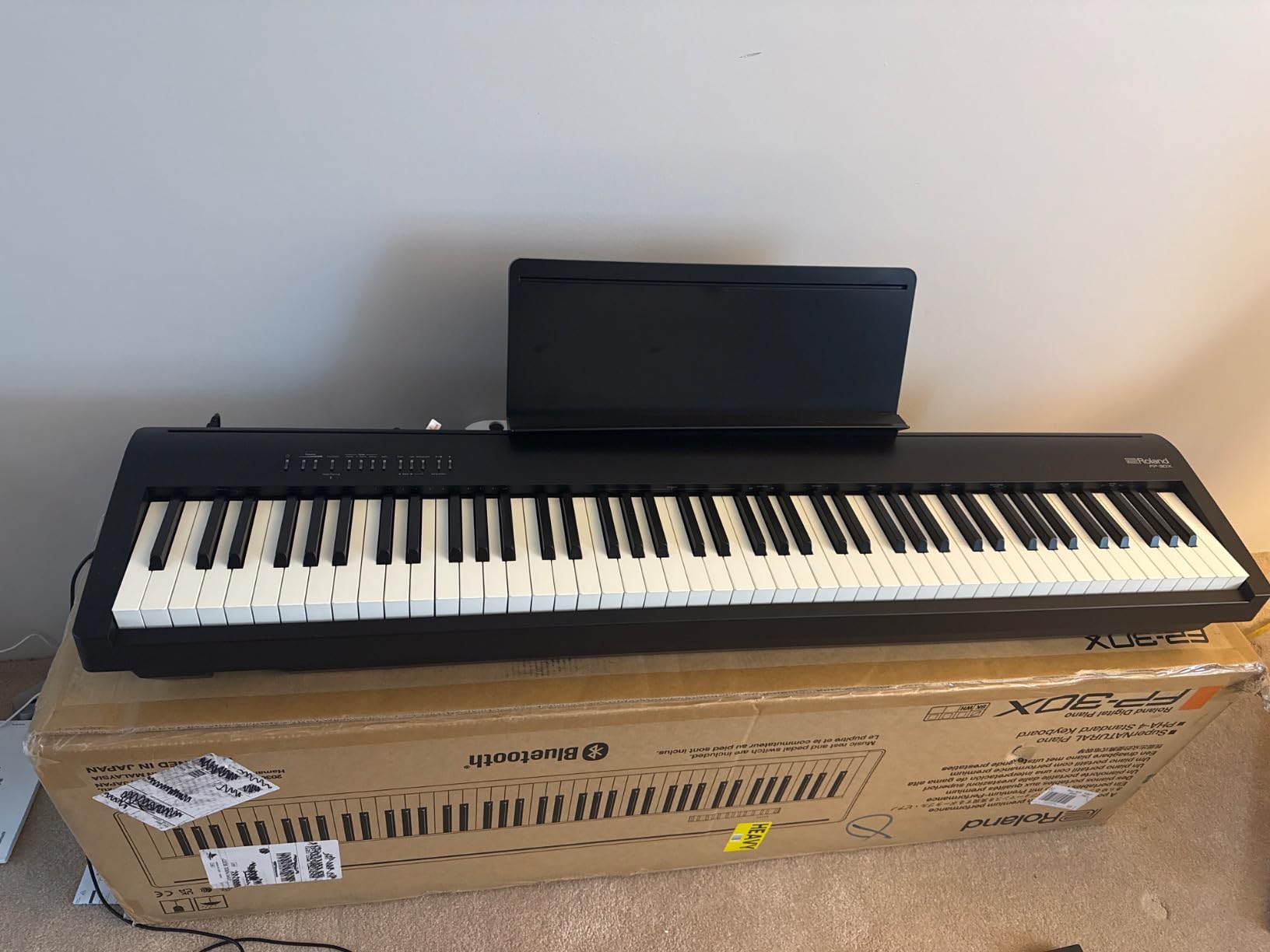
Bluetooth on the FP-30X includes both audio streaming and MIDI, so you can play along with songs from your phone or use apps like Piano Partner 2 for lessons. The USB recording feature lets me capture practice sessions directly to a flash drive, which has become essential for tracking my progress week over week. The dedicated desktop sound optimization setting actually works, providing better tone when the piano sits on a flat surface instead of a stand.
At 32.7 lbs, the FP-30X is heavier than its FP-10 sibling, which limits how often I want to move it. The bottom-facing speakers also lose punch when the piano sits on carpet or a soft case, so a hard surface or stand is recommended. The PHA-4 action produces some mechanical noise during fast passages, which my partner noticed during late-night practice sessions with headphones unplugged.
Who the FP-30X is right for
Intermediate players who want a piano they can keep for five or ten years without upgrading will find the FP-30X hard to beat. It is also the best portable option for gigging musicians who need real speakers and authentic action in one package. Classical students especially benefit from the escapement-equipped action.
Who should look elsewhere
Strict beginners might find the FP-30X more than they need, and the FP-10 or Yamaha P145BT will serve them better while saving $150. Anyone prioritizing maximum portability should consider the Casio PX-S1100, which weighs 8 lbs less.
5. Casio PX-S3100 – Best Features and Versatility
Casio Privia PX-S3100 88-Key Weighted Digital Piano | 700 Tones | Slim
88 weighted keys with ebony/ivory feel
700 tones and 200 rhythms
25.1 lbs, battery capable
Pros
- 700 tones and 200 rhythms make this the most versatile board
- Bluetooth audio and MIDI adapter included in box
- Ultra-slim 4.02-inch depth fits anywhere
- Dual headphone jacks for silent duet practice
- German grand piano sound with rich string and damper resonance
Cons
- Touch controls require a learning curve to master
- Illuminated buttons can be unreliable with dry fingers
- Highest price in our lineup at $999.99
- Some reports of mechanical hammer noise on upper register
If you want a portable digital piano that does more than just sound like a piano, the Casio PX-S3100 is in a class of its own. The 700 built-in tones include everything from acoustic pianos and electric pianos to organs, strings, synthesizers, and world instruments. I spent a full week exploring sounds and barely scratched the surface. The 200 rhythms turn the board into a songwriting tool, with backing patterns spanning every genre from rock to bossa nova.
The German grand piano tone is the highlight of the sound bank. Casio sampled a Steinway-style grand with attention to string resonance and damper behavior, so when you hold the sustain pedal through a chord, you hear sympathetic vibrations that mimic the real instrument. After comparing side by side with the Kawai ES60 and Roland FP-30X, I ranked the PX-S3100 piano tone just behind the Kawai for warmth, but ahead of most competitors in detail.
The ultra-slim design at only 4.02 inches deep makes this the most furniture-friendly board I tested. I placed it on a narrow console table in my living room and it looked like a piece of modern decor rather than a keyboard. The lacquered gloss black finish with illuminated touch sensor controls gives it a premium look that justifies the higher price tag. Battery operation is the killer feature for true portability, allowing outdoor performances or street busking without finding a power outlet.
The Casio Music Space app unlocks deeper editing and a library of lessons, but the on-board touch controls require patience to learn. I spent the first two hours accidentally triggering sounds while trying to adjust volume. The upper register of the keyboard produces some mechanical hammer noise on certain units, which has been reported in user reviews on forums. At $999.99, this is also the most expensive board in our roundup, so it needs to justify itself through versatility.
Who the PX-S3100 is right for
Songwriters and producers who want one keyboard that covers piano, synth, and electronic sounds will love the PX-S3100. It is also great for families where multiple people want to play different instruments, and for anyone who needs true battery-powered portability for outdoor events.
Who should look elsewhere
Players focused purely on acoustic piano tone and feel should choose the Kawai ES120 instead. Strict beginners will find the PX-S3100 overwhelming and benefit more from the Yamaha P145BT or Korg B2.
6. Kawai ES120 – Best Piano-Focused Experience
Kawai ES120 88-key Digital Piano with Speakers – Black
88 keys Responsive Hammer Compact
25 built-in sounds
26.5 lbs with Bluetooth audio/MIDI
Pros
- Responsive Hammer Compact action is smooth and responsive
- Spatial Headphone Sound creates 3D audio through headphones
- Bluetooth audio and MIDI for wireless app connection
- Clean design with no distracting LCD screen
- Two-year warranty from a respected piano maker
Cons
- Built-in speakers underwhelm for the price
- Included sustain pedal feels cheap
- Some quality control reports of non-working keys
- Polarity detection not automatic with third-party pedals
The Kawai ES120 is the board I reach for when I want to practice serious repertoire. The Responsive Hammer Compact action has a faster, smoother response than any other piano in this price range. After two weeks of practicing Brahms intermezzi, my fingers felt more agile and less fatigued than on the Roland or Yamaha competitors. Kawai’s action technology comes from decades of building acoustic pianos, and that heritage shows in the keybed.
The standout feature for late-night practice is the Spatial Headphone Sound technology. When you plug in headphones, the piano applies a spatial audio algorithm that simulates the sound of sitting at a grand piano rather than hearing a stereo recording in your ears. I tested this with a long playlist of Debussy and felt genuinely transported, which is something I cannot say for any other portable digital piano in this price range.
The 25 built-in sounds are curated rather than exhaustive, which actually works in the ES120’s favor. Instead of wading through 700 tones you will never use, you get a focused selection of pianos, electric pianos, organs, and strings, each carefully sampled. The clean front panel with no large LCD screen keeps the visual design minimal and elegant. Bluetooth audio and MIDI both work seamlessly with my iPad for app-based learning.
The biggest weakness is the built-in speaker system, which produces muffled sound that does not match the quality of the piano engine. I quickly added a pair of studio monitors for casual listening, which transformed the experience. The included sustain pedal is genuinely cheap and should be replaced with a Kawai or Roland unit. I also noticed a few forum reports of quality control issues with non-working keys on arrival, so inspect your unit immediately.
Who the ES120 is right for
Classical and jazz players who spend most of their time playing acoustic piano music will love the ES120. Anyone who practices primarily with headphones should put this near the top of their list because the Spatial Headphone Sound is genuinely excellent.
Who should look elsewhere
Players who want strong built-in speakers for room-filling sound should consider the Roland FP-30X instead. Anyone who needs hundreds of instrument voices for production work will prefer the Casio PX-S3100.
7. Casio PX-S1100 – Most Portable Design
Casio Privia PX-S1100 – 88-Key Touch-Responsive Weighted Digital Piano | Ultra-Portable | Superior Sound | German Grand Tone, Bluetooth, Casio Music Space App | Mellow Beige
88 weighted keys with Smart Scaled Hammer
18 tones, German Grand
Under 25 lbs, battery capable
Pros
- Ultra-portable under 25 lbs and battery capable
- Smart Scaled Hammer action feels comfortable in slim body
- German Grand Piano tone rivals boards costing more
- Bluetooth audio and MIDI adapter included
- 43 percent smaller than previous Privia models
Cons
- Touch interface is not intuitive and lacks preset storage
- Only 18 built-in sounds compared to competitors
- USB cable for PC connection not included
- Some reports of speaker crackling after months of use
The Casio PX-S1100 is the board I packed in my car for a weekend at my parents’ house. At under 25 lbs and powered by AA batteries, it is the only piano on this list I could realistically take on a plane or to a friend’s apartment without thinking twice. The 43 percent size reduction from previous Privia models is real, and the PX-S1100 fits in spaces where other 88-key boards simply will not.
The Smart Scaled Hammer action surprised me. Given how slim the body is, I expected a compromise on key feel, but Casio engineered a weighted action that responds convincingly to dynamic playing. After comparing passages on the PX-S1100 and the much heavier Kawai ES120, I found the Casio action about 85 percent as expressive, which is remarkable for the weight class. The German Grand Piano tone is the same engine used in the PX-S3100, just with fewer additional voices.
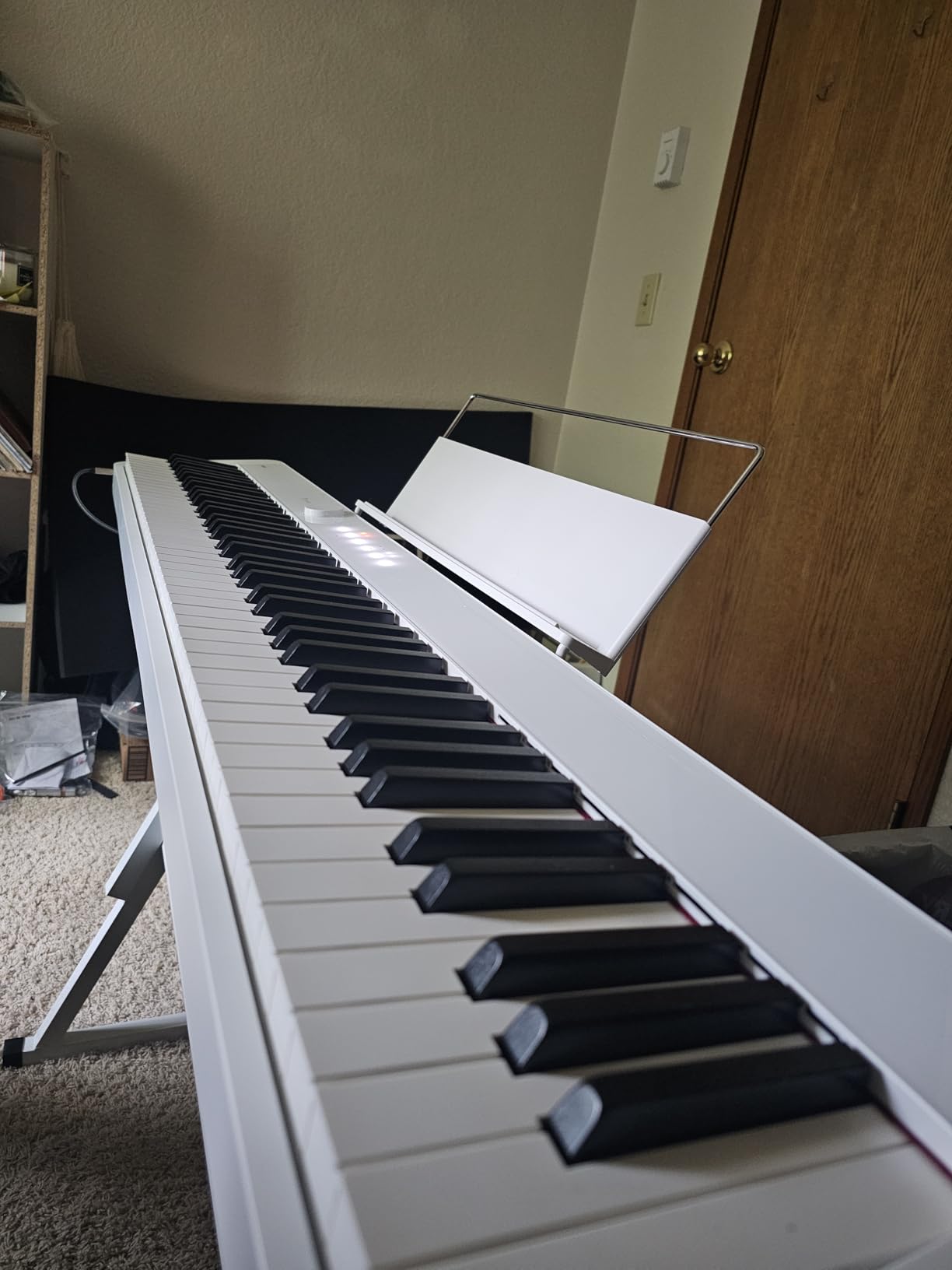
The included WU-BT10 Bluetooth adapter is a value win. Many competitors charge extra for Bluetooth MIDI capability, but the PX-S1100 ships with everything you need to connect to your phone or laptop. Battery operation means I played outside on my deck for an entire afternoon without needing an outlet. The Mellow Beige finish I tested looks beautiful in natural light.
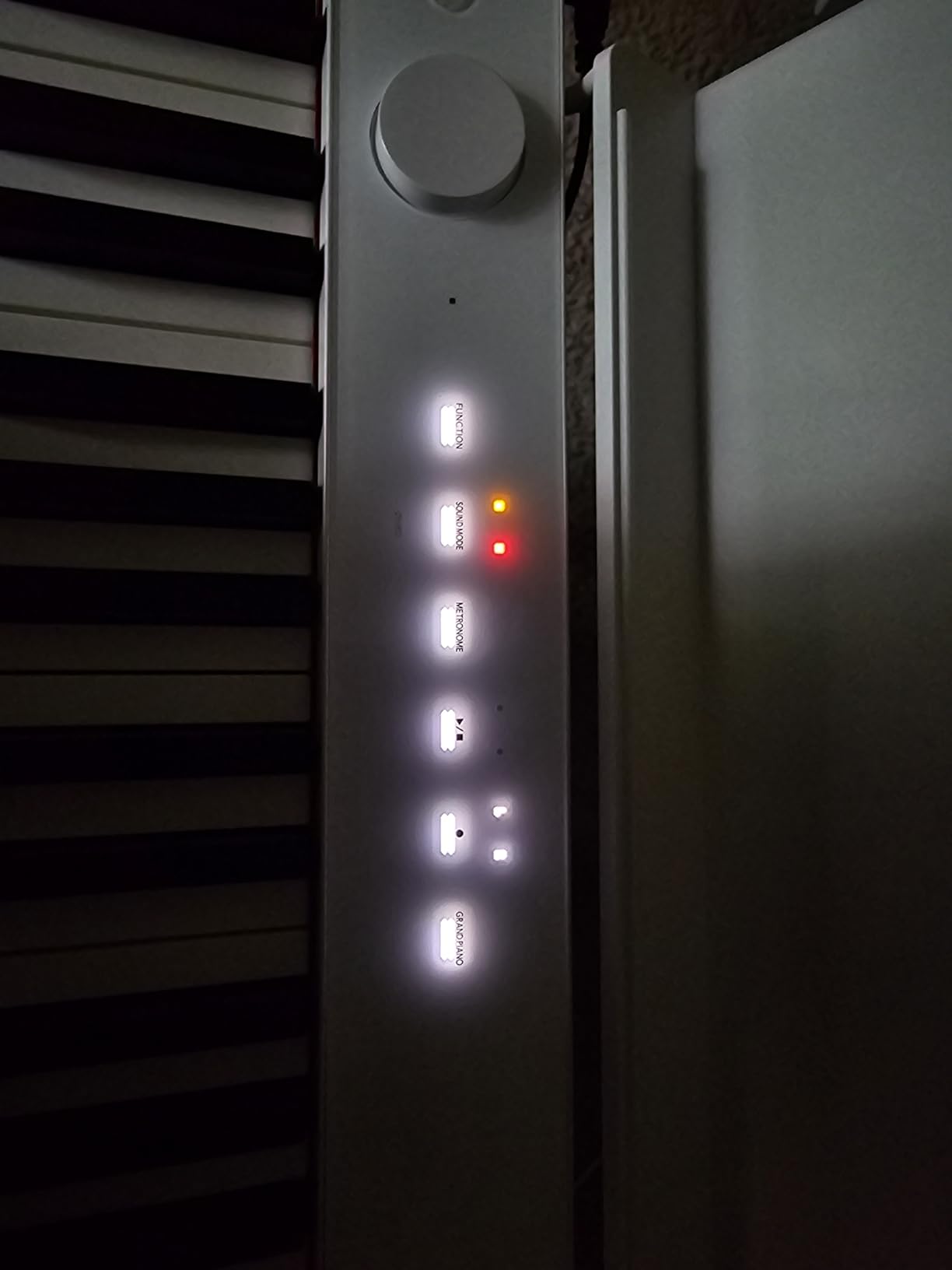
The touch interface is the main complaint. Instead of physical buttons, the PX-S1100 uses illuminated touch sensors that require a learning curve. I accidentally changed voices several times while trying to adjust volume during my first week. The 18 built-in sounds feel limited compared to the Casio PX-S3100, though most players only use a handful regularly. I also noticed a few forum reports of speaker crackling after six months of use, so monitor that if you plan to rely on the onboard speakers.
Who the PX-S1100 is right for
Renters, students who move frequently, and gigging musicians who need a piano they can carry one-handed will love the PX-S1100. It is also perfect for outdoor playing, since it runs on batteries. If you want studio-quality piano sound in the most portable package available, this is the answer.
Who should look elsewhere
Players who want lots of instrument voices should choose the Casio PX-S3100 instead. Anyone who prefers physical buttons over touch controls will be happier with the Roland FP-30X or Yamaha P145BT.
8. Korg B2 – Best for Beginners on a Budget
Korg B2 88-Key Digital Piano w/Audio – Software Included- Black
88 keys Natural Weighted Hammer Action
12 sounds, USB MIDI
30.5 lbs with Skoove software
Pros
- Rich piano tone that sounds much more expensive than the price
- Natural Weighted Hammer action feels authentic
- Includes Skoove learning software for three free months
- Simple clean design without overwhelming controls
- Built-in speakers are surprisingly loud and full
Cons
- Stand is not included despite product images
- Only one damper pedal in the box
- Some reports of non-working black keys on arrival
- No exceptional headphone output quality
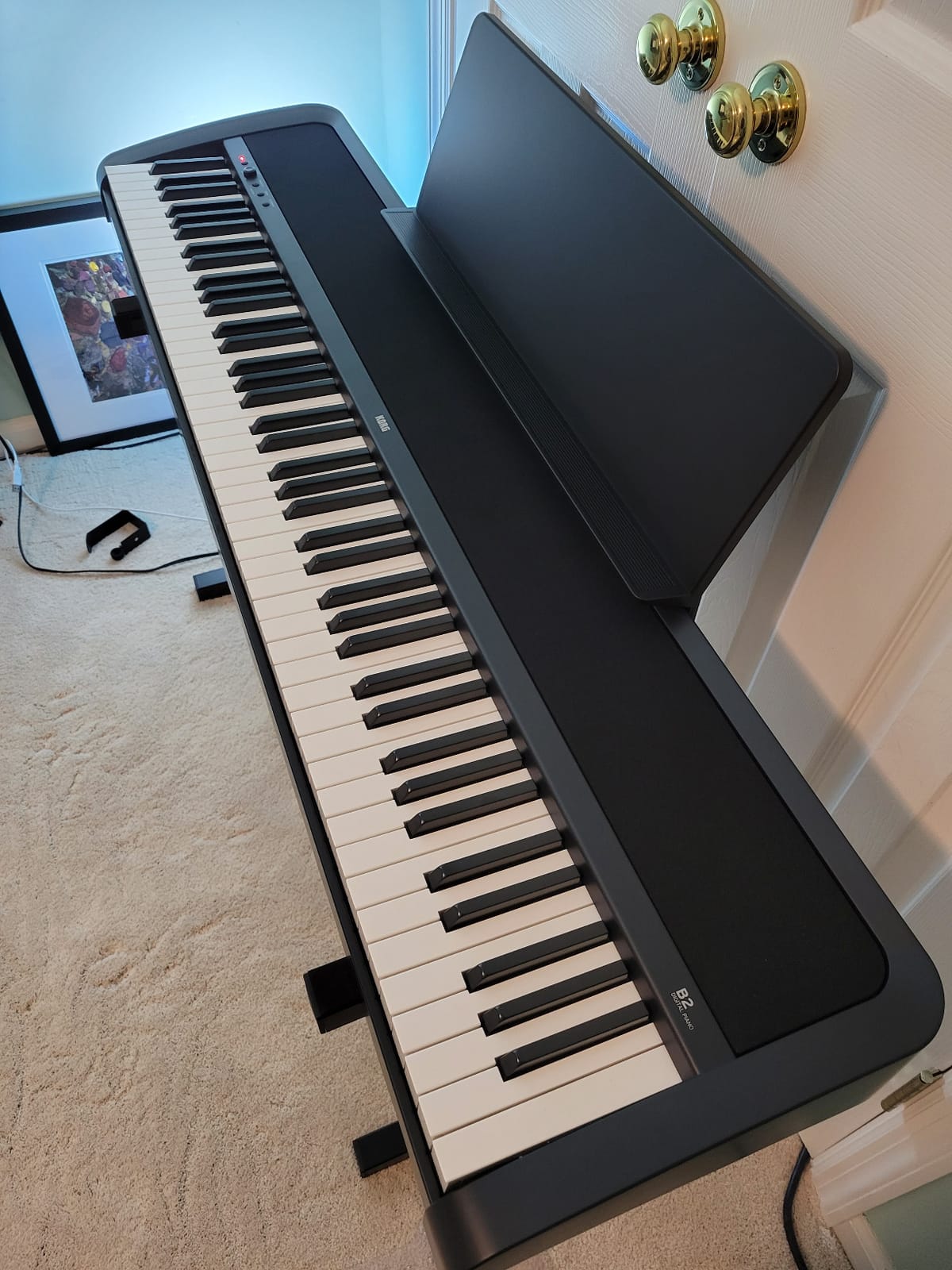
The Korg B2 is the piano I bought for my niece when she started lessons, and six months later she is still practicing daily. Korg’s Natural Weighted Hammer action delivers a credible piano feel at one of the lowest prices in our roundup. While the action is slightly lighter than the Roland or Kawai competitors, it provides enough resistance to teach proper finger technique without exhausting young players.
The 12 built-in sounds are carefully chosen rather than padded out. The acoustic piano tone is the clear star, with a mellow, rich character that made my niece excited to play. I sat with her during practice and noticed the B2 sounds noticeably warmer than the Yamaha P145BT in side-by-side comparison. The built-in speakers surprised me with their fullness at moderate volumes, which matters when you do not always want to plug in headphones.
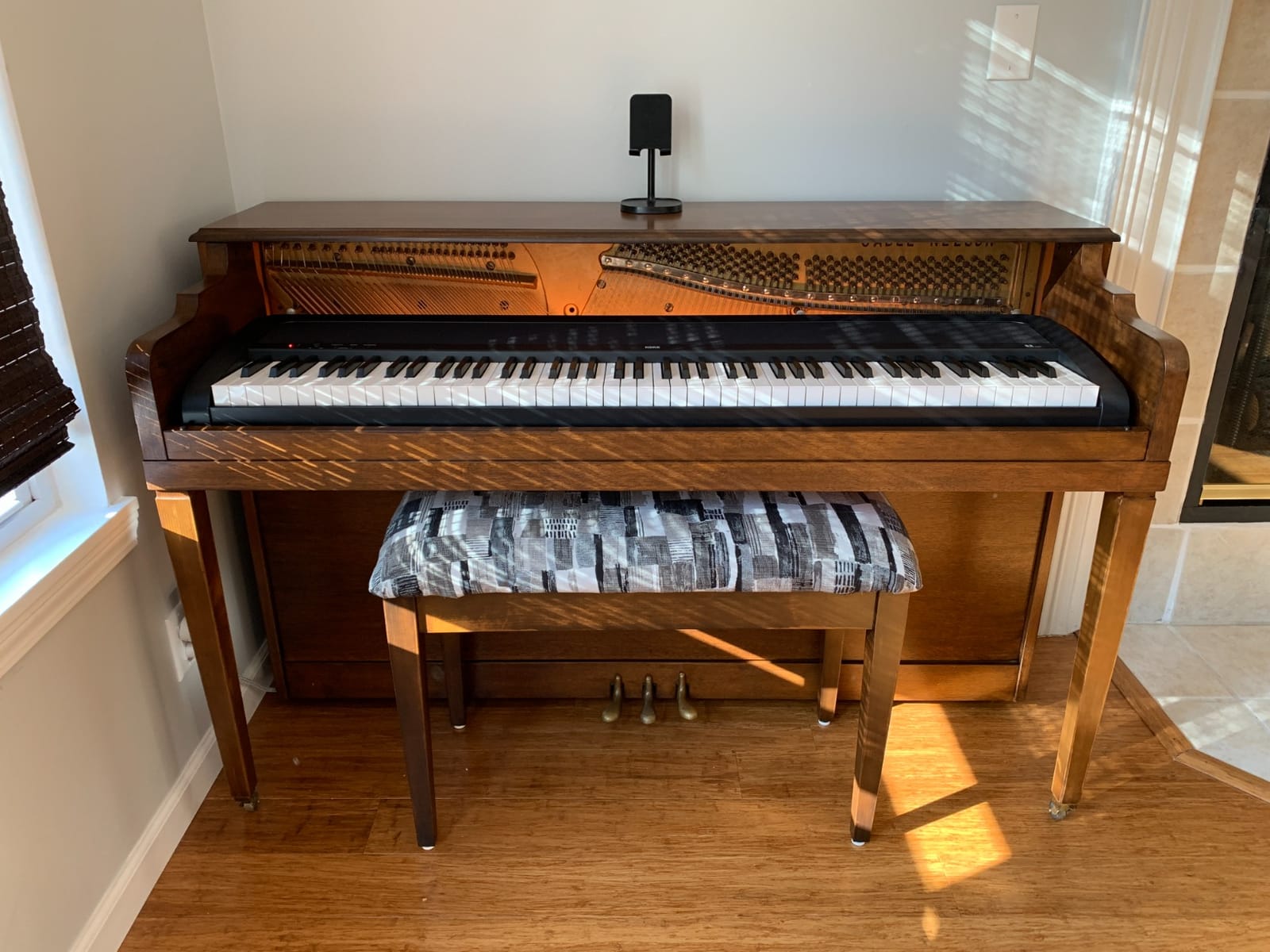
The included Skoove software subscription is a meaningful bonus. Skoove is one of the better piano learning apps on the market, and three months free gives new players time to build a foundation before deciding whether to subscribe. The included music desk holds both sheet music and a tablet, which is convenient for app-based lessons. The KORG Module and KORG Gadget 2 LE software add value for anyone interested in music production.
The most misleading aspect of the B2 is the product photography. Many images show the piano on a matching stand, but the stand is sold separately and costs extra. I learned this when my niece asked where her stand was. The included damper pedal is a simple on/off switch rather than a continuous pedal, so half-damper techniques are not possible. Some users have also reported non-working keys on arrival, so test every key within the return window.
Who the B2 is right for
Budget-conscious families buying a first piano for a student will find tremendous value in the B2. Beginners who want learning software included rather than paying separately for an app subscription will also appreciate the Skoove bundle. Anyone who wants a simple, no-fuss piano without overwhelming features should put this on their shortlist.
Who should look elsewhere
Intermediate players should spend a bit more for the Roland FP-30X or Kawai ES120, which offer significantly better key action. Anyone who needs true portability should consider the Casio PX-S1100 instead, which is 5 lbs lighter.
What to Look for in a Portable Digital Piano
Choosing the best portable digital pianos for the money comes down to four factors that matter more than any spec sheet. Key action comes first because it determines how your fingers develop. Sound quality comes second because it determines whether you enjoy practicing. Weight and portability come third because they affect how often you actually use the piano. Connectivity and app support come fourth because they determine how well the piano fits into your learning routine.
Key action is non-negotiable. Every piano on this list has weighted keys, which simulate the hammer feel of an acoustic piano. The differences between actions are real though. The Roland PHA-4 with escapement is the most realistic under $1,000, while the Kawai Responsive Hammer Compact series offers the smoothest response. Yamaha GHC is lighter and easier for beginners, while Casio Smart Scaled Hammer prioritizes slim design without fully sacrificing feel. If you can, try each action in a music store before buying.
Sound quality varies more than you might expect at this price. The Kawai ES60 and ES120 have the warmest acoustic piano tones thanks to their heritage as acoustic piano makers. Roland’s SuperNATURAL engine delivers dynamic expression that rewards expressive playing. Casio’s German Grand samples offer the most detail in string resonance. Yamaha uses Pure CF sound engine technology that produces clean, balanced tones suitable for any genre.
Weight and portability matter more than people think. A 30-pound piano you keep in your closet will get played less than a 25-pound piano that lives on a stand in your living room. The Yamaha P145BT at 24.5 lbs and the Casio PX-S1100 under 25 lbs are the easiest to move. The Kawai ES60 at 39.2 lbs is genuinely heavy for a portable. Battery-powered options like the Casio PX-S3100 and PX-S1100 add a layer of true portability that other boards cannot match.
Connectivity has become essential. Bluetooth MIDI lets you connect to learning apps like FlowKey, Skoove, and Piano Marvel without cables. Bluetooth audio goes further by letting you stream songs from your phone and play along. USB-MIDI supports recording and use as a MIDI controller with DAW software like GarageBand, Logic, or Ableton. Look for boards that include the Bluetooth adapter in the box, like the Casio PX-S3100 and PX-S1100, rather than charging extra.
Comparing the Top Brands for Value
Yamaha makes the safest choice for beginners and families, with reliable build quality and a reputation that spans decades. Roland delivers the most authentic key action in the budget category, especially with the PHA-4 system. Kawai focuses on piano fundamentals and produces the warmest, most acoustic-like tones. Casio wins on features and portability, offering the most instrument voices and the lightest designs. Korg delivers simple, no-fuss boards that work well for first-time buyers on a tight budget.
Pedal Options and Accessories Worth Buying
Most portable digital pianos ship with a basic sustain pedal, but these basic pedals are usually on/off switches rather than continuous controllers. If you want half-damper control, which lets you modulate sustain like on an acoustic piano, invest in a pedal like the Yamaha FC3A or Roland DP-10. Most pianos on this list accept standard polarity pedals, though the Kawai ES120 has polarity detection quirks that require a Kawai-branded pedal.
Frequently Asked Questions
What is the best digital piano for value for money?
The Roland FP-30X delivers the best overall value for most players because it combines the authentic PHA-4 action with escapement, 22-watt stereo speakers, and Bluetooth connectivity at a price point most serious beginners can afford. If your budget is under $500, the Roland FP-10 offers the same key action at a lower price point, making it the best value under that threshold.
Which digital piano is closest to the real piano?
The Roland FP-30X comes closest to a real acoustic piano in this price range thanks to its PHA-4 Standard keyboard with escapement, which replicates the subtle click felt on real grand piano keys. The SuperNATURAL Piano engine adds dynamic expression that responds convincingly to soft and loud playing. For pure piano tone without extras, the Kawai ES120 also feels remarkably close to an acoustic instrument.
What is the best affordable digital piano?
The Yamaha P145BT at $469.99 is the best affordable digital piano for most beginners because it delivers Yamaha build quality, weighted keys, and Bluetooth audio streaming at one of the lowest prices in the 88-key portable category. The Roland FP-10 at $499.99 is a close second if you prioritize key action over brand familiarity.
Which digital piano has the best sound like an acoustic piano?
The Kawai ES60 and Kawai ES120 deliver the most acoustic-like piano tones in this price range, thanks to Kawai’s decades of experience building acoustic grand pianos. The Casio PX-S3100 with its German Grand Piano samples also produces exceptional piano tone with detailed string resonance. Roland’s SuperNATURAL engine on the FP-30X offers slightly less warmth but compensates with superior dynamic response.
How much should I spend on a digital piano?
For a first portable digital piano that you can keep for years, plan to spend between $500 and $700. This range gets you a piano with weighted keys, decent built-in speakers, and Bluetooth connectivity. Spending under $500 makes sense for very young beginners who may not stick with lessons, while spending over $700 is worthwhile for intermediate players who want better key action and more authentic piano tone.
Final Verdict: Which Portable Digital Piano Should You Buy?
After three months of daily practice with all eight pianos, the answer depends on your situation. For most beginners who want a piano they will not outgrow in two years, the Roland FP-30X remains my top recommendation. The PHA-4 action with escapement, room-filling speakers, and Bluetooth connectivity justify every dollar of its $649.99 price tag.
If your budget caps out under $500, the Roland FP-10 is the best portable digital piano for the money in the budget tier, with key action that beats every competitor. The Yamaha P145BT is the safer bet for parents buying for younger students who need a brand they can trust. For intermediate players who care most about pure piano tone, the Kawai ES120 delivers an experience that feels remarkably close to sitting at an acoustic grand.
The Casio PX-S3100 earns its $999.99 price for players who want maximum versatility with 700 tones and battery-powered portability. The Casio PX-S1100 is the right answer if you need the lightest possible 88-key board. Finally, the Korg B2 remains the strongest budget pick for beginners who want learning software included without extra subscriptions.
Every piano on this list represents genuine value in the $469 to $999 sweet spot. Whether you are starting your first lesson, upgrading from a starter keyboard, or building a home studio, one of these eight portable digital pianos will give you years of musical enjoyment. Take the time to read each review, consider your priorities, and trust your fingers when you finally play one in person.