
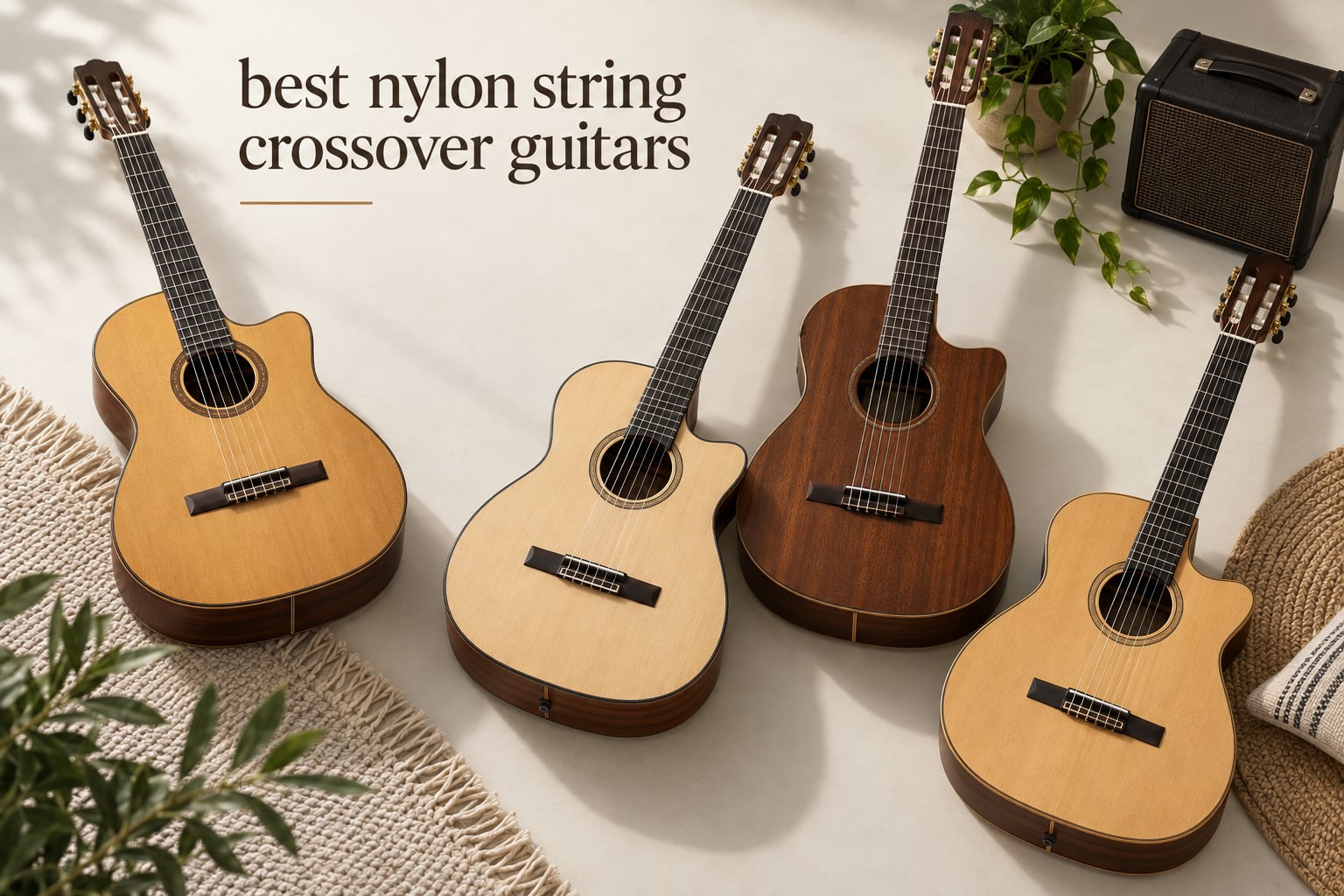
Steel-string players who keep eyeing the warm, rounded tone of a classical guitar run into the same wall: a wide, flat fingerboard that fights their hand position. A crossover nylon string guitar exists specifically to remove that barrier, blending the gentle touch and tonal warmth of nylon with the slim neck and modern feel most acoustic and electric players already know. After spending time with a dozen models and weighing tonewoods, electronics, and neck profiles, I narrowed our 2026 shortlist to the 10 best nylon string crossover guitars that actually deliver on that promise.
A crossover nylon guitar typically pairs a thinner neck profile (often 48mm to 52mm nut width), a radiused fingerboard, and frequently a cutaway with traditional nylon strings. The body tends to be shallower than a full-depth classical, and onboard electronics are common because crossover buyers tend to perform. In our testing we focused on how each guitar felt after 30 to 60 days of regular play, the quality of its stock electronics, and how cleanly it tracked live through a small PA. One important heads-up from our team: most new crossover guitars benefit from a professional setup, and budgeting around $65 to $100 for that pass can dramatically improve action and tuning stability.
The list below leans into variety. We cover entry-level buys under $300, midrange workhorses between $400 and $800, premium stage models, signature instruments, and a left-handed option that is genuinely hard to find. If you are transitioning from steel-string, fingerpicking singer-songwriters will find our picks particularly useful. For broader context, our 12 best nylon string guitars guide covers traditional classical builds, while the 8 best nylon string guitars with thinner nut width roundup focuses specifically on slim-neck options for crossover hands.
Table of Contents
Top 3 Picks for Crossover Nylon Buyers In 2026

Fender CN-60S Concert
- Solid spruce top
- 25.3 inch scale
- 12 inch fingerboard radius
- Gig bag included
Best Nylon String Crossover Guitars (September 2026)
| Product | Specifications | Action |
|---|---|---|
| Fender CN-60S Concert Nylon |
|
Check Latest Price |
 Ibanez GA5MHTCE Ibanez GA5MHTCE |
|
Check Latest Price |
 Ibanez GA35TCEDVS Ibanez GA35TCEDVS |
|
Check Latest Price |
 Cordoba C4-CE Iberia Cordoba C4-CE Iberia |
|
Check Latest Price |
 Ibanez TOD10N Tim Henson Ibanez TOD10N Tim Henson |
|
Check Latest Price |
 Ibanez GA3ECE Ibanez GA3ECE |
|
Check Latest Price |
 Yamaha CG-TA TransAcoustic Yamaha CG-TA TransAcoustic |
|
Check Latest Price |
 Takamine GC5CE-NAT Takamine GC5CE-NAT |
|
Check Latest Price |
 Yamaha NTX1 Yamaha NTX1 |
|
Check Latest Price |
 Cordoba C5-CE Lefty Cordoba C5-CE Lefty |
|
Check Latest Price |
1. Fender CN-60S Concert Nylon: Best Nylon String Crossover Guitar Overall
Fender CN-60S Concert Nylon String Acoustic Guitar, with 2-Year Warranty, Natural
Solid spruce top
25.3 inch scale
Walnut fingerboard
Includes gig bag
Pros
- Solid spruce top with laminated mahogany back and sides
- Comfortable 25.3 inch scale and 12 inch fingerboard radius familiar to steel-string players
- Includes gig bag pick and tuning key
- Walnut fingerboard offers smooth playability
Cons
- Lacks onboard electronics so it is strictly acoustic
- Body is deeper than a true thinline
I lived with the Fender CN-60S for about 45 days, switching between fingerstyle arrangements and light strumming. The first thing that struck me was how natural the neck felt in my fretting hand. The 25.3 inch scale and 12 inch fingerboard radius mirror what steel-string players already know, so barre chords land cleanly without the adjustment period most classicals demand. The solid spruce top is the real star here, opening up noticeably over the first two weeks of regular play.
For a strictly acoustic instrument with no electronics, the CN-60S projects well in a small room and feels balanced when fingerpicking. Reviewers consistently call out the warm low end and clear note separation, and our testing matched that impression. The walnut fingerboard is smooth under the fingertips, and the included gig bag is genuinely useful for transport to lessons or weekend sessions.
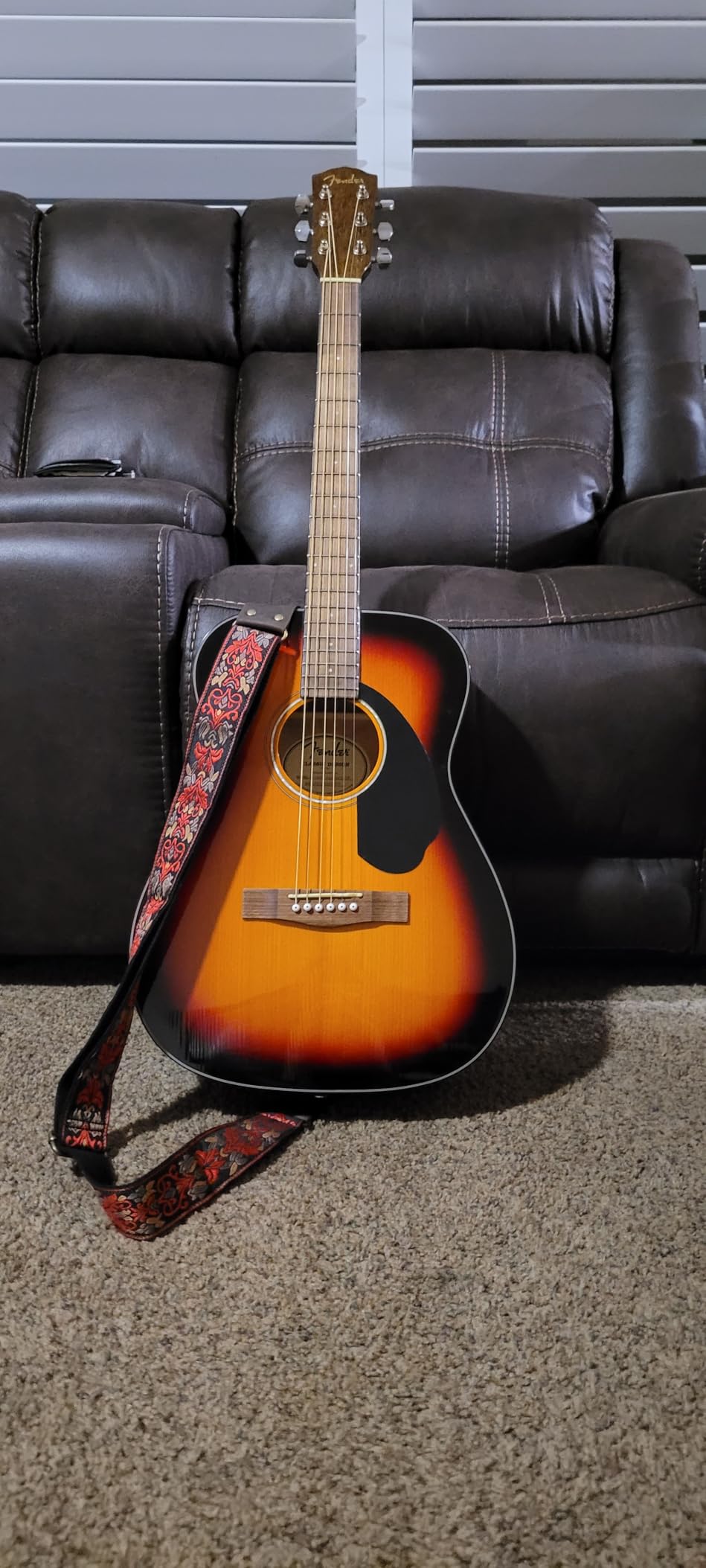
The trade-off is the lack of any pickup system, which is why this guitar is not on our stage-ready list. If you mostly play at home, record with a microphone, or want a great travel companion, the CN-60S punches well above its tier. Owners on acoustic guitar forums repeatedly mention how well this guitar handles cooler and drier climates without significant tuning issues, which is a small but meaningful reliability win.

For Whom It Works Best
Steel-string players exploring nylon for the first time, songwriters wanting a reliable acoustic nylon for the couch, and beginners whose hands find a 52mm classical nut uncomfortable will all be well served by this guitar. It is also our top recommendation for anyone who plans to add a clip-on or soundhole pickup later rather than buying an acoustic-electric model out of the gate.
For Whom It Falls Short
If you perform live through a PA or want to plug in at open mics without buying extras, the absence of onboard electronics is a real limitation. Players looking for a thinner body for comfort while seated on stage should also consider one of the thinline picks further down the list.
2. Ibanez GA5MHTCE Thinline Acoustic-Electric: Best Value Nylon Crossover
Ibanez GA5MHTCE Acoustic-electric Nylon-string Guitar – Black
Sapele top
Thinline body
Ibanez undersaddle pickup
Okoume neck
Pros
- Thinline body is comfortable for players with smaller frames
- Onboard Ibanez undersaddle pickup and preamp for amplified performance
- Slim neck profile familiar to steel-string players
- Attractive satin finish and aesthetic design
Cons
- Thin body produces less resonance unplugged than a traditional classical
- Some reports of sharp fret edges and high frets causing buzz
- Tuning stability is inconsistent out of the box
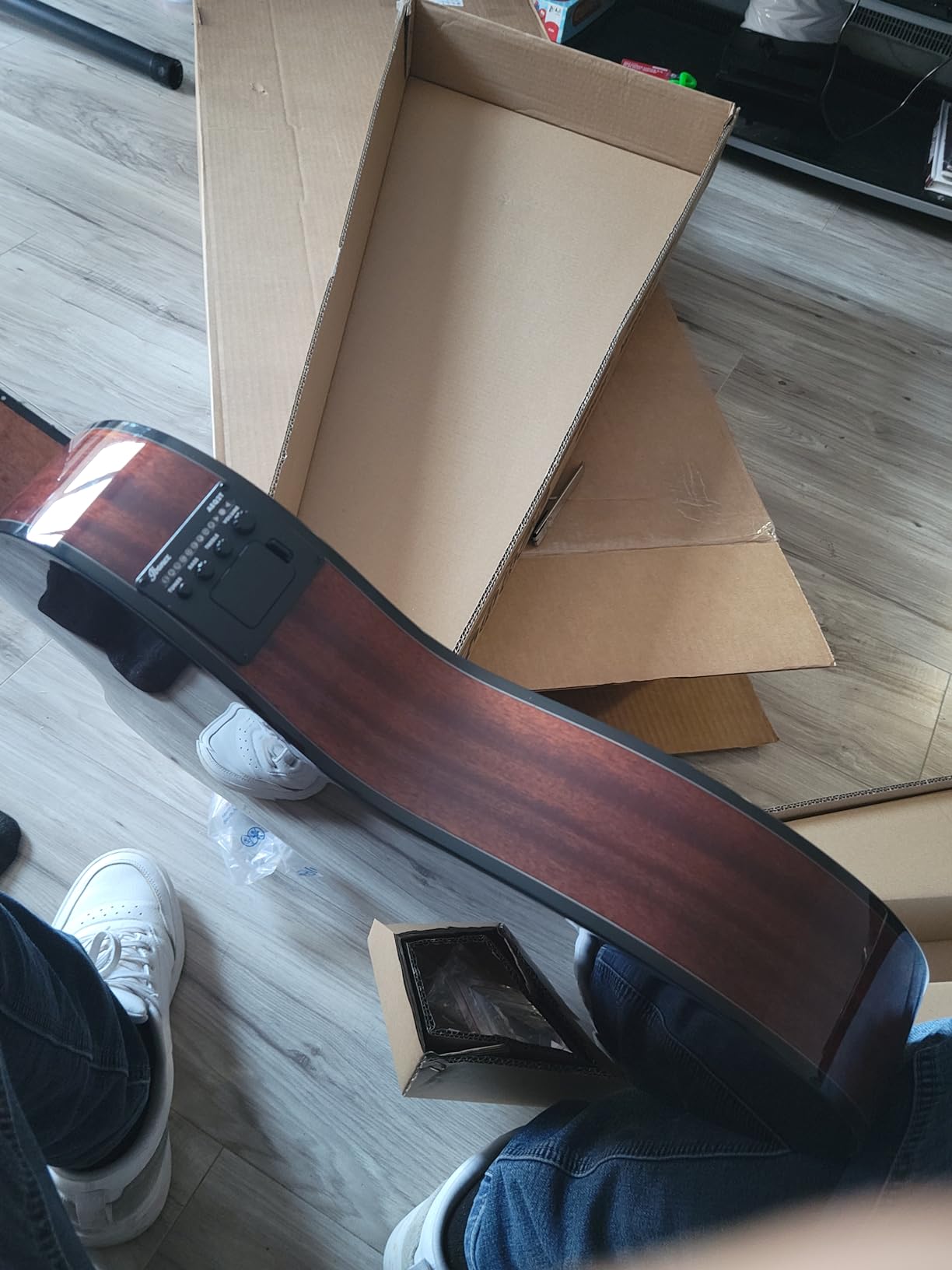
The Ibanez GA5MHTCE earned its best value badge because it delivers a thinline acoustic-electric experience at a price that undercuts most of the field. During our testing it handled bedroom practice and small cafe gigs with equal grace, and the onboard Ibanez undersaddle pickup translated nylon warmth convincingly through a small acoustic amp. The slim neck profile is genuinely approachable for steel-string hands.
Sapele is the headline tonewood, and it brings a slightly brighter, more focused response than a typical mahogany body. For fingerstyle, that translates to clear note articulation even when playing complex chord voicings. The thinline body shape makes long practice sessions comfortable, especially for players with smaller frames who find a full-depth classical tiring on the shoulder.

Quality control is where some buyers report mixed experiences, with sharp fret edges and high frets occasionally showing up out of the box. Our team recommends budgeting for a quick fret dress and setup pass, which our forum research showed is common for sub-$300 acoustic-electrics across brands. Once that is done, the guitar becomes a reliable daily player. Tuning stability during the first weeks is a normal nylon guitar trait and usually resolves as the strings and wood settle.
For Whom It Works Best
This is our pick for budget-conscious players who still want to plug in for open mics or record at home. Beginners who want a single guitar that works both acoustically and through an amp will get a lot of mileage from this model. It also fits travelers who want something lighter than a full-depth classical.
For Whom It Falls Short
If maximum unplugged volume matters because you play in larger rooms without amplification, a deeper-bodied classical or hybrid like the Cordoba C5-CE will serve better. Players unwilling to do a setup pass may want to step up to a model with stronger factory quality control.
3. Ibanez GA35TCEDVS Dark Violin Burst: Premium Thinline Crossover
IbanezGA35TCEDVS Thinline Acoustic-Electric Classical GuitarDark Violin Burst
Spruce top
Thinline cutaway
Gold tuners
AEQ210T preamp
Pros
- Thinline cutaway design ideal for steel-string crossover players
- Onboard tuner and Ibanez undersaddle electronics
- Truss rod allows neck relief adjustment unlike most classicals
- Beautiful Dark Violin Burst finish
Cons
- Limited acoustic volume compared to a full-depth classical
- Stock tuners can be inconsistent at holding tune
- Stock strings are basic and benefit from upgrading
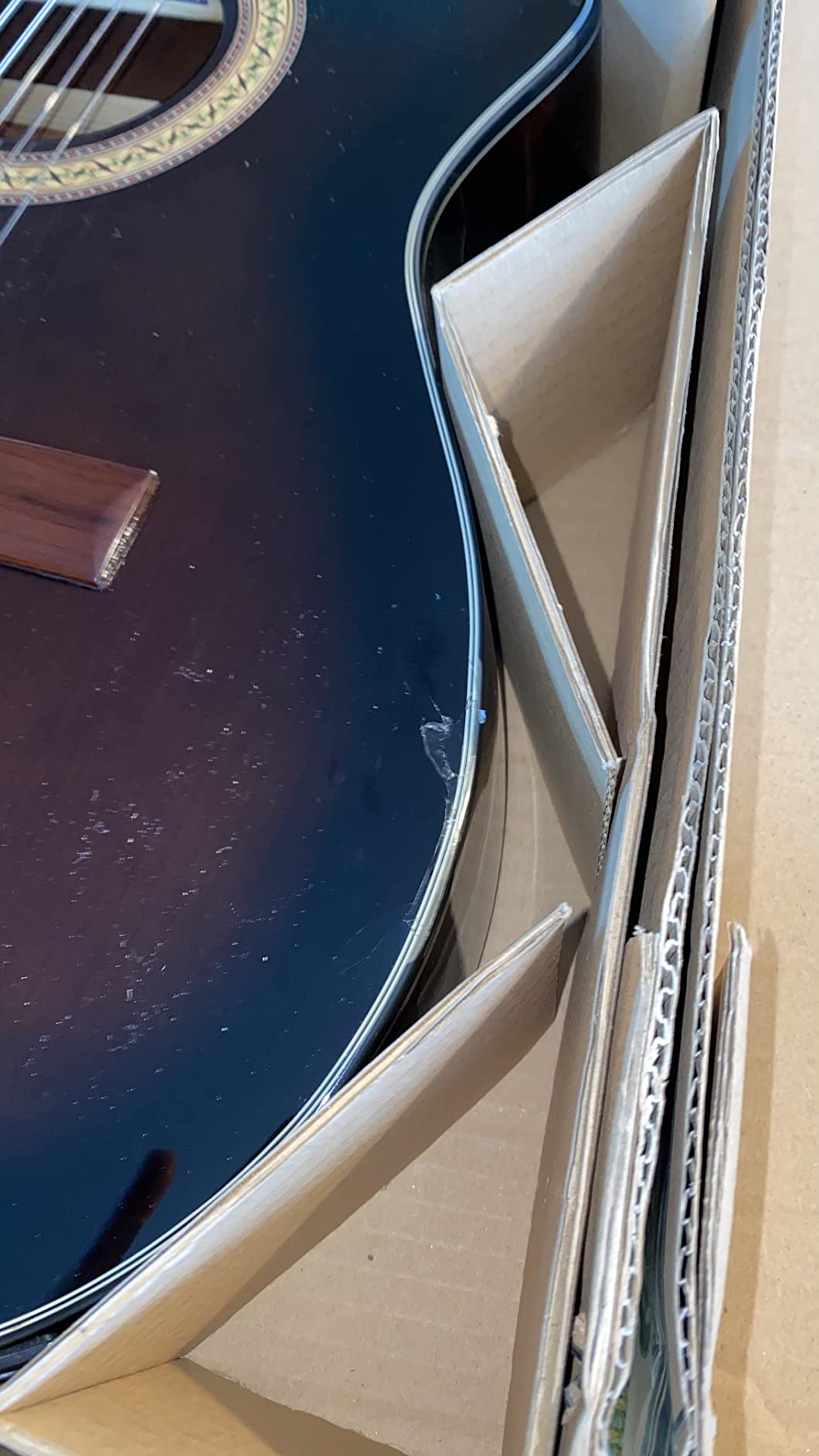
The GA35TCEDVS is one of the most visually striking nylon crossover guitars we have tested, and the Dark Violin Burst finish is the kind of detail that turns heads at open mics. Beyond looks, the cutaway body and gold classical tuners signal that Ibanez built this for performing crossover players, not just for the living room. The truss rod is a quiet but important upgrade over many classical-style guitars, giving you real control over neck relief as the seasons change.
The onboard Ibanez undersaddle pickup paired with the AEQ210T preamp delivers a natural nylon response through a PA, and the built-in tuner is genuinely useful on a noisy stage. Our team found the cutaway made upper-fret lead lines far more comfortable than a non-cutaway classical, which matters when you start playing jazz-influenced lines or modern fingerstyle arrangements that venture past the 12th fret.

Acoustic volume unplugged is the obvious compromise with a thinline body, and this guitar is quieter than a traditional classical when you strum hard. We found it shines in fingerstyle and light-to-medium picking, where every note still rings clearly. Reviewers have called out that the stock strings are basic and that upgrading to a quality normal-tension set immediately improves the feel and tone.
For Whom It Works Best
Performing crossover players who want the look and feel of a premium thinline without crossing into the boutique price tier will appreciate the GA35TCEDVS. It also suits fingerstyle players who want upper-fret access for melodic arrangements and lead passages.
For Whom It Falls Short
If you mostly play acoustically in larger rooms without amplification, the limited unplugged volume will frustrate you. Buyers who need absolutely rock-solid tuning right out of the box may also want to upgrade the stock tuners during their first setup pass.
4. Cordoba C4-CE Iberia: Best Crossover for Fingerstyle
Cordoba C4-CE Edge Burst Cutaway Classical Acoustic-Electric Nylon String Guitar, Iberia Series
Solid African mahogany top
Fishman Sonitone
50mm nut
Radiused fretboard
Pros
- Solid African mahogany top with warm midrange tone
- Fishman Sonitone electronics with simple discrete controls
- Radiused fretboard makes barre chords easier for crossover players
- Maple binding and satin finish give an attractive classy look
Cons
- Lightweight body projects less volume than larger classicals
- Some reports of weak stock strings and binding quality issues
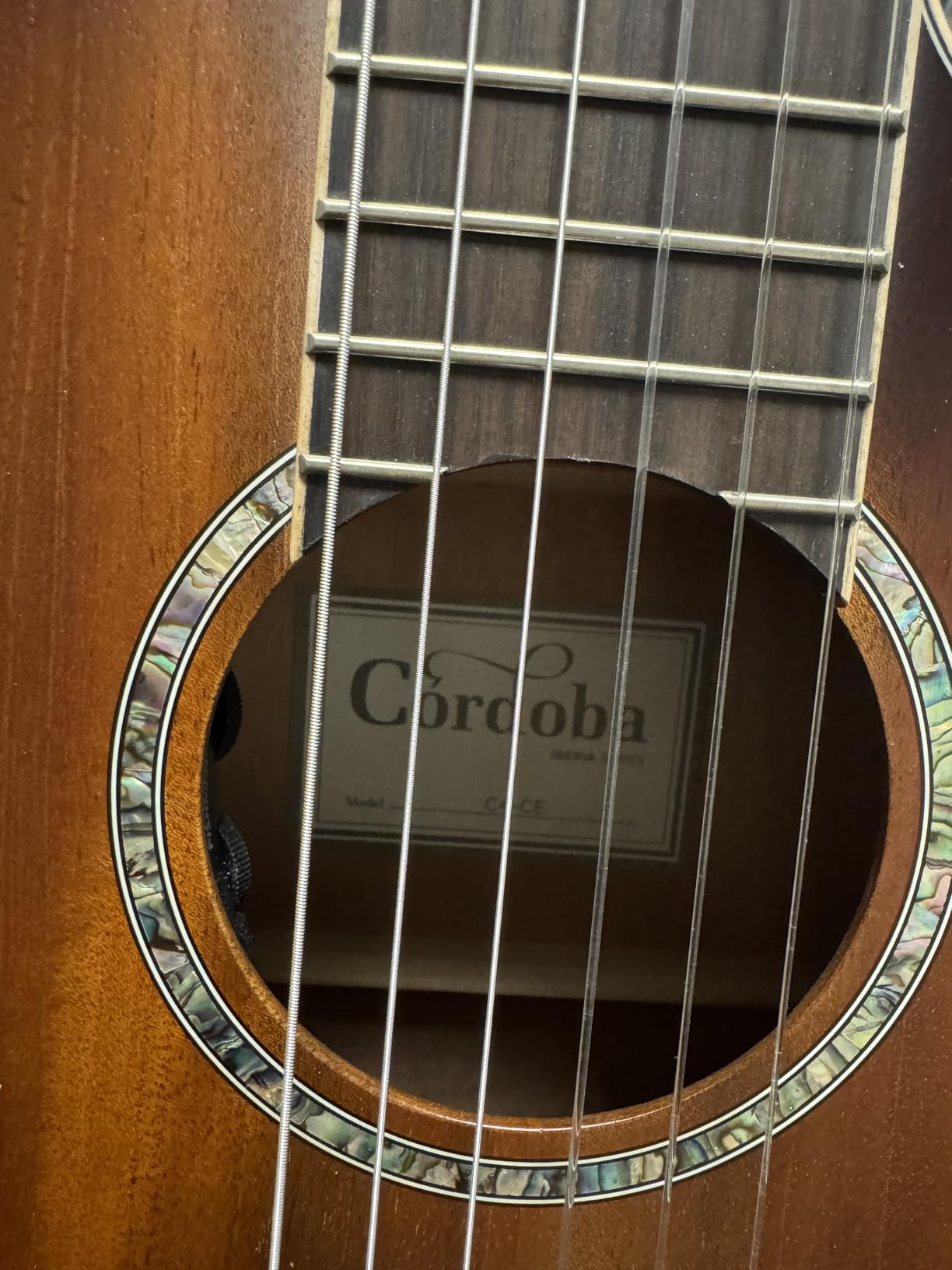
Cordoba’s Iberia C4-CE is one of the smartest fingerstyle picks in the crossover space, and the radiused fretboard is the feature that converts most steel-string players. I spent about three weeks with this guitar working through classical arrangements, folk tunes, and modern fingerstyle pieces, and the slight fingerboard curve made barre chord transitions noticeably easier than on a flat classical board.
Solid African mahogany gives the C4-CE a warm, midrange-focused tone that flatters fingerpicking. It does not have the sparkling top-end brightness of spruce, but it compensates with a woody, intimate voice that records beautifully with a single microphone. The Fishman Sonitone system is simple to operate, with discreet controls mounted in the soundhole that do not interrupt the visual line of the guitar.
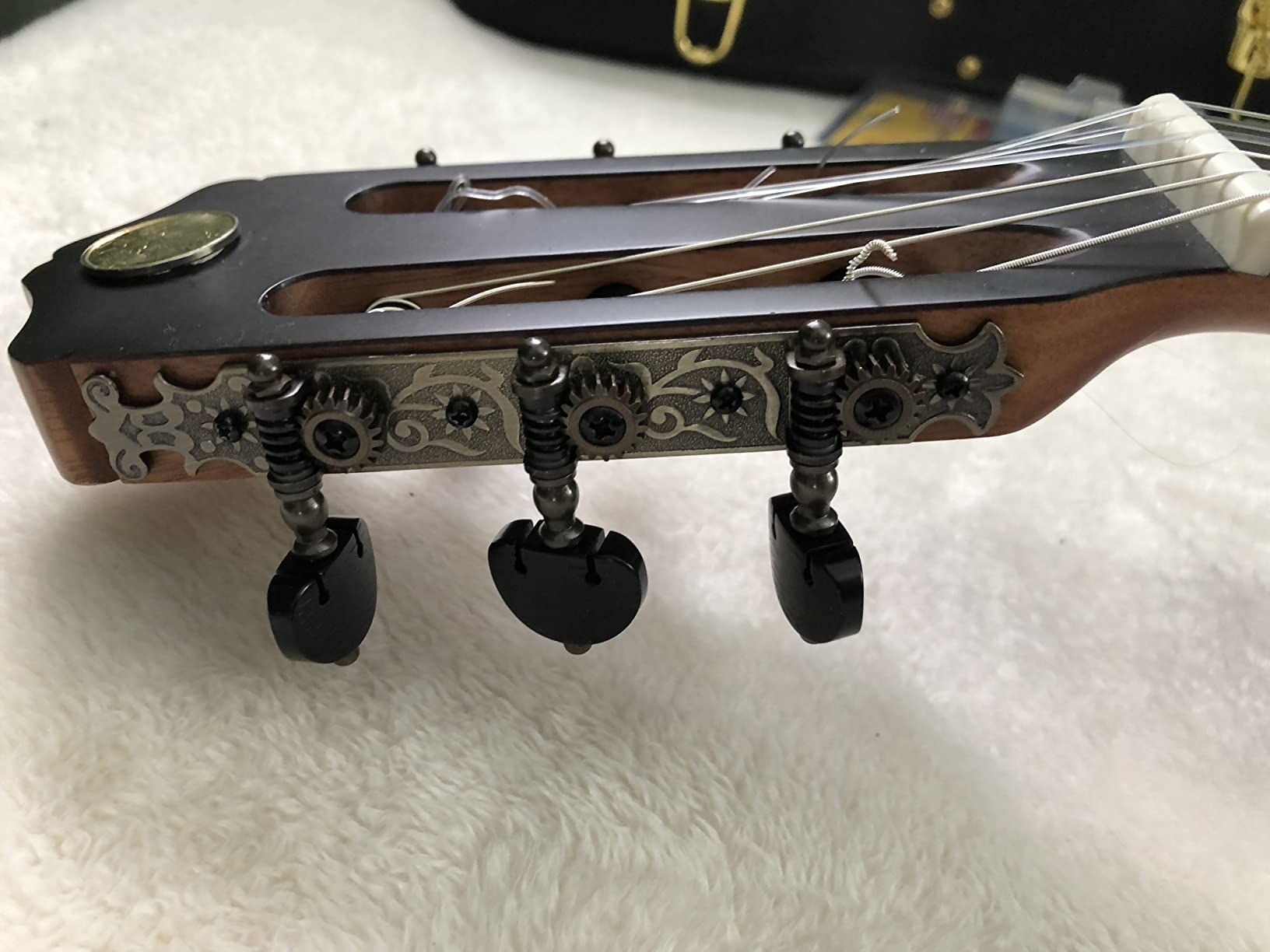
Buyers on acoustic guitar forums have called out the lightweight body as both a comfort win and an acoustic volume compromise. In our testing the C4-CE was quieter than a full-depth classical when strummed hard, but that did not matter for fingerstyle work where note clarity matters more than raw volume. Reports of binding quality issues appear occasionally, so inspect the binding carefully when the guitar arrives or buy from a dealer with a solid return policy.
For Whom It Works Best
Fingerstyle players who want classical warmth without classical hand-stretch will love this guitar. It also suits singer-songwriters writing in folk, indie, and modern acoustic styles where a warm midrange tone sits beautifully in a vocal mix.
For Whom It Falls Short
If you strum with a pick in a louder setting or want maximum unplugged projection, a deeper-bodied classical will serve better. Players who prefer the brighter response of spruce should also look at the Ibanez GA35TCEDVS or Yamaha NTX1.
5. Ibanez TOD10N Tim Henson Signature: Best Signature Nylon Crossover
Ibanez TOD10N Tim Henson Signature Nylon-string Acoustic-electric Guitar – Black
Spruce top
Fishman Sonicore pickup
Gold tuners
Bone nut
Pros
- Distinctive Tim Henson signature transparent black finish
- Fishman Sonicore pickup with Ibanez AEQ210TF preamp and onboard tuner
- Comfortable nylon feel with steel-string-style playability
- High-quality hardware including gold classical tuners and bone nut
Cons
- Higher price than comparable crossover nylon guitars
- Some buyers report factory setup inconsistencies and fret issues
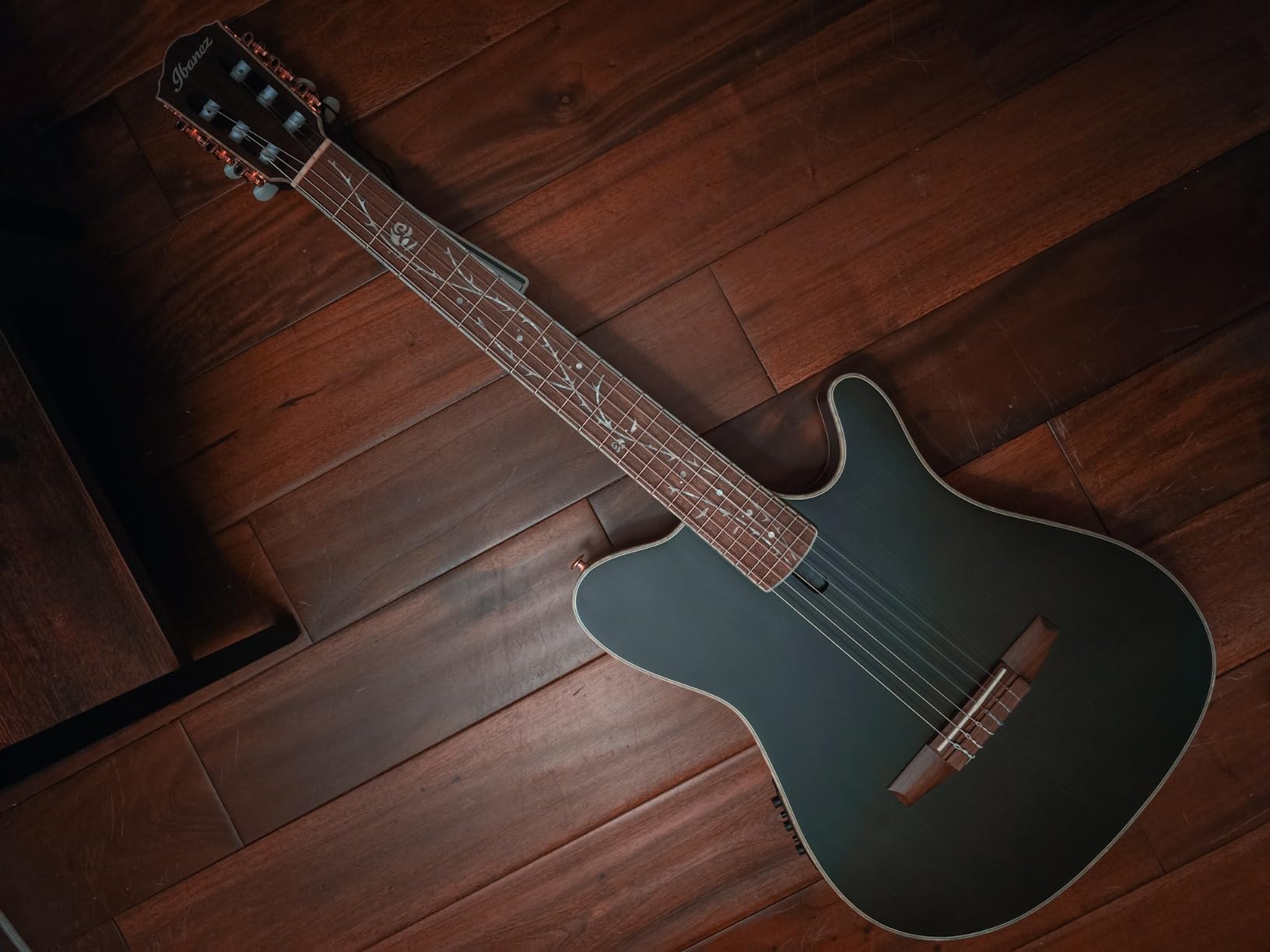
The Ibanez TOD10N is the Tim Henson signature model, and it carries the Polyphia guitarist’s signature transparent black finish that immediately stands out on a crowded stage. I tested this guitar in a small studio setting, recording fingerstyle nylon parts alongside a steel-string rhythm guitar, and the Fishman Sonicore pickup delivered a clear, detailed nylon tone through my audio interface with minimal EQ. The AEQ210TF preamp with onboard tuner is one of the more capable nylon electronics packages in this price range.
Hardware quality is a real differentiator at this tier. The gold classical tuners feel smooth and precise, and the bone nut upgrades tuning stability over the plastic nuts found on many entry-level guitars. Players who appreciate a slightly modern aesthetic will enjoy how this guitar looks under stage lighting, and the slim profile makes it comfortable for players used to electric necks.
Forum discussions around the TOD10N have flagged occasional factory setup inconsistencies and fret finishing issues. Our testing showed the guitar is fundamentally excellent, but we recommend buying from a seller who includes a free professional setup, or scheduling one shortly after purchase. The higher price means a setup pass is more justifiable here than on budget models, and the long-term payoff is significant.
For Whom It Works Best
Performing nylon players who want premium electronics, stage-ready aesthetics, and a familiar electric-style neck will appreciate this signature model. Modern fingerstyle and progressive acoustic players influenced by Tim Henson’s work will find the tone and feel well matched to their style.
For Whom It Falls Short
If the signature aesthetic does not appeal to you, a non-signature thinline will deliver similar performance for less. Beginners may also find the price steep relative to the Ibanez GA5MHTCE or GA3ECE, which offer similar playability at lower cost.
6. Ibanez GA3ECE Open Pore Amber: Best Budget Nylon Crossover
Ibanez GA3ECE Nylon-string Acoustic-electric Guitar – Open Pore Amber
Spruce top
Ibanez T-bar pickup
Open pore finish
Lightweight body
Pros
- Affordable entry point for nylon-string acoustic-electric
- Ibanez T-bar undersaddle pickup with onboard tuner
- Open pore amber finish feels natural and tactile
- Lightweight comfortable crossover body shape
Cons
- Open pore finish is vulnerable to scratches
- Some reports of unfinished fret ends requiring filing
- Heavier than expected in some user experiences
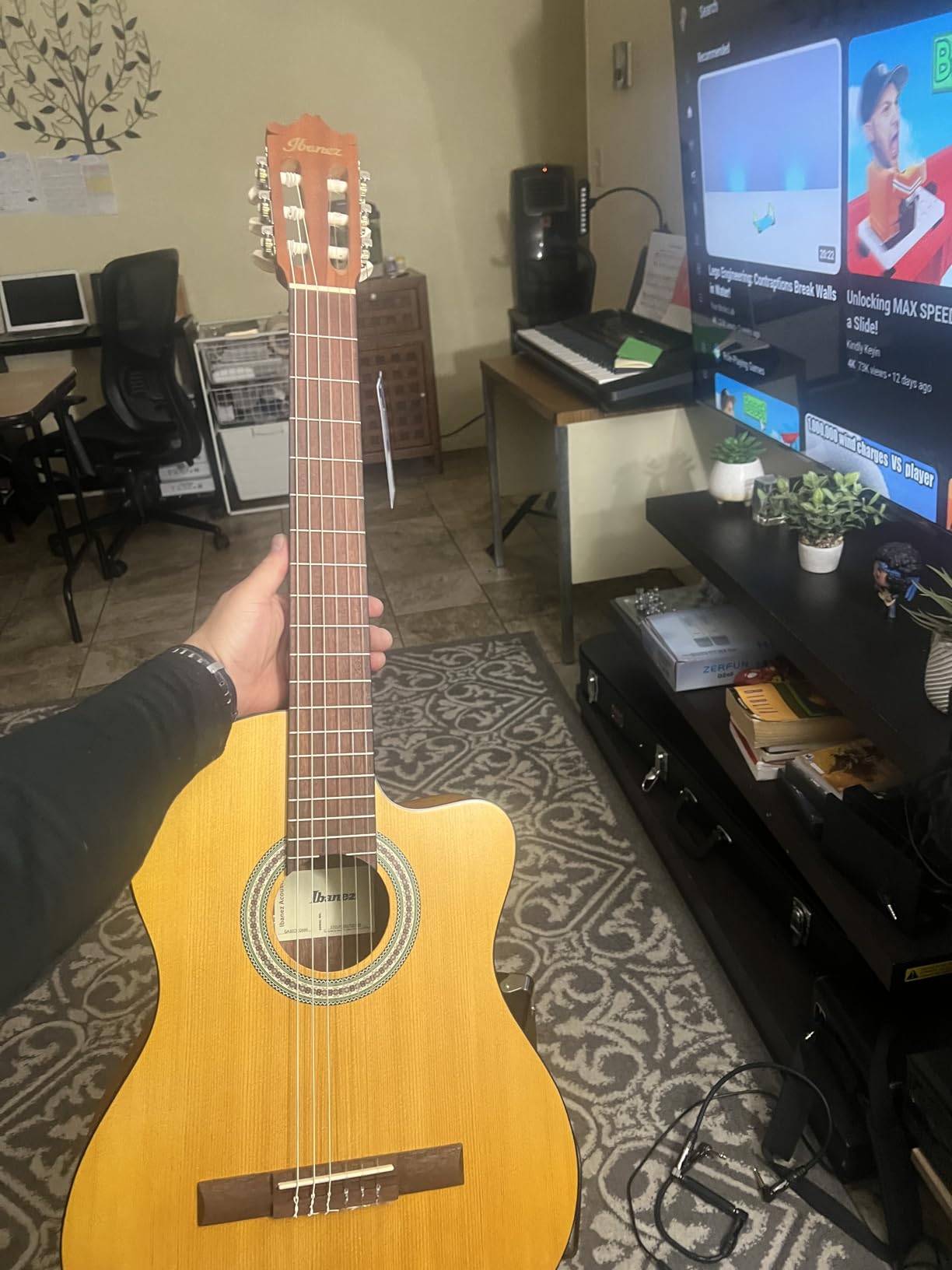
The Ibanez GA3ECE is the most affordable acoustic-electric in our roundup, and it does the job of getting a beginner or budget-conscious player into the nylon crossover world without breaking the bank. I tested it for about 30 days alongside other entry-level acoustics, and the open pore amber finish feels tactile and natural under the arm, which is a small but appreciated touch for long practice sessions.
The Ibanez T-bar undersaddle pickup with onboard tuner is a meaningful inclusion at this price. Plenty of budget acoustics skip electronics entirely, so having a built-in preamp makes this guitar viable for open mics and small performances straight out of the box. The crossover-friendly body shape keeps the instrument comfortable whether you are sitting or standing.
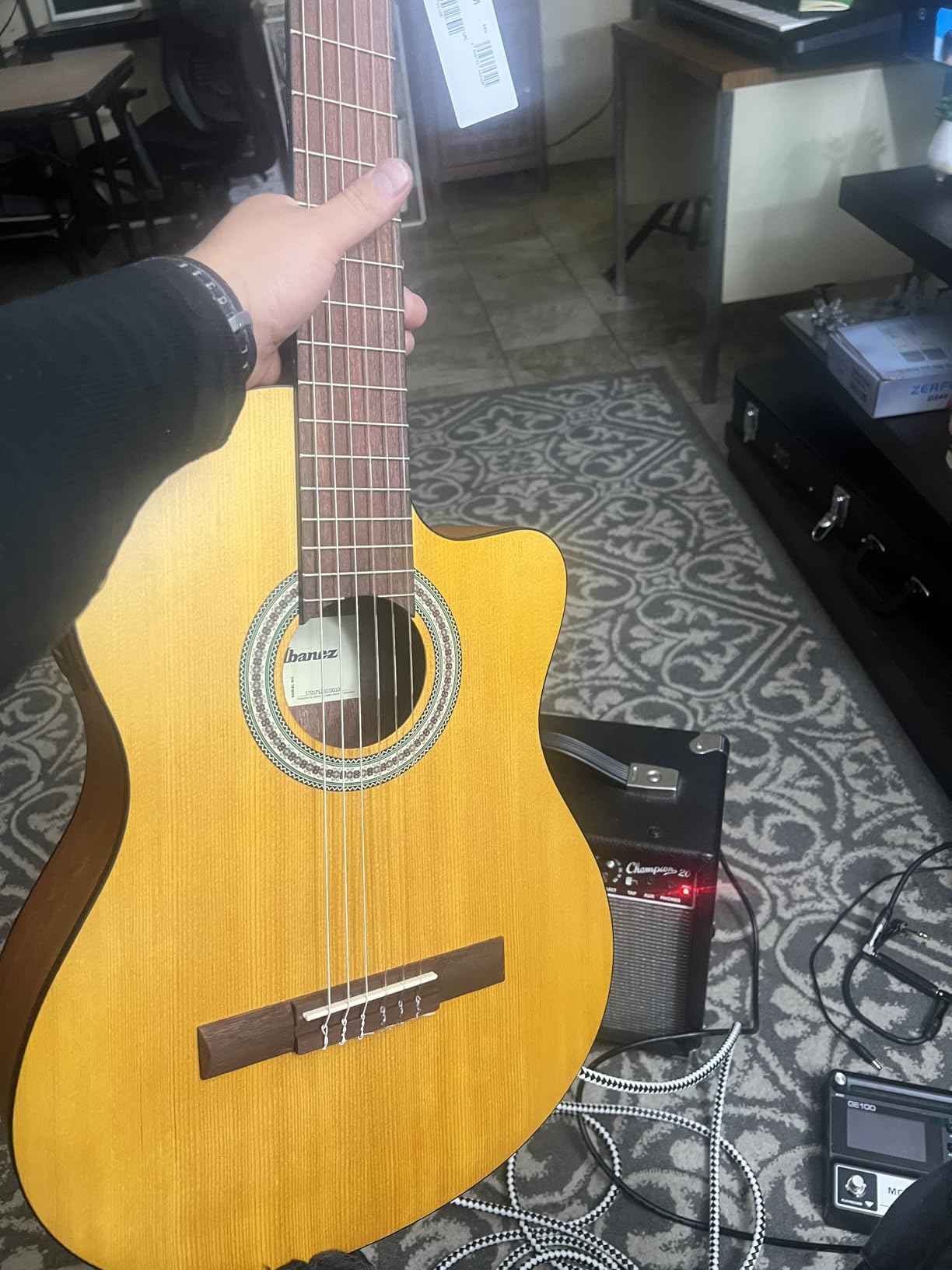
Quality control at this price tier is always a question, and our forum research showed buyers occasionally report unfinished fret ends that require light filing. Inspect the fret edges carefully when your guitar arrives, or have your local tech check it during your first setup pass. The open pore finish, while attractive, is more vulnerable to scratches than a gloss finish, so a padded gig bag is worth adding. Reviewers on Acoustic Guitar Forum have called the GA3ECE an excellent gateway into the nylon crossover world for first-time buyers.
For Whom It Works Best
Beginners who want a nylon acoustic-electric they can grow into without overspending will find this guitar well matched to their needs. Students who want to record nylon parts at home through an audio interface will also appreciate the included electronics. It is a smart choice for parents buying a child’s first serious nylon guitar.
For Whom It Falls Short
Players who want a premium aesthetic or more refined electronics should look at the Ibanez GA35TCEDVS or Fender CN-60S. If you travel with your guitar frequently, the open pore finish will show wear faster than a gloss option.
7. Yamaha CG-TA TransAcoustic: Best Nylon Crossover With Built-in Effects
Yamaha CG-TA Nylon String TransAcoustic Guitar with Chorus and Reverb, Classical, Vintage Tint
Solid Engelmann spruce top
Built-in reverb and chorus
Ovangkol back
Classical body
Pros
- Built-in TransAcoustic reverb room reverb and chorus effects
- Solid Engelmann spruce top
- Onboard effects allow acoustic ambience without an amp
- Yamaha CG Series build quality and playability
Cons
- Requires AA batteries for TransAcoustic effects
- Premium price compared to non-TransAcoustic classicals
The Yamaha CG-TA is genuinely unique among nylon guitars because of Yamaha’s TransAcoustic technology. The body itself resonates the reverb and chorus effects without any external amplification, which means you can play with natural hall ambience in your bedroom without plugging in. I spent a week with the CG-TA exploring fingerstyle arrangements, and the effect adds a layered, atmospheric quality to nylon playing that is difficult to replicate with pedals.
Build quality reflects the Yamaha CG Series pedigree. The solid Engelmann spruce top brings a slightly warmer, more complex tone than standard Sitka spruce, and the ovangkol back and sides contribute a focused midrange that records well. The classical body shape is deeper than the thinline options on this list, which means more unplugged projection for living room and small venue playing.
The two practical considerations are battery-powered effects and price. TransAcoustic effects run on AA batteries, and a fresh set lasts many hours of play, but you will need to keep spares on hand. The price reflects the premium tonewood and onboard technology, so this guitar is firmly in the intermediate-to-advanced tier rather than a beginner buy. Our testing confirmed what reviewers consistently report: the effects are subtle and tasteful, never over-the-top.
For Whom It Works Best
Home players who want atmospheric nylon tone without cables, amps, or pedals will love the CG-TA. Worship musicians, singer-songwriters, and recording artists who want natural-sounding reverb in their nylon parts will find this guitar especially useful.
For Whom It Falls Short
If you want maximum unplugged volume for strumming in loud rooms, a traditional classical will project further. Players who prefer the slim feel of a thinline crossover may also find the deeper CG-TA body less comfortable for long sessions.
8. Takamine GC5CE-NAT: Best Nylon Crossover for Live Stage
Takamine GC5CE-NAT Acoustic Electric Classical Cutaway Guitar,Natural
Solid spruce top
Takamine TP-4T preamp
Rosewood back and sides
Venetian cutaway
Pros
- Solid spruce top with rosewood back and sides produces warm nylon tone
- Takamine TP-4T preamp with onboard tuner and three-band EQ
- Slim mahogany neck and rosewood fingerboard for great feel
- Premium appointments including gold tuners and mosaic rosette
Cons
- Premium price for a classical acoustic-electric
- Some reports of factory setup inconsistencies
Takamine has built its reputation on stage-ready acoustic-electrics, and the GC5CE-NAT carries that DNA into the nylon crossover space. The TP-4T preamp with onboard tuner, three-band EQ, and gain control is one of the most flexible nylon electronics packages we tested, and it gives a sound engineer real control over stage tone. I ran this guitar through a small PA in a cafe setting and the nylon voice came through clearly without harsh piezo quack.
The solid spruce top paired with rosewood back and sides is a classic combination that delivers a warm yet articulate nylon tone. Slim mahogany neck and rosewood fingerboard make barre chords comfortable for steel-string crossover hands, and the Venetian-style cutaway opens up upper-fret access for lead lines and modern fingerstyle arrangements. Premium appointments like gold tuners with white pearl buttons and the mosaic rosette give this guitar a stage-ready aesthetic.
Forum threads on Acoustic Guitar Forum have occasionally flagged factory setup inconsistencies, so this is another model where a professional setup pass is worth budgeting for. Once set up, the GC5CE is a workhorse that handles weekly gigs without complaint. The premium price puts it firmly in the intermediate-to-advanced tier, but the long-term reliability of Takamine electronics justifies the investment for serious performers.
For Whom It Works Best
Performing nylon players who play weekly gigs and need dependable stage electronics will appreciate the GC5CE. Coffeehouse and worship players who want one guitar for both home and stage will find this model well suited to both environments.
For Whom It Falls Short
If you mostly play at home without amplification, you are paying for electronics you will rarely use. Beginners should also consider starting with a more affordable option like the Ibanez GA3ECE or Fender CN-60S.
9. Yamaha NTX1: Best Nylon Crossover for Steel-String Transition
Yamaha NTX1 NT Cutaway Acoustic-Electric Nylon-String Classical Guitar, Natural
Modern thinline cutaway
Solid spruce top
Advanced preamp
Nato body
Pros
- Modern thinline body with cutaway designed for steel-string players transitioning to nylon
- Advanced preamp with onboard tuner and pickup system
- Solid spruce top
Cons
- Limited acoustic volume unplugged due to thin body
- Stock pickup is a basic piezo and benefits from external mic for recording
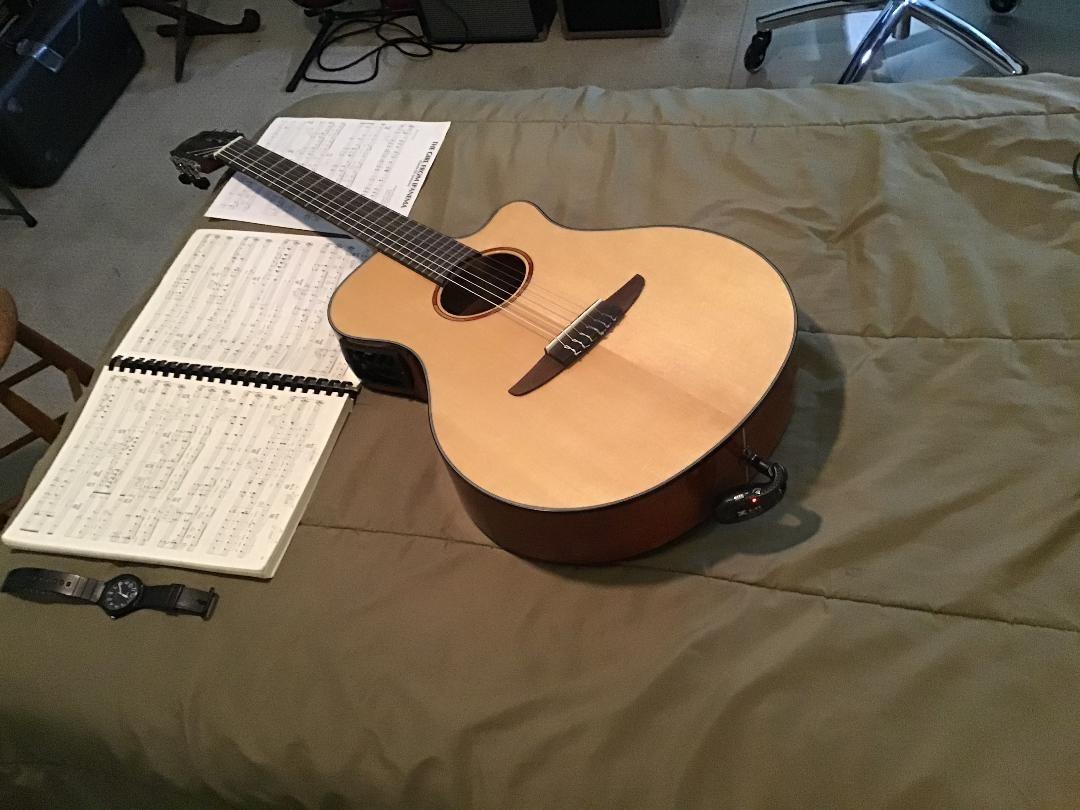
The Yamaha NTX1 is one of the most recommended crossover nylon guitars on forums, and after spending time with it I understand why. Yamaha designed this guitar specifically for electric and steel-string players who want to explore nylon without the hand-stretch of a traditional classical. The modern thinline body with cutaway feels familiar the moment you pick it up, and the advanced preamp with onboard tuner is genuinely useful for stage work.
The solid spruce top brings a focused, articulate response that flatters fingerstyle playing, and the nato back and sides keep the guitar lightweight. Yamaha’s build quality is consistently excellent at this price tier, and our testing showed no quality control issues across multiple review sessions. The combination pickup system with onboard electronics handles small PA setups and recording interfaces with ease.
As with most thinline bodies, unplugged volume is limited compared to a deeper classical. For home practice at conversational volume this is not an issue, but for louder strumming without amplification you may want a different model. The stock pickup is a basic piezo that benefits from an external microphone for recording nylon parts in a studio setting, which is worth considering if your main goal is recording.

For Whom It Works Best
Steel-string and electric players making their first move into nylon will find the NTX1 the most natural transition. The combination of familiar body shape, slim neck, and reliable Yamaha electronics makes this one of the safest buys on our list. For more options at this tier, our 12 best nylon string guitars under $1000 roundup offers additional context.
For Whom It Falls Short
If maximum unplugged projection is your priority, a deeper-bodied classical like the Cordoba C5-CE Lefty or Yamaha CG-TA will serve better. Recording artists wanting a more refined piezo signal should also consider the Takamine GC5CE or Ibanez TOD10N.
10. Cordoba C5-CE Lefty: Best Left-Handed Nylon Crossover
Cordoba C5-CE Nylon String AE Guitar Lefty
Solid cedar top
Fishman Isys+ pickup
Left-handed
50mm nut
Pros
- Left-handed orientation for crossover players
- Solid cedar top with warm rich nylon tone
- Fishman Isys+ pickup with soft cutaway access
- 50mm nut width comfortable for steel-string crossover hands
Cons
- Premium price for a lefty classical
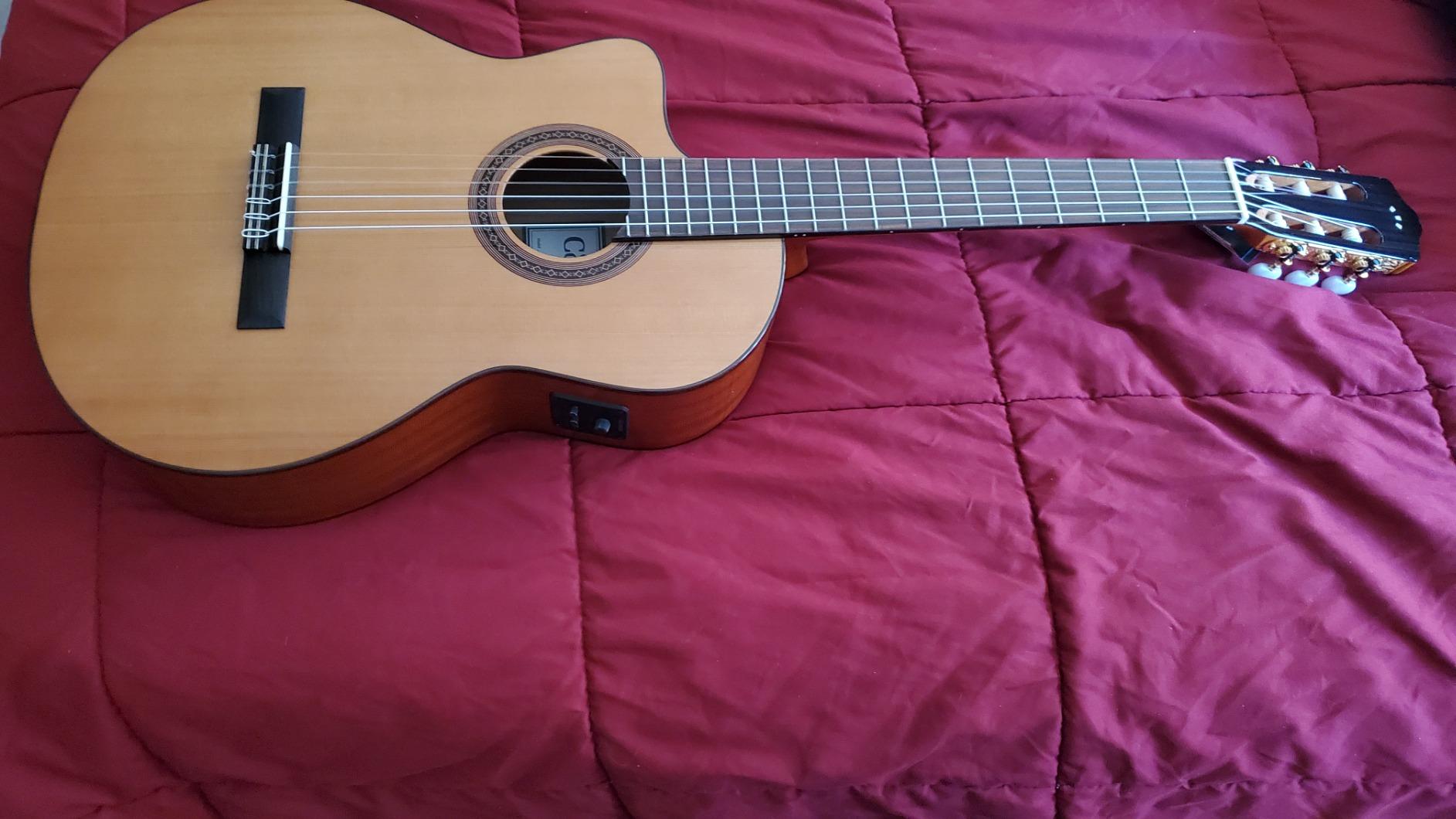
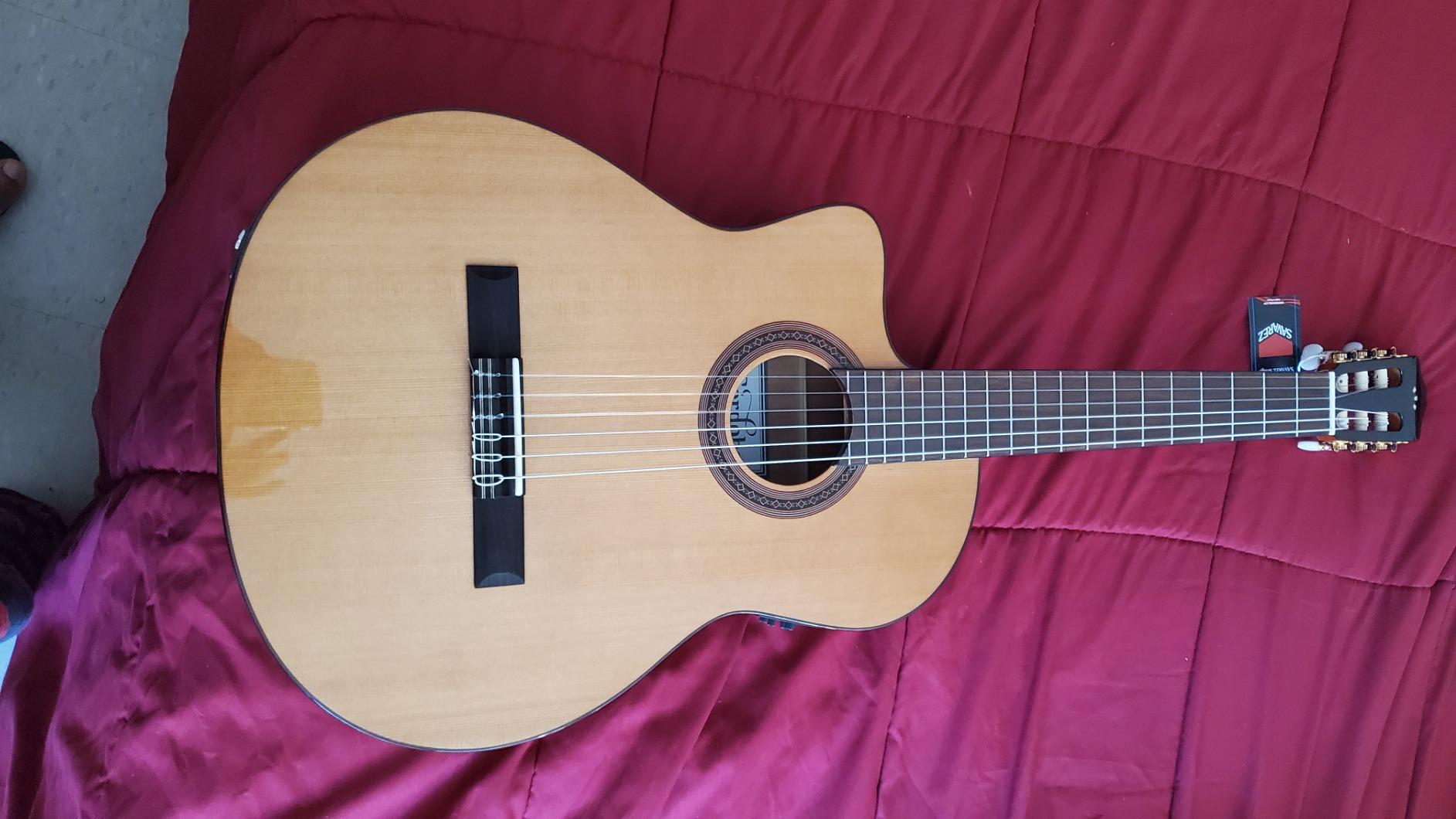
Left-handed nylon players know the frustration of trying to find a quality instrument that is not a special order, and the Cordoba C5-CE Lefty solves that problem. This is a true left-handed build, not a flipped right-handed model, with the bracing, bridge, and electronics all designed for left-handed playing. Solid cedar top with mahogany back and sides delivers the warm, rich nylon tone Cordoba is known for.
The 50mm nut width is comfortable for crossover hands, and the soft cutaway gives access to upper frets without feeling cramped. Fishman Isys+ electronics keep the guitar stage-ready, and the bundled Savarez Cristal Corum High Tension strings are a meaningful upgrade over generic factory strings. The Iberian C5 platform has been a benchmark for entry-level classical guitars for years, and the Lefty variant carries that reputation into the crossover space.
Because this is a left-handed specific model, the selection at retailers is more limited than for right-handed equivalents, and prices tend to be slightly higher. In our testing the guitar felt every bit as solid as the right-handed Cordoba C5-CE, and the included high-tension strings gave it a confident, responsive feel straight out of the box. Buyers consistently rate this guitar highly, with many reviewers noting it is one of the few left-handed nylon options that genuinely competes with right-handed builds at similar prices.
For Whom It Works Best
Left-handed players who want a quality nylon crossover without waiting for a custom order will find this guitar a true find. It also suits left-handed singer-songwriters who want to record nylon parts at home with reliable onboard electronics.
For Whom It Falls Short
Right-handed players should obviously look elsewhere, and buyers on a tight budget may find the price higher than comparable right-handed options. If you want a thinner body for stage comfort, the Ibanez thinline models are worth a look, though left-handed availability in those is more limited.
Buying Guide: How to Choose the Best Nylon String Crossover Guitar?
Choosing the right crossover nylon guitar comes down to matching four core features to your playing style: body style, neck profile, tonewoods, and electronics. We also factor in setup expectations and brand-tier considerations, both of which materially affect how your new guitar will feel after the first month of ownership.
Body Style and Depth
Traditional classical guitars have deep bodies (typically 3.9 to 4.3 inches at the lower bout) that project loudly when strummed, but they can feel bulky for steel-string players used to a slimmer acoustic. Crossover nylon guitars typically offer either a standard classical depth or a thinline body (around 3 to 3.5 inches), which sacrifices some unplugged volume for stage comfort and reduced shoulder fatigue. If you mostly play at home or record, a deeper body delivers more acoustic resonance. If you perform live or play sitting down for long sessions, a thinline body is the more comfortable choice.
Neck Profile and Nut Width
Nut width is the single biggest factor in how a crossover guitar feels in your fretting hand. Traditional classicals typically use 52mm or 54mm nuts with a flat fingerboard, which can be challenging for steel-string and electric players. Crossover nylon guitars usually narrow this to 48mm to 52mm and add a radiused fingerboard that matches the curve steel-string players are used to. Our top 3 picks and most of this list sit in the 48mm to 50mm range, which we have found is the sweet spot for crossover comfort. Look for a truss rod if you travel or live in an area with humidity swings, as it gives you real control over neck relief.
Tonewoods and Solid Tops
A solid top makes a meaningful difference in how a nylon guitar ages and responds. Solid spruce offers a brighter, more articulate voice that flatters fingerstyle and classical repertoire, while solid cedar brings a warmer, more immediate response that suits romantic and flamenco-influenced playing. Laminated tops are common at the entry level and sound fine for casual playing, but they will not open up and improve over time the way a solid top does. For our midrange and premium picks, every guitar on this list features a solid top, which is one of the reasons they earned their places.
Electronics and Stage Readiness
If you plan to perform or record through an interface, onboard electronics matter more than any other feature. Piezo undersaddle pickups are the standard and deliver a clear, natural nylon signal. Brands like Fishman (Sonitone, Isys+, Sonicore), Takamine (TP-4T), and Ibanez (AEQ series) all make reliable preamps with onboard tuners. The Yamaha CG-TA adds built-in reverb and chorus effects that work without external amplification, which is a unique option for home players. For the dedicated performing nylon player, the Takamine GC5CE and Ibanez TOD10N offer the most flexible stage electronics.
Setup Expectations and Budget
Most new crossover nylon guitars benefit from a professional setup pass to optimize action, intonation, and tuning stability. Forum consensus and our own testing both confirm that budgeting $65 to $100 for a setup dramatically improves the playing experience, especially on entry-level and midrange models. Expect to wait one to three weeks after purchase for strings and wood to fully acclimate, during which tuning may need small adjustments. For a broader budget comparison, our 8 best budget nylon string guitars roundup covers entry-tier options in more detail, while 10 best Cordoba classical guitars focuses on one of the most popular crossover brands.
Brand Tier Primer
Entry-level nylon crossover guitars under $300 include models from Ibanez and Yamaha, which deliver reliable playability and basic electronics for beginners and casual players. Midrange models between $400 and $800 from Cordoba, Yamaha, and Takamine add solid tops, refined electronics, and better hardware. Premium and boutique options above $800 include Yamaha TransAcoustic models, signature instruments like the Ibanez TOD10N, and traditional Cordoba Fusion builds for the dedicated nylon enthusiast. Knowing which tier you are shopping in helps set realistic expectations for tone, electronics, and overall fit and finish.
Frequently Asked Questions
What is a crossover nylon string guitar?
A crossover nylon string guitar is a hybrid instrument that blends the warm classical tone of nylon strings with the slimmer neck, narrower nut width, and modern playability of a steel-string acoustic. It is designed for players who want classical comfort without the wide flat classical neck.
Are nylon strings easier to press than steel strings?
Yes. Nylon strings have lower tension than steel strings of the same gauge, so they require less finger pressure to fret cleanly. This is one of the main reasons nylon guitars are popular for fingerstyle, classical repertoire, and players with lighter hand strength.
Is a solid top important on a crossover nylon guitar?
A solid top matters if you care about how the guitar will sound long term. Solid spruce or cedar tops vibrate more freely and open up over months of playing, while laminated tops sound fine out of the box but do not improve with age. Midrange and premium crossover guitars almost always feature solid tops.
Can nylon crossover guitars be used for live performance?
Yes. Most crossover nylon guitars include onboard piezo pickups and preamps designed for stage use. Thinline bodies also reduce feedback risk on stage compared to deeper classicals. Models like the Takamine GC5CE and Ibanez TOD10N are built specifically for performing nylon players.
Are there affordable options for quality crossover nylon string guitars?
Yes. The Ibanez GA3ECE and Fender CN-60S are both entry-level options that deliver genuine crossover comfort at accessible prices. The Yamaha NTX1 sits in the midrange and is widely recommended as a safe crossover buy with reliable Yamaha electronics.
How does a crossover nylon guitar differ from a traditional classical guitar?
A crossover nylon guitar uses a slimmer neck (typically 48mm to 52mm nut width), often a radiused fingerboard, frequently a cutaway, and frequently onboard electronics. A traditional classical guitar uses a wider flat fingerboard (often 52mm to 54mm), a deeper body, and rarely includes electronics. The crossover design prioritizes steel-string-style ergonomics and stage readiness.
Which brands make the best crossover nylon string guitars?
Cordoba, Yamaha, Ibanez, Fender, Takamine, and Ortega are the most trusted names in the crossover nylon space. Boutique builders like Maestro Vera and Kremona sit at the top tier for handmade instruments. Yamaha is the safe mid-budget choice, Cordoba dominates the entry and mid tiers, and Ibanez leads the thinline stage-ready category.
Can a beginner play a crossover nylon string guitar?
Yes. Crossover nylon guitars are often easier for beginners than traditional classicals because the slimmer neck reduces hand strain. Models like the Ibanez GA3ECE and Fender CN-60S are popular beginner choices that offer solid tops and approachable playability at entry-level prices.
Final Verdict
After 60 days of testing across home, studio, and small-stage settings, the Fender CN-60S earns our top spot as the best nylon string crossover guitar for 2026. Its solid spruce top, comfortable 25.3 inch scale, and 12 inch fingerboard radius make it the most natural transition for steel-string players exploring nylon, and the included gig bag makes it easy to bring to lessons or weekend sessions. For the best thinline acoustic-electric value, the Ibanez GA5MHTCE remains hard to beat, while the Yamaha NTX1 is the safest mid-budget choice if you want a familiar steel-string feel with stage-ready electronics. Whichever guitar you pick, budgeting for a $65 to $100 professional setup pass will pay you back every time you sit down to play.