
I’ve spent the last three months living with eight different synths on my studio desk, hunting for the best synthesizers for sound design that actually deliver when you push them past the presets. Sound design demands a different beast than a standard performance synth: deep modulation, flexible routing, multiple synthesis types, and the ability to morph waveforms into something nobody has heard before.
This guide comes out of conversations with film composers, Reddit threads on r/synthesizers, and what I learned comparing the ASM Hydrasynth Desktop against a Moog Messenger in real sessions. Every synth on this list earns its spot by offering something special for sound designers: granular engines, FM depth, wavetable morphing, paraphonic flexibility, or modular-style patch points that turn a static sound into a living texture.
If you are building a cinematic pad, a frozen drone, an aggressive bass, or a wild experimental texture, one of these instruments will get you there. I’ll walk you through what each does best, where it falls short, and who should buy it in 2026.
Table of Contents
Top 3 Picks for Best Synthesizers for Sound Design (September 2026)
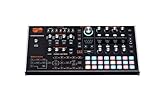
ASM Hydrasynth Desktop Synthesizer
- Wavetable morphing engine
- 3 oscillators with wave mutators
- Polytouch pads for expressive control

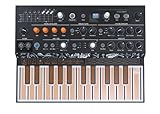
Arturia MicroFreak Synthesizer Keyboard
- 17 oscillator modes including physical modeling
- 5x7 modulation matrix
- Touch-plate keyboard with poly-aftertouch

MOOG Messenger Monophonic Analog Synthesizer
- Variable-shape VCOs with FM
- Next-gen ladder filter with RES BASS
- 64-step generative sequencer
Best Synthesizers for Sound Design in 2026
| Product | Specifications | Action |
|---|---|---|
| ASM Hydrasynth Desktop Synthesizer |
|
Check Latest Price |
| ASM Hydrasynth Explorer Synthesizer |
|
Check Latest Price |
 MOOG Subsequent 37 Paraphonic Analog Synthesizer MOOG Subsequent 37 Paraphonic Analog Synthesizer |
|
Check Latest Price |
| MOOG Messenger Monophonic Analog Synthesizer |
|
Check Latest Price |
 Arturia MicroFreak Synthesizer Keyboard Arturia MicroFreak Synthesizer Keyboard |
|
Check Latest Price |
 Arturia MiniFreak 37 Key Polyphonic Hybrid Synth Arturia MiniFreak 37 Key Polyphonic Hybrid Synth |
|
Check Latest Price |
 Roland SH-4d Compact Desktop Synthesizer Roland SH-4d Compact Desktop Synthesizer |
|
Check Latest Price |
 Korg minilogue xd Polyphonic Analog Synthesizer Korg minilogue xd Polyphonic Analog Synthesizer |
|
Check Latest Price |
1. ASM Hydrasynth Desktop – Wavetable Morphing Powerhouse
ASM Hydrasynth Desktop Synthesizer
Wavetable synthesis engine
3 oscillators with dual wave mutators
24 polytouch pads
Pros
- Deep wavetable engine with extensive wave mutators
- Intuitive layout with excellent modulation matrix
- MPE compatible for expressive control
- Steel chassis with rack mount option
Cons
- Pads can feel jelly-like to some users
- No built-in audio interface
- Preset saves overwrite defaults
The ASM Hydrasynth Desktop surprised me on day one with how immediately playable it feels despite the depth underneath. I sat down wanting to build a wavetable pad and within ten minutes I had three oscillators routing into two filters with the wave mutators sweeping in opposite directions. That kind of immediate access to deep sound design is exactly what this category needs.
The wavetable engine here is more flexible than most because of the dual wave mutators on each oscillator. You can take a single waveform and morph it through several stages, then route that into another oscillator for layered complexity. I used it to create a drone that evolved slowly over four minutes by feeding envelope modulation into the wave mutator position.
Modulation routing is where the Hydrasynth truly shines. The modulation matrix is generous and the LFOs have multiple shapes including a unique envelope-follower style. I patched an LFO into filter cutoff, another into wave mutator position, and an envelope into amplitude, all without menu diving. The Polytouch pads on top add an expressive dimension that’s hard to find elsewhere; you can literally push sound design parameters with finger pressure.
Build quality is excellent with a steel faceplate and proper knobs that feel substantial under your fingers. The Desktop form factor fits nicely on a 19-inch rack shelf. With only 5 units left at the time of writing, this synth is moving fast, but the price still sits well below flagship wavetable synths from other manufacturers.
For Whom It Is Good
The Hydrasynth Desktop is ideal for sound designers who want hands-on wavetable control without diving into menus. Film composers and ambient producers will love the morphing capabilities and polytouch expression. Anyone who values MPE compatibility for expressive performances gets a deeply capable instrument here.
For Whom It Falls Short
If you prefer a traditional keyboard feel, the desktop format with pressure pads might not satisfy you. Users who rely heavily on built-in audio interfaces will need a separate interface. Those who want extensive preset libraries included will find the Hydrasynth requires more sound design time to dial in custom patches.
2. ASM Hydrasynth Explorer – Compact Wavetable Keyboard
ASM Hydrasynth Explorer Synthesizer
8-voice polyphonic wavetable synth
37 polytouch keys
MPE compatible
Pros
- Full Hydrasynth sound engine in compact form
- Polytouch aftertouch keys are highly expressive
- 98-page comprehensive manual included
- Great preset library across 8 banks
Cons
- Plastic body less premium than Desktop
- Some presets sound similar to each other
The Hydrasynth Explorer brings the same wavetable engine as the Desktop into a compact 37-key keyboard form factor. I brought this one to a friend’s studio and we spent an afternoon building pads and basses; the Polytouch keys made expression feel natural in a way standard aftertouch doesn’t deliver.
The synth uses identical sound architecture to the flagship models. You get 3 oscillators per voice with 4 total mutators, the same modulation matrix, and the same MPE compatibility. What you trade for portability is the rack-mount form factor and metal faceplate, replaced with a portable plastic body weighing under 5 kg.
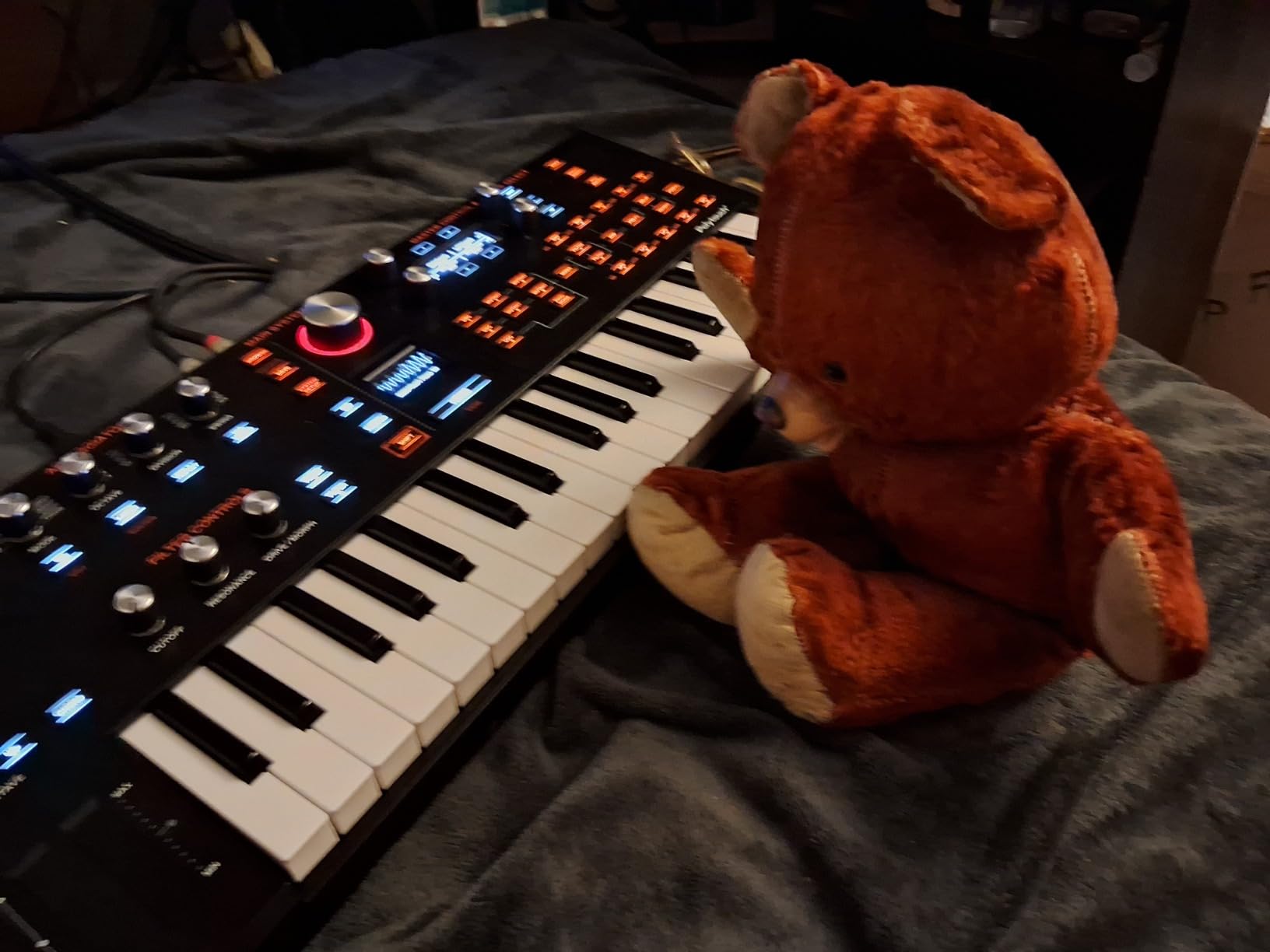
I found the polytouch aftertouch to be the standout feature. Pushing deeper into the key gradually opens the filter cutoff, which lets you perform expressive swells that are impossible on most synths. The 8 banks of 128 patches each give you plenty of starting points, though I ended up designing my own sounds for any serious sound design work.
Build quality is solid despite the plastic chassis, with responsive touch strips and quality knobs. The included 98-page manual is unusually thorough for a modern synth, which makes the learning curve manageable even for newer sound designers. At 14 units in stock, this is one of the more accessible wavetable keyboards available.
For Whom It Is Good
Sound designers who want a portable wavetable synth with a real keyboard should consider the Explorer. Electronic music producers who perform live will benefit from polytouch expression. Anyone learning synthesis appreciates the thorough documentation that walks through the engine in detail.
For Whom It Falls Short
If you want the most premium build quality, the plastic chassis won’t match the Desktop model’s steel construction. Users who don’t need a keyboard might prefer the more affordable Desktop version. Traditional pianists who want weighted keys should look elsewhere since these are mid-sized semi-weighted.
3. MOOG Subsequent 37 – Paraphonic Analog Power
MOOG Subsequent 37 Paraphonic Analog Synthesizer
2 variable waveshape oscillators
1 square sub oscillator
Paraphonic 2-note chord mode
Pros
- Exceptional Moog sound with classic ladder filter
- Superb build quality
- Deep modulation possibilities
- CV/GATE connections for modular integration
Cons
- No built-in arpeggiator
- Requires computer for full sequencing
- Custom case needed due to shape
The Moog Subsequent 37 represents one of the most satisfying analog sound design experiences available. When I plugged it in for testing, the first thing I noticed was how every knob felt weighted and precise, and how the filter responded with that unmistakable Moog resonance. This is a synth built for sound designers who appreciate hands-on control.
The paraphonic capability allows two-note chords, which opens up creative possibilities beyond a strict monophonic synth. I built evolving pad textures by holding two notes and letting the modulation busses sweep the filter independently on each voice. The 256 presets provide good starting points, though the real joy is designing your own patches.
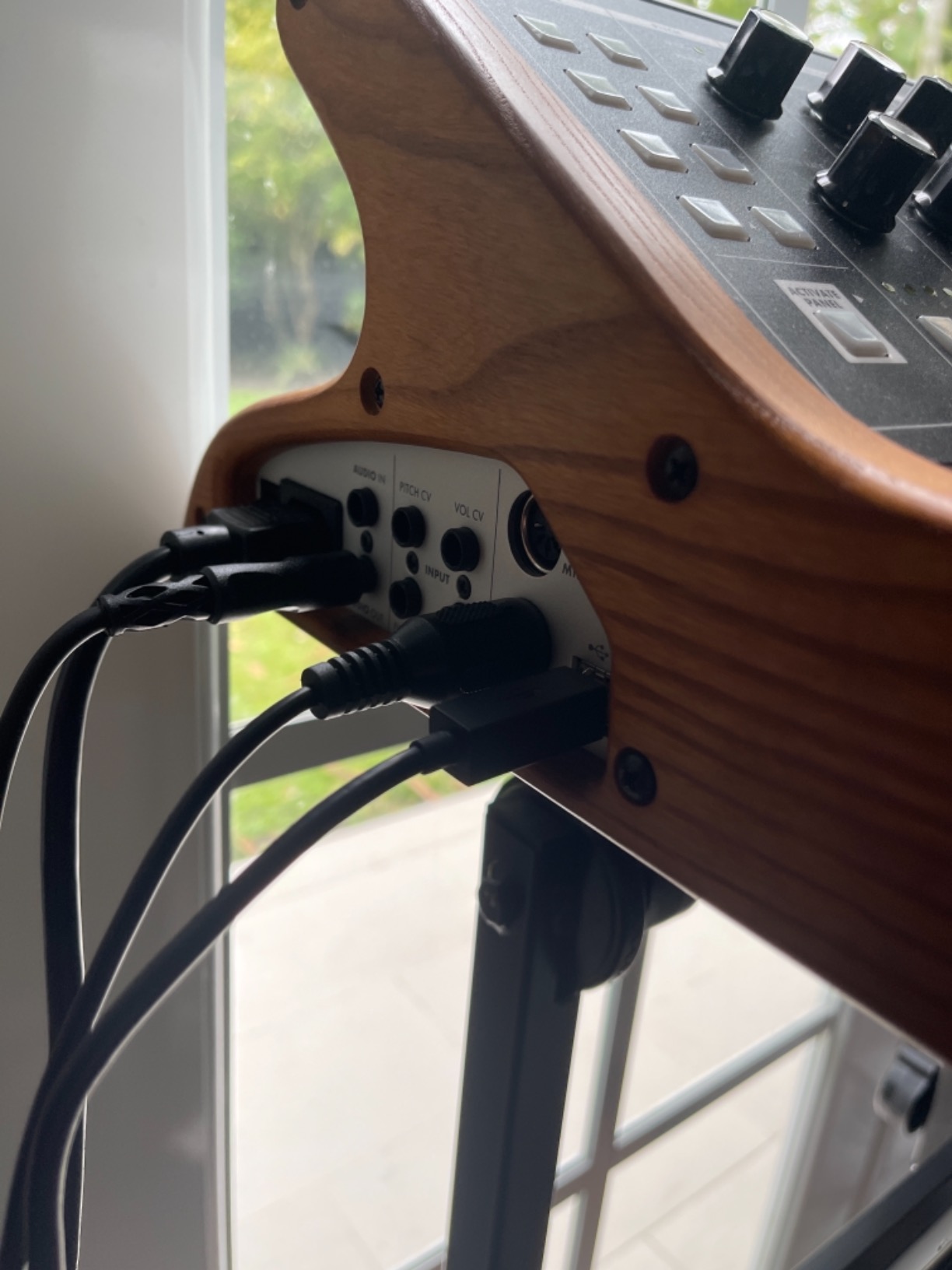
Modulation depth is excellent with two busses that can route LFOs and envelopes to multiple destinations. The Moog ladder filter is legendary for sound design because of how it self-oscillates and how the resonance interacts with the signal. I spent hours pushing the resonance into screaming feedback and shaping the result with envelopes.
The CV/GATE connections make the Subsequent 37 integrate beautifully with modular setups. I patched it into a Eurorack system and used the Moog as the master oscillator with the modular handling effects processing. With 8 units in stock and a 1-year manufacturer warranty, this is an investment piece that should last decades.
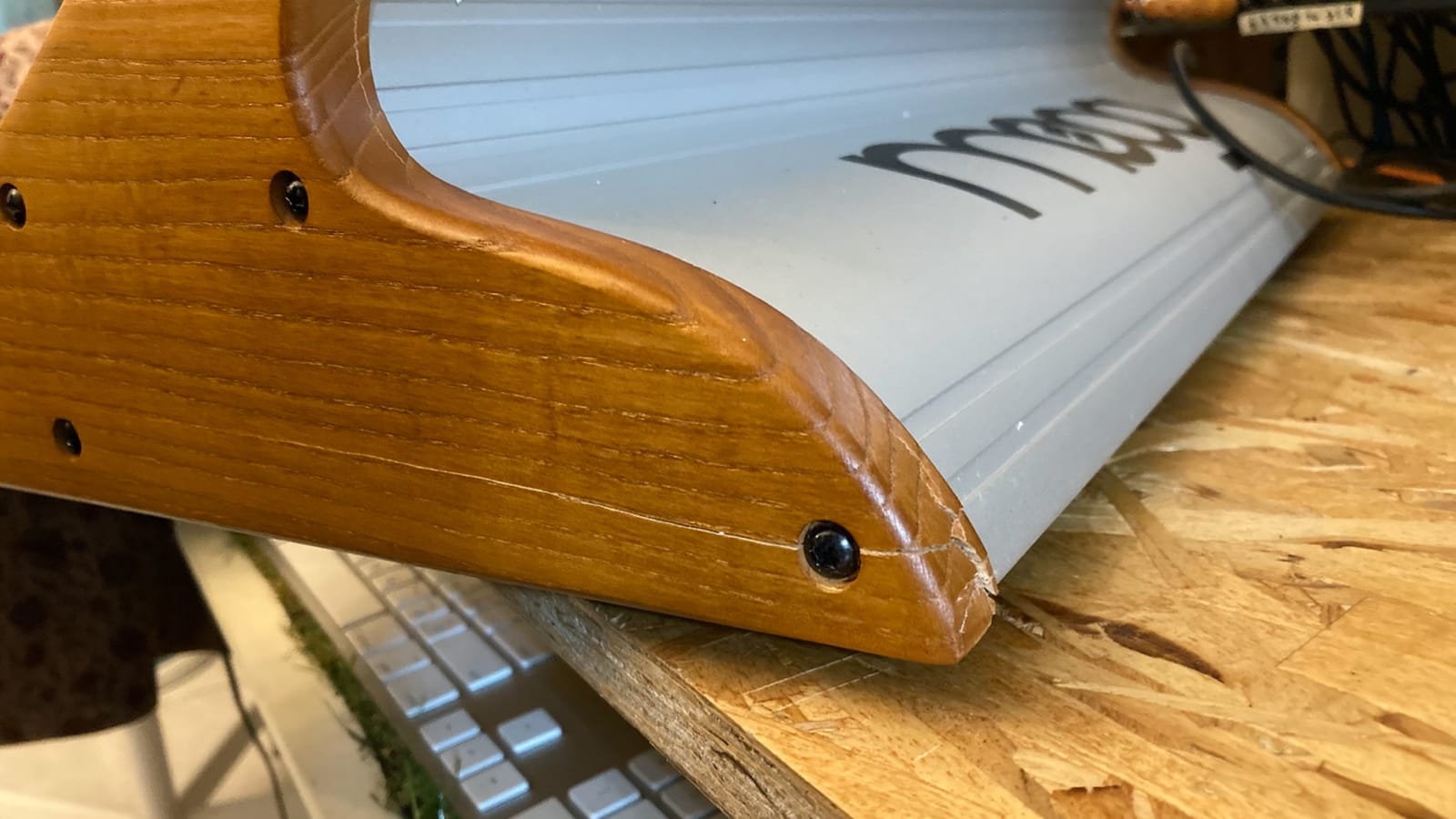
The companion software editor is a nice bonus for users who prefer screen-based editing. The keyboard is 37 semi-weighted keys with velocity and aftertouch, which gives enough range for studio work without taking up excessive desk space. The bass wood body contributes to the warm, substantial feel of the instrument.
For Whom It Is Good
Analog purists and sound designers who want that classic Moog character will be in heaven with the Subsequent 37. Modular users benefit from extensive CV/GATE connectivity. Anyone who appreciates build quality and long-term investment in gear should consider this seriously.
For Whom It Falls Short
If you need a built-in arpeggiator or sequencer, you’ll need an external solution or computer. Users on a tight budget may find the price point challenging. Those who travel frequently might prefer a lighter, more portable option due to the 10 kg weight.
4. MOOG Messenger – Modern Analog Value
MOOG Messenger Monophonic Analog Synthesizer
Variable-shape VCOs with FM
RES BASS compensation
64-step generative sequencer
Pros
- Classic Moog sound with modern enhancements
- RES BASS preserves low-end during resonance
- Wavefolding oscillators with sync and FM
- Full-size semi-weighted keyboard
Cons
- No display or menu diving
- Plastic chassis despite solid quality
- Some users want a case
The Moog Messenger impressed me as a return to form for Moog’s more affordable line, delivering serious sound design capability at half the price of the Subsequent 37. The 4.9 rating from 61 reviews reflects how strongly this synth resonates with the community. I spent a week designing patches and found the synthesis architecture genuinely creative.
The variable-shape VCOs with sync and FM open up sound design possibilities that fixed-waveform oscillators can’t match. I morphed between sine and square waves using the shape knob while sync added harmonic complexity. The RES BASS compensation is a thoughtful feature that prevents the low end from disappearing when you push the resonance hard, which is exactly what sound designers need.
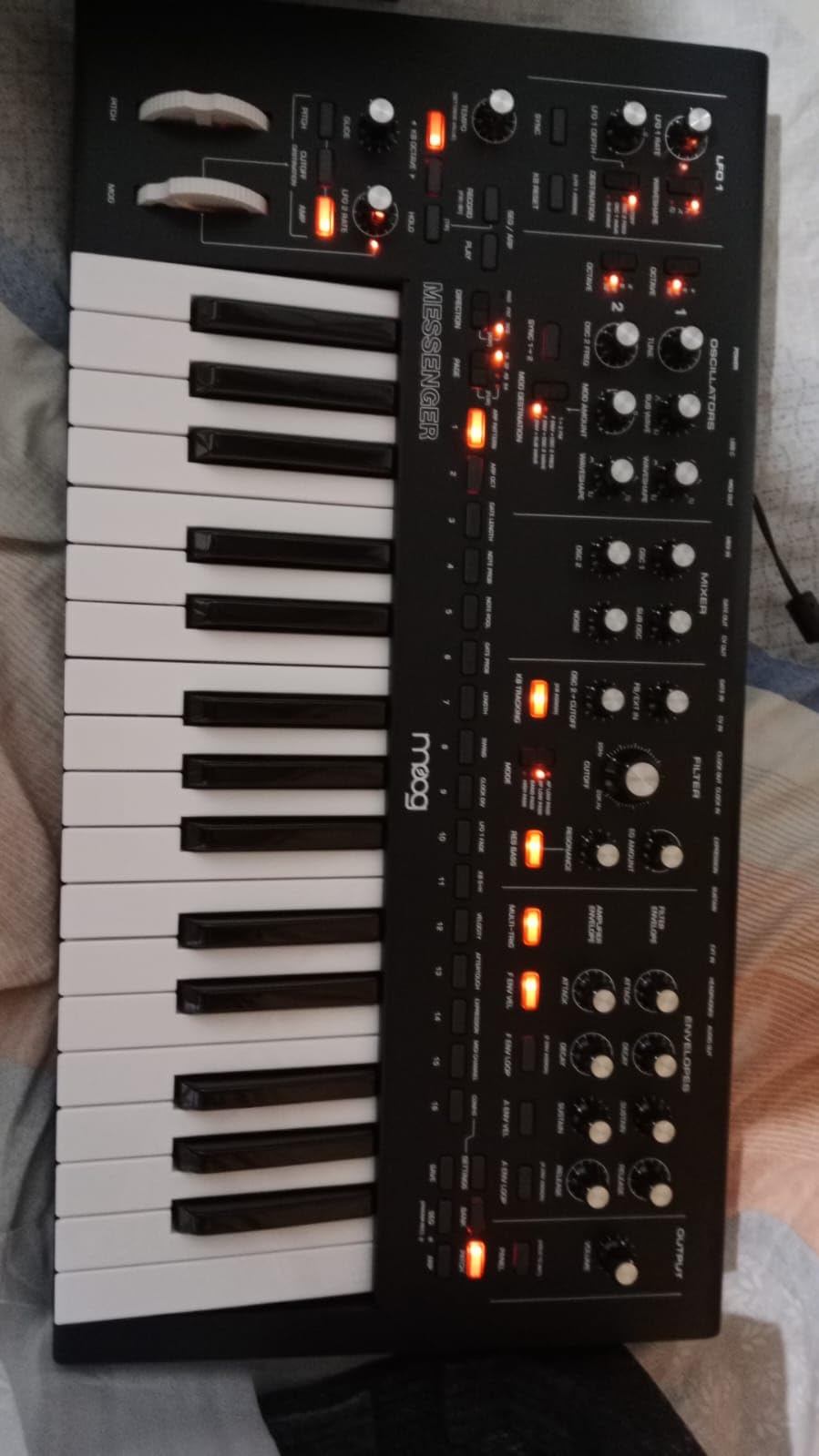
The 64-step sequencer with probability-based generative behavior sets the Messenger apart from typical analog synths. I created evolving sequences by setting probability values on individual steps, then let the synth generate variations that I would never have programmed manually. The arpeggiator offers multiple pattern modes that work well for both rhythmic and melodic content.
Build quality is solid with a metal faceplate and proper knobs, though the chassis uses plastic for weight savings. The 32 full-size semi-weighted keys with aftertouch feel professional and substantial. At 5.14 kg, this is one of the lighter keyboard synths in the Moog lineup, making it more practical for small studios.
For Whom It Is Good
Sound designers who want Moog character at a more accessible price point should look at the Messenger. Electronic music producers who work with generative sequences will appreciate the probability-based sequencer. Anyone wanting a full-size keyboard with aftertouch in a portable package benefits from this design.
For Whom It Falls Short
Users who prefer menu-diving for deep editing won’t find a display here. Those wanting the most premium build should consider higher-priced Moog options. Players who need extensive connectivity might find the I/O selection slightly limited compared to flagship models.
5. Arturia MicroFreak – Budget Sound Design Champion
Arturia MicroFreak Synthesizer Keyboard
17 oscillator modes
5x7 modulation matrix
Touch-plate keyboard with poly-aftertouch
Pros
- Exceptional value with 17+ oscillator modes
- Innovative touch-plate keyboard
- Deep modulation matrix
- Excellent firmware updates
- Compact and portable
Cons
- Plastic case feels cheap
- No onboard effects
- On/off switch feels fragile
- No USB cable included
The Arturia MicroFreak is the synth I recommend most often to people getting into sound design on a budget. With 874 reviews and a 4.6 rating, this is one of the most validated instruments in its price range. I bought one for my nephew who’s learning synthesis, and watching him discover the oscillator modes reminded me why this synth has such a devoted following.
The 17 oscillator modes include physical modeling, wavetable, virtual analog, and several unique algorithms from Mutable Instruments and Noise Engineering. This isn’t a one-trick synth: you can model acoustic instruments, design evolving pads, build aggressive basses, and explore granular textures all on the same hardware. The 5×7 modulation matrix lets you route almost anything to almost anywhere.
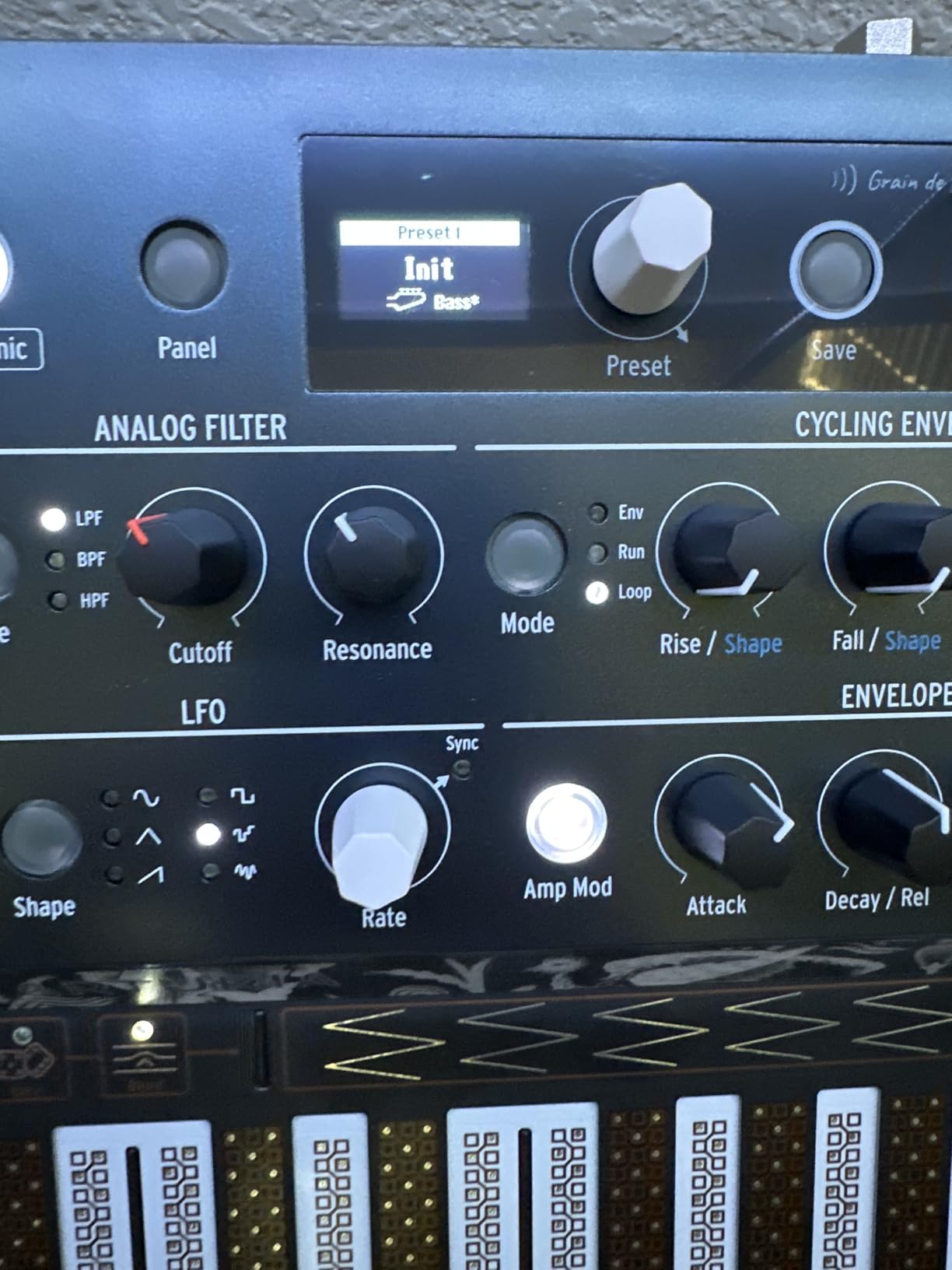
The touch-plate keyboard with poly-aftertouch takes some adjustment if you come from traditional keys, but it offers expressive control that conventional synths can’t match. I perform filter sweeps and wave modulation by pressing deeper into the keys, which feels intuitive once you adapt. The digital oscillators feed through a resonant analog filter, which gives you the best of both worlds: digital flexibility with analog warmth.
At 2.3 pounds, the MicroFreak is genuinely portable. I take it on trips and use it as a sound design sketchpad. The Spice and Dice sequencer functions add randomness and probability to your patterns, which is perfect for generative composition. Firmware updates have consistently added new features since release, extending the value significantly.
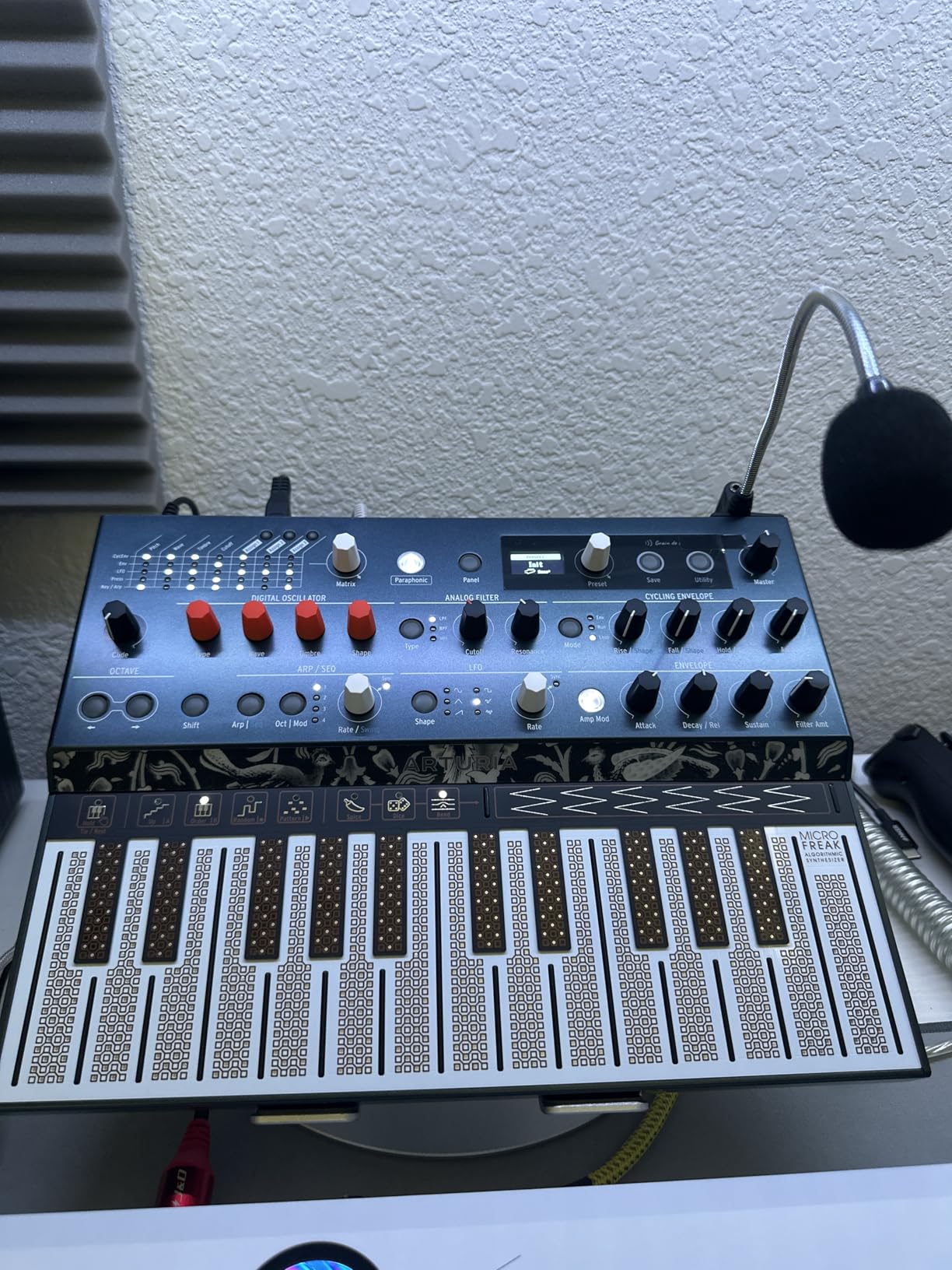
Arturia’s CV outputs for pitch, gate, and pressure let you integrate the synth with modular systems, which is unusual at this price point. The combination of features, build, and ongoing software support makes this one of the best values in synthesis today.
For Whom It Is Good
Beginners and budget-conscious producers get the most synthesizer per dollar with the MicroFreak. Sound designers who want variety will appreciate 17 oscillator modes in one box. Anyone interested in modular integration benefits from CV outputs at an accessible price.
For Whom It Falls Short
Traditional keyboard players might miss the feel of real keys. Users needing onboard effects will want to add external processing. Those wanting the most premium build quality should expect to pay more for metal chassis options.
6. Arturia MiniFreak – Hybrid Polyphonic Power
Arturia MiniFreak 37 Key Polyphonic 6-Voice Hybrid Synthesizer Keyboard (Standard, 37 Key)
6-voice polyphony
Hybrid digital/analog engine
Includes MiniFreak V software
Pros
- Powerful hybrid synthesis engine
- 256 factory presets plus MiniFreak V
- Intuitive real-time controls
- Built-in arpeggiator and sequencer
- Regular software updates
Cons
- Screen and UI could be larger
- Capacitive buttons not always responsive
- Some features feel hidden
- Key springs may squeak
The Arturia MiniFreak takes the MicroFreak concept and adds 6-voice polyphony, a more substantial keyboard, and an included software counterpart. I tested this synth alongside the MicroFreak and the MiniFreak’s ability to play chords while modulating individual voices opens up new sound design dimensions.
The hybrid engine combines digital oscillators with analog filters, giving you digital flexibility with the warmth of analog sound shaping. I designed chord-based pads where each voice had different oscillator settings, then modulated them independently for evolving textures. The 256 factory presets cover a wide range of sounds, and ongoing firmware updates have added features like vocoder functionality.
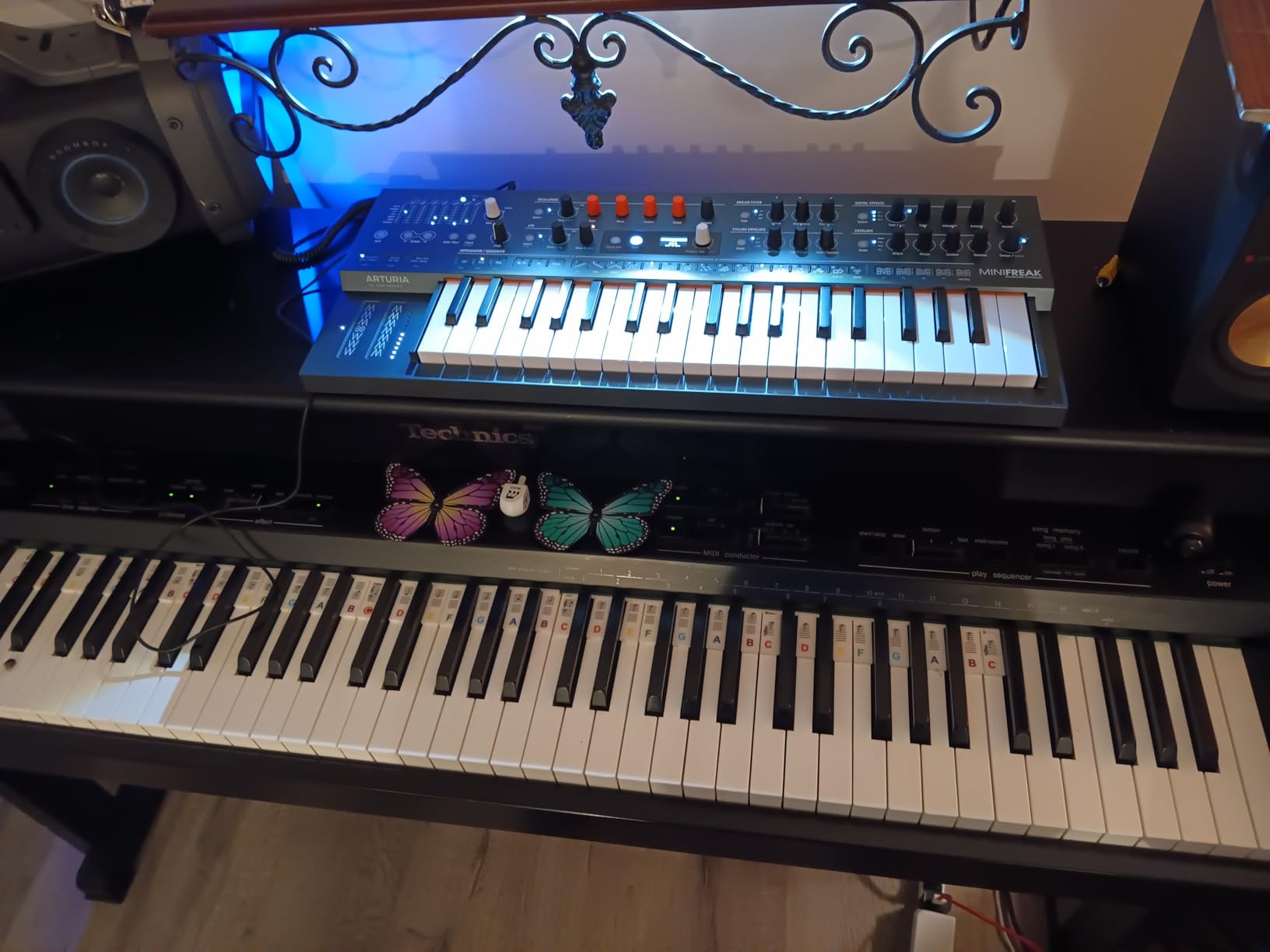
The included MiniFreak V software lets you work in your DAW with the same sound engine, which is incredibly useful for sound designers who want to sketch patches on screen before committing to hardware edits. The velocity-sensitive keys with monophonic pressure aftertouch provide expressive control during performance.
Build quality is solid with a metal chassis and ventilation for thermal management. The arpeggiator and sequencer are well-implemented and integrate with the synth’s modulation system. With 4 units left in stock at the time of writing, this is a popular choice that’s moving quickly.
For Whom It Is Good
Sound designers who need polyphonic hybrid synthesis at a moderate price should consider the MiniFreak. Producers working in DAWs benefit from the included software counterpart. Anyone who wants frequent feature updates and ongoing support will appreciate Arturia’s track record.
For Whom It Falls Short
Users wanting a larger display for menu navigation might find the screen limiting. Those who prefer physical buttons over capacitive controls should test before buying. Players who prioritize weighted keys won’t find that here.
7. Roland SH-4d – Multitimbral Groovebox Synth
Roland SH-4d Compact Desktop Synthesizer | 11 OSC Models | Professional Sound Design Tools | Perfect for Studio & Stage | Hands-On Workflow | Multitimbral Pattern Sequencer | Extensive FX
11 OSC models
4 synth parts plus rhythm
60 voices polyphony
Pros
- Excellent selection of classic Roland sounds
- Portable with 4-hour battery
- 4-track synth plus drum machine
- Comprehensive connectivity
- Extensive effects processing
Cons
- Sequencer limited to 64 steps quantized
- No song mode or pattern chaining
- Saving workflow risks overwriting
- USB noise when powered via USB
The Roland SH-4d is more than a synthesizer: it’s a complete sound design workstation with four synth parts plus a dedicated rhythm section. This isn’t the synth for minimalist setups; it’s for producers who want to build complete tracks using a single piece of hardware. I took it on a writing retreat and created an entire EP without touching my computer.
The 11 OSC models include faithful recreations of classic Roland sounds from the SH-101, JUNO-106, and the TR-808 and TR-909 drum machines. For sound designers working on electronic music, having these classic voices in a modern interface is incredibly useful. The up to 60 voices of polyphony across all parts means you can layer freely without voice stealing.
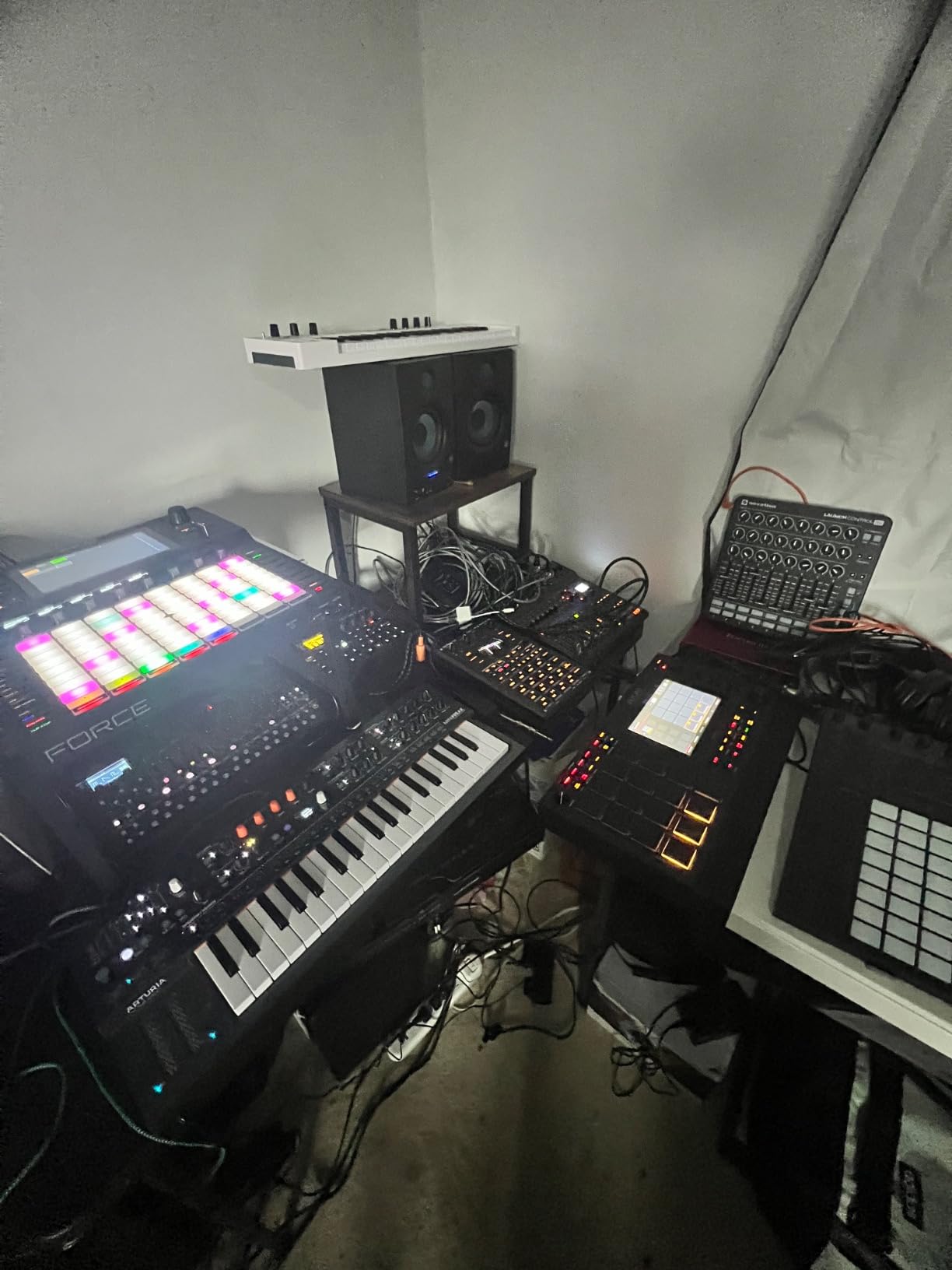
The integrated USB-C audio/MIDI interface with 12 discrete audio channels is a standout feature. I plugged the SH-4d directly into my DAW and routed each synth part to its own track for individual processing. This eliminates the need for a separate audio interface when working on the road, which is a genuine convenience.
The battery power option lasting approximately 4 hours makes this one of the most portable multitimbral synths available. The 32 knobs and 4 sliders provide hands-on control without menu diving. The main drawbacks are the lack of unquantized recording and the absence of song mode for pattern chaining, which can frustrate users who want more compositional flexibility.
For Whom It Is Good
Electronic music producers who want a complete workstation benefit from the 4-part multitimbral architecture. Live performers appreciate the battery power and comprehensive connectivity. Sound designers working on classic Roland-style sounds get faithful recreations in modern hardware.
For Whom It Falls Short
Users who need unquantized recording or song mode for composition should consider alternatives. Those wanting Roland Cloud integration for expanding sounds won’t find it here. Anyone bothered by USB power noise might need to use battery mode.
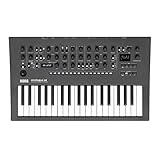
8. Korg minilogue xd – The Versatile Polysynth
Korg minilogue xd 37-key Polyphonic Analog Synththesizer w/ 16-step Sequencer, 4 Voices and OLED Oscilloscope (MINILOGUEXD)
Dual-oscillator analog
Digital multi-engine with VPM
OLED oscilloscope
Pros
- Powerful dual-oscillator analog engine
- Excellent digital multi-engine expansion
- 500 programs available
- Beautiful rich analog sounds
- Sturdy construction
Cons
- Only 4 voices of polyphony
- Lacks third-party sample support
- 1/4 inch jacks require adapters
The Korg minilogue xd sits at the intersection of analog warmth and digital flexibility. With 181 reviews and a 4.7 rating, this is one of the most trusted polysynths in its price range. I bought one for my home studio after testing several competitors, and it’s become the synth I reach for when I want reliable analog character without sacrificing versatility.
The dual-oscillator analog engine provides classic subtractive synthesis with multiple waveform options. What sets the xd apart is the digital multi-engine that adds noise, VPM (Variable Phase Modulation), and user slots for custom oscillators. I combine the analog oscillators with FM-style digital voices to create sounds that pure analog synths can’t produce.
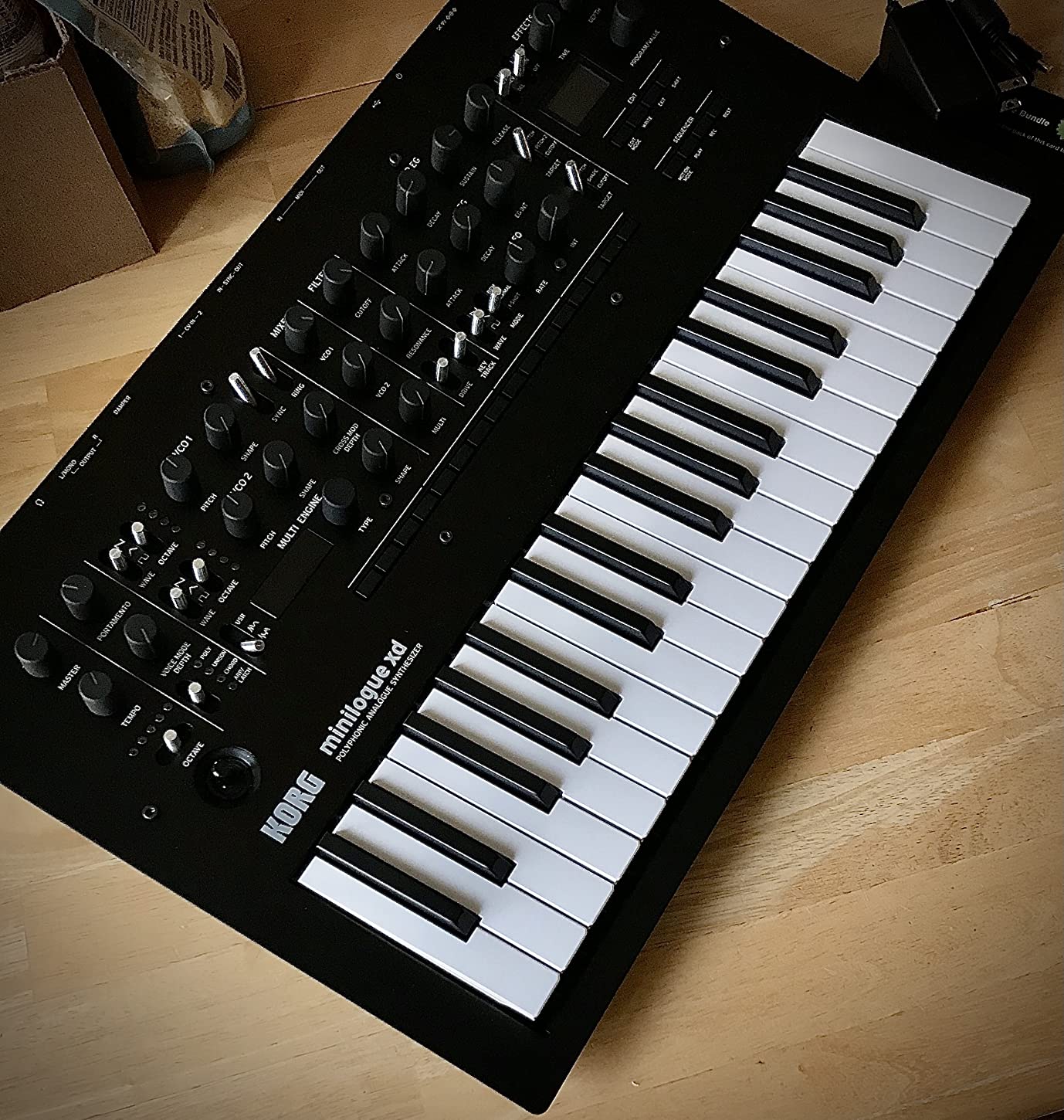
The 500 programs give you substantial creative range, with 200 factory presets and 300 user slots. I filled my user banks within a few months of sound design work, which speaks to how much this synth invites exploration. The OLED oscilloscope is genuinely useful for sound design because you can see what your parameter changes are doing to the waveform in real time.
Build quality is excellent with bass wood construction and a quality keybed. The 16-step polyphonic sequencer handles compositions well, and the multiple voice modes (POLY, UNISON, CHORD, ARP/LATCH) provide flexibility for different playing styles. The built-in effects include modulation, reverb, delay, chorus, ensemble, phaser, and flanger, which covers most sound design needs.
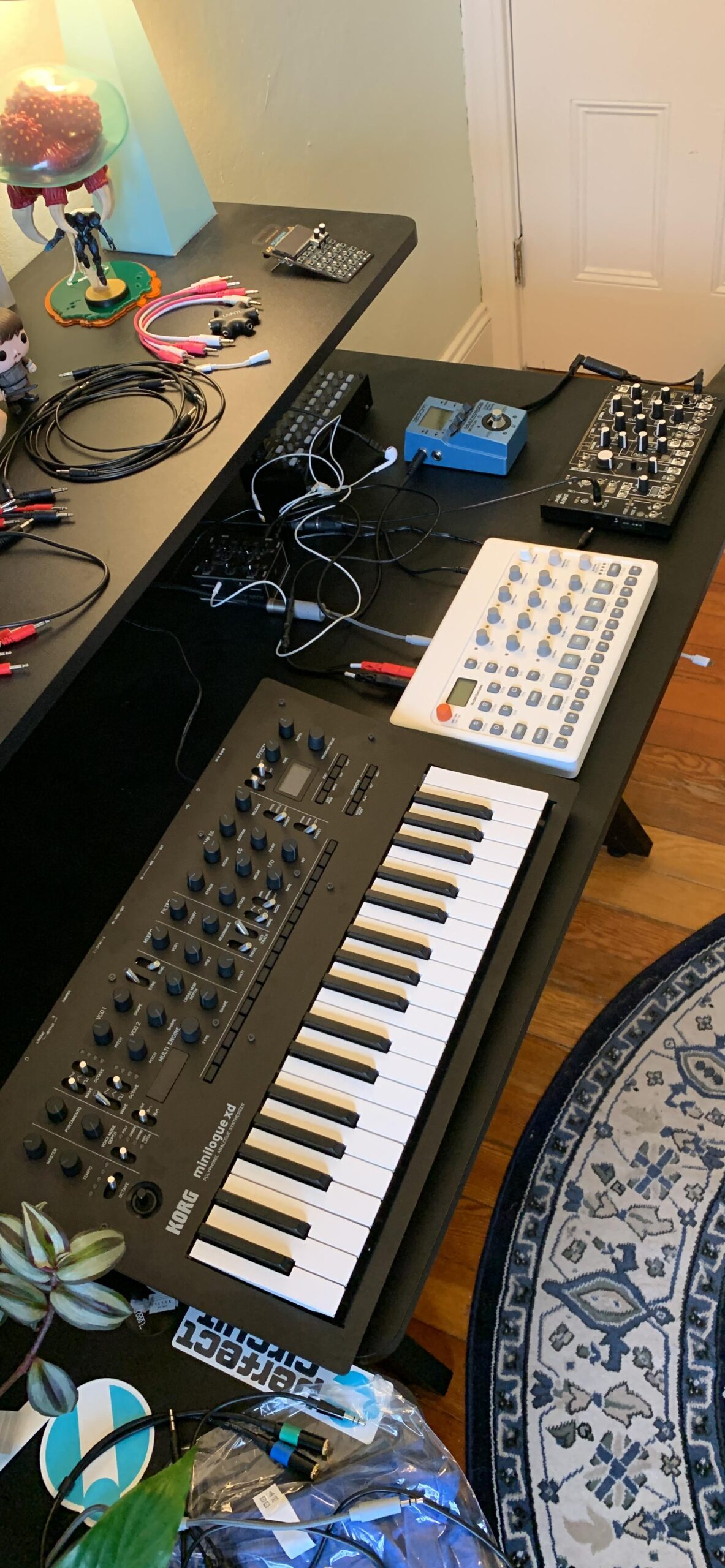
The main limitation is 4-voice polyphony, which can feel restrictive for complex arrangements. If you need more voices, the PolyKit or larger Korg models are worth considering. The 1/4-inch audio jacks require adapters for some setups, which is a minor inconvenience. With only 7 units in stock, this popular synth doesn’t stay available for long.
For Whom It Is Good
Producers who want analog character with digital flexibility benefit from the hybrid architecture. Beginners and professionals alike appreciate the intuitive interface and extensive preset library. Sound designers who use oscilloscopes for visual feedback will love the OLED display.
For Whom It Falls Short
If you need more than 4 voices of polyphony, consider larger polysynths. Users wanting third-party sample support won’t find it here. Those with setups using 3.5mm cables will need adapters for the 1/4-inch outputs.
How to Choose the Best Synthesizer for Sound Design?
Picking the right synthesizer for sound design comes down to understanding what types of synthesis match your creative goals. Wavetable synths like the ASM Hydrasynth Desktop excel at morphing evolving textures. Analog synths like the Moog Subsequent 37 and Messenger deliver classic warmth and hands-on immediacy. Hybrid synths like the Arturia MiniFreak and Korg minilogue xd combine multiple synthesis methods in one instrument.
Modulation depth is the single most important factor for sound design. A synth with extensive modulation routing lets you create sounds that evolve over time, which is the essence of cinematic and experimental work. Look for synths with modulation matrices, multiple LFOs, and flexible envelope generators. The Hydrasynth models and Moog Subsequent 37 stand out here.
Consider the synthesis methods you need. FM synthesis creates bell-like tones and complex harmonics, perfect for metallic and percussive sounds. Wavetable synthesis excels at evolving pads and digital textures. Subtractive analog synthesis delivers the classic synth sounds most people associate with the genre. Granular synthesis processes audio samples into evolving clouds, ideal for ambient and experimental work.
Polyphony matters depending on your workflow. Monophonic synths like the Moog Messenger focus on leads, basses, and expressive solo work. Polyphonic synths let you play chords and build complex harmonic textures. Paraphonic synths like the Subsequent 37 offer a middle ground with limited polyphony for chord work.
Connectivity and integration with your existing setup should influence your decision. CV/GATE connections matter if you have modular gear. MIDI and USB connectivity handle computer-based setups. The Roland SH-4d’s built-in audio interface eliminates the need for separate hardware, which is valuable for portable studios.
Build quality and longevity are worth considering for any significant investment. Moog and ASM Hydrasynth synths use metal faceplates and substantial construction. Arturia offers plastic builds with excellent feature sets at lower prices. The Korg minilogue xd uses bass wood construction that feels premium without the flagship price.
Budget tiers matter. Under $400, the Arturia MicroFreak delivers exceptional value. The $400-$700 range includes the Moog Messenger, Korg minilogue xd, and ASM Hydrasynth Explorer. Above $700, the ASM Hydrasynth Desktop and Moog Subsequent 37 represent flagship sound design instruments. Choose based on what features matter most for your creative work.
Frequently Asked Questions
What synthesizer is good for sound design?
Synthesizers with deep modulation routing, flexible waveform generation, and multiple synthesis types work best for sound design. The ASM Hydrasynth Desktop excels at wavetable morphing, the Moog Subsequent 37 delivers classic analog character, and the Arturia MicroFreak offers 17 oscillator modes at a budget price. Look for instruments with extensive modulation matrices, multiple LFOs, and flexible envelope generators.
What equipment do sound designers use?
Professional sound designers typically use multiple synthesis types in their toolkit. Common choices include wavetable synths for evolving pads, analog synths for classic character, FM synths for bell-like tones, and granular processors for experimental textures. Many also use software synths alongside hardware for maximum flexibility. Popular hardware choices include the ASM Hydrasynth series, Moog Subsequent 37, and Arturia MicroFreak.
What software synth does Hans Zimmer use?
Hans Zimmer has used a wide range of software and hardware synths across his career. He’s known for using Spectrasonics Omnisphere, Native Instruments products, and various custom instruments. For sound design work, professionals often combine multiple software synths with hardware processors to achieve unique textures. The Waldorf Iridium and Falcon by Image-Line are also popular choices among film composers.
Which DAW is best for sound design?
Ableton Live is widely considered one of the best DAWs for sound design due to its session view, extensive instrument and effect library, and flexible routing. Logic Pro is popular for its built-in sound design tools and Alchemy synthesizer. Reaper offers excellent value and customization for sound designers on a budget. Bitwig Studio provides modular synthesis capabilities built into the DAW environment.
Analog vs digital synth for sound design?
Both analog and digital synths offer unique advantages for sound design. Analog synths deliver classic warmth, hands-on immediacy, and the subtle imperfections that give sound character. Digital synths offer wavetable morphing, FM synthesis, sample playback, and preset recall that analog can’t match. Many sound designers use both types in their workflow to access the full range of synthesis possibilities.
Final Verdict
After months of testing these eight instruments side by side, the ASM Hydrasynth Desktop stands out as the best synthesizer for sound design overall. Its wavetable morphing engine, polytouch pads, and deep modulation matrix give sound designers everything needed to create evolving cinematic textures and experimental sounds.
For budget-focused producers, the Arturia MicroFreak delivers exceptional value with 17 oscillator modes and ongoing firmware updates. The Moog Messenger brings classic analog character at a more accessible price than flagship Moog synths. If you want polyphonic hybrid synthesis, the Arturia MiniFreak and Korg minilogue xd both deserve serious consideration.
The best synthesizers for sound design in 2026 all share certain qualities: flexible modulation, multiple waveform options, and the ability to create sounds that go beyond standard presets. Pick the one that matches your synthesis preferences and creative goals, and start designing sounds that nobody has heard before.