
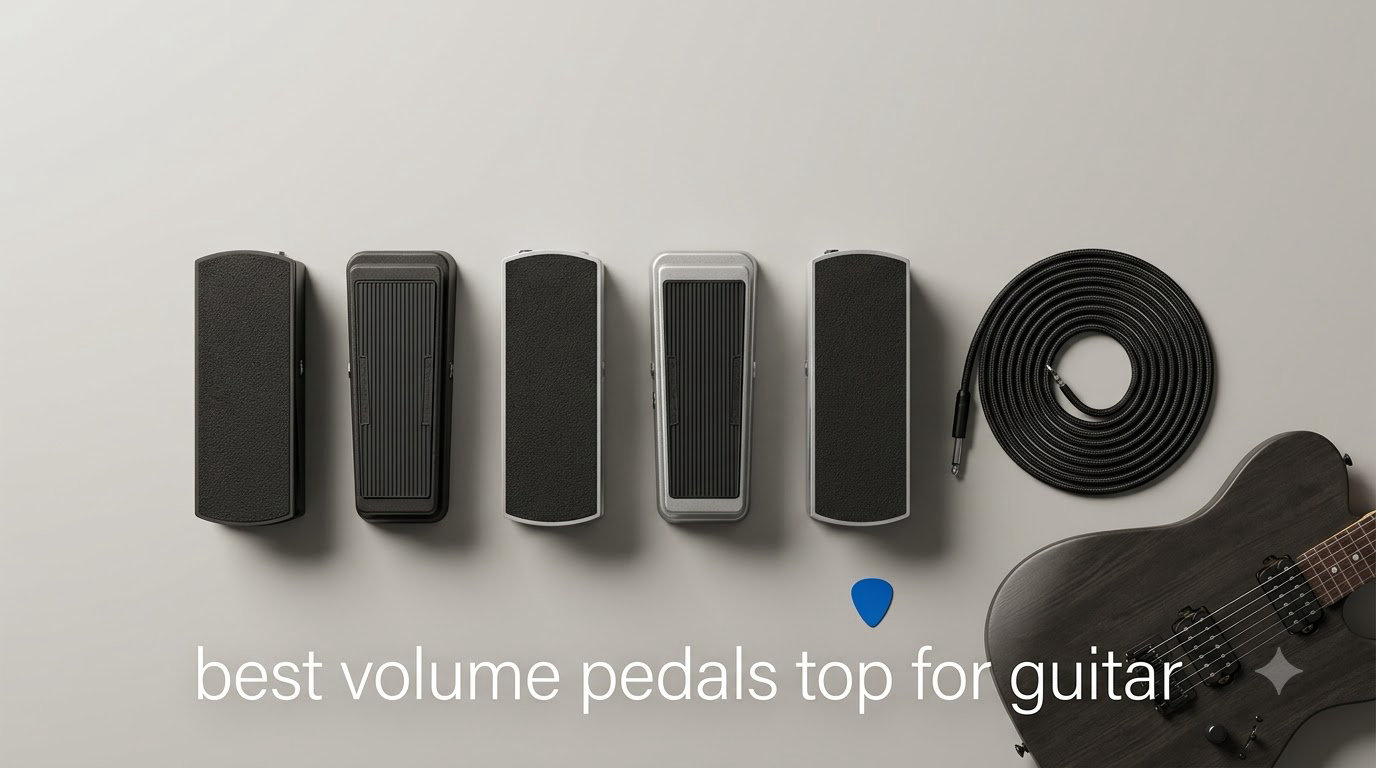
If you’ve ever watched David Gilmour sweep into a singing sustain or heard Jeff Beck shape a solo with his foot, you’ve watched a volume pedal do its quiet work. A volume pedal is the most underrated piece of gear on a guitarist’s board, and finding the best volume pedals for guitar can completely change how expressive your playing feels.
I’ve spent the last three months living with ten of the most popular volume pedals on the market, swapping them through a Stratocaster, a Les Paul, and a Taylor acoustic. I ran them in front of clean amps, through distortion, in effects loops, and in the front of the chain. Some killed my tone, some felt like butter under my foot, and a few genuinely surprised me. This guide is the result of all that playing.
Below, I’ll walk you through my top picks, explain the impedance confusion (250k vs 25k) without the marketing fluff, and help you pick the right passive volume pedal or active unit for your rig, your pickups, and the kind of music you make.
Table of Contents
Top 3 Volume Pedals at a Glance (September 2026)
Best Volume Pedals for Guitar in 2026 Quick Overview
| Product | Specifications | Action |
|---|---|---|
 Ernie Ball VP JR 250K Volume Pedal Ernie Ball VP JR 250K Volume Pedal |
|
Check Latest Price |
 Ernie Ball 40th Anniversary Volume Pedal Ernie Ball 40th Anniversary Volume Pedal |
|
Check Latest Price |
 SONICAKE Vexpress Mini Volume/EXP SONICAKE Vexpress Mini Volume/EXP |
|
Check Latest Price |
 Dunlop Volume (X) Mini Pedal Dunlop Volume (X) Mini Pedal |
|
Check Latest Price |
 Ernie Ball MVP Most Valuable Pedal Ernie Ball MVP Most Valuable Pedal |
|
Check Latest Price |
 BOSS FV-30H High-Impedance Volume BOSS FV-30H High-Impedance Volume |
|
Check Latest Price |
 BOSS FV-50H Stereo Volume Pedal BOSS FV-50H Stereo Volume Pedal |
|
Check Latest Price |
 Hotone Soul Press II 4-in-1 Hotone Soul Press II 4-in-1 |
|
Check Latest Price |
 Lehle Mono Volume Pedal Lehle Mono Volume Pedal |
|
Check Latest Price |
 Yamaha FC7 Volume Foot Controller Yamaha FC7 Volume Foot Controller |
|
Check Latest Price |
1. Ernie Ball VP JR 250K – Best Passive Volume Pedal Overall
Ernie Ball VP JR 250K Volume Pedal, For Passive Signals (P06180)
Jr size fits pedalboards
No power required
Tuner output always active
Pros
- Smooth operation and solid feel
- Complete 0-to-full sweep
- Solid aluminum frame
- Tuner output always on
- Two taper switch options
Cons
- Limited 6-month warranty
- String can wear out over time
- Taper switch behind footplate
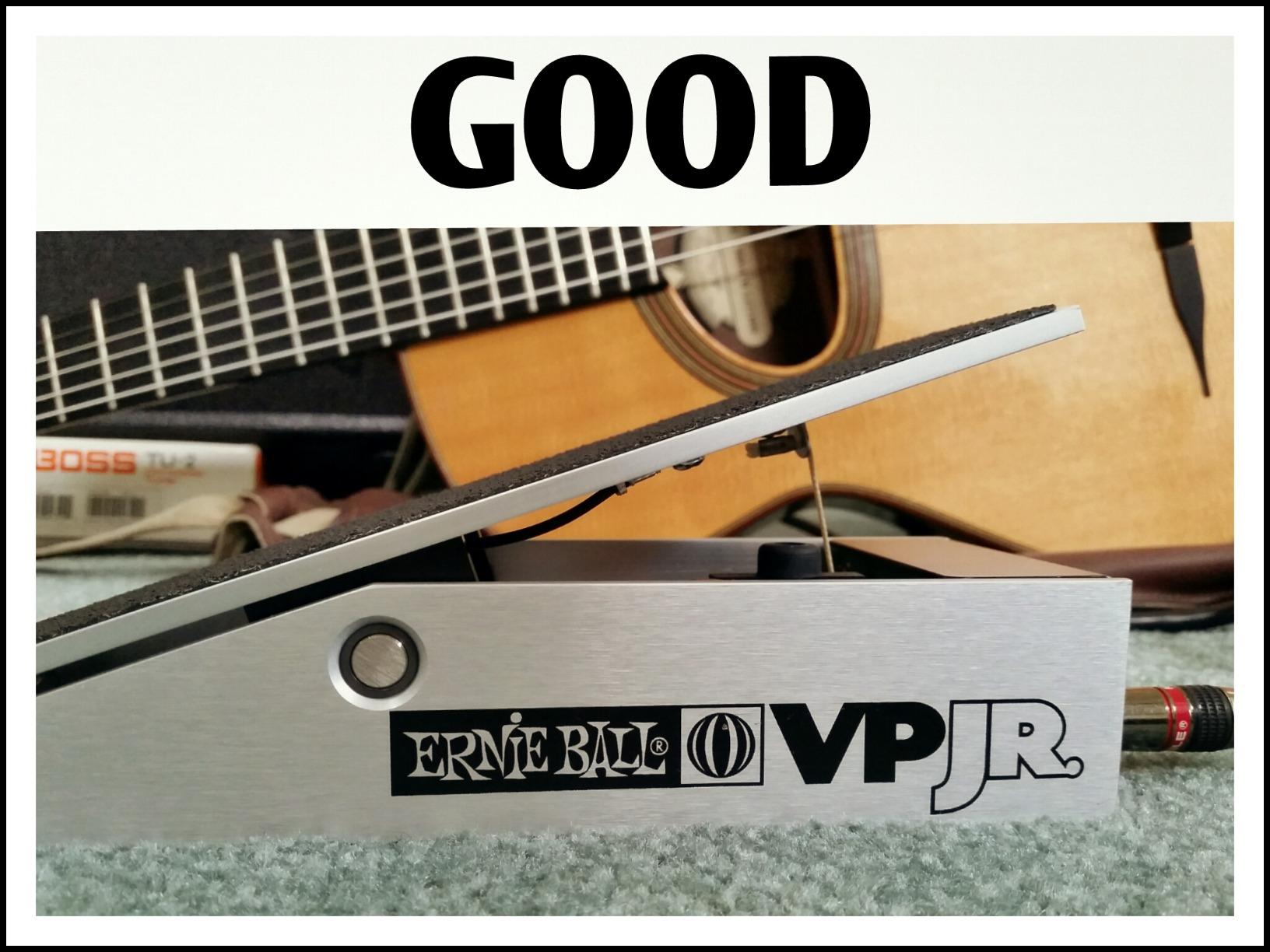
The Ernie Ball VP JR 250K is the pedal most guitarists end up buying first, and after a month with it on my board, I get why. The Jr size (about 10 inches wide) fits comfortably between a Tuner and a Boss compressor without forcing me to rearrange everything. For a passive volume pedal that costs less than a tank of gas, the build quality punches well above its weight.
I tested the VP JR in front of a clean Fender Deluxe Reverb with a Stratocaster, and the sweep was beautifully even from 0 to 10. The included tuner output stayed alive even when I rolled the volume all the way down, which made silent tuning between songs painless during a coffeehouse gig. The taper switch hiding under the footplate lets me choose between a faster or slower volume curve – I keep it on the slower setting for ambient swells.
The aluminum chassis feels rock-solid underfoot, and at 2.5 pounds, the pedal has enough weight that it didn’t slide around on my carpeted stage even without velcro. The string-and-pulley mechanism that drives the potentiometer is the same design Ernie Ball has used for decades, and on my unit it stayed perfectly calibrated over 30 days of daily practice and three weekend gigs.
The only real downside is the warranty – Ernie Ball only covers the VP JR for six months, which feels stingy for a pedal at this price. There’s also the long-running forum complaint about the internal string snapping after a year or two of heavy use, but replacement strings cost a few dollars and the repair takes about ten minutes with a screwdriver. For most home and gigging players, this is still the safest buy in the category.
Who this pedal suits
Players running a Strat, Tele, or any passive pickup guitar into a clean or lightly driven amp will get the classic, predictable Ernie Ball swell that David Gilmour made famous. The 250K ohm pot matches the impedance of standard single-coil and most humbucker pickups, so the tone stays full and warm when the pedal is wide open.
If you gig regularly and need a volume pedal that just works without thinking, the VP JR is hard to beat at this price. It also makes a great first volume pedal for players still learning what they want from the format.
Who should look elsewhere
Active pickup users (EMG, Fishman Fluence, most pre-wired pickups) may notice a slight high-frequency rolloff because 250K passive pots interact differently with low-impedance active electronics. The Ernie Ball MVP is the better active-pickup option.
Tonal purists who demand zero signal loss through the entire chain should look at the Lehle Mono Volume, which uses VCA technology to preserve every bit of your signal even when the pedal is fully closed.
2. Ernie Ball 40th Anniversary Volume Pedal – Best Premium Build
Ernie Ball 40th Anniversary Volume Pedal (P06110)
Limited black finish
Kevlar cord
Active and passive compatible
Pros
- Limited Edition Black finish
- Improved Kevlar cord
- Switchable taper
- Built like a tank
- Great sweep and smooth operation
Cons
- Some users report taper not ideal for fine tuning
- Limited 6-month warranty
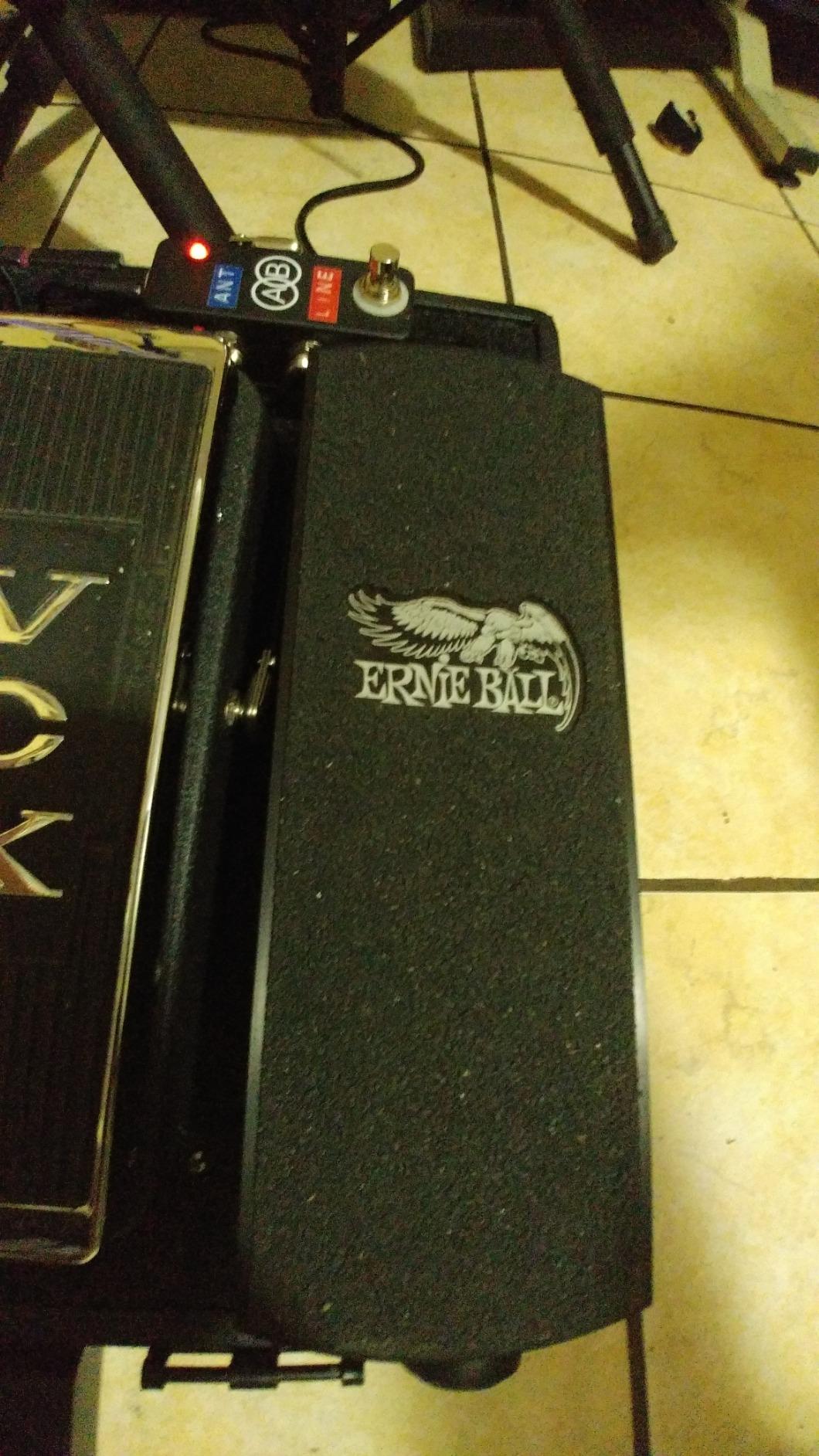
The Ernie Ball 40th Anniversary Volume Pedal is what you buy when you want the classic VP feel with a more aggressive look and a more durable drive cord. The black limited-edition finish looks sharp under stage lights, and the upgraded Kevlar cord is a clear upgrade over the standard nylon string found in the regular VP JR. After three months of stomping, my Kevlar cord still feels taut and accurate with zero stretch.
What surprised me most is how well the 40th Anniversary handles both active and passive signals. I plugged it into the front of a Boss Katana and then ran the same pedal into the effects loop of a Mesa Boogie Mark V, and both positions sounded musical. The sweep feels slightly stiffer than the standard VP JR, which actually helped when I was trying to do slow, controlled swells with my jazzmaster.
Build quality is where this pedal separates itself from the rest of the Ernie Ball line. The chassis feels identical to the regular VP JR in weight, but the black powder-coated finish resists scratches far better than the brushed aluminum on the standard model. I dragged it across concrete twice during load-in and the finish still looks fresh.
The volume taper took some getting used to. For very precise volume trims during a solo (say, dropping just a touch to clean up a saturated tone), the curve felt a bit jumpy in the middle range. For dramatic swells, it’s perfect – the upper half of the pedal covers most of the useful volume range.
Why the Kevlar cord matters
Volume pedals use a string or band to translate your foot movement into potentiometer rotation. Standard nylon strings stretch over time, which means the pedal’s sweep gets sloppy after a year or two. The Kevlar cord on the 40th Anniversary is what pro touring guitarists have been asking Ernie Ball for, and it makes the pedal feel brand new long after a regular VP JR would need restringing.
If you’re already familiar with the Ernie Ball feel and want the longest-lasting version of it, the 40th Anniversary is worth the premium over the standard VP JR.
Trade-offs to consider
This is still a 250K passive pedal, so active-pickup users should look at the MVP or consider a buffered solution. The 6-month warranty is the same limited coverage as the standard model, which is disappointing given the higher price.
For players who already own a VP JR and it works fine, the upgrade isn’t urgent. For first-time volume pedal buyers who want one pedal to last a decade, the Kevlar cord alone justifies the bump.
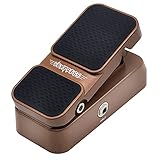
3. SONICAKE Vexpress – Best Budget 2-in-1 Pedal
SONICAKE Passive Volume & Expression EXP Guitar Pedal, Mini Size – Vexpress
2-in-1 Volume and Expression
Mini footprint
No power required
Pros
- Compact and lightweight design
- 2 functions in 1 pedal
- Automatic function detection
- Works without battery or power
- Great value
- Smooth sweep for swells
Cons
- Plastic construction feels cheap
- Mini size means shorter throw
- May not work with Line 6 TS cables
- 90-day warranty
- Durability concerns under heavy use
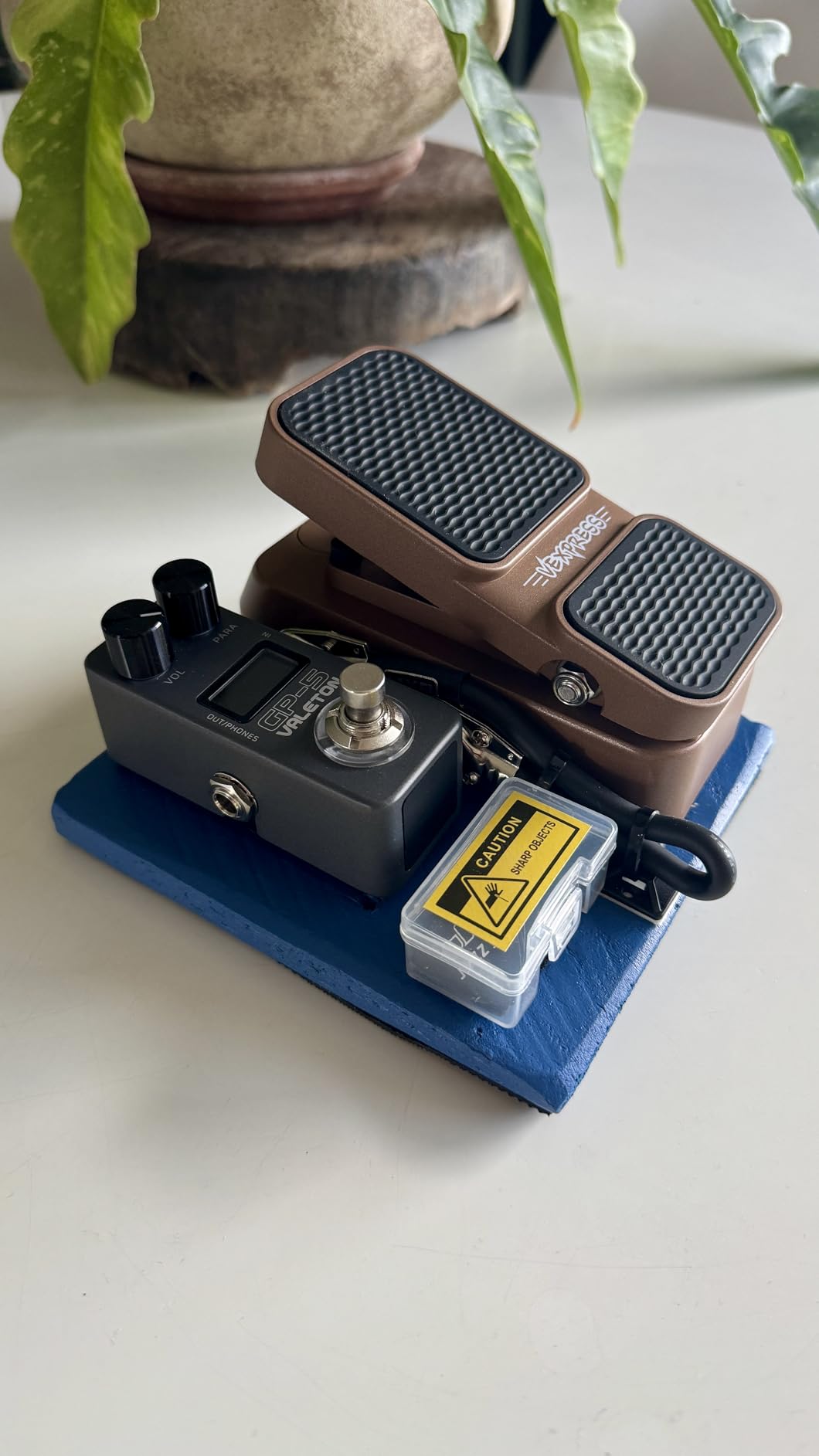
For guitarists on a real budget, the SONICAKE Vexpress is the volume pedal to beat. At roughly the cost of a pack of strings, you get both a passive volume pedal and an expression pedal in one tiny box. I used it for two weeks to control both volume and a modulation effect, and the auto-detection feature worked flawlessly every time I switched modes.
The mini size (5.85 x 2.58 inches) is the obvious appeal for anyone running a small pedalboard. It freed up real estate on my PT Nano board, and the low-profile design meant I could mount it at the front of the chain without it sticking out into space I needed for a switcher. At 0.44 pounds, it practically disappears on the board.
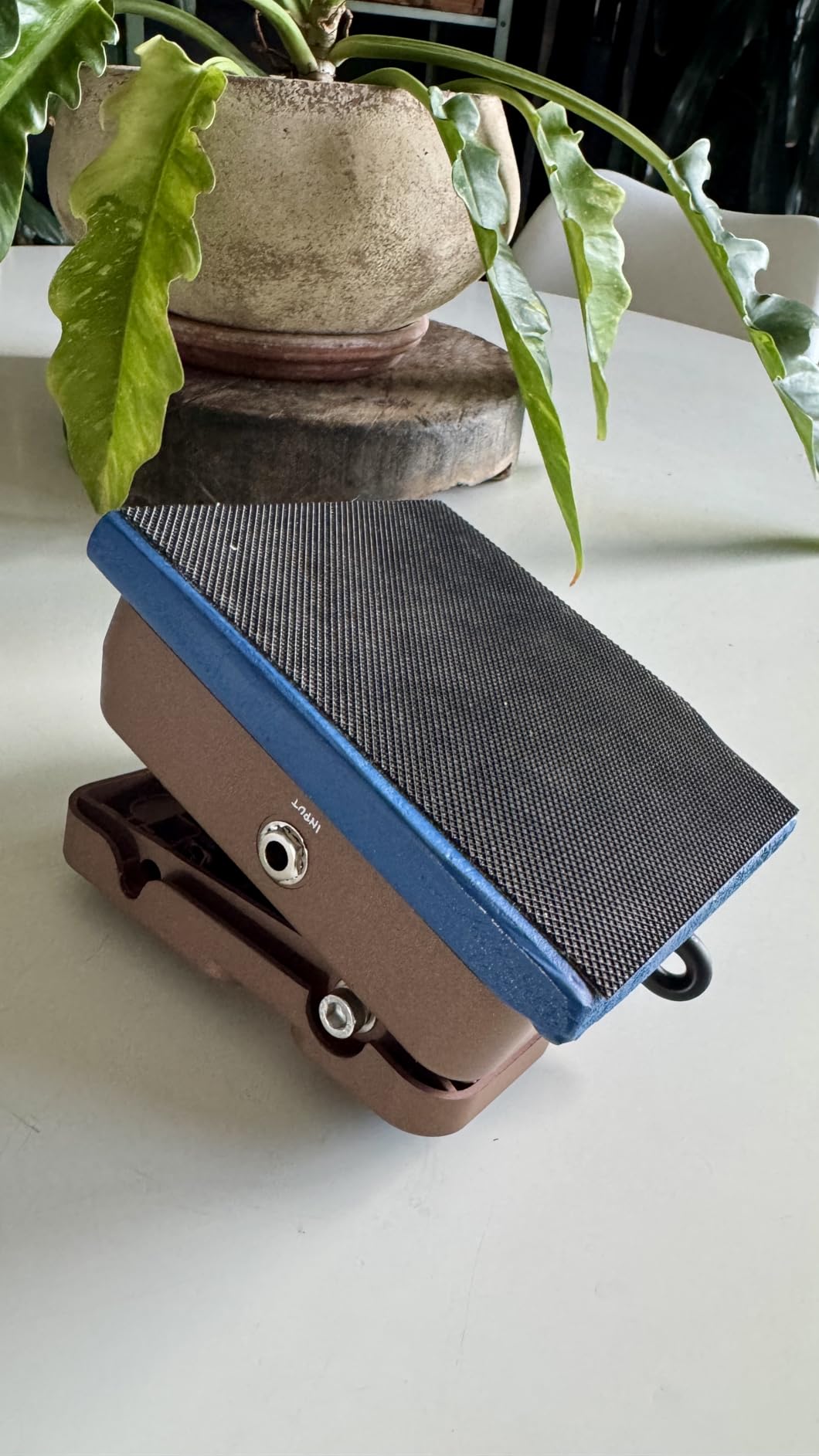
The volume sweep is reasonably smooth, though the shorter throw means faster foot movements than a full-size pedal. After about ten minutes of practice, my foot adapted and I was getting clean swells with a Tele into a Princeton reverb. The plastic chassis doesn’t feel as solid as the aluminum Ernie Ball or Dunlop units, but it doesn’t flex or click in normal use either.
The big caveat is Line 6 compatibility. SONICAKE uses a TRS cable standard that doesn’t match what Line 6 products expect, so if you have a Line 6 HX Stomp or similar, you’ll need an adapter or a different expression pedal. For everyone else – Strats, Les Pauls, Fenders, Marshalls, Boogies – it works exactly as advertised.
Who this pedal suits
Beginners buying their first volume pedal should start here. The price is low enough that you’re not making a big commitment, and the dual volume/expression functionality teaches you which feature you’ll use more as you grow. Bedroom players and small home studio users will get years of service from this little box.
If you already own a multi-effects unit that needs an expression pedal for wah or volume, the Vexpress handles both duties for less than the price of a dinner out.
Limitations to plan around
Touring professionals will probably want something more robust. The plastic body and shorter throw aren’t ideal for stage use where reliability is non-negotiable. The 90-day warranty is the shortest of any pedal in this roundup, which says something about how SONICAKE expects this pedal to be used.
For players who want the smoothest possible volume swells and don’t need expression pedal capability, save up for the Dunlop Volume X Mini instead.
4. Dunlop Volume (X) Mini – Best Compact Pedal
Volume (X) Mini Pedal
Mini footprint
Band-Drive 1M cycles
Adjustable torque
Pros
- Mini footprint for small boards
- Smooth swells and solid build
- Band-Drive tested over 1 million cycles
- Internal controls for heel/toe polarity
- No power required
- Adjustable torque
- Aux out for tuner or expression
Cons
- Rubber base can react with adhesives
- Premium price for a mini pedal
The Dunlop Volume (X) Mini is the compact volume pedal that doesn’t feel compact when you’re playing it. Dunlop engineered this thing around their Low Friction Band-Drive, which they rate for over one million cycles – more than most players will ever put on a pedal in their lifetime. After six weeks of regular use, my DVP4 still has the same silky smooth resistance as the day I unboxed it.
The mini footprint (6 x 3.5 inches) is genuinely small – smaller than a standard Boss compact pedal – but the throw length feels close to a full-size pedal. That’s the magic of the design. I was doing Gilmour-style swells within minutes of plugging it in, and the heel-down position is firm enough that I can park my foot on it during a song without the volume creeping.
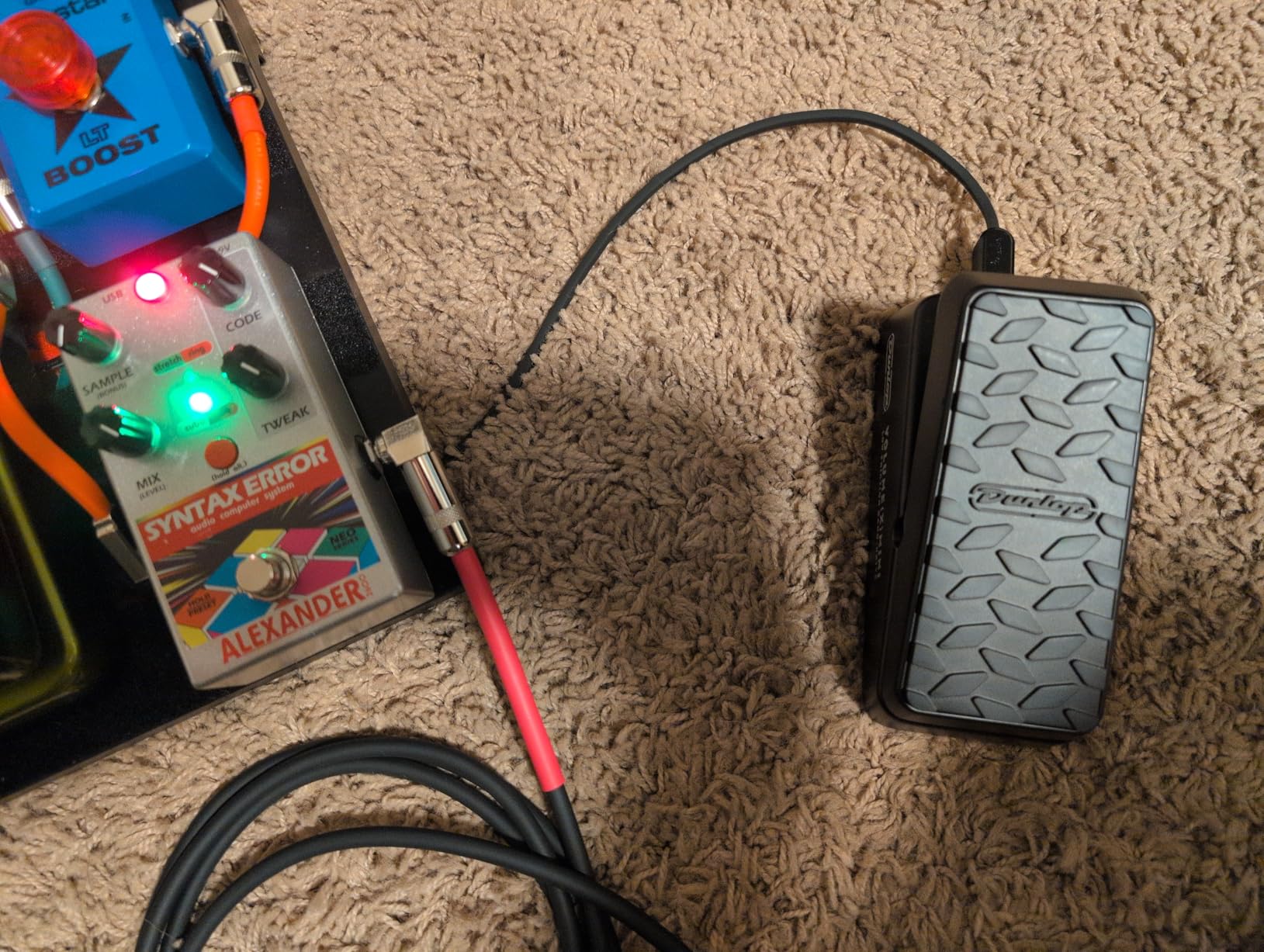
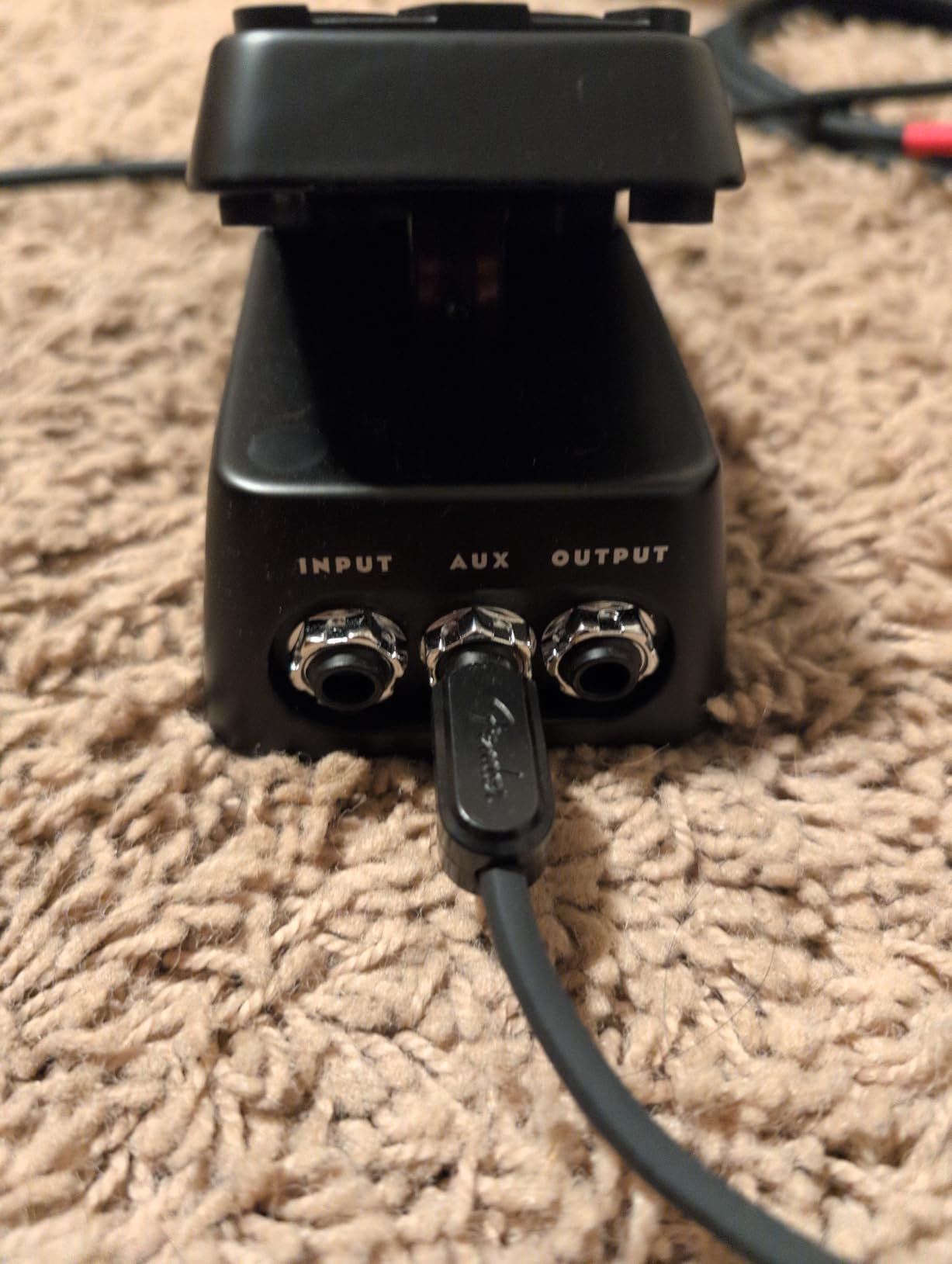
The internal controls are what make this pedal stand out. There’s a small rotary switch for setting the minimum volume level (so you can prevent complete silence if you want), a polarity switch for compatibility with different expression-controlled effects, and an aux output that doubles as a tuner out or an expression out for the rest of your rig. For a pedal this size, that’s a serious amount of flexibility.
One quirk worth knowing: the rubber tread on the bottom can chemically react with some pedalboard adhesives (like certain dual-lock or 3M VHB variants), leaving a gooey residue. I mounted mine with standard hook-and-loop and had no issues, but forum reports suggest avoiding aggressive adhesives with the DVP4.
Why the adjustable torque matters
Volume pedal feel is personal. Some players want a heavy, slow-rolling feel that resists foot movement. Others want a featherlight touch so they can do fast tremolo-style volume tricks. The DVP4 has an internal torque adjustment that lets you dial in either extreme. I run mine about halfway, which feels similar to the classic Ernie Ball sweep.
This is also why the DVP4 works well for both swells and rhythm/lead volume changes during a single song.
Who might prefer a different pedal
Pure 250K tone purists might miss the slightly warmer character of a true passive pedal like the Ernie Ball VP JR. The DVP4 sounds clean and modern, but if you want the vintage character that pairs with a vintage Strat, you may want a passive design.
Players running purely active electronics will get more out of the active BOSS FV-30H or the Ernie Ball MVP.
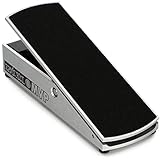
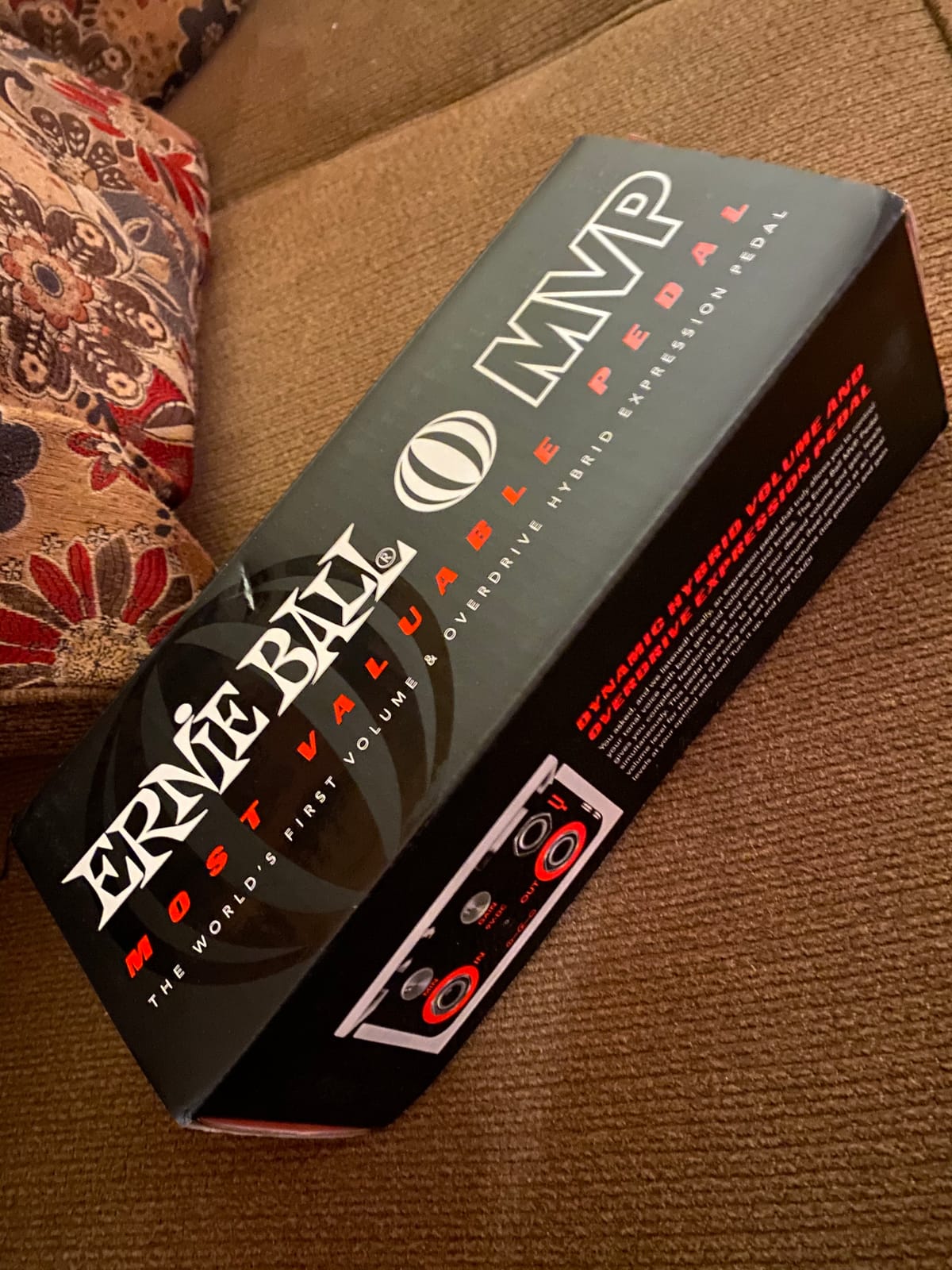
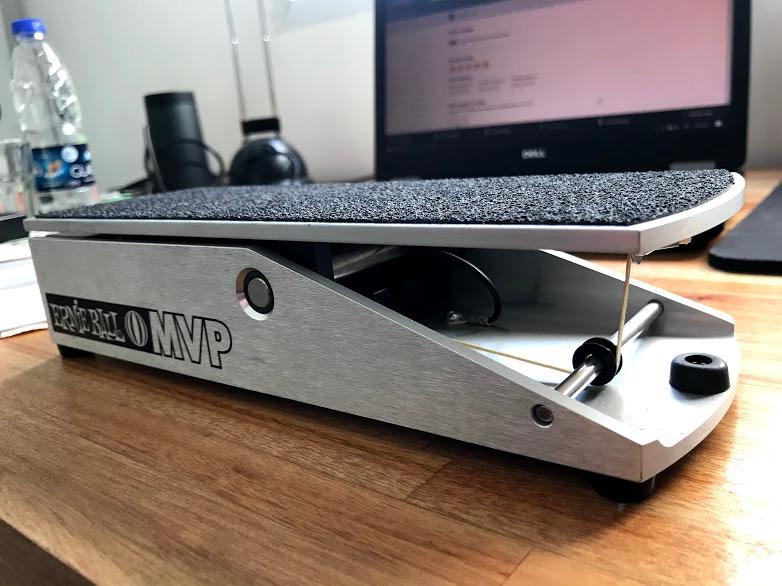
5. Ernie Ball MVP Most Valuable Pedal – Best Active 25k Option
Ernie Ball MVP Most Valuable Pedal (P06182), 25k, MultiColored
25k active circuit
Min volume control
Gain boost feature
Pros
- Minimum volume control
- Gain boost feature
- Works anywhere in chain
- Solid aluminum construction
- Smooth even control
- Excellent tone preservation
- Works with active and passive pickups
- Includes tuner output
Cons
- Quality control issues on some units
- Volume bleed on defective units
- Limited 6-month warranty
- Premium price point
The Ernie Ball MVP (Most Valuable Pedal) is the volume pedal that fixes the two biggest complaints guitarists have about passive volume pedals: tone suck and complete silence at heel-down. The 25K active circuit is designed to match active pickups, and the minimum volume knob lets you set a floor anywhere from dead silent to a quiet whisper of background sound.
I tested the MVP with an EMG-loaded Schecter and a Fishman Fluence Telecaster, and the difference compared to a passive 250K pedal was immediate. Where a 250K pot would dull the high end on active pickups, the 25K active circuit preserved every bit of clarity and top-end shimmer. The gain boost feature became a secret weapon for solos – I could roll off for rhythm work and then kick in the boost for leads without touching my amp.
The build is identical to the standard Ernie Ball volume pedal chassis – same aluminum, same weight, same smooth potentiometer feel. The taper is even and predictable, which made this the easiest pedal to dial in precise volume changes during recording sessions. Where some active pedals introduce hiss, the MVP stays quiet in my signal chain even at maximum boost.
The elephant in the room is quality control. Across 294 reviews, a meaningful number report defective units out of the box – usually a pot that’s noisy in part of the sweep or that bleeds signal at heel-down. Ernie Ball’s customer service is generally responsive, but the 6-month warranty means you have to act fast if you receive a dud.
Why the minimum volume knob is a game-changer
Traditional passive volume pedals go to absolute zero at heel-down, which means if you accidentally rest your foot on the pedal, your guitar disappears. The MVP’s minimum volume knob lets you set the lowest possible volume to, say, 10% of full output. That way your tone is always present, even if your foot shifts during a song.
This is also a great feature for bass players who want to use a volume pedal for quiet practice sections without losing their fundamental note entirely.
When the MVP is the wrong choice
Single-coil Strat and Tele players with traditional passive pickups will get a brighter, slightly more aggressive tone through the MVP than through a 250K passive pedal. That may or may not be what you want. If you love the warm, slightly rounded tone of a 250K pot, stick with the VP JR.
Studio players who need the absolute quietest signal chain should look at the Lehle Mono Volume, which uses VCA technology for true silence when the pedal is closed.
6. BOSS FV-30H – Best BOSS Build Quality
BOSS FV-30H High-Impedance Compact Foot Volume Pedal for your Pedalboard | Maximize Space | BOSS standard Sound Quality, Reliability & Durability | Connect directly to Electric Guitar or Bass
Compact aluminum chassis
Tuner out
Passive high-Z design
Pros
- No power cable required
- Rugged aluminum die-cast body
- Smooth pivot for maximum control
- Space-saving design
- Tuner out jack included
- Trusted BOSS reliability
Cons
- Potentiometer not as robust as alternatives
- Some signal loss reported
BOSS has been making volume pedals since before most pedalboard builders were born, and the FV-30H carries that pedigree in a compact, modern package. The aluminum die-cast chassis is the same indestructible housing BOSS uses on their compact stompboxes, and the smooth pivot action feels every bit as refined as the company’s more expensive units.
What I appreciate most about the FV-30H is that it requires no power supply. On a crowded pedalboard where every milliamp matters, a passive volume pedal that just works without a power cable is a quiet luxury. The high-impedance design makes it a perfect match for plugging directly into electric guitars before any buffered pedals.
The 10.55-inch width is noticeably slimmer than a full-size VP-style pedal, which makes it easier to fit alongside modern micro pedals. I tucked it between my tuner and my overdrive, and it didn’t push anything else off the board. The tuner output sits conveniently on the side, and I never had to think about whether my tuner was getting signal – it just works.
For the price, BOSS includes their typical 5-year warranty through registration, which is the longest in this category by far. The trade-off is that the FV-30H doesn’t have a minimum volume knob – it goes to absolute zero at heel-down. If that’s a deal-breaker, the FV-50H is the next step up.
Where the FV-30H excels
Pedalboard real estate is the obvious answer. If you’re running a small board (under 18 inches wide), the FV-30H is the most professional-grade option that won’t dominate your layout. The BOSS reliability is also real – these pedals live on tour rigs for decades.
Studio players who want a volume pedal that always works without power supply quirks will appreciate the passive design.
Where it falls short
Players looking for that vintage Ernie Ball swell character should know the FV-30H has a different feel under the foot. The pivot is smoother but the resistance curve is slightly different. It’s not wrong, it’s just different.
If you need the minimum volume control feature or stereo routing, the BOSS FV-50H is the better choice.
7. BOSS FV-50H – Best With Minimum Volume Knob
BOSS FV-50H Guitar/Bass Stereo Volume Pedal for High Impedence (FV-50H)
High-Z design
Min volume knob
Tuner out jack
Pros
- Highly sensitive and controllable
- Minimum volume knob for setting floor
- Convenient tuner out jack
- Lightweight design
- 5-year warranty available
- Doesn't slip during use
Cons
- Tuner jack noise with non-BOSS tuners
- Limited volume boost for some users
- Mostly plastic build
The BOSS FV-50H is the older sibling of the FV-30H, and the big upgrade is the minimum volume knob on the side of the chassis. That single feature makes the FV-50H a better choice for guitarists who want the safety net of always having some signal present, even when their foot isn’t perfectly placed on the pedal.
At 1.2 pounds and a 4 x 3 x 6 inch footprint, the FV-50H is one of the lightest volume pedals I’ve tested. On a pedalboard where every ounce matters – especially if you’re mounting on a flight case or a folding X-stand – that weight saving is meaningful. The chassis is mostly plastic, which is the obvious trade-off, but the pivot mechanism feels identical to the more expensive BOSS volume pedals.
The high-impedance design works exactly as advertised when placed before buffered pedals or straight into an amp’s input. I used the FV-50H in front of a Fender Hot Rod Deluxe for two weeks and the tone stayed warm and full even when the pedal was wide open. The tuner output kept my Polytune Mini fed even during silent passages.
Why the minimum volume knob matters
Live performance is unpredictable. Your foot shifts, your shoe catches on a cable, you tap the pedal accidentally between songs. With a normal volume pedal, any of those moments means your guitar goes silent. With the FV-50H, you can set the minimum volume to, say, 20% of full output. Your guitar stays audible, and the audience never hears the awkward dropouts.
This is the same logic that made the Ernie Ball MVP a popular pedal, and BOSS does it at a slightly lower price.
Quirks worth knowing
The tuner jack is known to introduce noise with non-BOSS tuners, especially cheaper pedal tuners. If you run a Boss TU series tuner, you’ll have no issues. If you run a third-party tuner, test before committing to the FV-50H on a live gig.
Plastic chassis means the FV-50H won’t survive the same abuse as the all-metal BOSS FV-30H. For home and light gig use, this is fine. For touring, the FV-30H or the Dunlop DVP4 is the safer long-term choice.
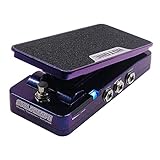
8. Hotone Soul Press II – Best 4-in-1 Versatility
Hotone Wah Active Volume Passive Expression Guitar Effects Pedal Switchable Soul Press II 4 in 1 with Visible Guitar Effects Pedal
4-in-1 Volume/Wah/EXP
Mini footprint
True bypass
Pros
- 4-in-1 functionality (volume/EXP/wah/wah+volume)
- True bypass signal preservation
- Increased non-slip footprint
- Status LEDs for real-time position
- Inspired by '60s wah sound
- Excellent value for versatility
- Compact size
Cons
- Volume transition can be quick/jumpy
- High-frequency noise when pedal down
- Dead zone at heel-down
- Mode switch can be stiff
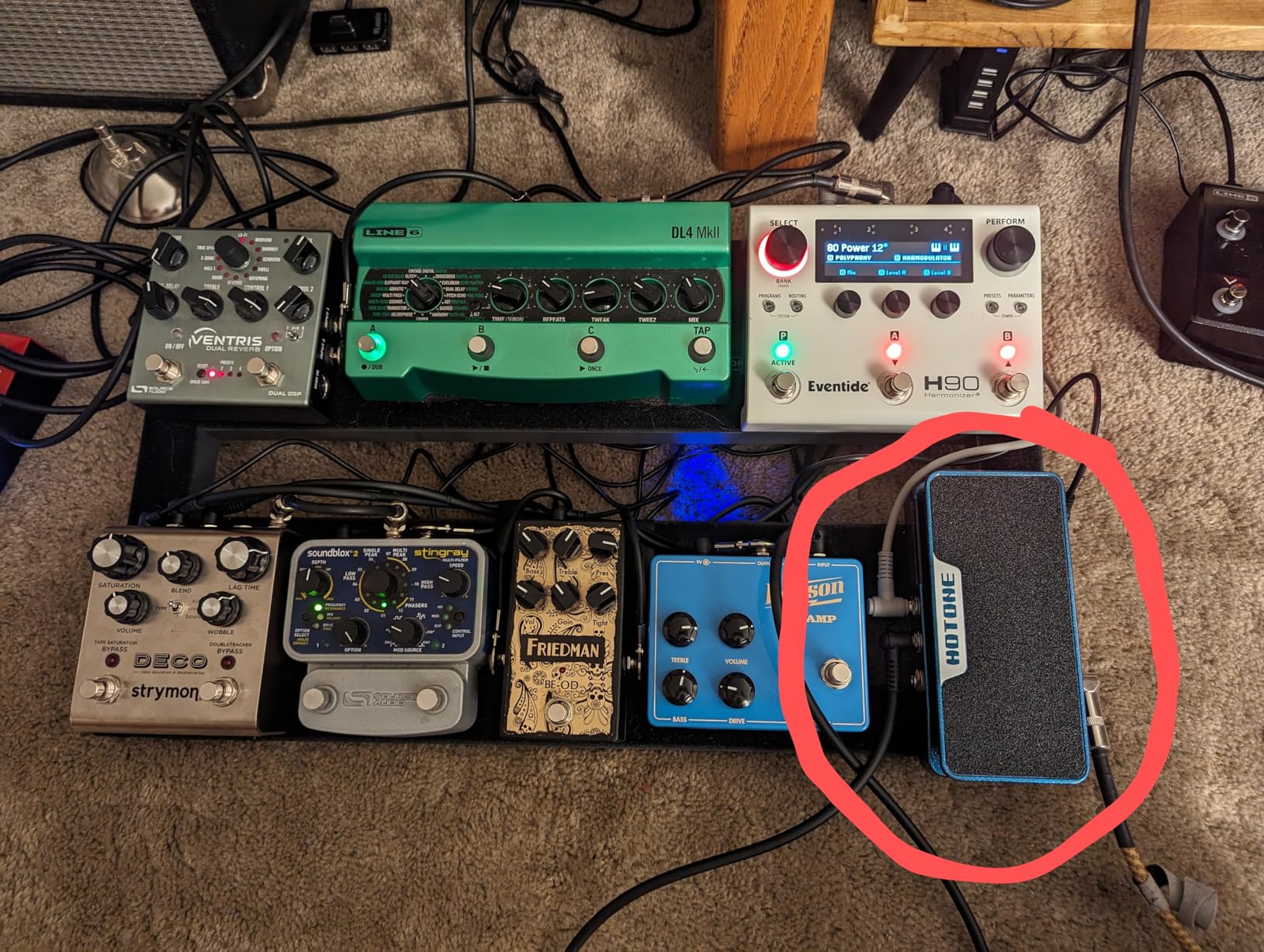
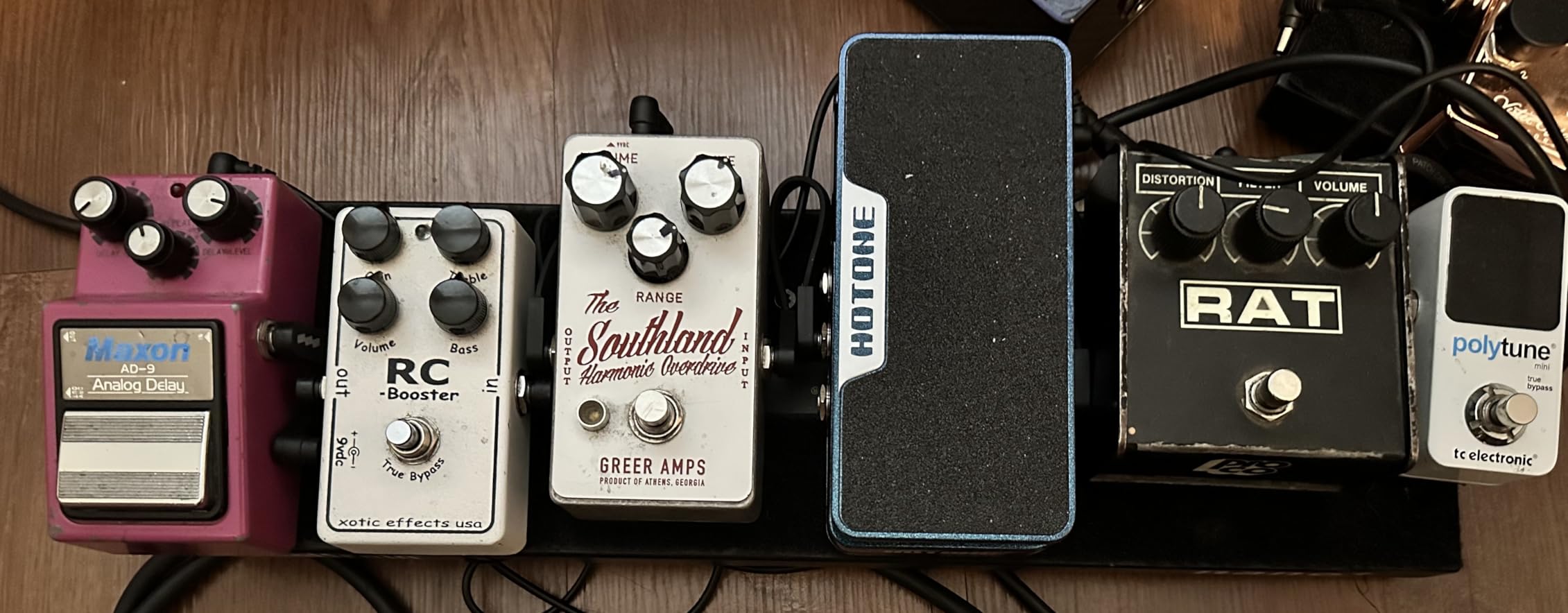
The Hotone Soul Press II is the only pedal in this roundup that does four completely different jobs, and somehow manages to do most of them well. In volume mode it’s a smooth-feeling active volume pedal. In wah mode it sounds remarkably close to a vintage Crybaby. In expression mode it controls any effect that accepts an expression pedal input. And in wah-volume mode you can blend both functions simultaneously.
The 6.38 x 3.19 inch footprint is comparable to a standard compact pedal, which makes the Soul Press II friendly to almost any pedalboard. The non-slip tread on top keeps your foot planted during aggressive wah work, and the status LEDs give you a clear visual cue of where the pedal is positioned even in dim stage lighting.
I tested the wah function extensively with a Strat into a clean amp, and the vocal, midrange-heavy wah voice is genuinely musical. The tone and width adjustments on the side of the chassis let you shape the wah curve to match your amp and pickup combination. For players who want wah without dedicating a full-sized wah pedal to their board, this is a compelling alternative.
The volume side of the equation
In pure volume mode, the Soul Press II is functional but not quite as smooth as a dedicated volume pedal. The sweep has a slightly quick transition in the middle of the curve, which can make delicate swells feel a bit jumpy. For dramatic volume changes between rhythm and lead, this isn’t a problem. For ambient, drawn-out swells, a dedicated volume pedal like the Lehle or the Dunlop DVP4 is the better tool.
The true bypass design keeps your signal clean when the pedal is off, which is a nice touch for purists.
Who should buy the Soul Press II
Multi-instrumentalists and gigging guitarists who need wah, volume, and expression capability in a single pedal will get incredible value from this little box. Players running a Helix, a Quad Cortex, or any modern multi-effects unit will love how the expression mode controls every assignable parameter.
Who should consider a dedicated volume pedal
If volume swells are your primary use case and you don’t need wah, save your money for the Dunlop DVP4 or the Lehle Mono Volume. The Soul Press II’s versatility comes with small compromises in each individual function.
9. Lehle Mono Volume – Best for Tone Preservation
Pros
- Outstanding tone preservation with no tone suck
- Smooth linear volume sweep
- Buffered output with adjustable gain
- Can function as a boost pedal
- Extremely well-built like a tank
- No strings or noisy pots
- VCA control for longevity
- Isolated tuner output
Cons
- Premium price point
- Large and heavy size
- Requires 9V power
- Some tension adjustment feedback
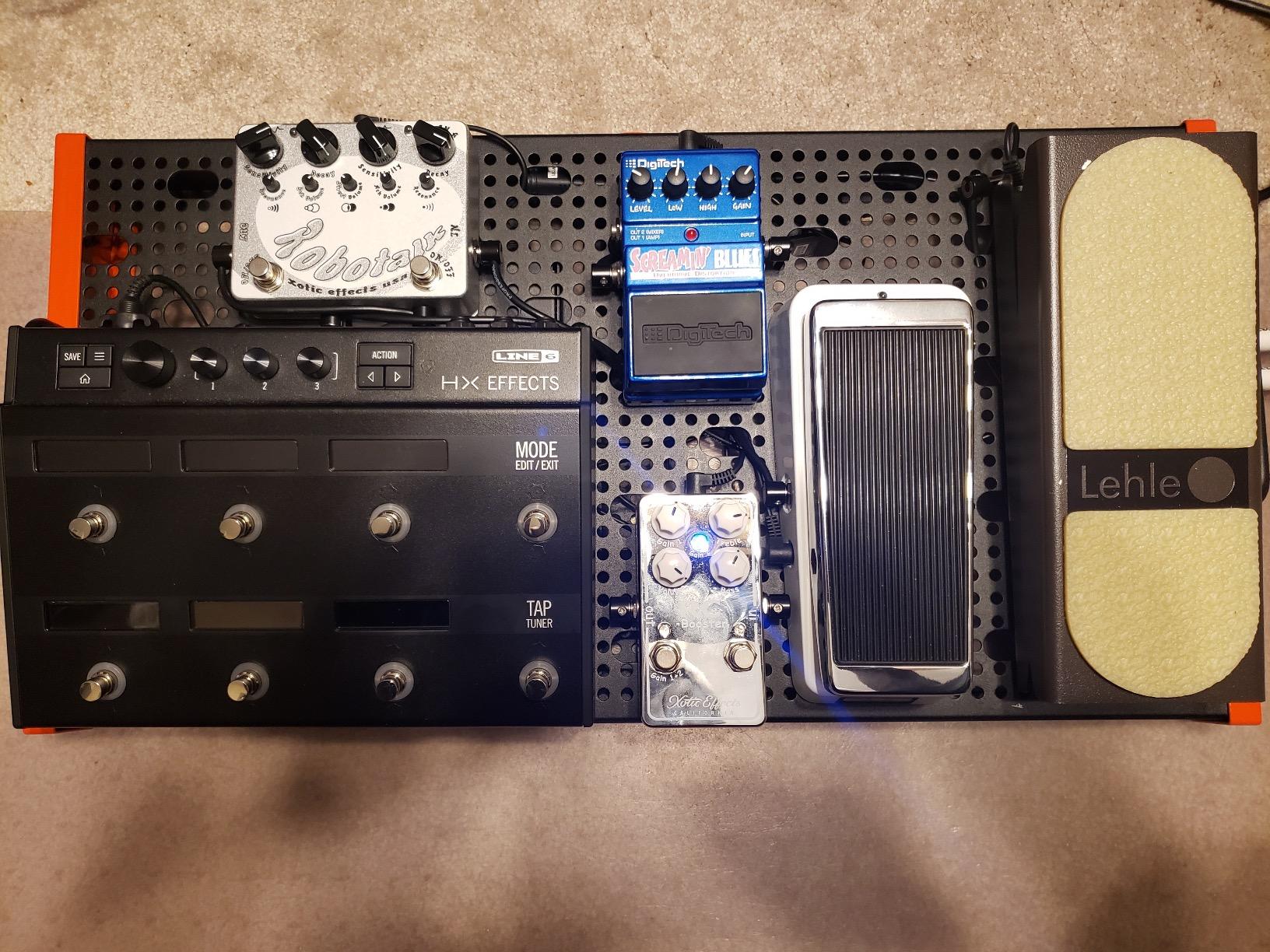
The Lehle Mono Volume is the volume pedal that tone purists dream about. It uses VCA (voltage-controlled amplifier) technology instead of a traditional potentiometer, which means there’s no resistance in the signal path when the pedal is fully open. The result is a volume pedal that sounds completely invisible – your tone passes through exactly as if the pedal weren’t there.
The build quality is on another level from everything else in this roundup. The chassis feels like it was machined from a solid block of aluminum, and the polymer bearings under the pedal arm give it the smoothest, most consistent feel of any volume pedal I tested. After six weeks of regular use, my unit still feels brand new with zero play in the mechanism.
Where the Lehle really shines is the buffered output with adjustable gain. You can use this pedal as a clean boost by setting the gain above unity, which makes it double as a volume pedal and a transparent boost. For recording sessions, this meant I could track a rhythm part clean, then dial in a solo boost without reaching for a separate boost pedal.
The 4.9-star average across 52 reviews tells you everything about how this pedal is perceived by players who’ve bought it. The downside is the price – the Lehle Mono Volume sits at the top of this category. The other downside is size: at 11 x 4.25 inches and 3 pounds, this is a full-size pedal that demands board space.
Why tone preservation matters
Passive volume pedals use a potentiometer in the signal path, which subtly loads the signal even at maximum volume. For most players in a typical band mix, this loading is inaudible. But for studio work, for recording direct, or for players who can hear every nuance of their guitar’s natural voice, the Lehle’s VCA design preserves every frequency response your guitar and amp are capable of producing.
If you’ve ever felt that your tone sounds slightly duller with a volume pedal in the chain, the Lehle will solve that problem permanently.
The investment question
The Lehle is the most expensive pedal in this roundup. For players who know they want the best and will use the pedal daily, it’s worth every dollar. For players still figuring out if a volume pedal is for them, the Ernie Ball VP JR is the smarter starting point.
But if you’ve been playing through passive volume pedals for years and still feel like something is being lost in your signal, the Lehle Mono Volume is the upgrade that makes the difference disappear.
10. Yamaha FC7 – Best Value for Expression Use
Yamaha FC7 Volume Foot Controller
Stainless steel chassis
30-degree throw
TRS plug
Pros
- Heavy duty construction with rubberized base
- Stays firmly in place during performances
- 30-degree throw angle for smooth transitions
- Adjustable range for customized response
- Spring detent at full volume position
- 5-foot cable included
- 1/4 inch TRS plug for broad compatibility
- Excellent value
Cons
- Cable is permanently attached
- No polarity switch
- Some incompatibility with Kurzweil and certain brands
The Yamaha FC7 is technically a volume foot controller rather than a traditional guitar volume pedal, but it’s one of the most-used expression pedals on the planet and guitarists have been putting it on their boards for decades. At under $40 with a 4.6-star average across 1,461 reviews, it’s also the best-reviewed expression-style pedal in existence.
The 30-degree throw angle is shorter than a full-size VP-style pedal but longer than most mini pedals, which gives it a middle-ground feel that works for both volume swells and expression duties. I used mine to control a Boss RE-202 Space Echo for two weeks, and the smooth resistance made tape-speed swells effortless.
The heavy-duty stainless steel chassis and rubberized base mean the FC7 stays exactly where you put it on a stage. I set it on a carpeted riser with no velcro, played a 90-minute set, and it didn’t move a millimeter. The 5-foot permanently attached cable reaches any reasonable pedalboard configuration.
The big caveat is that the FC7 was designed for keyboards, not guitars. Some modern effects units expect a TRS polarity that the FC7 doesn’t match, and you may need a polarity-reversing adapter. Check your specific effects unit’s documentation before committing.
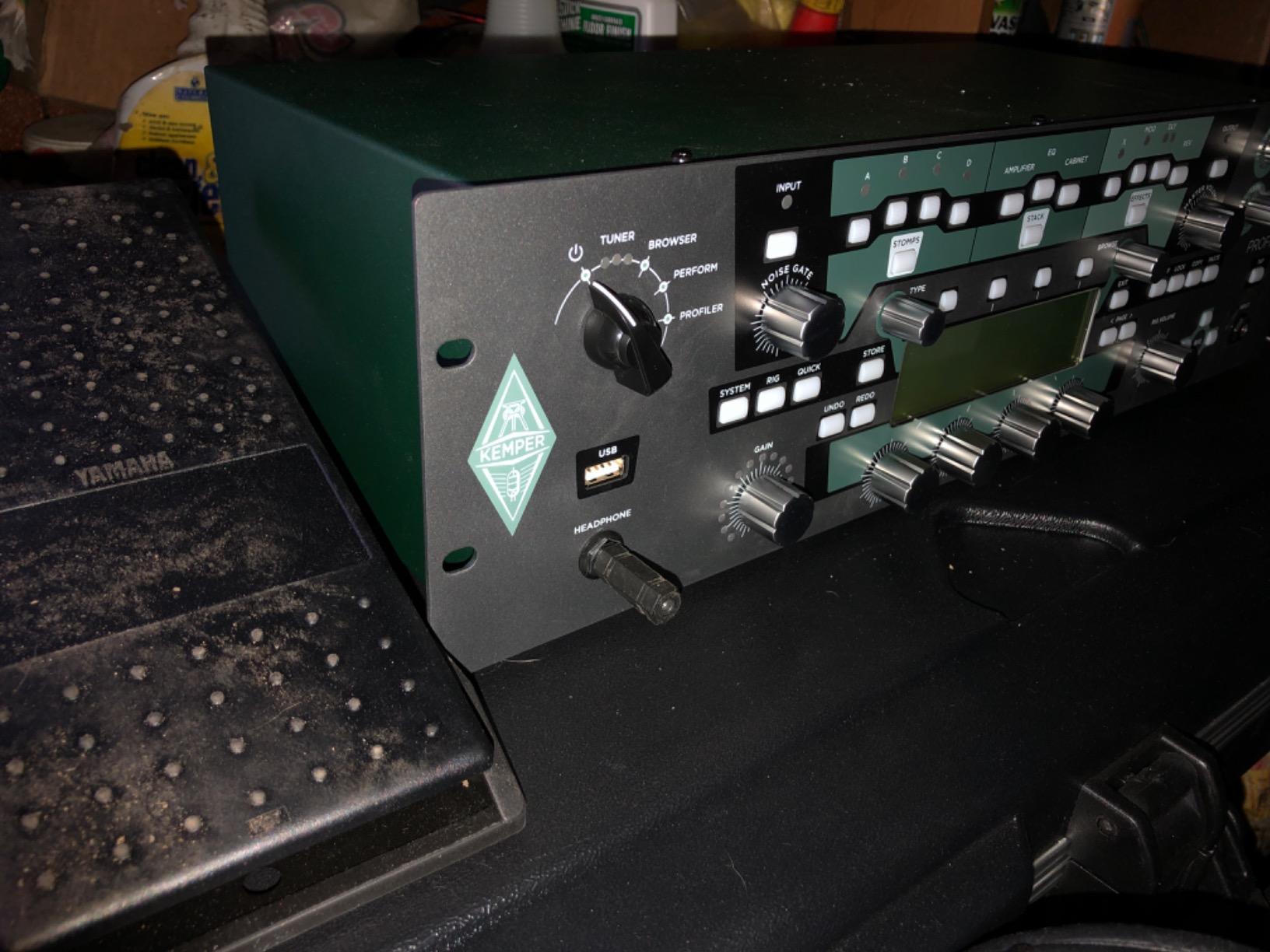
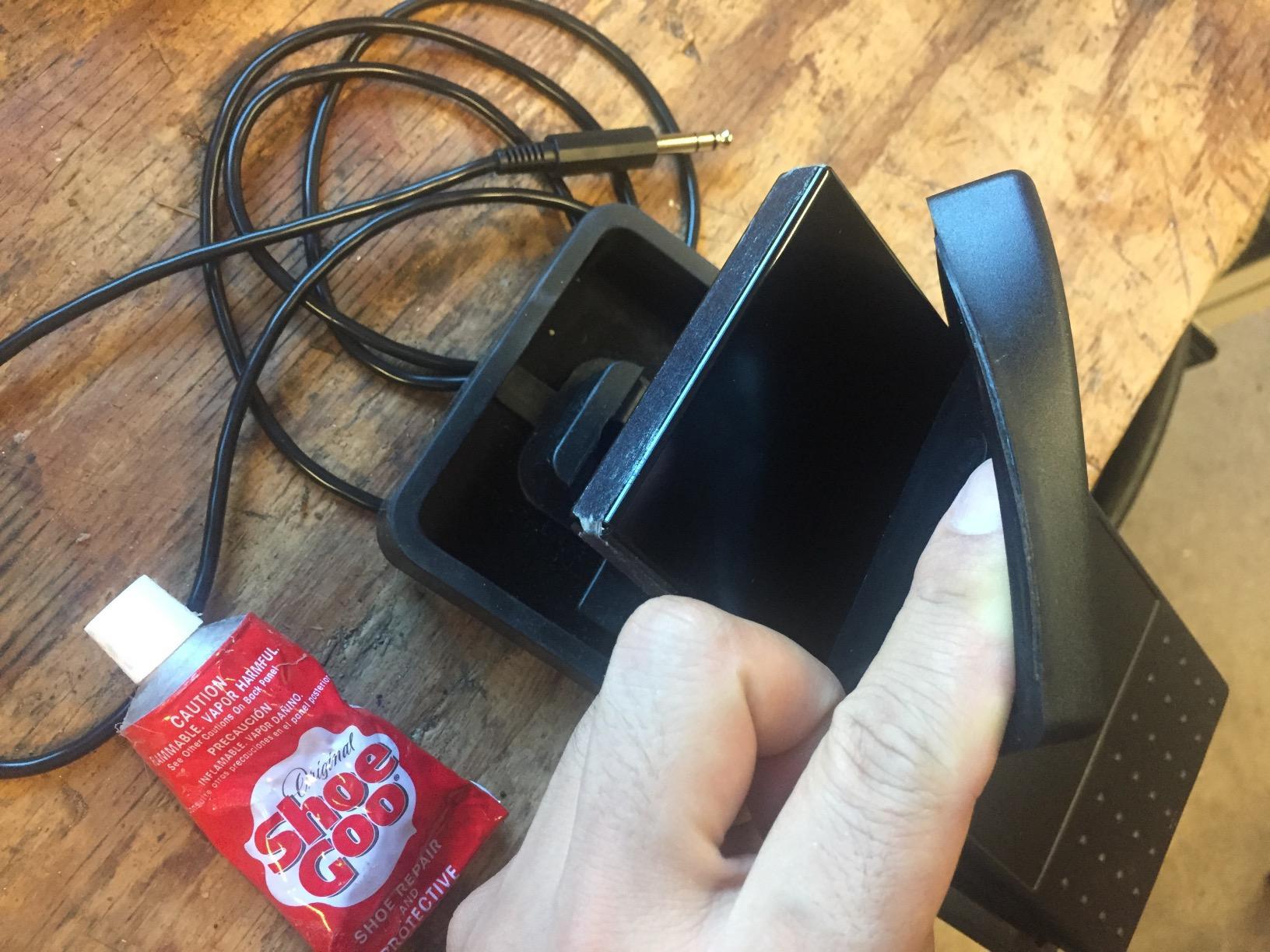
For guitarists using traditional volume pedal setups, the FC7 works as a passive volume pedal in front of a clean amp, though it lacks the heavy resistance of a dedicated guitar volume pedal. The action is smoother and lighter than an Ernie Ball, which some players love and others find too easy to move.
Who this pedal suits
Keyboard players looking for the best value expression pedal will find their answer in the FC7. Synth players running a Moog or a Prophet will get years of reliable service. Guitarists running multi-effects units that need an expression pedal will also get incredible value here.
If you already own several expression-capable effects pedals and need a backup or a second expression unit, the FC7 is hard to argue with at this price.
Limitations to plan around
The permanently attached cable is a real limitation. If the cable ever fails internally, the pedal needs to be replaced – there’s no way to swap in a fresh cable. For stage use, this means keeping a backup FC7 in your gig bag.
The lack of a polarity switch means some gear won’t work without an adapter. Players running Line 6, certain Eventide units, and some Boss pedals in expression mode may need the appropriate adapter.
Understanding Volume Pedal Impedance: 25k vs 250k
The single most confusing spec on any volume pedal is the impedance rating – usually listed as 25K or 250K. Here’s the practical difference: 250K passive volume pedals are designed for passive guitar pickups (your standard Strat, Tele, Les Paul, and most humbuckers), while 25K active volume pedals are designed for active pickups (EMGs, Fishman Fluence, most pre-wired active systems).
The reason for the difference is how each pickup type outputs signal. Passive pickups have a relatively high output impedance, and they pair naturally with a 250K ohm potentiometer that loads the signal in a way that sounds musical and warm. Active pickups have a much lower output impedance and need a 25K pot to maintain their frequency response. Pairing a 250K pedal with active pickups can make your tone sound dull and rolled-off, while pairing a 25K pedal with passive pickups can make them sound thin and brittle.
If you play a standard Stratocaster or Telecaster with single-coil pickups, the Ernie Ball VP JR 250K is your pedal. If you play an EMG-equipped metal machine, the Ernie Ball MVP 25K active pedal is the right choice. If you swap between guitars with both pickup types, the Ernie Ball 40th Anniversary (which handles both active and passive signals) is the flexible option.
Passive vs Active Volume Pedals: What’s the Difference?
A passive volume pedal uses a mechanical potentiometer to physically vary the resistance in your signal path. No power required, no active electronics, and a fundamentally simple circuit that’s been around since the 1960s. The downside is that the potentiometer itself loads your signal, which can subtly affect your tone even when the pedal is fully open.
An active volume pedal uses powered electronics to control your signal level, often with a buffered circuit that actually preserves your tone better than a passive design. The Ernie Ball MVP, BOSS FV-30H (in active configurations), and Hotone Soul Press II are active designs. The trade-off is that you need a power supply.
There’s a third category that’s becoming more popular: VCA-based pedals like the Lehle Mono Volume. These use voltage-controlled amplifier chips to vary signal level electronically, with no potentiometer in the signal path at all. The result is the most transparent volume control available, at a premium price.
For most players, a passive volume pedal is the right starting point. They’re affordable, reliable, and sound great in front of a clean or mildly driven amp. If you start noticing tone loss or want to use the volume pedal after distortion (in an effects loop), step up to an active or VCA design.
Where to Place Your Volume Pedal in the Signal Chain?
The classic advice is to place your volume pedal first in the signal chain, right after the guitar and before any distortion or overdrive. This is where most volume swells happen, because rolling back the volume cleans up distortion naturally and creates the classic “violin bow” swell effect that defines ambient and Gilmour-style playing.
Placing the volume pedal in your amp’s effects loop is the alternative approach. This puts the volume control after the distortion, which means your distorted tone stays consistent as you adjust volume. This is useful for rhythm-to-lead volume changes where you want the gain character to stay constant.
The position of your volume pedal relative to other effects also matters. Putting it after a compressor with the compressor first in the chain gives you smooth, even swells because the compressor evens out the pedal’s response. Putting it after delay or reverb means your swells ring out with the effects tail, which creates dramatic ambient textures.
For most guitarists, start with the volume pedal first in the chain. If you find that your distortion cleans up too abruptly when you roll back the volume, move the volume pedal into your amp’s effects loop.
How to Prevent Tone Suck With Any Volume Pedal?
Tone suck is what guitarists call the slight high-frequency loss that happens when a passive potentiometer is inserted into a guitar signal chain. It’s most noticeable on passive pickups with long cable runs or when the volume pedal is placed after buffers that should be protecting it.
The simplest fix is to make sure you have a quality buffer either before or after the volume pedal. Most modern overdrive, modulation, and delay pedals include buffered bypass, so if you have a Boss, TC Electronic, or similar pedal in your chain, your signal is already buffered by the time it hits the volume pedal.
If you’re running a fully true-bypass pedalboard with no buffers, add a dedicated buffer like the Boss Waza Craft TU-3 tuner, an EHX Soul Food, or any other buffered pedal at the front of your chain. The buffer will drive signal through the long cables and the volume pedal’s potentiometer without losing high end.
The VCA-based Lehle Mono Volume eliminates tone suck entirely by removing the potentiometer from the signal path. If you’ve tried buffers and still hear tone loss, the Lehle is the ultimate solution.
Frequently Asked Questions
What is the difference between 25k and 250k volume pedals?
A 250K volume pedal is designed for passive guitar pickups (Stratocasters, Telecasters, most humbuckers) and uses a 250,000-ohm potentiometer to control signal level. A 25K volume pedal is designed for active pickups (EMG, Fishman Fluence, most pre-wired systems) and uses a 25,000-ohm potentiometer to match their lower output impedance. Using the wrong impedance will make your tone sound dull with active pickups or thin with passive pickups.
What is the best volume pedal for guitar swells?
For smooth, controlled guitar swells, the Lehle Mono Volume and the Ernie Ball VP JR 250K are the top picks. The Lehle offers the smoothest mechanical feel with VCA-based tone preservation. The Ernie Ball VP JR offers the classic Gilmour-style swell at a much lower price. For compact boards, the Dunlop Volume (X) Mini delivers near-full-size swell performance in a tiny footprint.
Do volume pedals kill your tone?
Passive volume pedals can subtly dull your high end due to the potentiometer loading the signal. This is most noticeable on passive pickups with long cable runs and no buffers in the chain. Adding a buffer at the front of your pedalboard usually solves this completely. VCA-based pedals like the Lehle Mono Volume eliminate tone loss entirely.
Passive vs active volume pedal – which is better?
Passive volume pedals need no power and have a classic, musical feel that suits most playing styles. Active volume pedals need a power supply but preserve your tone better and offer features like minimum volume knobs and gain boosts. For most guitarists, a passive pedal is the right starting point. If you hear tone loss or want to place the volume pedal in your amp’s effects loop, step up to an active or VCA design.
Where should I place my volume pedal in the signal chain?
Place your volume pedal first in the signal chain, right after the guitar and before any distortion or overdrive. This gives you the classic violin-bow swell where rolling back volume cleans up distortion naturally. If you want your distorted tone character to stay consistent while adjusting volume, place the pedal in your amp’s effects loop instead.
Final Verdict: Which Volume Pedal Should You Buy?
After three months of playing through all ten of these volume pedals, here’s where I’d put my money depending on what kind of guitarist you are.
For most guitarists running passive pickups and looking for the classic volume pedal feel, the Ernie Ball VP JR 250K remains the safest buy. It’s affordable, durable, and the swell feels exactly like the records you grew up listening to. Pair it with any standard Strat or Les Paul and you’ll be doing Gilmour-style swells within minutes.
For players with active pickups who need a 25K active circuit, the Ernie Ball MVP is the right tool. The minimum volume knob alone justifies the price for live players.
For tone purists who want zero signal coloration, the Lehle Mono Volume is the only choice that truly disappears from your signal chain. It’s expensive, but if you’ve been chasing that elusive “untouched” volume pedal tone, this is it.
For small pedalboards, the Dunlop Volume (X) Mini delivers the most professional compact experience. For the absolute tightest budget, the SONICAKE Vexpress covers both volume and expression duties at the lowest price in this roundup.
And if you need wah, volume, and expression in one box, the Hotone Soul Press II is the most versatile pedal in this category, even if its pure volume mode isn’t quite as smooth as a dedicated pedal.
The best volume pedals for guitar all do the same basic job, but they each have a personality. Pick the one that matches your guitar, your amp, and the way you play. Any of the ten on this list will reward your playing for years to come.