

A whole house fan is the fastest way to cool a home in hot summers. It pulls hot indoor air up into the attic and pushes it outside, while cooler outdoor air comes in through open windows, and the whole volume of air inside is replaced in roughly three to four minutes. That happens on a few hundred watts of electricity, not the several thousand a central air conditioner draws, which is why cooling a house with a fan can cut compressor runtime on mild evenings and shoulder the whole job on most nights outside of a heat wave.
There is one condition that decides everything: outdoor air has to be cooler than the air inside your house. In practice that means a whole house fan earns its keep below roughly 75 to 80F outdoors. Once the outside temperature climbs past the indoor setpoint, the fan is moving warm air in and pushing cool air out, and the only thing left to do is turn it off. Every pick in this roundup is judged on how well it cools in that window, not on peak CFM alone.
We compared seven units across the whole price and size spectrum, read the owner review pools closely, and pulled apart the specs that decide whether a fan actually works in a real attic: rated airflow, sound rating, motor type and wattage, mount method, controls, and the exact net free vent area each one needs. We also worked through the sizing math, the noise difference between ducted suspended-motor designs and direct-drive shutter units, and the summer scenarios where a whole house fan is the wrong tool. If humid air is a recurring problem at your place, start with our whole house dehumidifier roundup first, because pulling outdoor air in during a muggy spell can make the humidity problem worse, not better.
Table of Contents
Top 3 Whole House Fan Picks (September 2026)

Centric Air QA-Deluxe 5500
- Up to 5500 CFM
- 51 dB noise rating
- 2-speed remote control
- Brushless motor at 630 watts
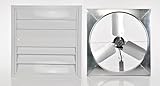
Master Flow GAF 24
- 2920 max CFM
- 1/4 HP direct-drive motor
- 2-speed pull chain
- Automatic ceiling shutter
Those three cover the range most buyers fall into: the Centric Air for the deepest owner feedback and the biggest single-unit airflow, the QuietCool Classic Advanced for the quietest published rating in the group, and the Master Flow for anyone who wants the same job done for the least money with the least fuss at install time.
Best Whole House Fans at a Glance in 2026
| Product | Specifications | Action |
|---|---|---|
| Centric Air QA-Deluxe 5500 |
|
Check Latest Price |
 AC Infinity CLOUDWAY T12 AC Infinity CLOUDWAY T12 |
|
Check Latest Price |
| Master Flow GAF 24 |
|
Check Latest Price |
 Tamarack HV1600R38 Tamarack HV1600R38 |
|
Check Latest Price |
 QuietCool CL-4700 RF QuietCool CL-4700 RF |
|
Check Latest Price |
 QuietCool ES-4700 RF QuietCool ES-4700 RF |
|
Check Latest Price |
 QuietCool ES-7000 RF QuietCool ES-7000 RF |
|
Check Latest Price |
Two numbers matter more than everything else on that list. Airflow tells you whether the unit can clear your rooms, and the net free vent figure tells you whether your attic can let it escape. A fan rated at 5000 CFM behind 2 square feet of soffit vent will feel like a 1500 CFM fan, because it is throttled by the vents long before the blades.
1. Centric Air QA-Deluxe 5500 – the Our Pick for Large Homes
QA-Deluxe 5500 Energy Efficient Whole House Fan 2 Speed Temp/Timer Control
Up to 5500 CFM
51 dB
630W brushless motor
2-speed remote
R-5 insulated damper
Pros
- Cools a whole home fast
- roughly 5 degrees in an hour per owners
- Fits 16 to 24 inch on-center joists with no cutting
- R-5 insulated damper seals the attic opening completely
- Remote with temperature and timer functions
- 10-year motor warranty and assembled in USA
Cons
- Audible on high speed
- Thin documentation on how the duct meets the damper box
- Included foam dampers rattle in wind
This is the fan we kept coming back to while putting the list together, mainly because it has the deepest owner pool of anything here at 117 ratings, and 71 percent of those owners gave it five stars. Owners consistently report indoor temperatures dropping about 5 degrees within an hour of switching it on with the windows open, which lines up with how a high-CFM unit behaves when the outdoor air is genuinely cooler than the house.
The physical design is the part that makes it easy to live with. The housing fits between 16 to 24 inch on-center joists with no cutting and no reframing, the ceiling grille is a small opening rather than a full-width hole, and the R-5 insulated damper seals the attic shut when the unit is off so cool indoor air does not leak into a 130F attic. It is rated for homes up to 3400 square feet, and it is a two-speed unit with a wireless remote carrying temperature and timer functions, so you can set it and forget it.
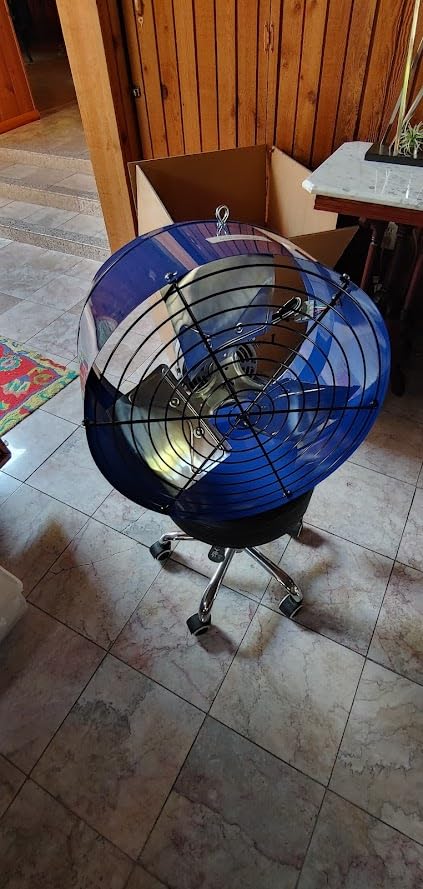
The numbers back up the owner reports. It is rated at 51 dB, moves up to 5500 CFM, and under California Title 24 rules it still delivers 3945 CFM, which is the number that matters if you are in an efficiency-regulated state. The brushless motor draws 630 watts on high, so it is a real energy consumer compared with a 75-watt low setting on an ECM unit, but that draw is a fraction of what an air conditioner compressor pulls while it is running.
What gives us pause is high-speed noise. Owners describe it as about as loud as the air conditioner they are trying to avoid, which is a fair trade only if the low speed is doing most of your evening work. The included foam dampers are also the weakest part of the package, and several owners mention they rattle on windy days and on shutdown, and a few report the automatic temperature controller being awkward to operate. Printed instructions are thin on how the ductwork connects to the damper box, so budget extra time for that step or find a diagram before you start.
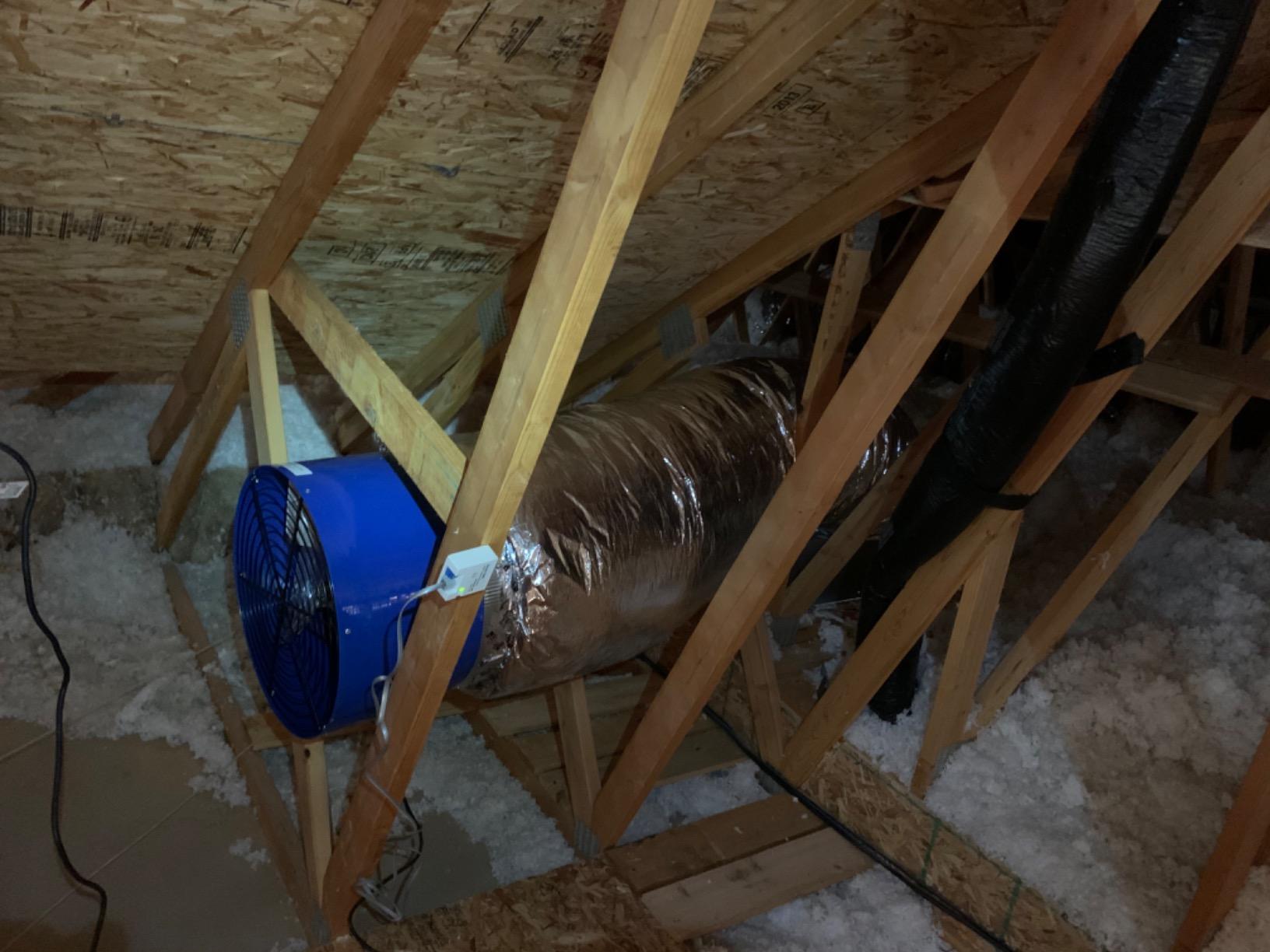
What makes it the pick for large homes
At 5500 CFM it is the second-highest airflow number in this group, and it is the only one rated above 5000 CFM that also carries a 10-year motor warranty and a 3-year parts warranty. On a 2500 to 3400 square foot home with a two-story layout, that volume is the difference between feeling a breeze and feeling nothing at all.
It also ships with an R-5 insulated damper rather than a bare louver, so the attic boundary stays sealed when it is off. In a house where bedrooms upstairs run hot, a sealed ceiling opening means the upstairs heat is not quietly feeding the living space all day while you are running the fan.
Where it falls short
If noise in a bedroom directly under the ceiling opening is your main worry, the QuietCool CL-4700 RF rated at 37.2 dB is a better fit, and its wireless control kit also removes the need to run a switch wire down through the wall. The Centric Air also needs roughly 7.3 square feet of net free vent area to hit its rating, and homes with minimal soffit venting will underperform it badly.
The other drawback is the 630-watt brushless motor on high. If your plan is to run the fan overnight on high for a week of hot nights, the operating cost adds up, and a two-speed ECM unit at 75 watts on low will do the same job for a fraction of the electricity.
2. AC Infinity CLOUDWAY T12 – the Best Whole House Fan With App Control
AC Infinity CLOUDWAY T12, Whole House Fan with WiFI Temperature Controller
1600 CFM
62 dBA
PWM EC motor with 11 speeds
WiFi app control
12 inch duct
Pros
- Only unit here with true WiFi app scheduling and automation
- 11 power levels instead of a high-low toggle
- PWM EC motor runs quietly and cheaply
- Plug-and-play wiring cuts install time
- ABS housing rated for high humidity environments
Cons
- 1600 CFM is low for a whole house fan
- Airbox needs modifying to fit 16 inch joist spacing
- Wired controller is awkward to mount
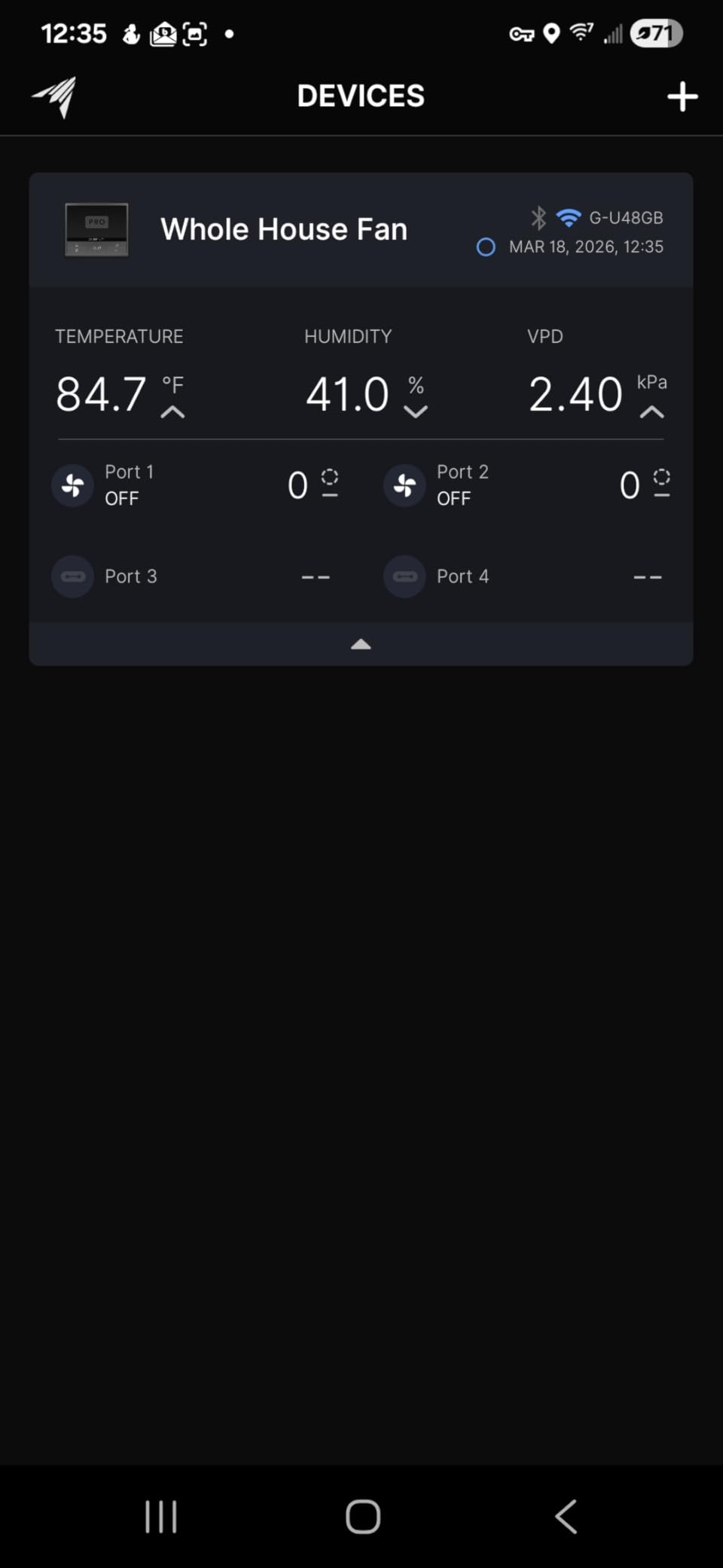
This unit is the odd one out in the list because it is the only one you can program. The WiFi app handles temperature, humidity, and VPD programming with timers, cycles, scheduling, and a minimum speed setting, so you can have the fan ramp up when the attic hits a threshold rather than switching it on by hand every evening. For anyone who already runs their HVAC from an app, that is a genuine advantage over a pull chain or a two-speed remote.
Underneath, the motor is a PWM-controlled EC motor with 11 power levels driving a 12 inch duct through a wall-mount exhaust design with dual ball bearings. It is 62 dBA, which is not quiet, but a good share of that number is airflow noise through the vent rather than motor whine. Buyers who need more flow commonly run two units, and several owners report about 3200 CFM combined that way, which puts it in the same territory as a single mid-size direct-drive fan.
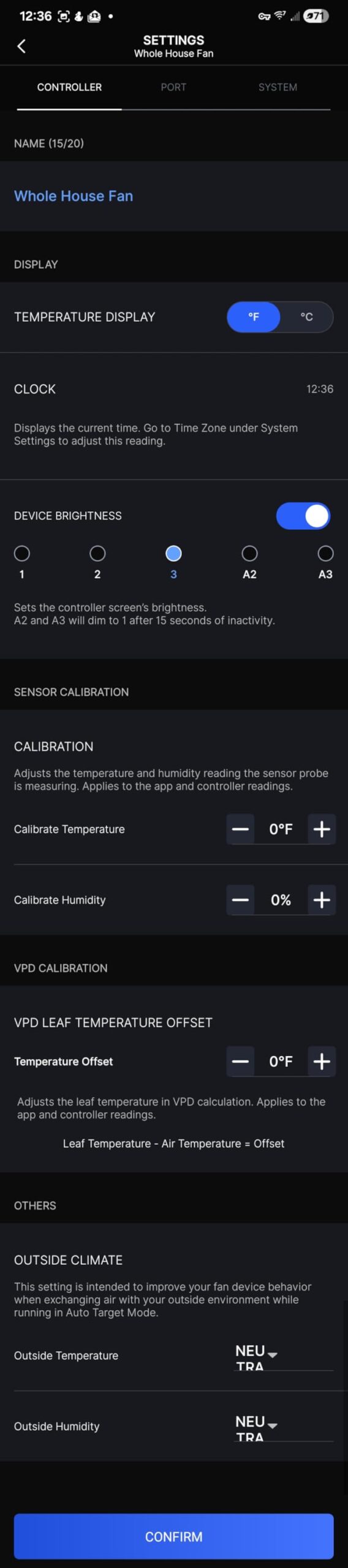
Installation is the easiest in this group in one specific way: it uses a US plug and a cord rather than a hard-wired connection, so there is no new circuit to run. The housing is stainless steel and rated for high humidity environments, which is a real consideration if you are running it during a muggy spell. The 4.1 average rating across 56 reviews reflects a unit people like once it is running, with reservations mostly about the box, not the fan.
Those reservations are concrete. The listed airflow of 1600 CFM is well below competing whole house fans, and several owners note that the grille and airbox do not fit standard 16 inch on-center joist spacing without modification. The included duct length and controller wire are short, the controller is wired rather than wireless with the wire exiting the bottom, and the app occasionally reports that it cannot set the fan speed even though the setting is applied.
Why it works for a small home or an ADU
At 1250 to 1600 CFM this is sized for a cottage, a small ADU, or a single floor under about 1000 square feet with low ceilings, not for a family house. The fine-grained speed control is what makes a smaller airflow tolerable, because you can settle on the lowest setting that still moves air through the space instead of cycling between a jet and nothing.
It is also the only unit here rated for high humidity environments, and with a plug rather than a hard-wired feed, it can be tested in a spare room or a shop with an outlet before anyone commits to cutting a ceiling opening.
Where it falls short
If your goal is dropping indoor temperatures in a 2000 square foot house during a hot summer, this is the wrong tool. The math in our sizing section shows a house that size needs 4000 to 5300 CFM to hit 15 to 20 air changes per hour, and one of these does not get close to the bottom of that range on its own.
You also give up the insulated damper story. This is a bare exhaust fan rated for the attic with no R-value door assembly, and it is louder than the QuietCool units on anything above speed 5 because of airflow noise through the vent. If noise is the deciding factor, look elsewhere.
3. Master Flow GAF 24 – the Budget Whole House Fan for Homes up to 2000 Square Feet
Master Flow GAF 24″ Whole House Fan, 2920 max CFM, PSC Motor – WHFS24M
2920 max CFM
1/4 HP PSC direct-drive
2-speed pull chain
Automatic ceiling shutter
UL listed
Pros
- Entry point into real whole house airflow
- Installs without cutting joists
- Direct-drive PSC motor runs with low vibration
- Owners report the same model lasting 30-plus years
- Automatic shutter seals the attic when off
Cons
- Louver shutter is noisy and leaks heat in winter
- Pull-chain control is the least convenient option
- Louder than expected for the airflow it moves
If the goal is moving real air for the least money, this is the fan. A 24 inch direct-drive unit rated at up to 2920 max CFM for homes up to 2000 square feet covers the majority of the houses in this roundup, and the install is a straightforward ceiling cut with no reframing. The requirement is 562 square inches of net free attic venting, which is the lowest of any unit here and easy to meet in a house that already has soffit and ridge vents.
The motor is a quarter horsepower permanent split-capacitor direct-drive design, and PSC motors in this category tend to run smoothly with low vibration. Two speeds come off a pull chain, which is period-correct and unexciting, and a white automatic ceiling shutter opens with the fan and closes when it stops so the attic stays separated.
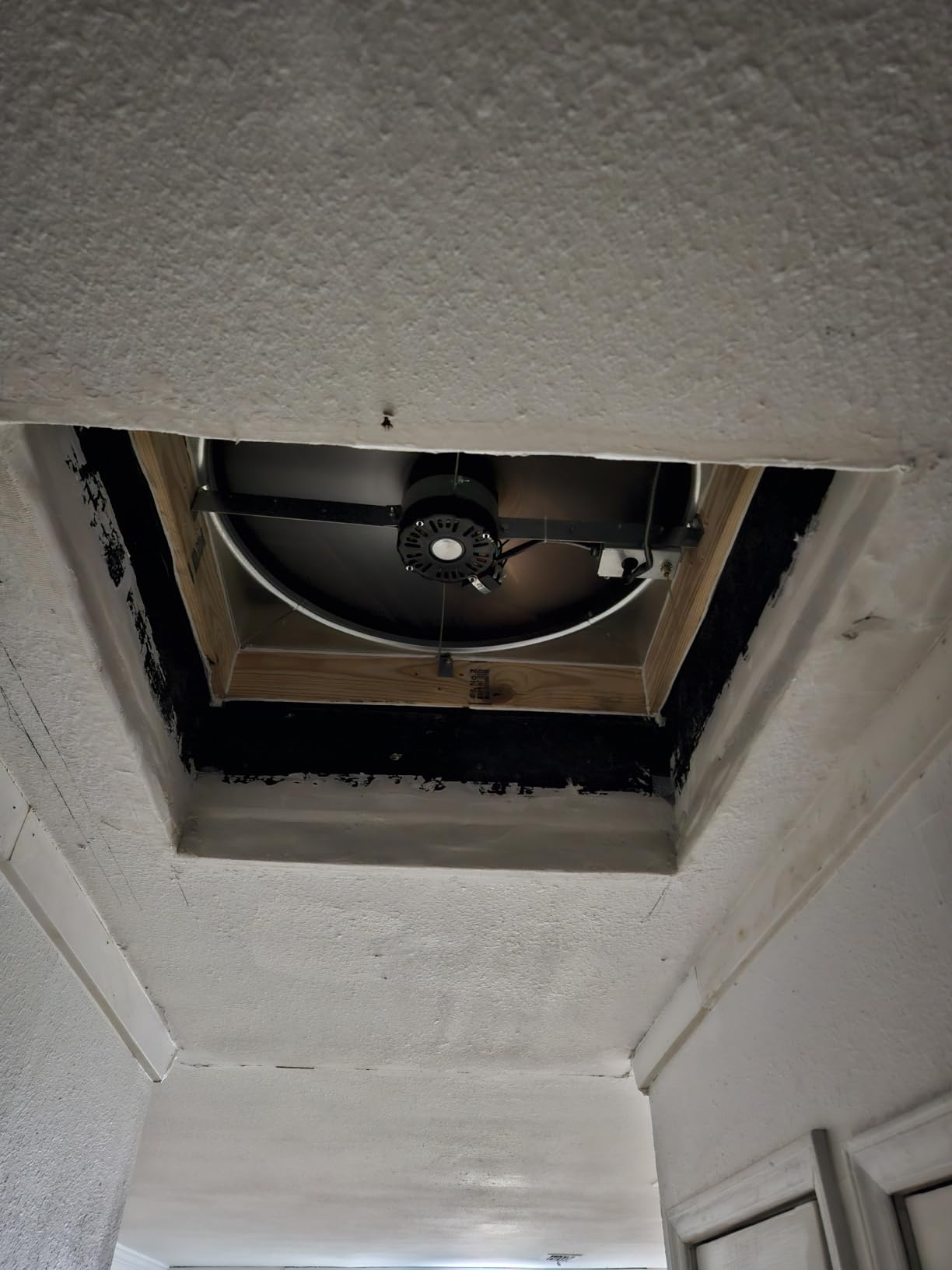
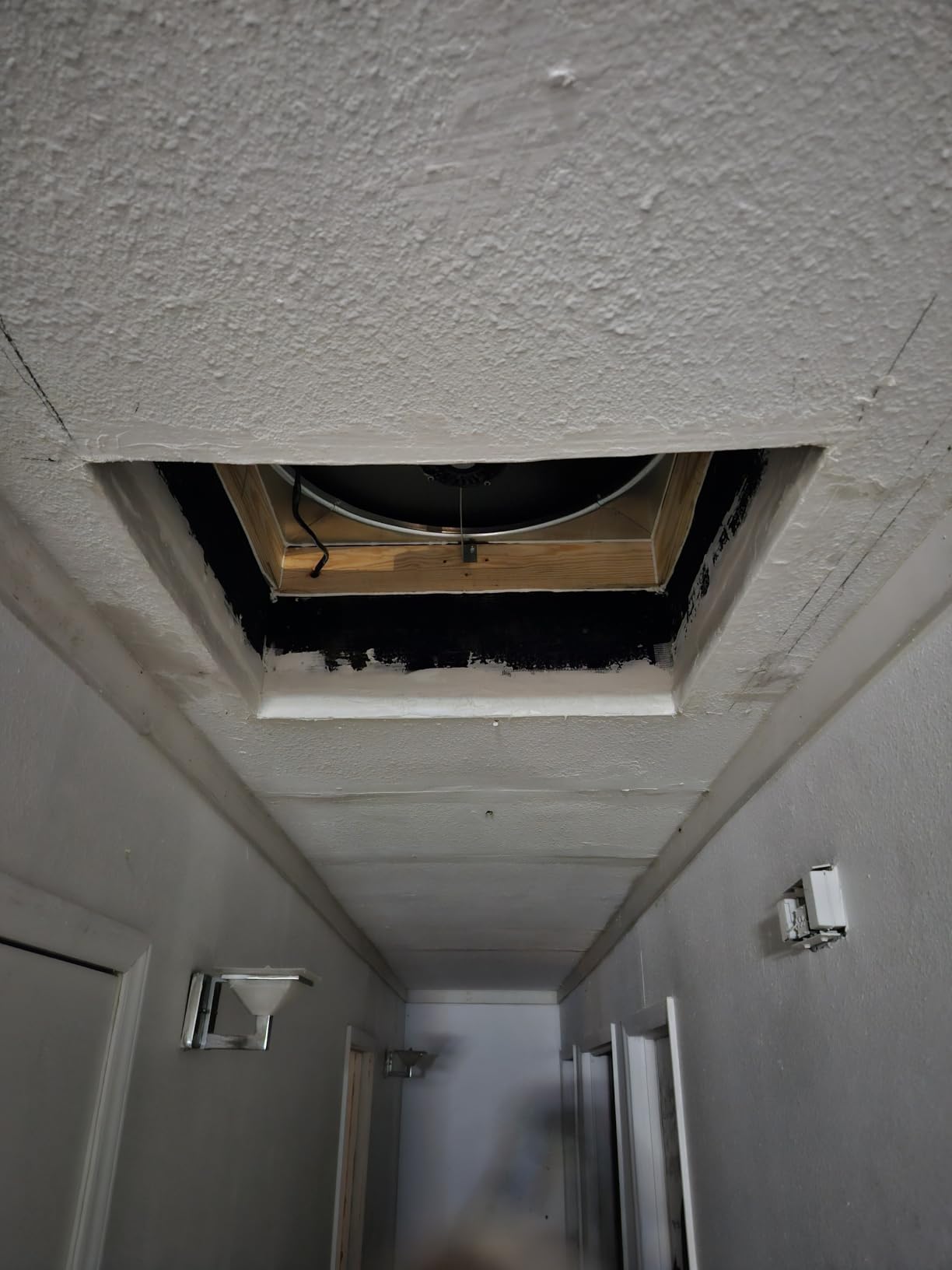
The durability story is the surprise here. Several owners report a previous identical fan still running after 30-plus years, and that is the pattern this category tends to follow: a simple direct-drive fan with a PSC motor is one of the easiest things in a house to keep alive. At 36 pounds it is also the lightest unit in the group, and the 27 inch by 27 inch footprint is unobtrusive in a ceiling.
What you give up is refinement. The louver shutter is the weakest element, and owners report it is noisy while running and leaks hot attic air in winter unless you add an insulating block, which is a job most people skip. A small number of buyers also report blades catching and bending the shroud shortly after use, and the 13 percent one-star share in the ratings comes largely from people receiving used or non-working units.
Why it suits a straightforward 1500 to 2000 square foot house
At 2920 CFM the numbers work out to roughly 15 air changes per hour in a 1500 square foot home with 8 foot ceilings, or about 11 in a 2000 square foot one. That is below the 15 to 20 per hour target, so in a larger house this fan will keep air moving without fully clearing the volume in a few minutes. On a 1500 square foot home with a light-colored roof and decent venting, it will feel close to the experience an owner describes when the house drops noticeably within the first half hour.
It is also the simplest install in the group. No wiring beyond a standard 120 volt feed, no controller, no refrigerant lines, and a ceiling cut that does not require touching a joist. That is a weekend project rather than a contractor job.
Where it falls short
Noise is the honest drawback. Direct-drive fans bolted to a ceiling are louder than a ducted unit with a suspended motor, and forum discussion in this category consistently ranks noise as the number one complaint. If the ceiling opening is directly above a bedroom, expect to hear it on high.
The pull chain also makes this harder to live with than it should be, and the uninsulated louver means you are giving back attic heat in the winter. If you are installing in a cold climate, the Tamarack HV1600R38 with R38 doors solves exactly that problem, and the QuietCool units solve the noise problem.
4. Tamarack HV1600R38 – the Best Whole House Fan for an Airtight Ceiling
Tamarack Technologies HV1600R38 Whole House Fan Insulated Doors
1527 CFM
230 watts
2-speed remote
R38 insulated self-sealing doors
16 or 24 inch joists
Pros
- R38 insulated doors seal tightly when the unit is off
- Mounts horizontally or vertically without cutting a joist
- Two remote controls included
- Lifetime manufacturer warranty
- Handles moisture and odor venting as well as heat
Cons
- Several owners report barely any air movement on high
- Lowest average rating here at 3.8 stars
- Remote controls reported as slow and unreliable
The defining feature here is the door assembly. These are R38 insulated self-sealing doors that open when the fan runs and close tight when it stops, which is the same standard of heat barrier a good attic hatch uses. On a house that runs the fan in the evening and the air conditioner overnight, that seal is the difference between a useful tool and one that quietly pushes conditioned air into the attic all night.
The fan itself is rated at 1527 CFM, drawing 230 watts at 120 volts, with two speeds and two remotes in the box. It mounts horizontally or vertically on 16 or 24 inch on-center joists, so it works in a flat ceiling or in a wall or gable, and it carries a lifetime manufacturer warranty, which is the strongest warranty in this group by a wide margin.
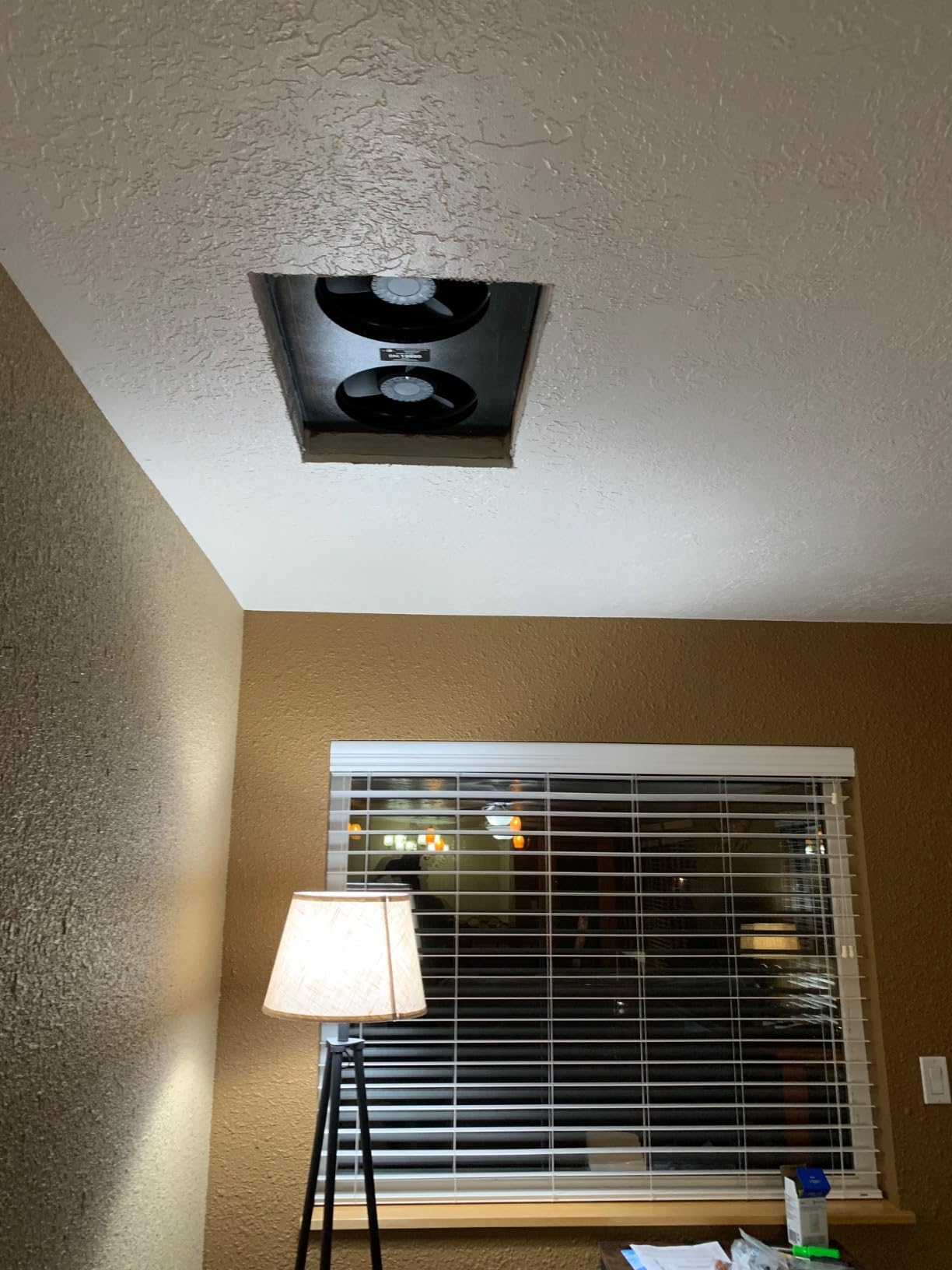
Where the reviews split is performance. The 3.8 average is the lowest here, and the reason is that a number of owners in 1000 to 2000 square foot homes report barely perceptible air movement even on high, while others describe quiet white noise that handles moisture and odor venting well. That gap is usually a venting problem rather than a fan problem, and pairing a unit like this with solid roof or gable exhaust vents is what owners who like it tend to do.
Remote reliability is the other recurring complaint, with slow response and unresponsiveness mentioned more than once, and the unit can be driven by either the remote or a wall switch but not both at the same time. A 16 percent one-star share also pulls the average down, so treat the rating as a snapshot of a polarizing product rather than a bad machine.
Why the insulated doors are worth it
Manufacturers state the unit uses roughly 10 percent of the energy of a central air conditioning system, and that comparison only holds if the opening is properly sealed when the fan is off. An open or leaky ceiling opening turns a whole house fan from a cooling tool into a duct running straight into the hottest space in the house.
The doors also make it a better year-round ventilation fan. Running it in the evening to flush humidity and odors, or in the morning to clear out overnight moisture, is far more attractive when the ceiling is thermally isolated rather than a bare hole into the attic.
Where it falls short
At 1527 CFM this will not cool a house. It is a ventilation fan with a cooling bonus, and anyone buying it expecting the whole-home air change in three to four minutes will be disappointed at this airflow. The QuietCool ES-4700 RF moves 4195 CFM on high, which is roughly two and a half times as much air in the same ceiling space.
Add in the 3.8 average rating and the remote complaints, and this is the pick only when the insulated seal is the priority and you have paired it with real roof or gable vents. If airflow is what you are after, this is not the unit.
5. QuietCool CL-4700 RF – the Top Rated Whole House Fan With Wireless Control
Quietcool QC CL-4700 RF Classic Advanced Whole House Fan with Wireless Control – Up to 4415 CFM – Two Speed – Covers up to 2,208 SQFT – 10 Year Warranty – Removable Grille
4415 CFM high
37.2 dB
551W PSC motor
Wireless RF control
5.89 sq ft net free vent
Pros
- 37.2 dB noise rating
- 4415 CFM high and 3402 CFM low
- Wireless RF kit avoids fishing wires through walls
- Fits 16 or 24 inch on-center joists with no cutting
- R5 damper doors and window locks included
Cons
- Two-speed control only
- Needs 5.89 sq ft of net free vent venting for rated output
This is the unit with the highest average rating in the group at 4.8, with 88 percent of its reviews at five stars, and it is also the only one here with a manufacturer-published sound rating under 40 dB. The 4.8 average comes from a small pool of 27 ratings, so read it as a strong signal rather than a certainty, but the consistency of the comments behind it is notable.
Design-wise it is the same suspended-motor arrangement that makes the QuietCool line quiet. The motor head hangs from the attic rafters, connected to a small 14 by 30 inch ceiling grille, so the motor and the moving air never share a frame with the drywall. The result is 4415 CFM on high and 3402 CFM on low from a housing that measures 38 inches across and drops into 16 or 24 inch on-center joists with no framing and no joist cutting.
Control is a wireless RF kit with a glass wall switch and a 12-hour countdown timer, which means no wire run down through the wall to a switch location. It includes R5 insulated damper doors in the damper box and a set of window locks for the attic window, and the stated install time is one to two hours. The warranty is 10 years.
What the 37.2 dB rating changes in practice
That figure is roughly half what a direct-drive ceiling fan puts out, and the practical effect is that this unit can sit directly under a bedroom without becoming the thing that wakes someone up. Owners of the older direct-drive design describe noise traveling into living space and upstairs, and the suspended motor mount is the reason that complaint does not show up here.
It also means the fan can run longer for the same comfort. On a 2200 square foot home in the 2000 square foot class this unit is sized for, the low speed at 3402 CFM is already enough to clear the volume of air several times over, so you are not forced onto high where the noise and the 551 watt draw both climb.
Where it falls short
The 551 watt PSC motor is thirsty compared with the brushless ECM units in this roundup, and there is no fine speed control between the two settings. If your priority is running cost over a long evening, the ES-4700 RF drops to 75 watts on low.
It also needs 5.89 square feet of net free attic venting to hit its rating, and the grille and housing are larger than the Master Flow unit, so check your joist spacing before you cut. Everything else about this install is close to as simple as it gets.
6. QuietCool ES-4700 RF – the 75-Watt Energy Saver Whole House Fan
Quietcool QC ES-4700 RF Energy Saver Advanced Whole House Fan with Wireless Control – Up to 4195 CFM – As low as 75 watts – Two Speed – Covers up to 2,098 SQFT – 10 Year Warranty – Removable Grille
4195 CFM high
75 watts on low
ECM motor
Wireless RF control
10-year warranty
Pros
- Drops to 75 watts on low for very low running cost
- 4195 CFM high in a 2098 sq ft class
- Brushless ECM motor built for long service life
- Wireless RF control with a 12-hour timer
- Same one to two hour install as the Classic line
Cons
- High cost relative to the airflow delivered
- Two-speed control despite the two-level power range
- Requires 5.6 sq ft of net free attic venting
The number that makes this unit interesting is 75 watts. That is the draw on low speed with a 415 watt ECM motor on high, and it is low enough that leaving the fan running overnight during a warm spell costs almost nothing. The QuietCool ES-7000 RF goes further at 164 watts on low, but this one covers a 2098 square foot home and moves 4195 CFM on high, so for most houses it is the more useful of the two brushless options.
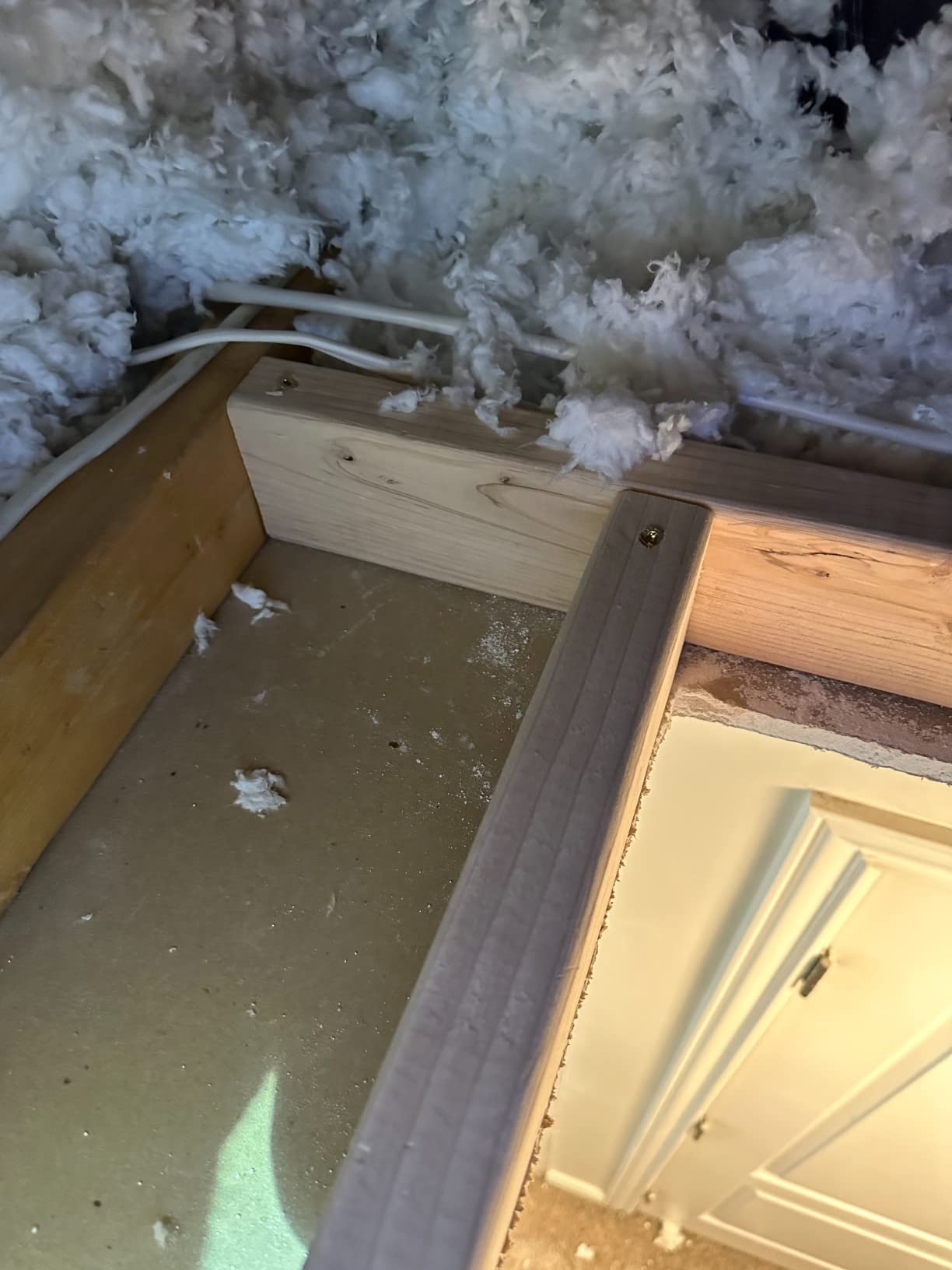
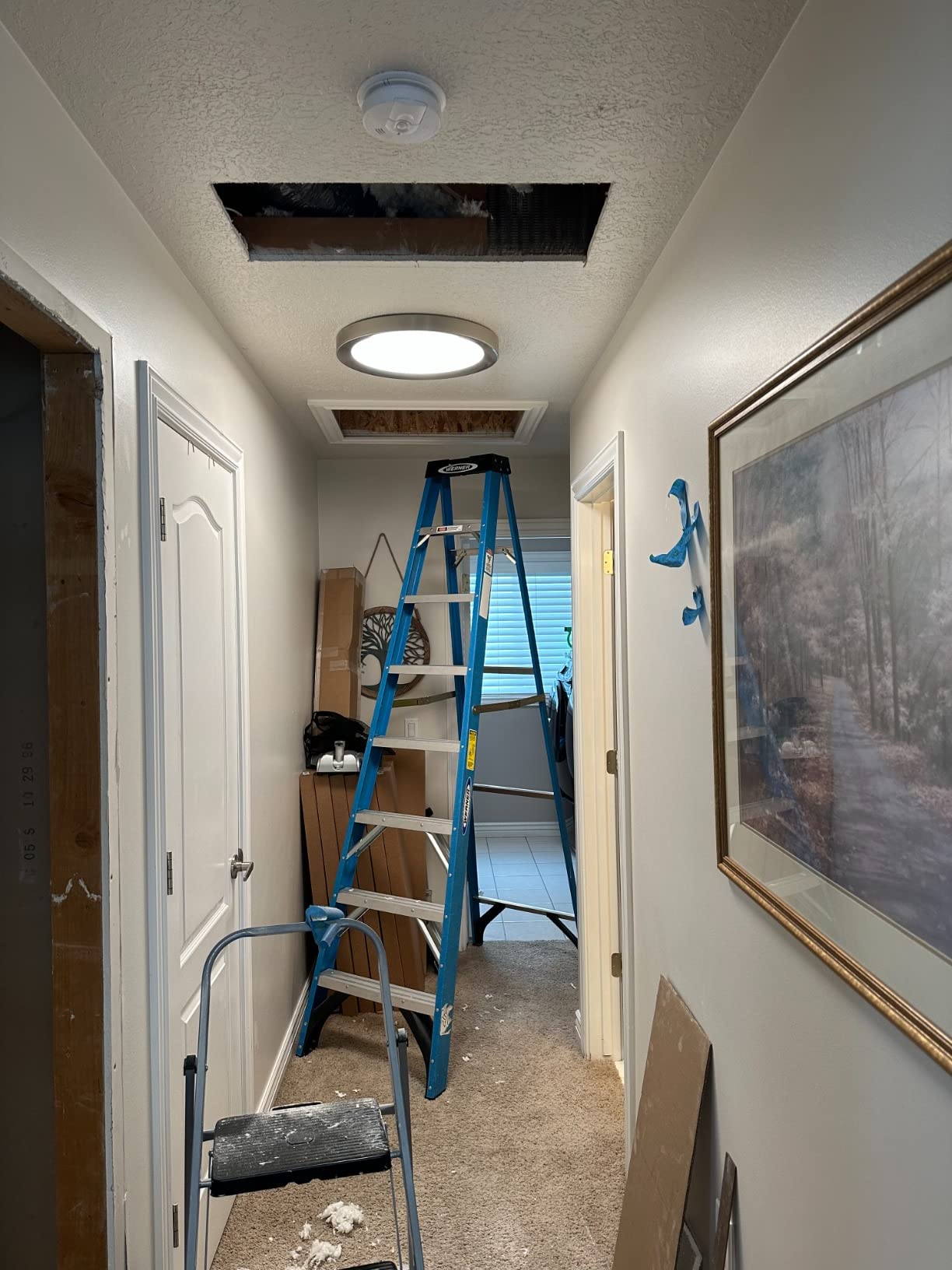
The rest of the design mirrors the Classic Advanced: the motor head hangs from the attic rafters above a 14 by 30 inch ceiling cut-out, R5 insulated damper doors seal the attic when the unit is off, and the wireless RF control kit ships with a glass switch and a 12-hour countdown timer. It fits 16 or 24 inch on-center joists with no framing or joist cutting, and the stated install is one to two hours on a 10-year warranty.
Owner comments focus on exactly what the spec sheet promises. Buyers highlight the very low low-speed draw, effective whole-home cooling at this size, and a straightforward wireless install. The 4.2 average across 22 ratings is lower than the Classic Advanced, and the criticism is mostly about cost relative to the airflow delivered and the coarse two-speed control despite the motor having two power levels.
Because it is a brushless ECM motor rather than a PSC motor, the part most likely to fail on a direct-drive fan is simply not present, and the same is true of the belts that plague older belt-drive designs. That is worth something in a device expected to run for a decade or more in a hot attic.
Why 75 watts changes the running cost math
Run the low speed for eight hours and the fan has used about 0.6 kWh. A central air conditioner running an eight-hour mild evening cycle uses far more than that, which is why whole house fans are credited with a large share of their savings on exactly these nights rather than on the hottest days when nobody expects them to keep up.
This is the configuration to automate. A thermostat or app that starts the fan when the house hits 80F and outside air is below indoor temperature is where the ECM economics pay off, because you can let it run continuously without thinking about it.
Where it falls short
It costs more than the airflow it delivers suggests, and for many buyers that is a hard sell against a cheaper direct-drive unit with a similar CFM rating. If the deciding factor is a single up-front number rather than operating cost over ten years, this is not the value pick.
It also needs 5.6 square feet of net free attic venting, and low speed at 2304 CFM covers a smaller home than the high-speed figure suggests. If you are above roughly 1500 square feet and want overnight air movement, run it on high and accept the 415 watt draw, or move up to the ES-7000 RF.
7. QuietCool ES-7000 RF – the Best Whole House Fan for Homes over 3000 Square Feet
Quietcool QC ES-7000 RF Energy Saver Advanced Whole House Fan with Wireless Control – Up to 6878 CFM – As low as 164 watts – Two Speed – Covers up to 3,439 SQFT – 10 Year Warranty
6878 CFM high
164 watts on low
ECM motor
Covers up to 3439 sq ft
10-year warranty
Pros
- Highest airflow in the group at 6878 CFM
- 164 watts on the low setting
- Brushless ECM motor is very quiet for the volume
- Suspended motor mount simplifies attic work
- Wireless control with a 12-hour timer
Cons
- Largest and heaviest unit here and needs two people
- Requires 9.18 sq ft of net free attic venting
- Higher cost than smaller models in the line
For a house above 3000 square feet, the sizing math leaves you no real choice. A 3000 square foot home with 8 foot ceilings needs 6000 to 8000 CFM for 15 to 20 air changes per hour, and this is the only unit in the roundup rated high enough at 6878 CFM to land in that band. It is rated for homes up to 3439 square feet, with 4304 CFM on the low setting.
The motor is a 727 watt brushless ECM that drops to 164 watts on low, and it hangs from the attic rafters above a 14 by 36 inch ceiling cut-out, which is the same suspended-mount arrangement as the smaller QuietCool models. Wireless RF control ships in the box, along with R5 insulated damper doors, window locks, and a 10-year warranty.
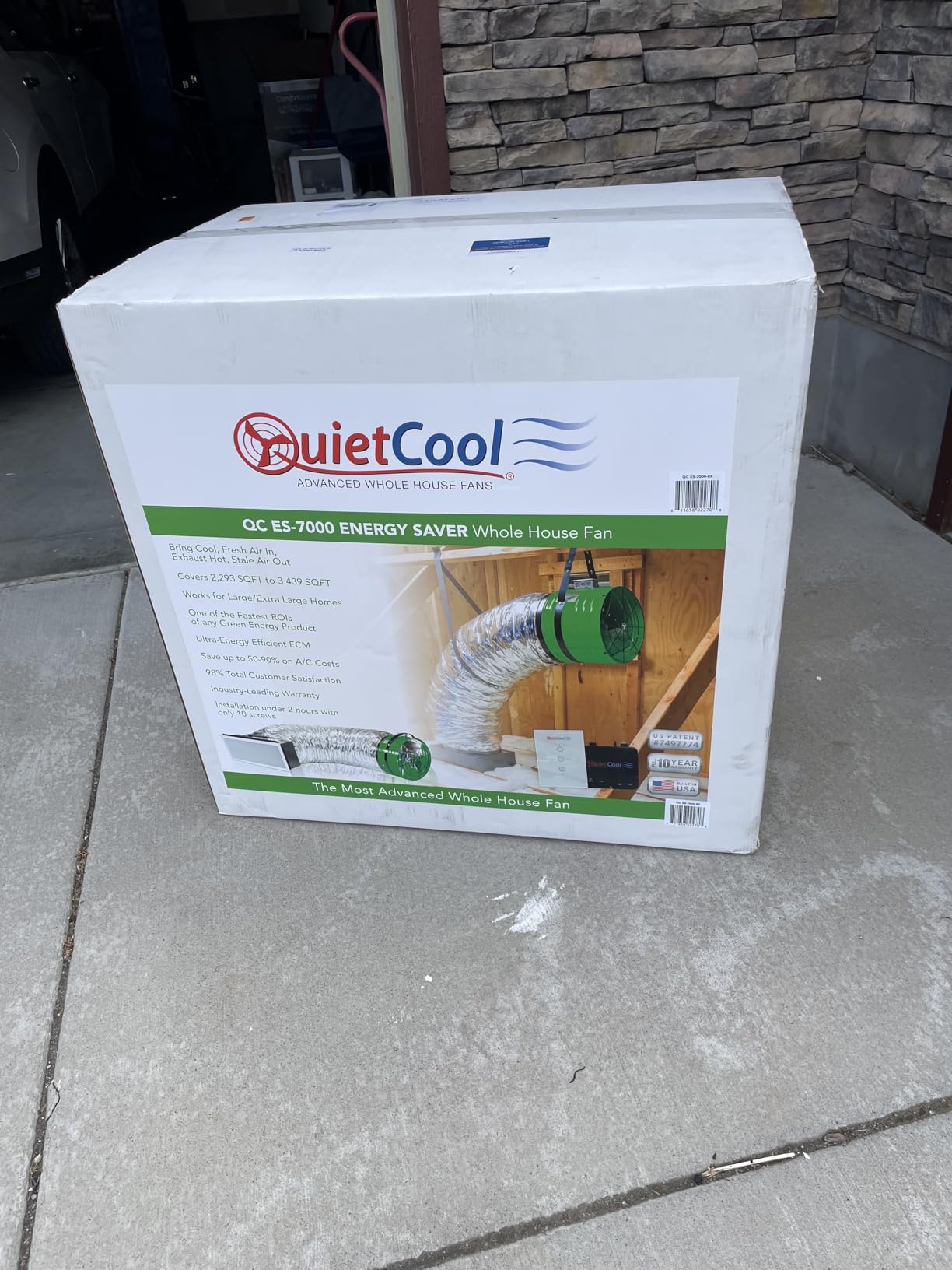
Installer and owner comments are consistent on the important points: very low noise for the volume of air it moves, a cooling effect across the whole home within minutes, and a suspension mounting design with clear instructions that makes attic work straightforward. Several repeat buyers have installed more than one. At 4.4 across 19 ratings it sits in the middle of the group on score, with 79 percent of owners giving five stars.
The practical issues are size and venting. At 41 by 28 by 40 inches this is the largest and heaviest unit here, and several owners report it genuinely needs two people to install. It also requires 9.18 square feet of net free attic venting, the highest requirement of any pick, so an under-vented attic is the main reason a fan this powerful can disappoint. A small number of buyers report a fan blade shearing off within a few months with unresolved manufacturer follow-up, which is isolated but worth knowing about.
Why big homes need the big number
The reason 2900 CFM feels weak in a 3000 square foot house is simple: the fan is throttling itself against the total volume of the space. Volume, not floor area, is what determines air changes per hour, and a large footprint with 10 foot ceilings contains far more air than the square footage alone suggests.
At 6878 CFM this unit moves air faster than the windows on a typical house can replace it, which is why owners describe cooling the whole home in minutes. The low setting at 4304 CFM is still more than most mid-size units deliver on high.
Where it falls short
Cost is the first barrier, and it is not subtle: this is the most expensive fan in the group and you still need two people and a proper attic to hang it. If your house is under 2500 square feet, you are paying for capacity you will not use, and the ES-4700 RF or CL-4700 RF will do the job.
That 9.18 square foot venting requirement is the other one. Check it before anything else, because a fan of this class in a house with minimal soffit venting will perform like a much smaller unit and you will have spent the money for nothing.
How Big a Whole House Fan Do You Need in 2026
Start with volume, not square footage. Multiply the conditioned floor area by the ceiling height to get the cubic feet of air in the space, then divide by 60 to convert minutes to hours. A 2000 square foot house with 8 foot ceilings contains 16000 cubic feet, and at 20 air changes per hour that requires 5333 CFM. At the more conservative 15 changes per hour target, it requires 4000 CFM.
That is the whole sizing method, and the 15 to 20 air changes per hour range is what turns a living room into a space that feels different within minutes. Below about 10 changes per hour, a whole house fan is just a ceiling fan with a bigger housing.
Use these as your starting points, assuming 8 foot ceilings and no vaulted spaces:
1000 square feet: 2000 to 2700 CFM
1500 square feet: 3000 to 4000 CFM
2000 square feet: 4000 to 5300 CFM
2500 square feet: 5000 to 6700 CFM
3000 square feet: 6000 to 8000 CFM
3500 square feet: 7000 to 9300 CFM
Vaulted ceilings, two-story layouts with a stairwell, and open floor plans all add volume, and a house with a finished basement or a sunroom needs more than the number above. Manufacturers state their own coverage figures, and where those conflict with the math, the math is the better guide: the Centric Air is rated for homes up to 3400 square feet, the ES-7000 RF for 3439 square feet, the CL-4700 RF for 2210 square feet, and the ES-4700 RF for 2098 square feet.
Now the number that quietly decides whether any of this works: net free vent area. The working rule across this category is one square foot of net free vent area for every 750 CFM of fan capacity. The individual requirements here range widely, and each one tells you how much venting your attic needs to support that fan.
Master Flow GAF 24 at 2920 max CFM: 562 square inches of net free vent, or about 3.9 square feet
QuietCool ES-4700 RF at 4195 CFM: 5.6 square feet of net free vent
QuietCool CL-4700 RF at 4415 CFM: 5.89 square feet of net free vent
QuietCool ES-7000 RF at 6878 CFM: 9.18 square feet of net free vent
If your attic has under 3 square feet of soffit and ridge venting, you are limited to a smaller unit no matter what you buy. This is the most common reason a powerful fan underperforms, and it is a problem with the house, not the product. Adding soffit intake vents is often cheaper and more effective than upsizing the fan.
Whole House Fan vs Central Air vs Swamp Cooler vs Mini-Split for Hot Summers
A whole house fan and a central air conditioner are not really competitors, and treating them as either-or is the most common mistake buyers make. They cover different temperature ranges. The fan wins on mild nights below roughly 75 to 80F outside, and the air conditioner wins on hot afternoons and humid evenings above that. Most households that install one end up running the fan in the evening and the air conditioner earlier in the day, and that split is where the savings come from.
An evaporative or swamp cooler sits between the two. It works by wetting a pad and pulling outdoor air through it, so it can handle drier heat above 80F but adds humidity to the house and is close to useless in a genuinely humid climate. It also needs water and maintenance. A whole house fan adds humidity too, but only because it is importing whatever the outdoor air already contains, which is why the humidity question comes up so often with this topic.
A mini-split is a room-to-room answer that can cool specific spaces without ducts, which makes it the better option when only certain rooms are hot or when a ducted central system does not reach an addition. The trade is that you pay for compression to get cool air, and a whole house fan uses nothing but a fan to move free cool air. If your main problem is a house that is 8 degrees too hot on mild nights, a fan beats a mini-split. If the problem is one hot upstairs bedroom in August, it does not.
A window air conditioner is the fourth option and the least attractive for a whole house, mostly because each room needs its own unit and the electrical load adds up. Replacing two window units with one whole house fan is a common upgrade, and the fan costs a fraction of the electricity while cooling every room at once.
Running-cost comparison, using the motor figures each manufacturer publishes:
QuietCool ES-4700 RF on low: 75 watts, the cheapest evening runtime in this group
QuietCool ES-7000 RF on low: 164 watts, still low for a fan covering 3439 square feet
Tamarack HV1600R38: 230 watts, rated at 1527 CFM
QuietCool CL-4700 RF: 415 watts on low and 551 watts on high, a PSC motor
Centric Air QA-Deluxe 5500: 630 watts on high, a brushless motor with 5500 CFM
QuietCool ES-7000 RF on high: 727 watts, the highest draw in the group
Tamarack states its unit uses roughly 10 percent of the energy of a central air conditioning system, and the wattage numbers above explain why that is roughly right. The point is not that a fan is free, it is that moving air does not involve compression, so the same cooling effect costs a fraction of the electricity.
Buying Guide: 7 Specs to Check Before You Buy
Check the net free vent area requirement first, because it is the only spec that can make a purchase useless. Every product here states what it needs, and a fan that needs 9.18 square feet in a house with two is not going to be a 6878 CFM fan once it is installed.
Second, decide between direct-drive and ducted suspended-motor designs, because this is the noise question. A direct-drive fan bolts the blades to the motor and mounts the whole assembly in the ceiling, which is cheaper, heavier, and louder. A ducted or suspended-motor design hangs the motor head in the attic and connects it to a ceiling grille through a flexible duct, which isolates vibration from the living space. The QuietCool CL-4700 RF at 37.2 dB and the Centric Air at 51 dB are the two ends of that spectrum in this roundup.
Third, look at the motor type. PSC motors are conventional, inexpensive, and durable, but they draw more on low speed. ECM motors use electronics to control the motor, which is why the QuietCool Energy Saver units can run at 75 and 164 watts on low and have no belts or brushes to wear out. If you plan to run the fan for many hours on mild nights, ECM is worth the premium.
Fourth, count the speeds. A pull chain gives you two. A two-speed remote gives you two. The AC Infinity CLOUDWAY T12 gives you 11 power levels with a minimum speed setting, which is the closest thing in this group to a variable-speed fan and makes a much smaller airflow usable in a small space.
Fifth, consider the controls. A wireless RF kit with a glass wall switch and a 12-hour countdown timer means you are not fishing wires through a wall, and the countdown timer is genuinely useful because it lets you fall asleep with the fan running and have it stop on its own. A wired thermostat gives you automatic temperature-based operation, which is the better choice if you are already running other HVAC on a schedule.
Sixth, check the ceiling cut-out and the joist spacing. Several units here, including both QuietCool models and the Centric Air, are specifically designed to fit 16 or 24 inch on-center joists without cutting. The AC Infinity airbox needs modification to fit 16 inch spacing, and the Centric Air needs 16 to 24 inch clearance. Measure before you cut.
Seventh, read the warranty. The Centric Air carries a 10-year motor and 3-year parts warranty, the QuietCool units carry 10 years, and Tamarack offers a lifetime manufacturer warranty. Given that buyers in this category report 30-year-old direct-drive fans still running, a long warranty is a reasonable signal about expected service life.
What to open before you run it
A whole house fan needs a path in as much as it needs a path out. Open the windows on at least two sides of the house, including one on the upper floor, open interior doors so air can move between floors, and open the attic hatch or access door so the exhaust has somewhere to go. Close the garage door, and close any windows on the side the fan exhausts toward so you are not short-circuiting the airflow.
If you forget the upper floor, the bedrooms will barely move air while the living room cools, and that is the most common complaint about fans that are not performing.
When not to run one
Skip it when outdoor humidity is high, when wildfire smoke is in the air, and during high pollen season if anyone in the house has allergies. All three are cases where the outdoor air is the problem, and pulling it in makes the house worse. If humidity is a standing issue, our whole house humidifier roundup is the wrong direction, and the dehumidifier roundup is the one worth reading.
Also skip it when the house needs humidity in winter, which is why the insulated damper doors on the QuietCool and Tamarack units matter more than they first appear. And skip it if you have no plan to open windows, because a whole house fan running against closed windows just pressurizes the house and pushes air back through leaks.
How hard is the install
Ranked from easiest to hardest, the AC Infinity CLOUDWAY T12 is the easiest because it plugs into a standard outlet and needs no new circuit. The Master Flow GAF 24 and the Centric Air QA-Deluxe 5500 are next, both fitting between 16 and 24 inch joists with no cutting and running on a 120 volt feed. The QuietCool CL-4700 RF, ES-4700 RF, and ES-7000 RF are all described as one to two hour installs for the same reason, with the ES-7000 RF needing two people because of its size.
Every one of these needs a dedicated 15-amp circuit run to the attic, and that is the part most homeowners hand to an electrician. If your existing ceiling fan circuit is shared with lighting or a bath fan, replace it rather than reuse it.
If you are also planning to keep power through an outage for the fan and a few lights, the standby generator roundup covers the sizing side of that, and the whole house water filter guide covers the other utility you will be running in a hot summer.
Frequently Asked Questions
Are whole house fans worth it?
Yes, if your attic has adequate venting and you run them when outdoor air is below roughly 75 to 80F. A fan moves 4000 to 7000 CFM on a few hundred watts, replacing indoor air in minutes, which cuts air conditioner runtime on mild evenings. They are not worth it in high humidity, during wildfire smoke, or with poor attic venting.
What is the recommended CFM for a whole house fan?
Target 15 to 20 air changes per hour of your home’s total air volume. Multiply conditioned square footage by ceiling height for cubic feet, then divide by 60 and multiply by 15 to 20. A 2000 square foot home with 8 foot ceilings needs about 4000 to 5300 CFM, and each fan also needs roughly one square foot of net free vent area per 750 CFM.
What size attic fan do I need for a 2000 square foot house?
For a 2000 square foot home with 8 foot ceilings, you need about 4000 to 5300 CFM to hit 15 to 20 air changes per hour. In this roundup the Centric Air QA-Deluxe 5500, QuietCool CL-4700 RF, and QuietCool ES-4700 RF all land in that band. Check joist spacing and vent area before choosing.
Are QuietCool whole house fans good?
Yes. The QuietCool Classic Advanced CL-4700 RF carries the highest average rating in this group at 4.8, with a 37.2 dB noise rating and 4415 CFM on high. The Energy Saver ES-4700 and ES-7000 models add a brushless ECM motor that drops to 75 and 164 watts on low speed. All three use a suspended motor mount, a 10-year warranty, and wireless RF control.
Who makes the best whole house fans?
QuietCool makes the widest range of strong options, covering classic PSC and energy-saving ECM models from about 2000 to 3439 square feet. Centric Air is strong for large homes with the deepest owner review pool here, and Tamarack offers the strongest warranty with R38 insulated doors. Master Flow covers the entry-level direct-drive tier.
Final Verdict: The Best Whole House Fans for Hot Summers in 2026
Pick the Centric Air QA-Deluxe 5500 if you want one fan to handle a large home and want the deepest body of owner feedback behind it. Pick the QuietCool CL-4700 RF if noise under a bedroom is what is stopping you, at 37.2 dB it is the quietest published number here. Pick the QuietCool ES-4700 RF if you plan to run the fan for hours on mild nights and want the running cost to be 75 watts.
Pick the QuietCool ES-7000 RF above 3000 square feet, the Master Flow GAF 24 if you want real airflow for the least money and the simplest install, the AC Infinity CLOUDWAY T12 if app-based automation matters more than volume, and the Tamarack HV1600R38 if the insulated R38 seal through a cold winter is the deciding factor.
Before any of them, measure your attic venting. One square foot of net free vent area for every 750 CFM, and outdoor air below 75 to 80F, are the two conditions that turn a fan from an expensive box in a ceiling into the best whole house fan for hot summers.