

A DIY mini split is a ductless heat pump whose refrigerant line set ships from the factory pre-charged and sealed behind quick-connect fittings, so you can join the indoor head to the outdoor condenser without cutting, flaring, evacuating, or charging the line. Everything else is still real work: you mount the units, drill the wall penetration, run the condensate drain, and wire a dedicated circuit. Pick 115V models and you can use an existing 20A outlet; pick 230V and an electrician is non-negotiable.
That distinction is the whole reason this category exists. A conventional mini split requires a technician to flare the copper, pressure test it, pull a deep vacuum to pull moisture out of the oil and refrigerant, and release the factory charge. That step is legally restricted to EPA Section 608 certified technicians and it is where most of the install labor sits. A genuinely pre-charged system skips it.
What follows is our roundup of the best DIY mini split air conditioners for homeowners, covering ten systems from 9000 BTU bedroom units to a 24000 BTU open-plan machine. We checked the published specifications against the manufacturer listings, we read the owner reviews closely, and we flag plainly where a unit that calls itself pre-charged still needs a vacuum pump. Specs and owner feedback were checked on September 2026.
One caution up front. Owners in HVAC forums describe these units in genuinely mixed terms, and the same brand shows up in both the clean-install stories and the service-headache stories. Forum data is uncontrolled and skews toward problems, so we treat it as a source of specific failure modes rather than as a quality score. We also could not find a dedicated independent lab test for any of these units, so nothing here is a lab measurement.
Table of Contents
Top 3 DIY Mini Splits for 2026
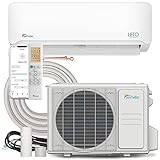
Senville LETO 24000 BTU
- 24000 BTU covers 1250 sq. ft.
- 18.7 SEER inverter
- Heat pump rated to 5F
- Alexa and app control

COSTWAY 12000 BTU
- 12000 BTU covers 750 sq. ft.
- 20 SEER 115V plug-in circuit
- 23 dB indoor noise
- 5 year parts and 8 year compressor

Mountman 12000 BTU
- 12000 BTU covers 750 sq. ft.
- 19 SEER2 on 115V
- 26 dB sleep mode operation
- Pre-charged R32 condenser
All 10 DIY Mini Splits Compared Side by Side (September 2026)
| Product | Specifications | Action |
|---|---|---|
| Senville LETO 24000 BTU |
|
Check Latest Price |
| COSTWAY 12000 BTU |
|
Check Latest Price |
 DELLA Vario 9000 BTU DELLA Vario 9000 BTU |
|
Check Latest Price |
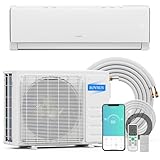 ROVSUN 11500 BTU ROVSUN 11500 BTU |
|
Check Latest Price |
 ROVSUN 9000 BTU ROVSUN 9000 BTU |
|
Check Latest Price |
 Albott Easy DIY 12000 BTU Albott Easy DIY 12000 BTU |
|
Check Latest Price |
 DELLA Econo 23000 BTU DELLA Econo 23000 BTU |
|
Check Latest Price |
 Rellytech 12000 BTU Rellytech 12000 BTU |
|
Check Latest Price |
| Mountman 12000 BTU |
|
Check Latest Price |
 Temprium 12000 BTU Temprium 12000 BTU |
|
Check Latest Price |
If you want the broad context before the individual units, our guide to the best ductless mini split air conditioners covers the technology in more depth, and our roundup of the best mini split air conditioners for homes covers systems that get professionally installed. This page is strictly about the self-install tier.
1. Senville LETO 24000 BTU – Best for Open-Plan Living Areas
Senville LETO Mini Split Air Conditioner, Heat Pump, White, 24000 BTU
24000 BTU
1250 sq. ft.
18.7 SEER
230V
Heat pump to 5F
34 dB
Pros
- Largest capacity here at 24000 BTU
- Covers up to 1250 sq. ft. from one head
- Inverter keeps cycling and noise low
- 5 year parts and 5 year compressor warranty
- Alexa and app control
Cons
- Needs a hardwired 230V dedicated circuit
- Heavy two-piece unit is awkward to handle
- Line set work needed beyond the included 16 ft
Our pick for the largest single space in the group. The Senville LETO is a 24000 BTU heat pump that a single indoor head uses to condition up to 1250 square feet, which covers most open-plan great rooms, sunrooms, and older main floors in one shot. It is the only unit here that does that job, and it carries a 4.5 rating across 1980 reviews.
Two things stand out for us. The DC inverter compressor is rated 18.7 SEER, so it is efficient even at this capacity, and the heat pump function runs down to 5F, which makes it a genuine three-season system rather than an air conditioner with a token heater mode. Several owners pair it with Alexa and the app for schedules, which matters in a big open space where the head is far from where you sit.
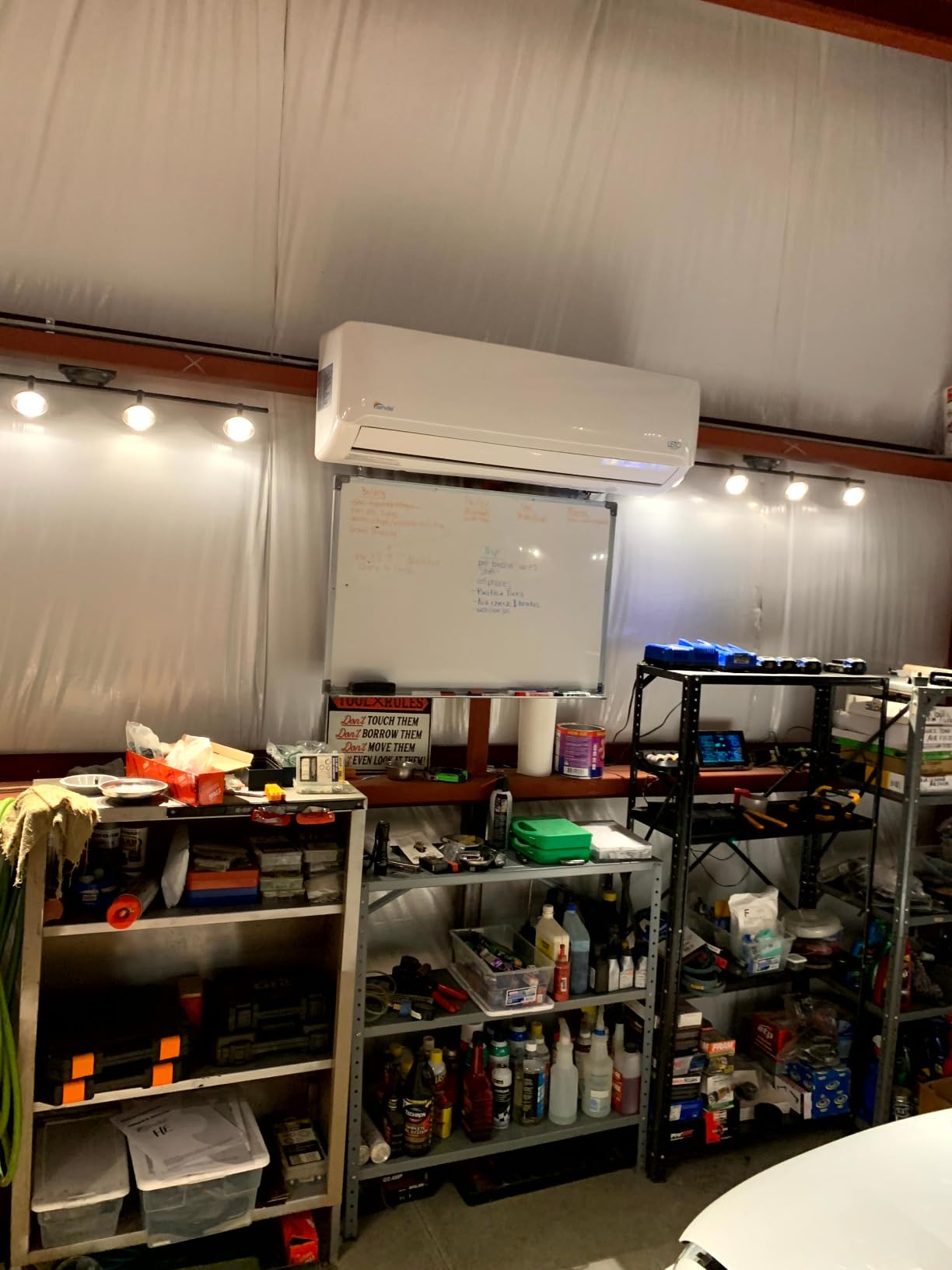
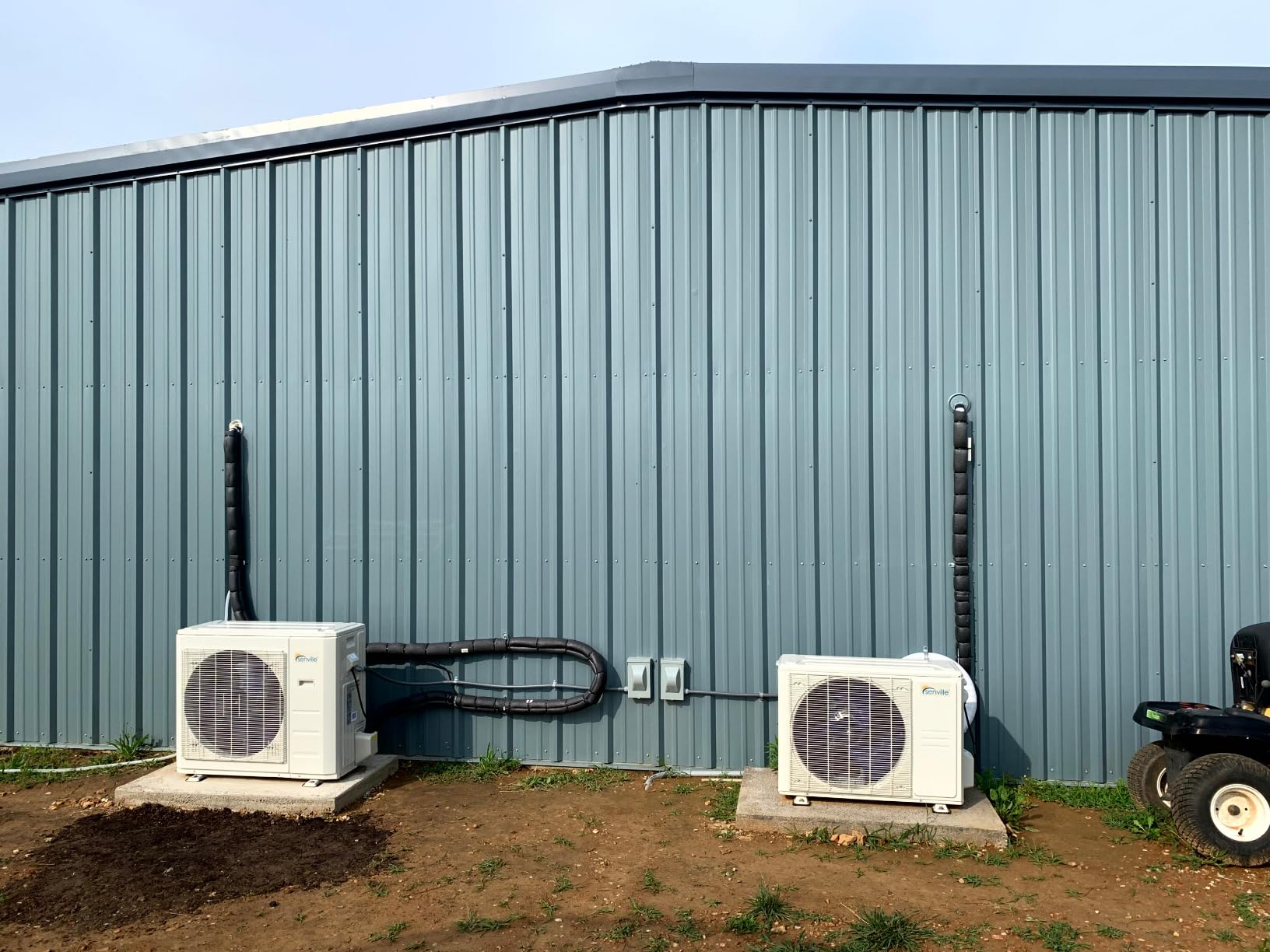
The honest caveat is electrical. This is a 220V unit with a hardwired dedicated circuit, so the electrical portion is not a beginner job and panel work is realistic. The box ships with the indoor head, the outdoor condenser, a remote, a 16 ft line set and a communication cable, and the factory charge covers line sets up to 25 feet, so a straightforward run needs nothing extra. Past that you are buying copper and fittings yourself.
Owners consistently describe strong whole-room cooling and quiet inverter operation, with the 34 dB indoor figure confirmed in normal use. The most common complaint is not performance but logistics: the unit is a heavy two-piece shipment and moving it up stairs or onto an elevated pad takes planning.
When this is the right pick
Choose the LETO when you have one large, open, consistently hot space and you want heating and cooling from a single head. A sunroom, a great room with a vaulted ceiling, a converted living room with poor existing airflow, or a main floor where a central system never worked all sit in that category.
It also makes sense if the alternative is a ducted add-on that requires new ductwork and a large equipment pad. One head on a wall, one condenser outside, and a short line run is a much smaller project.
When it is the wrong pick
Skip it if your electrical panel has no room for a 230V circuit or you are unwilling to hire an electrician for it. Also skip it if you are cooling a bedroom at night, where 34 dB and a large throw are unnecessary and a smaller, quieter head is a better match.
And if your space is under roughly 900 square feet, this unit is oversized. Oversizing brings short cycling and humidity problems rather than faster cooling, which we cover in the sizing section below.
2. COSTWAY 12000 BTU – Best for Shops and Garages
COSTWAY 12000BTU Mini Split Air Conditioner& Heater
12000 BTU
750 sq. ft.
20 SEER
115V
23 dB
R-32
Pros
- 115V circuit is simple for a competent DIYer
- 20 SEER inverter across both seasons
- 23 dB is among the quietest here
- Excellent post-sale support on a faulty part
- 5 year parts and 8 year compressor warranty
Cons
- Installation manual is thin on remote and C/F functions
- Drilling template is offset from the finished hole
- Condensate hose ships on the back-right port
- Auto mode locks out setpoint and fan speed
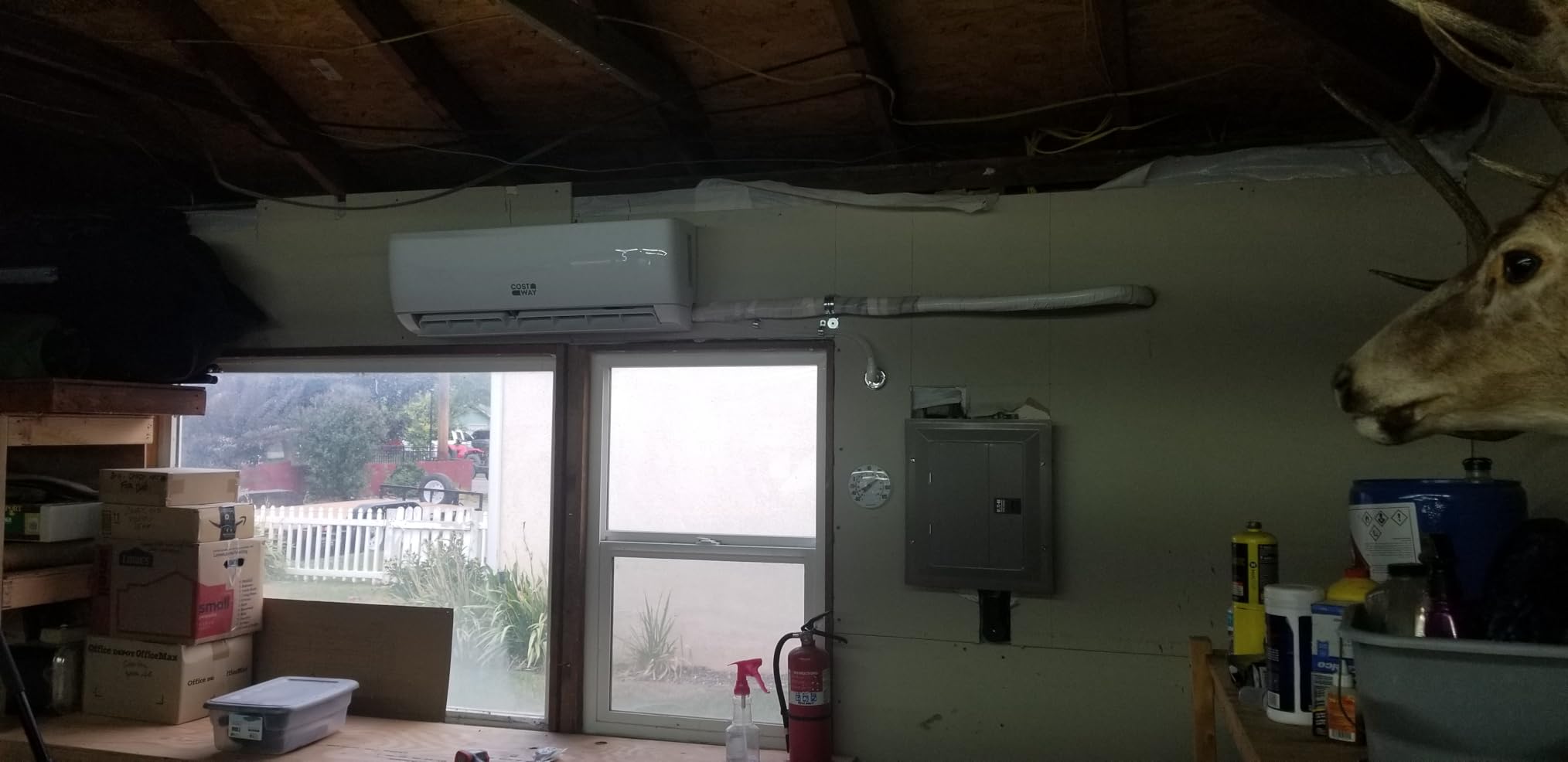
This is our pick for a workshop or a garage, and the reason is the electrical. At 115V with a 20 SEER inverter, it runs on a standard 20A dedicated circuit, and installers report the wiring as straightforward for anyone competent with a drill and a stripper. The 23 dB indoor figure is among the lowest here, which is surprising for a unit aimed at utility spaces.
The 12000 BTU capacity covers up to 750 square feet, which lines up with a two-car garage, a shop bay, or a finished basement room. Multiple owners replaced a pair of window units with it and reported cutting their electric use roughly in half, which tracks with a 20 SEER inverter running year-round.
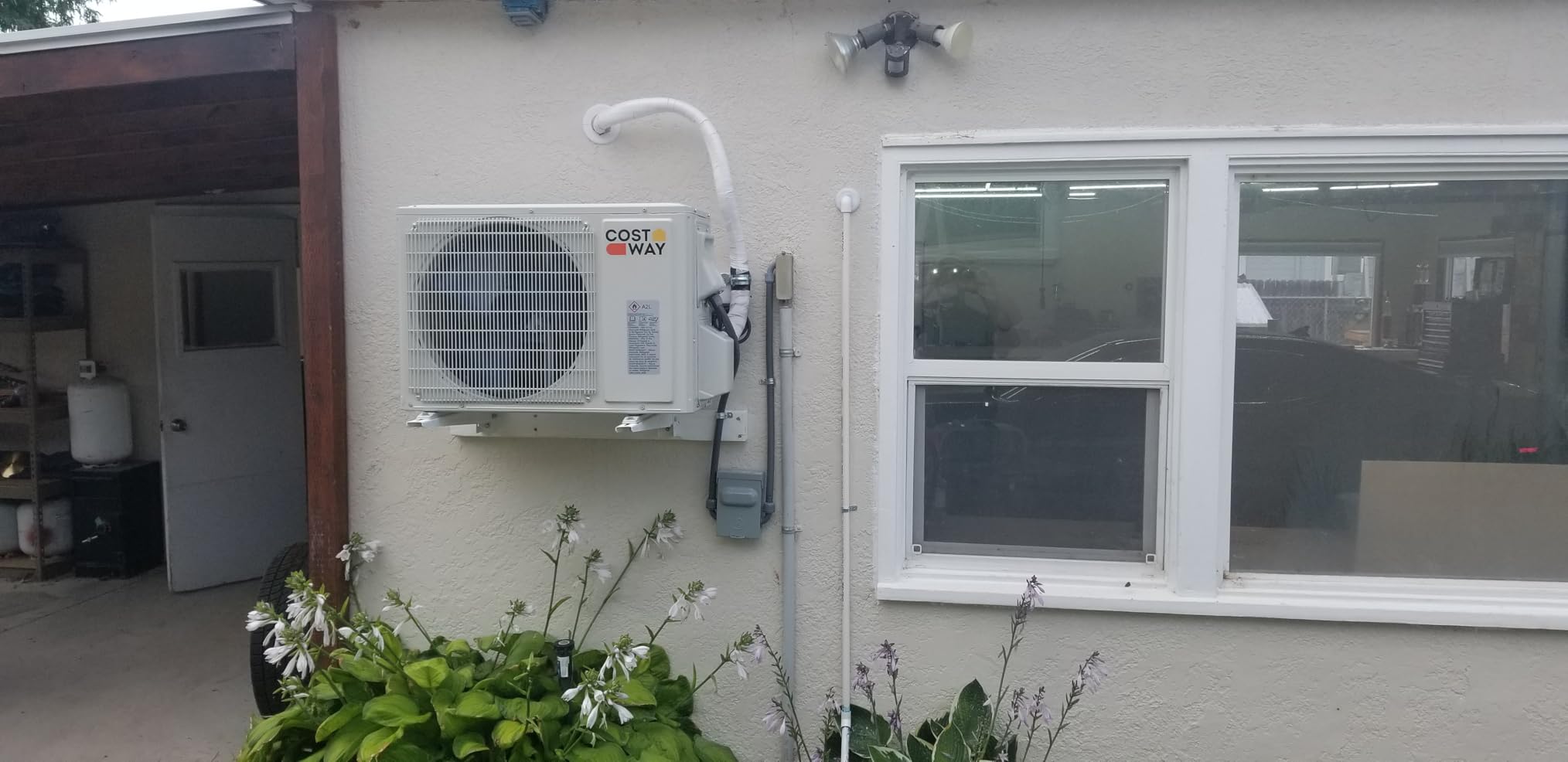
The recurring complaints are documentation problems rather than hardware problems, and that is worth weighing honestly. The cardboard drilling template is offset, so the finished wall hole can show an edge. The condensate hose ships on the back-right port and has to be relocated on some installs, and the manual does not call that out. The auto mode locks the setpoint and fan speed, so many owners just run Cool instead.
One owner had a temperature sensor swapped and still saw feel-temperature readings diverge from the room thermometer, which is a small but persistent annoyance. Against that, post-sale support came through quickly: one buyer had a faulty plastic part replaced within six days. The warranty is 5 years parts and 8 years compressor, the longest compressor term in this group, though the manufacturer specifies installation by a licensed HVAC installer and a line set is not included in every kit.
When this is the right pick
Buy this one for a garage, shop, or workshop where heat is the bigger problem and you want heating and cooling from a single box. Inverter efficiency in a space that swings from freezing mornings to hot afternoons is where a 20 SEER unit earns its cost.
It is also a strong fit for a home office or den where you want equipment that runs all day without you hearing it. Several owners note that at low fan speeds the indoor unit is effectively silent.
When it is the wrong pick
It is a poor fit for a primary bedroom if you are picky about controls, because the auto mode behavior is genuinely confusing. Plan on relocating the condensate hose on the right-hand installs and check your template hole before you commit to a finish.
Also note that the manufacturer requires a licensed HVAC installer for the refrigerant side on this kit, which undercuts the DIY premise. Budget for a technician visit to connect and commission the line set, or pick a model explicitly sold for homeowner connection.
3. DELLA Vario 9000 BTU – Best for Small Rooms
DELLA Vario Series Mini Split Air Conditioner Works with Alexa,9000 BTU,Cools up to 400 Sq.Ft,19 SEER2,Ductless Inverter System,Energy Star,Heat Pump Pre-Charged and 16.4ft Installation Kits
9000 BTU
400 sq. ft.
19 SEER2
115V
28 dBa
Heat to -4F
Pros
- Smallest coverage here at 400 sq. ft.
- Ships with a 16.4 ft pre-charged line set
- 28 dBa is among the quietest
- Alexa and app plus I-Feel remote sensing
- 19 SEER2 inverter for real running-cost savings
Cons
- Requires line-set vacuuming if line length changes
- Listed for professional installation
- 10000 BTU/h heat is modest for cold climates
- Only a 1 year warranty
The smallest footprint in the roundup, and the right answer for a room where a 12000 BTU unit would be oversized. At 9000 BTU the DELLA Vario is rated for 400 square feet, which covers a primary bedroom, a home office, a small den, or a sunroom addition without the short-cycling risk that comes from oversizing.
It is also one of the quieter units here at 28 dBa, and the sensor reads room temperature at the remote rather than at the indoor head during cooling, which is the more accurate approach. Alexa and app control are included, and the 19 SEER2 DC inverter is rated for up to 30 percent power savings over a non-inverter baseline.
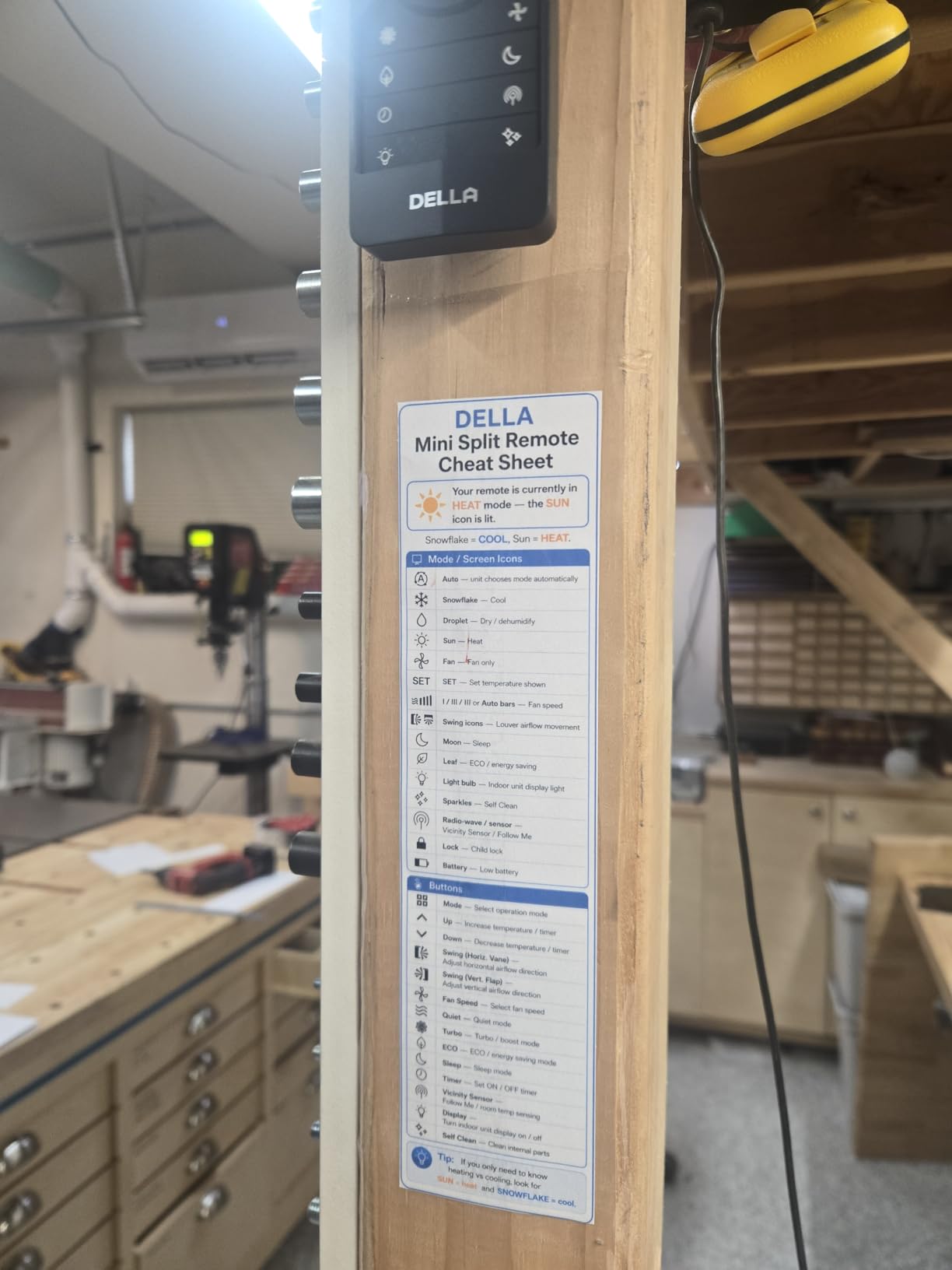
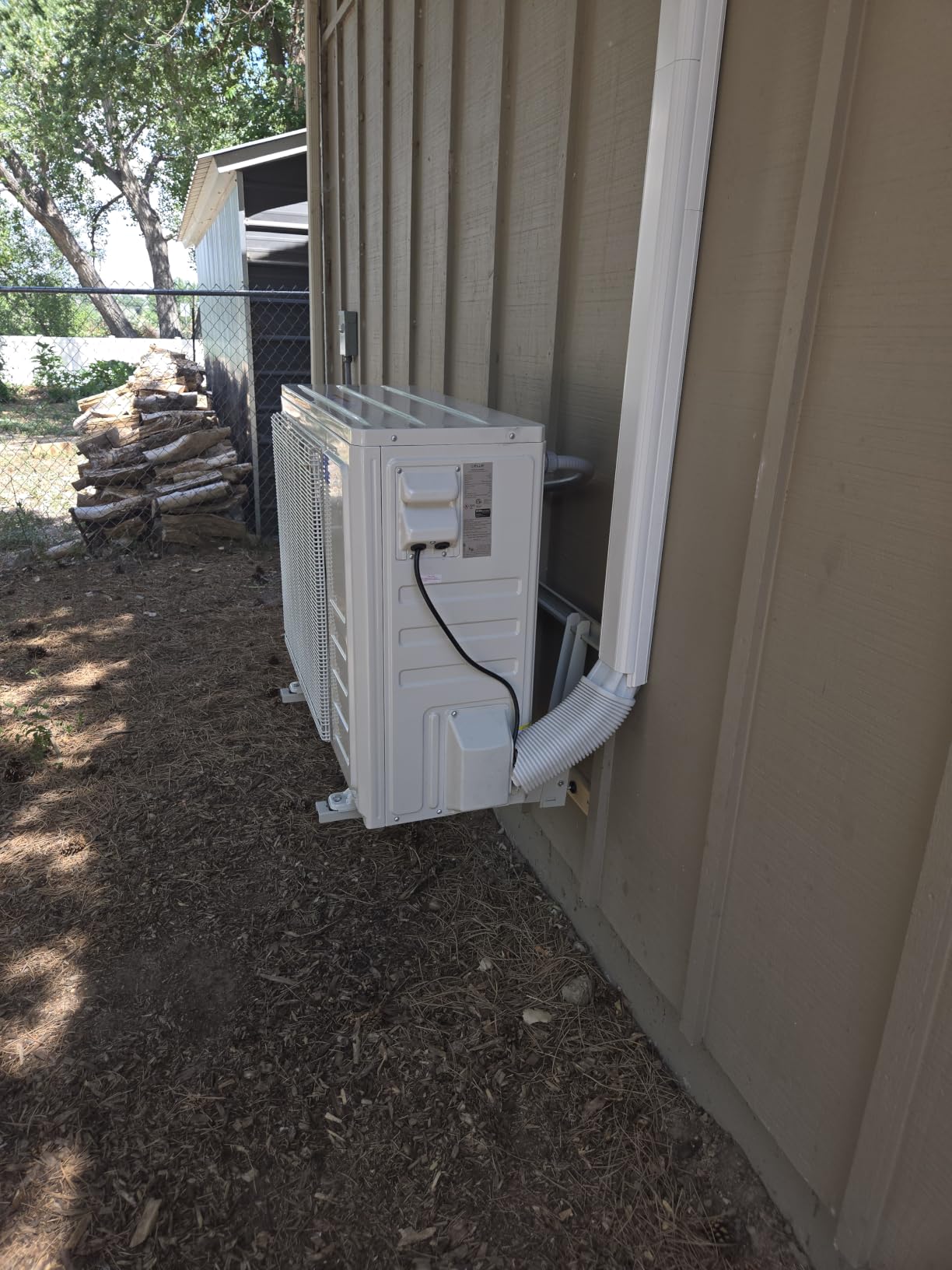
Here is the catch, and it is a meaningful one for a DIY roundup: the listing states that the line set must be vacuumed and that any change in line length requires the refrigerant charge to be adjusted. The kit does include a 16.4 ft pre-charged line set with 1/4 inch and 3/8 inch copper and a 78.7 inch drain pipe, so most installs can use it as shipped. If your run is not close to that length, you are back to needing a vacuum pump and gauges.
Two other limits are worth knowing. The 10000 BTU/h heating capacity is modest if you plan to use this as cold-climate backup heat, even though it is rated to -4F for operation. And the warranty is one year, which is the shortest in this group and stands in sharp contrast to the 8-year compressor term on the Rellytech below.
When this is the right pick
This is the bedroom and office pick. A 400 square foot room with good ceiling height and normal insulation is the textbook application, and 28 dBa means it will not compete with sleep.
It is also a good pick for a 450 to 500 square foot space if you can use close to the full included line length, since that keeps you on the pre-charged path. Homeowners converting a sunroom, a small office, or an attic-adjacent bonus room tend to land here.
When it is the wrong pick
Do not buy it for a room over about 550 square feet, and do not buy it as your primary heat source in a genuinely cold climate. The 1 year warranty is also a real consideration if you want coverage beyond the first twelve months.
And if your line run exceeds the included length, budget for a technician with a recovery machine. The manufacturer designates this as a professional-install system, so a self-connect here is not the advertised path.
4. ROVSUN 11500 BTU – Best for Warm Climates
ROVSUN 11500 BTU Wifi Enabled Mini Split Air Conditioner & Heater, 17 SEER2 115V Inverter Ductless Wall AC Unit with Pre-Charged Condenser, Heat Pump & Installation Kit
11500 BTU
550 sq. ft.
17 SEER2
115V
29 dBa
R-32
Pros
- Strong value on 115V-only homes and older wiring
- Pre-charged condenser simplifies the refrigerant side
- App plus Alexa and Google Assistant control
- 17 SEER2 inverter saves roughly 25% over a 14 SEER2 baseline
- Quiet 29 dBa suits a bedroom
Cons
- 17 SEER2 is the lowest efficiency among the 115V units here
- 550 sq. ft. is smaller than the 1-ton rivals
- One owner reported damp air and mold in an unventilated room
- Professional installation specified
- Refrigerant work still needs a vacuum pump
The ROVSUN 11500 BTU is our pick for a home that runs hot and runs on 115V. Its 115V requirement and 11500 BTU capacity cover up to 550 square feet, and the pre-charged condenser plus included install kit keep the parts list short. The operating range is 5F to 122F, which covers the extremes most southern and southwestern homeowners actually face.
Smart control is the standout here. It runs from a remote, a phone app, and both Alexa and Google Assistant, with programmable routines. At 17 SEER2 with an inverter compressor, the manufacturer puts savings around 25 percent against a 14 SEER2 baseline, which is meaningful in a climate where the unit runs for many hours.
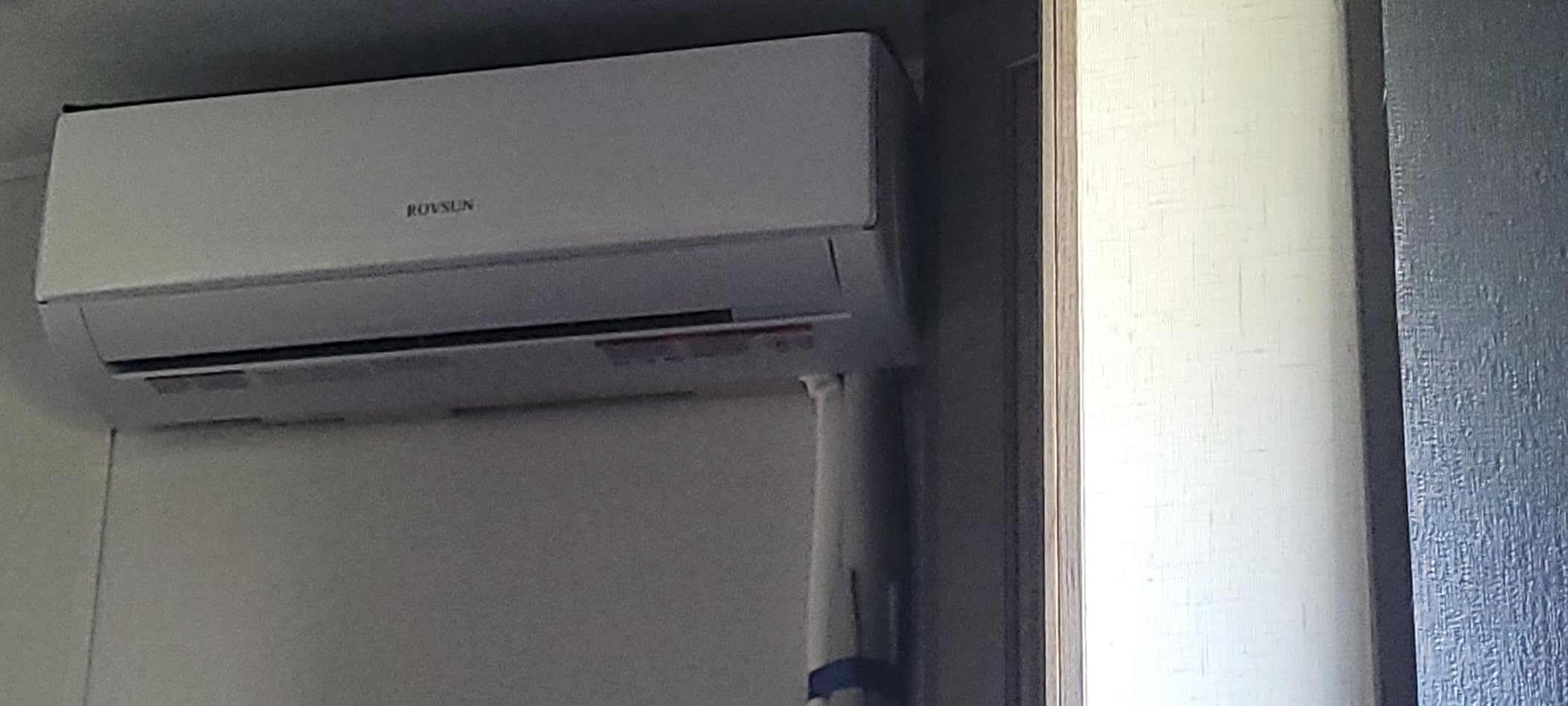
The efficiency rating is where this unit gives ground. At 17 SEER2 it sits at the bottom of the 115V group here, behind the 18, 19, 20, and 22 SEER2 units we also cover. Coverage of 550 square feet is also the smallest of the 1-ton-class options, so a marginally larger room will run it above design conditions all summer.
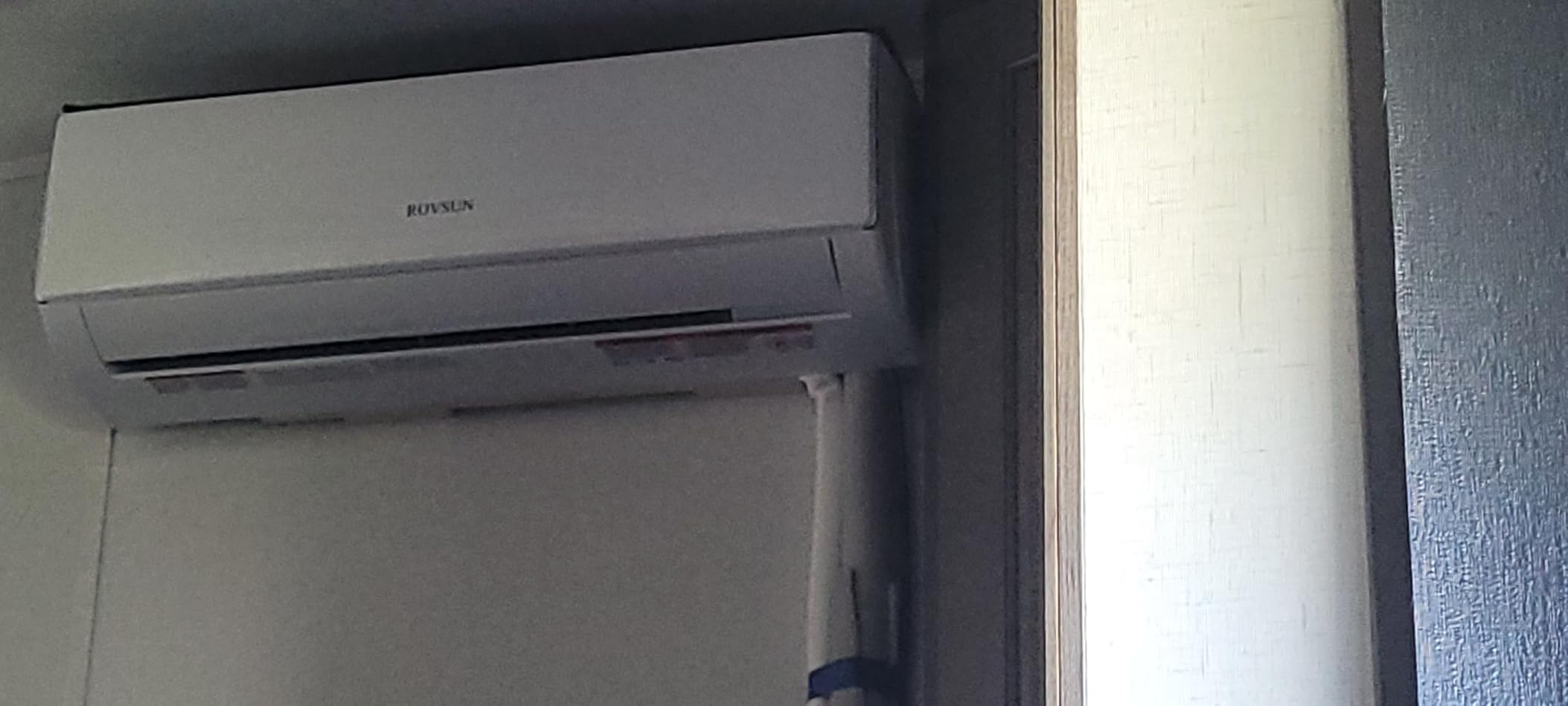
One review deserves flagging directly: a detailed report of persistent damp air and wall mold in a sealed, unventilated room after install. A single report is not a pattern, but it points at a real issue that has nothing to do with the unit. A ductless head cools by moving air, so an unventilated sealed room can accumulate humidity. Also note that the manufacturer specifies professional installation, and that refrigerant work still needs a vacuum pump and gauges despite the pre-charged condenser.
When this is the right pick
Choose it when your panel only has 115V available, your room is roughly 400 to 550 square feet, and you want voice and app control without paying for a higher-efficiency unit. It is a good fit for a bedroom in a hot climate, a home office, or a sunroom.
The wide 5F to 122F operating range also makes it a workable three-season option in mild-to-hot regions, where shoulder-season heating is needed for only a few dozen hours a year.
When it is the wrong pick
If you run the AC hard for many hours a day, the 17 SEER2 rating will show up on your utility bill. Pay the small difference for a 19 or 20 SEER2 unit and the gap closes within a couple of summers.
It is also the wrong choice for a room with poor ventilation that will be closed up in summer. Any ductless head in a sealed room needs the building to have some way to exchange air, and the damp-air complaint in the reviews is the honest version of that warning.
5. ROVSUN 9000 BTU – Best for Budget Bedrooms
ROVSUN 9000 BTU Wifi Enabled Mini Split Air Conditioner & Heater with Inverter, 20 SEER2 Energy Saving 115V Ductless Split AC Unit with Pre-Charged Condenser, Heat Pump & Installation Kit
9000 BTU
450 sq. ft.
20 SEER2
115V
28 dB
R-32
Pros
- 20 SEER2 at 115V is a rare efficiency pairing
- Pre-charged condenser with 16.4 ft line set
- 28 dB mute mode for bedrooms
- Cools a three-car garage quickly in extreme heat
- One owner cut electricity cost roughly in half versus window units
Cons
- Included line-set tape is poor quality
- Refrigerant must still be vacuumed before release
- One owner reported a mold and humidity issue plus slow parts response
- Ships as two boxes
- Compressor noise reportedly rises after about a year
For a small bedroom on a tight budget, the pairing of 9000 BTU with 20 SEER2 on 115V is the strongest efficiency-to-cost combination in this roundup. Coverage is 450 square feet, which suits a standard bedroom or a small office, and the operating range is 61F to 88F in both modes.
Owners like the installation experience more than almost anything else about this unit. First-time installers report that the 120V 20A install is genuinely manageable, and that the 28 dB mute mode is effectively silent in a bedroom. One Florida owner reported cutting electricity cost roughly in half versus the window units it replaced, and one buyer in Oklahoma said it cooled a three-car garage quickly in 110F heat.
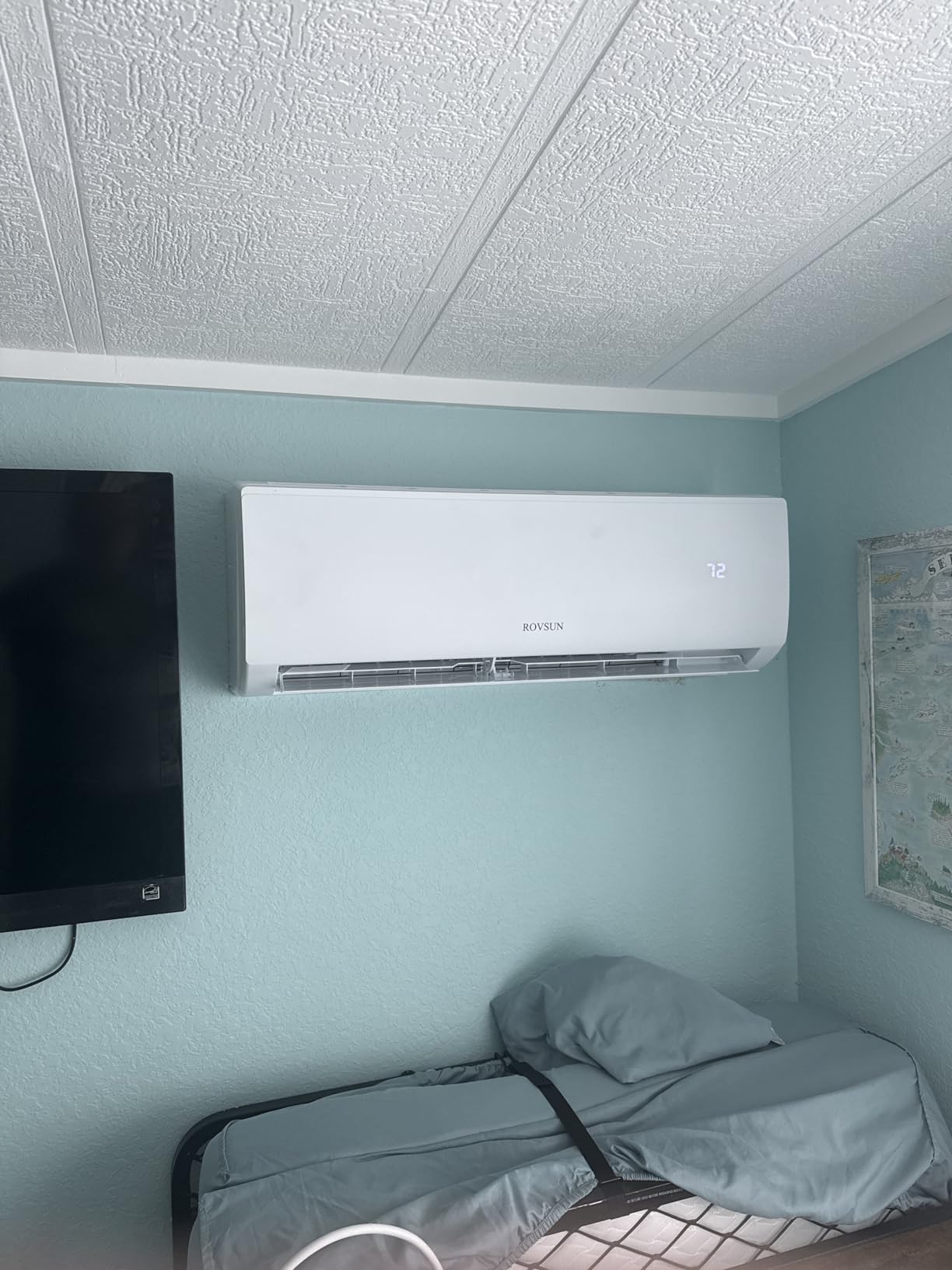
Two things to correct in the marketing, though. The pre-charged condenser does not mean the line set skips evacuation: reviews specifically note that refrigerant still has to be vacuumed before release, so this is a hybrid path, not a true no-vacuum one. And the included line-set tape is poor, with multiple installers reporting they bought better tape.
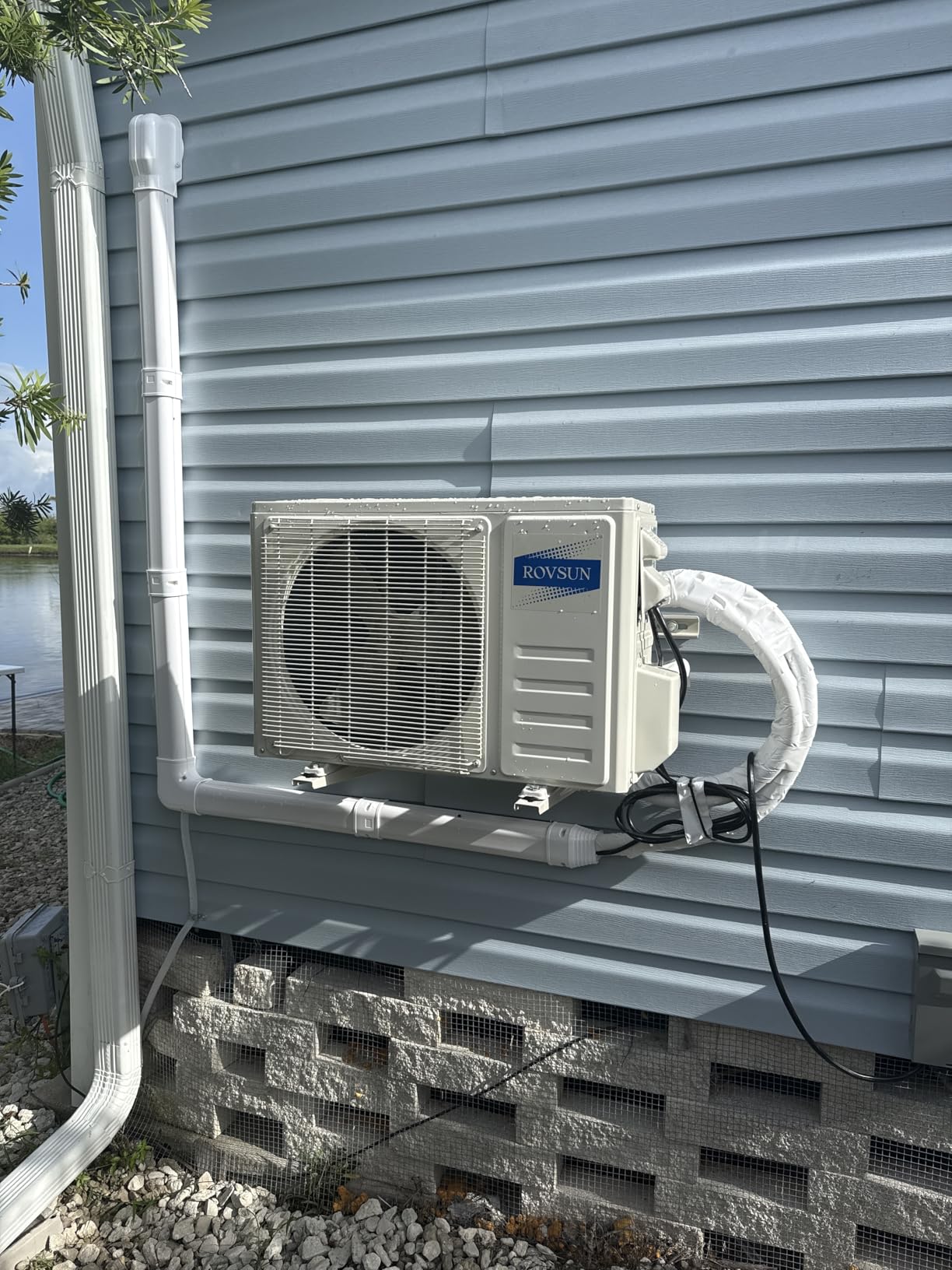
There is also a documented long-term complaint. One owner reports the outdoor compressor becoming noticeably louder after about a year, which would point at a compressor or bearing issue rather than normal inverter cycling. Separately, one buyer reported damp air and mold in a sealed office along with a slow parts response, and the unit ships as two separate boxes, which can complicate scheduling a single install day.
When this is the right pick
This is the value pick for a bedroom, a small office, or a converted closet room where the budget is the deciding factor. A 20 SEER2 rating at this capacity and voltage is hard to find cheaper, and the running-cost math is where the money comes back.
It is also a reasonable garage and shed unit if you accept the evacuation step and have or can rent a vacuum pump. The same owners who installed it in bedrooms report it handling very hot spaces well.
When it is the wrong pick
It is the wrong choice if you need a true no-vacuum install, since evacuation is part of the job. Buy your own line-set tape and a proper vacuum pump before you start, or the install will be the weak link in the whole system.
Skip it for a closed, poorly ventilated room, and consider it carefully if you are keeping it for more than a few seasons. The reported rise in outdoor compressor noise after about a year is a reason to look at a longer warranty term, and this listing carries a 1 year warranty.
6. Albott Easy DIY 12000 BTU – Best True DIY Install
Albott Easy DIY Series 12,000 BTU 115V Mini Split AC & Heat Pump, 18 SEER2
12000 BTU
750 sq. ft.
18 SEER2
115V
No vacuuming required
5F-122F
Pros
- Indoor head arrives pre-wired and outdoor unit needs no vacuuming
- Several buyers finished the install in two to three hours
- Cools a 750 sq. ft. workshop in 99F outdoor heat
- Quiet relative to the window units it replaced
- 5 year compressor and 7 year parts warranty
Cons
- Auto mode locks the setpoint at 77F
- Included lineset and signal cable are thin gauge
- Mounting bracket bends easily on masonry
- Manual is largely untranslated and the flare section is unclear
- Reported app connection problems and a unit that refused warranty help
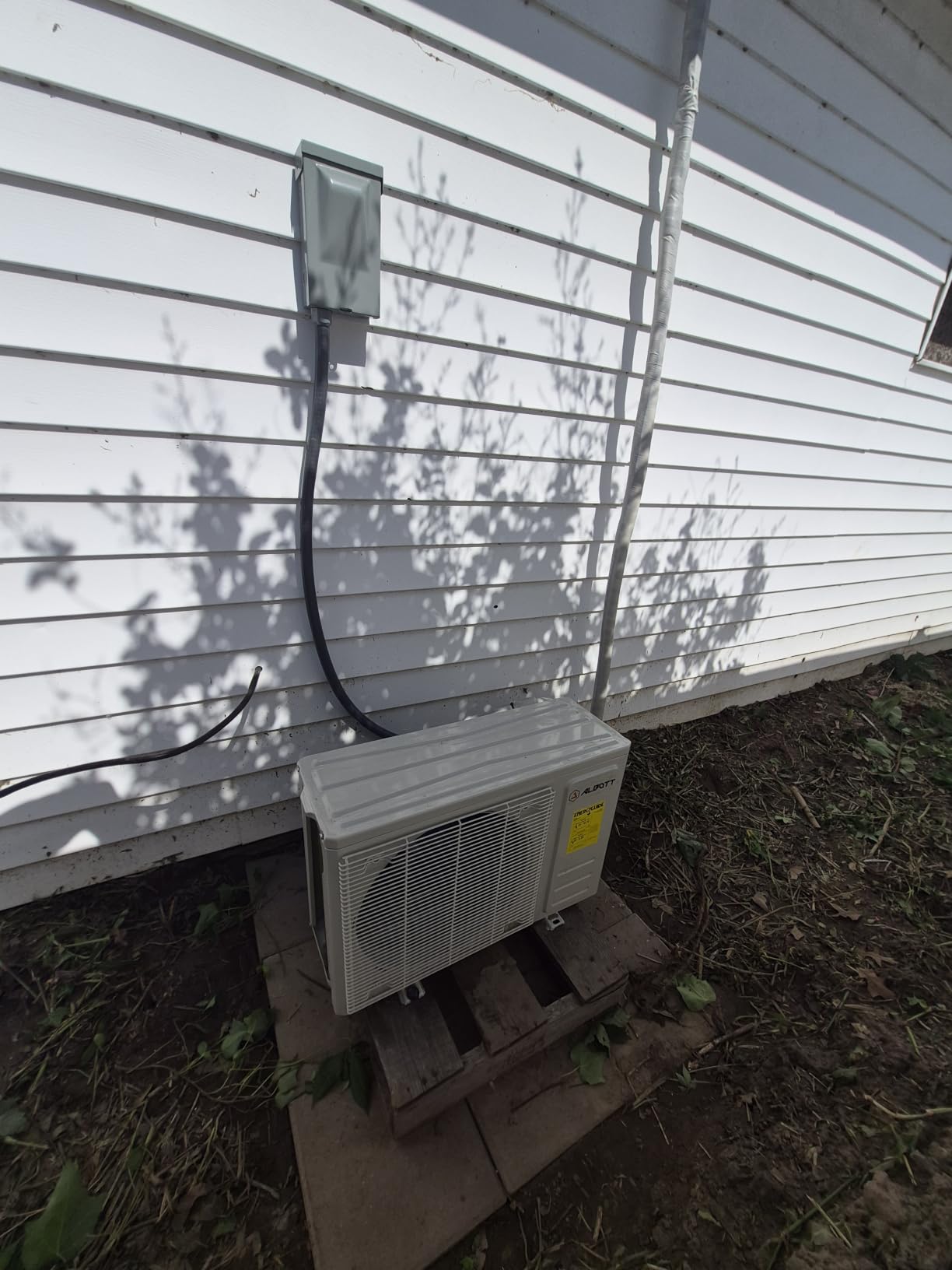
This is the one unit in the roundup that is actually sold as a no-vacuum install. The indoor head arrives pre-wired and the outdoor unit requires no vacuuming, which is the specific claim that separates a true DIY system from a kit with a pre-charged condenser that still needs evacuation. Several buyers report completing the install in two to three hours.
On paper it is a well-specified 12000 BTU 18 SEER2 115V heat pump covering up to 750 square feet, operating from 5F to 122F. It has a self-cleaning function, removable filters, and detachable air blades for maintenance, and the warranty terms are 5 years compressor and 7 years parts, the longest parts term in this group. It is also the only Prime-eligible unit here.
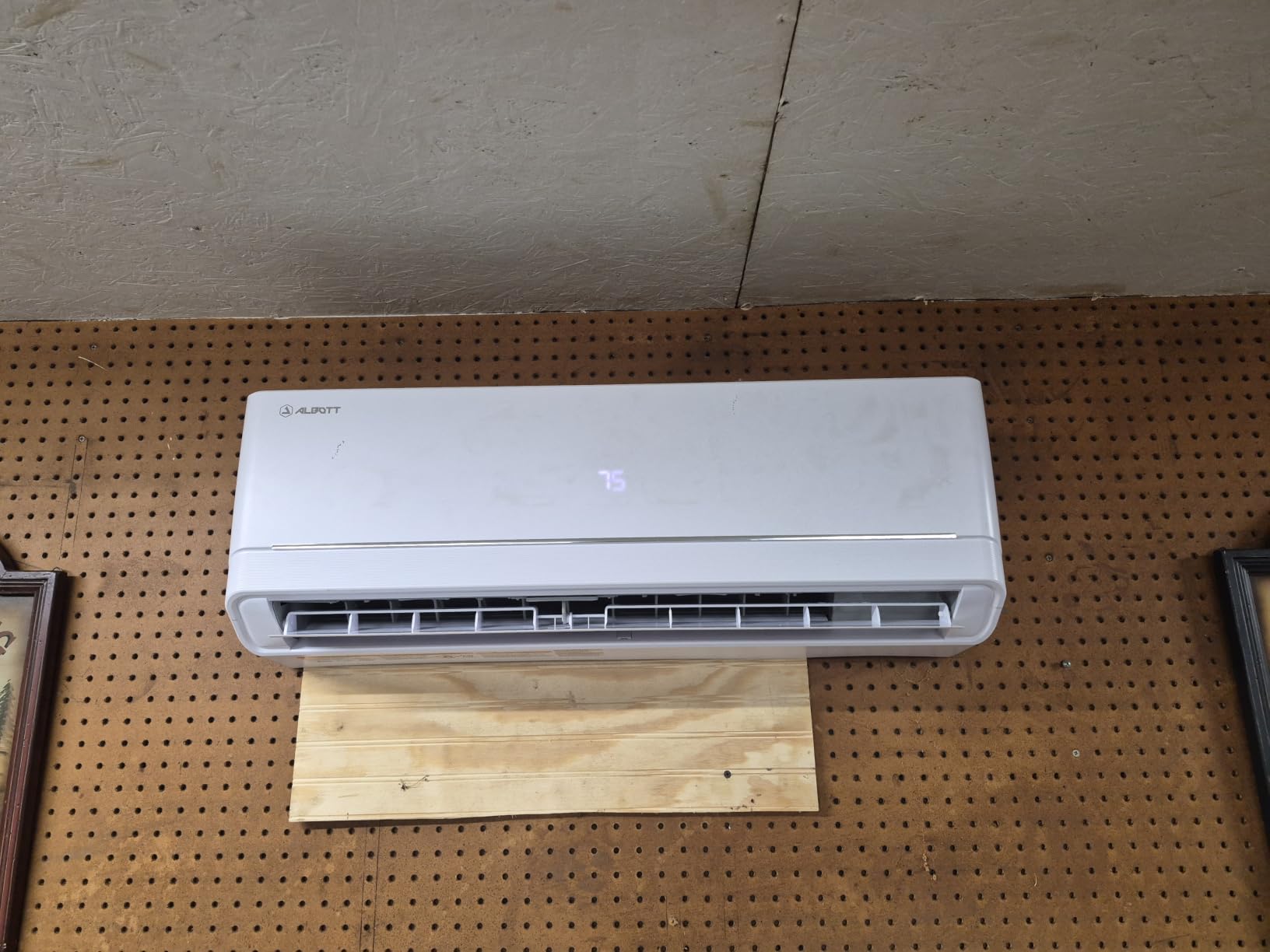
It also has the lowest rating here at 4.1, and the reason is support rather than performance. The 1-star reviews cluster around a restocking-fee refusal on a defective return and a unit that would not hold a vacuum with warranty help denied. That last one is the most serious complaint in the whole roundup, because a unit that will not hold vacuum is a unit that will not hold a charge.
Mid-range reviews flag real hardware details: auto mode locks the setpoint at 77F so most owners just run Cool, the included lineset and signal cable are thinner than name-brand kits, and the mounting bracket bends easily on brick or masonry. The manual is largely untranslated and the flare-connection section is unclear, and one owner paid to have that section fixed. Reported app connection problems and an unremarkable remote round out the complaints.
When this is the right pick
Buy it when your specific goal is to avoid the vacuum step entirely and you are confident in your own hands. The shortened install path is real and reported by multiple owners, and for a first-timer with no refrigerant tools, that matters more than the last two points of efficiency.
It is a strong choice for a 750 square foot workshop where heat is the problem. One owner reported cooling that space to the mid-70s in 99F outdoor temperatures, which is a strong result for a single 12000 BTU head.
When it is the wrong pick
Do not buy it if warranty service matters more to you than install simplicity. A 4.1 rating with documented support refusals and a vacuum failure is a real risk on a unit you would be owning for a decade.
It is also the wrong pick on masonry, where the thin bracket is a genuine problem, and on brick exteriors without a plan to reinforce it. If you need the unit to be quiet in a bedroom, the fixed auto setpoint will frustrate you within a week.
7. DELLA Econo 23000 BTU – Best for 230V Shops and Additions
DELLA Econo Series 23000 BTU Mini Split Air Conditioner 17 SEER2, 230V Cools up to 1500 Sq. Ft, Works with Alexa and Wifi, Heater Ductless Inverter System with Heat Pump,16.4ft Installation Kit
23000 BTU
1500 sq. ft.
17 SEER2
230V
Heat to 5F
37-41 dBA
Pros
- Cools and heats up to 1500 sq. ft. down to 5F
- No refrigerant adjustment needed under 25 ft of tubing
- Both units run quietly enough not to interfere with TV
- WiFi and Alexa control respond quickly
- Useful heat pump performance in shoulder seasons
Cons
- Requires a 230V circuit and professional installation
- Refrigerant must be adjusted past 25 feet
- One owner had to reset the unit after long idle periods
- Instructions lack a mounting template and wire gauge
Our pick when a whole floor or a large shop is the target and 230V is available. The DELLA Econo is rated at 23000 BTU and covers up to 1500 square feet, the largest stated coverage area in this roundup, and it cools and heats down to 5F with a heat pump rather than a resistance-style backup.
The 16.4 ft install kit ships with 1/4 inch and 1/2 inch copper and a 25A maximum fuse, and no refrigerant adjustment is required as long as the run stays under 25 feet. That is a real convenience in a shop or addition where a straight run is easy. Remote-sensing I-Feel control, 4D airflow, and Alexa with WiFi cover the control side, and the operating noise is 37 to 41 dBA.
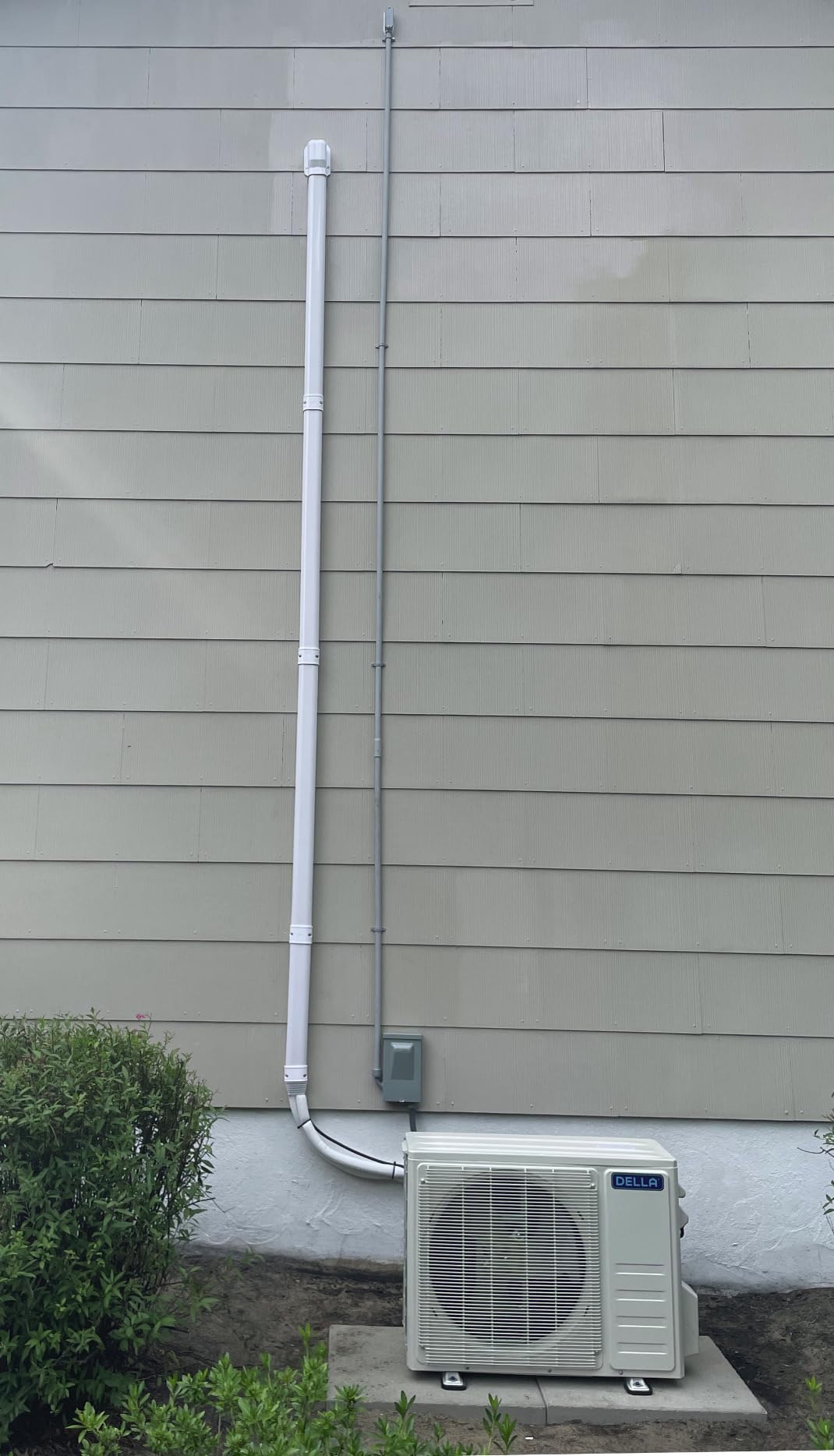
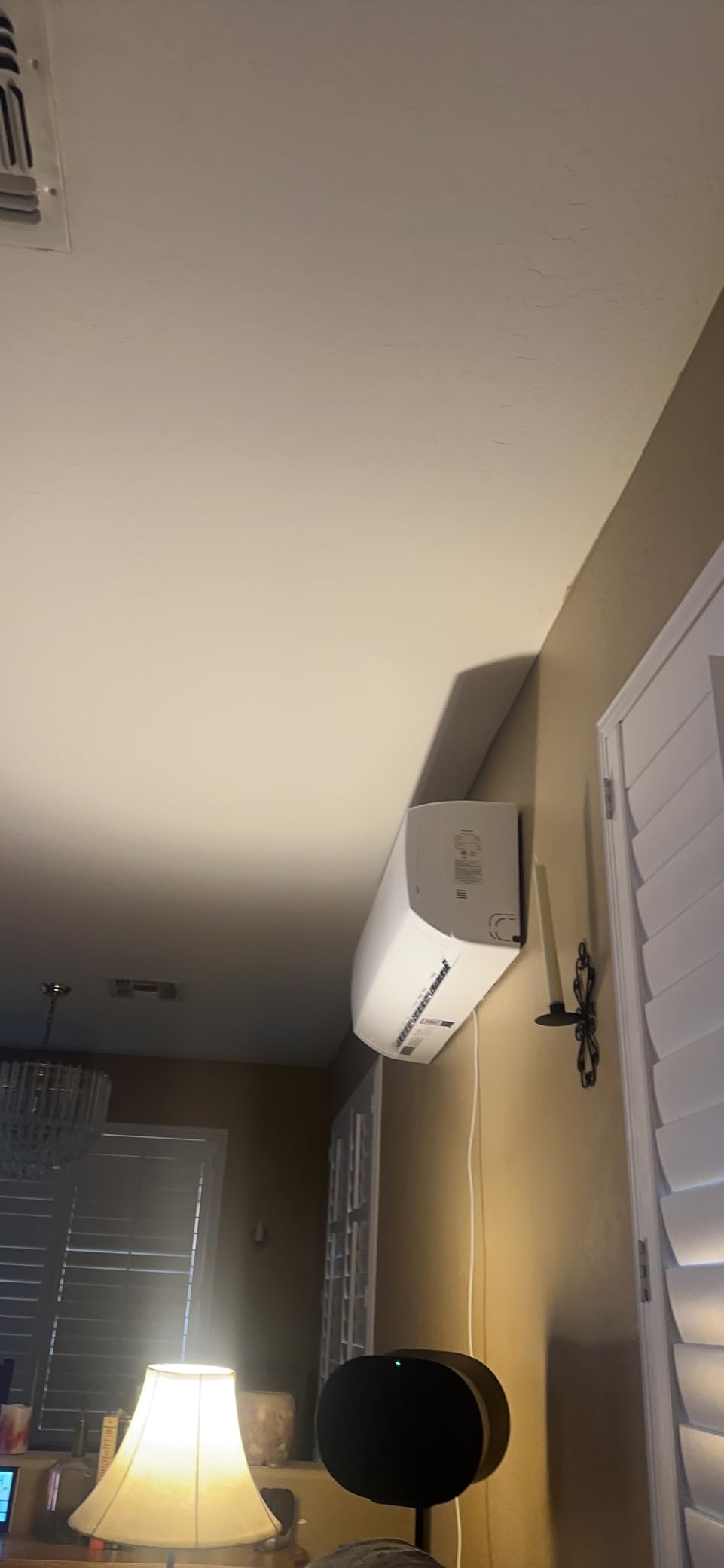
Owners report using this as a whole-floor solution, including one who cooled a 925 square foot bungalow in full afternoon sun on low and cut electric bills by 10 percent or more. Several note that neither the indoor nor the outdoor unit is loud enough to interfere with television or work, and that heat pump mode performs usefully through shoulder seasons.
The caveats are consistent. It requires a 230V circuit and the manufacturer designates it a professional-install system, so this is a hybrid project: you can do the mounting and line work, but the refrigerant connection and commissioning want a technician. Refrigerant must be adjusted if the run exceeds 25 feet, which is a real possibility in a wide addition. One owner also had to reset the unit periodically after long periods of non-use, and the instructions omit a mounting template and wire gauge for some variants.
When this is the right pick
This is the one for a sun-exposed room addition, a large open living area, or a workshop bay where you need serious capacity and real heating. The 5F heating rating makes it a genuine three-season unit rather than an air conditioner with a nominal heat mode.
It also suits owners who are comfortable doing the mechanical work and willing to pay a technician for the refrigerant step. That hybrid path is a normal and accepted approach among the owners we read about, and it preserves most of the DIY savings without touching the legally restricted work.
When it is the wrong pick
It is the wrong choice for a bedroom. At 37 to 41 dBA and with a throw built for a large open space, this is far more machine than a sleeping room needs, and the 230V circuit is unnecessary expense there.
It is also wrong if your run will exceed 25 feet, because the refrigerant adjustment then requires equipment and a technician you were hoping to avoid. Measure the run before you order.
8. Rellytech 12000 BTU – Best Warranty Coverage
Rellytech Mini Split AC/Heating System, 12000 BTU, 19 SEER2 115V/110V
12000 BTU
750 sq. ft.
19 SEER2
HSPF2 8.5
115V
8 year warranty
Pros
- Most complete box with template
- plate
- cables
- pipes and drain
- 19 SEER2 and HSPF2 8.5 across both seasons
- 8 year warranty with 24-hour support
- ETL and AHRI certified
- 4 fan speeds with 90 degree vertical swing
Cons
- 42 dB is the loudest indoor figure in this group
- Remote only with no WiFi or voice control
- Professional HVAC installation specified by the manufacturer
- Refrigerant line work needs a vacuum pump not included
If warranty length is your top concern, this is the one. The Rellytech carries an 8 year warranty with 24-hour customer service, which is the longest coverage term of the ten units here, and it is ETL and AHRI certified with both HSPF2 8.5 and 19 SEER2 published.
The box contents are unusually complete, and that matters more than it sounds. You get a bracket template, a mounting plate, a 12.5 ft communication cable, a 5.9 ft power cable, 9.84 ft of connecting pipes, a 6.56 ft drain pipe, luting putty, screws, and anchors. That is the full parts list for a standard single-zone install, so you are not hunting for hardware on install day.
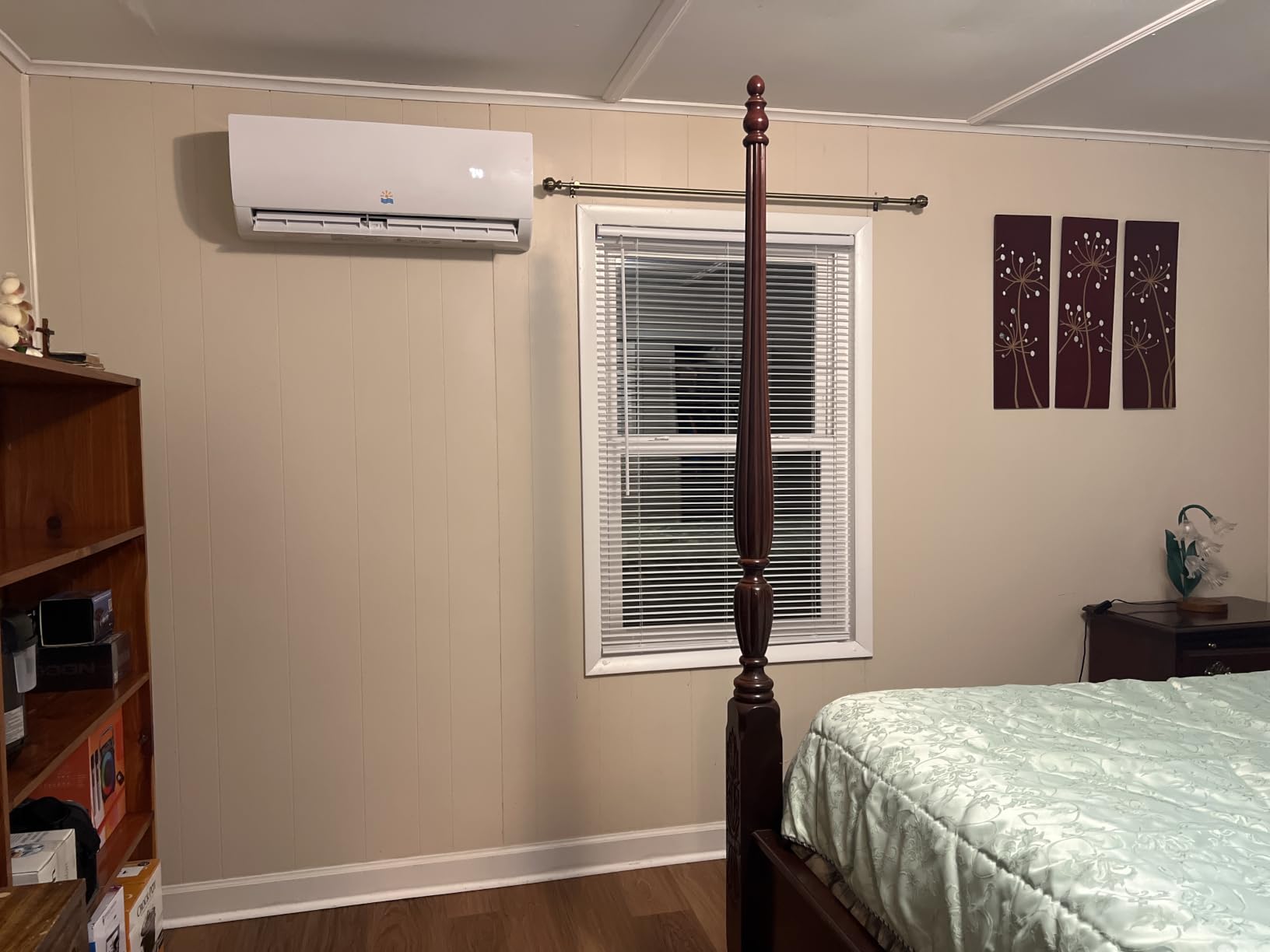
The trade-offs are clear. At 42 dB this is the loudest rated indoor noise level among these units, which rules it out of a bedroom for anyone who is sensitive to sound. It is remote-only, with no WiFi and no voice assistant, so scheduled control is limited to the 24-hour timer.
And the manufacturer specifies professional HVAC installation, with the refrigerant line work still requiring a vacuum pump and gauges that are not in the box. Owners consistently note that a 1-ton 19 SEER2 unit with a full accessory kit and an 8 year warranty is hard to find at this level, which is the real argument for it. The cooling and heating are 12000 and 12500 BTU respectively for rooms up to 750 square feet, operating between 61F and 88F.
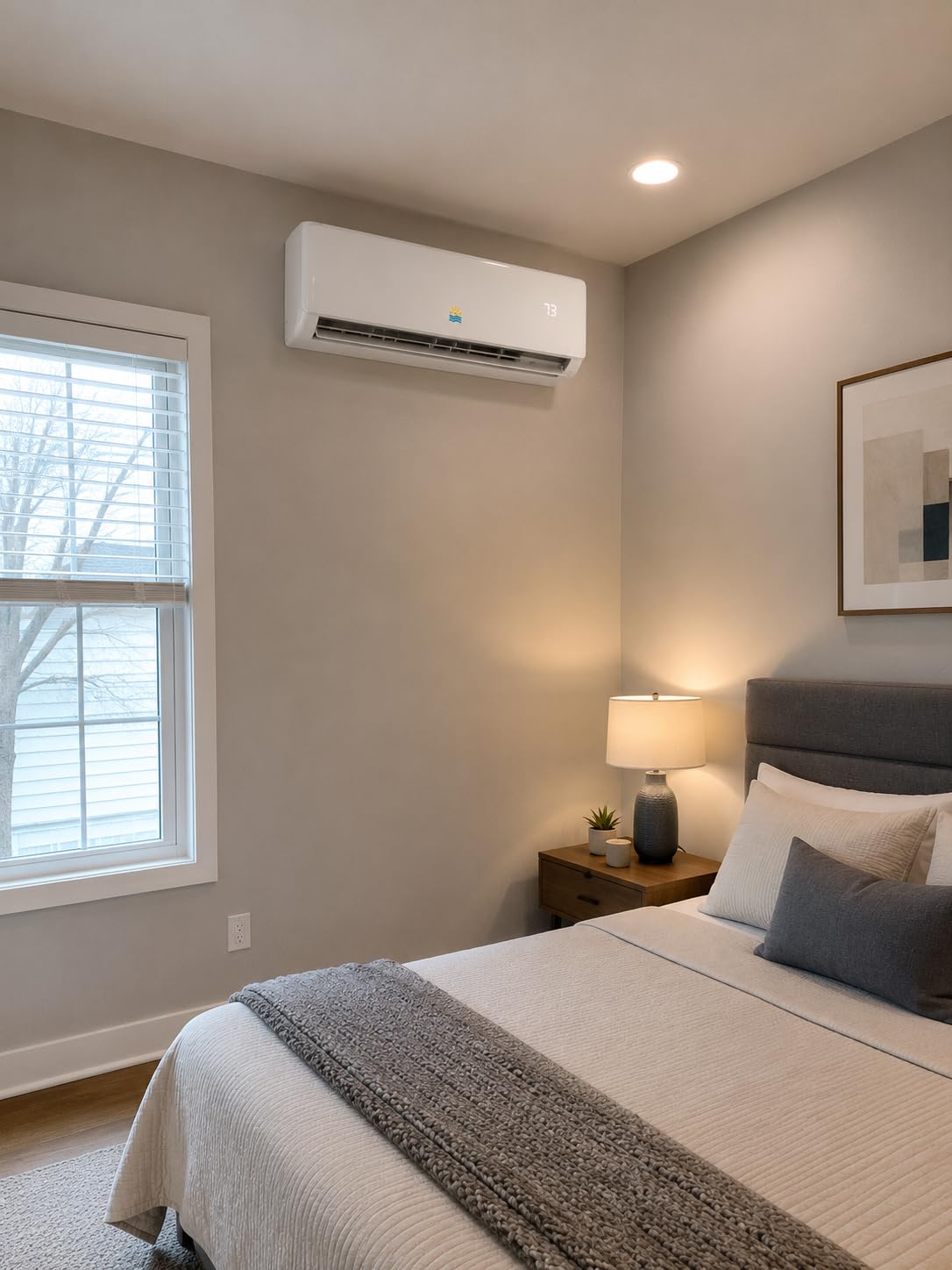
When this is the right pick
Choose it for a living room, den, or basement rec room where you want a long warranty behind the equipment and you do not care about app control. The complete accessory kit means an install day is less likely to stall on a missing bracket or cable.
It is also a good pick for a first-time installer who wants everything specified up front. Having the template, plate, both cables, pipes, and drain line in one box removes a whole category of mid-install improvisation.
When it is the wrong pick
It is the wrong pick for a bedroom. 42 dB is audible in a quiet room at low fan speed, and no amount of sleep mode fixes that. Pick the Temprium or the DELLA Vario instead.
It is also wrong if you want to control the system from your phone or by voice. That is a real loss for many homeowners, and there is no app to add later.
9. Mountman 12000 BTU – Best Value
Mountman 12000 BTU Mini Split AC/Heating System,19 SEER2 110/120V Energy Efficient Ductless Inverter System,Cools Up to 750 Sq.Ft with Pre-Charged Condenser,Heat Pump & Installation Kits
12000 BTU
750 sq. ft.
19 SEER2
110-120V
26 dB sleep mode
R-32
Pros
- Highest average rating in the roundup at 4.5
- 26 dB in sleep mode is among the quietest here
- Pre-charged condenser and install kit included
- ECO mode delivers up to 30% savings on a 19 SEER2 base
- Auto-swing and 4 fan speeds give good room coverage
Cons
- Remote only with no WiFi or voice support
- Only a limited warranty is described in the listing
- Shipping weight and package dimensions are not published
- Pre-charged systems still need line-set evacuation
The Mountman has the strongest aggregate owner sentiment in this group. It carries a 4.5 rating, and the review distribution backs that up with roughly 75 percent five-star and 5 percent one-star. Buyers centre on quietness, the included pre-charged kit, and the running costs.
It is a 12000 BTU 19 SEER2 110/120V inverter heat pump covering up to 750 square feet, with cool, heat, dry, and fan modes, four fan speeds, turbo, and an ECO mode rated for up to 30 percent energy savings. The 26 dB sleep mode makes it viable in a bedroom, which few units in this price band manage.
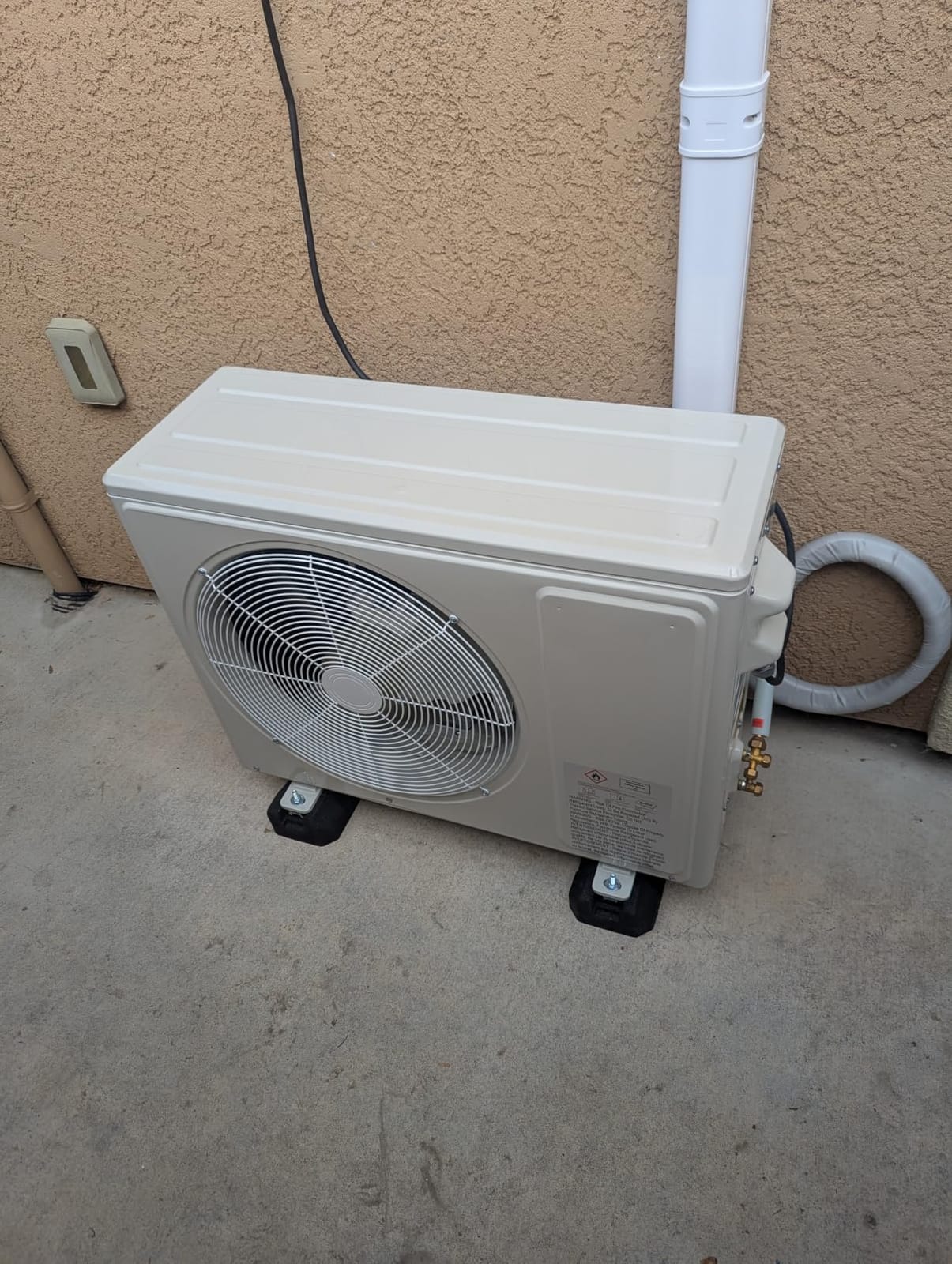
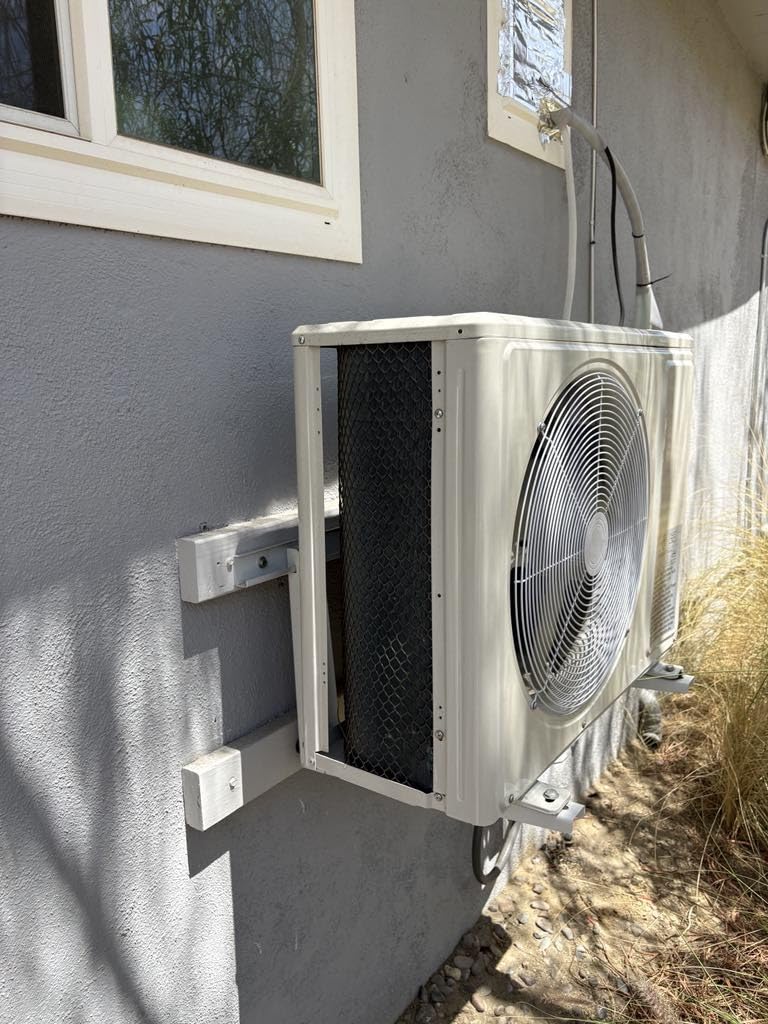
On the maintenance side, it has a high-temperature self-clean cycle, automatic defrost on the outdoor unit, and a washable anti-dust filter that rinses monthly. It uses R32 refrigerant with a rotary scroll compressor designed to reduce short cycling, which is a sensible design choice given that 12000 BTU is close to the capacity of a 750 square foot room.
The limitations are honest but modest. It is remote-only, with no WiFi and no voice assistant. Only a limited warranty is described in the listing, and the published specifications omit shipping weight and package dimensions, which is worth asking about if you are planning a two-person lift. Owners also note that pre-charged systems still need line-set evacuation before the refrigerant is released, so this is a hybrid path rather than a true no-vacuum install.
When this is the right pick
Pick it when you want the strongest owner track record per dollar and you are comfortable with a vacuum step. A 19 SEER2 rating, a 26 dB sleep mode, and a self-cleaning cycle at this level is a genuinely well-rounded package.
It suits a bedroom, a home office, or a mid-size living space. The auto-swing and four fan speeds cover a square room well, and the washable filter with a monthly rinse keeps maintenance simple in a dusty space.
When it is the wrong pick
It is the wrong pick if you need smart-home control, and the wrong pick if the unspecified warranty term is a dealbreaker for you. With a limited warranty described and no published weight, this is a unit where you should read the manual before ordering.
It is also not a true no-vacuum system. If your reason for going DIY is to avoid refrigerant equipment entirely, this will not deliver that.
10. Temprium 12000 BTU – Best for Efficiency
Temprium 12000 BTU Mini Split Air Conditioner, 115V 22 SEER2 AC & Heat Pump
12000 BTU
750 sq. ft.
22 SEER2
115V
23 dB
780 watts
R-32
Pros
- 22 SEER2 is the highest efficiency rating in the roundup
- 23 dB is the quietest rated figure here
- 780 watt draw keeps circuit and running costs low
- Cools to 122F and heats to 5F
- Arrived properly pre-charged per owner reports
Cons
- Included line set is only about 10 to 15 ft
- Swing louvres move up and down but not side to side
- Some buyers could not get the WiFi app to connect
- One buyer reported heat mode never engaging
- Only a 1 year warranty
If your priority is the utility bill, this is the most efficient unit in the roundup. At 22 SEER2 with an 115V 12000 BTU heat pump, the Temprium runs on just 780 watts, which is the lowest draw here, and owners report visibly lower electricity use than the window units they replaced.
The 23 dB operating noise is the quietest rated figure in the group, described in reviews as quieter than a whisper, and it pairs with a sleep mode that auto-adjusts temperature and dims the display. Coverage is up to 750 square feet, cooling to 122F and heating down to 5F, with R32 refrigerant, ETL and AHRI certification, and a 133F high-temperature self-cleaning cycle.
The control side is well equipped for the efficiency tier. You get a phone app plus Alexa and Google Assistant, seven operating modes, seven fan speeds, 4D auto swing, turbo, and a Follow-Me I-Feel function, all behind a backlit remote. A repeat DIY installer specifically praised the pre-charged arrival and reported that the line set can be extended and re-evacuated with the right tools.
There are real practical catches. The included line set is only about 10 to 15 feet, so an upper-floor or longer run needs added line, fittings, and a vacuum, which is a weekend of extra work rather than a weekend of work. The swing louvres move up and down but not side to side despite the listing description. Some buyers could not get the WiFi app to connect even though the remote works well, and one buyer reported a unit where heat mode never engaged and cooling blew warm air. The warranty is one year.
When this is the right pick
Choose it for a bedroom or home office that runs hard, where the combination of 22 SEER2, 780 watts, and 23 dB gives you the lowest running cost and lowest noise in the roundup. The self-cleaning cycle and washable filter reduce upkeep in a room that gets little attention.
It is also a good value pick if your run is short. With a 10 to 15 foot included line set, a small addition or a single-story room may need nothing extra at all, and several buyers report connecting it without issue.
When it is the wrong pick
It is the wrong pick for a long line run or a second story. Budgeting the extra copper, fittings, and a proper evacuation changes the calculus completely, and the manufacturer route is a technician visit.
It is also the wrong pick if you rely on heating, given the reported heat-mode failure, and the 1 year warranty offers little protection if something goes wrong. Confirm the app pairs with your phone before you commit.
What DIY Actually Means in a Mini Split
The easiest mini split to install yourself is a true pre-charged system: the factory charges the refrigerant inside a sealed line set and closes it with quick-connect couplings, so the refrigerant circuit is never opened and no vacuum pump is required.
That is the entire technical difference, and it is a bigger difference than it sounds. Cutting, flaring, pressure testing, evacuating, and charging a line set is the most skilled and most legally restricted part of a mini split install. Pre-charged systems hand you that step already done, in the box.
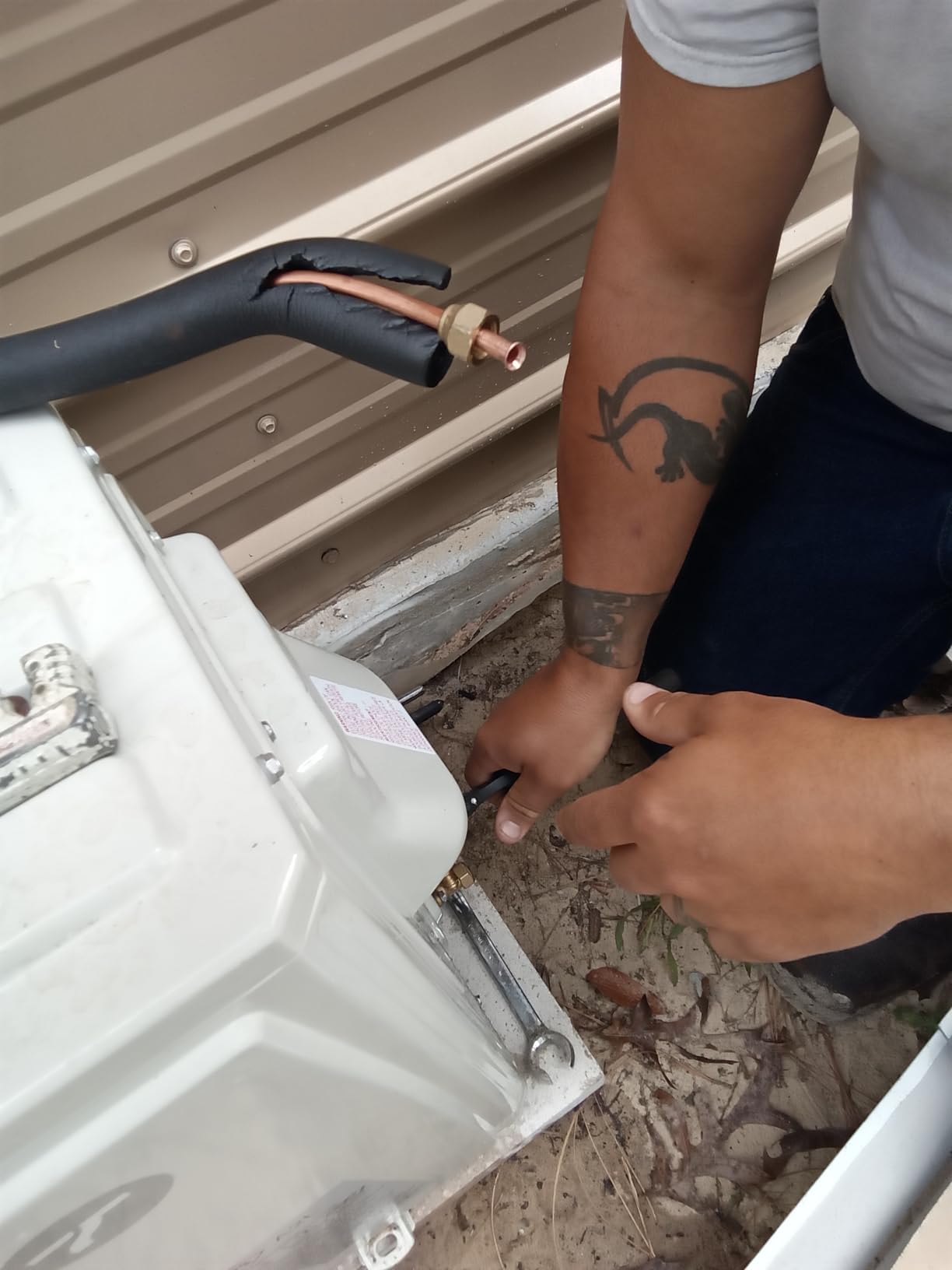
But pre-charged does not mean plug-and-play. The receiving end of those quick-connect couplings has a valve core inside it, and refrigerant is trapped on both sides of that valve until you open it. The couplings are not the weak point; the dry nitrogen charge and the cleanliness of the fittings are what determine whether the system holds a charge afterward. Torque the fittings to the manufacturer spec, not by feel.
Two more things stay on your plate. First, the electrical: a 115V unit still wants its own dedicated 20A circuit rather than a shared extension cord. Second, the condensate drain, which is the single most common source of the “my new unit leaks” complaint in owner reports.
If you also need line set guidance, we have a separate roundup on the best mini split line sets.
Are DIY Mini Splits Any Good?
Yes, for the specific job of conditioning one room, a garage, a workshop, or a finished basement. The equipment is the same class of hardware a contractor would install, the efficiency ratings are real and independently certified, and owner reviews on the units here describe near-silent inverter operation and meaningful utility savings versus window units. The weak point is not the machine, it is the install and the after-sale support.
What you gain:
You skip the flare, evacuate, and charge steps entirely on a true pre-charged system, which is most of the labor on a conventional install bill.
You can add cooling to a single room, garage, or addition without running new ductwork or touching the existing central system.
Inverter compressors and SEER2 ratings in the 17 to 22 range cut running costs well below a window unit.
You choose the equipment yourself instead of accepting whatever the contractor stocks.
Several of these units run on 115V, so an existing 20A circuit may already be available.
What you take on:
A 230V unit needs a new circuit and a licensed electrician, which can cost more than the equipment.
Mounting, drilling, draining, and wiring are all your responsibility, and mistakes there cause real damage.
Some brands sell kits that are pre-charged but still require evacuation and a refrigerant adjustment when line length changes, so read the listing carefully.
Warranty terms vary widely, and a few brands condition coverage on licensed-installer installation or a registration deadline.
Parts availability and contractor willingness to service homeowner-purchased equipment are both less certain than with a mainstream brand.
Mini Split Sizing Guide: BTU by Room Size
BTU is a measure of heat transfer, and a mini split has to move enough of it to keep a room at your setpoint on the worst day of the year. Too little and the unit runs constantly without ever catching up. Too much and it cycles on and off in short bursts, which wastes energy, spikes your bill in humid weather, and can leave the room feeling clammy rather than cool.
The starting point most people use is roughly 20 BTU per square foot, then adjusted for ceiling height, window area, sun exposure, insulation quality, and how many people are in the room. Use the listed coverage figures as a ceiling, not a target.
9000 BTU: 250 to 450 square feet. Bedrooms, home offices, small dens, sunrooms. Pick this when the room is well insulated and you want quiet overnight operation.
12000 BTU: 450 to 750 square feet. Standard bedrooms, finished basements, three-car garages, workshops, medium offices. This is the most common DIY size and the sweet spot for most single rooms.
18000 BTU: 800 to 1000 square feet. Large living rooms, older main floors with poor airflow, loft spaces. Available in 230V from several of the brands above.
23000 to 24000 BTU: 1100 to 1500 square feet. Open-plan great rooms, large additions, commercial shop bays. Requires 230V and an electrician in nearly every case.
Adjust upward for 9 foot or vaulted ceilings, for west-facing windows, for a room that gets direct afternoon sun, and for poor insulation. Adjust downward for a well-insulated room with low sun exposure. A room with a large window facing the afternoon sun in a hot climate can need 20 to 30 percent more capacity than its square footage suggests.
On the question of whether to undersize or oversize, undersize slightly. A unit that is modestly large for the room will short-cycle, and a unit that is modestly small will simply run longer at a lower compressor speed, which is exactly how an inverter is designed to operate. Running at part load is also where the efficiency rating is at its best.
115V vs 230V: When You Call an Electrician
The voltage of the unit is decided by its capacity, and it is the single decision most likely to determine what your project actually costs. The threshold sits around 18000 BTU: units at or below 15000 BTU are typically 115V, and units at 18000 BTU and above are typically 208 or 230V.
Every 115V unit in this roundup wants a dedicated 20A circuit, not a shared wall outlet behind a TV or a bedroom. Nine of the ten products here are 115V, which is why so many owners report completing the electrical themselves. The exception is the two 230V units, the Senville LETO and the DELLA Econo, and both of those want a hardwired circuit with a maximum 25A fuse.
Call an electrician when any of these apply. You need a new circuit and your panel has no spare slots. You need to run the circuit more than a short distance from the panel. Your panel is older and has no spare breaker space, or it uses tandem breakers that are already doubled up. You are installing the outdoor condenser on a detached structure, which usually means a subpanel and a buried or overhead feeder.
You also want an electrician if you are not confident working in a live panel at all, and that is a legitimate position rather than a cop-out. The mechanical work is where the DIY savings live; the electrical is where the code exposure and the fire risk live.
A useful framing: the equipment is the visible cost, but a 230V circuit can exceed the price of the equipment. Measure that against your panel before you fall in love with a high-capacity unit.
Pre-Charged vs Conventional Flare Line Sets
This is the distinction that decides whether a system is actually DIY, and it is the one most often blurred in marketing. A pre-charged line set arrives from the factory filled with refrigerant and sealed. A conventional line set ships as bare copper that has to be cut, flared, pressure tested, evacuated to a deep vacuum to remove moisture, and charged with the refrigerant released from the factory cylinder.
The moisture step is why a vacuum is not optional on a flare system. Air and moisture left in the line can freeze at the metering device, block the refrigerant flow, and damage the compressor. That is a real failure mode, not a technicality, and it is the reason EPA Section 608 certification exists.
Classifying the systems in this roundup, and this is where you need to read the listing rather than the headline:
Albott Easy DIY 12000 BTU is the one unit here sold as requiring no vacuuming, with a pre-wired indoor head and a sealed outdoor unit.
Senville LETO, COSTWAY 12000, Mountman 12000, Rellytech 12000 all ship pre-charged with an included line set, so a standard-length run avoids the flare and charge steps.
ROVSUN 9000 BTU and ROVSUN 11500 BTU ship a pre-charged condenser, but owner reviews report the line set still has to be vacuumed before the refrigerant is released.
DELLA Vario 9000 and DELLA Econo 23000 are explicit that the line set must be vacuumed and that any change in line length requires a refrigerant charge adjustment.
The practical rule is simple. If the run uses the included line length or close to it, a pre-charged kit gets you most of the way. If you need to extend the line, past about 25 feet on most of these units, you are into technician territory no matter what the box says.
One more thing belongs here. Nearly every unit in this roundup uses R32 refrigerant, and the Senville LETO uses R454B, which is an A2L mildly flammable refrigerant. A2L refrigerants include a detection system that trips at a percentage of the lower flammability limit and forces the indoor blower to run so any leak disperses. That is a reason to place the indoor head thoughtfully rather than in a tight enclosed closet, and it is not a reason to avoid the unit.
What a Self-Install Really Involves?
A weekend is the honest answer for a pre-charged single-zone system, and first-time installers consistently report that the line connection itself takes two or three hours once the equipment is mounted. The mounting and electrical take the rest.
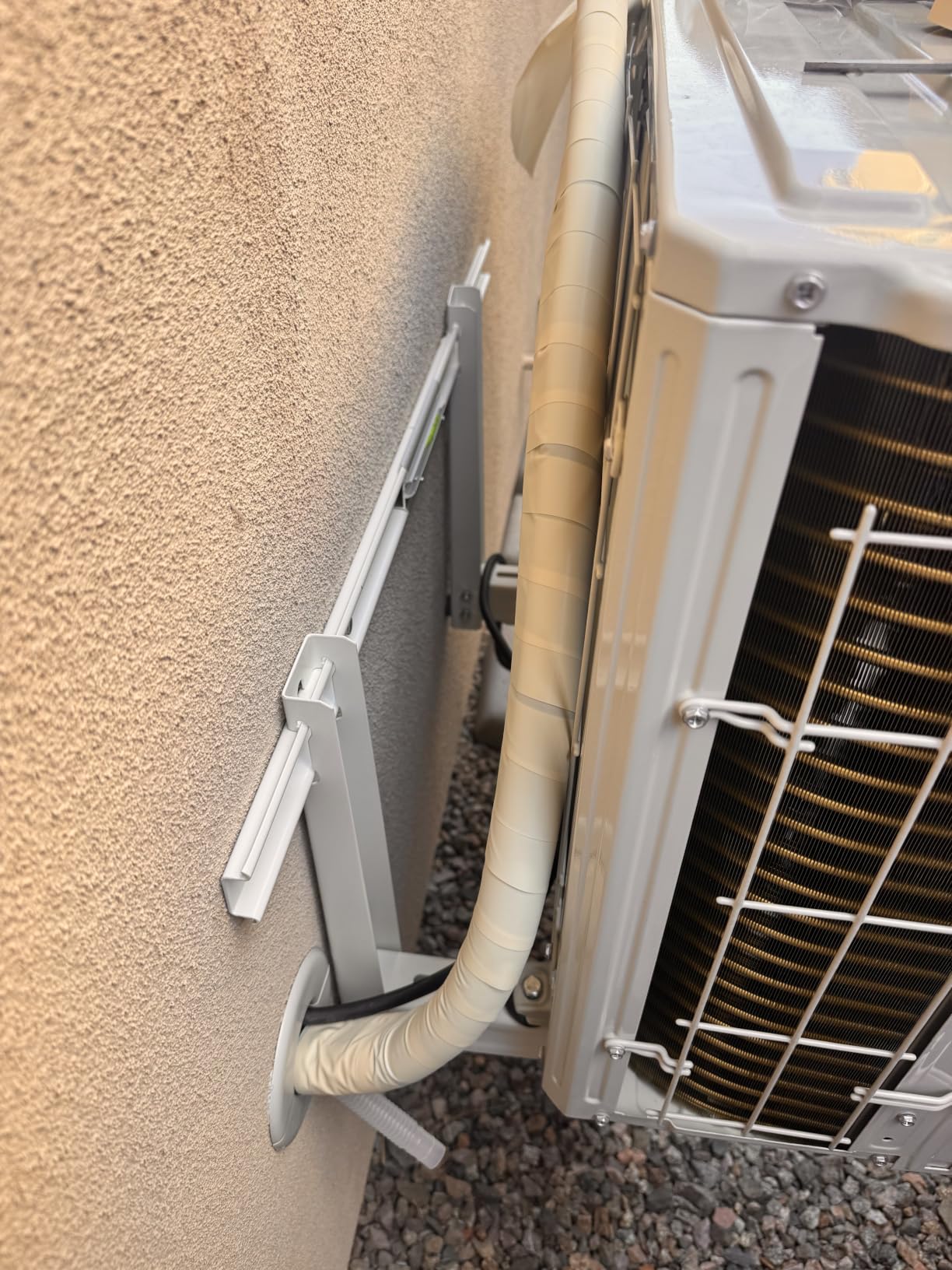
The tools are ordinary. A drill and a hole saw for the wall penetration, a level, a stud finder, a set of Torx and hex drivers, a vacuum pump and manifold gauges if the listing requires evacuation, a tubing cutter and flaring tool if you are building a flare joint, a crimping tool for the electrical, a refrigerant line wrap or tape, and a drill for the condensate line. A line-set cover or raceway keeps the exterior run tidy and protects the insulation.
The sequence runs in six steps. Mount the indoor head high on an interior wall and level it, usually around seven feet up. Set the outdoor condenser on a level pad with the clearances the manual specifies, with the fan discharge unobstructed. Route and connect the line set through the wall penetration and insulate both sides. Run the condensate drain with a continuous fall to a visible or external point. Wire the system, install the dedicated circuit, and power it up. Then connect the app and run the unit through its modes to confirm everything responds.
On the drain, the point is worth being blunt about. A condensate line needs a continuous slope to its destination with no humps and no kinks, and it needs to end somewhere you can see it. Condensate problems are the leading cause of the “my new unit is leaking” complaints in owner reports, and nearly all of them trace back to a kinked or uphill drain line rather than a bad unit.
On the fittings, installers single out the torque step as the one place where carelessness costs the entire system. Read the torque spec on the quick-connect couplings and tighten to it. Under-torquing gives you a slow leak that shows up months later as a unit that will not hold its charge. Over-torquing distorts the seat and does the same thing faster. A quarter inch of extra tightness is not a better joint.
The other recurring mistake is oversizing, which we covered above and which shows up as a ducted unit running constantly in a room that is already cold. A second, smaller mistake is skipping the electrical and running an extension cord, which is a fire risk and is not what the manual contemplates.
Will a Contractor Service a Unit You Bought Yourself?
Sometimes, and not reliably. This is the most-cited real-world blocker for homeowner-acquired equipment, and it is worth resolving before you buy rather than after. Owners in HVAC forums describe many local contractors declining to touch a unit they did not sell, and professionals in the same threads describe DIY-tier brands as being frowned upon in the trade, which deters some buyers who worry about future serviceability.
There are four checks worth making before you order. Ask two or three local HVAC companies whether they will service a system the homeowner purchased, and get the answer on the phone rather than assuming. Ask which brands they carry parts for, since a control board, fan motor, or temperature sensor for a no-name brand can take weeks. Ask about the refrigerant, because a technician who cannot source your specific refrigerant cannot open the circuit. And read the warranty terms, because several brands condition coverage on licensed-installer installation or on registration within a fixed window such as 90 days, which means a full self-install can leave you uncovered.
On permits, requirements vary by jurisdiction and we cannot give you a state-by-state answer. What we can tell you is that many jurisdictions require a permit and inspection for a new mini split circuit and for any line-set penetration, and that unpermitted work can complicate an insurance claim or a future home sale. A quick call to your local building department is a fifteen-minute task that removes an open question.
The Section 608 position is worth understanding too. You can legally install a pre-charged unit yourself, because you never open the refrigerant circuit. What you generally cannot do is buy refrigerant to service it, since the sale of larger quantities is restricted to certified technicians. Those two rules together are the reason a pre-charged system is the only realistic DIY path.
Brands to Buy Carefully, and Why
None of the brands here are bad, and we would not tell a homeowner to avoid one outright. What we can do is name the specific trade-off each one carries, so you are buying with the caveat in mind rather than discovering it after delivery.
ROVSUN — the pre-charged condenser still needs the line set vacuumed, and there is a documented mold and humidity report in a sealed room plus a reported rise in outdoor compressor noise after about a year. Buy it for value and verify the line-set requirements first.
Albott — the shortest install path but the lowest rating in the roundup at 4.1, with warranty refusals and a unit that would not hold vacuum in the 1-star reviews. The trade is install simplicity against after-sale risk.
Della — both units are designated for professional installation and both state that the line set must be vacuumed with a charge adjustment if length changes. Good machines, weaker DIY fit.
Temprium — a 1 year warranty on the most efficient unit here, plus a short included line set and a reported heat-mode failure. Efficiency leader, weakest coverage.
Rellytech — the loudest indoor rating at 42 dB and remote-only control. Warranty leader, control laggard.
Mountman — only a limited warranty is described, and shipping weight and dimensions are not published. The best owner sentiment in the group, the least complete paperwork.
What we would not say is that any of these are knockoffs. They are ETL or AHRI certified, the efficiency ratings are published, and the majority of reviews describe equipment that worked. The variable is documentation and support, not hardware quality.
Frequently Asked Questions
What is the most reliable DIY mini split system?
Among the units we reviewed, the Senville LETO 24000 BTU pairs the highest review count in the group at 1980 reviews with a 4.5 rating, and owners describe strong whole-room cooling and quiet inverter operation. The Mountman unit also carries a 4.5 rating with the cleanest owner sentiment, but on a much smaller review base of 346. Reliability on any of these is better described by warranty length and parts availability than by star rating alone.
Are DIY mini splits any good?
Yes, for conditioning a single room, garage, workshop, or finished basement. The equipment is the same class of hardware a contractor installs, efficiency ratings of 17 to 22 SEER2 cut running costs well below a window unit, and the pre-charged line set removes the most expensive and most legally restricted part of the install. The trade is that mounting, drainage, sizing, and electrical become your responsibility.
What mini split brands to stay away from?
We would not call any of these brands bad, but each carries a specific trade-off worth knowing. ROVSUN units ship a condenser that still needs the line set vacuumed. Albott has the lowest rating at 4.1 with documented warranty refusals. Both Della units are designated for professional installation. Temprium carries a 1 year warranty and Rellytech is remote-only at 42 dB. Verify the line-set requirements before ordering any of them.
What is the easiest mini split to install yourself?
A true pre-charged system with sealed quick-connect fittings is the easiest to install yourself, because the factory charge is already inside the line set and no vacuum pump is needed. Only one unit in our roundup is sold that way outright, the Albott Easy DIY 12000 BTU, which also ships with a pre-wired indoor head. Several other units ship pre-charged but still require evacuation, so read the listing rather than the headline.
Is it better to undersize or oversize a mini split?
Undersize slightly. An inverter unit that is a little small for the room simply runs longer at a lower compressor speed, which is how it is designed to operate and where its efficiency rating is best. An oversized unit short-cycles, cycling on and off in short bursts, which wastes energy and can leave a humid room feeling clammy rather than cool.
Do mini splits require a drain line?
Yes. Ductless mini splits produce condensate as the indoor coil removes moisture from the air, and it has to go somewhere. The line needs a continuous fall to a visible or external point with no humps and no kinks. Condensate problems are the leading cause of the new unit is leaking complaints in owner reports, and nearly all of them trace back to a kinked or uphill drain line rather than faulty equipment.
Conclusion: Which DIY Mini Split Should You Buy?
For a large open space, the Senville LETO 24000 BTU is our pick and the best DIY mini split in this roundup. It is the only unit here that conditions more than 1250 square feet from a single head, it heats properly down to 5F, and it has the deepest review history of the ten. The 230V circuit is the price of admission.
For a bedroom or a home office, the Mountman 12000 BTU is the balance pick, with the cleanest owner feedback, a 26 dB sleep mode, and a 19 SEER2 rating. If your priority is the electricity bill rather than the fit-and-finish details, the Temprium at 22 SEER2 and 23 dB is the efficiency answer, though its 1 year warranty and short included line set are real trade-offs.
For a garage, shop, or workshop, the COSTWAY 12000 BTU is the pick, because 115V service and an 8 year compressor warranty are the two things that matter most in a utility space.
For an owner who wants the shortest possible install path and will accept a thinner safety net, the Albott Easy DIY is the only unit here sold as genuinely no-vacuum, with the indoor head pre-wired and the outdoor unit sealed.
Whichever one you choose, do three things before you order: measure the line run, check that your panel has room for the circuit, and call two local HVAC companies to ask whether they will service equipment you bought yourself. Those three answers will tell you more about your install cost than any specification on the listing. For a wider look at systems across the whole capacity range, our guide to the best ductless mini split systems covers the professionally installed side, and our tiny house mini split guide covers very small spaces.