

Most people buying a churn for raw milk make the same mistake on day one: they try to churn the milk. A raw-milk household separates and ripens the cream first, then works that cream in a churn until the fat clumps into grains and buttermilk runs out the bottom. Get that order right and the best butter churns for raw milk are simple tools. Get it wrong and you will waste a batch wondering what went wrong.
We spent weeks working through hand-crank glass churns, two countertop electric units, a one-gallon electric churn, a handmade stoneware dasher churn and a wooden traditional churner, comparing batch size, churning time, how cleanly each one comes apart for raw-milk sanitation, and how the finished butter actually tastes. What we found is that the churn matters far less than the cream you put in it, and that raw-milk households should be sizing for cream volume rather than milk volume.
This guide covers 12 churns that suit home raw-milk makers, from a shake-in-a-jar starter to a gallon-sized electric unit, plus the raw-milk specifics nobody puts in the product listing: what goes in the drum, how much butter you can expect from a given volume of milk, how to sanitize each material, and how to tell a sweet cream batch from a cultured one. If you would rather start with a broader look at churn styles first, our guide to the best butter churns overall covers the wider category.
Table of Contents
Quick Picks – 12 Best Butter Churns for Raw Milk (September 2026)
Our top three cover the three most common raw-milk situations. The Kilner is the one we keep reaching for because it handles a full working batch without a fight. The Chef’n Buttercup is the honest low-effort option when you only have a few hundred millilitres of cream to deal with. The Dazey Turn N Churn wins on everything arriving in one box, which matters when a raw-milk household also needs a crock, cloth and paddles to finish the batch.

Kilner Vintage Glass Churn
- 34 fl oz glass jar
- 1/2 cup butter per 10.1 oz cream
- Metal gears and silicone paddle
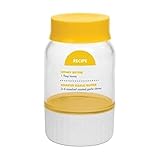
Chef’n Buttercup Butter Maker
- Shake to churn in about 3 minutes
- Built-in sieve and ramekin
- Dishwasher safe

Dazey Turn N Churn Glass Churn
- 16 fl oz glass jar with wood closure
- Beech wood shaping paddles
- Kit with crock and cloth
Two more deserve a mention before the full list. If you generate enough cream that a hand crank starts to feel like a second job, the Buttermeister one-gallon electric in this roundup is the only unit we tested that handles a real multi-gallon homestead batch. If your interest is partly heritage and partly kitchen display, the Martinez Pottery stoneware churn is a genuine dasher-style tool rather than a prop.
All 12 Butter Churns Compared Side by Side
Every product below churns cream, not whole milk. Read the capacity column as cream capacity, and size up from there. Prices change daily, so the table lists what each model does rather than what it costs today; use the check buttons for live pricing.
| Product | Specifications | Action |
|---|---|---|
| Kilner Vintage Glass Butter Churn |
|
Check Latest Price |
| Chef’n Buttercup Butter Maker |
|
Check Latest Price |
| Dazey Turn N Churn |
|
Check Latest Price |
 Roman Ventures Mason Jar Churn Kit Roman Ventures Mason Jar Churn Kit |
|
Check Latest Price |
 Aeaker 32oz Glass Churn Aeaker 32oz Glass Churn |
|
Check Latest Price |
 WOODKIT Acacia Wood Churner WOODKIT Acacia Wood Churner |
|
Check Latest Price |
 IFOLO Electric 34oz Churn IFOLO Electric 34oz Churn |
|
Check Latest Price |
 Ugdgtgo 61oz Electric Churn Ugdgtgo 61oz Electric Churn |
|
Check Latest Price |
 Buttermeister 1 Gallon Electric Buttermeister 1 Gallon Electric |
|
Check Latest Price |
 Martinez Pottery 3 Gallon Churn Martinez Pottery 3 Gallon Churn |
|
Check Latest Price |
 RDGDFONG 51oz Hand Crank Churn RDGDFONG 51oz Hand Crank Churn |
|
Check Latest Price |
 Kigmmro Electric 34oz Churn Kigmmro Electric 34oz Churn |
|
Check Latest Price |
1. Kilner Vintage Glass Butter Churn – Best Overall Hand-Crank Churn
KILNER Butter Churn, 1 EA
34 fl oz glass jar
1/2 cup butter per 10.1 oz cream
Silicone paddle and wood grip
Pros
- Batches reported done in 8-18 minutes
- Cast metal gears feel properly made
- Glass jar is sturdy and rinses clean fast
- Handles 35 percent fat double cream
Cons
- Glass has arrived broken more than once
- Silicone paddle can break after about a month
- Churn time stretches to 25-30 minutes when overfilled
- Will not work above the paddle submersion line
The Kilner is the churn we ended up using most, and the reason is unglamorous: it holds a real working batch and it keeps working after the cream thickens. The jar takes up to 34 fluid ounces, and the maker’s own figure of half a cup of butter from 10.1 ounces of whipping cream is close to what we got from ripened raw-milk cream.
Churning speed is where it separates itself from cheaper hand cranks. Reviewers consistently report finished batches in the 8 to 18 minute range, which is a proper slow-churn window rather than the frantic two-minute agitation that can produce greasy, poorly bonded butter. The gear set is cast metal rather than stamped sheet, and that is visible in how the drive feels as the fat starts to clump.
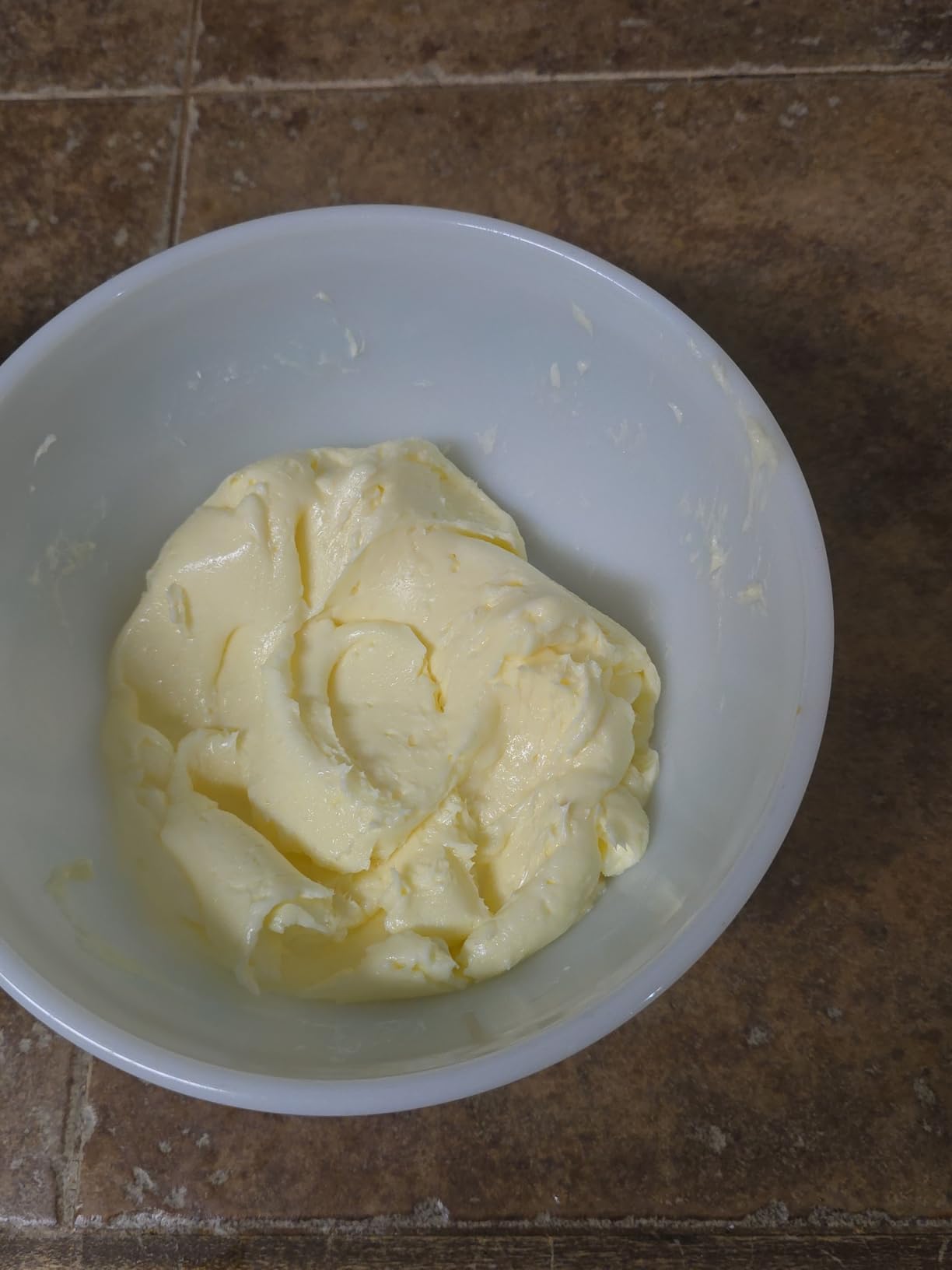
For a raw-milk household the important detail is the fill line. Owners report the paddle must stay submerged, and cream poured above that level simply will not churn properly, so the working capacity is more like 20 fluid ounces than the 34 the jar holds. Plan batches around that rather than around the headline number.
Cleaning is the easiest part of the whole roundup. The glass jar rinses under running water and the mechanism lifts out for a wash, which means a raw-milk sanitising routine with a food-safe sanitiser and a hot soapy wash is straightforward. Wood and porous materials are where sanitation gets difficult, and this churn simply avoids the problem.
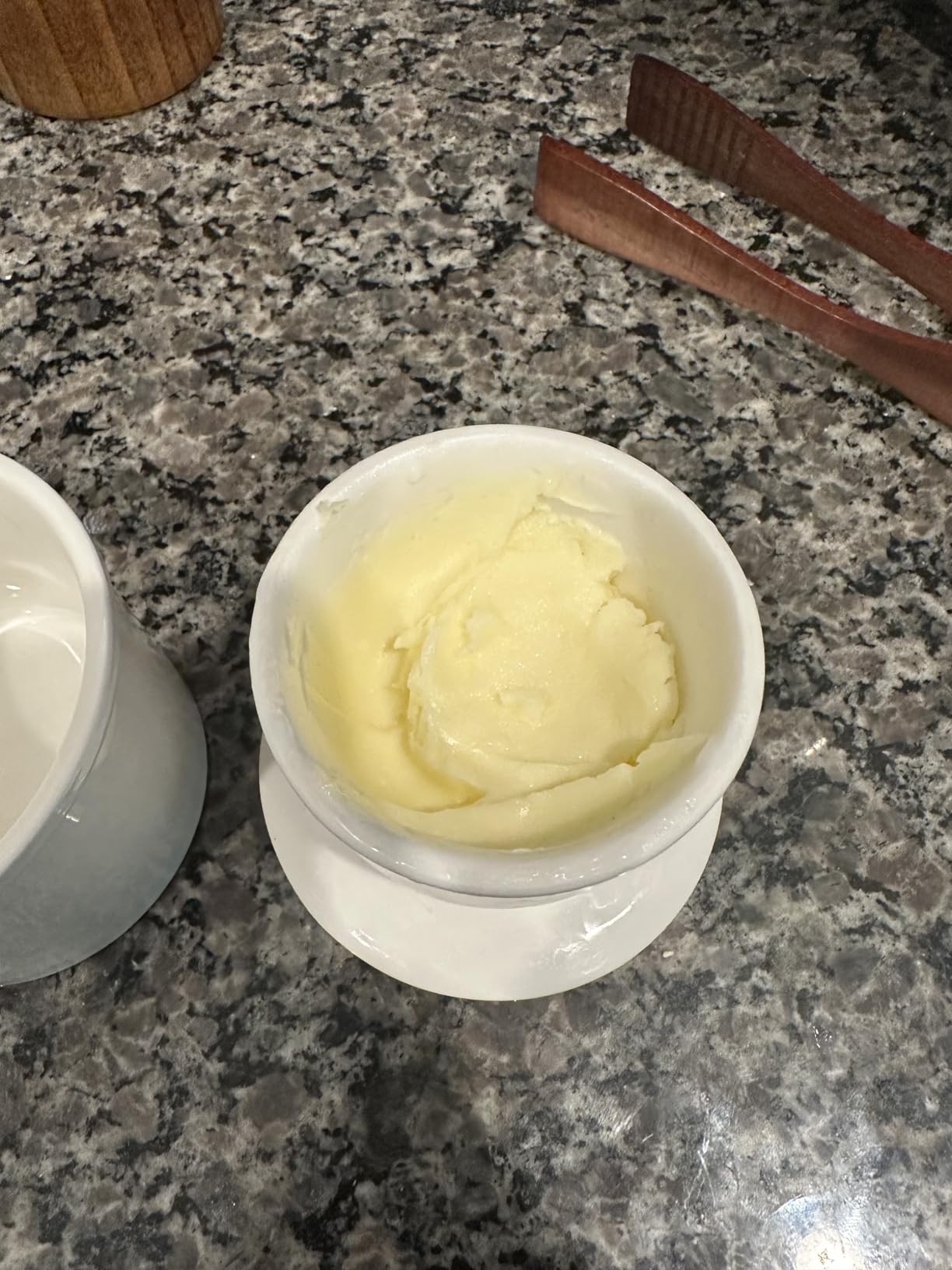
How it handles cultured raw-milk cream
Because you can run the batch slowly, the Kilner suits a ripened cream rather than a cold straight-from-the-fridge pour. Slow churn gives the fat globules time to coalesce into distinct grains, and that is where the cultured, tangy flavour of raw-milk butter actually comes from. Speed is the enemy of texture here, and this is one churn that lets you go slow without the mechanism seizing.
Where it falls short for raw milk
Two real weaknesses. Glass is glass, and a few buyers report the jar arriving cracked, so inspect the jar and the lid seal before your first raw-milk batch goes in. The silicone paddle has also been reported breaking after around a month of use, so keep an eye on it and replace it early rather than working a cracked paddle through heavy cream.
2. Chef’n Buttercup Butter Maker – Most Versatile for a Small Cream Surplus
Chef’n 102-567-017 Buttercup Butter Maker, One Size, Lemon/Meringue
1 liter plastic jar
Built-in sieve and 1/4 cup ramekin
About 3 minutes shaking
Pros
- Butter in about three minutes of shaking
- Built-in sieve and ramekin catch the butter
- Dishwasher safe and simple to rinse
- A good first churn for beginners
Cons
- Plastic rather than glass or metal
- Only 1/4 cup of butter per batch
- Cream needs six to eight hours at room temperature first
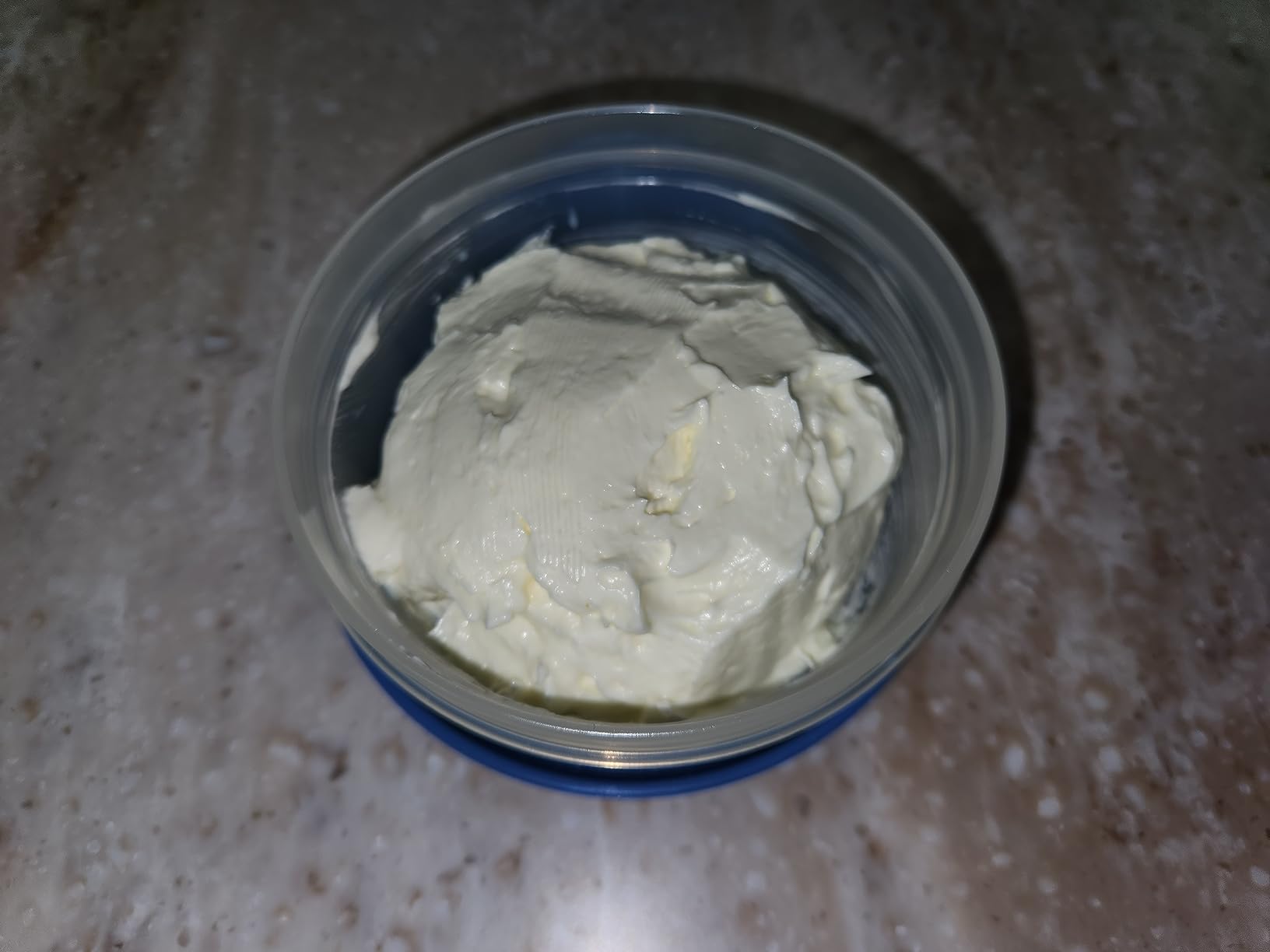
The Buttercup does not crank, stir or plug in. You add cream and shake it for about three minutes. That is the entire mechanism, and for a raw-milk household whose cream surplus is measured in cups rather than gallons, that simplicity is genuinely useful rather than a compromise.
It is also the most approachable tool in the roundup. The 1/4-cup ramekin at the base collects the butter and the built-in sieve holds back the buttermilk, so there is no draining step and almost no mess. It is top-rack dishwasher safe, which makes the daily raw-milk sanitising routine close to effortless.
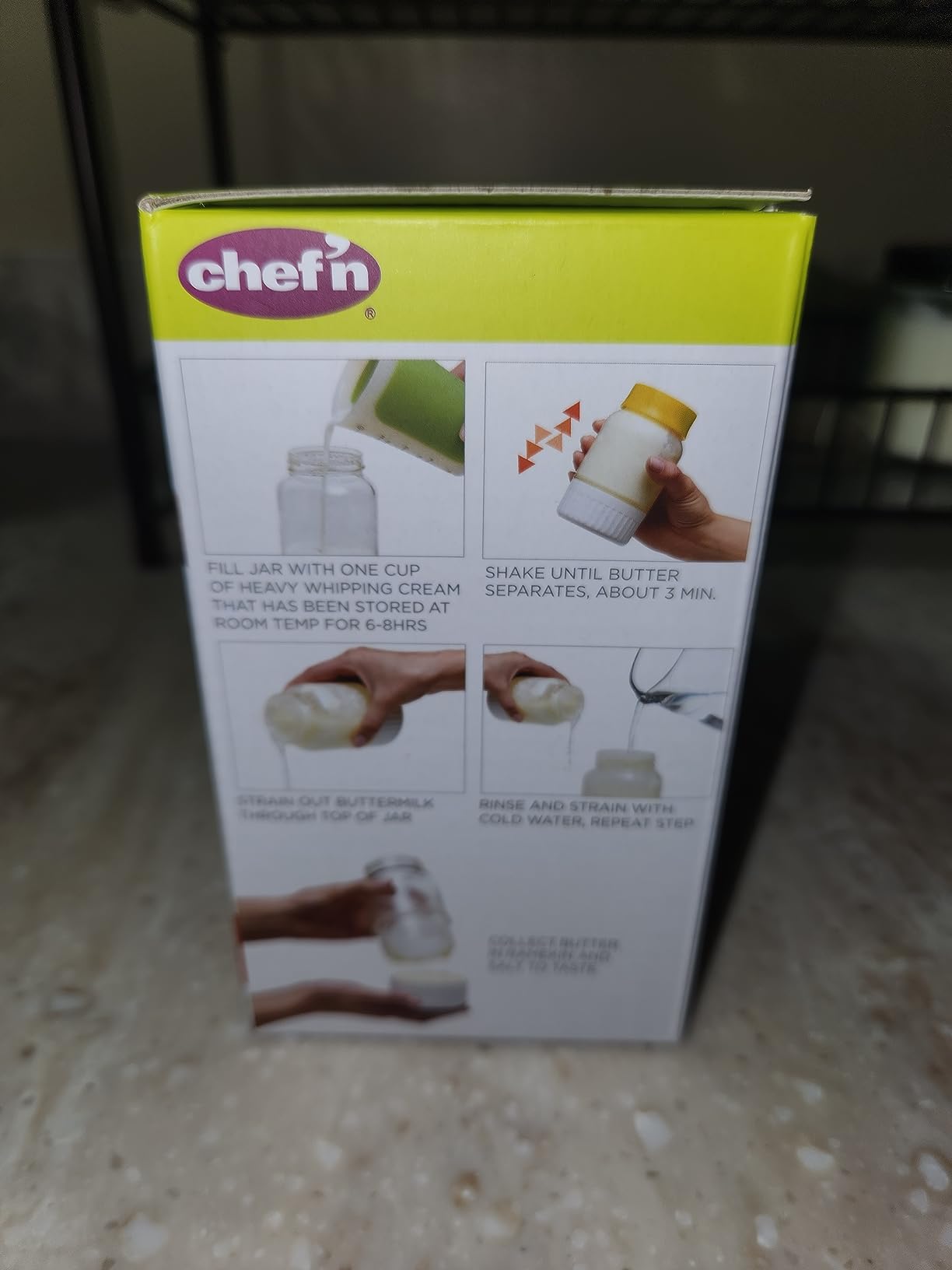
The catch is capacity and time. A single batch produces roughly a quarter cup of butter, so a family cow’s cream output means many rounds of shaking. It also wants cream warmed to room temperature for six to eight hours beforehand, which for a raw-milk maker means planning the day around it rather than churning on impulse.
One point worth flagging for this audience: whipped cream is the wrong input. Community advice on raw-milk forums is consistent that stabilised whipped cream will not separate cleanly because of the carrageenan, and the Buttercup is a fast, high-agitation tool that will punish you for it. Use fresh pouring or double cream, refrigerated, not whipped.
Where a shake maker genuinely beats a churn
The honest case for this tool is trial and error. It needs no parts, breaks nothing, and lets a beginner find out whether they enjoy making butter at all before committing to a glass jar and a gear train. Several reviewers describe it as the tool that convinced them to buy a larger hand crank later. As a first step out of raw-milk cream, it works well.
Where it falls short for raw milk
Plastic food contact surfaces are the main hesitation for raw-milk use, and plastic also scratches and clouds with repeated hot washes and sanitiser contact. Capacity is the second problem. If your herd is generating more than a few cups of cream a week, this becomes a novelty rather than a solution, and the three-minute shake turns into a much longer chore than the number suggests.
3. Dazey Turn N Churn – Best All-In-One Kit
Dazey Butter Churn – Hand Crank Butter Churner- Manual Butter Maker- Beech Wood BUTTER PADDLES INCLUDED. Create Delicious Homemade Butter With Your Own Hand Crank Dazey Butter Churner (Turn N Churn)
16 fl oz glass jar
Wood closure with beech paddles
1.15 kg total weight
Pros
- Complete kit with paddles and cloth and crock
- Under five minutes once cream is at room temperature
- All-plastic-free food contact parts
- Owners praise the flavour against store-bought
Cons
- Wood paddles cracked after two uses for some buyers
- Gears can slip out of alignment as cream thickens
- Lid is difficult to pull off
- Some reviews say it suits sweet cream only
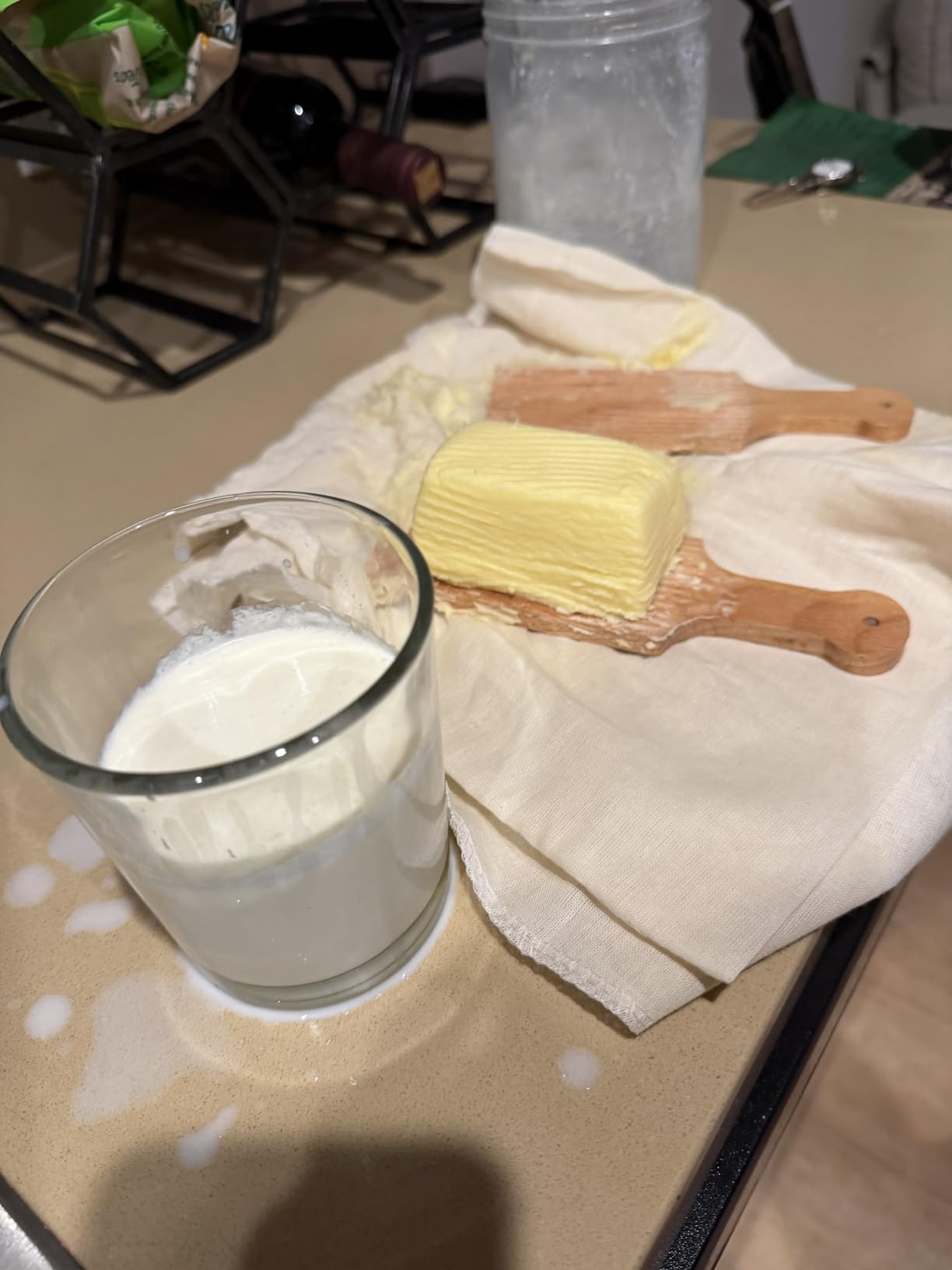
The Dazey is the most complete hand-crank kit we looked at, and for a raw-milk household that is the deciding factor. The box contains the glass churn with a wood closure, beech wood shaping paddles, a butter crock, cheese cloth, a silicone anti-slip mat and a recipe book. Nothing else in the roundup arrives that complete.
That matters more than it sounds. Making butter is a two-tool job: the churn breaks the fat, then you need a cloth to drain the buttermilk and a crock to hold the finished block while you press and salt it. Buying those separately is normal and easy to get wrong, and this set removes the guesswork.
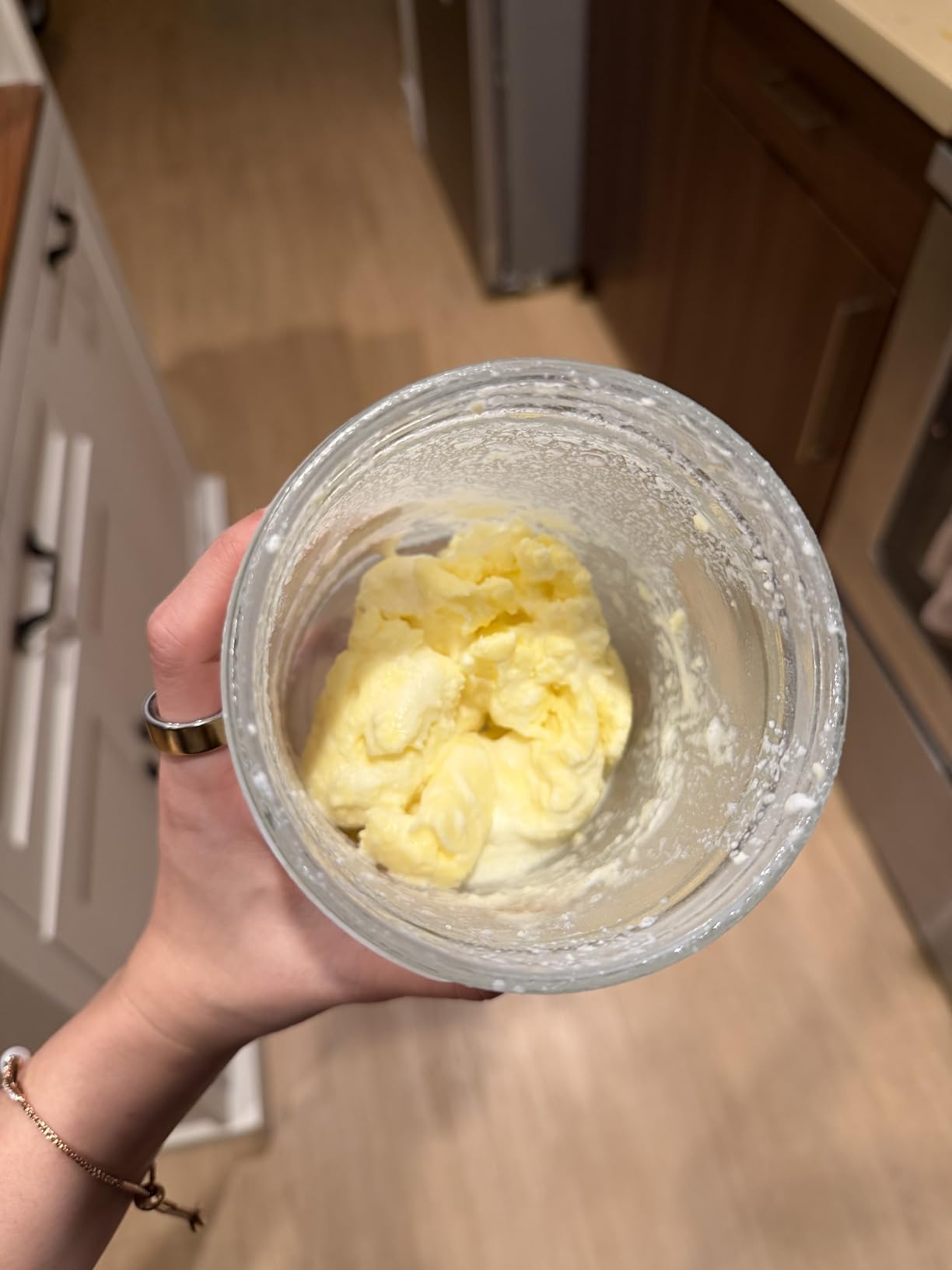
On performance, owners report butter in under five minutes once the cream has come to room temperature, and reviewers repeatedly single out the flavour as noticeably different from store-bought butter. All the food contact parts are glass and wood, with no plastic in the path of the cream, which is a genuine advantage for a raw-milk maker who wants to sanitise aggressively.
The wood closure and beech paddles are also where the durability questions live. Some buyers report cracking paddles after as little as two uses, and the gear set can drift out of alignment as the butter thickens and load increases. Expect to check the gear engagement a couple of times during a long raw-milk batch.
Why the wood closure is a raw-milk decision
Wood is inert and pleasant to work with, and it will not react with dairy acids the way some metals do. The trade-off is sanitation. Wood is porous, so a churn that has held raw cream needs a hot wash, thorough drying and a sanitiser that is safe for wood, and it needs to dry completely between batches. For a household that stays on top of it, fine. For one that will not, glass and stainless are the safer long-term pairing.
Where it falls short for raw milk
Capacity is the real limit. Sixteen fluid ounces is a small working batch, and a raw-milk family cow produces far more cream than that in a week. Several reviews also note that the mechanism suits sweet cream butter better than cultured butter, which is worth weighing carefully given that cultured is usually the point of using raw milk.
4. Roman Ventures Mason Jar Churn Kit – Best With Cheese Cloth and Bevel Gears
Butter Churner Hand Crank Mason Jar Homemade Butter Churn Kit Machine
Glass jar with wood closure
Upgraded bevel gear turner
1.17 kg with accessories
Pros
- Bevel gears keep the paddle turning
- Bundled cheese cloth drains buttermilk well
- Anti-slip mat and paddles in the box
- American owned brand with extended warranty
Cons
- Gear and paddle wear varies between sets
- Wooden closure and glass jar are fragile
- Full jar of cream takes real cranking effort
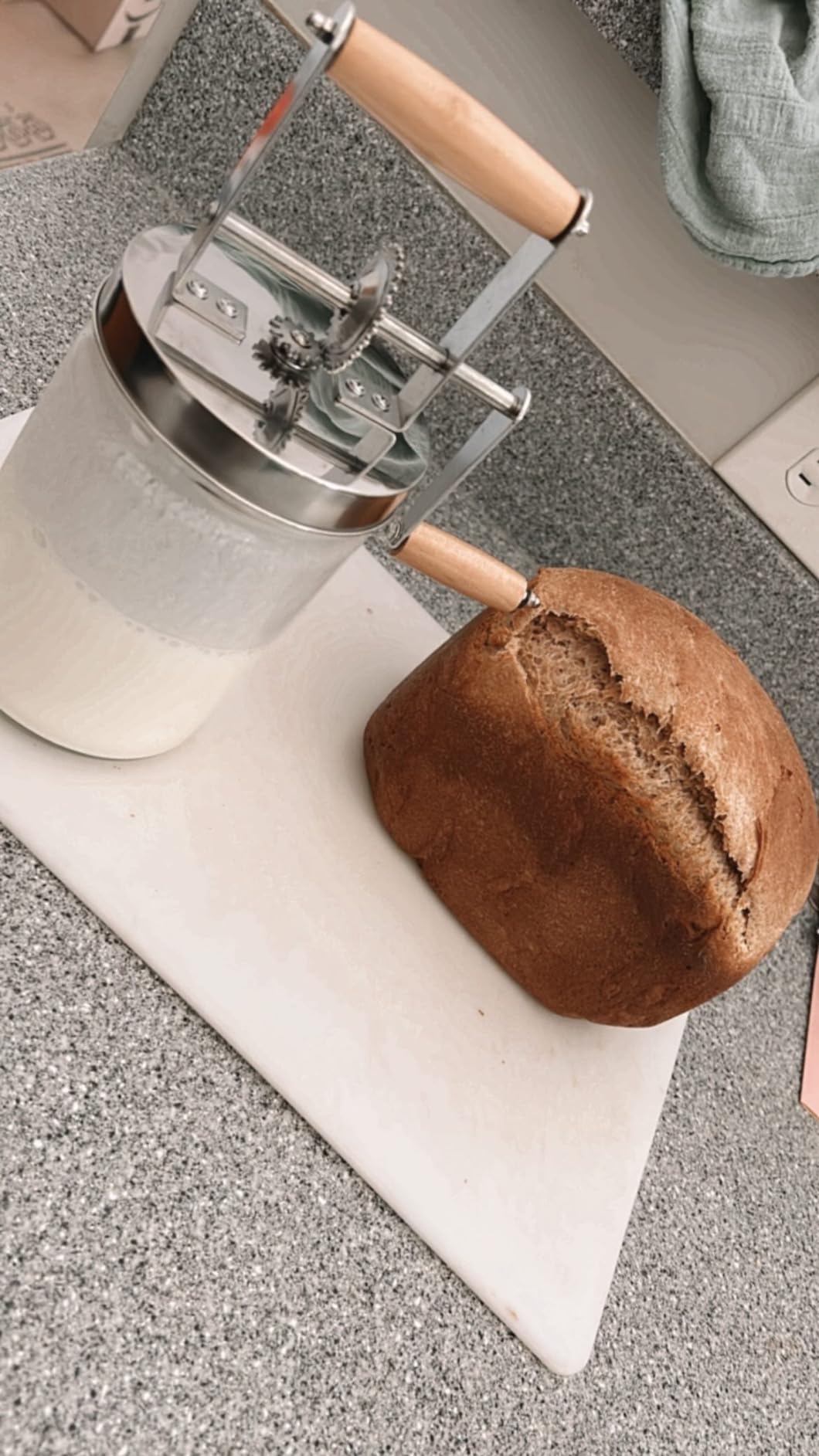
This kit shares the Dazey approach and improves on the drive. The manual turner uses upgraded bevel gears, and that is not a marketing detail in a hand churn: bevel teeth handle the rising load of thickening cream better than cheaper spur gear sets, which is exactly the moment lesser churns slip or jam.
Everything else in the box is aimed at finishing the butter rather than making it. The cheese cloth is the piece that matters most for raw milk, because it lets you drain the buttermilk thoroughly and press the grains dry, and drier butter keeps longer in the cold chain. The silicone anti-slip mat matters too, since a glass jar full of cream on a wet worktop is how churns end up on the floor.
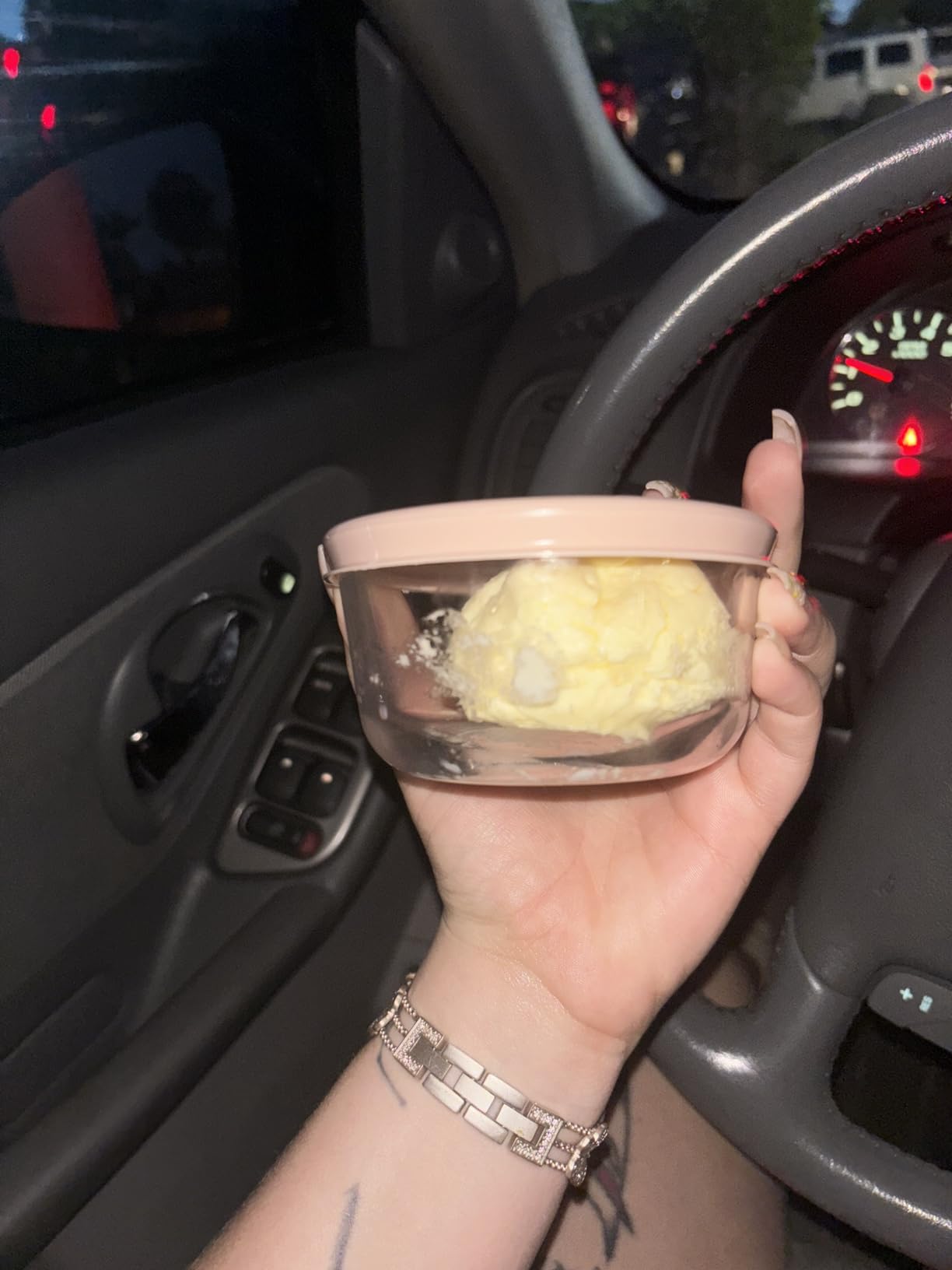
The warranty and the American ownership are worth noting for anyone buying a food-contact appliance for regular use. The brand also states the freedom to control fat content, salt, herbs and spices, which is a real advantage over store-bought butter and easy to do with a small-batch churn where the butter grains are still warm and pliable.
Durability is the mixed note. Reviewers rate the gear and paddle life inconsistently across their own units, which is common with this style of imported churn kit, and the wooden closure plus glass jar combination is fragile by nature. Treat the paddles as consumables and check them before each batch.
How this kit handles cold and ripened cream
It handles ripened cream well because the bevel drive keeps turning when the load spikes. Cold cream straight from the fridge is the harder case for any hand crank, and with a full jar here you will feel it in your forearm within a couple of minutes. Bring cream to roughly room temperature for a few hours before loading it, and the same jar is a much calmer tool.
Where it falls short for raw milk
Same capacity caveat as the Dazey, and one more: the wooden closure needs careful washing and complete drying between raw-milk batches. If your cream volume grows past a couple of quarts a week, both of these kits become the wrong shape of tool and you would be better served by a stainless or larger glass churn.
5. Aeaker 32oz Glass Churn – Best Stainless Paddle and Dishwasher Cleaning
Aeaker Premium Butter Churner, 32oz Glass Jar
32 oz thick glass jar
Stainless steel paddle
3/4 cup butter from 12 oz cream
Pros
- Heavy duty gear set keeps turning as butter thickens
- About 7-8 minutes for roughly half a pound of butter
- Stainless paddle and glass with no plastic
- Parts disassemble for the dishwasher
Cons
- Some units shed black debris from the shaft seal
- Gears described as soft aluminium
- Crank handle crowds large knuckles
- Cream spills at the lid if overfilled
The Aeaker is built around a 32 ounce thick glass jar and a stainless steel paddle, and those two choices do most of the work for a raw-milk household. No plastic in the food path means aggressive sanitising is not a negotiation, and the whole thing disassembles for the dishwasher, which is the cleanest raw-milk routine in this roundup.
The gear set is genuinely heavier than most competitors at this capacity, and owners credit that with the churn continuing to turn once the butter thickens. The stated performance is 3/4 cup of butter from 12 ounces of heavy cream in about 10 minutes, and reviewers report roughly 7 to 8 minutes of cranking for around half a pound.
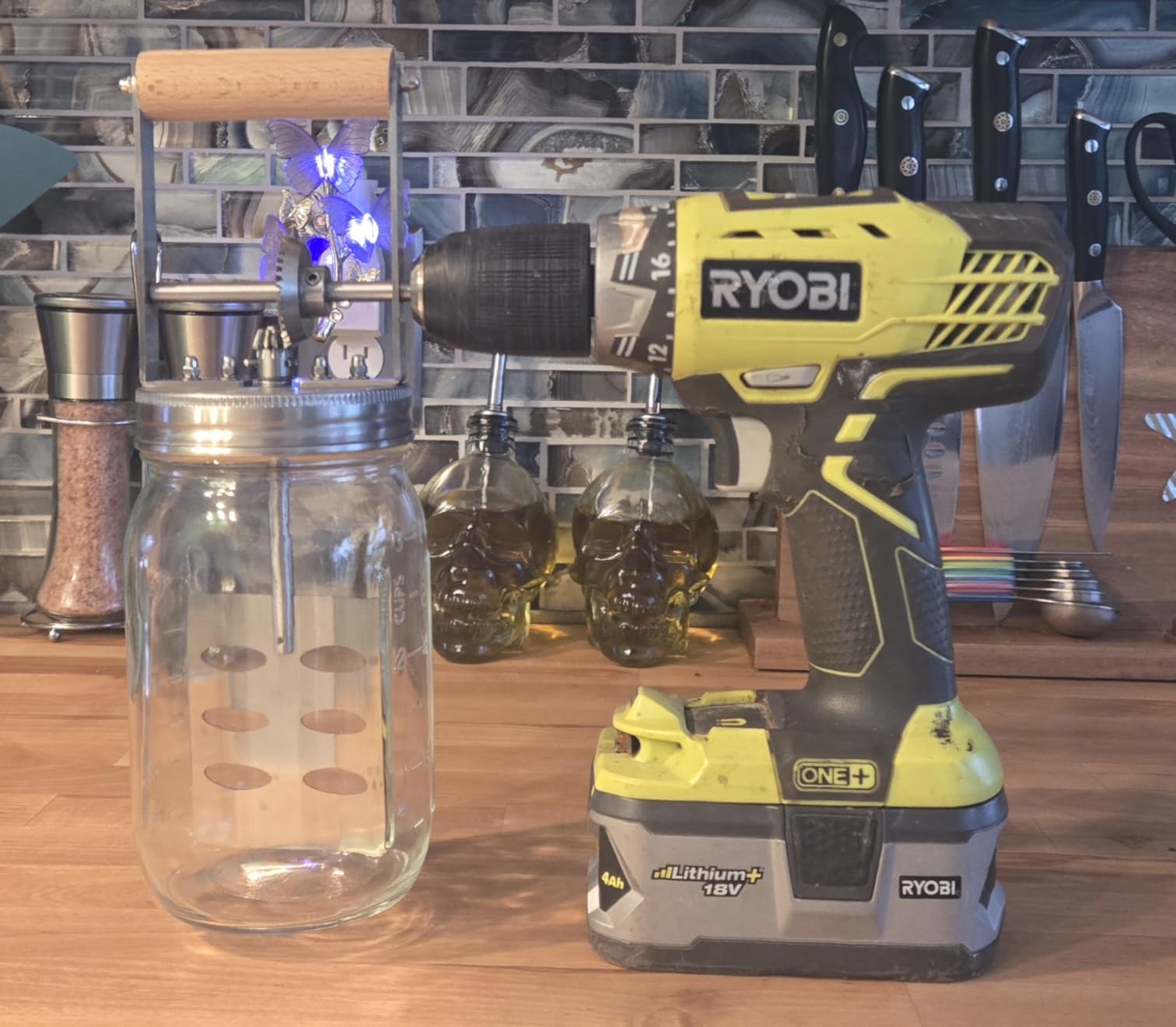
It also doubles as a hand mixer, which is a small but real saving in a kitchen that already makes butter. The paddle drives smoothly through cream and the wood-effect handle keeps the grip comfortable through a long batch.
The one serious complaint pattern is debris. A number of owners report black particles in the finished butter traced to the gear train and shaft seal, and separate reviews describe the gears as soft aluminium that wears over time. Check the first batch carefully with a fine cloth before you serve it, and inspect the seal regularly afterwards.
Why dishwasher-cleanable parts matter with raw milk
Raw cream carries a bacterial load that pasteurisation would otherwise destroy, and the churn is the one piece of equipment where a missed clean can come back to the table. Everything here comes apart: jar, paddle, gears, handle. That means you can run a full hot cycle rather than hand-wiping crevices, which is the difference between a churn you trust in a raw-milk kitchen and one you quietly avoid.
Where it falls short for raw milk
Do not overfill it. Cream above the paddle line will not churn and will find its way around the lid and into the gear housing, which is how you get both spillage and the debris problems owners report. The crank handle also sits close to the jar, so it can catch a large hand at the top of the stroke.
6. WOODKIT Acacia Wood Churner – Best Traditional Tool for Cultured Dairy
WOODKIT Wooden Buttermilk Churner Madhani Mathani Brown 12.5 in
Acacia wood,155 g
12.5 in long by 2.68 in wide
Hand operated
Pros
- Works for butter and dahi and chaas and lassi
- Solid acacia with a smooth rotating handle
- Natural fit for cultured and probiotic work
Cons
- Small batches only with a hand tool
- Wood quality and finish vary between pieces
- Hand wash only so cleanup is slower
This is not a churn in the mechanical sense. It is a traditional acacia wood churner, sometimes called a madani, that is pressed and rotated against the side of a vessel. It does the same physical work as a dasher, at a slower pace, and it is the most culturally honest tool in this roundup for a household that already keeps kefir grains and live cultures going.
Reviewers consistently value it for cultured dairy work beyond butter, including dahi, chaas and lassi. For a raw-milk household already fermenting, that versatility is the argument. The hand-action churning is slow, low-stress and gives you direct control over how long the fat is worked, which is exactly the variable that separates sweet cream butter from cultured.
It is also the smallest and lightest tool here, at 155 grams. Nothing about it suggests it will ever break, which is more than can be said for glass jars and gear trains.
How it fits into a cultured butter routine
Use it the way you would beat cream by hand, in a deep narrow vessel that lets the tool stay submerged. That constrains batch size severely, but it also means you are physically present and in control of the whole process, which suits an experimental approach to cultured butter where you are adjusting culture ratios and times batch by batch.
The trade is volume for authenticity. If your herd produces more cream than you can beat by hand in a cup, this stops being a butter tool and becomes a buttermilk and lassi tool, which is a perfectly good reason to own one but not the reason to buy it for butter.
Where it falls short for raw milk
Two honest problems. It is hand wash only and wooden, so the raw-milk sanitation routine is a soak and a careful scrub with complete drying between batches rather than a dishwasher cycle. And wood quality varies between pieces, with reviewers reporting inconsistent finish, so check for splinters and roughness before the first batch touches raw cream.
7. IFOLO Electric Butter Churn – Best Electric for a Small Kitchen
IFOLO Electric Butter Churn – One-Touch Butter Maker in 5–10 Mins, 34oz Glass Jar with High-Speed Brushless Motor, High-Speed Mixing for Creamy Results
34 oz glass jar
Food-grade stainless paddle
Brushless motor,5-10 minute batches
Pros
- One-touch operation with no cranking
- Butter ready in 5-10 minutes
- Food-grade stainless steel paddle
- Glass jar lets you watch the butter form
Cons
- Needs mains power so it is not off-grid
- Only one 34 oz batch at a time
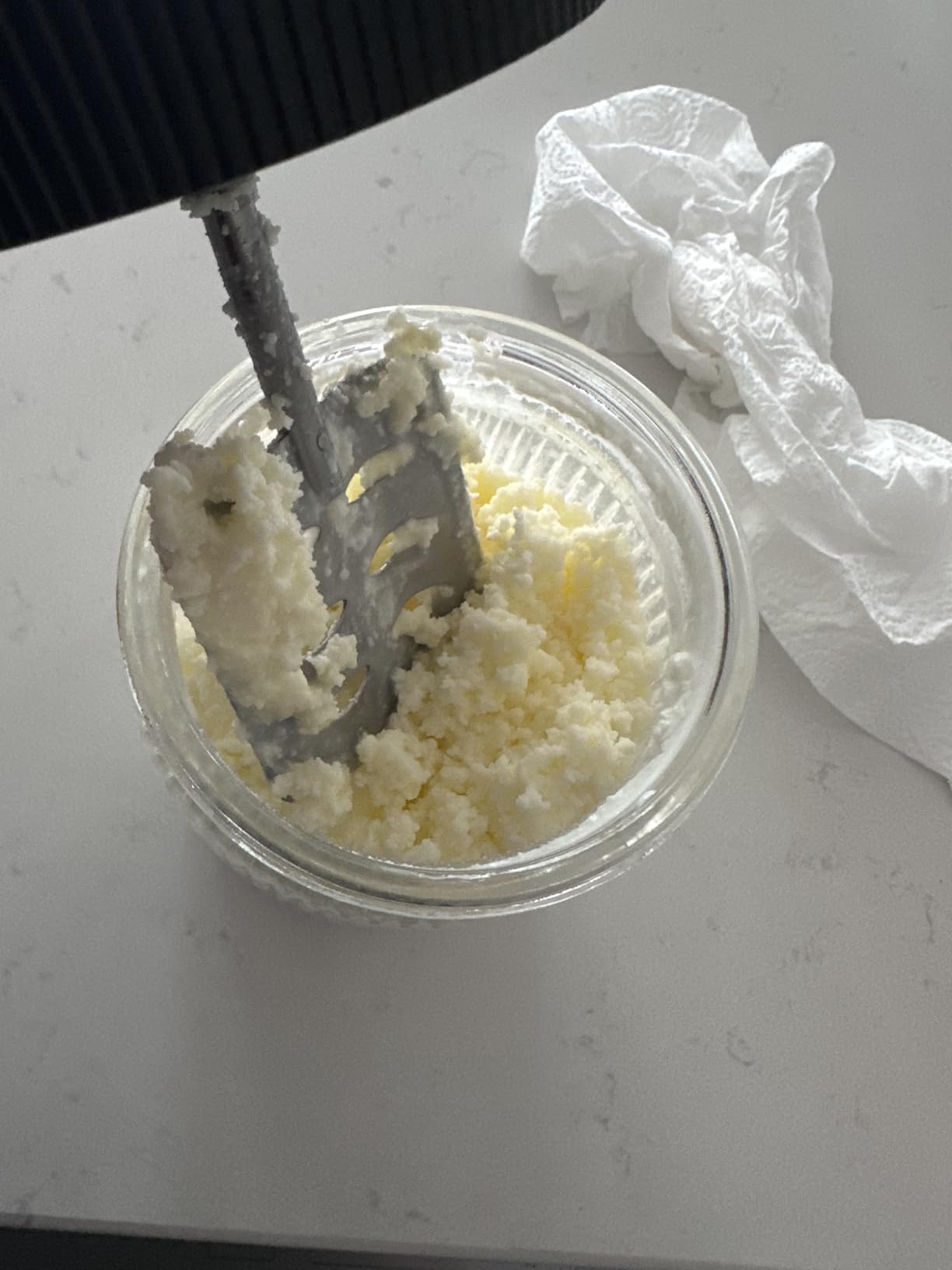
The IFOLO is the simplest way to remove the arm from the process entirely. One button, a high-speed brushless motor, and the butter is reported ready in 5 to 10 minutes. For a raw-milk household that already has a hand crank and simply cannot face the cranking on a large batch, that is a genuine upgrade rather than a novelty.
The 34 ounce glass jar with a food-grade stainless steel paddle is the right combination for raw milk. Glass does not scratch or absorb odour, stainless does not react with dairy acids, and the transparent jar means you can watch the fat break and stop at the right moment instead of guessing.
Owners consistently single out the removal of wrist strain as the reason they bought it, and the speed figures line up with what we saw from the other fast electric units in this roundup.
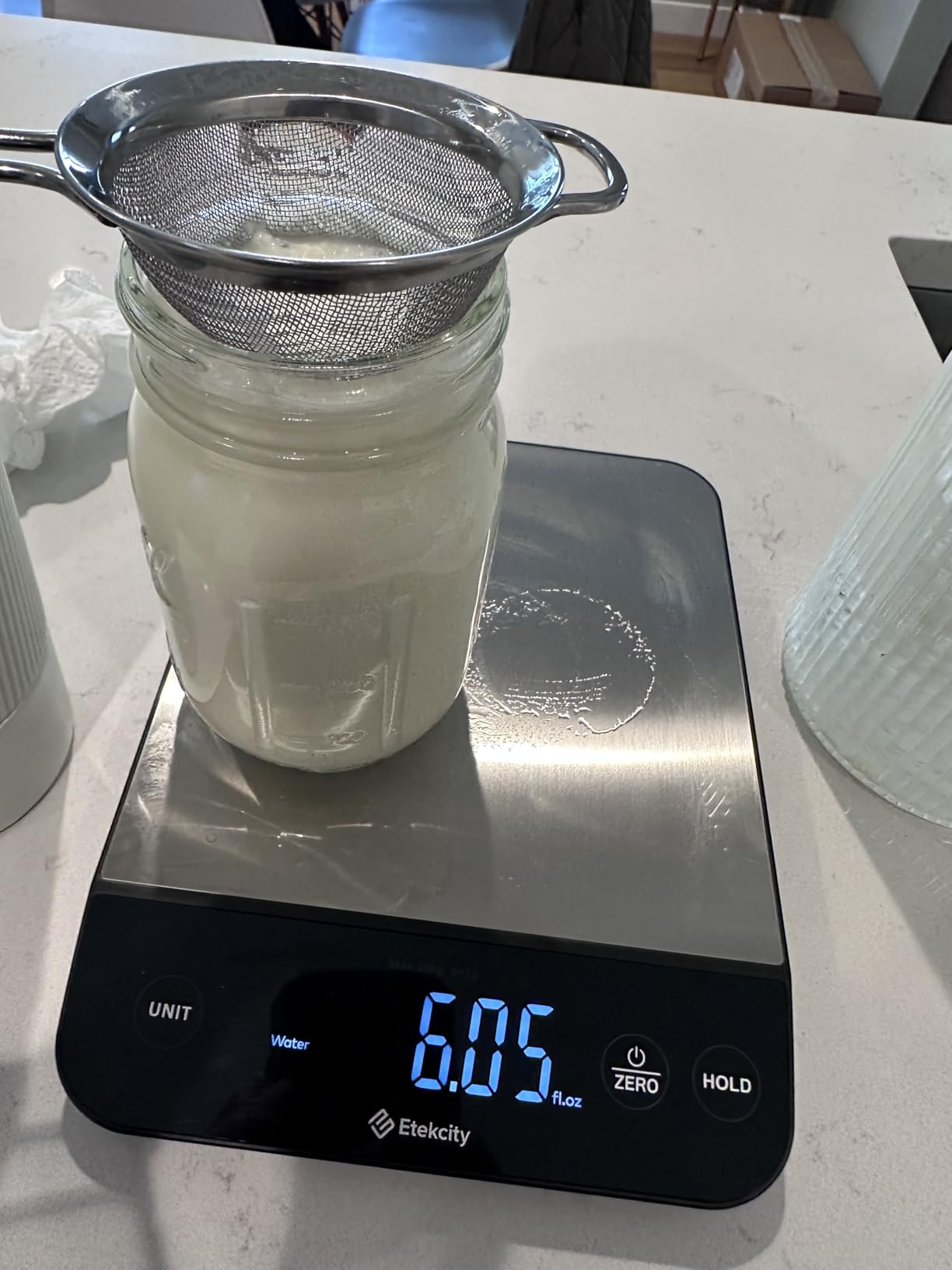
The stainless paddle produces a smooth, creamy result, though a high-speed blade does not give you the same control over grain size as a slow dasher churn. If cultured, slow-churned texture is your target, this is the wrong tool. If you want clean, quick, repeatable butter on a schedule, it is the right one.
Cleaning is straightforward: the jar, lid and paddle rinse and wash separately, and glass and stainless tolerate sanitiser contact without complaint. That matters for raw-milk use, where the equipment goes through a proper sanitising routine after every batch.
When an electric unit pays off on a raw-milk farm
It pays off when batch frequency and size start to argue with your arm. Electric churning has almost no learning curve because the machine runs the same speed every time, so results are repeatable, and repeatable results are what let you refine a cultured butter recipe. Once a household is making several batches a week on a schedule, that consistency is worth more than the tactile pleasure of a hand crank.
Where it falls short for raw milk
Mains power, for one, which rules it out for off-grid and camping use where a hand crank would work fine. Capacity is the second limit: one 34 ounce batch at a time means repeated fill-and-empty cycles, and each cycle means another full clean and sanitise. On a small raw-milk herd that is manageable. On anything larger it becomes the bottleneck.
8. Ugdgtgo 61oz Electric Churn – Best Electric for Batch Size
Electric Butter Churner for Butter Maker
61 oz glass jar,1.8 L
600 RPM stainless blades
Dishwasher safe parts
Pros
- Largest jar in this roundup at 61 oz
- Hands-free one-touch blending at 600 RPM
- Also makes peanut butter and whipped cream
- BPA and cadmium and lead free with dishwasher safe parts
Cons
- Mains power only so no off-grid use
- Blade design gives less texture control than a dasher churn
This is the largest capacity in the roundup, and that single fact changes how you think about a raw-milk schedule. At 61 ounces, roughly 1.8 litres, a household that was running three or four smaller batches through a glass churn in an afternoon now runs one. Fewer cycles means fewer cleans, and fewer cleans is the real efficiency gain with raw milk.
The drive is 600 RPM with stainless steel blades in a transparent glass jar, on one-touch hands-free operation. Because the jar is clear, you can monitor separation as it happens rather than opening the lid to check, which matters when you are learning how your particular cream behaves.
Owners like that it doubles as a general mixer, whipping cream and peanut butter both fall within what the blades can do. For a kitchen that already makes butter, that versatility makes the machine easier to justify than a single-purpose tool.
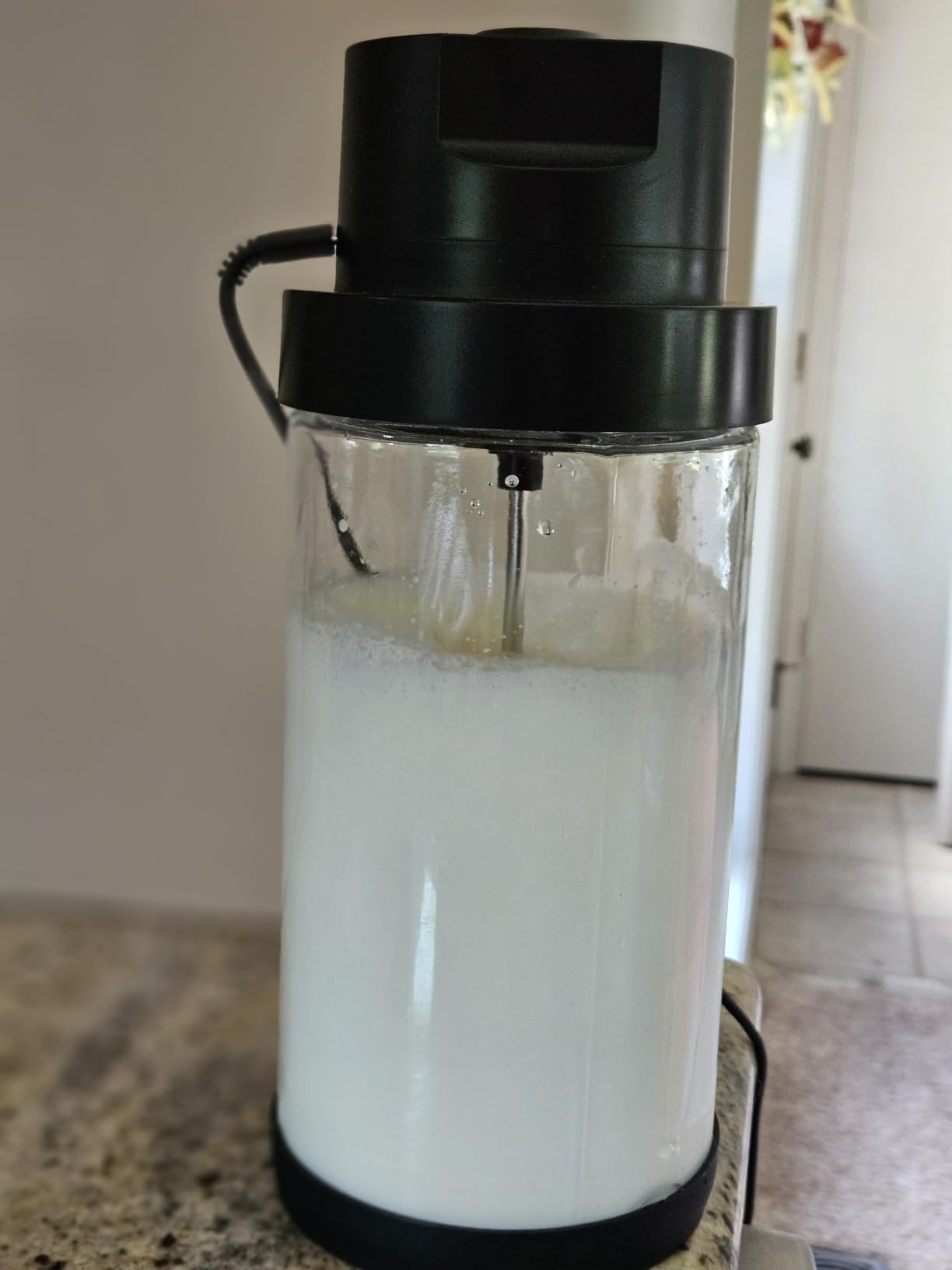
It is also explicitly free of BPA, cadmium and lead, and the parts are dishwasher safe. Those two facts together are the strongest raw-milk sanitation story in the electric category, because they mean the full breakdown clean is realistic rather than aspirational.
The honest limitation is texture control. Blades at speed produce a smooth, uniform butter, which some people prefer and others read as short and greasy compared with a slow-churned grain. If you are chasing the classic churned texture of a cultured raw-milk butter, a dasher or a slow hand crank will get you closer.

Sizing an electric batch to a raw-milk week
Think in cream, not milk. A family cow’s cream output across a week, once you subtract what you drink and what you set aside for cream cheese, is what has to fit in the jar. Sixty-one ounces of cream produces a meaningful amount of finished butter in one run, and the time you get back is worth having.
The trade is that a large jar is a large commitment on cleaning. A 61 ounce glass jar is heavy when full and heavier when wet, so plan where it drains and dries. The dishwasher-safe rating helps, but the counter space does not shrink.
Where it falls short for raw milk
Mains power only, and no way to use it in a barn, an outdoor washing area or anywhere without a socket. High-speed blades also incorporate more air than a dasher, so if you are working a cultured cream that has already been ripened, expect a slightly lighter butter and plan to press it longer to firm it up.
9. Buttermeister 1 Gallon Electric Churn – Best for Multi-Gallon Raw Milk Batches
Buttermeister Butter Churn (1 Gallon)
1 gallon glass jar
Stainless steel agitator
Knob controls at 110 volts
Pros
- Only churn here built for multi-gallon homestead batches
- Very quiet motor for a churn this size
- Very little mess and an easy cleanup
- Owners report more solid butter from the same cream
Cons
- Lid has loosened or come off on some units
- Top-heavy when full which stresses the motor
- About 40 minutes for a large batch of cold cream
Everything else in this roundup is a cream-batch tool. The Buttermeister is a homestead tool. A one-gallon glass jar, a motor, a stainless steel agitator and knob controls in a single unit, made in the USA with a one-year warranty. For a household running a family cow or a small goat herd, this is the first entry here that matches the actual volume of cream a week produces.
The motor is genuinely quiet, which sounds trivial until you realise a 40 minute churn is happening somewhere in your working day. Owners also report very little mess and an easy cleanup, and several say it produces firmer, more solid butter from the same cream than hand methods, which is a real efficiency gain when you are processing a full gallon.
Made in the USA with a one-year warranty also matters for anyone who plans to keep a churn for years. Parts for a glass jar and an agitator on a domestic-built machine are a different proposition from an imported glass churn with an unnamed gear train.
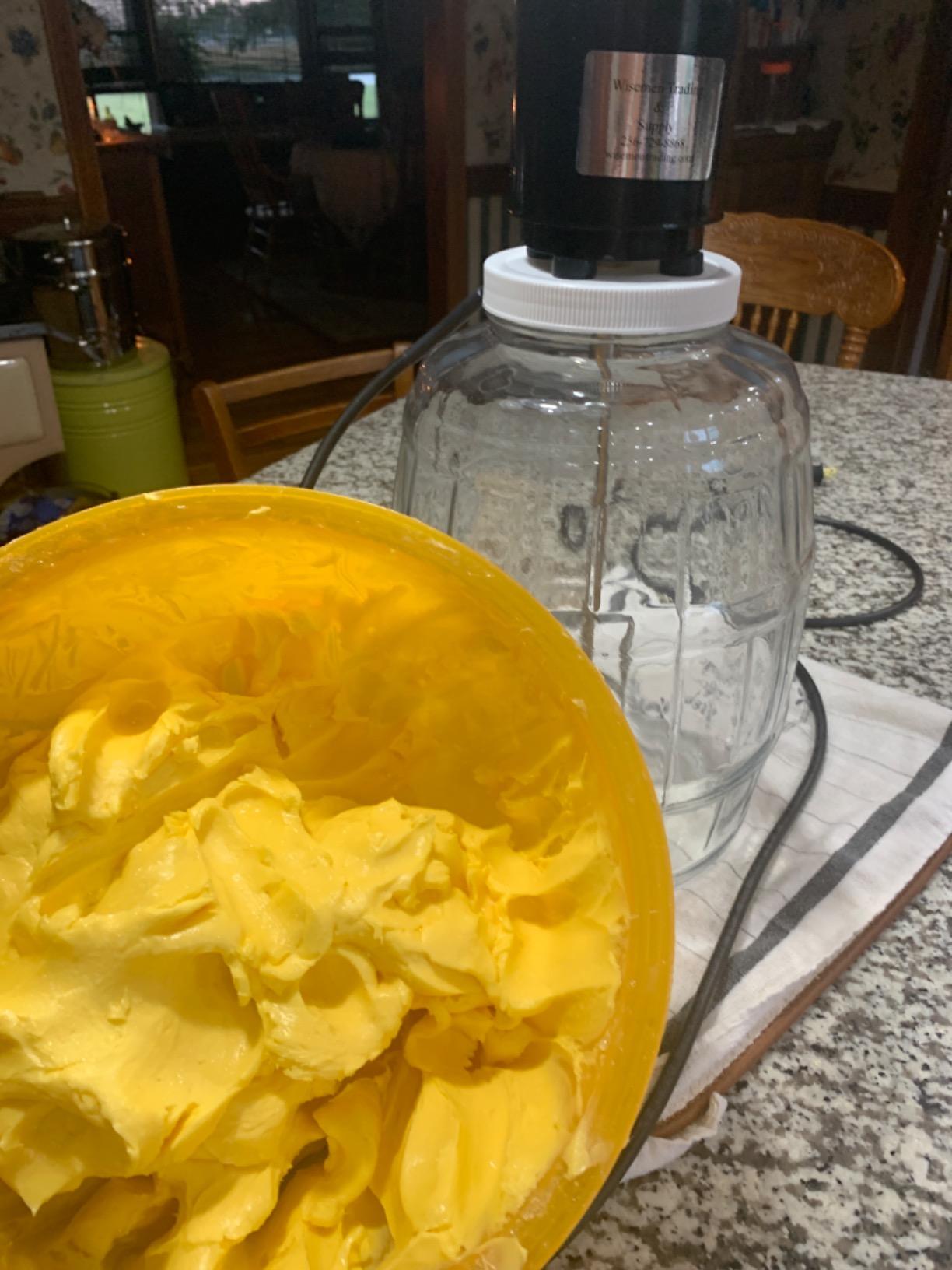
The trade-off is attention. Owners report that a large batch of cold cream takes around 40 minutes, and the top-heavy full jar is described as a stress on the motor. That is a tool you set going and check on, not one you walk away from, and the lid behaviour reinforces that: several owners report the lid loosening or coming off during a run and needing constant supervision.
For raw milk, the glass jar and stainless agitator are the right material pairing, and both tolerate the hot wash and sanitiser routine that raw cream demands. Just budget for the volume of wash water a gallon jar takes, and for somewhere it can drain and dry fully.
Who actually needs a gallon-capacity churn
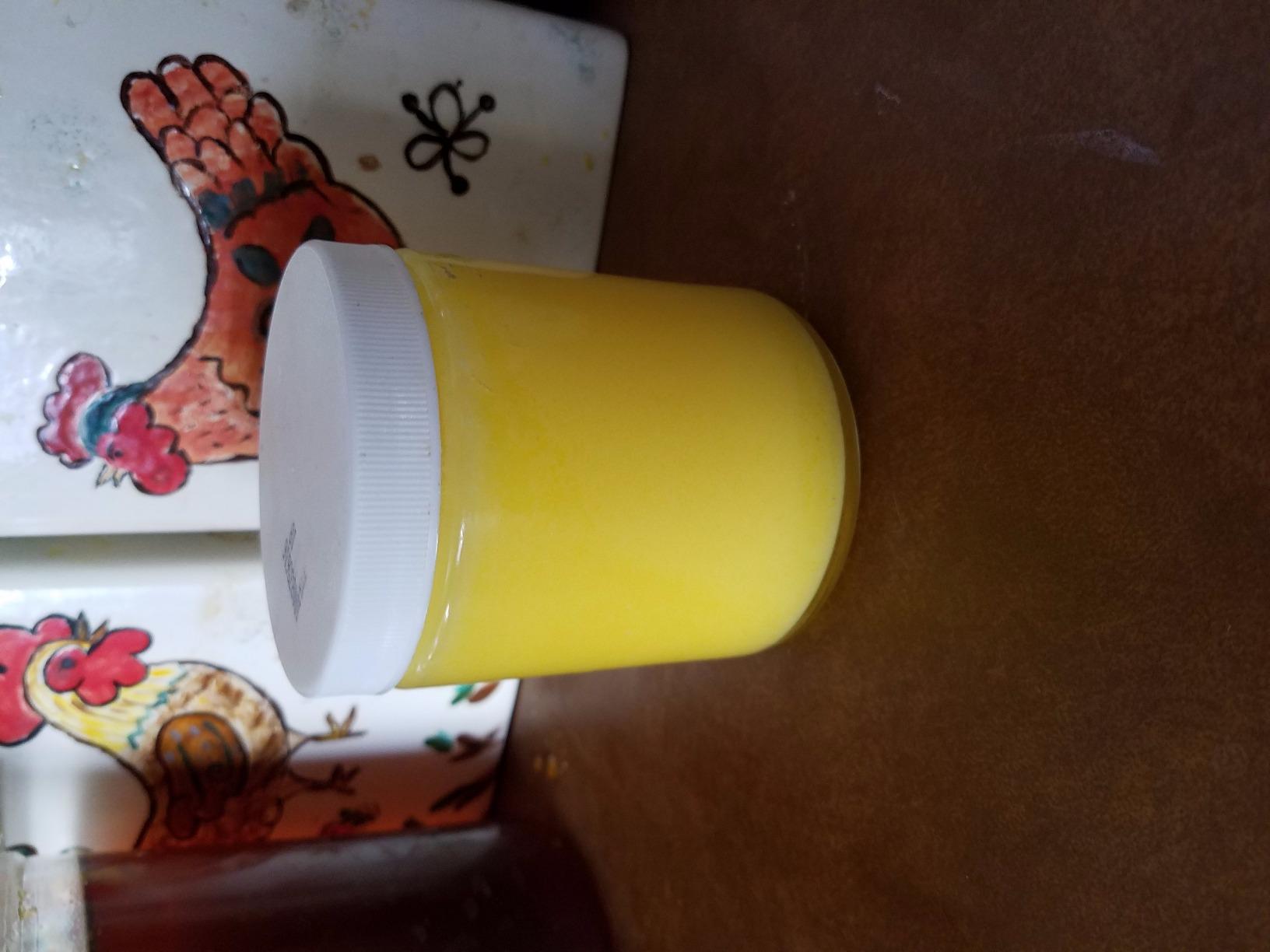
Households generating more than a few quarts of cream a week, and anyone who sees cream going to waste or into the pigs. If you are churning a single family cow’s cream and doing it in small batches anyway, this machine is oversized and a 34 ounce electric will serve you at a fraction of the commitment.
It is also the sensible upgrade path. Start small, learn what your cream does, and move to a gallon unit once batch count rather than batch size becomes the problem. Buying a gallon churn first usually means a large expensive experiment.
Where it falls short for raw milk
The lid and the top-heavy stance are the two real risks, and both are manageable with supervision. Run cold cream only if you can check on it; bringing cream toward room temperature first shortens the run considerably. And note that a gallon of glass on a full motor is a lot of momentum, so set it on a level surface away from the edge of a counter.
10. Martinez Pottery 3 Gallon Stoneware Churn – Best Dasher-Style Craft Churn
Martinez Pottery Butter Churn – Hand-Turned Stoneware Dasher-Style Churn, Natural Stone Color with Blue Stripes, 3 Gallon
3 gallon stoneware
21.5 in wooden dasher
Lead free,USA handmade
Pros
- True dasher churning suits cultured and long-churned butter
- Handmade stoneware with a smooth easy-wash interior
- 3 gallon capacity for serious batch making
- Attractive enough to keep on display
Cons
- Around 14 pounds so it does not move easily
- Lid has arrived broken more than once
- Hand wash only and handmade so sizes vary
The Martinez Pottery churn is the only true dasher-style churn in this roundup, and that single fact changes how it churns. A 21.5 inch smooth-sanded wooden dasher dragged through a 3 gallon stoneware vessel works the fat slowly and evenly, which is the traditional method and the one most associated with long-churned cultured butter.
For a raw-milk household that wants to make butter the way it has been made for two hundred years rather than shake a jar, this is the tool. The churns we tested with blades or fast gears are all about speed. This one is about patience, and reviewers specifically connect the dasher method to cultured and long-churned results.
It is also large. Three gallons of cream capacity, about 13.5 inches high and 9 inches across, at roughly 14 pounds empty. That is a permanent kitchen fixture rather than a portable tool, and for most households it stays on the counter or a shelf as much as it lives in the dairy room.
How stoneware behaves with raw milk
Stoneware is lead-free, inert and completely non-reactive with dairy acids, which makes it a good match for cultured work where you are holding cream at a low temperature for hours. The interior is smooth-sanded and unfinished, and reviewers describe it as easy to wash. It is hand wash only, and the fired glaze means it tolerates hot water far better than a cold-water-only plastic vessel.
The wood dasher is the part to watch. It must stay submerged to work, and it should be scrubbed and dried standing up so it does not sit in butterfat. Unfinished wood is chosen precisely because a slick surface would not drag the cream properly, and that means it needs a proper dry-down after every raw-milk batch.
Where it falls short for raw milk
Shipping damage. The lid has arrived broken more than once, and the dasher may be packed separately in its own box. Order it, inspect the lid and the glaze for chips before the first batch, and treat a cracked piece as a return rather than a repair. Beyond that, the weight and the sheer capacity mean it is overkill for a single-cow household and a sensible choice for a small herd that churns weekly.
11. RDGDFONG 51oz Hand Crank Churn – Best Value for Big Manual Batches
Butter Churn – Wooden Handle Shakes Stainless Steel Gear Manual Butter Maker, Butter Churner Hand Crank Mason Jar, Baking of Top Gadgets Butter Maker Cream Mixer (51oz)
51 oz glass jar
Stainless steel gear and silicone blade
Wooden handle
Pros
- Largest manual jar in the roundup at 51 oz
- Stainless steel gear and silicone fan blade feel solid
- Glass jar is dishwasher safe
- Also works as a hand mixer for cream
Cons
- Sustained cranking gets tiring as the cream thickens
- Needs cold water to rinse or the butter melts into it
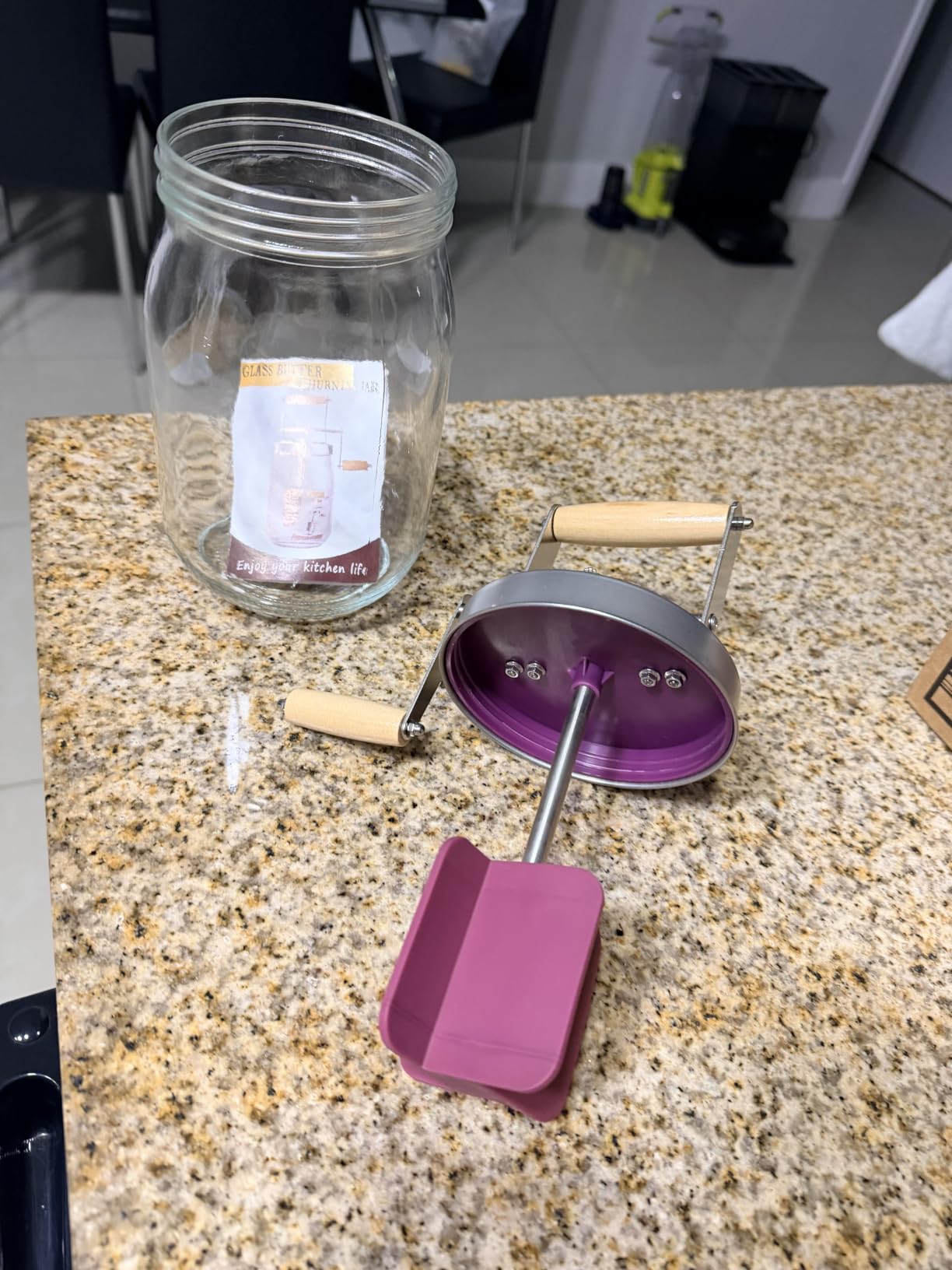
If you want a hand crank with a genuinely large jar and you do not want to spend electric money, this is the pick. Fifty-one ounces is the biggest manual capacity in the roundup, and that matters for a raw-milk household that would otherwise run three or four small batches to clear a week’s cream.
The drive is stainless steel with an edible silicone fan blade, which is a better material pairing for raw milk than plastic blade churns at the same capacity. The glass jar goes in the dishwasher and the mixer head washes in warm soapy water, so the breakdown clean is realistic.
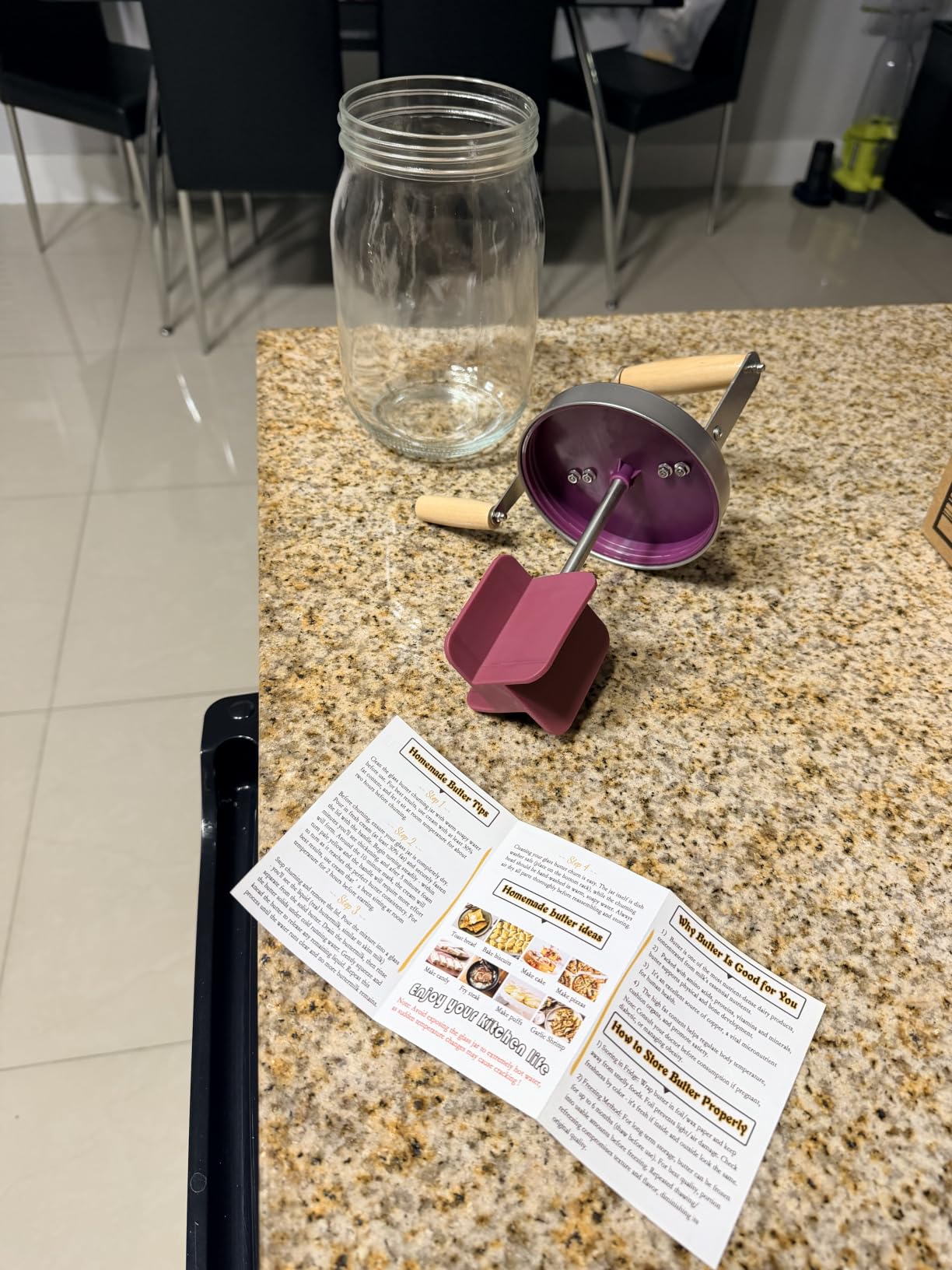
Owners also note it works as a general hand mixer for cream, which is a small but genuine saving in a kitchen that whips as well as churns. The wooden handle is comfortable through a long stroke and does not get slippery the way bare steel would.
It is a newer listing with a smaller body of owner feedback than the established hand cranks here, so we would treat the long-term verdict as provisional. The capacity and material specification is what makes it worth the look.
What a big manual jar really means in practice
Fifty-one ounces of cream in a hand crank is a serious session. The resistance rises sharply as the butter thickens, and by the last third of a full jar you will feel it in your shoulder. If you are under about 45 and the cream is cold, a half-full 32 ounce churn will get you to finished butter faster than a full 51 ounce one.
Fill it fully when the cream is at room temperature and you are used to the stroke, and when you want a large batch of cultured butter worked slowly in a single run. That is the use case it is genuinely good at.
Where it falls short for raw milk
Cold water for rinsing is the specific complaint that caught our attention, and it is worth repeating: rinsing a churn with cold water melts the butter grains into the glass and you lose yield and end up scrubbing. Use warm water, or better, save the butter and wash the glass separately. Beyond that, the answer is simply effort, and a household churning a full jar every week will outgrow hand cranking quickly.
12. Kigmmro Electric 34oz Churn – Best for a Creamy, Even Texture
Kigmmro Electric Butter Churner, 34oz Glass Jar Butter Maker in 5–10 Mins
34 oz glass jar
One-touch operation
About 1 lb butter per quart
Pros
- A quart of cream yields just under a pound of butter
- Hands-free so no arm fatigue
- Clear jar shows when to stop
- Included strainer drains buttermilk easily
Cons
- Non-glass parts feel lightweight
- Motor noise carries to the next room
- Mains power only and capped at 34 oz
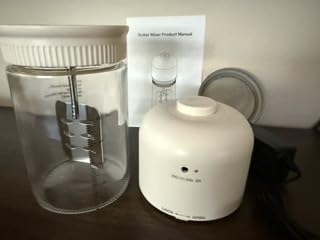
The Kigmmro has the highest average owner rating in the roundup, at 4.8 across a much smaller review base than the established churns here. Read that as an early signal rather than a settled verdict, but the consistent reports underneath it are worth taking seriously.
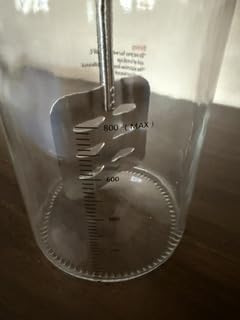
The headline figure is the yield claim. Owners report that a quart of cream at 35 percent milk fat produces just under a pound of butter in about 10 minutes, held at 15 to 20 degrees Celsius. That is a strong conversion rate and it is the number to hold other churns in this roundup against.
It also includes a butter strainer, which almost nothing else at this price does, and that directly addresses the messy part of finishing a batch. The clear jar lets you watch the fat break and stop at the right moment rather than running to a fixed timer and hoping.
The maker’s own tip is to fill no more than three quarters full, and to use cream at 35 percent fat and 15 to 20 degrees Celsius. Both are sound raw-milk practice, since underfilled cream will not churn and colder cream churns slowly and yields greasy butter.
Why the rating is high despite a small review base
It is a simple machine doing one simple thing quickly, and the owner reports are consistent rather than polarised. Fast, hands-free, easy to rinse, strainer included. The complaints that do appear, motor noise and lightweight non-glass parts, are irritations rather than failures, which is a good ratio for a new listing.
Where it falls short for raw milk
The non-glass components are the part to watch over time. Glass and stainless last; light plastics around a motor housing wear, and in a raw-milk kitchen the whole thing gets washed and sanitised after every batch. Add mains power and a 34 ounce ceiling on batch size, and this is a small-household tool rather than a herd-scale one.
Can You Churn Raw Milk Into Butter?
Yes, but you almost always separate the cream first. Churns are built and sized for cream, not for whole milk, and putting raw milk straight into any churn in this roundup will not produce butter. You will fill the jar, crank it, and end up with warm milk and a lot of rinsing to do. Separate the cream, ripen it if you want cultured butter, then churn that.
The capacity implication matters more than the principle. One gallon of whole raw milk yields roughly two cups of heavy cream, so a 34 ounce jar is a batch of roughly a gallon and a half of milk. A 3 gallon stoneware churn handles ten times that. Sizing a churn by your herd’s milk output rather than your cream output is the most common mistake new raw-milk keepers make.
There is one exception worth knowing. A wooden churner like the WOODKIT acacia tool is worked directly against a vessel of thickened cream, so it never holds a volume of its own, and some cooks churn a very thick, partially separated cream directly. That is a technique question, not a capacity one.
How Much Butter Can You Make From Raw Milk?
Roughly 3.5 to 4 ounces of butter per gallon of whole raw milk, once you account for the cream that stays behind in the skim milk. That is the honest figure, and it is lower than most listings imply, because those listings are quoting cream-to-butter conversion rather than milk-to-butter.
The math, worked through:
1 gallon of whole raw milk separates to about 2 cups of heavy cream, which makes roughly 3.5 to 4 ounces of butter.
2 gallons make about 4 cups of cream, which makes 7 to 8 ounces of butter, just over half a pound.
5 gallons make about 10 cups of cream, which makes roughly 1 pound of finished butter.
10 gallons make about 20 cups of cream, which makes roughly 2 pounds.
20 gallons make about 5 gallons of cream, which makes roughly 4 pounds.
Fat content is the variable that moves all of this. Raw cow milk running around 3.8 to 4 percent butterfat sits in the middle of those figures. Goat milk is naturally lower, often around 3.5 percent or below, so a goat herd needs more raw milk for the same weight of butter. Jersey milk sits well above, and a Jersey herd will beat the numbers here without any change in technique.
Two losses are worth planning for. Cream that is not at room temperature churns slowly and leaves more fat in the buttermilk, and butter that is not pressed dry loses weight and keeps less well. Both are technique problems, not equipment problems.
Is Butter Made From Raw Milk Safe to Eat?
It is a lower-risk product than fluid raw milk, and the reason is that churning is itself a pathogen-reduction step. The FDA’s 60-day rule for interstate raw milk sales specifically exempts butter and other high-fat dairy products, on the basis that the fat and low water activity make them a poor environment for the organisms that concern people most. Churning also physically breaks up and recombines the fat, which reduces the bacterial load further.
That exemption is not a blanket clearance. It assumes the butter is made and handled to food safety standards, and the acid-ripening caveat matters: a cultured butter route, where you let the cream ferment before churning, adds lactic acid and lowers the pH, which further reduces risk and gives the tangy flavour raw-milk makers want. Sweet cream butter from raw milk is not the same food as cultured butter, and the safety profile is not identical either.
Who should still be careful: pregnant people, anyone immunocompromised, young children and older adults should treat raw-milk butter the same way they treat any raw dairy product. Churning reduces risk, it does not eliminate it. And keep the cold chain unbroken from the milking parlour to the finished block, because butter that has been warm is butter that keeps badly.
Cleaning is where you control most of that risk. A churn that has held raw cream needs a hot wash and a food-safe sanitiser after every batch, and it needs to air dry fully before the next one goes in.
Cultured vs Sweet Cream Butter From Raw Milk
Cultured butter is made by letting the cream ferment with live lactic acid bacteria before churning, and it is the reason to use raw milk at all. Pasteurised cream has no live cultures, which is the exact issue raised in a well-known raw-milk forum discussion about thin, ordinary buttermilk. Raw cream arrives with its own culture already present, which is why the flavour is sweeter, more complex and tangier.
For cultured butter, ripen the separated cream before churning. A teaspoon of live-culture buttermilk per half litre of cream is a workable starting dose, and many raw-milk households instead stir in a spoonful of their own kefir or mesophilic culture. Cover and hold it warm but not hot, around room temperature, for six to twelve hours, then churn.
Do not buy sachets without a stated ratio. That is the single most common dosing complaint on raw-milk forums, and a sachet designed for a few litres will overwhelm a small batch and push it straight to vinegar. Measure by volume against your own cream, and keep a reserve of live culture from each successful batch so you are not starting from scratch every time.
Sweet cream butter is the other option, and it is perfectly legitimate. Skip the ripening stage, churn the cream fresh, and expect a milder, cleaner flavour with none of the cultured complexity. The Kilner and the RDGDFONG 51 ounce churn both give you the room to go slow enough for cultured work; the high-speed electric units are less suited to it.
Hand-Crank vs Electric Churn: Which Type Do You Need?
Choose a hand crank if your weekly cream surplus is a few quarts, if you want a slow-churned cultured texture, or if you need something that works with no power at all. Choose an electric if you are churning several batches a week, if your arm gives out on a full jar, or if you want repeatable results on a schedule.
Shake makers sit apart from both. A 1 litre shake jar produces about a quarter cup of butter in three minutes and needs no parts or power at all, but it does not scale, and its plastic food contact surfaces make it the least interesting choice for daily raw-milk use.
The practical dividing line is volume and frequency. Under about 4 quarts of cream a week, a glass hand crank like the Kilner is the sweet spot. Between 4 quarts and 2 gallons, a hand crank on room-temperature cream or a 34 ounce electric both work. Above 2 gallons a week, the 61 ounce or gallon electric units stop being indulgence and start being the reason your cream does not spoil.
Material follows volume. Glass and stainless scale cleanly and sanitise well. Wood is pleasant and inert but porous. Plastic is the one material we would avoid for a churn that sees raw cream every single week.
How to Choose a Butter Churn – 7 Things That Actually Matter
One: size for cream, not milk. Multiply your weekly milk volume by roughly a quarter to get the cream volume, then pick a jar that holds at least that with headroom for the paddle. Two: the paddle must stay submerged, so the working capacity is below the stated capacity on every hand crank here.
Three: material, and the sanitation routine that follows from it. Glass and stainless go in a dishwasher and tolerate sanitiser. Wood needs a hot wash, careful drying and a wood-safe sanitiser. Four: fill line. Every churn in this roundup has one, and overfilling is the most common cause of spilling, poor separation and the debris complaints owners report.
Five: whether you want slow or fast. Dasher and slow-gear churns give a coarser, better-drained grain. High-speed blades give a smooth, lighter butter. Six: parts. A gear train and a shaft seal will wear before the jar does, and a brand with a warranty and a domestic service address is worth real money over five years of use.
Seven: noise and power. Electric units need a socket and add motor noise to your working day, and the 40 minute run times on a gallon churn mean you will hear it for most of an afternoon. If you churn in a barn or an off-grid setting, that decides it for you.
On cost, the honest answer is that churning rarely beats store-bought butter on a pure per-pound basis once you count equipment, time and cleaning. The case for it is using cream you already have, a shorter cold chain and a product you can control the flavour of. If you are buying raw milk by the gallon purely to make butter, the economics will not work; if a family cow means the cream is there anyway, the churn makes sense.
How to Clean and Sanitize a Raw Milk Butter Churn
The routine for glass and stainless is simple. Scrape the butter off with a cold spatula before anything warms, since warm fat coats the surface. Wash the jar, lid and paddle in hot soapy water, rinse thoroughly, then apply a food-safe sanitiser at the labelled concentration and leave it for the stated contact time. Air dry completely.
Wood is different. Scrape it dry first, wash with hot soapy water, dry standing up rather than flat so air moves around it, and use only a sanitiser labelled safe for wood. Never soak a wooden dasher or closure overnight. If the wood smells sour or has gone rough and furry, replace it rather than trying to sanitise your way back.
Stoneware tolerates hot water and sanitiser well, and its non-reactive fired glaze is one of the better surfaces for cultured work. Hand wash it, dry it fully, and inspect the glaze for chips, because a chip is a place bacteria can sit and a chipped piece near acid is a piece to stop using.
Plastic is the hard case. Scratched plastic harbours organisms and will not sanitise reliably once the surface is broken up. If a plastic churn is scratched, cloudy or stained, it is finished for raw-milk use. And do not rinse a churn with cold water after a batch, because the butter grains melt into the surface and you lose both yield and cleanliness.
Dry everything completely before reassembly. Moisture trapped in a dasher housing or under a gear head is where a clean-looking churn goes wrong, and it is the step raw-milk keepers skip most often.
Why Won’t My Butter Come? Five Fixes That Work
One: the cream was too cold. Raw cream straight from the fridge churns slowly, breaks into fine grains and leaves fat behind in the buttermilk. Bring it to roughly 15 to 20 degrees Celsius, or near room temperature, for a few hours before you start.
Two: the cream was not fat enough, or it was stabilised. Use double or heavy cream at 35 percent fat or better. Whipped cream will not work at any temperature, because carrageenan prevents clean separation. This is the single most common cause of a failed raw-milk batch.
Three: the churn was overfilled. Above the paddle line there is no dasher action, so the fat never coalesces and cream escapes around the lid. Fill to the marked line, not to the top of the jar.
Four: the churn was too fast. A churn run at full speed aerates the butter, traps buttermilk inside the grains and gives you a greasy, light result. Slow down once the fat starts clumping and keep the stroke steady.
Five: you gave up too early or pressed too hard. Butter grains the size of peas are ready; if the grains are still frothy and tiny, keep going. And press gently in the cloth, because heavy pressure squeezes out the flavour you spent the whole churn building.
Two more worth knowing. Cold water rinsing melts the grains into the glass, so use warm. And an old churn with a worn dasher or a gummed gear head will slip rather than work, which feels exactly like a technique problem and is not one.
Frequently Asked Questions
Can I churn raw milk into butter?
Yes, but you separate and ripen the cream first in almost every case. Churns are sized for cream rather than whole milk, and a 34 ounce jar handles roughly one and a half gallons of raw milk once the cream is separated. Churning the milk directly gives you warm milk rather than butter.
How much butter will 1 gallon of raw milk make?
Roughly 3.5 to 4 ounces of finished butter, because one gallon of whole raw milk separates to about two cups of heavy cream. Raw cow milk at 3.8 to 4 percent fat sits in the middle of that range. Jersey milk runs higher and goat milk runs lower.
Is it safe to eat butter made from raw milk?
It carries lower risk than fluid raw milk because churning is itself a pathogen-reduction step, and the FDA 60-day rule exempts butter and other high-fat dairy products on that basis. It is not risk free. Pregnant people, young children, older adults and anyone immunocompromised should treat it as raw dairy, and cultured production adds lactic acid that lowers risk further.
How long does hand churning take?
Most hand crank churns in this roundup finish a batch in 8 to 18 minutes when the cream is near room temperature. Cold cream stretches that to 25 or 30 minutes, and a large gallon electric run can take around 40 minutes. Speed and coldness are the two things that stretch a batch.
Can you churn goat milk into butter?
Yes. Goat milk carries roughly 3.5 percent fat or a little less, so you need more raw milk for the same weight of butter than you do with cow milk. Churn it the same way, warm the cream to room temperature first, and expect goat butter to be softer and more prone to melting in warm weather.
Do I need a butter churn or can I use a food processor?
A food processor works and is a reasonable first experiment, but the result is aerated and the texture is not the same as churned butter. A dedicated churn is built so the fat stays submerged and the paddle action is slow and even, which is what gives cultured and sweet cream butter its grain. Start with a processor to learn the process, then move to a churn.
What size butter churn do I need for a family cow?
Size for cream, not milk. A family cow producing three to four gallons a day gives a cream surplus that fills a 32 to 51 ounce hand churn several times a week. If you want to clear a whole week of cream in one run, a 61 ounce or one gallon electric churn is the right size.
Conclusion
The best butter churns for raw milk are the ones that hold your actual cream volume, keep the fat submerged, and come apart for a proper sanitising wash. The Kilner Vintage Glass Churn is our pick for almost every raw-milk household because it holds a real batch, churns slowly enough for cultured butter, and washes clean in seconds. Reach for the Chef’n Buttercup if you only have a few cups of cream to deal with, and the Dazey Turn N Churn if you want the paddles, cloth and crock in the same box.
Scale up on volume, not on ambition. Under four quarts of cream a week, a glass hand crank is right. Above two gallons a week, a 61 ounce or gallon electric unit stops being a luxury and starts being the reason your cream does not go to waste. And if cultured texture is the goal, spend your patience on slow churning and on a live culture, because no motor in this roundup will make sweet cream butter taste like a cultured one.
We keep coming back to one honest point from the raw-milk community: the churn is the easy part. Cream temperature, fat percentage, culture and a disciplined clean are what decide whether the butter is worth eating. Pick the churn that fits your week, then get the four things right. This roundup is still the reference we come back to in 2026. If you want somewhere to store the finished block once it is pressed, our guide to the best butter dishes covers the storage side, and our milk frother picks are worth a look if you are working the same raw cream into other dairy products.