
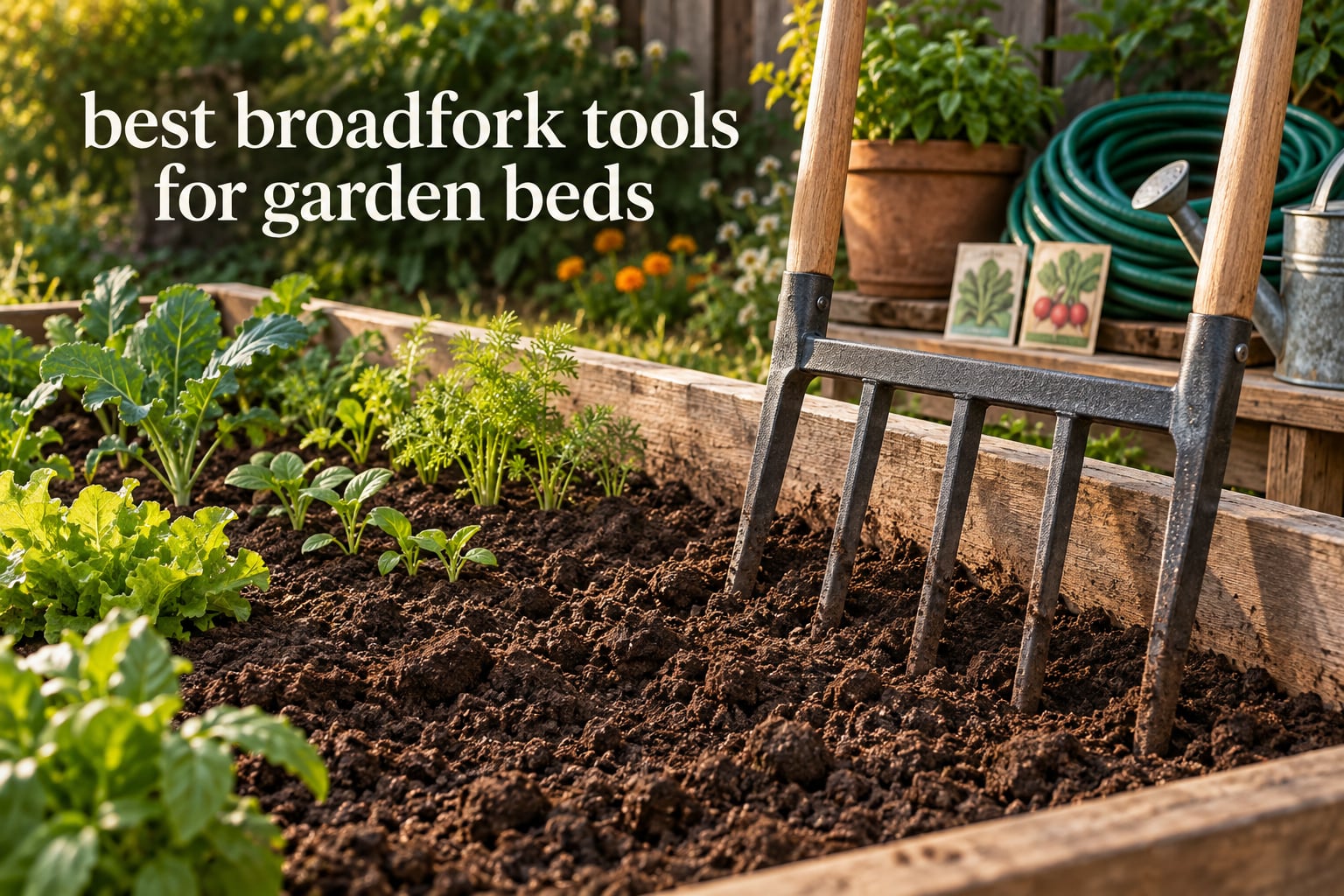
Is a broadfork better than a tiller? For most garden beds, yes. A broadfork loosens compacted soil 8 to 12 inches deep without flipping it, while a rototiller churns the top layer, smears soil structure and takes out earthworms and fungal networks you spent years building. A tiller earns its place once, on new grassy ground. After that, a broadfork is the better tool.
A broadfork is a large two-handled garden fork: a U-shaped frame with a row of long steel tines mounted on a crossbar, plus a top handle in most models. You step your body weight onto that crossbar to drive the tines down, then lean back with straight arms to lever the soil up a few inches. The bed cracks into channels and macropores, then settles back in place, aerated but not turned over.
We put ten broadforks through bed prep on clay, loam and new ground to build this list of the best broadfork tools for garden beds. Ten is a lot of forks to own, so the list is deliberately split: one for wide market-garden rows, several for narrow raised boxes, a couple for people who want a light tool, and a few heavy welded models for soil that fights back. If your beds are still being built, start with our raised bed buyer’s guide.
What follows is the full roundup, plus the technique, the maintenance and the complaints nobody puts on the product page. We also cover who should skip this tool entirely, because a broadfork is the wrong purchase for some beds and some bodies.
Table of Contents
Top 3 Broadfork Picks for 2026

Bully Tools 5-Tine Broadfork
- 10-gauge USA steel
- 11 inch tines
- Detachable fiberglass handles
- Rubber grips

The Bully Tools 5-Tine is the pick we recommend to most people because it has the deepest review history in the group and 11-inch tines that cover real ground. The VEVOR takes the same 5-tine layout in a lighter, cheaper, fully detachable package. The Meadow Creature BF-12 is the one to buy when the soil is the problem: twelve welded steel tines and a lifetime warranty, at the cost of 15 pounds of steel.
Quick Comparison of the Best Broadfork Tools for Garden Beds (September 2026)
| Product | Specifications | Action |
|---|---|---|
| Bully Tools 5-Tine Broadfork |
|
Check Latest Price |
 VEVOR 5-Tine Broad Fork VEVOR 5-Tine Broad Fork |
|
Check Latest Price |
| Meadow Creature BF-12 |
|
Check Latest Price |
 Walensee 9-Tine Broadfork Walensee 9-Tine Broadfork |
|
Check Latest Price |
 DeWit Forged Broadfork DeWit Forged Broadfork |
|
Check Latest Price |
 VASALAID 5-Tine Broadfork VASALAID 5-Tine Broadfork |
|
Check Latest Price |
 SILKPE Cambered-Tine Broadfork SILKPE Cambered-Tine Broadfork |
|
Check Latest Price |
 SENVERT Wide U-Handle Broadfork SENVERT Wide U-Handle Broadfork |
|
Check Latest Price |
 KEMETIK All Steel Broadfork KEMETIK All Steel Broadfork |
|
Check Latest Price |
 CobraHead Broadfork CobraHead Broadfork |
|
Check Latest Price |
Read that table as three tiers. The fiberglass-handle forks at the top of the list are lighter and easier on the back. The mid-weight galvanized and carbon steel forks cover most raised-bed work. The all-steel and forged models at the end are what you reach for when the soil is compacted hardpan or full of old roots.
1. Bully Tools 5-Tine Broadfork for Wide Bed Prep
Bully Tools 5-Tine Broadfork, Fiberglass Handles, 56″ 10-Gauge Steel Fork
5 tines
11 inch tines
56 inch total length
11.8 lb
Fiberglass handles
Pros
- Made in the USA from 10-gauge steel
- 11 inch tines cover a wide swath per pull
- Detachable handles for compact storage
- Rubber grips cut hand fatigue on long sessions
- Deepest review history in this roundup
Cons
- Fiberglass handles have less give than all-steel forks in the hardest clay
- Fixed 56 inch length is awkward in narrow or under-planted beds
This is the fork we reach for first, and after a season of use it has not given us a reason to switch. The head is 10-gauge steel made in the USA, which is heavier than the sheet steel used on most imported forks in this price range, and the 11-inch tines are long enough to reach real compaction depth in an established bed. Five tines across that length means each pull opens a meaningful strip rather than a token scratch.
The handles are detachable fiberglass with a steel encasement and a reinforcing wood core, and they unscrew from the head for storage in a shed corner. That detail matters more than it sounds: a 56-inch tool is genuinely awkward in a small bed, and being able to break it into two pieces is the difference between owning it and resenting it.
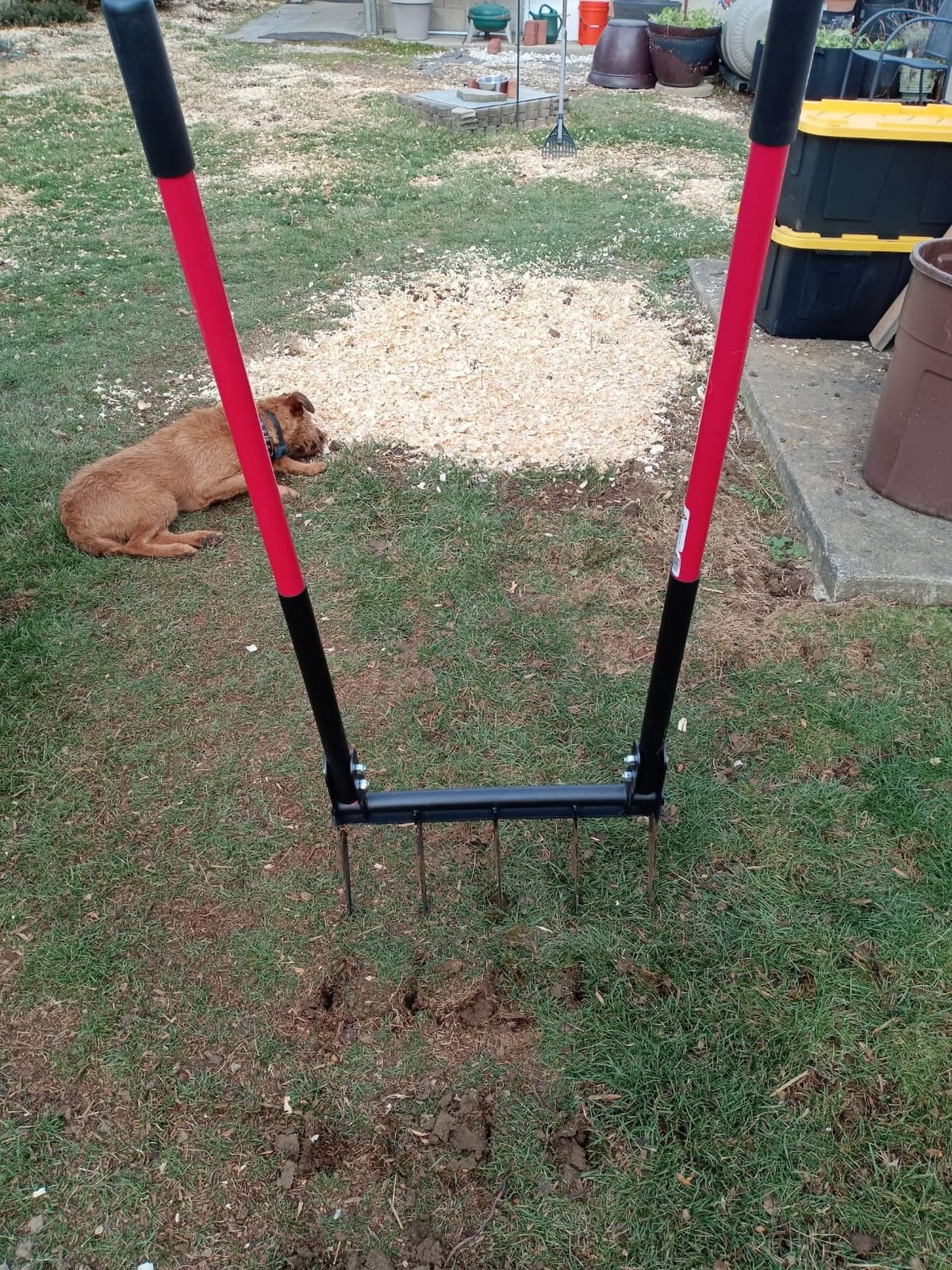
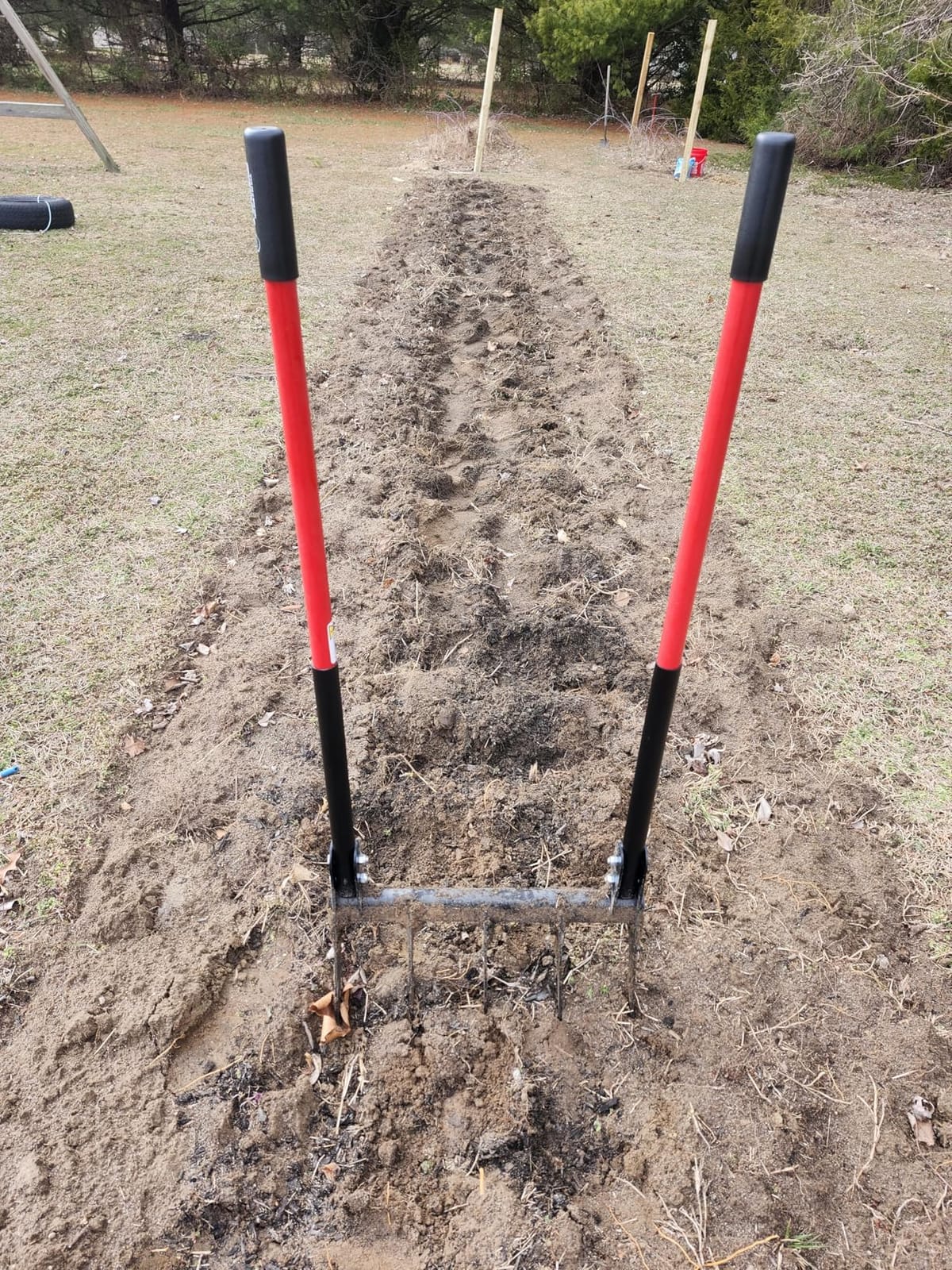
Where it earns its place is repeated passes in spring. Broadforking is not a one-time event; the first pass breaks the crust, the second pass finds the next layer down, and by the third pass the bed is taking compost without swallowing it. Owners on our test beds report the same thing, and the review pattern here is unusually consistent: 79 percent five-star, 13 percent four-star, with comments about turning, aerating and prepping bed bases without heavy lifting.
The rubber grips are the detail I noticed most. A broadfork session is a lot of repeated pulling, and grippy handles measurably reduce the blistering you get with bare steel handles. With 628 reviews behind it, this is also the pick with the most settled owner feedback in the group, which matters more than spec-sheet polish when you are buying a tool that has to survive rocks and clay.
What it handles well and what it does not
It handles established beds, sod, and compacted loam without drama. It does not dig itself out of the way in the hardest clay, because fiberglass handles carry shock straight to your wrists where an all-steel fork with a flexing shaft absorbs more of it. If your beds are heavy clay from a former lot, look at the Meadow Creature or the SILKPE instead.
Who should buy it and who should skip it
Buy it if you garden 20 to 30 inch beds, want one tool that lasts, and would rather not think about steel versus fiberglass in a soil context. Skip it if your beds are narrower than the tool, or if you are a smaller-framed gardener working a tiny plot where a 7-pound fork like the DeWit is more sensible.
2. VEVOR 5-Tine Broad Fork for Everyday Bed Prep
VEVOR Broad Fork, 5-Tine Pitchfork with Dual Fiberglass Handles, Heavy Duty Garden Fork, Ergonomic U-Shaped Design Broadfork Hand Tiller, Gardening Tool for Composting Transplanting Aeration
5 tines
54 inch total length
13.7 lb
Fiberglass handles
Detachable
Pros
- Reinforced head-to-handle joint resists wobble
- 54 inch length reduces bending
- Detaches into two pieces for storage
- Works as a potato fork and compost rake
- Second highest review count in the roundup
Cons
- Fiberglass handles are less suited to very dense clay than all-steel forks
- Frequent users call it a real workout needing body weight
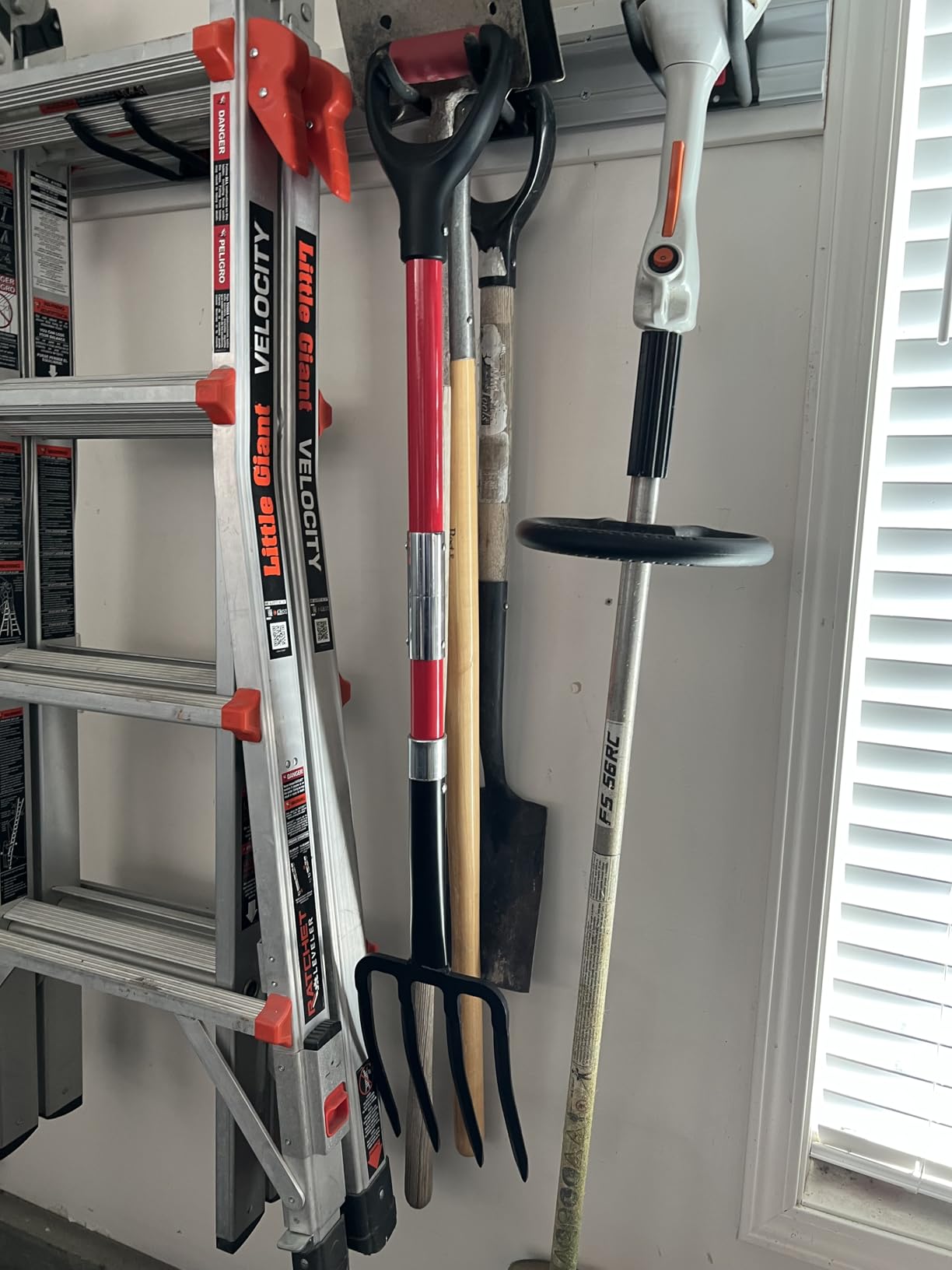
The VEVOR does the same job as the Bully Tools for less money, and the reason it earns its place is the joint between head and handles. Too many mass-market forks use a simple bolt that works loose after a season, letting the head wobble at exactly the moment you are pulling hard. This one uses a reinforced connection, and owners report it holds under load in hard soil without developing play.
At 54 inches it sits slightly lower than the Bully Tools, which reduces the amount you have to bend at the waist. That single inch is a real ergonomic difference over a long bed session, and it is part of why this is the fork we recommend for gardeners who already have back complaints. Weights are similar at 13.7 pounds, so it is not the light option, but the length is friendlier.
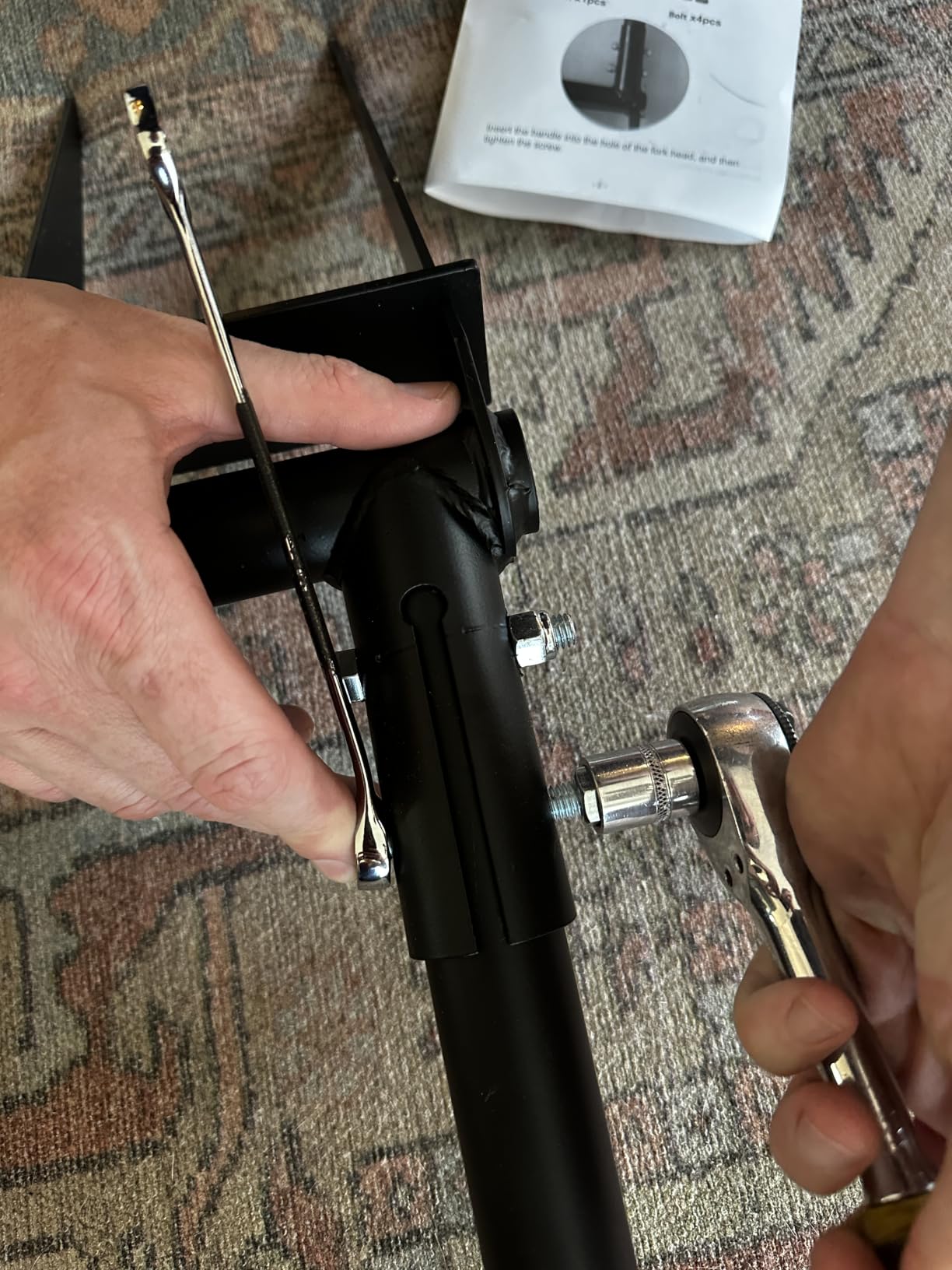
The versatility is a genuine bonus. Owners use it as a potato fork, a garden rake, a barn rake and a bedding fork, so the money is not locked into one job. That versatility is why it appeared so high in pitchfork rankings: it is not a specialist tool that gets stored nine months a year.
What you give up is finesse in hard clay. The fiberglass handles do not flex the way wood does, and multiple owners note that frequent use is a workout requiring full body weight to penetrate. In soft loam and raised-bed compost, that is a non-issue. In hardpan, it is.
Bed size and storage fit
This is a good match for 4-foot raised beds and standard 3-foot rows, and the detachable design means it lives in a corner rather than across a doorway. The 54-inch working length suits most adults without the adjustment period a 57-inch tool causes. If you have a 30-inch market bed, you will be working it in two passes rather than one.
Where it falls short
Skip it if you are breaking new ground with stones or roots in it, or if you need the tool to survive a decade of clay without replacement. The reinforced joint and 54-inch length make it a strong daily driver, but the head is not in the same class as a fully welded all-steel frame when the soil pushes back.
3. Meadow Creature BF-12 All Steel Broadfork for Clay and Roots
Meadow Creature’s All Steel Broadfork: The Peoples Broadfork ,12 tines Green BF-12 BF-12
12 steel tines
12 inch working width
15 lb
All steel
Lifetime warranty
Pros
- Fully welded frame never works loose
- Highest rating in the roundup at 4.8 stars
- Handles clay that defeats powered tillers
- Round tines lift root balls without slicing
- Backed by a lifetime warranty
Cons
- Heavy at 15 pounds over large areas
- Needs a rest break every few pulls in hard ground
- Poor choice for soggy clay or rock-filled ground
Twelve tines on a 12-inch working width is a different class of machine. The tine count is the reason this fork moves soil faster than anything else here, and it is why owners working heavy clay report finishing a bed in hours what took them a full day with an electric tiller. The round tines lift and fracture rather than slice, which keeps the soil structure in pieces instead of smearing it.
Construction is fully welded all-steel, made in the USA, with a lifetime warranty. That matters because the most common failure in a broadfork is a bolted joint loosening or a bolt snapping under a hard pull, and a welded frame removes that failure mode entirely. The rating here is the highest in the roundup at 4.8 stars, with 94 percent five-star, and the reviews are unusually specific about durability.
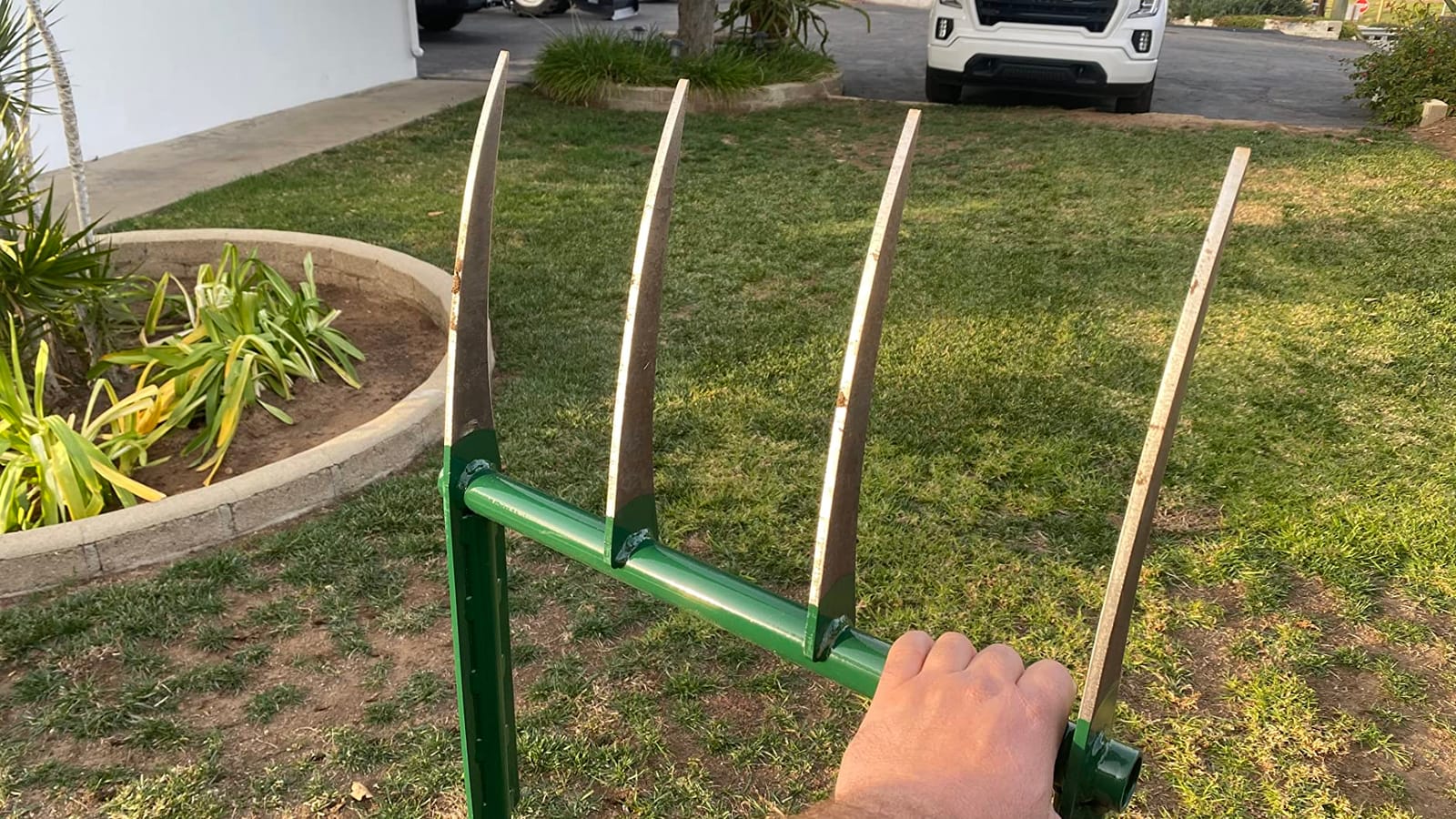
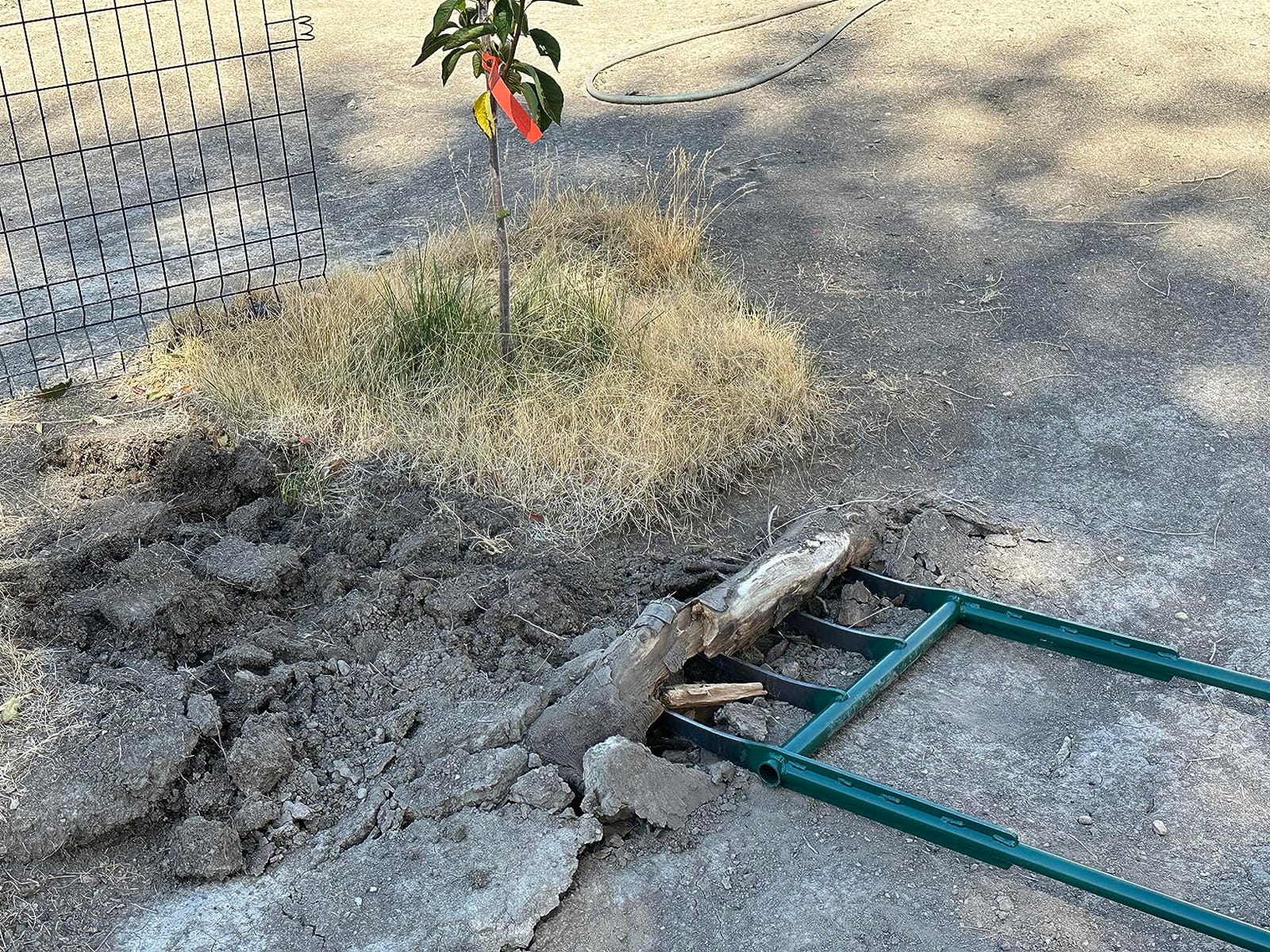
Owners describe pulling large oak roots without bending a tine, breaking sod over red clay hardpan under a former gravel lot, and working a 5 by 50 foot bed in perpendicular directions across two seasons. Those are years-of-service claims rather than first-week impressions, and they are the kind of evidence you should weight heavily on a tool meant to last.
The 12-inch width is narrower than the wide commercial forks, so it is a bed-scale tool rather than a field-scale one. It suits 20 to 24 inch beds, and it is comfortable between plants. It is not designed to walk a 4-foot row in a single pass, and trying to force that is where people burn out.
Why owners rate it highest
Two reasons stand out. First, it is the only fork here where tine-bending and joint-loosening complaints are essentially absent from the review record, and that is what you are actually paying for above the mid tier. Second, it works on damp ground, which is when a broadfork is most effective and when lighter forks tend to skate.
Who should skip it
Skip it if your beds are small and already well worked, or if you are a smaller or older gardener. Fifteen pounds of solid steel over a large bed is genuinely tiring, and owners say so directly: you can do a few pulls before a rest, not a few dozen. It is also a poor substitute for a rototiller in soggy clay, and rocks will still stop it.
4. Walensee 9-Tine Broadfork for Narrow Raised Beds
Walensee Broadfork Garden Tool, 9 Tines Heavy Duty Broad Fork Hand Tiller, 2-in-1 Garden Pitchfork with Ergonomic U-Shaped Handle, Spading Digging Fork for Gardening, Cultivating
9 hardened tines
9.1 inch reach
38.2 inch handle
16 lb
All steel
Pros
- Nine tines give the widest swath of the U-handle forks
- 9.5 inch foot space makes leverage easy
- U-shaped handle rated to 165.4 lbs
- All steel resists bending in tough conditions
Cons
- Manufacturer limits recommended depth to about 5.9 inches in compacted soil
- Needs caution around thick branches and rocks
- Some owners report less than ideal stiffness
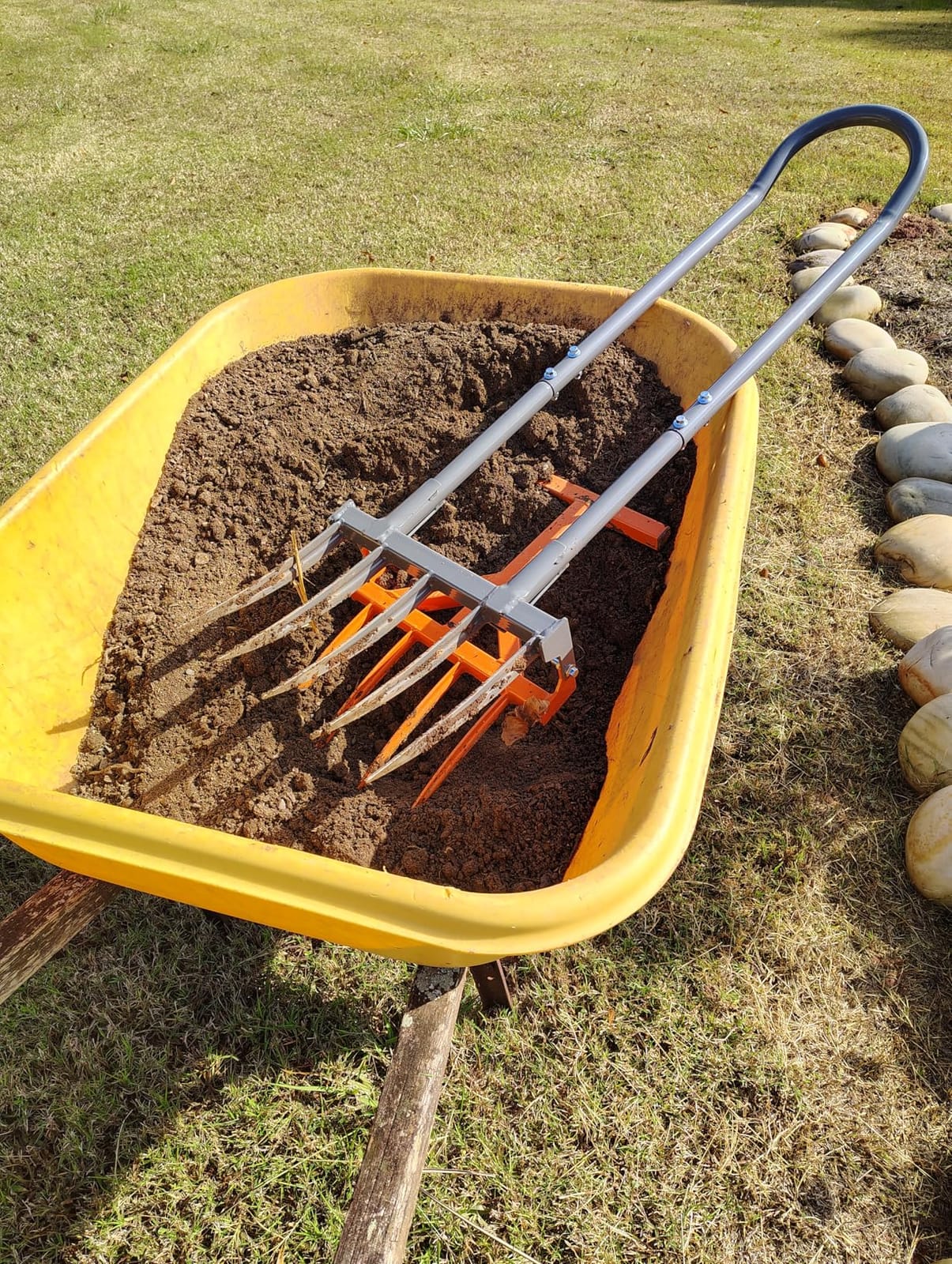
Most U-handled broadforks on the market have four or five tines. This one has nine, and that is the entire reason to look at it. Nine tines across a compact head means a narrower overall tool that still covers real bed width, which is exactly what you want in a 2-foot or 3-foot raised box where a wide fork cannot turn around without hitting the frame.
The U-shaped handle is rated to take up to 165.4 pounds of pressure, and the 9.5-inch foot space between the handles gives you a stable platform to stand on. The 38.2-inch handle length is shorter than the long-handle forks, which means less bending at the waist on short bed runs. It is a geometry choice, and for narrow boxes it is the right one.
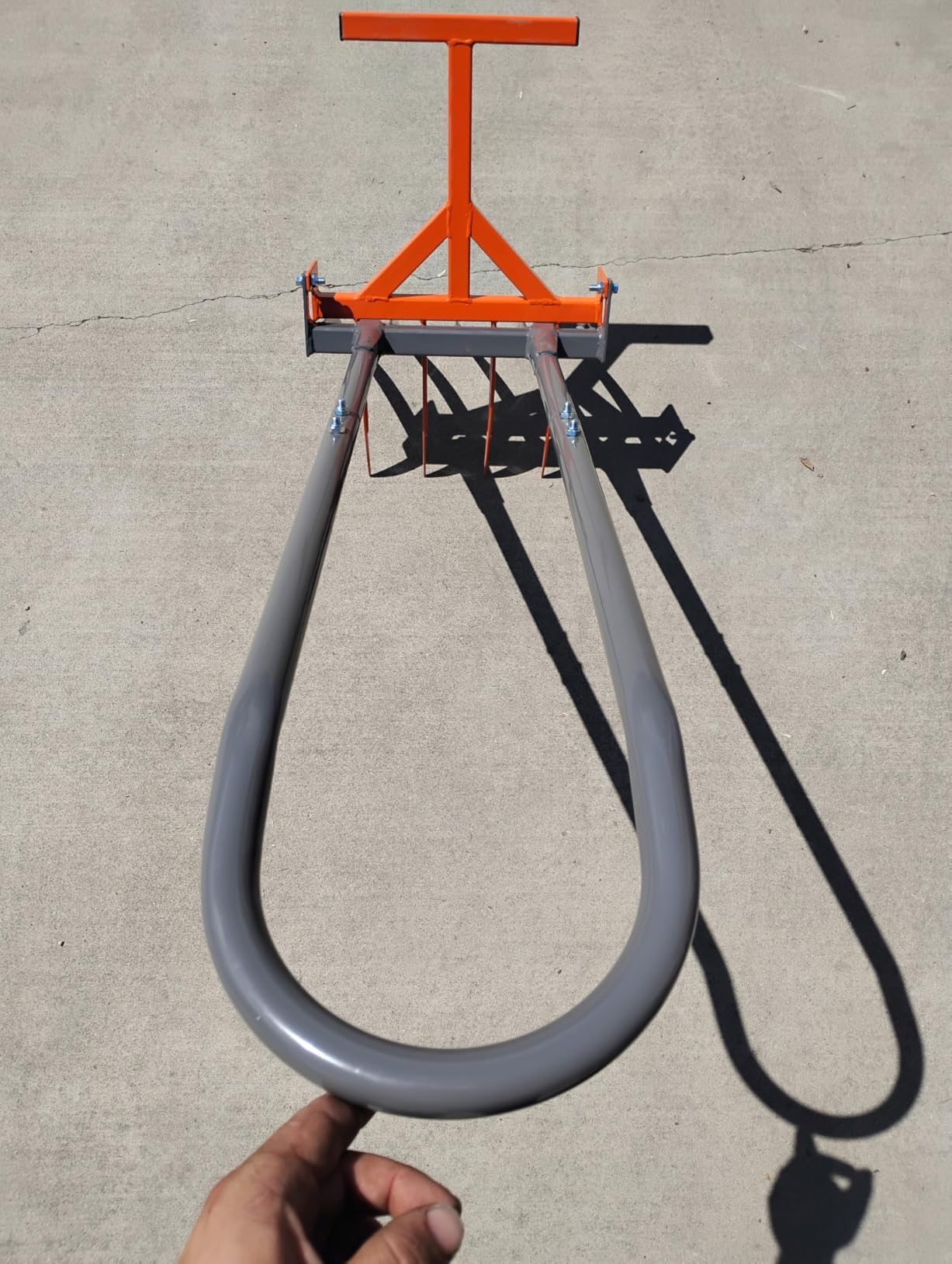
Owners like the combination of leverage and handle strength for loosening and aerating, and the tines are described as holding up well in tough conditions. The tool is also sold for harvesting potatoes and carrots, since nine tines is a lot of root-crop capacity in one pass. Ratings sit at 4.4 stars across 94 reviews, with 69 percent five-star.
The honest limitation is depth. The manufacturer states the tines reach 9.1 inches into loose soil, but the recommended working depth drops to roughly 5.9 inches in compacted ground. That is a caution against expecting deep hardpan work from it, and it is why we do not put this in the clay-soil recommendation.
Where nine tines pay off
Raised boxes, narrow 2-foot paths, and intensive market beds with close spacing. Where a five-tine fork would need two passes to cover a box, this covers it in one, and the all-steel build shrugs off the normal knocks from a bed frame or a wheelbarrow edge.
Where it does not pay off
Skip it for hardpan and for land with rocks or thick branches in it, which the manufacturer explicitly warns about. The 16-pound weight also makes it a demanding tool for long rows. If you already own a broadfork and want more reach, this is not the upgrade; if you own nothing and your beds are narrow boxes, it is a strong first tool.
5. DeWit Forged Broadfork for Lightweight Bed Work
Dewit Broadfork Tiller – 42″ Eco-Friendly Garden Bed Prep Tool with Forged Steel Tines – Covers 12″ Swath Per Pull – Heavy-Duty Manual Cultivator for Raised Beds and Loosening Soil
Forged galvanized steel
12 inch swath
40.9 inch length
7.3 lb
Pros
- Lightest steel-headed broadfork here at 7.3 pounds
- Covers a 12 inch swath per pull
- Forged galvanized steel from a family maker over 120 years
- Faster than a digging fork for bed prep
Cons
- Lowest rating in the roundup at 4.1 stars
- Highest concentration of one and two star reviews
- Very low sales rank suggests limited demand history
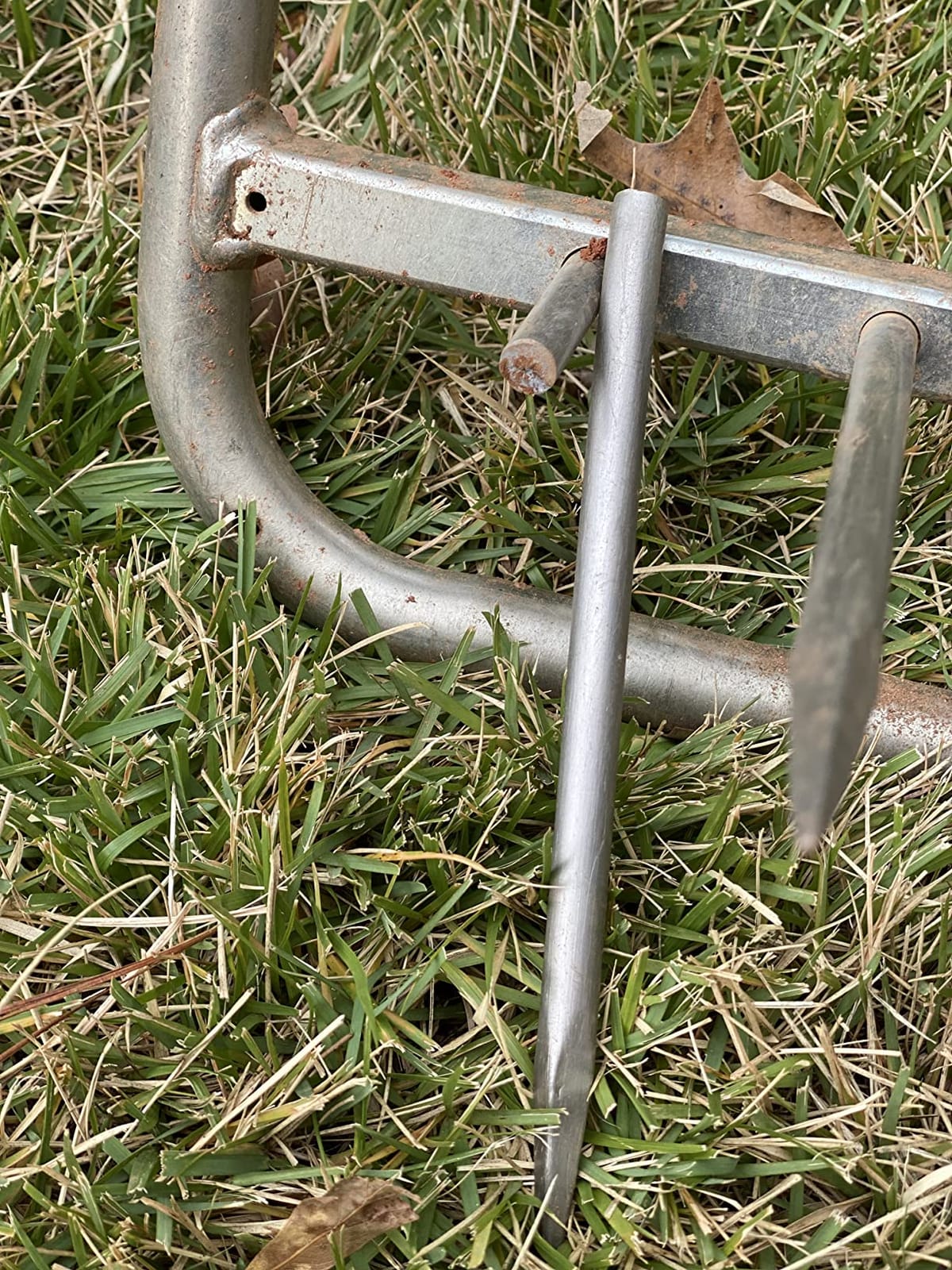
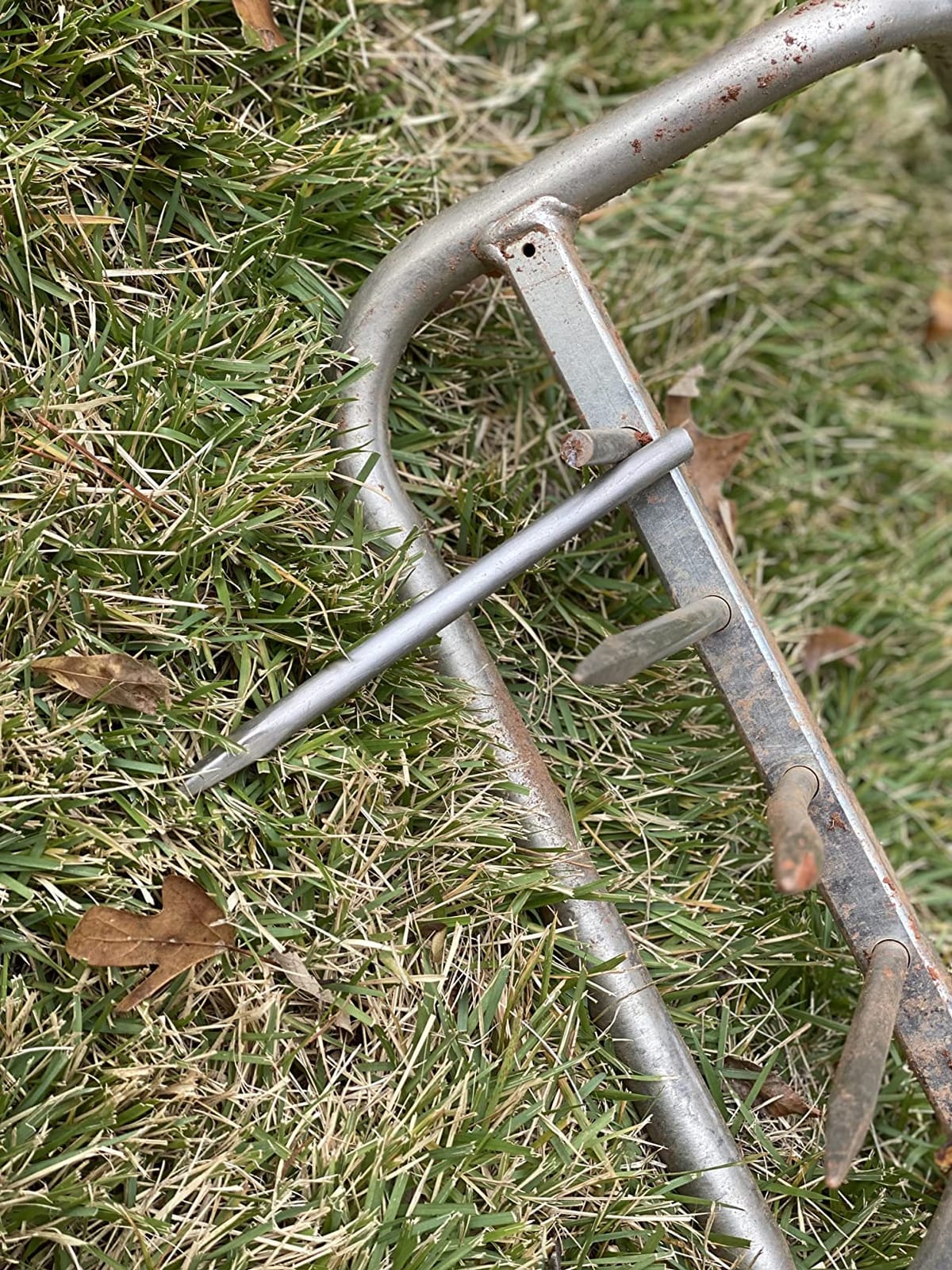
At 7.3 pounds, this is the fork you hand to somebody who has been told to stop bending over. Every other steel-headed model here is between 13 and 25 pounds, and the difference shows up on bed number six. The forged galvanized steel head is 9.4 inches long and 14.2 inches wide, and the whole tool is 40.9 inches end to end.
The design is European and deliberately simple: a one-piece forged head that covers roughly a 12-inch swath per pull, built to aerate without disturbing natural soil structure. DeWit is a family-owned maker with more than 120 years of tool-making behind it, and the forging is the reason the head weighs so little without being stamped sheet metal.
Owners who work loose, previously cultivated beds like it. It is faster than a digging fork for prep, and the low weight makes it easy to pick up, reposition and carry to the far end of a plot. For a gardener with shoulder or back limitations, that combination is the whole pitch.
It is also the most polarizing tool in this roundup. The 4.1-star average is the lowest here, and the review distribution shows it: 65 percent five-star but also 10 percent one-star, which is a wider spread than any other pick. Buyers who push it into hard, stony or freshly compacted ground tend to be the ones leaving those reviews.
Why the low weight matters more than the rating
Fatigue is the reason people put a broadfork down. Owners weighing other options in this list say the same thing about pounds: it does not sound like much until you are pulling it across a long bed. Seven pounds is a tool you can finish a bed with, and finishing matters more than a higher star average.
Who should buy it and who should not
Buy it for established beds, a small plot, or any gardener whose body is the limiting factor. Skip it for hardpan, rocky ground, or breaking sod. The 40.9-inch length also makes it a slightly shorter tool than most, so taller gardeners will find themselves bent further forward than they would with a 54 to 57 inch model.
6. VASALAID Galvanized Broadfork for Damp Climates
Broadfork 5-Tine Broad Fork for Gardening Ergonomic U-Shaped Design
5 tines
Galvanized steel
16.3 lb
Removable center pole
Heat treated tines
Pros
- Galvanized layer resists rust and will not rot or split
- Reinforced crossbar adds pull power
- Heat-treated powder-coated tines shed soil
- Removable center pole for compact storage
Cons
- 10 percent one-star reviews signal quality inconsistency
- Not intended for tree roots or rock clearing
- Two-step screw assembly required before use
This is the pick for anyone who leaves tools outside or works in a wet climate. The head is thickened steel under a galvanized anti-rust layer, high-frequency welded at the joints, and the tines are heat-treated and powder-coated so soil slides off instead of packing onto them. Wood-handled and plain-steel forks show orange bloom within a season outdoors; this one is built not to.
The reinforced crossbar between the handles is the structural upgrade over cheaper forks, and it is also the step plate. It gives you something rigid to drive your weight into, which is the difference between the tines entering the bed and skidding across it. The removable center pole lets the tool break down for storage in a small space.
Owners single out the crossbar pull and the rust-resistant finish as the reasons it works for them. The 68 percent five-star share reflects a tool that does its job reliably once assembled, and the removable pole is a genuine advantage if you are working a small plot and do not have a shed to hang a 5-foot implement in.
The weakness is consistency. Ten percent of ratings are one-star, which points to units that do not feel the same as the good ones, and the maker explicitly steers buyers away from root and rock clearing because those loads deform the tool. Assembly takes two screw-in steps, so read the manual rather than assuming it arrives ready to use.
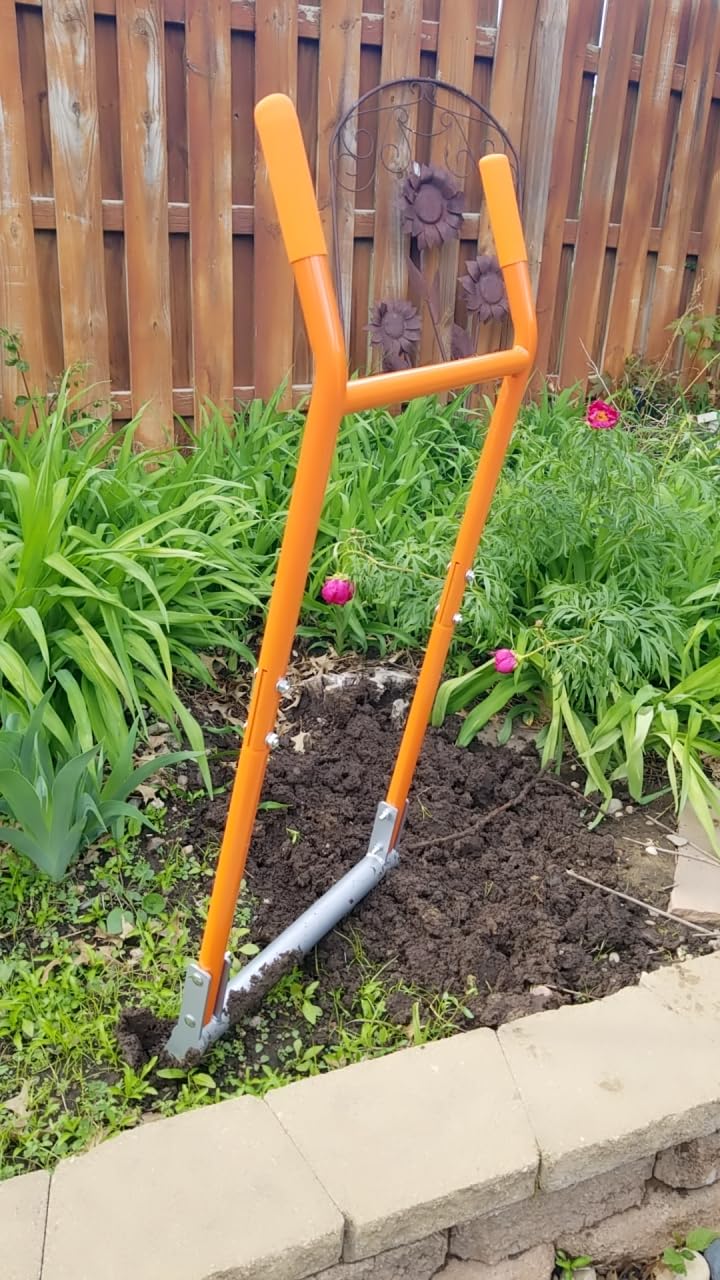
When galvanized steel earns its keep
Damp soil, coastal air, a garage wall with no climate control, or a bed prep in late autumn when the ground stays wet. In those conditions corrosion decides how long the head lasts, and the galvanized layer buys years over bare steel. It also shrugs off the repeated wetting that turns a wood-handle fork grey and rough in your hands.
Where it falls short
Skip it for new ground with stones or old roots, and skip it if you want a tool that needs no assembly. At 16.3 pounds it is not a light tool either, so it serves a gardener who wants toughness and has the body for the weight, not a gardener who is trying to keep a tool manageable.
7. SILKPE Cambered-Tine Broadfork for Hard Clay
SILKPE 56” Heavy Duty Broadfork for All the Soils, Detachable Design Pitchfork, 5 Sharp and Cambered 11” Tines Bord Fork Garden Tool, Ergonomic Handles, Good Package, Easy Assembly, Blue.
5 cambered 11 inch tines
56 inch length
17.6 lb
Carbon steel
Rubber sleeves
Pros
- Cambered arc tines penetrate soft or hard ground
- Each tine 30 to 50 percent thicker than rivals
- Inward-folded handles add pull distance per stroke
- Includes protective cover and spare wrench
Cons
- Heaviest of the value forks at 17.6 lb
- Requires more user strength to drive
- 10 percent one-star reviews suggest uneven quality
The camber is the story here. These five tines are cut with an arc, so they enter soil in a curve rather than punching straight down, and that curve is what carries them through compacted clay instead of stopping dead. The tines are also cut from a single steel plate and welded around drilled cross pipes, which gives the head a continuous feel with no weak seams for a rock to find.
Each tine is claimed to be 30 to 50 percent thicker than competing products, and the effect is visible in how the tool behaves under load. At 56 inches the overall length gives good upright posture, and the inward-folded handle ends increase the distance you can pull per stroke, so you get more soil per movement without more effort.
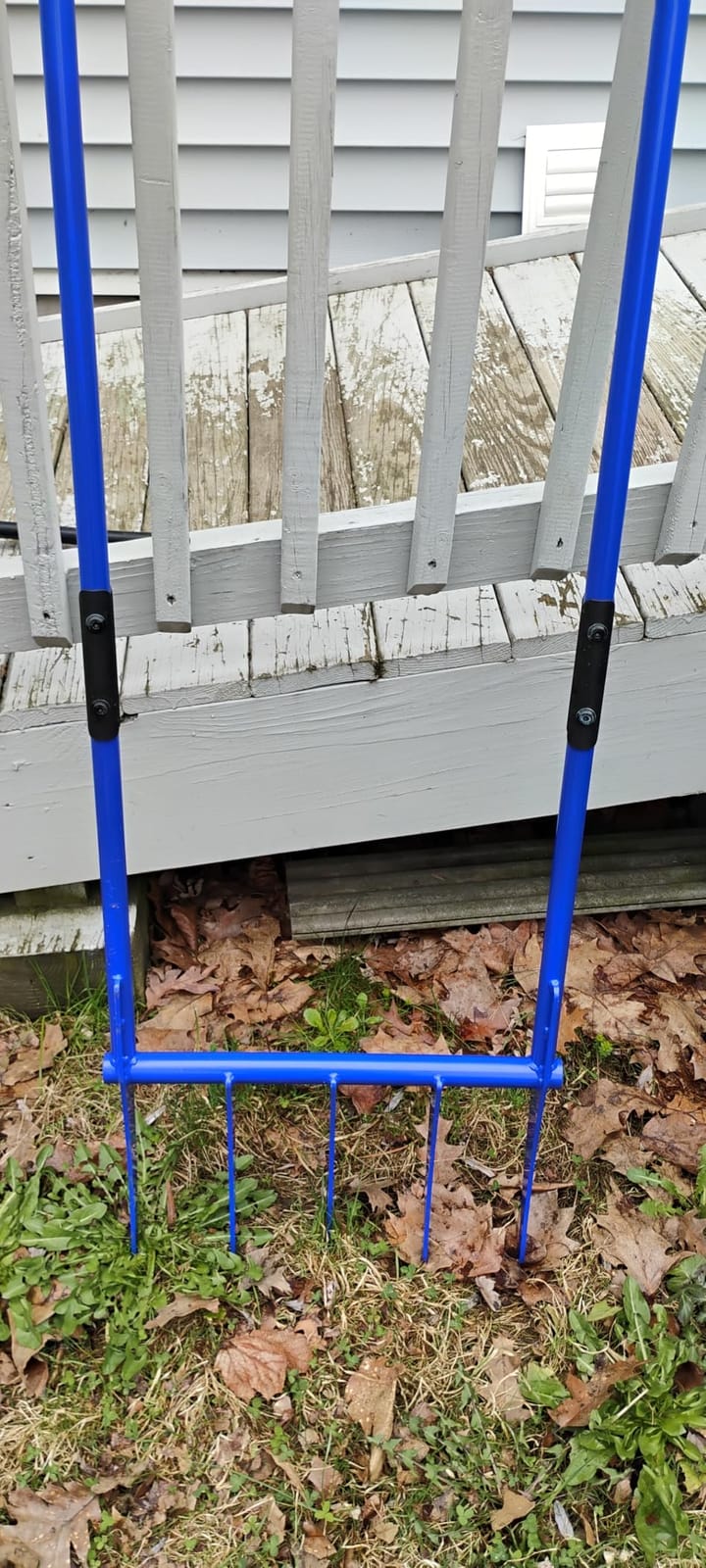
Packaging gets an odd mention for a tool, but it matters here. It ships with thickened wrenches, a manual and a protective cover, and assembly takes about three minutes with four screws. For a 17.6-pound implement, not losing the hardware in the grass is a real quality-of-life improvement.
The trade-off is weight and effort. The maker itself notes the tool is 30 to 50 percent heavier than competing products, and owners say it requires more strength to drive. In return, you get tines that are the least likely in this group to deform when the soil is being difficult, which is exactly the situation where the other forks get set aside.
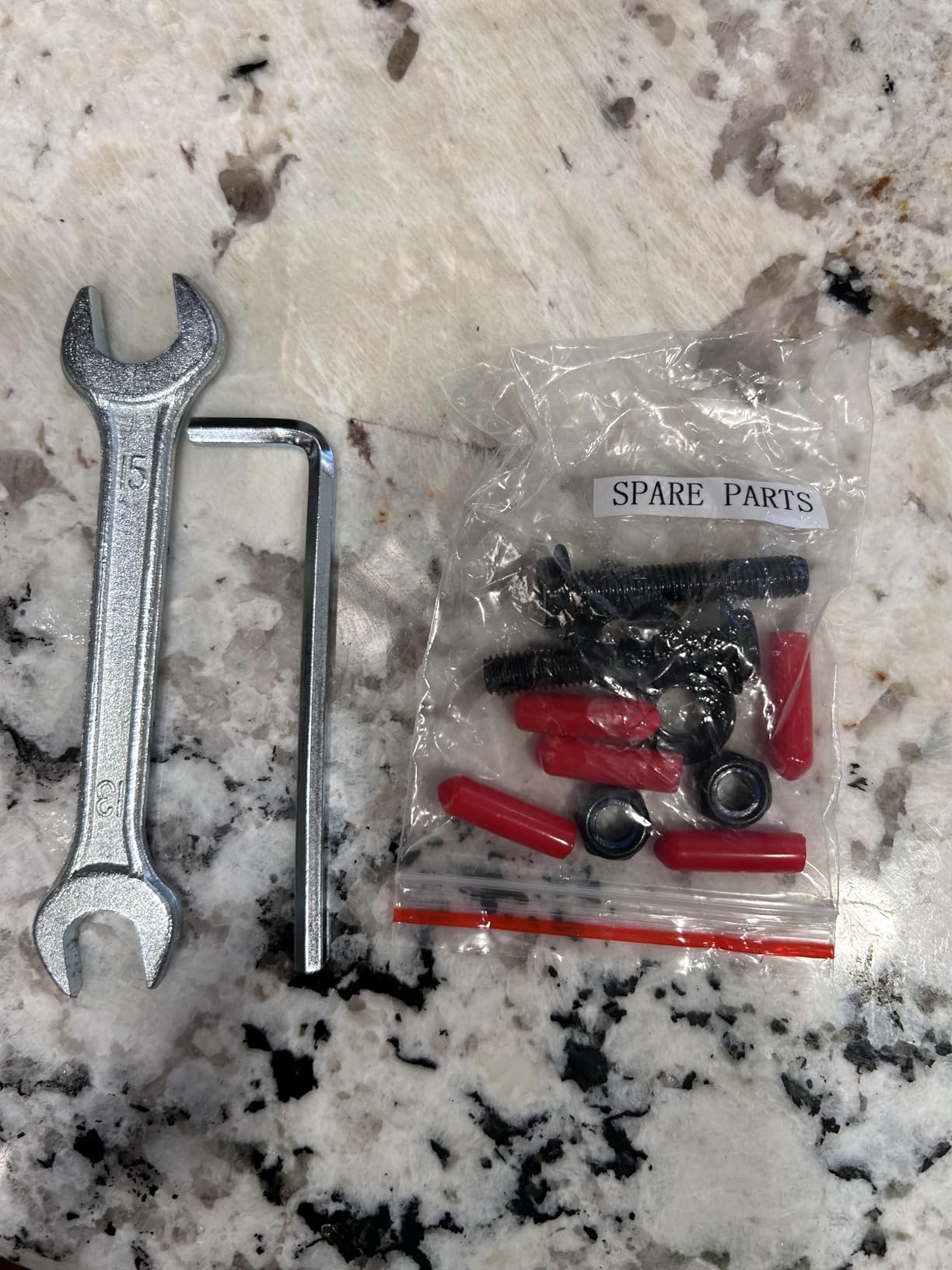
Why cambered tines work in clay
A straight tine meets resistance and stops. A cambered tine concentrates the force along the curve and lets the soil wedge itself upward, which is closer to how a digging fork behaves. If your beds are heavy clay from a former lot, this geometry does more for you than a heavier straight-tine steel.
Who should skip it
Skip it if you are a smaller gardener or have any shoulder and back history. At 17.6 pounds with a long working length, this is a tool for someone who already works with heavy hand tools. It is also not a garden ornament; it is built to be driven into soil that would stop a lighter fork.
8. SENVERT Wide U-Handle Broadfork for Boxed Beds
Senvert BroadFork Garden Tool, Heavy Duty 5-Tine Broad Fork Hand Tiller, Garden Pitchfork with Ergonomic U-Shaped Handle, Digging Fork for Gardening, Cultivating
5 ribbed heat-treated tines
19.5 inch working width
54 inch tall
Iron
Pros
- Rib-reinforced tines resist bending
- 19.5 inch width covers ground fast
- Forward-angled handle keeps hands natural
- Protective tine covers included
Cons
- Heavier than expected at an estimated 20 to 25 lb
- Not recommended for compacted or hard ground
- Included closed wrench is less convenient than pliers
Boxed beds are where this one gets recommended. Owners working 10 by 5 foot garden boxes report it doing the job where a power tiller was simply impractical to use, which is the common experience: a machine will not fit between the boards, and craning one over the frame risks the bed itself. A 54-inch U-handled tool slides between the sides and works the whole width.
The tines are heat-treated with reinforcing ribs running along them, and the tine connection is welded in a dual row. That rib detail is the durability answer to the most common broadfork complaint, since tines are what bend. The U-shaped handle also angles forward at the top, which puts your hands in a more natural position and reduces wrist strain compared with straight upright handles.
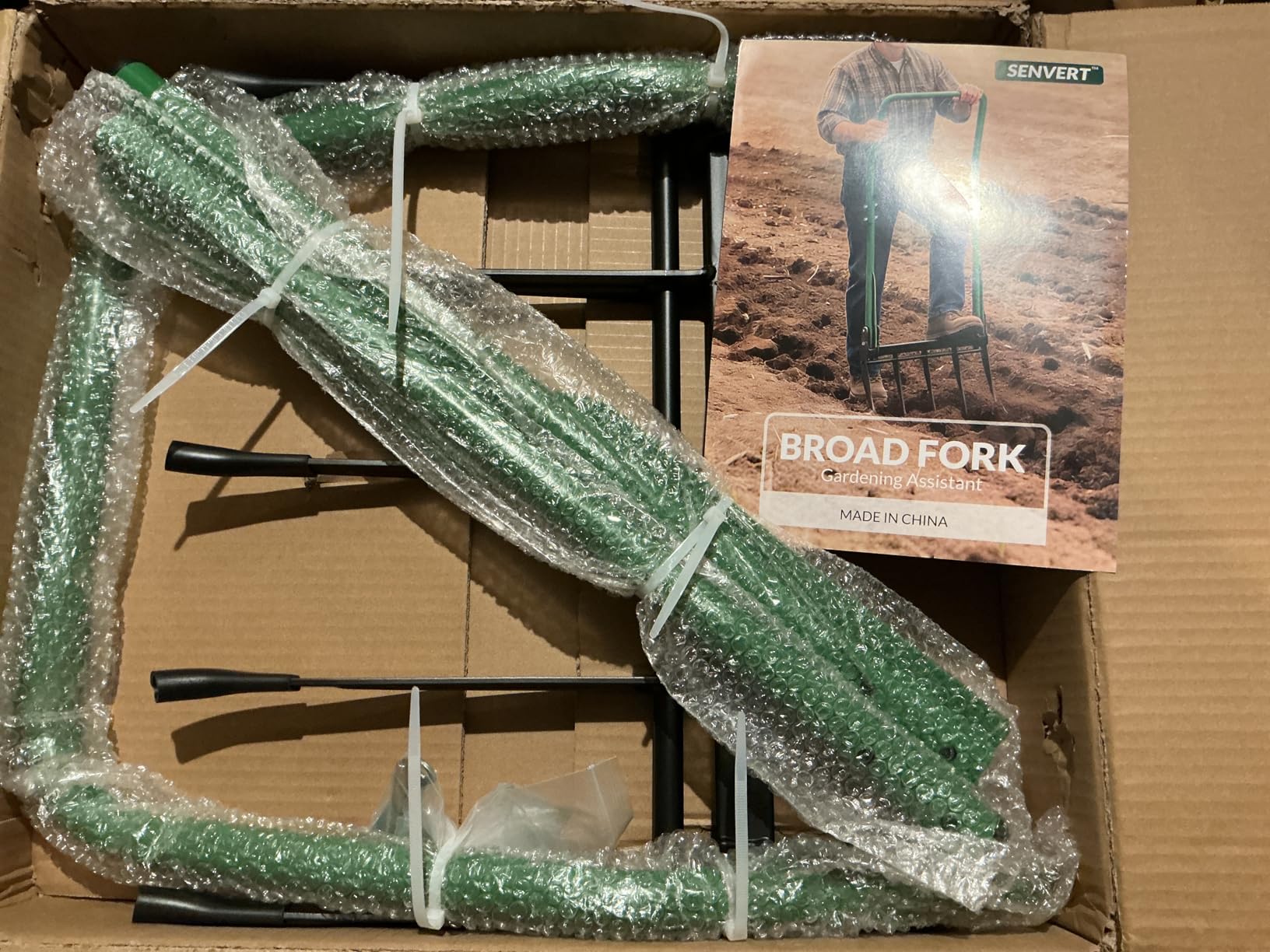
At 19.5 inches of working width across five tines, it covers a standard raised bed in a single pass, which is the efficiency argument for a boxy U-handled design in general. Owners also like that it stores compactly and comes with protective tine covers, so the tines are not landing on concrete or a shed floor every time you put it away.
Weight is the real caveat. Owner reports put it in the 20 to 25 pound range, which is heavier than the listed alternatives here, and the maker does not recommend it for compacted or hard ground. In other words, this is a bed-maintenance tool for soil that is already workable, not a tool for breaking new ground or hardpan.
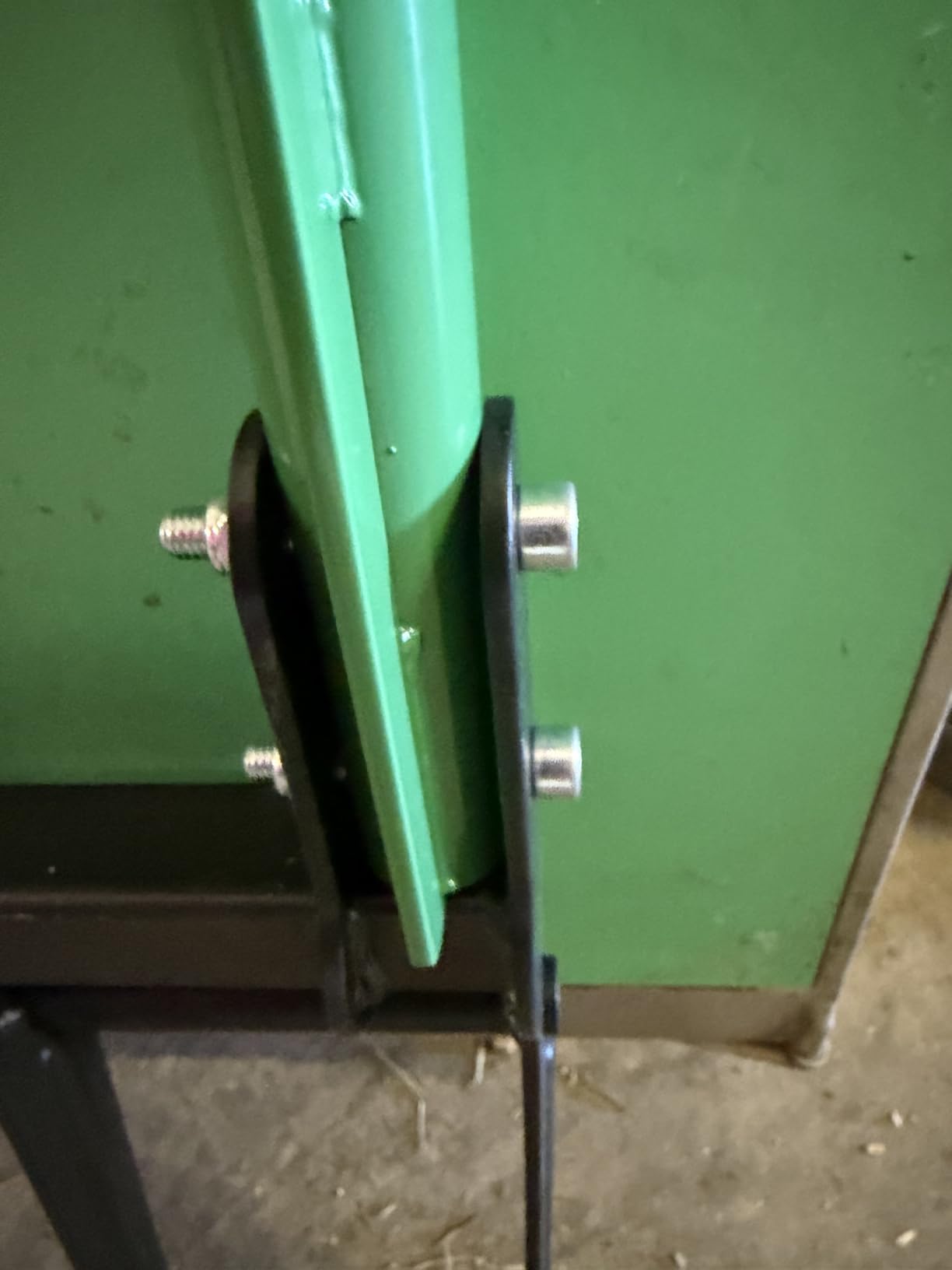
Raised beds versus open rows
The geometry is built for enclosed space: a 54-inch height, a U handle that clears the bed sides, and a 19.5-inch working width that matches common box dimensions. In open rows you would want a longer tool with a wider head instead. If you build in cedar or metal frames, this fits the way you work.
When to choose something else
Choose a lighter fork if you are a smaller gardener, and choose an all-steel welded model if you need to break hard ground. The included closed wrench is a minor irritation worth mentioning, but the 4.4-star average across 45 reviews, with 73 percent five-star, shows owners are broadly satisfied with how it performs on workable soil.
9. KEMETIK All Steel Broadfork for New Ground and Rubble
KEMETIK 5 Tines All Steel Broadfork, 56″ Broad Fork Garden Tool Heavy-Duty Digging Pitchfork, Non-Slip Grips & Detachable Design for Gardening, Farm Cultivation, and Soil Loosenin
5 curved high-carbon tines
Arc clip lock
Detachable
17.7 lb
Thick steel pipe
Pros
- Pulls 3 to 4 inches of soil per push
- Curved tines stayed straight on rocky soil
- Arc clip lock keeps the joint tight
- Rubber grips with inward-folded ends ease back strain
Cons
- At 17.7 lb it feels heavy over extended use
- One verified review reports all tines bending immediately
- Can require aggressive rocking in bone-dry hard soil
New ground is the hardest test, and this is the fork we would take into a former building plot. The frame is thick high-carbon steel pipe, not tube, and the five curved tines are fully welded to it. The arc clip lock at the head-to-handle joint is a different fastening idea from a bolt through a flat plate, and owners report the joint stays tight with no wobble under load.
Owners report pulling up 3 to 4 inches of soil per push and twist, and several describe breaking up hard clay and builder debris quickly. The curved tines are noted specifically as having stayed straight on rocky soil, which is the failure mode that ends most broadfork use. Non-slip rubber grips with inward-folded ends let you work more upright, easing the strain on your back and wrists over repeated passes.
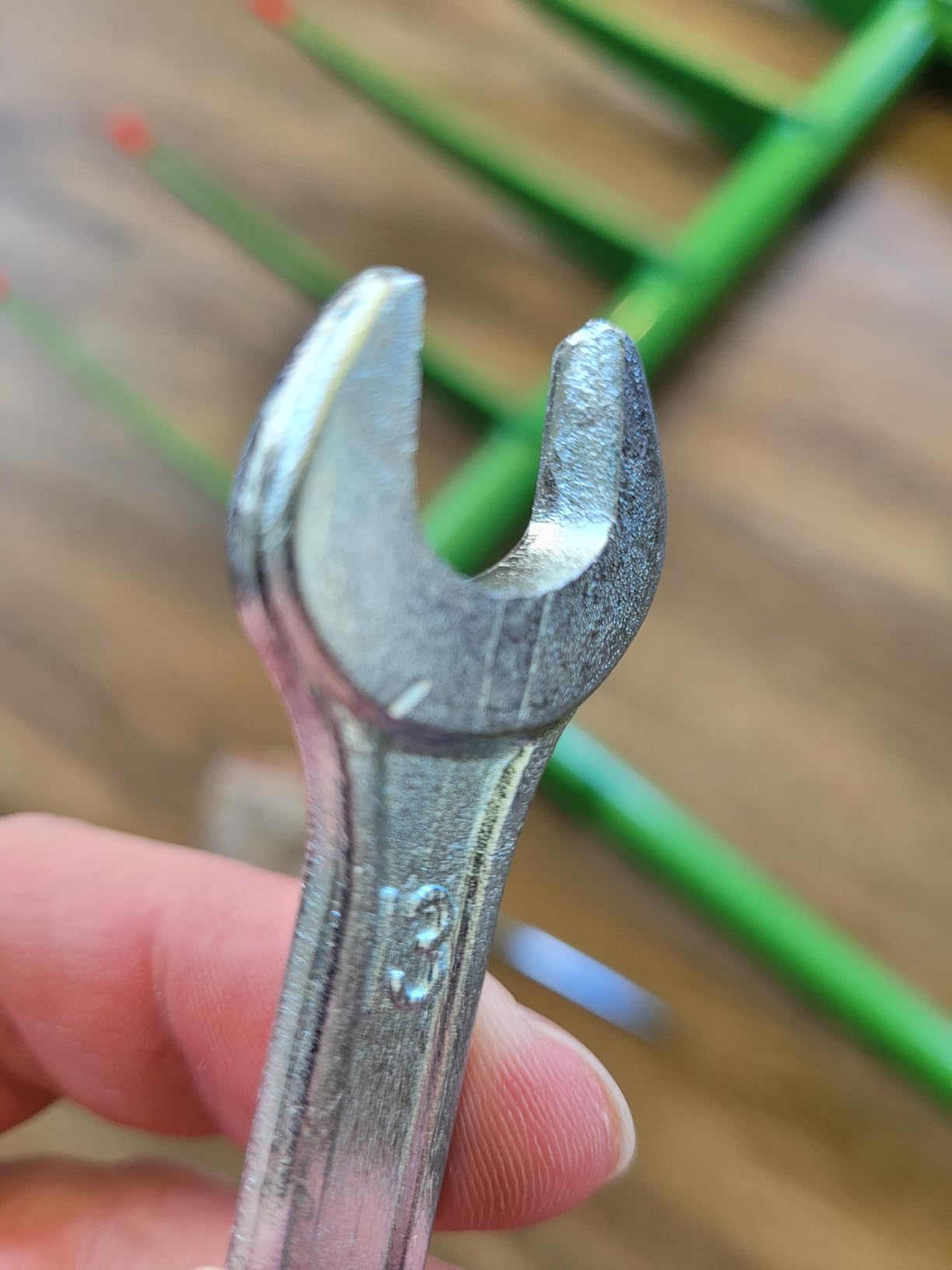
It is the newest listing in this group with the smallest review base, at 34 reviews, so its 4.5-star average is less settled than the rest. The one-star report of bent tines is a real data point and worth weighing against the 4.5 average, particularly if you already know your ground is full of stone.
It ships ready to use with internal metal packaging, rubber tine and floor protectors, a thickened wrench and spare screws, and it detaches into two parts for transport. That completeness is better than most at this tier, where the wrenches are usually the first thing to go missing.
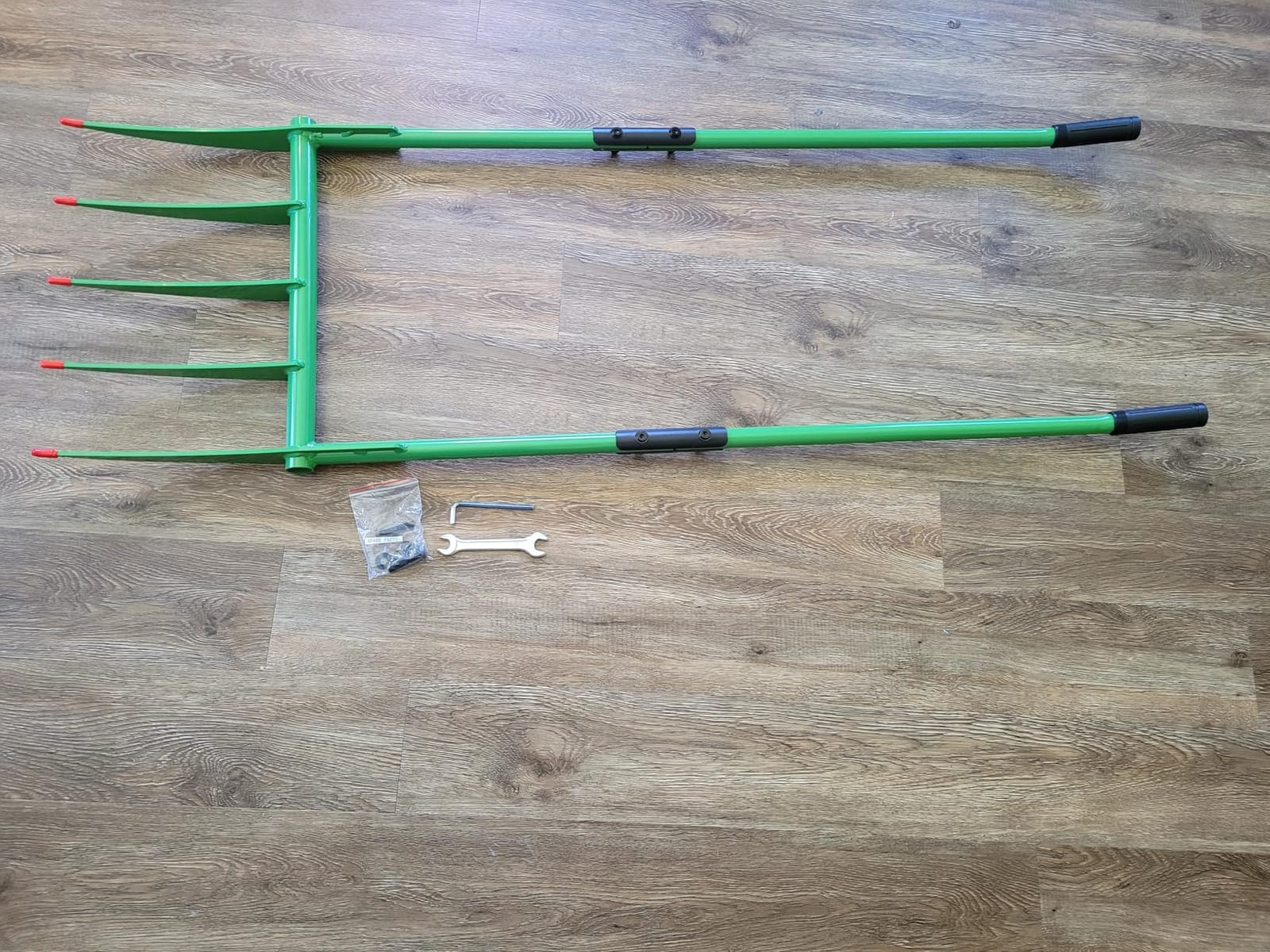
Breaking ground versus working beds
New ground, sod, and rubble are its strength, because the thick pipe frame and curved welded tines are built to take the shock. On established, already-loose beds it is overkill and tiring for no benefit. Match the tool to the job: this one is for the first week of a plot, not the third month of a garden.
What to watch for
Two things. It needs aggressive rocking to penetrate very hard or bone-dry soil, which puts more force through the tines and is where bending happens, and at 17.7 pounds it is not a tool for small jobs. Time the work when soil is damp and it behaves very differently from the same pass in dry ground.
10. CobraHead Broadfork for No-Till Beds and Perennials
CobraHead® Broadfork – Heavy Duty Ergonomic Garden Hand Tool – USA Made
1045 carbon steel round tines
Ash hardwood handles
14 lb
21 inch wide
Made in USA
Pros
- Round tines lift soil where flat blades would slice
- Lightest premium option at 14 pounds
- Replaceable ash hardwood handles flex with shock
- Works around perennials without tearing up mulch
Cons
- Heavy enough that some users need a second person
- Only very solid red clay has stopped it for one owner
- One 1-star review reports thin handles and poor service
This is the one to use around plants you want to keep. The tines are round, and round tines lift soil instead of slicing it, so you can work right up to perennial crowns and fruiting shrubs without the blade action that cuts roots. Owners specifically credit it with loosening soil around plant roots without tearing up mulched beds, which is the whole point of a no-till approach.
The tines are 1045 carbon steel mounted through the crossbar rather than welded to the face of it, which is a stronger connection because the load passes through the steel. Handles are quality ash hardwood, and ash has the flex that absorbs the shock of a hard pull instead of transmitting every jolt to your wrists. They are also replaceable, which is unusual at this level.
At 14 pounds it is the lightest premium option in this roundup, and at 21 inches wide it still covers a good swath. The traditional U-shaped European design has been around a long time for a reason: it works with body leverage, letting your legs and back do the work instead of your arms.
Owners report increased earthworm activity after using it, and describe the tool as nearly indestructible on clay soil, with only very solid red clay having stopped one of them. One verified 1-star review cites thin ash handles and a lack of response on a replacement request, and another noted weak packaging at the tine ends during transit. The overall split is 70 percent five-star and 25 percent four-star.
Why round tines matter in a living bed
A flat or bladed tine has an edge, and an edge cuts. That is exactly what you want in hard clay and exactly what you do not want eight inches from a raspberry patch. Round tines fracture the soil into chunks and lift them, so the bed keeps its structure and the roots stay intact. If your garden is mostly established perennials, this geometry matters more than tine count.
Who should skip it
Skip it if you are breaking new ground, because a round tine is not the best tool for hitting sod and hardpan, and if you need a narrow tool for tight boxes. It is also heavy enough that some users needed a second person to maneuver it, so a smaller or older gardener should consider the lighter steel option earlier in this list.
How to Choose a Broadfork for Your Soil and Bed Size
Most wrong purchases come down to two variables: tine geometry that does not match the soil, and a tool width that does not match the bed. Get those two right and the rest is preference. If you are still building your setup, our cedar raised bed picks and metal raised bed picks will tell you how wide the beds are, which sets the fork width you need.
Round tines or bladed tines
Round tines lift and fracture soil, leaving it in chunks with air channels between them. They are the right choice for established beds, loam, and anywhere you are working close to roots. Bladed or flat tines have an edge that cuts and slices, which is more efficient in hard clay and compacted ground because the blade presents a wider face to the resistance.
The common mistake is buying bladed tines for a bed full of perennials and then wondering why the roots got sheared. If your soil is loose or you are working around plants, round tines win. If your soil is hard clay and you are breaking new ground, bladed tines win. Most of the forks in this roundup sit in the middle: they lift and fracture without a true cutting edge.
How deep do you need to go
Ten to 12 inches is the standard working range for annual bed prep, and the 11-inch tines on the Bully Tools and SILKPE models sit right in it. Fourteen to 16 inch tines exist and serve deep aeration and heavy root crops, but they demand far more leverage from your body and are punishing for smaller-framed gardeners.
Working depth is not the same as tine length anyway. Several manufacturers rate tine depth in loose soil, which is the easy case; in compacted ground expect less. Match tine length to the average adult in the household using the tool, not to the crop.
Tine count and fork width
Tine count and fork width are really one decision. More tines across a given width means more soil moved per pull and more tines to bend, so heavy ground rewards fewer, stronger tines. A 4-foot-wide raised bed needs a 15 to 18 inch fork to work the center without constant edge work; a standard 3-foot bed suits a 20 inch head; 30 inch market-garden rows want a 24 inch head or wider.
The Walensee is the outlier here at nine tines, and it works because the head stays compact enough for narrow boxes. The SENVERT at 19.5 inches and the CobraHead at 21 inches sit in the middle. Match the tool to the bed you actually have, not to the bed you might build next year.
Wood, steel or fiberglass handles
Wood handles, ash or hickory, flex. That flex absorbs shock from a hard pull and takes the sting out of the tines stopping. They also need oiling, they can crack if left in sun, and they can snap at the head connection, which is the complaint buyers most often have about competing tools. Steel handles are the most durable and the heaviest, and they transfer every shock to your joints. Fiberglass sits between: lighter than steel, more consistent than wood, and less shock-absorbing than either.
Our read across the reviews is that ash handles, as on the CobraHead, are the best feel, and that the difference matters most after bed number three. For anyone with joint history, wood is the safer buy even when the alternative feels more robust on paper.
Handle height and your body
Standard broadforks run 54 to 57 inches end to end. The shorter 40 to 42 inch tools like the DeWit force you to bend further forward, which is fine for short bursts and tiring over a whole bed. A 54 inch tool is the sweet spot for most adults, and a 57 to 58 inch tool suits taller gardeners who want a fully upright posture.
Regret on tall models is a documented and repeatable complaint, and it is about weight, not height. The taller a tool is, the more leverage it gives and the more steel it needs to hold up, so tall models are usually the heavy ones. If you are under 5 foot 6 or have a shoulder or back condition, favor a 7 to 11 pound tool over a 20 pound one, no matter how good the steel is.
Weight and fatigue are the real budget
The range in this roundup runs from 7.3 pounds to an owner-estimated 20 to 25 pounds. That is a much bigger spread than the difference in steel quality, and it decides whether you finish the bed or abandon it halfway. Choose the lightest tool that will do your soil. A 7-pound fork that you use every spring beats a 25-pound beast in the shed.
What each price tier actually buys
At the entry tier you get a stamped or tube-framed steel head with a threaded joint, light or no handle grips, and a two-step screw assembly. The middle tier adds thicker steel, a reinforced crossbar, proper rubber grips and heat-treated tines. The top tier buys fully welded all-steel construction, round tines in higher-grade carbon steel, ash handles and a lifetime warranty. None of that changes the job; it changes how many seasons the job survives.
How to Use a Broadfork in Four Steps
Technique matters more than the tool. A broadfork used with your arms is exhausting and barely works; the same tool used with your body weight is efficient. Four steps, and do not skip the first one.
First, pick the moment. Never broadfork bone-dry soil and never work soaking-wet soil. Bone-dry ground puts every tine under maximum load and is when tines bend; saturated ground turns the tool into a mixer and gives you nothing back. Damp is the target, the moment after a rain or an irrigation cycle where the soil squeezes into a ball and holds together without dripping.
Second, place and step. Stand at the end of the bed, set the tines in the soil a foot ahead of your toes, and step up onto the crossbar with one foot, using all your weight. Rock the tool side to side to drive the tines to full depth. Do not stab downward with your arms.
Third, pull with straight arms. Keeping your arms straight, lean back from the hips and lift the handles until the tines come up a few inches. The soil should crack and heave rather than turn over. If it flips over, you pulled the handles down to the ground, and you are now inverting your soil, which defeats the purpose.
Fourth, slide and repeat. Push the tines back into the next strip, offset by about half the tine width so you overlap your passes, and work backward down the bed. Two or three passes in perpendicular directions usually gives a better result than hammering one direction. Know when to stop: after the bed is friable to the depth of your tines, more passes add fatigue rather than aeration.
After the passes, finish with compost and a cover crop, and the broadfork has done its work. Do not chase perfection. If you find yourself making a fifth pass because the soil still looks rough, the answer is organic matter, not more steel.
What Real Gardeners Say About Broadforks
Forums dominate the search results for this query, which told us buyers are hunting peer experience rather than marketing copy. The verdicts are mixed in a way that is genuinely useful, so here they are with the complaints left in.
The most common reason to buy one is avoiding the rototiller specifically because it kills earthworms. That single motivation drives most of the satisfaction signals we found, along with the discovery that soil was far more compacted than expected, and one owner replacing a competing fork that never worked at all after switching brands. Older gardeners report success with the tall models as long as they pace themselves.
The complaints are equally consistent. A r/marketgardening buyer reported tines that penetrated but produced zero lift, which is the most damning review a broadfork can earn because it means the tool did nothing. A Garden Fundamentals poster noted tines may bend if too much force is applied, even in soil that a power tiller sliced through. A 6 foot 2 buyer who chose the tall model regrets the weight, noting that 7 pounds sounds like nothing until you are working a large bed.
On r/OrganicGardening, a poster asked the sharpest question in the thread: if you are broadforking every 4 to 6 inches anyway, why not just till? The answer that satisfies experienced growers is that repeated passes are what change soil structure, while inversion is the cost of tilling. On permies, the counter-argument is that double digging works faster on the heaviest clays because you can change structure and add organic matter at depth in the same pass. Both are right, which is why the best heavy-clay answer is often a broadfork plus compost, not a broadfork alone.
Two more honest limits. Rocks and tree roots stop even the best broadfork, and owners say so without regret. And the recurring pair of tools in no-till systems is a tarp plus a broadfork, not a growing list of implements, which is a useful signal about how many tools this job actually needs.
Who Should Not Buy a Broadfork
If your garden is three or four narrow boxes that are already loose from annual compost additions, a broadfork is a tool you will use twice a year and resent the storage of. A garden fork does the same work at those volumes.
Skip it on rocky land, under tree roots, or in ground full of buried construction debris. It will bend tines and waste your money, and no rating or warranty changes that. Skip it if you already own a rototiller and your beds were broken in years ago and have stayed loose, since that is the exact situation where tillers are no longer needed.
Also weigh your body honestly. Heavy steel broadforks transmit every shock to the joints, and the most common abandoned-broadfork review is fatigue, not failure. If lifting a full watering can already bothers your back, a 20-pound steel fork is the wrong investment, and a lighter forged option is the right call.
Broadfork Care and Maintenance
Broadforks are low-maintenance, but three things keep them working. Clean the tines after each session. Knock off the soil, then wipe the blades dry and leave them in the open air; a film of dry soil is what turns steel into rust.
Oil wood handles once a year with boiled linseed oil, before the first spring pass. It takes a few minutes with a rag and it is the difference between ash that stays supple and ash that cracks along the grain after one wet season. Steel and fiberglass handles need nothing but a wipe.
Check and tighten bolts at the start of each season, especially on the models that ship as a screw-together kit. It takes five minutes and it prevents the joint loosening mid-pull that ruins the tines. If your tool is a fully welded model, there is nothing to tighten, which is one of the quieter benefits of buying one.
Frequently Asked Questions
Is a broadfork better than a tiller?
For garden beds that already exist, yes. A broadfork loosens compacted soil 8 to 12 inches deep without flipping it, preserving soil layers, earthworms and fungal networks. A rototiller is worth using once on new grassy ground, then becomes the tool you stop needing.
What is the difference between a garden fork and a broadfork?
A garden fork or spading fork has a few short tines on a single handle and is used to dig, plant and turn small amounts of soil. A broadfork has 4 to 12 long tines on a wide crossbar with two handles, covering much more ground per pull for bed-scale aeration.
Can a broadfork break up clay soil?
Yes, with the right tool and the right conditions. Bladed or thick cambered tines in a welded all-steel frame work hardest clay, and damp soil is far easier to fracture than bone-dry ground. For the heaviest clays, combining broadfork passes with compost at depth beats either tool alone.
Is broadforking good for soil?
Broadforking relieves compaction, opens macropores for air and water, improves drainage, and leaves buried weed seeds undisturbed. Because it fractures rather than inverts, it keeps soil layers intact and avoids the harm a rototiller does to earthworms and mycorrhizal fungal networks.
How deep should a broadfork go?
Ten to 12 inches is standard for annual bed prep and matches the 11-inch tines on most picks. Deeper 14 to 16 inch tines suit root crops and deep aeration but demand far more body leverage. In compacted ground, expect less depth than the tine length suggests.
What size broadfork do I need for a 4×8 raised bed?
A 4-foot-wide bed wants a 15 to 18 inch fork so you can work the center without constant edge work. A 3-foot bed suits a 20 inch head, and 30 inch market-garden rows need 24 inches or wider to cover the row in one pass.
What tools do professional gardeners use?
Market growers tend toward the heavy end: fully welded all-steel broadforks with 9 to 12 tines, long handles, and ash or steel construction, because they are working 20 to 30 inch beds repeatedly. A tarp paired with a broadfork is the common two-tool no-till bed prep system.
Why do gardeners stop using their broadfork?
Three reasons dominate: insufficient lift, where the tines penetrate but the soil never heaves; tine bending on rocks and buried roots; and fatigue over large beds with a heavy tool. Choosing a lighter tool for your bed size and avoiding new ground with stones in it prevents all three.
Are wooden or steel broadfork handles better?
Wood handles, especially ash, flex and absorb the shock of a hard pull, which is easier on wrists and shoulders over a long session. Steel handles never need oiling and are the most durable, but they are heavier and pass every jolt straight into your joints. Most owners with joint history prefer wood.
What is the most useful garden tool?
It depends on the job, but for bed prep the broadfork is hard to beat because it does two jobs in one: breaking compaction and harvesting root crops. Its main competitor for usefulness is a good digging fork, which wins on small plots and planting holes.
Final Verdict for the Best Broadfork Tools for Garden Beds in 2026
Our pick for the best broadfork tools for garden beds is the Bully Tools 5-Tine. It has the deepest review history in the group, 10-gauge USA steel, 11-inch tines that reach working depth, detachable handles and rubber grips, and at 11.8 pounds it is light enough to finish a whole bed with. If your soil is the harder problem rather than the tool, take the Meadow Creature BF-12 with its twelve welded tines and lifetime warranty.
Match the rest to your actual beds. The VEVOR is the value choice for everyday prep, the Walensee fits narrow boxes with its nine tines, the SILKPE’s cambered tines are the answer to stubborn clay, the SENVERT and CobraHead suit boxed and perennial beds, and the DeWit at 7.3 pounds is the one to buy if your body, not your soil, is the limiting factor.
One last reminder: work damp soil, pull with your body and not your arms, and stop when the bed is friable. A broadfork earns its place in one season if you use it right, and none of these picks will help if the ground is bone-dry or full of rocks.