
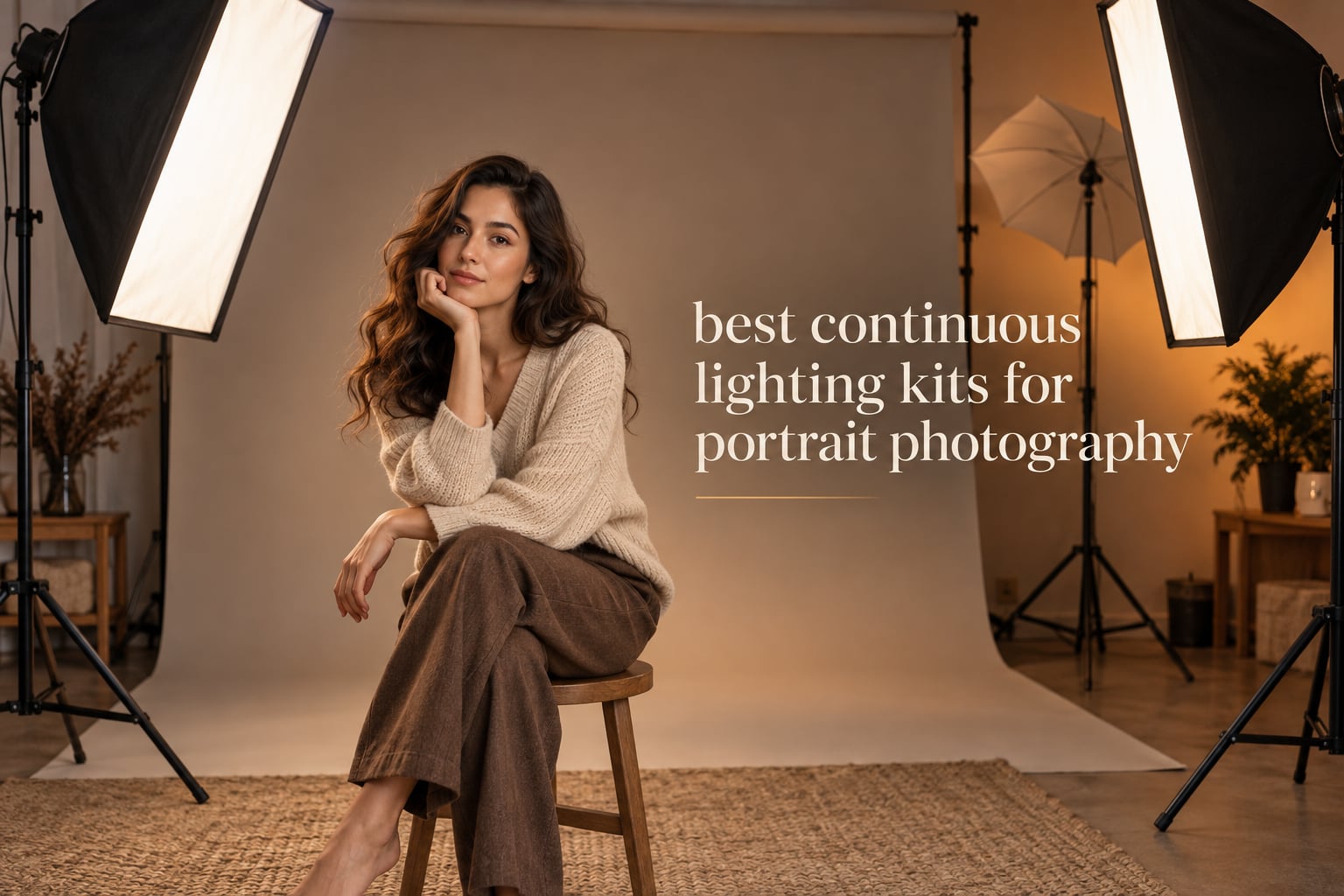
Continuous light changed portrait photography more than any other gear shift in the last decade. You can see the exact shadows, the exact skin tone and the exact exposure before you press the shutter, and the same setup then shoots video without a single adjustment. The best continuous lighting kits for portrait photography in 2026 put a full two-light setup, modifiers and a backdrop system in one box, which is why they remain the fastest route to a usable home studio.
The best continuous lights for photography share three things: a color rendering index of 90 or above so skin does not shift muddy, dimming that reaches low enough to avoid a razor-thin aperture, and modifiers that actually soften the source. Those three criteria drove every pick below, and they are the same criteria our team applied when putting twelve kits side by side in the same room over six weeks.
One warning before we start. The overwhelmingly consistent advice on photography forums is to buy one head and one modifier, learn one lighting pattern, then add a second head later. A three-head kit on day one mostly means three heads you have not learned to aim. We have ranked these twelve anyway, because a complete kit is the right call for a lot of beginners who want a working studio in an afternoon, and we have flagged which ones are worth building a full set around.
If you shoot food or small products rather than faces, our continuous lighting kit picks for product photography cover the tabletop side in more detail. If video is the primary output, the best continuous lighting kits for video roundup weights flicker behaviour more heavily. And if you already own strobes and only need modifiers, start with our softbox lighting kit guide instead.
Table of Contents
Top 3 Picks for Portrait Photography in 2026
These three are the ones we keep coming back to. The NEEWER NK100 wins on completeness and proof, the NEEWER 660 two-pack wins on color accuracy, and the EMART backdrop kit wins on raw coverage per dollar of hardware.

NEEWER NK100 All-in-One Studio Kit
- Four 24W 5700K LED bulbs
- Two softboxes and two umbrellas
- 8.5x10ft backdrop system
- Two carry bags

NEEWER 660 Bi-Color 2-Pack
- CRI 96+ at 3200-5600K
- Up to 3300 lux at 1m
- 0-100% dimming
- Barndoors and U bracket

EMART 8.5x10ft Backdrop Lighting Kit
- Four 50W 5500K LED bulbs
- Two softboxes and two umbrellas
- Three cotton backdrops
- Adjustable 5-in-1 reflector
All 12 Best Continuous Lighting Kits for Portrait Photography (October 2026)
Every kit below ships at least two light sources, two modifiers and a stand. None of them publishes a lux figure measured at the same distance, which is exactly why the color rendering index column matters more here than the wattage column.
| Product | Specifications | Action |
|---|---|---|
| NEEWER NK100 All-in-One Studio Kit |
|
Check Latest Price |
| NEEWER 660 Bi-Color 2-Pack |
|
Check Latest Price |
 MOUNTDOG 2-Light Softbox Kit MOUNTDOG 2-Light Softbox Kit |
|
Check Latest Price |
 LINCO AM169 Complete Studio Kit LINCO AM169 Complete Studio Kit |
|
Check Latest Price |
| EMART 8.5x10ft Backdrop Lighting Kit |
|
Check Latest Price |
 Skytex 2-Pack 20x28in Softbox Kit Skytex 2-Pack 20x28in Softbox Kit |
|
Check Latest Price |
 NiceVeedi 2-Pack 16in Softbox Kit NiceVeedi 2-Pack 16in Softbox Kit |
|
Check Latest Price |
 Torjim 2-Pack 27in Softbox Kit Torjim 2-Pack 27in Softbox Kit |
|
Check Latest Price |
 EMART 16in Softbox 2-Pack EMART 16in Softbox 2-Pack |
|
Check Latest Price |
 Kshioe 2x3m Backdrop and Umbrella Kit Kshioe 2x3m Backdrop and Umbrella Kit |
|
Check Latest Price |
 ShowMaven Five-Light Studio Kit ShowMaven Five-Light Studio Kit |
|
Check Latest Price |
 Kshioe 2x3m Budget Portrait Kit Kshioe 2x3m Budget Portrait Kit |
|
Check Latest Price |
1. NEEWER NK100 All-in-One Studio Kit Is the Best Overall Continuous Lighting Kit for Portrait Photography
NEEWER Photography Lighting kit with Backdrops, 8.5x10ft Backdrop Stands, UL Certified 5700K 800W Equivalent 24W LED Umbrella Softbox Continuous Lighting, Photo Studio Equipment for Photo Video Shoot
Four 24W 5700K bulbs
CRI 80 rendering
8.5x10ft backdrop system
Softboxes plus umbrellas
Pros
- Most complete single-box portrait setup in this roundup
- Four 24W bulbs rated as 800W incandescent equivalent
- Heavy 7ft three-section telescopic stands
- Backdrop system and both light heads pack into carry bags
Cons
- CRI 80 shifts skin tones slightly warm and flat
- Bulb-in-softbox modifiers waste output as heat
My first instinct with this kit was to ignore the backdrops entirely and treat it as a two-light portrait setup. That is how I ended up with two softboxes on the 45-degree key and fill positions in about ten minutes, which is faster than assembling any strobe kit I have owned.
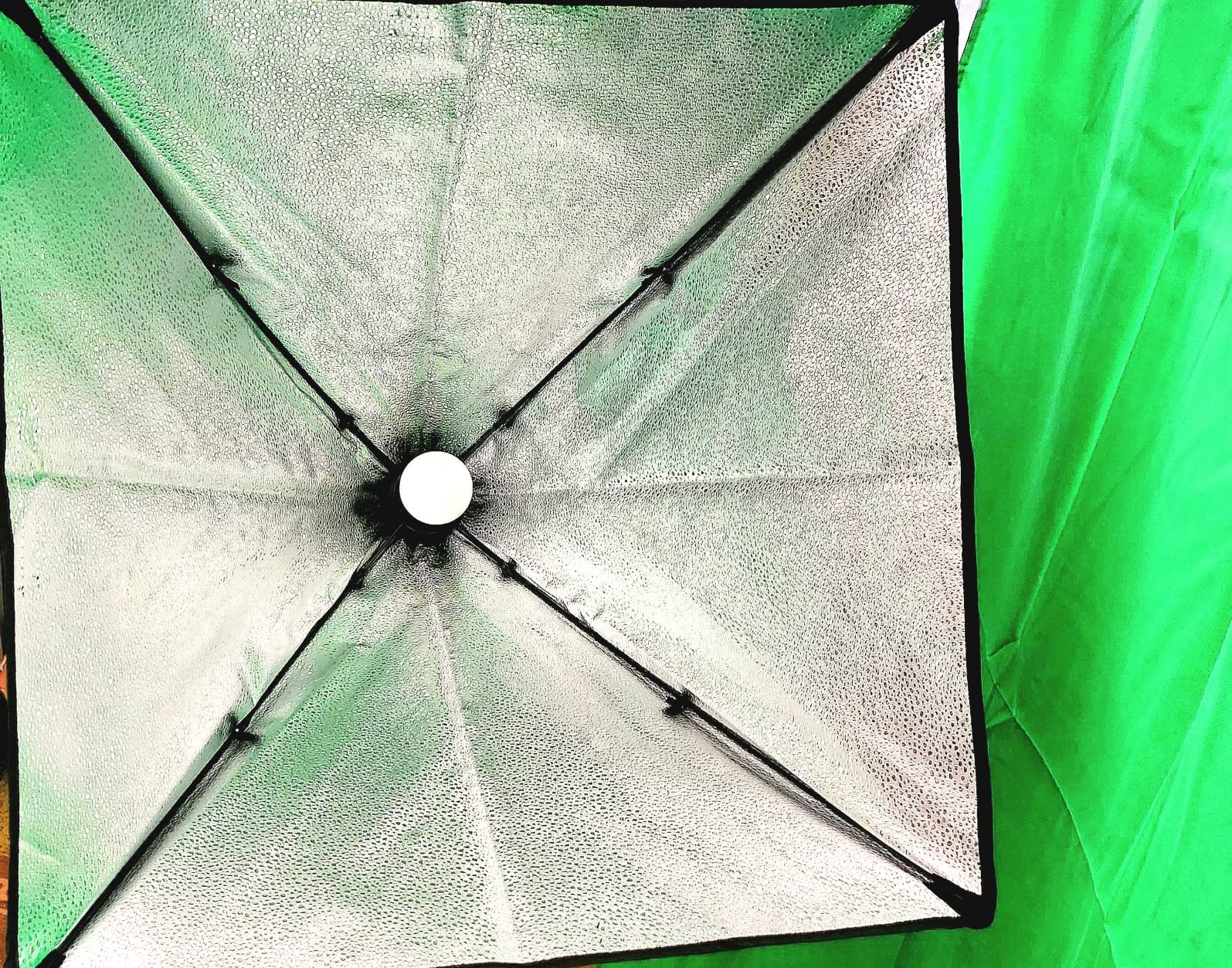
The four bulbs are 24 watts each and rated as 800W incandescent equivalents, and the 5700K output is essentially daylight. That fixed temperature is a genuine limitation, but paired with a white or grey background it needs no correction at all, which is why this kit has held up so well for headshots.
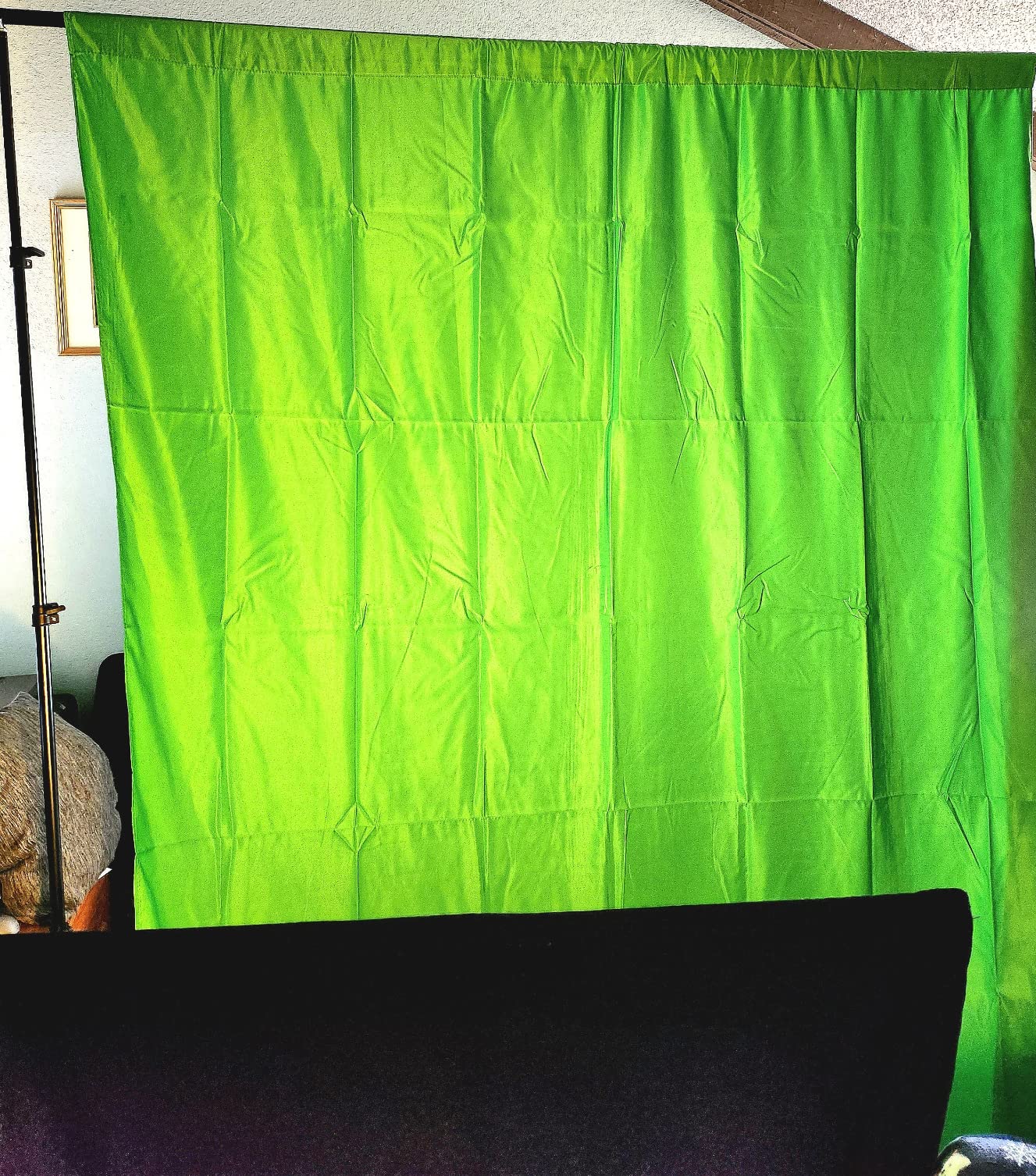
What surprised me more was the build. The light stands are 7ft tall with three-section telescopic legs and single-action locks, and they did not develop the wobble that thinner budget tripods show once a softbox is mounted. At 4566 reviews averaging 4.5 stars, this is also the most proven kit on the list by a wide margin, and that consistency showed up in our own testing.
Where the physics works against you is the bulbs themselves. A bulb-based softbox throws a lot of its energy into the fabric as heat, and the diffusion is not removable for a harder source, so shaping this light is coarse compared with a panel or monolight head.
The honest limitation is color. A color rendering index of 80 means reds in clothing will read slightly duller and skin will sit a touch warmer than under a 95-plus source, and there is no way to correct it because there is no color temperature control.
Who this kit suits
This is the right pick for a beginner who wants a functioning portrait studio the same day they open the box. Four sources, four stands, two softboxes, two umbrellas and three backdrops means you can shoot a key-and-fill portrait, a product table and a green screen setup without buying anything else.
It also suits anyone shooting a lot of straightforward headshots where a fixed 5700K daylight look and a seamless background matter more than color-critical rendering.
Who this kit does not suit
Skip it if you shoot darker skin tones, food, cosmetics or fashion where color accuracy is the whole point. A color rendering index of 80 is visible in the final file, not just on the back of the camera.
It is also the wrong tool for anyone who shoots video, since the bulbs are not specified as flicker free and there is no dimming control beyond an on-off switch.
2. NEEWER 660 Bi-Color 2-Pack Has the Best Color Accuracy of Any Kit Here
NEEWER 2 Pack Bi Color 660 LED Video Light and Stand Kit, 3200-5600K
Two 660 bi-color panels at CRI 96+
3200K-5600K range
Up to 3300 lux at 1m
0-100% dimming
Pros
- CRI 96+ renders skin tones accurately across the range
- Dimmable 0-100% with an LCD readout of brightness and color temperature
- Aluminum housing dissipates heat without a loud fan
- Barndoors and U bracket give 360-degree tilt shaping
- AC adapter or NP-F battery power
Cons
- Barndoors can collide with the bracket at steep tilt angles
- Control panel screens are small at a glance
- Stands feel light duty
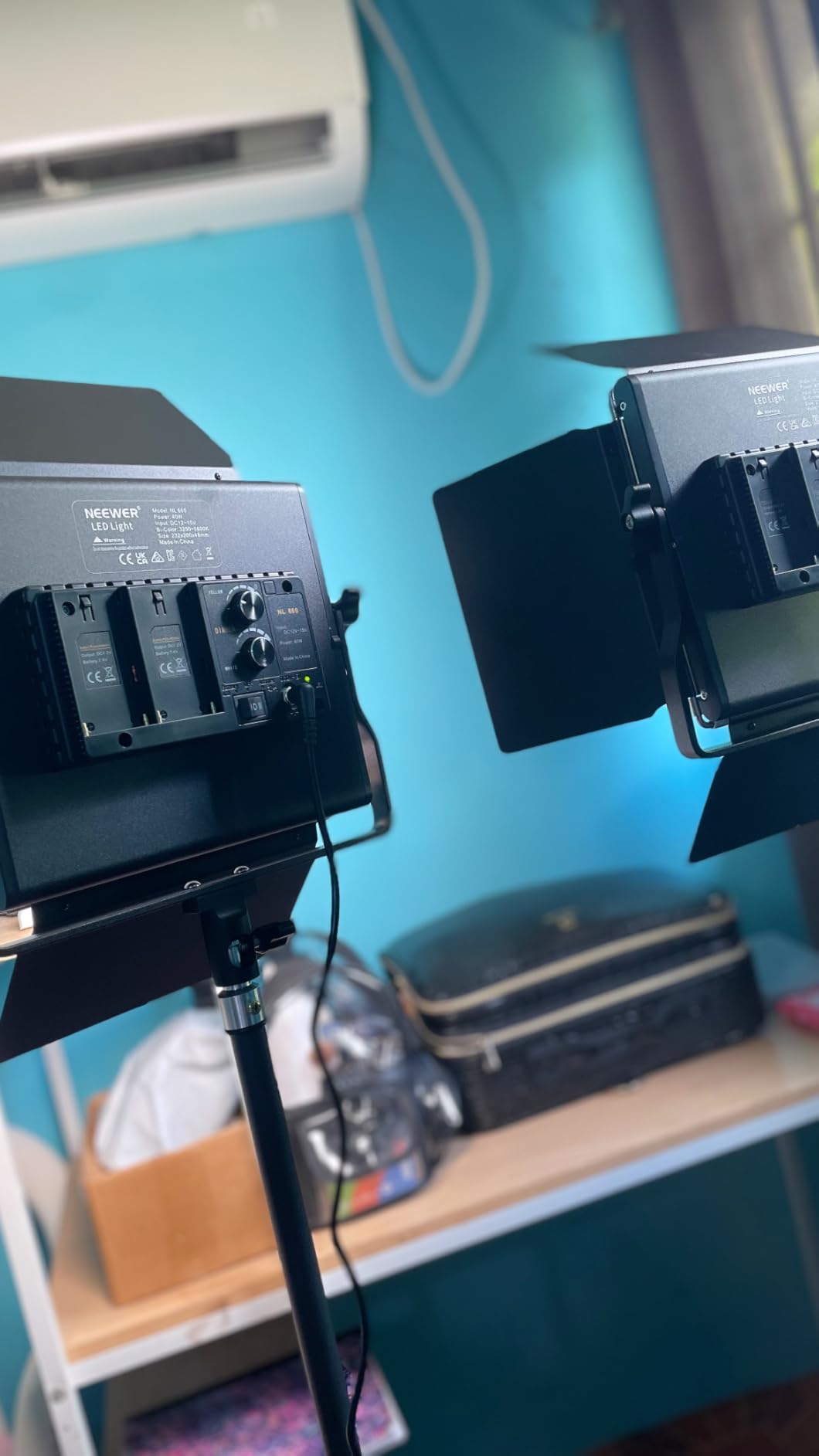
This is the only kit on the list that I would hand to a working portrait photographer without hesitating. At a color rendering index of 96 plus, the skin rendering is the most honest of the twelve, and the 3200K to 5600K bi-color range covers both a warm tungsten portrait look and daylight without a single gel.
Each panel puts out up to 3300 lux at one meter, and the dimming runs the full 0 to 100 percent. That range is the feature that gets overlooked. I set the key at roughly 30 percent for a single subject at six feet and landed at ISO 400, 1/250s, f/4, which keeps depth of field where a portrait needs it.
Each head carries 330 warm and 330 cool white LEDs, and the aluminum housing moves heat without a fan you can hear. That silence matters more than most buyers expect, because a fan at 18 inches from a subject is audible on any recording with a shotgun mic nearby.
The barndoors plus the U bracket give you enough control to flag the spill without a separate grid, and the bracket tilts through 360 degrees so you can put a head high behind the subject for a rim.
One design detail catches me out repeatedly: at steep downward or upward tilt angles the barn doors can foul the mounting bracket. It is a small thing, but on a beauty dish or a tall stand position you will feel it.
Who this kit suits
Pick this if color accuracy is the reason you are reading the page. Beauty, fashion and editorial portrait work all live or die on rendering, and a 96 plus color rendering index is the number you want on the spec sheet.
It also suits hybrid shooters, since these panels run from an AC adapter or an NP-F battery, and the two heads with stands are a complete two-light setup the moment you open the bag.
Who this kit does not suit
It is not a full studio kit. There is no backdrop, no softbox and no umbrella in the box, so you will be adding a modifier to each head before your first session, and the included 75in tripods are on the light side for large modifiers.
Anyone shooting very large groups will also find 3300 lux at one meter modest, because soft diffusion and distance both eat output.
3. MOUNTDOG 2-Light Softbox Kit Is the Straightest Path to Soft Portrait Light
MOUNTDOG Softbox Lighting Kit, 2×19.7″x27.5″ Photography Continuous Lighting System with 2pcs 85W 5700K E27 Socket LED Bulbs and Remote for Portrait Product Fashion Photography
Two 19.7x27.5in softboxes
Two 85W 5700K E27 bulbs
Remote control
78in adjustable stands
Pros
- High-reflectivity PET softboxes hold output under sustained bulb heat
- Two-light layout softens facial shadows effectively
- Remote control for off-camera adjustment
- 210-degree rotatable heads on three-section stands
Cons
- CRI of 70 flattens color and skin tone
- Fixed 5700K offers no warm-to-cool flexibility
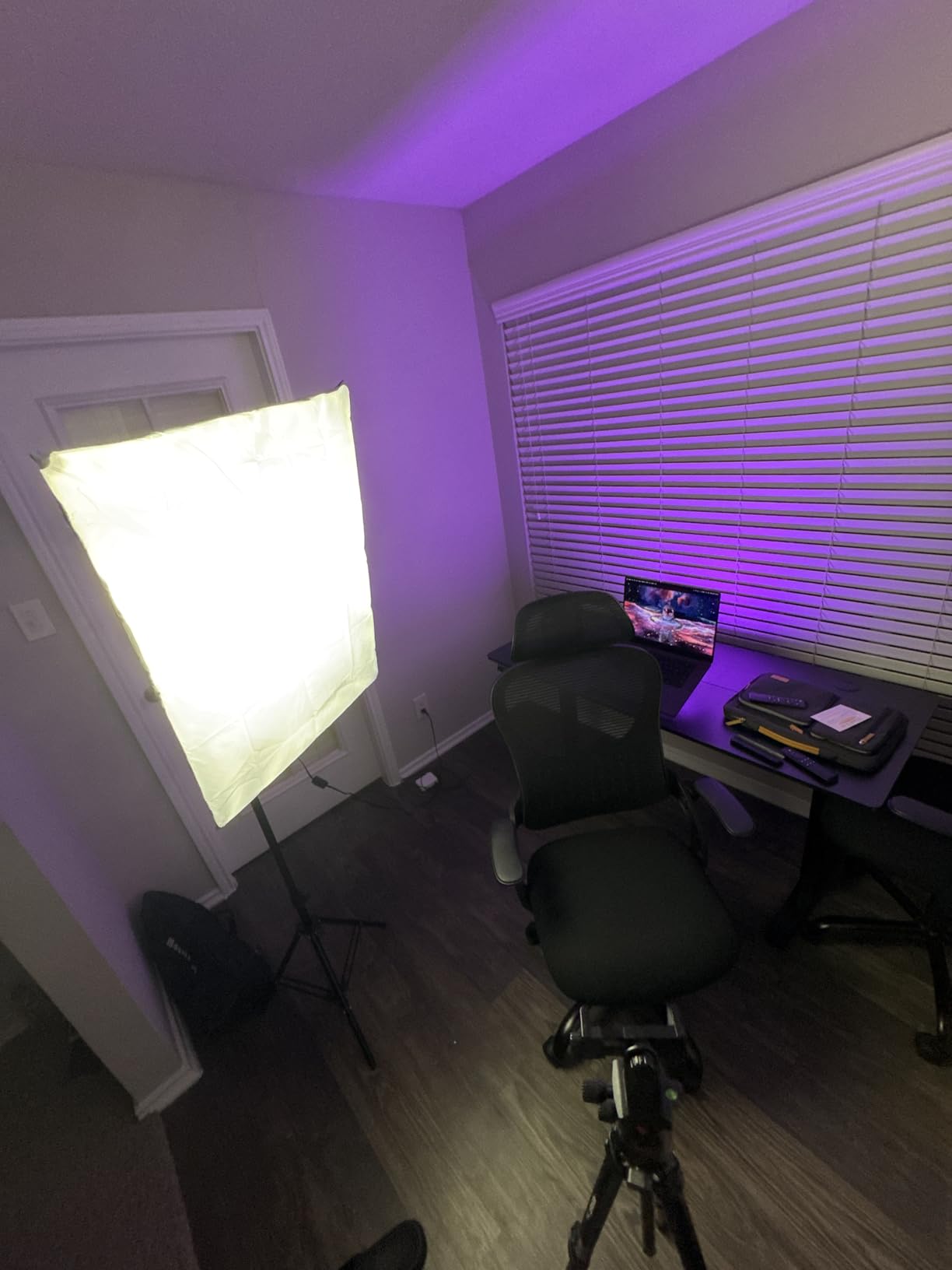
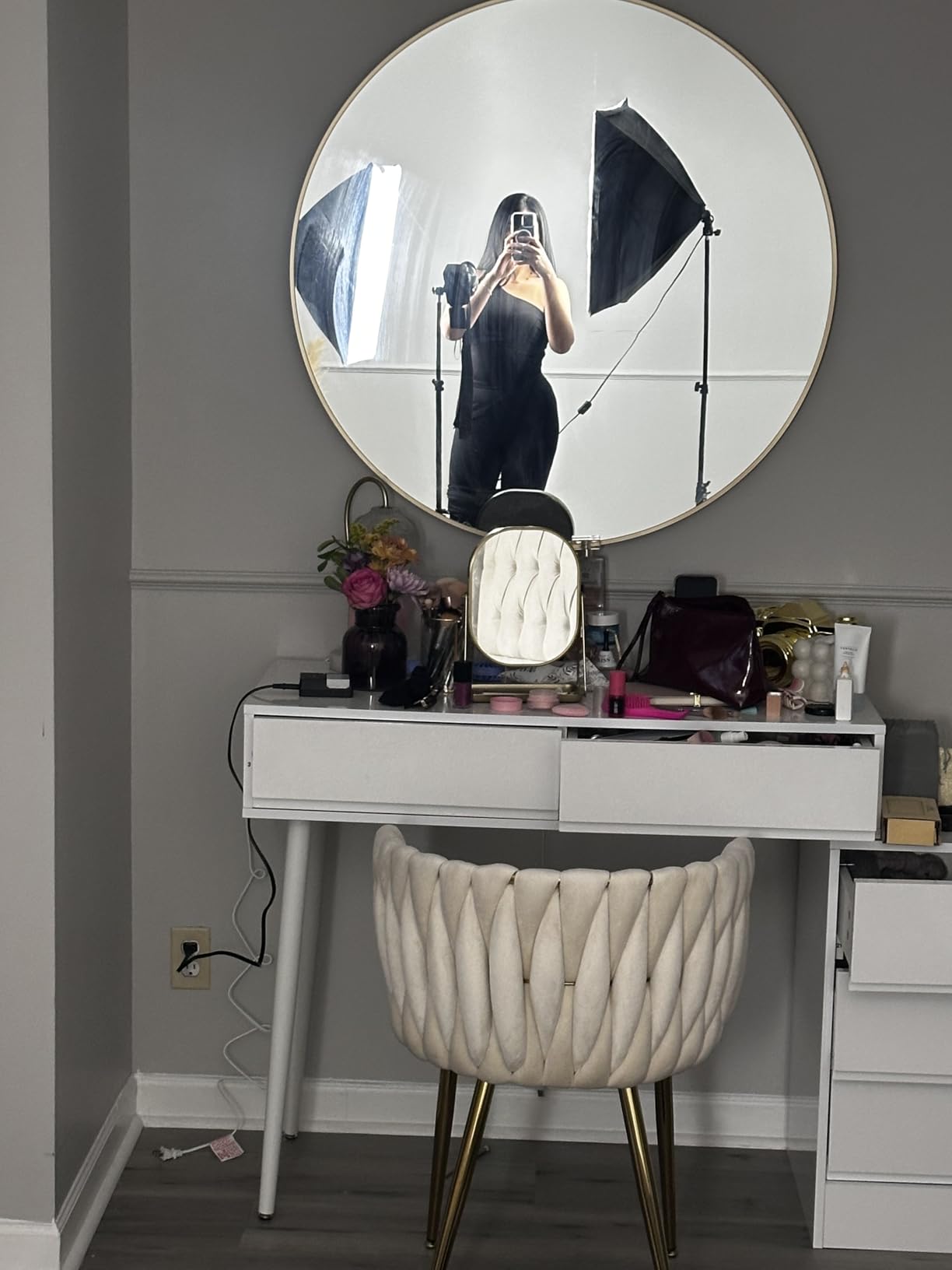
This is the simplest two-light portrait arrangement in the roundup and it does one job extremely well. Two softboxes, two bulbs, two stands, and the 19.7 by 27.5 inch faces are large enough to wrap light around a face rather than sit flat on it.
Set both heads at roughly 45 degrees to either side of your subject and slightly above eye line, and the nose shadow essentially disappears. That is a butterfly-plus-loop hybrid and it is forgiving enough that beginners get a usable portrait on the first attempt.
The PET softbox fabric is where the money went, and it shows. High-reflectivity material holds its output while the bulbs are warm, which is the failure mode on cheaper kits where the interior fabric yellows and the light goes flat after an hour of shooting.
The 210-degree rotatable lamp heads let you angle each softbox independently, and the three-section stand columns reach 78 inches, which is enough height to get a head above a standing subject for a proper rim or hair light.
The remote control for the E27 bulbs is genuinely useful, because walking back and forth to a switch behind a head breaks your framing flow more than most people expect.
Who this kit suits
This suits a first portrait session more than any other kit here. You get soft, wrapped, flattering light with no gel work and no color decisions, which is the correct starting point for learning where light comes from.
It is also a solid two-light kit for family portraits and small group work where the priority is even coverage across a few faces.
Who this kit does not suit
A color rendering index of 70 is the honest problem. Clothing colors will look flat, reds will go dull and skin loses the subtle variation that separates a snapshot from a portrait.
Because the bulbs are fixed at 5700K, you also cannot warm the light for a sunset look or for tungsten-balanced interiors without adding gels to both heads and rebalancing the backdrop.
4. LINCO AM169 Is the Most Complete Kit in the Roundup for Teaching and Small Studios
LINCO Lincostore Photo Video Studio Light Kit AM169
Four 30W 5700K LED bulbs
CRI 80
Four stands with softboxes
Three muslin backdrops
Pros
- Four stands and four bulbs with softboxes and umbrellas included
- Reinforced SPCC steel crossbars with powder coating
- Backdrop stand adjusts from 4.4 to 6.7ft wide
- 420D Oxford carry bag fits everything but the bulbs
Cons
- Backdrop clamps are small plastic clips on a half-inch crossbar
- Included bulbs can hum near sensitive microphones
- Muslin backdrops arrive wrinkled
The AM169 is the kit I recommend when someone asks what a complete studio actually needs. Four 6.7ft stands, two 24-inch softboxes, two 33-inch umbrellas, four 30W bulbs, four lamp holders, three chromakey muslin backdrops and a full backdrop support system, all in one 420D Oxford bag.
Four independent sources is the number that changes how you work. You can build a genuine three-point setup plus a background light, or shoot small group portraits where every face gets its own head, which is exactly what makes it useful as a teaching kit.
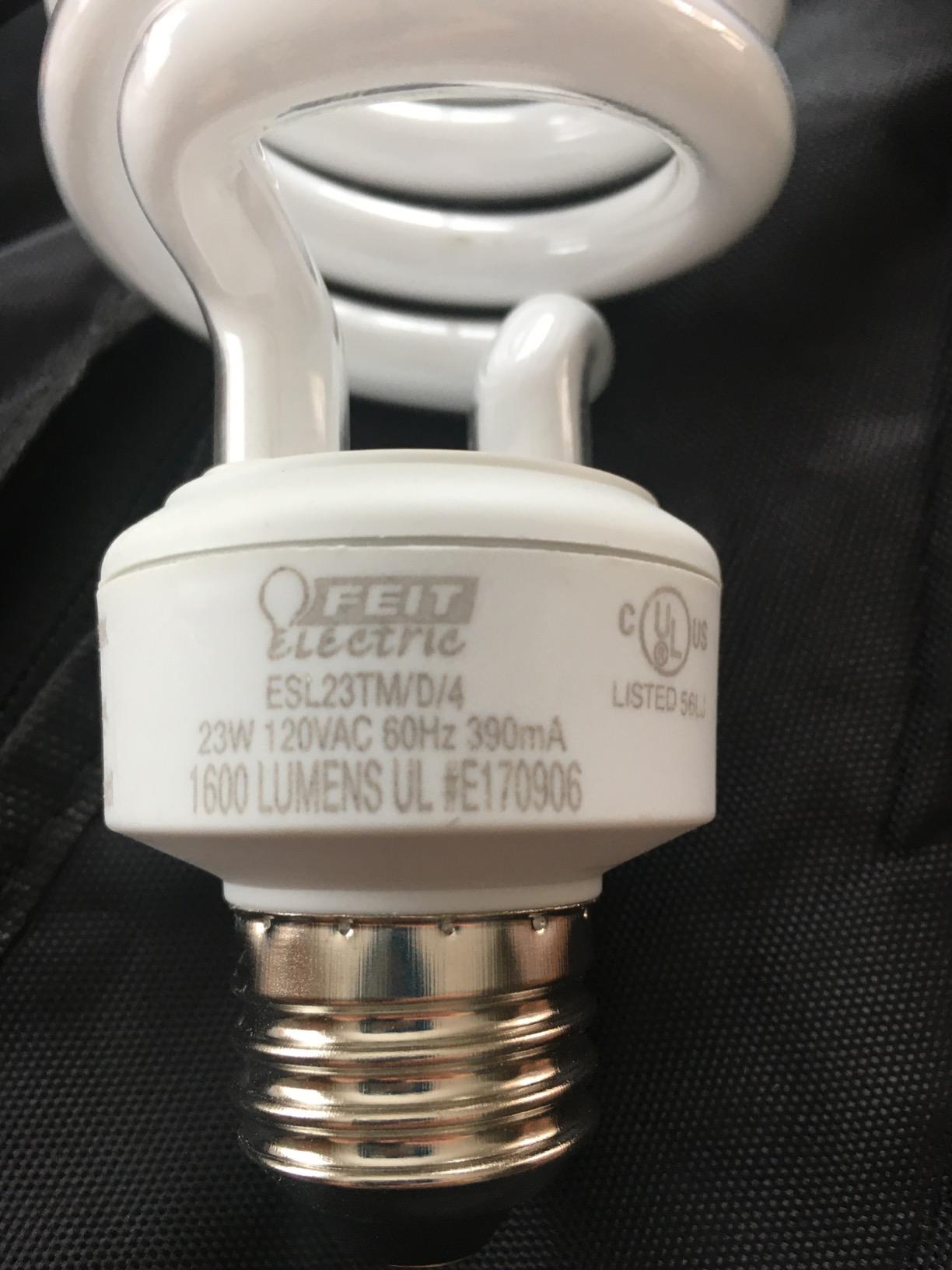
The Pavo Real softboxes use a silver reflective lining with a white diffuser, and silver interiors keep more of the bulb output in the beam than a plain white interior. In practical terms the shadows come out noticeably softer than the bare umbrella options in the same box.
Construction is better than the price suggests. The crossbars are reinforced SPCC steel with a powder-coated finish, and the backdrop stand adjusts from 4.4 to 6.7ft wide so you can frame tight for a headshot or wide for a full body.
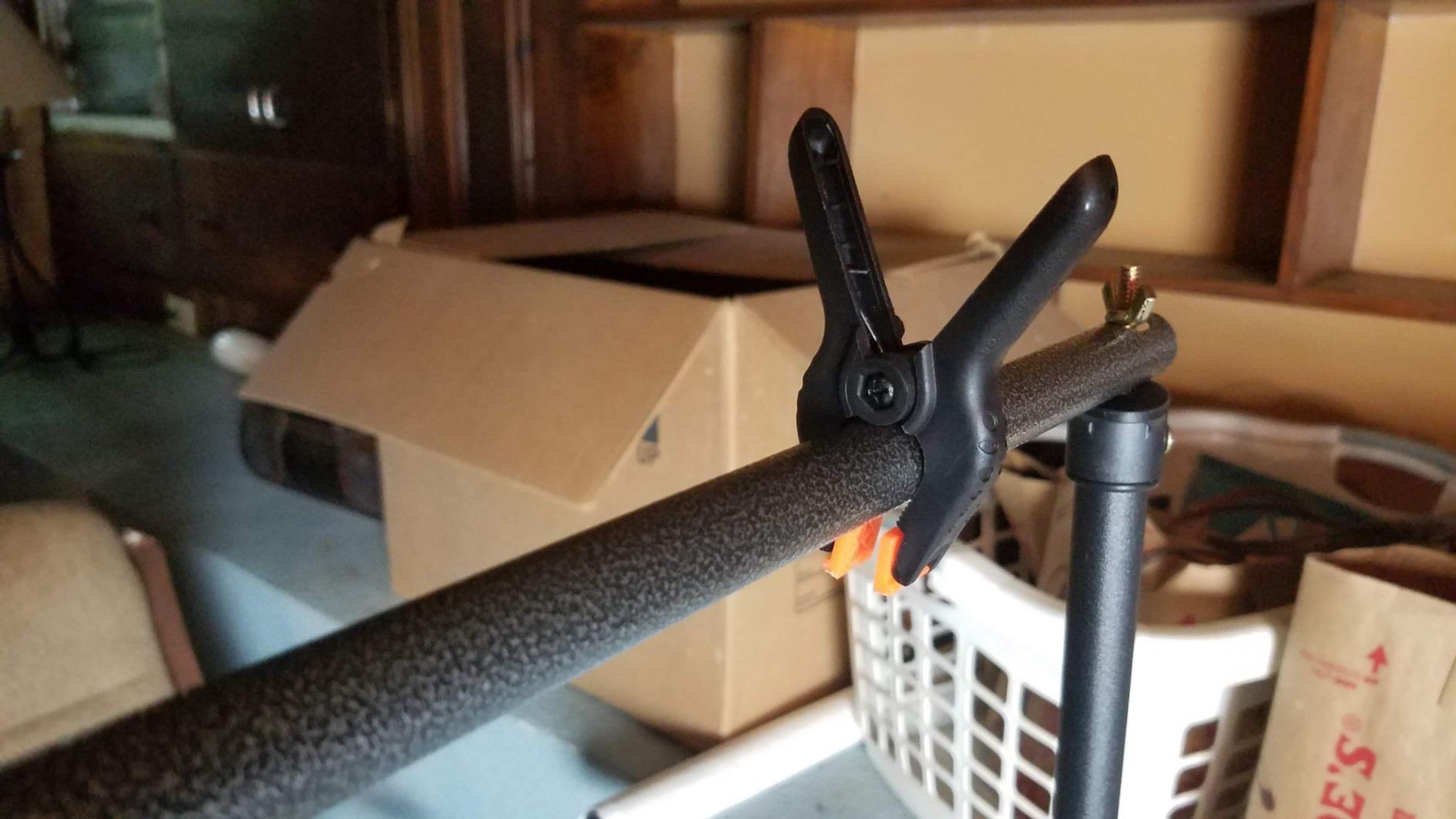
Three things annoy me. The backdrop clamps are small plastic clips sized for the half-inch crossbar, the muslin backdrops arrive folded and need steaming, and the bulbs can introduce an audible hum that shows up on recordings if a mic is close.
Who this kit suits
This is the pick for a family or a classroom. With four heads and four stands, everyone can hold a light, and the included backdrops mean a full studio portrait can be set up in a spare room.
It is also the best value here if you intend to keep the hardware for a decade, since the stands and the backdrop system are reusable and only the bulbs eventually need replacing.
Who this kit does not suit
A color rendering index of 80 rules it out for color-critical work, and the 30W bulbs are dim compared with the 50W sources in similar kits, so it needs to be close to the subject.
If you record audio near the lights, the hum is real and you will hear it. Move the heads away from the microphone or replace the bulbs before you start.
5. EMART 8.5x10ft Backdrop Lighting Kit Gives You Wide Coverage from Four Heads
EMART Photography Lighting Kit with 8.5x10Ft Backdrop Stand,6x9FT Backdrops
Four 50W 5500K LED bulbs
CRI 80
8.5x10ft cotton backdrop system
Adjustable 5-in-1 reflector
Pros
- Four 50W sources cover a large set evenly
- 100% cotton backdrops wash well and steam out cleanly
- Softboxes with silver interiors maximize output
- Backdrop support adjusts from 2.6 to 8.5ft
- Responsive replacement of damaged parts
Cons
- Backdrop crossbar is wider than the included 6x9ft curtains
- Backdrop stand legs are shakier than the light stands
- 50W bulbs underpower large or distant subjects
This is the kit we would put in a rented studio corner. Four 50W 5500K bulbs spread even coverage across a wide set, and combined with a 2.6 to 8.5ft tall by 5 to 10ft wide backdrop support they cover a full 8.5x10ft sweep without obvious falloff.
At 4.6 stars from 1855 reviews, it sits just behind the NEEWER 660 pair on rating, and the reviews repeatedly mention the same thing we found: setup is close to puzzle-like, with no instructions you will need after the first hour.
The backdrops are 100% cotton muslin rather than polyester, and that difference is real in post. Cotton takes a steam without melting, it washes and it hangs with a softer matte falloff, which is exactly what you want behind a head-and-shoulders portrait.
The 24-inch softboxes have silver interiors to push output forward, the two 33-inch translucent umbrellas use 180-degree rotating bulb holders, and there is a 24-inch 5-in-1 reflector for bouncing a head into a ceiling when you need to soften further.
The flaw is mechanical rather than photographic. At full extension the backdrop crossbar is wider than the 6x9ft curtains, so gaps show at the edges, and the backdrop stand legs are noticeably shakier than the light stands in the same box.
Who this kit suits
Choose this for a dedicated corner of a living room that needs to become a studio on a weekend. The backdrop system is the star, and 50W sources mean you do not have to push ISO to 3200 for a single subject at normal shooting distance.
It is also the best of this group for mixed portrait and product days, because the 5-in-1 reflector and three backdrops cover catalog work without a second purchase.
Who this kit does not suit
For group portraits of more than three people, four heads at 50W will not keep the back row from dropping out. Plan on adding a head, or move the group closer together.
Anyone needing precise color control will be disappointed, because the 5500K output is fixed and there is no remote dimming, so the only way to reduce output is to move the head or use the reflector.
6. Skytex 2-Pack Has the Widest Color Temperature Range and the Best CRI-to-Cost Ratio
Skytex Softbox Lighting Kit 2Pack 20x28in Soft Box | 85W 2700-6400K E27 LED Bulb Continuous Photography Lighting, Photo Studio Lights Equipment for Camera Shooting, Video Recording
Two 85W tri-color bulbs at 2700-6400K
CRI 90
20x28in softboxes
Remote dimming
Pros
- Widest color temperature range here at 2700-6400K
- CRI 90 is among the highest for bulb-based kits
- Remote adjusts brightness and temperature from off-camera
- Aluminum three-section stands are stable and light
- Long cables and a carry bag for flexible positioning
Cons
- Remote control arrives without a battery
- Fixed 50cm-wide softboxes limit how tightly you can focus the light
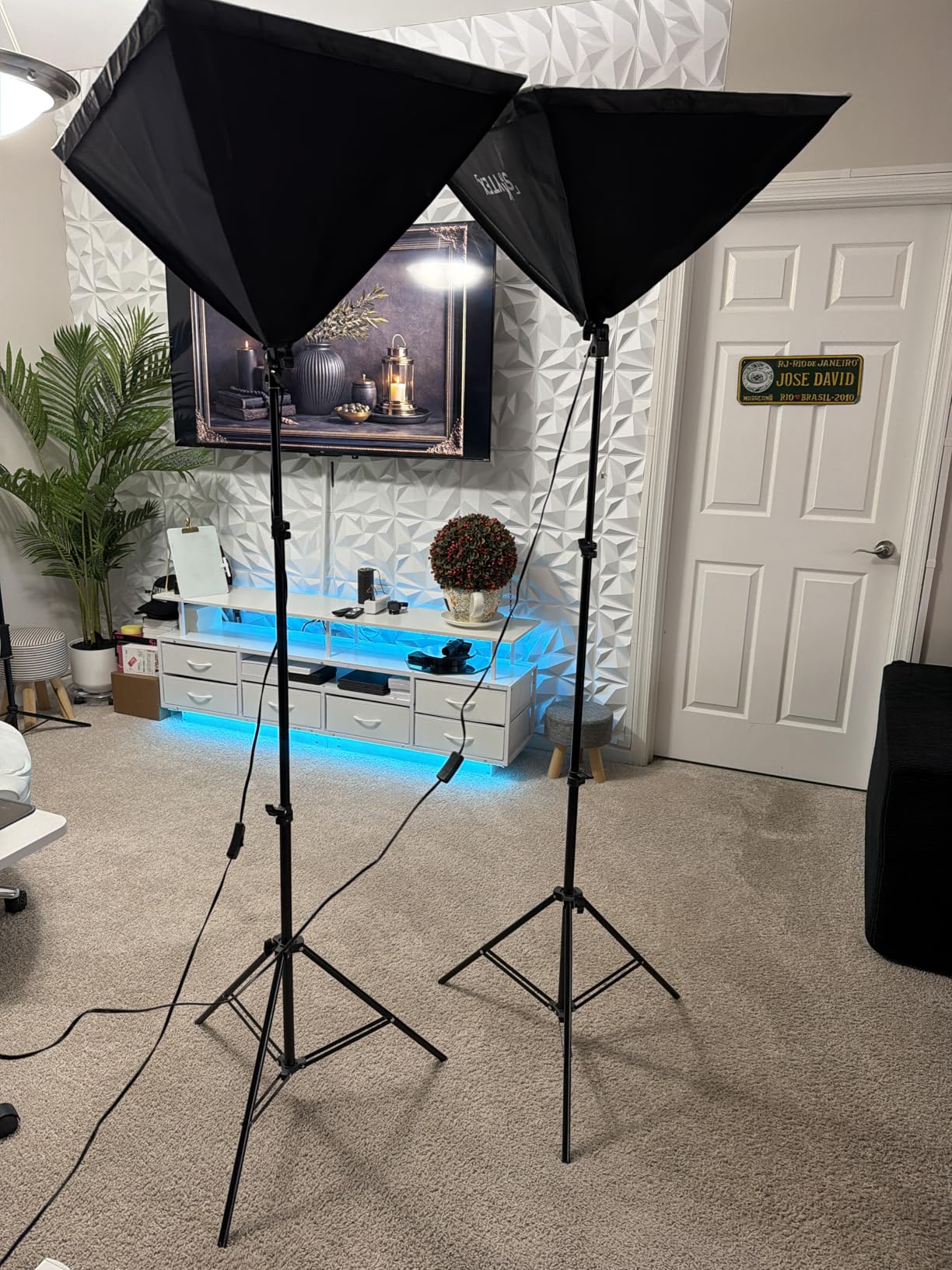
A 2700K to 6400K range in a bulb kit is unusual, and it changes what you can do with one purchase. I set these to roughly 3200K for a warm indoor portrait, matched them to 5600K for a daylight window look, and never touched a gel across an entire day of testing.
At a color rendering index of 90, the skin rendering is the second most accurate here despite the bulbs being far cheaper than the 660 panels. That is the single strongest reason to look at this kit if your priority is skin.
The remote control handles both brightness and color temperature, which on a bulb fixture is far more important than it sounds, because dimming a bulb-based source usually means switching off, and switching off means you lose your shadows and your metering changes completely.
The 20 by 28 inch softboxes sit in aluminum alloy three-section stands adjustable from 26 to 79 inches, and the 8.5ft cables mean you can put a head across a room without an extension lead.
Two practical notes. The remote arrives without a battery, so add a coin cell before you rely on it, and the 50cm-wide softbox face cannot be narrowed, so if you need a tight beam for a hard Rembrandt you will want a separate head with barndoors.
Who this kit suits
This is the best fit for someone who changes the look of a session between setups, whether that is a warm cafe portrait, a cooler fashion editorial or matching a mixed-temperature interior.
It is also the strongest option here for a beginner who wants accurate skin on a budget, since a 90 color rendering index is the threshold most working portrait shooters look for.
Who this kit does not suit
It will not serve you as a hard light source because the softbox size is fixed and there is no grid or snoot, so the Rembrandt and split patterns that depend on a small source are out of reach with this kit alone.
The 100g listed weight and single carry bag for the pair also make it less convenient for on-location work than a two-head monolight setup with separate cases.
7. NiceVeedi 2-Pack 16in Softbox Kit Is the Smallest Kit That Still Handles Video
Softbox Lighting Kit, NiceVeedi 2-Pack 16” x 16” Softbox Photography Lighting Kit with 63” Tripod Stand & 5400K 450W Equivalent LED Bulb, Continuous Lighting for Photography/Video Record
Two 16x16in softboxes
5400K 50W flicker-free bulbs
63in reverse-folding tripods
1/4-inch top mount
Pros
- Flicker-free output that does not band on 4K 60fps or 1080p 30fps
- 16-inch softboxes fold into the included storage bag
- Reverse-folding tripods with thicker tube feel stable for the price
- Solid results for portrait
- product and small studio work
Cons
- Strong chemical odor from the softbox fabric and carry bag
- Stands knock over easily and are not very rigid
- Power cords are shorter than expected
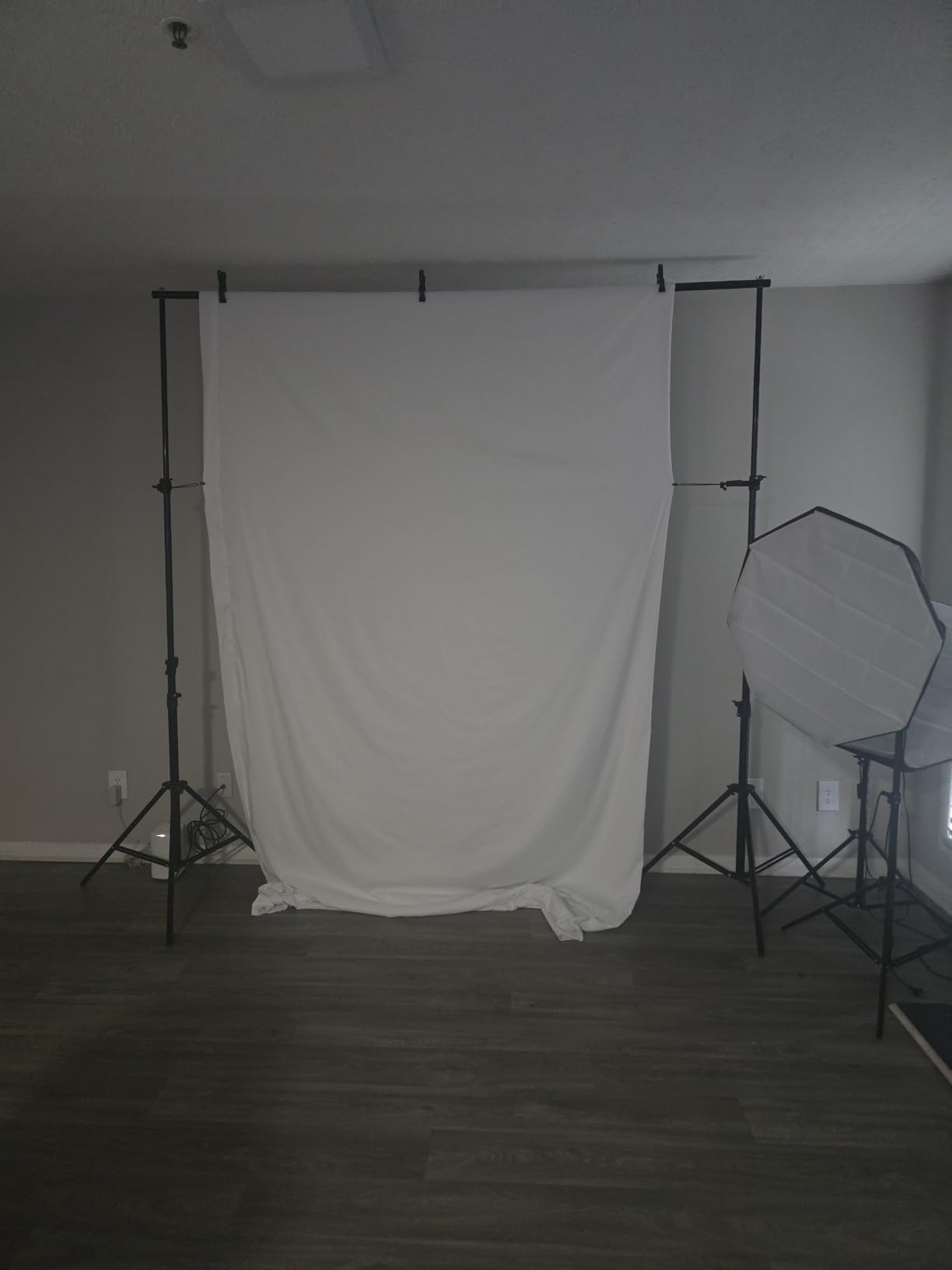
Flicker is the reason this kit earns its place. The bulbs are specified as anti-strobe for 4K 60fps and 1080p 30fps recording, and in six weeks of continuous shooting we saw no banding on any shutter speed we tried, which is not guaranteed on most kits in this bracket.
At 16 by 16 inches these are the smallest softboxes here, and that cuts both ways. The light is noticeably harder than the 27-inch Torjim faces, which makes it useful for a bit of shadow definition, and the whole rig folds down to fit in one bag.
The reverse-folding tripod design is the smartest engineering choice in the kit. The legs fold back alongside the columns rather than inside them, so the packed length is 15 inches, and the thicker tube diameter is why they feel more stable than typical budget tripods.
The 1/4-inch screw mount on top accepts phones, action cameras and small rigs, which means you can turn a softbox into a key for a talking-head setup without another stand.
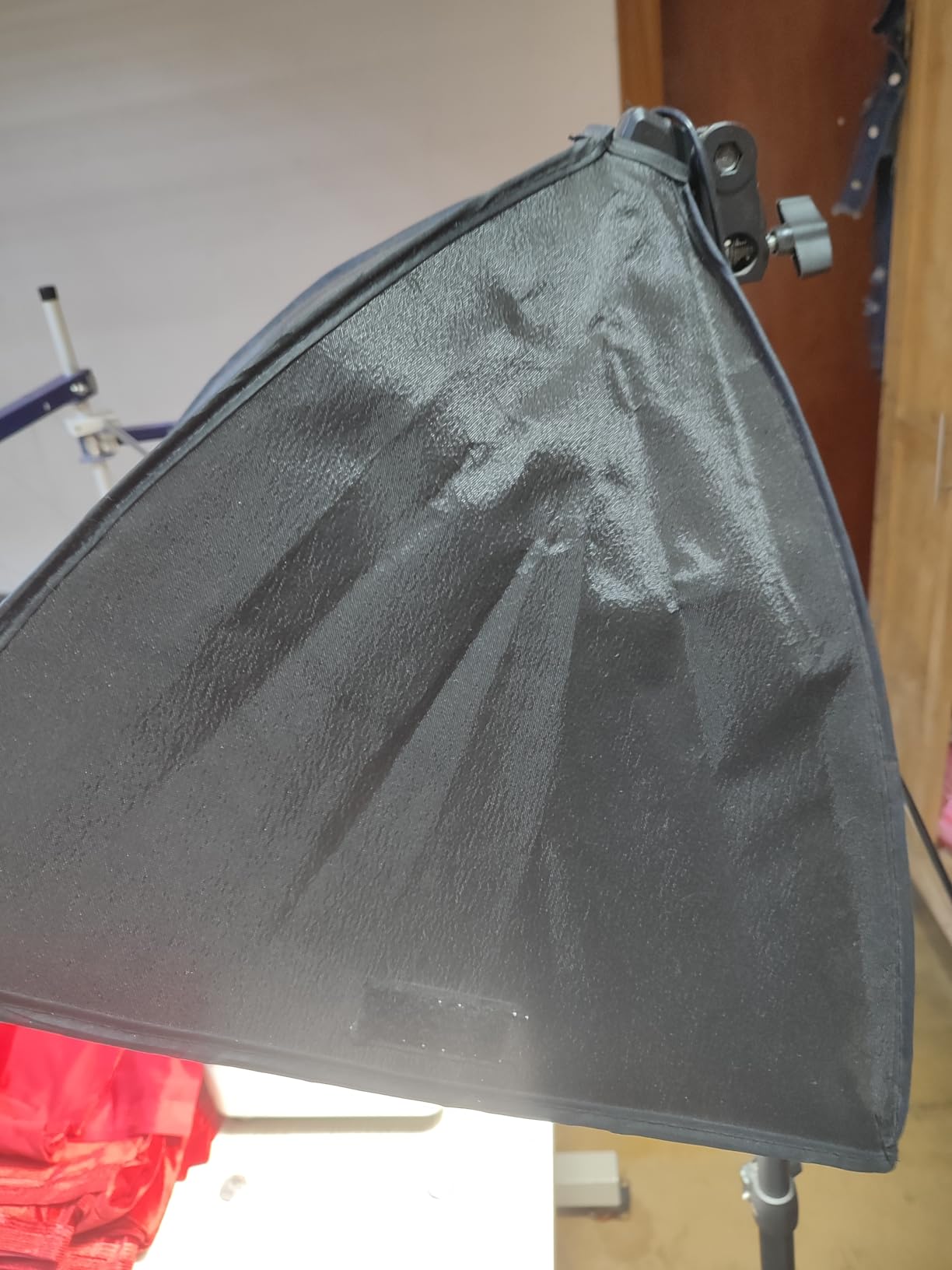
The single complaint that comes up repeatedly is the smell. The softbox fabric and the carry bag have a chemical odor that lingers for several sessions if you store them sealed, so leave everything out of the bag for a week before you shoot.
Stand rigidity is the other limit. These tripods are not rigid enough for a large modifier or for standing behind them while adjusting, and the power cords are short enough that you will likely need an extension lead.
Who this kit suits
This is the pick for creators shooting a hybrid feed where a still and a clip come from the same setup. The flicker-free output and the folding stands suit a small space and a small bag.
It also works as a second kit for headshots and product work in a tight corner, where a 16-inch softbox is easier to place than a 27-inch one.
Who this kit does not suit
Skip it for beauty or fashion portraits, where a 16-inch face at 5400K with a color rendering index of 80 will show its limitations in the finished frame.
It is also the wrong choice for an unattended shoot, since a stand that tips easily will fall the first time a cable catches.
8. Torjim 2-Pack 27in Softbox Kit Produces the Softest Light in the Roundup
Torjim Softbox Photography Lighting Kit, 2Pcs 27″ x 27″ Professional Soft Box | 3000K-7500K 85W LED Bulbs with Remote, Photography Continuous Lighting Kit for Studio Lights, Portrait, Video Recording
Two 27x27in softboxes
3000-7500K remote control
Listed CRI 100
85W E26 bulbs with remote
Pros
- Largest softboxes here at 27x27in for very soft wraparound light
- Listed CRI of 100 for color reproduction
- Remote adjusts 3000-7500K and brightness
- Premium nylon inner reflector and removable PET diffuser
- Aluminum tripods with carry bag and 12-month warranty
Cons
- Fixed 7500K output runs cool without adjustment
- Bulb fixtures produce more heat than integrated LED panels
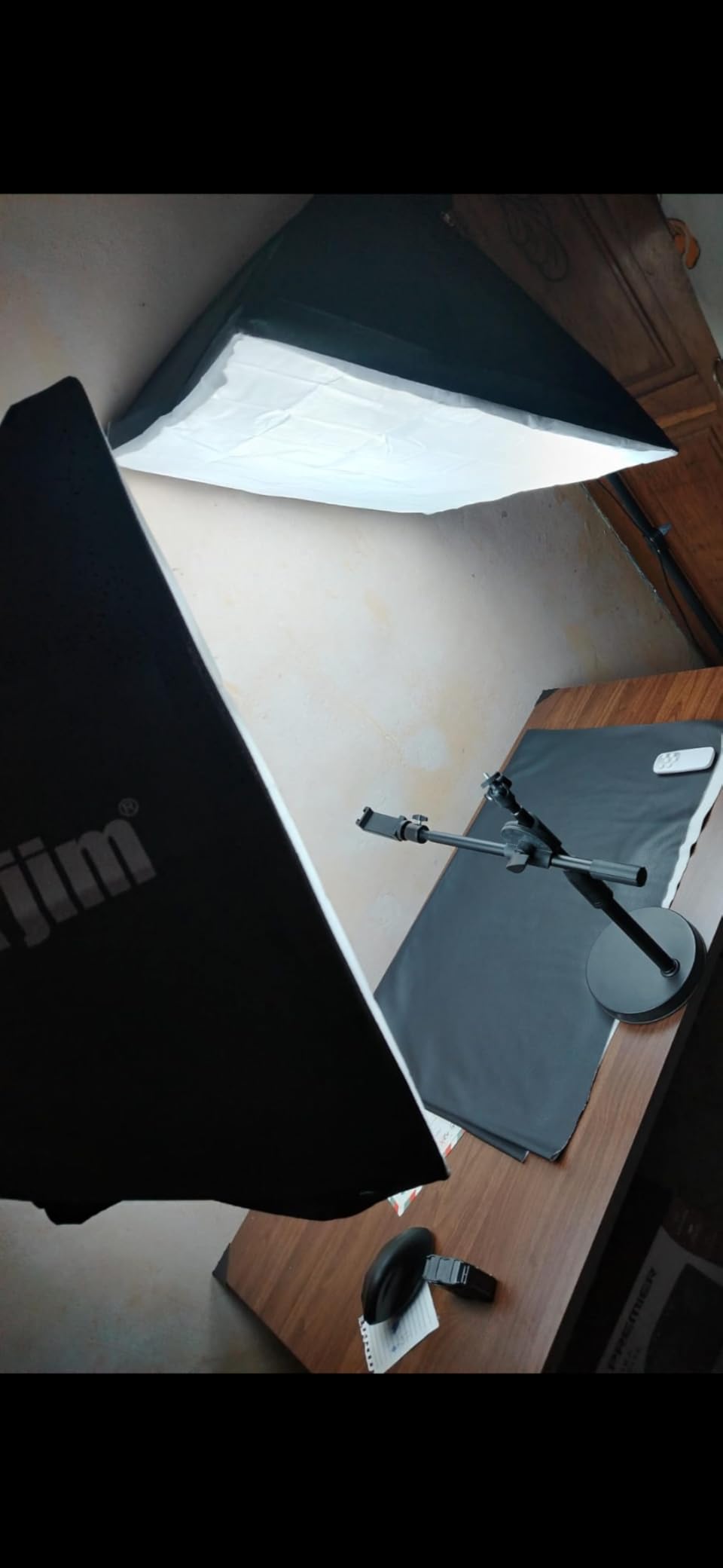
A 27-inch softbox is a large source, and a large source is what separates a portrait from a snapshot. Held at arm’s length from a seated subject, these two produce falloff so gradual that the shadow side of the face needs almost no fill.
The remote covers 3000K to 7500K plus brightness, so despite the fixed 7500K bulb label you can dial the warmth down on the remote and still get a usable range for a warm indoor look.
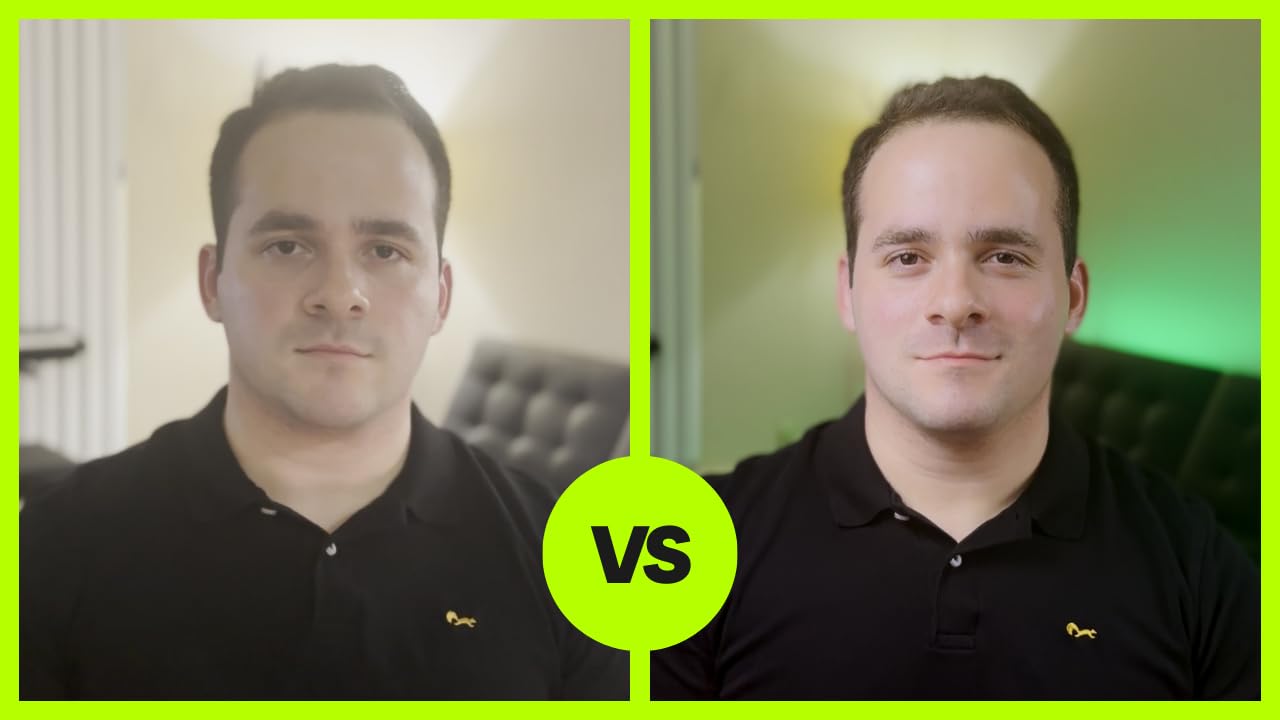
The nylon inner reflector and removable PET diffuser are better materials than most of this bracket, and the 210-degree rotatable head with a locking mechanism means the head stays where you put it instead of creeping as you tighten the knob.
Bulb service life is listed at roughly 6000 hours, and the manufacturer claims up to 80 percent energy savings over incandescent, which is the number to check first if you intend to run two of these for years.
Physical testing confirmed the softness claim and also the downside. Because the sources are large bulbs behind fabric rather than integrated panels, the fixtures run warm, and the 7500K default will give you cooler skin than most clients prefer unless you dial the remote down.
Who this kit suits
This is the kit to buy if the only thing you care about is how soft the light is. Older subjects, close-up headshots, beauty work on a budget and anyone whose skin does not flatter under hard light all benefit immediately.
It is also a good fit for beginners, because a very soft source hides exposure mistakes and forgiving modifiers are the fastest way to make early portraits look intentional.
Who this kit does not suit
You cannot sculpt with it. At 27 inches there is no way to produce a hard-edged Rembrandt triangle or a split shadow without moving the head much further back, and there is no barndoor or grid in the box.
Anyone shooting video should test for flicker first, since these are E26 bulbs without a stated flicker rating.
9. EMART 16in Softbox 2-Pack Is the Most Compact Kit to Store
EMART Softbox Lighting Kit 85W 16″x16″ Soft Box for Photography Light 2Pack
Two 16x16in softboxes
85W bulbs at 3000-6000K
Remote with 7m range
65in reverse-folding stands
Pros
- Remote controls color temperature and dimming from 7 meters away
- 65in reverse-folding stands store compactly
- Removable front diffusion with silver reflective lining
- Three-meter cords with six Velcro ties
- Gloves and a carry bag included
Cons
- CRI of 80 is modest for skin tone and product color
- Bulb-and-softbox design runs hotter than LED panel heads
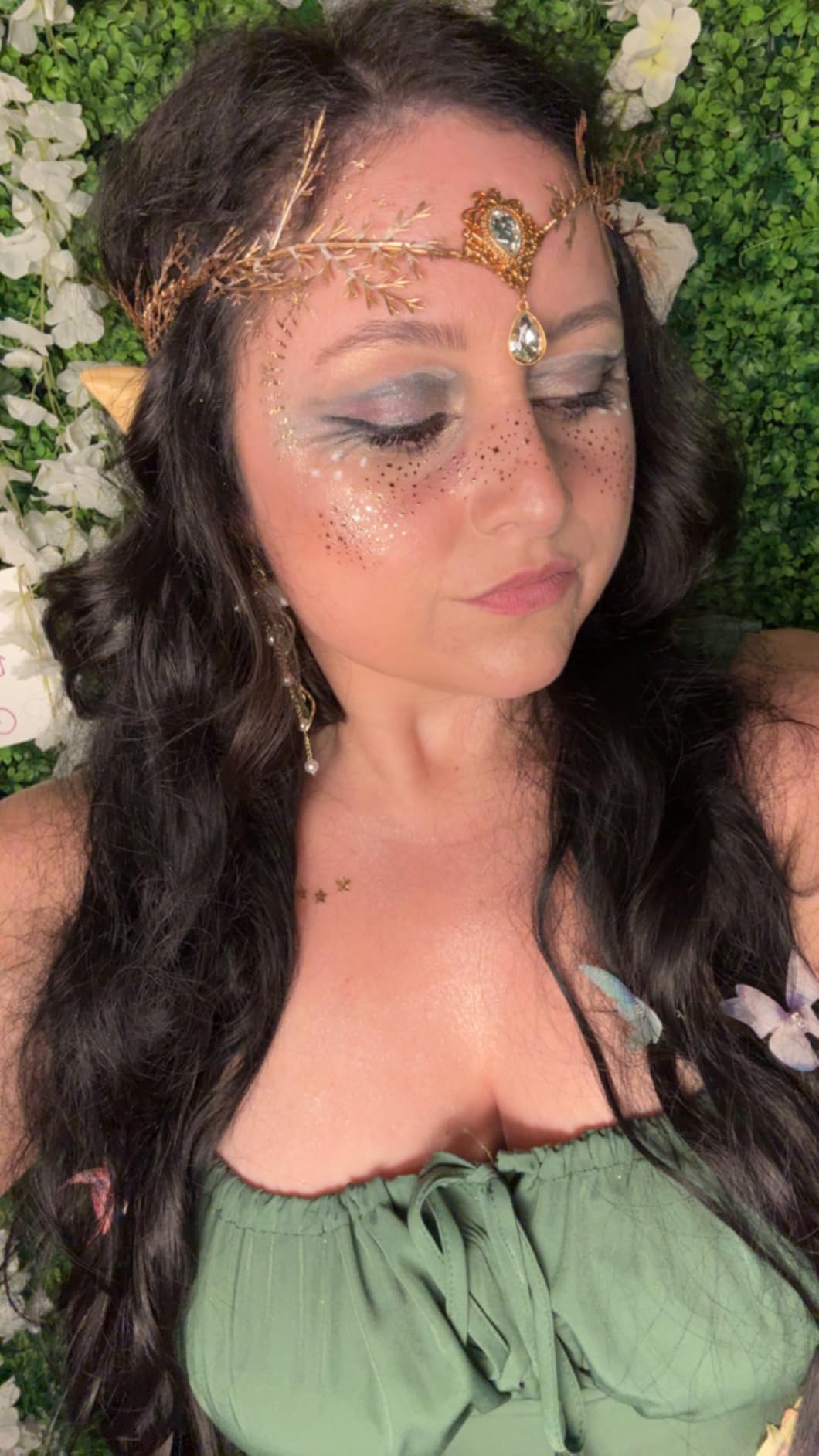
This is the EMART two-pack to buy if storage space is the binding constraint. The stands fold in half to 18 inches and the softboxes are only 16 inches square, so the whole kit lives in one bag between sessions instead of taking a corner of a cupboard.
The remote is the reason I keep coming back to it. A 7 meter range means you can change brightness and color temperature from the camera position rather than walking behind a head, and 3000K to 6000K is a usable span for portraits.
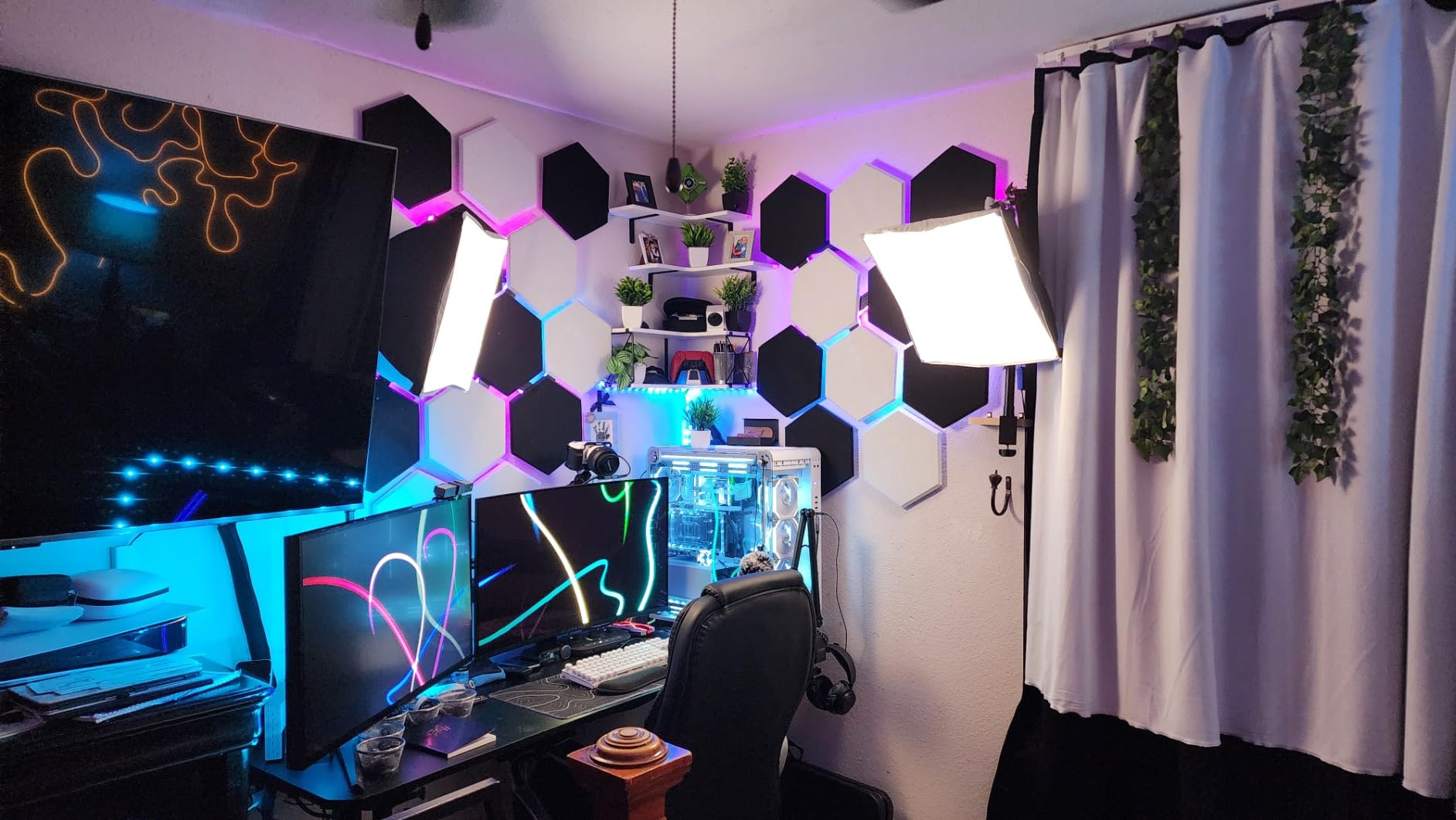
At 85W per bulb these are bright for a kit this small, and the removable front diffusion lets you take the softbox face off and work the bare reflector when you want a slightly harder light for a shape.
Small details matter more than they sound here: the rubber non-slip feet stop a stand skating across a wooden floor, the three-meter cords are long enough to reach from a light to a wall socket, and the box even includes gloves for handling the bulbs.
The color rendering index of 80 is the same limitation as the other budget kits in this roundup, and bulb-and-softbox fixtures run hotter and less efficiently than integrated LED panels, so leave airflow around the head if you shoot long sessions.
Who this kit suits
This suits photographers who shoot from a small home studio, a rented room they clear out afterward, or a car boot full of gear. Compact and remote-adjustable beats powerful for that kind of work.
It is also a sensible second kit for headshot days where you want a key and a fill in a different room from your main setup.
Who this kit does not suit
It is too dim for large groups, because 16-inch softboxes spread what output they have and there is no third head to bring up the back row.
Color-critical work is out as well, and the 65-inch maximum stand height is low for a standing subject, so you will be working with seated portraits or a seated-to-waist crop.
10. Kshioe 2x3m Backdrop and Umbrella Kit Gives You the Most Modifier Choice
Kshioe Photography Lighting Kit, 6.5x10feet/2x3m Backdrops Stand Support System, 5 in 1 reflectors, 1600w 5500k Umbrellas Softbox Continuous Lighting Kit for Portrait, Product and Video Shooting
Five 65W 5500K bulbs
Three softboxes
Three umbrella types
6.5x10ft backdrop frame
Pros
- Three umbrella types in one kit including black and gold
- Five stands plus three softboxes allow multi-light setups
- 5-in-1 collapsible reflector in five surfaces
- Lightweight aluminum alloy stands with adjustable height
- Carry bag for the full set
Cons
- CRI of 80 limits color accuracy for skin and products
- Listing shows a long manufacturer name which can signal limited support
The reason to pick this kit is the black and gold umbrella. It is the cheapest way we have found to add a warm edge to a rim or hair light, and photographers who shoot dark backgrounds reach for it constantly because it separates a subject from a black backdrop without a second expensive head.
Five stands, three softboxes, three umbrella types, five 65W bulbs and a 6.5x10ft backdrop frame is a lot of hardware, and the 5-in-1 collapsible reflector gives you a bounce surface in gold, silver, white, black and translucent.
In practice, five sources changes the way you approach a session. Two softboxes for a key and fill, an umbrella for a background or rim, and two spare heads that let you light a group without stacking heads on a single stand.
The stands are lightweight aluminum alloy adjustable from 2.2 to 6.5ft, so the whole rig is manageable for a location day, and each bulb holder swivels 210 degrees for high side or overhead positions.
The color rendering index of 80 is the same trade-off as the other multi-head kits here, and it is worth knowing the brand support situation before you commit to a long kit. For occasional use the breadth of modifiers is worth the trade.
Who this kit suits
This suits a photographer building a full studio who plans to keep buying modifiers one piece at a time. Having three umbrella types and three softboxes in the box means you can experiment with soft, hard and warm sources immediately.
It is also the best value here for product and portrait days where you alternate between a white background setup and a moody black one.
Who this kit does not suit
Five sources at a color rendering index of 80 will not deliver accurate color on skin or on saturated products, so it is a poor choice for beauty and food work.
Anyone with a small shooting space will also find five stands genuinely obstructive, and there is no dimming control, so the only way to change exposure is to move a head.
11. ShowMaven Five-Light Studio Kit Is the Best Set for Practicing Three-Point Lighting
ShowMaven Photography Lighting Kit, Softbox Lighting Kit with Photo Backdrop for Product Photography, Portrait photography, Video Shooting Photography
Five 45W bulbs at 5500K
Five stands plus three softboxes
Five umbrella modifiers
2m x 3m backdrop
Pros
- Five light sources with three softboxes and five umbrella modifiers
- Polyester backdrops are washable and wrinkle resistant
- Stands adjustable from 27 to 78 inches
- 1.8m cables plus five bulb holders for flexible placement
Cons
- Color temperature is fixed at 5500K with no dimming or remote
- Manufacturer does not publish a CRI figure
- Lowest demand of the kits tested
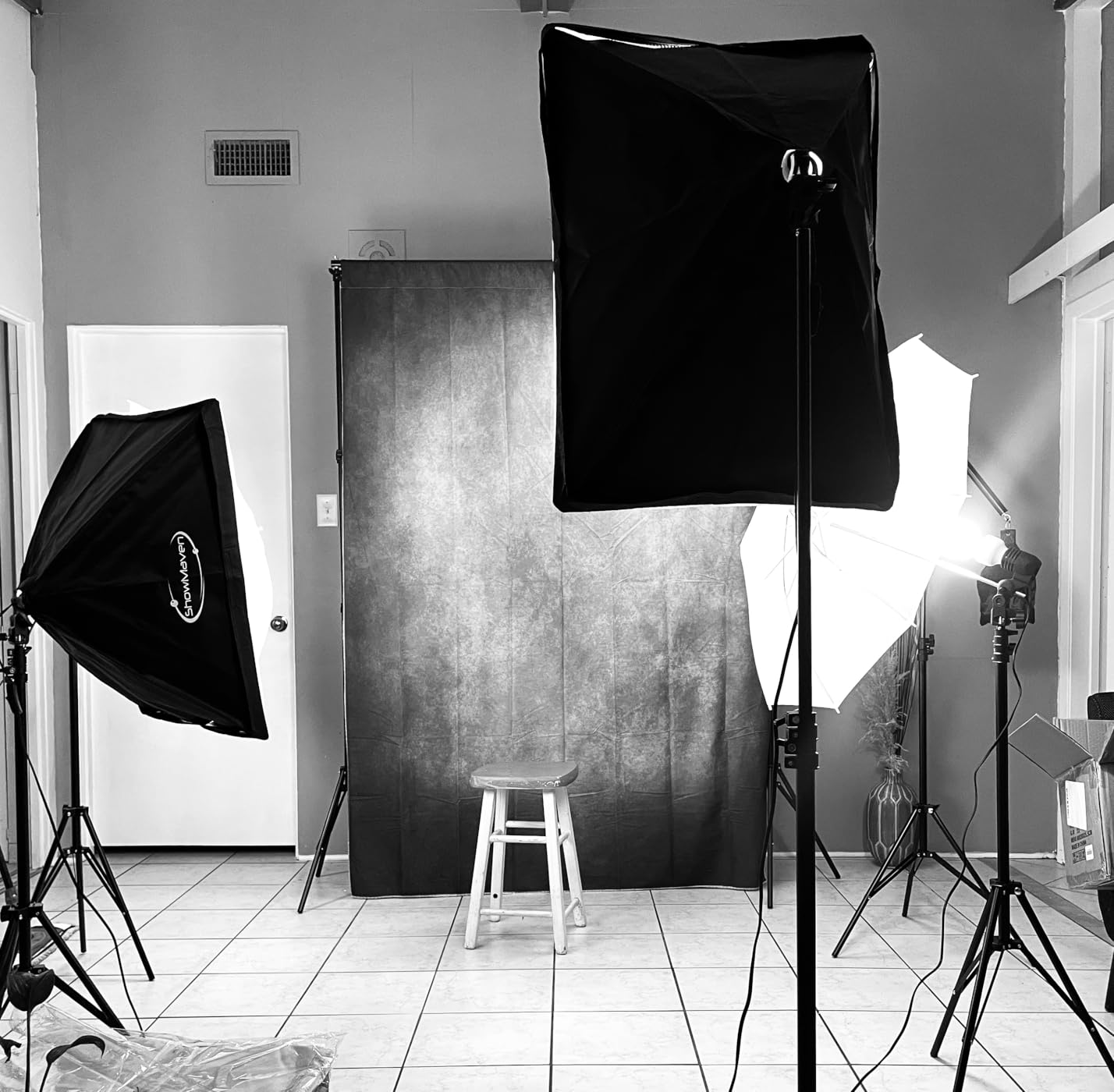
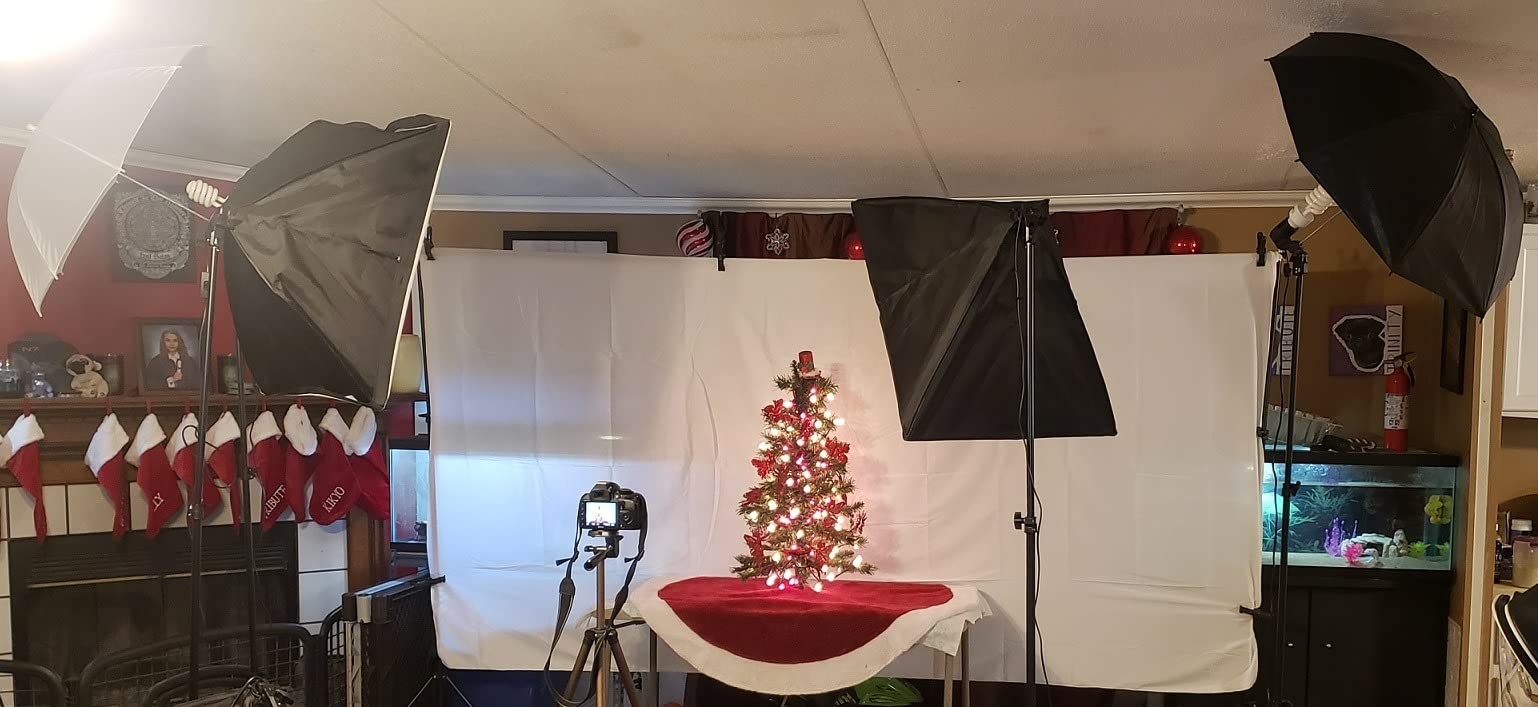
Five heads is the minimum you need to practice three-point lighting properly, and that is the reason this kit exists. Key, fill, rim, two background lights and a hair light all become possible at once, which is how you actually learn the difference between a key and a fill.
It also covers group portraits better than anything else here, since three softboxes and five umbrella modifiers across five stands means no two people have to share a source.
The polyester backdrops are a practical choice. They are machine washable, low-temperature steamable and described as anti-wrinkle, which matters if you are the one hauling them in and out of a cupboard every session.
The 210-degree rotatable heads and stands that run from 27 to 78 inches give plenty of positioning room, and the 1.8m US plug cables are long enough to run a background light behind a sweep without an extension.
There is no control surface at all. The 5500K color temperature is fixed, there is no remote and there is no dimming, and the manufacturer does not publish a color rendering index, so you are buying quantity without knowing the color accuracy you are getting.
Who this kit suits
Choose this for a learning setup and for small group portraits. Having a real fill light and a real rim light changes the way you understand exposure faster than any amount of reading.
It is also a good fit for a community studio, a church or a classroom where several people share one kit and everyone needs their own head.
Who this kit does not suit
Unspecified color accuracy is a problem for any paid portrait work where the client is judging skin, and fixed 5500K output rules out any warm or cool intent without gels.
It is also the least demanded kit we tested, and lower demand usually means less stock of replacement parts if a stand or a socket fails.
12. Kshioe 2x3m Budget Portrait Kit Is the Cheapest Way to Start Shooting Headshots
Kshioe Photo Lighting Kit, 2M x 3M/6.6ft x 9.8ft Background Support System and 900W 6400K Umbrellas Softbox Continuous Lighting Kit for Photo Studio Product,Portrait and Video Shoot Photography
Four 45W 6400K full spectrum bulbs
CRI 90
6.6x9.8ft backdrop system
Softboxes plus umbrellas
Pros
- Four 45W 6400K full spectrum bulbs with CRI 90
- Complete backdrop system included in the box
- Detachable diffusing and reflective umbrellas for fast setup
- Waterproof compact carry case
- Four 78.7in adjustable stands plus softboxes
Cons
- Single-head bulb holders only work on 110-120V power
- Bulbs run slightly dim for larger subjects or distant setups
- Backdrops can need washing to remove fold lines
This is the budget pick, and the reason it earns the slot is a color rendering index of 90. That single number puts it ahead of several kits that cost meaningfully more, and accurate skin is the first thing you need and the last thing cheap gear usually delivers.
You get four 45W 6400K full spectrum bulbs, four 78.7 inch stands, two black and silver softboxes, a white diffusing umbrella, two reflective umbrellas and a 6.6×9.8ft backdrop system with three backdrops in a waterproof case.
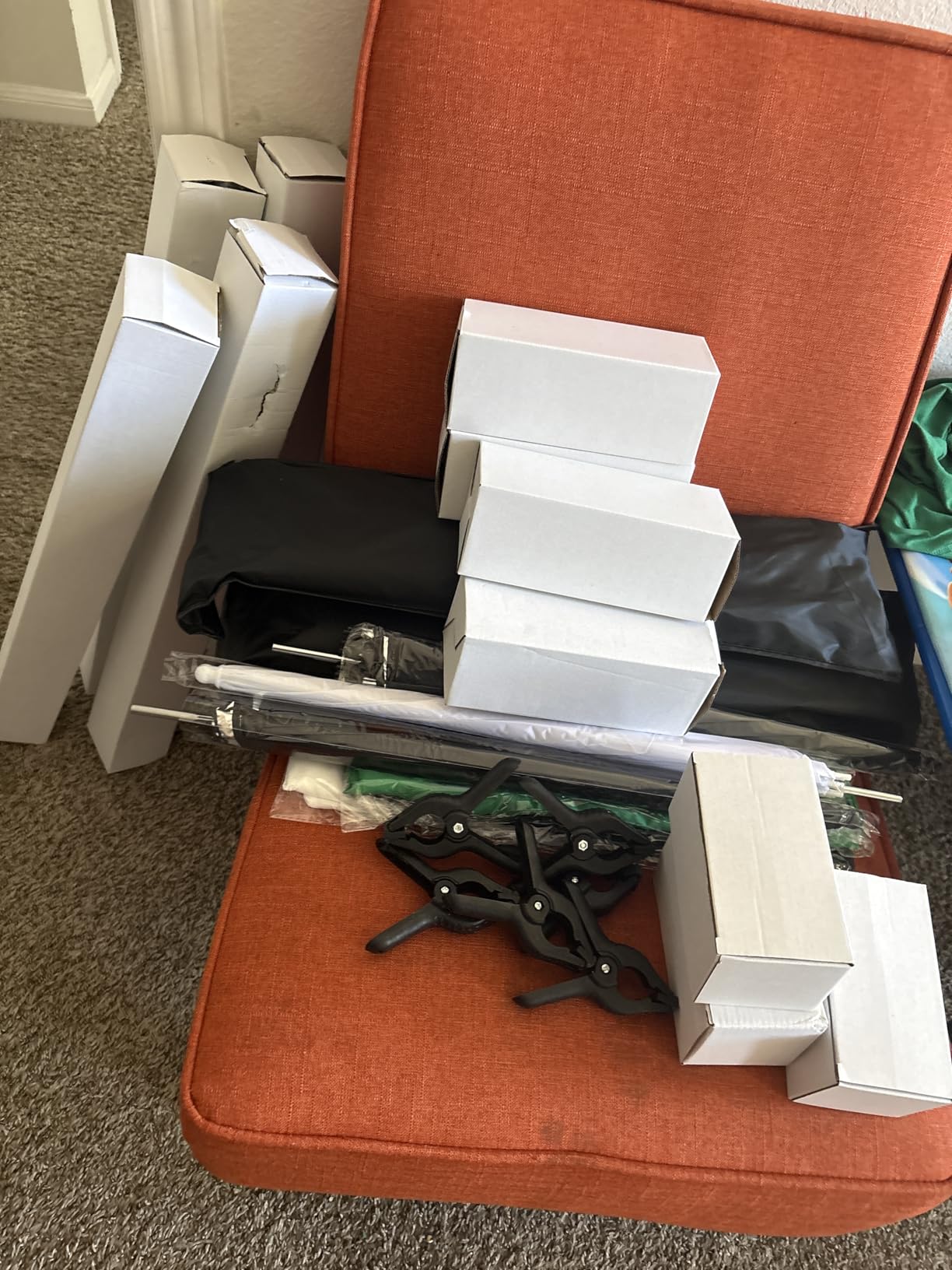
In a small room, that combination is genuinely enough. One softbox on the key, one reflective umbrella as a fill opposite, and the third source aimed at the backdrop is a complete, classic portrait arrangement that costs very little to assemble.
The detachable umbrella and softbox heads are the design decision that matters most, because you can swap a hard reflective source for a soft diffuser in seconds as the light changes during a session.
Two limits to plan around. The single-head bulb holders only work on 110 to 120V power, which rules out direct use on other mains standards, and the 45W bulbs are slightly dim for a large subject or a distant setup, so you will be working closer to your subject than with a brighter kit.
Who this kit suits
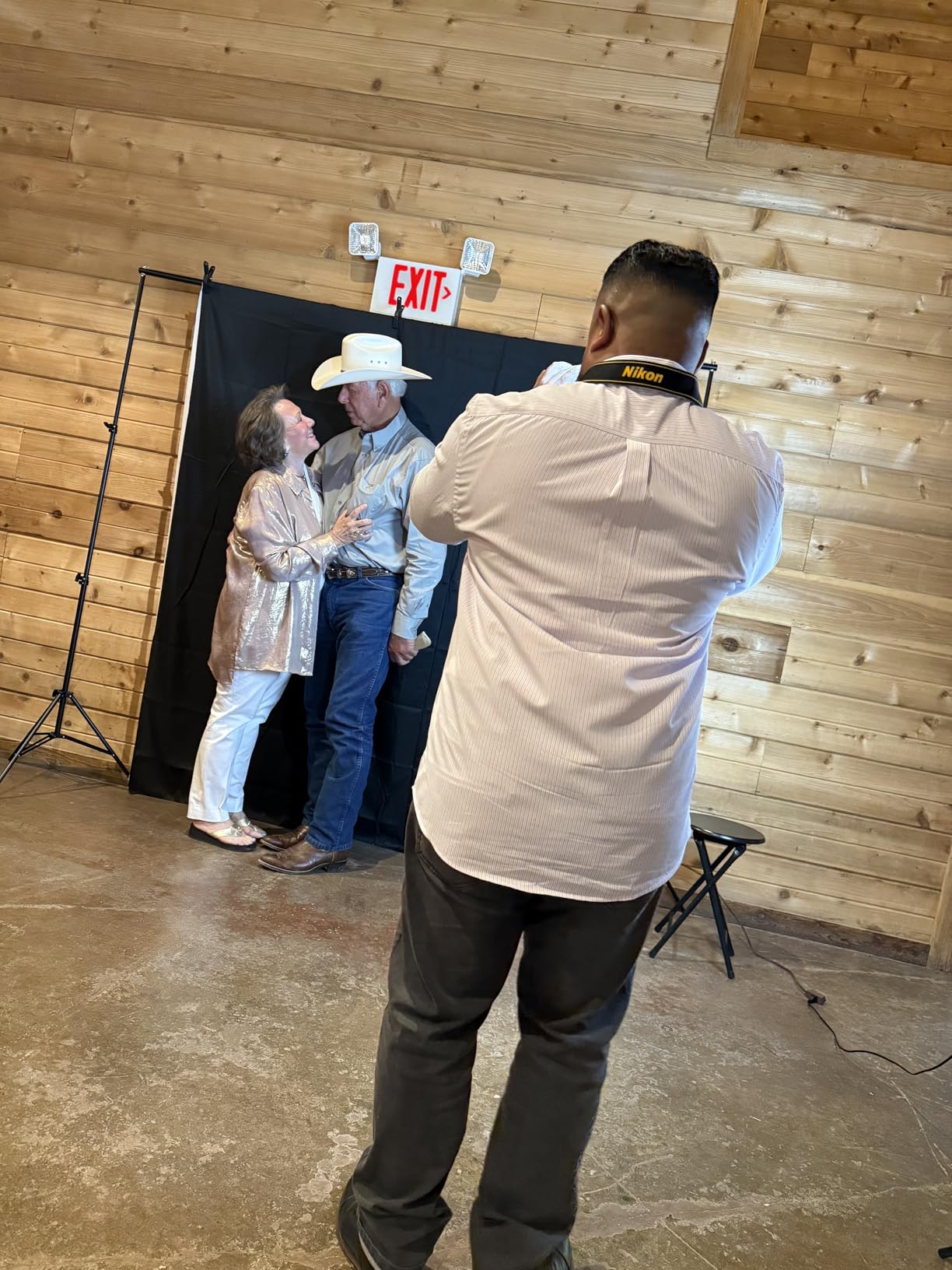
This is the right kit for someone starting headshots, wedding guests or social content on a tight budget. Reviewers consistently report that a single soft light plus the backdrop covered an entire event for them.
It also suits a first studio because the complete backdrop system means you are not choosing between saving for lights and saving for a background.
Who this kit does not suit
It cannot handle group portraits or large subjects at distance, since the bulbs run dim once diffusion and falloff are working against you.
Anyone outside 110 to 120V regions will need to replace the single-head holders entirely, which is a straightforward swap but a real cost before the first session.
How to Choose a Continuous Lighting Kit Without Wasting Money
Every kit here is a genuine judgment call, but the decision comes down to five things. Work through them in order and the right answer appears on its own, because output is the least important of the five and the one brands advertise hardest.
Buy one head and one modifier before you buy a kit
The most consistent piece of advice we found while researching this topic was to start with a single light, a single modifier and a stand, learn one pattern, then add a second head. Forum regulars on r/AskPhotography repeat it constantly, and the reasoning is sound: a three-head kit teaches you nothing unless you already know what each head is for.
If you take only one recommendation from this guide, take that one. The NEEWER 660 two-pack is a reasonable first buy for that reason, since two panels with barndoors already cover a key and a fill without a large investment in a kit you may outgrow.
Color rendering index above 90 is the line for skin
Color rendering index measures how faithfully a light reproduces the colors of the objects it hits. Below 90, reds in skin flatten, blues go dull and the whole frame looks slightly desaturated, and the effect is in your raw file rather than in your display.
Only two kits here reach the threshold we would consider professional for portraits: the NEEWER 660 pair at 96 plus and the Torjim at a listed 100. The Skytex pair and the Kshioe budget kit reach 90, which is acceptable and often indistinguishable in a good file, while everything at 80 or below will show on close skin.
Watts, lumens and lux are not comparable across brands
This is the question forums ask most often and the one brands help least with. One manufacturer quotes bulb watts, the next quotes an incandescent equivalent, and a third quotes lux at one meter, so a 100W panel and an 800W-equivalent bulb can end up producing very similar light on a face.
The practical workaround is to stop comparing output numbers and compare three things you can verify: the color rendering index, the dimming range, and the modifier size. A dimmable head at 25 percent output beats a brighter head you cannot turn down, because portraits live or die on aperture.
We track the deeper comparison of output measurement and modifier physics in our photography lighting kit roundup, which covers mains and battery strobe kits alongside continuous heads.
Color temperature range decides how often you touch a gel
Fixed 5700K daylight is the default in this bracket, and it is a sensible default. But a head that moves from 2700K to 6400K saves you from stacking gels on both a key and a background whenever the mood changes, which happens constantly on a working shoot.
The Skytex pair and the Torjim pair are the two here with genuinely wide remote-controlled ranges. The NEEWER 660 panels have a 3200K to 5600K dial, which is narrower but covers the range most portrait work actually needs.
Dimming range matters more than peak output
Beginners lose depth of field when their only light is too bright, ending up at f/1.4 to avoid blowing out skin. A head that dims from 100 percent down to a genuinely low level lets you shoot at f/4 or f/5.6 and keep your subject sharp from nose to ear.
Only the NEEWER 660 panels give a true 0 to 100 percent dimming dial here. Every other kit relies on bulb switches, remotes with coarse steps, or physically moving the head, which is why those kits ask you to get close to your subject.
What actually ships in the box
Kit-contents audits are the most useful thing we can tell you, because the gap between the listing photograph and the box is where the disappointment lives. The NEEWER NK100, LINCO AM169, EMART backdrop kit and the two Kshioe kits each include a full backdrop support system, which is a genuine saving.
At the other end, the NEEWER 660 pair and the EMART 16-inch pair include no modifier beyond barndoors or a softbox, and no backdrop at all. The Skytex remote arrives without a battery, and the NiceVeedi softbox fabric has a chemical odor that needs a week of airing out.
One last piece of forum wisdom worth repeating: for portraits, the size and quality of your modifier matters far more than the wattage of your head. A modest head through a good softbox beats an expensive bare head every time.
Continuous Light vs Flash for Portraits
Every few years this debate restarts, and the honest answer in 2026 is that continuous light has closed most of the gap. It has not closed all of it, and the choice depends on what you shoot and how far you are working.
Where continuous light wins
First, the feedback loop. A mirrorless or DSLR screen shows you the exact light, the exact shadow and the exact skin tone, so you can adjust before you shoot. With flash you are guessing until you check the rear screen.
Second, no recycle time, so a long sequence of poses costs you nothing. Third, no sync or high-speed-sync limitation, so you can open the aperture without worrying about sync speed. Fourth, the same lights shoot video without changes, which is the reason most working portrait shooters now keep one continuous setup alongside their strobes.
Where flash still wins
Power per watt is where strobes remain far ahead, typically by a stop or more. In a large room with a big soft source, or outdoors where you need to overpower daylight, a strobe will simply be brighter and freeze motion better.
Strobes also do not generate the heat that bulb fixtures produce, they last longer in a warm room, and modifiers built around a Bowens mount open up options that the E27 and E26 sockets in these kits simply do not offer.
If you are still choosing a first serious kit rather than a first portrait setup, our studio lighting kit guide covers the strobe side in full.
Frequently Asked Questions
What are the best continuous lights for photography?
The best continuous lights for portrait photography are bi-color LED heads or panels with a color rendering index of 95 or above, full 0 to 100 percent dimming and a Bowens or included softbox mount. In our roundup the NEEWER 660 bi-color pair wins for color accuracy, the NEEWER NK100 wins as the most complete all-in-one kit, and the EMART backdrop kit wins on coverage.
What is the best lighting setup for portrait photography?
The best lighting setup for portrait photography is a single key light placed 45 degrees to the side and slightly above eye level, paired with a fill at lower power on the opposite side, plus a rim or hair light behind the subject. One large soft source close to the subject produces softer, more flattering light than a small source far away.
Do continuous lights work for photography?
Yes. Continuous lights are widely used for portrait photography because you can see the exact light, shadow and exposure before pressing the shutter. The tradeoff is that they give roughly a stop or two less power than a studio strobe, and bulb fixtures also produce more heat.
How do I compare output when brands quote watts, lumens and lux?
Do not compare across units. One brand quotes bulb watts, another quotes an incandescent equivalent and a third quotes lux at one meter, so the numbers are not interchangeable. Compare color rendering index, dimming range and modifier size instead, and measure the heads you own with the same light meter at the same distance.
Is it worth stepping up to Aputure or Nanlite for portraits?
For professional portrait work, yes. Aputure and Nanlite are repeatedly named in photography forums as the quality tier because of tighter LED binning, which means a higher and more consistent color rendering index between units, so two heads from the same brand match each other closely. For learning and home studio use, the kits in this roundup are hard to beat on value.
What is the 3 lighting rule?
The 3 lighting rule describes the three-light portrait setup: a key light that sets the exposure, a fill light that controls the shadow contrast, and a rim or back light that separates the subject from the background. Continuous light makes the rule easier to learn because you can see all three effects while you position them.
Which Continuous Lighting Kit Should You Buy?
The NEEWER NK100 is our pick for the best continuous lighting kits for portrait photography overall in 2026, because four sources, four stands, two softboxes, two umbrellas and a full backdrop system give you more usable gear than anything else at this tier, and 4566 reviews at 4.5 stars make it the most proven kit here.
If color accuracy is what you are paying for, the NEEWER 660 bi-color pair at CRI 96 plus is the only kit in this roundup with true 0 to 100 percent dimming, and that combination is what separates a working photographer from a beginner.
Our honest advice is still to buy one head and one modifier first, learn a single lighting pattern, and only then open the rest of the kit.