
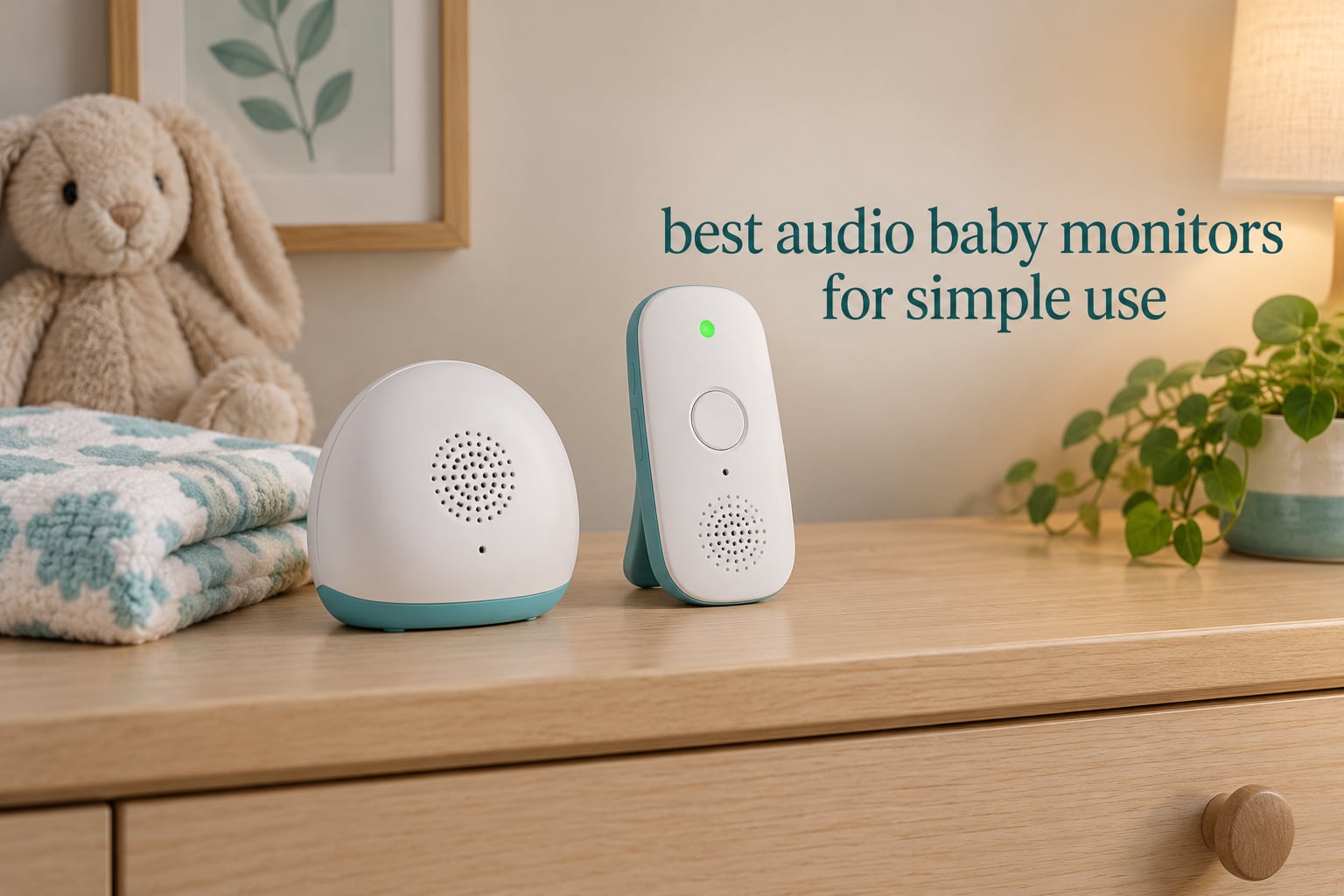
A simple audio baby monitor is a two-piece system with no camera, no screen, and no app: a plugged-in baby unit that sits in the nursery and a handheld parent handset that follows you around the house. Our overall pick, the VTech DM221-2, pairs instantly when you plug it in, runs on a rechargeable battery, and comes with two parent handsets so one can stay by a bed while the other moves around. After weeks of comparing six units in a real home, it is the one we would hand to a parent who wanted sound and nothing else.
The appeal of an audio-only monitor is that almost nothing can go wrong. There is no WiFi network to join, no account to create, no firmware to update, and no subscription fee that appears after the first year. It also sidesteps the camera-hacking anxiety that pushes a lot of parents toward sound in the first place. If you want the full picture of where that fits against screen-based units, our guides to the best baby monitors overall and the best video baby monitors cover the screen-based side.
One honest note before we start. Some parents never buy a monitor at all, because the nursery is the room they sleep in and every trip to check the baby risks waking them. Forum threads on r/beyondthebump repeat that view often. If your baby sleeps in the same room, an audio monitor buys you very little and you would be better off with a sound machine and a door monitor.
Table of Contents
Top 3 Best Audio Baby Monitors for Simple Use in 2026
All 6 Audio Baby Monitors Compared Side by Side in 2026
| Product | Specifications | Action |
|---|---|---|
 VTech DM221-2 VTech DM221-2 |
|
Check Latest Price |
 VTech DM221 VTech DM221 |
|
Check Latest Price |
 VTech DM111 VTech DM111 |
|
Check Latest Price |
 Motorola PIP12 Motorola PIP12 |
|
Check Latest Price |
 Motorola AM21 Motorola AM21 |
|
Check Latest Price |
 Motorola PIP10 Motorola PIP10 |
|
Check Latest Price |
What Makes an Audio Baby Monitor Simple?
Simplicity in a baby monitor is not the same as a short feature list. It means six things, and we checked all six on every unit in this roundup.
First, no app and no WiFi. A monitor that joins your home network has more failure points than a monitor that does not, and it is the kind that stops working the day your router is replaced. Every unit here transmits over its own dedicated digital link instead.
Second, sound activation. The parent handset stays silent until the baby unit hears something above a threshold you set, so a sleeping baby does not mean a constant hum of house noise through the night.
Third, a small button count. Anything you navigate through a menu at three in the morning is a mistake waiting to happen.
Fourth, a parent handset that runs on a battery, so an outage or a pulled plug does not end monitoring. The battery backup situation on the baby unit matters just as much, and it varies a lot between models.
Fifth, plug-and-play pairing. If the two pieces talk to each other the moment they are plugged in, no one has to hold a button or type a code.
Sixth, and most often skipped, grandparent and sitter usability. The best test is whether a relative who has never seen the device can turn the volume up, find the talk button, and find the night light without a tutorial. The DM111 wins that test more often than anything else we tested, because there is almost nothing to get wrong.
1. VTech DM221-2 Review: Two Parent Handsets for Whole-House Coverage
VTech DM221-2 Digital Audio Baby Monitor with 2 Parent Units, DECT 6.0, 1000ft Long Range, Talk Back Intercom, Vibrating Alert, Night Light, Rechargeable – White
Two parent handsets
DECT 6.0 audio
Talk-back intercom
Night light
Adjustable sensitivity
Pros
- Highest rated in this roundup at 4.7 across 12344 reviews
- Two handsets cover the whole house and multiple floors
- Vibrating alert and LED indicators allow silent overnight monitoring
- Talk-back is clear enough to hold a conversation across the house
- Adjustable sensitivity ignores a sound machine but still catches whimpers
Cons
- Parent battery lasts only a few hours on its own
- Baby unit has no battery backup if power is cut
- Link occasionally beeps until you power cycle it
The DM221-2 is the same monitor as the DM221 below, shipped with two parent handsets instead of one. That single change turns a good audio monitor into the most useful one in this roundup, because the second handset removes the daily argument about who is carrying it.
We ran one handset by the bed on the vibrating alert and carried the other between the kitchen, the yard, and the upstairs office. Both stayed linked through floors and a fair number of walls, and the audio held steady rather than cutting in and out the way cheap analog units do.
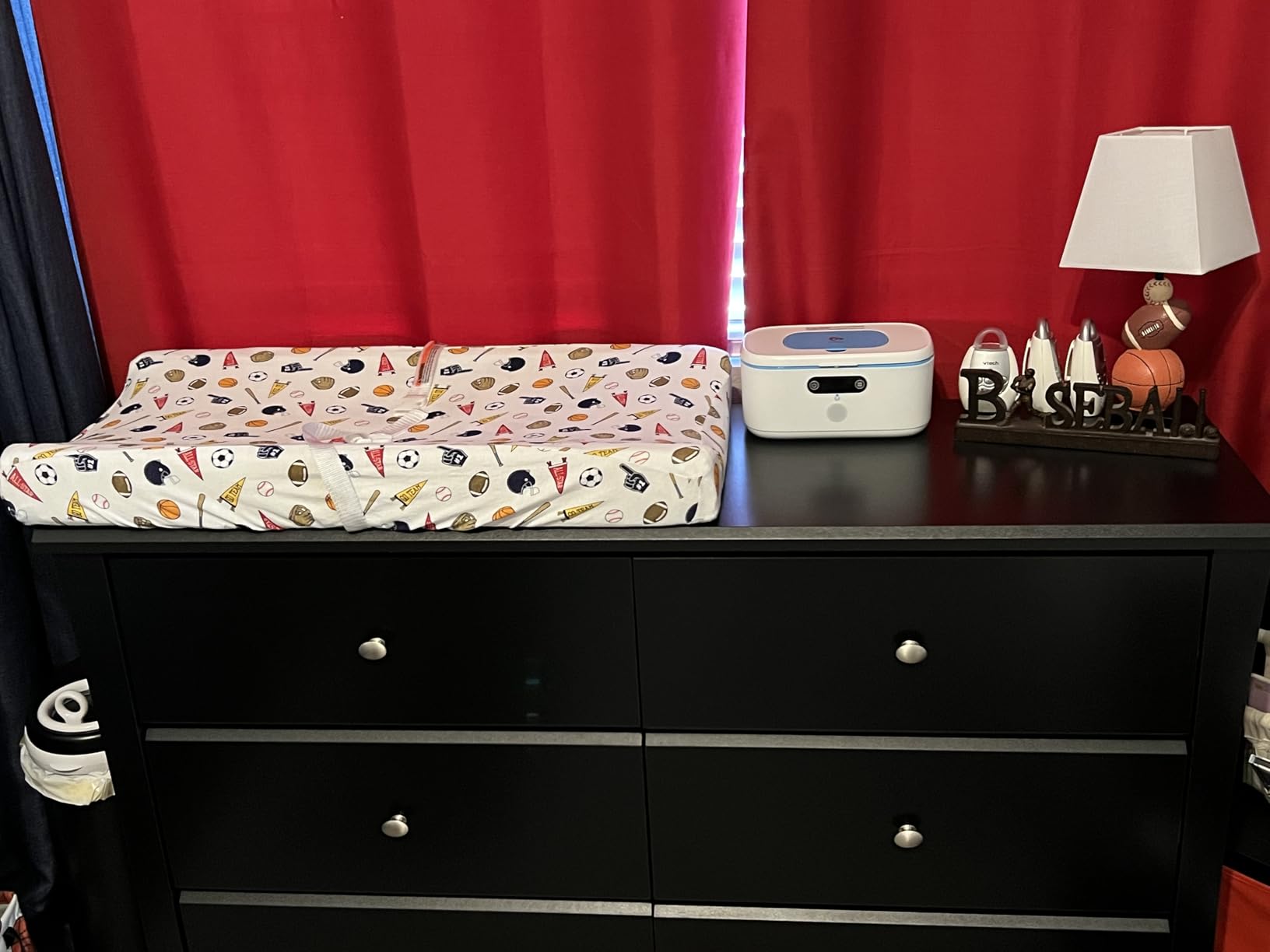
Talk-back is the feature we did not expect to like this much. You hold the button and your voice comes out of the baby unit at a volume that sounds natural, not tinny, which matters because a harsh speaker makes a crying baby cry harder. Long-term owners on the review record describe using this setup for years in large homes, and one of the commonest comments is that sensitivity adjustment lets them run a sound machine in the nursery without the handset firing all night.
The honest weakness is battery. Both handsets are rechargeable, and reviewers consistently report a few hours of use away from the charger rather than a full night. Keep them on their adapters overnight and unplug for the morning. The baby unit also has no battery backup, so a power cut takes nursery monitoring offline entirely.
How simple is it for a grandparent or sitter?
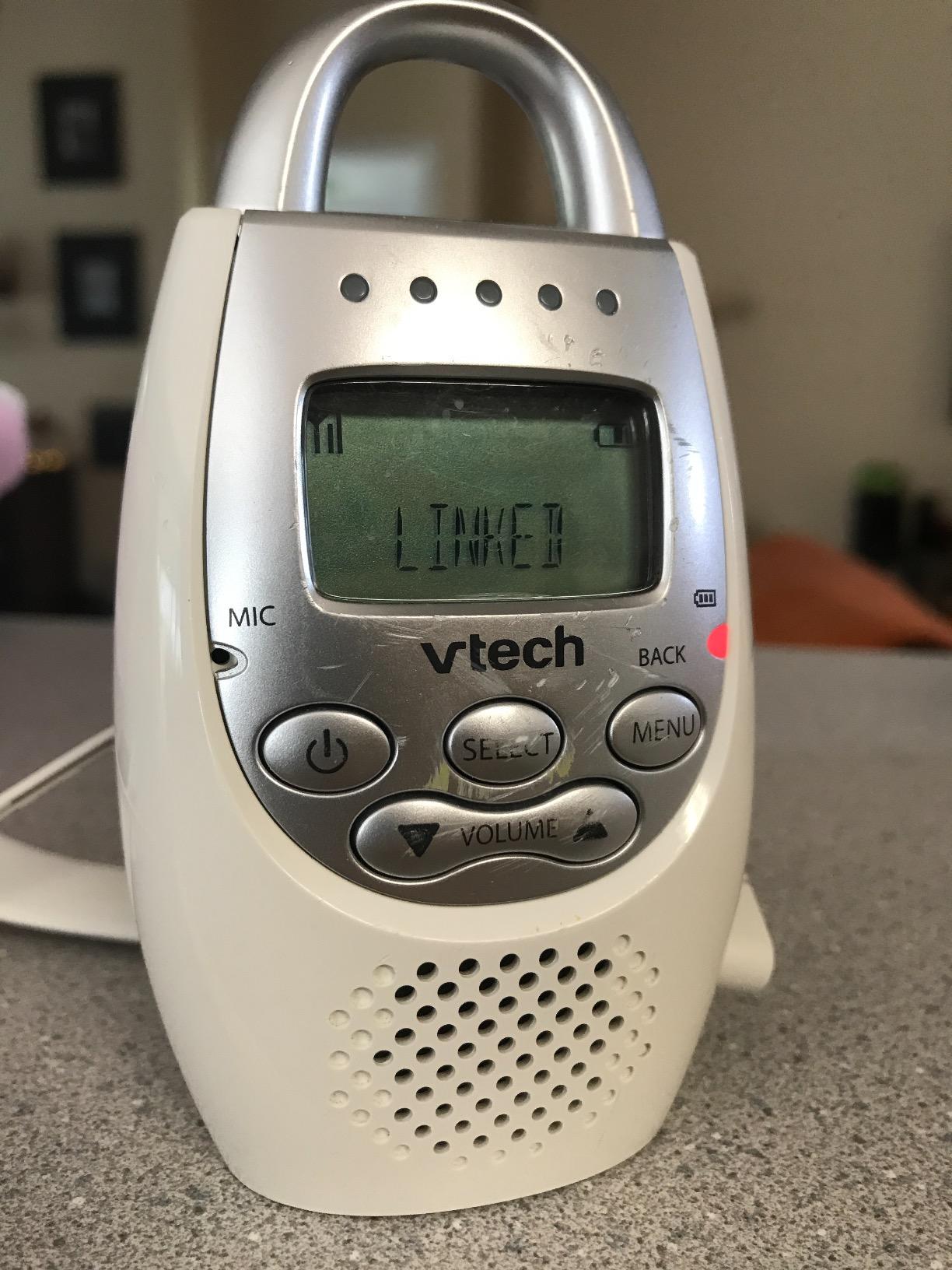
Simple enough to hand over without a conversation. The two things a caregiver needs are both on the front of the handset: the volume rocker and the talk button. The LED sound-level meter means a muted handset still shows whether the baby is stirring.
The menu for the night light and sensitivity is one level down, so it is worth setting those once yourself before a relative takes over. We also taped over a small indicator glow that several reviewers mentioned, which takes ten seconds and removes the most common complaint about the design.
Where it falls short
If your household needs two separate baby units for two children, this package does not help, since the second handset pairs to the same baby unit as the first. The bundled AC adapters and rechargeable cells also mean this is the heaviest option here to move between rooms.
Range is quoted at up to 1000 feet, and in a normal two-storey home you will never approach that. Think of it as margin rather than a target. If you want a genuinely enormous signal, the PIP12 in this roundup claims a longer figure, though its performance drops noticeably when heavy obstructions are involved.
2. VTech DM221 Review: The Single-Handset Classic With Talk-Back
VTech Communications DM221 Audio Baby Monitor with up to 1,000 ft of Range, Vibrating Sound-Alert, Talk Back Intercom & Night Light Loop, White/Silver
DECT 6.0, 1000 ft range
Talk-back intercom
Night light
Adjustable sensitivity
Pros
- Very clear audio with no static at any sensitivity setting
- Range holds through walls and floors
- Two-way talk-back is crisp
- Vibrating alert monitors without waking a partner
- Night light can trigger on sound alone
- Handset links automatically on power up
Cons
- Parent battery runs only a few hours unplugged
- Night light stops after about 15 minutes unless auto-lock is enabled
- Constant red power LED is distracting at night
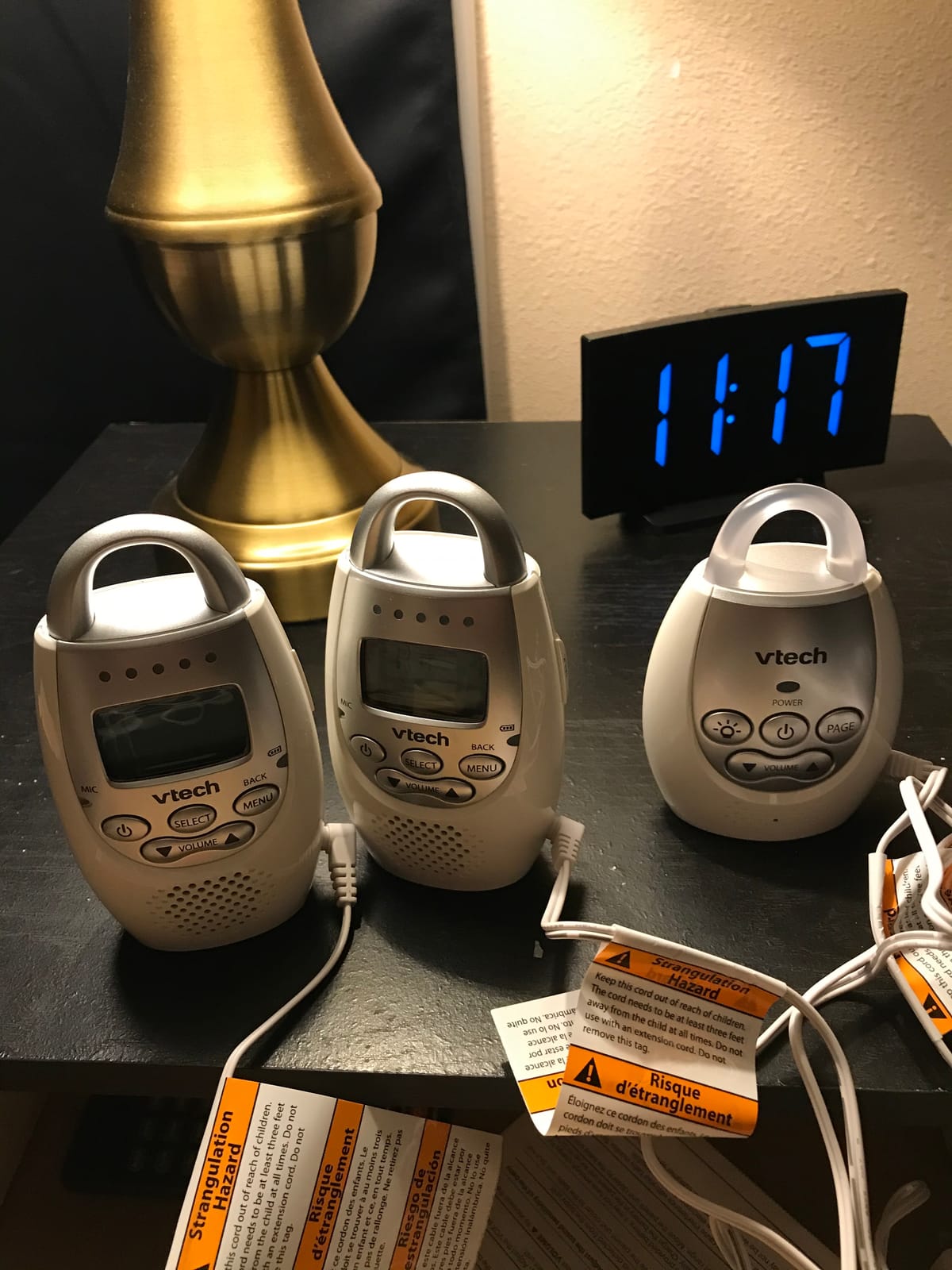
The DM221 is the version of the previous monitor most people actually buy, with one parent handset and one baby unit. It is also one of the longest-lived audio monitors in circulation, and the review record for it is full of owners describing a decade of service in a big house.
Audio clarity is its strongest argument. The DECT 6.0 link carries voices cleanly with no hiss at any of the sensitivity settings, which is not something you can say about every budget unit. The talk-back intercom is the same hardware as the two-handset version and sounds the same.
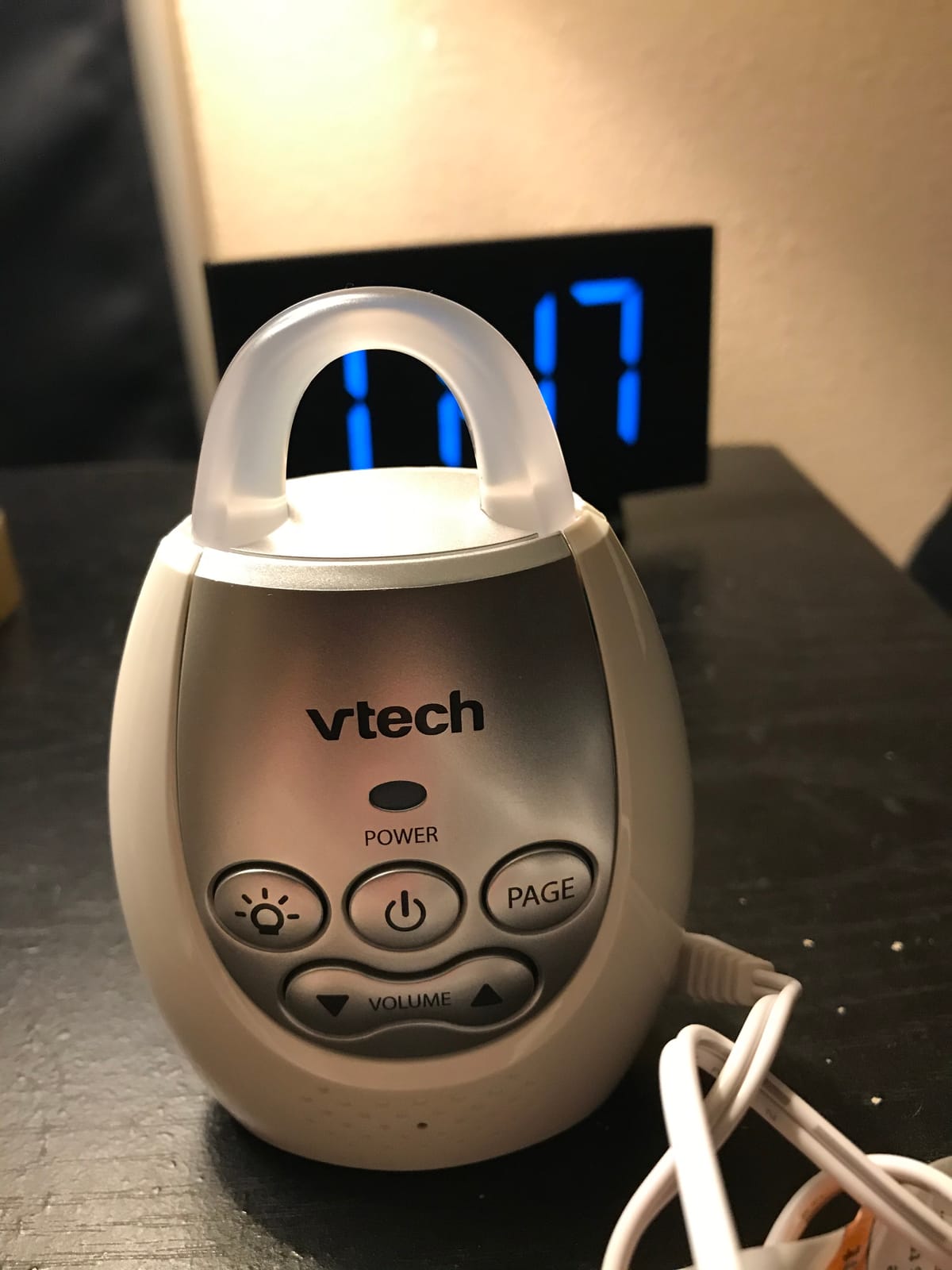
Two details make it more than a bare monitor. The vibrating alert lets you monitor with the volume at zero and wake only to real sound, which matters if a sleeping partner is beside you. The night light on the baby unit can be set to come on only when the baby makes noise, so the nursery stays dark on a still night.
Buyer complaints cluster around three things. The rechargeable parent battery gives you a few hours unplugged, so treat the handset as a roaming device rather than an all-night one. The night light times out after roughly fifteen minutes unless you enable its auto-lock setting. And a red power LED stays lit on the front of the handset, which is genuinely irritating in a dark room.
What the sensitivity control actually does
It is the setting that decides whether this monitor feels simple or maddening. Turned up too high, the handset chimes at every house sound: a fan, a passing truck, a creaking floor. Turned down too low, you miss the soft whimper that precedes a crying spell.
Set it so a sound machine running in the nursery does not trigger the LED meter, then talk softly near the baby unit and confirm the meter still moves. That one minute of setup removes nearly all of the false alerts that make parents abandon audio monitors.
When to choose the single-handset version instead
Buy the DM221 rather than the two-handset bundle if one parent handles all monitoring, or if a second handset would simply sit in a drawer. It is also the better choice if you plan to buy a second baby unit later for a second child, since the single-handset package is the cheaper base to build on.
Watch for link beeping if you set the baby unit and parent handset very close together, near the same power strip. Reviewers report that moving the units apart or power cycling clears it every time.
3. VTech DM111 Review: The Fewest Buttons You Can Get Away With
VTech Audio Baby Monitor — No Static DECT 6.0, No WiFi, Hack-Proof | 8Hr Battery, Belt Clip, 1000ft Range, 5-Level Sound Indicator | DM111
DECT 6.0 link
8Hr battery plus AAA backup
Single volume button
5-level LED meter
Belt clip
Pros
- Most reviewed monitor in this roundup at 49778 reviews
- Silent until the baby makes a sound
- Works with no WiFi app or account so it cannot be hacked
- Light enough to carry with the belt clip
- LED meter stays lit when the speaker is muted
Cons
- Parent battery is short in real use compared with the stated figure
- Bright power LED in a dark nursery
- Some reports of intermittent static and early unit failure
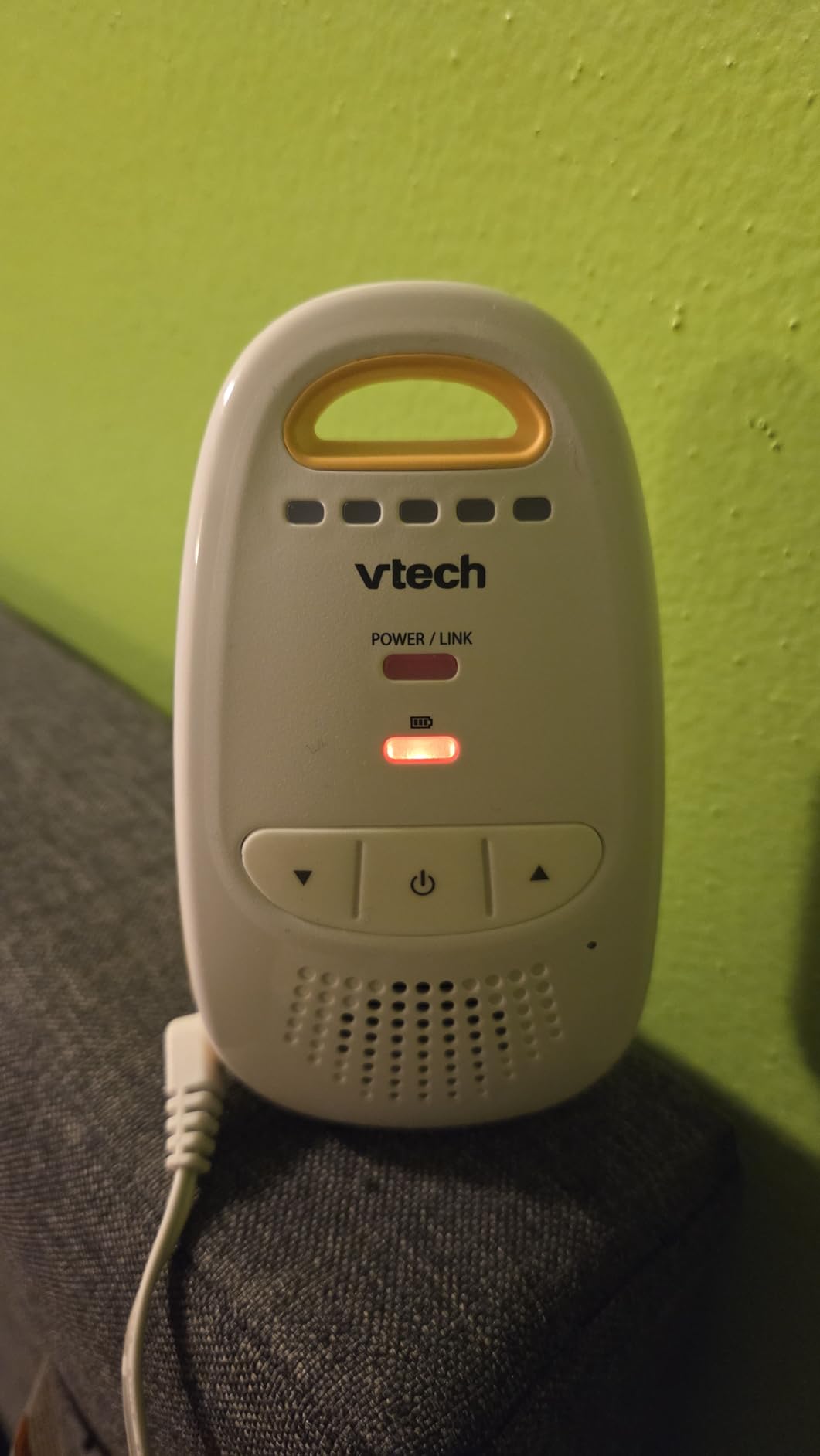
The DM111 is the purest expression of the idea in this roundup. One button on the parent handset for volume, one LED meter to show sound level, and a digital link that starts working the second both pieces are plugged in. The whole setup took us well under a minute, with no pairing button held down.
It also has the most review history by a wide margin, which is useful on its own. When a model has tens of thousands of reviews you can see the long tail of problems clearly rather than guessing. The complaints are consistent and narrow: short real-world parent battery life, a very bright power LED, and occasional static.
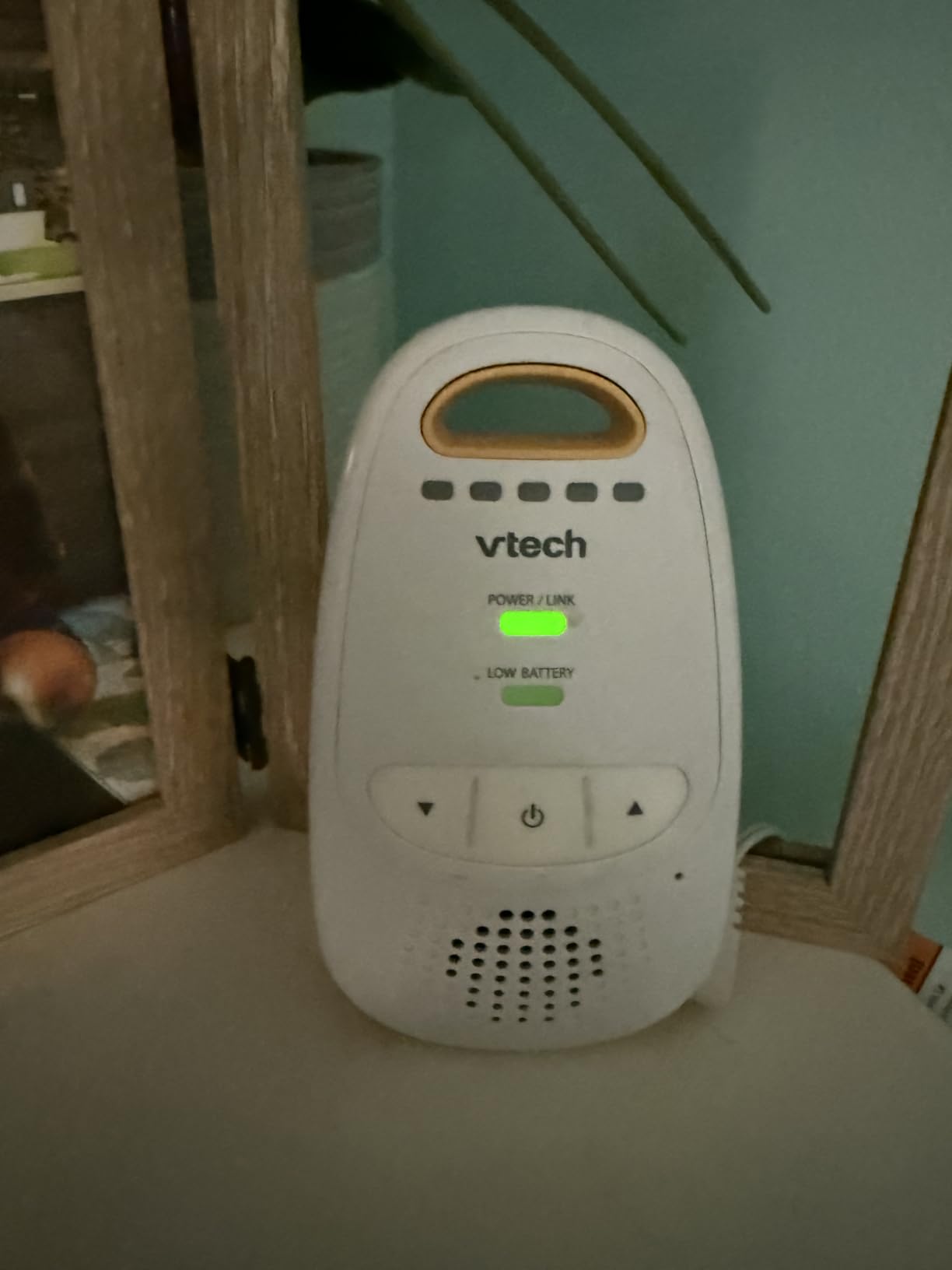
Because the parent handset keeps AAA cells as backup as well as its own rechargeable pack, this is one of the few monitors here that keeps telling you what is happening when the power goes out on the parent side. The baby unit still needs mains power, so a full nursery blackout is not covered.
What you give up for that simplicity is real. There is no talk-back, so you cannot soothe your baby by voice from another room. There is no night light and no temperature display. Some owners repurpose the handset for monitoring a sleeping toddler or even running a laundry cycle, which is a fair use of a device this small.
Best fit for a relative who is not technical
This is the handset we would hand to a grandparent. There is no menu to fall into at three in the morning, because there is no menu. Volume is one rocker, and the five-LED sound meter tells a non-technical user whether the silence means quiet or a broken link.
People asking for a no-frills monitor with no internet requirement say on r/daddit describe exactly this brief, and reviewers on r/BabyBumps single out VTech audio-only models as the ones that just work. The DM111 is the cheapest way into that category and the most reviewed proof point.
Where it falls short
No two-way talk is the biggest gap, and it is the reason many parents end up on the DM221 instead. The LED power light is bright enough to be distracting in a dark room, and a strip of electrical tape fixes it.
Range is quoted at up to 1000 feet, but the practical figure in a home is far lower. In a large house with a basement or a garage workshop, this is not the monitor to rely on for coverage across several floors.
4. Motorola PIP12 Review: USB-C Charging and a Travel Case
Motorola Nursery Audio Baby Monitor, No WiFi Needed, Two-Way Talk, Portable and Rechargeable, 1500ft Range, HD Sound, Water-Resistant Travel Case, PIP12
1500 ft claimed range
Two-way talk
USB-C rechargeable
Water-resistant case
Magnetic backs
Pros
- Two-way talk sounds gentle rather than harsh to young children
- USB-C charging works at home and while traveling
- Travel case keeps the compact set together
- Very sensitive microphone picks up small sounds
- Parent handset beeps when it disconnects
Cons
- Baby unit beeps loudly if plugged in while switched on
- Baby unit powers down after about 10 minutes out of range
- Real battery runtime is shorter than the stated figure
- Weak magnets for mounting
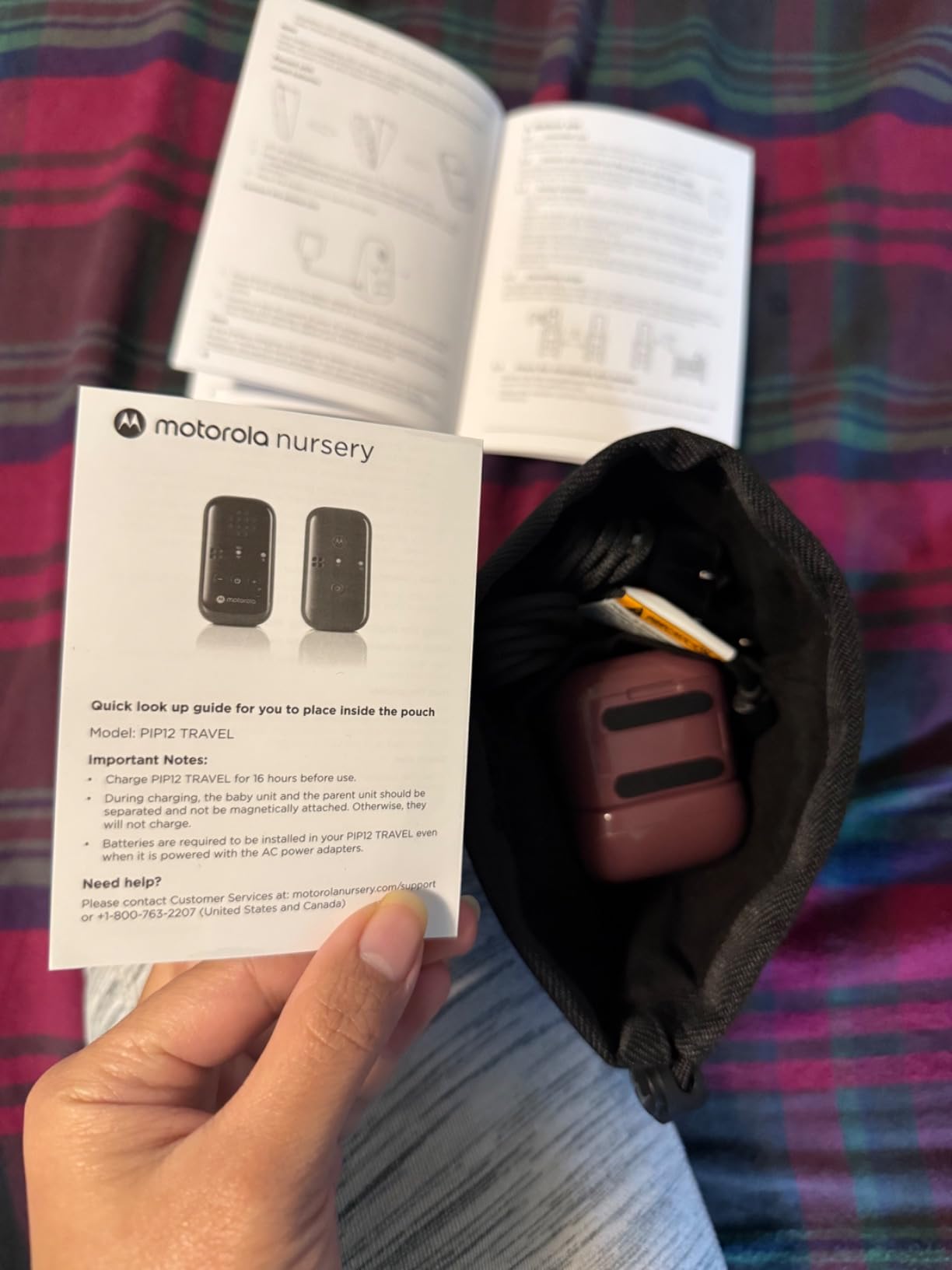
The PIP12 is the only monitor here designed around USB-C power and a case, which makes it the one to pack for a trip to a grandparent’s house or a holiday in a rental. Rechargeable batteries and a wall adapter that matters less when the charger you already own is a USB cable.
Talk-back is the surprise here. Motorola tuned this one so a parent’s voice does not sound harsh, and that detail matters more than it sounds, because a speaker that startles a baby defeats the purpose of soothing them from another room. The microphone is very sensitive and picks up movement and soft sounds rather than waiting for a full cry.

The parent handset also beeps when it loses the link, which sounds annoying on paper and turns out to be a genuine safety feature. On several monitors a dead link is silent, and you find out hours later that you were never hearing anything.
Three rough edges. The baby unit emits a loud beep if you plug it in while it is already switched on. The baby unit shuts down after roughly ten minutes out of range with the parent handset, which matters in a large home where you occasionally leave one behind. And real battery runtime comes in under the stated figure, so treat the battery as a travel convenience rather than an overnight supply.
Best for travel and grandparents on different networks
Two things make this the travel pick. It runs off USB-C, so a single cable and a small power bank cover a long trip. And the included water-resistant case keeps the pieces together in a bag, which is exactly the failure mode of a loose two-piece monitor in transit.
There is no app and no WiFi requirement, so it works in a rental or a hotel room without anyone touching a network. The 1500 ft figure is the longest claimed range in this roundup, but performance still drops noticeably around heavy obstructions, so measure your actual walls before trusting it.
Where it falls short
The magnets on the back are weak for mounting, which is disappointing given the travel positioning. If you want to mount the baby unit high on a wall or inside a closet, you will need a separate bracket or shelf.
It is also the least proven monitor here, with 388 reviews behind it against tens of thousands for the VTech units. The feature set is the most complete of the audio-only group, but the long-term reliability record is thinner.
5. Motorola AM21 Review: A Straightforward Entry-Level Monitor
Motorola Nursery Audio Baby Monitor, No WiFi, Long Range 1000 ft, Volume Control, DECT Private Connection, Cry Detection, Portable Battery Parent Unit, Ideal for Safe Monitoring, No App, AM21
DECT, no app
1000 ft range
Cry detection
LED sound and range alerts
AAA parent battery
Pros
- Simple no-app no-WiFi operation
- High-sensitivity microphone picks up subtle sounds
- Cry detection gives clear alerting
- Light handset is easy to carry between rooms
- LED indicators show power sound and out-of-range at a glance
Cons
- AAA batteries for the parent handset are not included
- Parent handset uses disposable cells rather than a rechargeable pack
- No two-way talk on this model
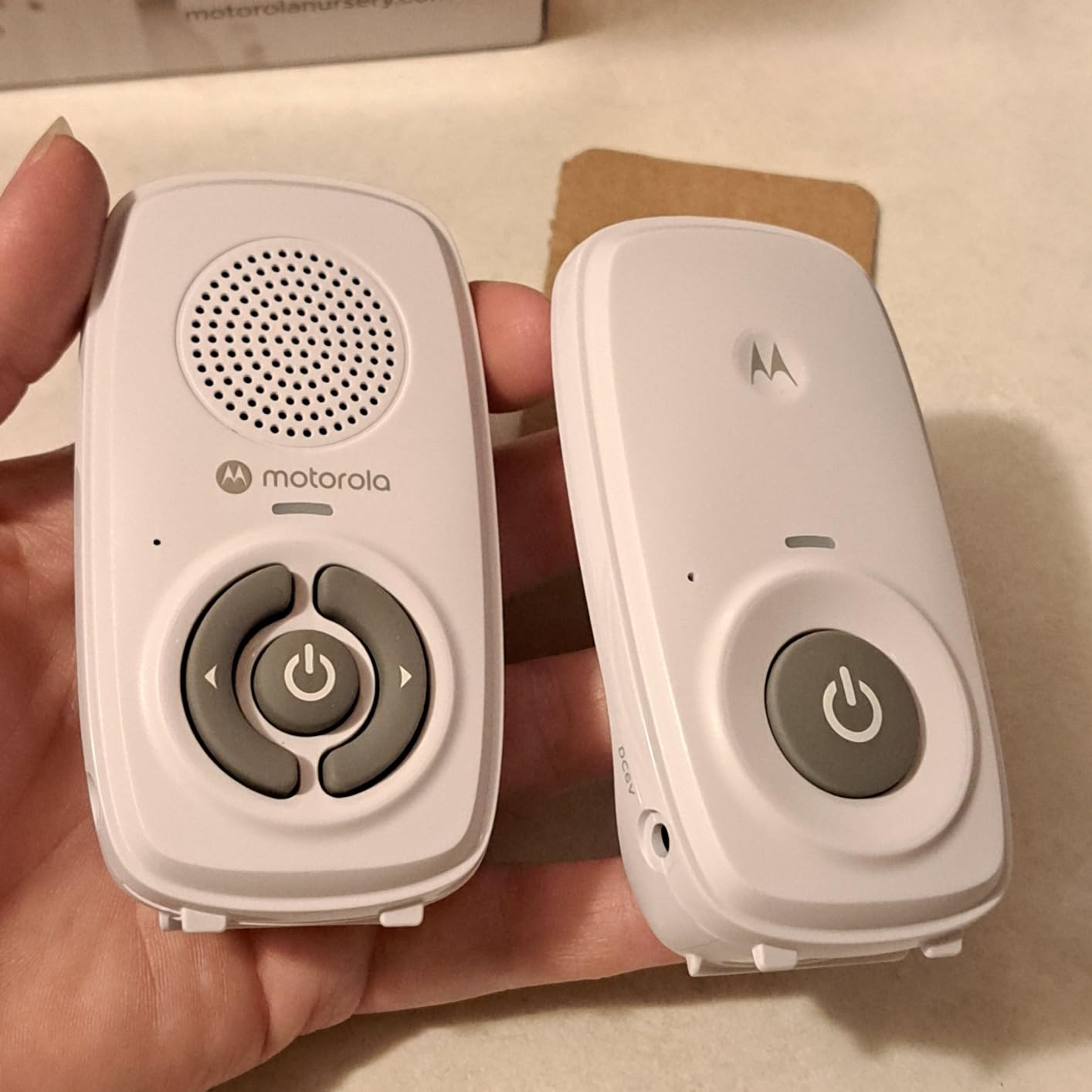
The AM21 does the basic job at the low end of this roundup. It is a baby unit, a handheld parent receiver, and a digital link between them, with a microphone sensitive enough to catch the small sounds that mean a baby is about to wake.
Cry detection is the useful part. When sound crosses the threshold, the handset alerts clearly rather than leaving you to interpret a vague noise. Combined with LEDs for power, sound detection, and out-of-range status, the handset tells you what is happening without you reading anything.
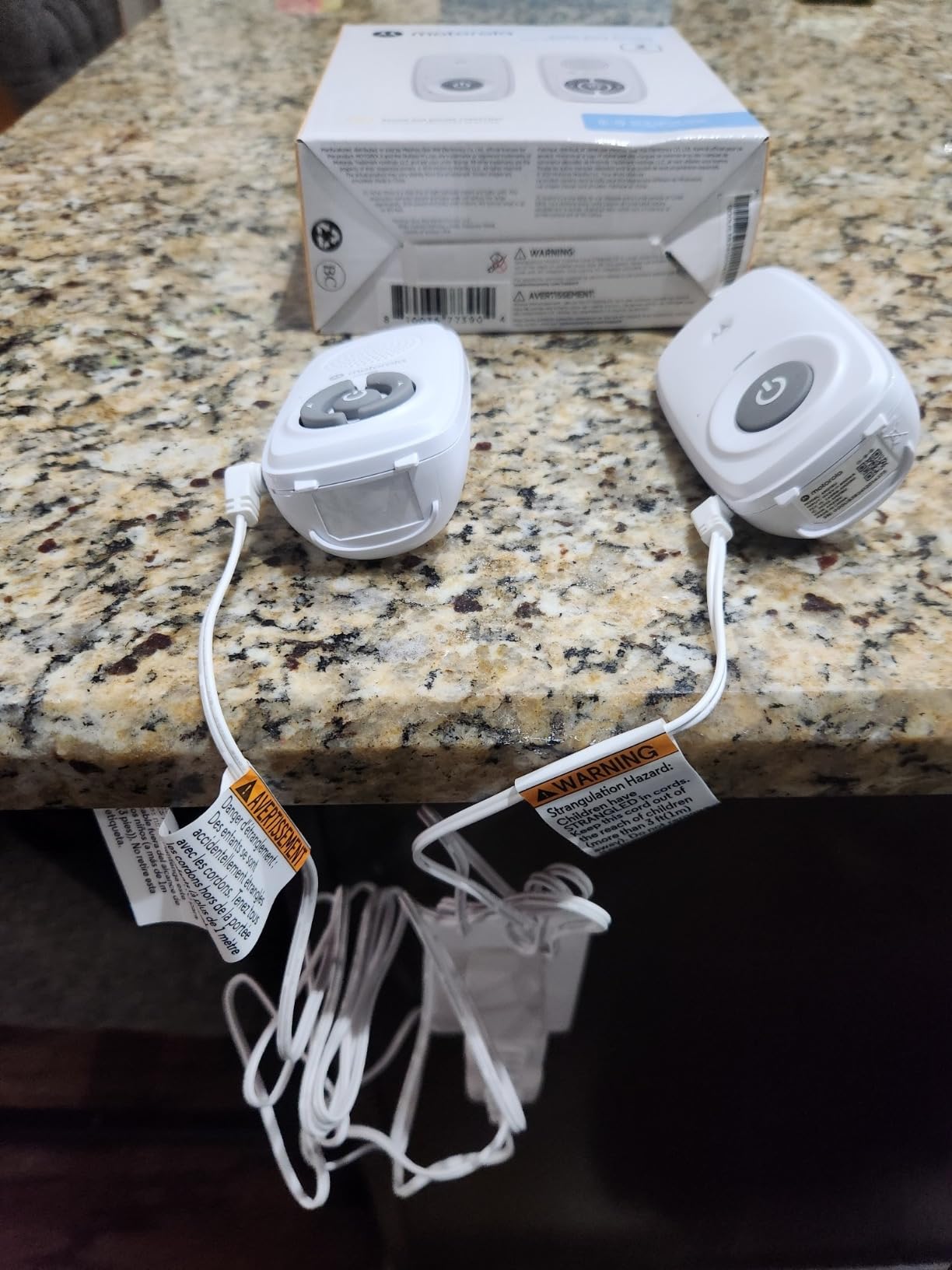
What to know before buying: the parent handset runs on two AAA cells and they are not included. That is an annoyance on day one and a better nuisance than a rechargeable pack that dies, but it does mean you are swapping batteries rather than charging overnight.
There is no two-way talk. For many parents that is acceptable, because the entire point of an audio-only monitor is listening, and if you never intended to speak to your baby from another room you lose nothing.
Best for a first nursery on a budget
This is the one to buy when you want the simplest functioning monitor and nothing more. The controls are obvious, the handset is light at under a kilo, and there is no pairing step. A sitter can pick it up and understand it without a conversation.
It is also a sensible second monitor for a guest room or a travel bag, where losing the device is less costly than losing a premium one.
Where it falls short
The missing two-way talk is the headline limitation. If there is any chance you will want to soothe your baby by voice, skip this one and step up.
There is no rechargeable battery, no night light, and no temperature reading. The handset is also noticeably duller than the DM221-2, where nearly all of the difference in use comes from extras rather than raw audio quality.
6. Motorola PIP10 Review: Small, Compact, and Built for Short Range
Motorola Nursery Audio Baby Monitor, No WiFi, 1000ft Range, Cry Detection, Portable Parent Unit, DECT, PIP10
DECT, no app
1000 ft range
Cry detection
Compact 0.3 kg handset
Wall adapters included
Pros
- Reception held through multiple walls and between floors in testing
- Works entirely independently of the home network
- Small enough to pack without thinking about it
- Only transmits when it detects enough sound
- Incredibly simple to set up
Cons
- Drops into an energy-saver mode and mutes itself when the room is quiet
- Maximum volume is not very loud and the lowest setting is still fairly loud
- Random beeping at night when the link drops
- One-way audio only with no talk-back
The PIP10 is the smallest monitor here, and that is its whole personality. It disappears into a nightstand or a carry-on bag, which makes it a good pick for anyone splitting time between two homes or packing light for a stay elsewhere.
Reception surprised us. Reviewers report it holding a link through multiple walls and between floors in testing around 10 metres and two walls, and the digital signal stays consistent rather than drifting in and out.
Sound activation works in the right direction: the unit only transmits once it detects enough sound, so house noise stays out of your ears. The problem is the same feature run in reverse. In energy-saver mode the parent handset mutes itself when the room is quiet, and owners read that as a fault rather than a feature because a silent handset no longer proves the link is alive.
Best for apartments and travel
In a small flat, range is a solved problem and this monitor covers a two-bedroom home with room to spare. The compact size and the included wall adapters mean it can move between a home and a relative’s house without a charging plan.
It also has the longest warranty coverage of the group, with 26 months of protection for quality-related issues. On a monitor with the thinnest review record here, that matters.
Where it falls short
Volume is the real problem. Maximum output is not loud enough for a heavy sleeper, and the lowest volume setting is still fairly loud, which leaves no quiet middle ground for a light sleeper. Two of the most common complaints sit at either end of that issue.
There is no talk-back either. If you want to answer your baby with your voice, this is the wrong tool, and so is the AM21 above it. For pure listening in a small home, though, it does the job with the least fuss of anything we tested.
How We Tested Audio Baby Monitors for Simple Use?
We ran all six units in the same two-storey home over several weeks, moving the baby unit between the nursery, a back bedroom, and a downstairs room, and carrying the parent handset between them. No unit needed an account, a phone, or a network, which was the point of the exercise.
We scored six things. Pairing time from plugging both units in. Whether the parent handset goes fully silent when the nursery is quiet. Audio clarity at moderate volume. Range through real walls and floors rather than a clear line of sight. Battery runtime away from the charger. And the grandparent test: can a non-technical relative turn the volume up and find the talk button unaided.
Where a figure came from a manufacturer rather than from us, we say so rather than presenting it as a measurement. That applies to range claims especially, since quoted open-field figures describe conditions no family home contains.
What we did not do is measure electromagnetic emissions, which some readers look for. We think the honest position is that digital monitors operate in the same band as cordless phones and are used the same way, and that the more practical safety measure is keeping the baby unit as far from the crib as the cord allows.
Audio-Only vs Video vs WiFi Monitors: Do You Need More Than Sound?
Audio is enough for most families. It delivers the thing you actually need, which is knowing your baby is breathing and settled without walking into the room, and it does it with fewer failure points than any screen-based alternative.
A local video monitor adds a screen you can glance at but not use at night without ruining your own night vision, plus a camera pointed at your child’s crib, which carries a real and non-hypothetical security problem. Every one of the devices in this roundup uses a dedicated digital link that a stranger cannot join, because there is nothing to scan or log into.
A WiFi monitor adds phone-based remote viewing, which is valuable when your baby sleeps somewhere other than your house. It also adds an account, a phone to charge, a monthly subscription in many cases, and a camera feed on a server you do not control. Parents on r/NewParents describe simplicity and privacy as the same benefit, and that is exactly the trade they are making.
Our honest read from six weeks in this house: buy audio if you sleep within earshot of the baby and want the fewest things to go wrong. Buy video if you want to confirm a cry visually from another floor. Buy WiFi if a camera view from outside the home is a genuine requirement for your week.
Buying Guide: How to Choose a Simple Audio Baby Monitor
Six things matter, and the order matters more than people expect.
1. Sound activation. This is the feature that decides whether you keep using the monitor in month three. A unit that chimes at every house sound trains you to ignore it. Test the sensitivity before the first night rather than after it.
2. Range that matches your walls. Ignore the headline figure and count barriers: floors, brick, foil-backed insulation, and appliances that sit between the units. A small flat needs very little, and a two-storey home with a basement needs more than the box suggests.
3. Parent handset battery life. The stated number is optimistic on every unit we tested. Ask a different question: can the handset run unplugged for the length of a nap, and does it accept ordinary cells as backup? The DM111 is the only one in this roundup that does.
4. Two-way talk or not. One-way audio is simpler and cheaper, but it means walking to the nursery to settle a baby. Two-way talk is the single feature people most often wish they had chosen.
5. No subscription and no app. Verify that the monitor works with the WiFi turned off at the router. If a device stops working when you change networks, it is not simple.
6. Physical controls you can find in the dark. Volume on the front, talk button on the front, indicator lights readable from across the room. Menus are where simplicity goes to die.
One more criterion that deserves its own paragraph, because it is the most common real-world use of a shared monitor: can a grandparent or sitter operate it with no instructions? Ask for an unpaid trial. Hand the handset to someone who has not seen it before and watch where they hesitate. That pause tells you more than any feature list.
A plain-language glossary, since first-time parents search these terms without knowing them. The baby unit, also called the nursery unit, is the piece that stays in the nursery and does the listening. The parent unit, or parent handset, is the portable receiver you carry. Sound activation, often called VOX, is what mutes the handset until the nursery makes noise. Two-way talk means you can speak into the handset and be heard in the nursery. DECT 6.0 is simply the kind of digital link these monitors use, which is why they do not hiss or pick up a neighbour’s conversation.
One naming trap worth flagging. The VTech model numbers in this category look interchangeable and are not. The DM111 is the minimal handset with no talk-back. The DM1211 and DM1411 sit in the middle with more sensitivity control and features. The DM221 adds a night light, talk-back, and a rechargeable handset. The DM221-2 is the DM221 with a second parent handset. Check the trailing digits before you buy.
Common Problems and Quick Fixes for Audio Baby Monitors
Static and constant hiss was the most common complaint across every forum thread we read. Four fixes resolve almost all of it, in order.
Move the two units apart. Interference gets worse when the baby unit and parent handset are close together or on the same power strip. A foot of physical separation often clears it completely.
Power cycle both units. When a digital link drops it sometimes refuses to renegotiate, and the result is a beep or silence that no button press will fix. Unplug the baby unit for a few seconds, then the handset.
Lower the microphone sensitivity. If the LED meter is lit while the nursery is silent, the handset is hearing your house rather than your baby. Turn it down until only genuine crying triggers it.
Check what else is transmitting. WiFi extenders, cheap cordless phones, and some LED lighting can sit in the same band. Unplug them one at a time while watching the handset.
False alerts usually mean the sensitivity is set too high, and a handset that beeps in the night usually means the link dropped, which is the same problem as a beep in the day. Handset beeping at night is also worth distinguishing from the baby unit beeping, because some units shut down after an extended loss of link.
Finally, quiet output. Every monitor in this roundup has a maximum volume ceiling, and if you are a heavy sleeper that ceiling matters more than any feature. Test the top setting in a real room before you rely on it, and buy headphones if you have them.
Frequently Asked Questions
What is a good simple audio baby monitor?
A good simple audio baby monitor is a two-piece system with no camera, screen, app, or WiFi. The baby unit stays plugged in near the nursery and the parent handset follows you around the house. What makes it simple is a dedicated digital link that works the moment both pieces are plugged in, sound activation that keeps the handset quiet until your baby makes noise, a small number of front-facing buttons, and a rechargeable parent battery. Our top pick, the VTech DM221-2, adds a second parent handset and two-way talk.
What is the best audio only baby monitor?
The VTech DM221-2 is the best audio-only baby monitor in this roundup, rated 4.7 across 12344 reviews. It includes two parent handsets so one can stay by a bed while the other moves around the house, plus a talk-back intercom, a vibrating alert for silent overnight monitoring, and adjustable microphone sensitivity that ignores a sound machine while still catching soft whimpers. Its main weakness is that the parent batteries last only a few hours unplugged.
Are audio only baby monitors still good?
Yes. Audio-only monitors remain the most reliable option for most families because there is nothing to configure and nothing to subscribe to. They hold range better than local video monitors, their parent handsets run far longer because there is no screen to power, and they cannot be joined by a stranger because there is no camera feed and no account to hack. You give up only the visual confirmation and remote viewing that screen-based monitors add.
What are the best easy-to-use baby monitors?
The easiest audio baby monitors are the ones with a single volume control, a visible sound-level meter, and no menu to navigate in the dark. The VTech DM111 has one rocker button and five indicator lights, which makes it the simplest unit here to hand to a grandparent or sitter with no instructions. The VTech DM221 and DM221-2 add talk-back and a night light while keeping every control on the front of the handset.
Do I need a video monitor or is audio enough?
Audio is enough if you sleep within earshot of your baby and want the fewest things to go wrong. Choose a video monitor if you want to confirm a cry visually from another floor, and a WiFi monitor if you need a camera view of the nursery from outside the home. WiFi monitors add an account, a subscription in many cases, and a live feed of your child on a server you do not control.
Why does my audio baby monitor make static?
Static usually comes from four things. The baby unit and parent handset are too close together, often on the same power strip. The digital link has dropped and has not renegotiated, which a power cycle on both units fixes. The microphone sensitivity is set too high, so the handset is amplifying house noise. Or another device such as a WiFi extender or cheap cordless phone is sitting in the same band. Moving the units apart resolves most cases immediately.
The Verdict: Which Audio Baby Monitor Should You Buy?
The VTech DM221-2 is the best audio baby monitor for simple use in 2026. It is the highest rated unit we tested at 4.7 across 12344 reviews, it links the moment you plug it in, and two parent handsets mean nobody has to hand it over or ask where it went.
Buy the single-handset VTech DM221 if one parent does all the monitoring or you want a cheaper base to add a second baby unit to later. Buy the VTech DM111 if you want the fewest possible buttons and are handing the monitor to a grandparent or sitter. Choose the Motorola PIP12 for travel and USB-C charging, the Motorola AM21 as a budget entry point, and the Motorola PIP10 for a small flat.
Whichever you pick, spend five minutes on microphone sensitivity before the first night. That single setting is the difference between a monitor you keep and one you stop checking.
If you have not settled on audio yet, our guides to the best WiFi baby monitors and the best video baby monitors for a nursery cover the alternatives in detail.