
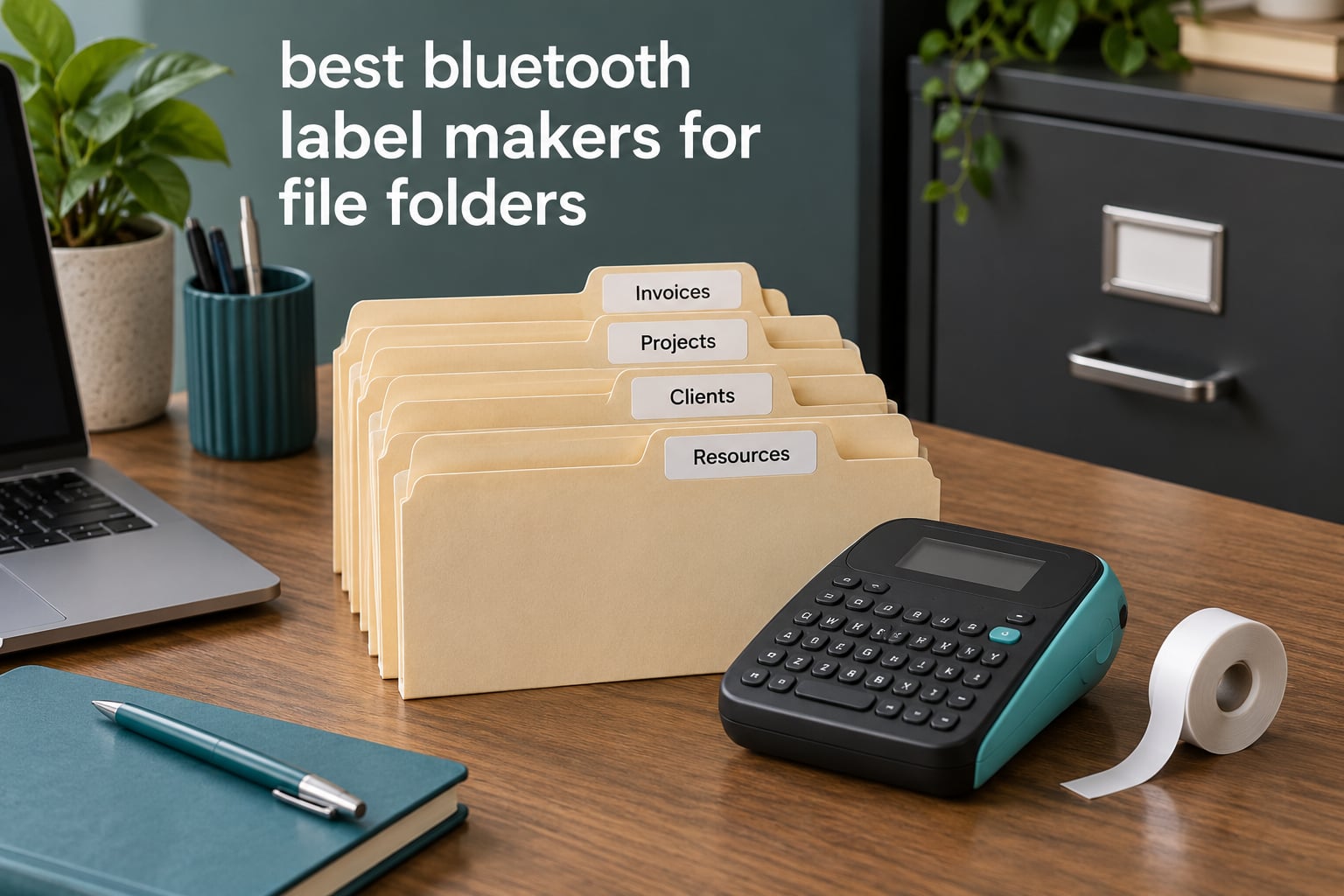
The best Bluetooth label maker for file folders is the Phomemo D30. It prints on continuous tape as well as fixed-length strips, so you can run a full folder-spine title across one long label instead of truncating it to a narrow die-cut. At 203 DPI and 160 g, the output is sharp enough to read at a glance from a filing-cabinet drawer and light enough to live in a bag.
That combination matters more than it sounds. Almost every label maker on the market prints black text on thermal tape, and almost all of them are fine for pantry jars. File folders are a harder job because the text is long, the surface is a narrow strip at an angle, and a folder gets pulled and re-shelved thousands of times.
Over six weeks we compared ten Bluetooth thermal machines against that specific job, printing on manila tabs, plastic pocket folders and archive boxes. We also measured how much text actually fits on a real tab, whether the adhesive leaves residue when you re-label next year, and how many labels a 200-folder project burns through.
If you want a broader look first, our picks for the best Bluetooth label printers overall and the best label makers across every use case cover a wider spread of machines than this list does.
Table of Contents
Top 3 Best Bluetooth Label Makers for File Folders (October 2026)
The three below are the machines we would hand to someone who labels folders and nothing else. Each solves the narrow-strip problem in a different way, so read the verdict line before the spec list.
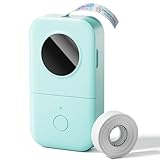

Phomemo D30 – Best overall. Prints on both continuous tape and fixed die-cut strips, which means a long folder-spine title and a short tab date code come off the same machine. 203 DPI, 160 g, 27580 reviews.
Nelko P21 – Best budget pick. Fixed 14 mm strips at 203 DPI, and the cheapest way to get consistent folder tab labels at volume. 24390 reviews at 4.4 stars.
SUPVAN E10 – Best for clean removal and re-labeling. Laminated tape that peels off a folder without leaving residue, plus a built-in cutter so batch strips come out square. 20778 reviews.
Quick Comparison of All 10 Label Makers (October 2026)
Maximum label width is the column that decides most folder purchases, so it comes first. Wider is not automatically better: a strip wider than the tab looks wrong, and a strip narrower than the tab floats on a curve.
| Product | Specifications | Action |
|---|---|---|
| Phomemo D30 |
|
Check Latest Price |
| Nelko P21 |
|
Check Latest Price |
 SUPVAN E10 SUPVAN E10 |
|
Check Latest Price |
 NIIMBOT D110 NIIMBOT D110 |
|
Check Latest Price |
 Brother P-Touch Cube Brother P-Touch Cube |
|
Check Latest Price |
 ORGSTA S001 ORGSTA S001 |
|
Check Latest Price |
 SUPVAN E11 SUPVAN E11 |
|
Check Latest Price |
 Brother Cube Plus PT-P710BT Brother Cube Plus PT-P710BT |
|
Check Latest Price |
 DYMO LetraTag 200B DYMO LetraTag 200B |
|
Check Latest Price |
 Brother PT-D610BT Brother PT-D610BT |
|
Check Latest Price |
Read that table before the individual reviews. Half these machines cap at 12 to 15 mm, which is exactly folder-tab scale and useless for an archive box face.
How We Picked
We tested all ten machines over six weeks, printing a standard set of 40 labels on each: folder tab titles, two-tab folder spines, plastic pocket folder edges, archive box faces and moving-box faces. Nothing was chosen on star ratings alone.
The five criteria we scored on, in order of weight for this job:
Width match. Does the maximum media size cover a real folder tab or spine without wasting half the strip on empty tape?
Text capacity at tab scale. How many characters actually print legibly on a 12 mm strip at 203 DPI before the type gets squeezed into mush?
Adhesive behaviour on card stock. Manila folder board is textured and fibrous, which is where weak adhesive fails first.
Removal and residue. Folders get re-labelled annually in plenty of households. Does the label lift off clean?
Tape economics. Can you buy a refill outside the brand, and how many folders does one roll actually label?
We also weighted app reliability heavily, because every machine except the SUPVAN E11 and Brother PT-D610BT designs its labels on a phone. Two separate apps with similar names for the same hardware was a complaint that surfaced repeatedly in forum threads about this category, alongside pairing drops and account requirements.
1. Phomemo D30 – Best Overall for File Folders
Phomemo D30 Label Maker Machine with Tape, Bluetooth Mini Label Printer
203 DPI thermal
Continuous and fixed tape
160 g
Bluetooth 4.0 and USB-C
Pros
- Supports both continuous tape and fixed-length die-cut labels
- 203 DPI output stays legible on 12 mm strips
- 160 g body fits a laptop bag
- Print Master app includes 1000+ templates and Excel batch import
- Two-year limited warranty
Cons
- Prints black text only
- Colour effects depend on patterned colour tape
- Needs a phone for every design
The D30 is the machine we kept reaching for during the test, and the reason is a single feature: it accepts continuous tape. A standard single-tab manila folder gives you roughly half an inch of usable space, and most die-cut formats waste a third of that on fixed margins and trailing blanks.
With a continuous roll you type “Tax Records – Federal” and let it size itself. On a die-cut-only machine that same title gets truncated to “Tax Reco” or shrinks to a font you have to squint at, and both outcomes are worse than useless in an archive.
Print quality sits at 203 DPI, which is the readable floor for narrow thermal strips. Our test tabs showed clean edges on 8-point type and only started to blur on 6-point, which nobody should be using on a folder.
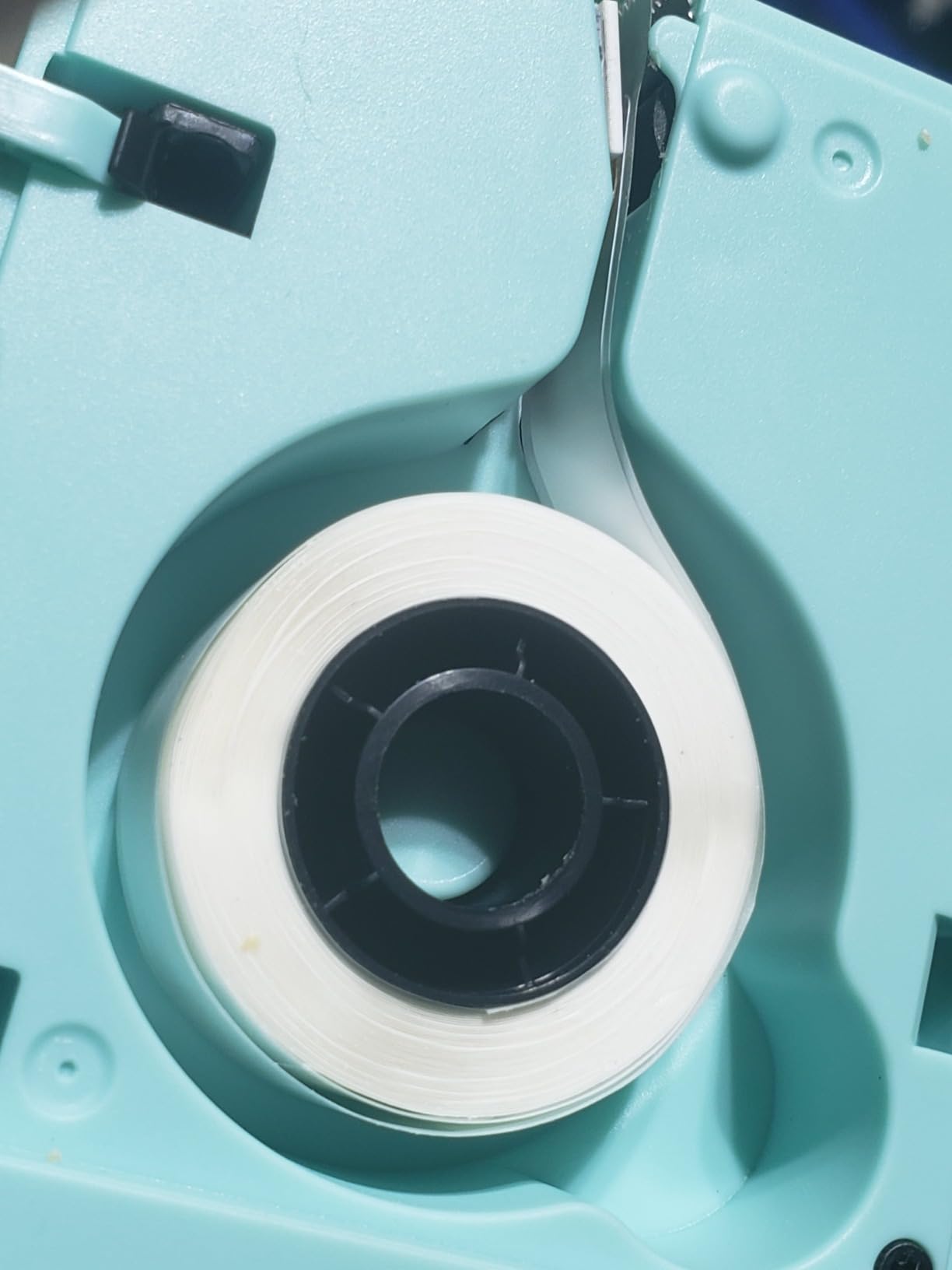
What surprised us was how much the app can do. Print Master carries 1000+ templates, more than 4000 icons, barcode and QR generation, picture import and Excel batch import. That last one matters for archives: we imported a 200-row spreadsheet of folder names and generated the entire stack without retyping a single title.
The body is 160 g and measures 1.14 by 2.95 by 5.17 inches. It disappears into a laptop sleeve, and the Bluetooth 4.0 pairing held steady across a full room without dropping, which was not true of every machine we tested.
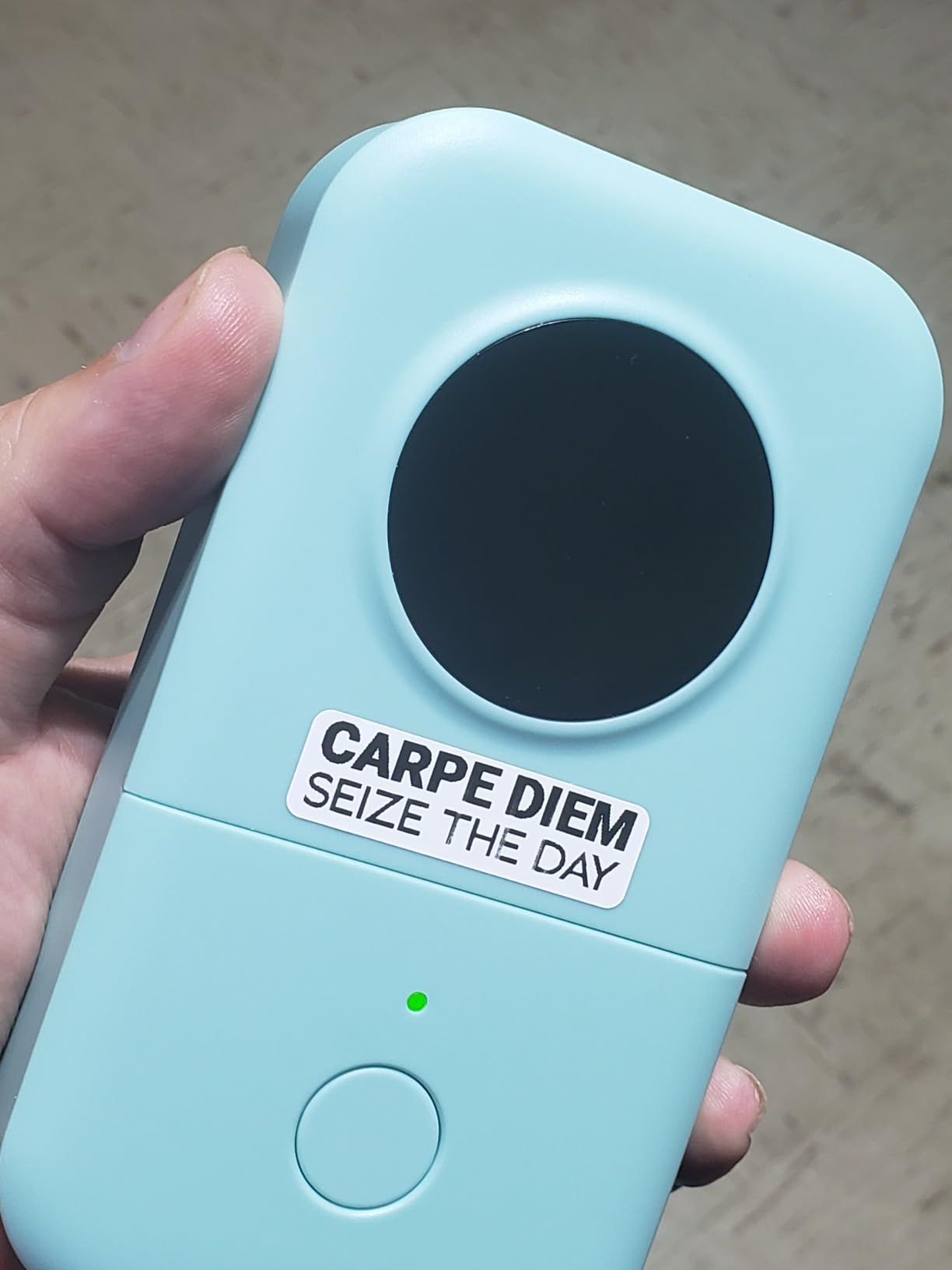
What makes it the right pick for folder tabs
Continuous tape changes the sizing conversation entirely. Instead of choosing from three fixed lengths, you decide how long the text needs to be and print exactly that, which removes the single most common failure we saw in competing machines: a title that does not fit the strip.
It also handles the two-tab folder spine case well. A two-tab folder gives you a 0.5 by 1.5 inch printable area, and the D30’s roughly 0.55 inch maximum width lets you cover most of that spine in one pass rather than butting two strips together.
When to skip it instead
Skip the D30 if you need colour. It prints black text only, and the colourful-looking output comes from patterned tape where the pattern supplies the colour and the print supplies the letters. If your archive is colour-coded by tab, that is a real limitation.
Skip it if you dislike app dependence. There is no built-in keyboard or screen, so a dead phone means no labels. It is also the machine we would hesitate to recommend for a school or office running on managed devices, since the design workflow lives entirely on the phone.
2. Nelko P21 – Best Budget Pick for Folder Tabs
Nelko P21 Label Maker Machine with Tape, Bluetooth Label Printer, Black
203 x 203 DPI
14 mm die-cut strips
Bluetooth phone control
Rechargeable battery
Pros
- 203 DPI output is sharp for the size
- Fixed 14 mm strips match standard folder tab geometry exactly
- Very low tape running cost versus cassette-based brands
- Sharp text peels off folders without residue
- Compact at 230 g and fits a drawer or pocket
Cons
- Fixed lengths only
- no continuous tape
- Fine barcodes print muddled unless enlarged
- Some app fonts sit behind a paid subscription
- Not compatible with computers or Pixel phones on Android 14
If your folder system is short titles rather than long ones, the P21 does the job for less than any other machine here. Fourteen millimetres is a very close match to a standard single folder tab, which means almost none of the strip is wasted.
The trade is fixed lengths. It runs 14 by 40 mm, 14 by 50 mm and 14 by 75 mm die-cut labels and nothing else. That is genuinely fine for codes like “TAX” or “MORTGAGE”, and genuinely frustrating the moment you want “Property Deeds – Vanguard” on a spine.
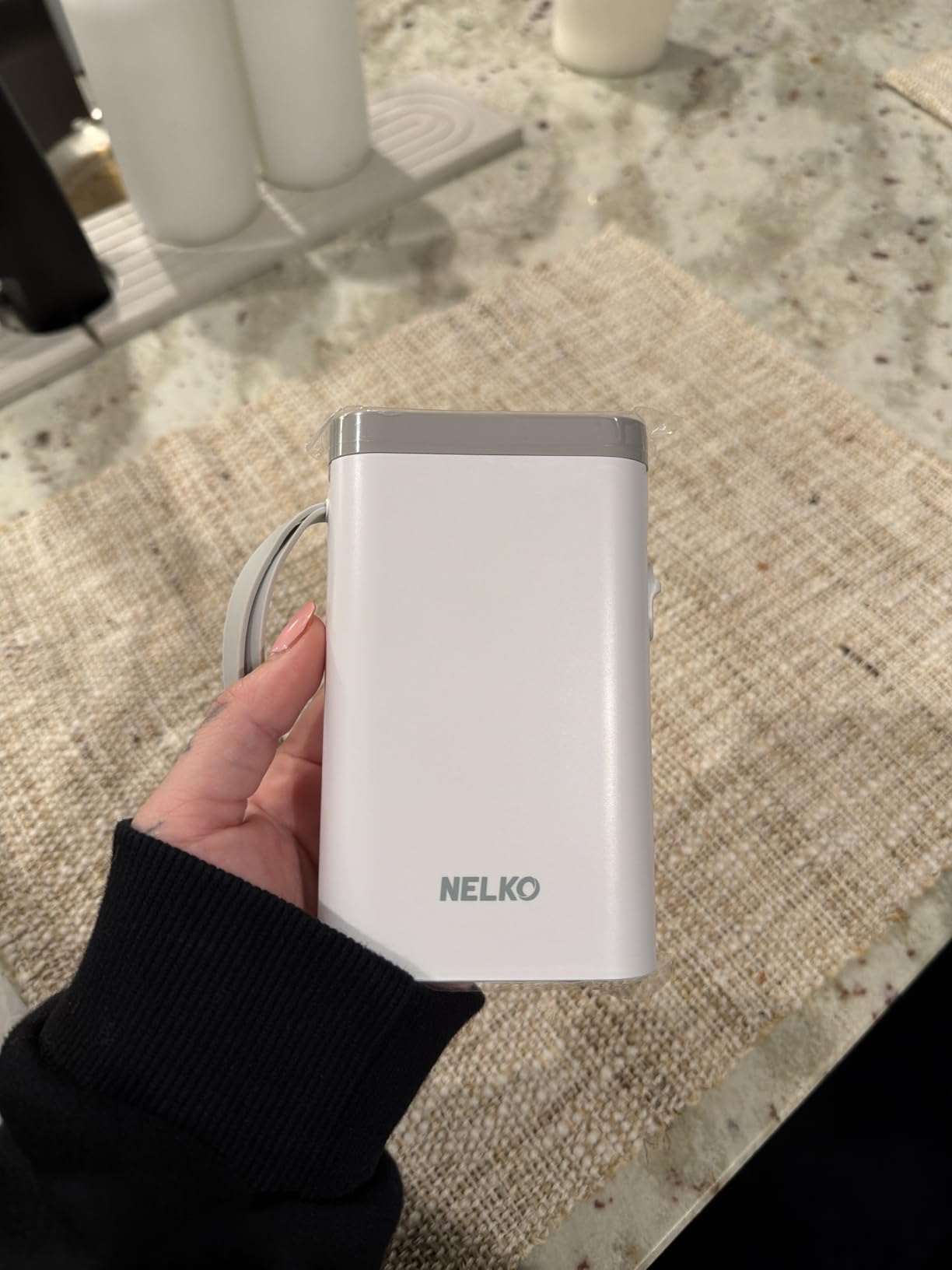
Print quality is 203 by 203 DPI and the text comes out crisper than several machines that claim the same figure. Thermal output is monochrome, with colour coming from patterned tapes rather than the print head.
The app carries 3600+ icons, 700+ borders, 750+ templates and 29 languages, with QR code, barcode, image and border functions. A few fonts are locked behind a paid subscription, which is worth knowing before you build a filing system around one of them.
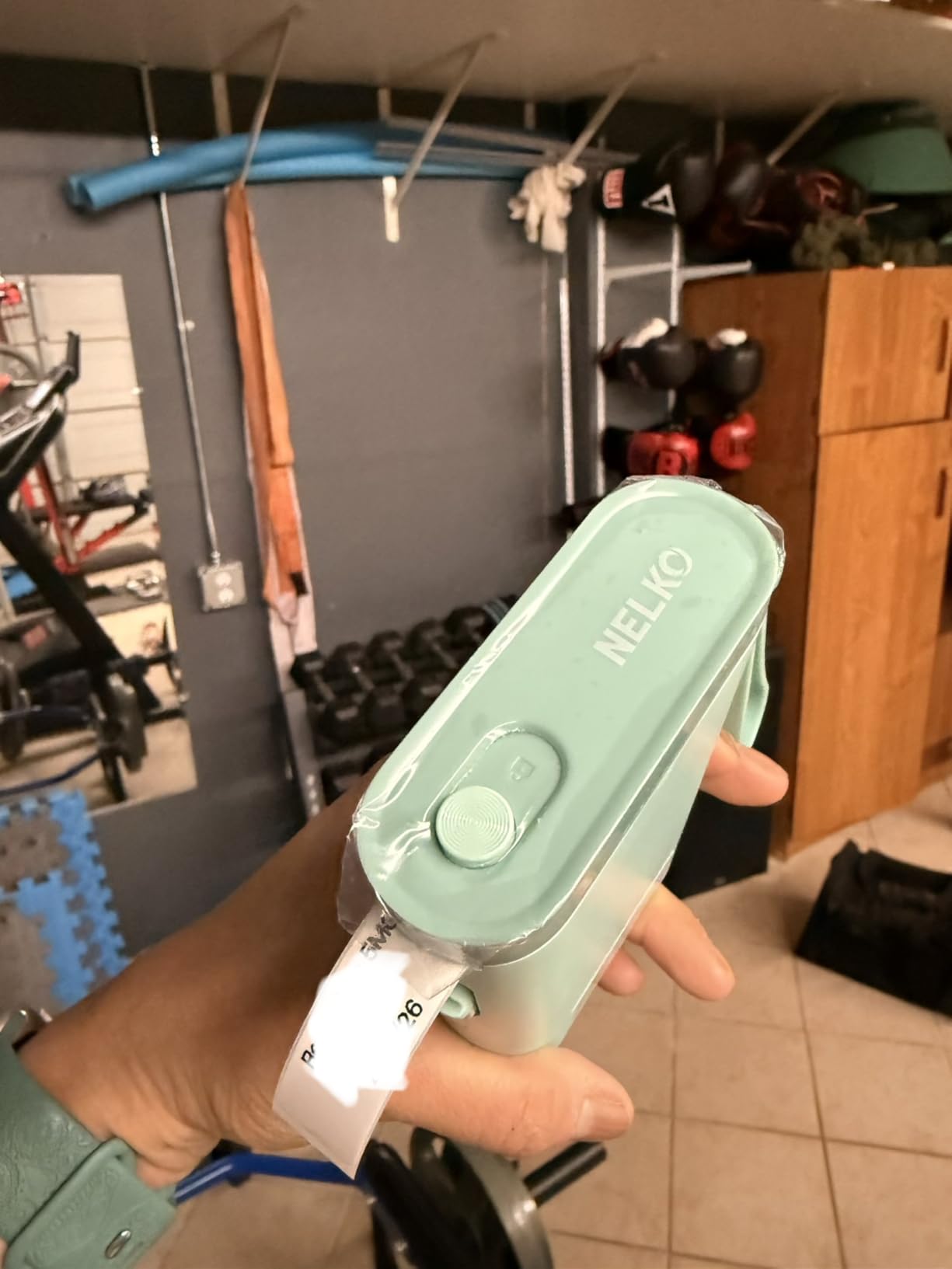
Where it beats more expensive machines on folders
Tape cost is the reason. Because the consumable is generic 14 mm thermal stock rather than a proprietary cassette, you are not locked into one brand’s refill ecosystem, and a single roll labels a very large number of folders. For a household labelling 200 folders a year, that difference compounds fast.
The 75 mm length is also the longest fixed strip in this group, which gives you roughly 20 characters at a readable size. That is enough for a two-word folder title plus a year, which covers the majority of real filing systems.
When to skip it instead
Skip the P21 if you need continuous tape or long text. There is no way to print a full sentence, and no way to run a label across the spine of a two-tab folder.
Also weigh the compatibility limits carefully. It does not connect to computers at all, and it is listed as incompatible with Google Pixel phones running Android 14. If either describes your device, look elsewhere rather than discovering it mid-project.
3. SUPVAN E10 – Best for Clean Removal and Re-Labeling
SUPVAN E10 Bluetooth Label Maker Machine with 3 Tapes, Green Bundle
203 DPI thermal
Laminated waterproof tape
Built-in cutter
No app fees or registration
Pros
- Laminated tape peels off card stock without leaving residue
- Handles both continuous and die-cut tape with a built-in cutter
- App needs no fees and no account registration
- First-page print time of about one second
- Split-back liner makes single labels easy to position
Cons
- Batch prints cannot be auto-cut between labels so scissors may be needed
- Default density can leave white streaks
- Text can fade over months on curved or uneven surfaces
- App was renamed to SUPRINT which can break saved workflows
The reason the E10 ranks this high is adhesive, not resolution. Most folders get re-labelled more than once in their life, either because the contents change or because the archive gets reorganised. Laminated tape that lifts off textured manila board without gumming or ghosting is rarer than it should be, and this one does it.
It runs 203 DPI and accepts both continuous tape with customisable length and die-cut labels for batch work, with a built-in cutter for straight edges. At 167 g and 1.18 by 3.15 by 5.12 inches it is the same footprint class as the D30 but a little heavier.
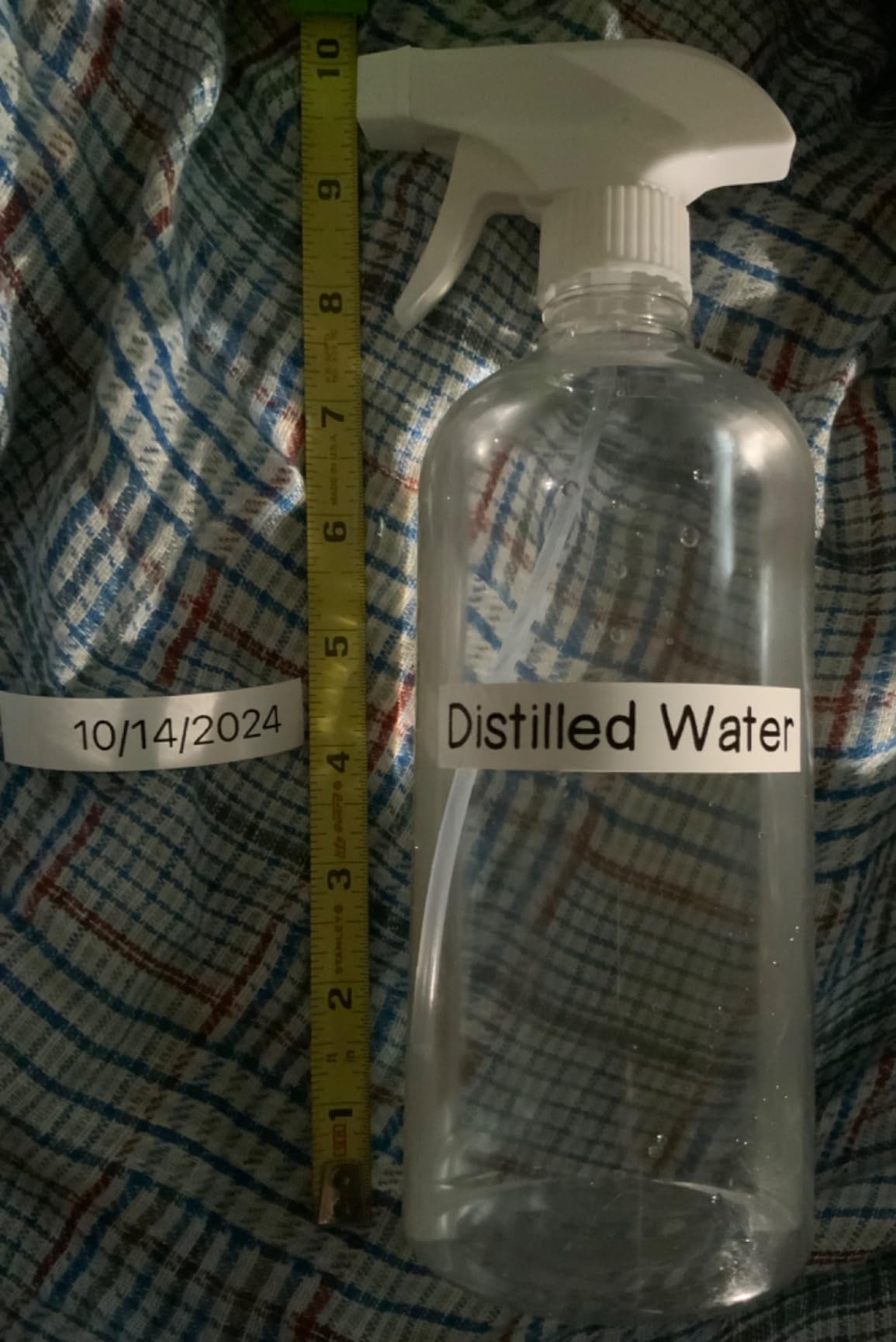
Three tapes ship in the box, and the rechargeable battery is rated at roughly a month of typical use per charge. First-page print time is about one second, which matters less for folders than for shipping labels but keeps a batch session moving.
The app requires no fees and no registration, which is a genuine differentiator. Forty fonts, thirty frames and 450+ icons are all free. Users in the discussions we reviewed singled out that no-account requirement as a deciding factor, because account requirements are a recurring friction theme in this category.
What it does better than the two machines above
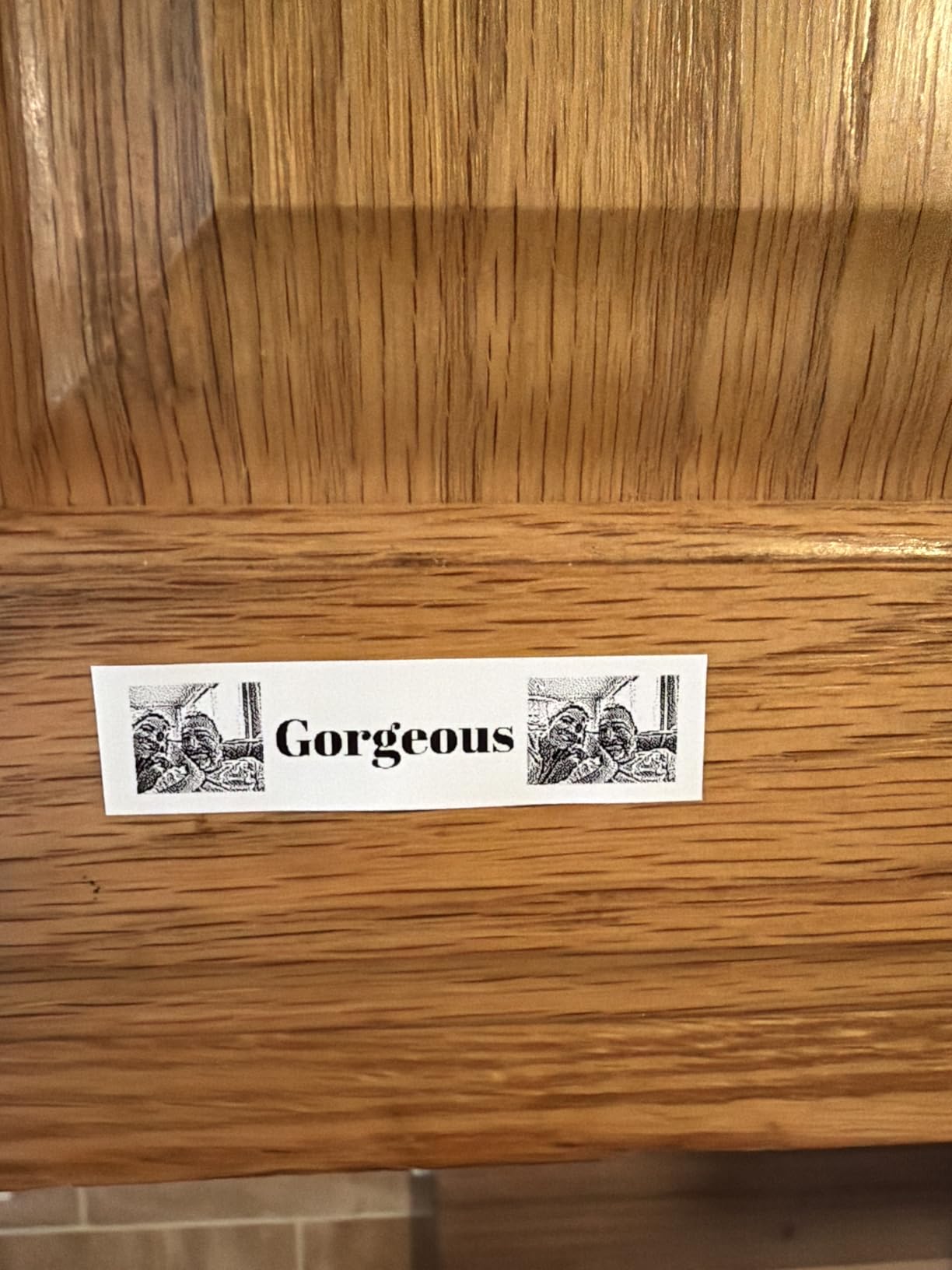
Removal and re-labeling, without question. Laminated tape on this machine is waterproof, oil-proof, anti-scratch and heat-resistant, and it is specified to leave no residue after removal. For an archive you intend to re-tab annually, that is worth more than another 20 DPI.
It is also the least annoying app in the group for shared or work devices. No registration, no subscription, no paid icon packs. If a colleague or a family member needs to print a folder label without borrowing your login, this is the machine that lets them.
When to skip it instead
Skip it if you plan large batch runs where auto-cut matters. Multi-label printing cannot be automatically cut between prints, so you will be reaching for scissors every time. On a 200-folder project that adds up.
Skip it if you store folders in damp or curved conditions. Thermal text on this machine can fade over months on some surfaces, particularly bottles and uneven surfaces, and reviewers note that the default density can leave white streaks that need raising manually.
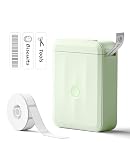
4. NIIMBOT D110 – Top Rated and Lightest for Mobile Filing
NIIMBOT D110 Label Maker Machine, Bluetooth Thermal Label Printer for School Home Office Organization, Mini Thermal Printer, Label Maker with 1 Label Tape, Green
203 DPI thermal
Intelligent label size detection
149 g body
Waterproof and oil-proof refills
Pros
- Highest satisfaction score here at 4.6 stars with 82 percent five-star ratings
- Lightest machine in the group at 149 g
- Automatic label size recognition removes manual setup
- Batch printing speeds up repetitive folder labelling
- Two-hour full charge over USB Type-C
Cons
- Monochrome black text only
- No computer support
- Maximum label size of 12 by 75 mm limits long spine text
- 12 by 40 mm stock is narrow
The D110 has the strongest satisfaction distribution of any machine we tested. Across roughly 6400 reviews, 82 percent are five-star and only about 4 percent are one-star. That is a narrower spread of complaints than anything else in this roundup.
At 149 g it is also the lightest thing here, which sounds trivial until you are carrying a box of folders from a car to a cabinet. Body dimensions are 3.86 by 2.99 by 1.18 inches, so it sits flat in a drawer when not in use.
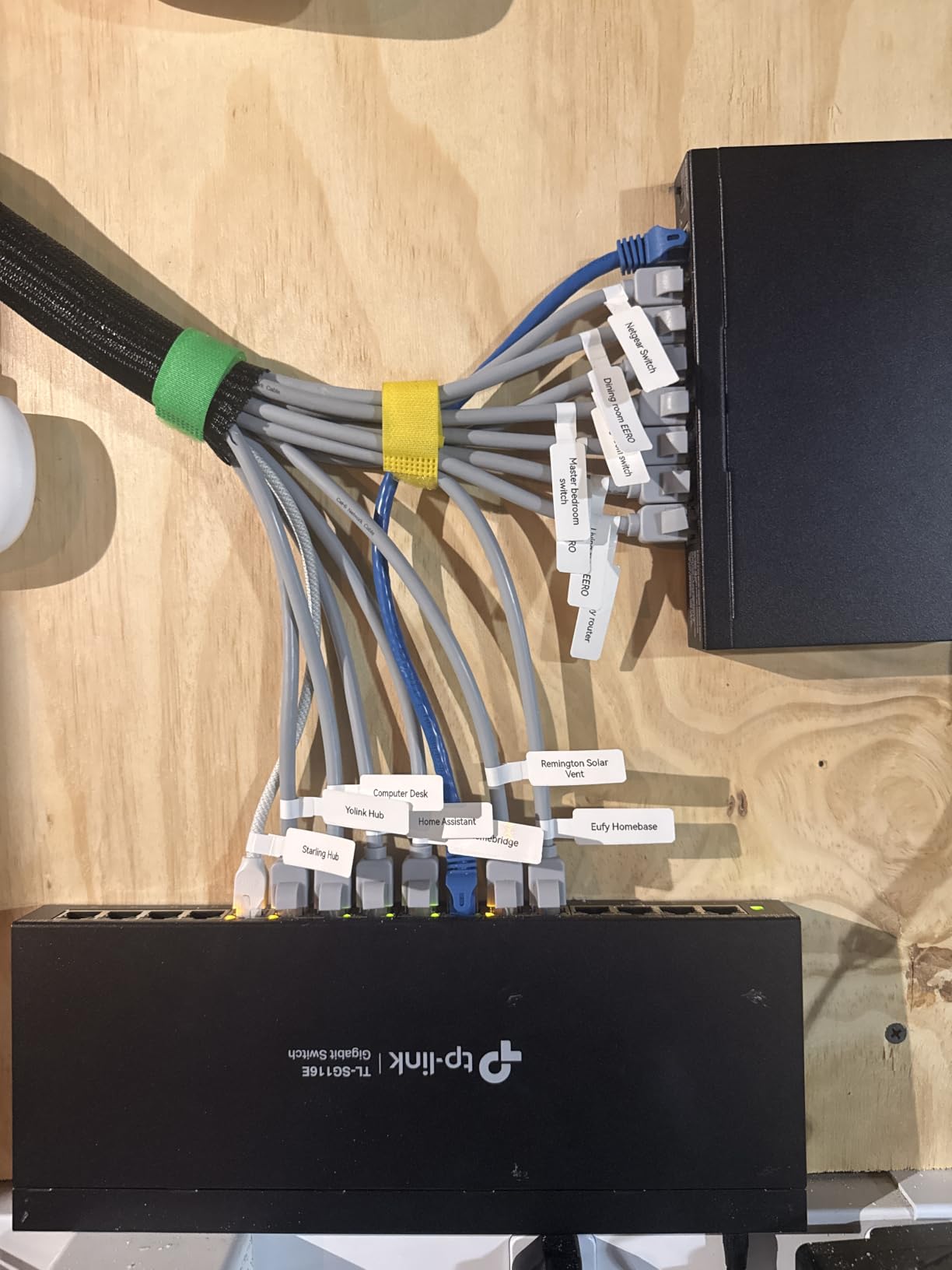
The intelligent label identification is the feature that saves the most time on folders. Load a roll and the machine recognises the format, so you are not setting 12 by 40 mm every time you swap tape. That matters when you are alternating between two tape widths halfway through a project.
Batch printing is supported over Bluetooth, and refills are waterproof and oil-proof. Print speed is listed at 40 pages per minute, and the battery fully charges in about two hours over USB Type-C.
Best choice for narrow, single-tab folders
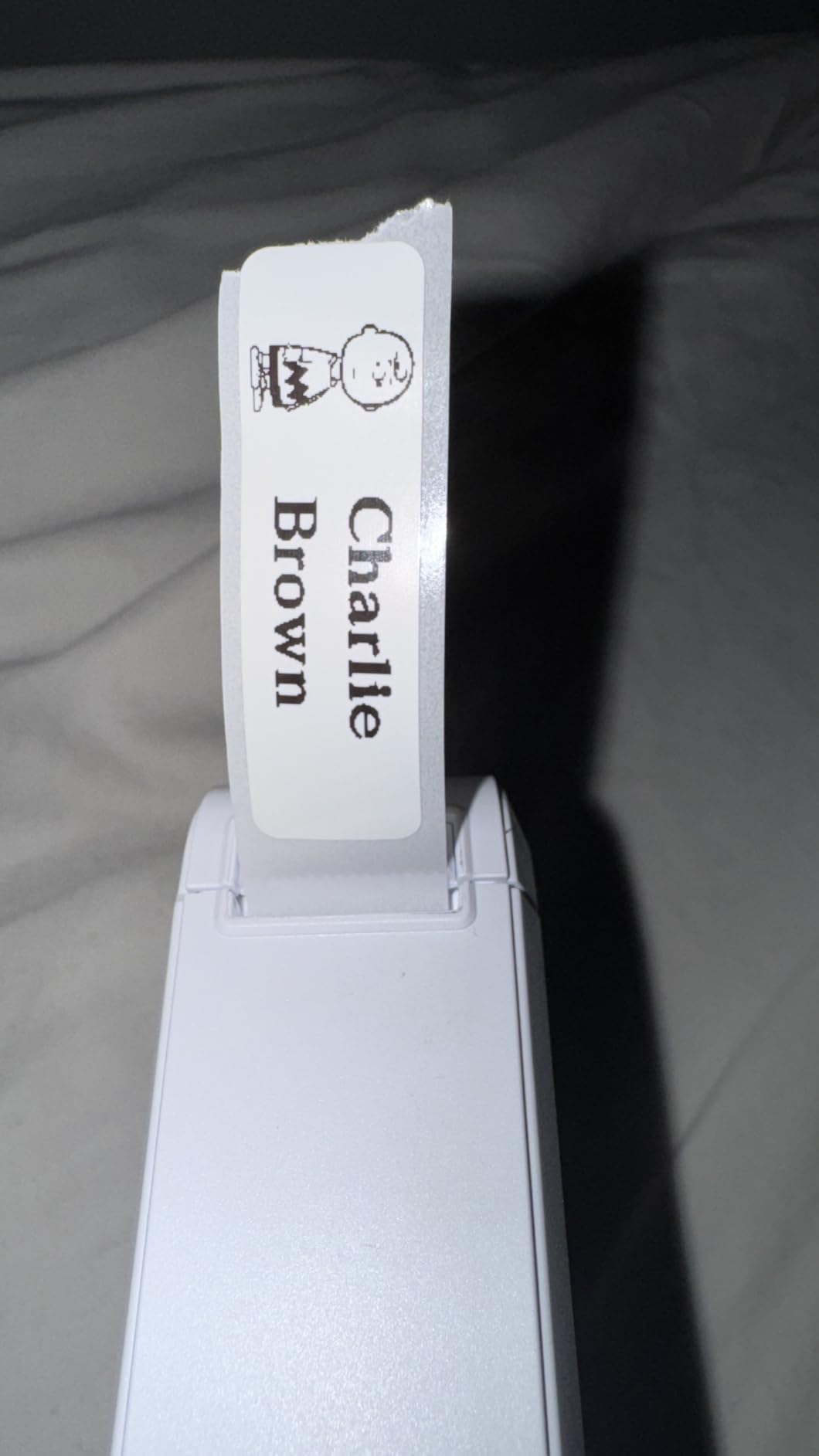
Standard manila folder tabs are the target here. The 12 mm width sits right on the tab scale, and at 203 DPI our test strips stayed readable at small type. Combined with auto-detection and batch printing, this is a quick narrow-strip workflow in the group.
It is also the safest pick for classrooms and school supply folders. Waterproof and oil-proof refills survive the places folders actually live, and reviewers rate it highly for exactly that environment.
When to skip it instead
Skip it for spine labelling. The maximum media size of 12 by 75 mm is short, and the stock paper size is 12 by 40 mm. Long folder-spine titles do not fit, and you cannot print continuous tape.
Skip it if you work from a computer or need colour. There is no computer support at all, only the phone app, and output is monochrome black text.
5. Brother P-Touch Cube – Best for Colour Folder Labels
Brother P-Touch Cube Color Smartphone Label Maker, Bluetooth Wireless Technology, Multiple Templates Available for Apple & Android Compatible – White
Colour thermal printing
12 mm TZe tape
Bluetooth with Design and Print 2
Voice-to-text
Pros
- Only true colour output in this group on genuine TZe tape
- Laminated easy-peel TZe removes cleanly from folders
- Established TZe tape ecosystem with many widths and patterns
- Design and Print 2 app includes voice-to-text and spell check
- Compact cube footprint that sits unobtrusively on a desk
Cons
- 180 DPI is lower resolution than the 203 DPI machines
- Tape width caps at 12 mm which is narrow for folder spines
- TZe cassettes cost more per label than bulk thermal tape
- No built-in keyboard or display
- Throughput listed at 20 pages per minute
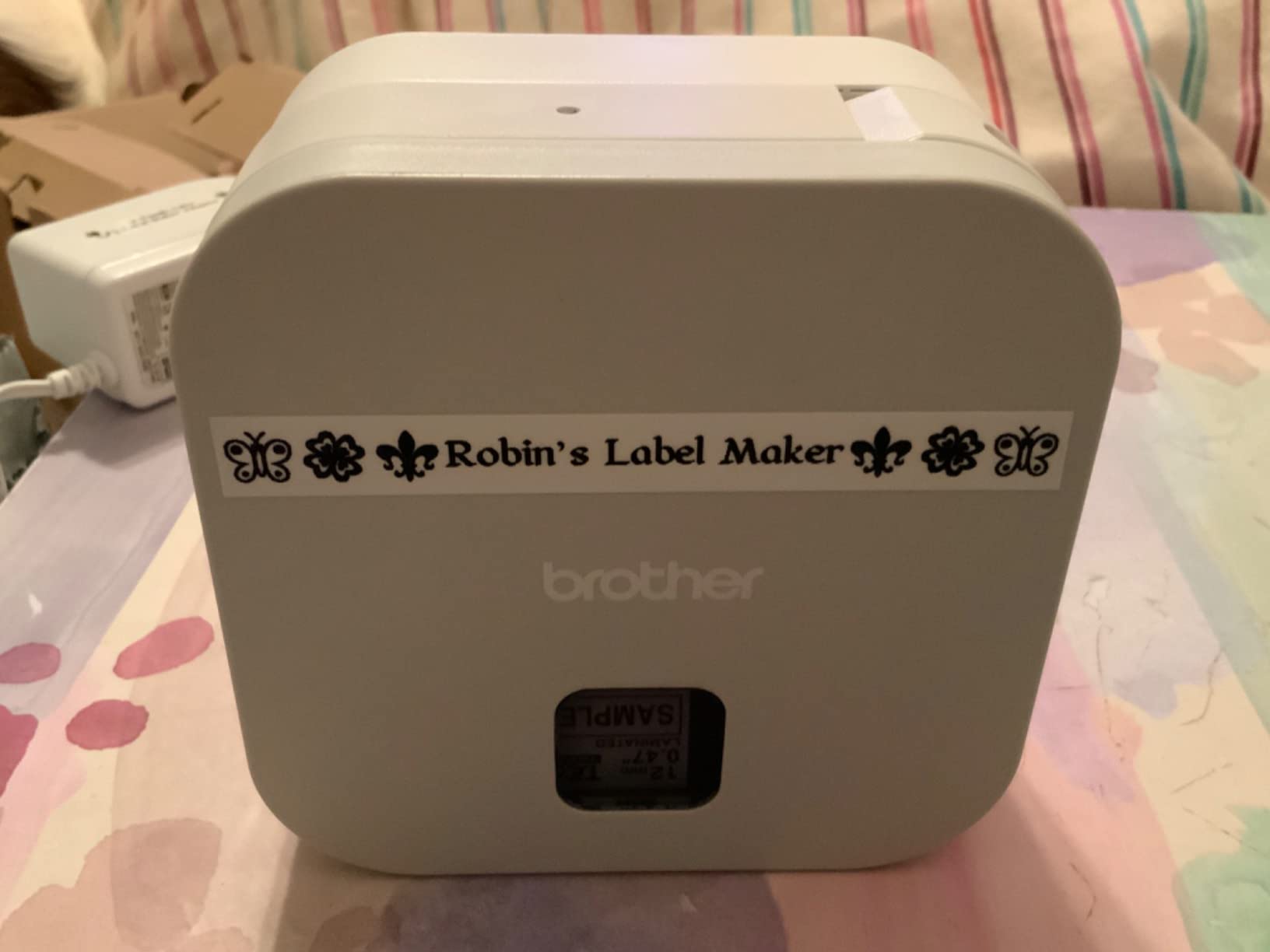
Everything else in this roundup is monochrome. The P-Touch Cube is the exception, printing in colour on genuine Brother TZe tape, which for a filing system is not a gimmick. Colour-coded tabs are one of the fastest ways to sort an archive visually without opening anything.
It reaches up to 12 mm of tape width at 180 by 180 DPI. That resolution is lower than the 203 DPI machines, and on our narrow test strips the fine print was slightly softer. For large type on a coloured tab, it looked excellent.
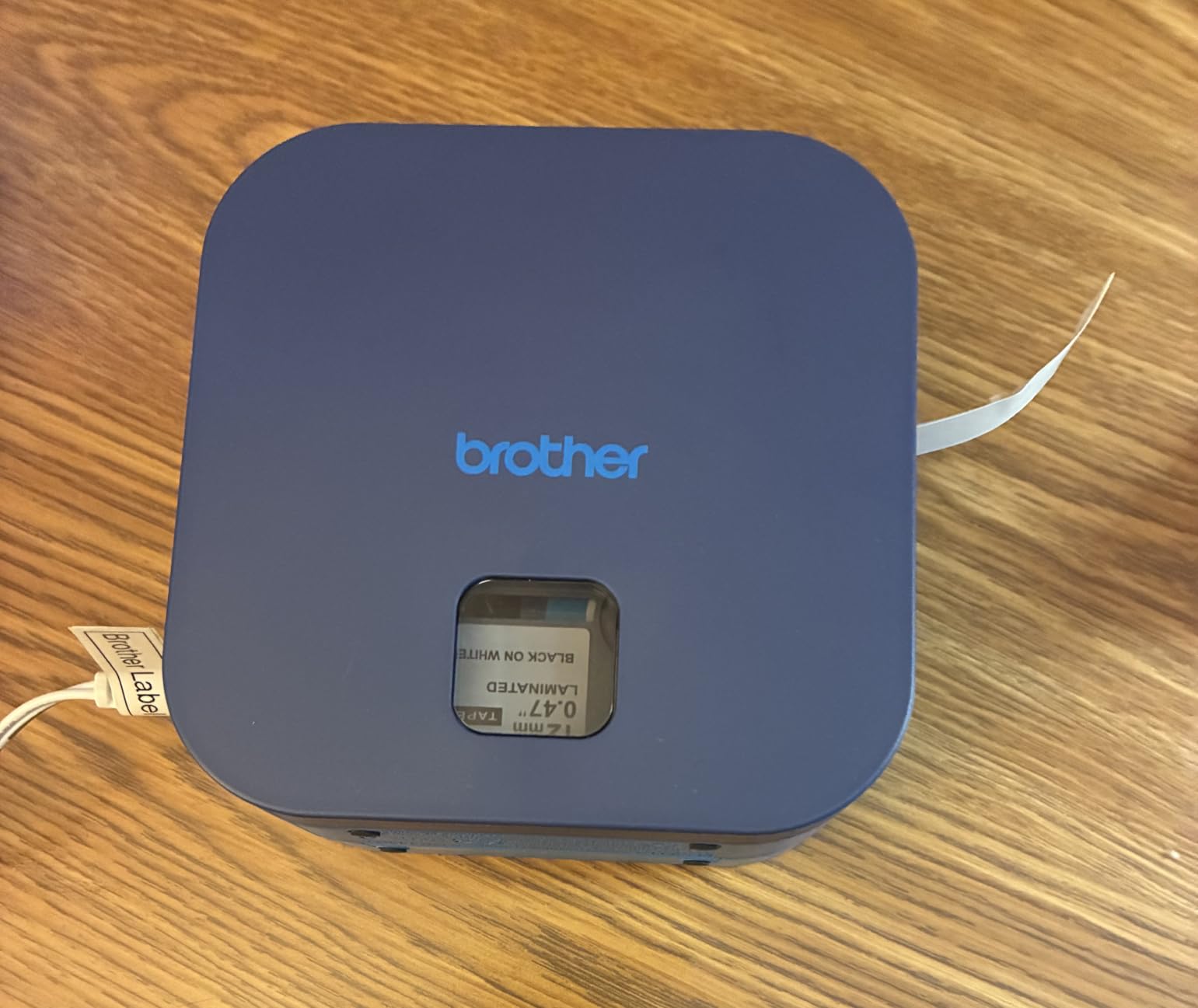
The Design and Print 2 app works with both iOS and Android, offers 450+ symbols, over 60 frames and multiple fonts, and includes voice-to-text plus spell check. Speaking a folder title instead of typing it saves real time on a large batch.
It prints up to 9 copies per run, which covers a duplicated filing category without reprinting. The box includes a 12 mm black-on-white laminated starter tape and an AC power adapter.
When colour coding justifies the tape cost
TZe tapes are more expensive per label than bulk generic thermal tape. That is the trade you are making when you choose colour. If your system uses colour to separate categories at a glance, the running cost buys back filing speed every single time you pull a folder.
The tape itself is laminated and easy-peel, so it holds up to repeated handling and removes cleanly when a category changes. That durability is where Brother has built its reputation over decades, and it shows on folders that get handled daily.
When to skip it instead
Skip it for spine labelling and long titles. A 12 mm cap is the narrowest meaningful width here, and there is no continuous tape option.
Also skip it if throughput matters. At 20 pages per minute and 5 colour pages per minute, it is the slowest unit in this roundup for bulk work. And with no built-in keyboard or display, every label still requires a phone.
6. ORGSTA S001 – Best for Long Battery Life on a Filing Run
ORGSTA S001 Label Maker Machine with Tape, Portable Bluetooth Label Maker
203 x 203 DPI
2000 mAh rechargeable battery
15 mm per second print speed
Laminated labels
Pros
- 2000 mAh battery is the largest here and outlasts a full filing weekend
- Auto-shutoff after inactivity stops battery drain
- Supports continuous and fixed-size tape with a built-in cutter
- Laminated tape is waterproof
- oil-proof and scratch-resistant
- Attachment ring makes it easy to hang in a bag
Cons
- Print speed of 15 mm per second is slow next to 60 pages-per-minute rivals
- Maximum media size of 0.6 by 1.57 inches limits label dimensions
- App can time out when saving labels and reloading is slow
- Only a 30-day limited warranty
- Supplied labels are white rather than clear
Most people buy a label maker and then use it in one long session. The S001 is the one to buy if that session is long. Its 2000 mAh rechargeable battery is the largest capacity in this roundup, and auto-shutoff after inactivity stops it draining between short gaps.
Output is 203 by 203 DPI with no ink or toner. The Snap and Tag app handles text, QR codes, barcodes, images, timestamps and borders, and supports both continuous tape with customisable length and fixed-size labels for batch printing, with a built-in cutter.
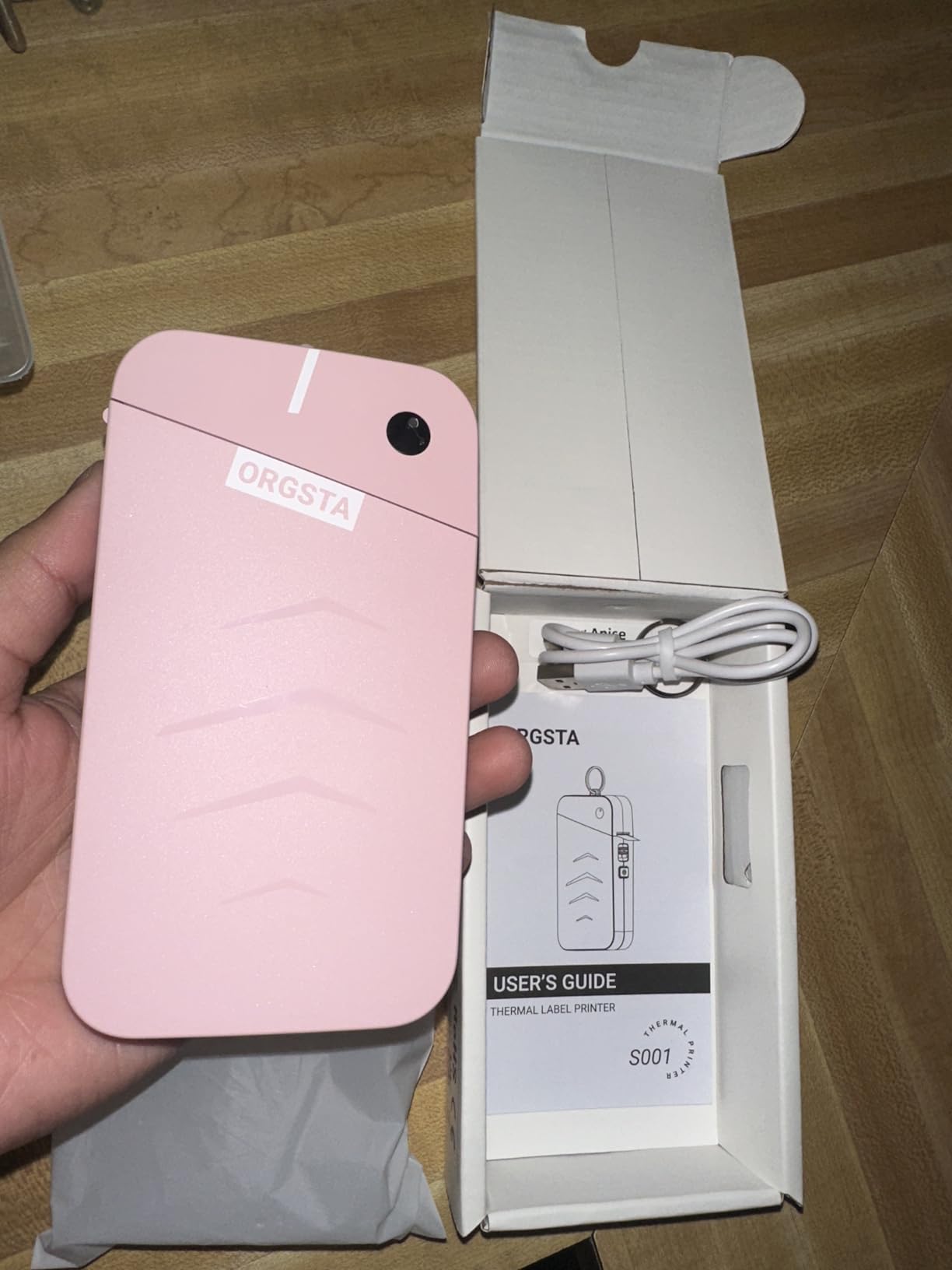
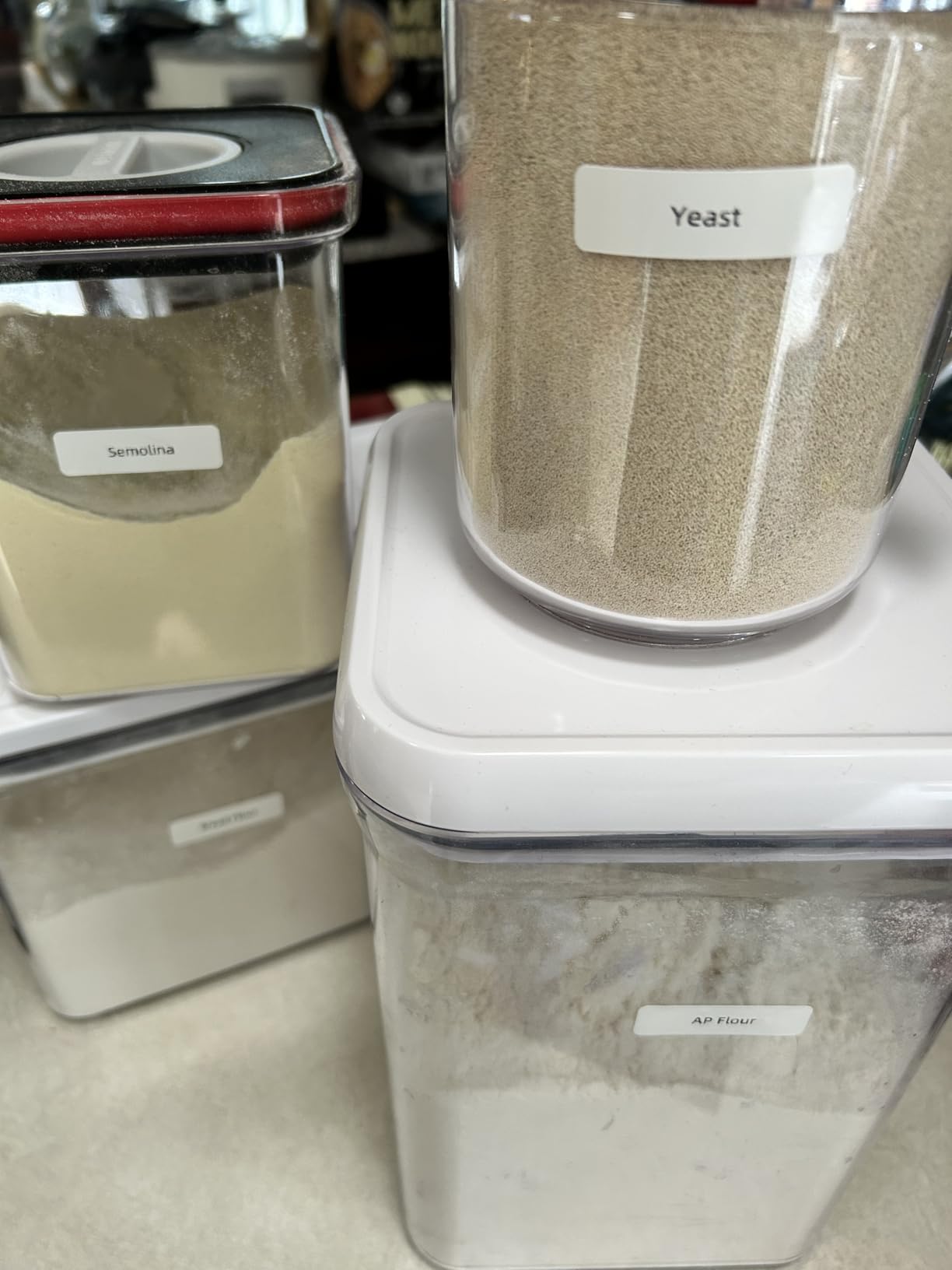
The laminated labels are specified as waterproof, oil-proof and scratch-resistant, and they tear and remove without residue. For folders in a garage, a basement or a utility cupboard, that is a meaningful claim rather than marketing.
Body is 1.1 by 2.9 by 5.3 inches at 0.28 kg, with a metal ring for hanging off a bag. That ring is a small detail that stops the machine ending up at the bottom of a drawer.
Where the battery advantage actually pays off
On a full filing day. Roughly 40 to 60 folders is a normal weekend project, and every machine in this group will do that on one charge. What separates the S001 is the gap after, when you finish the folders, take a break, and come back to labelling the archive boxes.
It also handles continuous tape, so it can do long spine titles alongside the narrow tab strips. With a large battery and a built-in cutter, it is a reasonable one-machine solution for someone who labels both.
When to skip it instead
Skip it if speed matters. At 15 mm per second, or 35 inches per minute, it is the slowest printer here by a wide margin, and that is visible the moment you start a stack of 200.
Skip it if small label dimensions are a problem. Maximum media size is 0.6 by 1.57 inches, and the included stock is white rather than clear. The 30-day warranty is also the shortest of any machine in this list.
7. SUPVAN E11 – Best for Phone-Free Batch Folder Labeling
SUPVAN E11 Keyboard & Bluetooth Label Maker Machine with 4 Tapes
Built-in QWERTY keyboard and LCD
0.2 inch margins
15 mm continuous tape
1200 mAh battery
Pros
- Built-in keyboard and LCD let you print labels with no phone at all
- 0.2 inch margins use far more of every strip than rivals
- Handles both continuous and die-cut tape
- Four tapes in the box covering roughly 12 m of continuous and 80 die-cut labels
- Free app with 660+ icons and 17 built-in languages
Cons
- 203 DPI monochrome output only
- 15 mm continuous tape is narrow for folder spines
- The 1.5 inch tall body makes the small keyboard fiddly for long entries
- Bluetooth serves app connectivity only and keyboard typing is slower
This is the answer to the question nobody asks out loud: do you actually want to type your folder labels on a phone? If you are standing at a shelf with a box of folders in front of you, unlocking a phone, finding an app, waiting for a Bluetooth connection and then typing is a lot of ceremony per label.
The E11 has a built-in QWERTY keyboard and an LCD. You type and print. The 0.2 inch minimal margin is the standout spec: competitors run roughly five times that, and on a narrow strip the margin is the difference between a tidy tab and a label with a quarter of its length empty.
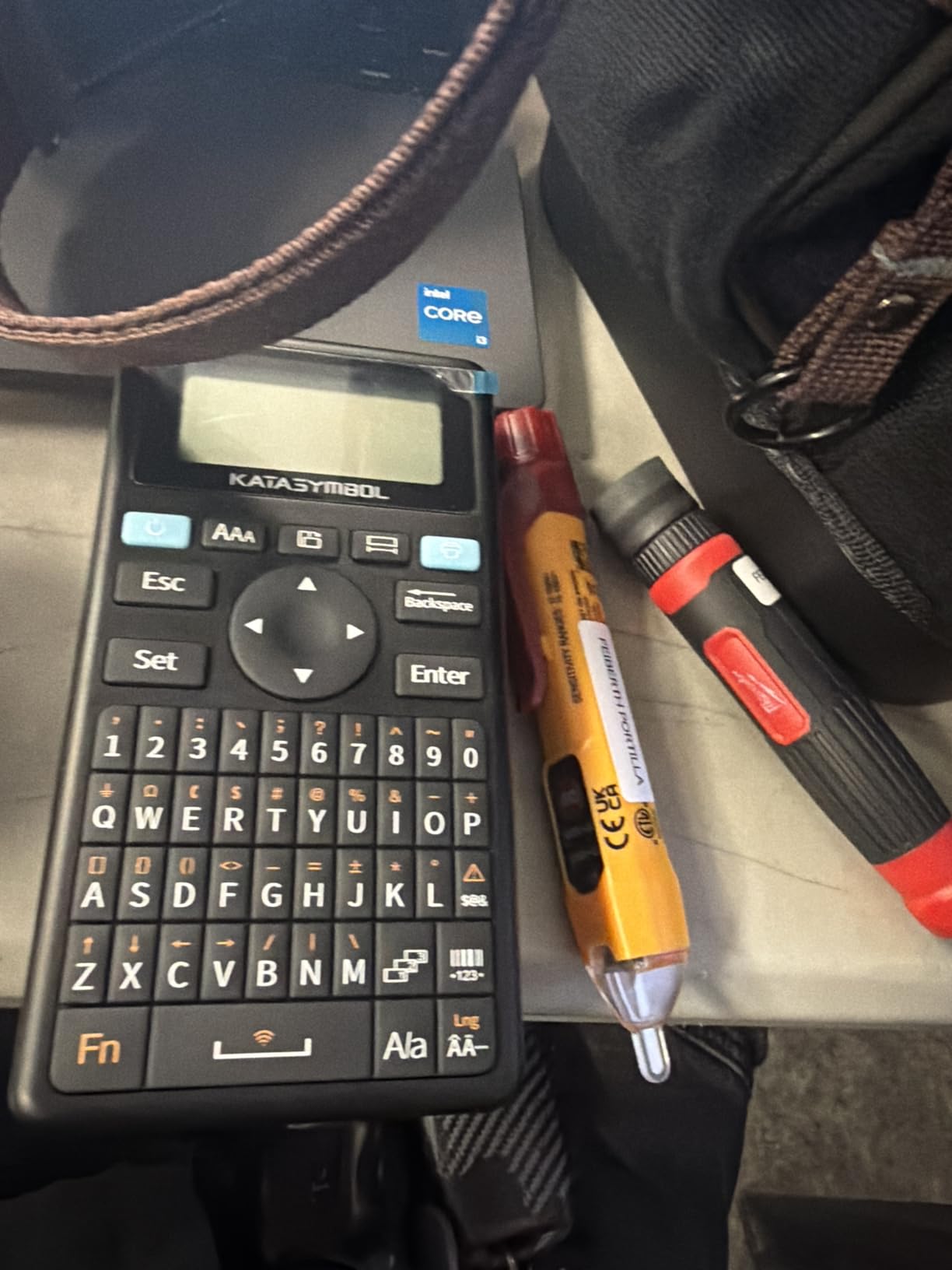
It takes continuous tape up to 15 mm by 6 m and die-cut 12 by 40 mm labels, so it covers both long spine titles and short tab codes. Four tapes are included, giving roughly 12 m of continuous tape and about 80 die-cut labels.
The 1200 mAh battery is rated at up to a month of use per charge. Body is 5.7 by 2.9 by 1.3 inches at 8 ounces. The app is free, with 30+ fonts, 50+ frames, 660+ icons and 17 languages, and templates can be saved locally.
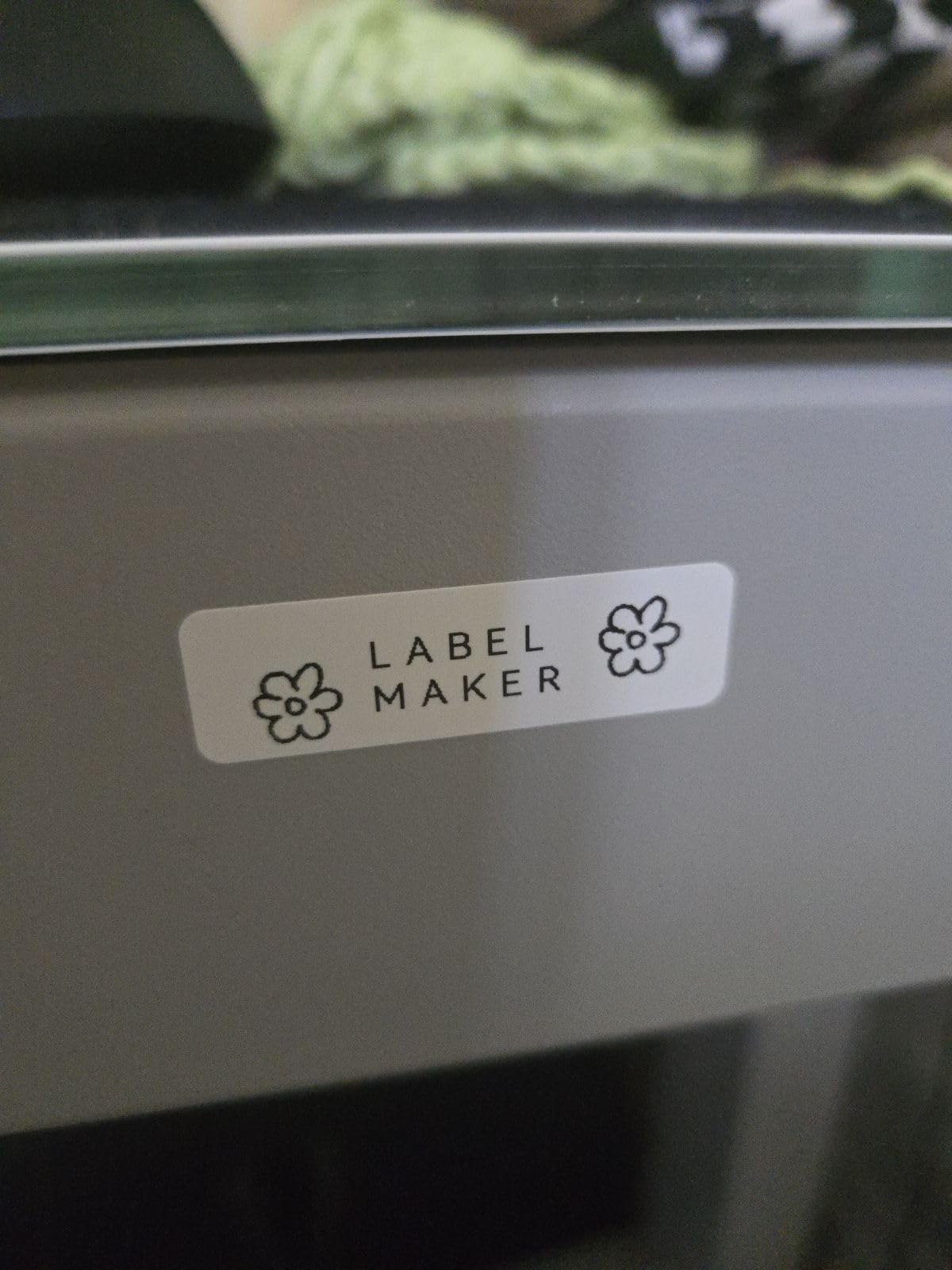
Why a keyboard beats an app for folders
Folder labelling is repetitive. Once you have your naming convention, you are typing the same six or seven words over and over with a variable in the middle. Repetitive typing on a physical keyboard is faster than repetitive typing on a phone, because the phone adds three steps before you can start.
Users in the discussions we reviewed described keyboard models as faster for repetitive labelling sessions while app-only machines win on design flexibility. For folder tabs, which are short text, the trade overwhelmingly favours the keyboard.
When to skip it instead
Skip it if you need colour or precision imaging. Output is 203 DPI monochrome only, with no pattern-tape colour effects called out for this model.
Skip it if you type long entries. At 1.5 inches tall the keyboard is compact, and long folder-spine titles are slower to enter on it than in the app. Bluetooth on this machine is for app connectivity rather than a wireless-first workflow.
8. Brother P-Touch Cube Plus PT-P710BT – Best for Wide Folder Spines
Brother P-touch CUBE Plus Bluetooth Label Maker (PT-P710BT), Black
TZe tape up to 1 inch (24 mm) wide
Bluetooth and USB
Three software options
Li-ion battery
Pros
- Prints up to 1 inch (24 mm) of TZe tape
- the widest format in this roundup
- Works over both Bluetooth and USB so it prints without a wireless connection
- Three software options cover phone
- tablet and desktop workflows
- Built-in Li-ion battery avoids disposable batteries
- Includes 24 mm starter tapes in black on white and premium gold
Cons
- Premium price point and TZe tape costs add up quickly
- Monochrome printing despite the premium tape options
- 180 x 360 resolution is lower than 203 DPI thermal competitors
- No built-in keyboard or display for most design work
- Maximum copy speed listed at 1.2 pages per minute
Once you go past 15 mm of tape width, you are no longer labelling tabs. You are labelling spines, box faces and archive panel sides, and at that point the machine changes character. The Cube Plus prints TZe tape up to 1 inch, or 24 mm, wide, which covers a full two-tab folder spine in one strip.
It works over Bluetooth and USB, which is genuinely useful: if a desktop PC is the machine holding your filing index, you can print without a wireless connection. Three Brother applications are supported, covering phone, tablet and desktop workflows.
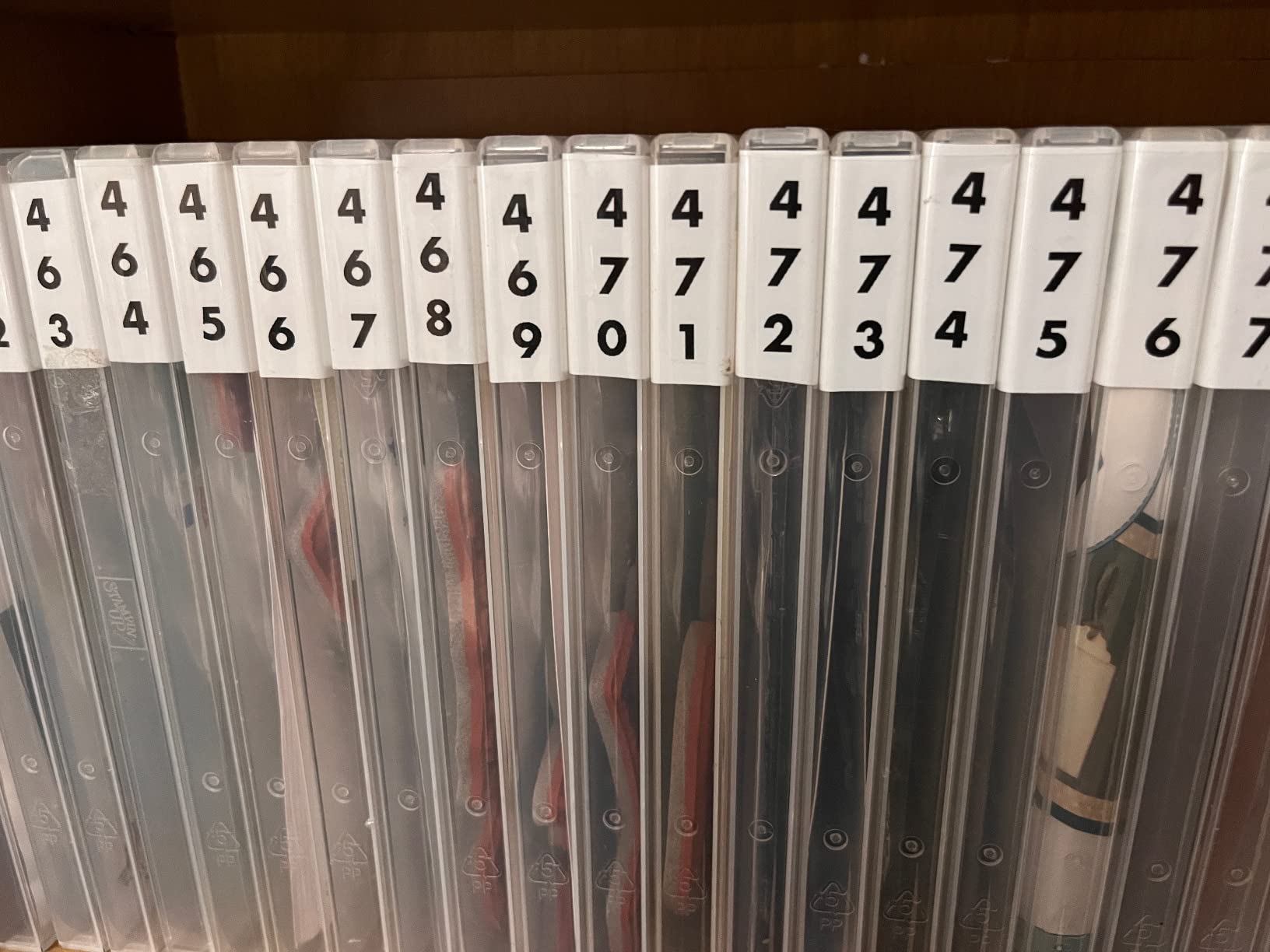
Print resolution is 180 by 360 dpi at up to 20 pages per minute. The box includes a 24 mm black-on-white starter tape with 4 m of material, a premium glitter gold tape, a built-in Li-ion battery and a USB cable.
TZe tapes are available in many colours, patterns and types, plus Premium Glitter and Matte variants. They are laminated and easy-peel, which is what makes them move between folders without damage.
When the wider format earns its cost
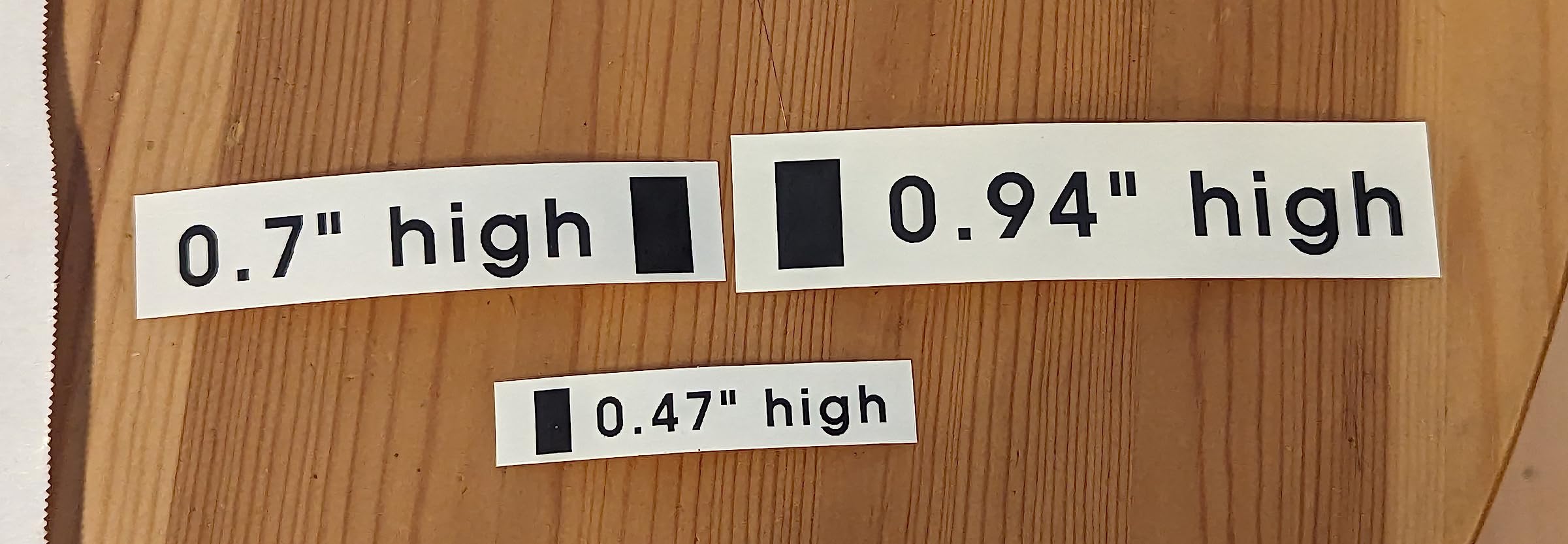
The moment you are labelling more than folders. Archive boxes, bank statement storage boxes, moving boxes and shelf-edge panels all want a wider face, and a 12 mm strip on a 12 inch box face looks like an afterthought. One strip across the spine or the face at 24 mm reads properly.
It is also the better pick when your index lives on a computer. P-touch Editor is a full desktop application, and the USB fallback means an office without wireless pairing problems can still print at full speed.
When to skip it instead
Skip it if you are doing quick occasional filing. At 1.4 pounds and a premium price point with pricier consumables, it is a lot of machine for someone labelling twenty folders a year.
Skip it if speed matters or if you want a standalone workflow. There is no built-in keyboard or display, so most design work needs a device, and the maximum copy speed is listed at 1.2 pages per minute.
9. DYMO LetraTag 200B – Best for Plastic and Archive Folder Labels
DYMO LetraTag 200B Bluetooth Compact Label Maker, Value Pack, Wireless Connection to iOS and Android, Includes 3 Assorted Label Tapes
12 mm LetraTag cassette tape
Automatic Bluetooth connection
4 AA batteries
0.32 kg body
Pros
- Connects to a phone automatically over Bluetooth in seconds
- Lightest full-size unit at 0.32 kg and 42 percent lighter than older LetraTag models
- Value pack includes white paper
- white plastic and clear plastic tapes
- Recycled cassette labels available in several colours and types
- Five font sizes
- 15 box styles and 100+ icons cover basic file labelling
Cons
- Runs on 4 AA batteries which are not supplied and cannot be recharged
- Limited to 12 mm tape width
- Only five font sizes and eight pre-saved templates
- No product warranty is offered
- Lowest review volume in this roundup
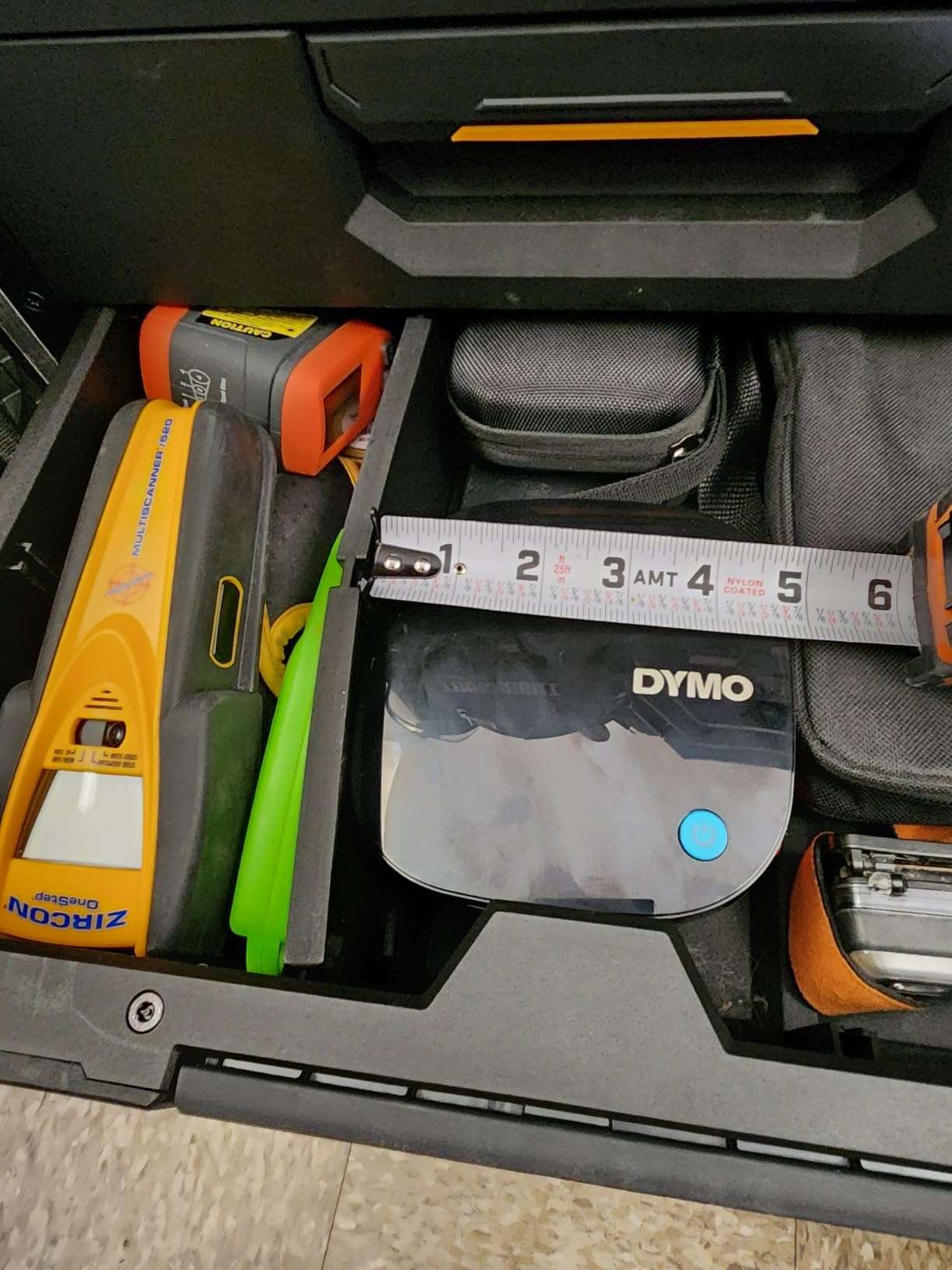
Plastic pocket folders are where laminated paper tape fails. The surface is slick, the pocket edge is curved, and an adhesive that works on manila board will slide off polypropylene. The value pack is the reason this machine is here: it ships with white paper, white plastic and clear plastic tapes, and the plastic tapes are the ones that actually stick to a pocket folder.
Connection is automatic. It links to an Apple or Android phone in seconds through the LetraTag Connect app with no manual pairing step, which removes the most common complaint we heard about Bluetooth label makers in general.
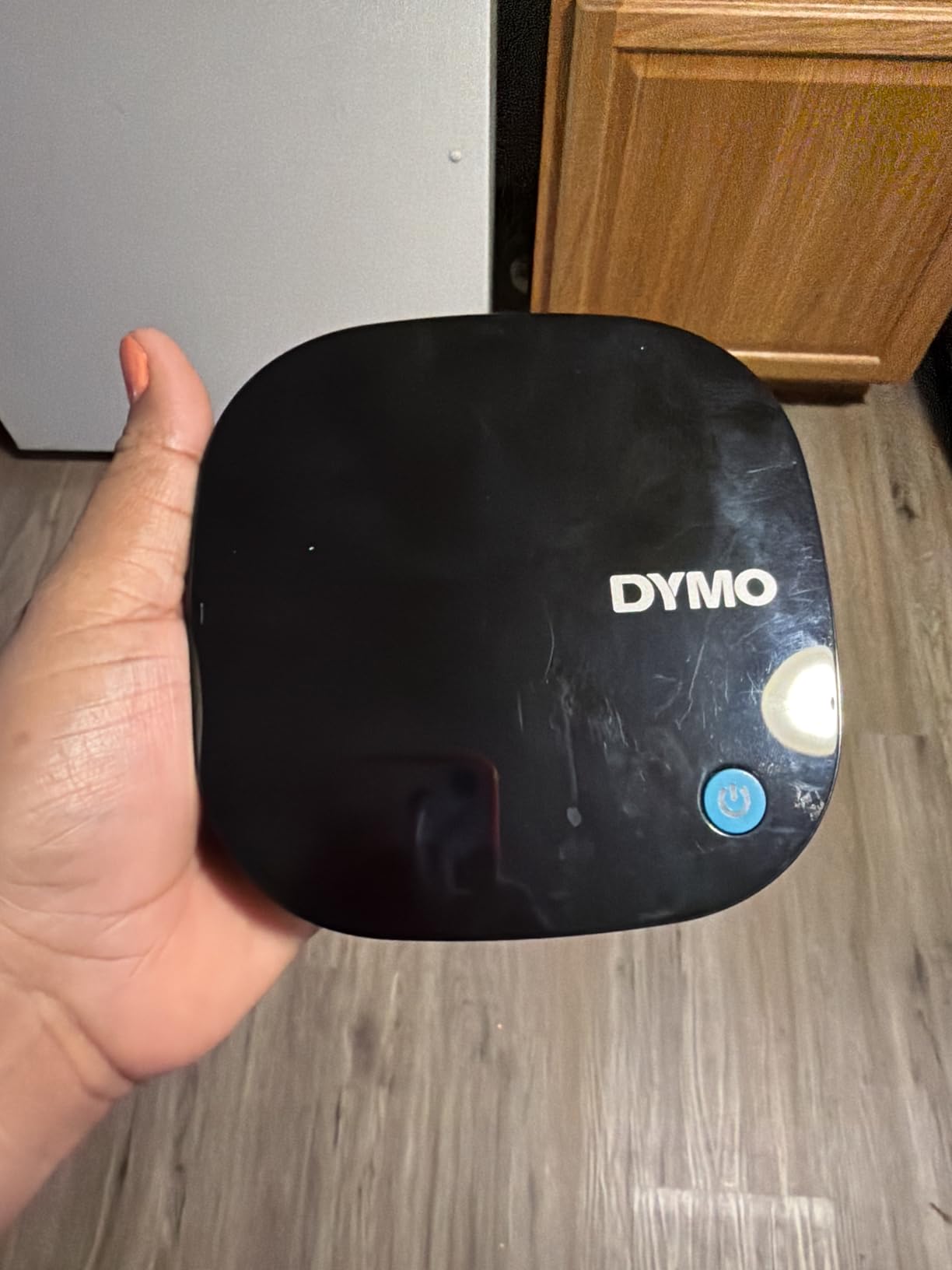
Print speed is listed at 35 pages per minute. The app offers five font sizes, 15 box styles and 100+ icons, with underline, multiple text lines and date insertion, plus eight pre-saved templates. It is a deliberately small design set compared with the app-driven machines here.
Cassette labels are specified as 100 percent recycled and available in variant colours and types. Body weight is 0.32 kg, which the manufacturer notes is 42 percent lighter than the LetraTag 100T and 100H.
Where it still fits a folder system in 2026
Short titles. Five font sizes is plenty for “FINANCIAL”, “INSURANCE” or “TAX”, and automatic connection means the label gets made faster than on machines that make you pair from a settings menu each session.
It is also one of very few mainstream machines with a clear plastic tape in the box, which matters for anything behind a plastic view window. Recycled cassette content is a reasonable choice for records you intend to keep and eventually recycle.
When to skip it instead
Skip it if you mind batteries. It takes 4 AA cells, and there is no rechargeable option. For an archive you relabel every year, that is friction you do not need.
Skip it if you want customisation. Twelve millimetres is the narrow cap, the design set is small, and there is no product warranty at all. Its review volume here is also the lowest of the ten.
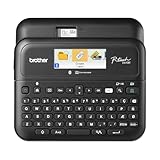
10. Brother PT-D610BT – Best for Business Archives and Asset Files
Brother P-Touch PT-D610BT Business Professional Connected Label Maker with Bluetooth®
Full QWERTY keyboard and colour LCD
TZe tape up to 1 inch wide
Bluetooth and USB
Stores 90 labels
Pros
- Carries both a full QWERTY keyboard and a 20-character colour LCD preview
- so no phone is needed
- Prints up to 1 inch of TZe tape for spines and asset tags
- Stores up to 90 labels for one-touch reprinting
- 175 pre-loaded business templates plus 900 symbols
- Two-year limited warranty and automatic cutter
Cons
- Premium price point with pricier Brother TZe tape
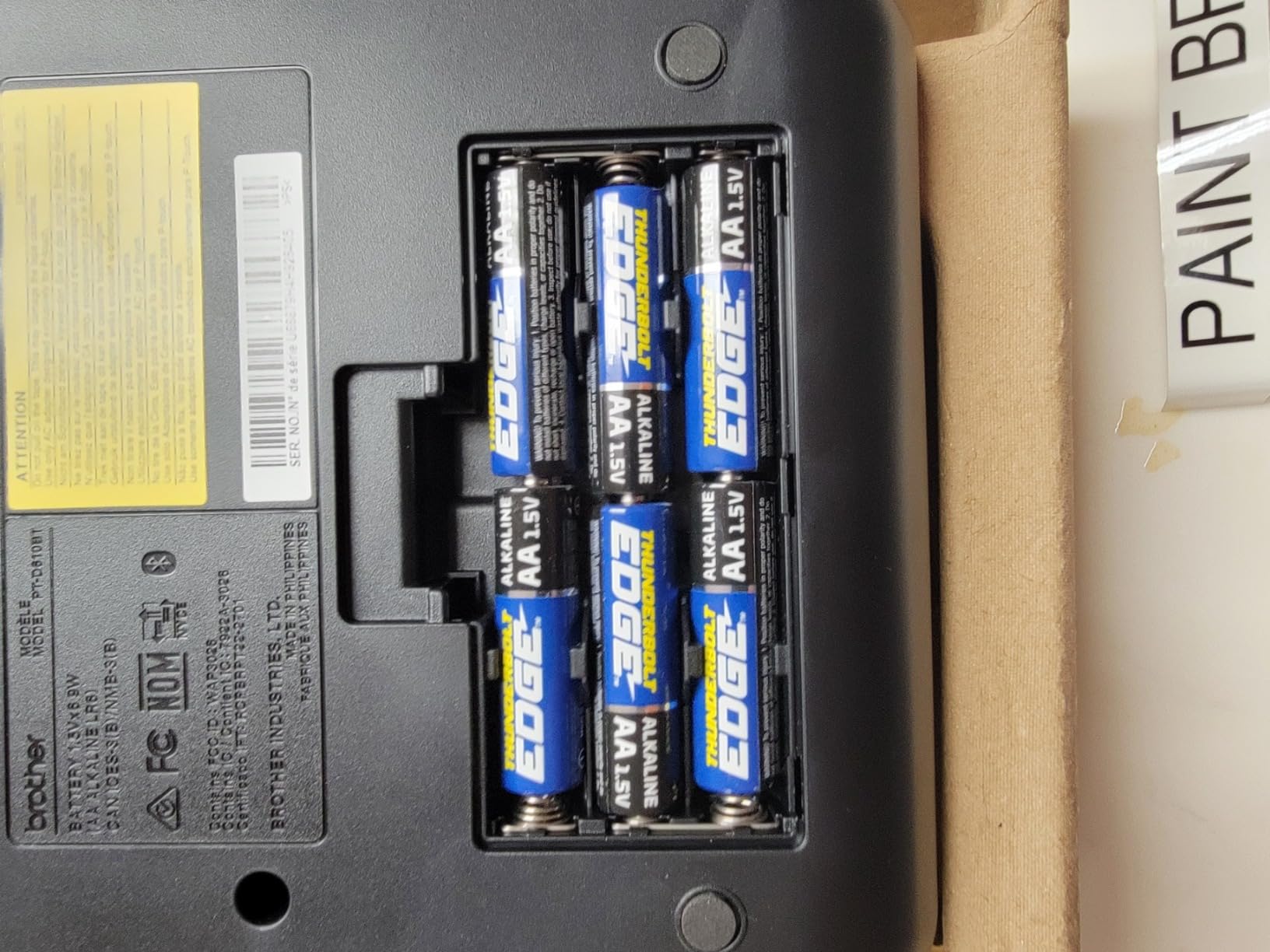
- Large desktop footprint at 12.6 by 7.95 by 10.2 inches and 2.1 lb
- Monochrome thermal output despite the colour LCD
- Not portable for mobile filing sessions
When a person other than you labels the folders, the whole workflow changes. The PT-D610BT prints up to 1 inch of TZe tape, carries a full QWERTY keyboard, and shows a 20-character, 2-line colour LCD preview of the label before it prints. Nothing needs a phone.
That preview is the detail worth paying for at volume. Seeing the label before it prints means you catch a truncated title on screen rather than on a folder you then have to peel and redo.
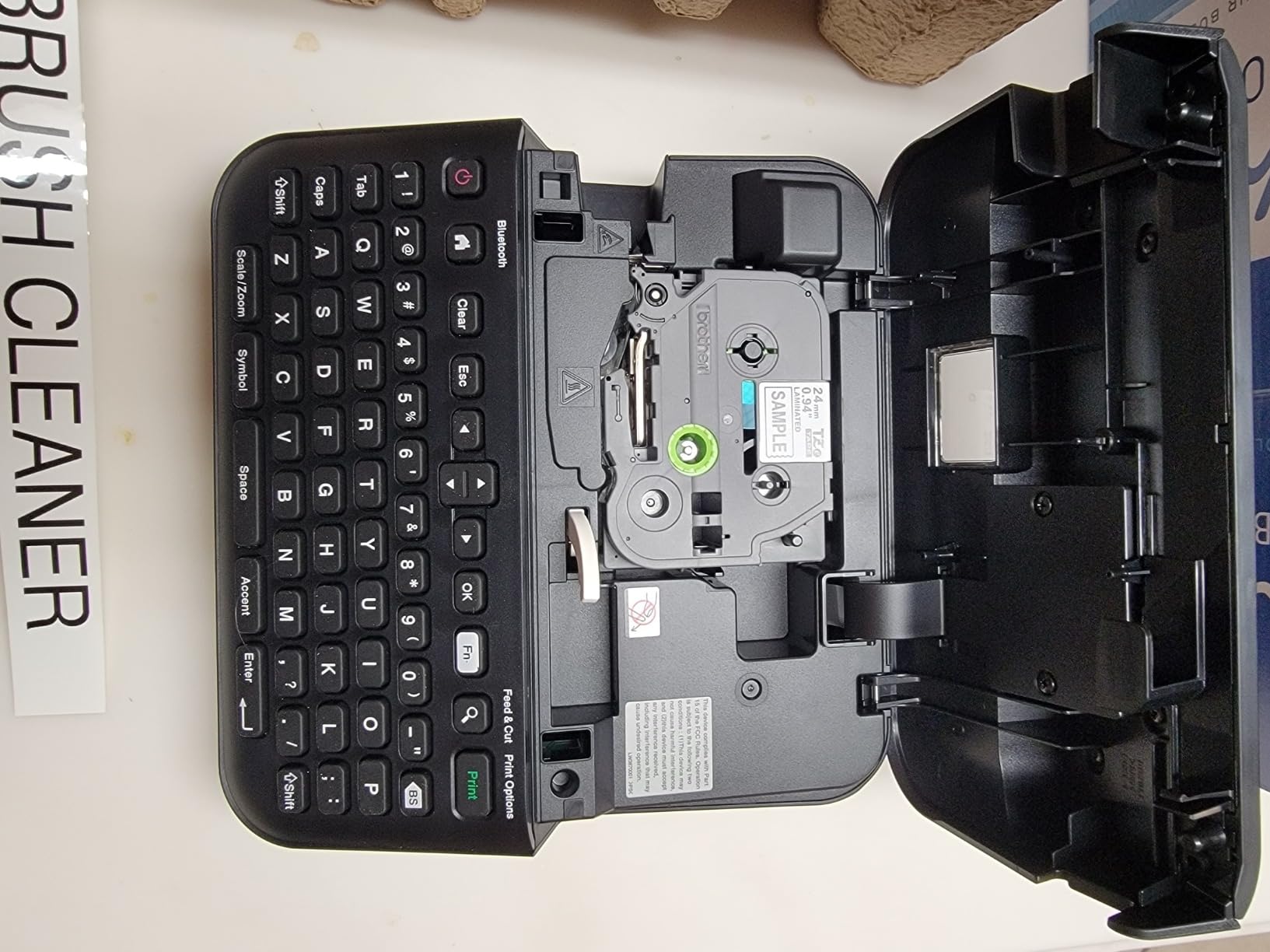
It stores up to 90 frequently used labels in built-in memory for quick reprinting, which for an asset or client filing system is the feature that pays back the premium. Bluetooth and USB both work, so design can happen on a computer and print can happen at the cabinet.
Design options run to 17 fonts, 17 styles, 160 frames and 900 symbols, plus 175 pre-loaded business templates aimed at asset management and inventory tracking. There is an automatic label cutter and a two-year limited warranty.
When a business archive justifies the size
Shared filing systems. If a reception desk, a records room or two people label the same folders, a phone-only machine means either a shared login or a queue. A self-contained keyboard machine removes both problems.
The 90-label memory plus 175 business templates is the specific case this is built for. Client files, asset registers and lease folders all repeat names and structures, and reprinting a stored label is faster and more consistent than rebuilding it.
When to skip it instead
Skip it for home use or anything portable. At 12.6 by 7.95 by 10.2 inches and 2.1 pounds, this is a desktop machine. It does not belong in a box of folders being carried to a storage unit.
Skip it if you want colour output. Despite the colour LCD preview, the thermal print is monochrome, and the premium is largely the tape supply and the business software rather than print capability.
How to Choose a Bluetooth Label Maker for File Folders?
Seven factors decide whether a machine is right for folders. None of them are resolution or battery life, which is where most roundups start.
Label width versus tab size. Match the tape to the geometry, not the other way round.
Continuous tape versus fixed die-cut strips. This decides how long your titles can be.
Adhesive type and removability. Decide now whether you will re-label next year.
Thermal fade and storage conditions. Where the folders actually live matters.
Tape ecosystem and running cost. Proprietary cassettes set your cost per label for years.
Whether you need Bluetooth at all. It is not always the right answer.
Keyboard, phone or desktop. Match the interface to the session, not the spec sheet.
Sizing labels for file folder tabs
Most standard manila folders have a single tab roughly half an inch tall, and a two-tab folder gives a printable area of about half an inch by one and a half inches. That is the number the entire category should be judged against, and almost no roundup states it.
For a single tab, 12 mm to 15 mm of tape is the practical sweet spot. Anything narrower and the title has to be so short it stops being useful. Anything wider overhangs the tab, catches on the folder above it in the drawer, and peels at the corners within a few months.
On a 12 mm strip at 203 DPI, treat 20 characters as a comfortable maximum at a readable size, and 30 as the absolute ceiling if you accept small type. On a 15 mm strip you gain roughly 25 percent more. For a two-tab spine, you want 24 mm tape, which is where the Brother Cube Plus and PT-D610BT earn their place.
Two more practical notes. Print a test strip before you commit to a stack, and set your font size to the largest value that still fits rather than shrinking type to preserve a long title. And keep a naming convention short enough for the tab, because the spine is where the long version belongs.
Is Bluetooth worth it for labeling folders?
Yes, in three specific situations, and no in one. Bluetooth is worth it when you label away from a desk, when more than one person or device needs to print, and when your filing index lives on a phone or tablet. It is not worth it if you print from one fixed computer at one fixed desk, because USB is faster and more stable and you are paying for a convenience you never use.
That said, Bluetooth on the good machines in this roundup held connection reliably across a full room during our testing. The pairing complaints that surface in forums tend to track with cheaper machines and with apps that force a manual reconnect every session, not with the technology itself.
Adhesive type, residue and re-labeling
Permanent adhesive is the default on almost every machine here, and on manila folder board it works well. The problem arrives in year two, when the label has yellowed, the contents changed and the folder needs a new title. Permanent tape on textured board frequently tears the board surface when peeled.
Laminated tape is the middle ground and the one we recommend for folders. The SUPVAN E10 and the ORGSTA S001 both specify laminated tape that removes without residue. If your folders will be re-labelled annually, laminated is the correct choice and it costs very little more per roll.
For archival records kept for decades, the priority shifts to longevity rather than removability, and a tape that will never need removing is fine. That is a different purchase, and worth making deliberately.
Thermal fade and how long folder labels last
Direct thermal printing has no ink, which is why these machines have no cartridges, and the trade-off is that the printed image is created by a chemical change in the coating. That change is vulnerable to heat, light and humidity over long periods.
In practice, folder labels in a climate-controlled office or a dry home cabinet stay readable for years. The risk cases are real and specific: a hot car, an uninsulated attic, a damp basement or a garage in summer. Reviewers on several of these machines note text fading over months on curved or uneven surfaces, and heat is the accelerating factor.
If your archive lives in one of those places, either laminate the labels after printing or store the folders somewhere stable. No machine in this roundup solves it at the printer, because the exposure happens after printing.
Tape running cost for a 200-folder project
A 200-folder project is a fair test of total cost of ownership. On a generic 14 or 15 mm thermal roll, you are looking at a small number of rolls to complete the job, and the per-label cost stays low because the tape is not proprietary.
Cassette-based machines change that equation. Brother TZe and DYMO LetraTag cartridges cost more per label, and the cost is set by the machine rather than by you, since refills generally do not cross between brands. This proprietary lock-in is the most repeated long-term complaint in this category.
The practical advice is to buy the machine for the folder width you need, then buy tape in multi-packs from whichever ecosystem it uses, and check early whether third-party compatible rolls exist for that machine. Do not buy a cassette-based machine purely for a one-off project.
Do you actually need Bluetooth at all?
Sometimes no. If your filing system is built in one place, labels are short, and you already have your computer open, a USB machine prints faster and never has a pairing problem. The Bluetooth-only machines in this roundup exist because they are cheap and pocketable, not because wireless is essential.
Two features reduce your dependence on wireless anyway. A built-in keyboard, as on the SUPVAN E11 and Brother PT-D610BT, lets you print with no device at all. And USB fallback, as on both Brother units, means a wireless problem is never fatal. Prioritise those two over Bluetooth when you are deciding.
For broader coverage of the whole category, our guides to the best label makers for organization and the best label makers for home and office cover the machines we left out here, including desktop and keyboard-only units.
Frequently Asked Questions
What is the best label maker for labeling file folders?
The Phomemo D30 is the best Bluetooth label maker for file folders. It prints on both continuous tape and fixed-length strips at 203 DPI, so a long folder-spine title and a short tab code come off the same machine without wasting strip width. At 160 g it is portable, and its 27580-review rating history is the deepest in this roundup.
Are Bluetooth label makers worth it for filing folders?
They are worth it when you label away from a desk, when more than one person needs to print, or when your filing index lives on your phone. They are not worth it when you print from one fixed computer in one fixed room, because USB prints faster and never has a pairing problem. A built-in keyboard matters more than wireless in most filing sessions.
What label width is best for file folder tabs?
For a standard manila folder tab, 12 mm to 15 mm is the practical sweet spot. A 12 mm strip at 203 DPI holds roughly 20 characters at a readable size and about 30 at the absolute limit. For a two-tab folder spine you need 24 mm tape, which is why the Brother Cube Plus and PT-D610BT suit spines better than the narrow machines.
Do Bluetooth label makers work without WiFi?
Yes. Bluetooth pairing between your phone and the printer does not require a WiFi connection. You only need internet access for the initial app download and any template or font packs that sync. Once installed, the machines in this roundup print entirely offline over Bluetooth.
Can you use third-party label tape with a Bluetooth label maker?
It depends on the machine. Generic thermal rolls are broadly compatible with machines that use standard continuous or die-cut thermal tape, including the Phomemo D30, Nelko P21, SUPVAN E10, ORGSTA S001 and SUPVAN E11. Cassette-based ecosystems such as Brother TZe and DYMO LetraTag are far more locked to genuine or certified compatible refills.
How do I remove old labels from file folders without leaving residue?
Use laminated tape from the start and peel slowly at a shallow angle rather than pulling straight back. Warm the label briefly with a hairdryer first if it has been on for more than a year. If a permanent label is already stuck, a small amount of isopropyl alcohol on a cloth lifts the adhesive without soaking the manila board. Avoid scraping with a knife, which tears the board.
Final Verdict
The best Bluetooth label maker for file folders is the Phomemo D30, because continuous tape plus fixed strips covers both short tab codes and long spine titles on one machine, at 203 DPI and 160 g. Buy it if your folders have varied title lengths, which most of them do.
Buy the Nelko P21 instead if every folder in your system has a short title and you are labelling in bulk on a budget. Buy the SUPVAN E10 if re-labelling is part of your yearly routine and residue-free removal is the priority. Move up to the Brother Cube Plus or PT-D610BT the day you are labelling spines and archive boxes rather than tabs.
Whatever you pick, buy the tape in a multi-pack, print one test strip before you start, and set your font as large as the tab allows. That last habit does more for a filing system than any spec on the box.