
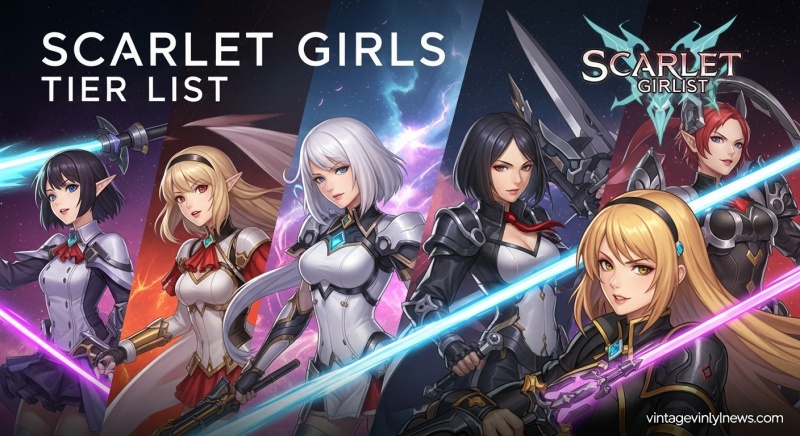
Welcome to the most comprehensive Scarlet Girls tier list you’ll find anywhere! As someone who’s spent countless hours diving deep into this captivating idle RPG, I’m excited to share my expertise on ranking all the Stellaris from absolute must-haves to those you might want to avoid. Whether you’re a seasoned commander or just starting your journey, this guide will help you build the perfect team to dominate both PvE and PvP content.
Scarlet Girls has taken the mobile gaming world by storm since its launch in February 2026, and with over 200,000 pre-orders across all platforms, it’s clear that players are hungry for strategic guidance. The game features stunning Stellaris (the beautiful maidens you collect), each with unique abilities, elements, and roles that can make or break your success in battle.
Table of Contents
Quick Overview: Scarlet Girls Tier List (2026)
| Tier | Power Level | Recommended Use | Key Characters |
|---|---|---|---|
| S+ Tier | Game-breaking | Must-pull, prioritize investment | Tsubaki, Solissa, Vinessa, Charmilles, Askar |
| S Tier | Excellent | Core team members | Athena, Pricia, Susan, Muir, Sofia |
| A Tier | Good | Solid choices for early-mid game | Evelyn, Leila, Sefa, Loree, Selis |
| B Tier | Average | Replace when possible | Lilyer, Natalia, Miticia, Irena |
| C Tier | Below Average | Avoid investing in | Crystal, Yelena, Miranda, Magdalena |
| D Tier | Weak | Skip entirely | Ritaia, Clara, Amber, Coral |
Scarlet Girls Tier List (September 2026)
S+ Tier | The Absolute Best Characters
These are the game-changers, the Stellaris that can single-handedly turn the tide of battle and carry you through the most challenging content. If you’re lucky enough to pull any of these, prioritize them immediately.
Tsubaki (SSR+, Nebula, Assaulter)
Tsubaki stands at the pinnacle of our Scarlet Girls tier list for good reason. This Nebula elemental assaulter brings devastating physical damage to the battlefield. Her Dazzling Blossom ability deals physical damage to all enemies and applies Sakura Blossom stacks to herself, activating for the first three rounds automatically. What makes her truly terrifying is her Nightfall Breeze skill, which targets the enemy with the lowest HP percentage and increases critical damage by up to 40% based on how low the target’s health is.
Why S+ Tier: Tsubaki’s ability to consistently deal massive AoE damage while scaling her critical damage based on enemy health makes her invaluable in both boss fights and mob clearing. She’s particularly effective in the current meta where burst damage reigns supreme.
Solissa (SSR+, Nebula, Assaulter)
Solissa is another top-tier contender who excels at eliminating weakened targets. Her Waltz of Blades ability has a 60% chance to trigger after basic attacks, dealing physical damage to the enemy with the lowest HP. What’s truly frightening is that when the target’s HP drops below 50%, her damage multiplier increases to 150%. Her Dawn Strike ability also applies Fragile debuffs, making enemies more vulnerable to follow-up attacks.
Why S+ Tier: Solissa’s execute-style damage potential makes her perfect for cleaning up battles and ensuring weakened enemies don’t get another turn. In the current PvP meta, her ability to finish off low-health targets quickly is unmatched.
Vinessa (SSR+, Nebula, Assaulter)
Vinessa brings incredible versatility to any team composition. Her Supreme Posture ability deals physical damage to two random enemies with a 60% chance to reset its cooldown. This cooldown reset becomes guaranteed when attacking debuffed enemies, creating devastating combo potential. Her Judgement of the End skill hits three enemies simultaneously with a 75% chance to inflict Fear and 100% chance to Silence the highest-attacking enemy.
Why S+ Tier: Vinessa’s cooldown reset mechanic makes her incredibly consistent in prolonged battles, while her crowd control abilities (Fear and Silence) can shut down dangerous enemy threats before they act.
Charmilles (SSR+, Nebula, Devastator)
Charmilles dominates as a devastating AoE damage dealer. Her Banish the Weak ability deals energy damage to all enemies with a massive 270% damage multiplier when targets are below 50% HP. Her Blade of Censure skill scales with enemy debuffs, gaining up to 100% increased damage based on the number of debuffs applied.
Why S+ Tier: In the current meta where teams focus on debuff application, Charmilles becomes exponentially more powerful. Her ability to delete entire teams when they’re weakened makes her essential for both PvE clearing and PvP dominance.
Askar (SSR+, Nebula, Support)
Askar breaks the mold as a hybrid healer/damage dealer. Her Fatal Embrace ability deals energy damage to three random enemies while simultaneously healing the three allies with lowest HP by 20% of her maximum HP. Her Merciless Grace skill deals AoE energy damage while applying Final Energy Damage reduction to enemies.
Why S+ Tier: Askar’s dual functionality makes her incredibly valuable in the current sustain-focused meta. Unlike traditional healers who offer little offensive value, Askar contributes meaningfully to both survival and damage output.
S Tier | Excellent Core Team Members
These Stellaris are slightly below the S+ tier but still represent excellent choices for your core team. They’ll serve you well throughout most content and can even compete at high levels with proper investment.
Athena (SSR+, Rancor, Defender)
Athena stands as one of the best defensive options in Scarlet Girls. She provides substantial damage reduction to herself and can make enemies vulnerable to increased critical damage. When you unlock her Everlasting Torch ability, she gains self-sustain capabilities, making her incredibly difficult to take down.
Why S Tier: In a meta where burst damage is prevalent, having a reliable tank like Athena can mean the difference between victory and defeat. Her ability to self-sustain while providing defensive utility makes her invaluable for prolonged battles.
Pricia (SSR, Void, Devastator)
Pricia excels at dealing massive AoE damage while providing team utility. She reduces Energy DMG dealt by enemies and gains increased damage whenever allies apply Control debuffs. This synergy makes her particularly effective in team compositions focused on crowd control.
Why S Tier: Pricia’s damage scaling with ally debuffs encourages strategic team building and rewards players who understand game mechanics. Her AoE damage potential is substantial, making her excellent for clearing content quickly.
Susan (SSR, Inferno, Assaulter)
Susan specializes in AoE damage with Ignite application. Her Ultimate Purge of Sin and Condemnation and Liberation deals damage to the entire enemy team, with damage scaling based on the number of Ignite stacks applied. This stacking mechanic allows her damage to grow exponentially throughout battles.
Why S Tier: Susan’s stacking Ignite mechanic makes her increasingly dangerous as battles progress. In longer fights where other damage dealers might fall off, Susan continues to grow stronger, making her excellent for boss fights and extended PvP matches.
A Tier | Solid Choices for Early-Mid Game
These Stellaris are perfectly viable and will serve you well, especially in the early to mid-game. While they might not have the same impact as S+ or S tier characters, they’re still worth investing in if you don’t have access to higher-tier options.
Evelyn (SSR+, Nebula, Support)
Evelyn functions as a dedicated healer with supportive capabilities. Her Targeted Treatment ability heals the ally with lowest HP after basic attacks, while Increased Dosage puts her into healing mode for sustained recovery. While her healing percentages aren’t as high as some dedicated healers, her consistency makes her reliable.
Why A Tier: Evelyn provides consistent healing that can keep your team alive through tough encounters. However, her lower healing percentages compared to top-tier supports place her in A tier rather than higher.
Leila (SSR+, Nebula, Assaulter)
Leila focuses on single-target damage with some utility against specific enemy types. Her Soaring Dragon Punch deals additional damage to Paladin and Support class enemies, while Assaulting Fist ignores 25% of enemy armor.
Why A Tier: Leila’s niche effectiveness against certain enemy types makes her situationally valuable, but her lack of consistent AoE damage or unique mechanics prevents her from reaching higher tiers.
B Tier | Average Characters to Replace When Possible
These Stellaris are usable in the early game but should be replaced as soon as you acquire better options. They typically have significant limitations that prevent them from competing at higher levels.
Lilyer (SSR, Nebula, Devastator)
Lilyer deals energy damage to multiple enemies and provides some team utility through final damage buffs. However, her damage output is inconsistent, and she lacks the scaling mechanics that make higher-tier Devastators so powerful.
Natalia (SSR, Flare, Assaulter)
Natalia has some interesting mechanics with Mark-based damage scaling, but she’s too reliant on specific conditions to be consistently effective. Her damage output is average at best, and she doesn’t bring enough utility to justify long-term investment.
C Tier | Below Average – Avoid Investing In
These Stellaris have significant flaws that make them poor choices for serious investment. They might be usable in the very early game, but you’ll want to replace them quickly.
Crystal (SR, Various Elements)
Crystal represents the typical SR-tier problem: decent early-game performance that falls off dramatically as content difficulty increases. Her damage output becomes negligible in mid-to-late game, and she lacks the utility or scaling to remain relevant.
Yelena (SR, Various Elements)
Like most SR characters, Yelena suffers from low base stats and underwhelming abilities. While she might help you through the first few chapters, you’ll quickly find her outclassed by even basic SSR characters.
D Tier | Weak Characters to Skip Entirely
These Stellaris are simply not worth your time or resources. They have fundamental design flaws or extremely underwhelming abilities that make them non-viable even in the early game.
Ritaia (R, Various Elements)
As an R-tier character, Ritaia has abysmal base stats and abilities that don’t scale properly. There’s literally no reason to ever use her when even basic SR characters outperform her significantly.
Clara (R, Various Elements)
Clara exemplifies everything wrong with low-tier characters: weak abilities, poor scaling, and no redeeming qualities. Save your resources for literally any other character.
Scarlet Girls Reroll Guide
One of the most common questions I receive is about rerolling in Scarlet Girls. Based on my extensive experience and analysis of the current game mechanics, here’s what you need to know:
Should You Reroll in Scarlet Girls?
Short answer: No, it’s generally not worth it.
Unlike many other gacha games, Scarlet Girls doesn’t make rerolling particularly efficient or rewarding. Here’s why:
- Time Investment Required: You need to complete numerous stages to earn enough Normal Echo tickets for meaningful pulls. The initial rewards from completing the first chapter are actually quite generous, often including an SSR character.
- Account Progression: The game rewards consistent play with various bonuses and resources that you’d lose by starting over.
- SSR Rates Are Reasonable: Unlike some gacha games with abysmal pull rates, Scarlet Girls offers decent SSR acquisition rates through normal play.
How to Reroll If You Insist?
If you’re absolutely determined to reroll for a specific S+ tier character, here’s the most efficient method:
- Start as Guest: Begin the game without linking an account to keep your options open.
- Complete Tutorial: Rush through the initial tutorial stages as quickly as possible.
- Claim Initial Rewards: Collect all the rewards from completing the first chapter and any login bonuses.
- Perform 10-Pull: Wait until you can perform a 10-pull rather than wasting time on single summons.
- Evaluate Results: If you didn’t get your desired S+ tier character, uninstall and reinstall the game to start fresh.
- Bind Account: Only bind your account to email or social media once you’re satisfied with your initial pulls.
Pro Rerolling Tips
- Target Specific Characters: Don’t just reroll for any SSR – focus on the S+ tier characters like Tsubaki, Solissa, Vinessa, Charmilles, or Askar.
- Consider Team Composition: Think about what roles you need rather than just chasing the “best” character. A balanced team often outperforms a team of glass cannons.
- Time vs. Reward: Honestly ask yourself if the time spent rerolling could be better used progressing with a decent starting account.
Character Roles and Team Composition
Understanding character roles is crucial for building effective teams in Scarlet Girls. Here’s a breakdown of the main roles and how they function:
Assaulters
Role: Primary damage dealers focused on eliminating enemy threats quickly.
Key Characteristics:
- High attack stats
- Single-target or AoE damage abilities
- Often have crit damage scaling
- Can be fragile (low defense/HP)
Top Tier Assaulters: Tsubaki, Solissa, Vinessa
Team Building Tips: Pair with supports who can provide damage buffs or defenders who can keep them alive long enough to deal their damage.
Devastators
Role: AoE damage specialists who excel at clearing multiple enemies simultaneously.
Key Characteristics:
- Energy-based damage
- Multi-target abilities
- Often have debuff application
- Can scale with number of debuffs on enemies
Top Tier Devastators: Charmilles, Pricia
Team Building Tips: Combine with characters who can apply multiple debuffs to maximize their damage potential.
Supports
Role: Team sustain and utility providers who enable other characters to perform their roles effectively.
Key Characteristics:
- Healing abilities
- Buff application
- Debuff removal
- Often have lower personal damage
Top Tier Supports: Askar, Evelyn
Team Building Tips: Balance your team with enough damage dealers to make the most of their support capabilities.
Defenders
Role: Tank characters who absorb damage and protect more fragile team members.
Key Characteristics:
- High HP and defense stats
- Damage reduction abilities
- Taunt or protection mechanics
- Often have lower damage output
Top Tier Defenders: Athena, Selis
Team Building Tips: Essential for surviving high-damage encounters, but don’t over-invest at the expense of damage output.
Element System and Synergies
Scarlet Girls features an element system that’s crucial for maximizing your team’s effectiveness. Understanding these elemental relationships can give you a significant advantage in battle:
Elemental Breakdown
- Nebula: The most common element among top-tier characters. Balanced with no particular strengths or weaknesses.
- Inferno: Excels against certain enemy types and often features Ignite-based abilities.
- Void: Specializes in debuff application and often has unique utility effects.
- Flare: Focuses on burst damage and often has execute-style abilities.
- Rancor: Defensive-oriented element with damage reduction and sustain capabilities.
- Phantas: Rare element with unique mechanics and effects.
Elemental Advantages
While the exact advantage mechanics can vary based on specific game modes and enemy types, generally:
- Inferno has advantage over Void
- Void has advantage over Flare
- Flare has advantage over Nebula
- Nebula has advantage over Inferno
- Rancor and Phantas typically have neutral relationships with other elements
Building Elemental Synergy
For optimal team composition, consider these elemental synergy strategies:
- Balanced Approach: Include characters from different elements to handle various enemy types effectively.
- Focus on Nebula: Since many S+ tier characters are Nebula element, building around this element can be highly effective.
- Element Stacking: Some game modes reward bringing multiple characters of the same element with bonus effects.
Investment Priorities and Resource Management
Knowing which characters to invest in is just as important as knowing which ones to pull. Here’s my comprehensive guide to resource management in Scarlet Girls:
Resource Types
- Gold: Basic currency for upgrading characters and equipment.
- Enhancement Materials: Used to level up character abilities and stats.
- Evolution Materials: Required to ascend characters to higher rarity tiers.
- Equipment: Gear that provides additional stats and abilities.
- Skill Books: Used to unlock and upgrade character skills.
Investment Priority Tier List
Priority 1: S+ Tier Characters
- Investment Level: Maximum
- Focus: Full ability upgrades, best equipment, evolution materials
- Reasoning: These characters will carry you through the most difficult content and provide the best return on investment
Priority 2: S Tier Characters
- Investment Level: High
- Focus: Core abilities, good equipment, selective evolution
- Reasoning: Excellent support for your S+ tier characters and can fill gaps in your team composition
Priority 3: A Tier Characters
- Investment Level: Moderate
- Focus: Essential abilities, basic equipment
- Reasoning: Useful early game and can serve as backups, but don’t invest heavily if you have better options
Priority 4: B-D Tier Characters
- Investment Level: Minimal to None
- Focus: Only if absolutely necessary for early game progression
- Reasoning: Resources are better saved for higher-tier characters
Resource Management Tips
- Don’t Spread Too Thin: It’s better to have 3-4 well-invested characters than 10 mediocre ones.
- Save Evolution Materials: These are often the rarest resources – save them for characters you’re certain about long-term.
- Plan for the Future: Consider upcoming events and game modes when deciding where to invest resources.
- Balance Your Team: Ensure you have appropriate roles covered (damage, support, defense) rather than investing everything in one type.
Game Modes and Character Viability
Different game modes in Scarlet Girls favor different types of characters and team compositions. Here’s how to optimize for each major game mode:
Story Mode
Character Focus: Balanced teams with good sustain Recommended Strategy:
- 1-2 Assaulters for damage
- 1 Support for healing
- 1 Defender for protection
- 1 Flex slot (another Assaulter or Devastator)
Top Characters: Tsubaki, Askar, Athena, Evelyn
Arena (PvP)
Character Focus: Burst damage and crowd control Recommended Strategy:
- 2-3 Assaulters for quick eliminations
- 1 Support for emergency healing
- 1 Devastator for AoE pressure
Top Characters: Solissa, Vinessa, Charmilles, Susan
Boss Raids
Character Focus: Sustained damage and survivability Recommended Strategy:
- 1-2 Devastators for consistent damage
- 1 Support for healing and buffs
- 1 Defender for tanking boss attacks
- 1 Assaulter for burst phases
Top Characters: Charmilles, Askar, Athena, Pricia
Guild Wars
Character Focus: Team synergy and elemental advantages Recommended Strategy:
- Build around elemental advantages
- Focus on characters with team-wide buffs
- Include supports with debuff removal
Top Characters: Vinessa, Askar, Loree, Selis
2026 Recent Meta Changes and Future Outlook
The Scarlet Girls meta has evolved significantly since the game’s launch in February 2026. Here are the most important changes and what they mean for your team building:
Version 2.0 Updates (October 2026)
The most recent major update brought several significant changes:
- SSR+ Weapon System: New exclusive weapons for SSR+ characters that provide substantial power boosts when fully upgraded.
- New Character: Addition of the Kind Fox SSR+ pet, providing new team composition options.
- Spring Festival Skins: Cosmetic updates for Tina and Solissa, indicating these characters remain developer priorities.
- Balance Adjustments: Several B and C tier characters received minor buffs, but none significant enough to change their tier placements.
Meta Trends
- Sustain Focus: The current meta favors teams with good sustain over glass cannon compositions, making healers like Askar increasingly valuable.
- Debuff Synergy: Teams built around debuff application and exploitation (like Charmilles) are performing exceptionally well.
- Elemental Diversity: With more varied enemy types in recent content, balanced elemental teams are outperforming mono-element teams.
Future Predictions
Based on current trends and developer patterns, here’s what to expect:
- New Elements: Additional elements may be introduced to keep the meta fresh.
- Power Creep: New SSR+ characters will likely continue to raise the power ceiling, but current S+ tier characters should remain viable.
- Game Mode Expansion: Expect new game modes that may favor different character types and team compositions.
Frequently Asked Questions
What is the best character in Scarlet Girls?
While “best” can be subjective depending on your team composition and playstyle, Tsubaki consistently ranks as the top overall character due to her incredible damage output, versatility, and scaling potential. She excels in virtually all game modes and team compositions.
Should I pull for specific characters or save resources?
This depends on your current roster and goals. If you lack S+ tier characters, it’s worth pulling for them specifically. If you already have a solid core team, saving for future limited banners or major updates might be more strategic.
How important are character rarities?
Rarity matters significantly in Scarlet Girls. SSR+ characters generally have the best base stats, abilities, and scaling potential. However, some SSR characters (like those in S tier) can outperform lower-tier SSR+ characters with proper investment.
What’s the best team composition for beginners?
For new players, I recommend: 1 Defender (Athena if available), 1 Support (Askar if available), 2 Assaulters (Tsubaki/Solissa if available), and 1 Flex slot. This provides a good balance of damage, sustain, and protection.
How often should I expect tier list updates?
Major tier list updates typically occur after significant game updates or balance changes, usually every 1-2 months. However, minor adjustments may happen more frequently as the meta evolves.
Are lower-tier characters ever worth investing in?
Generally, no. With limited resources, it’s almost always better to save for higher-tier characters. The only exception is if you’re in the very early game and need to progress through initial content.
What’s the difference between SSR and SSR+ characters?
SSR+ characters have higher base stats, more powerful abilities, and better scaling potential. They’re typically limited to special banners and have lower pull rates than standard SSR characters.
How do I get more Echo tickets for pulls?
Echo tickets can be obtained through:
- Completing story chapters
- Daily and weekly quests
- Event rewards
- Login bonuses
- Guild activities
- Purchasing with premium currency
What elements should I focus on?
Nebula is generally the strongest element due to the number of top-tier characters available. However, building a balanced team with multiple elements will serve you better in the long run.
Is this game pay-to-win?
While spending money can accelerate your progress, Scarlet Girls is reasonably generous to free-to-play players. With smart resource management and patience, F2P players can build competitive teams.
Conclusion and Final Thoughts
Creating the perfect team in Scarlet Girls is both an art and a science. While this tier list provides a solid foundation for your decision-making, remember that the best team is one that you enjoy playing and fits your personal style.
The current meta favors S+ tier characters like Tsubaki, Solissa, Vinessa, Charmilles, and Askar, but don’t be discouraged if you don’t have all of them immediately. The game provides plenty of resources through normal play, and with smart investment, you can build a powerful team over time.
Keep in mind that tier lists are fluid and subject to change with game updates and balance patches. I recommend bookmarking this guide and checking back regularly for updates as the Scarlet Girls meta continues to evolve.
Most importantly, have fun with the game! Experiment with different team compositions, find what works for you, and enjoy the stunning character designs and engaging gameplay that make Scarlet Girls such a standout title in the mobile RPG space.
Pro Tip: Join the official Scarlet Girls Discord server to stay updated on the latest news, connect with other players, and get real-time advice on team building and strategy. The community is incredibly helpful and often shares insights you won’t find anywhere else!
Happy gaming, and may your pulls be blessed with S+ tier Stellaris!