
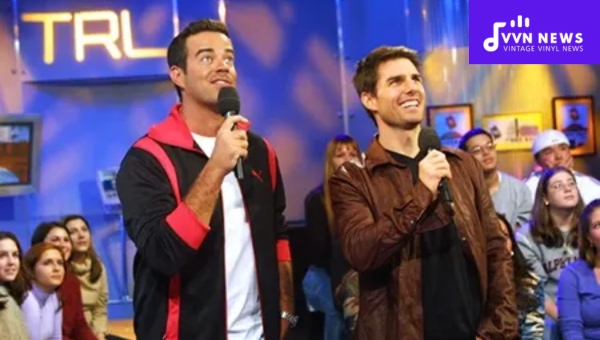
In the late 90s and early 2000s, teenagers like me and millions worldwide experienced an exciting daily ritual of rushing home from school to tune in to MTV’s Total Request Live – fondly known as TRL.
The sheer thrill of seeing your favorite artists top the charts on this iconic pop music countdown show was incomparable.
However, a different narrative gradually began to take shape – one that witnessed MTV TRL slow demise. TRL was introduced in 1998 as more than just a music video show.
With live concerts and exclusive premieres from leaders in the industry, such as Hype Williams and Dave Meyers, it was a manifestation of pop culture influencing an entire generation.
It played a significant role in introducing us to performers and voices that would later become legends. Despite its vibrant appeal and star-studded charisma, TRL started showing signs of slowing down.
Buried beneath its glossy exterior were whisperings of change that signaled an approaching end.
The previously bustling hour-long show seemed to lose its magic little by little–a sad fading melody replacing what used to be the peppered screams of excited fans attending a live broadcast.
This narrative invites you on a journey through time, delving into how MTV’s TRL transitioned from being an integral part of our daily routine into a nostalgic reverie for pop culture reference.
Table of Contents
What is TRL MTV?
Total Request Live, more commonly known as TRL, was an MTV television series featuring popular music videos. The show was a groundbreaking concoction of music, pop culture, and youth spirit. In 1998, TRL aired on weekdays in a live format and followed a countdown style.

The show’s host would reveal the day’s ten most requested music videos according to fan votes. The original concept behind TRL was pretty straightforward – give the audience what they want by offering them control of what airs and when.
Whether you wanted to swoon over NSYNC’s sweet harmonies or rock out with Linkin Park’s heavy beats, TRL was your direct ticket to watch just that while interacting with the artists live from Time Square Studios.
Another critical aspect of TRL was its intimate link with its viewers. The show allowed fans to directly request their favorite videos through phone calls or online votes, creating real-time buzz and excitement every day on MTV.
TRL was Voice of America for music lovers – it merged teens’ erratic humor, spontaneity, and all-time favorite tunes, in one dynamic package that resonated sound waves across homes nationwide.
Also Read: Shocking Twists In The Story of MTV TRL Slow Demise
Who Hosted TRL On MTV?
The early days of TRL were known for their enthusiastic and charismatic hosts, who interpreted American youth’s voices and gave the show its distinctive energy.
It was this electrifying vivacity that often made the experience memorable. Let’s tour memory lane and meet those tireless faces we religiously watched on MTV.
Carson Daly was perhaps the most iconic host of TRL. As the show’s first anchor, he lovingly welcomed fan-crazed teens into Times Square studios and handled quirky fan requests with grace and humor. His daily interactions with artists and fans alike made him a household name.
After Carson moved on in 2003, several other hosts carried the torch – Damien Fahey, Quddus, Vanessa Minnillo, La La Vasquez, Susie Castillo, and more. Each brought their unique flair to appeal to MTV audiences everywhere.
As recently as 2017, when TRL was briefly revived, two new names, DC Young Fly and Tamara Dhia, stepped forward to lend their spark to the hugely influential franchise.
Why was MTV TRL So Popular?
TRL’s popularity can be attributed to several factors. Here are some key reasons that contributed to its phenomenal success:

- Interactivity: The format allowed the audience to pick the videos they wanted to see, creating a unique viewer-driven experience.
- Live Artist Interactions: Exciting live performances and interviews with artists made it a big hit among fans who’d get front-row seats in their living rooms.
- Cultural Impact: TRL became a significant part of pop culture, shaping and reflecting trends of the time.
- Prime-Time Slot: Thanks to its timing after school hours, it fetched consistent viewership from the teenage crowd.
- Celebrity Hosts and VJs: With charismatic hosts like Carson Daly and Damien Fahey, TRL managed to engage audiences on a personal level.
These factors combined made TRL more than just a music show – it was an interactive cultural phenomenon that tapped into the zeitgeist of its time.
12 Unknown Facts about MTV TRL Slow Demise
Every golden age comes to an end. While TRL had its moment in the spotlight, a combination of factors merged, ultimately leading to its downfall.

Here are the 12 reasons I believe contributed to how MTV’s TRL met its slow demise:
1. Clone’s Assault
One of the first significant blows to TRL was the rush of clones that soon flooded the television landscape.
Like hastily made duplicates, numerous channels soon launched similar formatted shows hoping to replicate its success.
We saw shows popping up like TRL cookie-cutters; prime examples were VH1’s ‘Top 20 Video Countdown’ and BET’s ‘106 & Park’. It was a universal theory: if TRL had become wildly popular, wouldn’t all similar shows enjoy the same fame?
This imitation game did put MTV’s TRL in a tight spot. The exclusivity and uniqueness that once had viewers flocking were now distributed between various channels.
Audiences became divided, and with each new show that popped up wearing a different brand’s label but sporting the familiar ‘countdown-concert’ format, bits of TRL’s audience peeled away.
It started to get pretty crowded in this newly carved-out niche, and as competition surged, TRL’s ratings inevitably felt the pinch.
2. Post Facto Brand Expansion
In the early years of its inception, TRL was a unique phenomenon. MTV expanded the brand beyond the initial music countdown format as time passed.
They introduced TRL-branded specials – including TRL Rock Countdown, TRL’s Most Requested, and TRL Presents: Christina Stripped in New York City – that veered away from their daily countdown format, branching out into the broader terrain of popular culture.
This expansion did more than dilute TRL as a brand. It also led to what some critics would call the ‘over-commercialization’ of TRL.
The primary focus shifted toward promoting MTV’s expanded line-up rather than staying true to the ethos of delivering fans’ most requested music videos.
MTV had gone from breaking new ground with its unique approach to music broadcasting to falling into a common pitfall of successful brands – losing sight of what made them special in their pursuit of expansion and growth.
This brand overload over time began making TRL fade in its sparks among fans, contributing to its dwindling popularity.
Also, instilling that sense of overflow, which younger audiences saw quickly led to decreased viewer interest marking MTV’s bet on brand expansion less profitable than envisioned.
Also Read: 20 Best 90s Rock Bands [Relive The Glory Days Of Rock Music]
3. MTV’s Contingency Strategy
As TRL soared to great heights, MTV was knee-deep into diversifying its offering. As the early 2000s ushered in, the channel started to shift some of its focus toward reality TV shows.
The advent of ‘The Real World’ and ‘Jersey Shore,’ among other popular reality series, marked an identifiable pivot in MTV’s programming strategy.
The strategy seemingly made sense at that period. These new-age shows were aimed at capturing the evolving interests of MTV’s young audience.
As this transition happened quite radically, TRL gradually began losing its original essence, and inevitably, some of its audience went astray.
While the move did bring new viewer demographics for MTV, it marked one of the early signs that TRL was slowly beginning to be sidelined, leading us closer to the show’s eventual downfall.
4. The Clips Were Atrocious
While this critique might sound somewhat harsh, it is true for most TRL experiences. Notably, when you think about your favorite music video, the whole experience is as necessary as the song itself – it captures the vibe, the message. It often enhances the overall impact of a tune. On TRL, they opted for an abbreviated format. They often chose to play only a fraction of a music video clip.
Yes, it’s understandable that time constraints and having to feature multiple songs necessitated this step, but unfortunately, it did lead to viewer dissatisfaction over time.
Also Read: C Minor Triad [Simplify Music Composition With This Guide]
5. Emergence of the World Wide Web
The rise of the Internet and increased accessibility to the World Wide Web can’t be overlooked when discussing why TRL’s popularity waned.
- Online Streaming: As online music streaming sites started blooming, like YouTube and Pandora, viewers no longer needed to wait for their favorite songs on MTV. The Internet offered a vast ocean of music at their fingertips anytime, anywhere. It provided individual control over what to listen to and when.
- Social Media: Social media platforms like Facebook and Twitter entered our lives like a whirlwind, drastically changing how artists connected with fans. Social media became the new medium where artists premiered their music videos or launched new albums.
- Access to Artists: Additionally, fans could directly interact with their favorite celebrities online without waiting for them via TRL’s fan interactions or shoutouts.
The World Wide Web gave people more direct access to music and artists than any television show could ever do.
TRL struggled to be relevant in a world constantly becoming more digital.
6. Controversy Eclipsed the Programme
The glorious journey of TRL did not sail smoothly either; it faced turbulence due to specific controversies that tarnished its charm.
- Vote Manipulation Accusations: There were rumors and accusations about vote rigging on the show – implying that TRL was not as authentic as portrayed.
- Disgruntled Artists: Some artists openly complained about MTV’s practices too. Things turned ugly when famous rapper Eminem spoke out against MTV’s decision to limit his video ‘Just Lose It’ from being aired on TRL due to controversial content.
These controversies began eroding viewer trust in MTV’s programming authenticity and marred the image of what used to be America’s favorite after-school hangout.
7. The Authenticity of Reality TV Shows
Reality TV had been around for a while, but it was reaching new popularity heights with shows like “Survivor” and “American Idol.”
This renewed interest in reality TV proved detrimentally decisive against TRL.
- Audience Shifted: Some viewers found this reality shows far more engaging than waiting for their favorite music videos on TRL.
- Sensation & Drama: Reality shows drew audiences in with real-life drama, emotion, and suspense, unlike anything seen on a mere music countdown show like TRL.
- Time Slot Clashing: Scheduling clashes also played a role here: reality shows often aired during prime hours, overlapping TRL’s time slot, which conveniently switched viewers’ attention away from it.
So unfortunately for MTV’s darling child –TRL– wrestling against these radically evolving television trends without significant transformation proved challenging.
8. Seldom Did They Broadcast Entire Videos
The beauty of music videos lies in watching them from start to finish, but as TRL evolved, its format took a toll on the complete viewing experience.
- Videos were often cut short or even split into segments throughout the program. While this method kept viewers engaged for longer, it frustrated fans who wanted to see the entire piece without interruption.
- Additionally, interview segments and commercials began eating away at airtime dedicated initially to streaming music videos.
- As MTV merged with other media formats, such as digital platforms and reality TV, most music video broadcasts became clipped highlights rather than full-length features.
This inevitable shift led to viewer fatigue and frustration, indicating a more significant transition where MTV’s core content was diluted.
9. They Fell Victim to Jokes
Arguably, every great essence of pop culture becomes an object of parody at some point. Unfortunately for TRL, it fell into the trap sooner rather than later.
- Shows like Mad TV and Saturday Night Live didn’t miss their chances to poke fun at TRL’s over-the-top excitement and teeny-bopper behavior.
- Comedians had a field day imitating hosts’ exaggerated gestures or artists’ dramatic expressions leading TRL to become more of a punchline than a respected platform for high-quality music content.
This ribbing took some sheen off TRL’s image for the mature audiences who began seeing it as more comedic fodder than a legitimate music platform.
Also Read: Top Music Theory Games: Engage and Learn With Fun
10. Show with Daly
Referred affectionately more often than not just as “the Carson Daly Show,”
TRL gained significant popularity under Carson Daly’s charismatic hold.
- He possessed that easy charm that had both Britney Spears blushing like an enamored teenager and Eminem warming up in conversation– which says something about his range!
- TRL struggled to fill his shoes convincingly once he decided to leave his VJ days behind to pursue opportunities outside MTV (such as NBC’s Last Call with Carson Daly).
Although efforts were made with successors like Quddus or Damien Fahey taking over the mantle, they couldn’t quite replicate what made TRL unique under Daly’s leadership – thereby marking the beginning of an eventual end.
11. Stand-in Prepared
The departure of Carson Daly, the original and most recognizable host of MTV’s TRL, started a domino effect.
Newer hosts failed to connect with the audience as Daly did. With each new host stepping in to fill the void left by Daly, there was hope that the magic could be reignited.
- The role shuffled among hosts like Damien Fahey, Hilarie Burton, and La La Vasquez. Despite their talents and charms, they just lacked that certain spark.
- One of the critical factors that made TRL a cultural icon was the connection, intimacy, and rapport between Carson Daly and the viewers. He was not just a host but a friend who shared your love for music.
- Every stand-in attempted to bring their flavor to the show’s hosting style. But over time, these changes seemed more like desperate attempts to keep TRL relevant rather than honest efforts at evolution.
12. Cut Back on Show’s Publicity and Advertising
As ratings faltered for TRL, MTV curiously pulled back on promoting it‐a move that only seemed to hasten its demise.
- In 2007-2008, digital platforms like YouTube flourished incredibly, with more global reach than television could have considered. There were fewer billboards and almost no pop-up ads on other channels or websites promoting TRL.
- Instead of strategizing a fightback against this new wave of competition with full-throttle advertising capitalizing on past glory (like VH1 did), MTV chose to scale back, concentrating its marketing push towards other programs branded as ‘refreshing’ and ‘innovative’.
- Cutting down on marketing TRL might’ve been an economic decision but also signified wavering confidence from MTV executives in their once prized possession; a letdown to all those millions reminiscing their high school afternoons spent grooving along with Carson Daly and Co.
Ironically, many in executive roles now admit that sidelining promotion for Total Request Live was one of those callous moves revoking its chance at survival during changing times.
Will MTV TRL Come Back?
As for the highly-anticipated question, “Will TRL come back?” MTV attempted to revive TRL in 2017, introducing it to a new generation.
The show returned with a fresh vibe, reflecting modern youth culture and trends while paying homage to the classic format.
It wasn’t the same – the magic seemed to have dimmed a bit. The reboot struggled to catch on and failed to live up to the hype of its glorious past.
There were inconsistencies in airing times, and the focus on social media sensations over traditional music artists didn’t resonate with viewers. Consequently, MTV pulled off its revival version in 2018.
While there’s always hope for another comeback, given our cultural nostalgia for the golden era of pop music TV shows, currently, there are no official announcements suggesting another reincarnation of TRL.
Also Read: A Guide Transposing Into The Alto C [Navigate Music Transposition]
Conclusion
Total Request Live, or TRL, was more than just a countdown show for hit music videos. It was a platform that connected artists with their fans in a tangible, dynamic setting.
The show was lightning in a bottle – burning bright and hot, then fading away slowly into the dusk of pop culture history.
Despite attempts to reboot it and its undoubted influence on countless music-focused reality shows, TRL had its golden era during the late 90s and early 2000s – an age it helped define for millions of us around America.