
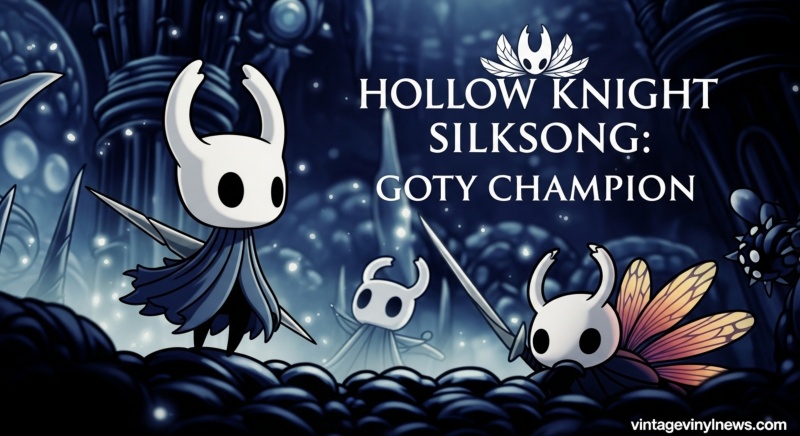
When I first dove into Hollow Knight: Silksong, I knew I was experiencing something special. After countless hours exploring Pharloom, battling its fierce inhabitants, and uncovering its deepest secrets, I’m convinced this isn’t just another Game of the Year contender—it’s the definitive champion that redefines what indie gaming can achieve in 2026. Let me break down exactly why Silksong stands head and shoulders above every other 2025 release.
Table of Contents
Why Silksong Dominates the GOTY Conversation in September 2026?
The gaming landscape in 2026 has been absolutely packed with heavy hitters. We’ve seen the epic storytelling of Expedition 33, the stunning visuals of Death Stranding 2, the immersive RPG depth of Kingdom Come: Deliverance 2, and the refined roguelike action of Hades 2. Yet, when I think about the game that truly pushed the envelope forward and stayed with me long after I put down the controller, it was unquestionably Hollow Knight: Silksong.
What makes Silksong so special? It’s not just entertaining—it fundamentally rewires how you think about game design, challenge, and player agency. This isn’t merely Hollow Knight with a new skin; it’s a revolutionary evolution that respects players while demanding their absolute best.
| Feature | Silksong | Other GOTY Contenders |
|---|---|---|
| Design Philosophy | Player-driven discovery | Hand-holding tutorials |
| Difficulty | Fair but challenging | Adjustable difficulty sliders |
| World Design | Interconnected secrets | Linear progression |
| Combat System | Position-based dancing | Stat-dependent battles |
| Player Agency | Complete freedom | Guided experiences |
Team Cherry’s Masterclass in Game Design
Pure Design Over Bloated Budgets
Most Game of the Year contenders this year have been all about big budgets, slick cutscenes, clean UI, and massive open worlds. Silksong takes the opposite approach—it strips away all unnecessary noise and doubles down on pure, refined gameplay design.
While Expedition 33 wins hearts with orchestral drama and emotional storytelling, Silksong goes smaller and sharper. With whispered lore and mysterious rituals, the game doesn’t reveal everything to you at once. Instead, you’re expected to uncover secrets as you progress, creating a much more personal and rewarding experience.
The Hornet Difference
Playing as Hornet represents a fundamental shift from the original Hollow Knight. Where players already knew how Hades 2 would work with its fast roguelike combat, Hornet brings a completely different rhythm to the table:
- Diagonal strikes that double as both attacks and repositioning tools
- Acrobatic mobility that makes traversal feel like a dance
- Aggressive healing that requires silk resources earned through combat
- Vocal protagonist who drives the story forward rather than being a silent observer
This isn’t just cosmetic—Hornet’s playstyle creates a completely different flow that feels like dancing through a hostile labyrinth rather than methodically exploring a dead kingdom.
Revolutionary Difficulty Design (2026)
Difficulty as Conversation, Not Barrier
Let’s be real—Silksong can be brutally difficult. It’s sparked countless Reddit threads and rage posts about its challenging nature. But here’s the revolutionary part: instead of treating difficulty as a slider or toggle button like most modern games, Silksong makes difficulty a core part of the adventure.
When you face bosses in Silksong, you’re not just fighting enemies—you’re engaging in actual duels. Victory doesn’t come from having better DPS or more points; it comes from reading attack patterns, finding perfect openings, and trusting your instincts. This creates a profound sense of accomplishment that few other games can match.
The Learning Curve That Respects Players
What’s brilliant about Silksong’s difficulty is how it teaches you. Every death is a lesson, every failed attempt builds understanding, and every victory feels earned through genuine improvement rather than stat progression.
The game throws a real “git gud” challenge at you from the beginning, but it’s never unfair. As I progressed through areas like Bilewater—with its punishing poison water and few respawn benches—I initially thought it was unreasonably difficult. But after taking a break, exploring elsewhere, and returning with new tools and knowledge, what once seemed impossible became manageable. This is the mark of truly great game design.
World Design That Rewards Curiosity
No Hand-Holding, Pure Discovery
If Expedition 33 is an epic drama and Death Stranding 2 is known for stunning graphics, Silksong feels like a dense novel you can’t put down. You’ll get lost for hours in its levels, constantly thinking about different approaches and possibilities.
What makes Silksong’s world design so special is how it rewards genuine curiosity. There are tons of hidden areas that don’t scream for attention with question marks or map markers. The true depth of Pharloom reveals itself only when you start asking “what if I go here?” or “what happens if I jump down there?”
Environmental Storytelling at Its Finest
Pharloom is a fascinating place—a dying land where hopeful bugs go on pilgrimage from lower levels to the shining peak of The Citadel. This isn’t just backstory; it’s woven into every aspect of the game design:
- Lower areas feel more organic and dangerous
- Middle regions show signs of industry and struggle
- Upper levels become more refined and mechanical
- The Citadel represents the ultimate goal of the pilgrimage
This vertical progression isn’t just cosmetic—it mirrors the themes of ascent, improvement, and overcoming challenges that define both the story and gameplay.
Combat System: A Dance of Precision
Rhythm Over Reaction
Silksong’s combat tempo starts fast and only accelerates as you progress. But unlike many action games that reward button mashing, Silksong demands precision, patience, and spatial awareness.
Boss fights feel like choreographed dances, especially against humanoid opponents who engage in fencing-like duels. The excellent musical score accompanying each battle provides a baseline for the rhythm you should maintain, creating an almost musical experience to combat.
The Silk System: Risk and Reward
The healing system in Silksong is a masterclass in risk/reward design. Instead of the gradual healing of the original, you need to accumulate a full strand of silk before you can heal. This means:
- Successful healing always restores multiple health pips
- Getting hit while healing forfeits the entire strand
- Building silk requires aggressive engagement with enemies
- Strategic timing becomes crucial for survival
This creates intense moments where you’re balancing the need to heal against the risk of taking damage, making every healing decision meaningful.
Technical Excellence and Artistic Vision
Visual Evolution
Silksong does what every great sequel should—it looks like how you remember Hollow Knight looking, but actually makes its predecessor seem flat by comparison. Every visual element has been enhanced:
- More color and vibrancy throughout Pharloom
- Increased environmental variety from moss caves to industrial cities
- Enhanced parallax effects that create incredible depth
- More detailed character animations and enemy designs
Areas like the opening moss cave biome are gorgeously verdant warrens with layers upon layers of trees, giant mushrooms, and undergrowth all shifting under sophisticated parallax effects that surpass even the original’s impressive visuals.
Audio Design That Enhances Gameplay
The musical score in Silksong isn’t just background music—it’s an integral part of the gameplay experience. Each area has its own musical identity, and boss battles feature dynamic scores that match the rhythm of combat.
The sound design provides crucial audio cues for enemy attacks, environmental hazards, and interactive elements, creating a fully immersive experience where audio is as important as visuals for gameplay success.
Player Agency and Freedom
Learning Through Doing
One of Silksong’s most revolutionary aspects is its approach to teaching players. Instead of lengthy tutorials that explain every mechanic upfront, Silksong respects player intelligence and allows learning through doing:
- No extensive tutorials telling you exactly how to play
- Trial and error encouraged as a valid learning method
- Personal discovery of combat techniques and strategies
- Natural progression that builds skills organically
This approach immediately respects player intuition, allowing you to grow accustomed to gameplay at your own pace. When I first encountered Hornet’s diagonal aerial attack, there was no tutorial explaining when to use it—I had to learn through experimentation and necessity.
Meaningful Choices and Builds
Silksong offers extensive customization through its tool and charm system, allowing players to create builds that match their preferred playstyle:
- Tools provide active abilities that can turn the tide of battle
- Charms offer passive bonuses that complement different approaches
- Crests can dramatically alter how you approach specific challenges
- Build variety encourages multiple playthroughs with different strategies
For example, the fire-spewing Father of the Flame becomes much more approachable with the Magma Bell charm equipped, which halves fire damage taken. The cackling Sister Splinter is manageable with the Reaper crest that enables easier pogo jumps off flying summons, stunning them and building silk more quickly.
Comparison to Other GOTY Contenders
Why Silksong Stands Above the Rest?
When comparing Silksong to other 2025 GOTY contenders, several key factors make it stand out:
| Game | Strengths | Weaknesses | Why Silksong Wins |
|---|---|---|---|
| Expedition 33 | Epic storytelling, orchestral score | More traditional design | Silksong’s player agency |
| Death Stranding 2 | Stunning visuals, narrative | Less interactive gameplay | Silksong’s engaging combat |
| Hades 2 | Refined roguelike mechanics | Familiar formula | Silksong’s innovation |
| Kingdom Come: Deliverance 2 | Deep RPG systems | Technical issues | Silksong’s polish |
The Indie Advantage
What’s truly remarkable about Silksong is that it achieves all this while being developed by a small independent team. While other GOTY contenders had massive budgets and hundreds of developers, Team Cherry’s small group created something that feels more personal, more focused, and more revolutionary than many big-budget productions.
This isn’t just a great indie game—it’s a statement about what’s possible when developers prioritize pure gameplay design over market trends and focus on creating something truly special rather than something merely commercial.
Community and Cultural Impact
Building on Hollow Knight’s Legacy
Silksong doesn’t exist in a vacuum—it builds on the incredible foundation established by the original Hollow Knight. But where many sequels play it safe, Silksong takes risks and pushes boundaries:
- Expands the universe while maintaining its core identity
- Introduces new mechanics that feel natural evolutions
- Deepens the lore without requiring prior knowledge
- Respects longtime fans while welcoming newcomers
The game has already won several awards, including Best Indie Game (Self-Published) at the Golden Joystick Awards 2025 and PC Game of the Year at the same ceremony, showing that both critics and players recognize its excellence.
Fostering a Dedicated Community
The Silksong community has grown rapidly, with players sharing discoveries, strategies, and theories about Pharloom’s mysteries. This organic community building is a testament to the game’s depth and the passion it inspires:
- Active Reddit communities discussing lore and strategies
- Speedrunning scenes developing around the game’s precise mechanics
- Fan art and music celebrating the game’s aesthetic
- Theory crafting about the deeper mysteries of Pharloom
The Future of Gaming Design
Lessons for Other Developers
Silksong offers several important lessons for game developers looking to create meaningful experiences:
- Trust your players—they’re smarter than you think
- Difficulty can be engaging when it’s fair and meaningful
- Less can be more—focus on core mechanics rather than feature bloat
- Player agency matters—give players freedom to discover and experiment
- Polish everything—attention to detail separates good games from great ones
Setting New Standards
Silksong isn’t just a great game—it’s setting new standards for what players should expect from gaming experiences. It proves that:
- Indie games can compete with and surpass big-budget productions
- Challenging gameplay can be accessible and rewarding
- Player freedom and meaningful design aren’t mutually exclusive
- Artistic vision can triumph over market trends
Why Silksong Deserves Your GOTY Vote?
When I consider everything Silksong achieves—its revolutionary approach to difficulty, its masterful world design, its engaging combat system, its respect for player intelligence, and its sheer artistic vision—it becomes clear that this isn’t just another great game. It’s a landmark achievement that will influence game design for years to come.
Other 2025 contenders are excellent games, but Silksong does something special: it reminds us why we fell in love with gaming in the first place. It challenges us, respects us, and rewards us with experiences that feel truly earned rather than handed to us.
In a gaming landscape increasingly dominated by safe, market-tested designs and player-friendly difficulty curves, Silksong stands as a bold statement that games can still be challenging, mysterious, and deeply rewarding. It’s not just my Game of the Year—it’s a game that will be remembered as a turning point in how we think about player agency and game design.
FAQ
Is Hollow Knight: Silksong harder than the original Hollow Knight?
Yes, Silksong is generally considered more challenging than the original. The combat is faster, enemies hit harder, and the healing system requires more strategic thinking. However, the difficulty is fair and well-tuned, with multiple paths and tools available to overcome challenges.
Do I need to play the original Hollow Knight before Silksong?
While not strictly necessary, playing the original Hollow Knight will enhance your appreciation of Silksong. The game references the original’s lore and mechanics, but Silksong tells its own story and can be enjoyed as a standalone experience.
How long does it take to complete Hollow Knight: Silksong?
A standard playthrough of Silksong takes approximately 25-35 hours. However, completionists looking to discover all secrets, alternate endings, and achieve 100% completion can expect 50-70 hours of gameplay.
What makes Silksong different from other Metroidvania games?
Silksong stands out through its unique approach to player agency, lack of hand-holding, and difficulty that feels challenging but fair. The game rewards curiosity and personal discovery rather than following traditional tutorial-heavy design.
Will there be DLC or expansions for Silksong?
While Team Cherry hasn’t officially announced DLC plans, given their support for the original Hollow Knight with substantial free expansions, future content for Silksong seems likely, though nothing has been confirmed.
Is Silksong worth buying if I’m not typically a fan of difficult games?
Despite its challenging nature, Silksong’s fair difficulty design and multiple progression paths make it accessible to players who might not typically enjoy difficult games. The sense of accomplishment from overcoming challenges is incredibly rewarding.
What platforms is Silksong available on?
Silksong is available on PC (Steam), Nintendo Switch, PlayStation 5, and Xbox Series X/S, with day one availability on Xbox Game Pass.
How does Silksong’s story connect to the original Hollow Knight?
Silksong follows Hornet, who was a major character and boss in the original game. The story takes place in a new kingdom called Pharloom, separate from Hallownest, though there are connections and references that fans of the original will appreciate.