
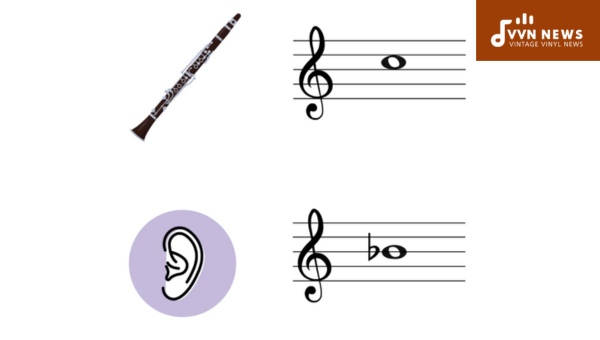
Transposition for clarinet in B flat is a crucial skill that every clarinetist should master. It allows us to play music written for other instruments without having to learn a new set of fingerings or learn to read a different key signature.
As a professional clarinetist, I have had countless opportunities to transpose music for the B flat clarinet.
Whether it’s playing alongside brass instruments in a concert band or collaborating with other musicians in an ensemble, transposition has been an invaluable skill that has enhanced my playing abilities.
In this article, I will guide you through the process of transposing music for the clarinet in B flat, from understanding key signatures to implementing effective fingerings. So, grab your clarinet, and let’s delve into the world of transposition!
Table of Contents
What Is the Clarinet in B Flat?
The clarinet in B flat is one of the most widely used instruments in both orchestral and band settings.
It is commonly referred to as the B flat clarinet due to the fact that when the player plays a written C on their instrument, it actually produces a concert B flat.
This discrepancy is due to the way the instrument is constructed, with its length and key system designed around producing a specific pitch.
As a result, when reading music written for other instruments, such as piano or violin, clarinet players need to transpose their part so that it matches the correct pitch.
Transposition allows us to play alongside different instruments without having to learn new fingerings or key signatures.
Also Read: D Flat Minor Pentatonic Scale [Spice Up Your Melodies Today]
How Do You Transpose Bb to C on the Clarinet?

Transposing from B flat to C on the clarinet may seem daunting at first, but with practice and understanding, it becomes second nature. Here are the steps to effectively transpose Bb to C:
- Know Your Concert Pitch: Before you can begin transposing, make sure you know the concert pitch of the original piece. For example, if the music is written for B flat trumpet, and they play a written C, it sounds as a concert B flat.
- Identify Key Signatures: Determine the key signature of the original piece by looking at its key signature. This will help you adjust your fingerings accordingly. For example, if the original piece is in F major with one flat, you need to know that on your clarinet in B flat.
- Understand Interval Relationships: Familiarize yourself with interval relationships between B flat and C. A major second (whole-step) up from B flat is C.
- Adjust Fingerings: Apply your knowledge of interval relationships to adjust fingerings accordingly. For example, if a passage has a series of Gs in the original music, you would play As on your clarinet.
- Read Music Carefully: When transposing, pay close attention to any accidentals or key changes in the original piece as they will affect how you transpose.
- Practice Transposition: Practice transposing small sections of music at a time before moving on to longer pieces. Start by playing a melody or phrase in its original key and then transpose it one step up.
It’s important to note that transposition requires consistent practice and exposure to different musical keys.
By honing your skills in transposing from B flat to C on the clarinet, you expand your repertoire and open doors for collaborating with other musicians across various instruments.
What Are the Steps to Transpose the Clarinet in B Flat to Piano and Violin?
Transposing music from clarinet in B flat to piano or violin might seem like a daunting task, but it can be made easier with a step-by-step approach. Here are the key steps to help you successfully transpose clarinet music for piano and violin:
- Identify the Original Key Signature: The first step is to determine the key signature of the original clarinet piece. This will give you an understanding of the specific notes being played and will serve as a reference point for transposition.
- Determine the Clarinet Key Difference: Knowing that playing a C on the clarinet produces a concert B flat, you need to calculate the difference between the written note and its actual sounding pitch to transpose accurately.
- Write Down the New Key Signature: Once you have determined how much you need to transpose, write down the new key signature for the piano or violin.
- Transpose Each Individual Note: With your new key signature in mind, go through the music note by note and apply the necessary transposition according to the clarinet’s key difference. Remember that if you are moving up one whole step (two half steps) from B flat, you will be transposed to C on piano or violin.
- Adjust for Octave Differences: Keep in mind that certain notes may need to be adjusted Octave up or down during transposition if they fall outside of the instrument’s playable range.
- Use Proper Fingerings: Make sure you are familiar with proper fingerings for piano or violin as you write down each transposed note.
- Check for Accuracy: After transposing each note, check your work by playing through it on your clarinet and comparing it with your newly transposed sheet music for piano or violin.
- Practice and Refine Your Transposition Skills: Transposition may be challenging at first, but with practice, it becomes easier. Gradually work on transposing more complex pieces to develop your skills further.
By following these steps, you can successfully transpose clarinet music for piano or violin. Remember that transposition requires careful attention to detail and a solid understanding of the instrument’s key difference.
As you practice transposing different musical passages, your skills will improve, and you’ll become more comfortable with this essential aspect of being a versatile musician.
Also Read: E Flat Minor Blues Scale [Infuse Your Tunes With Moody Blues]
Clarinet B Flat Transposition Chart

When transposing music for the clarinet in B flat, it’s crucial to have a clear understanding of how each note will be affected.
To assist you in this process, a clarinet B flat transposition chart can be a valuable tool. Let’s dive into the details of using this chart effectively.
Understanding the Chart
The clarinet B flat transposition chart is a visual representation of how each note on paper corresponds to the actual pitch produced by the clarinet in B flat. By referring to this chart, you can quickly determine how to transpose your part accurately.
Steps to Use the Chart
- Start by locating the written note on your sheet music.
- Find the corresponding entry on the chart, which will indicate the actual pitch produced by your B flat clarinet.
- Play the indicated pitch on your instrument.
The Importance of Key Signatures
Key signatures play a significant role in transposing music accurately. While transposing, be mindful of any key signature changes and adjust accordingly.
Sharps and Flats
Remember that when playing in a key with sharps or flats, those sharps or flats must also be applied to your transposed part. The transposition chart will provide guidance for these adjustments as well.
Doubling an Octave
On occasion, you may encounter notes that are written too high for comfortable playing on the clarinet in its written key. In such cases, you have the option to transpose down an octave by adding an 8 below or above the note on your sheet music.
Remember that consistent practice and familiarization with the specific fingering positions on your instrument are crucial for accurate transposition.
Utilizing resources such as online fingering charts can provide additional clarity as you navigate through different keys and notes.
By utilizing a clarinet B flat transposition chart effectively, you can confidently play music written for other instruments without needing to learn new fingerings or key signatures.
Also Read: B Flat Major Scale [Exploring This Warm & Mellow Key]
How Can You Transpose Clarinet Music to Flute?
Transposing clarinet music to the flute can be a useful skill for flutists who are asked to play pieces originally written for the clarinet.
While the flute and clarinet are both woodwind instruments, they have different ranges and key systems, meaning that the written music needs to be adjusted to match the flute’s pitch. Here are some steps to help you transpose clarinet music to flute:
- Understand the difference in pitch: The clarinet is a transposing instrument in B flat, meaning that when it plays a written C, it sounds like a concert B flat. On the other hand, the flute is a non-transposing instrument, so when it plays a written C, it sounds like a concert C.
- Identify the key signature: Look for any sharps or flats indicated at the beginning of the sheet music. This will help you determine the key of the piece and adjust accordingly. For example, if you see one sharp (F#), you will need to transpose all notes up by a whole step for the flute.
- Transpose of each note: Start with the first note in your clarinet part and mentally move that note up or down by the required interval based on your instrument (flute). For example, if your original clarinet part has an A written, you would need to transpose it up by a major sixth for flute, resulting in an E.
- Consider range limitations: Keep in mind that certain low or high notes may not be possible on both instruments due to their different ranges. Adjustments may need to be made accordingly.
- Practice with a keyboard or tuner: If you have access to a keyboard or tuner, use it as a reference while transposing. This will help ensure accuracy as you make adjustments.
By following these steps and practicing regularly, you can become proficient in transposing clarinet music to flute.
What Is the Method to Transpose Clarinet to Alto Sax?

Transposing music from clarinet to alto saxophone can be a useful skill for clarinetists looking to expand their repertoire or collaborate with saxophonists.
The alto saxophone is an E flat instrument, meaning that when the player plays a written C on their instrument, it actually produces a concert E flat.
Here’s a step-by-step guide on how to transpose music written for clarinet to be played on the alto saxophone.
- Understand the Difference: The first step in transposing is understanding the distinction between the two instruments. While both instruments are single-reed woodwinds, they have different key systems and produce different pitches. The clarinet is a B flat instrument, while the alto saxophone is an E flat instrument.
- Identify the Key: Determine the key of the original clarinet piece. This information will guide you in transposing accurately.
- Raise or Lower by Major 6th: Since the difference between B flat and E flat is a major 6th (nine half steps), you need to raise each note by this interval when transposing from clarinet to alto saxophone.
- Transpose Each Note: Take each note in your original clarinet sheet music and raise it by a major 6th interval. For example, if you see a written C on your sheet music, you should play an A on your alto sax.
- Maintain Rhythm and Articulation: Ensure that you maintain the same rhythm and articulation as indicated in the original sheet music while playing on your alto saxophone.
- Consider Range Differences: Keep in mind that range differences between the two instruments might require additional adjustments when transcribing higher or lower notes.
- Practice and Refine: Once you have transposed the piece, spend time practicing and refining your performance. Pay attention to intonation, tone quality, and overall musicality to ensure an accurate and expressive rendition.
Transposing takes time and practice. Start with simpler pieces and gradually work your way up to more complex ones.
Additionally, studying the fingerings and ranges of both the clarinet and alto saxophone will greatly aid your understanding of the transposition process.
By mastering the method to transpose clarinet music to alto sax, you can expand your repertoire and engage in collaborations with saxophonists, further enhancing your musical skills on both instruments.
Also Read: G Flat Minor Triad [Mastering Complex Guitar Chords]
Computer Software for Clarinet Transpositions
Transposing music for the clarinet can be a time-consuming task, but with the help of computer software, it can become much easier and more efficient.
These programs are designed to assist musicians in transposing and arranging music quickly and accurately. Here are some computer software options that can greatly aid in clarinet transpositions:
1. Sibelius
Sibelius is a popular notation software that allows you to notate, edit, and transpose music easily.
With Sibelius, you can input your clarinet part and then transpose it to any key with just a few clicks. The software provides various tools and features to make the transposition process smooth.
2. Finale
Finale is another widely used music notation software that offers powerful transposition capabilities.
With Finale’s intuitive interface, you can input your clarinet part and easily transpose it to another key by specifying the desired interval or directly entering the new key signature.
The program also provides playback options so you can hear how your transposed part sounds.
3. MuseScore
MuseScore is a free open-source notation software that is suitable for musicians on a tight budget. It offers similar functionalities as paid software, including transposition capabilities.
You can input your clarinet part in MuseScore’s easy-to-use interface and instantly transpose it to another key using its built-in tools.
4. Transcribe!
Transcribe! is specialized software designed for musicians who need to analyze or transcribe recorded music.
While primarily intended for transcription purposes, it includes features that allow you to change the pitch of recorded audio in real time.
This handy tool can be useful when trying to figure out how a specific passage should be played on the clarinet.
These computer software options provide valuable tools for clarinet players who need to transpose their music quickly and accurately.
Whether you need professional-grade software like Sibelius and Finale or prefer a free option like MuseScore, these programs can greatly enhance your transposition capabilities and streamline your workflow.
Also Read: A Flat Diminished Triad [Delve Into Rare Guitar Chords]
FAQs About Transposition For Clarinet In B Flat
Can you explain the process of transposing B’s flat clarinet to the concert pitch?
Transposing B flat clarinet music to concert pitch requires mentally shifting the written notes up a whole step, as the instrument sounds a major second lower than written. For example, a written C on the sheet music would be played as a concert B flat.
How can I transpose clarinet music to match another instrument, such as piano or violin?
To transpose clarinet music for another instrument, such as piano or violin, you need to understand the key signature of the original piece and adjust each note accordingly by moving it up a whole step. It’s helpful to have a transposition chart and practice recognizing intervals between notes.
Is there an easy way to transpose from B flat clarinet to flute?
Transposing from B flat clarinet to flute involves mentally shifting the music down two whole steps. For instance, if you see a C on the clarinet part, you should play an A on the flute.
Can you provide some tips for transposing clarinet music for alto saxophone?
When transposing clarinet music for alto saxophone, it’s essential to remember that both instruments are pitched in E flat. This means that no adjustment in pitch is required; however, fingerings may differ slightly between the two instruments.
Are there any recommended computer software programs for transposing clarinet music?
Yes, there are various computer software programs available that can assist with transposing clarinet music. Some popular options include Sibelius, Finale, and MuseScore. These programs can simplify the process of transposing by automatically adjusting pitch and notation for you.
Conclusion
Transposition for the clarinet in B flat is an essential skill that allows us to play music written for other instruments.
By understanding key signatures, implementing effective fingerings, and utilizing transposition charts, clarinet players can confidently perform alongside different musicians.
Whether transposing for piano, violin, flute, or alto saxophone, mastering the art of transposition expands our musical versatility and enhances our overall playing abilities.
So keep practicing and honing your transposition skills to become a well-rounded clarinetist.