
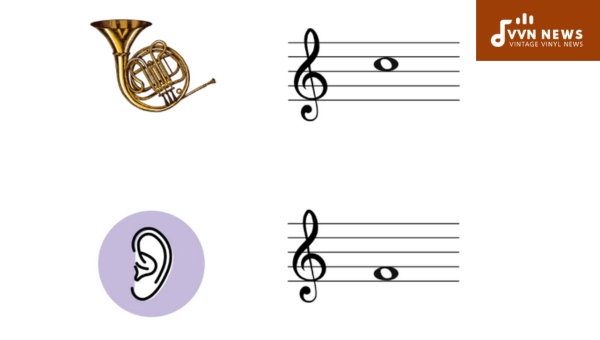
As a professional French horn player, I understand the challenges that come with transposition. Transposition is a crucial skill for any horn player, as it allows us to play music written for different key instruments.
Whether you’re a student learning the ropes or an experienced player looking for some tips and tricks, this article will provide you with valuable insights into transposition for French horn.
Transposition can be an intimidating concept at first, but with the right knowledge and practice, it becomes second nature.
In this article, I will share my professional tips and techniques to help you navigate transposition for the French horn effortlessly.
From understanding the basics of transposing to advanced strategies for tackling tricky passages, we will cover it all. So grab your instrument, and let’s embark on a journey to master the art of transposition!
Table of Contents
What Is Transposition in Music Theory?
In music theory, transposition refers to the act of changing the pitch of a piece of music. It involves taking a piece written in one key and playing it in another key.
This technique is commonly used when playing music written for instruments that are in a different key than the French horn.
Transposition is necessary because the French horn is an F instrument, meaning that when you play a written C on the horn, it sounds like an F.
To play music written for instruments in concert pitch or other keys, you need to transpose the notes so they correspond correctly on your instrument.
Transposition allows us to join in with ensembles and perform music intended for different instruments.
It is an essential skill for any horn player looking to expand their repertoire and collaborate with other musicians.
Also Read: B Flat Minor Pentatonic Scale [Create Emotive Music In Minutes]
Transposition for French Horn in F

Transposing music for the French horn in F involves shifting the notes written on the page so that they correspond correctly to the horn’s natural pitch.
Here are some step-by-step instructions to help you successfully transpose music for the French horn in F:
- Identify the key of the original piece: Determine the key of the piece you want to transpose. This information is usually indicated at the beginning of the music.
- Understand horn transposition: The French horn is considered an “F” instrument, meaning that when you play a written C on the horn, it sounds like an F. Keep this in mind during transposition.
- Determine the interval between keys: To transpose accurately, you need to know how many steps (intervals) up or down you have to go from one key to another. For example, if you are transposing from a piece in C major to F major, you need to raise all notes by a perfect fifth.
- Transpose note by note: Begin transposing note by note, following the determined interval between keys. For instance, if you encounter an E in the original piece, you should play an A on your French horn in F.
- Check for accidentals and alterations: Pay attention to accidentals (sharps, flats, or naturals) and alterations (such as changing a C major chord into a D major chord). Adjust these accordingly while transposing.
- Restate key signature and time signature: After transposing all notes, make sure to restate any changes in the key signature and time signature.
By following these steps and practicing regularly, you will develop your skills in transposing music for the French horn in F effortlessly.
What Are the Steps to Transpose French Horn to Concert Pitch?
When transposing the French horn to a concert pitch, it’s important to follow a systematic approach to ensure accuracy. Here are the steps you should take:
- Identify the key of the music: Before you start transposing, determine the key of the piece you are working on. This information is usually indicated at the beginning of the music or in the key signature.
- Determine the interval: Once you know the key of the piece, identify how many steps higher or lower you need to transpose to bring it to the concert pitch (C). This is known as the interval.
- Learn transposition rules: Familiarize yourself with transposition rules for the French horn in F. For example, if your instrument is in F and you want to transpose from Concert C to F horn, every written C will become an F on your instrument.
- Write out a transposition chart: Create a chart that lists every note in both written notation and its corresponding concert pitch for easy reference during practice.
- Apply transposition: Start by writing out the written notes of your music on a staff lined with an F clef instead of a treble clef. Then, use your transposition chart to identify and write out each note’s corresponding concert pitch below it.
- Practice and check for accuracy: Play through your transposed music slowly and carefully, double-checking that each note sounds correct on your instrument.
- Readjust dynamics and articulation: Remember that after transposing, other details such as dynamics (loudness) and articulation (how notes are played) remain unchanged.
- Play alongside other instruments: Once confident with your transposed music, try playing alongside other musicians who are not playing in F key instruments to test your accuracy and ensemble skills.
By following these steps diligently, you will be able to transpose music from any key to the concert pitch on your French horn.
Also Read: A Flat Minor Pentatonic Scale [Unleash Subtle Tension In Your Music]
Transposition Chart of French Horn

Understanding the transposition chart for the French horn is crucial for accurately playing music written for other instruments or in concert pitch.
The chart serves as a reference guide to help you transpose the written notes to the appropriate pitches on your F horn.
Here is a comprehensive transposition chart for the French horn:
Transposing Down a Perfect 5th (From C to F)
When playing music written for B♭ instruments such as trumpet or clarinet, you need to transpose down a perfect 5th. For example, if you see a written C on the sheet music, you would play an F on your French horn.
Transposing Up a Major 2nd (From B♭ to F)
When transposing music written for E♭ instruments like alto saxophone or baritone saxophone, you have to transpose up a major 2nd. For instance, if you encounter a written B♭ on the score, you would play an F on your horn.
Transposing Down an Octave (From Concert Pitch to F)
When playing music in a concert pitch, you must transpose down an octave. This means that the notes written sound an octave lower when played on the French horn.
It’s important to familiarize yourself with this transposition chart and practice transposing simple melodies and scales in different keys.
This will help reinforce your understanding of how it works and improve your overall transposition skills.
Also Read: A Flat Diminished Triad [Delve Into Rare Guitar Chords]
How to Transpose French Horn Parts to Piano?
Transposing French horn parts to the piano can open up a whole new world of musical possibilities.
Whether you’re arranging music for a solo piano performance or accompanying a horn player, knowing how to transpose can be a valuable skill.
Here, I will walk you through the steps to transpose French horn parts to the piano.
- Determine the original key: Start by identifying the key of the French horn part you wish to transpose. This information is typically indicated at the beginning of the sheet music.
- Understand the transposition: As mentioned earlier, the French horn is an F instrument. This means that when playing a written C on the horn, it sounds like an F. To transpose for piano, you will need to shift all the notes up or down by a certain interval.
- Choose your target key: Decide on which key you want to transpose the French horn part to on the piano. This will depend on your preference and musical context.
- Determine the interval: To transpose from F (French horn) to your target key (piano), determine the interval between these two keys. For example, if you want to transpose from F major on French horn to C major on piano, there is a perfect fifth interval between these two keys.
- Apply transposition: Shift every note in the French horn part up or down by the determined interval. For example, if you need to go up a fifth from F major, all written Fs become Cs on piano.
- Adjust key signatures: Update any accidentals (sharps and flats) in accordance with your new key signature.
- Double-check your work: After transposing, double-check your work for accuracy and correctness.
Keep in mind that transposing may require some trial and error at first; practice makes perfect! Eventually, transposing will become more intuitive, and you’ll be able to do it quickly and efficiently.
What Is the Method to Transpose French Horn to Trumpet?

Transposing music from French horn to trumpet may seem daunting at first, but with a clear understanding of the process, it becomes much more manageable.
By following these steps, you’ll be able to confidently transpose French horn parts for trumpet and expand your repertoire.
Step 1: Know the Key Difference
The French horn is pitched in F, while the trumpet is pitched in B♭. This means that when you play a written C on the French horn, it sounds like an F, whereas on the trumpet it will sound like a B♭.
Step 2: Identify the Key of the Original Music
Before transposing, determine the key of the original music you are working with. This information can usually be found at the beginning of the sheet music or in its title.
Step 3: Choose Your Target Key for Trumpet
Decide which key you want to transpose the music into for the trumpet. Take note that if you want to preserve its original pitch, play it as written on the trumpet without transposing.
Step 4: Use a Transposition Chart
To simplify transposing from French horn to trumpet, use a transposition chart specifically designed for brass instruments. These charts show how each note on one instrument corresponds to another instrument’s pitch. Referencing this chart will help you accurately transpose between keys.
Also Read: A Flat Minor Triad [Guide to Unusual Guitar Chords]
Step 5: Apply Interval Relationship
With your chosen target key and transposition chart in hand, identify each note/chord in the original music and translate it using intervals based on your chosen key difference (here, B♭).
Example: If you are playing an E♭ on French horn (which sounds like an A♭), consult your transposition chart and play an A on your trumpet.
Step 6: Double-Check Your Transposition
Once you have transposed the entire piece, it’s crucial to double-check your work. Play through the newly transposed music on your trumpet to ensure accuracy and make any necessary corrections.
By following these steps and practicing regularly, you’ll become more comfortable with transposing French horn parts to trumpet.
Mastering this skill opens up a broader range of musical possibilities and collaborations as a horn player.
How Can You Transpose French Horn Music to Tenor Sax?
Transposing music written for the French horn to the tenor saxophone can be a useful skill for horn players looking to expand their repertoire or collaborate with saxophonists.
Here are some steps and considerations to help you transpose French horn music to the tenor sax:
1. Know your instruments
It’s essential to have a good understanding of both the French horn and tenor saxophone. Familiarize yourself with their ranges, fingerings, and characteristics.
This knowledge will help you make informed decisions during the transposition process.
2. Identify the original key
Determine the key of the piece you want to transpose, as well as whether it is in treble or bass clef notation. This information will guide your transposition.
3. Determine the desired key for tenor sax
Decide on the key in which you want to play on the tenor saxophone. For example, if the original piece is written in C major and you want to play it on a B♭ tenor saxophone, you’ll need to transpose up a whole step.
4. Apply interval transposition
Use interval transposition to map each note from French horn notation to the corresponding note on the tenor saxophone. Remember that both instruments are pitched differently, so simply writing down the same notes won’t work.
Also Read: D Minor Pentatonic Scale [Make Your Music Sing With Emotion]
5. Consider range differences
Be aware of any range discrepancies between the French horn and tenor saxophone. If a note falls outside of a playable range on either instrument, you may need to consider alternatives or make adjustments.
6. Account for instrument-specific techniques
The French horn and tenor sax have different playing techniques and expressions. While transposing, take these differences into account, adjusting dynamics, articulations, and other musical elements accordingly.
Once you’ve completed these steps, you’ll have successfully transposed the French horn music to tenor saxophone notation. Remember to practice and familiarize yourself with the new key and fingering on the saxophone.
Transposing between instruments is a valuable skill for any musician. It allows for collaboration with a wider range of instruments and opens up new musical possibilities.
What Software Tools Can Assist in Transposing for Brass Instruments?

Transposing music can be a challenging task, but luckily there are software tools available that can make the process much easier.
These tools not only help with transposition but also offer additional features that can enhance your practice sessions and performances.
Here are some software tools that can assist you in transposing for brass instruments:
- Finale – Finale is a popular music notation software used by many professional musicians. It allows you to input your sheet music and easily transpose it to different keys. The software provides a user-friendly interface and a wide range of customizable options.
- Sibelius – Sibelius is another widely used music notation software that offers powerful transposition capabilities. With its intuitive interface and advanced features, you can quickly transpose your music to different keys for the French horn or any other brass instrument.
- Musescore – Musescore is a free and open-source music notation software suitable for both beginners and professionals. It offers handy transposition tools, allowing you to change the key of your sheet music with just a few clicks.
- Transcribe! – Transcribe! is not specifically designed for transposing, but it is an excellent tool for practicing and learning songs by ear. With this software, you can slow down recordings, loop sections, and even change the pitch of the music to match your desired key.
- SmartMusic – SmartMusic is an interactive practice tool that provides real-time feedback on your playing. While it may not have dedicated transposition features, it does allow you to import sheet music and play along with accompaniments in any key.
- Notion – Notion is a comprehensive music notation software that includes transposition capabilities along with many other useful features such as audio mixing and orchestral samples.
These software tools can be valuable assets in your practice routine and can help you become a more versatile and confident player.
Also Read: D Sharp Minor Pentatonic Scale [Inject Drama Into Your Melodies]
FAQs About Transposition For French Horn
Can you explain the concept of transposition in simple terms?
Transposition is the process of changing the key of a piece of music so that it corresponds with the notes on your instrument.
Are there different transpositions for the French horn?
Yes, there are various transpositions for the French horn, but the most common one is transposing from concert pitch to F.
How do you transpose music for the French horn in F?
To transpose music for the French horn in F, you need to mentally shift all of the written notes up a perfect fifth from the concert pitch.
Is there a chart or reference guide available for transposing on the French horn?
Yes, there are handy transposition charts available that list out the corresponding notes when transposing from concert pitch to F for the French horn.
Is it possible to use software tools to assist with transposing music for brass instruments?
Yes, there are software tools available that can help with transposing music and generating sheet music in different keys to match your instrument’s requirements.
Conclusion
Transposition is a fundamental skill for French horn players that allows us to play music written for different key instruments.
By understanding the basics of transposition, such as shifting pitch and reading transposing scores, you can confidently play in various musical settings.
Remember to consult a transposition chart for accurate note conversions and utilize helpful software tools if needed.
With practice and dedication, you’ll develop fluency in transposing for the French horn and open up a world of musical possibilities. Happy transposing!