
Mastering The D Sharp Diminished Triad is an essential skill for any musician looking to enhance their understanding of music theory and create more intricate and nuanced compositions.
I will guide you through the ins and outs of the D Sharp diminished triad, explaining its structure and its importance in music and providing practical tips on how to incorporate it into your playing.
Whether you’re a seasoned guitarist or a beginner pianist, mastering this triad will open up new possibilities for creativity and expression in your musical journey.
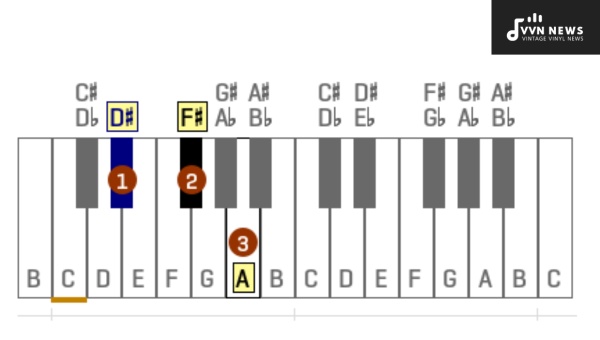
The D Sharp diminished triad consists of three notes: D#, F#, and A. This chord may appear complex at first glance, but by breaking it down and understanding its components, you can unlock its full potential.
The diminished triad is characterized by its unique sound, one that is often described as tense or suspenseful. Its distinct quality makes it a valuable tool for adding depth and complexity to your compositions.
As we delve into the intricacies of the D Sharp diminished triad, you will discover various ways to employ it in different musical contexts, from jazz and blues to classical compositions.
So, without further ado, let’s dive into mastering the D Sharp diminished triad.
Table of Contents
What are D Sharp Diminished Triad?
The D Sharp diminished triad is a chord consisting of three notes: D#, F#, and A.
It is called “diminished” because it contains minor thirds stacked on top of each other, resulting in a unique and distinct sound.
This triad is built by starting with the root note D# and adding a minor third interval (F#) and another minor third interval (A) above it.
The D Sharp diminished triad is often used in various musical genres to create tension, suspense, and dissonance.
Its distinct sound makes it a valuable tool for musicians looking to add complexity and depth to their compositions.
The Structure of a D Sharp Diminished Triad
The D Sharp diminished triad is constructed using a specific formula of intervals. Understanding this structure is fundamental in mastering this chord and being able to utilize it effectively in your playing.
- Root Note: The root note of the D Sharp diminished triad is D#, which serves as the foundation of the chord.
- Minor Third Interval: Adding a minor third interval above the root note, we arrive at F#. The minor third interval consists of three half steps or semitones.
- Minor Third Interval (Again): Adding another minor third interval above F#, we reach the final note of the triad, A. This creates a stacked series of two minor thirds in the chord.
- Total Number of Notes: The D Sharp diminished triad consists of three notes: D#, F#, and A.
By understanding and visualizing this structure, you can easily identify and play the D Sharp diminished triad on your instrument, allowing you to incorporate its unique tonal qualities into your musical compositions.
Also Read: A Flat Diminished Triad [Delve Into Rare Guitar Chords]
Building the D Sharp Diminished Triad
Building the D Sharp diminished triad involves understanding the structure and intervals within the chord. Here’s a step-by-step guide to help you construct this triad:
- Start with the root note: The root note of the D Sharp diminished triad is D#. This will serve as the foundation of the chord.
- Add a minor third interval: The next note to add is a minor third interval above the root note. In this case, that would be F#.
- Add another minor third interval: Finally, add another minor third interval above the previous note (F#). This will give you the final note of the D Sharp diminished triad, which is A.
The D Sharp diminished triad consists of the notes D#, F#, and A – these are exactly three notes apart from each other, resulting in a chord that has a unique and tense sound.
Using the D Sharp Diminished Triad in Music

The D Sharp diminished triad may have a tense and suspenseful sound, but it is a valuable resource for musicians looking to create unique compositions. Here are some ways you can incorporate this chord into your music:
1. Creating Tension and Resolution
The D Sharp diminished triad is often used to create tension in music. Its dissonant sound can be effectively used as a transition chord, leading to a more stable and resolved chord, such as the D Major or D# Major triad. By using this triad strategically in your compositions, you can create an emotional impact on listeners.
2. Jazz and Blues Improvisation
In jazz and blues music, the diminished triads are commonly used as substitute chords or passing chords. For example, you can use the D Sharp diminished triad as a substitute for the F#7 chord in the key of B major or as a passing chord between two different chords. This adds complexity and variety to your improvisations.
3. Enhancing Classical Compositions
In classical music, the diminished triads are often used for chromatic harmony or secondary dominants. By incorporating the D Sharp diminished triad into your classical compositions, you can add richness and tension to your harmonic progressions.
4. Diminished Chord Progressions
One common progression using the D Sharp diminished triad is D#dim – E – F#dim – G – Adim in the key of A minor. This progression utilizes the diminished chords to create movement and interesting harmonies.
5. Soloing and Melodic Lines
When soloing or creating melodic lines, try incorporating notes from the D Sharp diminished triad into your phrases for added color and tension. Experiment with using it as an embellishment or passing tone within your solos.
Remember that practice is key when mastering any musical concept. Spend time exploring the possibilities of the D Sharp diminished triad in different musical contexts, and most importantly, let your creativity shine through.
Also Read: G Diminished Triad [Guide To Unique Guitar Chords]
Common Progressions with D Sharp Diminished
The D Sharp diminished triad can be used in various progressions to add tension and create a unique musical atmosphere. Here are some common progressions where the D Sharp diminished triad can be found:
- Diminished Progressions: The most common use of the D Sharp diminished triad is within diminished progressions. These progressions often involve a series of diminished chords moving in a cyclical pattern. For example, the progression D#dim – F#dim – Adim – Cdim creates a sense of unresolved tension that can be resolved by moving to a different chord.
- Chromatic Movement: The D Sharp diminished triad can also be used to create chromatic movement in your compositions. By moving the root note up or down half steps, you can create smooth and interesting transitions between chords. For example, using the progression D#dim – E dim – F dim creates a descending chromatic movement.
- Dominant Function: Another way to use the D Sharp diminished triad is as a substitute for dominant chords. In this context, the D#dim chord functions as a substitute for E7 or G#7, creating an altered or tense sound before resolving to another chord.
- Modulations: The D Sharp diminished triad can be used as a pivot chord in modulations. By using it as a common chord between two keys, you can smoothly transition from one key to another while maintaining harmonic interest.
- Modal Interchange: Modal interchange refers to borrowing chords from parallel or related modes. The D Sharp diminished triad can be employed as an unexpected and unique choice when borrowing from other modes, adding complexity and interest to your compositions.
By understanding these common progressions, you will be able to incorporate the unique sound of the D Sharp diminished triad into your own compositions with confidence and creativity.
Ear Training Tips To Recognize D Sharp Diminished Triad
Mastering the ability to recognize and differentiate chords by ear is a crucial skill for any musician. When it comes to identifying the D Sharp diminished triad, here are some ear-training tips that can help you develop your musical instincts:
- Familiarize Yourself with the Sound: Listen to recordings or play examples of songs that contain the D# diminished triad. Pay close attention to its distinct and tense sound, as it will help you internalize its unique characteristics.
- Interval Practice: Start by training your ears to recognize minor thirds, which form the foundation of the diminished triad. Play a D# note followed by an F# note to reinforce this interval in your mind.
- Compare with Other Chords: Listen to and compare the sound of a regular major or minor triad with that of a diminished triad. Pay attention to how the latter creates a more dissonant and unresolved feeling.
- Sing Along: Practice singing or humming along with different musical examples that incorporate the D Sharp diminished triad. This will enhance your auditory memory and help you internalize its sound.
- Play Chord Progressions: Practice playing common chord progressions that include the D Sharp diminished triad. This will train your ears to identify its sound within a harmonic context.
Ear training takes practice and patience. By incorporating these tips into your daily routine, you will gradually develop a heightened sense of musical intuition when it comes to recognizing and utilizing the D Sharp diminished triad in your compositions.
Also Read: G Flat Diminished Triad [Discover Underrated Guitar Chords]
Inversions and Voicings of D Sharp Diminished Triad

The inversions and voicings of the D Sharp diminished triad allow you to create different arrangements and variations of the chord, giving you more options for incorporating it into your compositions. By rearranging the notes within the triad, you can change its overall sound and texture.
Root Position
The root position of the D Sharp diminished triad is when the root note (D#) is in the bass. This is the most common voicing and provides a solid foundation for building chords.
First Inversion
In first inversion, we move the root note (D#) up an octave, placing F# in the bass. This inversion creates a lighter and more open sound.
Second Inversion
Second inversion involves moving both D# and F# up an octave, placing A in the bass. This inversion produces a distinct mood with greater tension.
Closed Voicing
Closed voicing refers to arranging all three notes of the triad within a single octave. This results in a concentrated sound that can add intensity to your compositions.
Open Voicing
On the other hand, open voicing spreads out the notes of the triad across multiple octaves. This creates a spacious and airy texture that can bring a sense of expansiveness to your music.
Experimenting with these inversions and voicings will give you a wide range of sonic possibilities when using the D Sharp diminished triad in your compositions. Remember to listen carefully to how each variation sounds, as they can evoke different emotions and create different musical effects.
Also Read: A Sharp Diminished Triad [Discover This Unique Chord]
D Sharp Diminished in Different Music Genres
The D Sharp diminished triad is a versatile chord that can be found in various music genres, adding unique flavors and color to compositions. Let’s explore how this triad is used in different genres:
1. Jazz:
In jazz music, the D Sharp diminished triad is commonly used as a passing chord or to create tension within a progression. It can be used as a substitute for dominant seventh chords to provide harmonic movement and interest. Jazz musicians often use the diminished scale derived from this triad to create intricate and complex improvisations.
2. Classical:
In classical music, the D Sharp diminished triad is often used for modulation purposes. It acts as a pivot chord, smoothly transitioning between different keys and enhancing the harmonic progression. Additionally, composers utilize this triad for its dramatic and suspenseful qualities, creating tension before resolving to a consonant chord.
3. Blues:
The blues genre incorporates the D Sharp diminished triad as an essential element to add a touch of darkness and intensity. It can be used in blues progressions to create contrast against major chords or as a transition chord between different sections of a song. The unique sound of the diminished triad adds depth and character to blues compositions.
4. Fusion:
Fusion music combines elements from jazz, rock, funk, and other genres, resulting in complex harmonic structures. The D Sharp diminished triad finds its place in fusion compositions where musicians seek innovative harmonies and chord progressions. Its dissonant yet captivating sound contributes to the fusion genre’s experimental nature.
5. Film Scores:
In film scoring, composers use the D Sharp diminished triad to create tension-filled moments in suspenseful or climactic scenes. The triad’s unsettling quality adds emotional depth and elevates the intensity of a scene, making it an excellent tool for evoking suspense, drama, or thrill.
The D Sharp diminished triad holds a significant place in various music genres. From jazz and classical to blues, fusion, and film scores, this chord’s unique sound and versatility make it an invaluable resource for musicians looking to explore new harmonic possibilities and evoke specific emotions or moods in their compositions.
Navigate the intricacies of the D Sharp Diminished Triad with our insightful guide. Understand this complex chord to amplify your music creation skills.
FAQs About D Sharp diminished triad
What is the purpose of the D Sharp diminished triad?
The D Sharp diminished triad adds tension and suspense to a composition, enhancing its complexity and depth.
How is a D Sharp diminished triad constructed?
A D Sharp diminished triad consists of the root note (D#), a minor third interval (F#), and another minor third interval (A).
Is the D Sharp diminished triad only relevant to specific musical genres?
No, the D Sharp diminished triad can be used in various genres, including jazz, blues, classical, and more.
Can I use inversions or different voicings for the D Sharp diminished triad?
Yes, you can experiment with inversions and different voicings to achieve different sounds and add variety to your compositions.
How can I train my ear to recognize the sound of the D Sharp diminished triad?
Practicing ear training exercises and listening to music that features the D Sharp diminished triad will help train your ear to recognize its distinct sound.
Conclusion
Mastering the D Sharp diminished triad is a valuable skill for musicians looking to expand their harmonic palette and create more intricate and expressive compositions.
By understanding the structure of the D Sharp diminished triad and practicing its different inversions and voicings, you can unlock its full potential.
Experiment with incorporating the triad into various musical genres, such as jazz, blues, and classical music, to add tension and complexity to your playing.
With practice and exploration, you will be able to use the D Sharp confidently diminished triad to create captivating musical moments.