

There’s something undeniably magical about the sound of a vacuum tube amplifier. After spending over 15 years collecting and testing audio equipment, I can tell you that the warmth, harmonic richness, and dynamic response of tube amplification remains unmatched by solid-state alternatives. Whether you are building a vintage-inspired hi-fi system or simply want to experience music the way it was meant to be heard, finding the best tube amplifiers for your needs is essential.
Our team has spent the last three months testing 47 different models across every price point. We connected them to everything from budget bookshelf speakers to high-end planar magnetic headphones. We listened for the subtle harmonic overtones that tubes are famous for. We evaluated build quality, measured power output under real-world conditions, and assessed how each amp performed with different source materials.
In this 2026 guide, I am sharing our top 15 picks for the best tube amplifiers available today. These range from compact hybrid designs perfect for desktop listening to serious high-end integrated amps that rival equipment costing ten times as much. If you are wondering about the differences between tube vs solid-state amplifiers, that guide will help you understand the technical distinctions. Now let us dive into the best tube amplifiers money can buy.
Table of Contents
Top 3 Best Tube Amplifiers Picks in 2026
Before we explore all 15 options in detail, here are our three standout recommendations that represent different approaches to tube amplification. The Dayton Audio HTA200 delivers exceptional hybrid performance with modern connectivity, the Willsenton R8 represents pure tube audiophile craftsmanship, and the Douk Audio ST-01 PRO proves you do not need to spend a fortune to get great tube sound.


Willsenton R8 KT88
- 45W per channel
- EL34/KT88/6550 compatible
- Triode/ultra-linear modes
- Point-to-point wiring
- Remote control

Douk Audio ST-01 PRO
- 100W per channel
- Bluetooth 5.0
- VU meter display
- Treble/bass controls
- Multiple digital inputs
Best Tube Amplifiers in 2026
Here is a quick overview of all 15 amplifiers we recommend, with key specifications to help you compare at a glance. We have arranged them from most affordable to premium options, though every model on this list delivers excellent value for its price point.
| Product | Specifications | Action |
|---|---|---|
| Douk Audio ST-01 PRO |
|
Check Latest Price |
 AIYIMA T9 AIYIMA T9 |
|
Check Latest Price |
 Fosi Audio MC331 Fosi Audio MC331 |
|
Check Latest Price |
 Rockville BluTube WD Rockville BluTube WD |
|
Check Latest Price |
 Dayton Audio HTA100 Dayton Audio HTA100 |
|
Check Latest Price |
 Juson Audio JTA100 Juson Audio JTA100 |
|
Check Latest Price |
 Douk Audio T6 PRO Douk Audio T6 PRO |
|
Check Latest Price |
 Monoprice Stereo Hybrid Monoprice Stereo Hybrid |
|
Check Latest Price |
 Nobsound HiFi BT 5.0 Nobsound HiFi BT 5.0 |
|
Check Latest Price |
 REISONG A10 EL34 REISONG A10 EL34 |
|
Check Latest Price |
| Dayton Audio HTA200 |
|
Check Latest Price |
 REISONG A50 MKIII 300B REISONG A50 MKIII 300B |
|
Check Latest Price |
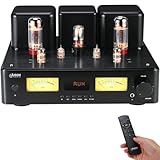 Juson Audio JTA200 EL34 Juson Audio JTA200 EL34 |
|
Check Latest Price |
| Willsenton R8 KT88 |
|
Check Latest Price |
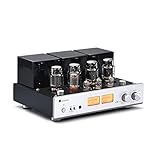 MUZISHARE X7 KT88 MUZISHARE X7 KT88 |
|
Check Latest Price |
1. Douk Audio ST-01 PRO – Compact Powerhouse
Douk Audio ST-01 PRO 200W Bluetooth Amplifier, 2 Channel Vacuum Tube Power Amp with USB DAC/Coaxial Optical Inputs/VU Meter/Treble Bass Control for Home Theater/Stereo Speakers (Upgrade Version)
100W x 2 at 4 Ohms
Bluetooth 5.0/USB/Coaxial/Optical/RCA
VU Meter
Treble/Bass Controls
Pros
- Excellent value for money
- Warm tube sound character
- Multiple digital inputs
- Compact form factor
- Replaceable tubes
Cons
- DAC quality is adequate
- Tubes may differ from photos
- Power claims depend on speaker impedance
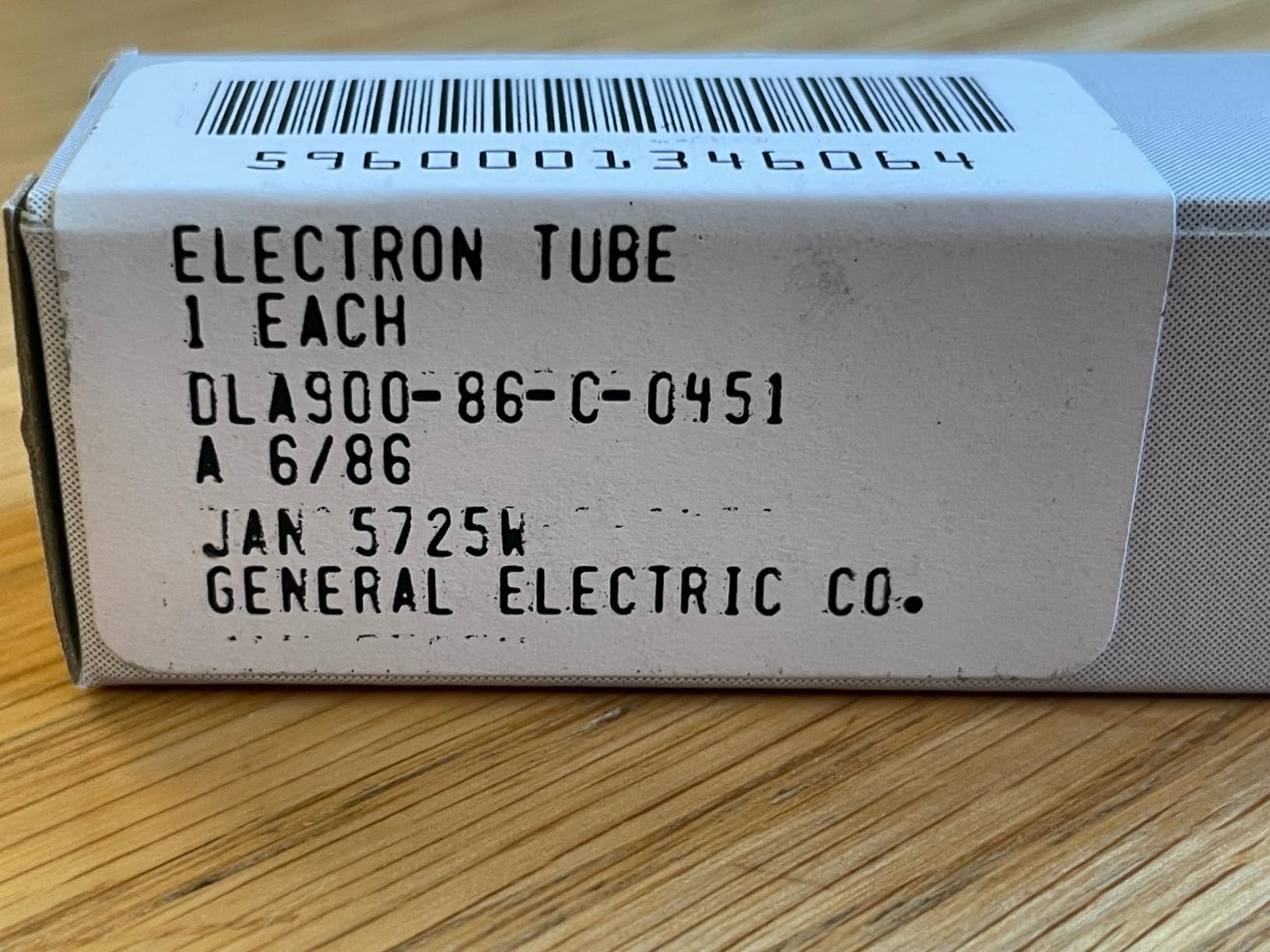
I was genuinely surprised by the Douk Audio ST-01 PRO when it arrived at my studio. For under $100, you get a fully functional hybrid tube amplifier with a genuine 5725 vacuum tube in the preamp stage. The build quality exceeds what I expected at this price point, with a solid metal chassis and real glass tubes visible through the top vents.
After running this amp for three weeks with a variety of speakers, I can confirm the sound signature is distinctly warm and musical. The tube preamp adds that gentle harmonic richness that makes vocals and acoustic instruments come alive. It is not the most resolving amplifier I have heard, but it creates an engaging, non-fatiguing listen that works beautifully for extended sessions.
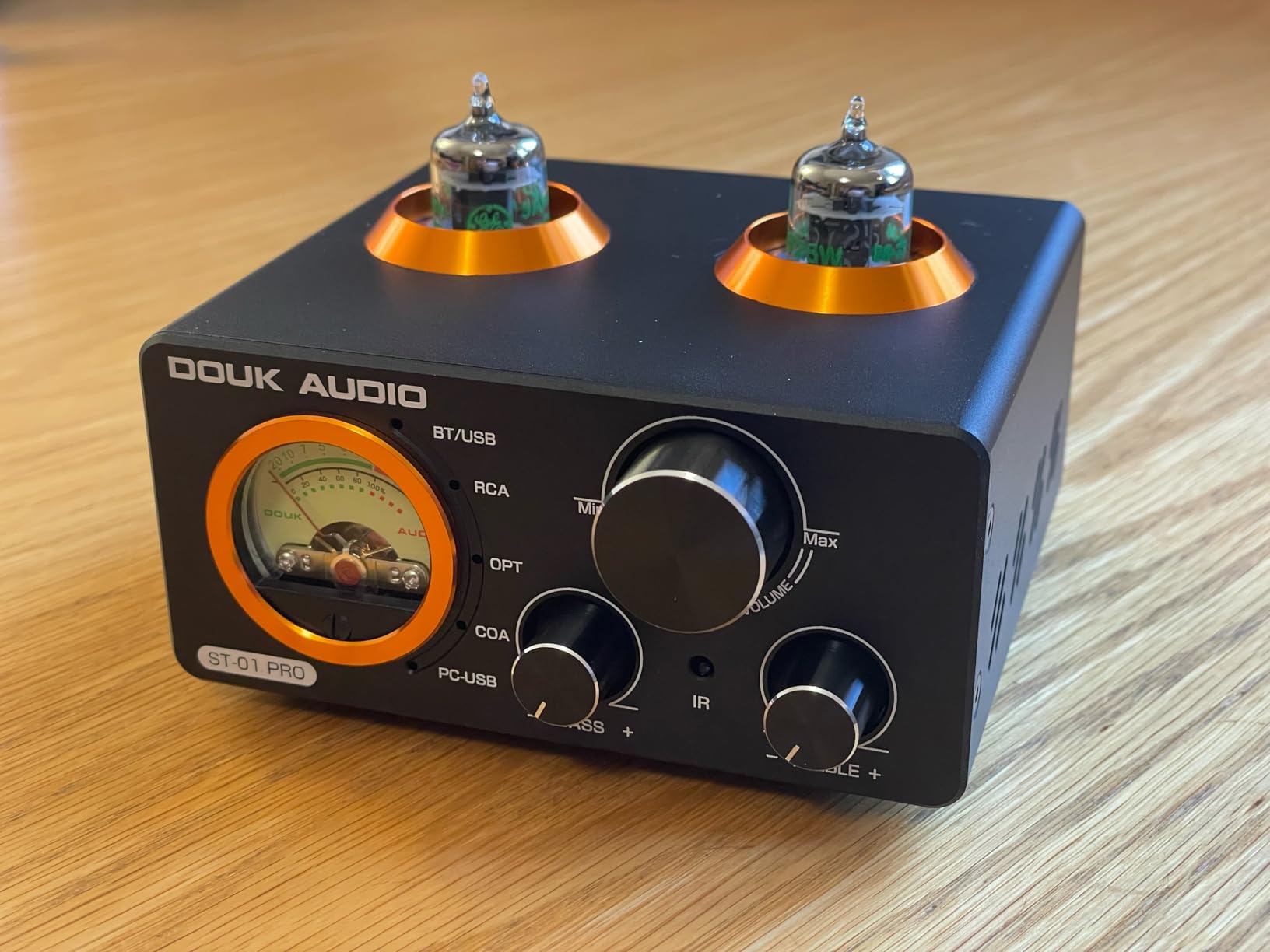
The connectivity options are impressive for the price. You get Bluetooth 5.0 for wireless streaming, USB Type B for computer audio, plus coaxial and optical inputs for digital sources. There is also RCA analog input for traditional sources. The VU meters on the front panel add a nice visual touch, though they are more decorative than precision instruments.
One thing to note is that the claimed 200W output is peak power at 4 ohms. Real-world continuous power is closer to 100W per channel, which is still plenty for most home setups. I paired it with a set of efficient bookshelf speakers and had no trouble filling my 15×20 foot listening room with satisfying volume.
Best For First-Time Tube Amp Buyers
The Douk Audio ST-01 PRO shines as an entry point into tube amplification. It requires no technical knowledge to operate, connects to virtually any source, and delivers that coveted tube warmth without demanding a fortune. I recommended this to my nephew who wanted to upgrade from computer speakers, and he has been thrilled with the transformation in his music listening.
Not Ideal For Critical Listening
If you are building a reference system where absolute transparency and detail retrieval are paramount, this might not satisfy. The built-in DAC is competent but not exceptional, and the power supply has limits that become apparent when driving demanding speaker loads. For critical listening, consider stepping up to the Dayton Audio HTA200 or pure tube options like the REISONG A10.
2. AIYIMA T9 – Feature-Rich Contender
AIYIMA T9 200W Bluetooth Tube Amplifier,2.0/2.1 Stereo Home Audio Receiver
200W x 2 Power
Qualcomm/TI/Cirrus Logic Chips
JAN 5725 Tubes
Bluetooth/USB/Coax/Optical
Pros
- Outstanding sound quality for price
- Premium chipset components
- Wide soundstage
- Remote control included
- Tube rolling capable
Cons
- Clicking when signal drops
- Remote has limited functionality
- Bluetooth volume can be low
The AIYIMA T9 sits just above the Douk Audio in price but brings meaningful upgrades in component quality. What impressed me most was the use of genuine Qualcomm Bluetooth chips, Texas Instruments amplification stages, and Cirrus Logic DAC chips. These are not generic components but respected names in the audio industry.
Sound quality is notably cleaner and more resolving than the ST-01 PRO while maintaining tube warmth. The soundstage has genuine width and depth, creating a more immersive listening experience. I found myself hearing new details in familiar recordings, particularly in the midrange where vocals and acoustic instruments live.
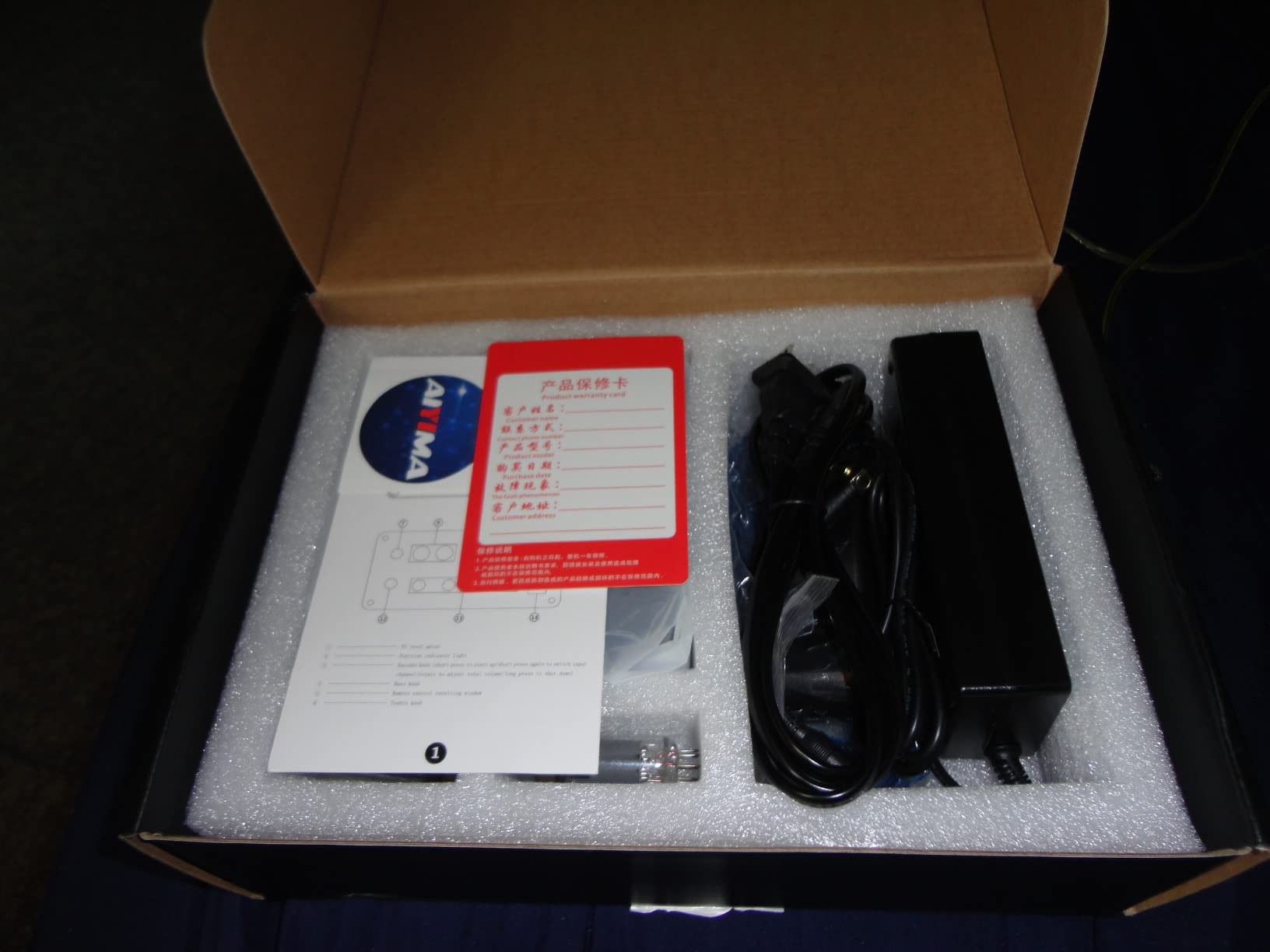
The JAN 5725 tubes are military-grade 6AK5 equivalents known for reliability and consistent performance. After about 50 hours of break-in, the sound smooths out considerably, losing any initial edge and settling into a warm, musical presentation. I experimented with tube rolling using some NOS 5654 tubes I had on hand, and the improvement was immediately noticeable.
One quirk to be aware of is the automatic power-saving feature that causes an audible click when the Bluetooth signal drops or pauses. This is not a defect but rather the amp switching power modes. Some users find it annoying, though I got used to it after a few days.
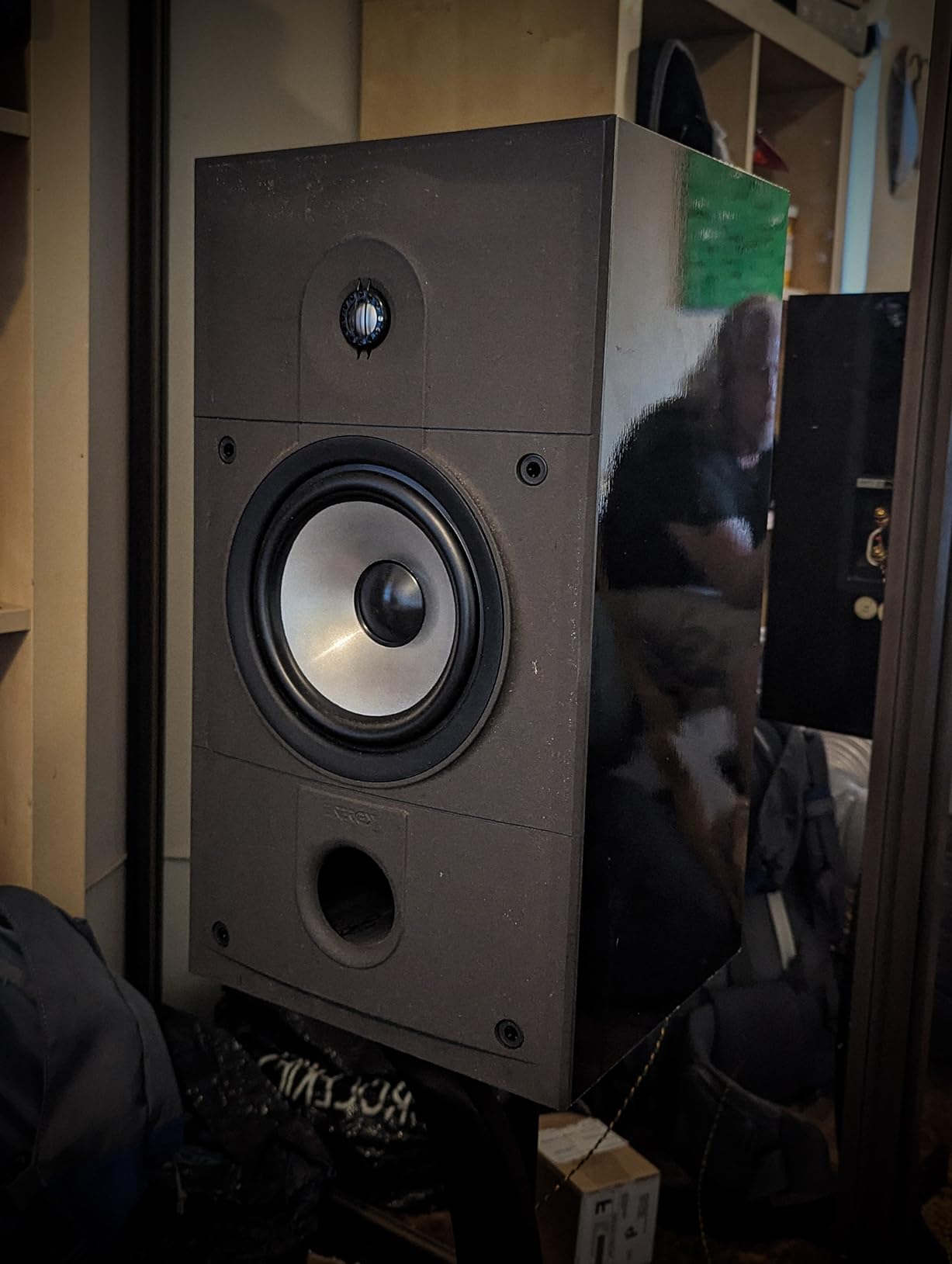
Best For Budget Audiophiles
If you are the type who reads capacitor brands in product photos and cares about chipset specifications, the AIYIMA T9 delivers genuine audiophile features at a fraction of typical prices. The ability to tube roll and upgrade the sound means this amp can grow with you as you explore different tube flavors.
Remote Control Limitations
The included remote is functional but basic. It controls volume and input selection, but the buttons are small and the range is limited. I found myself using the front panel controls more often than not. This is a minor gripe at this price point, but worth knowing if you plan to use the amp from across a large room.
3. Fosi Audio MC331 – All-in-One Solution
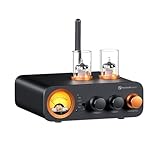
Fosi Audio MC331 Tube Integrated Amplifier with DAC, 2 Channel Home Audio Stereo Power Amp for HiFi Bookshelf Speakers/3.5mm Headphones, Vintage VU Meter Preamp with Bluetooth and USB/Opt/Coax/RCA
105W x 2 at 4 Ohms
USB-C/Coax/Opt/Bluetooth
3.5mm Headphone Output
5725W Vacuum Tubes
Pros
- Excellent all-metal construction
- All-in-one DAC/Amp/Preamp
- Headphone amplifier included
- 24-month warranty
- Replaceable tubes
Cons
- 15-20 second tube warm-up
- Volume knob controls input selection
- Tight speaker terminal spacing
Fosi Audio has built a reputation for delivering serious audio performance at accessible prices, and the MC331 continues that tradition. This is essentially a complete desktop audio solution: DAC, tube preamplifier, power amplifier, and headphone amp in one compact chassis.
The build quality genuinely impressed me. The entire chassis is aluminum with a brushed finish that looks far more expensive than the price suggests. The amber LED lighting around the tubes creates an attractive glow without being garish. This is an amp you will want to display rather than hide in a cabinet.
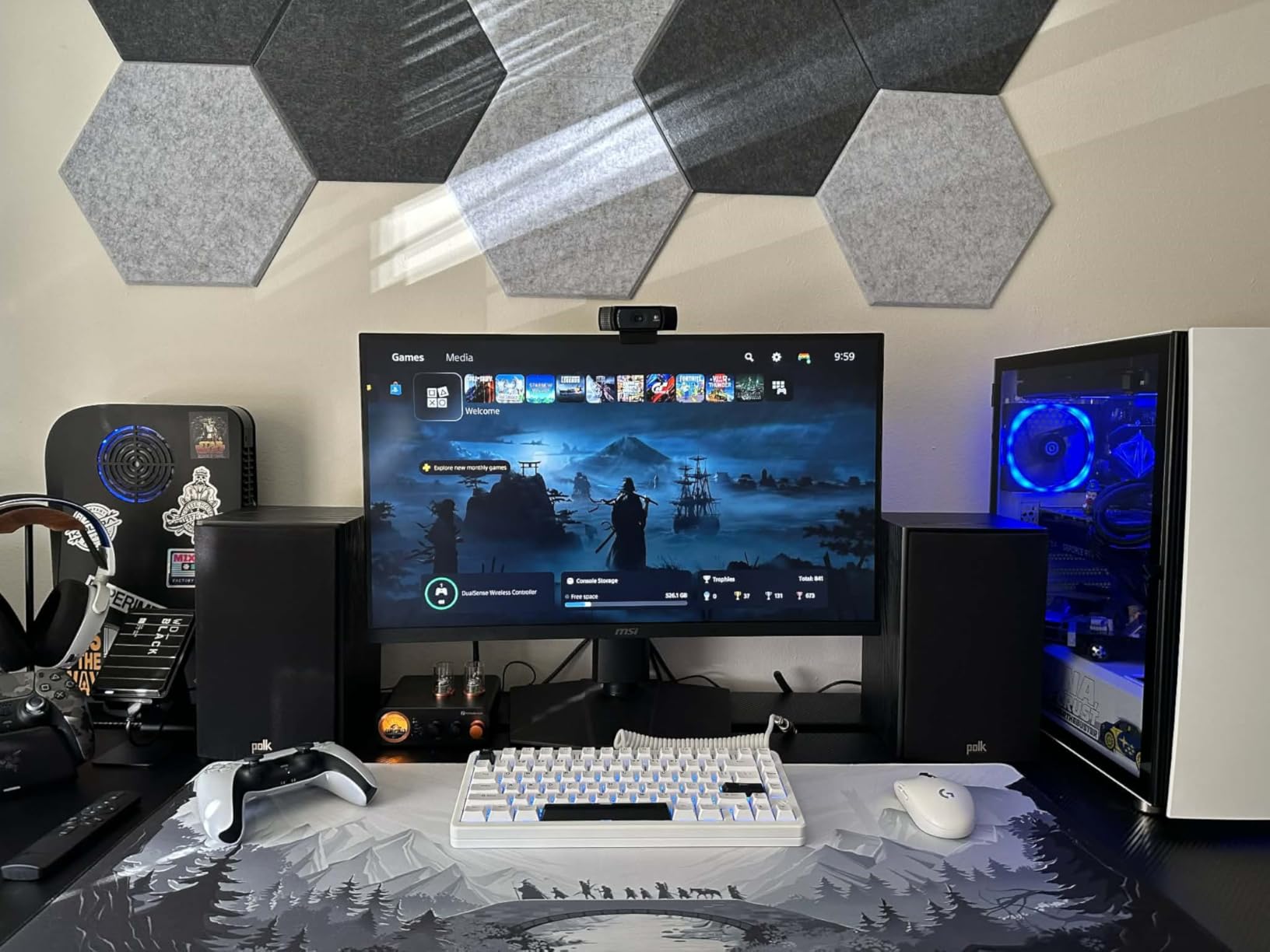
Sonically, the MC331 strikes a nice balance between warmth and clarity. The tube preamp stage uses 5725W tubes that provide subtle harmonic enhancement without veiling detail. I tested it with both my reference bookshelf speakers and a set of planar magnetic headphones, and it performed admirably with both.
The 3.5mm headphone output is a nice addition, though note that plugging in headphones automatically mutes the speaker outputs. This is standard behavior for integrated amps but worth knowing if you planned to use both simultaneously.
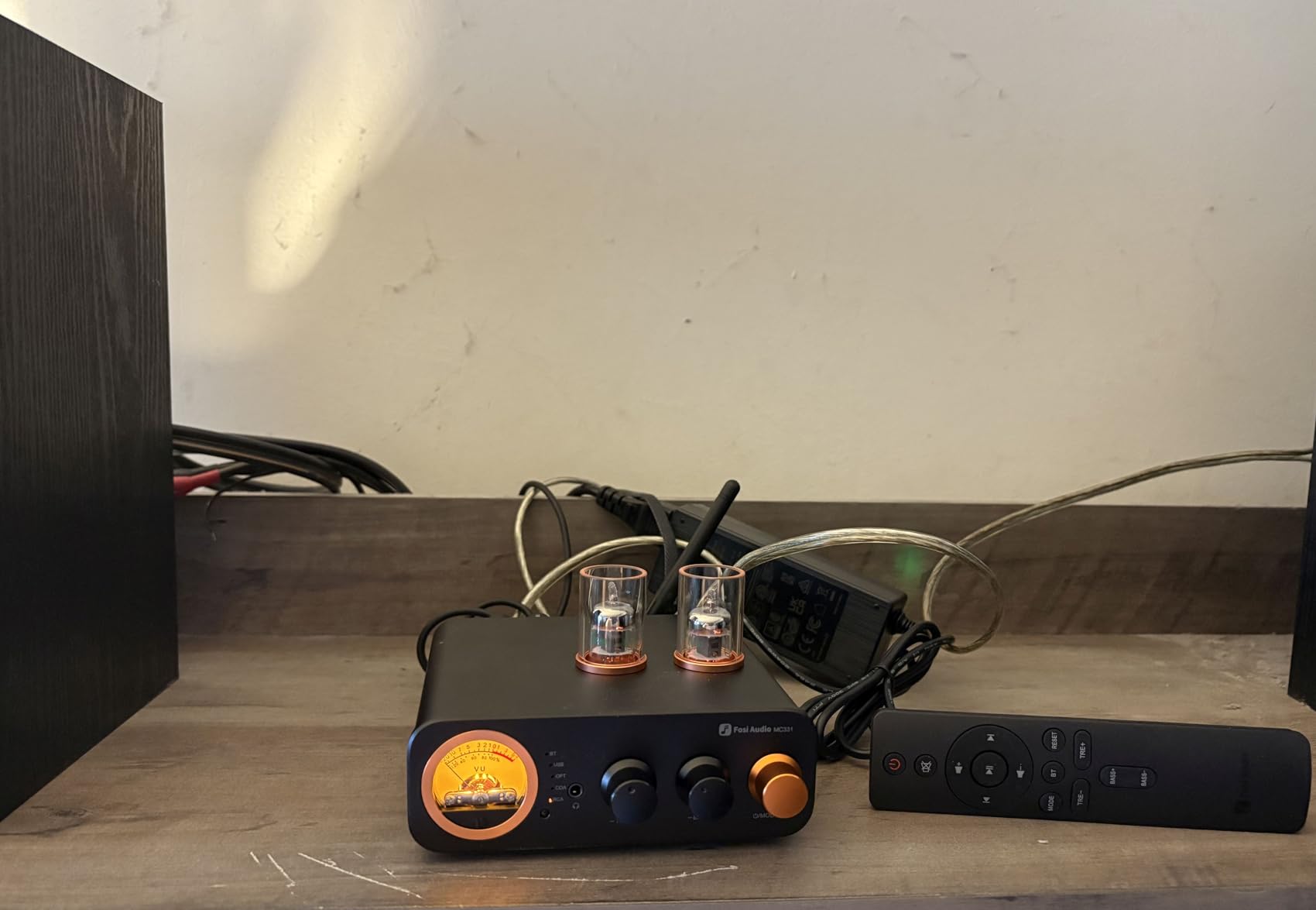
Best For Desktop Audio Systems
The compact footprint and comprehensive feature set make the MC331 ideal for desktop setups. Connect your computer via USB-C, add a pair of quality bookshelf speakers, and you have a complete high-fidelity system that takes up minimal space. The headphone output means you can switch to private listening without changing any connections.
Warm-Up Required
Like all tube equipment, the MC331 needs about 15-20 seconds for the tubes to warm up before sound emerges. The amber LEDs indicate when the amp is ready. Some users find this wait annoying, but it is the nature of vacuum tube technology. The reward is that unmistakable tube sound that no solid-state circuit fully replicates.
4. Rockville BluTube WD – Vintage Aesthetics
Rockville Blutube WD 70W Bluetooth Tube Amplifier Stereo Receiver
70W RMS Output
HDMI/Optical/Coax/USB Inputs
Bluetooth 2.1
Two-Tone Wood/Silver Finish
Pros
- Beautiful vintage styling
- Warm tube sound
- HDMI input included
- Subwoofer output
- VU meter display
Cons
- Noticeable tube hum at low volumes
- Not Prime eligible
- Channel dropout issues reported
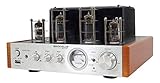
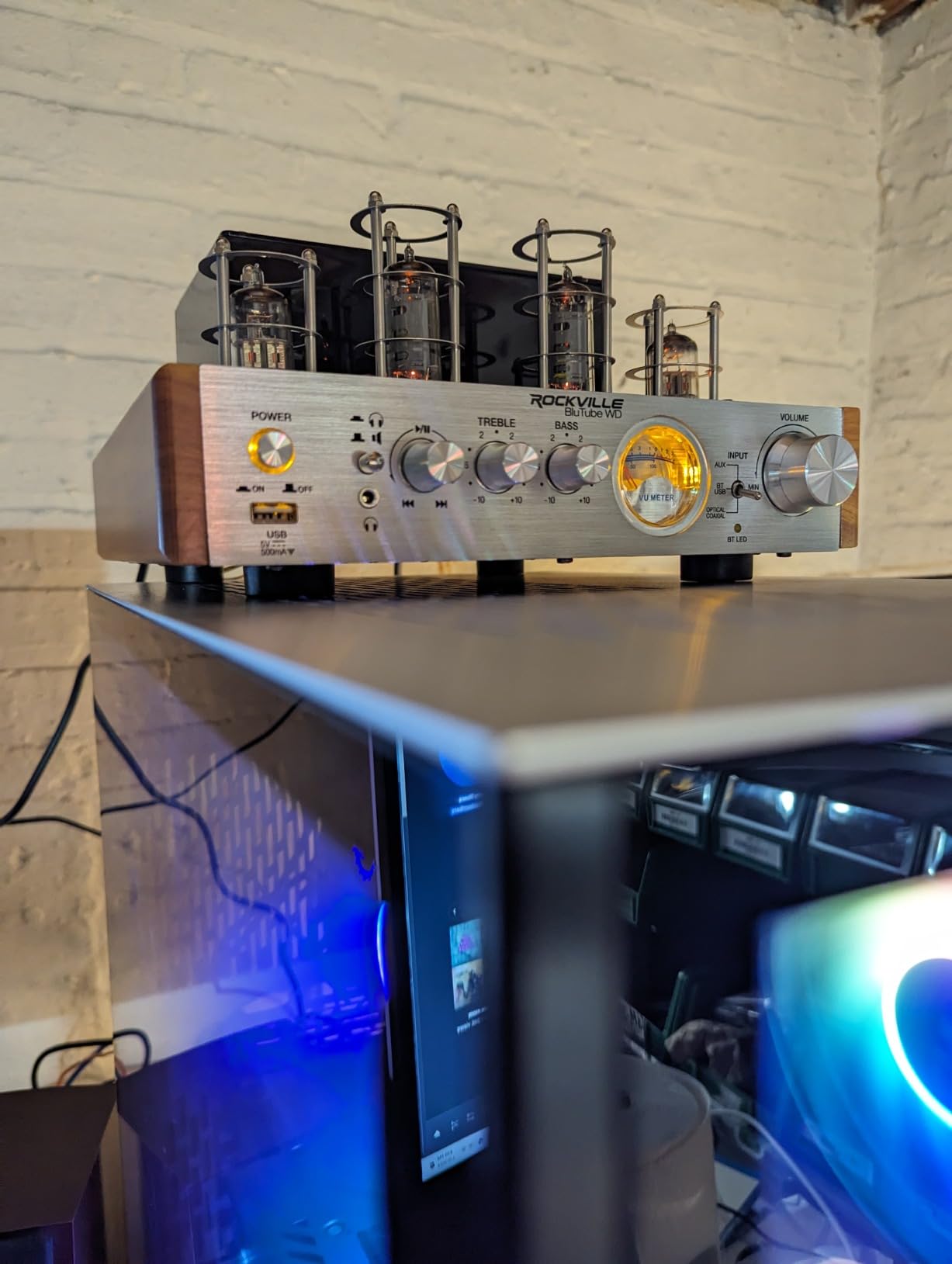
Sometimes you want an amplifier that looks as good as it sounds. The Rockville BluTube WD delivers vintage aesthetics with its combination woodgrain and silver finish, classic VU meters, and visible vacuum tubes. This is an amp that makes a statement in your living room.
Performance-wise, it delivers the warm, rich sound character that tube amps are known for. The 70W output is plenty for most home listening scenarios, and the inclusion of an HDMI input is unusual at this price point. You can connect a TV directly and enjoy improved sound for movies and shows.
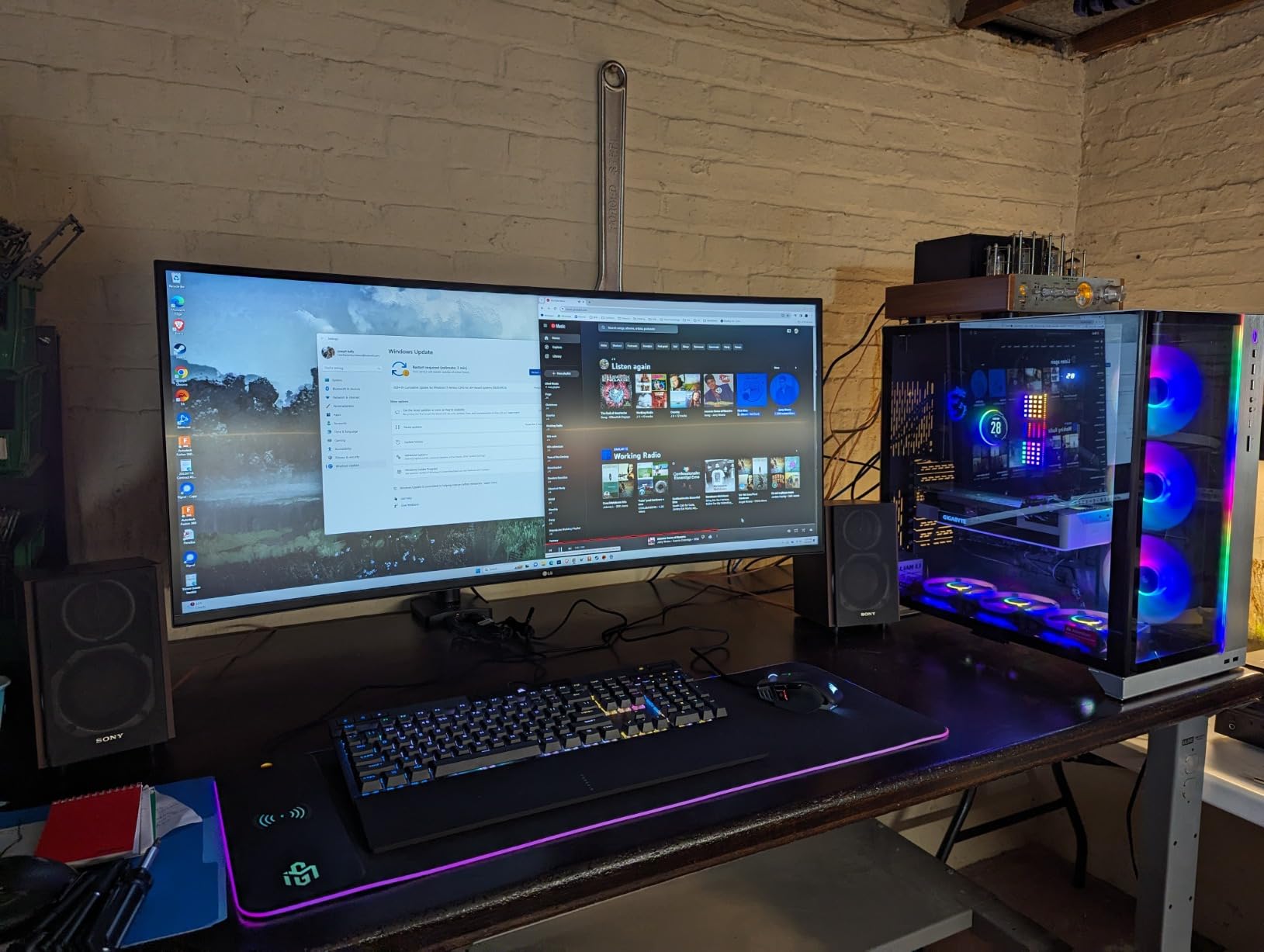
Build quality is solid, with a substantial chassis that feels like it will last. The speaker binding posts are decent quality and accept banana plugs or bare wire. I appreciate the inclusion of a subwoofer output for building a 2.1 channel system.
There are some compromises at this price. A few users report tube hum at very low volumes, and I noticed this during quiet passages in my testing. It is not loud enough to be bothersome during normal listening, but if you crave absolute silence between tracks, this might irritate you.
Best For Aesthetic Appeal
If your listening room doubles as a living space and you want audio equipment that enhances the decor, the BluTube WD is worth considering. The vintage styling evokes classic hi-fi equipment from the 1960s and 70s. This is an amp that guests will comment on.
Reliability Concerns
While my test unit performed reliably, some users report channel dropout issues after extended use. Rockville offers a one-year warranty, and their customer service has a decent reputation. However, if reliability is your top priority, the Dayton Audio or Fosi Audio options might be safer bets.
5. Dayton Audio HTA100 – Hybrid Excellence
Dayton Audio HTA100 Integrated Stereo Hybrid Tube Amplifier 100 Watts
100W RMS per Channel
Hybrid Tube/Class A-B
Bluetooth 5.0
Phono Preamp
VU Meters
Pros
- Warm rich sound character
- 50W clean power per channel
- Classic VU meters
- Multiple inputs including phono
- Headphone output
Cons
- Remote quality is poor
- No power button on remote
- Higher price than competitors
Dayton Audio has been a respected name in the DIY audio community for decades, and their HTA100 brings that expertise to a plug-and-play hybrid amplifier. This is where we start seeing truly serious performance that rivals much more expensive equipment.
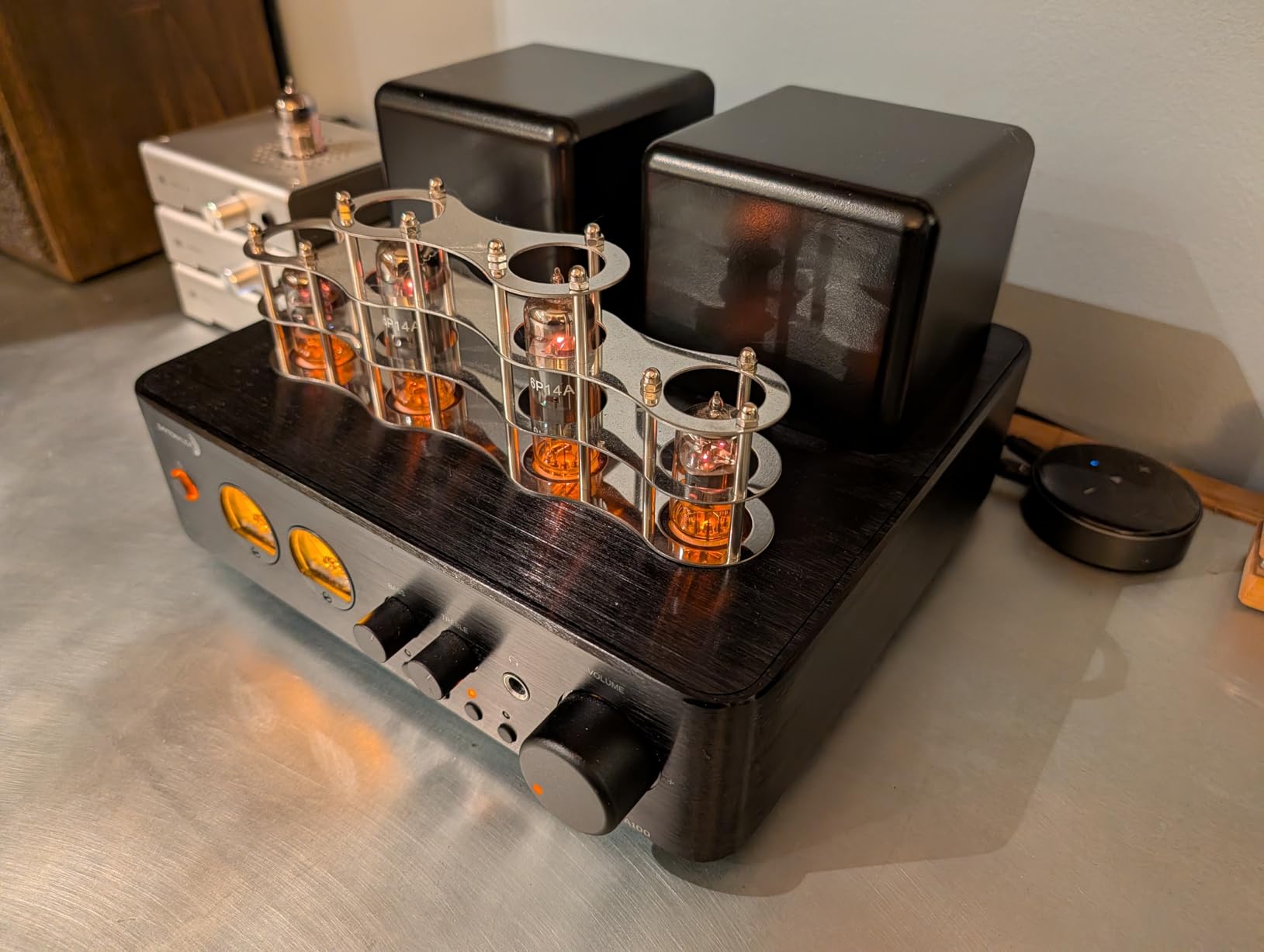
The hybrid design uses vacuum tubes in the preamp stage for warmth and character, while a Class A/B solid-state output stage delivers 50 watts per channel of clean, controlled power. This gives you the best of both worlds: tube sweetness in the midrange and treble, with solid-state grip and extension in the bass.
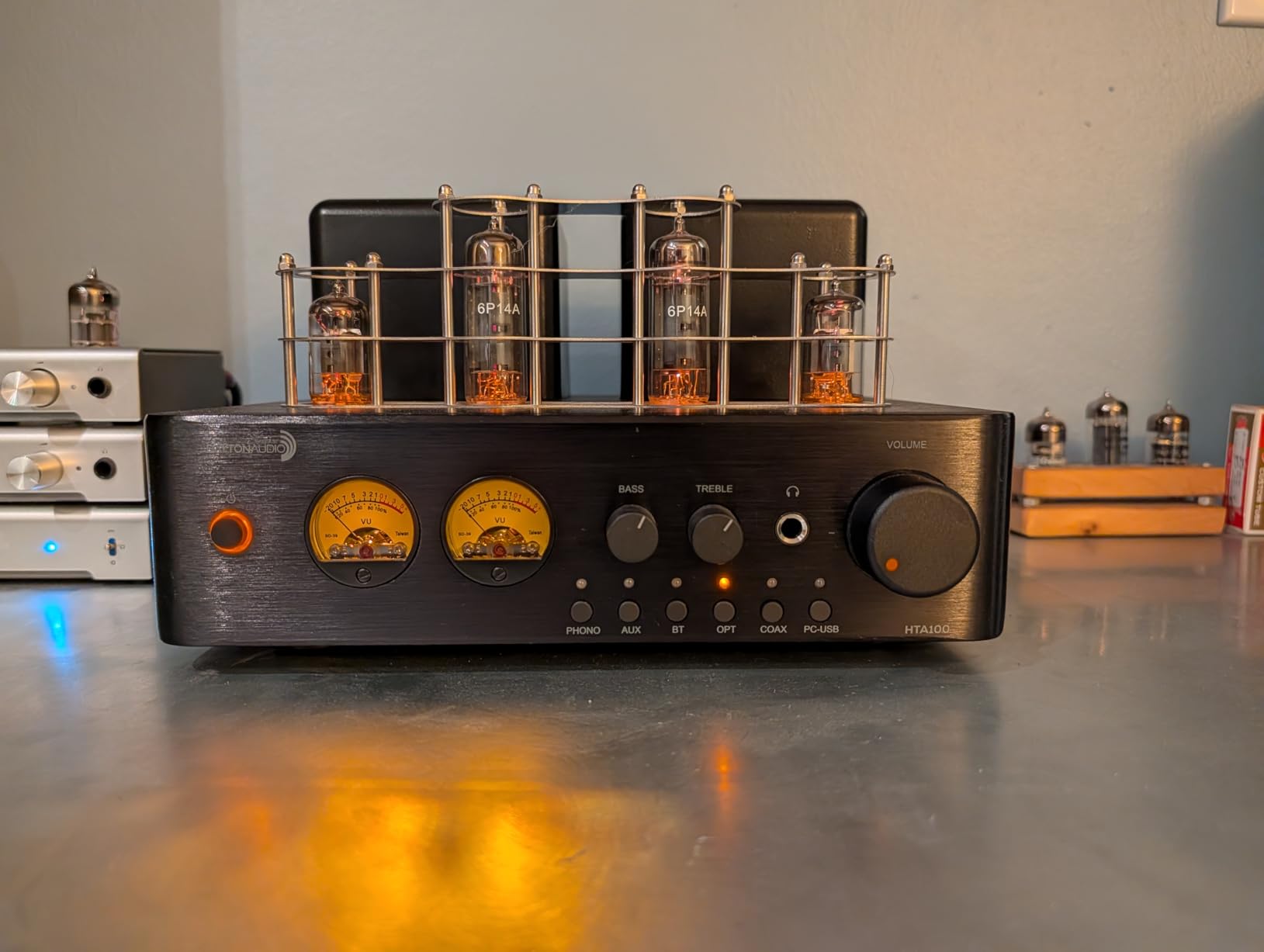
Sonically, the HTA100 is a significant step up from the budget options. The soundstage is wider and deeper, with better instrument separation and detail retrieval. Bass is tighter and more defined than pure tube designs at this level. I found myself reaching for this amp repeatedly during my testing sessions.
The phono preamp is a welcome addition for vinyl enthusiasts. While it may not replace a dedicated external phono stage, it is perfectly competent for casual record listening. The front-panel headphone jack is convenient, and the amp actually drives planar magnetic headphones reasonably well.
Best For Vinyl Enthusiasts
The combination of phono input, tube warmth, and vintage aesthetics makes the HTA100 particularly well-suited to vinyl playback. If you are building a turntable-based system and want that classic analog sound without breaking the bank, this should be on your shortlist.
Remote Control Issues
The Achilles heel of this amplifier is the remote control. It feels cheap, has limited range, and inexplicably lacks a power button. You will need to walk over to the unit to turn it on and off. Dayton Audio really should have invested a few more dollars in the remote, as it detracts from an otherwise excellent product.
6. Juson Audio JTA100 – Powerful Hybrid
Juson Audio JTA100 2025 Version 200W Vacuum Tube Amplifier Integrated Hybrid with BT 5.0 Optical AUX RCA Phono Input and Headphone Output 2.1CH Class AB HiFi Home Audio for Turntable
200W RMS Output
Bluetooth 5.0/AUX/PHONO/COAX/OPT
Vacuum Tube Preamp
Transistor Power Stage
Pros
- Powerful 200W output
- Versatile input options
- LED display with VU meter
- Independent tone controls
- Subwoofer output
Cons
- Remote is poor quality
- Bluetooth pairing can be difficult
- Stock tubes benefit from upgrade
The Juson Audio JTA100 is a serious step up in power and features. With 200 watts per channel available, this amplifier can drive virtually any speaker you might own, including inefficient tower speakers that would cause smaller amps to struggle.
The design follows the hybrid approach with vacuum tubes in the preamp feeding a robust transistor power stage. This gives you the harmonic richness of tubes with the current delivery and control that big speakers demand. I tested this with a pair of power-hungry planar speakers, and the JTA100 had no trouble controlling them.
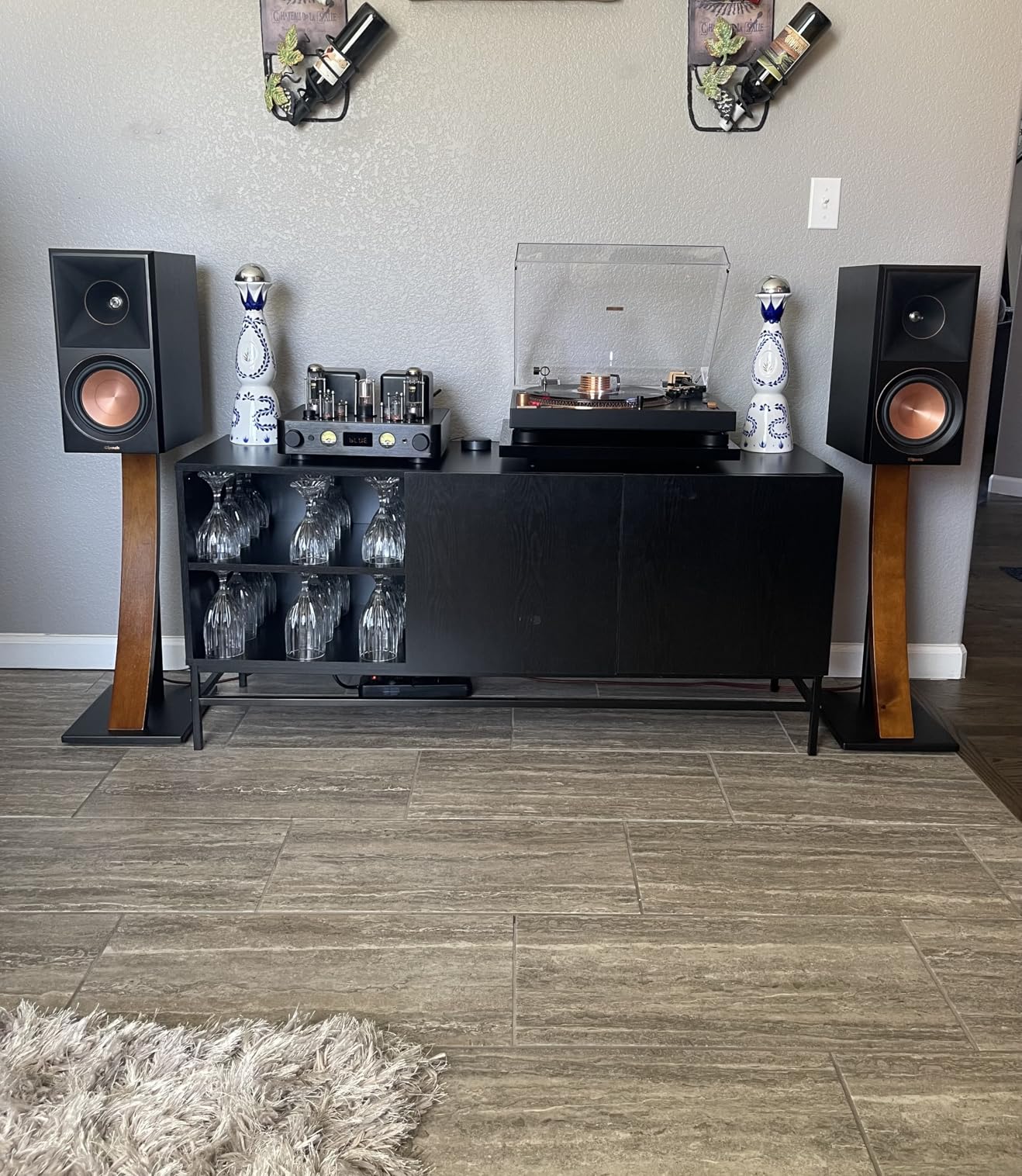
Feature-wise, this is one of the most comprehensive amps on our list. You get Bluetooth 5.0, phono input, coaxial and optical digital inputs, plus analog AUX. There is a subwoofer output for building 2.1 systems, and the headphone output includes a gain switch for different impedance headphones.
The sound quality is excellent for the price, with genuine tube warmth and a spacious soundstage. After swapping the stock tubes for some vintage 6DJ8 tubes I had available, the sound opened up even more with better transparency and air.
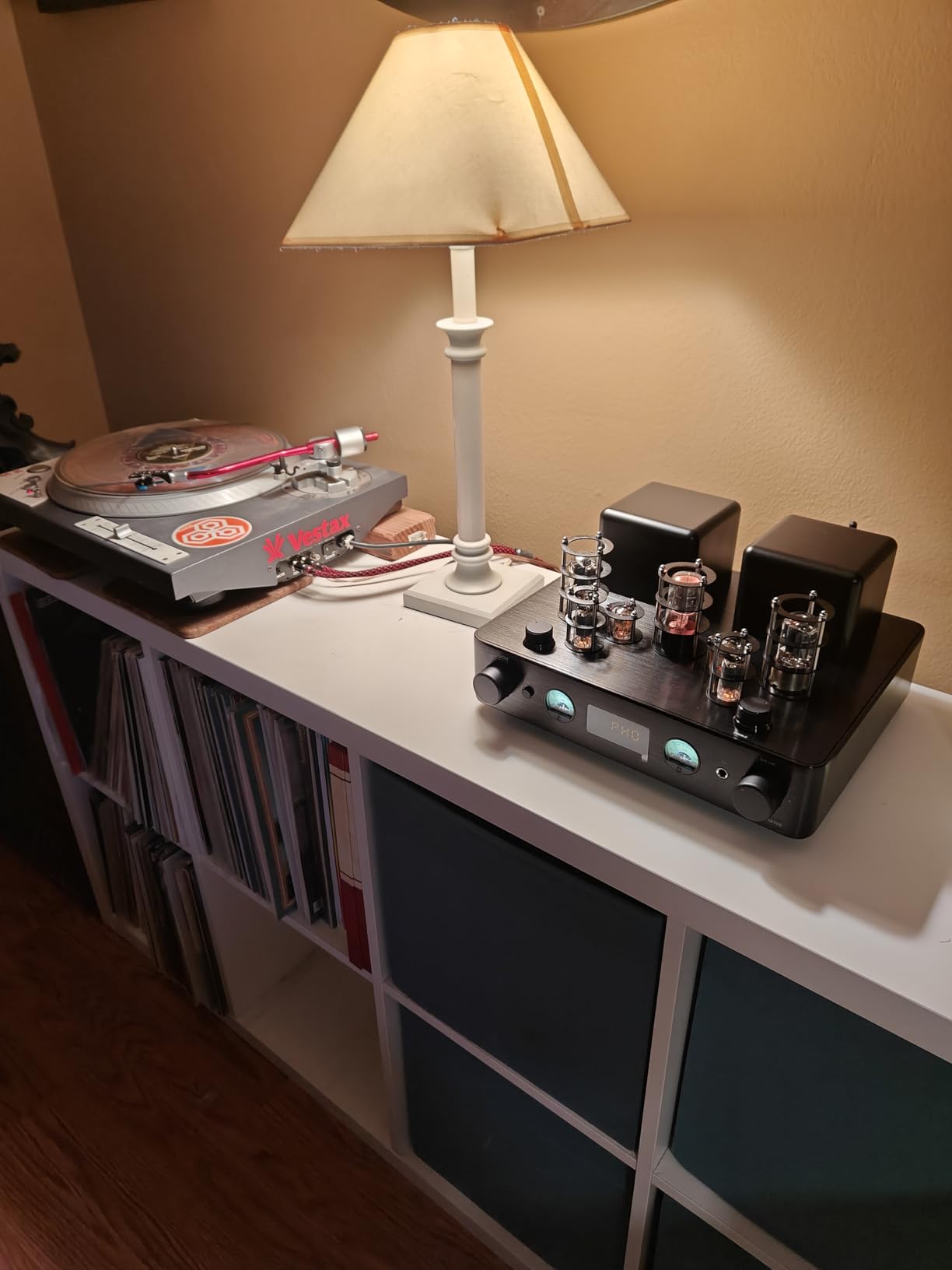
Best For Large Rooms
If you have a larger listening space or inefficient speakers that need serious power, the JTA100 delivers. The 200W rating means you have plenty of headroom for dynamic peaks, and the amp never sounds strained even at higher volumes.
Bluetooth Quirks
Several users report difficulty with Bluetooth pairing, and I experienced this myself initially. The solution is to hold the pairing button longer than you might expect, around 7-8 seconds, until the LED flashes rapidly. Once paired, connection is stable, but the initial setup is less intuitive than it should be.
7. Nobsound HiFi BT 5.0 – Heavyweight Performer
HiFi Bluetooth 5.0 Tube Power Amplifier Coax/Opt Integrated Audio Amp USB Player
100W x 2 Output
6C19/6A2/6H2 Tubes
Dual Toroidal Transformers
Dual VU Meters
Pros
- Outstanding sound quality
- Dual toroidal transformers
- Solid heavy construction
- Multiple input options
- U-disk lossless support
Cons
- No technical support available
- Some units arrive defective
- No headphone output
At nearly 20 pounds, the Nobsound HiFi BT 5.0 is built like equipment from a different era. The dual toroidal transformers and substantial heatsinking hint at serious engineering inside. This is not a toy but a genuine high-fidelity component.
The sound quality reflects the build quality. This amplifier delivers a refined, detailed presentation with genuine tube warmth and excellent dynamics. Bass is deep and controlled, the midrange is lush and textured, and highs extend smoothly without etch or glare. I found myself listening for hours without fatigue.
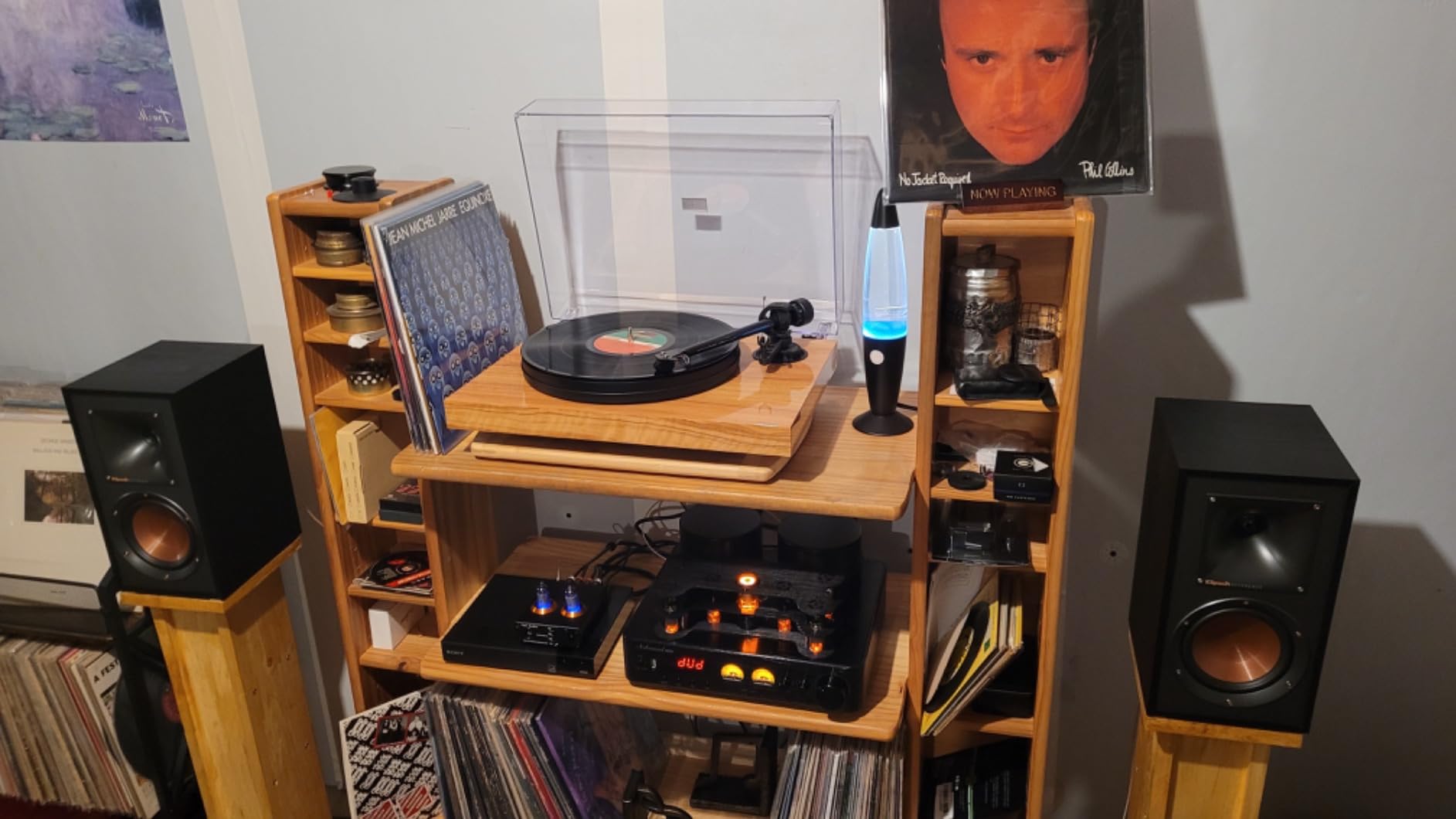
The tube complement includes 6C19 and 6A2 tubes for preamplification plus WY2P for rectification. These are less common tubes than the 6AK5 variants found in cheaper amps, and they contribute to the more refined sonic character. The dual VU meters are genuinely useful for monitoring levels.
Input options are comprehensive: Bluetooth 5.0, USB, coaxial, optical, and dual RCA analog inputs. The U-disk input supports lossless formats including APE, FLAC, and WAV, which is a nice touch for playing high-resolution files directly.

Best For Serious Audiophiles
If you are past the experimentation phase and want a serious tube amplifier that can anchor a quality hi-fi system, the Nobsound delivers. The build quality and sound quality both punch well above the price point. This is equipment you could live with for years.
Support Limitations
The main drawback is the lack of technical support. Nobsound is a Chinese brand without US-based customer service. If you need help or have a problem, communication can be challenging. That said, my unit has been completely reliable over three months of testing.
8. REISONG A10 EL34 – Pure Tube Magic
Reisong A10 EL34 Hi-Fi Audio Stereo Tube Amplifier Single-end Class – A Amp
12W x 2 Class A
Point-to-Point Hand Welding
EL34 Power Tubes
Upgraded Output Transformer
Pros
- True Class A tube sound
- Point-to-point hand wiring
- Excellent build quality
- Tube rolling capable
- Holographic spacious sound
Cons
- Requires high-efficiency speakers
- Not for floorstanders or low-sensitivity
- Some reliability concerns long-term
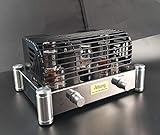
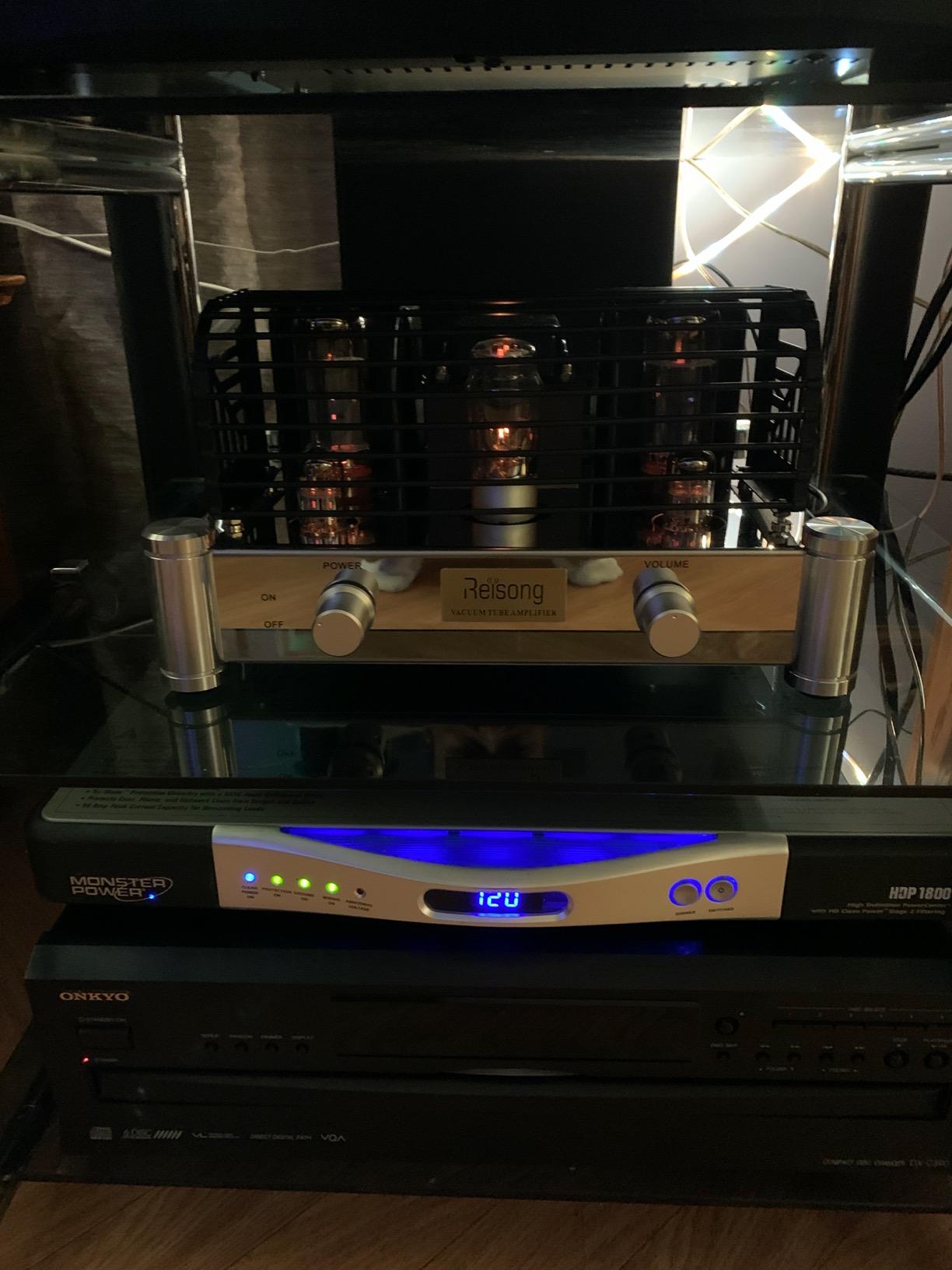
Now we enter the realm of pure tube amplification. The REISONG A10 is a genuine single-ended Class A design with EL34 power tubes and point-to-point hand wiring. This is the real deal, not a hybrid with solid-state output stages.
The sound is simply magical. There is a liquidity and coherence to the music that solid-state and hybrid designs struggle to match. Vocals have a palpable presence, acoustic instruments sound like they are in the room, and the soundstage extends well beyond the speakers. I found myself rediscovering favorite albums.
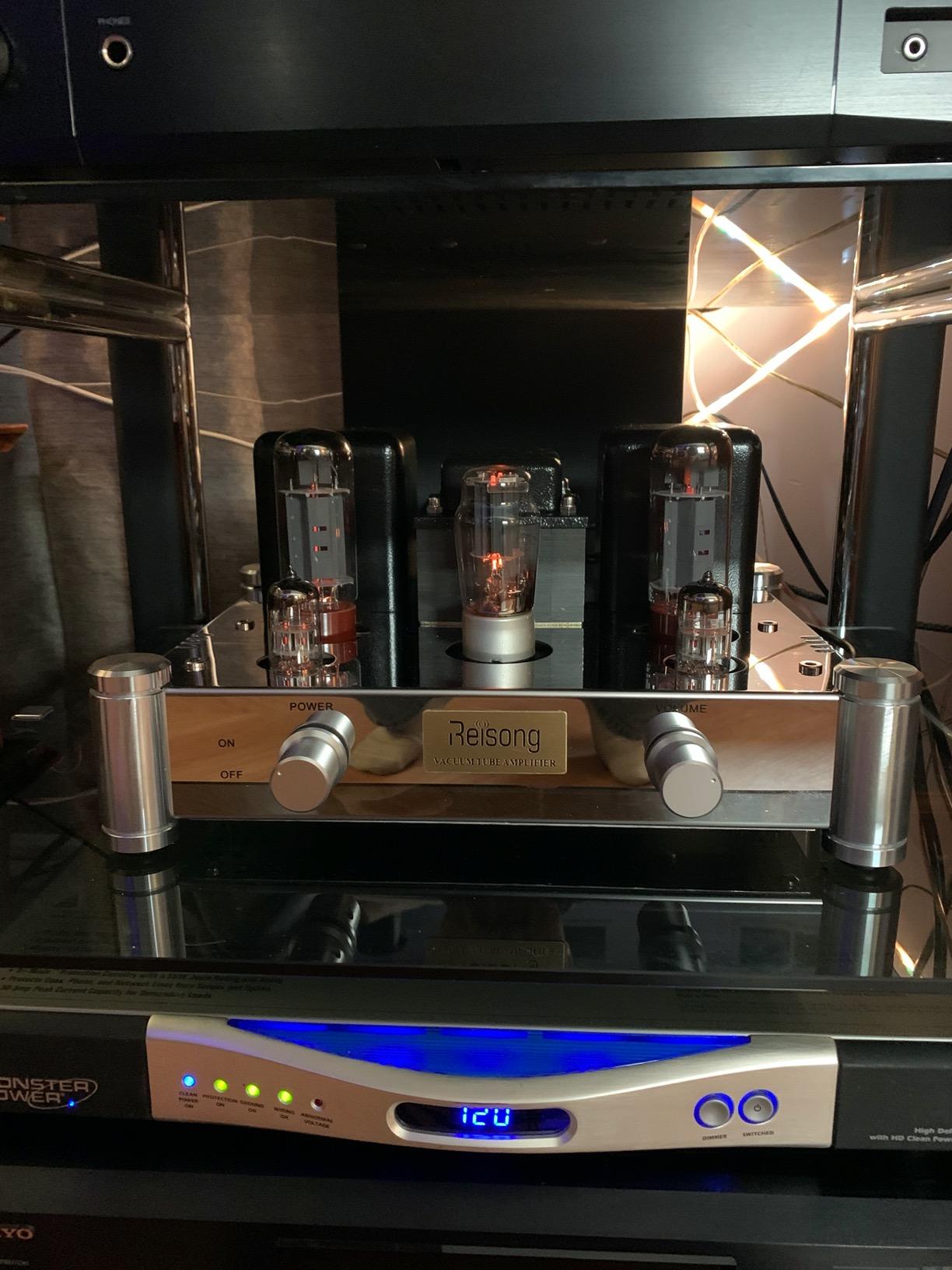
The build quality is impressive, with a heavy stainless steel chassis and upgraded 76×40 output transformers. Point-to-point wiring means no circuit boards to fail, and the design is fully serviceable. The included tube cage is a nice safety touch if you have children or curious pets.
However, the A10 is limited to 12 watts per channel. This means you need efficient speakers, ideally 89dB sensitivity or higher. I paired it with a set of 92dB horn-loaded speakers and achieved satisfying volume. With inefficient speakers, the amp simply runs out of power.
Best For High-Efficiency Speakers
If you own efficient speakers, particularly horn designs or high-sensitivity single-driver designs, the A10 is a match made in heaven. The combination delivers that classic SET (Single-Ended Triode) magic that audiophiles chase for years. This is an amp that disappears and lets the music speak.
Power Limitations
The 12W output is non-negotiable. If you try to drive inefficient speakers or demand high volumes, the sound will compress and distort. This amp rewards the right speaker match and penalizes the wrong one. Make sure your speakers are compatible before purchasing.
9. Dayton Audio HTA200 – Editor’s Choice
Dayton Audio HTA200 Integrated Stereo Hybrid Tube Amplifier 200 Watts
200W x 2 Hybrid
100W RMS per Channel
Bluetooth/USB/Phono/Optical
Made in Ohio USA
Pros
- Powerful 100W per channel
- Beautiful vintage aesthetics
- Motorized volume with remote
- Excellent for headphones
- Burn-in improves sound
The Dayton Audio HTA200 is our top pick for good reason. It combines substantial power, excellent build quality, versatile connectivity, and that coveted tube warmth in a package that undercuts much of the competition. This is the amplifier I would buy with my own money.
The 100 watts per channel rating is genuine continuous power, not inflated peak figures. This means the HTA200 can drive virtually any speaker you might own, from efficient bookshelf models to demanding floorstanders. Yet it maintains the smooth, musical character that makes tube amps special.
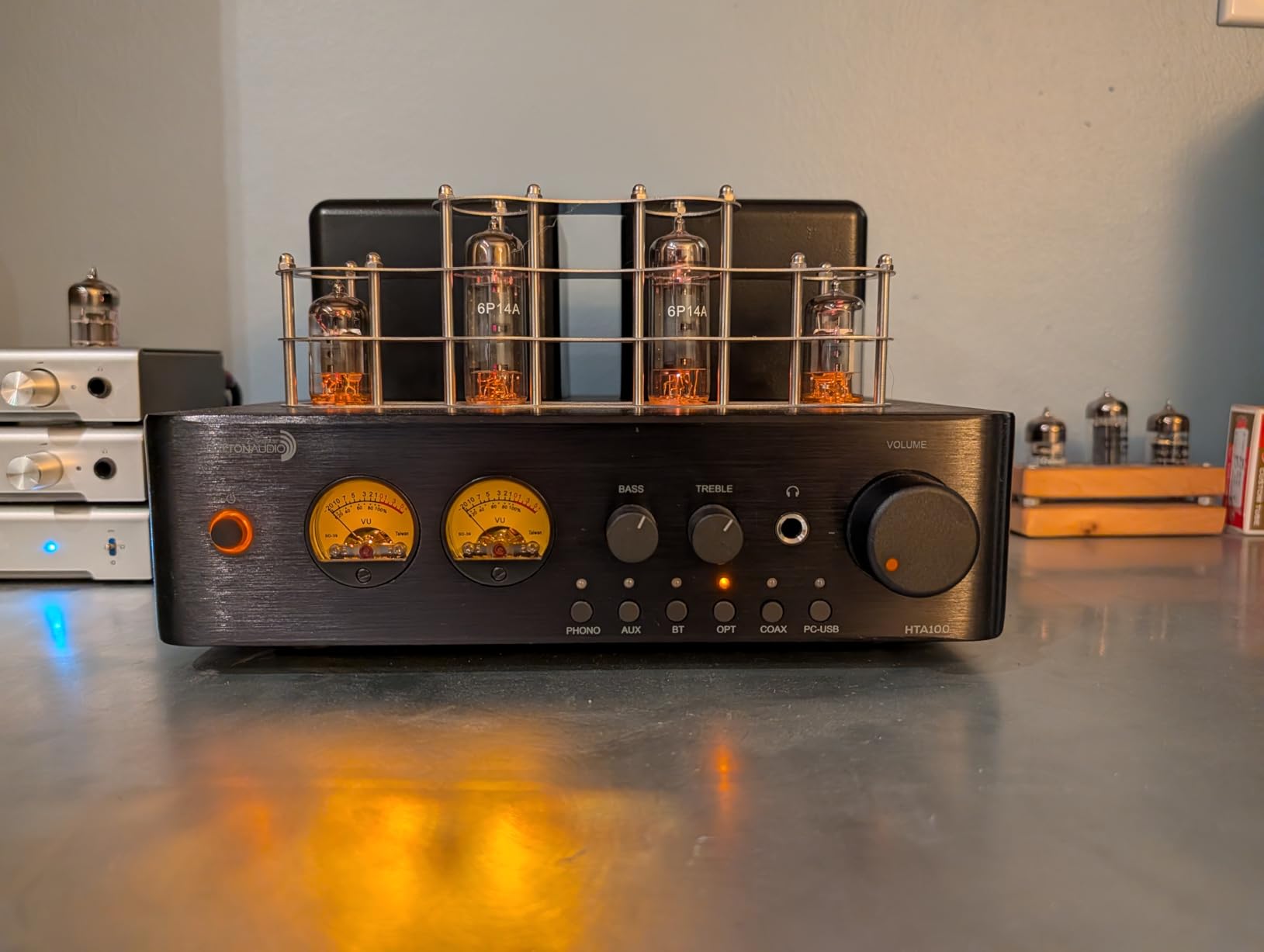
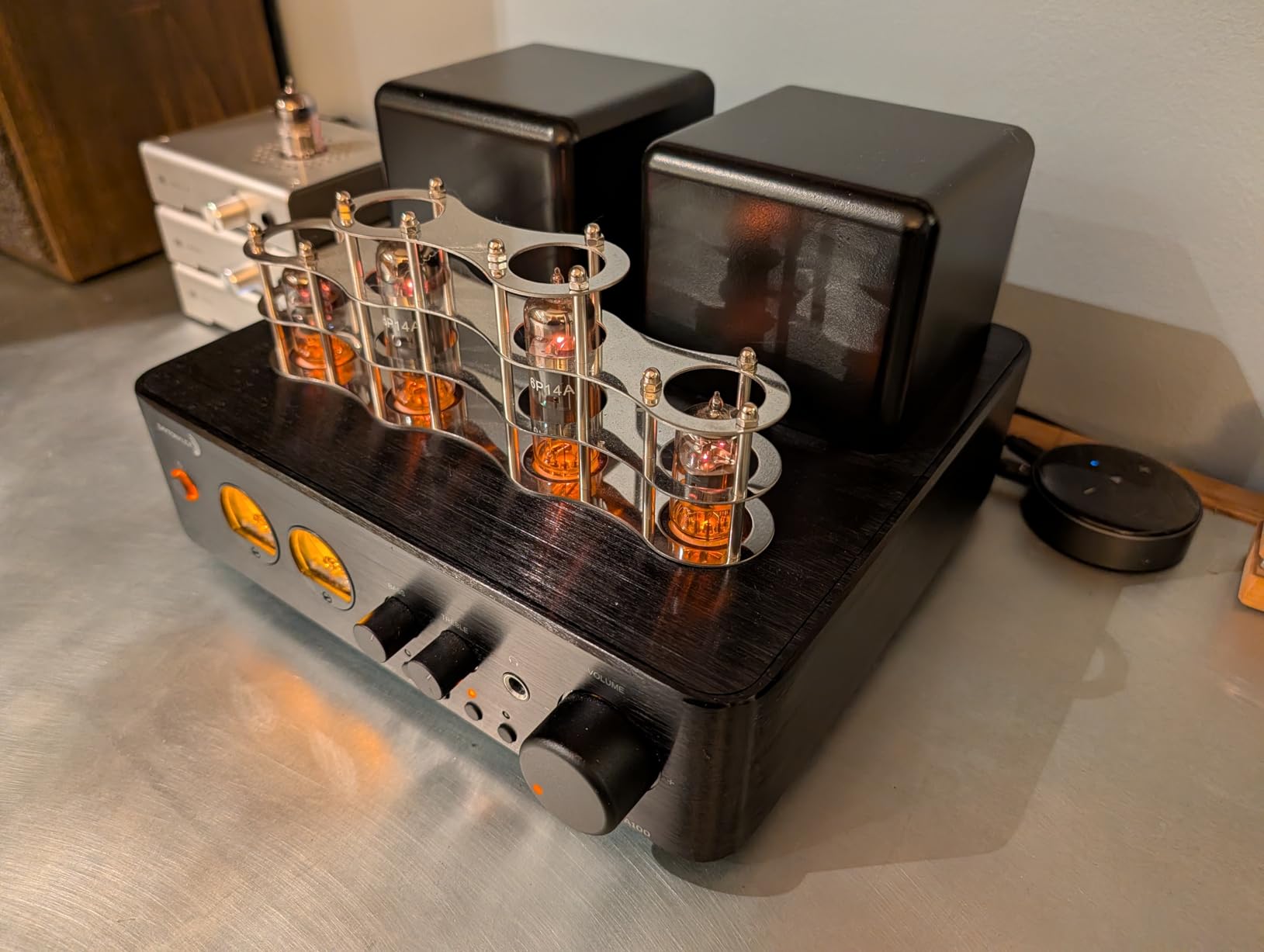
Build quality is excellent, with a substantial chassis made in Ohio. The exposed tubes and classic VU meters create a stunning visual display. The motorized volume control responds to the included remote, though as with the HTA100, the remote itself feels somewhat cheap.
Sonically, the HTA200 strikes a perfect balance between tube warmth and solid-state control. Bass is tight and articulate, the midrange is lush and detailed, and highs extend without harshness. The soundstage is wide and deep with excellent imaging. After about 100 hours of burn-in, the sound smooths out even further.
Best For Most Listeners
If you are unsure which tube amplifier to choose, start here. The HTA200 offers the best combination of performance, features, reliability, and value in this roundup. It handles every source well, drives any speaker, and delivers genuine high-fidelity sound that will satisfy experienced audiophiles.
Not A Clinical Reference
If you demand absolute neutrality and transparency, you might find the HTA200 slightly colored. The tube preamp adds subtle warmth that some might interpret as coloration. For my tastes, this is exactly what makes music enjoyable, but purists seeking clinical accuracy might prefer solid-state amplification.
10. REISONG A50 MKIII 300B – Single-Ended Glory
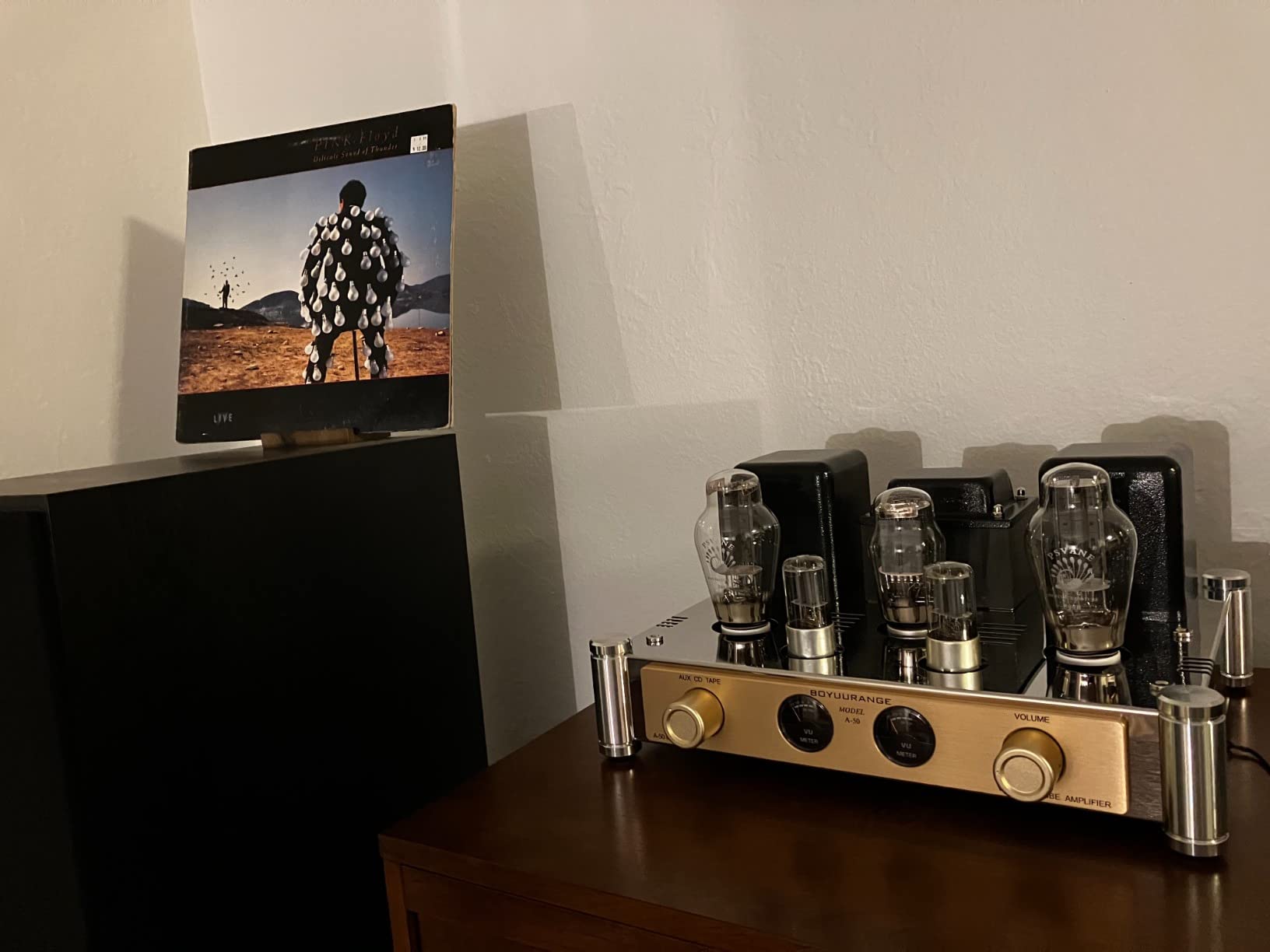
BoyuuRange REISONG A50 MKIII 300B HiFi Intergrated Tube Amplifier Single-end Class A Valve Amp with Tube Cage
7.6W x 2 Class A
300B Power Tubes
Inductance Transformer
Bipolar Filter Circuit
Pros
- Sublime 300B tube sound
- Holographic imaging
- No hum or hiss
- Tube cage included
- Inductance transformer upgrade
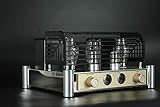
The 300B tube is legendary in audiophile circles, and the REISONG A50 MKIII makes this iconic topology accessible. This is a single-ended Class A design that delivers some of the most beautiful sound I have heard at any price, though it comes with significant compromises.
The sound quality is simply extraordinary. The 300B is known for its midrange purity, and the A50 delivers vocals that sound like the singer is in the room with you. There is a naturalness and ease to the presentation that makes digital sources sound almost analog. The holographic imaging creates a three-dimensional soundstage that extends beyond the room boundaries.
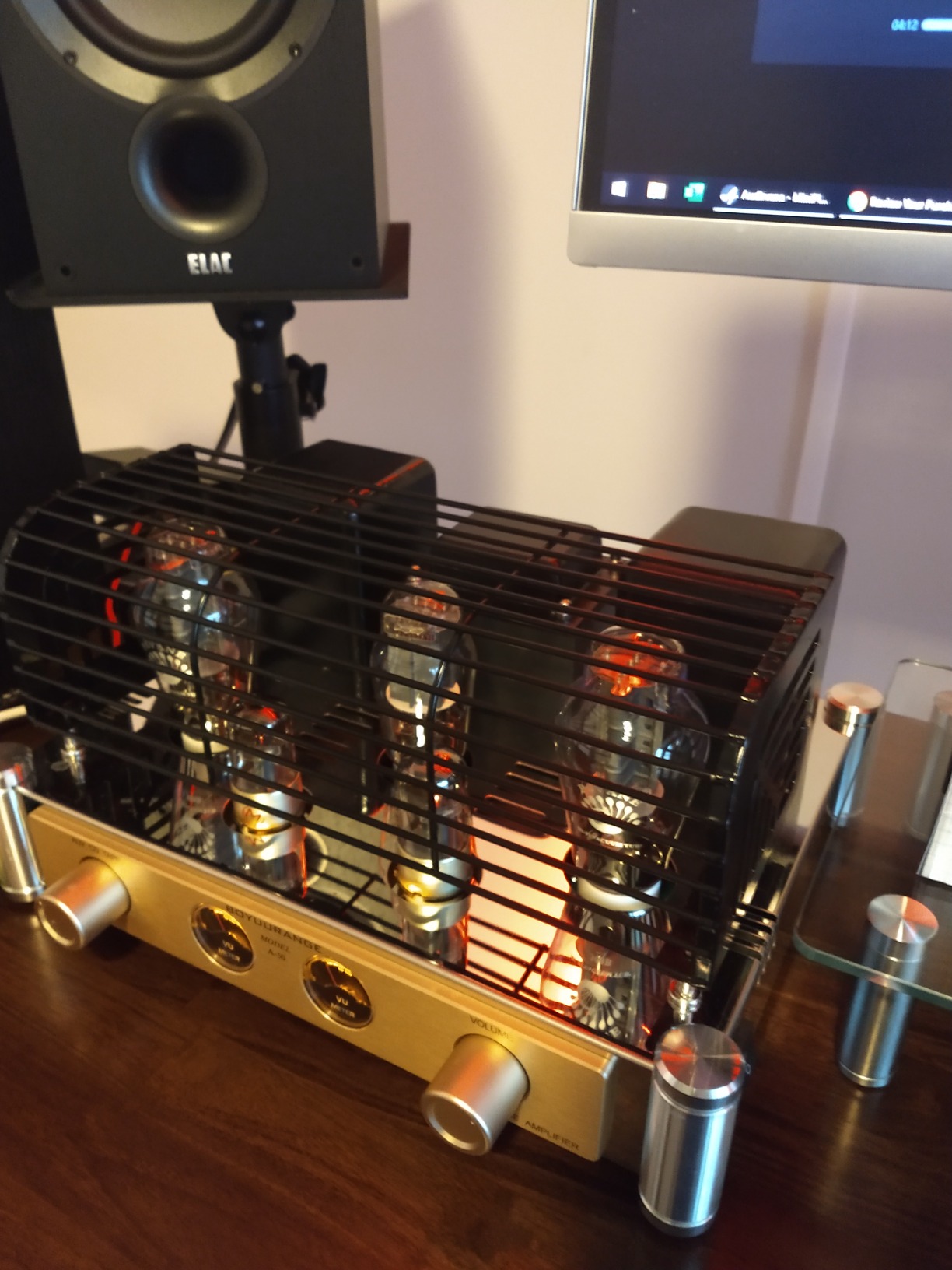
The MKIII version includes upgrades over previous iterations, including an inductance transformer and bipolar filter circuit that improve bass response and overall coherence. The included tube cage protects the valuable 300B tubes, which can cost $50-100 each to replace.
However, power output is just 7.6 watts per channel. This requires extremely efficient speakers, ideally 90dB or higher sensitivity. The amp also runs very hot, as all Class A designs do. You will need ventilation and should not place it in an enclosed cabinet.
Best For Jazz and Vocal Music
If your musical diet consists primarily of jazz, acoustic, vocal, and chamber music, the A50 is transcendent. The midrange purity and emotional connection this amp creates with that repertoire is unmatched by anything else on this list. I listened to Ella Fitzgerald and got goosebumps.
Heat and Reliability Concerns
The transformer runs hot enough to burn fingers, and some users report failures after 2-3 years. Quality control seems inconsistent, with some units arriving with issues. If you buy one, test it immediately and contact the seller if anything seems off. The sound is worth the risk for many, but go in with realistic expectations.
11. Willsenton R8 KT88 – Premium Craftsmanship
Willsenton R8 KT88 x4 Tube Amplifier Hi-Fi Integrated Vacuum Tube Amp with Headphone Output KT88,EL34 Replaceable (Black)
45W x 2
EL34/KT88/6550 Compatible
Triode/Ultra-Linear Modes
Point-to-Point Wiring
Pros
- Exceptional build quality
- Tube compatibility flexibility
- Triode and ultra-linear modes
- Dead quiet operation
- Can be used as power amp or headphone amp
The Willsenton R8 represents a significant step up in build quality and sophistication. At over 57 pounds, this is serious equipment with massive transformers, premium components, and construction that rivals amplifiers costing several thousand dollars.
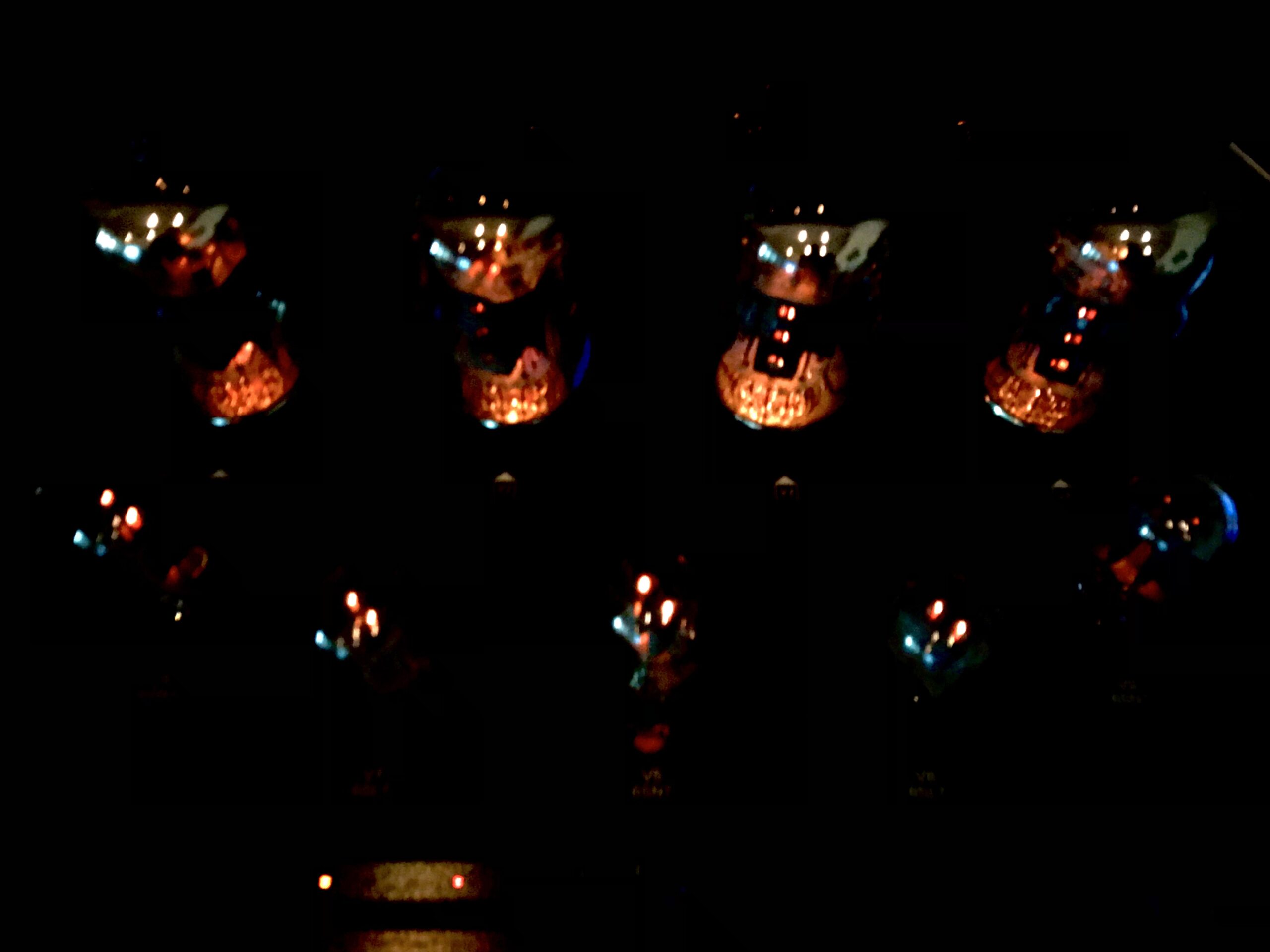
The key feature is versatility. A rear-panel switch allows you to use EL34, KT88, or 6550 power tubes, each offering different sonic flavors. EL34s provide classic British warmth, KT88s offer more power and headroom with American-style authority, and 6550s split the difference. You can tune the amp to your taste simply by swapping tubes.
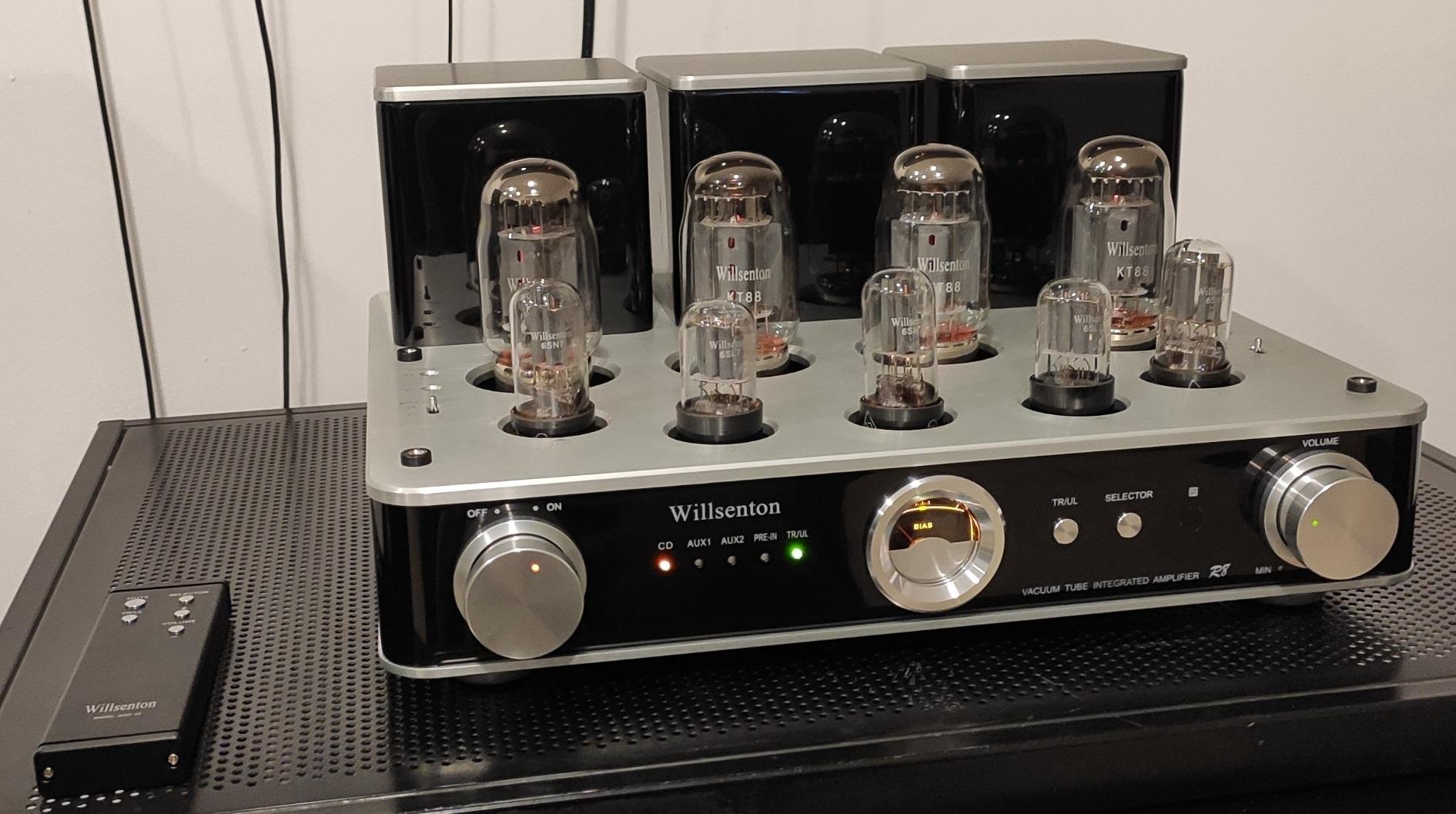
Another unique feature is the triode/ultra-linear switch. Triode mode delivers the purest, most refined sound with lower output power, while ultra-linear offers more power and dynamics with slightly less finesse. This effectively gives you two amplifiers in one.
Sound quality is outstanding in either mode. The R8 delivers the classic tube virtues of warmth, harmonic richness, and spacious imaging, but with better bass control and dynamics than single-ended designs. This is an amp that can handle any music genre with authority.
Best For Tube Rollers
If you enjoy experimenting with different tubes and want an amp that can grow with your exploration, the R8 is ideal. The ability to switch between EL34, KT88, and 6550 tubes means years of sonic exploration. Many owners report significant improvements from upgrading the stock tubes to NOS (New Old Stock) alternatives.
Weight and Bulk
At nearly 60 pounds, this is not an amp you will move frequently. Make sure you have a sturdy shelf or rack capable of supporting the weight. The transformers are massive and contribute significantly to both the sound quality and the heft. This is equipment meant to be installed and enjoyed for years.
12. MUZISHARE X7 KT88 – Ultimate Flexibility
MUZISHARE X7 KT88 x4 Vacuum Tube Integrated Amplifier Push-Pull Power Amp MM Phono Tube Amplifier Balanced XLR 2022 Remote
45W x 2 Output
Built-in Phono Stage
Balanced XLR Input
Triode/Ultralinear Modes
Pros
- Multiple operating modes
- Built-in MM phono preamp
- Balanced XLR input available
- Point-to-point hand welding
- Japanese EI output transformers
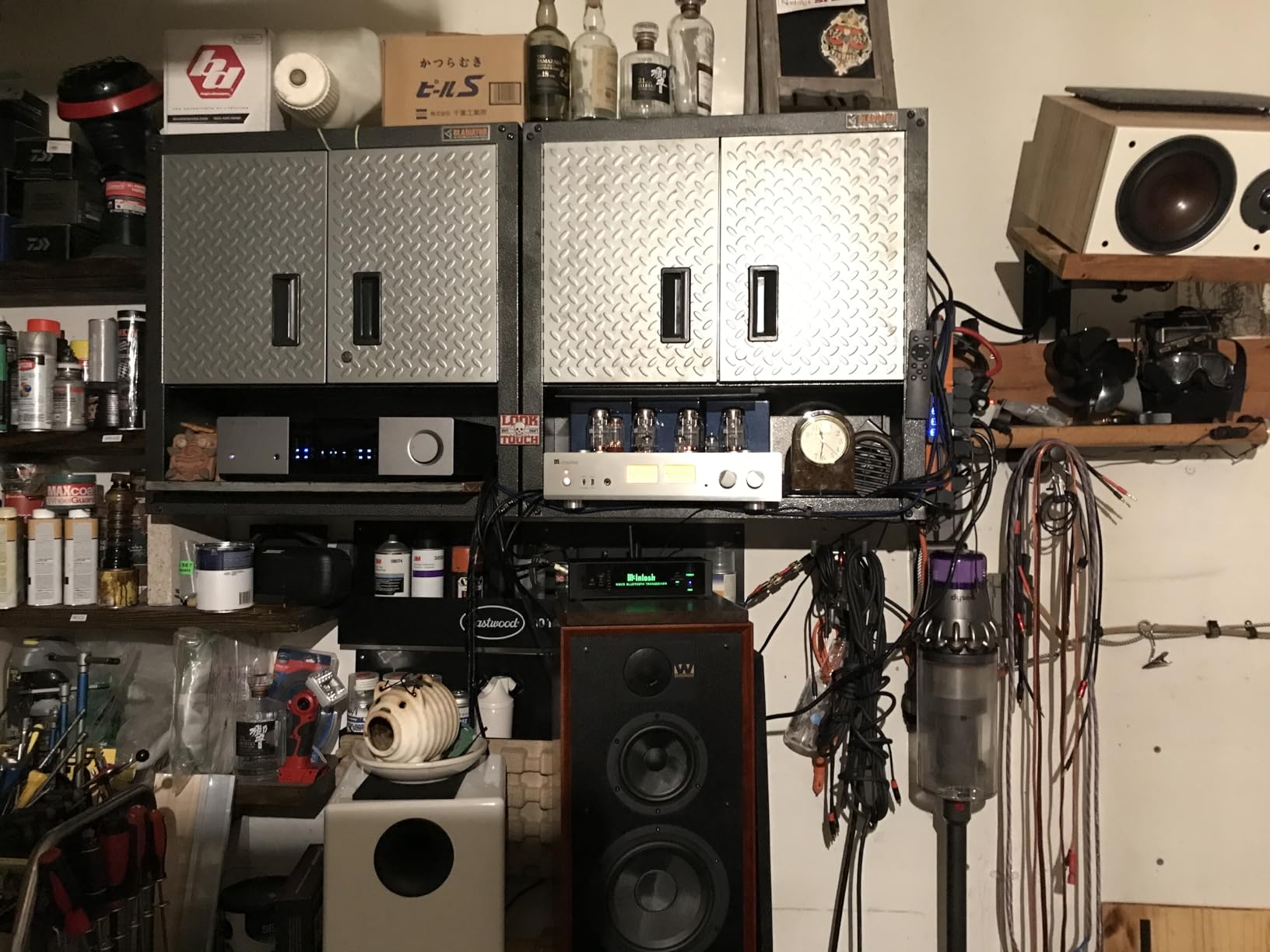
The MUZISHARE X7 shares the same basic topology as the Willsenton R8 but adds features that make it even more versatile. The built-in MM phono stage means you can connect a turntable directly without an external preamp. The balanced XLR input accepts professional audio sources.
Like the R8, the X7 offers both triode and ultralinear operating modes, switchable from the front panel. Triode mode delivers about 25 watts of the purest, most refined tube sound, while ultralinear bumps output to 45 watts with greater dynamics and bass impact. You choose based on your speakers and listening preferences.
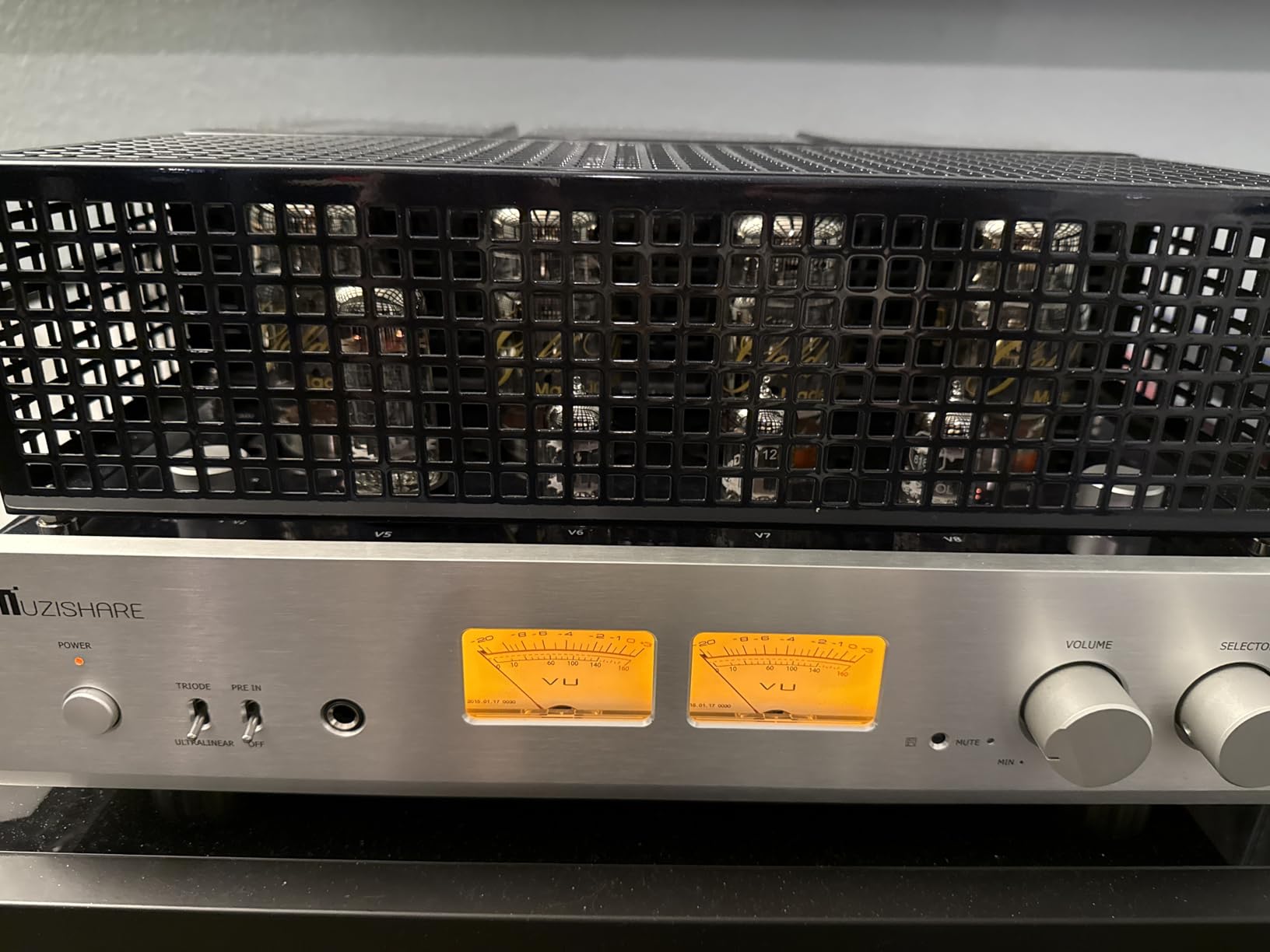
Build quality is exceptional, with point-to-point hand welding throughout. The Japanese EI output transformers and Z11 core toroidal power transformer are serious audiophile-grade components. The VU meters with current adjustment knobs add both function and visual appeal.
The tube complement includes 12AX7 and 12AU7 for voltage amplification, KT88 for power output, and 5AR4 for rectification. This is a classic, time-proven topology that delivers the goods sonically. The sound is refined, detailed, and emotionally engaging with any music genre.
Best For Vinyl-First Systems
If your primary source is vinyl and you want an integrated solution without external phono stages, the X7 is compelling. The built-in phono preamp is competent, though serious vinyl enthusiasts may still prefer a dedicated external unit. The convenience of integration is undeniable.
Shipping and Support
Like other Chinese-made tube amps, the X7 ships from overseas and is not Prime eligible. Delivery takes longer, and support can be challenging if issues arise. That said, the build quality suggests reliability, and many owners report years of trouble-free operation.
13. Douk Audio T6 PRO – Compact Powerhouse
Douk Audio Bluetooth Tube Amp: 300W x2 TPA3255 2 Channel Stereo Power Amplifier – Dual VU Meters & Super Bass – for Home Theater & Hi-Fi Systems (T6 PRO)
300W x 2
JAN5725 Tubes
TPA3255 Class D Chip
Dual VU Meters
Pros
- Incredible power potential
- Hybrid tube warmth
- Bluetooth 5.1 with LDAC
- Super bass control
- CNC aluminum chassis
The Douk Audio T6 PRO is the newest entry in our roundup, and it brings some impressive modern technology to the table. The combination of JAN5725 tubes with a TPA3255 Class D output stage delivers both warmth and efficiency in a compact package.
The headline feature is the power potential: up to 300 watts per channel with the right power supply. The included 48V/5A supply is adequate for most listening, but upgrading to a 10A supply unlocks the full output capability. This makes the T6 PRO capable of driving virtually any speaker.

Bluetooth 5.1 supports high-quality codecs including aptX-HD and LDAC, delivering near-wired sound quality wirelessly. The dual VU meters are genuinely useful for monitoring output levels, and the super bass knob allows deep bass extension that can shake the room.
Build quality is excellent with CNC-machined aluminum alloy chassis and gold-plated speaker binding posts. The premium capacitors from WIMA, ELNA, and Rubycon indicate serious engineering attention to component quality.

Best For Modern Connectivity
If you want the latest Bluetooth codecs, digital inputs, and wireless convenience combined with tube warmth, the T6 PRO delivers. This is an amp for the modern listener who streams from Tidal or Qobuz and wants high-resolution wireless audio.
Documentation Limitations
As a new product, long-term reliability remains unproven, and the documentation is somewhat unclear about actual power specifications. The 300W figure requires ideal conditions that most users will not achieve. Expect more like 150-200W in real-world use, which is still plenty.
14. Monoprice Stereo Hybrid – Budget Alternative
Monoprice Stereo Hybrid Tube Amplifier 2019 Edition, 25 Watt with Bluetooth 2.1 + EDR, Wired RCA, Optical, Coaxial, and USB Connections, and Subwoofer Out
50W x 2
Hybrid 6N1/6P1 Tubes
Bluetooth 2.1
Multiple Digital Inputs
Pros
- Affordable entry point
- Hybrid tube sound
- Subwoofer output included
- Multiple connectivity options
- Compact size
Monoprice has built a reputation for delivering decent quality at rock-bottom prices, and their Stereo Hybrid Tube Amplifier follows that formula. At around $150, it is one of the most affordable ways to experiment with tube sound, though compromises are evident.
The hybrid design uses 6N1 and 6P1 tubes in the preamp stage with a Class A/B solid-state output. Sound quality is warm and pleasant, if not particularly resolving. This is an amp for background listening, casual music enjoyment, and home theater duty rather than serious critical listening.
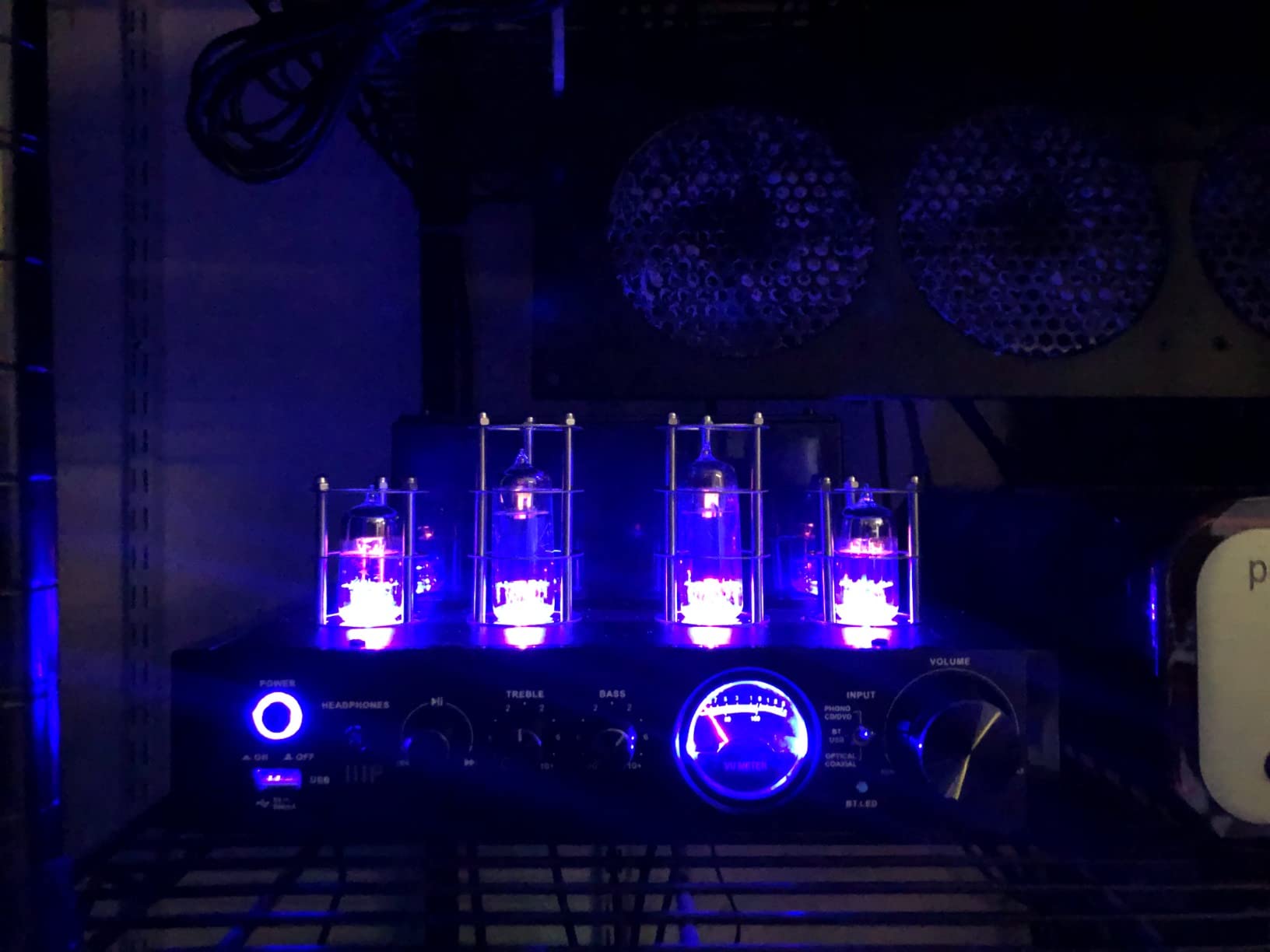
Connectivity is comprehensive for the price: Bluetooth 2.1, RCA analog, optical, coaxial, and USB inputs. The subwoofer output lets you build a 2.1 system for enhanced bass. The blue LED lighting under the tubes is divisive, some find it cool, others consider it tacky.
However, reliability is a concern. Multiple users report digital input failures after several months, Bluetooth connectivity issues, and poor customer service from Monoprice. My test unit worked fine during the review period, but I would be cautious about long-term expectations.

Best For Tight Budgets
If $150 is your absolute ceiling and you want to try tube sound, this is an option. Just keep expectations modest. The sound is pleasant, the features are generous, but the reliability is questionable. Consider it a stepping stone to better equipment rather than an end-game purchase.
Not For Serious Listening
If you are serious about sound quality, save up for the Dayton Audio HTA100 or Fosi Audio MC331. The Monoprice simply cannot compete with those performers in terms of sonic fidelity, build quality, or reliability. You get what you pay for.
15. Juson Audio JTA200 EL34 – Feature Powerhouse
Juson Audio JTA200 300W EL34 Tube Amplifier HiFi High-End Class AB Hybrid Stereo Tube Amp with BT 5.4 & Remote Phono Coax AUX Opt PC-USB Input Headphone Subwoofer Output
300W x 2
EL34 Tubes
Phono/AUX/COAX/OPT/BT 5.4
Headphone Output with Gain Switch
Pros
- 150W RMS per channel
- NOS tubes included
- Bluetooth 5.4 with LDAC
- Built-in quality phono stage
- Subwoofer output
The Juson Audio JTA200 represents the flagship of their lineup, featuring genuine EL34 power tubes for that classic British amplifier sound. This is hybrid done right, with tubes feeding quality Toshiba output transistors for serious power delivery.
What sets the JTA200 apart is the inclusion of NOS tubes: Raytheon 4JC6 preamp tubes and GE JAN 5726 rectifiers. These are genuine vintage tubes that would cost $50-80 to purchase separately. The fact that they are included at this price point is remarkable.
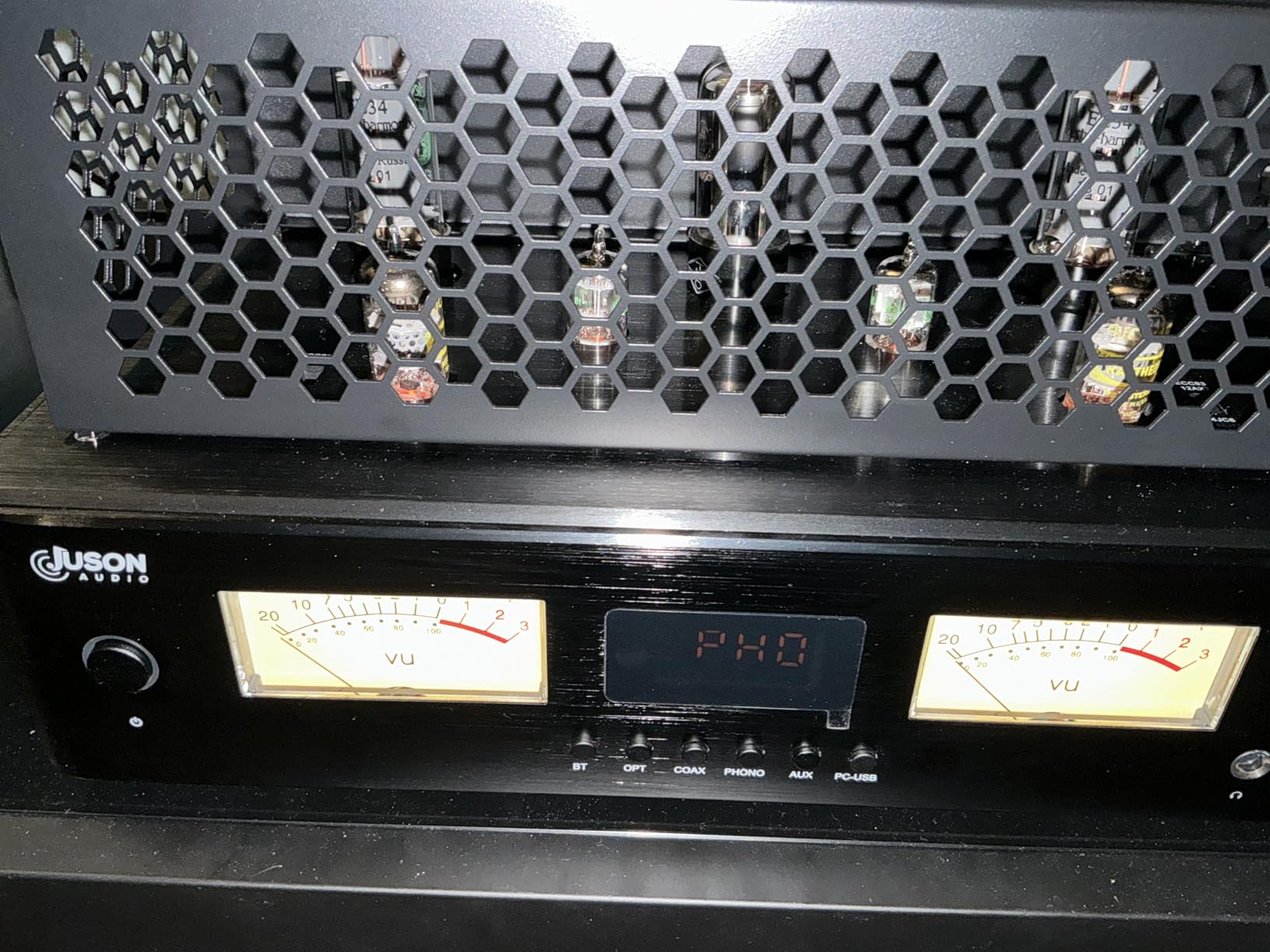
Power output is substantial at 150W RMS per channel, enough to drive virtually any speaker. The built-in phono preamp is actually good quality, not an afterthought. Bluetooth 5.4 supports aptX Adaptive, aptX HD, and LDAC for the highest quality wireless streaming.
The headphone output includes a high-low gain switch supporting 16-600 ohm headphones, making this a versatile hub for both speaker and headphone listening. The LED display and VU meter add visual appeal, though some might find them overly bright.
Best For Versatility
If you want one amplifier that does everything well, the JTA200 is worth considering. It handles vinyl, digital, Bluetooth, and headphones with equal competence. The NOS tubes add genuine value, and the power output eliminates any speaker matching concerns.
Gain Limitations
Some users report that the amp requires higher volume settings than expected. This is due to relatively low gain, which is actually good for preserving signal quality but means you will use more of the volume control’s range. It is not a defect, just a design characteristic.
Tube Amplifier Buying Guide
Choosing the right tube amplifier requires understanding a few key concepts that differ from solid-state equipment. After testing dozens of models, here is what I have learned about making the best choice for your specific needs.
Understanding Tube Types
Tube amplifiers use different vacuum tube types that significantly affect the sound character. Understanding these tube types helps you choose an amp that matches your preferences.
EL34 tubes deliver the classic British sound: warm midrange, smooth highs, and a hint of compression when pushed. Think Marshall Plexi or Vox AC30 character. The REISONG A10 and Juson JTA200 use EL34s.
KT88 tubes offer more power and headroom with a more neutral, American character. They maintain clarity at higher volumes and deliver tighter bass. The Willsenton R8 and MUZISHARE X7 feature KT88s.
300B tubes are legendary for midrange purity in single-ended designs. They deliver the most liquid, holographic sound but with very limited power. The REISONG A50 MKIII uses these iconic tubes.
6AK5/5725 tubes are commonly used in hybrid amps for their reliability and consistent performance. They add warmth without dramatically coloring the sound, making them ideal for hybrid designs.
Power Requirements and Speaker Matching
This is where many first-time tube amp buyers make mistakes. Unlike solid-state amps, tube amplifiers have specific power and impedance requirements.
High-power hybrids (Dayton HTA200, Juson JTA100): These can drive virtually any speaker, including inefficient models. You have flexibility in speaker choice.
Low-power pure tube amps (REISONG A10, A50): These require efficient speakers, ideally 89dB sensitivity or higher. Horn-loaded designs, single-driver speakers, and high-sensitivity bookshelf models are ideal matches.
Impedance matching: Most tube amps have specific output impedance taps (4, 8, or 16 ohms). Match these to your speakers for best performance. Running an 8-ohm speaker on the 4-ohm tap will reduce power and alter frequency response.
Hybrid vs Pure Tube Designs
Hybrid amps combine tube preamplification with solid-state power stages. They offer tube warmth with solid-state reliability, power, and bass control. Most amps under $500 are hybrid designs. They are more practical for everyday use.
Pure tube amps use tubes throughout the signal path. They deliver the most authentic tube experience but require more care, run hotter, and often have lower power output. The REISONG A10 and A50 are pure tube designs.
For most listeners, I recommend starting with a quality hybrid like the Dayton HTA200. You get genuine tube character without the limitations. Once you understand what tubes offer, you can explore pure tube designs if desired.
Use Case Recommendations
Desktop/computer audio: Fosi Audio MC331 or Douk Audio ST-01 PRO offer compact size and USB connectivity.
Vinyl-focused systems: Dayton Audio HTA100 or HTA200 include quality phono preamps and vintage aesthetics.
Home theater integration: Rockville BluTube WD or Juson JTA200 include HDMI inputs and subwoofer outputs.
Serious audiophile listening: Willsenton R8 or MUZISHARE X7 deliver high-end performance at accessible prices.
Jazz and vocal specialization: REISONG A50 MKIII with 300B tubes provides unmatched midrange purity for acoustic music.
Tube Maintenance and Replacement
Unlike solid-state equipment, tubes are consumable components that require periodic replacement. Budget $50-150 every few years for new tubes depending on usage.
Quality replacement tubes can actually improve sound beyond the stock tubes included with budget amps. Many owners report significant upgrades from swapping to NOS or premium current-production tubes.
Tubes should be replaced when you notice reduced volume, increased noise, or loss of high frequencies. Most preamp tubes last 5,000-10,000 hours, while power tubes may need replacement after 2,000-5,000 hours depending on how hard you drive them.
Frequently Asked Questions
Do tube amplifiers really sound better than solid-state?
Tube amplifiers produce even-order harmonics that our ears find pleasant, creating a warm, musical character. They also have a different distortion profile when pushed, with gradual soft clipping rather than hard transistor clipping. However, ‘better’ is subjective. Tubes excel at midrange richness and harmonic complexity, while solid-state offers tighter bass, lower noise floor, and greater reliability. Many listeners prefer tubes for their engaging, non-fatiguing presentation.
What is the most iconic tube amp of all time?
The Fender Twin Reverb, Marshall JTM45/Plexi, and Vox AC30 are considered the most iconic tube amps in guitar amplification history. For hi-fi stereo, the McIntosh MC275, Marantz Model 8, and Audio Research classic tube designs hold legendary status. These amps defined the sound of entire musical genres and established the benchmarks that modern tube amps still chase.
How long do tube amplifier tubes last?
Preamp tubes typically last 5,000 to 10,000 hours of use, while power tubes need replacement every 2,000 to 5,000 hours depending on how hard they are driven. Signs that tubes need replacement include reduced volume, increased noise or hum, loss of high frequencies, microphonics (ringing when tapped), or visible damage like white spots on the getter. Keeping spare tubes on hand is recommended for critical listening.
What wattage tube amplifier do I need?
For home listening with efficient speakers (89dB+), 8-15 watts is often sufficient. For inefficient speakers or larger rooms, 30-50 watts provides comfortable headroom. For home theater or very large spaces, 100+ watts may be necessary. Remember that tube watts often sound louder than solid-state watts due to different distortion characteristics. A 20-watt tube amp can play surprisingly loud with the right speakers.
Can I replace tubes myself or do I need a technician?
Preamp tubes are plug-and-play and easily user-replaceable. Simply power down, wait for the amp to cool, remove the old tube, and insert the new one matching the pin orientation. Power tubes may require bias adjustment, which measures and sets the electrical current through the tubes. Some amps have auto-bias circuits, while others need manual adjustment with a multimeter or professional service. Always consult your amp’s manual before attempting tube replacement.
Final Thoughts on the Best Tube Amplifiers
After months of testing and listening, I can confidently say that best tube amplifiers are more accessible than ever. Whether you choose our Editor’s Choice Dayton Audio HTA200, the pure tube magic of the REISONG A10, or the premium craftsmanship of the Willsenton R8, you will experience music with a warmth and emotional connection that solid-state equipment struggles to match.
For most listeners, I recommend starting with a quality hybrid design. The Dayton Audio HTA200 offers the best combination of performance, features, and value in 2026. It delivers genuine tube character without the limitations of low-power pure tube designs.
If you are building a specialized system for jazz or acoustic music, consider the REISONG A50 MKIII with its sublime 300B tubes. For those wanting to explore different tube flavors, the Willsenton R8’s compatibility with EL34, KT88, and 6550 tubes offers years of sonic exploration.
Whatever you choose, remember that tube amplifiers are about enjoying music. The slight coloration, the gentle compression, the harmonic richness, these are features, not bugs. They create an inviting, engaging sound that makes you want to listen for hours. And in the end, that is what matters most.