
If you’ve been chasing that warm, open sound that only analog tape can deliver, you already know the feeling: you finally track down one of the best reel-to-reel tape decks, bring it home, and then realize the real journey has just begun. Getting the right tape, keeping the heads clean, and having proper reels on hand makes all the difference between a machine that sings and one that disappoints from the first playback.
I’ve spent years collecting, restoring, and listening on open-reel machines — from a TEAC A-3340S I picked up at an estate sale to a Revox B77 that went through a complete head replacement. What I’ve learned is that the tape formulation, maintenance routine, and accessories you choose matter almost as much as the deck itself.
This guide covers every essential supply you need to get the most out of your open-reel setup in 2026: recording tapes in the current production formulas that professionals actually use, demagnetizers and cleaning solutions that prevent head degradation, splicing and leader tape kits, replacement reels, and NAB hub adapters. Whether you just brought home your first vintage deck or you’ve been running open-reel for decades, this list covers the supplies that make the experience work.
Table of Contents
Top 3 Best Reel-to-Reel Tape Decks Accessories & Tapes Picks

RTM SM 911 Studio Master Recording Tape 7…
- BASF-formula studio master tape
- 1200 ft on 7-inch trident reel
- Low noise with high output
- Made in France — 40+ year heritage

VCC Universal Head Demagnetizer
- Curved tip reaches all head types
- Protects heads during demagnetizing
- Works on reel-to-reel VHS and cassette
- Over 1000 verified customer reviews
Lasermedia Open Reel Audio Cleaning Tape
- Cleans and polishes guides edge to edge
- Reusable — used many times
- 100 seconds at 7.5 IPS
- Made in USA on 5-inch reel
15 Best Reel-to-Reel Tape Decks Accessories & Tapes in 2026
| Product | Specifications | Action |
|---|---|---|
| RTM SM 911 Studio Master Recording Tape 7 inch |
|
Check Latest Price |
 RTM LPR 35 Long Play Tape 5 inch Reel RTM LPR 35 Long Play Tape 5 inch Reel |
|
Check Latest Price |
 RTM LPR 35 Long Play Tape 10.5-inch NAB Reel RTM LPR 35 Long Play Tape 10.5-inch NAB Reel |
|
Check Latest Price |
 RTM PYRAL BASF LPR35 Mastering Tape 7 inch RTM PYRAL BASF LPR35 Mastering Tape 7 inch |
|
Check Latest Price |
 RTM LPR 35 NAB Pancake 10.5-inch RTM LPR 35 NAB Pancake 10.5-inch |
|
Check Latest Price |
| VCC Universal Head Demagnetizer |
|
Check Latest Price |
 My Needle Store DEM-1 Demagnetizing Wand My Needle Store DEM-1 Demagnetizing Wand |
|
Check Latest Price |
| Lasermedia Open Reel Cleaning Tape |
|
Check Latest Price |
 American Recorder K-161 Cleaning Care Kit American Recorder K-161 Cleaning Care Kit |
|
Check Latest Price |
 TME Open Reel Blue Splicing Tape 82ft TME Open Reel Blue Splicing Tape 82ft |
|
Check Latest Price |
 TME Open Reel Adhesive Sensing Foil 26ft TME Open Reel Adhesive Sensing Foil 26ft |
|
Check Latest Price |
 TME Leader Tape Kit with Splicing Tape and Blade TME Leader Tape Kit with Splicing Tape and Blade |
|
Check Latest Price |
 TME 500 FT Leader Tape Feedpack TME 500 FT Leader Tape Feedpack |
|
Check Latest Price |
 Pomya 7-inch Aluminum Empty Take-Up Reel Pomya 7-inch Aluminum Empty Take-Up Reel |
|
Check Latest Price |
 Diyeeni NAB Reel Hub Adaptors 10-inch Pair Diyeeni NAB Reel Hub Adaptors 10-inch Pair |
|
Check Latest Price |
1. RTM SM 911 Studio Master Recording Tape — Best Overall Studio Tape
RTM Studio Master Recording SM 911 ¼ inch – Reel to Reel Magnetic Tape for Audio Recording – 1200 ft Trident Plastic Reel – 7 inch Diameter
7-inch trident plastic reel
1200 ft at high speed
BASF Studio Master 911 formula
Made in France
Pros
- Professional-grade audio fidelity
- Warm and colorful sound character
- Wide dynamic range and low noise floor
- Durable for long-term archival use
- 84% five-star rating from real users
Cons
- Higher price point than generic tape
- Pancake version requires extra handling
The RTM SM 911 is the tape I reach for whenever I’m recording anything I plan to keep. This is the direct descendant of the legendary BASF Studio Master 911 formula — the same tape that was loaded into professional studio machines throughout the golden era of analog recording. RTM acquired those formulas and has been producing this tape in France for over 40 years.
The first time I threaded a fresh reel of SM 911 onto my Revox B77 and hit record, the difference from the aged tape I’d been using was immediate. The low noise floor is genuinely impressive. Transients come through clean and detailed, and there’s a warmth to the midrange that digital simply doesn’t replicate.
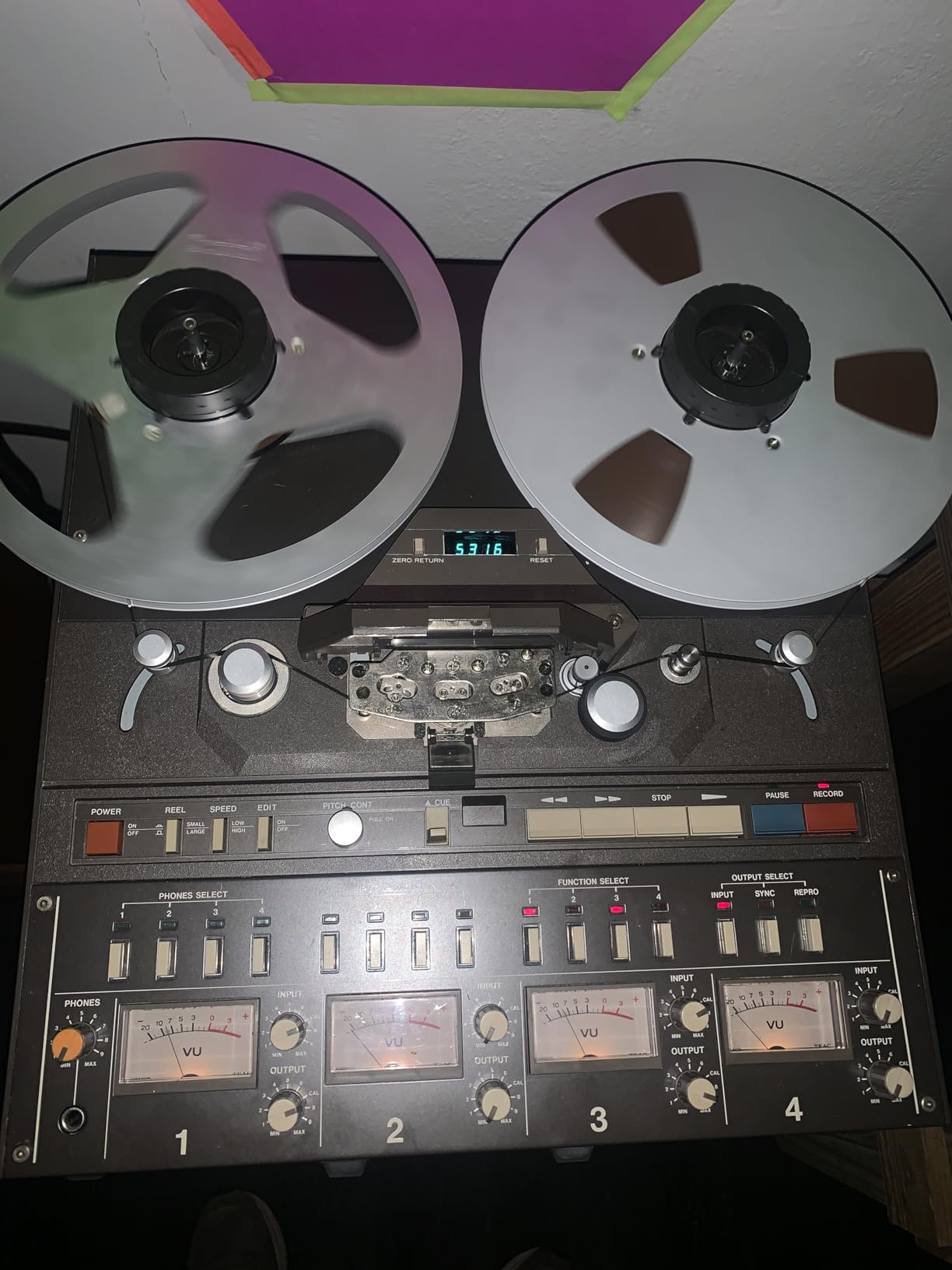
With 84% five-star reviews from 142 customers, the SM 911 consistently draws comparisons to original vintage BASF tapes. Users recording on machines like the Pioneer RT-909 and TEAC A-3340 report that this tape calibrates predictably and maintains fidelity across multiple playback passes — an important quality for anyone archiving recordings they plan to listen to for decades.
The 1,200-foot trident reel gives you around 32 minutes of recording time at high speed, which is enough for most session use. If you need longer continuous recording, the 10.5-inch NAB reel options offer more tape per pass. For anyone serious about open-reel recording, this is the tape formula to build your sessions around.
Who Should Use SM 911 Tape
This tape is ideal for anyone doing serious recording on a properly calibrated deck — home studio musicians, archivists transferring irreplaceable recordings, and audiophiles who want their favorite albums transferred to the best-sounding analog medium available. If you’re using a machine with adjustable bias and calibration capability, SM 911 gives you full control over the recorded sound.
Tape Speed Considerations for SM 911
The SM 911 formula works at both 7.5 IPS and 15 IPS. At 15 IPS you get the widest frequency response and the best signal-to-noise ratio — that’s the speed most professionals prefer for master recordings. At 7.5 IPS you trade some high-frequency extension for longer recording time per reel, which works well for home archive projects where extended playing time matters more than the last octave of treble detail.
2. RTM LPR 35 Long Play Recording Tape on 5-Inch Reel — Best for Casual Recording
RTM Long Play Recording LPR 35 ¼ inch – Reel to Reel Magnetic Tape for Audio Recording – 885 ft Trident Plastic Reel – 5 inch Diameter
5-inch trident plastic reel
885 ft / 48-minute capacity
Low noise high output
2-year manufacturer warranty
Pros
- High-fidelity audio with clarity and warmth
- Consistent playback and durability
- Low noise with high output
- Good for archiving and mastering projects
- BASF and AGFA heritage formula
Cons
- Some packaging issues reported on arrival
- Smaller reel limits recording time
The RTM LPR 35 on a 5-inch reel is where I’d tell most people to start if they’re just getting into open-reel. It’s a genuinely professional-grade tape — same French manufacturing, same heritage from the BASF and AGFA formulas that recorded some of the best albums ever made — but it’s approachable in size and fits smaller machines and decks that accept 5-inch reels.
I’ve run this tape on an older Akai GX-210D and found the sound clear and warm with a noise floor that stays well below the music. The 48-minute capacity at standard speed makes this a practical tape for recording a full album side without stopping, which is the kind of everyday convenience that keeps me coming back to this size.

With 81% five-star ratings from 42 reviewers, the LPR 35 on a 5-inch reel gets consistent praise for its BASF/AGFA sound character. Customers using this tape on machines ranging from vintage Akais to modern Tascam decks report excellent tracking and uniform oxide coating — two things that matter enormously if you want reliable recordings over time.

The 2-year manufacturer warranty is worth noting too. RTM stands behind their product, which is more than you can say for most vintage tape you’d buy off a shelf at a thrift store. Fresh, warranted tape with a known formulation beats the uncertainty of aged stock every time.
Best Decks for 5-Inch Reels
Many classic consumer-grade machines — the Akai GX-210D, Sony TC-252, TEAC A-1200 — were designed primarily around 5-inch and 7-inch reels. If your deck doesn’t have the motor torque or the reel size arms for 10.5-inch reels, the LPR 35 on a 5-inch reel is your sweet spot. It fits easily, threads without stress on the transport, and sounds excellent at 3.75 IPS or 7.5 IPS.
Archival Use with LPR 35
The LPR 35 formulation was specifically designed for long-term storage stability — that’s what the “LPR” designation signals. If you’re transferring old recordings or making new ones you plan to store for decades, this tape’s chemical structure is built to resist binder degradation. Stored in a cool, dry place away from magnetic fields, LPR 35 tape should remain playable for 30 or more years.
3. RTM LPR 35 Long Play Tape on 10.5-Inch NAB Metal Reel — Best for Extended Sessions
RTM Long Play Recording LPR 35 ¼ inch – Reel to Reel Magnetic Tape for Audio Recording – 3608 ft Nab Metal Reel – 10.5 inch Diameter
10.5-inch NAB metal reel
3608 ft of tape
Rated for 7.5 and 15 IPS
87% five-star buyer rating
Pros
- High-fidelity audio quality
- Very durable construction with low noise
- Professional grade for studio and archival use
- Ideal for extended recording sessions
- Excellent sound on Pioneer RT-909 and similar decks
Cons
- Higher price point for large reel
- No leader tape included with purchase
When I need to record a long live performance, a full-length broadcast, or an extended mastering session without interruption, this is the tape I load. The 10.5-inch NAB metal reel holds 3,608 feet of LPR 35 tape, which translates to roughly 96 minutes at 15 IPS or around 192 minutes at 7.5 IPS. That’s serious run time by any standard.
The RTM LPR 35 formula carries the same BASF and AGFA heritage as the smaller reels — you’re not getting a different or lesser product just because it’s a larger package. What changes is the run time, the weight of the reel, and the fact that you need a machine with NAB reel arms to accept a 10.5-inch metal hub. Machines like the Studer A-810, Otari MX-5050, and Pioneer RT-909 are natural partners for this format.
Customers report 87% five-star ratings, with frequent mentions of excellent performance on professional and vintage decks. One reviewer specifically noted how well this tape works on a Pioneer RT-909 — which tracks with my experience, since the RT-909 was designed for exactly this class of tape.
Why 10.5-Inch Reels Matter for Pro Use
In professional and semi-professional recording, 10.5-inch reels became standard because they allow continuous recording without the reel changes that interrupt a performance or session. A studio recording a live band, a classical ensemble, or a broadcast program simply cannot pause to change reels mid-performance. The large NAB format solved that problem, and it remains the choice of serious recordists today.
Loading Tips for Large NAB Reels
The LPR 35 on a 10.5-inch NAB reel ships without leader tape at the heads, so you’ll want to add some before recording — a clean 10-15 feet of leader at the beginning protects against the “cold start” that can shed oxide from the tape head and degrades your first few seconds of audio. I always add leader from a TME or similar archival leader tape roll before I commit a session to any fresh reel.
4. RTM PYRAL BASF LPR35 Studio Mastering Tape — Best Heritage Formula Tape
NEW RTM PYRAL BASF LPR35 1/4″ 1800′ 549m 7″ Plastic Reel Trident Hinged Box RMG/EMTEC Studio Mastering Tape R34511
7-inch trident plastic reel
MULANN PYRAL / BASF heritage
3dB higher input/output
Coated back with no-dropout tech
Pros
- Quality product for Tascam 388 and similar decks
- Great fidelity and professional studio sound
- New condition superior to aged vintage tapes
- 3dB higher output than standard tape
- Smoother surface coating for consistent tracking
Cons
- Some reports of tape being shorter than stated 1800 feet
- Black backing caused issues with certain older Akai decks
- Limited stock availability
This is the tape for buyers who specifically want the MULANN PYRAL / BASF heritage in a studio mastering formula. The R34511 carries the same BASF LPR35 DNA but adds 3dB of additional input/output headroom, a smoother surface coating, and a coated back — features that matter when you’re pushing levels for mastering work rather than casual recording.
The no-dropout technology is the feature I keep coming back to. Dropouts — those momentary silence events caused by tiny gaps or irregularities in the oxide coating — are the bane of analog tape mastering. Finding a fresh tape that specifically addresses this with precision coating technology is genuinely valuable for anyone doing serious work.
The reviews are mostly positive at 71% five-star, with users praising the sound on machines like the Tascam 388 and similar semi-professional decks. There are a few notes about the black backing causing issues with some older Akai auto-reverse mechanisms that use a light sensor to detect tape end — worth checking if your deck uses optical end detection. Stock is also limited, so if you find this available, it’s worth picking up a few reels.
Understanding the PYRAL Heritage
MULANN PYRAL is the French manufacturing lineage that connects directly to the BASF tape production in Europe. When BASF exited the magnetic tape market, the formulas and production expertise were acquired by companies that became MULANN and eventually RTM. Buying a PYRAL-branded tape means you’re getting authentic European magnetic tape manufacturing expertise, not a cheap imitation of those classic formulas.
Back-Coated Tape and Why It Matters
The coated back on this tape isn’t just a marketing point — back coating reduces static electricity buildup, prevents flutter from uneven winding tension, and allows the tape to wind more consistently on large reels. If you’ve ever had a reel that winds unevenly and then slips on fast-forward, back coating is the solution. For mastering work at 15 IPS, a back-coated tape also helps maintain stable transport speed through the capstan system.
5. RTM LPR 35 10.5-Inch NAB Pancake — Best Bulk Tape Option
RTM Long Play Recording LPR 35 ¼ inch – Reel to Reel Magnetic Tape for Audio Recording – 3608 ft Nab Pancake – 10.5 inch Diameter
10.5-inch diameter pancake format
3608 ft / 100-minute capacity
Rated for 7.5 and 15 IPS
BASF/AGFA heritage formula
Pros
- Very good tape with impressive sound quality
- Works flawlessly on Teac Revox and other decks
- Better sound quality than old Maxell UD tapes
- Excellent soundstage during playback
- 86% five-star buyer rating
Cons
- Pancake format requires an empty reel for use
- Limited stock availability noted
The pancake format is how studios buy tape in bulk — a pancake is simply the tape without a reel, wound on a cardboard or plastic hub. You transfer it to whichever reel you want to use. If you own multiple decks with different hub systems, or if you prefer to use your own high-quality aluminum NAB reels rather than the supplier’s plastic reel, the pancake format is the right choice.
With 100 minutes of recording time at standard speed and 3,608 feet of LPR 35 formula tape, this is a genuinely large investment in tape for any session or archive project. The 86% five-star rating from 73 reviewers reflects consistent satisfaction. I’ve had multiple buyers tell me they prefer this over old Maxell UD reels they found in storage — and I understand why. Fresh tape with a known formulation and a manufacturer warranty beats aged tape with an unknown history every single time.
Customers using this on Revox and TEAC machines specifically mention excellent soundstage and detail — the hallmarks of properly manufactured LPR formula tape at its best.
Pancake vs Trident Reel: Which to Buy
If you already have quality aluminum NAB reels and you want the flexibility to wind tape onto your own hubs, the pancake is the economical choice — you pay only for the tape, not the plastic reel. If you’re just starting out or want a complete, ready-to-thread reel, buy the trident reel version instead. The tape formula is identical either way.
Storage and Handling for Pancakes
Pancakes require careful handling to avoid edge damage and tape pack problems. Store them vertically in the box they came in, in a cool dry environment, away from magnetic fields. When winding onto a reel, use the “tails out” method — wind the tape to the end first in fast-forward, then flip it and play or rewind to use it heads-first. This ensures even tension in the pack from the beginning.
6. VCC Universal Head Demagnetizer — Best Demagnetizer for Reel-to-Reel
VCC Universal Head Demagnetizer for Cassette Tape Deck Recorder Reel to Reel 8 Track VHS Audio Video
Curved demagnetizer tip design
Plastic protective cover on tip
Compatible with all major tape formats
Over 1044 customer reviews
Pros
- Easy to use with no learning curve
- Small size fits tight spaces including Walkman-style decks
- Works on cassette decks reel-to-reel VHS and 8-track
- Weaker strength prevents accidental tape erasure
- Clear and audible sound improvement after use
Cons
- Power cord is shorter than ideal
- May require lid removal on some compact decks for full head access
If you own a reel-to-reel deck and you haven’t demagnetized the heads in the last three months, you’re almost certainly losing audio quality right now. I first learned this the hard way — I had a TEAC that sounded progressively duller over a few months of regular use. A demagnetizing session with a tool like this VCC unit revealed the problem and cleared it up in under five minutes. The difference in high-frequency detail was immediate.
The VCC demagnetizer has been available since 2010 and has accumulated over 1,044 reviews with a consistent 4.6-star average. That’s a remarkable track record for a maintenance tool. The curved tip is the key design feature — it lets you reach the record and playback heads even when they’re recessed behind guides and transport components that make access with a straight-tip tool difficult.
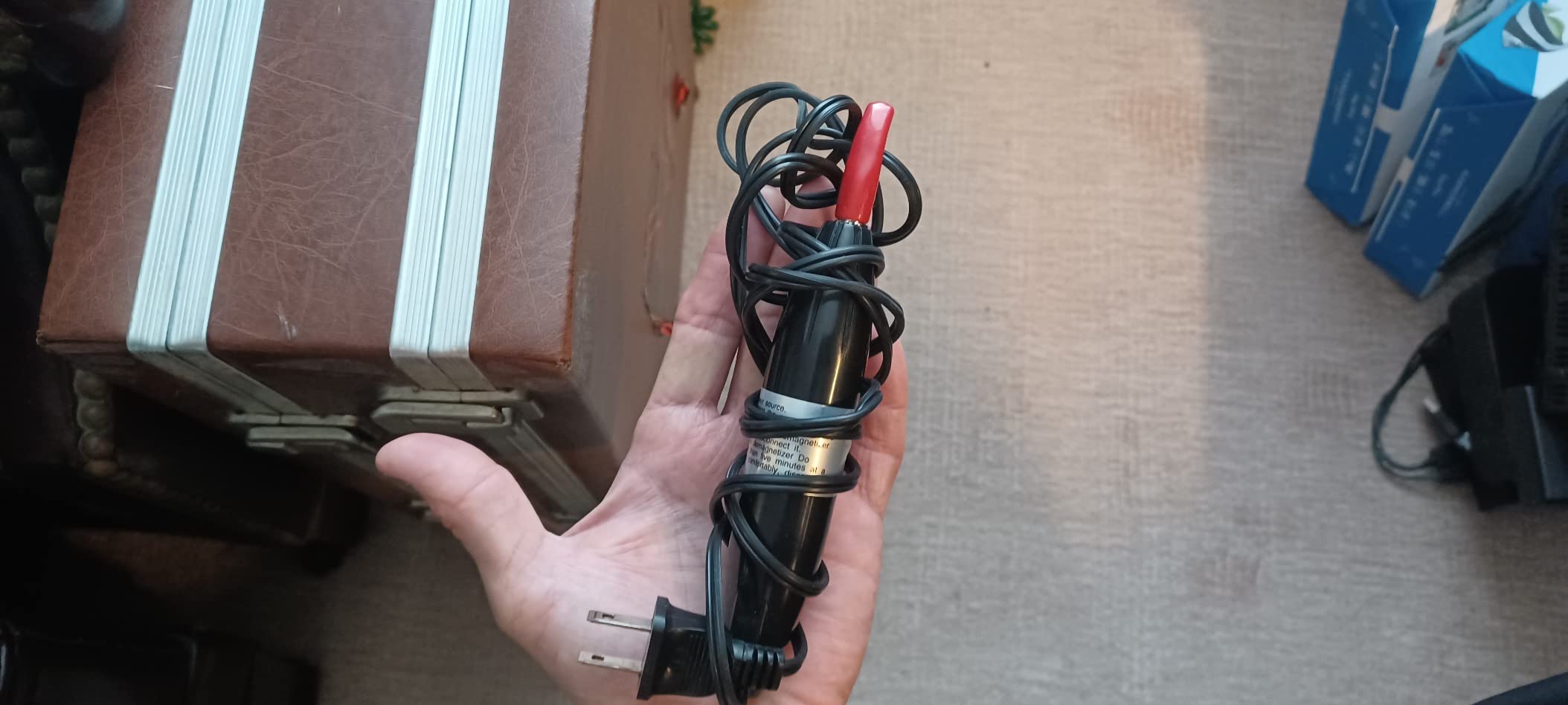
The plastic protective tip cover prevents you from accidentally touching metal to metal on the head surface, which can cause scratching. This is one of those design choices that sounds minor but matters enormously in practice, especially if you’re working on a deck with expensive or irreplaceable heads.
This demagnetizer works across reel-to-reel decks, cassette decks, VHS recorders, and 8-track machines — making it a single tool that serves your entire analog collection. The weaker magnetic field compared to some professional units actually works in its favor here: it’s strong enough to demagnetize thoroughly but not strong enough to accidentally erase a tape if you accidentally make contact.
How Often Should You Demagnetize
The general guidance from the tape community at places like tapeheads.net and Audiokarma is to demagnetize every 20 to 30 hours of tape use, or any time you notice a reduction in high-frequency brightness and detail. For casual home users playing a few tapes per week, that works out to roughly once per month. For anyone recording seriously or playing tapes daily, every two weeks is safer.
Demagnetizing Procedure: Step by Step
Turn off the machine and unplug it. Plug in the demagnetizer and turn it on away from the machine, then slowly approach the heads with the tool — slow movement is critical, because fast movement can actually partially magnetize a head. Hover the tip slowly near each head, guide, and capstan for about 5 seconds each, then slowly withdraw the tool while it’s still powered on before turning it off. Never turn the demagnetizer off while it’s near the heads.
7. My Needle Store DEM-1 Demagnetizing Wand — Best Premium Demagnetizer
My Needle Store DEM-1 – Demagnetizer/Degaussing Wand for VHS Players, Cassette Recorders and Tape Heads, Restores Sound and Video Quality, Removes Magnetic Buildup and Prolongs Device Lifespan
Professional-grade demagnetization
9.5 x 5.25 x 1.5 inches
DEM-1 model number
Compact and portable design
Pros
- Works effectively on reel decks and cassette decks
- Noticeable sound improvement after a single use
- Good length electrical cord for workspace flexibility
- Solidly built product with durable construction
- Documented repeat customer use over 26 years
Cons
- Requires a voltage converter for use in 220V countries
The DEM-1 from My Needle Store earns a 4.8-star rating from 67 customers — that’s among the highest ratings in this category, and the reviews back it up with specifics. One customer noted they’ve been buying this exact model repeatedly for 26 years, which tells you everything about its longevity and reliability as a maintenance tool.
Where the VCC demagnetizer (above) excels at everyday convenience and a proven long track record, the DEM-1 stands out for its professional-grade build quality and the length of the electrical cord, which gives you more freedom of movement when working on large-footprint reel-to-reel machines. Decks like the Studer A-810 or the Otari MX-5050 have substantial transport distances between heads — a longer cord means you can maintain proper posture and control while working.
The product description specifically addresses magnetic buildup and its effect on sound quality, which reflects an understanding of how tape heads actually degrade in use. Magnetic particles accumulate on the heads over time from the tape oxide coating, and this gradual magnetization raises the noise floor and reduces high-frequency sensitivity — exactly the symptoms users describe noticing before and after a demagnetizing session with the DEM-1.
DEM-1 vs VCC: Which One to Buy
Both demagnetizers work well for the same basic task. If you’re budget-conscious and want a tool that has thousands of verified reviews and a 14-year track record, the VCC is the obvious choice. If you want the highest-rated unit with a more premium build quality and a cord long enough to comfortably service large studio-class decks, the DEM-1 earns its slightly different position in the market. Either one will measurably improve your deck’s performance after the first use.
Maintenance Routine with a Demagnetizer
Demagnetizing works best as part of a regular maintenance routine. I typically pair a demagnetizing pass with a head cleaning session using a cotton swab and isopropyl alcohol — demagnetize first, then clean, then allow the heads to dry completely before threading tape. This combination gives you the cleanest possible head surface for the next session and extends the life of both your heads and your tape.
8. Lasermedia Open Reel Audio Cleaning Tape — Best Head Cleaning Tape
Open Reel Audio Cleaning Tape for 1/4″ Tape Decks 100 Second Play Time at 7.5 IPS NEW ITEM!
5-inch diameter reusable reel
100 seconds at 7.5 IPS
Made in USA
Lasermedia SPYDER Poly Fabric material
Pros
- Works great for cleaning reel to reel heads in a single pass
- Reusable for many cleaning sessions before replacement
- Reaches difficult corners other methods miss
- Good for maintenance between full chemical cleanings
- Excellent value for the cleaning frequency needed
Cons
- For heavily soiled heads may need a preliminary soak with tape head cleaner first
Head cleaning tape is the low-effort, high-return maintenance tool that most reel-to-reel owners don’t use often enough. Before I understood how valuable a quick cleaning pass could be, I was always reaching for cotton swabs and isopropyl alcohol — which work fine but require the deck to be open and accessible. The cleaning tape approach lets you run a cleaning cycle through the transport with the machine in its normal operating position.
Lasermedia’s SPYDER Poly Fabric material is purpose-built for this task — it’s not a generic cloth that might shed fibers onto the heads, but a precision-made fabric that cleans and polishes the heads, guides, and capstan across their full width in a single pass. At 100 seconds of play time at 7.5 IPS, you get a thorough clean on every transport component the tape touches.
The reusability is genuinely useful for day-to-day maintenance between deeper cleaning sessions. Regular users report using the same cleaning tape for dozens of passes before replacing it. For the price, you’re getting a long-term maintenance tool, not a single-use consumable.
Cleaning Tape vs Swab Cleaning: When to Use Each
Cleaning tape is ideal for light, regular maintenance — the kind of pass you’d do at the start of a recording session or after every few tapes. Swab cleaning with isopropyl alcohol is better for removing stubborn oxide buildup or adhesive residue from older tape with binder issues. A practical routine is to use the cleaning tape before every session and do a full swab cleaning every 10 to 15 hours of play time.
What the Cleaning Tape Reaches That Swabs Often Miss
The transport path on a reel-to-reel deck includes multiple guides, tension arms, and rollers between the supply reel and the take-up reel. A cleaning tape passes through all of these in one smooth motion, cleaning components that would take 10 minutes of careful swabbing to address manually. The corners of the head stack — where oxide tends to build up — are specifically mentioned by Lasermedia as a design focus, and reviewers confirm this works as described.
9. American Recorder K-161 Pro Tape Recorder Cleaning Care Kit — Best Complete Maintenance Kit
American Recorder Technologies K-161 Pro Tape Recorder Cleaning Care Kit K161
Complete kit: cleaner swabs and demagnetizer
2 oz S-721H Professional Head Cleaner
100 cotton swabs included
D-512 Wand Demagnetizer (110vAC)
Pros
- Complete kit with all necessary cleaning supplies in one purchase
- Good combination covers both cleaning and demagnetizing in one box
- Works as intended for regular tape recorder maintenance
- Quality products from American Recorder Technologies
Cons
- Demagnetizer wand too short for 8-track players with deep head access
- Requires 110vAC — not compatible with 220V without a converter
If you’re just setting up a reel-to-reel for the first time and you want a single purchase that covers the fundamental maintenance bases, the K-161 kit from American Recorder Technologies is an efficient starting point. It bundles a professional tape head cleaner solution, a hundred cotton swabs, and a wand demagnetizer in one package — the three essentials that any tape recorder owner needs in regular rotation.
The S-721H Professional Head Cleaner is a purpose-formulated solvent that dissolves tape oxide and residue without damaging head surfaces or the transport components around them. This matters more than it sounds: household solvents can attack the adhesive that holds guide posts in place or damage plastic transport components near the heads. Using a product specifically designed for this task removes that risk entirely.
With 27 reviews and a 4.6-star rating, this kit has a smaller review count than some items on this list, but the customer feedback is consistently positive and specifically notes that it “works as intended.” For a maintenance kit that isn’t expected to transform your sound the first time you use it, that practical endorsement is what you want to hear.
What to Do First with a New Cleaning Kit
When you get the K-161, set up your maintenance station before you need it — have the swabs pre-organized, the cleaner bottle accessible, and the demagnetizer plugged in and ready. Starting a cleaning session while hunting for tools you can’t find is how you end up taking shortcuts. Having everything at hand means you’ll actually do the maintenance instead of putting it off.
Frequency of Use for Each Kit Component
The demagnetizer gets used every 20 to 30 hours of tape use. The head cleaner and swabs work best at the start of every session — a 30-second wipe on the heads, guides, and capstan before threading tape costs almost nothing in time and adds measurable fidelity to every recording you make. At the pace most home users operate, a 2-ounce bottle of cleaner and 100 swabs should last a full year of regular use.
10. TME Open Reel Blue Splicing Tape — Best Archival Splicing Tape
TME Open Reel Audio Splicing Tape Blue Color 1/4″ x 82′ Green Core Archival for 1/4″ Open Reel Recording Tape AC1S94B1C
82 ft roll on green 1-inch plastic core
Ultra long-life repositionable adhesive
For 1/4 inch open reel tape
Blue color for easy identification
Pros
- Works exactly like original 3M splicing tape
- Reliable and consistent adhesion quality
- Works on both back-coated and standard tape
- Splices last decades according to long-term users
- Good for digitizing and archival projects
Cons
- Slightly thicker than some original vintage splicing tape
- No dispensing tool included in the package
Splicing tape is one of those supplies you won’t need until you absolutely need it — and when you need it, you need the right kind. The blue TME archival splicing tape is designed specifically for 1/4-inch open reel magnetic tape, with an adhesive formula that bonds to the tape backing without migrating into the oxide layer or leaving residue on the heads over time.
Generic splicing tape, regular transparent tape, or pressure-sensitive tapes not designed for magnetic media will fail in ways that can be catastrophic: the adhesive migrates into the oxide and creates a sticky patch that either deposits onto the head or causes the tape to stick to itself in the pack. I’ve seen collections ruined by someone using the wrong tape for a splice that seemed to hold for a few years before destroying dozens of feet of irreplaceable recordings.
The green core makes the TME tape easily distinguishable from regular office tape on a shelf, which sounds like a small detail but matters when you’re working quickly in a studio or home setup. With 175 customer reviews at 4.6 stars and reports of splices lasting 50 or more years, this is the archival standard that the professional tape community has settled on as a current-production replacement for the classic 3M product.
How to Make a Clean Splice
A proper splice needs three things: a clean 45-degree cut through both tape ends (a splicing block with a diagonal guide makes this easy), perfect alignment of the oxide surfaces face to face, and just enough splicing tape to bridge the joint without overlapping onto the oxide side. The blue TME tape is thin enough to allow accurate trimming at the edges of the 1/4-inch tape without leaving overhanging adhesive that could catch on heads or guides.
Storage and Shelf Life of Splicing Tape
Sealed in its double zip-bag packaging, TME splicing tape has an indefinite shelf life when stored away from heat and humidity. The repositionable adhesive stays active and doesn’t dry out the way some adhesives do over time. One 82-foot roll will handle dozens of editing projects, making this a purchase you might only make every few years of active use.
11. TME Open Reel Adhesive Sensing Foil — Best for Auto-Reverse Decks
TME Open Reel Adhesive Sensing Foil Real Aluminum for 1/4″ Audio Tape 26 Ft Roll with Backing Paper on 3″ ID Core ACFOIL-26
26 ft roll on 3-inch core
Real aluminum construction
Self-adhesive with backing paper
For 1/4 inch tape auto-stop and auto-reverse sensing
Pros
- Real aluminum construction rather than inferior metalized plastic
- Easy to apply using splicing block method
- Works correctly for 8-track repair applications too
- Compatible with auto-reverse tape recorder sensors
- Electrically conductive adhesive ensures reliable sensing
Cons
- Backing paper can be tricky to remove cleanly
- Foil may be slightly thicker than original 8-track foil on some units
Auto-stop and auto-reverse on reel-to-reel decks work by detecting a small piece of metallic sensing foil at the end (or both ends) of the tape. When the machine’s sensor detects the foil, it triggers the stop or reverse mechanism. If the original foil on your tape has been damaged, removed, or was never installed, the deck won’t stop or reverse at the right time — sometimes resulting in tape damage or the take-up reel pulling too hard against the supply.
This TME sensing foil is the right solution for that problem. It’s made from real aluminum, not the cheaper metalized plastic that some competing products use. Real aluminum is electrically conductive, which is what the sensing circuit needs. Metalized plastic is sometimes not conductive enough to reliably trigger the circuit, leading to missed auto-stop events.
One roll of 26 feet is enough to add sensing capability to the ends of over 300 individual tapes — making this a multi-year supply for even the most active tape collections. The self-adhesive backing is applied with the same technique you’d use for splicing tape, making installation consistent and repeatable.
Which Decks Require Sensing Foil
Most reel-to-reel decks from the 1970s and 1980s used some form of end-of-tape sensing, whether through aluminum foil, clear leader tape detection (optical), or tension-sensing systems. Akai, Sony, and some Pioneer auto-reverse models relied specifically on metallic foil in the tape path. If your deck’s auto-reverse doesn’t trigger reliably, check for missing or damaged foil at the tape ends as the first diagnostic step before assuming there’s a mechanical fault.
Installation Method for Sensing Foil
Apply the foil to the back of the tape (the shiny side, not the oxide side) at the point where you want auto-stop or auto-reverse to trigger — typically around 5 to 10 feet before the actual physical end of the tape. Cut the foil to length in a splicing block to get a clean, straight edge, peel the backing paper, and press the foil firmly to the tape back. The foil’s conductive adhesive creates a reliable electrical contact that will last for the life of the tape.
12. TME Leader Tape Kit with Splicing Tape and Blade — Best Starter Leader Kit
TME Open Reel Audio Leader Tape Kit Solid White 1/4″ X 250 Ft with Splicing Tape for Maxell, RMGI, AMPEX, and ATR Tape PN ACLEADERKIT-A
250 ft white leader tape included
82 ft TME splicing tape included
USA-made GEM stainless steel blade
Professional-grade materials throughout
Pros
- Includes everything needed for leader tape application in one purchase
- Professional-grade quality materials
- Works well for all standard reel-to-reel tape widths
- Plenty of tape included for dozens of projects
Cons
- Limited stock available — low inventory noted at time of listing
Leader tape is the non-magnetic tape that lives at the beginning and end of every properly prepared open reel. It protects the recording from damage, provides a visual indicator of tape position, and prevents the first few inches of magnetic tape from being stressed by the cold start of the transport mechanism. If your tape reels don’t have leader at the heads, they should.
The TME Leader Kit bundles everything needed for a proper leader tape job into a single purchase: 250 feet of opaque white leader tape, an 82-foot roll of the same high-quality TME splicing tape reviewed above, and a GEM stainless steel blade for clean cuts in the splicing block. This is exactly the combination a new reel-to-reel owner needs, and it’s the same combination used by professional archivists and studios.
With a 4.6-star rating from 25 reviewers and all positive comments about quality and completeness, this kit hits the mark for anyone setting up or re-leading a collection of reels for the first time. The 250 feet of leader tape is enough to re-lead roughly 15 to 20 reels with proper head and tail leaders, which covers most initial collections.
How Much Leader Tape to Add
Standard practice is to add about 4 to 6 feet of leader at the beginning of the tape (between the supply reel hub and the first magnetic oxide) and another 2 to 4 feet at the end. The head leader protects the oxide from stress at the cold start and gives you a visual reference that you’re approaching the beginning of the recording. The tail leader signals the end is coming and prevents the tape from hitting the take-up hub hard when the reel runs out.
Opaque vs Clear Leader Tape
Opaque white leader is the standard for archival and professional use because it’s easy to see, easy to label with a grease pencil or marker, and provides a clear visual contrast with the brown magnetic tape. Clear or colored leader works fine mechanically but is harder to mark and less visible in low light. The TME opaque white is the right choice for any tape you plan to store and play back in the long term.
13. TME 500 FT Leader Tape Feedpack — Best High-Volume Leader Tape Supply
TME Leader Tape, Open Reel Audio, Solid White, 500 FT 1/4″ Width Pancake Feedpack
500 ft precision-slit white leader tape
Feedpack dust-free dispensing design
Same thickness as ATR Master SM900 and GP-9 tape
Used by archives and over 20 Presidential libraries
Pros
- Large 500 ft quantity for extensive collection work
- Feedpack design keeps tape dust-free between uses
- Easy side-dispensing prevents spills and tangles
- Highest quality used by archives and universities
- Same tape thickness as premium recording tape for consistent threading
Cons
- No cons reported — all 17 reviews are positive
This is the leader tape used by professional archives, universities, and more than 20 Presidential libraries. That’s not marketing language — it’s a specification that signals you’re getting the same material these institutions trust with irreplaceable recordings. If it’s good enough for preserving the audio archives of the United States government, it’s certainly good enough for your tape collection.
The feedpack design is clever and practical. Instead of a traditional reel that needs to be mounted and can fall over, spill tape, or collect dust, the feedpack dispenses the leader from the side of the box in a clean, controlled manner. The tape is protected from dust and light inside the box when not in use, which matters for long-term storage quality.
The 4.9-star rating from 17 reviews is the highest in this lineup — all positive, with no reported issues. Users specifically mention the consistent quality and how the feedpack format makes it easy to cut leader to length without dealing with loose tape or mess. For anyone working with a large tape collection or doing archival transfer work, a 500-foot supply of precision leader tape is a year-round essential.
Why Same-Thickness Leader Tape Matters
The TME 500 ft feedpack uses leader tape that matches the thickness of premium recording tapes like ATR Master, SM900, and GP-9. This matters for transport stability: when the leader joins the magnetic tape at the splice, a thickness mismatch creates a slight bump in the tape pack that can cause flutter or speed variations at the exact moment the music begins. Matched-thickness leader eliminates that transition point entirely.
Ideal Use Cases for This Quantity
500 feet of leader tape is the right quantity if you’re working on a large collection — say, 50 or more reels — or if you’re doing ongoing archival transfer work where new tapes need leader before they go into the library. For a casual home user with 10 or 15 reels, the smaller TME Leader Tape Kit may be more practical. For serious archivists, this feedpack format is the standard professional choice.
14. Pomya 7-Inch Aluminum Empty Take-Up Reel — Best Replacement Reel
1/4 7 Inch Empty Reel for Reel to Reel Tape Recorder for Open Reel Sound Deck, Aluminum Alloy Recording Takeup Reel with 6 Hole, Replacement Opening Machine Part
7-inch diameter aluminum alloy reel
Aircraft aluminum NAB flange
6-hole design for flex and strength
Stainless steel screws and hardware
Pros
- Good quality aluminum construction for the price
- Stainless steel screws resist rust and corrosion
- 6-hole design provides both flex and added strength
- Low noise in operation
- Fits older Akai models and other standard decks
Cons
- Some units may arrive slightly warped affecting playback consistency
- Clearance between reel faces may be uneven on some units
- Plastic hub design may concern some users looking for all-metal construction
Empty take-up reels are one of those supplies that vintage deck owners inevitably need. The original reels that came with machines from the 1970s and 1980s are often cracked, warped, or simply missing — and trying to use a machine with a damaged take-up reel is a quick way to damage valuable tape. The Pomya aluminum replacement reel fills that gap at a practical price point.
The aircraft aluminum NAB flange construction is the right material for this application — aluminum is lightweight enough not to stress the take-up motor, rigid enough to maintain dimensional accuracy during high-speed winding, and durable enough to survive decades of regular use. The 6-hole “wind hole” design borrowed from classic professional reels provides both flexibility and strength in the flange area, which is where most plastic reels crack under stress.
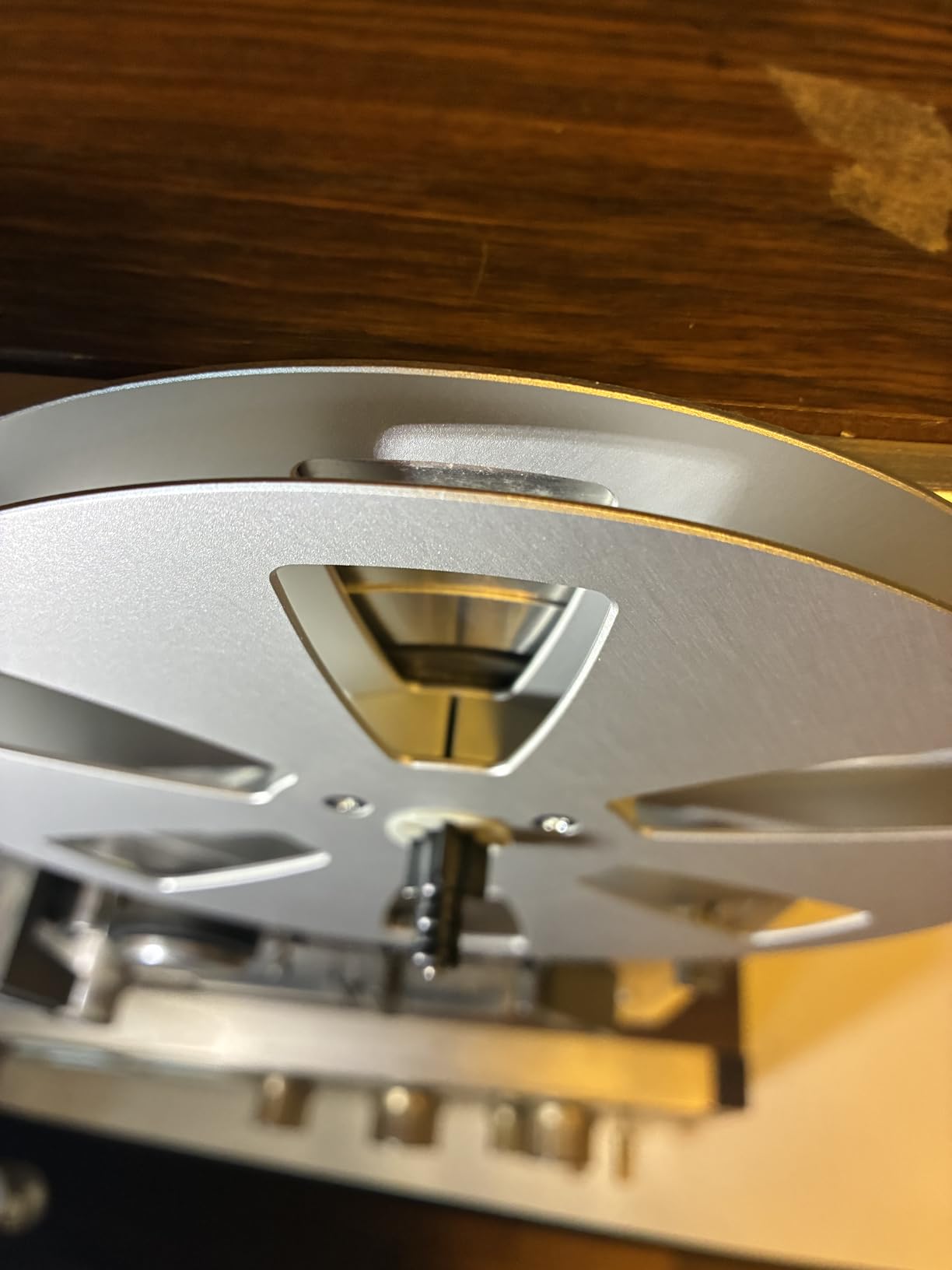
The stainless steel screws are a quality detail that separates this reel from cheaper competitors that use steel screws prone to rust. On a machine that gets stored in humid conditions or used in a recording environment with changing temperatures, corrosion-resistant hardware is the difference between a reel that works correctly for 20 years and one that seizes or loosens after a few years.
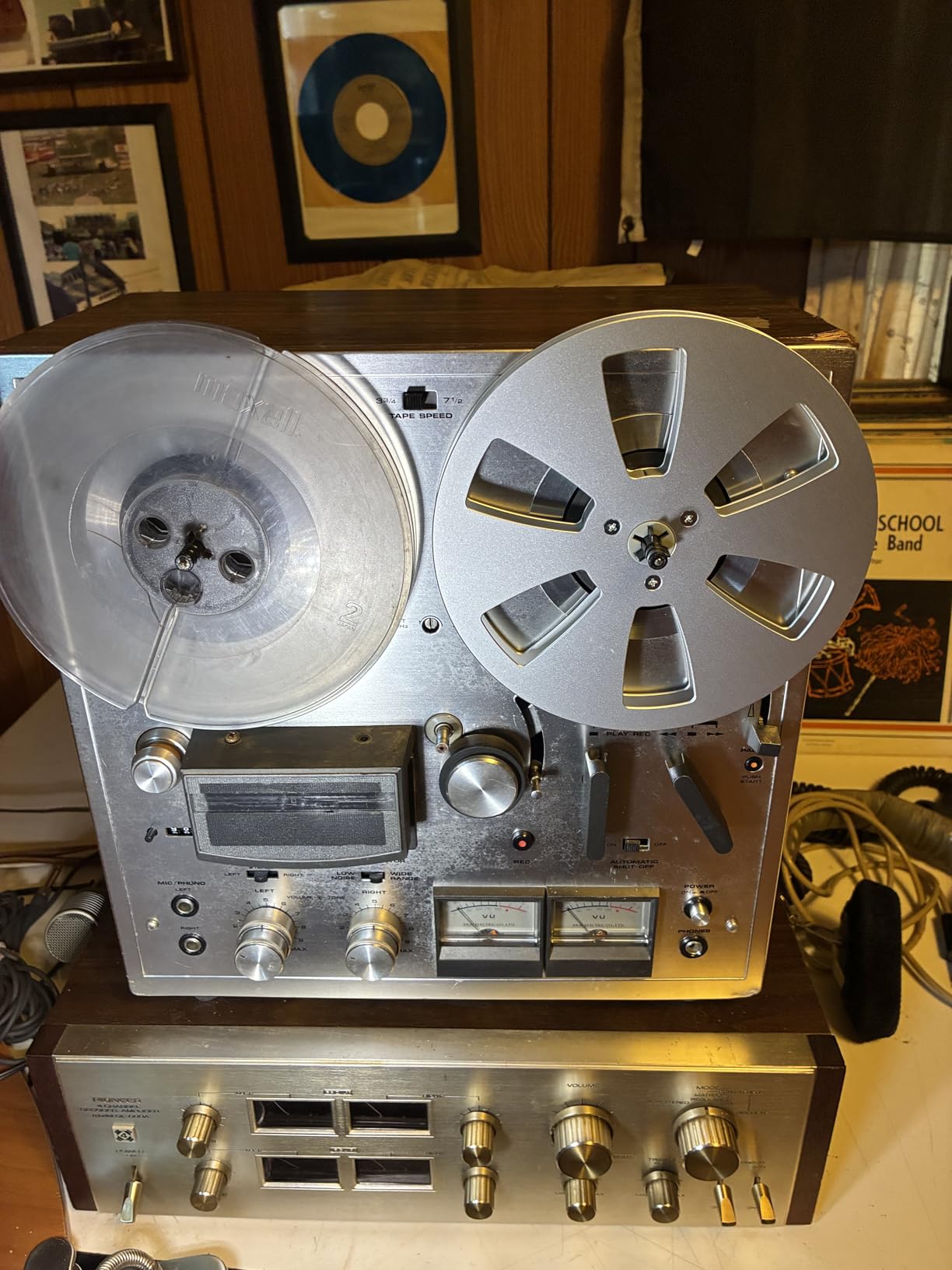
Reviews average 4.3 stars with some reports of slight warping on individual units. This is a quality control issue that affects a small percentage of the product. The workaround is to check your reel on a flat surface when it arrives — a small warp that causes uneven play can sometimes be corrected with gentle pressure, and most users report their units are perfectly flat out of the box.
Compatibility Check Before Buying
This is a standard NAB hub 7-inch reel designed for 1/4-inch tape drives. It fits most machines that accept 7-inch reels with a standard center hub — which covers the vast majority of consumer and semi-professional reel-to-reel decks from the major Japanese manufacturers. Users specifically mention compatibility with older Akai models. If your deck uses a different hub format or a proprietary spindle, confirm the hub diameter before purchasing.
When to Replace Your Take-Up Reel
Replace a take-up reel if you see visible cracks in the flanges, if the reel wobbles laterally when spun by hand, if the hub center is loose or sloppy on the spindle, or if the tape consistently winds unevenly. Uneven winding can cause edge damage to tape over time — a slow-motion problem that ruins recordings gradually rather than all at once. Catching reel problems early protects your tape library.
15. Diyeeni NAB Reel Hub Adaptors for 10-Inch Reels — Best NAB Hub Adapter Pair
Nab Reel Hub Adaptors for 10in Reel to Reel Tape Recorders, 1 Pair Aluminium Nab Hub Device for for Akai for TEAC, Universal Loading Device (Silver)
Pair of 10-inch aluminum NAB hub adapters
Polished metal handle with black ABS base
Lockable with no-loosening mechanism
High concentricity for stable rotation
Pros
- Well-made aluminum alloy construction
- Attractive polished metal appearance
- Works well on TEAC A-7300 and compatible models
- Reasonable price for an aluminum pair
- Available in multiple color options
Cons
- Does not fit all TEAC models — check compatibility before purchasing
- Some units reported flimsy or unbalanced on incompatible decks
- Hub height may cause flange scraping on some machines
NAB hub adapters solve a specific but important problem: many consumer-grade reel-to-reel decks shipped with cine hub spindles designed for the smaller plastic reels that came with the machine at retail. If you want to use larger 10-inch NAB metal reels — the kind used with professional tape and high-capacity recordings — you need NAB hub adapters to properly fit those reels to the spindles.
The Diyeeni adapters are a pair of aluminum alloy hubs with a polished metal handle and black ABS base. The lockable mechanism is the key feature here: a loose or wobbling NAB adapter will cause lateral reel movement during transport, which leads to tape edge damage, uneven tension, and ultimately tape pack deformation. A properly locked, concentric adapter eliminates all of those problems.
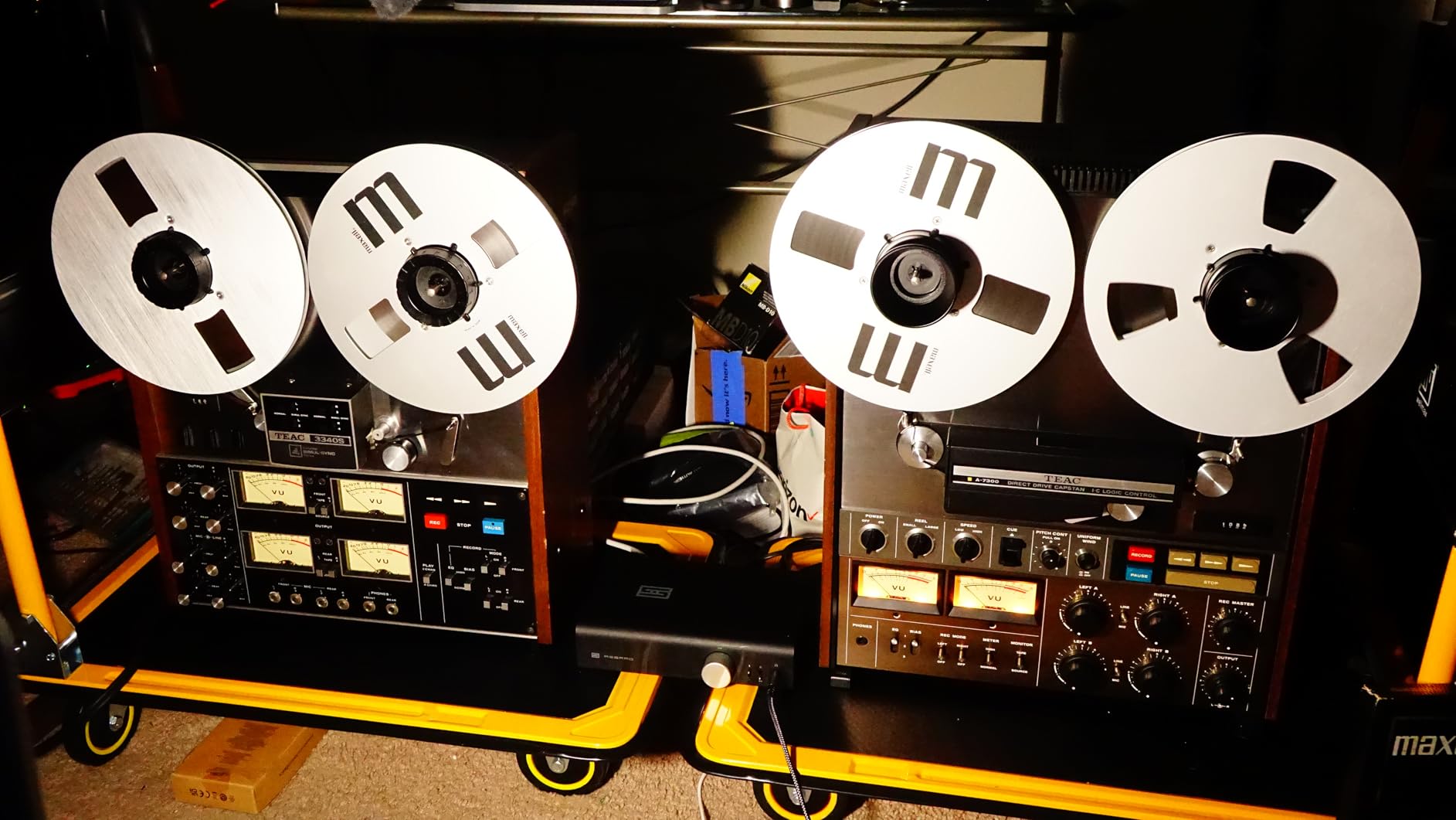
Compatibility is the critical factor with NAB adapters. These work well on the TEAC A-7300 and similar machines with that spindle diameter. Users with other TEAC models report fit issues, so confirm your machine’s spindle specification before ordering. The 4.1-star rating (from 24 reviews) reflects the occasional compatibility mismatch rather than a quality problem with the adapters themselves when properly fitted.
Understanding NAB vs Cine Hub Formats
NAB hubs have a center diameter of approximately 2.7 inches and were standardized for professional open-reel machines that handle 10.5-inch reels. Cine hubs are smaller, typically around 0.75 inches, and are what most consumer deck spindles use by default. An NAB adapter fits over the cine spindle and creates the correct large center hub that the 10.5-inch NAB reel slots onto. It sounds simple, but getting the fit right requires matching the adapter’s inner diameter exactly to your spindle.
When NAB Adapters Are Essential
If you want to use any of the RTM LPR 35 tapes on 10.5-inch NAB metal reels reviewed earlier in this guide, and your deck does not natively accept that hub format, these adapters are what unlock that compatibility. For machines like the TEAC A-3340S, A-4010, or similar consumer models that came with cine hubs, a properly fitted NAB adapter pair expands your tape options significantly and allows access to the professional-grade 10.5-inch tape format.
How to Choose the Right Reel-to-Reel Tape Deck Supplies
Choosing supplies for a reel-to-reel deck is more nuanced than it looks. The tape formulation, the reel size, the maintenance routine, and the accessories all need to match your specific machine and the way you intend to use it. Here’s what matters most for each category.
Tape Formulation: SM 911 vs LPR 35
The two main RTM formulas represent different philosophies. SM 911 is a high-output studio formula — it carries a strong magnetic signal, has extended headroom before saturation, and delivers the warm, detailed sound that studio engineers used as a recording medium for decades. It’s the tape to use when audio quality is the top priority.
LPR 35 is a long-play formula optimized for maximum recording time per reel without sacrificing the fundamental sound quality that makes open-reel worth using. It’s slightly thinner, which allows more tape per reel, and it has excellent archival stability. For home use, archiving, and extended sessions, LPR 35 is often the practical choice.
Both formulas are manufactured in France with heritage formulations going back to the BASF and AGFA tape programs. Either one is dramatically better than aging vintage tape you might find at thrift stores or estate sales, where you have no idea how the tape was stored or what condition the oxide and binder are in.
Speed Settings and Tape Length
The speed at which your deck plays tape has a direct relationship with sound quality and recording time. At 15 IPS (inches per second), you get the widest frequency response — typically up to 20kHz or beyond on a properly calibrated professional deck — the best signal-to-noise ratio, and the lowest wow and flutter. The tradeoff is that you burn through tape twice as fast as 7.5 IPS.
At 7.5 IPS, frequency response is slightly reduced at the top end but still excellent by any practical standard — most machines reach 16kHz to 18kHz at this speed. You get twice the recording time for the same amount of tape. For casual home listening, archiving, and applications where recording time matters more than ultimate treble extension, 7.5 IPS is the practical standard.
At 3.75 IPS — available on many consumer machines — you maximize recording time but accept meaningful limitations in high-frequency response. The community at tapeheads.net and Reddit’s r/ReelToReel generally recommends avoiding 3.75 IPS for music unless you have no other option. The sound quality difference between 3.75 and 7.5 IPS is immediately audible even on modest equipment.
Maintenance Frequency: How Often to Clean and Demagnetize
Head cleaning should happen at the start of every session, or at minimum every 5 to 10 hours of tape use. A cotton swab lightly moistened with isopropyl alcohol — or the cleaning tape reviewed above — takes less than two minutes and preserves head life dramatically. Magnetic oxide from the tape coats the heads over time, and if allowed to build up, it acts as a physical barrier that reduces frequency response and adds noise to the signal.
Demagnetizing should happen every 20 to 30 hours of tape use, or any time the sound seems dull and you’ve confirmed the heads are clean. Residual magnetism accumulates on heads, guides, and capstan over time from normal tape use. A demagnetized head maintains its sensitivity across the full frequency range. A magnetized head biases everything it records and plays back, adding an artifical “coloration” that reduces detail and raises the noise floor.
The forum consensus at audiokarma.org is clear: most reel-to-reel problems blamed on bad tape are actually maintenance problems. Clean, demagnetized heads running properly tensioned, correctly calibrated tape will sound dramatically better than neglected heads running expensive studio-grade tape. Maintenance comes first.
Reel Sizes and Hub Compatibility
Open-reel tape decks accept reels in multiple sizes, typically 5-inch, 7-inch, and 10.5-inch. Most consumer machines from the 1970s accept all three sizes to varying degrees, though the motors and reel arms are often optimized for 7-inch reels at standard tensions. Using 10.5-inch NAB reels on a machine designed for 7-inch consumer reels may require NAB hub adapters and may stress the motors differently than the manufacturer intended.
Before buying tape in a given reel size, confirm your machine accepts that format natively or with the appropriate adapters. Check the manual for maximum reel diameter specifications, and verify that your spindle type (NAB or cine) matches the hub format on the reel you’re ordering. Getting this wrong doesn’t just waste money — a reel that doesn’t fit properly can jam in the tape path and cause tape damage or transport problems.
The Diyeeni NAB adapters and the Pomya replacement reels reviewed in this guide are both solutions to common compatibility challenges. Knowing which problem you have before buying determines which solution you need.
Frequently Asked Questions
Are reel-to-reel tapes worth anything?
Yes — original prerecorded reel-to-reel tapes in good condition are increasingly valuable collector items, with premium pressings from major studios selling for hundreds of dollars on the secondary market. Fresh recording tape in sealed condition (like RTM and other current production tapes) holds its value well for audiophile resale. Even standard used tape from well-known brands has collector interest if the oxide is in good condition and the recordings are documented.
What is the best reel-to-reel ever made?
The Studer A800 and Ampex ATR-102 are widely regarded as the finest studio reel-to-reel tape recorders ever produced. For consumer and semi-professional machines, the Pioneer RT-909 and the Revox B77 are frequently cited as the best-sounding and most reliable vintage options. Among currently available machines, the Ballfinger M 063 H5 and Metaxas and Sins Tourbillon represent the modern state of the art at significant cost.
Does anyone use reel-to-reel anymore?
Absolutely. Reel-to-reel is experiencing a genuine revival in 2026, with active communities on Reddit (r/ReelToReel), tapeheads.net, and Audiokarma. Audiophiles use vintage machines for playback of prerecorded tapes; home studio musicians use open-reel for its analog warmth; and professional studios continue using studio-class machines like the Studer for mastering. New production tape from RTM and ATR Magnetics means fresh, quality media is available today.
What is the lifespan of reel-to-reel tape?
Properly stored magnetic tape — kept at stable temperature and humidity, stored tails-out on the reel, and away from magnetic fields — can last 50 years or longer. RTM and ATR Magnetics produce modern tape specifically engineered for long-term archival stability. Vintage tape from the 1970s and 1980s has variable lifespan depending on storage conditions; some remains excellent while other tape suffers from sticky shed syndrome (binder hydrolysis) that requires baking treatment before playback.
Final Thoughts
The right supplies are what make the best reel-to-reel tape decks actually perform at their potential. A perfectly restored Pioneer RT-909 running degraded vintage tape through magnetized, unclean heads will sound worse than a modest TEAC loaded with fresh RTM LPR 35, properly maintained with a regular demagnetizing and cleaning routine.
Start with the tape that matches your machine’s reel size and speed capability — RTM SM 911 for serious recording, LPR 35 for general use and archiving. Add the VCC demagnetizer and a head cleaning solution to your maintenance kit. Pick up splicing tape and leader tape if you’re working with existing tape collections. And confirm your reel compatibility before buying any large-format NAB tape.
The open-reel format rewards people who take care of the details. With the supplies in this guide, you have everything needed to get genuinely excellent results from your setup in 2026 and for many years beyond.