
As a musician, one of the most satisfying journeys to undertake concerns the exploration of new scales, including the enchanting sounds that spring from the E melodic minor scale.
This particular scale mirrors images of serene twilight evenings when everything seems steeped in tranquility. Its hauntingly beautiful, sonorous tones enfold you and enhance your musical theory and appreciation.
In traversing the path to mastering this scale, we closely examine every gently curving inflection and suave note progression that characterizes the E melodic minor scale.
This insightful engagement is like an adventure in a secluded forest where each step unravels a new layer of melodic mystique. I can assure you – once you’ve grazed your fingers over these notes, your perspective on musical improvisation will forever be transformed.
Table of Contents
What are the intervals in the E minor melodic scale?
To comprehend the E minor Melodic Scale, a key aspect is the intervals. In essence, an interval depicts the distance between two pitches.

For instance, moving from E to F# is called a major second. For E melodic minor scale, the following intervals are observed:
- Tone from E to F#
- Semi-tone from F# to G
- Tone from G to A
- Tone from A to B
- Tone from B to C#
- Tone from C# to D#
- Semi-tone from D# back to E
Each interval has its unique sound that plays a crucial role in creating the distinct auditory profile of this scale.
Gaining familiarity with these intervals is fundamental for anyone eager to master this fascinating musical scale.
Melodic minor scale structure
The structure of the Melodic Minor scale is intriguing, offering two distinct modes depending on it’s ascending or descending. This dual nature makes it an exciting repertoire to study for both beginners and professionals.
While ascending, the scale follows this pattern: a Root note (Tonic), followed by a Whole step, then another Whole step, an array of Half steps, and finally three Whole steps.
In terms of tone structure, the formula becomes Root – Whole – Half – Whole – Whole – Whole – Half.
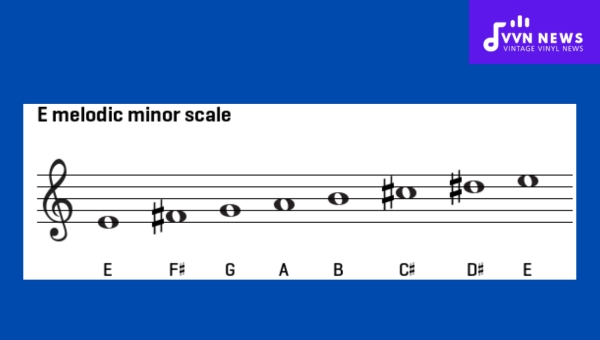
For example, in E Melodic Minor ascending, the sequence would look like this: E – F# – G – A – B – C#’– D#’
It’s important to note that while descending, the melodic minor reverts to a natural minor scale often described as ‘returning to its original state’. Hence you will follow a different pattern when descending.
Each step unraveled above accumulates in painting a comprehensive picture of this unique yet relatable corner of our music theory universe.
Also Read: E Major Triad [Master This Staple Of Music Composition]
Ascending Scale Degrees: E Melodic Minor Scale
The E melodic minor scale, as the name suggests, is a beautiful seven-note scale based on the fundamental note ‘E’.

This harmonic collection is arranged in ascending degrees to achieve a melodious effect. Below are the key steps to navigating this melodious labyrinth:
- First Degree – Root/Tonic (E)
The journey commences with ‘E’ as the root or tonic. This gives our melodic minor scale its unique identity and forms the basis of our exploration. - Second Degree – Supertonic (F#)
On reaching the second stage F#, we’ve arrived at what is called the supertonic in musical language – one step above our root. - Third Degree – Mediant (G)
The third ascent is G, commonly referred to as the mediant, casually resting between our tonic E and dominant B. - Fourth Degree – Subdominant (A)
Touching A will take you to the subdominant, acting as a bridge (‘sub’) underneath the dominant. - Fifth Degree – Dominant (B)
Then we land on B which is infamously known as dominant; it’s half-way through yet has a critical part in determining tonality of a scale. - Sixth Degree – Submediant (C#)
Arriving at C#, we meet ‘submediant’, sitting midway between tonic and octave upper tonic E’. - Seventh Degree – Leading Note/Tone(D#)
The climb finally wraps up with D#, which serves as an intriguing climax known as leading tone restarting back to root note with raised energy levels.
By unlocking these musical steps, you can gracefully flirt your way around this exotic melody line.
Descending Scale Degrees in E Melodic Minor
From an elevated and serene position, we begin our descent from the E melodic minor. Contrary to the ascent which follows a different melodic pattern, the path downward aligns perfectly with the natural minor scale.
Let’s embark on this journey, guided by each individual pitch:
- 1st degree – Root/Tonic – E: At the peak of our scale remains ‘E’, our home base, where everything begins and ends.
- 7th degree – Leading note – D: Our first step down introduces ‘D’, a note tantalizingly close to the root which propels us towards resolution.
- 6th degree – Submediant – C: Next is ‘C’, more relaxed than D but still possessing potential energy.
- 5th degree – Dominant -B: ‘B’ emerges next, a dominant force creating tension begging for resolve.
- 4th degree – Subdominant -A: As we continue descending ‘A’, subdominant forms a dynamic contrast to the dominant.
- 3rd Degree – Mediant – G: We encounter ‘G’– bridging together extremes of tonic and dominant notes ensuing balance in this intricate dance of pitches.
- 2nd Degree – Supertonic – F#: The penultimate note ‘F#’, just one step above our root and hinting towards closure lies the supertonic.
And finally, we arrive again at E, marking the completion of this lush musical landscape called E melodic minor.
Also Read: How To Transpose Music? [Simplifying Key Changes In Songs]
Demonstrate the E melodic minor on the piano.
Barely scratching the surface when it comes to learning and mastering a musical instrument couldn’t be more accurate than in exploring the E melodic minor scale.

Piano or Keyboard
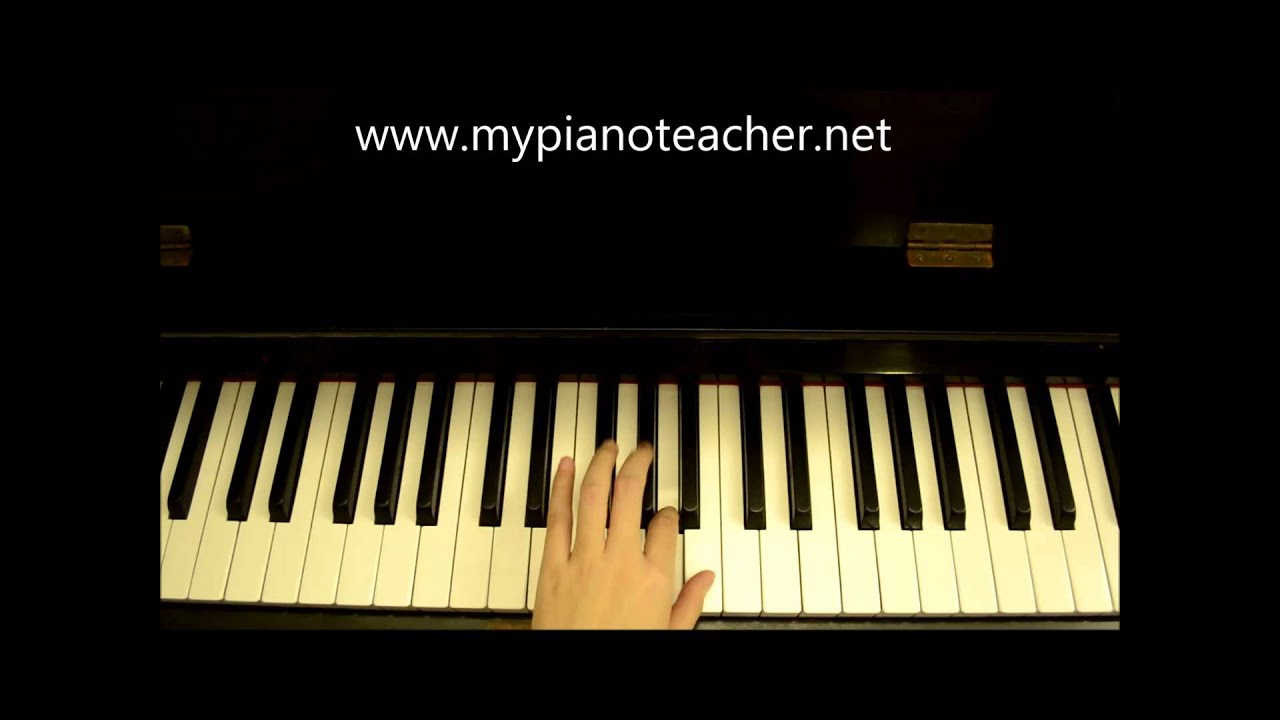
The crux of this venture when using a piano or keyboard is your fingers. Knowing which fingers to place at specific notes is vital on your way to conquering the melody. Follow these steps accordingly:
- Start on E using your thumb.
- Proceed with F# using your index finger.
- Grasp G with your middle finger.
- After, shift your thumb under to hit A.
- B should follow naturally with your index finger.
- C# is nest, use your middle finger again for that.
- D# should be played by the ring finger.
- Lastly, finish on E with the pinky.
Guitar
With a guitar, memorizing patterns helps move unscathed. Structure identification and positioning are monumental when maneuvering across those frets.
Ascending and descending through notes grants you fluid transitions. Here’s how you should approach it:
- On the low E string – play frets 12 (E), 14 (F#), and 15 (G).
- Move to A string – play frets 12 (A), 14 (B), and 16 (C#).
- Proceed to D string – play 13 (D#) and end on E at fret 14.
This pattern lets you express melodic phrases with dexterity.
Violin
For violinists, playing scales can be quite dynamic due to a diverse tonal range achievable through various positions along its strings. This is how you would perform an E melodic minor scale:
- Play open E string followed by F# and G on the E string.
- Next, play A, B, C# and D# on the A string.
- Lastly, conclude with E on the E string.
Note that as you explore this scale within wide and narrow vibrato styles, you enlighten your musical expressivity.
Remember that one needs to be patient with learning new scales. Each instrument holds a particular identity shaped by nuanced techniques and tonalities that embellish an E Melodic minor scale.
What Key Signature Does E Melodic Minor Have?
In multiple aspects of music theory, the key signature holds immense significance. In the case of an E Melodic Minor Scale, the key signature uses a specific set comprising one sharp – F#.
This implies that every time an F note is played, it’s elevated to an F sharp. It’s crucial to remember to sharpen the F-natural while playing E melodic minor, as this transforms the melody and unravels magic in auditory realms.
The allure of the E Melodic Minor Scale lies embedded in its distinct key signature, creating intricate harmonic textures that evoke a unique resonance in your ears.
Also Read: E Major: Scale And Chords [Exciting Sounds For Your Compositions]
Displaying E Melodic Minor in Different Musical Clefs
In the universe of music, the representation of scales differs across various clefs.

As we deepen our exploration of the E melodic minor scale, it becomes crucial to illustrate how this scale would appear on three primary clefs – the treble, bass, and alto.
Treble Clef
Commonly used by instruments such as the violin, guitar, and flute, treble clef is perfect for high-pitched notes. When it comes to the E melodic minor scale on this clef, it begins on the ‘E’ note positioned above middle ‘C’.
Reading from left to right: E – F# – G – A – B – C# -D#, indicating a sharp on F#, C#, and D#. These sharps become flats when descending: D – C – B – A – G-F#-E.
Bass Clef
Equally important is what musicians refer to as bass clef, characterized by lower pitch notations primarily used by instruments like bass guitar and cello.
Once more with “E” as our start point; located far below middle ‘C’.
Delicate shifts occur with sharps being added at F#, C#, and D# for ascending notes (similar to treble clef); conversely descending flats are added yielding: D-C-B-A-G-F-E.
Alto Clef
The alto clef, which has its distinctive utilization within a niche set of instruments like viola or alto trombone. To represent E melodic minor here demands another set of position shifts on “E”, noticeably found almost near middle ‘C’. And as before, the scale transitions similarly while ascending and descending.
With these visualizations in hand, you can experiment freely with the captivating mystery of the E melodic minor scale.
Musically maneuvering between treble, bass, and alto clef offers an unmatched challenge yet claims a delightful reward of cultivating a comprehensive knowledge of this intriguing musical spectrum.
Identifying Chords in the E Melodic Minor Scale
Chords within a scale originate from its corresponding notes. In the E Melodic Minor scale, the consequent chords are as follows:
- E minor-major 7th (EmM7) – extracted from 1st, 3rd, 5th, and 7th notes of the scale
- F# diminished minor 7th (F#m7b5)- following tones, 2nd, 4th, 6th and root note
- G major augmented major7th (GMaj7#5) – From the notes,3rd, 5th ,7th and second degree.
- A dominant seventh (A7) – articulated from steps fourth,fifth,sixth,and primary note.
These chords provide a wealth of opportunity for accompaniment and harmonic exploration in your music compositions.
Jazz Variant of the E Melodic Minor Scale
The beauty of the E melodic minor scale extends beyond classical music. When you bring it into the realm of jazz, it unveils an entirely different soundscape filled with richness and texture.

The jazz variant of this scale, often referred to as the “ascending melodic minor scale“, plays a significant role in creating those smooth, sultry jazz tones that we all know and love.
While tackling this variant, there’s a simple rule to follow: always play the same sequence of notes when ascending or descending.
Unlike its classical counterpart, the jazz-style E melodic minor scale retains its raised sixth and seventh degrees during descents—creating an exquisite back-and-forth between tension and release central to jazz improvisation.
Also Read: A Minor Scale [Unlock The Mysteries Of Musical Composition]
FAQs
What is the E Melodic Minor scale?
The E Melodic Minor scale is a seven-note musical scale that has a unique property of ascending and descending in slightly different patterns.
What makes the E Melodic Minor scale distinct from others?
E Melodic Minor is unique due to its changing pattern for ascent and descent. Ascend follows the altered notes while descend simplifies to a natural minor scale.
How does the E Melodic Minor Scale affect musical composition?
In music compositions, the E melodic minor scale delivers a unique tonal complexity that enhances harmonic richness while creating an emotional and evocative atmosphere.
Is it challenging to learn the E Melodic Minor scale on instruments?
Learner’s perspective varies; it requires practice like any new skill. The pattern change might feel tricky initially but will be smooth with consistent efforts.
Can you elaborate on how to identify chords within an E melodic minor scale?
The chords within this scale are identified similarly as other scales – by stacking thirds. For instance, the first chord would be constructed by taking note 1 (E), note 3 (G#) and note 5(B).
Also Read: A Guide Transposing Into The Alto C [Navigate Music Transposition]
Conclusion
Familiarizing yourself with the E melodic minor scale is no less than an exciting sonic quest. Its mysteriously enchanting tones provide a new palette for creating music, be it classical or jazz improvisations.
The E melodic minor scale enhances your ability to appreciate different nuances of music more deeply. Let’s keep exploring and enriching our musical journey – there are endless melodies waiting to be discovered in each scale!