
Music is a universal language, capable of transcending boundaries and fostering deeper connections. Even in its most minimalistic manifestation, it can strike a chord with the soul, resonating with our deepest emotions.
As musicians, we know this magical power of music and constantly seek new horizons to create more melodious symphonies. Today, we will unravel one such melodic wonder – the C sharp harmonic minor scale.
Invariably, as you journey through the world of music composition or merely deepen your appreciation for its beauty, you encounter different musical scales.
The C sharp harmonic minor scale is one such scale that you may come across in your musical narrative. It’s an intriguing tonal spectrum that can add complexity and richness to compositions.
Let’s peel back the layers of intricacy and discover how to touch upon its distinct melodies.
Table of Contents
The Intervals in the C Sharp Harmonic Minor scale
The C sharp harmonic minor scale is inherently musical, brimming with rich tones that set its musicality.

The key lies in its specific sequence of intervals, creating unique melodies when played correctly. The intervals can be broken down as follows:
- Tone
- Semitone
- Tone
- Tone
- Semitone
- Augmented 2nd
- Tone
The interplay of these intervals forms the backbone of the C sharp harmonic minor scale, paving the way for composing interesting musical pieces.
Also Read: E Minor Pentatonic Scale [How To Use In Your Music Composition]
What constitutes a Harmonic Minor scale?
Essentially, it’s a minor scale with a raised 7th note, which creates a distinguishing three-half-step interval between the 6th and 7th notes. This specifically gives the harmonic minor scale its unique sound scene resembling that of Middle Eastern music.
The name ‘harmonic’ derives from the harmonic intervals presented within this distinctive scale. Unlike major and natural minor scales where the intervals fall into step-by-step patterns, this peculiar leap in the harmonic minor scale sets it apart.
It invokes a certain mysterious and exotic vibe that drives through every melody using this spectrum.
Degrees of the C Sharp Harmonic Minor Scale
Each musical scale, including the C Sharp Harmonic Minor scale, is composed of various degrees.

Each degree has a specific tonality relative to the root note of the scale. These degrees are numbered from one to seven and, in a few cases, beyond that.
To get a solid grasp on this concept, let’s delve into the specific degrees of the C sharp harmonic minor scale.
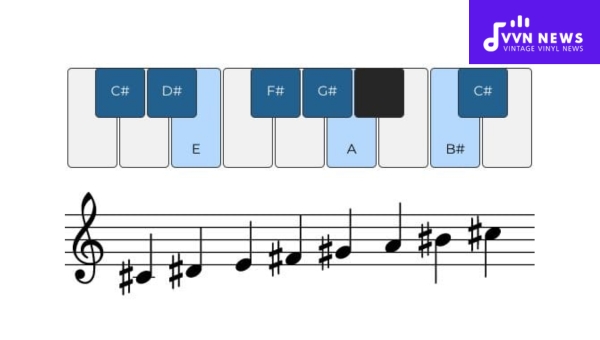
- 1st degree: C# – The first degree or tonic is always given as C# in a C# harmonic minor scale. It serves as our starting point and homing note.
- 2nd degree: D# – The second degree or supertonic brings us up a whole step from the tonic, anchoring at D#.
- 3rd degree: E – Known as the mediant, this third degree lies halfway between our first-degree root note (C#) and its perfect fifth (G#).
- 4th degree: F# – The next stepping stone is F#, which furthers itself a half step from E which is our subdominant.
- 5th degree: G# – Landing on G#, we’ve reached what we call the dominant key where the majority of chord progression resolves.
- 6th degree: A – It takes us to A. Thus known as submediant as it falls halfway between tonic(C#) and its octave.
- 7th degree: B#. To conclude, we proceed up another augmented second to B#, just one half-step below our closing tonic
As musicians, familiarizing ourselves with these seven degrees imparts a deep sense of coherence when exploring these sounds or creating songs within this scale.
Also Read: F Sharp Minor Pentatonic Scale [How To Use In Your Compositions]
The modes of C Sharp Harmonic Minor?
In the vast, enchanting world of scales, you’ll find the distinct modes not only provide diverse melodic implications but also form the backbone of advanced harmonic constructs.
The C Sharp Harmonic Minor scale has seven unique modes, each having its distinct qualities and flavors:
- Aeolian #7 – This mode derived from the harmonic minor scale is also known as Aeolian Major Seventh. It’s incredibly unique and encompasses a raised seventh degree. This produces a tinge of tension at the seventh note before being resolved back to the root note.
- Locrian #6 – Locrian #6 is another fantastic mode bestowed by studying harmonic minor scales in depth. Similar to Aeolian #7, it provides an elevated sixth degree that can be leveraged to lead into your seventh degree.
- Ionian #5 – Now, imagine a regular Ionian mode but with a diabolically mischievous sharp 5th; that’s your Ionian#5! Here we encounter an abrupt alteration in harmony due to the augmented fifth or sharp fifth, creating intrigue and richness.
- Dorian#4 – Slightly off the beaten track but equally fascinating is Dorian#4. Dorian with a sharp fourth added; this intriguing mode generates tonal varieties that one usually doesn’t experience in conventional scales.
- Phrygian Dominant – One cannot talk about harmonic minor modes without mentioning Phrygian Dominant – often considered one of the most used exotic scales for its Middle Eastern flavors, making it popular among progressive rock and metal musicians exploring unconventional harmonies.
- Lydian #2 – Another gem that arises from our explorations into harmonics is Lydian#2 – thus named because of raising the second degree relative to standard Lydian Mode. It offers an early resolution, bringing in the unexpected and adding a new dimension to your compositions.
- Super Locrian bb7 – Finally amidst the sensational array of harmonic minor modes, we have Super Locrian bb7 – a double flattened seventh instilling a dramatic augmented 6th before resolving to the root.
Each mode brings forth an amalgamation of unique sounds, shifting tonal dynamics around and weaving its magic.
Musically speaking, these modes can play as your secret weapons when creating intricate compositions or improvising on the fly.
Also Read: Mastering Chords In A Minor [Improve Your Composition Skills]
How do you Approach C Sharp Harmonic Minor on Piano and Guitar?
Approaching any musical scale requires a methodical strategy, and the C Sharp Harmonic Minor scale is no different.

Whether you’re a budding pianist or an eager guitarist, following a thorough plan of action can help you master this interesting sound spectrum.
On the Piano:
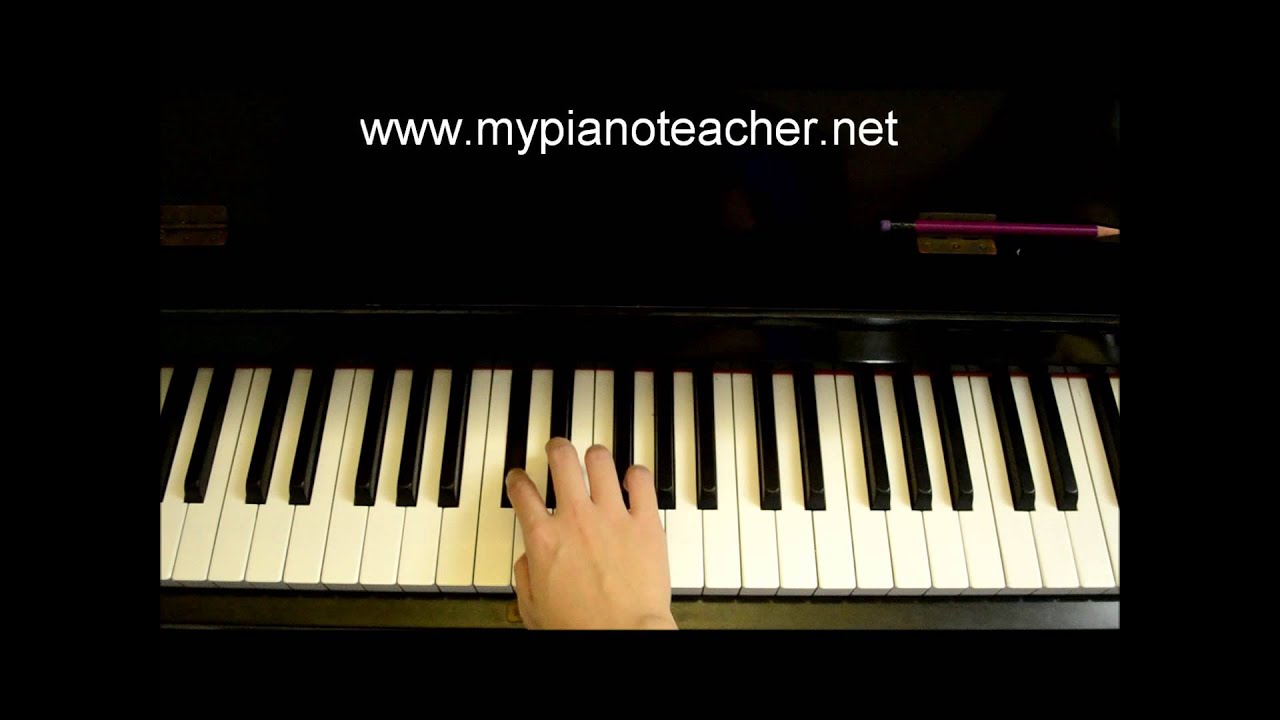
Piano playing is all about proper finger placement. For the easy navigation of the C sharp harmonic minor scale, knowing which fingers to use for each note is crucial.
C Sharp Harmonic Minor Scale Finger Position:
- Starting on C#, use your thumb.
- Reaching for D#, use your index finger.
- For E, use your middle finger.
- F# calls for your thumb again.
- Play G# with your index finger.
- Now, here comes the unique note of this scale, let’s reach A with the middle finger.
- Lastly. B#, bring it home with your pinky.
Trust yourself while practicing—it may feel challenging at first, but don’t let unfamiliarity stop you from developing fluidity and speed over time.
On the Guitar:
If you play guitar, learning scales across all strings helps build knowledge and agility on the fretboard.
Steps to Play C Sharp Harmonic Minor Scale on Guitar
- Start on C# (4th fret of A string).
- Continue to D# (6th fret of A string).
- E (7th fret of A string) follows next,
- Fret F# (2nd fret of D string).
- Continue to G# (4th fret
of D string). - Then comes A (5th fret of D string).
- Finally B# (1st fret of G string).
Remember that playing scales on guitar involves both horizontal movement along a single string and vertical movement across multiple strings.
The C Sharp Harmonic Minor scale is a beautiful melodic framework that can add an intricate touch to your compositions and improvisations.
The Key Signature Relevant to C Sharp Harmonic Minor
The specific key signature of the C sharp harmonic minor scale comprises 7 sharps, namely F#, C#, G#, D#, A#, E#, and B#.
This suggests every degree apart from the B is sharpened. It’s a unique venturing path that provides an ornate feel to compositions.
Experience the magical journey by getting your fingers syncing with the musical notation of this exotic scale.
You will notice why it’s perfect for expressing emotional depth in your compositions – swinging between melancholy and drama, thus rendering unexplainable beauty to your music.
You must bear in mind here – that each time you compose or analyze using this scale, knowledge of its key formation will serve as a guiding light.
Also Read: How To Transpose Music? [Simplifying Key Changes In Songs]
Different Clef Notations for C Sharp Harmonic Minor
In musical notation, the placement of a note on the staff determines its pitch.

The ‘clef’, a symbol at the beginning of each staff, specifies what these note positions represent.
For our specific scale, the C Sharp Harmonic Minor, different clefs will present this scale in various visual representations.
Treble Clef
The most commonly used clef in music is the Treble (or G) Clef, representing higher pitch ranges.
When expressing the C Sharp Harmonic Minor scale in the treble clef, you start from the third space of the stave (the five horizontal lines on which notes are written) and ascend to the next octave’s third space. This scale in treble clef will give you: C#, D#, E, F#, G#, A, B#, C#.
Each note falls on a different line or space, bridging multiple pitches as it rises.
Bass Clef
On the other end of the spectrum is the Bass (or F) Clef, often used for lower-pitch ranges like those found in bass and baritone vocals or lower-pitched instruments like cellos and bassoons.
In Bass Clef, our C Sharp Harmonic Minor scale starts from middle ‘C’ – located on the first ledger line above the stave – and spans up until ‘C’ in the third space from the bottom.
The note sequence remains the same as above: C#, D#, E, F#, G#, A, B#.
Alto Clef
Alto clef targets mid-ranged instruments such as viola or alto trombone. It splits right down the middle of the treble clef and bass clef ranges.
The C Sharp Harmonic Minor scale depicted in Alto Cleff begins from ‘C#’, placed on the first ledger line below the stave ascending to the next octave’s second line space – showing our familiar sequence: C#, D#, E, F#, G#, A, B#.
Tenor Clef
Lastly, we take a look at Tenor Clef – suited to higher-range bass instruments like bassoon or cello.
If we’re notating our chosen scale here: The starting point would be ‘C#’ – one ledger line above the staff, traversing until ‘C#’ on a spot one line space below the staff.
The sequence of notes remains consistent as mentioned before.
Musical notation exists to provide a roadmap through scores and pieces of music.
By knowing the basics of clefs and adeptly notating scales like C Sharp Harmonic Minor in things like Treble, Bass, Alto, and Tenor clef – you can navigate and interpret your journey with greater clarity.
Also Read: Transposition Chart [A Lifesaver For All Musicians]
Chords in the C Sharp Harmonic Minor Scale
In the captivating world of C Sharp Harmonic Minor, each degree of the scale gives birth to a specific chord.
Consequently, associated with the C# Harmonic Minor are the following chords:
- C# minor (i): C# – E – G#
- D# diminished (ii°): D# – F# – A
- E Major (III+): E – G# – B
- F# minor (iv): F# – A – C#
- G# Major (V): G# – B – D#
- A Major 6 (VI): A – C##- E – F##
- B diminished 7th (vii°7 ): B- D – F – Ab
These chords lend themselves to an array of harmonic possibilities, making the C Sharp Harmonic Minor scale a versatile tool in your musical toolbox.
FAQs
Why is the C Sharp Harmonic Minor scale preferred by musicians?
The C Sharp Harmonic Minor scale brings a distinct sound with its sharp notes and offers a unique emotional appeal, which is favored by composers for crafting soulful compositions.
What type of music typically employs the C Sharp Harmonic Minor scale?
This harmonic minor scale tends to appear frequently in classical, jazz, metal and rock genres due to its dynamic sonic texture.
Are there any famous compositions using the C Sharp Harmonic Minor scale?
Yes, various composers throughout history have employed this scale in their works. For example, Chopin’s Nocturne Op. 9 No. 2 features the C sharp harmonic minor.
Do I need to be an advanced player to play the C Sharpe Harmonic Minor Scale?
Not necessarily. Though it is slightly complex with its augmented second interval, with practice beginners can also grasp it effectively.
Where can I find more resources to learn about scales like the C Sharp Harmonic Minor?
Online platforms like Music Theory offer comprehensive resources for understanding various musical scales.
Also Read: C Minor Triad [Simplify Music Composition With This Guide]
Conclusion
Getting familiar with the C sharp harmonic minor scale can genuinely elevate your musical compositions or performances. This specific scale offers a unique tonal richness that beautifully supplements any melody.
If you’re an aspiring musician, I encourage you to go ahead, explore this scale on your instrument, and feel the depth it brings to your music. Keep practicing, stay curious, and never cease to explore the magical world of music scales.
Undoubtedly, it’s a complex realm, but once you master it, your musical journey becomes more vibrant and multifaceted.