
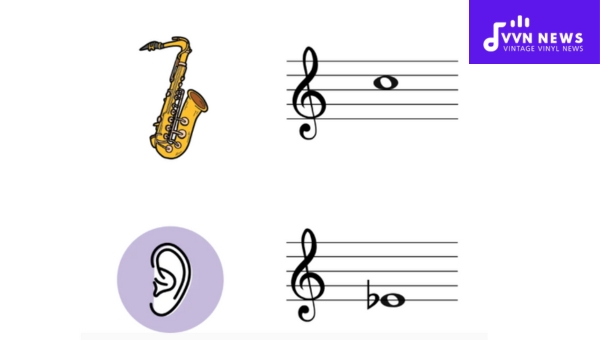
When it comes to the fascinating world of jazz and concert music, many of us are enamored by the captivating notes of the alto saxophone.
Yet if you’ve tried your hand at playing one, you’d know that interpreting sheet music for the alto sax, or transposition for Alto Sax as it’s technically termed, is not as simple as it seems.
While this might sound like intimidating musical jargon, in reality, transposition is a critical concept that every alto saxophonist needs to master. It’s all about learning how to play a piece in a different key than what’s originally written.
This process can be a challenging hurdle for beginners and even intermediate players because it requires you to adapt and change your musical frame of reference on the fly based on given keys.
Table of Contents
What is Transposition in Music?
In the world of music, transposition refers to the practice of shifting a piece of music from its original key to another key. Just picture it as moving a collective set of notes up or down in pitch by a constant interval.
It’s akin to changing the language, without altering its meaning. A crucial skill in musical interpretation, transposing is often used to make a piece more accessible for certain voices or instruments with range limitations.
Another scenario could be adjusting a song’s tune to better align with a performer’s vocal range.
Also Read: F Sharp Minor Pentatonic Scale [How To Use In Your Compositions]
Why is the Alto Sax in Eb?
The story of the alto saxophone being pitched in E-flat (Eb) traces back to its inventor, Adolphe Sax. The key of Eb was chosen specifically to bridge the gap between brass and woodwind sections of an orchestra or a band.

By designing it this way, Sax made it easier for musicians to utilize their brass playing techniques on a woodwind instrument.
This peculiar choice has not just contributed to the characteristic timbre of the alto sax but also sparked initial bouts with transposition as music written for other instruments needs to be altered to fit into the alto sax’s unique key.

How to Use a Transposition Chart for Alto Sax?
To properly transpose music for the alto sax, one powerful tool you can utilize is a transposition chart. This handy guide provides a clear, visual appreciation of how notes correspond to each other across different musical instruments.
Here’s how you can effectively work with a transposition chart:
- Identify your note on the alto sax: For instance, suppose you are playing an ‘A’ in Band C (Concert Pitch).
- Refer to the transposition chart: Look up ‘A’ in the alto sax column of your transposition chart.
- Find the corresponding note: The note listed across ‘A’ in the concert pitch row is what you play on your alto sax.
Practice navigating through these steps using a variety of note combinations till it becomes second nature to quickly refer to your chart for speedy transpositions.
This simple approach will significantly streamline your music reading ability, making transpositions for alto sax a breeze.
Also Read: Mastering Chords In A Minor [Improve Your Composition Skills]
Steps to Transpose from Eb to C?
Transposition of music is pivotal when you’re an alto saxophone player, and how to transpose from Eb to C is a particularly important skill.

Let’s delve into the topic by introducing two popular methods – moving notes up one at a time and transposing the key signature directly.
Method 1: Moving Notes Up One at a Time
Taking each note individually, step-by-step can undeniably be an advantageous process if you have just begun with transposition and are still warming up with the drill.
- Identify Your Starting Note: Begin by identifying the note on your sheet music that is written in Eb.
- Move Six Whole Steps Up: To transpose from Eb to C on your saxophone, move each note up six whole steps or nine half steps.
- Write or Play the Transposed Note: The resulting notes after moving them up are your transposed notes in the key of C.
This method can be laborious if you’re dealing with an entire piece of music but can be very helpful for practicing!
Method 2: Transposing the Key Signature
Another method involves altering the key signature for quicker, more comprehensive results:
- Start From Your Original Key Signature: As your alto saxophone is pitched in Eb, this will usually be your initial reference point on our written sheet.
- Determine New Key Signature: You need to figure out what new key signature corresponds to ‘C’ considering ‘Eb’ as a starting point.
- Transpose All Notes According To New Key Signature: Once you’ve figured out the new key signature correlating with ‘C’, carefully alter all the notes in your music sheet according to it.
The trickiest part here could be discerning those correct key signatures and accurately applying them while relocating all notes.
How Can You Transpose Music for Alto Sax to Piano?
In the arena of music, transposition is not just for the sake of transforming notes. It’s also about enabling you to play a piece originally intended for one instrument, on another – say, from alto sax to piano.

These two beloved instruments are fundamentally different, beyond just the method in which notes are created and sounded. So let’s see how this transformation gets accomplished.
- Recognize the Key Signatures: To make a smooth transition from alto sax music to piano music, your first step is to identify the key signature of the saxophone music piece. The alto saxophone is in E flat (Eb), so its key signature will differ from what you’re used to seeing on piano sheet music.
- Transpose Into Correct Key: Once you’ve identified the key signature of your alto sax piece, you can begin transposing it into C or “concert pitch.” This essentially means you are transforming it into a key that can be played directly on a non-transposing instrument like a piano. It sounds complex but with practice, this part gets easier.
- Adjustment of Notes: After getting into the concert pitch, check if each note transposes properly. Alto sax notes need to be moved down by three half steps or semitones when transposing them for a piano.
Transposition isn’t something that can be simply explained and then immediately applied — you might need some practice at first!
Armed with these steps and with enough time spent putting theory into practice, this task will soon become almost second nature for you.
Also Read: How To Transpose Bass Clef To Treble Clef [A How-To Guide]
What Is the Method to Transpose of Alto Sax to Tenor Sax?
When it comes to transposing from an Alto sax to a Tenor sax, there are different systematic approaches you can utilize. Here, we’ll delve into three practical methods.
Method 1: Applying Musical Intervals
One basic approach is the application of musical intervals. Simply put it, a Natural 4th (Five Half-Steps) up or a Perfect 5th (Seven Half-Steps) down will do the trick.
It’s helpful if you’re comfortable navigating the Circle of Fifths diagram – a visual representation of the relationships among the 12 tones of the chromatic scale.
Method 2: Shifting Key Signatures
Next on our list is using key signatures wisely. This method is particularly useful when dealing with simple transpositions such as from C Major to F Major.
When switching between diverse key signatures, this approach might need extra vigilance.
For instance, when transposing an Alto Sax piece in C Major to a Bb instrument like a Tenor sax, shift everything up a whole step or two half steps making it a D Major in tenor sax terms.
Method 3: Chart-Based Transposition
The third technique involves using dedicated alto-to-tenor transposition charts. Websites like Saxophone Transposition provide interactive charts that give note-by-note correspondences for both instruments.
All you need to do is find your note on the alto side and follow the chart across to uncover its tenor equivalent.
Keep in mind that patience and practice are crucial regardless of which method you choose. Your best bet is finding which one works for you and sticking to it!
Also Read: How To Transpose Treble To Bass Clef [Music Guide]
How to Transpose from Alto Sax to Different Instruments like Guitar, Piano, and Soprano Sax?
Transposing might sound intimidating, but it is simply a way of shifting notes in a piece of music.

Let’s delve into how one can transpose from Alto Sax to other instruments like guitar, piano, and soprano sax.
Moving from Alto Sax to Guitar
If you’re transitioning music from the Alto Sax (an E flat instrument) to the guitar (a C instrument), be prepared for some modifications in your playing style.
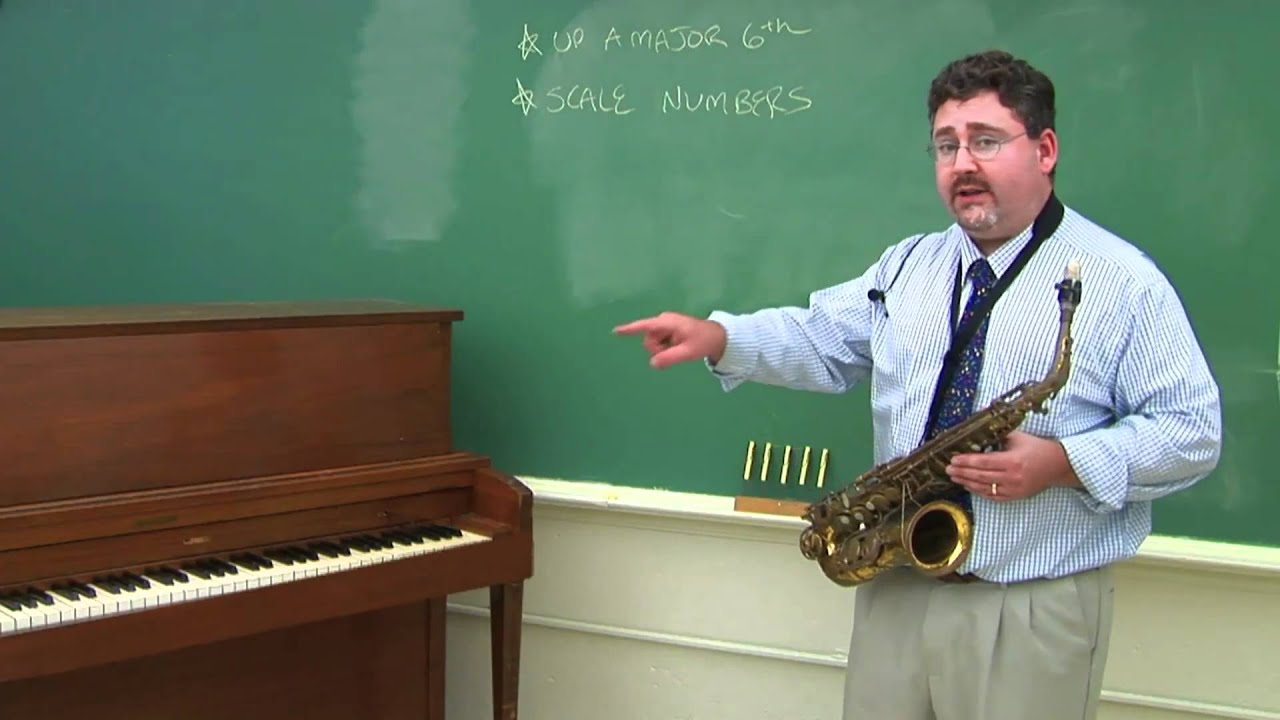
- The first step requires you to shift every note from your E flat alto sax piece down a minor third or up a major sixth.
- Translate each transformed note into the corresponding note on guitar tablature or standard notation.
Keep in mind, that moving an entire sequence of music with all its technical details intact might necessitate adjusted fingerings and playability evaluations on the guitar’s end.
Transitioning from Alto Sax to Piano
The alto saxophone and piano don’t share the same pitch class, so music must be modified before these two can harmonize together.
- When transposing alto saxophone sheet music for piano, move the written notes up by a major sixth or down by a minor third.
- Render this altered melody onto your piano arrangement keeping in view chordal accompaniments.
Bear in mind that secondary attributes like dynamics, articulations, and phrase markings need modifying as well when being transferred between distinct instruments.
Transposing Alto Sax Music for Soprano Sax
The alto sax is an E flat instrument whereas the Soprano sax plays in B flat key signature. This contrasting pitch alters how each instrument sounds when they perform identical sheet music.
- Move original musical elements down by a perfect fourth or up by a perfect fifth when transposing for soprano sax.
- Attention should be given not only to pitches but also to rhythmical patterns and expressive markings for congruous translation.
With some diligent rehearsing, you’ll gradually find these transposing methods coming to you naturally.
Also Read: E Minor Pentatonic Scale [How To Use In Your Music Composition]
FAQs
What is transposition in music?
Transposition involves changing the pitch of a musical piece to accommodate different instruments or voices.
Why do alto sax players need to transpose music?
Alto saxophones are pitched in E♭, so they must transpose their parts to match concert pitch (C) instruments when playing in ensembles.
Can I read piano music with my alto sax without transposing?
No, you must transpose piano music up a major sixth or down a minor third to play it correctly on an alto sax.
Is transposing the same for all saxophones?
No, transposing is dependent on the key of each type of saxophone; alto and baritone are in E♭, while tenor and soprano are in B♭.
Are there tools that can help with transposition for alto sax?
Yes, there are online transposition tools and apps that can help you quickly convert written music into the correct key for alto sax.
Also Read: How To Transpose Treble To Bass Clef [Music Guide]
Conclusion
Transposing for the alto sax can seem daunting, but it’s an invaluable skill. By mastering transposition for Alto Sax, your musicianship will grow, enabling you to adapt more readily to different keys and instruments.
Remember, consistent practice and using a transposition chart are your best tools. Whether your goal is to play in harmony with a piano or join in with a tenor saxophonist, understanding these concepts is key.
Begin step by step, and soon you’ll find that what once seemed complex will become second nature in your repertoire as a proficient alto saxophonist.