
Imagine tapping your foot to the beat of your favorite song, syncing effortlessly with the rhythm. Chances are, you’re moving along to the pulse of a time signature 4/4, one of the most common and widely recognized time signatures in music.
This foundational pattern plays a crucial role in shaping how we experience and interact with various musical pieces, providing structure and predictability to melodies that resonate across genres.
Understanding the 4/4 time signature can unlock a deeper appreciation for the music that forms the soundtrack of our lives.
A closer look at this ubiquitous musical component offers insights into the intricate language of rhythm and timing that underpins so much of what we hear on our playlists and radios.
Table of Contents
What Is Time Signature 4/4?
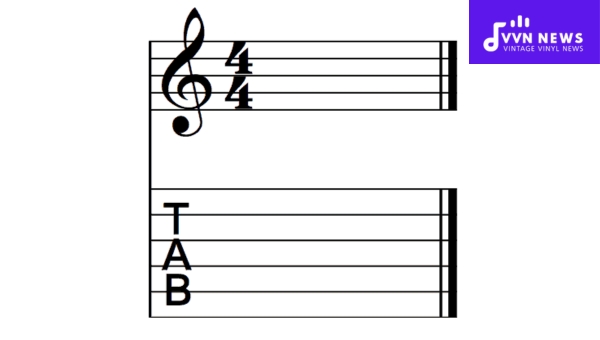
Time signature 4/4, often referred to as “common time,” is notated with a numeric symbol resembling a fraction: the top number 4 denotes four beats per measure, while the bottom number 4 indicates that each of those beats is a quarter note.
In this rhythm, you’ll find that each measure contains the equivalent of four quarter notes, whether filled by single notes, chords, or a combination of both.
It’s crucial to remember that in 4/4 time, the emphasis typically falls on the first and third beats, with the former being stronger: ONE two Three four. This pulse serves as a reliable scaffold for diverse musical expressions across genres.
Also Read: Harmony In Music [Enhance Your Compositions With These Tips]
How To Count in Time Signature 4/4?
In 4/4 time, or “common time,” the rhythm is organized around four beats per measure with each beat receiving equal emphasis.

Picture the face of a clock, with each number representing a beat in the measure.
Counting in this signature involves numbers for every beat and an “and” for every offbeat, subdividing the count into eight parts to maintain the rhythm:
- Start with “1” on the first beat.
- Continue to “2” on the second,
- Progress to “3” on the third,
- End with “4” on the fourth beat.
If you’re tapping along, your footfalls on these numbers – the downbeat.
Now envision saying and as you lift your foot between those numbers – these are known as upbeats. Thus, a full cycle in 4/4 would go: “1 and 2 and 3 and 4 and.”
Why Is 4/4 Considered a Simple Time Signature?
The 4/4 time signature is often referred to as “simple” primarily because of its straightforward, evenly divided rhythm.
Each measure contains four beats, and each beat receives a quarter note’s duration. This creates an easily accessible pulse that listeners naturally clasp onto.
Emphasizing the strength of the simplicity in 4/4, here’s why it stands out:
- Evenness: The symmetrical division of beats allows for a balanced and predictable pattern that is easy to follow and internalize.
- Flexibility: Its versatility makes it well-suited for an array of musical styles, adding to its prevalence and familiarity.
- Clarity: With each beat clearly defined, there’s less complexity in distinguishing the rhythm, making it particularly user-friendly for beginners.
Musicians often start with learning 4/4 due to its consistent downbeat (the first beat in a measure) punctuating the music like a steady heartbeat.
This regularity provides a solid foundation upon which the rest of the music structure is built, reinforcing why 4/4 reigns as a staple in rhythm education and comprehension.
What Are Some Famous Songs in 4/4 Time?
The musical landscape brims with tracks set in the 4/4 time signature, spanning across genres and decades—a testament to its versatility and universal appeal.

Beloved songs that define eras, inspire movements, and compel us to dance are often rooted in this rhythmic foundation.
Here’s a glimpse into a diverse roster of classics that exemplify the 4/4 time signature:
- “Billie Jean“ by Michael Jackson: With its unmistakable groove, this pop hit showcases a quintessential 4/4 beat that invites listeners to mirror the King of Pop’s legendary moves.
- “Rolling in the Deep“ by Adele: The soul-stirring power ballad pulses with a robust 4/4 tempo, punctuating Adele’s emotive vocals and commanding attention from start to finish.
- “Sweet Child O’ Mine“ by Guns N’ Roses: This rock anthem features guitar riffs that align impeccably with its straightforward 4/4 meter—a rhythm that underlines each soaring note of the lead guitar.
- “Stayin’ Alive“ by Bee Gees: An icon of the disco era, this song’s driving four-on-the-floor beat is perfect for strutting down the street or dominating the dance floor.
Each track utilizes the stable framework of 4/4 to build intricate layers of melody, harmony, and syncopation, proving time signature is not just a technicality but also an integral part of artistic expression.
Musicians leverage this steady pulse to convey emotion and energy uniquely while providing an accessible cadence that resonates with audiences worldwide.
Also Read: Transposition Chart [A Lifesaver For All Musicians]
How Does Ear Training Help Recognize 4/4 Time?
Ear training is an essential skill for any musician, and it greatly aids in the identification of time signatures like 4/4.

Developing a trained ear can be transformative for your musical abilities, allowing you to dissect and grasp the nuances of rhythm and meter.
Below are five impactful points on how ear training can help you recognize the ubiquity of the 4/4 time signature:
Refining Rhythmic Intuition
First and foremost, ear training sharpens your intuitive grasp of rhythm.
As you expose yourself to various patterns through active listening, your ability to pick out the consistent ‘ONE-two-three-four’ beat that characterizes 4/4 becomes almost second nature.
This is not just about intellectual knowledge; it’s about feeling the pulse within the music.
Differentiating Meter Structures
Through targeted exercises, ear training teaches you to differentiate between simple and compound meters.
Simple time signatures, like 4/4, have a clear division into equal beats that you may instinctively tap along to.
Training allows for immediate recognition of this structure as opposed to more complex or compound rhythms.
Melodic Phrase Identification
A melody’s phrasing often aligns with its underlying time signature. By focusing on melodic contours and how they fit within measures during your auditory practice sessions, you start recognizing patterns specific to 4/4 melodies—typically where phrases begin and end every four beats.
Syncopation Sensitivity
Rhythms in 4/4 can include syncopation—accents on beats or half-beats where they wouldn’t normally occur.
With refined listening skills honed by ear training, identifying these syncopated moments strengthens your overall comprehension of how diverse rhythms operate within a 4/4 framework.
Observing Percussion Patterns
The percussion section is often the heartbeat of a song and acts as an audible guide to time signatures.
Training your ears to hone in on drum patterns can make identifying a 4/4 beat straightforward since many drummers employ consistent kick-snare combinations that align with this common meter.
Fine-tuning one’s auditory capabilities through ear training ultimately leads to an innate recognition of rhythmical structures such as the prevalent 4/4 meter found across musical genres.
Empowering listeners not just to hear but also deeply engage with music’s temporal dimensions transforms passive listening into an art form – maturing from mere audience members into connoisseurs of sonic landscapes.
Also Read: How To Transpose Into The Tenor Clef? [Mastering In Notation]
FAQs
What exactly does the “4/4” in a time signature represent?
The “4/4” in a time signature signifies that there are four beats per measure, and the quarter note is one beat.
Is 4/4 time the same as “common time”?
Yes, 4/4 time is often referred to as “common time” and is sometimes represented by a C symbol in sheet music.
Can I find a 4/4 time signature across all music genres?
Absolutely! The 4/4 time signature is a universal rhythm found in classical, rock, pop, country, jazz, and many other genres.
How do I know if a song is in 4/4 if I can’t read music?
Listen for a steady pattern where you can comfortably count to four repeatedly; that’s typically indicative of a song being in 4/4.
Are there any variations or feels unique to 4/4 time?
Certainly! Even within the structure of 4/4, musicians can create different grooves like swing or syncopation to give a unique feel to the music.
Conclusion
4/4 time signature—commonly referred to as common time—is at the heart of many tunes we love. Its steady rhythm guides listeners and musicians alike, dictating the pace and flow of a piece.
Mastering it is essential for any musician, and recognizing it can further enrich your listening experience. Remember, each measure contains four beats, with the quarter note getting one beat.
Delve into this rhythmic domain, and you’ll unlock a deeper connection with music’s universal pulse.