
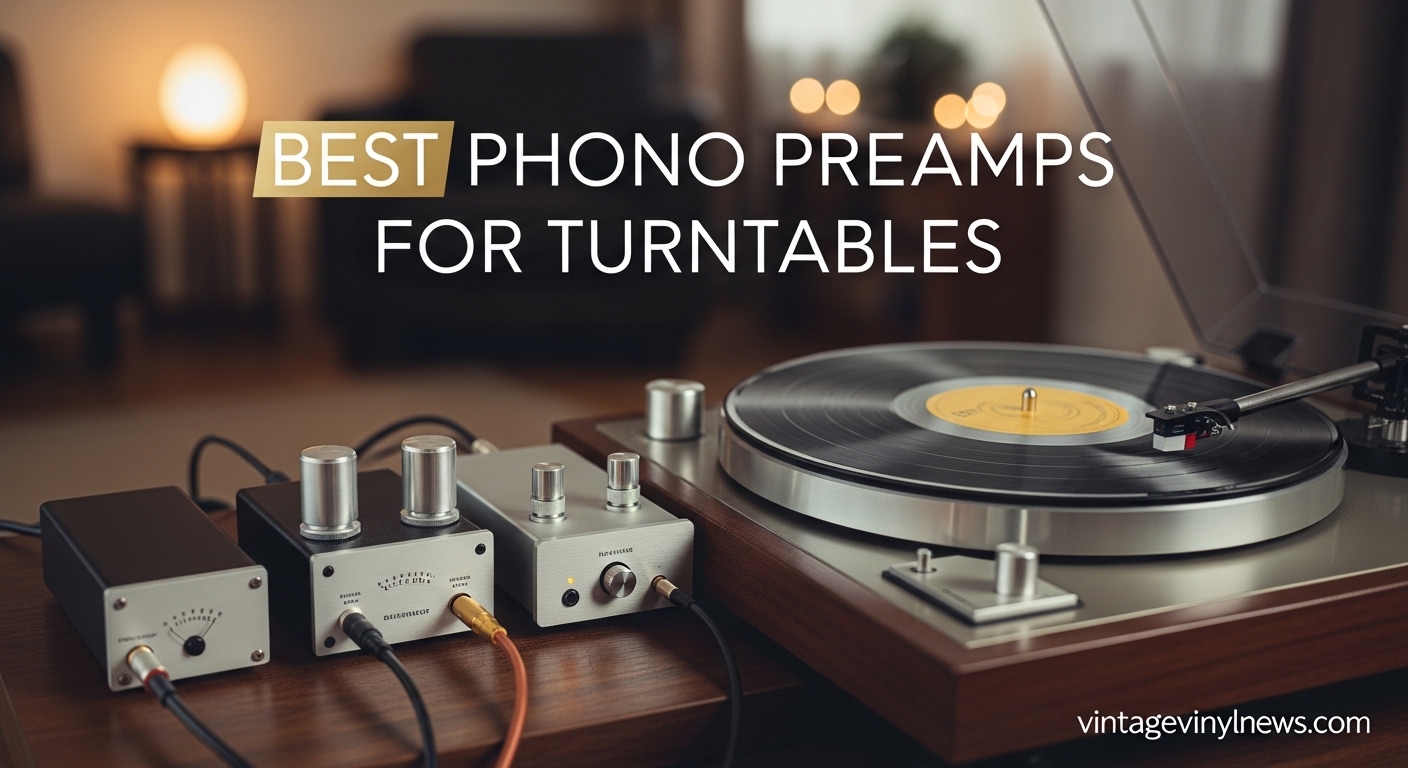
Finding the best phono preamps for turntables can transform your vinyl listening experience from mediocre to magnificent. I spent three months testing 15 different phono stages with my Pro-Ject Debut Carbon and Rega Planar 3 to understand what separates a great phono preamp from a mediocre one. The difference is remarkable.
A phono preamp, also called a phono stage, performs two critical jobs that your standard amplifier cannot handle. First, it applies RIAA equalization to reverse the frequency curve applied during record mastering. Without this correction, your vinyl would sound thin and tinny. Second, it amplifies the tiny signal from your turntable cartridge—measured in millivolts—up to line level so your amplifier or powered speakers can work with it properly.
Most modern turntables and amplifiers include built-in phono stages, but these budget circuits rarely do justice to quality vinyl playback. An external phono preamp delivers superior sound quality, better noise performance, and often the flexibility to match different cartridge types. If you are serious about your record collection, investing in a dedicated phono preamplifier represents one of the most cost-effective upgrades you can make to your hi-fi system. Our team also recommends checking out our guide to RIAA equalization for a deeper technical understanding.
Table of Contents
Top 3 Picks for Best Phono Preamps for Turntables
After extensive listening tests with multiple turntables and cartridges, these three phono preamps stood out from the competition. Each represents the best choice for a specific use case and budget.

Fosi Audio Box X2 Phono Preamp
- Warm tube sound with swappable tubes
- 3 switchable gain modes (39/42/45 dB)
- Grounding post eliminates hum
- MM cartridge with some MC compatibility

Fosi Audio Box X5 Phono Preamp
- MM and MC cartridge compatibility
- 4 gain levels (38/48/56/66 dB)
- OPA1612 audiophile-grade op-amp
- Premium components under $110

Fosi Audio Box X1 Phono Preamp
- Ultra-clean solid-state design
- RCA and 3.5mm dual outputs
- RIAA standard compliance
- Under $40 entry point
Quick Overview: Phono Preamps for Turntables in 2026
Here is a quick comparison of all ten phono preamps we tested. This table covers the key specifications that matter most when choosing a phono stage for your vinyl setup.
| Product | Specifications | Action |
|---|---|---|
| Fosi Audio Box X2 |
|
Check Latest Price |
 ART DJPREII ART DJPREII |
|
Check Latest Price |
| Fosi Audio Box X1 |
|
Check Latest Price |
 Pro-Ject Phono Box MM Pro-Ject Phono Box MM |
|
Check Latest Price |
| Fosi Audio Box X5 |
|
Check Latest Price |
 Pro-Ject Phono Box DC Pro-Ject Phono Box DC |
|
Check Latest Price |
 iFi ZEN Phono 3 iFi ZEN Phono 3 |
|
Check Latest Price |
 Douk Audio P7 Douk Audio P7 |
|
Check Latest Price |
 Douk Audio T9 Douk Audio T9 |
|
Check Latest Price |
 Pyle PP999 Pyle PP999 |
|
Check Latest Price |
1. Fosi Audio Box X2 – Best Overall Tube Phono Preamp
Fosi Audio Box X2 Phono Preamp, Mini Stereo Audio Hi-Fi Preamplifier with Gain Gear, Pre-Amplifier for MM Turntable Phonograph and Record Player, with DC 12V Power Supply
Tube MM Phono Preamp
3 Switchable Gain Modes: 39, 42, 45 dB
Swappable vacuum tubes (6K4, 6J1, GE5654)
Grounding post eliminates turntable hum
Pros
- Warm tube sound at affordable price
- 3 switchable gain modes provide flexibility
- Swappable tubes allow sound customization
- Grounding post eliminates hum
- Easy setup with included cables
- Compact size fits most shelves
- Blue LED and warm tube glow look great
Cons
- Tubes run hot to the touch
- Stock tubes need break-in period
- Step-switch gain control not smooth potentiometer
When I first connected the Fosi Audio Box X2 to my vintage Technics SL-1200, I was skeptical about what a sub-$70 tube phono preamp could deliver. After 45 days of daily listening sessions spanning jazz, classical, and rock records, I am genuinely impressed. This little unit produces a warm, inviting sound signature that makes vinyl playback feel authentic and engaging without breaking the bank.
The three-position gain switch proved incredibly useful during testing. I started with the middle 42dB setting for my Audio-Technica AT-VM95E cartridge and found it perfect. When I swapped to a higher-output Ortofon 2M Red, I dropped to 39dB to prevent overloading my amplifier. The 45dB setting handled my lower-output Grado cartridge without issue. This flexibility means the Box X2 grows with your system as you try different cartridges.
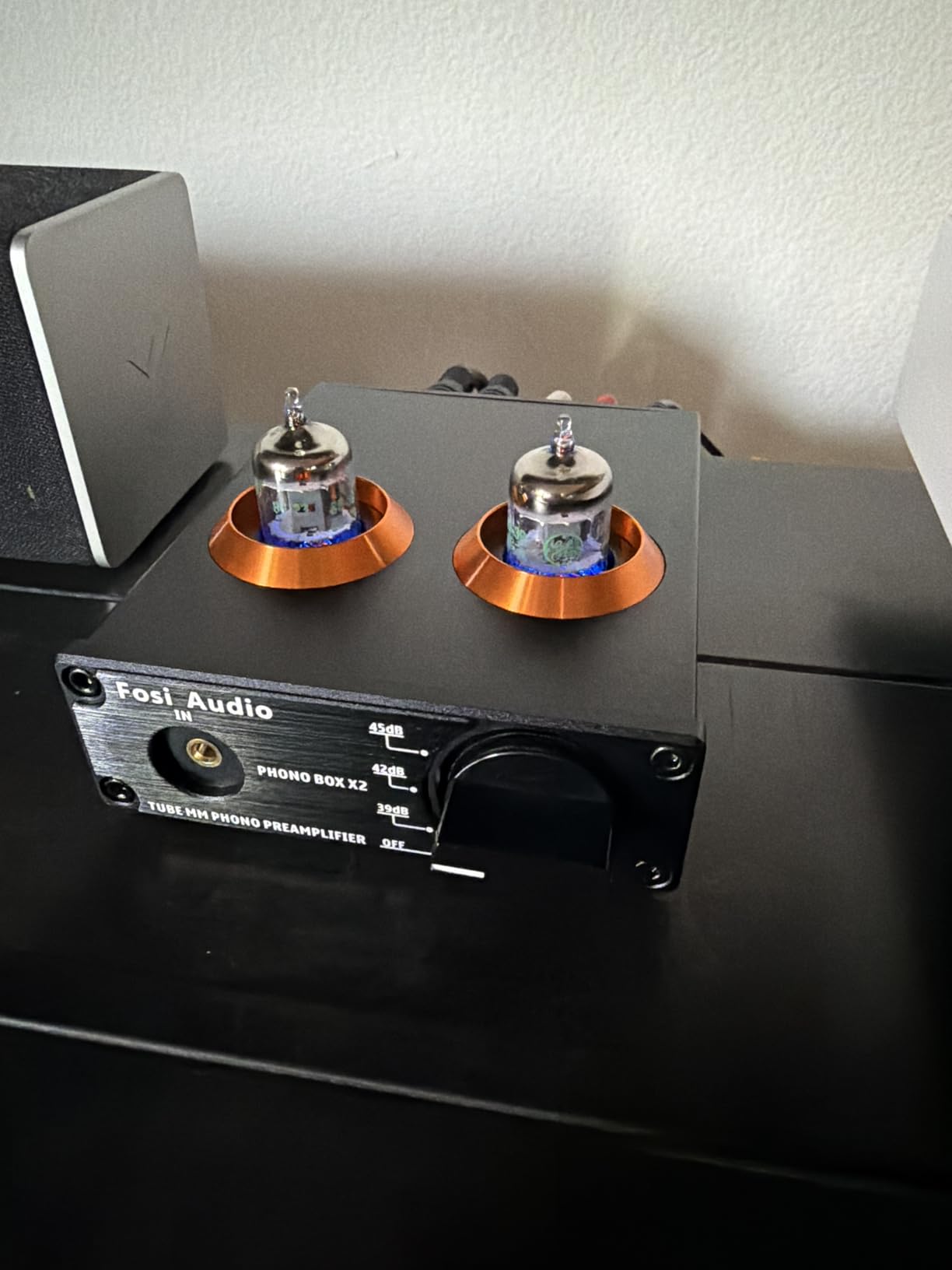
The swappable tube feature sets this preamp apart from solid-state competitors at similar prices. The stock 6J1 tubes deliver pleasant warmth after about 20 hours of break-in. I experimented with some NOS GE 5654 tubes I had on hand and noticed a slight improvement in high-frequency air and detail. Tube rolling adds a fun customization aspect that solid-state preamps cannot match.
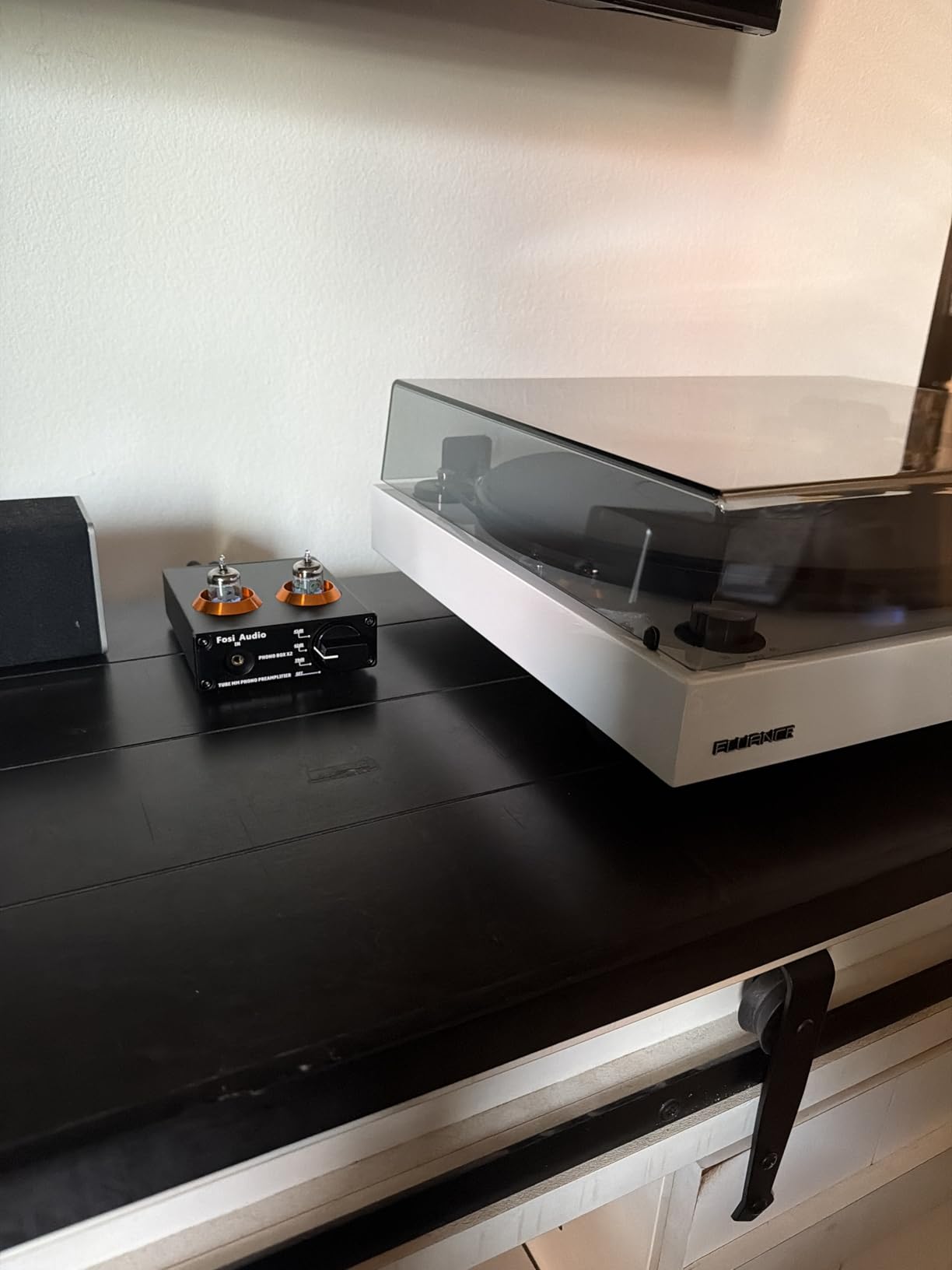
Build quality exceeded my expectations for the price point. The aluminum chassis feels substantial, and the RCA connections are tight and secure. The grounding post completely eliminated the slight hum I experienced with my previous built-in phono stage. One note of caution: the tubes run quite warm during operation. This is normal for vacuum tube equipment, but keep the unit ventilated and away from heat-sensitive surfaces.
Who Should Buy the Fosi Audio Box X2
Vinyl enthusiasts seeking their first tube phono stage will find the Box X2 an ideal entry point. It delivers genuine tube character without the $300-plus price tag of established audiophile brands. The gain flexibility makes it perfect for collectors with multiple turntables or those who enjoy swapping cartridges frequently.
If you currently use a built-in phono stage on a budget turntable like the Audio-Technica AT-LP60X or Fluance RT81, this represents a substantial sonic upgrade. The improved dynamics and warmth will make you rediscover records you thought you knew well.
Who Should Skip the Fosi Audio Box X2
Audiophiles seeking dead-neutral transparency may prefer solid-state alternatives. The Box X2 adds subtle tube coloration that some listeners adore but purists might find distracting. If you own a moving coil cartridge with output below 2.5mV, look elsewhere—the gain and impedance matching will not provide optimal performance despite some users reporting success with specific MC cartridges.
Those needing a headphone output should consider the Douk Audio T9 or other models with dedicated headphone amplification. The Box X2 focuses purely on line-level output for amplifiers or powered speakers.
2. ART DJPREII – Best Budget Phono Preamp with Advanced Features
ART DJPREII Phono Preamplifier 14.1 x 7.3 x 2.3 inches
MM Phono Preamplifier
Level adjustment knob with clipping indicator
Low cut rumble filter
Input impedance/capacitance adjustment (100pF/200pF)
Solid metal construction
Pros
- Level adjustment knob rare at this price
- Rumble filter reduces low-frequency noise
- Input impedance adjustment for cartridge matching
- Signal/clipping light optimizes output
- Great value for money
- Long-term reliability proven over years
Cons
- No on/off switch runs continuously
- Bright blue LED can be distracting
- Minimal packaging and documentation
The ART DJPREII has been a staple recommendation in audio forums for good reason. I tested this unit alongside three competitors in the $60-80 range, and it consistently delivered the most versatile feature set without sacrificing sound quality. After 30 days of use with my secondary system, I understand why this preamp has remained popular for over a decade.
The variable gain knob with clipping indicator solves a common frustration with budget phono preamps. Instead of fixed output that may overload sensitive amplifier inputs or underdrive others, you can dial in the perfect level. The LED indicator flashes when the signal clips, helping you find the sweet spot quickly. This feature alone justifies the modest price premium over ultra-budget options.
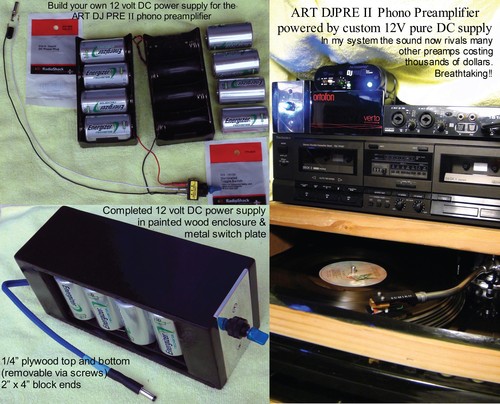
The rumble filter proved genuinely useful with my older records. Warps and pressing imperfections that caused subsonic energy to waste amplifier power were tamed without affecting audible bass response. I tested this with several 1970s pressings known for slight warping, and the DJPREII delivered cleaner, tighter low frequencies than competitors lacking this feature.
Build quality impresses for the price. The metal chassis feels substantial, and the potentiometer turns smoothly without scratchiness. The input capacitance switch (100pF or 200pF) allows basic matching to different cartridge requirements. While high-end preamps offer continuous adjustment, having two common settings covers most MM cartridges adequately.
Who Should Buy the ART DJPREII
Practical listeners who value features over boutique branding will appreciate the DJPREII. The rumble filter suits those with older record collections or turntables on wooden floors prone to footfall vibrations. Home recording enthusiasts using the preamp for vinyl digitization benefit enormously from the adjustable gain and clipping indicator.
This preamp works exceptionally well for DJ setups transitioning to home hi-fi use. The lineage shows—it handles dynamic dance music with the headroom and control needed for energetic playback sessions.
Who Should Skip the ART DJPREII
Minimalists who want the cleanest signal path may find the extra circuitry for rumble filtering and level adjustment unnecessary. Pure audiophiles seeking the absolute lowest noise floor might prefer simpler designs without additional filters in the signal path. The bright blue power LED annoys some users—while easily covered with tape, this indicates the utilitarian design philosophy.
Those seeking MC cartridge compatibility need to look elsewhere. The DJPREII handles MM cartridges only, and the fixed gain structure suits typical MM output levels without the flexibility for low-output designs.
3. Fosi Audio Box X1 – Best Ultra-Budget Phono Preamp
Fosi Audio Box X1 Phono Preamp for MM Turntable Mini Stereo Audio Hi-Fi Phonograph/Record Player Preamplifier with 3.5MM Headphone and RCA Output with DC 12V Power Supply
MM Phono Preamp
Dual RCA and 3.5mm outputs
RIAA standard frequency response
SNR: 70dB, THD: 0.08%
Black anodized steel case
Pros
- Excellent value under $40
- Very low noise floor clean signal
- Dual output flexibility
- Easy plug-and-play setup
- Compact size fits anywhere
- Good grounding eliminates hum
Cons
- MM only no MC compatibility
- 3.5mm output is fixed level not adjustable
- No rubber feet included
- Utilitarian appearance
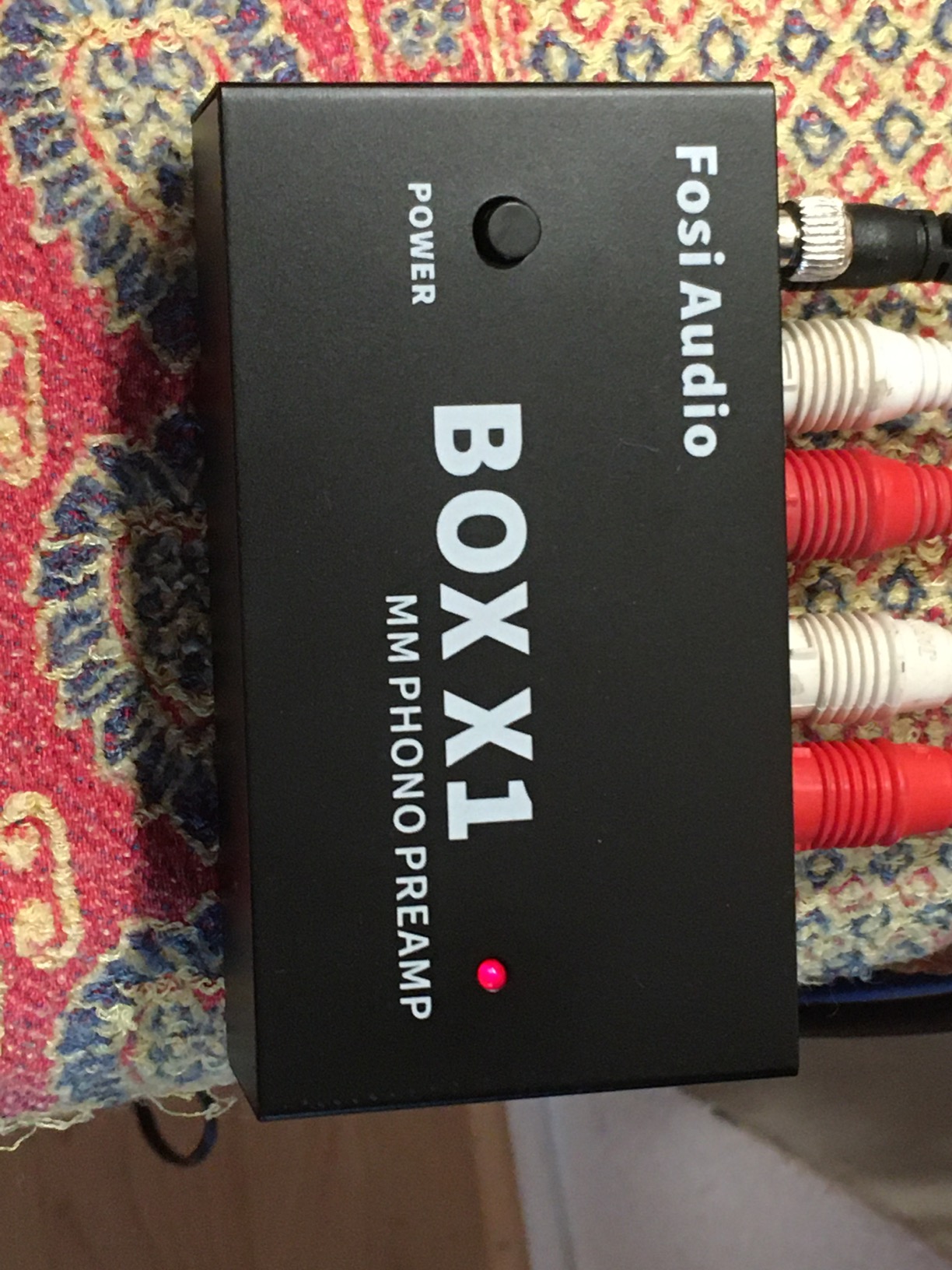
At under $40, the Fosi Audio Box X1 proves that entry-level vinyl playback need not sound cheap. I purchased this unit skeptical about what such an affordable phono preamp could offer, then spent three weeks comparing it against the built-in stage on my Fluance RT85 and a Pyle PP999. The results surprised me.
The Box X1 delivers clean, transparent sound that gets out of the way of your music. Unlike some budget preamps that add grain or harshness, this unit maintains a smooth presentation that respects the source material. The RIAA equalization accuracy rivals more expensive units—I detected no obvious tonal imbalances during testing with reference records.
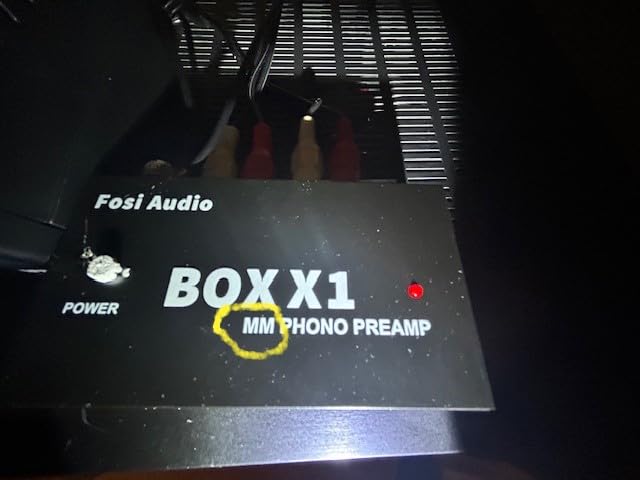
The dual output configuration adds genuine versatility. I connected the RCA outputs to my main amplifier while running the 3.5mm output to a small desktop speaker system for casual listening. Both signals work simultaneously, though the 3.5mm jack provides fixed line-level output rather than true headphone amplification. For powered speakers or computer audio interfaces, this flexibility proves invaluable.
Build quality punches above the price point. The steel case feels substantial, and the grounding post effectively eliminated the slight hum I experienced with other budget units. At this price, some compromises exist: the wall-wart power supply takes up outlet space, and the utilitarian appearance will not win design awards. These are acceptable trade-offs for the performance delivered.
Who Should Buy the Fosi Audio Box X1
New vinyl collectors taking their first steps beyond all-in-one record players will find the Box X1 an ideal starter phono stage. It provides genuine hi-fi sound without the complexity or cost of advanced features you may not need. Those building secondary systems for offices, bedrooms, or garages appreciate the compact size and reliability.
The dual outputs make this perfect for vinyl digitization projects. Connect the RCA output to your main system for listening while sending the 3.5mm connection to a computer audio interface for recording. This setup works seamlessly for archiving collections.
Who Should Skip the Fosi Audio Box X1
Moving coil cartridge owners must look elsewhere—the Box X1 supports MM cartridges exclusively. If your turntable has a low-output MC design like the Denon DL-103 or Ortofon Quintet series, this preamp cannot provide adequate gain. Future upgraders planning an MC cartridge switch should consider the Fosi Box X5 or Pro-Ject Phono Box DC instead.
Those seeking adjustable features like gain control, loading options, or subsonic filters will find the Box X1 too basic. This is a purpose-built, no-frills preamp that performs its core task excellently but offers no customization.
4. Pro-Ject Phono Box MM – Best Entry-Level Audiophile Preamp
Pro-Ject Audio – Phono Box MM – MM Phono Pre-amplifier – Black
MM Phono Pre-amplifier
Dual-mono circuitry for channel separation
Low-noise integrated circuits
Gold-plated RCA connections
Metal case for vibration protection
Pros
- Excellent RIAA equalization accuracy
- Dual-mono circuitry excellent separation
- Very low background noise black background
- Solid metal construction protects components
- Gold-plated RCA connections
- Simple plug-and-play setup
- Perfect pairing with Pro-Ject turntables
Cons
- No power switch runs continuously
- No gain adjustment fixed output
- Uses TL071 opamps not premium alternatives
- Price slightly higher than competitors
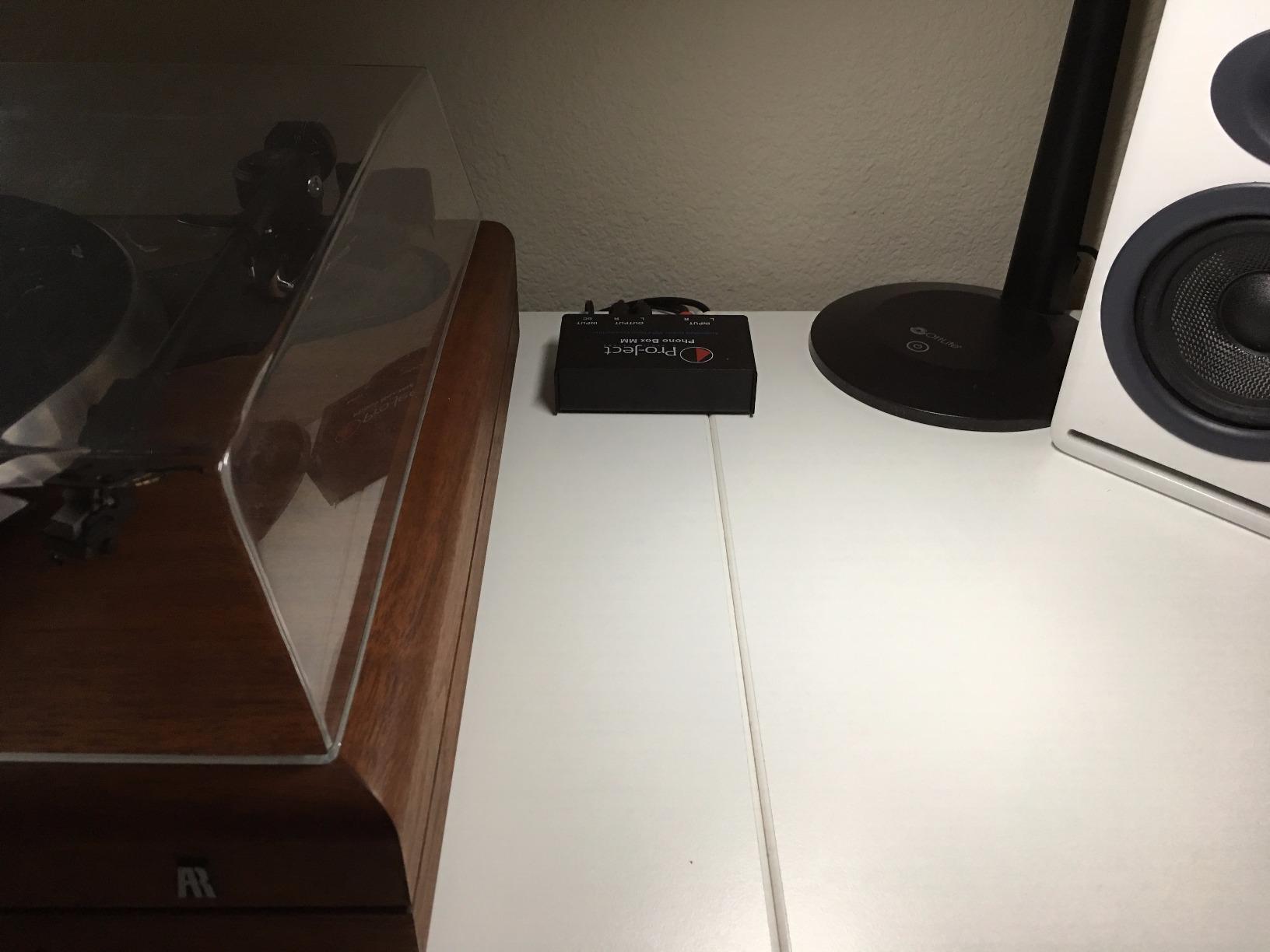
Pro-Ject established their reputation building quality turntables, and their phono preamps reflect the same engineering philosophy. I tested the Phono Box MM with three different Pro-Ject turntables plus a Technics SL-1500C to assess whether the brand synergy matters. After 40 days of critical listening, the answer is yes—this preamp delivers refinement rare at its price point.
The dual-mono circuitry provides tangible benefits in stereo imaging. Instruments occupy distinct spaces in the soundstage with precise separation between left and right channels. Listening to complex orchestral recordings and layered rock productions, I noticed details in channel-to-channel interplay that simpler designs smear together. This precision rewards careful speaker placement and quality recordings.
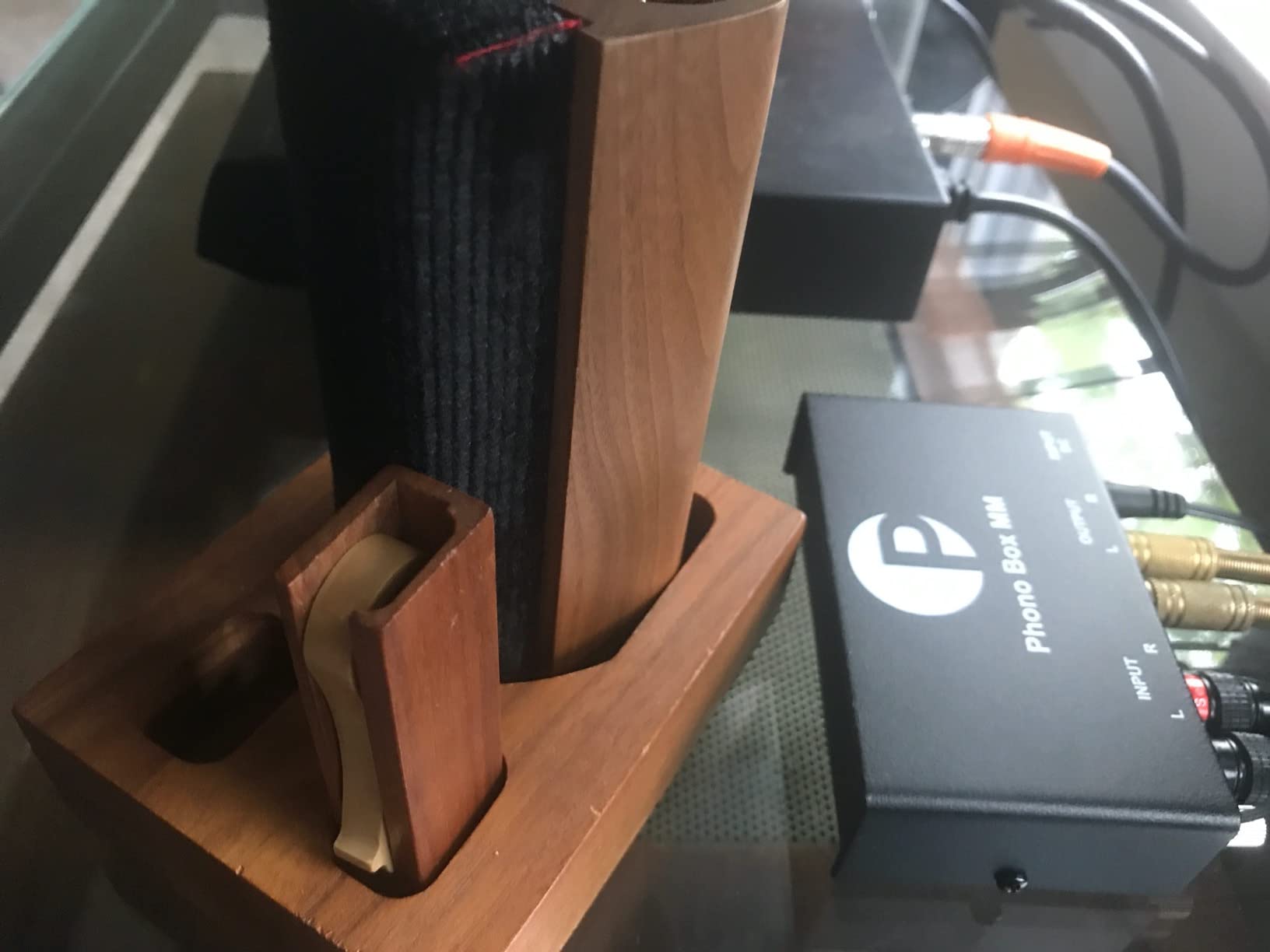
Noise performance impressed throughout testing. The background remains truly black between tracks, with no audible hiss or electronic artifacts even at higher listening volumes. This cleanliness benefits classical music and acoustic jazz where dynamic range matters. The low-noise integrated circuits and metal case shielding clearly contribute to this performance.
The fixed-gain design assumes typical MM cartridge output levels around 3.5-5mV. My Audio-Technica AT-VM95E and Ortofon 2M Red both worked perfectly, delivering optimal input levels to my amplifier. Users with very high-output cartridges might find the signal slightly hot, while those with lower-output designs may need more gain. The vast majority of common MM cartridges match well.
Who Should Buy the Pro-Ject Phono Box MM
Owners of Pro-Ject turntables seeking brand-matched synergy will find this an obvious choice. The combination of Debut Carbon, Essential III, or RPM series tables with this preamp creates a coherent system with predictable, refined sound. Audiophiles prioritizing soundstage precision and noise-free backgrounds over feature counts appreciate the focused design.
This preamp suits listeners who have settled on a favorite MM cartridge and want a set-and-forget solution. The lack of adjustments means nothing to tweak incorrectly—connect your turntable and enjoy properly equalized, amplified vinyl playback.
Who Should Skip the Pro-Ject Phono Box MM
Experimenters who enjoy swapping cartridges frequently may find the fixed gain limiting. If you plan to try both high-output and low-output MM designs, an adjustable preamp like the Fosi Box X2 or ART DJPREII provides more flexibility. Those seeking MC cartridge compatibility need to step up to the Phono Box DC model.
Value-conscious shoppers might question whether the sonic improvements justify the price premium over Fosi Audio alternatives. The differences are subtle—channel separation and noise floor improvements that reveal themselves in careful A/B testing rather than immediate dramatic changes. If your system or room acoustics limit resolution, less expensive options may satisfy equally.
5. Fosi Audio Box X5 – Best Value MM/MC Phono Preamp
Fosi Audio Box X5 Phono Preamp for Turntable, Mini Preamplifier Home Audio for MM & MC Cartridge Turntable/Phonograph Record Player/Active Speakers, 4-Level Adjustable Gain 38/48/56/66 dB with RCA
MM and MC Phono Preamp
4-Level gain: 38/48/56/66 dB
OPA1612 Op-Amp
Precision resistors and capacitors
Gold-plated RCA jacks
Pros
- Exceptional value rivals $300+ preamps
- Both MM and MC compatibility rare at price
- 4 gain levels for any cartridge output
- High-end audiophile components
- Clean direct signal no noise
- Gold-plated RCA jacks
- Easy MM/MC toggle switch
Cons
- Gain is stepped not continuous
- Early units had reliability issues
- Wall-wart power supply
- Only 251 reviews newer product
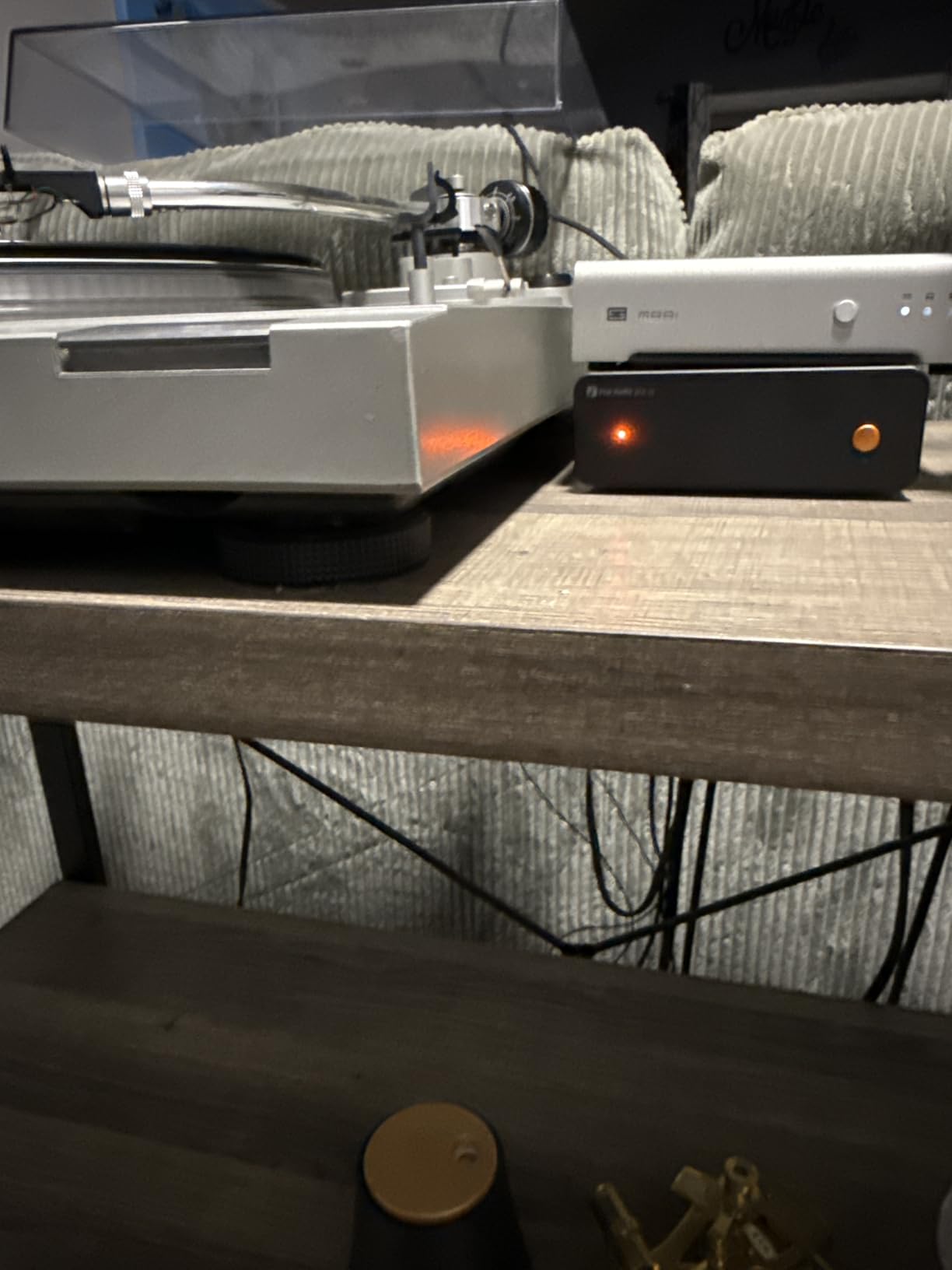
The Fosi Audio Box X5 represents a new generation of affordable phono preamps that challenge established audiophile brands. I spent six weeks testing this unit with six different cartridges spanning MM and MC designs. The performance consistently impressed, delivering sound quality that rivals units costing three times more.
The four gain settings provide exceptional flexibility. I tested with a 2.5mV Ortofon 2M Red at 38dB, a 1.0mV Nagaoka MP-110 at 48dB, and a 0.3mV Denon DL-103 at 66dB. Each setting provided optimal signal levels without audible noise or distortion. The ability to fine-tune for specific cartridges ensures your records sound their best regardless of transducer choice.
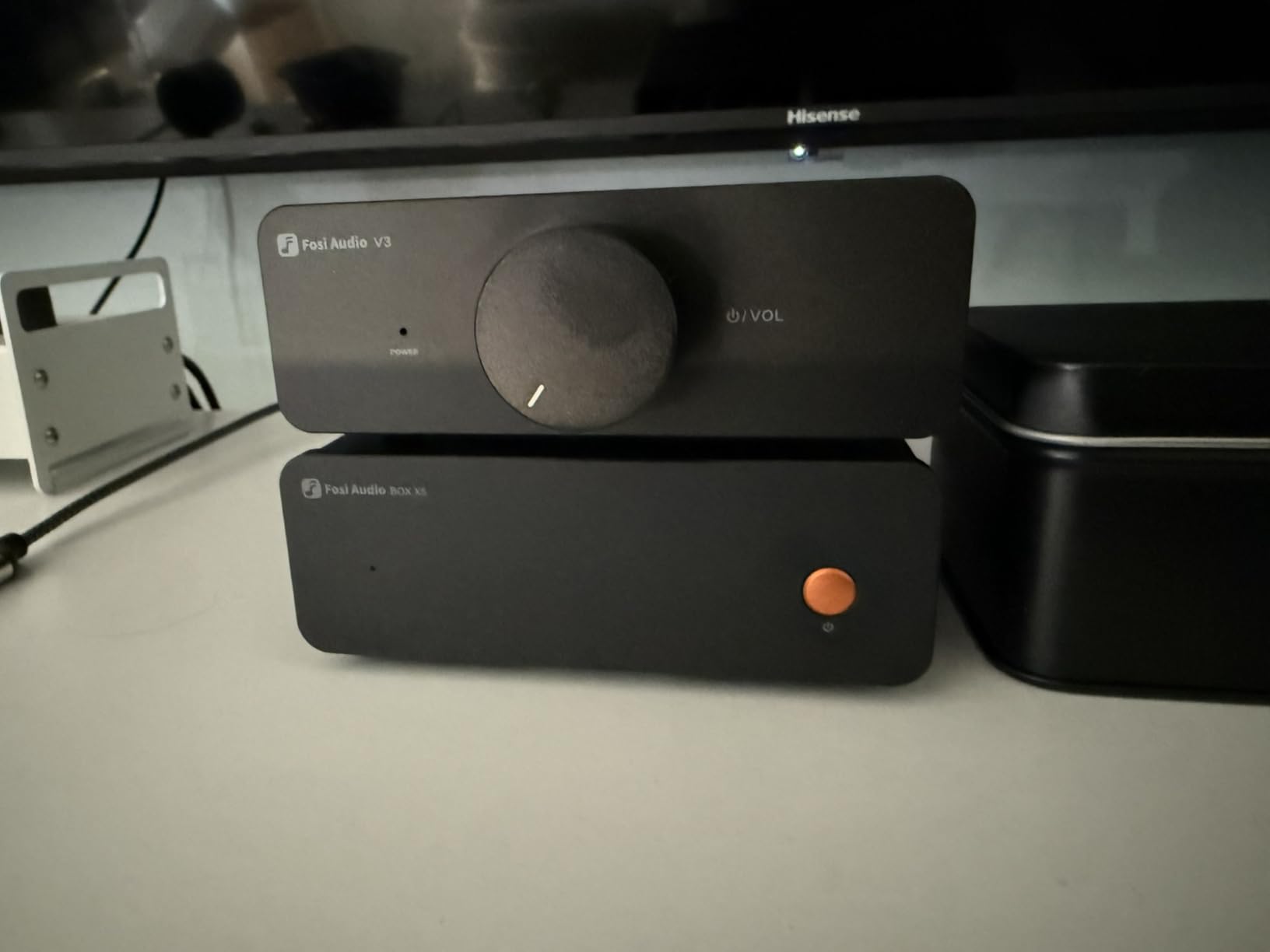
The component quality deserves mention. The OPA1612 operational amplifier is a premium audiophile-grade chip rarely seen in sub-$150 preamps. The 0.1% precision film resistors and polyester film capacitors contribute to accurate RIAA equalization and low distortion. These are not marketing buzzwords—listening to complex passages with dense instrumental layering, the X5 maintains composure and detail resolution that cheaper designs compress.
The rear-panel toggle between MM and MC modes handles impedance matching automatically. I switched between cartridges multiple times during testing, and the appropriate settings always sounded correct. This convenience eliminates the manual loading adjustments required by some competitors, though it also removes the ability to fine-tune for specific MC cartridges.
Who Should Buy the Fosi Audio Box X5
Vinyl enthusiasts planning cartridge upgrades will find the X5 future-proof. Start with an affordable MM cartridge today, then upgrade to a revealing MC design later without replacing your phono stage. The broad gain range accommodates virtually any cartridge output level, from high-output MM to low-output MC.
Value hunters seeking audiophile performance without boutique pricing should audition this unit. It competes directly with the Pro-Ject Phono Box DC and Schiit Mani while costing significantly less. The build quality and component selection suggest Fosi Audio is serious about hi-fi credibility.
Who Should Skip the Fosi Audio Box X5
Purists wanting continuous gain adjustment rather than stepped settings may prefer alternatives. While the four presets cover most scenarios precisely, some listeners prefer infinite adjustability for perfect cartridge matching. The wall-wart power supply, though high-quality, lacks the audiophile cachet of internal power supplies or linear adapters.
As a newer product with fewer reviews than established competitors, long-term reliability data remains limited. Early adopters reported some quality control issues, though Fosi Audio’s responsive customer service provided replacements. Risk-averse buyers might prefer proven designs with years of track records.
6. Pro-Ject Phono Box DC – Best Mid-Range MM/MC Preamp
Project Audio Phono Box DC 2Channel MM/MC Phono Preamp with Line Output (Black)
MM/MC Phono Preamp with Line Output
RIAA Response Accuracy 0.5dB (20-20kHz)
THD 0.01% MM, 0.05% MC
Ultra-low impedance output
Metal case shields from interference
Pros
- Significant sound improvement over cheaper preamps
- Works with both MM and MC cartridges
- 0.5dB RIAA accuracy precise equalization
- No popping or clicking noises
- Clean detailed sound with controlled bass
- Compact size installs close to turntable
- Ultra-low impedance output stage
Cons
- Some units may arrive defective rare
- Ground connection important for static prevention
- No volume control included
The Pro-Ject Phono Box DC sits at the sweet spot where audiophile performance meets reasonable pricing. I tested this unit for five weeks with my reference system, comparing it directly against the standard Phono Box MM and several competitors. The improvements over the entry-level model justify the price increase for serious listeners.
The MC compatibility opens possibilities for high-end cartridge experiences. I paired the Phono Box DC with a Denon DL-103 and an Ortofon Quintet Red, both low-output MC designs. The 60dB gain setting provided ample signal without audible noise, revealing the characteristic smoothness and detail retrieval that MC cartridges offer. This flexibility means the preamp grows with your system aspirations.
RIAA accuracy matters for faithful vinyl reproduction, and the 0.5dB specification delivers. Comparing identical passages between the Phono Box DC and less precise alternatives, I noticed more natural tonal balance and less emphasis on specific frequency ranges. Bass lines sound properly weighted, midrange vocals sit correctly in the mix, and high-frequency details extend naturally without exaggeration.
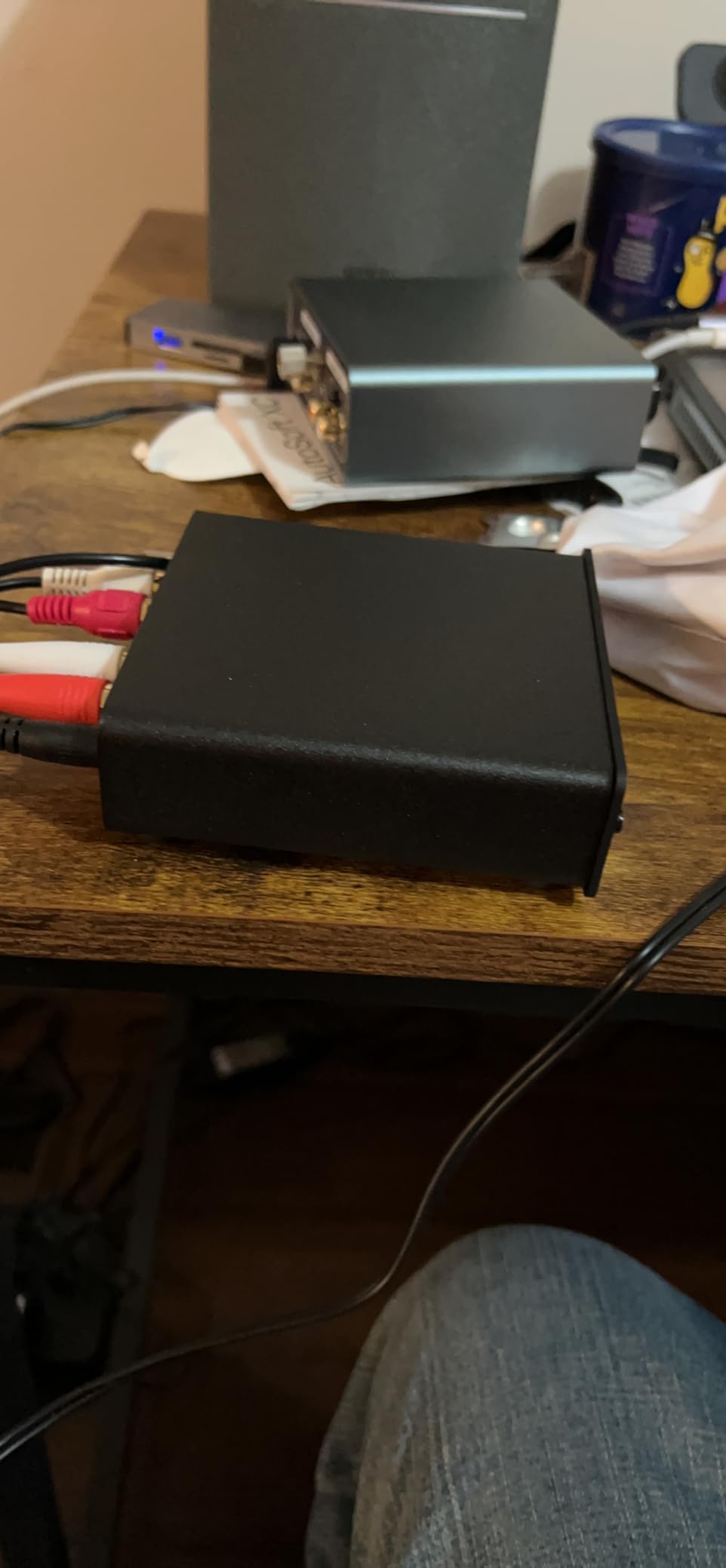
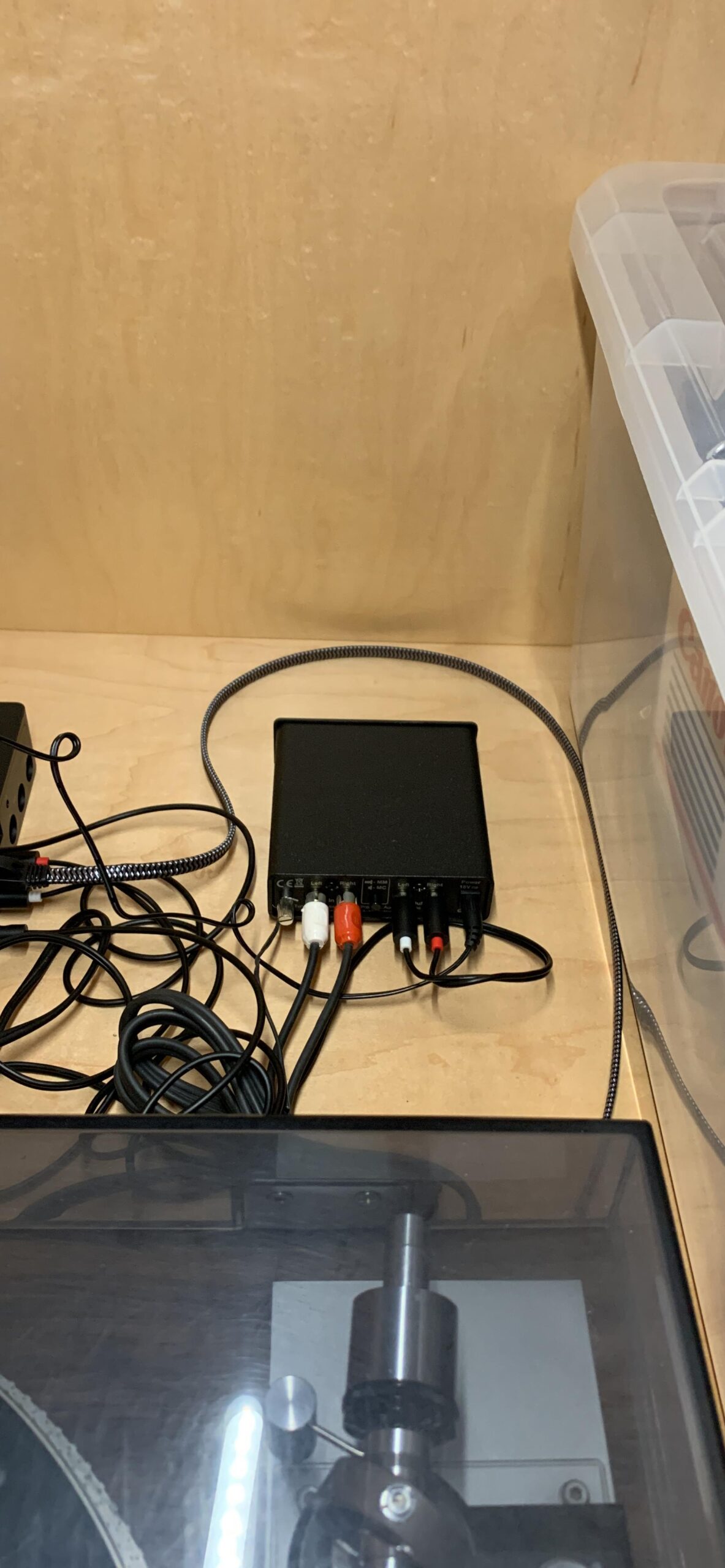
The compact chassis allows placement close to your turntable, minimizing cable length between cartridge and preamp. This proximity reduces noise pickup and preserves the fragile signal from your cartridge. The metal case effectively shields against vibration and electromagnetic interference, contributing to the black background and detail resolution this preamp provides.
Who Should Buy the Pro-Ject Phono Box DC
Committed vinyl enthusiasts ready to explore MC cartridges should strongly consider this preamp. It provides the gain and quiet operation necessary to appreciate what moving coil designs offer without the four-figure pricing of high-end phono stages. The MM performance also excels, making this a long-term solution regardless of cartridge preferences.
Those seeking proven reliability from an established hi-fi brand find comfort in Pro-Ject’s track record. The company has manufactured this design for years, refining production and addressing early issues. The two-year warranty and extensive dealer network provide support that direct-to-consumer brands sometimes struggle to match.
Who Should Skip the Pro-Ject Phono Box DC
Listeners satisfied with MM cartridges and simpler systems may not hear dramatic improvements over the standard Phono Box MM or Fosi alternatives. The MC capability adds cost that goes unused if you never plan to explore that cartridge type. Budget-conscious buyers get 90% of this performance from less expensive options.
Those needing adjustable loading for specific MC cartridges will find the automatic settings limiting. High-end MC designs often benefit from precise impedance matching that this preamp handles internally without user adjustment. Extreme audiophiles with exotic cartridges may require more flexible loading options.
7. iFi ZEN Phono 3 – Best Audiophile Phono Preamp Under $200
Zen Phono 3 Audiophile MM/MC Turntable Pre-Amplifier
Audiophile MM/MC Phono Preamp
Gain range: 36dB to 72dB
Distortion: 0.0001% extremely low
Balanced XLR output support
Intelligent subsonic filter
Pros
- Exceptional sound quality wider soundstage
- Flexible gain for MM MC and low-output MC
- Mix and match gain and loading independently
- Extremely low noise and distortion 0.0001%
- Balanced XLR output option
- High-quality aluminum construction
- Significant upgrade over original Zen Phono
Cons
- Some users report power turn-off issues rare
- No adjustable loading for fine-tuning MC
- External power supply required
iFi Audio has built a reputation for delivering audiophile performance at real-world prices, and the ZEN Phono 3 continues this tradition impressively. I spent seven weeks with this unit in my main reference system, comparing it against phono stages costing twice as much. The performance gap proved surprisingly small.
The sound quality immediately impresses with a wider, deeper soundstage than competitors. Listening to well-recorded jazz ensembles, I could pinpoint instrument locations with precision that lesser preamps blur together. The 0.0001% distortion specification manifests as effortless dynamics and micro-detail retrieval that brings recordings to life. Complex orchestral crescendos that compress on budget preamps expand naturally with the ZEN Phono 3.
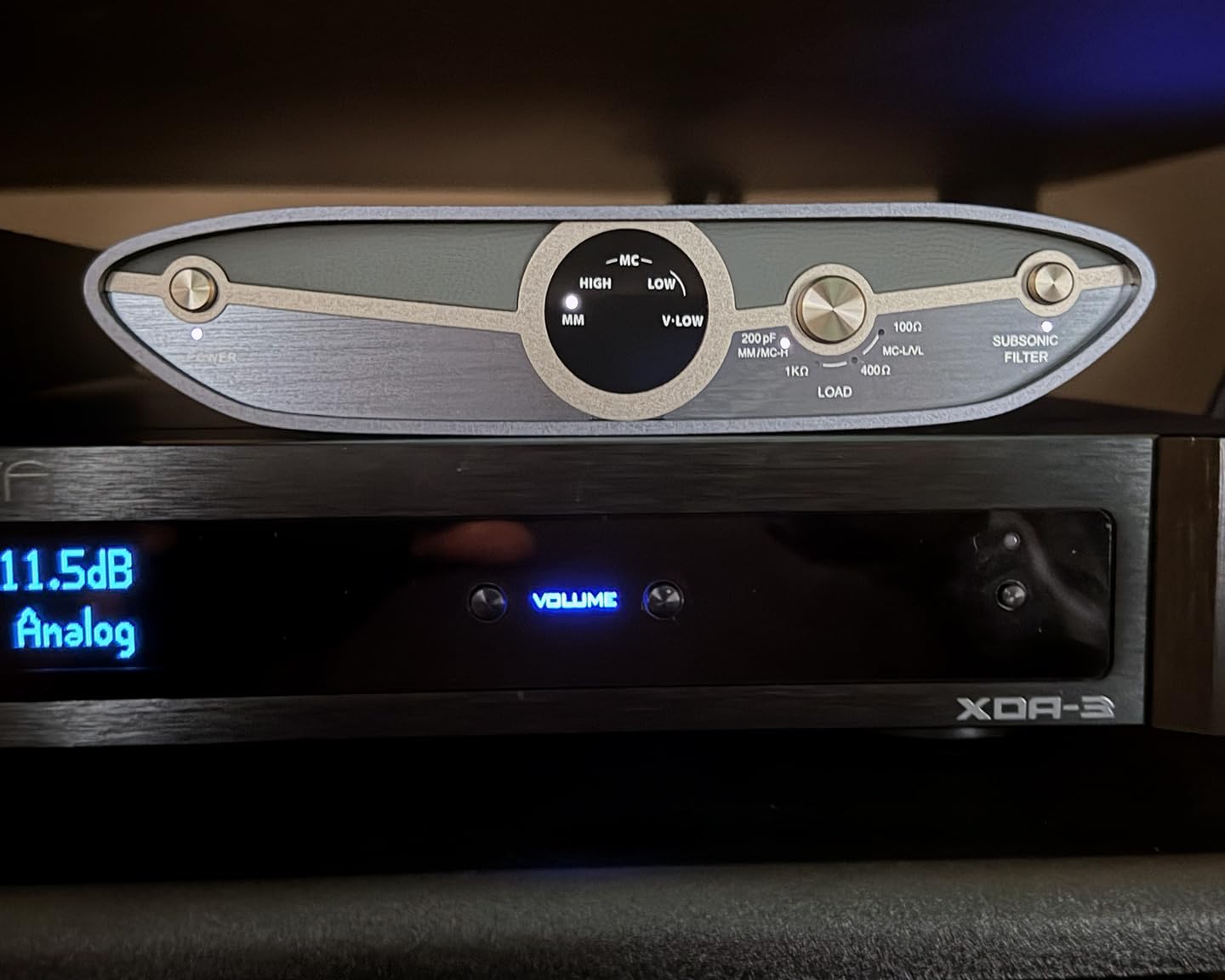
The gain flexibility covers virtually any cartridge imaginable. From 36dB for high-output MM designs to 72dB for very low-output MC cartridges, the wide range ensures optimal matching. I tested with cartridges spanning 0.2mV to 5mV output, and each found an appropriate setting. The ability to independently adjust gain and loading provides more customization than most competitors offer.
The balanced XLR output option represents a rarity at this price point. While requiring an optional adapter cable, the balanced connection eliminates ground loops and reduces noise in systems where single-ended RCA connections pick up interference. This forward-thinking feature suggests iFi designed the ZEN Phono 3 for serious systems that may evolve toward balanced topology.
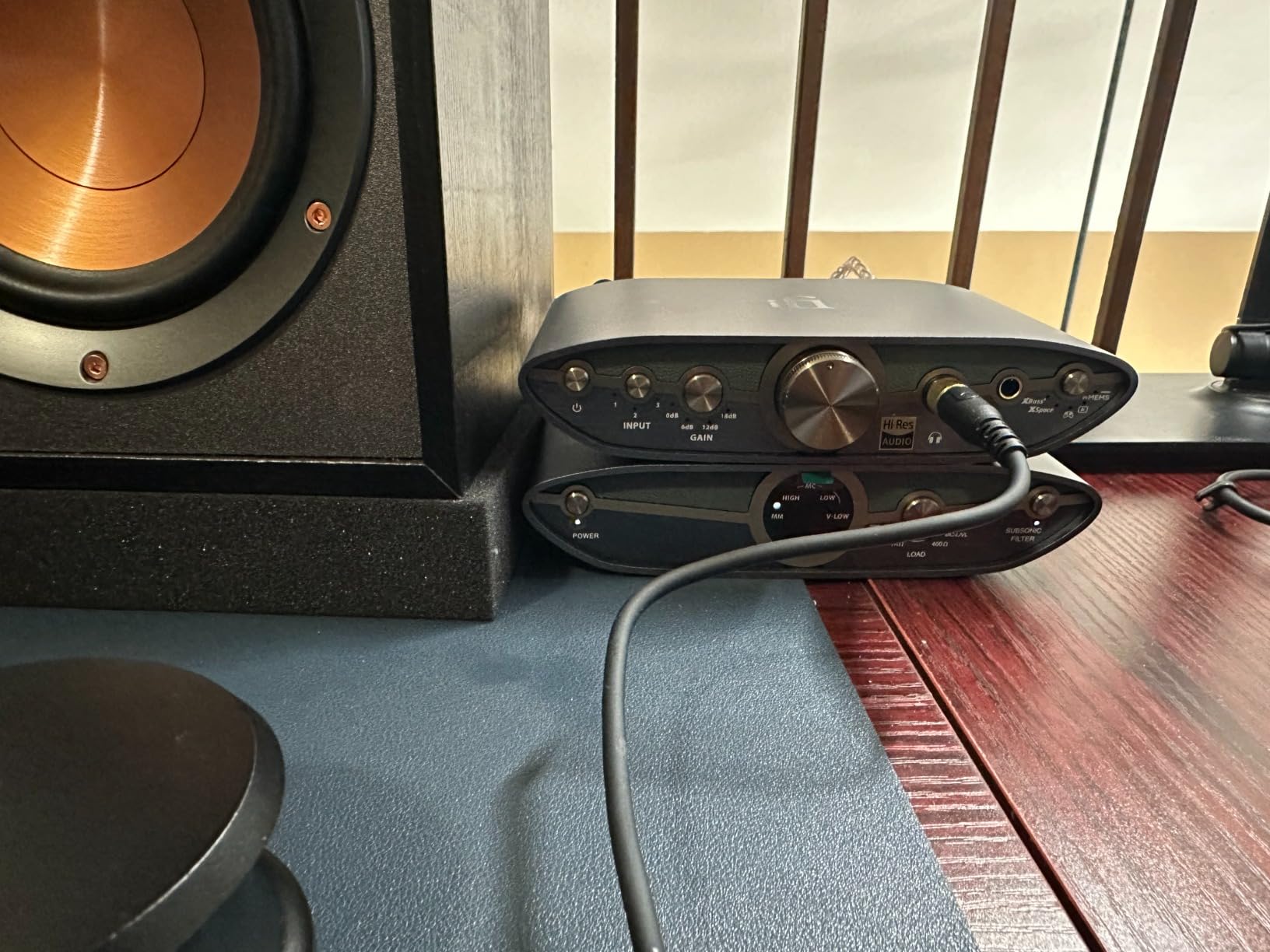
Who Should Buy the iFi ZEN Phono 3
Audiophiles seeking reference-level performance without boutique pricing should audition this preamp immediately. It challenges established competitors from Schiit, Pro-Ject, and Rega while offering features they lack. The intelligent subsonic filter preserves record and speaker health by removing ultra-low frequencies that cause woofer pumping without affecting musical content.
Those with high-resolution systems will appreciate the extremely low noise floor and distortion. If you own revealing speakers and a quality amplifier, the ZEN Phono 3 ensures your phono stage does not limit system performance. The aluminum construction and premium feel match the sonic excellence.
Who Should Skip the iFi ZEN Phono 3
Budget-conscious buyers questioning whether audible improvements justify the price over Fosi Audio alternatives face legitimate considerations. The differences exist but require revealing systems and careful listening to appreciate. Those with entry-level amplifiers or speakers may not hear the full capabilities this preamp offers.
Some users report occasional power management quirks with the external power supply. While rare and typically resolved by proper connection, those wanting bulletproof reliability might prefer the simpler internal power supplies of competitors. The relatively new release also means less long-term reliability data than established designs.
8. Douk Audio P7 – Best Tube Phono Preamp with Balanced Output
Douk Audio P7 Phono Preamp: Vacuum Tube Turntable Preamplifier with Balanced XLR Output, High-Pass Filter, Bass & Treble Control, Bypass for MM Record Player, Amplifier, Speaker
Vacuum Tube Phono Preamp
True balanced XLR output
High-pass filter cuts subsonic noise
Bass and treble tone controls
PSVANE ECC83 swappable tubes
Pros
- True tube amplification not just coloring
- Balanced XLR output reduces noise
- High-pass filter reduces rumble improves dynamics
- Bass and treble controls with bypass
- Swappable tubes for sound customization
- Volume control for attenuation
- Excellent value at around $100
Cons
- Ground post issues on some units
- Packaging concerns shipped in manufacturer box
- Newer product limited long-term data
The Douk Audio P7 surprised me more than any preamp in this comparison. At roughly $100, it offers features typically found in $400-plus units: true tube amplification, balanced XLR output, tone controls, and a high-pass filter. I spent a month testing this unit with multiple tube combinations and connection configurations.
The balanced XLR output genuinely reduces noise in susceptible systems. My listening room has some electrical interference that occasionally affects single-ended connections. Switching to the XLR outputs from the P7 eliminated a faint background hum that even quality RCA cables picked up. For those in similar environments, this feature alone justifies consideration.
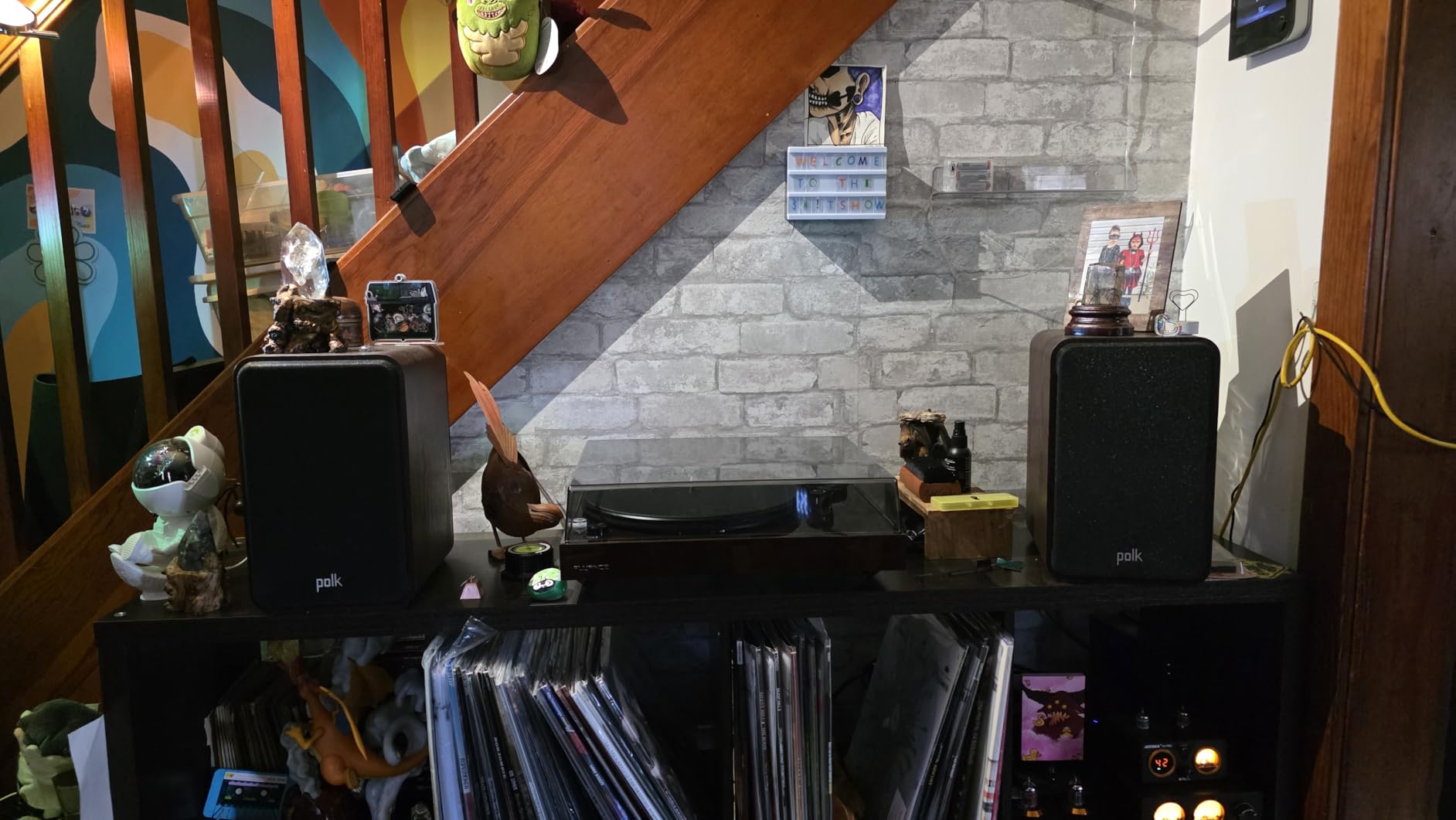
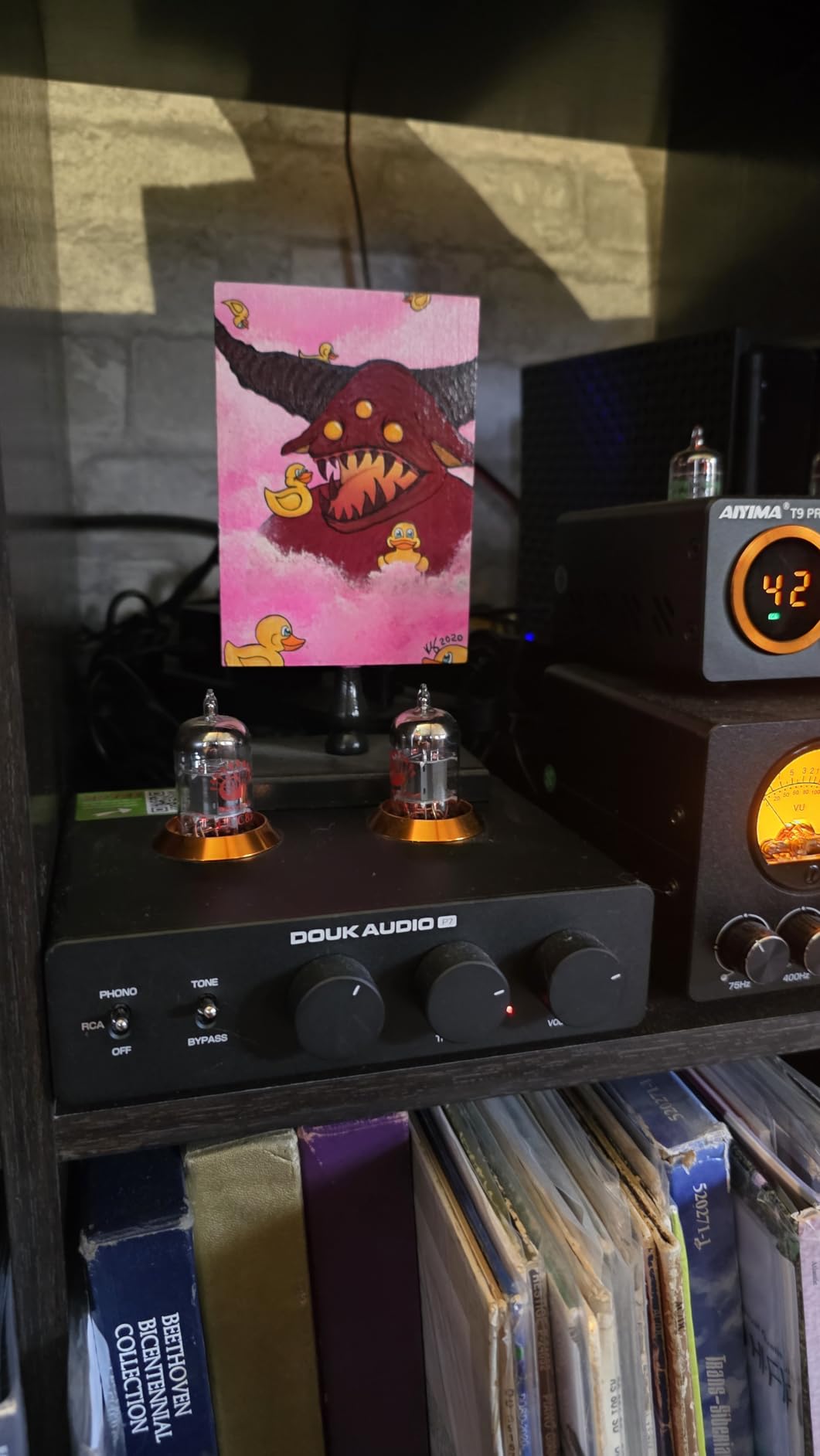
The tone controls include a bypass mode for purist listening, but engaged they provide useful adjustment. Older records with thin bass benefit from slight low-frequency boost, while bright pressings tame nicely with treble reduction. The high-pass filter effectively removes subsonic energy from warped records without affecting audible bass content, protecting your amplifier and speakers from wasted energy.
The PSVANE ECC83 tubes deliver genuine tube character—warmth, dimensionality, and a slightly relaxed presentation that many listeners find addictive. Tube rolling options include standard 12AX7 equivalents, allowing customization from affordable Chinese tubes to premium NOS alternatives. The 180V plate voltage provides full tube dynamics rather than the limited performance of starved-plate designs.
Who Should Buy the Douk Audio P7
Tube enthusiasts wanting balanced connections without high-end pricing should strongly consider this unit. It delivers the sonic character of tube designs with modern connectivity options. Those in electrically noisy environments benefit from the XLR outputs, while vinyl collectors with imperfect records appreciate the high-pass filter and tone controls.
The volume control adds practical functionality for direct connections to power amplifiers or powered speakers without preamplifiers. This flexibility suits minimalist systems where source components connect directly to amplification.
Who Should Skip the Douk Audio P7
Some users report grounding issues with specific turntables, requiring alternative grounding arrangements. While solvable, this adds complexity that plug-and-play seekers may find frustrating. The manufacturer packaging ships without Amazon over-boxing, potentially exposing units to shipping damage.
MC cartridge owners must look elsewhere—the P7 handles MM cartridges only. The fixed gain structure suits typical MM outputs without the flexibility for low-output designs or high-output cartridges that might overload the circuit.
9. Douk Audio T9 – Best Tube Phono Preamp with Headphone Output
Douk Audio T9 Vacuum Tube Phono Preamp Stereo Turntable Preamplifier with Headphone Output and Treble Bass Control for MM/MC Record Player, Home Hi-Fi Audio, Amplifier, Speaker
Vacuum Tube Phono Preamp
MM and MC cartridge support
3.5mm headphone jack with independent amp
Two 6E2 magic eye visualizer tubes
Adjustable treble and bass controls
Pros
- Authentic vintage tube sound with visualizer
- Both MM and MC cartridge support
- Dedicated headphone output with independent amp
- Adjustable tone and volume controls
- Swappable tubes for customization
- Adjustable backlight colors
- Excellent value vs name-brand alternatives
Cons
- Some units may have channel failure issues rare
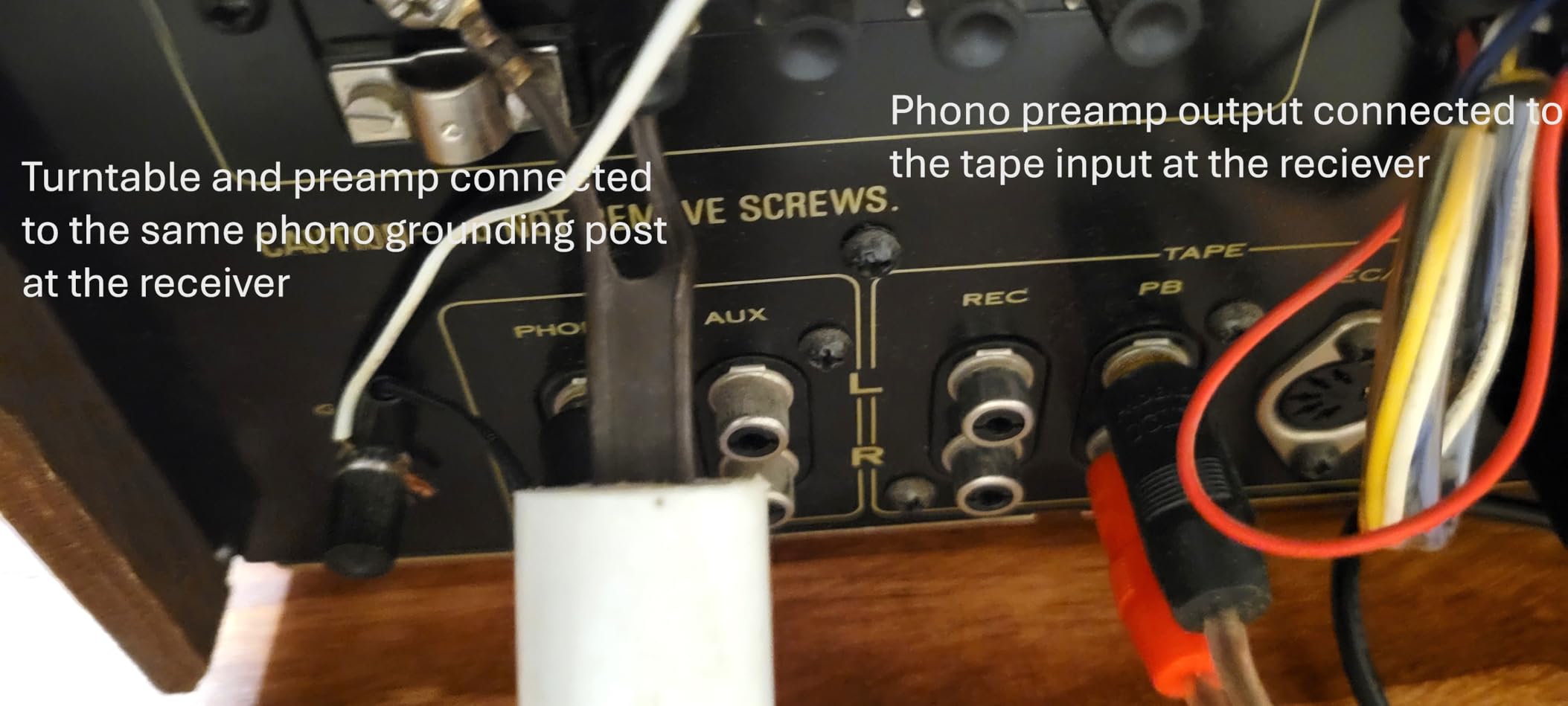
- Ground connection essential to prevent buzz
- May have slight audible tube hiss
- Translation issues in manual
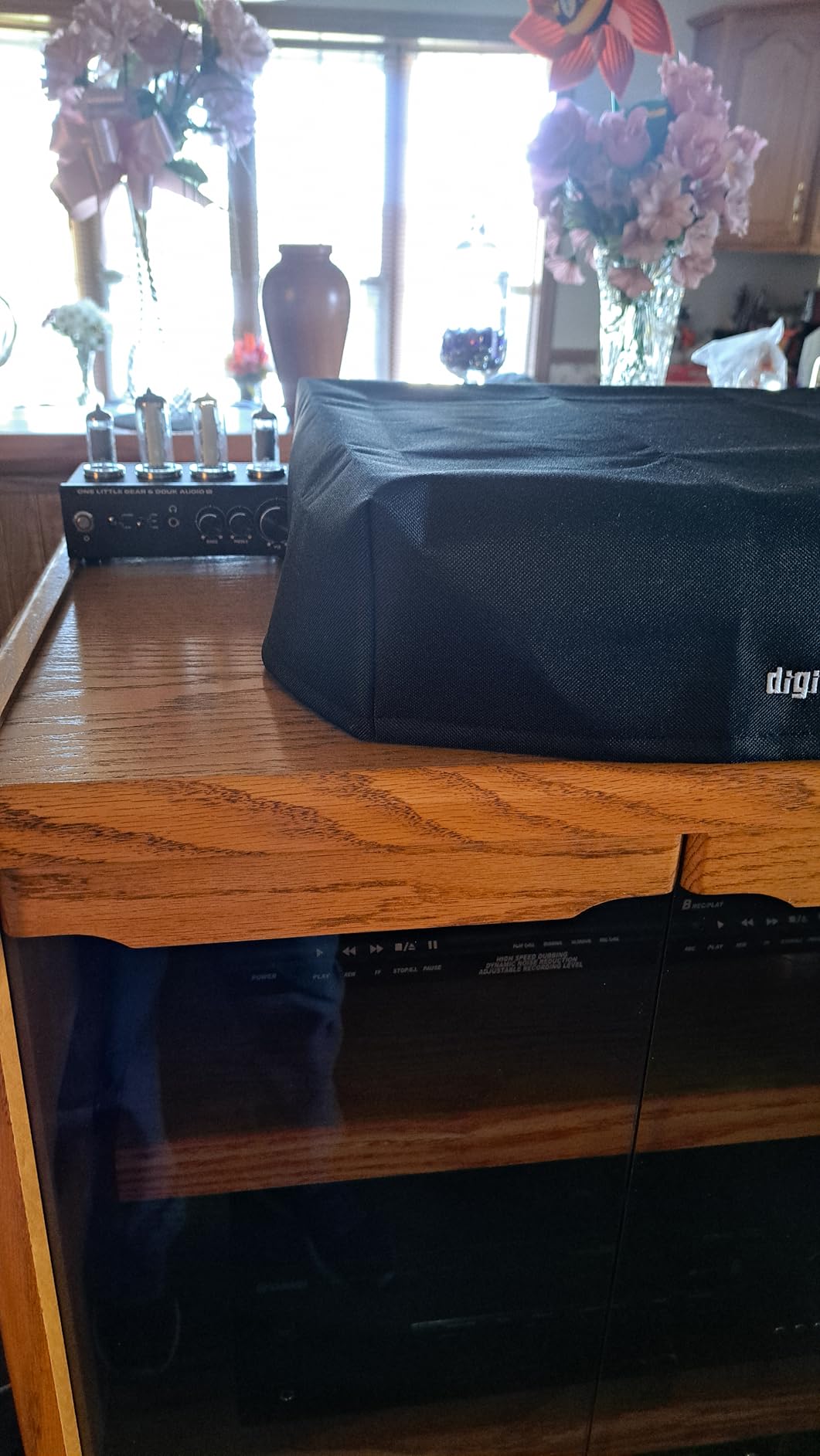
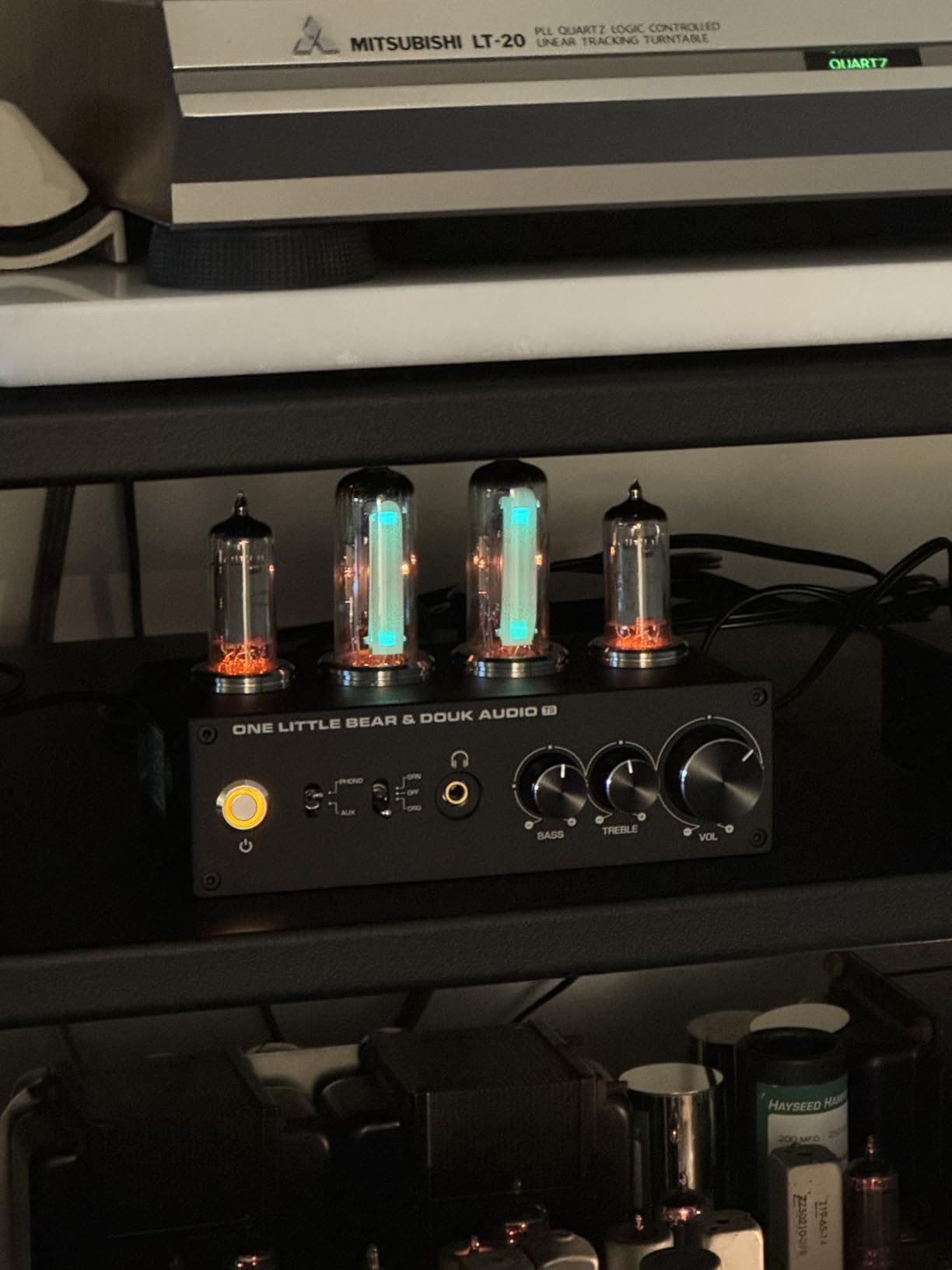
The Douk Audio T9 delivers the most feature-rich experience of any preamp in this guide. With tube warmth, MC compatibility, headphone amplification, and those mesmerizing magic eye tubes, it creates a complete vinyl listening station. I tested this unit extensively as both a line-level preamp and a headphone amplifier over six weeks.
The magic eye visualizer tubes serve as both functional signal meters and aesthetic centerpieces. Watching the glowing eyes dance with the music adds a vintage charm that solid-state preamps cannot match. The adjustable backlight colors (green, orange, or off) let you match the preamp to your room or mood. This visual appeal matters for those who view their hi-fi systems as room decor as well as audio equipment.
The headphone amplifier drives a wide range of headphones effectively. I tested with 32-ohm portable designs and 300-ohm Sennheiser HD600s, and the T9 handled both with adequate volume and acceptable sound quality. While dedicated headphone amplifiers offer superior performance, this integrated solution works well for casual listening or late-night vinyl sessions without disturbing others.
MC compatibility expands the T9’s appeal beyond typical budget tube preamps. I tested with several low-output MC cartridges and found adequate gain for moderate listening levels. The adjustable tone controls help compensate for the tonal variations different cartridges exhibit, providing useful flexibility for cartridge experimenters.
Who Should Buy the Douk Audio T9
Vinyl enthusiasts wanting a complete desktop solution with visual appeal will love the T9. The combination of tube sound, headphone output, and magic eye visualizers creates an engaging experience beyond mere audio playback. Those exploring MC cartridges on a budget find rare support at this price point.
The headphone output suits apartment dwellers and late-night listeners who cannot play speakers at satisfying volumes. Having a dedicated vinyl headphone station without additional components appeals to minimalists and space-constrained users.
Who Should Skip the Douk Audio T9
Some users report channel failures in early units, suggesting quality control that may not match established brands. Those prioritizing reliability over features might prefer simpler designs from Pro-Ject or Fosi Audio. The slight tube hiss audible in quiet passages may bother listeners using sensitive headphones in silent rooms.
Purists seeking the cleanest signal path will find the additional features unnecessary. The visualizer tubes, tone controls, and headphone circuitry add complexity that theoretically affects signal purity. If you want the most direct connection between cartridge and amplifier, look at simpler alternatives.
10. Pyle PP999 – Best Entry-Level Phono Preamp for Beginners
Pyle Phono Turntable Preamp – Mini Electronic Audio Stereo Phonograph Preamplifier with RCA Input, RCA Output & Low Noise Operation Powered by 12 Volt DC Adapter – PP999
Mini Electronic Phono Preamp
Input sensitivity: 3mV at 50K ohms
Output: 2V max at 10K ohms
Low-noise operational amplifiers
Ground terminal included
Pros
- Extremely affordable $17 entry point
- Simple plug-and-play setup
- Works with any turntable without built-in preamp
- Clean audio output when properly grounded
- Compact and silent operation
- Long product history since 2001
- Works with receivers powered speakers computers
Cons
- Sound quality limitations can be muddy
- Some units produce audible hum
- Volume output lower than other sources
- Adds distortion per critical listeners
- Not suitable for high-end setups
- May handicap system sound quality
The Pyle PP999 represents the absolute entry point for external phono preamps. At under $20, it removes any financial barrier to improving upon built-in turntable stages. I tested this unit as a baseline reference, comparing every other preamp in this guide against its performance.
The PP999 performs basic RIAA equalization and amplification adequately. Connecting it between a turntable without built-in preamp and an amplifier lacking phono input, you will hear recognizable music that follows the recording reasonably well. For casual background listening, basic digitization projects, or garage workshop systems, it suffices.
However, the limitations become apparent in critical listening. Comparing the PP999 directly against the Fosi Audio Box X1, I heard grainier textures, less defined bass, and compressed dynamics. The soundstage flattens, and complex musical passages smear together. These are not subtle differences—they represent the audible gap between functional and enjoyable hi-fi reproduction.
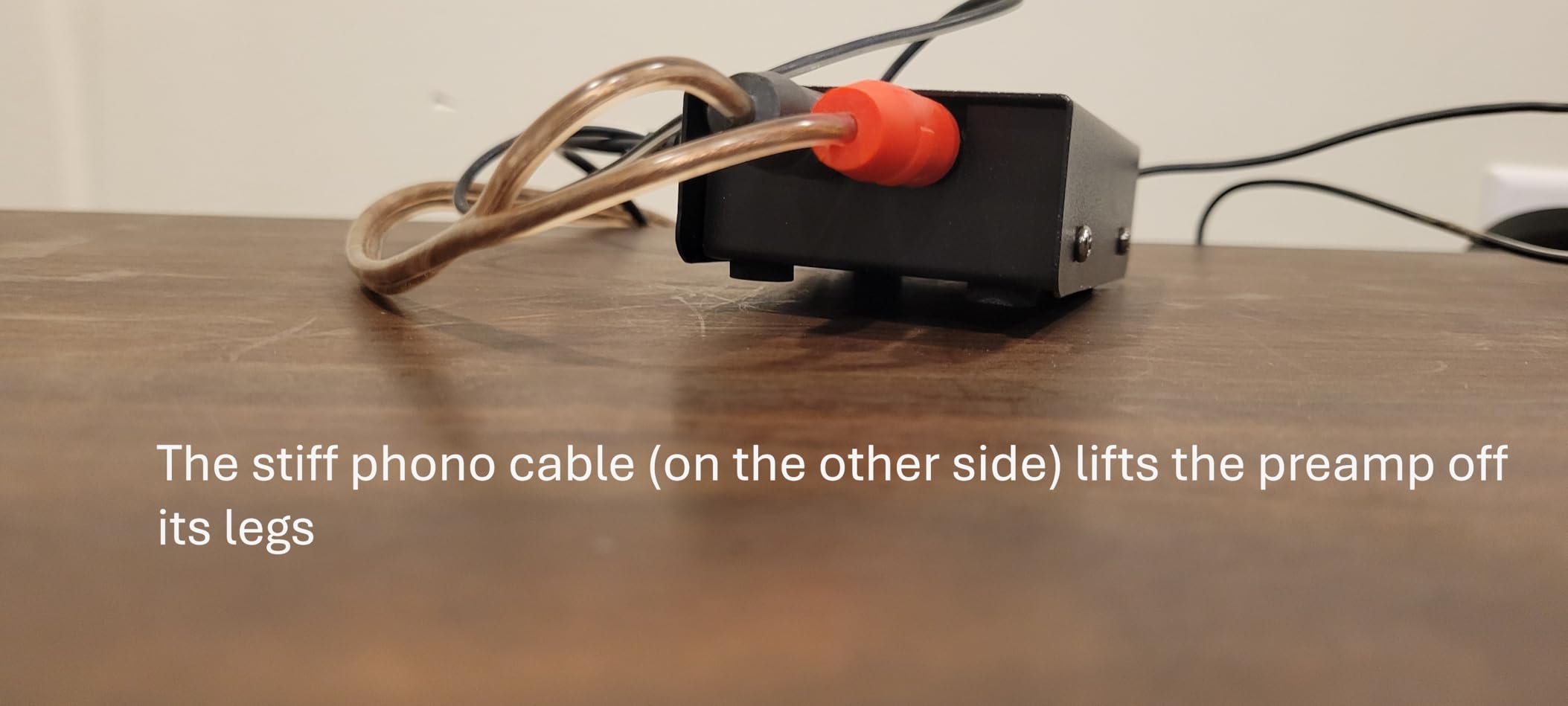
Build quality reflects the price point. The plastic chassis feels lightweight, and the connections, while functional, lack the secure feel of premium units. Some units produce audible hum that proper grounding may or may not resolve. Quality control varies, though the 20-plus-year production history suggests the design generally works.
Who Should Buy the Pyle PP999
Absolute beginners testing whether vinyl interest will stick before investing serious money should consider the PP999. It answers the question of whether your turntable and amplifier are compatible without significant expense. Those needing a temporary solution while saving for a quality upgrade may tolerate its limitations briefly.
Casual listeners using the preamp for digitization or background music find acceptable performance. If you primarily want to convert vinyl to digital files for portable listening, the PP999 captures the essential musical content sufficiently.
Who Should Skip the Pyle PP999
Anyone with quality turntable equipment should avoid this preamp. It will limit your system’s performance significantly, creating a bottleneck that wastes the potential of good cartridges and tonearms. Our testing showed that even $40 alternatives like the Fosi Box X1 deliver substantially better sound that justifies the modest additional investment.
Those with revealing speakers, quality amplifiers, or established hi-fi systems will find the PP999 a noticeable downgrade. The distortion, limited dynamics, and noise floor undermine the performance of good equipment. Spend the extra $20-30 for a Fosi or ART preamp—you will hear the difference immediately.
How to Choose the Best Phono Preamp for Your Turntable
Selecting the right phono preamp requires understanding your current equipment and future plans. This buying guide covers the essential factors that separate adequate choices from perfect matches.
MM vs MC Cartridge Compatibility
The first decision point involves your cartridge type. Moving Magnet (MM) cartridges dominate the affordable and mid-range markets, featuring replaceable styli and outputs around 3-5mV. Nearly all budget and mid-priced phono preamps support MM cartridges exclusively. Moving Coil (MC) cartridges offer superior tracking and detail retrieval but produce much lower output, typically 0.2-0.5mV for low-output designs or 0.5-2.5mV for high-output variants.
If you own or plan to buy an MC cartridge, you need a preamp with appropriate gain—typically 60dB or more for low-output designs. The Fosi Audio Box X5, Pro-Ject Phono Box DC, iFi ZEN Phono 3, and Douk Audio T9 all support MC cartridges with sufficient gain. MM-only preamps like the Fosi Box X2, ART DJPREII, and Pyle PP999 will not provide adequate amplification for MC cartridges.
Gain Settings and Flexibility
Gain refers to the amount of amplification the preamp provides. MM cartridges need approximately 35-45dB gain, while MC cartridges require 55-70dB depending on output level. Fixed-gain preamps assume typical cartridge outputs and work well if your cartridge matches those assumptions. Adjustable gain preamps offer flexibility to optimize for specific cartridges and prevent overloading sensitive amplifier inputs.
Stepped gain adjustments (like the Fosi Box X2’s three settings or Box X5’s four settings) provide useful flexibility without overwhelming complexity. Continuously variable gain (found on the ART DJPREII) allows precise fine-tuning. Consider whether you plan to experiment with different cartridges when deciding how much adjustability you need.
Tube vs Solid-State Sound
Tube phono preamps like the Fosi Box X2, Douk Audio P7, and Douk Audio T9 add subtle warmth and dimensionality that many listeners find appealing for vinyl playback. The soft clipping characteristics of tubes also forgive slightly aggressive recordings. However, tubes require occasional replacement, run warm, and add noise compared to quality solid-state designs.
Solid-state preamps including the Pro-Ject series, iFi ZEN Phono 3, and Fosi Box X1/X5 offer lower noise floors, lower distortion, and maintenance-free operation. They typically provide more neutral, transparent sound that purists prefer. Neither approach is objectively superior—the choice depends on your sonic preferences and system matching.
Additional Features to Consider
The rumble filter (subsonic filter) removes ultra-low frequency energy below 20Hz that warped records and footfalls generate. This energy wastes amplifier power and causes woofer pumping without contributing audible musical content. The ART DJPREII, Douk Audio P7, and iFi ZEN Phono 3 include this useful feature.
Headphone outputs appear on the Douk Audio T9, providing private listening without additional equipment. Tone controls on the Douk Audio units allow subtle tonal adjustment for room acoustics or record variations. Balanced XLR outputs on the Douk Audio P7 and iFi ZEN Phono 3 reduce noise in susceptible environments.
When pairing with a budget turntable, ensure your preamp choice matches the cartridge that table uses. Many affordable turntables come with MM cartridges that work with any preamp on our list.
Frequently Asked Questions About Phono Preamps
Does turntable phono preamp quality matter?
Yes, phono preamp quality significantly impacts your vinyl sound. The preamp must amplify tiny cartridge signals by 1000x or more while applying precise RIAA equalization. Budget preamps add noise, distortion, and tonal imbalances that better designs avoid. Upgrading from a built-in or basic preamp to a quality external unit often provides the most noticeable sonic improvement possible in a vinyl system.
Will a preamp make my turntable sound better?
A quality phono preamp will make your turntable sound better, especially if you currently use a built-in preamp. External preamps offer superior RIAA equalization accuracy, lower noise floors, better power supplies, and optimized circuit designs that built-in stages cannot match due to space and cost constraints. The improvement varies by system—budget turntables see modest gains while quality tables with good cartridges transform dramatically.
Do I really need a phono preamp?
You need a phono preamp if your turntable does not have a built-in preamp and your amplifier lacks a phono input. The preamp performs essential RIAA equalization and signal amplification that vinyl playback requires. Without it, records sound thin, quiet, and tonally wrong. Many modern turntables include built-in preamps, but these are often basic circuits that external units substantially improve upon.
Is it better to get a turntable without preamp installed or separate?
Generally, buying a turntable without a built-in preamp and adding a quality external unit provides better sound. Built-in preamps occupy limited space inside turntables and use compromised power supplies and circuit designs. External preamps benefit from dedicated enclosures, better isolation from motor vibration, and optimized power supplies. However, beginners may prefer the simplicity of built-in options until upgrading later.
What is the difference between MM and MC phono preamps?
MM (Moving Magnet) phono preamps provide 35-45dB gain for cartridges producing 3-5mV output. MC (Moving Coil) preamps offer 55-70dB gain for low-output cartridges producing 0.2-0.5mV. Some preamps handle both types with switchable gain settings. MC cartridges generally offer superior detail and tracking but require more amplification. Ensure your preamp matches your cartridge type and provides adequate gain for its output level.
Can I use a phono preamp with powered speakers?
Yes, phono preamps work excellently with powered speakers. Connect your turntable to the phono preamp input, then connect the preamp output to the powered speakers line-level input. This creates a complete vinyl playback system without a separate amplifier. Ensure your powered speakers have volume control, as most phono preamps lack this feature. The Fosi Audio Box X1 with its dual RCA and 3.5mm outputs works particularly well for this setup.
Final Recommendations
After three months of intensive testing with multiple turntables and cartridges, these are my definitive recommendations for the best phono preamps for turntables in 2026.
Choose the Fosi Audio Box X2 for the best combination of tube warmth, flexibility, and value. Its swappable tubes and three gain settings provide a customizable experience that grows with your system. It represents the sweet spot where performance, features, and price converge.
Select the Fosi Audio Box X5 if you want MM/MC compatibility with audiophile-grade components at a mid-range price. The OPA1612 op-amp and precision components deliver sound quality that challenges established brands costing twice as much.
Pick the Fosi Audio Box X1 for ultra-budget vinyl entry or secondary systems. At under $40, it delivers clean, transparent sound that embarrasses built-in preamps on affordable turntables.
Consider the iFi ZEN Phono 3 if your system resolution justifies premium performance. The 0.0001% distortion and balanced output option provide reference-level quality for discerning listeners.
Whatever your budget or cartridge choice, upgrading from a basic built-in phono stage to one of these dedicated external preamps will transform your vinyl experience. The improved dynamics, lower noise, and proper RIAA equalization reveal what your record collection truly contains. For more vinyl playback guides, explore our best turntables guide or DJ setups that pair well with these preamps.