
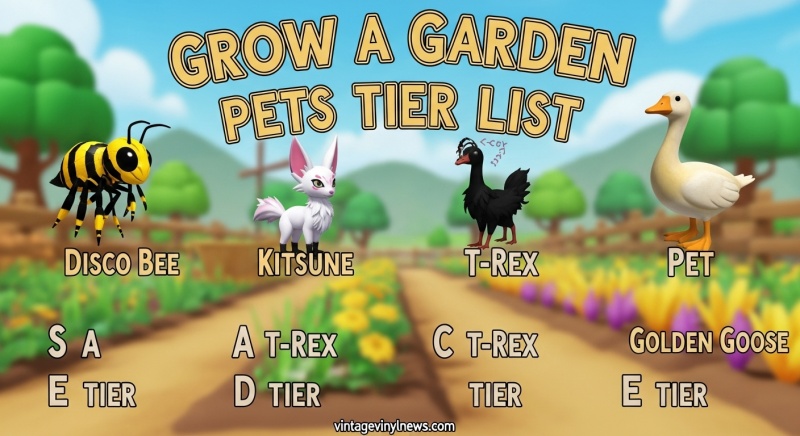
Are you struggling to decide which pets to prioritize in your Grow a Garden adventure? With over 185 pets available in the game as of September 2026, choosing the right companions can make or break your gardening success. As someone who has spent countless hours testing and analyzing every pet in the game, I’m excited to share this comprehensive tier list that will help you make informed decisions and maximize your garden’s potential.
Table of Contents
Quick Overview: Grow a Garden Pets Tier List (September 2026)
| Tier | Pet Count | Key Characteristics | Top Examples |
|---|---|---|---|
| S Tier | 25+ | Game-changing abilities, high value mutations, essential for progression | Kitsune, Raccoon, Disco Bee, T-Rex |
| A Tier | 30+ | Strong utilities, good mutations, reliable support | Queen Bee, Capybara, Triceratops, Mole |
| B Tier | 40+ | Situational usefulness, moderate mutations | Scarlet Macaw, Night Owl, Red Fox |
| C Tier | 35+ | Limited utility, niche applications | Snake, Fennec Fox, Grizzly Bear |
| D-F Tier | 55+ | Minimal impact, mostly cosmetic or outdated | Ankylosaurus, Nihonzaru, Robin |
Understanding Pet Mechanics in Grow a Garden (2026)
Before diving into the tier list, it’s crucial to understand how pets work in Grow a Garden. Pets aren’t just decorative companions—they’re powerful tools that can significantly boost your garden’s productivity and your overall progress in the game.
Pet Stats and Weight System
Every pet in Grow a Garden has a weight stat that directly impacts their ability effectiveness. As pets age and gain XP, their weight increases, making their abilities more powerful. Here’s what you need to know:
- Starting Weight: Most pets hatch at 0.88-2.20kg
- Weight Growth: Pets gain 1/11th of their starting weight each time they age
- Maximum Potential: At age 100, pets reach 10× their starting weight
- Huge Modifier: 0.1% chance for 4× weight multiplier (3.52-8.80kg range)
Pet Slots and Inventory Management
You start with 3 pet slots but can expand up to 8 total slots through:
- Age 20: +1 Slot (249 Robux)
- Age 30: +2 Slots (399 Robux)
- Age 45: +3 Slots (799 Robux)
- Age 60: +4 Slots (1,699 Robux)
- Age 75: +5 Slots (1,699 Robux)
Your pet inventory can hold up to 185 pets maximum through various upgrades:
- Base: 60 pets
- Game Passes/Trading: +25 pets
- Pet Pouches: +50 pets (max 50 pouches)
- Garden Ascension: +50 pets
Hunger and Feeding System
Pets must maintain their hunger bar to continue aging and gaining XP. Different crops restore different amounts of hunger:
- Basic crops: 5-15% hunger restoration
- Rare crops: 15-30% hunger restoration
- Mutated crops: 30-50% hunger restoration
Pro tip: Keep a stock of high-value mutated crops specifically for feeding your most important pets to ensure they never stop progressing!
S Tier Pets: The Game-Changers
S Tier pets are the absolute best in Grow a Garden, offering abilities that can dramatically increase your progress, wealth, and overall gameplay experience. These pets should be your top priority for acquisition and active slots.
1. Kitsune (Zen Egg)
Why it’s S-Tier: The Kitsune is arguably the best pet in the entire game for one simple reason: it can steal fruits from other players’ gardens and apply powerful mutations.
Key Abilities:
- Steals fruits from other players’ gardens
- Applies Chakra Mutation (15x value multiplier)
- Rare chance for Foxfire Chakra Mutation (90x value multiplier)
- Ability effectiveness scales with weight
Strategy Tip: Pair Kitsune with high-weight pets for maximum mutation potential. The stolen fruits can provide exponential returns, especially during events when rare mutations are active.
2. Raccoon (Night Egg)
Why it’s S-Tier: Raccoon provides consistent, passive income by cloning fruits from neighboring gardens every 15 minutes.
Key Abilities:
- Clones random fruit from nearby gardens every 15 minutes
- No active input required
- Works even when you’re offline
- Consistent source of rare fruits and mutations
Strategy Tip: Place Raccoon in your active slot and let it work passively. The cloned fruits can be sold for profit or used to trigger additional mutations in your garden.
3. Disco Bee (Anti Bee Egg)
Why it’s S-Tier: Disco Bee has the highest consistent mutation multiplier available to regular players.
Key Abilities:
- Applies Disco Mutation (125x value multiplier)
- 12.28% activation chance every 20 minutes
- Consistent high-value output
- Essential for late-game wealth generation
Strategy Tip: Disco Bee works best when paired with pets that can increase mutation chances or reduce cooldowns. The 125x multiplier can turn basic crops into fortune-making machines.
4. T-Rex (Dinosaur Egg)
Why it’s S-Tier: T-Rex spreads valuable mutations across multiple plants, making it excellent for large-scale gardens.
Key Abilities:
- Takes mutation from one fruit and applies to 3-4 random fruits
- Excellent for spreading high-value mutations
- Scales well with garden size
- Particularly effective during mutation events
Strategy Tip: Use T-Rex in combination with single-target mutation pets to create a powerful mutation-spreading system in your garden.
5. Golden Goose (Sprout Egg)
Why it’s S-Tier: Golden Goose creates the most valuable crop in the game—Fortune Eggplant.
Key Abilities:
- Spawns Fortune Eggplant plants
- Selling Fortune fruits applies Fortune mutation to random plants
- Creates self-sustaining wealth generation
- Fortune mutation has extremely high value
Strategy Tip: Dedicate a section of your garden specifically to Fortune Eggplants and use Golden Goose to maintain a constant supply of these valuable crops.
Complete S Tier Pets List
| Pet | Egg Type | Primary Ability | Best Use Case |
|---|---|---|---|
| Kitsune | Zen Egg | Fruit stealing + Chakra/Foxfire mutations | Wealth generation |
| Raccoon | Night Egg | Clone fruits from neighbors | Passive income |
| Disco Bee | Anti Bee Egg | Disco mutation (125x) | Maximum value crops |
| T-Rex | Dinosaur Egg | Spread mutations to 3-4 plants | Large gardens |
| Golden Goose | Sprout Egg | Fortune Eggplant creation | Self-sustaining wealth |
| Corrupted Kitsune | Kitsune Box | Apply mutations to 9 fruits | Mass mutation |
| Dragonfly | Bug Egg | Guaranteed Gold plants (20x) | Consistent value |
| Butterfly | Anti Bee Egg | Rainbow mutation (50x) | High-value variants |
| Headless Horseman | Spooky Egg | Chaotic pet mutations | Pet enhancement |
| French Fry Ferret | Gourmet Pet Egg | +1 pet level every 20-60 min | Pet progression |
| Lobster Thermidor | Culinarian Chest | Molten/Meteoric mutations | Event preparation |
| Raiju | Zen Shop | Shocked fruit value boost | Weather synergy |
| Spinosaurus | Primal Egg | Combine 4 mutations into 1 | Mutation optimization |
| Blood Hedgehog | Blood Moon Shop | Boost prickly fruit size | Specialized farming |
| Moon Cat | Legendary Cat | Moonlit plant bonuses | Event farming |
| Space Squirrel | Fall Pets Shop | Voidtouched mutation (135x) | Maximum multiplier |
| Apple Gazelle | Admin War Event | Apple duplication + Warped mutation | Specialized crops |
| Green Bean | Admin War Event | Sacrifice for size bonus | Quick progression |
| Kappa | Zen Egg | Wet/Bloodlit mutations | Water-themed gardens |
| Spaghetti Sloth | Gourmet Pet Egg | Sauce/Meatball mutations | Food-themed farming |
A Tier Pets: Reliable Performers
A Tier pets offer strong utilities and reliable performance, making them excellent choices when S Tier pets aren’t available or when you need specific functionalities.
Top A Tier Pets:
Queen Bee (Bee Egg)
- Resets random pet ability cooldowns
- Applies Pollinated mutation (3x value)
- Essential support pet for ability-based teams
- 25-minute activation cycle
Capybara (Paradise Egg)
- Prevents pet hunger
- Increases pet XP gain
- Passive maintenance solution
- Perfect for busy players
Triceratops (Dinosaur Egg)
- Advances growth of 3 random plants
- Regular interval activation
- Excellent for speeding up harvests
- Scales well with garden size
Mole (Night Egg)
- Digs up free gears and Sheckles
- Passive resource generation
- No maintenance required
- Consistent utility throughout gameplay
Chinchilla (Nutty Chest)
- Returns pet egg when sold
- Excellent for pet trading
- Risk-free pet experimentation
- Valuable for collectors
Complete A Tier Analysis
A Tier pets excel in specific scenarios and provide consistent value. While they may not have the game-breaking potential of S Tier pets, they’re essential for well-rounded garden management:
- Support Specialists: Queen Bee, Capybara, Barn Owl
- Resource Generators: Mole, Pancake Mole, Fortune Squirrel
- Mutation Experts: Tiger, Pterodactyl, Griffin
- Utility Masters: Chinchilla, Seal, Ostrich
- Growth Accelerators: Triceratops, Dairy Cow, Brontosaurus
B Tier Pets: Situational Specialists
B Tier pets shine in specific situations or when paired with the right team composition. They’re not universally essential but can be extremely valuable in the right context.
Notable B Tier Pets:
Scarlet Macaw (Hyacinth Macaw)
- Applies Verdant mutation
- Excellent for plant variety
- Good for mutation collectors
- Moderate value output
Night Owl (Fall Egg)
- Boosts XP for active pets
- Helpful for pet progression
- Passive enhancement
- Scales with team size
Red Fox (Night Egg)
- Steals seeds from other gardens
- Useful for rare seed collection
- Passive acquisition
- Niche but valuable
Iguanodon (Dinosaur Egg)
- Bonus XP for dinosaur pets
- Specialized team support
- Good for dino-focused gardens
- Situational effectiveness
B Tier Strategic Value
B Tier pets often serve as:
- Specialized Support: Specific pet type bonuses
- Niche Resource Generation: Unique seed or item acquisition
- Situational Mutations: Theme-specific mutation applications
- Team Synergy: Enhancements for specific pet combinations
C Tier Pets: Limited Utility
C Tier pets have minimal impact on overall progression but can serve specific purposes or provide cosmetic value. They’re generally not worth prioritizing unless you’re a completionist or have specific needs.
C Tier Characteristics:
- Low Impact: Minimal effect on garden productivity
- Situational Use: Only valuable in specific scenarios
- Cosmetic Focus: Primarily visual appeal
- Early Game Options: Useful for new players
Examples:
- Snake: Basic mutation application
- Fennec Fox: Seed stealing (outclassed by Red Fox)
- Grizzly Bear: Minimal size bonuses
- Honey Bee: Basic pollination (outclassed by Queen Bee)
D-F Tier Pets: Minimal Value
D-F Tier pets offer almost no meaningful gameplay benefits and are generally avoided by serious players. These pets are typically:
- Cosmetic Only: No practical abilities
- Outdated: Nerfed or power-crept
- Bugged: Non-functional abilities
- Event-Exclusive: Limited-time with poor stats
Notable Low-Tier Pets:
- Nihonzaru: Nerfed into uselessness (F Tier)
- Robin: Only changes player height (F Tier)
- Chimpanzee: Randomly sells fruits (F Tier)
- Ankylosaurus: Minimal steal bonuses (D Tier)
Pet Mutation System
Understanding the pet mutation system is crucial for maximizing your pets’ potential. Pets can be mutated at level 50+ using the Mutation Machine, Golden Acorns, or Pet Mutation Shards.
Available Pet Mutations
| Mutation | Chance | Effect | Value |
|---|---|---|---|
| Shiny | 32.15% | +15% XP per second | Moderate |
| Inverted | 16.08% | +30% XP per second | High |
| Windy | 9.65% | Windstruck fruit chance | Situational |
| Frozen | 9.65% | Frozen fruit chance | Situational |
| Golden | 6.43% | Major passive boost | Very High |
| Tiny | 6.43% | Smaller size, slower hunger | Moderate |
| Mega | 6.43% | Larger size, faster hunger | High |
| IronSkin | 3.22% | Fruit recovery chance | Moderate |
| Radiant | 3.22% | Plant growth acceleration | High |
| Shocked | 3.22% | Lightning attraction | Situational |
| Rainbow | 3.22% | Enhanced passive boost | Very High |
| Ascended | 0.32% | Dawnbound mutation chance | Extreme |
Mutation Strategy Tips
- Priority Order: Aim for Rainbow → Golden → Ascended → Inverted mutations
- Resource Management: Save Golden Acorns for high-value pets
- Timing: Mutate pets after they reach maximum weight for best results
- Synergy: Match mutations with pet abilities (e.g., Golden mutation on money-making pets)
2026 Advanced Pet Strategies
Pet Team Compositions
Money-Making Team:
- Active: Kitsune, Disco Bee, Golden Goose
- Bench: Raccoon, T-Rex, Queen Bee
- Focus: Maximum wealth generation through mutations and fruit duplication
Progression Team:
- Active: French Fry Ferret, Capybara, Blood Owl
- Bench: Barn Owl, Chinchilla, Triceratops
- Focus: Rapid pet leveling and garden expansion
Event Team:
- Active: Space Squirrel, Lobster Thermidor, Apple Gazelle
- Bench: Headless Horseman, Green Bean, Moon Cat
- Focus: Event-specific mutations and bonuses
Pet Weight Optimization
- Hatching Strategy: Use Brontosaurus for +30% hatch weight bonus
- Age Management: Balance feeding schedules for optimal weight gain
- Mutation Timing: Mutate at maximum weight for best results
- Team Synergy: Combine weight-boosting pets for compound effects
Resource Management
Egg Economy:
- Prioritize high-value eggs (Zen, Dinosaur, Anti-Bee)
- Use Chinchilla/Seal for egg recovery when selling
- Trade unwanted pets for better egg opportunities
Crop Allocation:
- Dedicate garden sections to specific pet synergies
- Maintain mutation gardens for high-value crops
- Balance between food crops and cash crops
Frequently Asked Questions
What are the best pets for beginners in Grow a Garden?
For beginners, I recommend starting with Raccoon (passive income), Capybara (hunger management), and Queen Bee (support). These pets provide immediate benefits without complex strategies and help establish a strong foundation for progression.
How do I get S Tier pets in Grow a Garden?
S Tier pets are typically obtained from:
- Zen Eggs: Kitsune, Kappa, Raiju
- Dinosaur Eggs: T-Rex, Spinosaurus, Triceratops
- Anti-Bee Eggs: Disco Bee, Butterfly
- Event Rewards: Apple Gazelle, Green Bean, Headless Horseman
- Special Shops: Blood Hedgehog (Blood Moon), Space Squirrel (Fall Shop)
What’s the maximum number of pets I can have in Grow a Garden?
As of September 2026, the maximum pet inventory is 185 pets. This includes:
- Base capacity: 60 pets
- Game Pass upgrades: +25 pets
- Pet Pouches: +50 pets
- Garden Ascension: +50 pets
How does pet weight affect abilities?
Pet weight directly impacts ability effectiveness:
- Cooldown Reduction: Heavier pets have shorter ability cooldowns
- Success Rates: Higher weight increases mutation and ability success chances
- Effect Magnitude: Many abilities scale with pet weight (e.g., mutation values)
- Optimal Weight: Most abilities stop improving around specific weight thresholds
Are event pets worth pursuing?
Yes, event pets are often among the best in the game:
- Limited Availability: Many event pets become unobtainable after events end
- Unique Abilities: Event pets often have exclusive, powerful abilities
- High Trade Value: Rare event pets command premium trade values
- Future Proof: Event pets typically remain relevant through multiple updates
How do I maximize pet XP gain?
To maximize pet XP:
- Maintain Hunger: Never let important pets reach 0 hunger
- Use XP Boosters: Blood Owl, Barn Owl, and Capybara provide XP bonuses
- Optimal Feeding: Use high-value mutated crops for maximum hunger restoration
- Active Play: Regular interaction provides bonus XP
- Mutation Synergy: Certain mutations (Inverted, Shiny) provide XP bonuses
What’s the best way to organize my pet inventory?
Organize pets by:
- Tier Ranking: Keep S and A tier pets easily accessible
- Function: Group money-makers, support pets, and specialists
- Age/Weight: Prioritize high-weight, aged pets for active slots
- Event Status: Separate limited-time event pets from regular ones
- Trade Value: Keep high-value trade pets in dedicated sections
Conclusion
Mastering the Grow a Garden pets tier list is essential for maximizing your success in the game. With over 185 pets available, understanding which ones to prioritize can save you countless hours and resources. Remember that the best pet composition depends on your specific goals—whether you’re focused on wealth generation, rapid progression, or event participation.
Key Takeaways:
- S Tier pets should be your primary focus for acquisition and active slots
- Pet weight and age significantly impact ability effectiveness
- Team composition matters more than individual pet power
- Resource management is crucial for long-term success
- Event pets often provide the best return on investment
As the game continues to evolve with new updates and pets, this tier list will be updated to reflect the changing meta. Be sure to bookmark this page and check back regularly for the latest information and strategies.
Ready to take your Grow a Garden experience to the next level? Check out our Complete Mutations List for Grow a Garden and Grow a Garden Seeds Tier List for even more comprehensive guides to dominate the game!
Pro Tip: Join the official Grow a Garden Discord for real-time pet trading, update news, and community strategies from top players!