
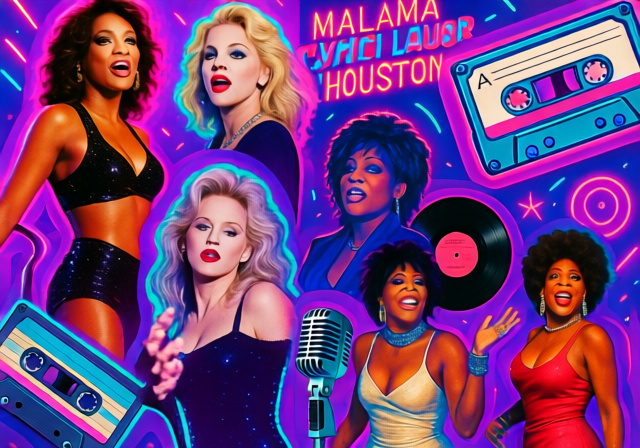
The 1980s represented a revolutionary era for female artists in the music industry, an unprecedented period where women not only dominated the charts but also reshaped cultural norms and visual aesthetics. From the emergence of MTV as a cultural powerhouse to the breaking of industry barriers for female artists, the decade witnessed the rise of some of music’s most influential voices. These women didn’t just sing—they created movements, challenged conventions, and established legacies that continue to resonate with audiences across generations.
Whitney Houston and Madonna stand as the decade’s towering figures, each selling over 200 million records worldwide and fundamentally different approaches to pop superstardom. Houston, nicknamed “The Voice,” brought unprecedented vocal mastery to mainstream pop, while Madonna’s relentless reinvention and provocative visual artistry made her a cultural phenomenon that transcended music. Their combined influence paved the way for the diverse array of female talent that would define the decade.
The MTV revolution transformed the music industry overnight, suddenly requiring artists to be visual performers as much as musicians. This shift uniquely benefited female artists who leveraged fashion, choreography, and cinematic storytelling to create complete artistic statements. Icons like Janet Jackson and Cyndi Lauper turned music videos into art forms, using the medium to express feminist themes, challenge beauty standards, and create visual lexicons that would influence pop culture for decades to come.
This comprehensive guide celebrates 45 iconic female singers who defined the 1980s across genres—from pop titans and rock royalty to R&B powerhouses and alternative innovators. We’ll explore their signature sounds, chart achievements, cultural impact, and the lasting legacies that continue to inspire artists today. Whether you’re a nostalgia seeker rediscovering forgotten favorites or a younger listener exploring the decade’s rich musical landscape, this journey through 80s female artistry reveals why these voices remain so compelling decades later.
Our previous guide covered 25 essential artists, but this expanded celebration includes forgotten gems, international sensations, and the unsung heroines who shaped the decade’s sound. Join us as we explore how these remarkable women changed music, fashion, and culture forever.
Table of Contents
The Unmistakable Superstars: 80s Music Royalty (September 2026)
Before diving into our genre-by-genre exploration, let’s acknowledge the five titans who transcended genre boundaries to become global phenomena. These artists didn’t just dominate the 80s—they defined it, selling hundreds of millions of records, pioneering new sounds, and creating visual languages that would influence pop culture for generations. Their combined achievements include 23 Grammy Awards, over 500 million records sold worldwide, and a cultural impact that extends far beyond music into fashion, film, and social discourse.
| Artist | Signature Achievement | Cultural Impact | Decade-Defining Hits |
|---|---|---|---|
| Madonna | Queen of Pop, 300M+ records sold | Fashion icon, feminist provocateur | “Like a Virgin,” “Material Girl” |
| Whitney Houston | “The Voice,” 200M+ records sold | Viral standard, broke racial barriers | “I Wanna Dance with Somebody,” “Greatest Love of All” |
| Tina Turner | Comeback Queen, Rock & Roll Hall of Fame | Survivor icon, ageism challenger | “What’s Love Got to Do with It,” “Private Dancer” |
| Janet Jackson | Dance-pop innovator, 100M+ records sold | Choreography pioneer, sexual freedom advocate | “Nasty,” “Rhythm Nation,” “What Have You Done for Me Lately” |
| Cyndi Lauper | Colorful individualist, feminist anthem creator | LGBTQ+ ally, fashion revolutionary | “Girls Just Want to Have Fun,” “Time After Time” |
Pop Titans: Chart-Dominating Powerhouses (September 2026)
1. Madonna – Queen of Pop and Cultural Revolutionary
Madonna Louise Ciccone didn’t just participate in 80s pop culture—she orchestrated it. Arriving in 1982 with her debut album “Madonna,” she spent the decade continuously reinventing herself while maintaining an unprecedented grip on the charts. Her 1984 album “Like a Virgin” spent six weeks at #1 and sold over 21 million copies worldwide, establishing her as a cultural force who could blend controversy with commercial appeal seamlessly.
Madonna’s MTV dominance transformed music videos into art forms, with “Material Girl,” “Like a Virgin,” and “Papa Don’t Preach” each becoming cultural moments that sparked discussions about feminism, sexuality, and religion. Her 1985 “Virgin Tour” grossed over $5 million—a then-record for a debut tour—while her 1987 “Who’s That Girl” tour earned $25 million, proving her commercial dominance extended beyond recordings.
Beyond music, Madonna’s influence on fashion cannot be overstated—the lace gloves, layered necklaces, and crucifix jewelry she popularized became ubiquitous 80s style statements. Her willingness to tackle controversial themes, from religious imagery in “Like a Prayer” to teenage pregnancy in “Papa Don’t Preach,” expanded the boundaries of acceptable topics for mainstream pop artists, paving the way for future generations to express themselves more freely.
By decade’s end, Madonna had sold over 70 million records worldwide, received numerous MTV Video Music Awards, and established herself as the decade’s most influential female artist—a title she maintains to this day through continuous reinvention and cultural relevance.
2. Whitney Houston – The Voice: Unparalleled Vocal Mastery
Whitney Elizabeth Houston entered the 1980s as a gospel-trained prodigy and exited as the decade’s most technically accomplished vocalist. Her 1985 debut album “Whitney Houston” spent 14 weeks at #1 and became the best-selling debut album by a female artist at that time, eventually selling over 25 million copies worldwide. The album spawned four #1 singles—”Saving All My Love for You,” “How Will I Know,” “Greatest Love of All,” and “You Give Good Love”—establishing her as a commercial powerhouse.
Houston’s vocal mastery redefined what was possible in pop singing. Her five-octave range, flawless control, and ability to infuse emotional depth into every note made her the standard against which other singers were measured. Her 1987 album “Whitney” debuted at #1, making her the first female artist to achieve this milestone, and produced four more #1 hits including “I Wanna Dance with Somebody (Who Loves Me)” and “Didn’t We Almost Have It All.”
Beyond her commercial success, Houston broke significant racial barriers in the music industry. Her crossover appeal helped bring R&B-influenced music to mainstream white audiences, while her polished presentation opened doors for future Black artists in pop music. Her 1988 “Moment of Truth World Tour” was the highest-grossing tour by a female artist that year, cementing her status as a global superstar.
Houston’s influence extends far beyond the 80s—her vocal techniques have been studied by countless singers, and her records have inspired generations of artists. Her combination of technical perfection and emotional accessibility created a template for pop vocal excellence that remains unmatched to this day.
3. Cyndi Lauper – Colorful Individualist and Activist
Cynthia Ann Stephanie “Cyndi” Lauper burst onto the 80s music scene with an explosion of color, individuality, and heartfelt emotion. Her 1983 debut album “She’s So Unusual” made history as the first debut album by a female artist to have four top-five singles: “Girls Just Want to Have Fun,” “Time After Time,” “She Bop,” and “All Through the Night.” The album went platinum six times over and established Lauper as one of the decade’s most distinctive voices.
Lauper’s visual aesthetic—a riot of neon colors, mismatched patterns, and dyed hair—created a powerful counterpoint to Madonna’s more polished sexuality. Her playful embrace of individuality resonated with audiences tired of conformity, while her music videos, particularly for “Girls Just Want to Have Fun,” became cultural touchstones that celebrated female friendship and self-expression.
Beyond her commercial success, Lauper emerged as an important activist voice. “She Bop” became one of the first mainstream pop songs to address female sexuality and masturbation, while her 1985 collaboration with wrestling manager Captain Lou Albano on “The Goonies ‘R’ Good Enough” showcased her commitment to charitable causes. Her 1986 album “True Colors” continued her tradition of blending pop accessibility with meaningful messages, with the title track becoming an anthem for the LGBTQ+ community.
Lauper’s impact extends beyond her 80s chart success—she won a Tony Award for the Broadway musical “Kinky Boots” and continues to advocate for LGBTQ+ rights through her True Colors Foundation. Her unique blend of pop sensibility and social consciousness made her one of the decade’s most authentic voices.
4. Janet Jackson – Dance-Pop Innovator
Janet Damita Jo Jackson emerged from her famous family’s shadow in 1986 with “Control,” an album that declared her artistic independence and established her as one of the decade’s most innovative performers. Working with producers Jimmy Jam and Terry Lewis, Jackson created a new sound that combined funk, R&B, and emerging hip-hop elements with sophisticated production and choreography that would define her career.
“Control” produced five top-five singles, including the #1 hits “When I Think of You” and “Let’s Wait Awhile,” while establishing themes of female empowerment and self-determination that would become hallmarks of her work. Her 1989 follow-up “Janet Jackson’s Rhythm Nation 1814” was even more ambitious—the first album to produce seven top-five singles, including four #1 hits, making Jackson the first artist to achieve this milestone.
Jackson’s influence on choreography and music video production cannot be overstated. Her partnership with Paula Abdul created some of the most iconic dance routines of the decade, while videos for “Nasty,” “What Have You Done for Me Lately,” and “Rhythm Nation” set new standards for synchronized movement and storytelling in music videos. Her Rhythm Nation World Tour was the most successful debut tour in history at that time.
By decade’s end, Jackson had sold over 20 million records, established herself as a formidable businesswoman, and paved the way for future female artists to take creative control of their careers. Her blend of artistic ambition and commercial innovation made her one of the 80s most influential figures.
Rock Royalty: Women Who Shredded the Stereotypes
1. Pat Benatar – Rock Powerhouse with Opera Training
Patricia Mae Andrzejewski—better known as Pat Benatar—combined classical training with raw rock power to become one of the decade’s most successful female rock artists. Her 1979 debut “In the Heat of the Night” launched her career with the hit “Heartbreaker,” but it was the 1980 album “Crimes of Passion” that established her as a rock powerhouse, featuring the anthemic “Hit Me with Your Best Shot” which became her signature song.
Benatar’s distinctive four-octave vocal range—developed through childhood opera training—gave her technical abilities rarely seen in rock music. Her 1983 album “Live from Earth” featured the acoustic version of “Love Is a Battlefield,” which reached #5 on the Billboard Hot 100 and won her a Grammy Award for Best Female Rock Vocal Performance in 1984. The song’s music video, featuring Benatar’s powerful dance performance, became an MTV staple.
Throughout the 80s, Benatar continued to release successful albums including “Precious Time” (1981), “Get Nervous” (1982), “Seven the Hard Way” (1985), and “Wide Awake in Dreamland” (1988), each producing rock radio staples like “Promises in the Dark,” “Shadows of the Night,” “Invincible,” and “All Fired Up.” Her consistent success helped break gender barriers in rock radio, proving that women could dominate the male-dominated rock landscape.
Benatar’s partnership with guitarist Neil Giraldo—both musically and personally—created one of rock’s most enduring creative partnerships. Their collaborative songwriting and dynamic stage presence influenced countless future female rock artists, making Benatar a true pioneer in the genre.
2. Joan Jett – Punk Rock Survivor and Icon
Joan Marie Larkin—known professionally as Joan Jett—embodied punk rock’s DIY ethos while achieving mainstream commercial success in the 80s. After founding The Runaways in the 70s, Jett launched her solo career with the 1981 album “Bad Reputation,” which she initially financed herself after being rejected by 23 major labels. The album’s title track and “Do You Wanna Touch Me (Oh Yeah)” established her raw, energetic sound.
Jett’s 1981 album “I Love Rock ‘n Roll” became her commercial breakthrough, spending seven weeks at #1 and selling over 10 million copies worldwide. The title track—a cover of an obscure Arrows song—became her signature anthem and established her as the queen of glam punk. The album also produced hits with “Crimson and Clover” and “I Hate Myself for Loving You,” cementing her place in rock history.
Throughout the decade, Jett continued to release successful albums with her band The Blackhearts, including “Album” (1983), “Glorious Results of a Misspent Youth” (1984), “Good Music” (1986), and “Up Your Alley” (1988). Her rebellious attitude and refusal to conform to industry expectations made her an inspiration for future generations of female rockers who valued authenticity over polish.
Jett’s influence extends beyond her music—she became a cultural icon through her appearance in films like “Light of Day” (1987) and through her unapologetic embrace of punk aesthetics. Her induction into the Rock and Roll Hall of Fame in 2015 recognized her pioneering role in opening doors for women in rock music.
3. Stevie Nicks – Mystical Songstress and Style Icon
Stephanie “Stevie” Nicks brought her unique mystical persona to solo success throughout the 80s while maintaining her role in Fleetwood Mac. Her 1981 debut solo album “Bella Donna” reached #1 and produced the classic hit “Edge of Seventeen,” along with duets with Tom Petty (“Stop Draggin’ My Heart Around”) and Don Henley (“Leather and Lace”). The album sold over 5 million copies and established her as a formidable solo artist.
Nicks’ distinctive visual style—flowing dresses, platform boots, and shawls—created an instantly recognizable aesthetic that influenced 80s fashion. Her 1983 album “The Wild Heart” continued her success with hits like “Stand Back” and “If Anyone Falls,” while 1985’s “Rock a Little” featured the popular “Talk to Me.” Her mystical songwriting approach, often incorporating themes of witchcraft, romance, and fantasy, gave her work a unique depth that resonated with audiences.
The 80s also saw Nicks struggle with addiction and personal challenges, which she documented in her music. Her 1989 album “The Other Side of the Mirror” reflected these darker themes while still producing hits like “Rooms on Fire.” Despite these challenges, Nicks maintained her status as one of rock’s most beloved figures, with her live performances becoming legendary for their emotional intensity and theatrical presentation.
Nicks’ influence on future female artists is immeasurable—her blend of poetic lyrics, distinctive voice, and mystical persona created a template for alternative female rockers that continues to inspire today. Her induction into the Rock and Roll Hall of Fame twice—once with Fleetwood Mac and once as a solo artist—testifies to her extraordinary impact.
4. Tina Turner – The Ultimate Comeback Queen
Anna Mae Bullock—known to the world as Tina Turner—orchestrated one of music history’s most remarkable comebacks in the 1980s. After escaping an abusive marriage and struggling with her career in the late 70s, Turner launched her solo resurgence with the 1984 album “Private Dancer,” which became an international sensation selling over 20 million copies worldwide.
The album’s lead single “What’s Love Got to Do with It” became Turner’s first and only #1 hit on the Billboard Hot 100, earning her three Grammy Awards including Record of the Year and Song of the Year. At 44 years old, Turner became the oldest female solo artist to top the Hot 100, breaking age barriers in the youth-obsessed music industry. The album also produced hits with “Private Dancer,” “Better Be Good to Me,” and “Let’s Stay Together.”
Turner’s 1985 “Private Dancer Tour” was a massive commercial success, grossing over $20 million and establishing her as a spectacular live performer. Her powerful voice, energetic stage presence, and signature dance moves created electrifying performances that captivated audiences worldwide. The tour’s success was documented in the 1985 concert film “Tina Live in Rio,” which showcased her connection with international audiences.
Throughout the decade, Turner continued her success with albums like “Break Every Rule” (1986) and “Foreign Affair” (1989), which produced hits like “Typical Male,” “The Best,” and “I Don’t Wanna Lose You.” Her inspiring story of survival and triumph, combined with her undeniable talent, made her one of the decade’s most beloved figures and a powerful symbol of resilience.
5. Chrissie Hynde – New Wave Pioneer
Christine Ellen Hynde—frontwoman of The Pretenders—brought punk attitude and sophisticated songwriting to mainstream success throughout the 80s. While The Pretenders formed in 1978, their 1980 self-titled debut album established them as major forces with hits like “Brass in Pocket” and “Kid.” Hynde’s distinctive voice—alternately tough and tender—combined with her sharp songwriting to create some of the decade’s most memorable rock music.
The Pretenders’ 1981 album “Pretenders II” continued their success with hits like “The Adultress” and “Talk of the Town,” despite personal tragedies that would reshape the band’s lineup. Hynde emerged from these challenges with 1984’s “Learning to Crawl,” which featured the emotional ballad “Back on the Chain Gang” and the upbeat “Middle of the Road,” demonstrating her resilience as both a person and artist.
Throughout the decade, Hynde continued to evolve The Pretenders’ sound with albums like “Get Close” (1986) and “Packed!” (1990), incorporating more pop elements while maintaining her rock edge. Her refusal to compromise her artistic vision, combined with her willingness to address both personal and political themes in her music, made her one of rock’s most respected figures.
Hynde’s influence extends beyond her music—her distinctive style, combining punk leather with feminine touches, created an aesthetic that influenced countless female artists. Her uncompromising approach to her art and her willingness to speak her mind made her a role model for independent women in rock music.
R&B and Soul Powerhouses: Voices with Heart
1. Aretha Franklin – Queen of Soul’s 80s Renaissance
Aretha Louise Franklin entered the 1980s as an established legend but found renewed commercial success with the 1985 album “Who’s Zoomin’ Who?” The album became her biggest seller in years, featuring the #1 R&B hit “Freeway of Love” with saxophonist Clarence Clemons, and the top-ten pop hit “Another Night.” The album went platinum and reintroduced Franklin to a new generation of music fans.
Franklin’s 1986 album “Aretha” continued her success with the top-ten hit “Jump to It,” written and produced by Luther Vandross, and “Jimmy Lee.” Her ability to adapt her classic soul sound to contemporary 80s production while maintaining her distinctive vocal style demonstrated her remarkable versatility as an artist.
Beyond her recording success, Franklin became an important cultural figure throughout the decade. Her 1985 performance at “Live Aid” showcased her enduring vocal power to a global audience, while her continued advocacy for civil rights and social justice maintained her status as more than just a musician. Her induction into the Rock and Roll Hall of Fame in 1987—as the first woman inducted—recognized her groundbreaking contributions to music.
Franklin’s influence on 80s R&B and soul music was profound—her ability to blend gospel passion with secular themes created a template that influenced countless artists across genres. Her voice remained one of the most recognizable and powerful in popular music, continuing to inspire singers decades after her 80s renaissance.
2. Chaka Khan – Funk Queen with Unmatched Energy
Yvette Marie Stevens—known professionally as Chaka Khan—transitioned successfully from her 70s work with Rufus to solo stardom in the 1980s. Her 1984 album “I Feel for You” became her commercial breakthrough, featuring the title track written and produced by Prince with rapper Melle Mel. The song reached #3 on the Billboard Hot 100 and won her a Grammy Award for Best R&B Vocal Performance, Female.
The album also produced hits with “Through the Fire” and “This Is My Night,” showcasing Khan’s ability to blend funk, R&B, and emerging hip-hop elements. Her distinctive vocal style—combining raw power with emotional nuance—made her one of the decade’s most dynamic performers.
Khan continued her success with 1986’s “Destiny” and 1988’s “CK,” producing hits like “The Pleasure Is All Mine” and “It’s My Night.” Her electrifying live performances and collaborations with artists across genres—from Stevie Wonder to Quincy Jones—demonstrated her versatility and respect within the music industry.
Beyond her commercial success, Khan became an important figure in bringing funk and R&B to mainstream audiences. Her willingness to experiment with new sounds while maintaining her distinctive voice made her a bridge between classic soul and contemporary R&B, influencing countless future artists.
3. Sade – Smooth Jazz Sophisticate
Helen Folasade Adu—known professionally as Sade—brought a unique blend of smooth jazz, soul, and pop to international success in the 1980s. Her 1984 debut album “Diamond Life” became a global phenomenon, featuring the hits “Your Love Is King” and “Smooth Operator.” The album spent over 100 weeks on the UK charts and sold over 6 million copies worldwide, establishing Sade as a distinctive voice in contemporary music.
Sade’s 1985 album “Promise” continued her success with hits like “The Sweetest Taboo” and “Never As Good As the First Time,” showcasing her ability to create sophisticated, sensual music that transcended genre boundaries. Her distinctive voice—smoky, intimate, and emotionally direct—combined with elegant production to create a sound that was both accessible and artistically ambitious.
Throughout the decade, Sade maintained an aura of mystery and sophistication that set her apart from other pop artists. Her reluctance to engage in typical celebrity behavior and her focus on artistic integrity earned her respect from critics and fellow musicians. Her 1988 album “Stronger Than Pride” continued her tradition of thoughtful, emotionally intelligent music that appealed to adult audiences seeking substance over spectacle.
Sade’s influence on smooth jazz and adult contemporary music cannot be overstated—her sophisticated approach to songwriting and her refusal to compromise her artistic vision created a template for intelligent, sensual pop music that continues to inspire artists today.
4. Diana Ross – Motown Royalty in the MTV Era
Diana Ernestine Earle Ross entered the 1980s as an established superstar but found renewed success by adapting to the decade’s changing musical landscape. Her 1980 album “diana”—produced by Chic’s Nile Rodgers and Bernard Edwards—became her biggest commercial success in years, featuring the #1 hits “Upside Down” and “My Old Piano.” The album’s disco-influenced sound and sophisticated production brought Ross to a new generation of music fans.
Ross continued her success with 1981’s “Why Do Fools Fall in Love,” which produced hits with the title track and “Mirror, Mirror,” demonstrating her ability to adapt contemporary sounds while maintaining her distinctive voice. Her 1982 album “Silk Electric” featured the international hit “Muscles,” written and produced by Michael Jackson, showcasing her continued relevance in pop music.
Beyond her recording success, Ross became a successful actress in the 80s, starring in the television movie “Lady Sings the Blues” (1981) and “The Wiz” (1978, though released in 1978, it had continued impact through the 80s). Her 1983 concert in Central Park—though interrupted by weather—demonstrated her enduring popularity as a live performer.
Ross’s ability to reinvent herself while maintaining the elegance and sophistication that defined her career made her one of the decade’s most enduring figures. Her influence on fashion, performance style, and the integration of acting and singing careers paved the way for future multi-media entertainers.
5. Gloria Estefan – Latin Pop Pioneer
Gloria María Milagrosa Fajardo García—known professionally as Gloria Estefan—brought Latin music to mainstream international audiences throughout the 1980s as lead singer of Miami Sound Machine. The group’s 1985 album “Primitive Love” produced the English-language hits “Conga,” “Bad Boy,” and “Words Get in the Way,” establishing Estefan as a crossover star who could blend Latin rhythms with pop accessibility.
The group’s 1987 album “Let It Loose” continued their success with hits like “Rhythm Is Gonna Get You,” “Can’t Stay Away from You,” and “Anything for You,” which reached #1 on the Billboard Hot 100. The album went multi-platinum and demonstrated Estefan’s growing songwriting contributions and increasingly prominent role as the group’s frontwoman.
Estefan’s success in the 80s paved the way for the Latin explosion of the 90s and 2000s, proving that Spanish-language artists could achieve massive success in English-language markets. Her ability to blend Cuban rhythms with pop production created a distinctive sound that appealed to diverse audiences while maintaining cultural authenticity.
Beyond her musical success, Estefan became an important cultural ambassador for Latin music, helping to break down barriers and create opportunities for future Latino artists. Her success throughout the decade—selling over 25 million records worldwide—established her as one of the most important figures in bringing Latin music to global audiences.
6. Patti LaBelle – Gospel-Infused Powerhouse
Patricia Louise Holte—known professionally as Patti LaBelle—brought her gospel-trained voice and electrifying stage presence to renewed success in the 1980s. After decades in the music industry, LaBelle’s 1983 collaboration with Blue Magic on “Somebody Loves You Baby” brought her back to R&B charts, setting the stage for her solo renaissance.
LaBelle’s 1985 album “I’m in Love Again” produced the #1 R&B hit “New Attitude,” which also appeared on the “Beverly Hills Cop” soundtrack and became her signature song. The album also featured the popular “I Need Your Lovin’,” demonstrating her ability to adapt her classic soul sound to contemporary 80s production.
Throughout the decade, LaBelle became known for her dynamic live performances and gospel-inflected vocal style. Her 1986 album “Winner in You” featured the duet “On My Own” with Michael McDonald, which reached #1 on the Billboard Hot 100 and became one of the decade’s most memorable ballads.
LaBelle’s influence on 80s R&B and soul music was significant—her powerful voice and emotional delivery inspired countless singers, while her willingness to embrace contemporary sounds while maintaining her gospel roots created a template for veteran artists seeking renewed relevance. Her success in the 80s proved that authenticity and emotional depth could still find audiences in an era of increasing musical sophistication.
New Wave and Alternative Voices: The Innovators
1. Annie Lennox – Androgynous Visionary
Ann Lennox—known professionally as Annie Lennox—brought a unique blend of androgynous visual style and emotionally intelligent songwriting to international success as half of Eurythmics throughout the 1980s. The duo’s 1983 album “Sweet Dreams (Are Made of This)” became a breakthrough hit, with the title track reaching #2 on the Billboard Hot 100 and establishing their distinctive sound combining electronic music with soulful vocals.
Lennox’s visual presentation—short orange hair, masculine suits, and emotionally intense performances—challenged gender norms and created one of the decade’s most distinctive artistic personas. Her powerful voice, capable of conveying both vulnerability and strength, gave Eurythmics’ electronic music a human depth that resonated with audiences worldwide.
Throughout the decade, Eurythmics continued to evolve their sound with successful albums like “Touch” (1983), “Be Yourself Tonight” (1985), “Revenge” (1986), and “We Too Are One” (1989), producing hits like “Here Comes the Rain Again,” “Would I Lie to You?,” “Missionary Man,” and “Don’t Ask Me Why.” Lennox’s songwriting explored themes of love, politics, and social commentary with uncommon intelligence and emotional honesty.
Lennox’s influence on alternative music and visual presentation cannot be overstated—her androgynous style and intellectual approach to pop music created space for more diverse expressions of femininity in popular culture. Her success proved that artists could achieve massive commercial success while maintaining artistic integrity and social consciousness.
2. Kate Bush – Artistic Eccentric
Catherine Bush—known professionally as Kate Bush—brought theatrical artistry and experimental music to mainstream success throughout the 1980s. While she had achieved success in the late 70s with “Wuthering Heights,” her 1980 album “Never for Ever” became the first by a female solo artist to reach #1 in the UK, featuring the hit “Babushka” which reached #5 on the UK charts.
Bush’s 1985 album “Hounds of Love” represented her artistic peak of the decade, featuring the haunting “Running Up That Hill (A Deal with God)” which reached #3 in the UK and became one of her most enduring songs. The album’s second side, “The Ninth Wave,” was a conceptual suite about a woman lost at sea, demonstrating Bush’s ambition and willingness to push the boundaries of pop music into more experimental territory.
Bush’s distinctive voice—ethereal, emotional, and technically precise—combined with her innovative production techniques to create music that was both accessible and artistically challenging. Her theatrical live performances, incorporating dance, mime, and elaborate staging, influenced how artists approached concert presentations throughout the decade and beyond.
Bush’s influence on alternative and art pop cannot be overstated—her willingness to experiment with sound, structure, and presentation created space for more artistic expression in mainstream music. Her ability to achieve commercial success while maintaining artistic integrity made her a role model for future generations of female artists who refused to compromise their vision.
3. Debbie Harry – Blondie’s Cool Frontwoman
Deborah Ann Harry—known professionally as Debbie Harry—brought punk attitude and pop sensibility to success throughout the 1980s as lead singer of Blondie. While the band had achieved massive success in the late 70s with hits like “Heart of Glass” and “One Way or Another,” Harry continued her solo career in the 80s with the 1981 album “KooKoo,” produced by Nile Rodgers and Bernard Edwards of Chic.
Harry’s 1986 album “Rockbird” produced the hit “French Kissin’ in the USA,” demonstrating her ability to adapt her punk/new wave roots to contemporary 80s pop production. Her distinctive voice—alternatively cool and emotional—combined with her iconic blonde image to create one of the decade’s most recognizable and influential personas.
Throughout the decade, Harry also pursued an acting career, appearing in films like “Videodrome” (1983) and “Hairspray” (1988), demonstrating her versatility as a performer. Her influence on fashion, with her combination of punk edge and Hollywood glamour, continued to inspire designers and artists throughout the decade.
Harry’s impact on 80s music extended beyond her own recordings—her pioneering work in blending punk energy with pop accessibility created a template that influenced countless artists across genres. Her ability to maintain relevance while evolving her sound proved that punk and new wave artists could achieve lasting commercial success.
4. Siouxsie Sioux – Goth Punk Queen
Susan Janet Ballion—known professionally as Siouxsie Sioux—brought gothic aesthetics and punk rebellion to influential success throughout the 1980s as lead singer of Siouxsie and the Banshees. While the band formed in the late 70s, their 1980 album “Kaleidoscope” marked a shift toward more experimental and accessible music, featuring the hit “Happy House” which brought their distinctive sound to broader audiences.
Siouxsie’s distinctive visual presentation—black clothing, dramatic makeup, and spider-like eye makeup—became synonymous with goth culture and influenced fashion throughout the decade. Her commanding stage presence and powerful voice—capable of both menace and vulnerability—made her one of post-punk’s most compelling performers.
Throughout the decade, Siouxsie and the Banshees continued to evolve their sound with albums like “Juju” (1981), “A Kiss in the Dreamhouse” (1982), “Hyæna” (1984), “Tinderbox” (1986), and “Peepshow” (1988), producing influential songs like “Spellbound,” “Slowdive,” “Cities in Dust,” and “Peek-a-Boo.” The band’s willingness to experiment with different sounds—from tribal rhythms to psychedelic textures—kept them at the forefront of alternative music.
Siouxsie’s influence on alternative and goth music cannot be overstated—her distinctive aesthetic and uncompromising artistic vision created a template for female artists in alternative music that continues to inspire today. Her success proved that women could lead influential bands while maintaining complete creative control and a distinct artistic identity.
5. Bonnie Tyler – Raspy Rock Balladeer
Gaynor Hopkins—known professionally as Bonnie Tyler—brought her distinctive raspy voice to massive international success in the early 1980s. Her 1982 album “Faster Than the Speed of Night” featured the power ballad “Total Eclipse of the Heart,” which became one of the decade’s most enduring hits, reaching #1 in multiple countries and selling over 6 million copies worldwide.
Tyler’s distinctive vocal style—raspy, emotional, and powerful—gave her ballads a unique intensity that resonated with audiences worldwide. The album also produced the hit “Have You Ever Seen the Rain?,” demonstrating her ability to interpret both original material and covers with distinctive emotion.
Throughout the decade, Tyler continued to release successful albums like “Secret Dreams and Forbidden Fire” (1986) and “Hide Your Heart” (1988), producing hits like “Holding Out for a Hero” from the “Footloose” soundtrack and “If You Were a Woman (And I Was a Man).” Her ability to deliver emotionally powerful performances made her a favorite for soundtrack contributions and dramatic ballads.
Tyler’s influence on power ballads and rock music was significant—her success proved that distinctive vocal characteristics could become commercial assets rather than limitations. Her international appeal, particularly in Europe, demonstrated the global reach of 80s rock music and the universal appeal of emotionally charged performances.
6. Kim Carnes – One-Hit Wonder with Staying Power
Kim Carnes achieved one of the decade’s most memorable hits with “Bette Davis Eyes” in 1981, a song that spent nine weeks at #1 on the Billboard Hot 100 and became the year’s biggest-selling single. The song’s distinctive new wave arrangement and Carnes’ raspy, emotive delivery created an instantly recognizable sound that defined early 80s pop music.
While “Bette Davis Eyes” became Carnes’ signature hit, her 1981 album “Mistaken Identity” also produced the follow-up hit “Draw of the Cards” and demonstrated her ability to create sophisticated pop music with emotional depth. Her distinctive voice—alternately tough and vulnerable—gave her music a unique character that stood out in the crowded pop landscape.
Throughout the decade, Carnes continued to release albums like “Voyage” (1982), “Cafe Racers” (1983), “Barking at Airplanes” (1985), and “View from the House” (1988), though none matched the commercial success of “Bette Davis Eyes.” Her songwriting collaborations with her husband Ellsworth “Eddie” Reeves created a body of work that, while not commercially dominant, maintained artistic integrity and emotional honesty.
Carnes’ influence on 80s pop music, while focused primarily on one massive hit, demonstrated the power of distinctive vocal characteristics and sophisticated production in creating enduring pop music. Her success proved that artists could achieve massive commercial success with a single, perfectly crafted song while maintaining artistic credibility through subsequent work.
Forgotten Gems: Underrated Artists Who Deserve More Love
While the superstars dominated headlines and airwaves, the 80s were rich with talented female artists who achieved significant success but have been largely forgotten by mainstream retrospectives. These artists created memorable music that deserves rediscovery, from one-hit wonders who captured the zeitgeist to consistent hitmakers who faded from public memory despite their commercial success.
Laura Branigan brought dramatic intensity to pop music with her 1982 hit “Gloria,” which spent 36 weeks on the Billboard Hot 100 and became one of the decade’s most enduring dance-pop songs. Her powerful voice and emotional delivery also scored hits with “Self Control” (1984) and “Solitaire” (1983), establishing her as a formidable presence in 80s pop despite her limited mainstream recognition today.
Taylor Dayne emerged late in the decade with 1987’s “Tell It to My Heart,” a dance-pop anthem that reached #2 on the Billboard Hot 100 and launched her career with distinctive energy and vocal power. Her follow-up hits “Prove Your Love” and “I’ll Always Love You” demonstrated her ability to create emotionally resonant dance music that connected with audiences seeking both rhythm and substance.
Sheena Easton transitioned from UK success to American stardom with 1981’s “Morning Train (Nine to Five)” and “For Your Eyes Only” from the James Bond film of the same name. Her ability to blend pop accessibility with sophisticated production made her a consistent presence on 80s radio, though her contributions to pop music have been largely overlooked in historical retrospectives.
Nena brought German new wave to international audiences with 1983’s “99 Luftballons,” a anti-war protest song that became a worldwide hit despite its German lyrics. The song’s success—#2 in the US and #1 in multiple countries—demonstrated that international music could achieve massive success in English-dominated markets, though Nena’s subsequent career struggled to match this commercial breakthrough.
Lisa Lisa and Cult Jam brought Latin freestyle to mainstream success with hits like “I Wonder If I Take You Home” (1985), “All Cried Out” (1986), and “Head to Toe” (1987). Lisa Lisa’s distinctive voice and the group’s innovative blend of R&B, dance, and Latin influences created a distinctive sound that influenced urban pop throughout the decade, though their contributions have been largely overlooked in rock-focused music histories.
Tiffany and Debbie Gibson represented the teen pop phenomenon of the late 80s, with Tiffany’s cover of “I Think We’re Alone Now” (1987) and Gibson’s “Only in My Dreams” (1987) launching both artists to massive success. While often dismissed as manufactured pop, both artists demonstrated genuine musical talent and created enduring pop songs that captured the zeitgeist of teen culture in the late 80s.
Paula Abdul emerged late in the decade as a choreographer-turned-recording artist with 1988’s “Forever Your Girl,” which spent ten weeks at #1 and produced hits like “Straight Up” and “Cold Hearted.” Her innovative dance-pop and visually dynamic videos established a template for female pop performers that would influence the next decade, though her 80s contributions are often overshadowed by her 90s success.
These forgotten gems represent the diversity and richness of 80s female pop music, demonstrating that the decade’s musical landscape was far more varied and interesting than mainstream retrospectives suggest. Their contributions deserve rediscovery and appreciation for their role in shaping the sound and style of the decade.
Beyond the Music: Cultural Impact and Legacy
The female singers of the 1980s didn’t just create music—they shaped culture, challenged norms, and opened doors for future generations of artists. Their influence extended far beyond record sales and chart positions into fashion, film, social movements, and the very structure of the music industry itself.
Fashion and Style Revolution
80s female singers revolutionized fashion by creating distinctive visual personas that were as important as their music. Madonna’s layered necklaces, lace gloves, and crucifix jewelry became ubiquitous 80s style statements, while Cyndi Lauper’s riot of color and mismatched patterns celebrated individuality over conformity. These fashion choices weren’t merely aesthetic—they were statements about female identity, sexuality, and the freedom to express oneself without apology.
The visual presentation of artists like Pat Benatar’s leather and lace, Annie Lennox’s androgynous suits, and Siouxsie Sioux’s gothic aesthetic created fashion movements that transcended music. Their influence extended to runways, magazines, and everyday style choices, demonstrating that female artists could be trendsetters in broader culture. This fashion revolution also had economic impact, creating new markets for music-inspired clothing and accessories.
The MTV Revolution
The emergence of MTV in 1981 fundamentally changed how female artists achieved success, suddenly requiring visual performance skills alongside musical talent. Female artists who could create compelling visual narratives—like Madonna’s cinematic mini-movies or Janet Jackson’s innovative choreography—thrived in this new environment, while those who relied solely on vocal prowess sometimes struggled to adapt.
This visual revolution created new opportunities for female artists to control their narratives and express their visions more completely. Music videos became platforms for addressing social issues, exploring identity, and creating artistic statements that went beyond the limitations of three-minute pop songs. The medium also created new career paths for women in the music industry, from directors to choreographers to production designers.
Breaking Industry Barriers
The 80s saw female artists breaking significant barriers in the traditionally male-dominated music industry. Women began taking more control over their careers as songwriters, producers, and business executives. Artists like Madonna who demanded creative control over their work set precedents that benefited future generations of female artists.
The decade also saw increased representation of women in traditionally male-dominated genres like rock and heavy metal. Artists like Pat Benatar, Joan Jett, and Lita Ford proved that women could achieve massive success in rock music, opening doors for future generations of female rockers. Their success challenged industry assumptions about what music women could perform and who would buy it.
Enduring Legacy and Modern Influence
The influence of 80s female singers continues to resonate in today’s music industry. Current artists like Lady Gaga, Beyoncé, and Taylor Swift acknowledge their debt to 80s pioneers who created space for female artists to be both commercially successful and artistically ambitious. The visual presentation, genre-blending, and business savvy of today’s female pop stars have their roots in the innovations of 80s artists.
The music created by these women continues to find new audiences through streaming platforms, movie soundtracks, and sampling by contemporary artists. The emotional authenticity and technical excellence of their work has proven timeless, continuing to inspire and move listeners decades after its creation.
Perhaps most importantly, the 80s female singers demonstrated that women could be both commercially successful and culturally significant—creating art that spoke to millions while pushing boundaries and challenging expectations. Their legacy isn’t just in the records they sold but in the doors they opened for future generations of female artists to express themselves freely and achieve success on their own terms.
The Timeless Appeal of 80s Female Voices
The female singers who defined the 1980s created more than just hit songs—they forged cultural moments, challenged conventions, and established templates for artistic excellence that continue to resonate today. From the genre-defining innovations of Madonna and Whitney Houston to the trailblazing rock of Pat Benatar and Joan Jett, these artists demonstrated the extraordinary range and power of female musical expression.
What makes these voices so enduring decades later? Perhaps it’s their emotional honesty—whether in the vulnerable power ballads of Bonnie Tyler or the defiant empowerment of Janet Jackson’s “Rhythm Nation.” Maybe it’s their technical mastery—Whitney Houston’s breathtaking vocal control or Annie Lennox’s emotionally intelligent songwriting. Or perhaps it’s their willingness to take risks—Sade’s sophisticated jazz-pop or Siouxsie Sioux’s gothic experimentation—that created music that was both commercially successful and artistically significant.
For those discovering this music today, streaming platforms offer unprecedented access to both the hits and hidden gems of the decade. Playlists like “80s Female Icons” or “Women of 80s Rock” provide excellent starting points for exploration, while diving into individual artist discographies reveals surprising depth and consistency. Documentaries like “Madame X” (about Madonna) and “Tina” (about Tina Turner) provide context about the personal journeys behind the music.
The cultural impact of these artists extends far beyond nostalgia—they represent a pivotal moment in music history when women seized control of their narratives, challenged industry norms, and created art that spoke to millions while pushing creative boundaries. Their influence can be heard in today’s female artists, seen in current fashion trends, and felt in the continued evolution of the music industry itself.
As we continue to celebrate and rediscover these remarkable voices, we’re reminded that great art transcends time. The music created by these 45 iconic female singers isn’t just a relic of the past—it’s a living legacy that continues to inspire, challenge, and move new generations of listeners. Their songs remain powerful statements about love, empowerment, creativity, and the courage to be authentically oneself—messages that resonate as deeply today as they did when first unleashed upon the world.
The 80s may be gone, but the voices of these remarkable women continue to echo through popular culture, reminding us of a time when female musical expression exploded onto the global stage and never looked back. Their legacy isn’t just in the records they sold or the awards they won—it’s in the doors they opened, the barriers they broke, and the inspiration they continue to provide to artists and music lovers around the world.
Frequently Asked Questions
Who was the biggest female singer in the 80s?
Whitney Houston and Madonna are generally considered the biggest female singers of the 80s. Houston had the most commercially successful debut album with 14 weeks at #1 and 4 #1 singles, while Madonna had the most cultural impact through fashion, MTV dominance, and continuous reinvention. Both sold over 200 million records worldwide and defined different aspects of 80s pop music.
What 80s female singer was nicknamed the voice?
Whitney Houston was nicknamed “The Voice” due to her extraordinary vocal abilities. Her five-octave range, flawless control, and emotional depth made her one of the most technically accomplished vocalists in pop music history. Critics and fellow musicians consistently praised her vocal mastery throughout her career.
Who were the raspy female singers in the 80s?
The most notable raspy-voiced female singers of the 80s included Bonnie Tyler, Kim Carnes, and Joan Jett. Tyler’s “Total Eclipse of the Heart” and Carnes’ “Bette Davis Eyes” became massive hits specifically because their distinctive vocal qualities gave the songs emotional intensity and memorability.
Who was the queen of pop in the 80s?
Madonna was universally recognized as the “Queen of Pop” in the 80s. Her combination of chart success, cultural impact, fashion influence, and continuous reinvention made her the decade’s defining pop icon. Her ability to generate controversy while maintaining massive commercial success set new standards for pop stardom.
Which 80s female singers sold the most records?
Madonna and Whitney Houston sold the most records among 80s female singers, each moving over 200 million records worldwide. Tina Turner also achieved massive success with “Private Dancer” selling over 20 million copies, while Janet Jackson, Pat Benatar, and Cyndi Lauper each sold tens of millions of records throughout the decade.
How did MTV impact 80s female singers?
MTV revolutionized the careers of 80s female singers by making visual presentation as important as musical talent. Artists like Madonna, Janet Jackson, and Cyndi Lauper used music videos to create complete artistic statements that included fashion, choreography, and storytelling. This visual medium helped female artists express their creative visions more fully and connect with audiences on multiple levels.