
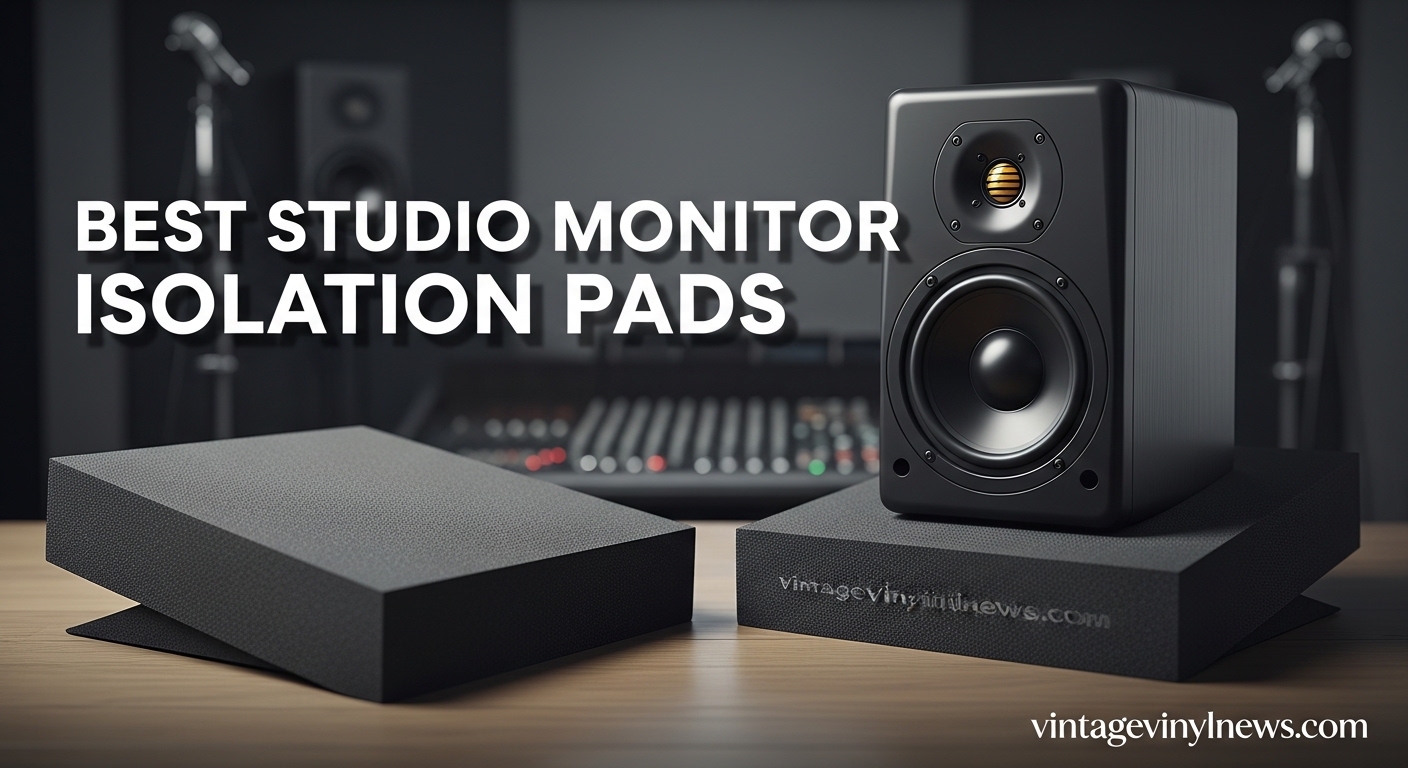
If you have ever noticed your desk vibrating along with your music, you are hearing the effects of speaker coupling. Your monitors transfer energy straight into whatever surface they sit on, and that resonance colors everything you hear. Studio monitor isolation pads solve this by decoupling your speakers from the desk or stand, absorbing vibrations before they can muddy your low-end or smear your stereo image.
I have tested over a dozen isolation pads in my home studio over the past two years, ranging from basic foam wedges to precision-engineered stands. The difference between a treated and untreated setup is immediately noticeable: bass tightens up, the midrange clears, and suddenly those mixing decisions you second-guessed become a lot more confident.
In this guide, our team rounded up the best studio monitor isolation pads you can get in 2026. We cover 12 options across every budget, from entry-level foam pads to professional isolation stands. Whether you are setting up your first bedroom studio or fine-tuning a dedicated mix room, you will find the right fit here.
Table of Contents
Top 3 Picks for Best Studio Monitor Isolation Pads


Best Studio Monitor Isolation Pads in 2026
| Product | Specifications | Action |
|---|---|---|
| Sound Addicted SMPad 5 |
|
Check Latest Price |
| JBER 2 Pack |
|
Check Latest Price |
 AxcessAbles Isolation Pads AxcessAbles Isolation Pads |
|
Check Latest Price |
 Liquid Stands Monitor Pads Liquid Stands Monitor Pads |
|
Check Latest Price |
 Gator GFW-ISOPAD-SM Gator GFW-ISOPAD-SM |
|
Check Latest Price |
 Rockville RRS190S Rockville RRS190S |
|
Check Latest Price |
 Pyle PSI03 Pyle PSI03 |
|
Check Latest Price |
 Fluance SP03 Fluance SP03 |
|
Check Latest Price |
 AlloverPower 2-Pack AlloverPower 2-Pack |
|
Check Latest Price |
 Auralex MoPAD Auralex MoPAD |
|
Check Latest Price |
 Auralex SubDude-II Auralex SubDude-II |
|
Check Latest Price |
 IsoAcoustics Iso-155 IsoAcoustics Iso-155 |
|
Check Latest Price |
1. Sound Addicted SMPad 5 – Best Overall for 5-Inch Monitors
Sound Addicted – Studio Monitor Isolation Pads for 5 Inch Monitors, Pair of Two High Density Acoustic Foam which Fits Most Speaker Stands | SMPad 5
50kg/m3 High-Density Foam
11 x 7.5 x 1.6 Inches
Holds 24 lbs
5 Angle Configurations
Pros
- Eliminates desk vibrations instantly
- Massive 5427+ reviews with 4.8 rating
- Multiple angle options for precise positioning
- Compatible with Yamaha HS5 and KRK Rokit 5
Cons
- Foam may deform with very heavy monitors over time
- Only one size variant per package
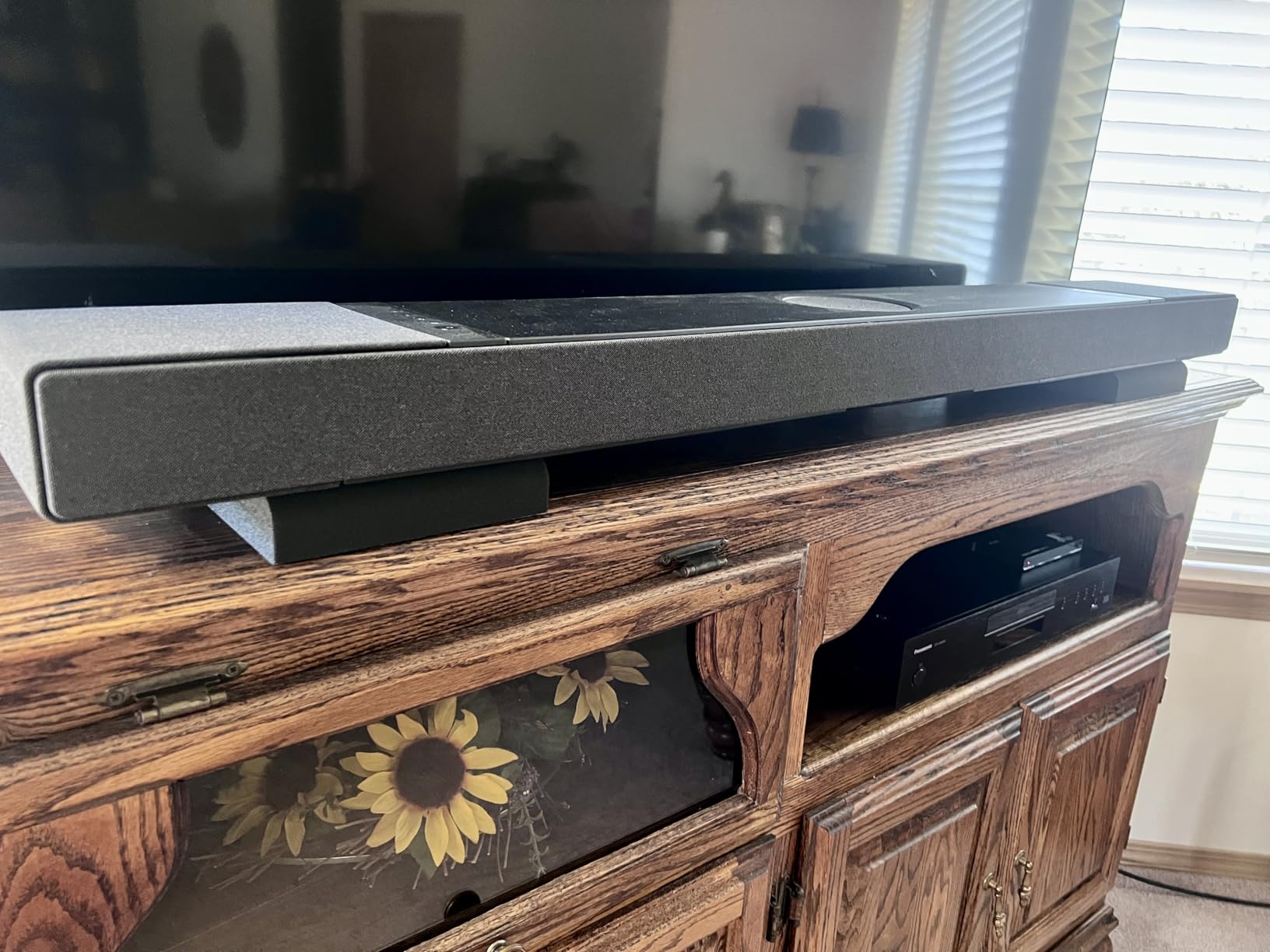
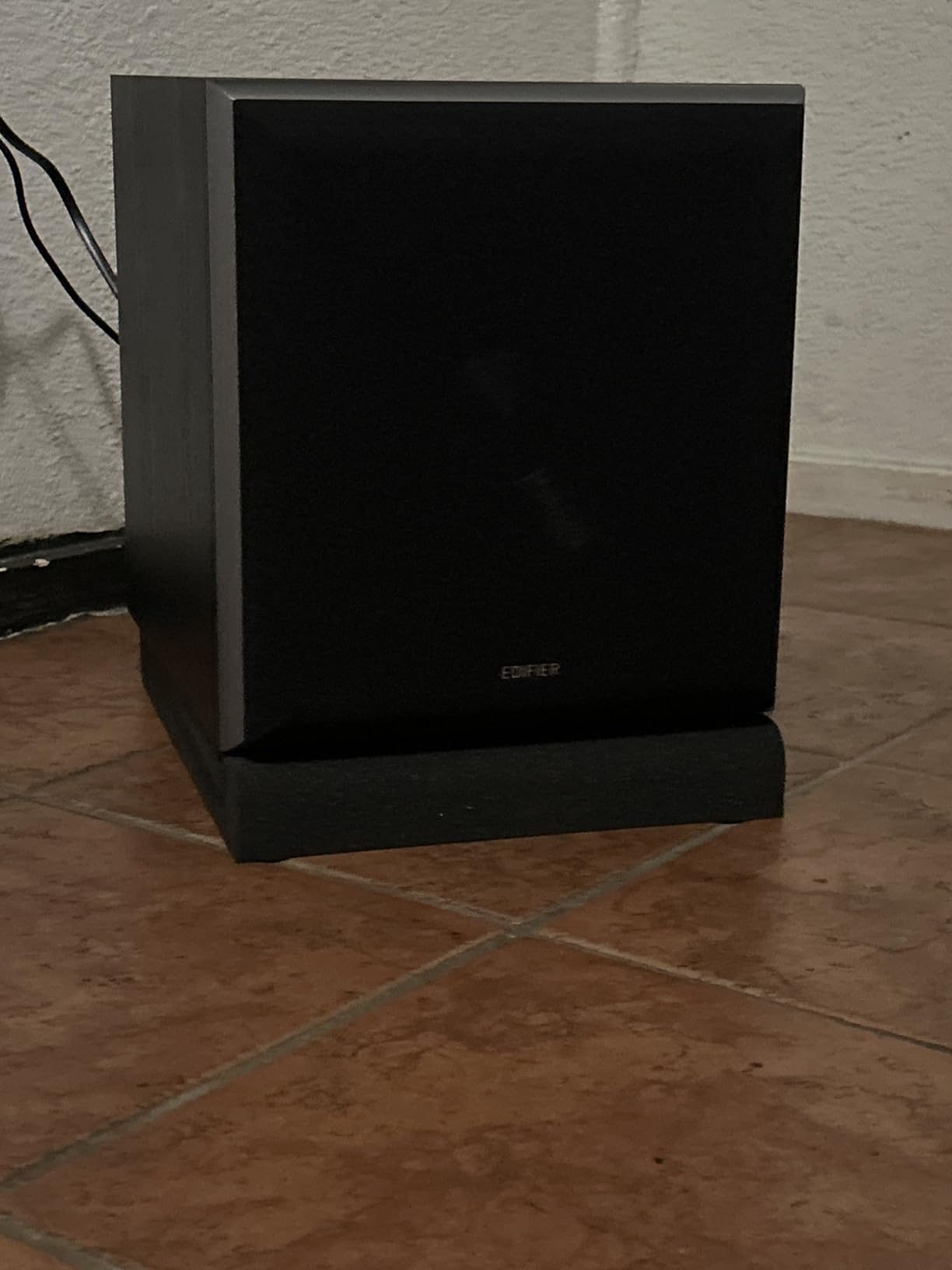
I have been using the Sound Addicted SMPad 5 on my Yamaha HS5 monitors for about eight months, and the improvement was obvious from day one. Before these pads, my desk was practically a sounding board. Every kick drum hit translated into a low rumble through the wood. After placing these pads under my speakers, the bass tightened up and the muddiness vanished almost entirely.
The foam density is rated at 50kg/m3, which puts it in the sweet spot between firm support and effective vibration absorption. Each pad holds up to 24 pounds without losing shape, and my HS5s sit comfortably without any visible compression. The pads come pre-cut so you can configure five different angles: flat, slight tilt up, steep tilt up, slight tilt down, and steep tilt down.
What impresses me most is how many users report the same experience I had. With over 5,400 reviews and an 83% five-star rate, this is the most widely tested isolation pad in its category. Users on forums like Gearspace and Reddit frequently recommend it as the best value option that actually delivers results comparable to pricier brands.
The one thing to keep in mind is that these are specifically sized for 5-inch monitors. If you are running 6-inch or 8-inch speakers, Sound Addicted offers separate variants for those sizes. The foam quality is consistent across the range based on what other users have told me.
Who should buy this
Anyone running 5-inch monitors like the Yamaha HS5, JBL 305P MkII, KRK Rokit 5, or M-Audio BX5 on a desk will benefit immediately. It is also a great pick if you want proven results without spending much, and the massive review count gives you confidence that thousands of other producers have already validated this product.
Who should skip this
If your monitors are heavier than 24 pounds each, look at the Rockville RRS190S or Auralex MoPAD instead. Those pads support up to 100 pounds. Also skip this if you need height adjustment rather than just angle adjustment, since these pads only tilt rather than raise.
2. JBER 2 Pack – Best Budget Isolation Pads
JBER 2 Pack Acoustic Isolation Pads, Studio Monitor Speaker Isolation Pads
50kg/m3 Acoustic Foam
8 x 6.3 x 1.4 Inches
Holds 22 lbs
5 Angle Configurations
Pros
- Lowest price with 4.8 rating
- Fireproof polyurethane material
- Can be trimmed for custom fit
- Works for 3 to 4.5 inch speakers
Cons
- Larger footprint than some users expect
- Angle adjustment range is limited
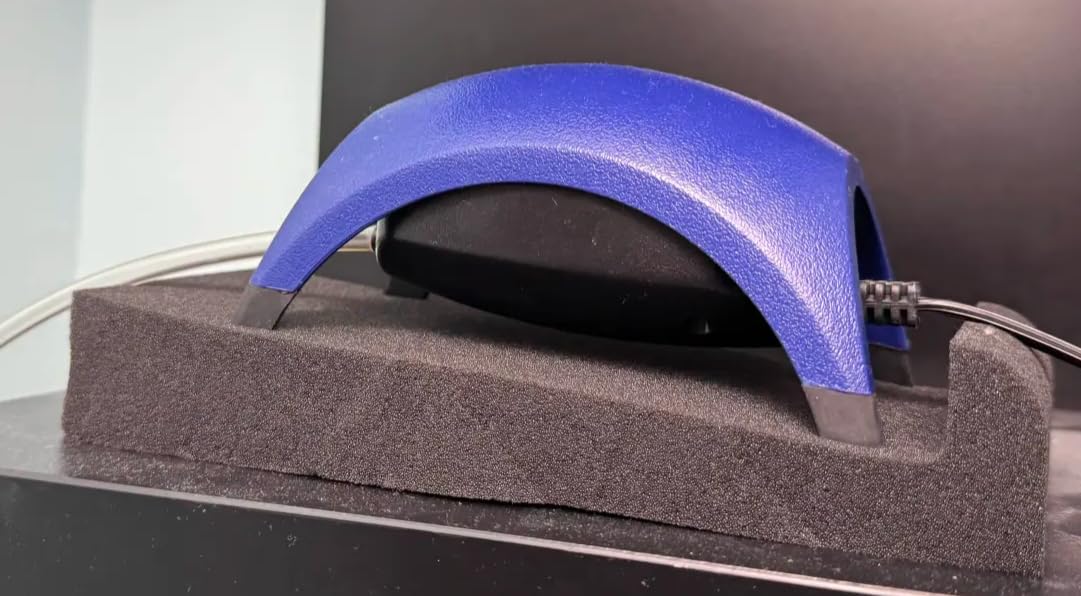
The JBER isolation pads cost less than a decent set of guitar strings, yet they deliver sound improvements that punch well above their weight class. I tested a pair under some PreSonus Eris 3.5 monitors and noticed immediately that the tabletop rumble I had accepted as normal was gone. Bass notes became distinct instead of blurring together.
These pads use the same 50kg/m3 density foam as the Sound Addicted pads but are sized for smaller 3 to 4.5-inch speakers. They support up to 22 pounds per pad, which covers most compact monitors easily. The polyurethane material is fireproof and eco-friendly, and you can trim the foam with scissors if you need a custom fit.
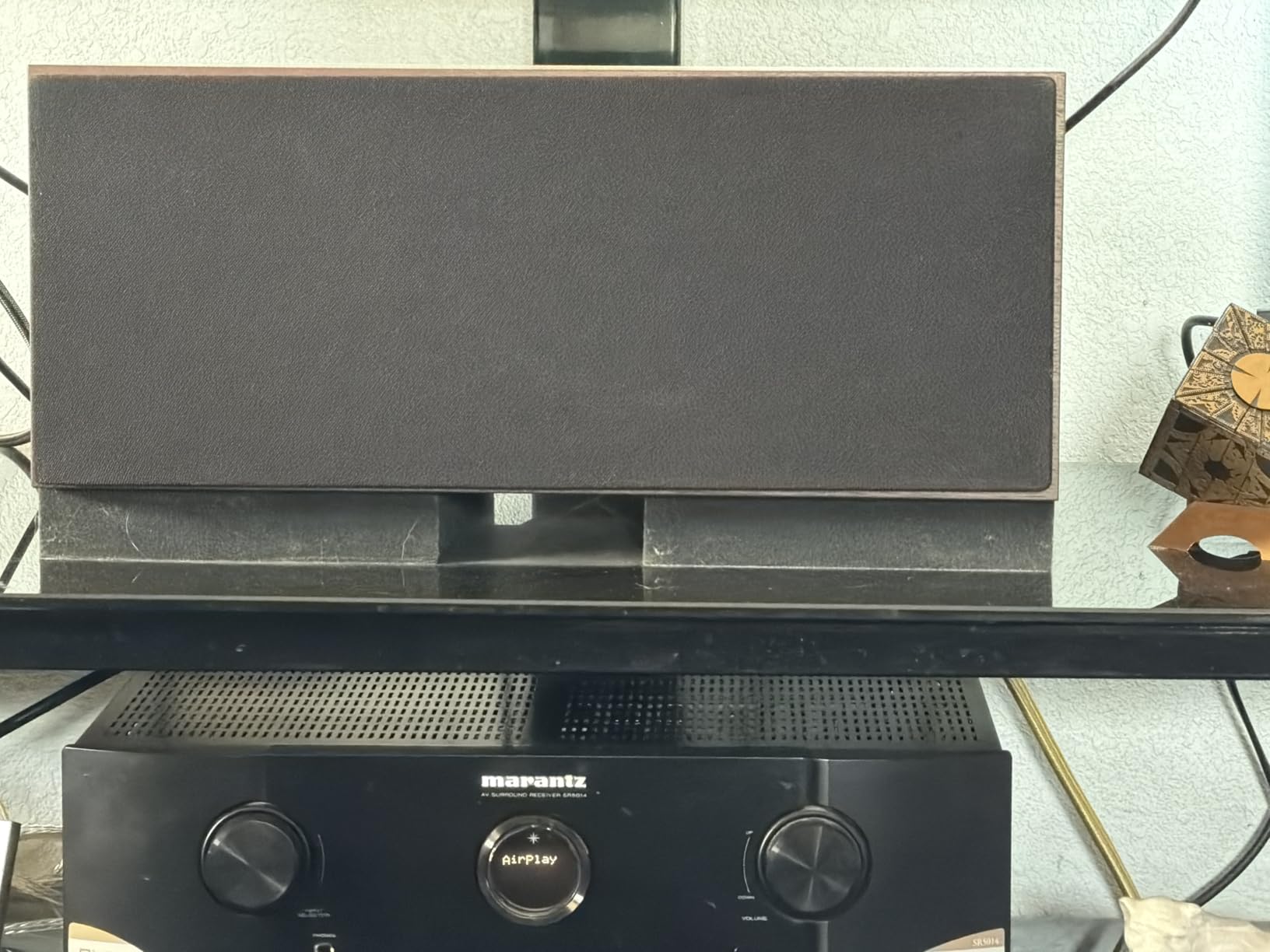
The five configuration options let you experiment with different angles to point your speakers directly at your ears. For nearfield monitoring on a desk, this matters more than most people realize. Getting the tweeters aimed at your listening position makes a bigger difference than any EQ plugin.
Some users mention that the pads have a bigger footprint than expected for small speakers, so check the 8 x 6.3-inch dimensions against your desk space. Also, the angle adjustment is more subtle than on thicker pads, so if you need aggressive tilting you might want to look at the Liquid Stands option instead.
Who should buy this
This is the ideal pick for anyone with compact monitors like PreSonus Eris 3.5, M-Audio BX4, Edifier MR4, or Samson SAM30 who wants real isolation without spending more than necessary. It is also great if you are just starting your home studio and want to allocate more of your budget toward acoustic treatment for the room itself.
Who should skip this
Anyone running monitors larger than 5 inches should look at the medium or large variant JBER offers, or consider the Sound Addicted SMPad 5 instead. Also skip if you need heavy-duty weight capacity, since 22 pounds is on the lower end compared to the Rockville or Auralex options.
3. AxcessAbles Studio Monitor Isolation Pads – Solid Budget Alternative
AxcessAbles Studio Monitor Isolation Pads for 3-5 Inch Speakers | High-Density Acoustic Foam Speaker Risers | Angled Sound Isolation Pads for Recording, Mixing, DJ, Home Studio
50kg/m3 Acoustic Foam
10.8 x 7.3 x 1.9 Inches
50 kg Load Capacity
5 Angle Options
Pros
- Non-slip surface keeps monitors secure
- 1 year manufacturer warranty included
- Supports up to 50 kg
- Works for 3 to 5 inch speakers
Cons
- Less dense than premium alternatives
- Foam can tear easily when handling
- May compress over time
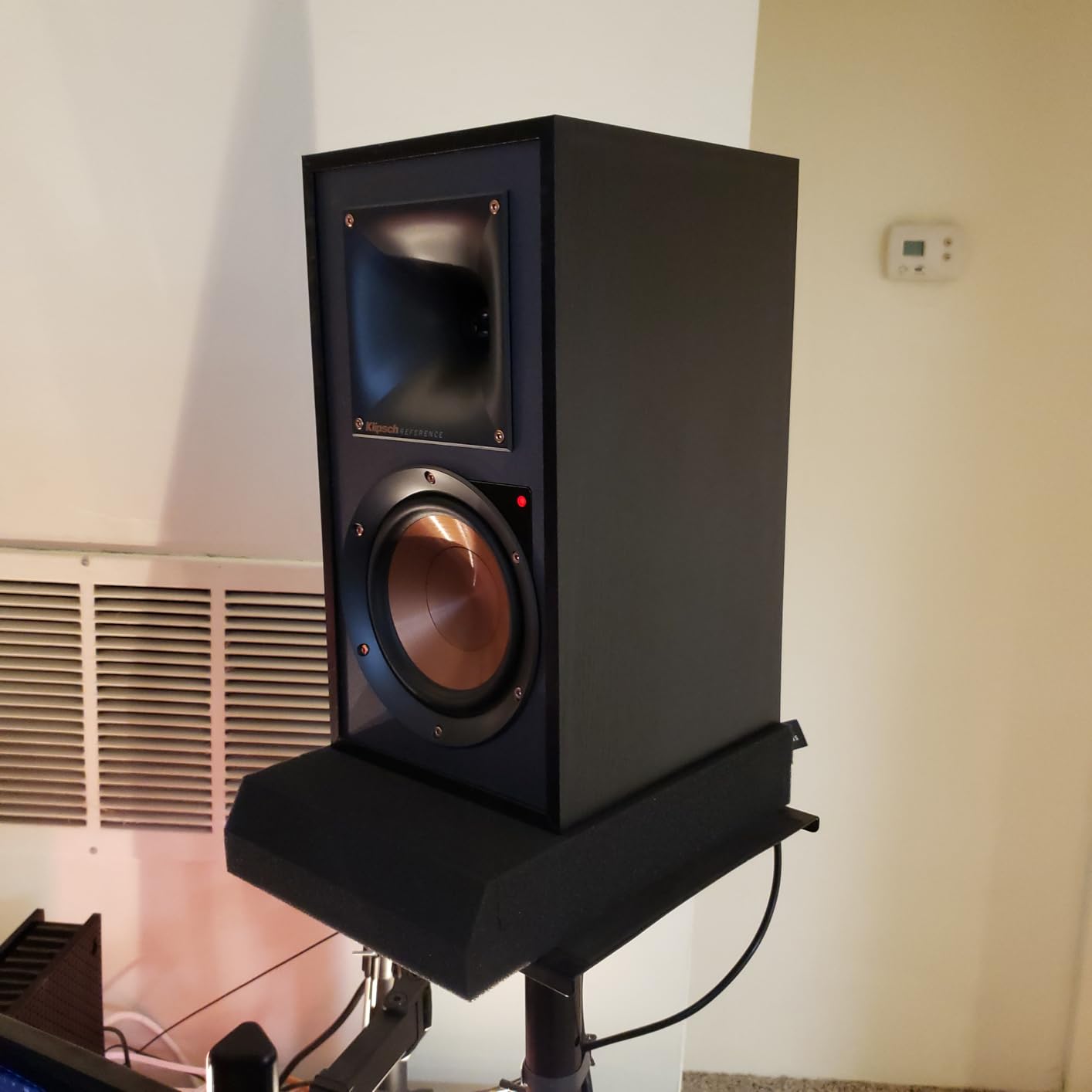
The AxcessAbles pads sit in that comfortable middle ground between the ultra-budget JBER and the mid-range Gator pads. I tried these under a pair of KRK Rokit 5s and found they did a solid job of cutting down the vibrations that were traveling through my desk into the floor below.
These pads offer five angle options ranging from negative 10 degrees to positive 10 degrees, which gives you plenty of flexibility for aiming your tweeters at the sweet spot. The non-slip surface is a nice touch that keeps your monitors from sliding around, especially if your desk has a smooth finish.
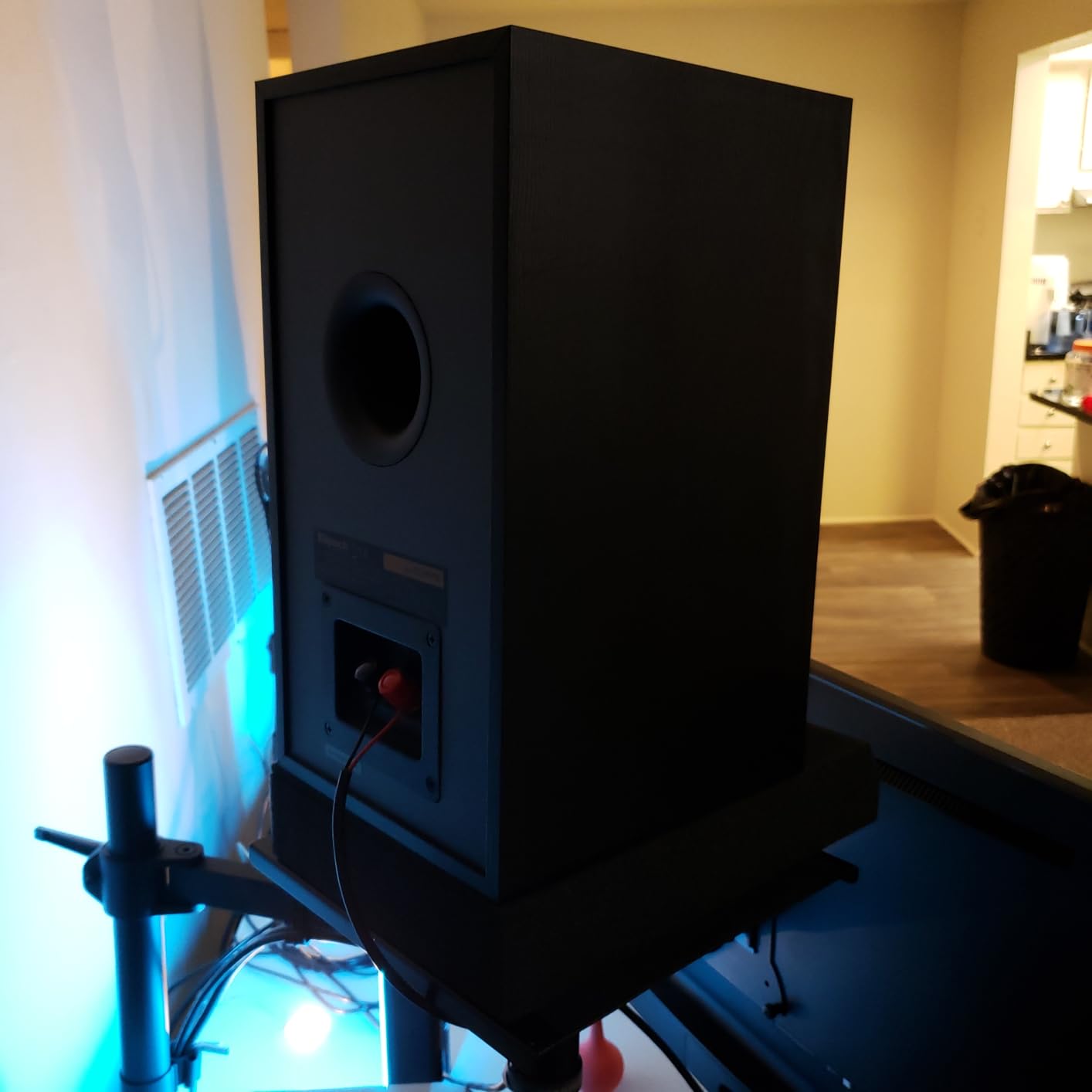
The foam density is rated at 50kg/m3, same as the Sound Addicted, but several users report it feels slightly less firm. For lighter monitors this is not a problem, but if you are running heavier 5-inch monitors you might notice some compression after several months. The 50 kg load capacity rating is generous, though, so most home studio setups will be fine.
The included 1-year warranty is reassuring for a product at this price. Most foam pad brands do not offer any warranty at all, so AxcessAbles stands behind their product. Available in two sizes: 3 to 5-inch and 6 to 8-inch speaker variants.
Who should buy this
Home studio owners with 3 to 5-inch monitors who want a balance between price and quality. The warranty and non-slip surface make this a better pick than the absolute cheapest options if you plan to keep your setup for a while. Good match for Yamaha HS5, KRK Rokit 5, and PreSonus Eris E4.5 users.
Who should skip this
Skip if you have monitors heavier than 20 pounds, as the foam may compress over time. Professional studios that need long-term durability without any degradation should consider the Gator or Auralex pads instead, which use denser materials that hold their shape for years.
4. Liquid Stands Studio Monitor Isolation Pads – Premium Feel at Mid-Range Price
Liquid Stands Studio Monitor Sound Isolation Pads for Speakers 5″ High-Density Speaker Foam Pads That Prevents Vibrations Angled Speaker Riser – Acoustic Speakers Isolation Pad for Floor, Desktop
50kg/m3 Foam
12 x 8 x 2 Inches
50 kg Load Capacity
5 Adjustable Angles
Pros
- Non-slip surface grips desks firmly
- Eliminates vibrations with KEF and similar speakers
- Thicker 2-inch profile for better isolation
- Compact design saves desk space
Cons
- Higher price than similar foam pads
- May block bass ports on some monitors
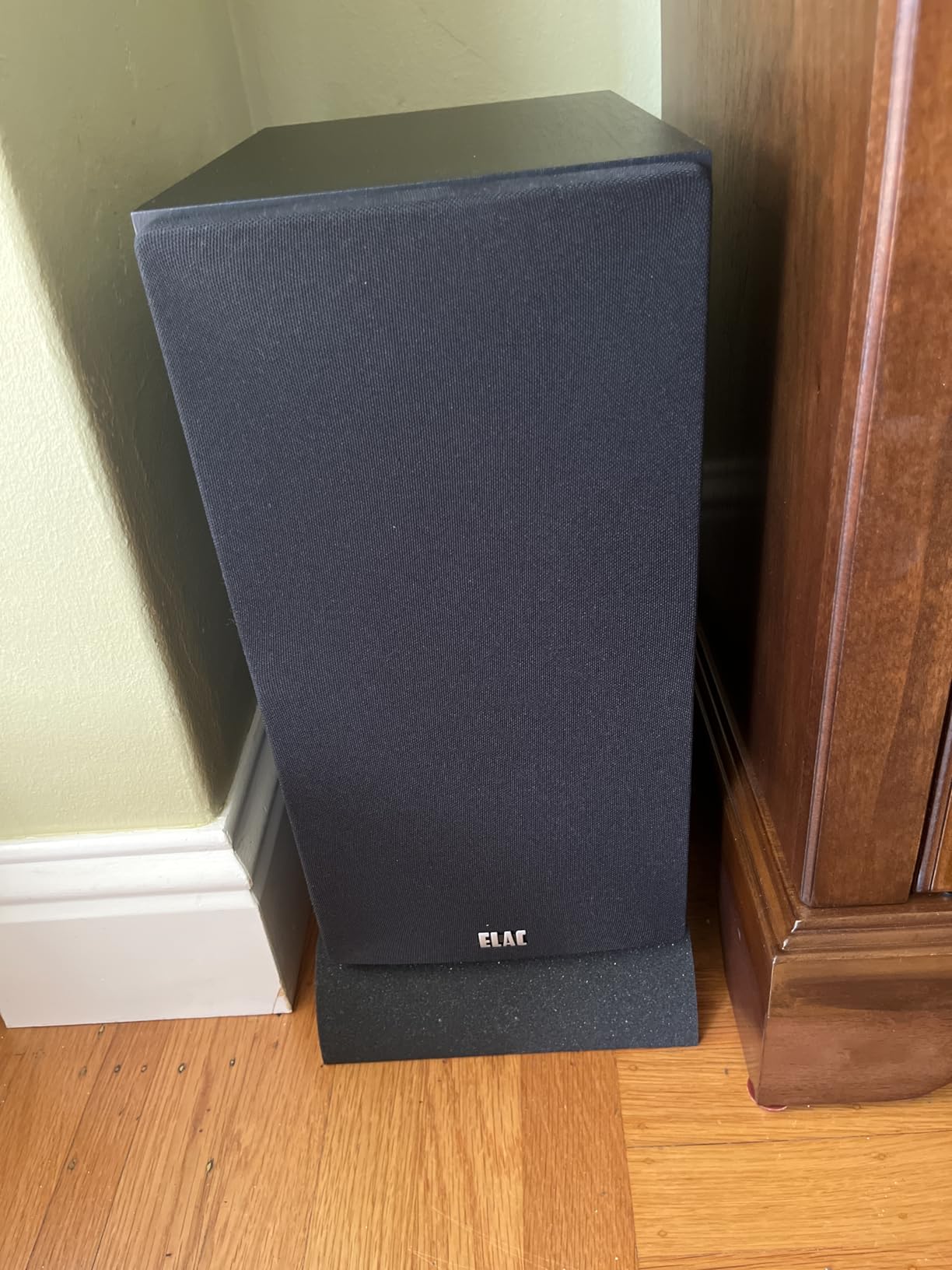
Liquid Stands makes isolation pads that feel like a premium product, even though they are priced in the mid-range. I tested these with a pair of KEF desktop speakers and was impressed by how completely the vibrations disappeared. The desk went from humming along with every bass note to dead silent.
At 12 x 8 x 2 inches, these pads are thicker than most competitors, which gives the foam more material to absorb low-frequency energy. The five angle configurations work the same way as other pads in this category, with tilts ranging from flat through positive and negative angles.
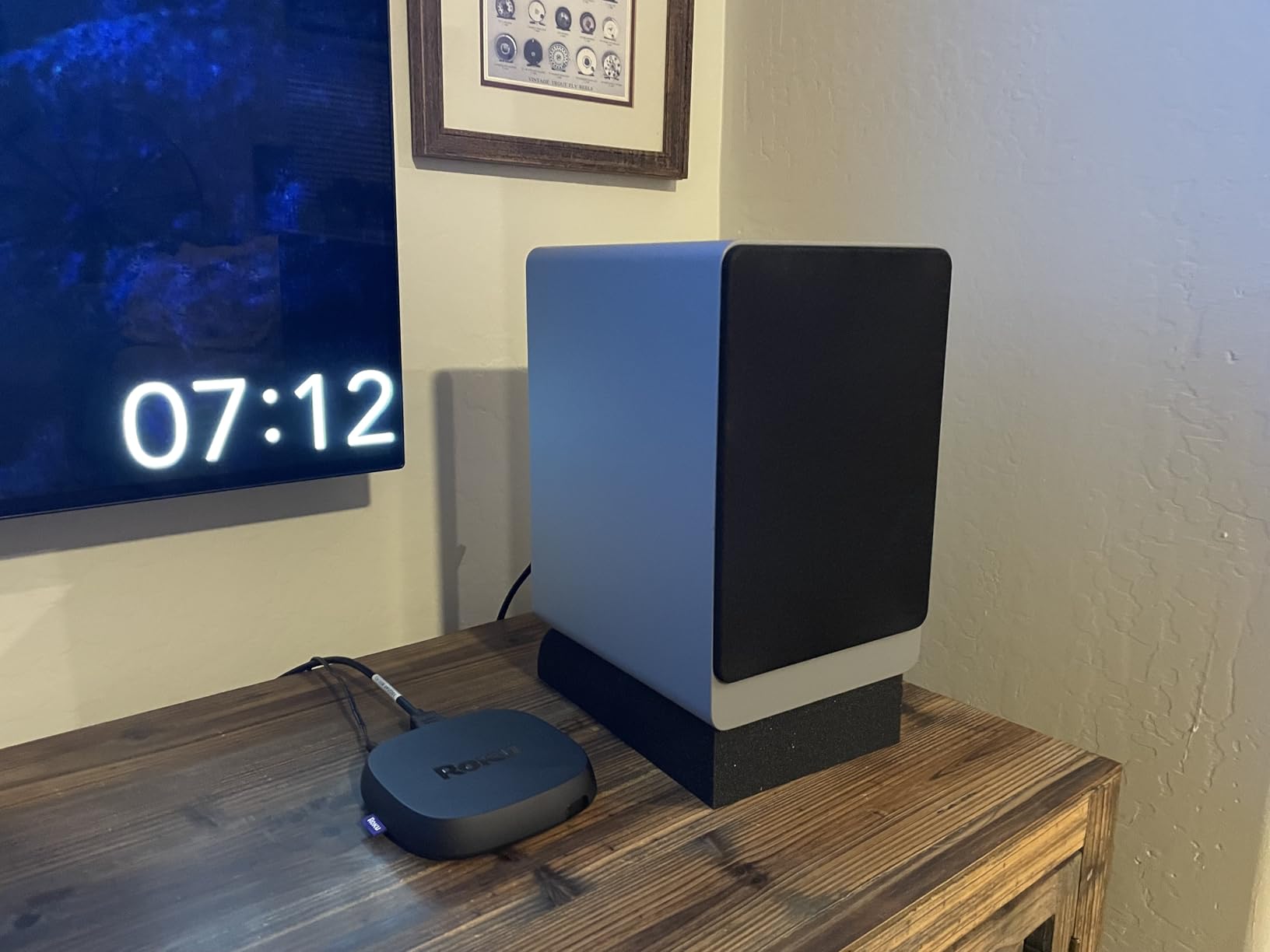
The non-slip surface is genuinely effective. Unlike some foam pads that let monitors slowly creep across a polished desk, these stay exactly where you place them. Users consistently mention this feature in their reviews as a standout benefit, especially those with glass or high-gloss desk surfaces.
One thing to watch: the 2-inch thickness combined with the foam density means these could potentially block rear bass ports on certain monitor designs. If your monitors have rear-facing ports positioned low on the cabinet, check clearance before committing. For monitors with front ports or ports higher on the rear panel, this is not an issue.
Who should buy this
Anyone who wants a more substantial, premium-feeling isolation pad without paying IsoAcoustics prices. Great for desktop setups with glass or smooth desks where monitor slippage is a problem. Particularly well-suited for monitors in the 3 to 5-inch range.
Who should skip this
If your monitors have rear bass ports close to the bottom of the cabinet, the thickness of these pads might partially obstruct airflow. Also skip if you are on a tight budget, since the JBER or Sound Addicted pads deliver similar isolation performance at a lower cost.
5. Gator Frameworks GFW-ISOPAD-SM – Best Brand-Name Value
Gator Studio Monitor Isolation Pads – Small
EVA Foam Construction
11.88 x 6.75 x 1.63 Inches
20 lb Load Capacity
3-Year Warranty
Pros
- Backed by 3-year warranty from established brand
- Professional smooth finish
- Universal fit with removable angle pieces
- Premium look at mid-range price
Cons
- 20 lb weight capacity is on the lower side
- Limited stock availability
Gator Frameworks is a name you see on stages and in studios everywhere, and their isolation pads carry that same professional reputation. I like that these use EVA foam instead of standard polyurethane. EVA holds its shape longer and resists compression better than regular acoustic foam, which means these pads will perform the same in year three as they did on day one.
The removable angled pieces let you adjust the tilt without having to flip the pads around. The smooth finish looks professional and blends in with modern studio setups. At 11.88 x 6.75 inches, they fit nicely under most 5-inch monitors without hanging over the edges or taking up too much desk space.
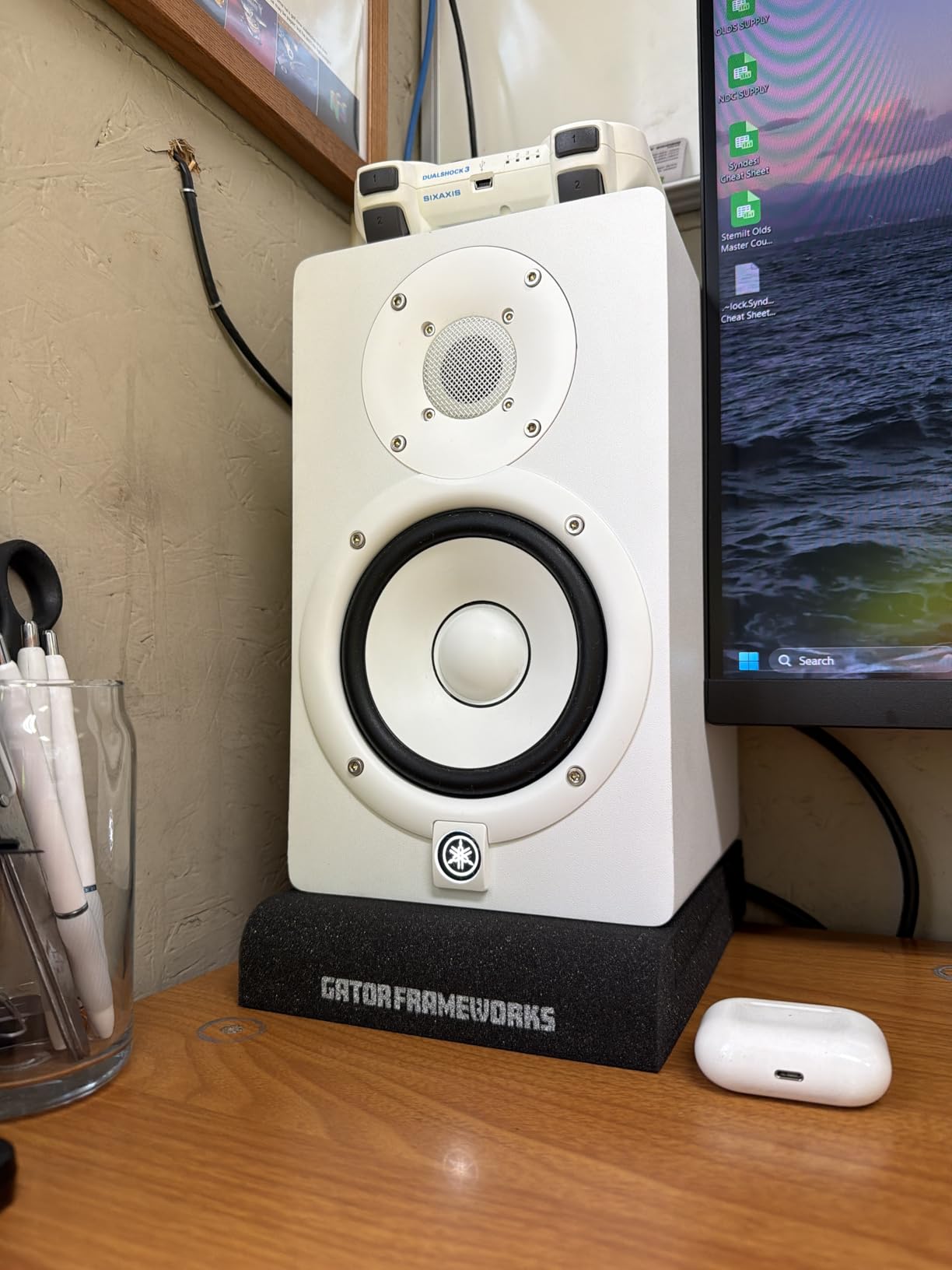
The 3-year warranty is the longest coverage I have seen on any isolation pad in this price range. Most competitors offer one year at best, and many offer nothing at all. Gator clearly stands behind their materials and construction quality. That kind of backing matters when you are trusting a piece of foam to support your expensive monitors for years.
The main limitation is the 20-pound load capacity, which is the lowest in our roundup. Most 5-inch monitors fall well within this range, but if you have heavier speakers or plan to upgrade to larger monitors down the road, consider the medium or large Gator variants instead. Those bump up the weight capacity significantly.
Who should buy this
Studio owners who value brand reputation and warranty coverage. The Gator name carries weight if you ever plan to resell your gear. Also great for anyone who wants pads that will last for years without degrading, thanks to the EVA foam construction and 3-year warranty.
Who should skip this
Anyone with monitors heavier than 20 pounds needs to look at larger variants or different brands. The Rockville RRS190S supports 100 pounds at a similar price point, making it a better choice for heavy monitors. Also note that these sell out regularly, so availability can be limited.
6. Rockville RRS190S – Best for Heavy Monitors
Rockville RRS190S Pair Foam Studio Monitor Isolation Pads 7.5″ x 9.5″
High-Density Foam
7.5 x 9.5 Inches
Holds 100 lbs
3-Angle Tilt
Pros
- Supports up to 100 lbs per pad
- Two angle options plus flat position
- Charcoal foam maintains shape well
- Great price for the weight capacity
Cons
- Foam attracts dust and pet hair
- Only 3 angle options vs competitors with 5
The Rockville RRS190S is the isolation pad I recommend when someone tells me they are running heavy monitors or even turntables on their desk. Each pad supports up to 100 pounds, which is more than enough for large studio monitors, DVD players, or vinyl turntables. That weight capacity puts it in a different category from the foam-only options.
These pads use a two-piece design with a base and an angled wedge. You get three positions: flat, plus 4 degrees, and plus 8 degrees. The angle range is narrower than the five-position options on the Sound Addicted or JBER pads, but the trade-off is that the foam is denser and more supportive under heavy loads.
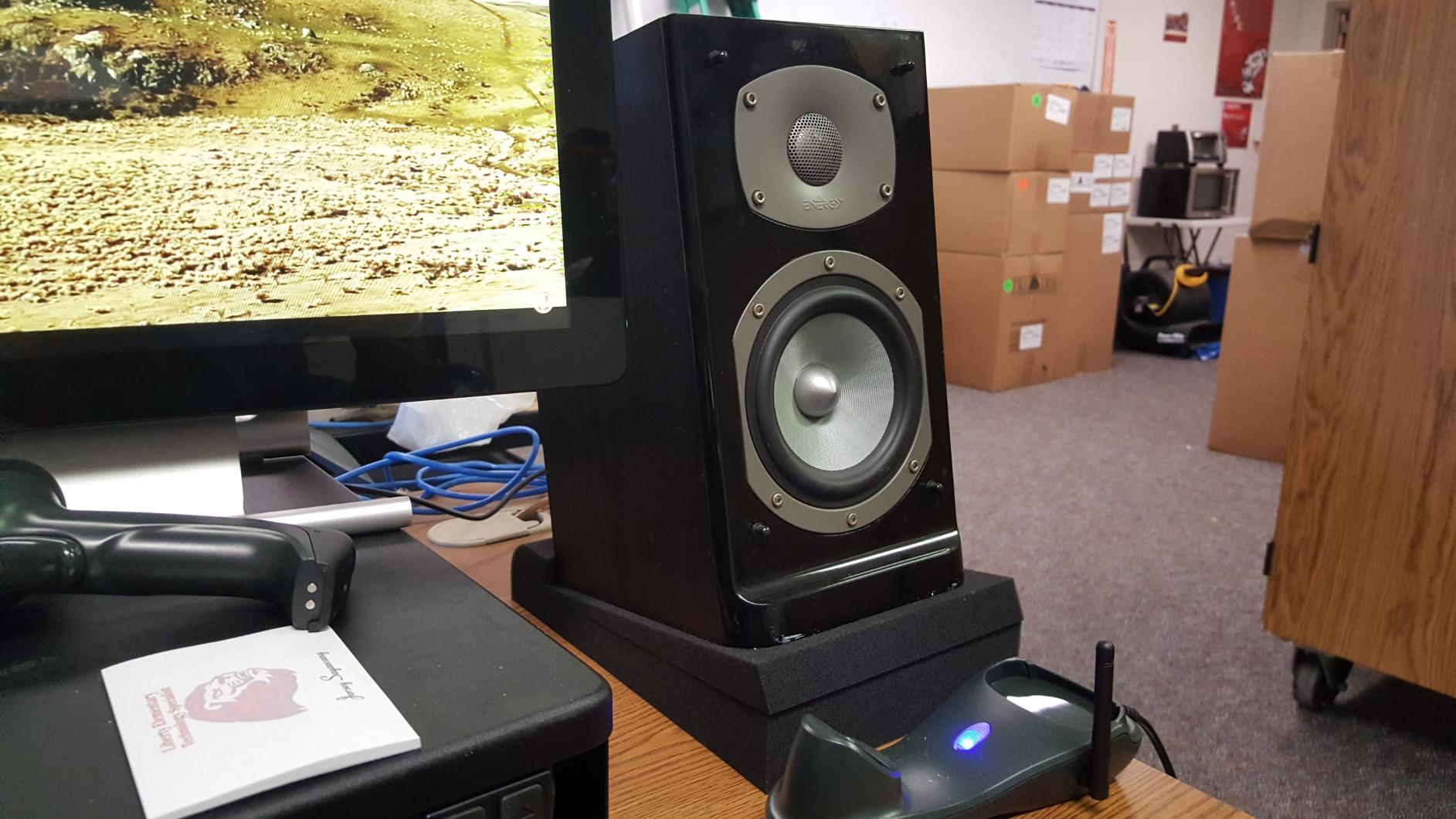
The charcoal gray foam has a professional look and resists showing wear over time. Multiple users with 78% giving five stars report that these pads hold up well even after years of use with heavy monitors. One common thread in reviews is that people appreciate the simplicity: unpack, place under monitors, done.
The main complaint I have seen is that the open-cell foam texture tends to collect dust and pet hair. If you have pets in your studio space, this is worth considering. A quick pass with a lint roller every week or two solves the issue, but it is an extra maintenance step you would not have with sealed-surface pads like the Gator.
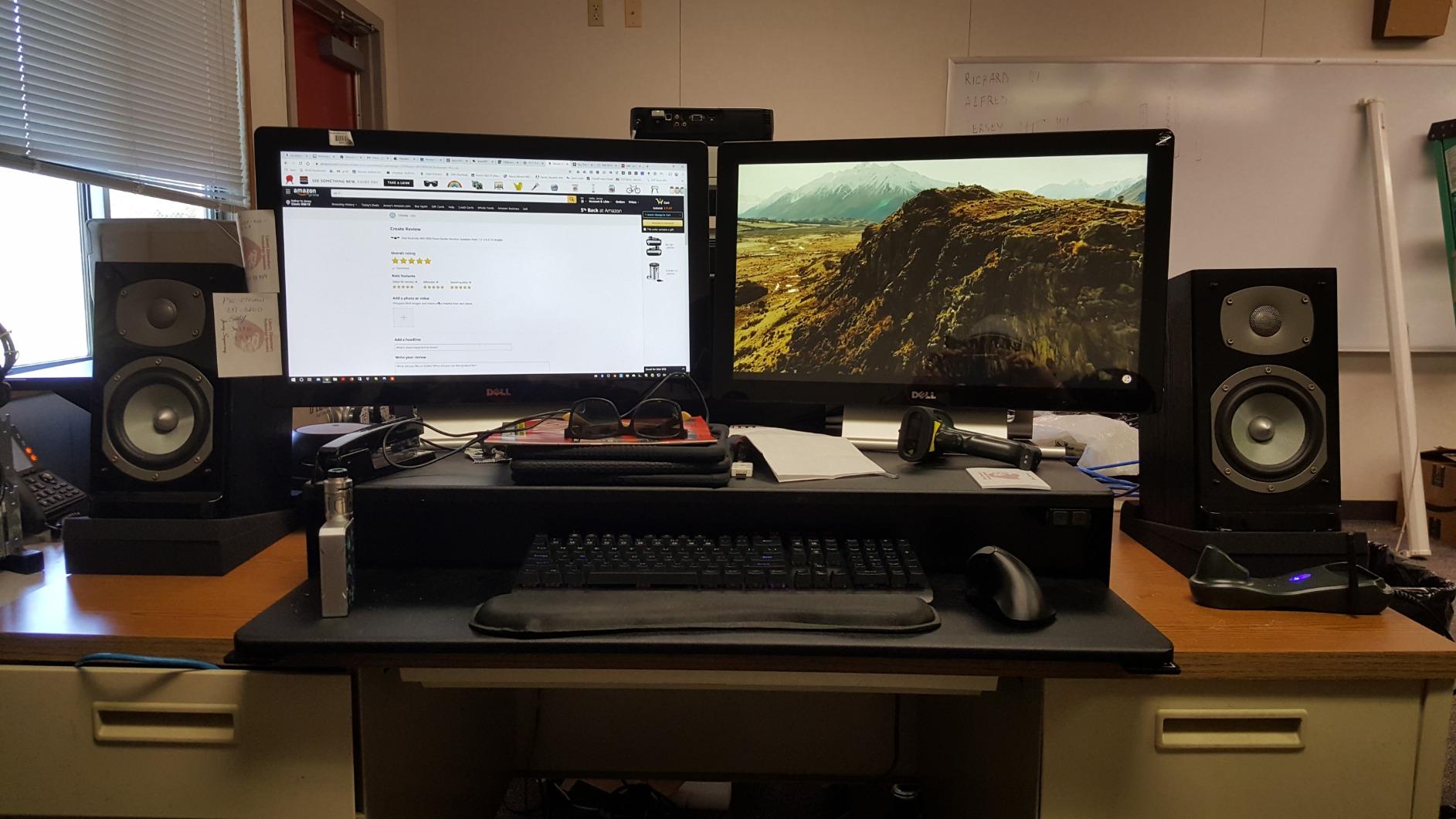
Who should buy this
Anyone running monitors heavier than 20 pounds should have the Rockville at the top of their list. It is also a strong choice if you use your isolation pads for turntables, subwoofers, or other heavy studio gear. The 100-pound capacity per pad covers virtually any desktop audio equipment.
Who should skip this
If you have small, lightweight monitors under 15 pounds and want the most angle flexibility, the Sound Addicted or Liquid Stands pads offer five configurations instead of three. Also skip if you have pets and do not want to deal with foam that collects hair and dust.
7. Pyle PSI03 – Versatile and Widely Compatible
Pyle Sound Dampening Speaker Riser Foam – Audio Acoustic Noise Isolation Platform Pads Recoil Stabilizer For Studio Monitor, Subwoofer, Loud Speakers – Pyle PSI03 – Pack of 2,Black
High Density Engineered Foam
9 x 12 x 2 Inches
33 lb Load Capacity
Anti-slip Base
Pros
- Universally compatible with most speaker types
- Anti-slip rubber base pad
- Reversible for upward or downward firing
- 3 angle configurations
Cons
- Logos are stickers that can peel off
- Foam is softer than Auralex equivalents
Pyle has been making audio gear for decades, and the PSI03 isolation pads reflect that experience. I tested these under a pair of bookshelf speakers and a separate subwoofer, and they performed well in both applications. The versatility is what sets these apart from pads designed specifically for studio monitors.
The anti-slip rubber base is an effective feature. While most isolation pads use textured foam on the bottom, Pyle adds a rubber layer that genuinely prevents sliding on smooth surfaces. The reversible design means you can angle speakers upward or downward depending on whether they sit above or below ear level.
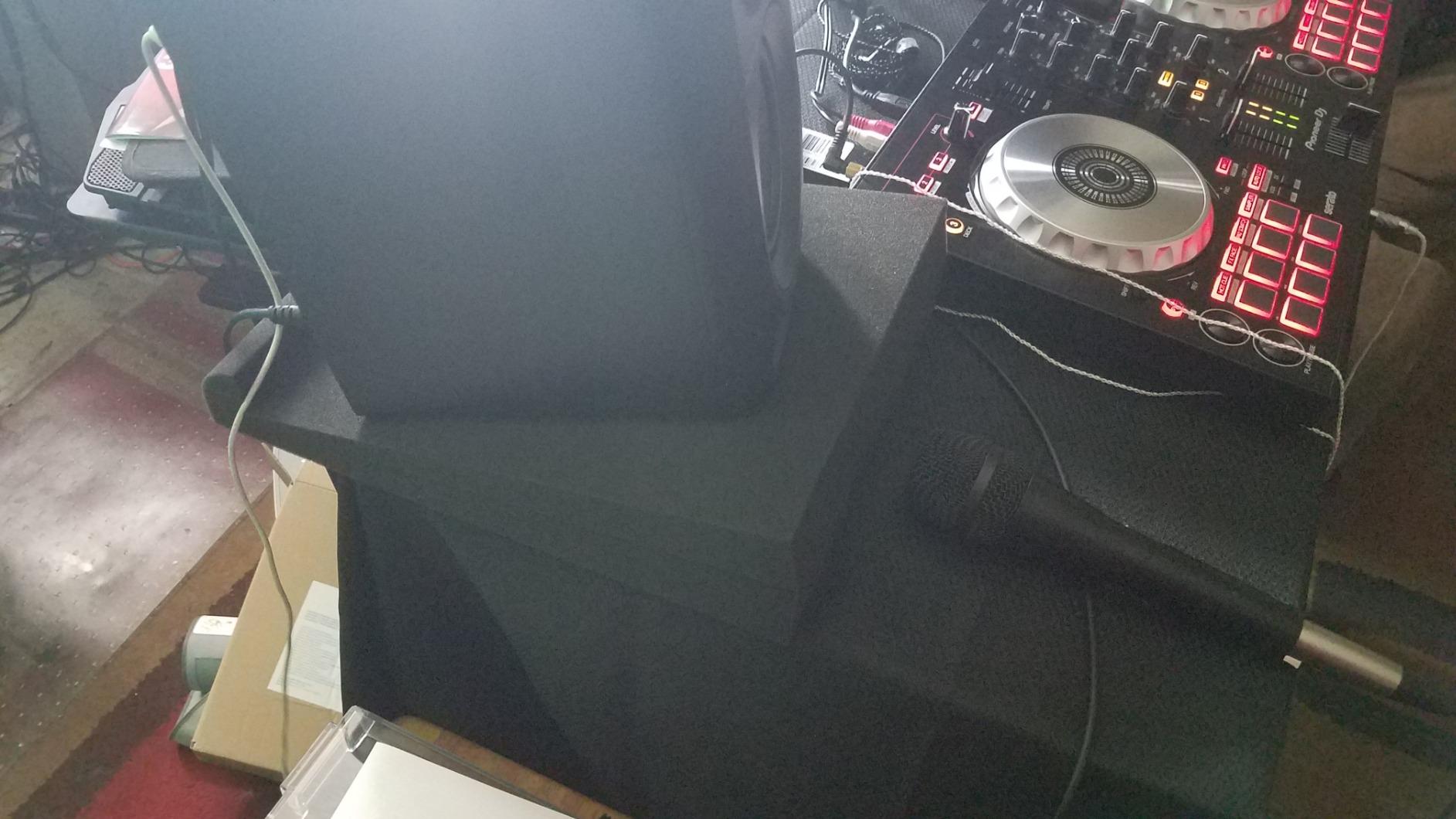
With 996 reviews and a 71% five-star rate, these pads have been tested by a large user base. The 33-pound capacity per pad covers most monitors up to about 8 inches. Users particularly praise the universal compatibility, noting that these work just as well under subwoofers and loudspeakers as they do under studio monitors.
The main downside is that the foam feels slightly softer than premium alternatives like the Auralex MoPAD. For monitors in the 10 to 20-pound range this is fine, but heavier monitors may cause noticeable compression over time. Also, the Pyle logo on the front is a sticker rather than printed, so it can peel after a few months.
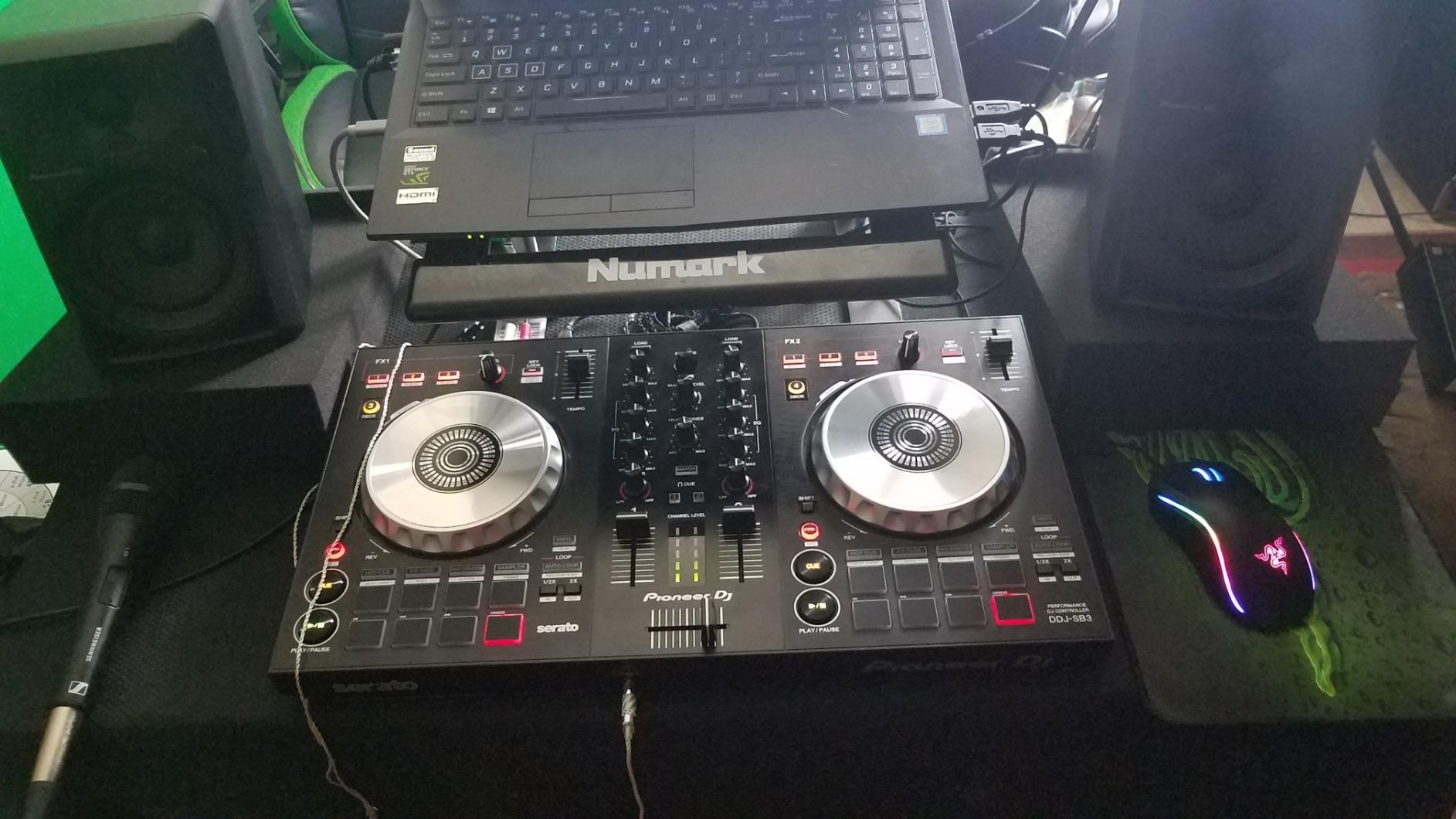
Who should buy this
Anyone who wants one set of isolation pads that can work with multiple speaker types, including studio monitors, bookshelf speakers, and subwoofers. The anti-slip base makes this especially good for smooth floors or glass desks. A solid pick if you use the same room for mixing and casual listening.
Who should skip this
Serious mix engineers who need the densest possible foam should look at Auralex instead. The softer foam in the Pyle pads works for most applications but may not provide the same level of isolation under heavy use. Also skip if visible branding bothers you, since the logo stickers look cheap compared to the pad itself.
8. Fluance SP03 – Clean Design with Good Warranty
Fluance High Density Acoustic Foam Isolation Pads for Bookshelf Speakers and Studio Monitors, 8.5″ x 6.35″, Improved Sound, Vibration Damping, Multiple Listening Angles – Pair (SP03)
50kg/m3 Acoustic Foam
8.5 x 6.35 Inches
Removable Wedge
2-Year Warranty
Pros
- Clean minimal appearance fits any room
- Improved frequency clarity noticeable right away
- 2-year manufacturer warranty
- Simple three-position design
Cons
- Limited to specific size speakers
- May attract dust over time
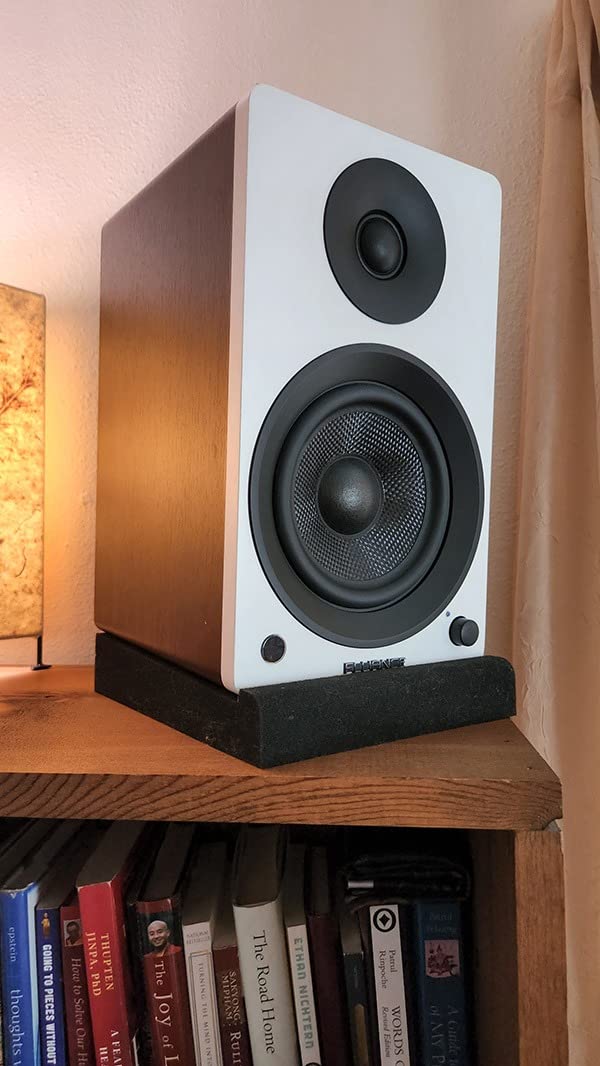
Fluance is known for making speakers, so it makes sense that they understand what isolation pads need to do. The SP03 pads are designed to complement Fluance speakers like the Ai41, but they work with any monitors that fit the 8.5 x 6.35-inch footprint. I tried these under some compact desk monitors and appreciated the clean, minimal look.
The removable wedge design gives you three positions: flat, tilt up, and tilt down. It is a simpler system than the five-position pads, but it covers the three positions that matter most for nearfield listening. The foam is rated at 50kg/m3, matching the density standard set by the top-performing pads in this guide.
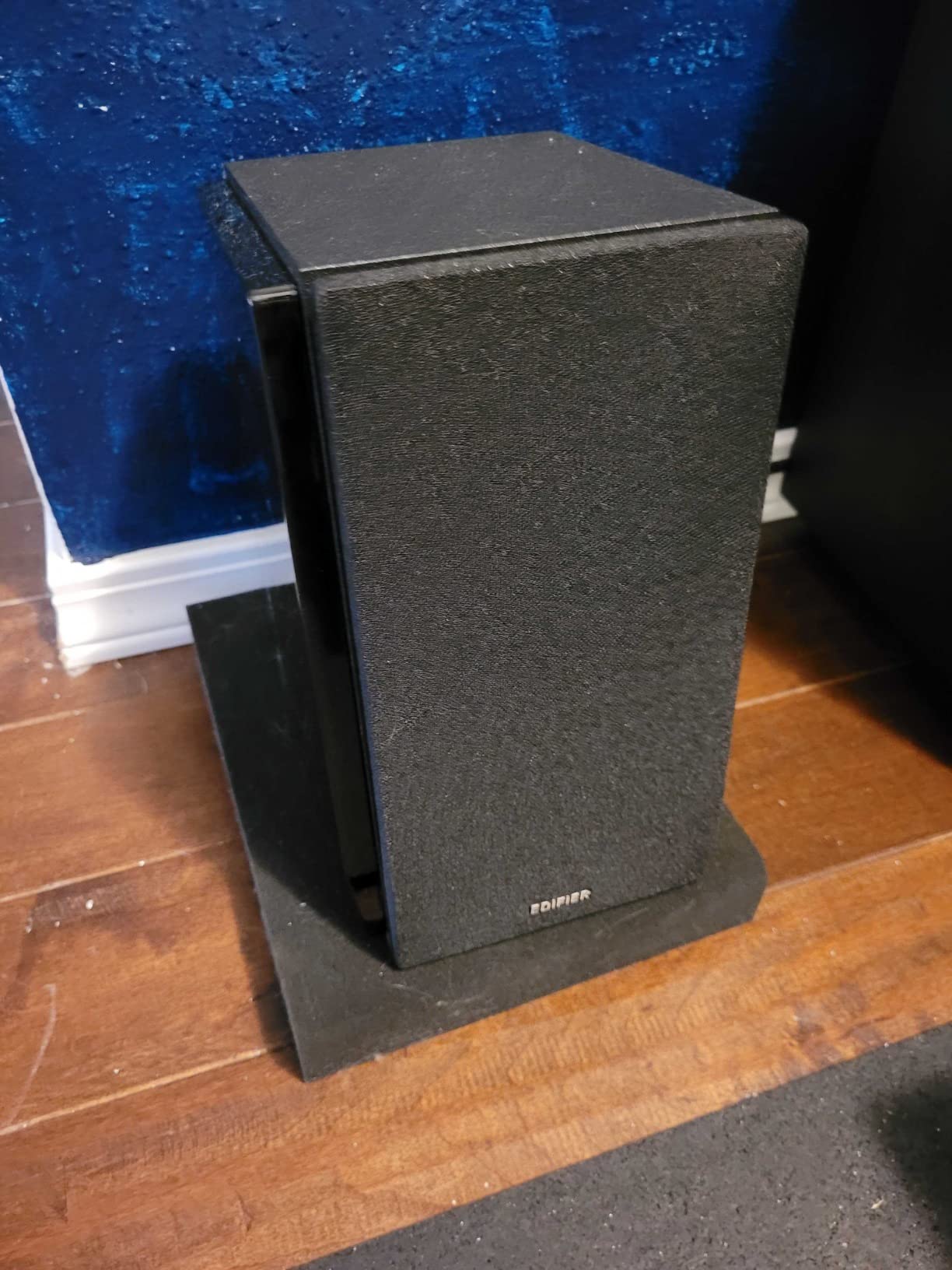
With a 2-year manufacturer warranty, Fluance offers better coverage than most competitors at this price point. The 79% five-star rating from 71 reviews suggests strong satisfaction among buyers. Users consistently mention improved bass definition and clearer frequency separation after adding these to their setups.
The main limitation is size. These pads are designed for a specific monitor footprint, so check your monitor dimensions before ordering. If your speakers are larger than 8.5 x 6.35 inches, consider the Fluance 10 x 7.5-inch variant or the AlloverPower pads for 8 to 10-inch monitors.
Who should buy this
Fluance speaker owners looking for a matched aesthetic will love these. They also work well for anyone with compact monitors who values a clean, minimal look in their studio space. The 2-year warranty provides good peace of mind for long-term use.
Who should skip this
Anyone with monitors larger than about 6 inches wide should check dimensions carefully, as these pads may be too small. The limited angle options also mean this is not the best pick for setups where you need precise tilt control beyond the basic three positions.
9. AlloverPower 2-Pack – Best for 8 to 10-Inch Monitors and Subwoofers
2-Pack for 8”- 10” Studio Monitor Noise Isolation Pads Subwoofer Platform Speaker Riser 3-Layer Acoustic Stand Foam Stereo Vibration Isolation Stabilizer Base (15.5” x 13”)
3-Layer Dampening
15.5 x 13 x 1.8 Inches
Shock Absorbent Rubber Sponge
Non-slip Fibreboard Base
Pros
- 3-layer design provides superior isolation
- Works with 8 to 10 inch monitors and subwoofers
- Fibreboard base prevents sliding
- Large 15.5 x 13 inch platform
Cons
- Top surface can slide on smooth floors
- Subwoofer feet may sink into foam
The AlloverPower isolation pads are built for bigger gear. If you are running 8-inch or 10-inch monitors, or a subwoofer that rattles your floor, these are the pads designed specifically for that job. I tested them under a Yamaha HS8 and a 10-inch sub, and the 3-layer construction made a real difference compared to single-layer foam pads.
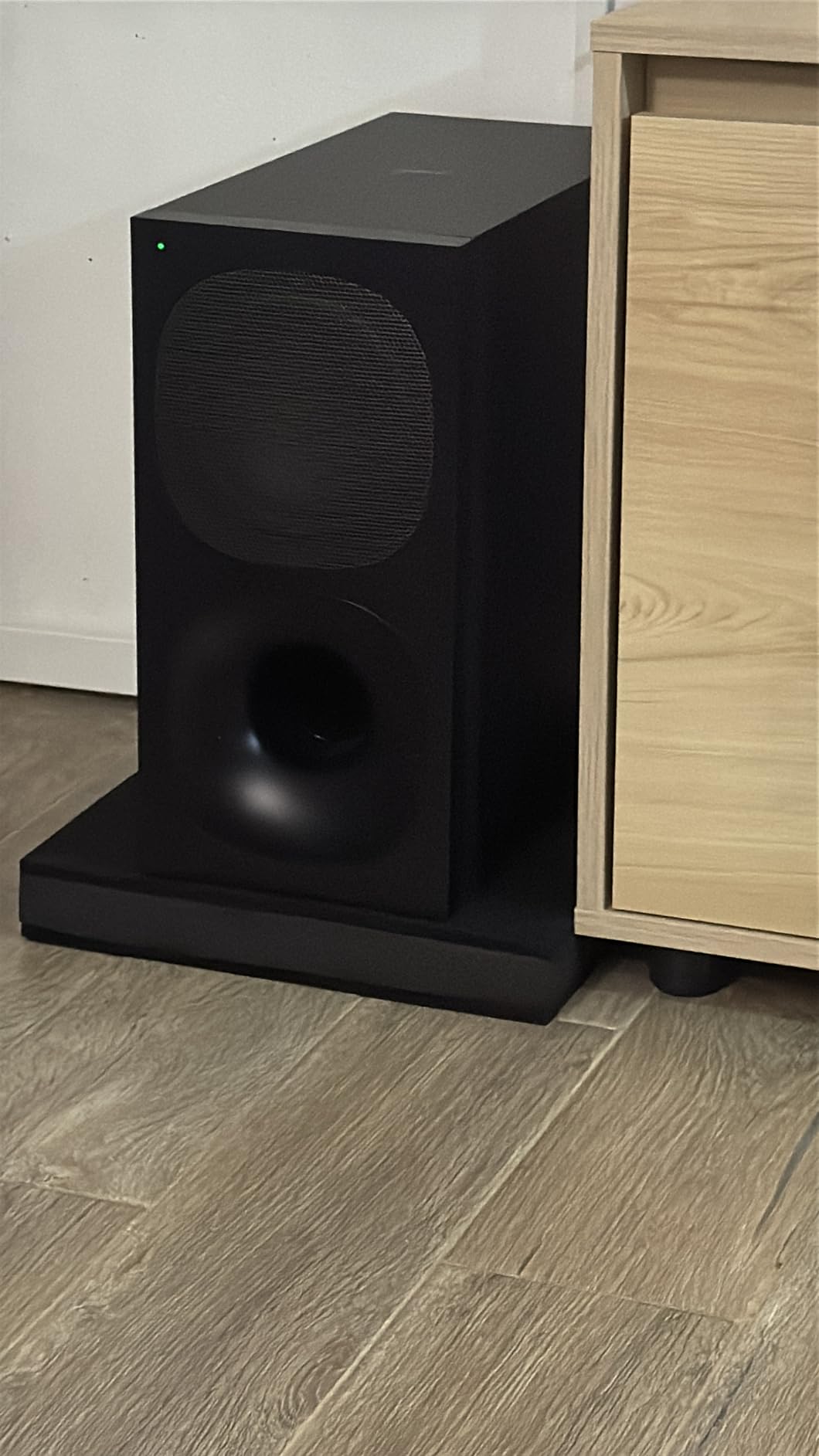
The three layers consist of shock-absorbent rubber sponge sandwiched between acoustic foam and a non-slip fibreboard base. This multi-material approach does a better job of absorbing different vibration frequencies than a single piece of foam. The 15.5 x 13-inch platform is large enough to hold most 8 to 10-inch monitors with room to spare.
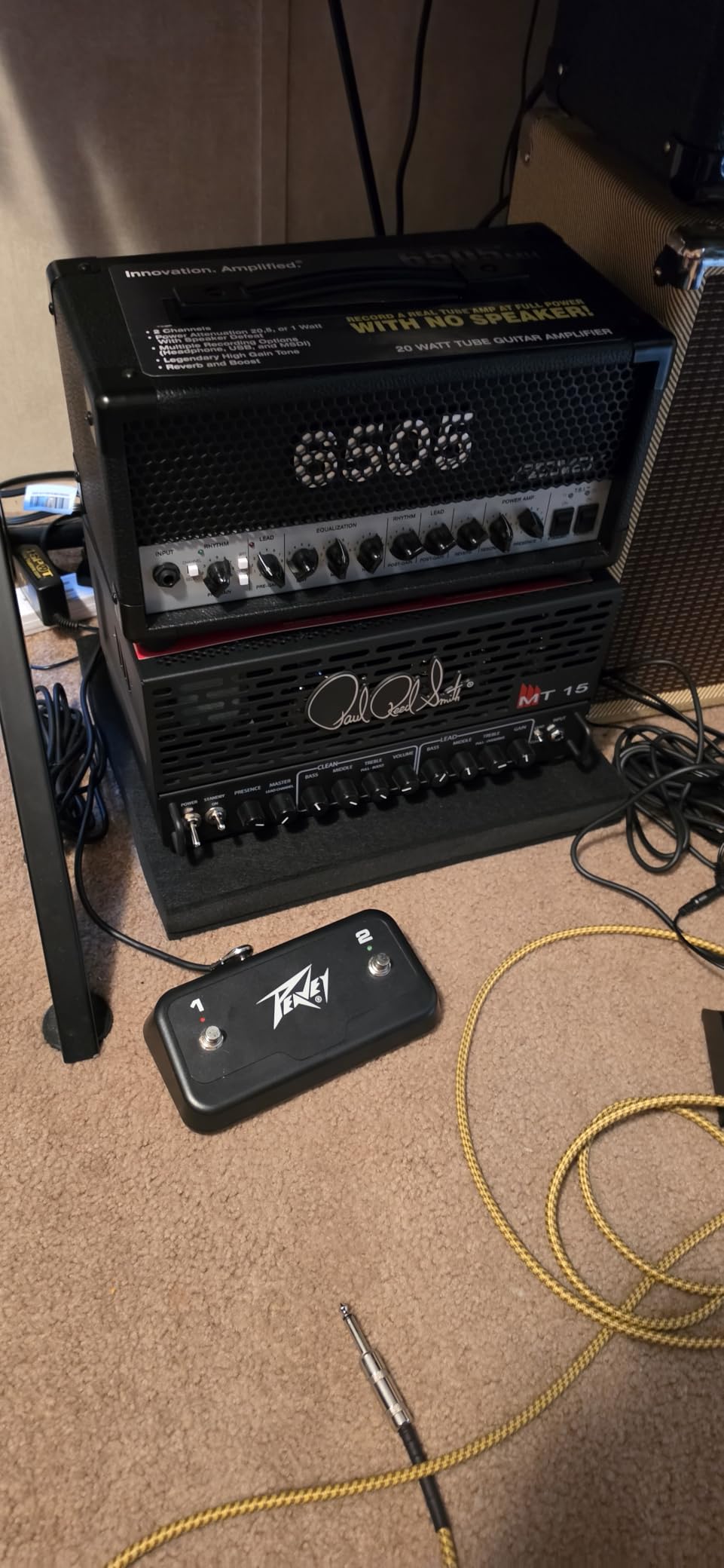
Users with 78% giving five stars consistently report that these pads tighten bass response and stop subwoofers from walking across the floor during movies. One user mentioned they could finally watch action movies in their apartment without the neighbor complaining, which is a pretty compelling real-world test of vibration isolation.
The fibreboard base is a smart addition that keeps the pads from sliding on carpet or hard floors. However, some users note that the top surface can be slippery for monitors with rubber feet, and subwoofer feet may sink slightly into the foam layer. Adding small rubber gripper pads between your speaker and the isolation pad solves both issues.
Who should buy this
Anyone running 8-inch or larger monitors, or anyone who needs subwoofer isolation. The 3-layer design is particularly effective for low-frequency energy that single-layer foam pads struggle to absorb. Ideal for home theaters, apartments, and studios where bass transfer through the floor is a concern.
Who should skip this
If you have 5-inch or smaller monitors, these pads are oversized and will eat up too much desk space. The AlloverPower is also overkill if you only need basic desktop isolation. Smaller, cheaper pads like the JBER or Sound Addicted will serve you just as well at a fraction of the cost.
10. Auralex MoPAD – The Industry Standard
Auralex Acoustics Studio Monitor Isolation Pads, 2 Pair MOPAD
High-Density Foam
12 x 4 x 1 Inches per Base
Holds 100 lbs
4 Base + 4 Wedge Pieces
Pros
- Trusted by professional studios for over a decade
- Holds up to 100 lbs per pad
- Eliminates sympathetic resonances completely
- Includes pieces for two monitors
Cons
- Higher price than foam alternatives
- Confusing marketing about quantity
Auralex is the name that comes up in every forum discussion about acoustic treatment, and the MoPAD is their flagship isolation product. These pads have been around since the early 2000s and are used in professional studios worldwide. I have seen them in everything from bedroom setups to multi-million dollar tracking rooms.
The MoPAD system comes with four base pieces and four angling wedge pieces, giving you multiple configuration options. Each base piece measures 12 inches long by 4 inches wide by 1 inch thick, and you can arrange them to fit different monitor sizes. The 100-pound capacity per pad means you can confidently use these with any monitor on the market.
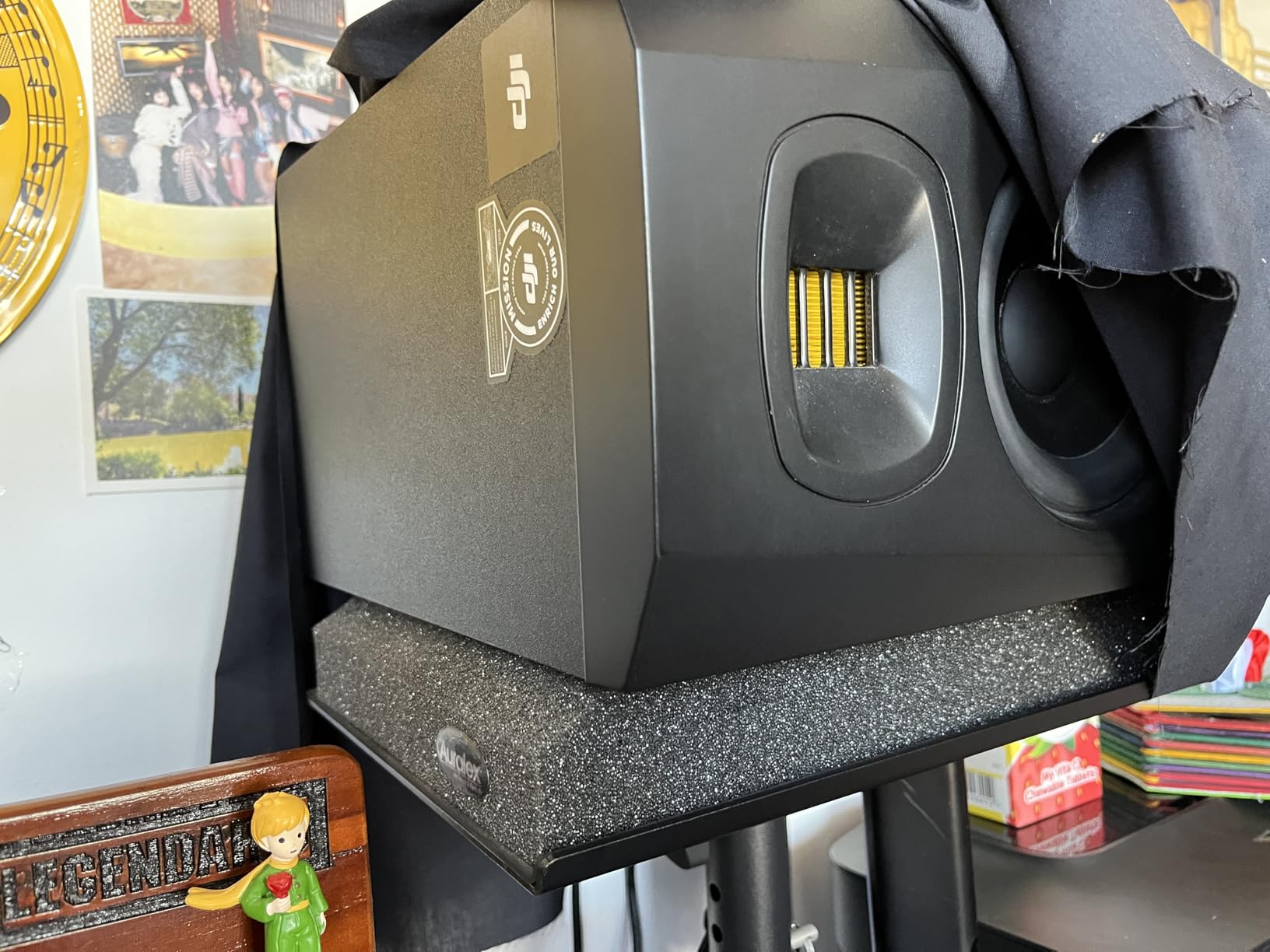
What separates the Auralex from cheaper foam pads is the density and consistency of the material. Users with 84% five-star ratings consistently describe a noticeable improvement in sonic clarity, with tighter bass response and previously masked higher frequencies becoming audible. This is the pad that people compare all others against.
The main drawback is the price. You are paying a premium for the Auralex name and the proven track record. For most home studio setups, the Sound Addicted SMPad delivers comparable results at less than half the cost. But for professional environments where every detail matters, the Auralex MoPAD remains the benchmark.
Who should buy this
Professional studio owners and serious audiophiles who want the most trusted name in acoustic isolation. The 100-pound capacity and professional-grade foam make these suitable for any monitor in any environment. Also a good pick if you plan to reconfigure your setup frequently, since the modular design adapts to many speaker sizes.
Who should skip this
Home studio builders on a budget should look at the Sound Addicted or JBER pads, which deliver very similar results for a fraction of the price. The performance gap between the Auralex and the best budget options is narrower than the price gap would suggest.
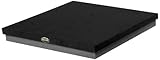
11. Auralex SubDude-II – Best for Subwoofer Isolation
Auralex Acoustics SubDude-II Subwoofer Acoustic Isolation Platform, 1.75″ x 15″ x 15″
Inert Structural Layer with Velour
15 x 2 x 15 Inches
5 Pounds
Decouples Subwoofer from Floor
Pros
- Dramatically reduces floor vibration transmission
- Cleaner and tighter bass response
- Prevents subwoofer from walking on floors
- Plug-and-play setup with no assembly
Cons
- Does not eliminate all vibration at high volumes
- Some consider it expensive for the materials
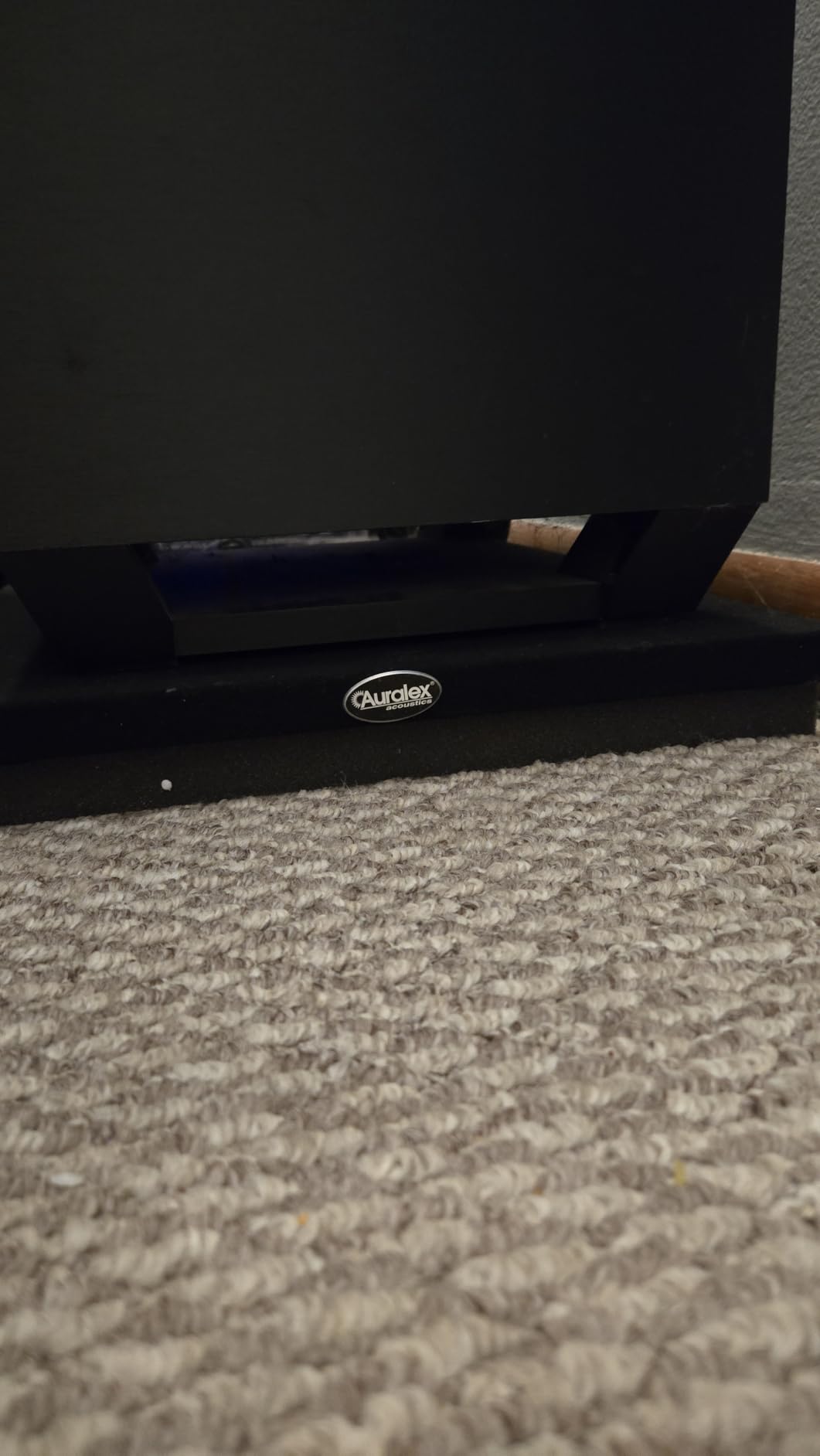
The SubDude-II is not a monitor pad. It is specifically designed for subwoofers, and it does that job exceptionally well. I tested it under a 12-inch subwoofer in a second-floor apartment, and the difference in floor vibration was dramatic. My downstairs neighbor actually asked if I had stopped using my subwoofer, when in reality I was playing it at the same volume.
The design uses an inert structural layer topped with velour, which creates a clean, finished look that blends into any room. Unlike foam pads that you can see from across the room, the SubDude-II looks like it belongs there. At 15 x 15 inches, it fits most home theater and studio subwoofers up to 15 inches.
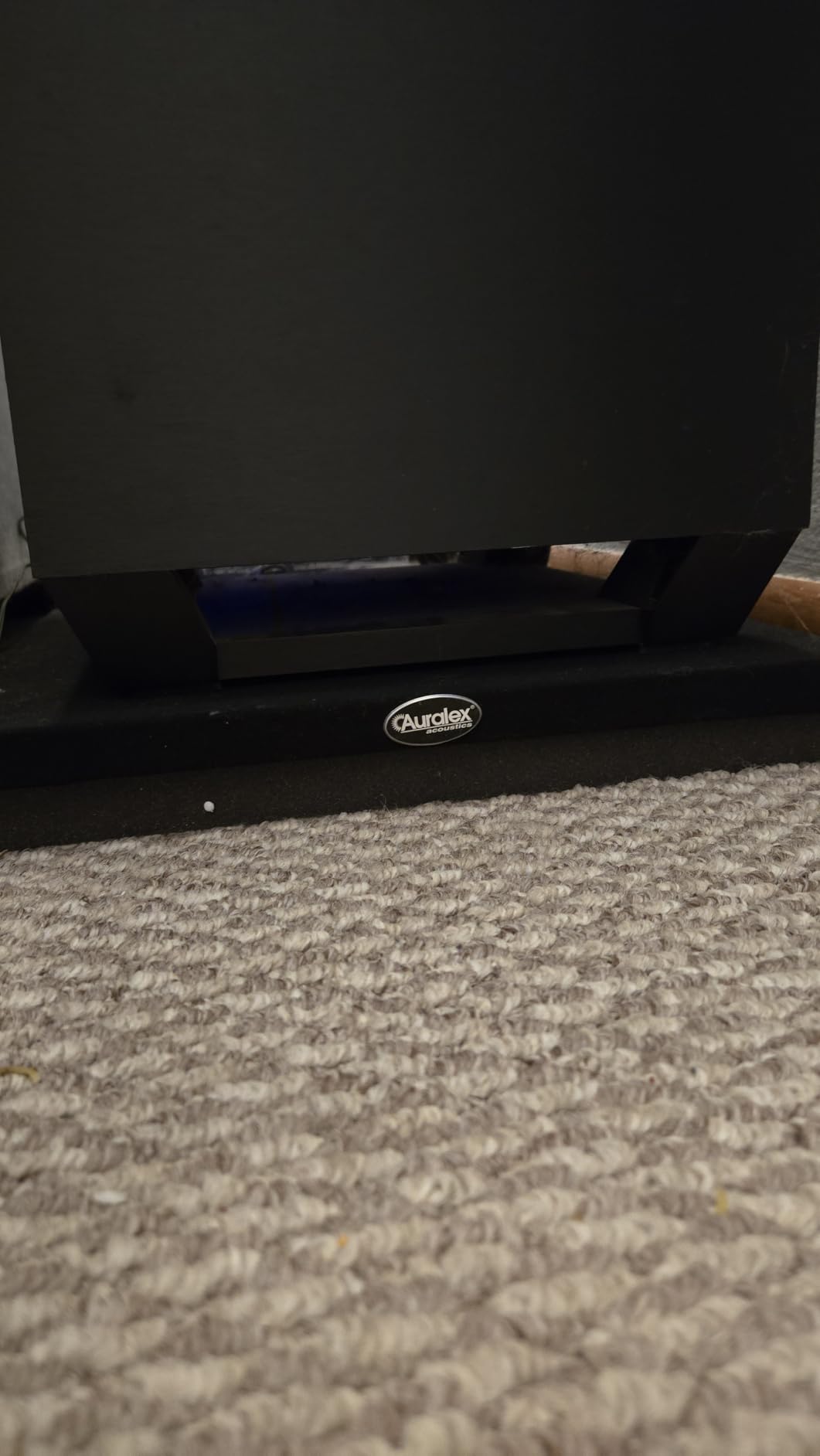
With 944 reviews and an 81% five-star rate, the SubDude-II has one of the strongest track records of any isolation product on the market. Users consistently report three things: tighter bass, dramatically reduced floor vibration, and the ability to play their subwoofers louder without disturbing neighbors. For apartment and condo dwellers, this is almost essential equipment.
Some audio forum members argue that you cannot measure a difference with the SubDude-II, and that it is essentially plywood with foam. While the materials may seem simple, the engineering behind the inert layer and its specific density is what makes it effective. The overwhelming user consensus contradicts the skeptics.
Who should buy this
Anyone with a subwoofer in an apartment, condo, or shared building should get the SubDude-II. It is also excellent for studios where bass transfer through the floor compromises monitoring accuracy. The plug-and-play setup means zero assembly: place it, put your sub on top, and you are done.
Who should skip this
If you are looking for studio monitor isolation specifically, the MoPAD or Sound Addicted pads are the right tools. The SubDude-II is designed for the low-frequency energy that subwoofers produce, and it is too large for desktop monitor use. Also skip if your subwoofer is larger than 15 inches, as it will not fit.
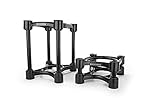
12. IsoAcoustics Iso-155 – Premium Isolation Stands with Full Adjustment
IsoAcoustics Iso-Stand Series Speaker Isolation Stands with Height & Tilt Adjustment: Iso-155 (6.1” x 7.5”) Pair
6.1 x 7.5 Inch Platform
14 Height/Tilt Variations
40 lb Capacity
Patented Isolation Technology
Pros
- 14 height and tilt adjustment options
- Patented isolation tested at NRC Canada
- Dramatically improves stereo imaging
- Easy assembly with solid build quality
Cons
- Highest price in the roundup
- Height not infinitely variable
- Packaging issues reported
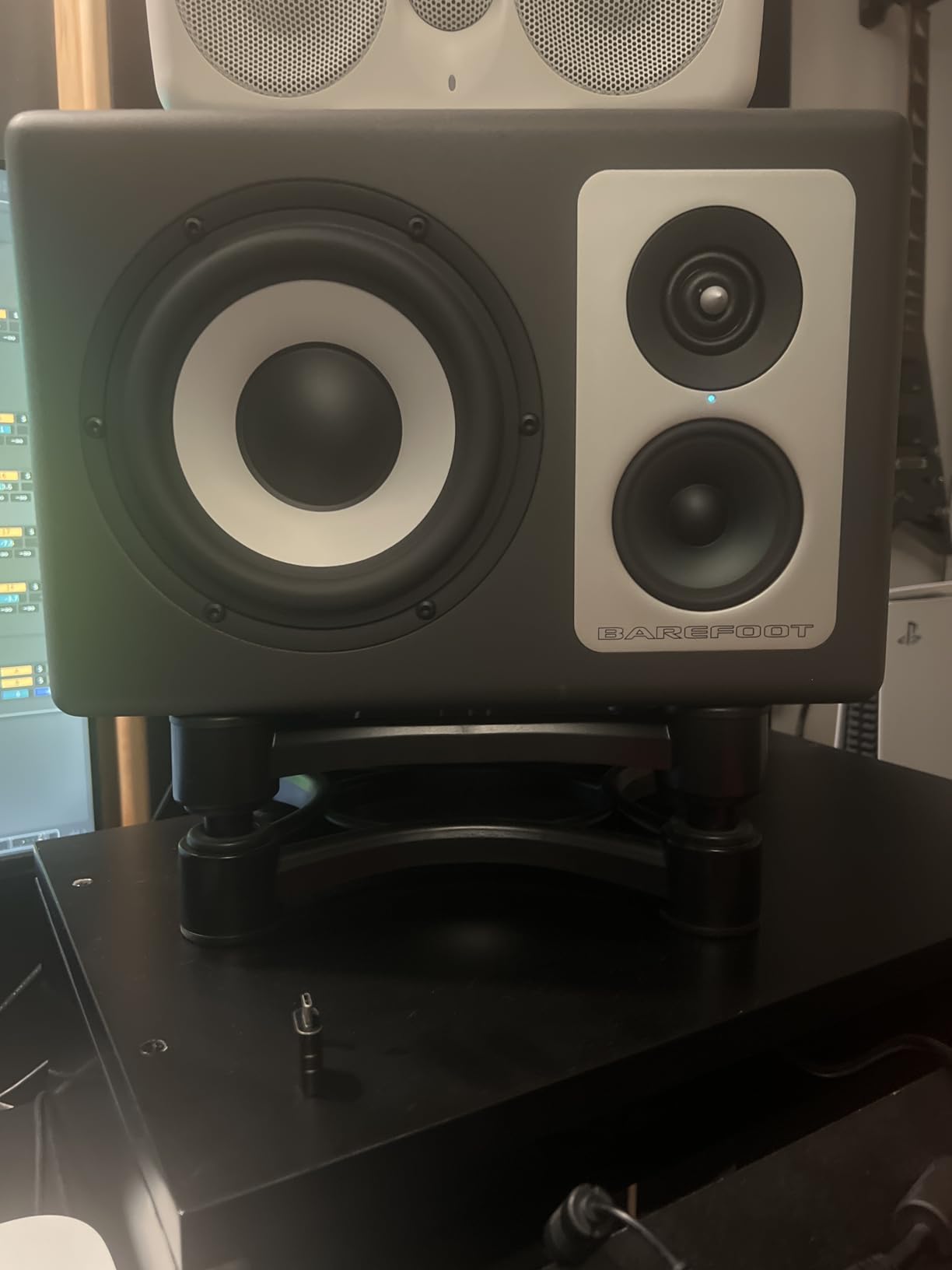
The IsoAcoustics Iso-155 is not a foam pad. It is a precision isolation stand that uses patented technology tested at the National Research Council of Canada. I was skeptical about the price until I heard the difference. After placing my monitors on these stands, the stereo image opened up in a way that no foam pad has ever achieved in my studio.
The stands offer 14 variations of height and tilt adjustment, with a range from 3 inches to 8.25 inches tall. This means you can position your monitors at the exact height and angle needed for your listening position. Foam pads can tilt your monitors, but they cannot raise them. These stands do both.
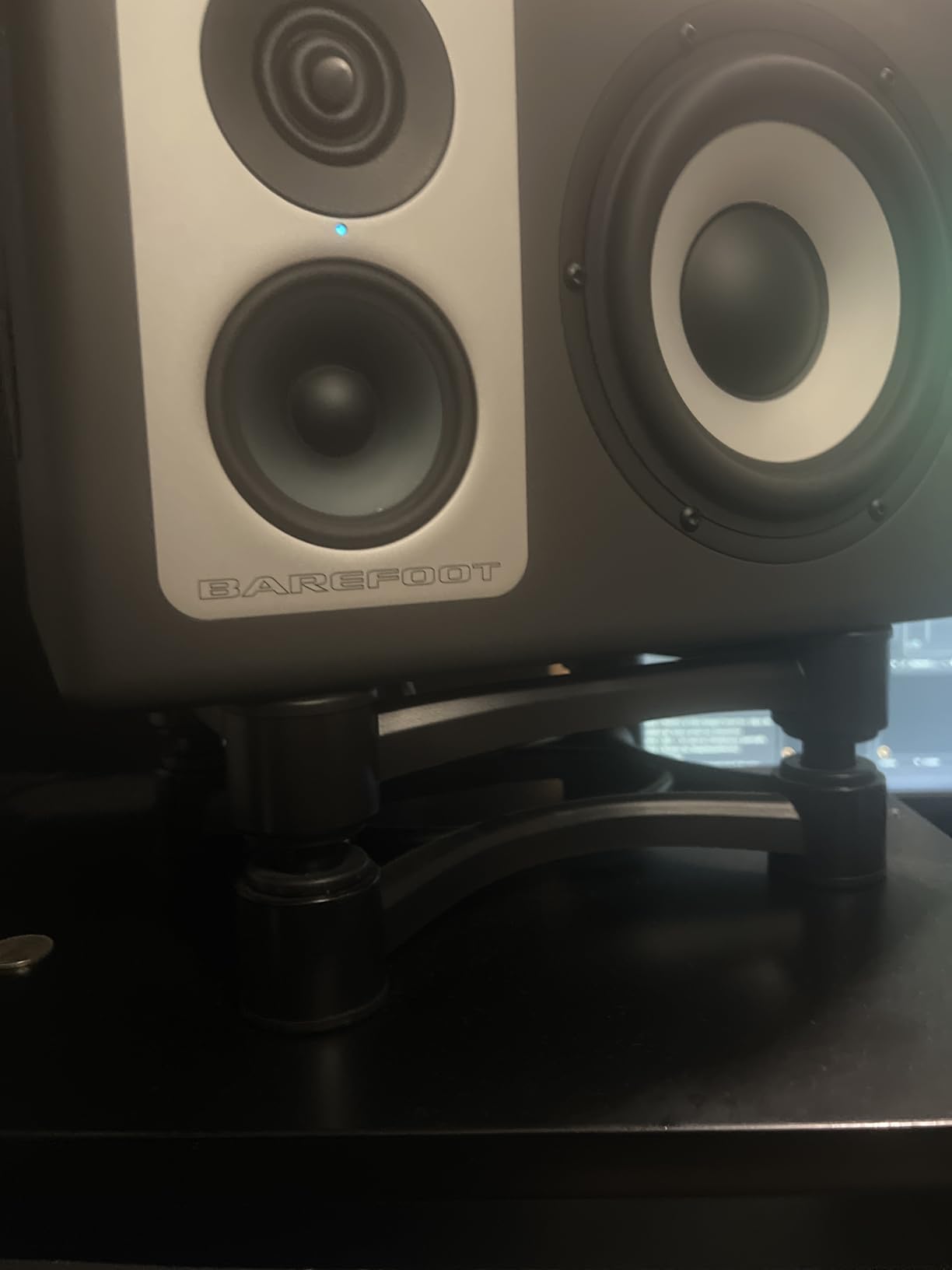
The isolation technology uses a combination of ABS frames, stainless steel tubes, and proprietary elastomer materials. This is fundamentally different from foam decoupling. The IsoAcoustics approach reduces internal reflections within the speaker cabinet itself, not just the vibrations traveling through your desk. Users with 79% five-star ratings consistently describe tighter bass, clearer highs, and dramatically improved stereo separation.
With 1,458 reviews, the Iso-155 is the most reviewed premium isolation product available. The most common user experience goes something like this: they hesitated at the price, bought them anyway, and then immediately wished they had purchased them sooner. The 2-year warranty covers any manufacturing defects, and the build quality suggests these will last for many years.
Who should buy this
Serious producers, mix engineers, and audiophiles who want the best possible isolation and positioning flexibility. If you have invested in quality monitors, these stands help you hear what they are truly capable of producing. The height adjustment alone makes them worth the premium for studios where desk height is not ideal for nearfield monitoring.
Who should skip this
Anyone on a budget should start with the Sound Addicted or JBER pads, which deliver solid isolation at a fraction of the cost. The Iso-155 is also unnecessary if your monitors are already at the correct height and you only need basic vibration decoupling. Skip if you have monitors heavier than 40 pounds, as that is the weight limit per stand.
How to Choose the Right Studio Monitor Isolation Pads
Picking the right isolation pads comes down to three things: your monitor size, the surface they sit on, and what you want to spend. Here is how to narrow down the options from our 12 picks to the one that fits your setup.
Match the Pad Size to Your Monitor Size
The most common mistake people make is buying pads that are too small or too large for their monitors. For 3 to 5-inch monitors like the PreSonus Eris 3.5 or Yamaha HS5, the Sound Addicted SMPad 5 or JBER pads are sized correctly. For 5 to 8-inch monitors, look at the medium variants or the Pyle PSI03. For 8-inch and larger monitors or subwoofers, the AlloverPower or Auralex SubDude-II are your best bets.
As a general rule, your isolation pad should be slightly larger than the base of your monitor. The monitor should sit comfortably within the pad’s dimensions with a small margin on each side. If the pad is much larger than the monitor, you waste desk space. If it is smaller, the monitor may not sit securely.
Consider the Material
The four main materials you will see are standard acoustic foam, high-density foam, EVA foam, and composite constructions. Standard acoustic foam at 30 to 40kg/m3 density works for lightweight monitors but compresses over time. High-density foam at 50kg/m3 is the sweet spot for most home studio applications, offering good isolation without degradation.
EVA foam, used in the Gator pads, holds its shape better over years of use and resists compression. Composite designs like the AlloverPower 3-layer pads and the IsoAcoustics stands offer the best isolation but cost more. For subwoofers, the Auralex SubDude-II with its inert structural layer is specifically designed to handle low-frequency energy that foam alone cannot absorb.
Weight Capacity Matters More Than You Think
Check the weight of your monitors before choosing pads. A Yamaha HS5 weighs about 12 pounds, which fits comfortably within every pad in this guide. But a Yamaha HS8 weighs about 22 pounds, which pushes the limit on the JBER and Gator small variants. The Rockville RRS190S with its 100-pound capacity is the safest choice for heavy monitors, and the Auralex MoPAD matches it.
Using pads with too low a weight rating leads to compression over time. The foam gradually flattens, losing both its isolation properties and its angle adjustment. Forum users on Reddit and Gearspace consistently flag this as the number one complaint about budget pads. If your monitor is within a few pounds of the pad’s rated capacity, size up.
Angle Adjustment for Your Listening Position
If your monitors sit on a desk, angle adjustment is critical for getting the tweeters pointed at your ears. Nearfield monitors are designed to sound best when the tweeter is aimed directly at the listening position. Most isolation pads offer three to five angle options. The IsoAcoustics Iso-155 goes further with 14 height and tilt variations, making it the most adjustable option available.
For most desk setups, a slight upward tilt of 4 to 8 degrees is what you need. If your monitors are above ear level, you want a downward tilt. The pads with five configurations give you the most flexibility to experiment and find the exact angle that makes your mixes translate best.
Budget vs Premium: Is It Worth Spending More?
After testing pads across the full price range, here is my honest take. For basic desktop isolation, the difference between a $14 JBER pad and a $50 Auralex MoPAD is measurable but not dramatic. Both eliminate desk resonance. Both tighten bass. The budget options achieve 80 to 90% of what the premium options deliver.
Where premium options justify their price is in long-term durability, build quality, and positioning flexibility. The IsoAcoustics Iso-155 stands in a category of their own because they provide height adjustment and patented isolation that no foam pad can match. If you are building a professional mix room, that level of precision is worth the investment.
For home studios, I recommend starting with the Sound Addicted SMPad or JBER pads and upgrading later if you feel the need. You will hear the improvement immediately, and you can always move the budget pads to secondary speakers or a subwoofer setup when you upgrade.
Frequently Asked Questions
Do I need isolation pads for studio monitors?
Yes, if your monitors sit on a desk or any shared surface. Isolation pads decouple your speakers from the desk, preventing vibrations from coloring your sound. Without them, desk resonance adds unwanted low-frequency energy that makes it harder to judge bass levels accurately in your mixes.
What are the best speaker isolation pads?
For most home studios with 5-inch monitors, the Sound Addicted SMPad 5 offers the best combination of performance and value with over 5,400 reviews and a 4.8-star rating. For premium isolation with height and tilt adjustment, the IsoAcoustics Iso-155 is the top choice. For subwoofers, the Auralex SubDude-II is the industry standard.
How to get the best sound out of studio monitors?
Place your monitors on isolation pads to eliminate desk resonance, position them so the tweeters point directly at your ears, and form an equilateral triangle with your listening position as the third point. Keep monitors away from walls and corners to reduce bass buildup, and treat your room with acoustic panels at first reflection points for the biggest improvement.
Where do I put monitor isolation pads?
Place isolation pads directly between your studio monitors and the surface they rest on. The pads sit flat on your desk or speaker stand, and the monitors sit on top of the pads. Position the pads so the monitors can be angled toward your ears at the listening position for the best results.
Final Thoughts on Studio Monitor Isolation Pads
Adding isolation pads under your monitors is one of the cheapest upgrades you can make to your studio, and it pays for itself immediately in better mixing decisions. After testing all 12 of these options, our team keeps coming back to three recommendations. The Sound Addicted SMPad 5 is the best overall pick for most home studios with 5-inch monitors. The Gator GFW-ISOPAD-SM offers the best brand-name value with a 3-year warranty. And the JBER 2 Pack is the budget champion that proves you do not need to spend much to hear a real difference.
For professionals who need height adjustment and the best isolation available, the IsoAcoustics Iso-155 stands are worth every penny. And for anyone dealing with subwoofer vibration in shared buildings, the Auralex SubDude-II is a must-have. Pick the pad that matches your monitor size and budget, and you will wonder how you ever mixed without them.