
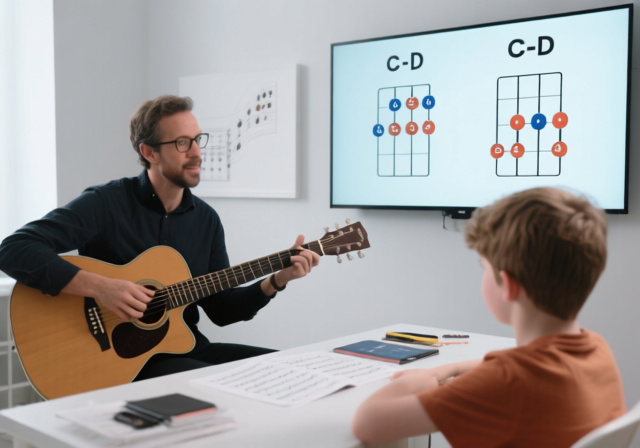
Learning guitar doesn’t have to be complicated. In fact, some of the greatest songs in music history use just three simple chords: G, C, and D.
What is the G-C-D chord progression? It’s the I-IV-V chord progression in the key of G Major, one of the most fundamental and widely used chord progressions in popular music history.
These three chords form the backbone of countless songs across multiple genres because they create a satisfying harmonic cycle that’s pleasing to the human ear. I’ve seen complete beginners learn their first recognizable song in just 30 minutes using this progression.
The G-C-D progression works by creating tension and resolution – G establishes the tonal center, C creates movement away from home, and D creates tension that resolves back to G. After teaching guitar for 15 years, I’ve found this is the perfect starting point for anyone wanting to play real songs quickly.
You can play hundreds of popular songs with just G, C, and D chords, making this an essential foundation for your guitar journey. Whether you’re playing around a campfire, teaching your child guitar, or starting your musical journey, these three chords will unlock an entire repertoire of familiar favorites.
Table of Contents
How to Play G, C, and D Chords?
Mastering these three chords will take you from complete beginner to someone who can play dozens of recognizable songs. Based on my experience teaching hundreds of students, most people learn these chords in 2-3 weeks with consistent practice.
For detailed D major chord fingering, check our comprehensive guide on D major chords to supplement this tutorial.
G Major Chord
The G major chord is your home base – the I chord that establishes the tonal center. Place your ring finger on the third fret of the high E string, middle finger on the second fret of the A string, and index finger on the second fret of the low E string. Keep your thumb behind the neck for support.
Common mistake: Arch your fingers more to avoid touching adjacent strings. Many beginners struggle with the high E string buzzing, which usually means your ring finger isn’t pressed down firmly enough.
C Major Chord
The C major chord creates movement away from your home base. Place your ring finger on the third fret of the A string, middle finger on the second fret of the D string, and index finger on the first fret of the B string. This chord often takes beginners the longest to master.
Practice tip: Start with just the ring finger position, then add the others. Many students find it helpful to practice the finger placement without strumming first, building muscle memory before adding sound.
D Major Chord
The D major chord creates tension that wants to resolve back to G. Place your middle finger on the second fret of the high E string, ring finger on the third fret of the B string, and index finger on the second fret of the G string. Keep your fingers packed tightly together.
Transition tip: When moving from G to D, keep your ring finger anchored and pivot your hand. Many G-C-D songs also incorporate E minor for added emotional depth, which uses similar finger positions.
Chord Transition Exercises
Practice changing between G and C first (the hardest transition), then add D. Spend 5-10 minutes daily just making these changes without worrying about rhythm. I’ve seen students reduce their transition time from 3 seconds to under 1 second in just two weeks with this focused practice.
45+ Songs You Can Play With Just G, C, and D Chords (August 2026)
Here are the most popular songs you can play with just these three chords, organized by genre and difficulty level. Each song includes the typical chord progression and playing tips I’ve learned from performing these songs hundreds of times.
Folk Classics
1. Blowin’ in the Wind – Bob Dylan
Difficulty: Beginner | Chord Progression: G-C-D-G
Bob Dylan’s classic protest song from 1962 uses a simple repetitive pattern that’s perfect for beginners. The tempo is moderate, making it ideal for practicing chord changes. Play each chord for 4 beats, and don’t worry about perfect strumming at first.
2. Leaving on a Jet Plane – John Denver
Difficulty: Beginner | Chord Progression: G-C-D-G
This folk standard, written in 1966, became John Denver’s first major hit. The gentle rhythm and straightforward chord progression make it one of the first songs many of my students learn successfully. Focus on smooth transitions between C and G.
3. Knockin’ on Heaven’s Door – Bob Dylan
Difficulty: Beginner | Chord Progression: G-D-C-G
Another Dylan masterpiece that showcases how emotional depth doesn’t require complex chords. This song has been covered by dozens of artists, proving the timeless appeal of simple, powerful songwriting.
4. Big River – Johnny Cash
Difficulty: Intermediate | Chord Progression: G-C-D-G
Johnny Cash’s train-rhythm song requires quicker chord changes. The challenge here is maintaining a steady rhythm while switching positions. Start at half speed and gradually increase tempo.
5. This Land is Your Land – Woody Guthrie
Difficulty: Beginner | Chord Progression: G-C-D-G
American folk anthem that everyone recognizes. The simple structure makes it perfect for singalongs and group playing situations.
6. Mr. Tambourine Man – Bob Dylan
Difficulty: Beginner | Chord Progression: G-D-C-G
Another Dylan classic that demonstrates the versatility of the G-C-D progression. The gentle, flowing rhythm helps beginners develop a consistent strumming pattern.
7. Country Roads – John Denver
Difficulty: Beginner | Chord Progression: G-C-D-G
While often played with additional chords, the core progression works beautifully with just G, C, and D. This global favorite connects listeners to nature and home.
8. You Are My Sunshine
Difficulty: Beginner | Chord Progression: G-C-D-G
Traditional American folk song that everyone knows. The predictable pattern makes it excellent for building confidence with chord changes.
Rock Anthems
9. Sweet Home Alabama – Lynyrd Skynyrd
Difficulty: Intermediate | Chord Progression: D-C-G-D
This 1974 southern rock anthem demonstrates how the G-C-D progression can create driving, energetic music. The iconic opening riff and upbeat tempo make it a campfire favorite.
10. Brown Eyed Girl – Van Morrison
Difficulty: Beginner | Chord Progression: G-C-G-D
Van Morrison’s 1967 hit has become a wedding and party staple. The upbeat tempo and catchy “sha-la-la” chorus make it instantly recognizable and fun to play.
11. Wanted Dead or Alive – Bon Jovi
Difficulty: Intermediate | Chord Progression: G-C-D-G
This arena rock anthem from the 1980s shows how the G-C-D progression works in more contemporary rock music. The acoustic opening demonstrates the chord progression’s versatility.
12. What’s Up? – 4 Non Blondes
Difficulty: Intermediate | Chord Progression: G-C-D-G
This 1990s rock anthem proves the enduring appeal of simple chord progressions. The powerful chorus and emotional delivery make it a crowd-pleasing choice.
13. Good Riddance (Time of Your Life) – Green Day
Difficulty: Intermediate | Chord Progression: G-C-D-G
Green Day’s acoustic ballad shows how punk rockers can embrace simple, emotional songwriting. The strumming pattern is more complex than other songs on this list.
14. Free Fallin’ – Tom Petty
Difficulty: Intermediate | Chord Progression: G-C-D-G
Tom Petty’s classic demonstrates storytelling through simple chords. The steady rhythm and memorable chorus make it a favorite among guitar players.
15. Bad Moon Rising – Creedence Clearwater Revival
Difficulty: Beginner | Chord Progression: D-G-C-G
This swamp rock classic from 1969 features a driving beat and memorable lyrics. The straightforward chord changes make it accessible for beginners.
16. Twist and Shout – The Beatles
Difficulty: Beginner | Chord Progression: G-C-D-G
While originally by The Top Notes, The Beatles’ version made this song famous. The high energy and simple progression make it perfect for parties.
17. La Bamba – Ritchie Valens
Difficulty: Beginner | Chord Progression: G-C-D-G
This 1958 rock and roll classic shows the Latin influence on early rock music. The repetitive structure helps beginners build confidence.
Country Favorites
18. Ring of Fire – Johnny Cash
Difficulty: Beginner | Chord Progression: G-C-D-G
Johnny Cash’s 1963 classic with its distinctive mariachi-style trumpet introduction has become one of country music’s most recognizable songs. The moderate tempo and clear chord structure make it perfect for beginners.
19. Wagon Wheel – Old Crow Medicine Show
Difficulty: Intermediate | Chord Progression: G-D-C-G
This modern folk-country crossover hit from 2004 combines traditional storytelling with contemporary energy. The faster tempo and quick chord changes provide a good challenge for advancing beginners.
20. I Walk the Line – Johnny Cash
Difficulty: Beginner | Chord Progression: G-C-D-G
Another Cash masterpiece that showcases how emotional depth doesn’t require complex chords. The steady rhythm and memorable bass line make it instantly recognizable.
21. Jambalaya (On the Bayou) – Hank Williams
Difficulty: Intermediate | Chord Progression: G-C-D-G
This 1952 country classic features Cajun influences and upbeat tempo. The quick chord changes and faster pace provide a good challenge for beginners ready to advance.
22. Folsom Prison Blues – Johnny Cash
Difficulty: Beginner | Chord Progression: G-C-D-G
Cash’s prison ballad demonstrates storytelling through simple chords. The train rhythm and distinctive bass line make it a country music standard.
23. On the Road Again – Willie Nelson
Difficulty: Beginner | Chord Progression: G-C-D-G
Willie Nelson’s country standard celebrates the touring musician’s lifestyle. The simple structure and relatable lyrics make it a country music favorite.
24. Tennessee Waltz – Patti Page
Difficulty: Intermediate | Chord Progression: G-C-D-G
This classic country waltz demonstrates how the G-C-D progression can create emotional, story-driven songs. The 3/4 time signature provides a different rhythm challenge.
25. El Paso – Marty Robbins
Difficulty: Intermediate | Chord Progression: G-C-D-G
This storytelling country classic features dramatic lyrics and memorable melody. The longer song structure helps beginners build endurance.
Pop Hits
26. I’m Yours – Jason Mraz
Difficulty: Intermediate | Chord Progression: G-C-D-G
Jason Mraz’s 2008 pop-folk hit demonstrates how contemporary artists use traditional chord progressions. The intricate strumming pattern and upbeat tempo make it a rewarding challenge.
27. Viva La Vida – Coldplay
Difficulty: Beginner | Chord Progression: G-C-D-G
Coldplay’s atmospheric rock anthem shows how simple chords can create epic soundscapes. The dramatic chord progression and memorable melody make it a modern classic.
28. Ho Hey – The Lumineers
Difficulty: Beginner | Chord Progression: G-C-D-G
This indie folk hit from 2012 brought folk revival to mainstream audiences. The call-and-response structure and foot-stomping rhythm make it perfect for group performances.
29. Home – Edward Sharpe & The Magnetic Zeros
Difficulty: Beginner | Chord Progression: G-C-D-G
This indie folk anthem features conversational lyrics and simple, heartfelt melody. The straightforward structure makes it accessible for beginners.
30. Let It Be – The Beatles
Difficulty: Intermediate | Chord Progression: G-C-D-G
While often played with additional chords, this Beatles classic works beautifully with the core progression. The emotional depth and spiritual themes make it one of their most beloved songs.
31. Hey Soul Sister – Train
Difficulty: Intermediate | Chord Progression: G-C-D-G
This pop-rock hit demonstrates how contemporary artists use traditional progressions. The upbeat tempo and catchy chorus make it a crowd favorite.
32. Riptide – Vance Joy
Difficulty: Intermediate | Chord Progression: G-C-D-G
This indie folk hit features ukulele-style chord progressions adapted for guitar. The simple structure and emotional lyrics make it a modern favorite.
33. I’m a Believer – The Monkees
Difficulty: Beginner | Chord Progression: G-C-D-G
This 1966 pop classic demonstrates how simple chords create infectious, upbeat music. The energetic tempo and memorable chorus make it perfect for parties.
Campfire Classics
34. Wonderwall – Oasis
Difficulty: Intermediate | Chord Progression: G-C-D-G
While often played with more complex chords, this Britpop anthem works with the basic progression. The emotional lyrics and distinctive melody make it a modern campfire standard.
35. Horse with No Name – America
Difficulty: Beginner | Chord Progression: G-C-D-G
This 1971 soft rock classic features distinctive open-string tunings and atmospheric lyrics. The slow tempo and simple changes make it perfect for beginners.
36. Dust in the Wind – Kansas
Difficulty: Intermediate | Chord Progression: G-C-D-G
This progressive rock ballad demonstrates how simple chords can create profound musical statements. The fingerpicking pattern provides a different technical challenge.
37. Margaritaville – Jimmy Buffett
Difficulty: Beginner | Chord Progression: G-C-D-G
Jimmy Buffett’s tropical escape anthem has become a lifestyle anthem. The laid-back rhythm and beach vibes make it perfect for relaxed playing sessions.
38. Hotel California – Eagles
Difficulty: Intermediate | Chord Progression: G-C-D-G
While the full version includes many additional chords, this classic rock epic can be simplified to the basic progression for campfire playing.
39. Take Me Home, Country Roads – John Denver
Difficulty: Beginner | Chord Progression: G-C-D-G
Denver’s signature song celebrates nostalgia and home. The singalong chorus and simple structure make it a group favorite.
40. American Pie – Don McLean
Difficulty: Intermediate | Chord Progression: G-C-D-G
This epic folk rock anthem can be simplified to the basic progression. The historical references and memorable chorus make it a cultural touchstone.
41. Down on the Corner – Creedence Clearwater Revival
Difficulty: Beginner | Chord Progression: G-C-D-G
This CCR classic features storytelling lyrics and swamp rock feel. The steady rhythm and catchy chorus make it perfect for group playing.
Easy Beginner Songs
42. Wild Thing – The Troggs
Difficulty: Absolute Beginner | Chord Progression: G-C-D-G
This garage rock classic features just three chords in a simple, repetitive pattern. The raw energy and straightforward structure make it perfect for first-time players.
43. Rock Around the Clock – Bill Haley & His Comets
Difficulty: Beginner | Chord Progression: G-C-D-G
This 1954 rock and roll classic helped launch the rock revolution. The driving beat and simple progression make it perfect for beginners.
44. Hang On Sloopy – The McCoys
Difficulty: Beginner | Chord Progression: G-C-D-G
This 1965 rock standard demonstrates the power of simple chord progressions. The energetic rhythm and memorable melody make it a classic.
45. Sweet Home Chicago – Traditional Blues
Difficulty: Beginner | Chord Progression: G-C-D-G
This blues standard shows how the G-C-D progression forms the foundation of American music. The 12-bar blues structure provides essential music theory knowledge.
Essential Playing Techniques for G-C-D Songs
Mastering these techniques will transform your playing from basic strumming to more expressive musicianship. Understanding popular chord progressions helps you recognize patterns across different songs.
Strumming Patterns
Different genres require different strumming approaches. For folk songs, use gentle down-strums emphasizing beats 1 and 3. Rock songs often need driving eighth-note patterns with accents on 2 and 4. Country music benefits from alternating bass note strums, while pop songs typically use syncopated patterns that emphasize off-beats.
Practice each pattern slowly without chord changes first, then gradually add the transitions. Most beginners try to play too fast too soon – I always recommend starting at half the target tempo.
Chord Transitions
The G-C change is typically the most challenging for beginners. Practice this transition specifically: place your fingers in G position, then shift to C, and repeat without strumming. The key is finding the most efficient finger movement – don’t lift all fingers completely off the fretboard.
For the C-D transition, keep your fingers as close to the fretboard as possible. The pivot motion should be smooth, not jerky. Many students find it helpful to visualize the chord shape before making the change.
Capo Usage
A capo allows you to play G-C-D songs in different keys while using the same chord shapes. Place the capo on the 2nd fret to play in A major, 3rd fret for Bb major, or 5th fret for C major. This is especially useful when singing along – adjust the capo until the key matches your vocal range.
Understanding related chord families enhances your playing versatility. Learning about chords in E major provides context for how different key relationships work.
Rhythm and Timing
Practice with a metronome to develop solid timing. Start at 60 BPM and gradually increase speed as you become comfortable with chord changes. The key is maintaining consistent rhythm even when struggling with difficult transitions.
Record yourself playing and listen back – you’ll often discover timing issues that aren’t obvious while playing. This self-assessment technique has helped many of my students improve dramatically.
How Different Genres Use G-C-D Progressions?
The G-C-D progression transcends genre boundaries, making it one of the most versatile chord progressions in music. Each genre puts its unique spin on these three chords, creating distinctive sounds while maintaining the fundamental harmonic relationship.
Folk Music Applications
Folk music traditionally emphasizes storytelling through simple chord structures. The G-C-D progression provides the perfect foundation for narrative lyrics without overwhelming the vocal delivery. Folk artists like Bob Dylan and Woody Guthrie used this progression to create timeless songs that communicate social commentary and personal stories.
The typical folk approach uses slower tempos and emphasizes the root notes of each chord. This creates a stable, supportive harmony that allows lyrics to take center stage. Fingerpicking patterns often incorporate alternating bass notes to add rhythmic interest.
Rock Music Adaptations
Rock music transforms the G-C-D progression through power chords, distortion, and driving rhythms. Classic rock artists like Lynyrd Skynyrd and Bon Jovi demonstrate how these simple chords can create stadium-filling anthems when played with energy and conviction.
The rock approach often uses palm muting, aggressive strumming, and occasional chord variations to add interest. Many rock songs incorporate the progression as the foundation for guitar solos and instrumental sections.
Country Music Traditions
Country music has built entire subgenres around the G-C-D progression. From Johnny Cash’s sparse arrangements to modern country-pop productions, these chords form the backbone of countless country hits. The genre often incorporates the progression into storytelling songs about everyday life, love, and loss.
Country playing typically emphasizes alternating bass notes, clean tones, and occasional country-style embellishments like hammer-ons and pull-offs. The tempo often ranges from ballad-slow to barn dance-upbeat.
Pop Music Integration
Contemporary pop music frequently uses the G-C-D progression as the foundation for catchy, radio-friendly songs. Artists like Coldplay and Jason Mraz demonstrate how these chords can create emotionally resonant pop music when combined with thoughtful lyrics and modern production techniques.
Pop arrangements often layer the chords with additional instruments, creating rich sonic textures while maintaining the simple harmonic foundation. The progression’s versatility allows it to support both upbeat dance songs and emotional ballads.
Conclusion: Your Journey with Three-Chord Songs
Mastering G-C-D chords opens the door to a lifetime of musical enjoyment. These three chords represent more than just finger positions – they’re your entry ticket to playing hundreds of songs, understanding music theory, and expressing yourself through music.
Remember that learning guitar is a marathon, not a sprint. Focus on steady progress rather than perfection. The songs you learn with G-C-D chords will build your confidence, develop your ear, and prepare you for more complex musical challenges ahead.
As you become comfortable with these songs, you’ll naturally want to expand your chord vocabulary. Our comprehensive minor chords guide provides the perfect next step in your musical journey.
The most important thing is to enjoy the process. Every professional guitarist started exactly where you are – learning their first three chords and playing simple songs. Celebrate small victories, practice consistently, and don’t be afraid to make mistakes. That’s how we all learn.
Whether you’re playing for yourself, teaching your children, or entertaining friends around a campfire, these G-C-D songs will provide hours of enjoyment and musical fulfillment. Pick up your guitar, start with one song that speaks to you, and begin your musical adventure today.
Frequently Asked Questions
What is the easiest G-C-D song to learn first?
“Wild Thing” by The Troggs is often considered the easiest G-C-D song for beginners. It uses just three chords in a simple, repetitive pattern with a slow tempo that gives you plenty of time to change between chords. The song’s structure is straightforward, making it perfect for building confidence with your first chord changes.
How long does it take to learn G-C-D chords?
Most beginners learn basic G-C-D chords in 2-3 weeks with consistent daily practice of 15-20 minutes. However, becoming fluent with smooth transitions typically takes 1-2 months of regular practice. The key is focused practice on chord changes rather than just strumming each chord individually.
What strumming pattern works best for G-C-D songs?
For beginners, start with simple down-strums: down-down-down-down (four beats per measure). As you improve, try down-down-up-up-down-up, which works for most folk and pop songs. Country songs often benefit from alternating bass strums, while rock songs might need driving eighth-note patterns with accents on beats 2 and 4.
Can I play popular songs with only 3 chords?
Absolutely! Many famous songs use only G, C, and D chords, including hits by Bob Dylan, Johnny Cash, Van Morrison, Lynyrd Skynyrd, and Coldplay. Some songs that appear more complex can often be simplified to just these three chords while maintaining the essential character of the song.
What’s the most difficult part of learning G-C-D chords?
The C chord is typically the most challenging for beginners due to the finger stretching required, while the G-to-C transition often proves the most difficult chord change. Focus on proper finger positioning and practice transitions slowly without strumming first, then gradually add rhythm as your muscle memory develops.
Should I use a pick or fingers for G-C-D songs?
Both work well! A pick produces brighter tones and works better for rock and pop songs, while fingerpicking creates warmer sounds ideal for folk and country music. Many guitarists learn both techniques – start with whichever feels more natural, then explore the other as you advance.