
Mastering chords is an essential skill for any aspiring musician. Whether you’re a beginner learning to strum your first few chords or an experienced player looking to expand your repertoire, understanding the intricacies of different chord progressions can greatly enhance your musical journey.
We will delve into the world of chords in the key of A minor, commonly referred to as mastering chords in a minor. By exploring the fundamentals and variations of A minor chords, you’ll gain a deeper understanding of how to utilize them effectively in your playing.
A minor is a versatile and widely used key in various musical genres, including rock, pop, blues, and jazz.
It is considered a relative minor key of C major, meaning that both scales share the same key signature.
Focusing on the chord progressions specific to A minor allows us to grasp its unique tonal qualities and create harmonies that evoke different emotions.
By mastering these chords in A minor, you’ll be equipped with valuable tools for creating melancholic melodies or injecting soulful undertones into your compositions.
So let’s embark on this musical journey together and unlock the secrets of “Mastering Chords In A Minor.”
Table of Contents
What Are Chords in A Minor?
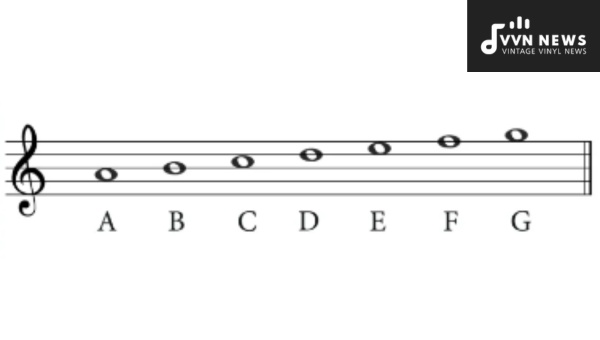
Chords in A minor are a set of harmonious sounds created by combining specific notes from the A minor scale.
The primary chords that form its foundation are A minor (Am), D minor (Dm), and E major (Em). These chords consist of three or more notes played together to create a pleasing sound.
The Am chord is built using the notes A, C, and E, while the Dm chord consists of D, F, and A. The Em chord is made up of E, G#, and B.
By combining these chords with other musical elements like melody and rhythm, you can create beautiful compositions in the key of A minor.
How to Build Seventh Chords in A Minor?

Seventh chords add an extra layer of richness and complexity to your chord progressions. In A minor, there are four main types of seventh chords you can build: A minor 7th (Am7), B diminished 7th (Bdim7), C major 7th (Cmaj7), and D minor 7th (Dm7).
To build these seventh chords, follow these steps:
- A minor 7th (Am7): Start with the A minor triad (A, C, E) and add the 7th note of the A natural minor scale, which is G. The resulting chord is A C E G.
- B diminished 7th (Bdim7): Begin with the B diminished triad (B, D, F) and add the double-flatted 7th note of the A natural minor scale, which is Ab. The resulting chord is B D F Ab.
- C major 7th (Cmaj7): Begin with the C major triad (C, E, G) and add the major 7th note of the A natural minor scale, which is B. The resulting chord is C E G B.
- D minor 7th (Dm7): Start with the D minor triad (D, F, A) and add the 7th note of the A natural minor scale, which is C. The resulting chord is D F A C.
By incorporating these rich colors into your playing or compositions in A minor key , you can elevate your music to new heights and evoke a range of emotions for the listener.
Also Read: F Sharp Major Chords [Boost Your Guitar Skills Today]
Common Chord Progressions in A Minor
Chord progressions are sequences of chords that create a sense of movement and tension in music. In A minor, several commonly used chord progressions can help you create engaging and emotive compositions. Let’s explore some of these progressions:
I – IV – V Progression
One of the most popular chord progressions in any key is the I-IV-V progression, which involves using the first (I), fourth (IV), and fifth (V) chords of the A minor scale. In this case, those chords would be A minor (Am), D minor (Dm), and E major (Em). This progression creates a strong sense of resolution when played in succession.
ii – V – I Progression
Another common chord progression is the ii-V-I progression, which introduces additional chords into the mix. In the key of A minor, this would include B diminished (Bdim), E major (Em), and Am. This progression has a jazzy feel and is frequently used in jazz and blues songs.
Em – G – Am Progression
The Em-G-Am progression is often employed to create a melancholic or reflective mood in music. It includes the chords E minor (Em), G major (G), and A minor (Am). This sequence can be repeated or combined with other progressions to add depth and variety to your compositions.
Am – F – C – G Progression
The Am-F-C-G progression is a staple in many popular songs across different genres. It features the chords A minor (Am), F major (F), C major (C), and G major (G). This progression can evoke a range of emotions depending on how it is used.
These are just a few examples of common chord progressions in A minor. Feel free to experiment with these progressions, add variations, or explore other progressions to develop your unique musical style.
How Can Ear Training Improve Your A Minor Chords?

Ear training is an invaluable skill for any musician, especially when it comes to mastering chords in A minor. By developing your ear, you’ll be able to identify and play the right notes and chord progressions without relying solely on sheet music or chord diagrams. Here are some ways in which ear training can enhance your proficiency with A minor chords:
- Recognizing Chord Qualities: Through ear training, you’ll become adept at distinguishing between different chord qualities within A minor, such as minor, major, and diminished chords. This will allow you to quickly identify the correct chord progression in any given musical context.
- Improvisation and Transposition: Ear training enables you to improvise melodies and chord progressions in A minor more effortlessly. You’ll be able to hear the intervals between notes and adjust accordingly, facilitating smooth transitions and creative experimentation.
- Improved Pitch Perception: Ear training sharpens your ability to hear nuances of pitch within A minor chords. This skill helps you stay in tune while playing with other musicians or while recording your own compositions.
- Playing by Ear: With ear training, you can listen to a song or melody in A minor and accurately reproduce its chords without relying on written music or tablature. This skill enhances your ability to play along with songs by ear.
- Transcribing Songs: By honing your listening skills through ear training, you’ll be able to transcribe songs more efficiently. You can listen to a piece in A minor and accurately notate its chords, enabling you to learn new songs faster and broaden your musical repertoire.
- Developing Musical Intuition: Ear training cultivates a deep understanding of the relationship between different notes within A minor chords. It allows you to internalize the sound of these chords, making it easier for you to create harmonies from scratch or adapt existing ones.
To improve your ear training specifically for A minor chords, you can practice with chord progressions, play by ear along with your favorite songs in this key, and utilize resources such as online ear training exercises and apps.
Also Read: G Flat Minor Triad [Mastering Complex Guitar Chords]
Exploring Piano Chords in A Minor
When it comes to exploring piano chords in A minor, there are several essential chords that you should add to your repertoire. These chords will allow you to create a rich and expressive sound in the key of A minor. Here are some important piano chords to master:
- A Minor (Am): This is the root chord in the key of A minor. It consists of the notes A, C, and E. Place your thumb on A, your middle finger on C, and your pinky finger on E.
- D Minor (Dm): This chord adds a melancholic touch to your compositions. It is made up of the notes D, F, and A. Place your thumb on D, your middle finger on F, and your pinky finger on A.
- E Major (Em): This chord brings a brighter sound to your playing in A minor. It includes the notes E, G#, and B. Place your thumb on E, your middle finger on G#, and your pinky finger on B.
- Bdim: This diminished chord adds tension and suspense to your playing. It is formed by combining B, D, and F notes.
- G: While not part of the A minor scale itself, the G major chord complements the chords in A minor nicely and provides a smooth transition between different progressions.
To create variations within these chords, experiment with different voicings or inversions by rearranging the order of the notes within each chord structure.
Mastering Guitar Chords in A Minor

When it comes to mastering guitar chords in A minor, practice and understanding are key. By familiarizing yourself with the basic chords and their variations, you will be able to create rich, melodic sounds in the key of A minor. Here are some steps to help you on your journey:
- Learn the basic chords: Start by learning the fundamental A minor chord shape. Place your index finger on the first fret of the B string, your middle finger on the second fret of the D string, and your ring finger on the second fret of the G string. This forms an open chord that produces a bright and vibrant sound.
- Experiment with different voicings: To add depth and variety to your playing, try experimenting with different chord voicings. By moving your fingers along the fretboard or adding additional notes, you can create unique sounds and textures.
- Explore barre chords: Barre chords are essential for expanding your chord vocabulary in A minor. By using a single finger to bar all or most of the strings, you can play various chord shapes along the neck. For example, by barring across all strings at the 5th fret and placing your other fingers in an E-shape formation, you’ll create an Am chord.
- Practice smooth transitions: To master guitar chords in A minor, you need to practice transitioning smoothly between different chords. Start by practicing simple progressions like Am-Dm-Em or Am-G-C to build muscle memory and improve your timing.
- Play along with songs and backing tracks: a great way to enhance your skills is by playing along with songs or using backing tracks in A minor. This will help you develop a sense of musicality while mastering different chord progressions.
- Seek out online resources: There are numerous online resources available such as video tutorials and tablature that can aid in your journey of mastering guitar chords in A minor. These resources can provide visual demonstrations and helpful tips to accelerate your learning process.
Mastering guitar chords in A minor is an ongoing process. Take the time to practice regularly, experiment with variations, and learn from others.
Also Read: G Minor Triad [Demystify This Common Guitar Chord]
What Are Chord Inversions and How to Use Them in A Minor?
Chord inversions refer to the rearrangement of the notes within a chord. Instead of playing the root note as the lowest note in the chord, inversions allow you to play a different note from the chord as the lowest or bass note. This adds variety and interest to your chord progressions and can create smoother transitions between chords.
How to Create Chord Inversions in A Minor
To create chord inversions in A minor, you need to understand the structure of each chord and how to rearrange its notes. Here are some steps:
- Identify the root position: Start by playing the basic form of the chord in its root position, with the root note as the lowest pitch.
- Find alternative bass notes: Experiment with other notes from within the chord that can serve as a new bass note. For example, in an A minor (Am) chord, you can try using the third (C) or fifth (E) notes as your bass note.
- Reorder the notes: Once you have chosen an alternative bass note, rearrange the other notes of the chord accordingly. Make sure all three or more notes are still included.
- Play and experiment: Practice playing these inversions, starting with slower progressions and gradually building up speed. Listen for how each inversion changes the overall sound and feel of your composition.
Benefits of Using Chord Inversions
Using chord inversions in A minor can bring several benefits to your musical creations:
- Smooth voice leading: Chord inversions allow for smooth voice leading between chords, creating more cohesive and melodic progressions.
- Enhanced musical expression: Chord inversions can add depth and emotion to your compositions by altering their harmonic texture.
- Improved fingerings for specific instruments: Sometimes, inverted chords provide more comfortable fingerings on certain instruments, such as guitar or piano.
By understanding chord inversions and incorporating them into your A minor chord progressions, you can elevate your musical arrangements and captivate your listeners with innovative harmonies.
Applying Chord Theory to A Minor

Chord theory provides the building blocks for understanding and composing chords across different keys. By applying chord theory to A minor, you can expand your chord vocabulary and create rich harmonies in this key. Here are some essential concepts to know:
Harmonizing the A Minor Scale
To harmonize the A minor scale, you can build chords by stacking thirds on each note of the scale. This creates a set of triads (three-note chords) that follow a consistent pattern: minor, diminished, major, minor, minor, major, and major.
Understanding Chord Qualities
Each chord in A minor has a specific quality that impacts its sound and function in a progression. The most common qualities include major (e.g., E major), minor (e.g., D minor), and diminished (e.g., B diminished). These qualities determine the mood or emotional character of your music.
Functional Chord Progressions
Understanding chord progressions helps you create logical and satisfying musical movements. In A minor, common progressions include the i-iv-v (Am-Dm-Em) progression, which is widely used in popular music. Another popular progression is the i-VI-III-VII (Am-F-C-G) progression found in many classic chord sequences.
Exploring Extensions and Altered Chords
Once you have a solid foundation in basic chords in A minor, you can explore advanced concepts like chord extensions and altered chords. Extensions add additional notes beyond the basic triads to create richer harmonies, while altered chords modify certain notes to achieve unique tonal colors.
By applying these concepts of chord theory to your exploration of A minor, you’ll have a solid foundation for creating compelling melodies and harmonies in this key. Experiment with different chord progressions and variations to unlock the full expressive potential of A minor in your musical compositions.
Also Read: A Flat Minor Triad [Guide to Unusual Guitar Chords]
A Minor Chords in Different Musical Styles
A minor chords are a crucial element across various musical genres. Let’s explore how A minor chords are utilized in different styles.
1. Pop Music
In pop music, minor chords often serve as the foundation for emotional and catchy melodies. Artists like Adele and Ed Sheeran frequently incorporate minor chords into their songs to create a sad and reflective mood. The versatility of A minor allows pop musicians to express a range of emotions through their music.
2. Rock Music
Rock music embraces the power and energy of A minor chords. Bands such as Led Zeppelin and Guns N’ Roses make extensive use of these chords to deliver hard-hitting riffs and intense solos. The dark, gritty sound of A minor adds depth and emotion to rock anthems, making them unforgettable.
3. Blues Music
A minor is prevalent in blues music due to its ability to evoke soulful and sorrowful tones. Blues guitarists like B.B. King often incorporate variations of minor chord progressions, adding bends, slides, and vibrato for expressive playing. The inherent sadness within the key enhances the heartfelt nature of blues music.
4. Jazz Music
In jazz, A minor provides a rich harmonic framework for improvisation and complex chord progressions. Musicians like Miles Davis employ altered versions of A minor chords with added extensions such as sevenths, ninths, or elevenths to create intricate jazz compositions. This allows for exploration and experimentation within the genre.
5. Classical Music
Classical composers use A minor chords to convey various moods throughout their compositions. From solemnity to urgency, works by Mozart or Beethoven demonstrate how these chords can invoke powerful emotions when combined with orchestral instrumentation.
6. Electronic Music
In electronic music genres like trance or house, producers incorporate minor chords in uplifting and euphoric melodies.
These chords, combined with electronic synthesizers and beats, create a positive and energetic atmosphere on the dancefloor.
By understanding the role of minor chords in different musical styles, you can incorporate them into your playing or composition to achieve the desired mood or emotion.
Whether you’re drawn to the sad sounds of pop or the raw energy of rock, minor chords offer a versatile palette for musicians across genres.
FAQs About Mastering Chords in A Minor
What are the primary chords in the key of A minor?
The primary chords in A minor are Am, DM, and Em.
Can I use other chords outside of the primary chords in A minor?
Yes, you can explore additional chords like F major (F), G major (G), and C major (C) to add more variety and depth to your compositions.
How can I apply chord theory to A minor?
Understanding chord theory allows you to experiment with different chord voicings, extensions, and substitutions within the key of A minor, providing endless possibilities for creativity.
Are there any common chord progressions unique to A minor?
Common chord progressions in A minor include Am-G-F-E and Em-D-C-Bm, among others. These progressions can create a specific emotional impact and serve as a springboard for your musical ideas.
How can ear training help me master chords in A minor?
Ear training helps develop your ability to recognize intervals and chord qualities by ear, enabling you to identify chords quickly and confidently while playing or composing in the key of A minor.
Conclusion
Mastering chords in A minor is an important skill for any musician. By understanding the chord progressions, building seventh chords, and exploring different musical styles, you can expand your repertoire and create captivating compositions.
Whether you’re playing the guitar or the piano, practicing chord inversions and ear training will enhance your understanding of A minor chords.
So dive into this musical journey, unlock the secrets of “Mastering Chords In A Minor,” and let your melodies soar with emotion and creativity.