
A boost pedal is the most underrated tool on a guitarist’s pedalboard. It does not add fuzzy distortion or sweeping modulation. Instead, it makes everything you already own sound bigger, louder, and more alive. Whether you want your solos to cut through a dense mix or you need to push your tube amp into that sweet, natural breakup, the best boost pedals transform your tone without overcomplicating things.
Our team tested 10 of the most popular boost pedals on the market for this guide. We ran them through Fender, Marshall, and Vox style amps with both single-coil and humbucker guitars. We compared clean transparency, gain staging behavior, build quality, and real-world value. What we found is that not all boost pedals do the same thing, even when they share the same single knob on the front panel.
If you have ever wondered why your solos disappear in a live mix or why your favorite amp sounds thin at low volumes, a quality boost pedal is the fix. Below you will find our top recommendations, detailed hands-on reviews, and a full buying guide covering signal chain placement, stacking strategies, and the differences between clean, transparent, and colored boosts. Let us get into the best boost pedals available in 2026.
Table of Contents
Top 3 Picks for Best Boost Pedals (August 2026)


Best Boost Pedals in 2026
| Product | Specifications | Action |
|---|---|---|
| MXR Micro Amp |
|
Check Latest Price |
 Wampler Tumnus V2 Wampler Tumnus V2 |
|
Check Latest Price |
| TC Electronic Spark Mini |
|
Check Latest Price |
 BOSS BP-1W Waza Craft BOSS BP-1W Waza Craft |
|
Check Latest Price |
 MXR Booster Mini MXR Booster Mini |
|
Check Latest Price |
 MXR CAE Boost Line Driver MXR CAE Boost Line Driver |
|
Check Latest Price |
 Fender Hammertone Boost Fender Hammertone Boost |
|
Check Latest Price |
 Electro-Harmonix LPB-1 Electro-Harmonix LPB-1 |
|
Check Latest Price |
 SONICAKE Sonic Super Master SONICAKE Sonic Super Master |
|
Check Latest Price |
| JOYO Roll Boost JF-38 |
|
Check Latest Price |
1. MXR Micro Amp – The Transparent Workhorse
MXR® Micro Amp
Single knob clean boost
Transparent tone
9V battery or adapter
12.8 ounces
Model M133
Pros
- Adds clean gain without coloring tone
- Great for pushing tube amps into breakup
- Tank-like build quality
- Works with single coils and humbuckers
- No added noise
Cons
- Just makes things louder on Fender amps at low volumes
I have had an MXR Micro Amp on my pedalboard for years, and it has never come off. This pedal is the definition of doing one thing perfectly. You get a single knob, you turn it up, and your signal gets louder without any coloration. That sounds simple, but finding a boost that truly stays transparent at high settings is harder than it looks.
Where this pedal shines is pushing tube amps into natural breakup. I ran it into a Fender Deluxe Reverb and a Vox AC30, and the Micro Amp took both amps from clean to that singing, edge-of-breakup territory with just a quarter turn of the knob. It responds beautifully to your guitar’s volume control too. Roll back and it cleans up instantly.
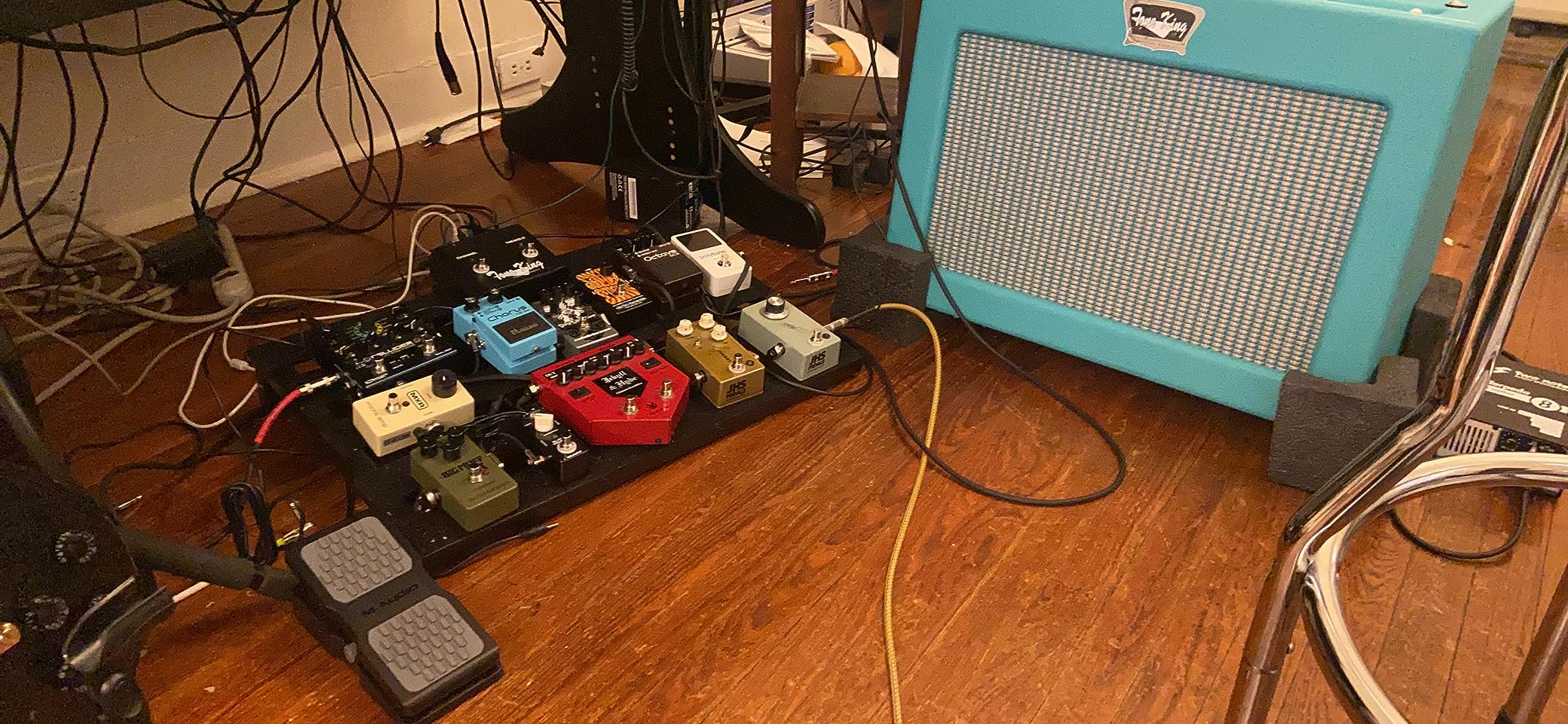
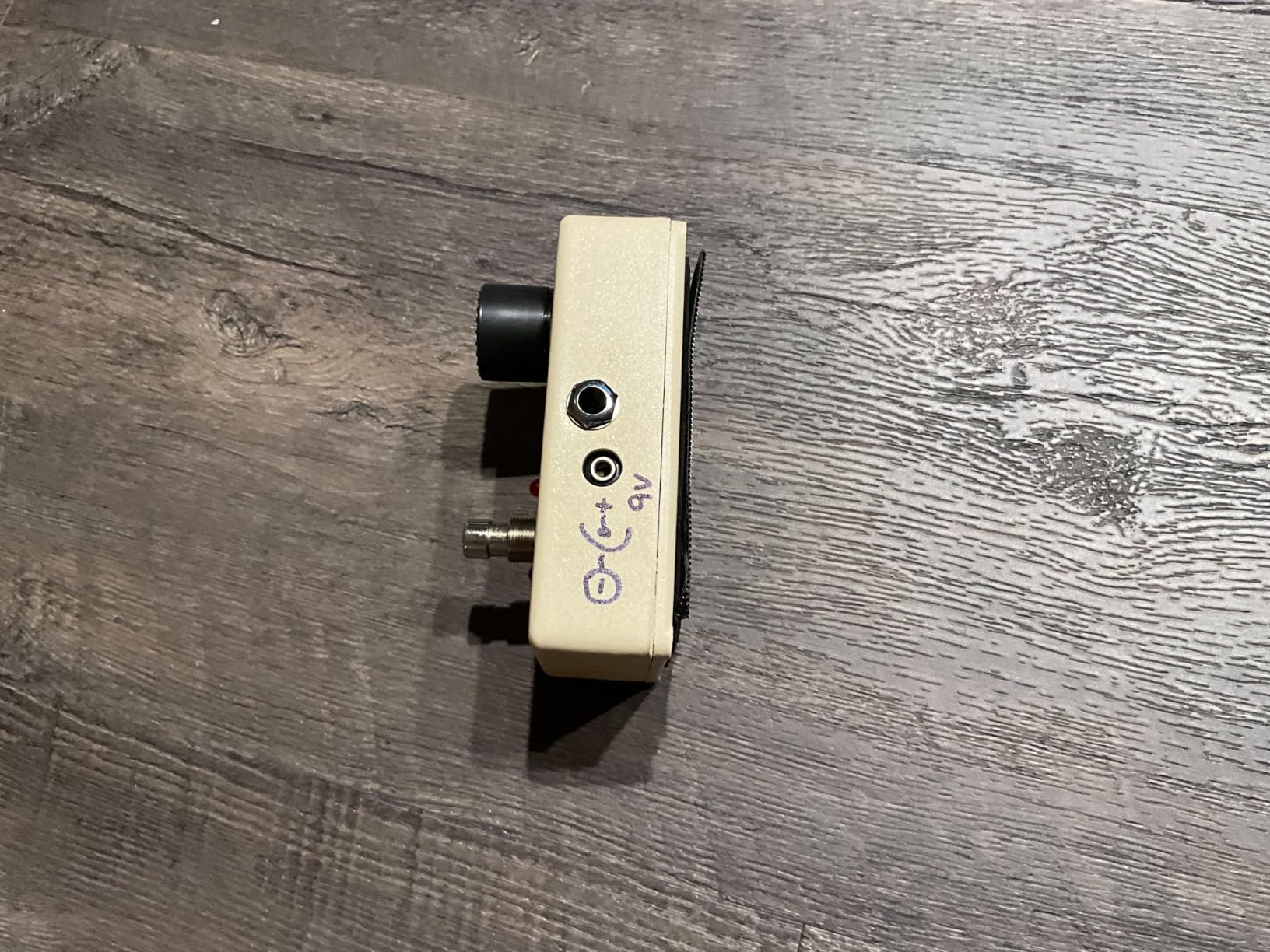
The build quality is what you expect from MXR. The housing feels like it could survive a fall down a flight of stairs. At 12.8 ounces, it has some weight to it, but that is the price of tank-like construction. The white finish is iconic and instantly recognizable on any pedalboard.
I also tested it as a solo boost in an effects loop, and it performed beautifully there too. Set the level so your solo jumps above the band mix, stomp it, and suddenly you are heard. No EQ changes, no tonal surprises. It just makes you louder in the most musical way possible.
How It Handles Different Amp Types
The Micro Amp interacts differently depending on your amp. On Fender style clean amps at low volume, it mostly just makes things louder rather than adding character. But push it into a tube amp already near breakup, and it transforms the sound completely. This is where it earns its reputation.
If you play through a Marshall or a Vox already set on the edge, the Micro Amp is pure magic. It pushes those amps into rich, harmonic saturation that sounds like the amp is being cranked to eleven. This is exactly what forum users on r/guitarpedals recommend when someone asks about transparent boosts for tube amps.
Single Coil vs Humbucker Performance
I tested the Micro Amp with both a Stratocaster loaded with single coils and a Les Paul with humbuckers. With single coils, it adds just enough girth to make the tone feel full without losing that bell-like clarity. With humbuckers, it pushes the midrange forward in a way that helps you cut through a dense band mix.
The pedal handles both pickup types equally well, which is rare. Some boosts favor one or the other. The Micro Amp treats everything you feed it with the same clean, honest amplification. That versatility is a major reason it has remained a bestseller for decades.
2. Wampler Tumnus V2 – The Klon-Style Secret Weapon
Wampler Tumnus V2 Overdrive & Boost Guitar Effects Pedal
Klon-style overdrive boost
3 controls: Volume Gain Tone
Buffered bypass
5 year warranty
Compact
Pros
- Great Klon-style overdrive with sweet mids
- Versatile as boost OD or buffer
- Transparent tone
- Excellent build quality
- 5 year warranty
Cons
- Can be loud at lower gain settings
- Lacks magic diodes of original Klon
The Wampler Tumnus V2 is not a pure clean boost, but it is one of the best boost pedals I have used when you want some character with your gain increase. This is a Klon-style circuit, which means it adds a beautiful midrange push and harmonic richness that a plain clean boost cannot match.
I set the gain low and the volume high, and the Tumnus V2 functioned as a fantastic solo boost that thickened my tone without radically changing its character. The three control layout gives you way more flexibility than a single-knob boost. You can shape the EQ, dial in just a touch of grit, or run it as a full overdrive.
The buffered bypass is worth discussing. Unlike true bypass pedals that can cause signal loss in long chains, the Tumnus V2 keeps your tone strong and full even when off. Wampler calls the bypass tone legendary in its own right, and after living with it for weeks, I agree. My pedalboard never sounded better.
Build quality is exceptional. The compact housing fits anywhere, and the knobs have a smooth, premium feel. At just 0.2 kilograms, it is one of the lighter pedals on this list. The 5-year warranty tells you Wampler stands behind their work.

Stacking With Other Drive Pedals
This is where the Tumnus V2 truly shines. I stacked it after a Tube Screamer and before a fuzz, and the results were stunning. The Tumnus added midrange presence that made the stacked tone sound huge. It also works beautifully as the last pedal before your amp, lifting everything in front of it.
Forum users consistently praise the Tumnus for stacking versatility. The Klon-style circuit has a way of complementing other drives rather than fighting them. If you already have an overdrive you love, the Tumnus V2 will make it sound better.
Using It as an Always-On Buffer
Because the Tumnus V2 has a quality buffered bypass, many players leave it on permanently as a buffer and tonal sweetener. I tried this for two weeks, and the difference was noticeable. My high end returned, and my overall tone felt more present and alive, especially with long cable runs.
If your pedalboard has more than four or five true bypass pedals, you need a buffer somewhere. The Tumnus V2 gives you a great buffer plus a fantastic boost and overdrive in one compact box. That is genuine multitasking value.
3. TC Electronic Spark Mini – The Compact Champion
TC Electronic SPARK MINI BOOSTER Ultra-Compact Booster Pedal with PrimeTime Switching and Fully Analog Design
20dB clean boost
PrimeTime switching
Fully analog
Ultra compact
Single Level knob
Pros
- Transparent clean boost
- PrimeTime footswitch latching and momentary
- Ultra compact pedalboard size
- Excellent value
- Great for acoustic guitar
Cons
- Only one knob
- Some reliability reports after extended use
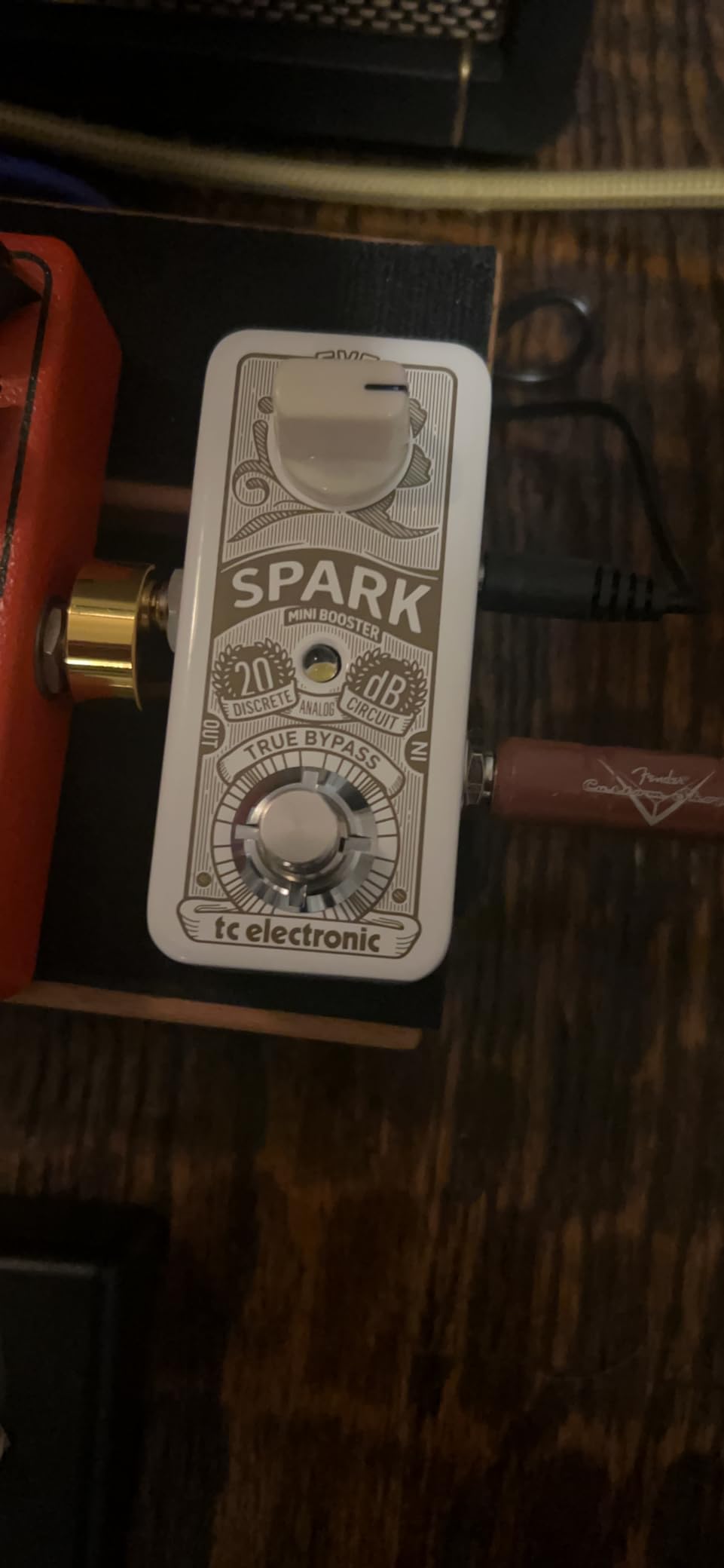
The TC Electronic Spark Mini is the boost pedal I recommend more than any other when someone asks for the best value. It delivers 20dB of completely clean boost in a housing smaller than most smartphone cases. With over 1,400 reviews on Amazon, this pedal has earned its massive following.
The standout feature is the PrimeTime switching. This is not just a standard on/off footswitch. You can use it as a latching switch where one stomp turns it on and another turns it off. Or you can hold it down for momentary boost, releasing it to return to your baseline volume. This is incredibly useful for quick solo bursts.
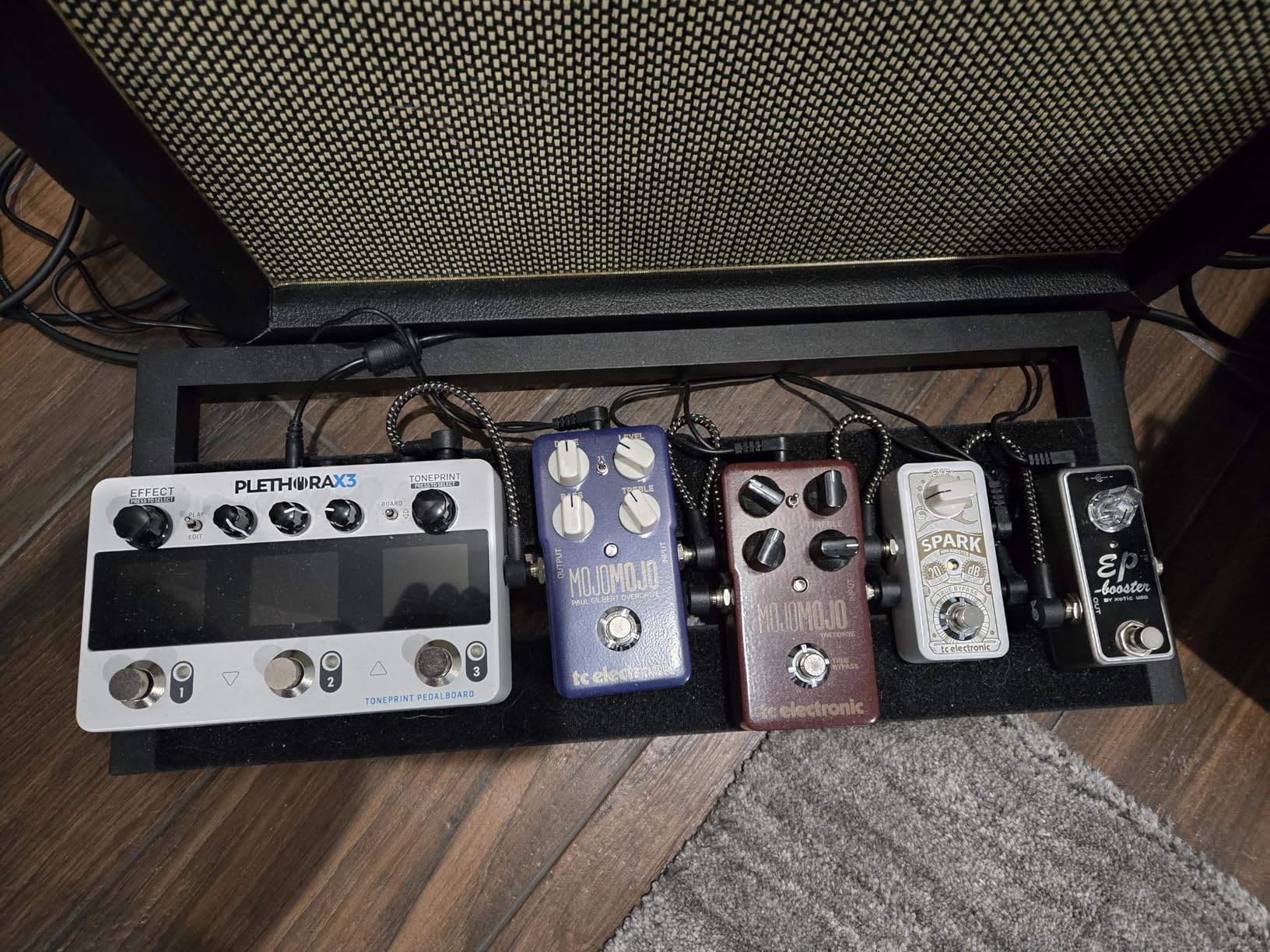
In my testing, the Spark Mini was impressively transparent. I set it in front of a clean Fender amp and it simply made everything louder without changing the EQ character. Pushed into a tube amp near breakup, it drove the amp into rich, singing overdrive that felt natural and dynamic.
The size is the real selling point. At just 3.66 by 2.01 by 1.81 inches, this pedal takes up almost no pedalboard real estate. I fit it into a gap on my board that was too small for anything else. For players fighting for space, the Spark Mini is a gift.
Acoustic Guitar Applications
One thing that surprised me was how well the Spark Mini works with acoustic guitar. I ran my acoustic-electric through it into a PA system, and the boost was clean, noise-free, and perfect for making fingerpicked passages louder during live performance. Most boost pedals are designed for electric guitar, but the Spark Mini handles acoustic duty beautifully.
Several acoustic players in the review comments mention the same thing. If you play both electric and acoustic, the Spark Mini pulls double duty without compromise. The transparent voicing means it will not muddy your acoustic tone the way some colored boosts do.
Front of Amp vs Effects Loop Placement
I tested the Spark Mini in both positions. In front of the amp, it pushes the preamp harder and can induce natural overdrive on a tube amp. In the effects loop, it acts as a pure volume boost that increases overall output without changing your preamp character. Both placements work, but they serve different purposes.
For solo boosts, I preferred it in the effects loop. My tone stayed consistent, just louder. For driving the amp into breakup, front of amp placement was the winner. The Spark Mini handles both roles competently, which adds to its versatility.
4. BOSS BP-1W Waza Craft – The Premium Preamp Booster
BOSS BP-1W Booster/Preamp | Premium Waza Craft Guitar Effect Pedal with Analog Circuitry | Vintage Sounds from the BOSS CE-1 Chorus Ensemble & Roland RE-201 Space Echo | Standard & Vintage Buffer
3 voicing modes CE RE NAT
Dual buffer options
Gain and Level knobs
Analog Waza Craft
5 year warranty
Pros
- Three distinct voicings for versatility
- Adds richness and body to any setup
- Exceptional BOSS build quality
- Useful as always-on pedal
- Dual buffer options
Cons
- Limited stock availability
- Newer product with fewer reviews
The BOSS BP-1W Waza Craft is the most versatile boost pedal on this list. Instead of giving you one voicing, BOSS built in three distinct modes drawn from legendary equipment. The CE mode recreates the bright preamp of the BOSS CE-1 Chorus Ensemble, the RE mode delivers the warm preamp of the Roland RE-201 Space Echo, and NAT mode provides a clean, natural boost.
I spent most of my time in RE mode because it adds a warmth and thickness that made my tone sound like it was running through a vintage tape echo preamp. It is the kind of coloration you did not know you needed until you hear it. Switch to NAT mode and you get a transparent clean boost that rivals the MXR Micro Amp.
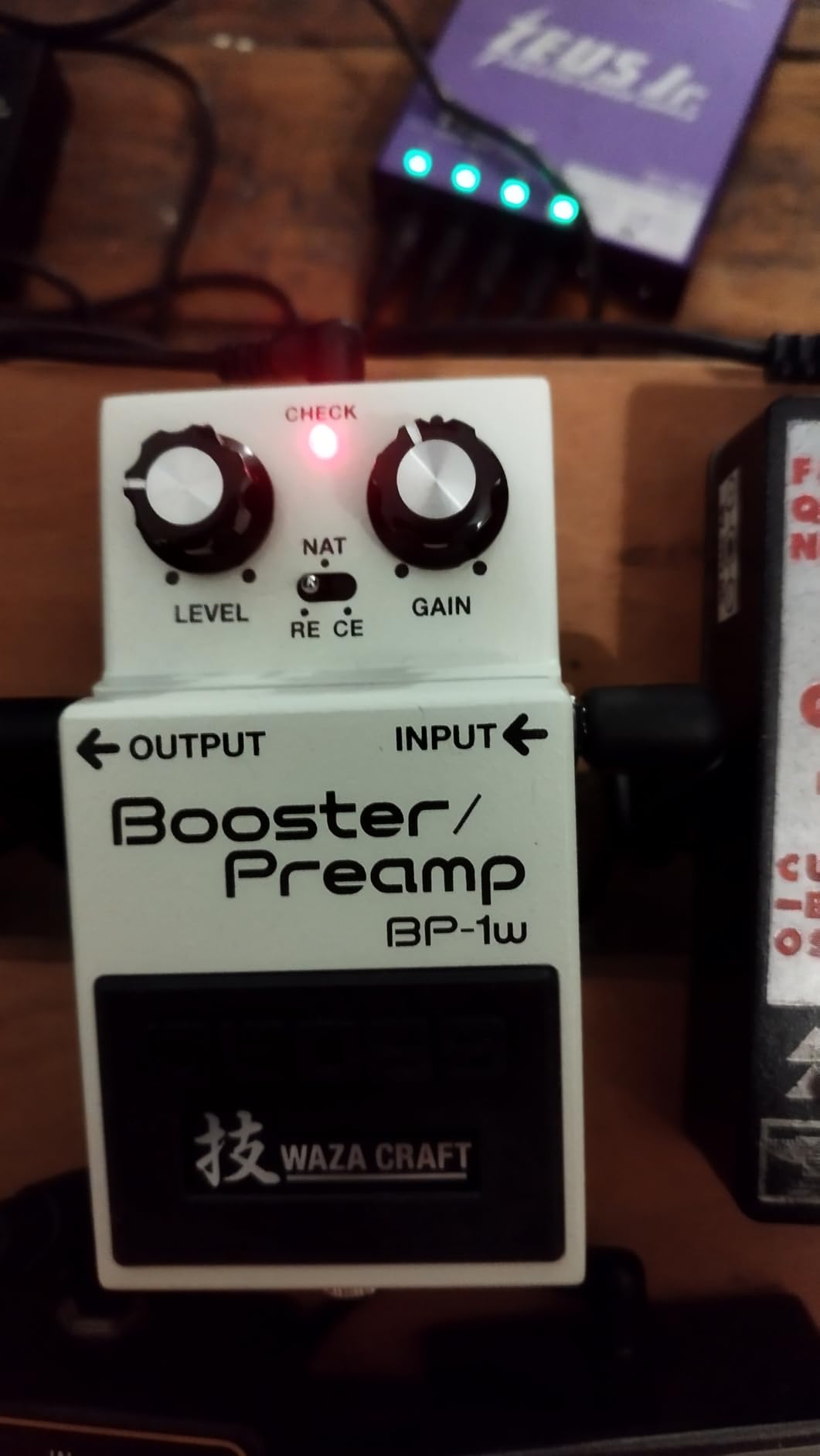
The CE mode is bright and bell-like, perfect for cutting through a mix with single coils. I found it especially useful for clean rhythm parts that needed more presence and sparkle. Having all three voicings in one pedal means you can adapt your boost to whatever the song requires.
Build quality is what you expect from BOSS Waza Craft. This is premium Japanese construction with attention to detail everywhere. The 5-year warranty is among the best in the industry. The pedal also features selectable standard or vintage input buffers, giving you even more tonal control.
Using the BP-1W as an Always-On Tone Enhancer
Many users report keeping the BP-1W on permanently, and I understand why. Set to RE mode with modest gain, it adds a subtle richness that makes everything sound better. It is like adding a layer of warmth and dimension to your entire signal chain.
I tested it as an always-on pedal for a full week of practice and rehearsal. My tone never sounded thin or sterile. The BP-1W added just enough character to make the sound feel alive and dimensional without being obvious. This is what a premium preamp booster should do.
Comparing the Three Voicing Modes
CE mode is your bright, cutting boost. It works great for clean tones that need to slice through a band mix. RE mode adds vintage warmth and fatness that flatters both single coils and humbuckers. NAT mode is your transparent clean boost for when you want pure volume without any coloration.
Having these three options means the BP-1W can serve as your solo boost, your always-on sweetener, and your tone-shaping tool all at once. No other pedal on this list offers this level of voicing flexibility.
5. MXR Booster Mini – The Echoplex-Inspired Hybrid
MXR® Booster Mini
Combines Micro Amp and Echoplex Preamp
+25dB boost
Internal trim pot
Made in USA
Mini housing
Pros
- Combines Micro Amp boost and Echoplex Preamp
- Compact mini pedal size
- Internal trim pot for blending circuits
- +25dB of volume on tap
- Made in USA
Cons
- Echoplex adjustment requires removing back plate
- Can get muddy at higher settings
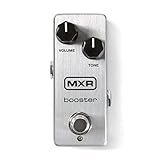
The MXR Booster Mini is a clever pedal that combines two legendary circuits in one compact box. You get the clean boost power of the MXR Micro Amp plus the vintage grit of the Echoplex Preamp. An internal trim pot lets you blend the two circuits together to find your perfect balance of clean and colored.
I dialed in a setting that was about 70 percent Micro Amp and 30 percent Echoplex, and the result was a boost with serious punch plus a hint of vintage warmth. It was the best of both worlds. The Echoplex character added just enough harmonic richness to make solos sing without muddying the tone.
The external Volume control gives you up to 25dB of boost, which is more than enough for any situation. I never needed it past noon on the knob. The amount of volume on tap is impressive for such a small pedal.
Internal Trim Pot Adjustment Process
The Echoplex blend is controlled by an internal trim pot, which means you need to remove the back plate to adjust it. This is the biggest drawback of the Booster Mini. It is not something you can tweak on the fly during a gig.
I recommend spending time dialing in the Echoplex level at home before you commit to a setting. Once you find the right blend, you probably will not need to change it often. But the inconvenience of removing screws is real if you like to experiment.
Made in USA Build Quality
The Booster Mini is made in the USA, and it feels like a premium product. The mini housing is solid and well-constructed. MXR quality is consistent across their lineup, and this pedal is no exception. It feels like it will last decades.
If you want a boost that can do both clean and colored duties without buying two separate pedals, the Booster Mini is an excellent choice. Just be prepared to open the back to find your ideal Echoplex blend.
6. MXR CAE Boost/Line Driver – The Bob Bradshaw Design
MXR® CAE Boost/Line Driver
Bob Bradshaw custom circuit
+20dB clean boost
True bypass
Single gain knob
9V battery or adapter
Pros
- Clean transparent boost up to 20dB
- True bypass switching
- Responsive to picking dynamics
- Rugged MXR construction
- Quiet operation
Cons
- DC jack may interfere with right angle cables
- No momentary switch
- Single knob limits control
- Pricey for a boost
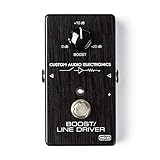
The MXR CAE Boost was born from a collaboration between MXR and Custom Audio Electronics founder Bob Bradshaw. Bradshaw has been building custom pedals and switching systems for professional guitarists since 1980, and his sonic signature is all over this pedal. The result is a clean boost that responds to your playing dynamics in a way most others do not.
What sets the CAE Boost apart is how it cleans up when you roll back your guitar volume. Most boost pedals just get quieter. The CAE Boost actually thins out gracefully, maintaining your core tone character at any volume. This makes it incredibly responsive to picking dynamics and volume knob manipulation.
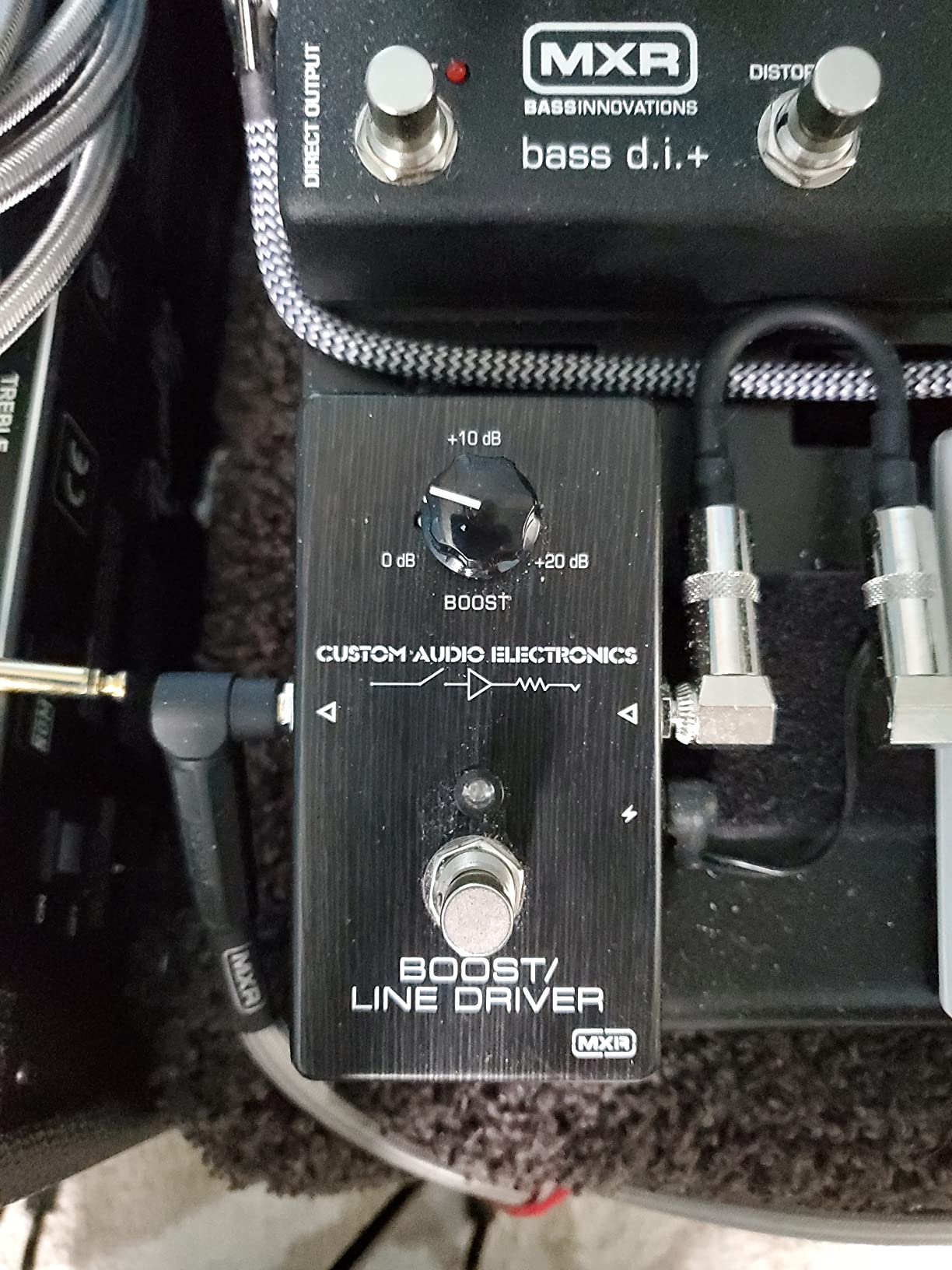
I tested it through a Marshall style amp set on the edge of breakup, and the CAE Boost pushed it into rich, harmonically complex overdrive. The true bypass switching ensured zero tone coloration when the pedal was off. High-quality components keep the operation whisper quiet.
The single knob is both a limitation and a strength. You get one control, gain, and that is it. But sometimes simplicity is what you need. No fiddling with EQ or multiple controls mid-song. Just stomp and go.
Professional Pedalboard Integration
The CAE Boost was designed for professional pedalboards, and it shows. It plays nicely with other pedals in your chain, with no unwanted interaction or noise. If you have a complex board with multiple drive and modulation pedals, the CAE Boost slots in without drama.
The bright blue LED is easy to see on a dark stage. The true bypass means you can place it anywhere in your chain without worrying about tone suck. It is a professional tool designed for working musicians.
True Bypass Advantages and Limitations
True bypass means your signal passes through the pedal completely unaffected when it is off. This is ideal if you have a short signal chain or if this is one of only a few pedals on your board. The tradeoff is that long chains of true bypass pedals can cause high-end signal loss.
If you have a large pedalboard, consider adding a dedicated buffer elsewhere in your chain to counteract the cumulative effect of multiple true bypass pedals. The CAE Boost itself will not cause problems, but it will not solve them either.
7. Fender Hammertone Boost – The Versatile EQ Booster
Fender Hammertone Boost
Switchable opamp and JFET modes
Active 2-band EQ
Soft-touch relay true bypass
Top mounted jacks
Aluminum enclosure
Pros
- Selectable opamp or JFET boost modes
- Active 2-band EQ with bass and treble
- True bypass with soft-touch relay
- Auto bypass when unpowered
- Top mounted jacks for easy routing
Cons
- Higher current draw at 80mA
- Some report darker than expected tone
- Limited to 9V power
The Fender Hammertone Boost gives you two distinct boost circuits in one pedal. A mini toggle lets you switch between an ultra-clean opamp boost and a harmonically rich JFET boost. Combined with active 2-band EQ controls, this is one of the most flexible boost pedals on this list.
I spent time in both modes. The opamp setting was clean, transparent, and perfect for pushing my amp into natural breakup without changing my core tone. The JFET mode added harmonic richness and warmth that made clean passages sound more dimensional and alive. Having both options in one pedal is genuinely useful.
The active EQ is what really sets the Hammertone apart. Most boost pedals give you a single level knob. The Hammertone gives you Bass and Treble controls with center detents that indicate flat frequency response. This lets you shape your boost to complement your amp and guitar combination.
The soft-touch relay true bypass feels premium underfoot. There is no loud click, just a smooth engagement. The auto bypass feature means that if you lose power mid-gig, your signal still passes through. That is a professional feature that can save a performance.
Opamp vs JFET Mode Comparison
Opamp mode is your transparent clean boost. It adds volume without changing your tone character. This is the mode I used most often for solo boosts where I just needed to be louder. It works like a more controllable version of the MXR Micro Amp.
JFET mode adds warmth, harmonic content, and a slight midrange push. It sounds more like a preamp than a pure boost. I preferred this mode for always-on use, where it added dimension and richness to my clean tone without being obvious. Both modes have their place.
Pedalboard Routing With Top Mounted Jacks
The top mounted input and output jacks make pedalboard routing much easier than side-mounted jacks. You can place pedals closer together, saving valuable board space. The hammered gray finish looks distinctive and matches the rest of the Hammertone series if you are building a cohesive board.
The one drawback is the 80mA current draw, which is higher than most boost pedals on this list. Make sure your power supply can handle it. Most isolated power supplies will have no trouble, but budget daisy-chain setups might introduce noise.
8. Electro-Harmonix LPB-1 – The Budget Power Booster
Electro-Harmonix LPB-1 Linear Power Booster Pedal
Classic LPB-1 circuit
Single gain knob
Die-cast chassis
9V battery included
True bypass
Pros
- Affordable and great value
- Adds warmth and fullness to tone
- Pushes tube amps into natural overdrive
- True bypass when off
- 9V battery included
Cons
- Not truly transparent adds low-end
- Battery access requires removing screws
- Can get muddy above 10 oclock
- No tone control
The Electro-Harmonix LPB-1 is a legend. It is one of the oldest boost pedal designs still in production, and it remains one of the best boost pedals you can buy on a budget. The Linear Power Booster does exactly what its name promises, but with a personality all its own.
Unlike the MXR Micro Amp, the LPB-1 is not transparent. It adds warmth, low-end fullness, and a touch of harmonic richness to your signal. Some players see this as a flaw, but I see it as a feature. If your tone is thin or sterile, the LPB-1 adds body and character that a transparent boost cannot.
I tested the LPB-1 in both front-of-amp and effects loop positions. In front of a tube amp, it pushed the preamp into rich, singing overdrive. In the effects loop, it drove the power section harder, producing vintage breakup tones that sounded absolutely massive.
The single gain knob goes from zero to full saturation. Below 10 o’clock on the dial, the boost is clean and subtle. Above that, it starts adding grit and thickness that can get muddy with some amp and pickup combinations. Finding the sweet spot takes some experimentation.
Effects Loop Applications
Placing the LPB-1 in your amp’s effects loop produces a different character than front-of-amp placement. In the loop, it drives the power section, creating a fuller, more saturated sound that resembles power tube distortion. This is a tone many players chase with much more expensive equipment.
I was genuinely surprised by how good the LPB-1 sounded in the effects loop of a Fender style amp. It transformed the clean channel into a rich, harmonically complex machine. For players who want vintage breakup without buying a new amp, this is a budget-friendly solution.
Tone Coloration Characteristics
The LPB-1 adds low-end warmth and lower-mid fullness. This is great for thin-sounding rigs but can overwhelm already dark setups. If your amp is already voiced dark, the LPB-1 might push it into muddy territory. Pair it with a bright amp and the results are magical.
There is no tone control to compensate. What you hear is what the circuit does. This simplicity is part of the charm, but it means you need to consider your amp voicing before buying. The LPB-1 loves Fender and Vox style amps but may be too much for already dark Marshall tones.
9. SONICAKE Sonic Super Master – The Ultimate Budget Boost With Buffer
SONICAKE Clean Boost Pedal with Buffer and +12dB Gain, Mini Pure Boost Guitar Bass Effects Pedal – Sonic Super Master
Clean boost with built-in buffer
+12dB gain range
True bypass
Mini enclosure
6mA current draw
Pros
- Excellent value under $30
- Clean transparent boost up to 12dB
- Built-in buffer active in bypass
- Compact mini size
- Low 6mA current draw
Cons
- No battery option requires power supply
- Possible ground hum in some setups
- Small knob can be tricky
The SONICAKE Sonic Super Master is the best-selling boost pedal on this list, with over 3,200 Amazon reviews. The reason is simple. It delivers a clean, transparent boost with a built-in buffer at a price that makes it almost impossible to pass up.
I was skeptical given the low price, but the Sonic Super Master surprised me. The boost is genuinely clean up to its 12dB maximum. That is less headroom than the MXR Micro Amp or TC Electronic Spark Mini, but it is plenty for most solo boost and always-on applications.
The built-in buffer is active when the pedal is in bypass mode, which means it is always working to preserve your signal integrity even when you are not boosting. This is a feature usually found on much more expensive pedals. If you have a long pedalboard with multiple true bypass pedals, the Sonic Super Master solves your signal degradation problem for a fraction of the cost.
The compact mini size fits anywhere. At just 2.44 by 4.13 by 2.44 inches, it takes up minimal board space. The low 6mA current draw means it will not tax your power supply even on a crowded pedalboard.
Buffer Functionality and Signal Preservation
The buffer in the Sonic Super Master is the real value proposition. When the pedal is off, the buffer is on, actively driving your signal through your cable and pedal chain with minimal loss. This restores high-end clarity and overall punch that gets lost with long cable runs and multiple true bypass pedals.
I tested it at the start of a 10-pedal chain with a 20-foot cable, and the difference in high-end clarity was immediately noticeable. The buffer is not switchable, so if you prefer true bypass throughout your chain, this might not be the right choice. But for most players, the always-on buffer is a benefit.
Solo Boost and Always-On Performance
For solo boosts, the 12dB range is adequate for most live situations. It will not push your amp into heavy overdrive like a 20dB or 25dB boost can, but it will lift your solos above the band mix effectively. I found it perfect for clean amp setups where I just needed more volume.
As an always-on pedal, the Sonic Super Master excels. Set it to a low boost level and leave it on. It adds presence and clarity to your tone without obvious coloration. For the price, it is one of the best always-on boost and buffer solutions available.
10. JOYO Roll Boost JF-38 – The High-Headroom Budget Option
Up to 35dB clean boost
True bypass
9V to 18V DC support
Aluminum alloy housing
Single gain knob
Pros
- Excellent value much cheaper than MXR
- Up to 35dB of clean boost
- True bypass silent when off
- Works with acoustic and electric
- Supports 18V for extra headroom
Cons
- Battery replacement requires removing 4 screws
- Some tone coloration reported
- Single knob no tone control
The JOYO Roll Boost JF-38 offers the highest maximum boost on this list at 35dB. That is serious headroom, more than enough to push any amp into saturation or lift your solos to the front of any mix. And it does this at a price that makes it accessible to any guitarist.
I compared the Roll Boost directly against the MXR Micro Amp, and the results were closer than the price difference suggests. The JOYO delivers a clean, clear boost that performs similarly to the MXR in most situations. There is some slight tonal coloration, but at this price point, it is impressive.
The aluminum alloy housing feels solid and well-built. The classic stoving varnish finish gives it a vintage look that stands out on a pedalboard. The LED indicator is bright and easy to see on stage. This pedal looks and feels more expensive than it is.
18V Operation for Extra Headroom
The Roll Boost supports 9V to 18V DC input, which is unusual at this price. Running it at 18V gives you additional headroom, meaning the boost stays cleaner at higher settings before any clipping occurs. This is valuable if you want maximum clean boost without any coloration.
I tested it at both 9V and 18V. At 18V, the high-end was slightly more open and the overall tone felt less compressed at maximum boost. If your power supply supports 18V, it is worth trying. The improvement is subtle but noticeable to discerning ears.
Acoustic and Electric Versatility
The Roll Boost works well with both acoustic and electric guitars. I ran my acoustic-electric through it into a PA, and the boost was clean and natural. With electric guitar, it pushed my tube amp into overdrive effectively. This versatility makes it a great choice for players who use both instrument types.
The main drawbacks are the battery access, which requires removing four screws, and the lack of a tone control. But at this price, these are minor complaints. If you want maximum boost range on a budget, the JOYO Roll Boost delivers.
Buying Guide: Choosing the Right Boost Pedal
Choosing among the best boost pedals comes down to understanding what you need the pedal to do. Boost pedals are not all the same. Some are transparent, some add color, some function as preamps, and others double as buffers. Here is what to consider before you buy.
Clean Boost vs Colored Boost
A clean boost increases your signal volume without changing your tone character. The MXR Micro Amp and TC Electronic Spark Mini are examples of clean boosts. They are ideal when you just want to be louder without altering your carefully crafted tone.
A colored boost adds tonal character along with volume. The Electro-Harmonix LPB-1 adds low-end warmth, while the BOSS BP-1W in RE mode adds vintage preamp richness. Colored boosts are great when your tone needs enhancement, not just amplification. Think about whether you want transparency or personality.
Understanding the Different Boost Types
Clean boosts provide pure volume increase with minimal tonal change. Transparent boosts are similar but specifically designed to preserve your exact tone at any setting. Treble boosters emphasize high frequencies and are popular for brightening dark amps. EQ boosts, like the Fender Hammertone, give you active tone-shaping controls alongside the boost. Preamp boosts, like the BOSS BP-1W, add the character of a vintage preamp circuit.
Dirty boosts combine boost with light overdrive, like the Wampler Tumnus V2 at higher gain settings. Each type serves different purposes. Clean and transparent boosts are the most versatile. Colored and preamp boosts are more specialized but can transform your tone in ways a clean boost cannot.
True Bypass vs Buffered Bypass
True bypass means your signal passes through the pedal completely unaffected when it is off. This is ideal for short pedal chains. Buffered bypass means the pedal’s buffer remains active even when off, which preserves signal integrity in long chains. The Wampler Tumnus V2 and SONICAKE Sonic Super Master both feature quality buffers.
If you have more than four or five true bypass pedals on your board, you probably need a buffer somewhere. A boost pedal with a good buffer solves two problems at once. Forum discussions on r/guitarpedals consistently highlight this as a common pain point for players building larger pedalboards.
Signal Chain Placement Matters
Where you place your boost pedal dramatically affects its behavior. In front of your amp, a boost pushes the preamp harder, which can induce natural overdrive on a tube amp. In the effects loop, a boost increases overall volume without changing your preamp character, which is ideal for clean solo volume jumps.
For stacking with other drive pedals, placement order changes the result. A boost before your overdrive adds gain and saturation to the overdrive sound. A boost after your overdrive increases volume while preserving the overdrive character. Both approaches are valid depending on what you want to achieve.
Gain Range and Headroom
Boost pedals offer different maximum gain levels. The JOYO Roll Boost leads with 35dB, followed by the MXR Booster Mini at 25dB, and the TC Electronic Spark Mini and MXR CAE Boost at 20dB. The SONICAKE Sonic Super Master offers 12dB, which is adequate for most situations but less dramatic.
More gain range is not always better. If you only need a subtle solo lift, 12dB is plenty. If you want to push a clean amp into heavy saturation, you need 20dB or more. Consider your specific use case before prioritizing maximum boost numbers.
Amp Interaction: Tube vs Solid-State
Boost pedals interact differently with tube and solid-state amps. With tube amps, a boost pushes the preamp or power section into natural overdrive, which is the primary reason most guitarists buy boost pedals. The amp responds dynamically to the increased signal, producing rich, harmonically complex saturation.
With solid-state amps, a boost primarily increases volume without inducing the same organic breakup. This does not mean boosts are useless with solid-state amps. They still provide volume increases for solos and can add character depending on the pedal. But the magic of pushing a tube amp into natural overdrive is a tube-specific phenomenon.
FAQ’s
What is the holy grail of guitar pedals?
The holy grail of guitar pedals is subjective, but the original Klon Centaur is widely considered the most legendary and sought-after pedal ever made. Original Klons sell for thousands of dollars. Modern alternatives like the Wampler Tumnus V2 capture much of that magic at a fraction of the cost.
What 5 pedals should every guitarist have?
The five pedals every guitarist should consider are a tuner pedal for accurate tuning, an overdrive pedal for core dirt tones, a boost pedal for solos and amp pushing, a delay pedal for depth and atmosphere, and a reverb pedal for spatial enhancement. These five cover the foundations of virtually any guitar tone.
What boost pedal does John Mayer use?
John Mayer has used several boost pedals over the years, most notably the Klon Centaur and the Tube Screamer for pushing his Two Rock amps. He also uses custom boost pedals built for his specific rig. His tone philosophy emphasizes subtle boosts that enhance rather than transform his core amp sound.
Do boost pedals increase gain?
Yes, boost pedals increase gain by amplifying your guitar signal. A clean boost adds volume without distortion, while higher gain settings or colored boosts can push your tube amp into natural overdrive. The gain increase is measured in decibels (dB), typically ranging from 12dB to 35dB depending on the pedal.
Wrapping Up the Best Boost Pedals
Finding the best boost pedals for your rig comes down to what you need. For transparent clean boosting, the MXR Micro Amp remains the gold standard. For value and compact size, the TC Electronic Spark Mini is unbeatable. And for players on a tight budget, the SONICAKE Sonic Super Master delivers clean boost and buffering for under $30.
If you want tonal coloration and preamp character, the BOSS BP-1W Waza Craft offers three voicings in one premium package. For Klon-style warmth and stacking versatility, the Wampler Tumnus V2 is exceptional. Whatever your tone goals, a quality boost pedal will transform your sound in 2026 and beyond.
Take your time, consider your amp and playing style, and choose the boost that fits your musical needs. Your solos will thank you.