
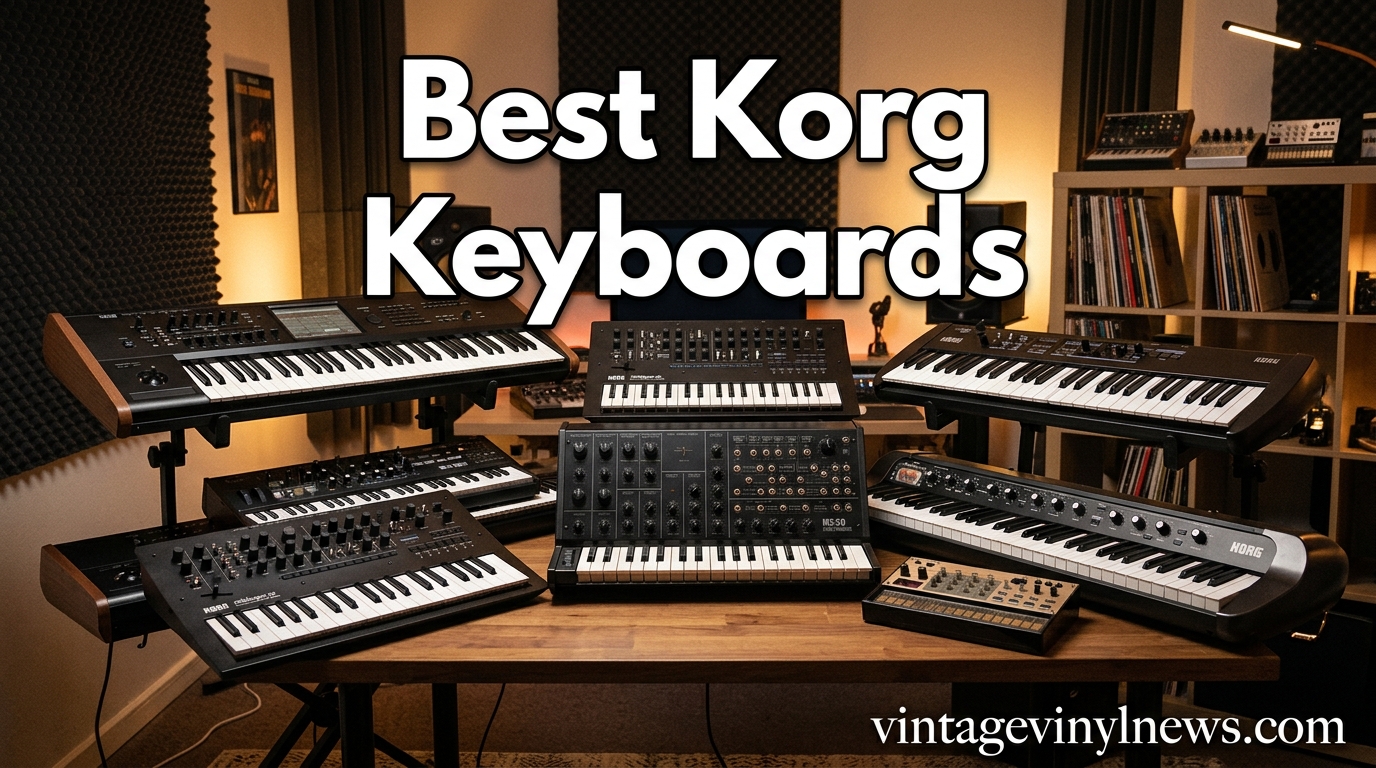
Korg has been building some of the best keyboards and synthesizers in the world since 1962, and their lineup in 2026 covers everything from budget-friendly beginner instruments to flagship professional workstations. Whether you need a portable arranger for solo gigs, a stage piano with weighted keys, or a sound design powerhouse, the best Korg keyboards deliver the kind of build quality and sound depth that made this Japanese brand legendary.
Our team spent weeks comparing every current Korg model across digital pianos, synthesizers, arranger keyboards, and full workstations. We looked at key action, polyphony, sound engines, connectivity, and real-world user feedback from hundreds of customer reviews. This guide covers 12 models spanning every budget from entry-level portables to professional arranger workstations.
If you have ever felt overwhelmed trying to choose between a Korg Liano, a Kross 2, a Pa700, or one of the synth models like the Wavestate, you are in the right place. We break down exactly who each keyboard is built for so you can make a confident decision without second-guessing yourself.
Table of Contents
Top 3 Picks for Best Korg Keyboards (September 2026)

Korg MicroKorg2 Synthesizer Vocoder
- 37 full-size keys
- 2.8-inch color LCD
- Loop recorder
- Vocal processor

Korg Kross 2-61 Synthesizer Workstation
- 61-key synth action
- EDS-i Sound Engine
- Step sequencer
- Lightweight 3.8 kg

Korg Liano Portable 88-Key Digital Piano
- 88 semi-weighted keys
- Built-in speakers
- USB MIDI
- Sustain pedal included
Best Korg Keyboards in 2026
| Product | Specifications | Action |
|---|---|---|
| Korg MicroKorg2 Synthesizer Vocoder |
|
Check Latest Price |
| Korg Kross 2-61 Workstation |
|
Check Latest Price |
| Korg Liano 88-Key Digital Piano |
|
Check Latest Price |
 Korg Wavestate MKII Synthesizer Korg Wavestate MKII Synthesizer |
|
Check Latest Price |
 Korg multiPoly Synthesizer Korg multiPoly Synthesizer |
|
Check Latest Price |
 Korg i3 Arranger Keyboard Korg i3 Arranger Keyboard |
|
Check Latest Price |
 Korg EK50 Arranger Keyboard Korg EK50 Arranger Keyboard |
|
Check Latest Price |
 Korg Kross 2-88 Workstation Korg Kross 2-88 Workstation |
|
Check Latest Price |
 Korg PA600 Professional Arranger Korg PA600 Professional Arranger |
|
Check Latest Price |
 Korg Pa700 Arranger Workstation Korg Pa700 Arranger Workstation |
|
Check Latest Price |
 Korg Pa1000 Professional Arranger Korg Pa1000 Professional Arranger |
|
Check Latest Price |
 Korg Pa5X 61 Arranger Workstation Korg Pa5X 61 Arranger Workstation |
|
Check Latest Price |
1. Korg MicroKorg2 Synthesizer and Vocoder
Korg – MicroKorg2 Synthesizer/Vocoder (MICROKORG2)
37 full-size keys
2.8-inch color IPS LCD
XMT Sound Engine
Built-in loop recorder and vocal processor
Pros
- Intuitive color display with minimal menu diving
- Excellent 3-oscillator sound quality
- Portable with battery support
- Built-in loop recorder for live performance
- Powerful vocoder and harmonizer functions
Cons
- 4-voice polyphony limits complex arrangements
- Some sounds feel less deep than pricier synths
I have been following the microKORG line since the original launched back in 2002, and the MicroKorg2 is a genuine evolution rather than a cosmetic refresh. The addition of a 2.8-inch full-color IPS display changes everything about how you interact with this synth. Instead of decoding cryptic parameter numbers, you get animated parameter guides and an oscilloscope that shows your sound shaping in real time.
The new vocal processor is where this keyboard really surprised me. It includes a harmonizer and hard-tuning function that goes well beyond what the original offered. I ran a vocal track through the vocoder and was able to build layered harmonies within minutes, something that used to require external gear.
Battery power means you can take this synth anywhere. At just under 5 pounds, it slips into a backpack and is ready for a park bench jam session or an impromptu studio collaboration. The loop recorder lets you build entire arrangements on the fly without needing a DAW.
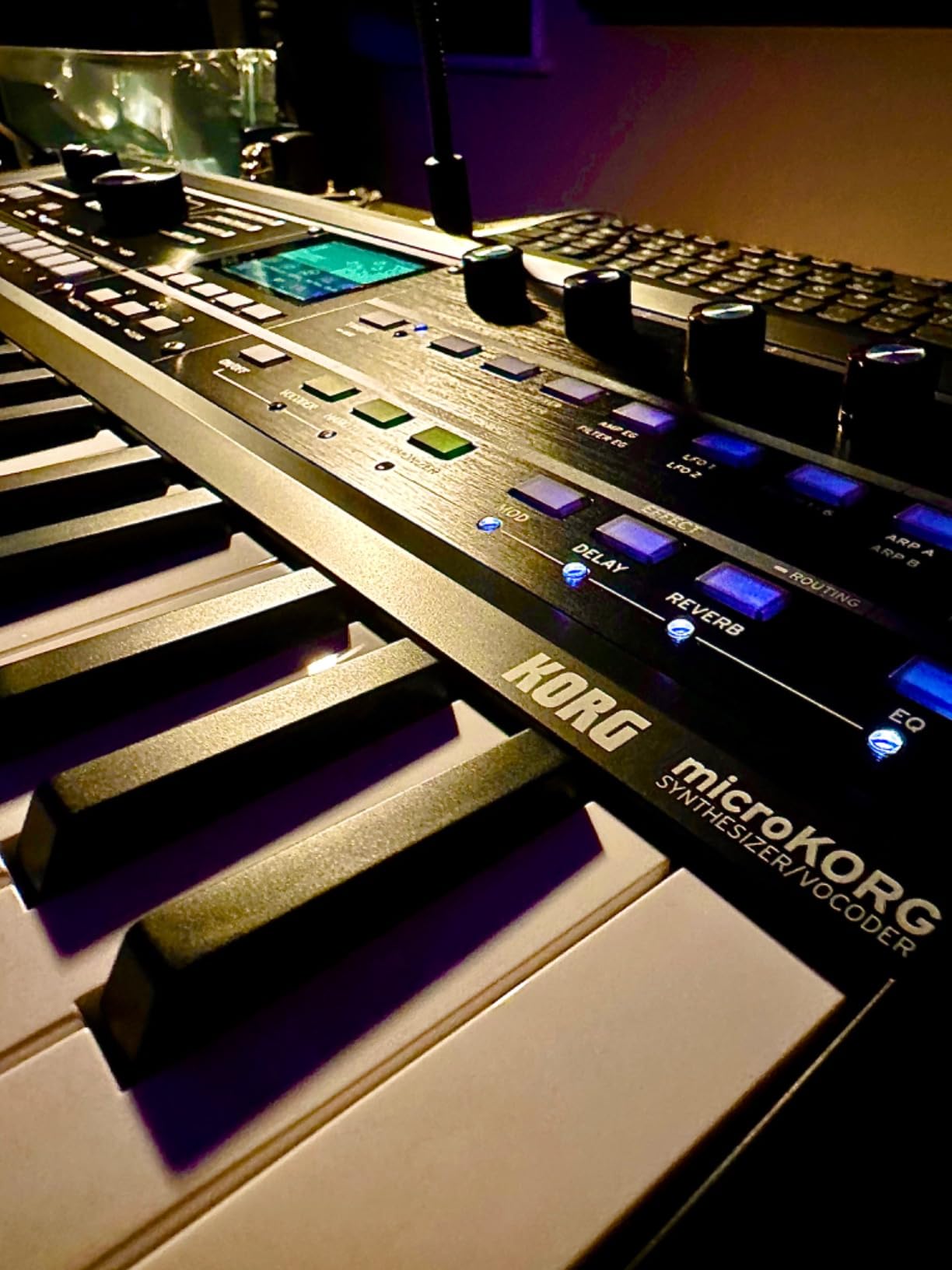
Sound quality has taken a noticeable step up thanks to the latest XMT Sound Engine. The analog modeling feels warmer and more authentic than the original microKORG. Bass tones have real weight, and the filter sweeps sound genuinely analog rather than digitally approximated.
With 4-voice polyphony, you will not be playing massive chord pads and lead lines simultaneously. But for what this synth is designed to do, which is punchy leads, thick bass, vocoder FX, and live performance, the voice count works fine. The categorization system makes finding the right sound fast, which matters when you are performing live.
Who Will Get the Most Out of the MicroKorg2
Electronic music producers and live performers are the ideal users here. If you love tweaking sounds in real time, the Kaoss-style interface and loop recorder make this an instrument you will actually play rather than just program. Beginners benefit from the intuitive display and animated guides that make synthesis approachable.
Vocalists and producers who want integrated vocal processing will find the harmonizer and vocoder genuinely useful for both studio and stage. This is one of the few keyboards at this price point that handles both instrumental and vocal duties competently.
Where It Falls Short
Synth purists who need deep patch routing and complex modulation matrices may find the MicroKorg2 limiting compared to something like a Hydrasynth Explorer or Arturia Minifreak. The 4-voice polyphony also restricts how many notes you can hold simultaneously.
If you need a full 61 or 88-key instrument for piano-style playing, this 37-key synth is not the right tool. The MicroKorg2 is built for sound design and performance, not traditional piano repertoire.
2. Korg Kross 2-61 Synthesizer Workstation
Korg Kross 2-61 61-Key Synthesizer Workstation
61-key synth action
EDS-i Sound Engine
Step and MIDI sequencers
Mic and line inputs
3.8 kg lightweight
Pros
- Excellent sound quality across all categories
- Incredibly lightweight at just 3.8 kg
- Built-in step and MIDI sequencers
- Functions as a MIDI controller for DAWs
- Mic and line inputs for recording external audio
Cons
- Not Prime eligible with 5 to 6 day shipping
- Synth action keys not weighted for piano players
The Korg Kross 2-61 is the keyboard I recommend more than any other when someone asks for a do-everything instrument under a thousand dollars. The EDS-i Sound Engine delivers sounds that punch well above what you would expect at this price. I have used the piano, organ, and synth pads in live settings and never felt like the sound was holding me back.
What makes this workstation special is the combination of portability and depth. At 3.8 kilograms, it is lighter than most 61-key competitors. You can carry it under one arm to a rehearsal, set it up in under a minute, and have access to hundreds of professional sounds plus a full step sequencer and MIDI sequencer.
The mic and line inputs turn the Kross 2 into a mini production station. I connected a vocal mic directly and was able to process it through the onboard effects while sequencing a backing track. For songwriters who want to sketch ideas without firing up a DAW, this workflow is genuinely liberating.
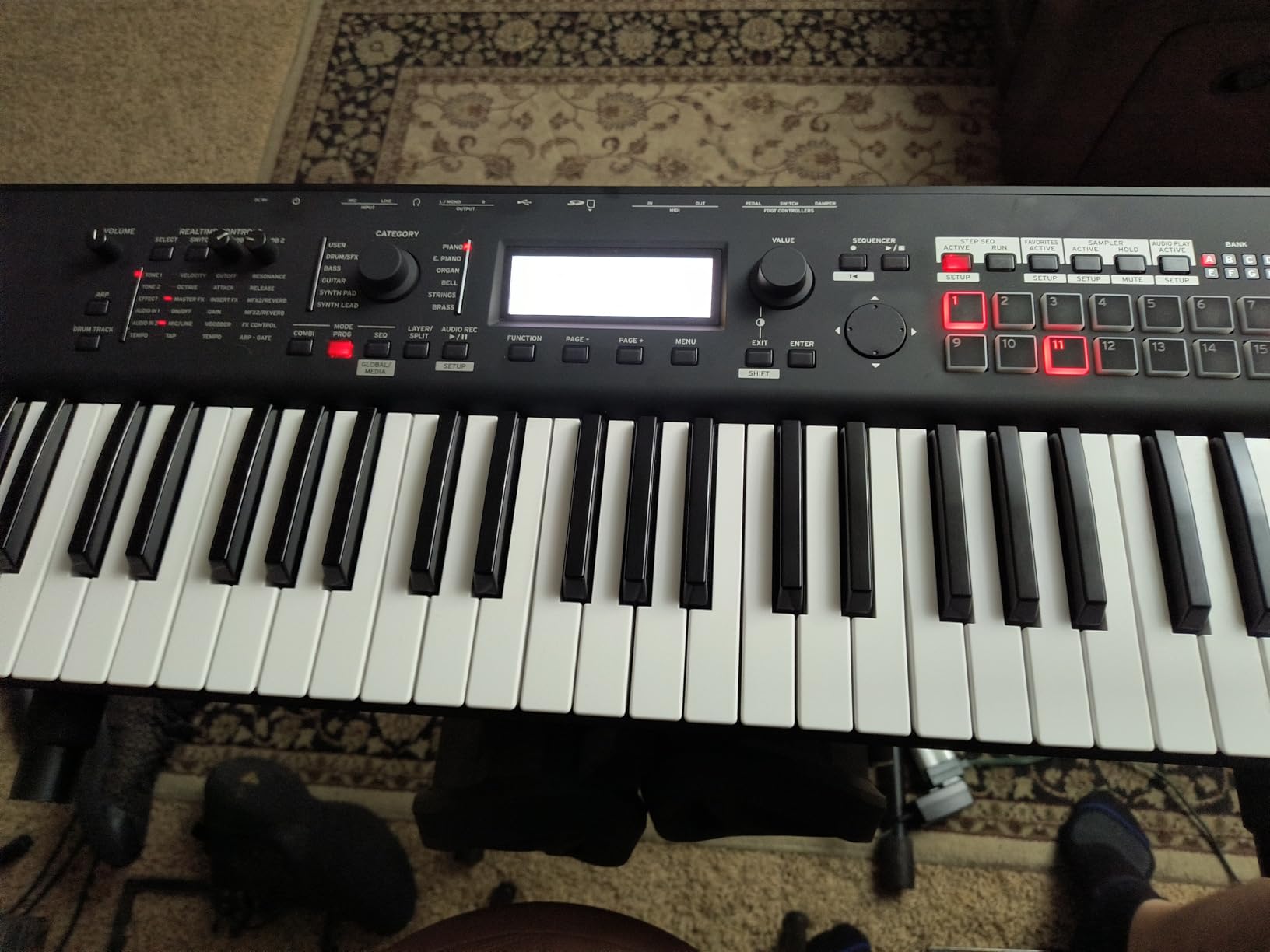
The synth-action keybed is responsive and fast, which suits pop, rock, and electronic styles well. It is not trying to be a weighted piano action, so do not expect that kind of resistance. For organ and synth work, the action feels quick and musical.
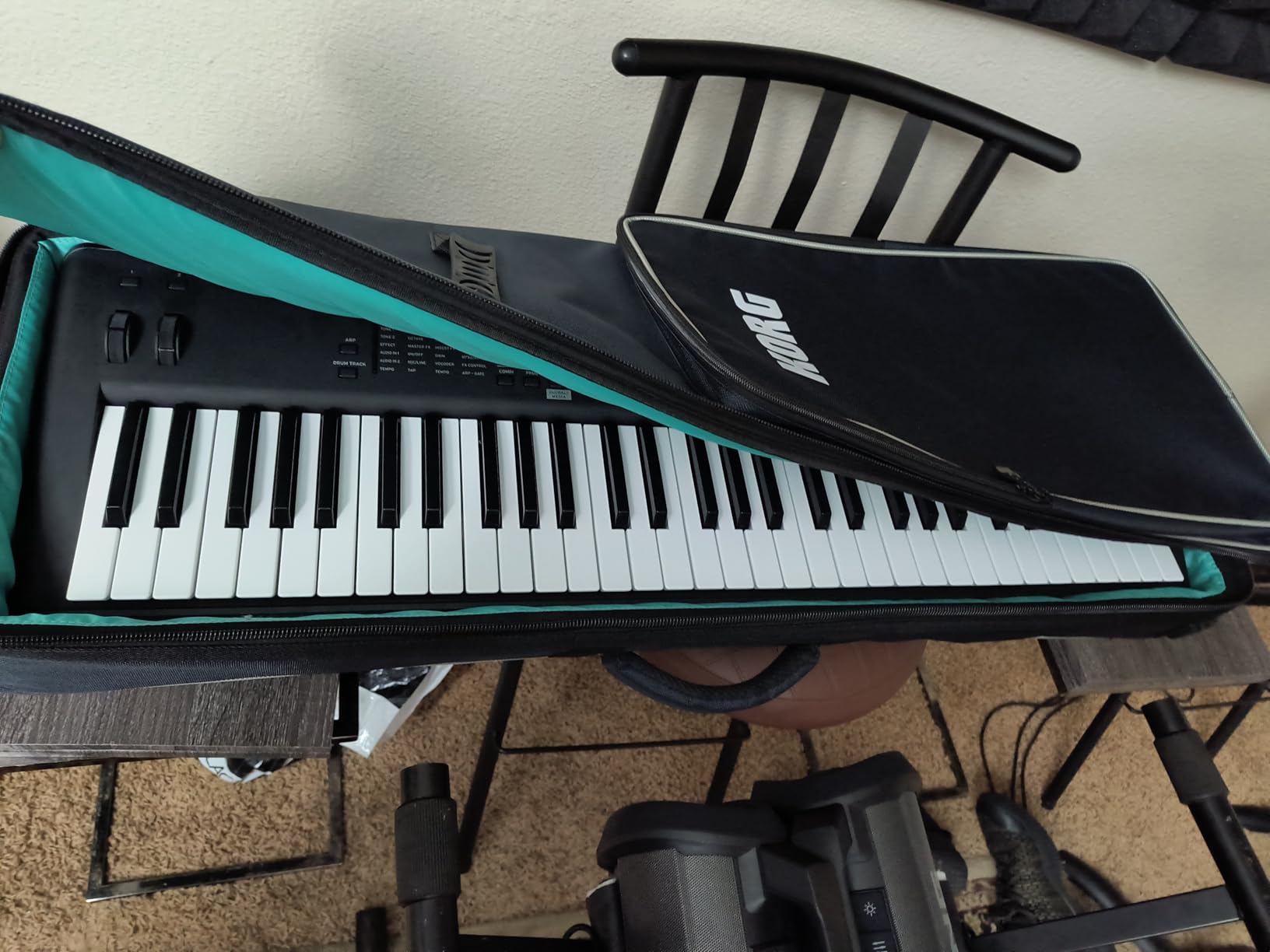
Battery operation means you can play anywhere. Six AA batteries give you hours of playing time, which is perfect for outdoor events, busking, or writing sessions away from a power outlet. The audio recorder lets you capture your performances as WAV files directly to SD card.
Ideal Setup and Workflow
Gigging musicians who need one keyboard for sounds, sequencing, and audio recording will find the Kross 2-61 eliminates the need for a laptop on stage. The MIDI controller mode means it also pulls double duty in a studio driving soft synths in your DAW.
Songwriters benefit from the ability to build a full arrangement with drums, bass, and harmony parts using the sequencer, then record vocals through the mic input with effects. It is a complete portable production rig.
What to Watch Out For
The 61-key synth action will not satisfy classical pianists or anyone who needs the feel of weighted hammer action. If you primarily play piano repertoire, look at the Kross 2-88 or a dedicated stage piano instead.
Shipping times run 5 to 6 days and it is not Prime eligible, so plan ahead if you need it for a specific gig or deadline. The sound set is broad but not as deep as what you get on higher-end Korg workstations like the Nautilus or KRONOS.
3. Korg Liano Portable 88-Key Digital Piano
Korg Liano Portable 88-key Digital Piano w/ Semi-Weighted Keys, Bass Reflex Speakers and includes a Sustain Pedal & Power Adapter – Black
88 semi-weighted keys
Built-in bass reflex speakers
USB Audio and MIDI
Includes sustain pedal and music stand
Skoove software bundle
Pros
- Full 88-key range with semi-weighted action
- Built-in speakers eliminate need for external amplification
- Includes sustain pedal music stand and power adapter
- USB Audio and MIDI for recording and virtual instruments
- Skoove learning software included for beginners
Cons
- Not suitable for professional stage performance
- Semi-weighted keys lack true hammer action feel
The Korg Liano is the keyboard I point beginners toward when they want 88 keys without spending a fortune. The semi-weighted action gives you enough resistance to develop proper finger technique, which is critical for anyone learning piano. It is not a fully weighted hammer action, but at this price point, the feel is surprisingly good.
Built-in bass reflex speakers mean you can start playing the moment you unbox it. No need to buy an amplifier or connect external monitors. The speakers are loud enough for home practice and small room settings, though you will want headphones or external amplification for larger spaces.
The included sustain pedal, music stand, and power adapter make this a complete package. Many budget keyboards nickel and dime you on accessories, but Korg includes everything you need to start playing immediately. The 3-month Skoove Piano Learning software subscription is a nice touch for absolute beginners.
USB Audio and MIDI connectivity means the Liano doubles as a recording interface. Connect it to your computer and you can use it as a controller for virtual instruments in any DAW. The USB connection also handles audio streaming, so you can play backing tracks through the Liano’s speakers.
The sound selection goes beyond just piano. You get electric pianos, strings, organs, and other essential tones that cover most practice and performance needs. The portable design at just over 13 pounds means you can move it between rooms or take it to lessons without strain.
Best Use Cases for the Liano
Beginners who want a full 88-key range for learning proper piano technique are the primary audience. The semi-weighted action is a significant step up from unweighted synth keys and helps build finger strength and control.
Intermediate players who need a second instrument for practice or travel will appreciate the portability and built-in speakers. It works well as a dorm room or apartment piano where space is limited and external speakers are not practical.
Limitations to Consider
The semi-weighted action will not satisfy advanced players who are accustomed to fully weighted hammer action. If you are preparing for classical exams or serious piano study, consider a Korg B2 or LP-380 instead.
This is not built for professional stage use. The speakers and sound engine are designed for practice and home enjoyment rather than performing to an audience. If you need a gigging instrument, look at the Kross 2 or Grandstage.
4. Korg Wavestate MKII Wave Sequencing Synthesizer
Korg Wavestate MKII (WAVESTATEMK2)
37-key synthesizer
Wave Sequencing architecture
96-voice polyphony
2GB sample library
Balanced line outputs
Pros
- Unique wave sequencing engine creates evolving sounds nothing else can match
- 96-voice polyphony handles massive arrangements
- 2GB sample library with excellent factory presets
- Balanced line outs for professional audio routing
- Compact and portable at 6.4 pounds
Cons
- Key bed quality could be better per user feedback
- Wave sequencing has a significant learning curve
The Wavestate MKII takes the legendary wave sequencing concept from the classic Wavestation and brings it into the modern era with 96-voice polyphony and a 2GB sample library. I have spent hours exploring the preset sounds and still find new textures and evolving pads that surprise me. This is a synthesizer that rewards deep exploration.
Wave sequencing works by cycling through different samples in a programmed sequence, creating sounds that constantly evolve and shift over time. A single note held down can morph through dozens of timbres, building tension and releasing it in ways that static samples simply cannot achieve.
The 2GB sample library covers everything from classic synth waveforms to organic textures, vocal fragments, and field recordings. The factory presets demonstrate the engine’s range with cinematic pads, punchy basses, and complex arpeggios that sound ready for a film score.
Balanced line outputs mean you can connect directly to professional audio interfaces and mixing consoles without signal degradation. The build quality feels solid with stainless steel construction, and at 6.4 pounds it is genuinely portable.
Who Should Explore the Wavestate
Sound designers and film composers will find this synth indispensable. The wave sequencing engine creates textures and atmospheres that would take hours of editing to achieve with traditional sample libraries. If you produce ambient, cinematic, or experimental music, the Wavestate is a creative tool unlike anything else.
Live performers who want their solos and pads to evolve and breathe on stage will love the real-time control options. The vector joystick and programmable knobs let you manipulate wave sequences as they play.
The Learning Curve Reality
Wave sequencing is not intuitive if you are coming from a subtractive synthesis background. Understanding how layers, lanes, and steps interact takes time and patience. The manual is essential reading, and expect to spend several sessions experimenting before you feel comfortable programming your own sounds.
The key bed is functional but not exceptional. Some users have noted it feels a bit spongy compared to premium synth actions. If you are primarily a keyboard player rather than a sound designer, the action may feel limiting.
5. Korg multiPoly Analog Modeling Synthesizer
Korg multipoly Analog Modeling Synthesizer w/Four Oscillators, 60 Voices and built-in KAOSS Pad
Four oscillators
60-voice polyphony
Built-in Kaoss Pad
Dual filters with X-mod and sync
Motion Sequencing 2.0
Pros
- Four stacked oscillators create rich multidimensional sounds
- 60-voice polyphony is generous for an analog modeling synth
- Built-in Kaoss Pad with Kaoss Physics for expressive performance
- Dual filters with flexible x-mod and sync routing
- Extensive modulation with 4 envelopes 5 LFOs and 6 mod processors
Cons
- Plastic body feels less premium than metal alternatives
- Limited 24 reviews means less long-term reliability data
The multiPoly is Korg’s love letter to the legendary Mono/Poly, rebuilt with modern analog modeling technology and 60 voices of polyphony. Four stacked oscillators per voice give you sounds with genuine depth and dimension. When I first played a fat unison bass patch with all four oscillators detuned slightly, the richness reminded me of vintage analog synths costing three times as much.
The round-robin oscillator triggering is a standout feature. Instead of every note sounding identical, slight variations occur between hits, which gives sequences and arpeggios a living, breathing quality. This is the kind of detail that separates good synths from great ones.
The built-in Kaoss Pad with Kaoss Physics is where performance meets sound design. You can assign multiple parameters to the X/Y pad and manipulate them simultaneously while playing. Kaoss Physics adds a virtual ball that bounces around the pad based on your touch, creating organic, unpredictable modulation patterns.
Dual filters with flexible cross-modulation and sync routing let you sculpt sounds that range from warm and mellow to aggressive and biting. Add in 4 envelopes, 5 LFOs, and 6 mod processors, and the modulation possibilities are essentially limitless. Layer Rotate and Motion Sequencing 2.0 add even more creative tools.
Best Applications for the multiPoly
Sound designers who want deep modulation capabilities in a compact format will find the multiPoly incredibly inspiring. The four-oscillator architecture and extensive routing options make it capable of sounds that simpler synths simply cannot produce.
Live performers benefit from the Kaoss Pad for real-time sound manipulation. Being able to morph multiple parameters with a single touch while keeping one hand on the keys is a powerful performance tool.
Considerations Before Buying
The plastic body construction does not feel as premium as the aluminum build on the MicroKorg2. It is sturdy enough for studio use, but gigging musicians may want to invest in a protective case.
With only 24 reviews on Amazon, there is limited long-term reliability data compared to more established models. The synth is highly ranked at number 31 in the synthesizer category, which suggests strong demand, but consider the warranty situation carefully since warranty details require contacting the seller.
6. Korg i3 Arranger Keyboard
Korg i3 Arranger Keyboard – Silver
61 velocity-sensitive keys
800 sounds with GM2 set
59 drum kits
Battery powered
Includes Reason Lite and M1 software
Pros
- Over 800 meticulously designed sounds with full GM2 sound set
- Battery powered with 6 AA batteries for true portability
- USB-to-host and USB-to-device connectivity
- Includes Reason Lite AAS plugins and M1 software
- Illuminated LED buttons for intuitive live control
- 5-pin MIDI out for hardware integration
Cons
- No 5-pin MIDI In port
- No arpeggiator on board
- Factory piano sound could be better
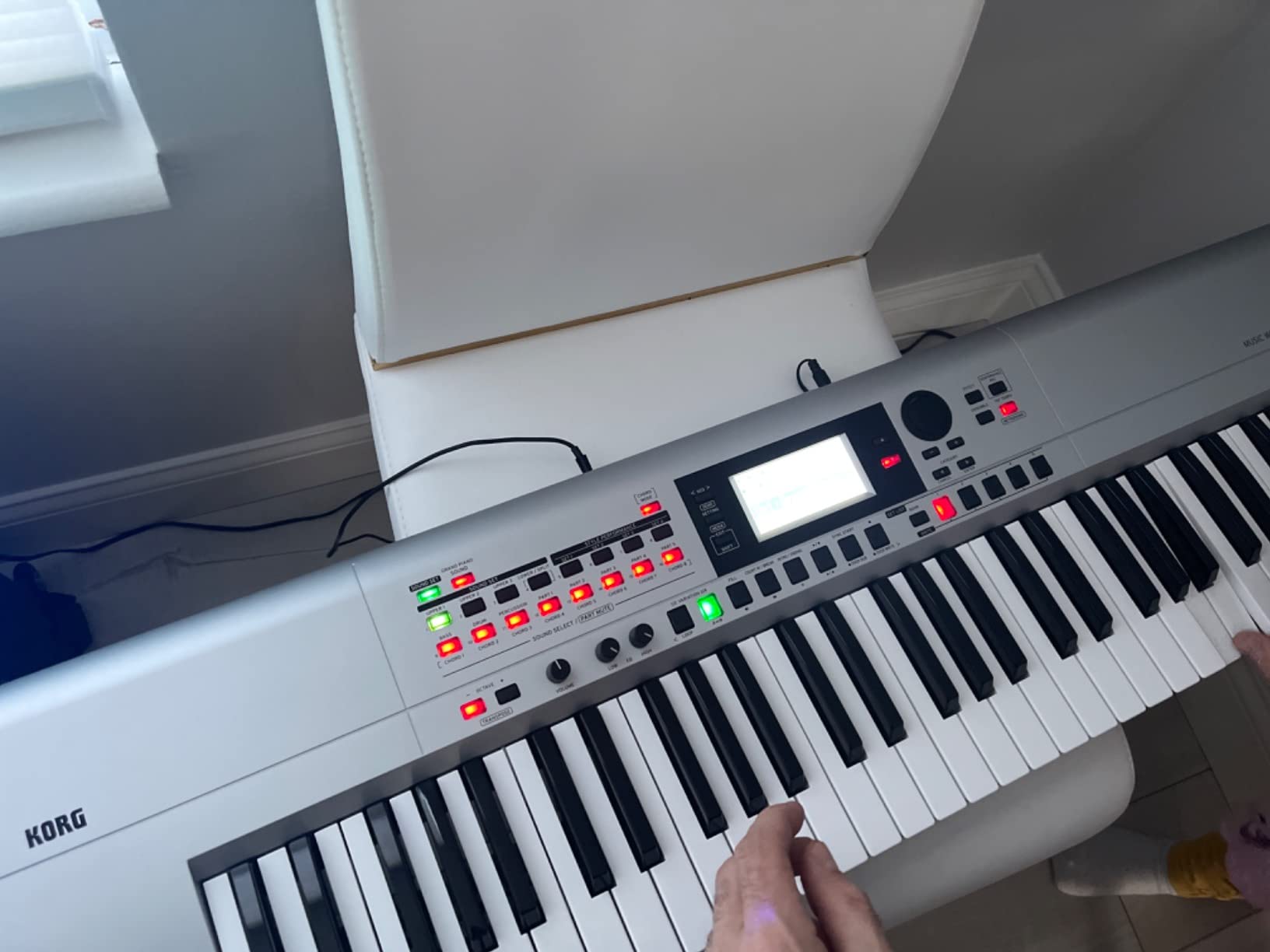
The Korg i3 is the arranger keyboard I recommend for musicians who want a complete, portable backing band in a lightweight package. With 800 sounds, 59 drum kits, and dozens of accompaniment styles, you can build full arrangements anywhere. Battery power means you are not tethered to a wall outlet, which opens up performance possibilities most keyboards cannot match.
I took the i3 to an outdoor songwriting session and was able to sketch a full demo with drums, bass, and chord accompaniment using just the built-in styles. The illuminated LED buttons make it easy to find the right function even in low light, and the joystick for pitch modulation feels smooth and precise.
The included software bundle adds significant value. Reason Lite, three AAS VST plugins, and the legendary Korg M1 software give you production tools that would cost more than the keyboard itself if purchased separately. Performance Recording mode lets you export your arrangements as WAV files.
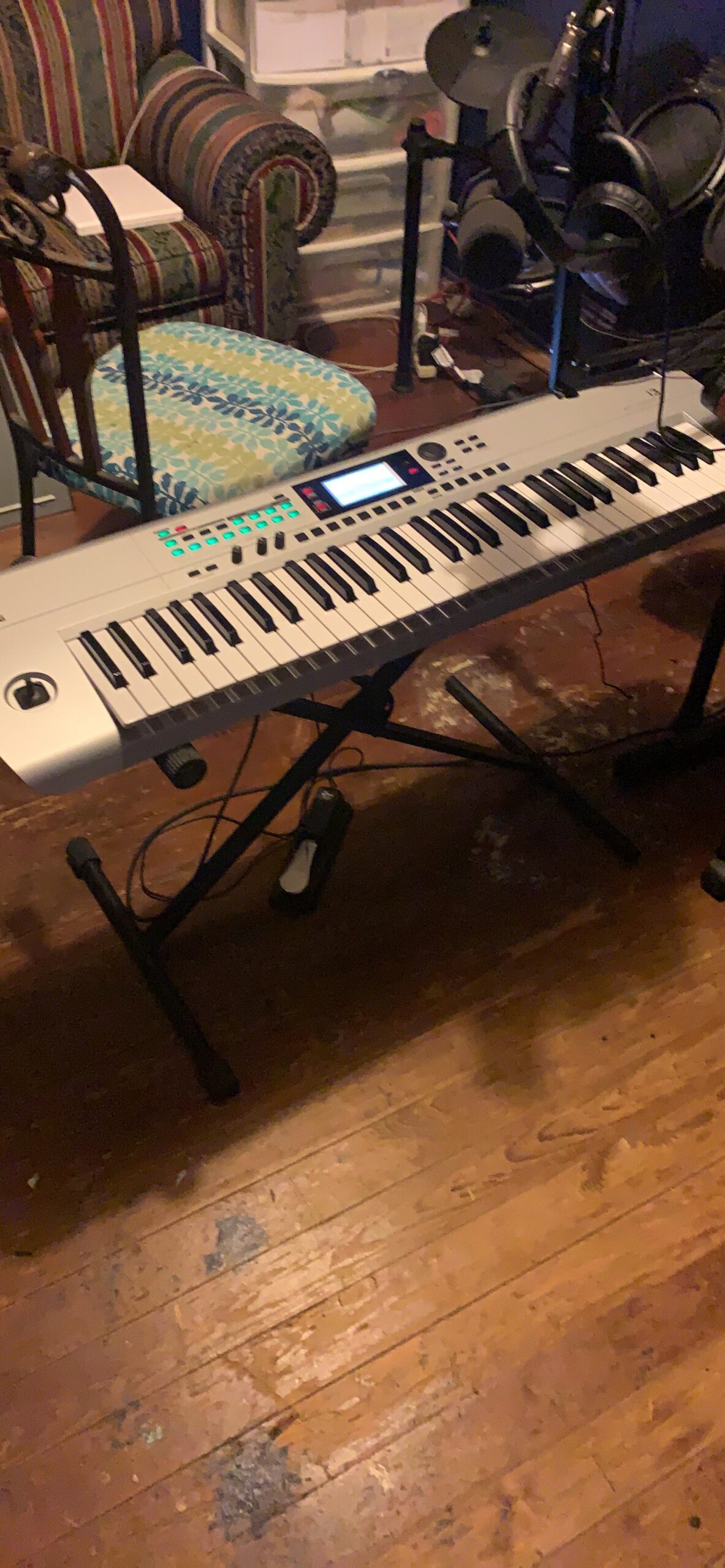
The 61 full-sized velocity-sensitive keys have customizable touch curves, so you can adjust the response to match your playing style. The 50 registration banks let you store and recall complete performance setups instantly, which is essential for live use.
Connectivity is solid with USB-to-host for DAW integration, USB-to-device for storing files, and a 5-pin MIDI out port for driving external hardware synths. Note that there is no MIDI in, so you cannot use the i3 as a sound module controlled by external gear.
Perfect for These Musicians
Solo performers and one-person bands will get the most value from the i3. The arranger styles provide instant backing bands that follow your chord changes, letting you sound like a full group without needing bandmates. Singer-songwriters can accompany themselves with professional-quality arrangements.
Beginners and semi-pro users benefit from the intuitive layout and included software. The i3 serves as both a learning tool and a performance instrument that grows with your skills.
Where It Shows Limitations
The factory piano sound is adequate but not impressive compared to what you get on the Kross 2 or dedicated stage pianos. If acoustic piano is your primary sound, consider supplementing with a software piano plugin via USB.
The absence of an arpeggiator is a notable omission for electronic music producers. And the lack of a MIDI in port means you cannot sequence the i3’s sounds from external gear, which limits its role in larger studio setups.
7. Korg EK50 61-Key Arranger Keyboard
Korg, 61-Key Keyboards & Pianos (EK50)
61 keys
702 sounds and 280 styles
2x10W stereo speakers
12-track sequencer
USB connectivity
Pros
- 702 realistic sounds and 280 accompaniment styles
- Built-in 2x10W stereo speakers for practice and performance
- Simple illuminated LED controls ideal for beginners
- Built-in 12-track sequencer for recording
- Split function for layering sounds across the keyboard
- Great value for money
Cons
- Linear recording only not a true multi-track sequencer
- Some users report hardware reliability issues with keys
The Korg EK50 is built for the player who wants an all-in-one arranger without a steep learning curve. The 702 sounds cover every genre from rock to Latin to jazz, and the 280 accompaniment styles give you instant backing bands at the touch of a button. I found the sound quality genuinely impressive for a keyboard in this price range.
The illuminated LED buttons are a thoughtful design choice that makes navigation simple even if you have never used an arranger keyboard before. Each function has its own clearly labeled button, so you do not need to dig through menus to change sounds or start a style.
The built-in 2x10W stereo speakers are surprisingly powerful for home use and small venues. You can practice without headphones and still hear the full frequency range of your arrangements. The split function lets you play bass with your left hand and piano with your right simultaneously.
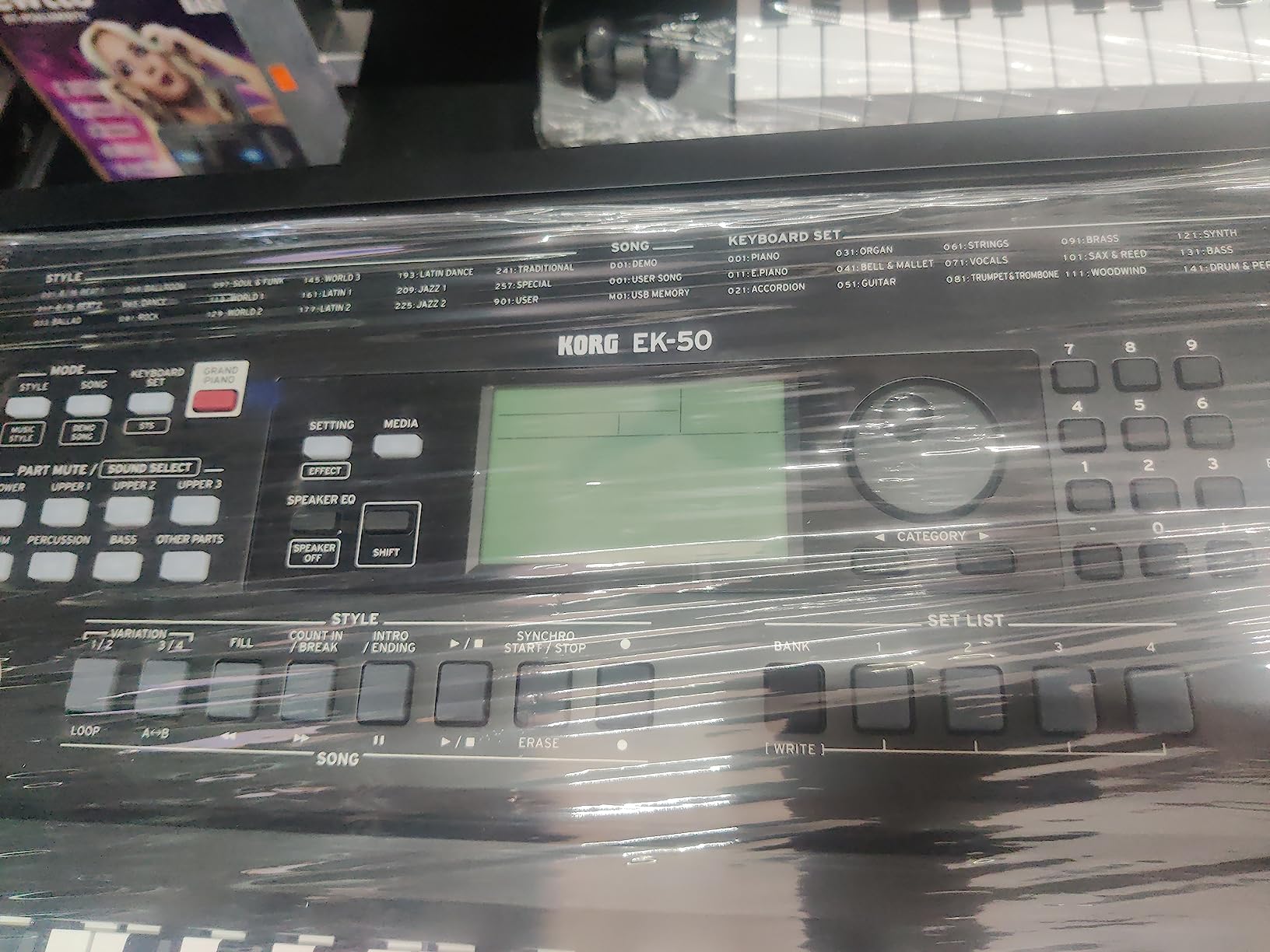
The 12-track sequencer lets you record your performances, though it is linear rather than true multi-track. This means you record your arrangement as a continuous performance rather than layering individual tracks independently. For capturing song ideas and live arrangements, it works well.
USB connectivity handles both MIDI and data transfer. You can connect to a computer for DAW integration or load new styles and sounds from external storage. The included AC adapter and sheet music stand round out a complete beginner package.
Who Gets the Most Value Here
Beginners and hobbyists who want a first arranger keyboard will find the EK50 approachable and rewarding. The straightforward interface means you are making music within minutes of unboxing rather than studying a manual for hours.
Retired players returning to music after years away appreciate the simplicity. The clear display, labeled buttons, and instant style selection make it easy to sit down and enjoy playing without technical frustration.
What to Be Aware Of
A small percentage of users have reported hardware reliability issues including keys hanging and failure to restart after reset. The 1-star reviews account for about 15 percent of ratings, which is higher than ideal. Consider purchasing from a retailer with a good return policy.
The 61-key range is limiting if you want to play piano repertoire that uses the full 88-key range. And the linear sequencer is fine for capturing performances but does not offer the track-by-track editing of a true multi-track workstation.
8. Korg Kross 2-88 Synthesizer Workstation (Matte Black)
Korg Kross 2-88-MB 88-key Synthesizer Workstation – Super Matte Black
88-key Natural Weighted Hammer Action
EDS-i Sound Engine
Step and MIDI sequencers
Audio recorder
Matte black finish
Pros
- Full 88-key Natural Weighted Hammer Action keybed feels like a real piano
- EDS-i Sound Engine with excellent organ and synth sounds
- Doubles as a MIDI controller for DAWs
- Built-in audio recorder for capturing performances
- Affordable 88-key workstation option
Cons
- Known reliability issues with powering down after boot
- Korg customer support reported as unhelpful
- Quality control concerns in some units
The Korg Kross 2-88 brings genuine hammer action to a portable workstation at a price that undercuts most competitors. The Natural Weighted Hammer Action keybed is the headline feature, and it delivers a playing experience that closely approximates an acoustic piano. For players who need weighted keys in a gigging instrument, this is one of the most affordable options available.
The EDS-i Sound Engine provides the same sound quality as the 61-key version, with excellent organ tones being a particular highlight. I found the jazz organ patches especially convincing, with authentic rotary speaker simulation that responds dynamically to your playing velocity.
Step and MIDI sequencers let you build arrangements on the instrument itself, and the audio recorder captures your performances as WAV files. The matte black finish looks professional and understated, which suits stage and studio environments alike.
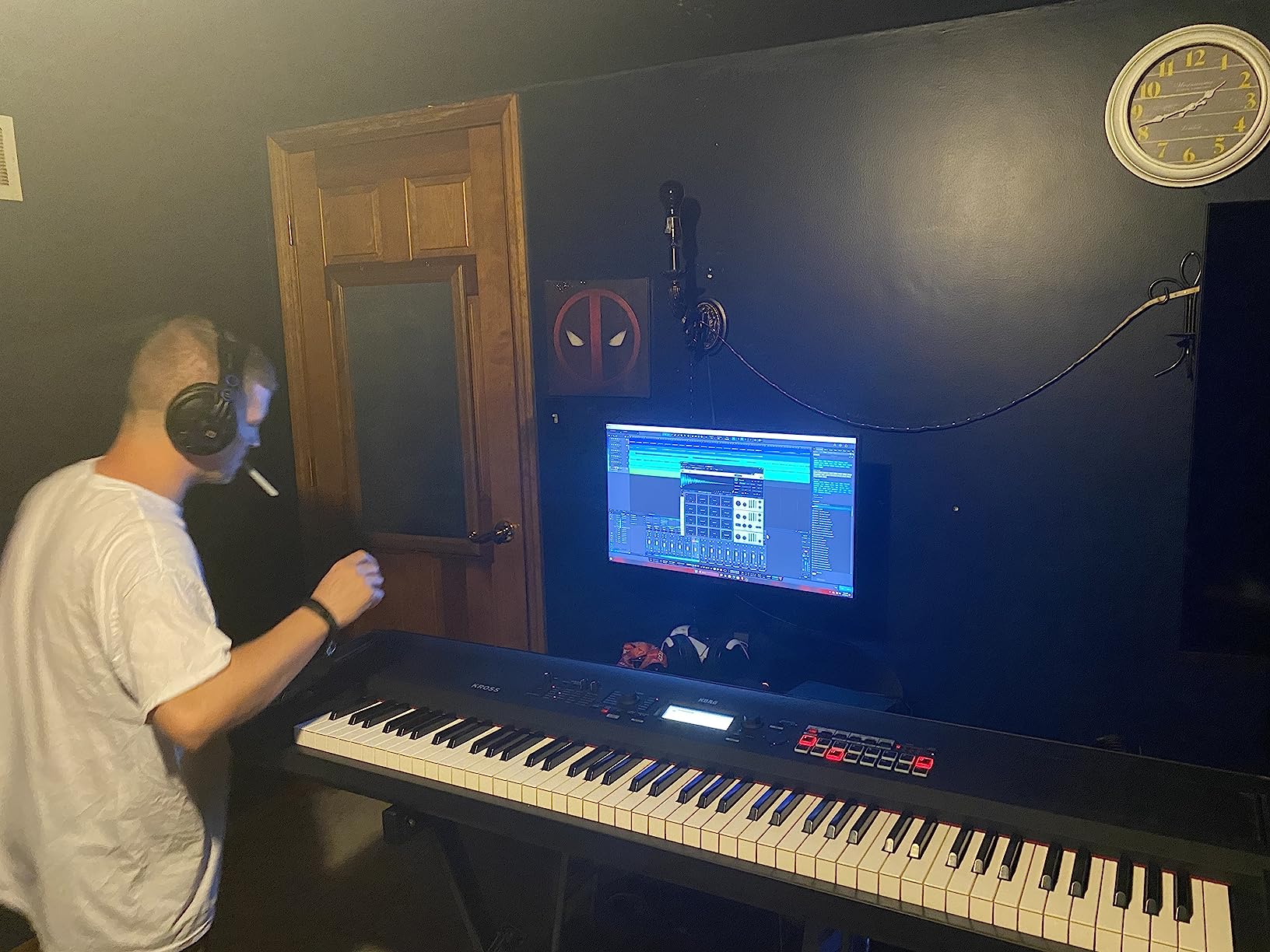
As a MIDI controller, the Kross 2-88 works seamlessly with DAWs like Studio One, Ableton Live, and Logic Pro. The weighted action makes it an excellent controller for playing virtual pianos and orchestral libraries where expressive velocity response matters.
Ideal for These Players
Pianists who need a portable weighted-action keyboard for gigs and rehearsals will find the Kross 2-88 hits a sweet spot between price and feel. It is significantly more affordable than the Nautilus or KRONOS while offering a comparable playing experience.
Home studio owners who want one keyboard for both DAW control and standalone performance get a versatile tool. The built-in sounds cover most needs, and the weighted action is great for playing soft synths and sample libraries.
Important Reliability Warning
Multiple users have reported serious reliability issues including the keyboard powering down after boot and firmware problems that can brick the device. Korg customer support has been described as unhelpful by several reviewers, and finding a service center can be difficult depending on your location.
I strongly recommend purchasing from a retailer with a solid return policy and considering an extended warranty. The percentage of 1-star reviews, while small in absolute terms given only 11 total reviews, raises enough concern that caution is warranted. Some users suggest Yamaha as a more reliable alternative in this category.
9. Korg PA600 61-Key Professional Arranger
Korg PA600 61-Key Professional Arranger with Color Touchview Display
61 keys
RX and DNC sound engine
Color TouchView display
Hundreds of styles
USB connectivity
Pros
- Enhanced RX and DNC sound engine with improved realism
- Massive PCM library with hundreds of expressive styles
- Color TouchView display for intuitive navigation
- Active community with third-party style and sound support
- Expandable with external software and style packs
Cons
- Display flickering and failure issues reported by some users
- Factory grand piano sound is mediocre
- Quality control concerns noted
The Korg PA600 has been a workhorse arranger for professional musicians for years, and it remains relevant thanks to its massive sound library and the active community that continues to create new styles and sounds for it. The RX and DNC sound engine delivers realistic instrument timbres that respond expressively to your playing dynamics.
The Color TouchView display was ahead of its time when the PA600 launched, and it still makes navigation fast and intuitive. Selecting sounds, editing styles, and configuring performances is all done through the touchscreen interface, which reduces the number of button presses needed for common tasks.
Where this arranger truly shines is in its expandability. The Korg arranger community is one of the most active in the keyboard world, with third-party developers creating style packs, sound sets, and performance configurations that extend the PA600 far beyond its factory capabilities.
The many connection ports on the back panel make integrating the PA600 into a larger setup straightforward. USB handles MIDI communication with computers, and the headphone jack doubles as a line out for connecting to amplifiers or PA systems.
Who Still Benefits from the PA600
Solo performers who play restaurants, weddings, and corporate events will find the PA600’s accompaniment styles cover virtually every musical genre. The DNC engine adds natural performance nuances to style playback that make arrangements sound less mechanical.
Church musicians and worship leaders use the PA600 for hymns, contemporary worship, and special music. The pad and string sounds are particularly well-suited to creating atmospheric backgrounds for vocal performances.
Known Issues to Consider
Display flickering and failure has been reported by a number of users, which is a concern for a keyboard that relies heavily on its touchscreen for navigation. If the display fails, operating the arranger becomes extremely difficult.
The factory grand piano sound is generally considered just adequate, not impressive. Most serious users replace it with third-party piano samples. If acoustic piano is your primary sound, you may want to look at a dedicated stage piano instead.
10. Korg Pa700 61-Key Arranger Workstation
Korg Pa700 61-Key Arranger Workstation
61 velocity-sensitive keys
EDS-X Sound Engine
1700 sounds and 370 styles
2x25W speakers
TFT TouchView display
16-track arranger
Pros
- 1700 plus sounds and 370 plus styles for incredible versatility
- Powerful 2x25W speaker system for standalone performance
- Built-in MP3 player with vocal remover
- TFT TouchView display for intuitive control
- 16-track arranger for complex arrangements
- 2-year warranty double the standard
Cons
- Higher price point at 2299 dollars
- Screen freezing issues reported by some users
- Not Prime eligible with limited stock
The Korg Pa700 represents a significant step up from the PA600 in sound quality, features, and build. The EDS-X Sound Engine delivers 1,700-plus sounds that are noticeably richer and more detailed than the older RX engine. I was particularly impressed by the orchestral strings and brass, which have a realism that makes them usable in professional recordings.
The 370-plus music styles cover an enormous range of genres and regional music traditions. Whether you need a Chicago blues shuffle, a Colombian cumbia, or a contemporary worship arrangement, the Pa700 has a style that fits. The accompaniment engine follows your chord changes smoothly and responds to your playing dynamics.
The built-in MP3 player with vocal remover is a feature I did not know I needed until I used it. You can load backing tracks, remove the vocal from existing recordings, and sing along with the instrumental. For learning songs or performing with custom backing tracks, this is genuinely useful.
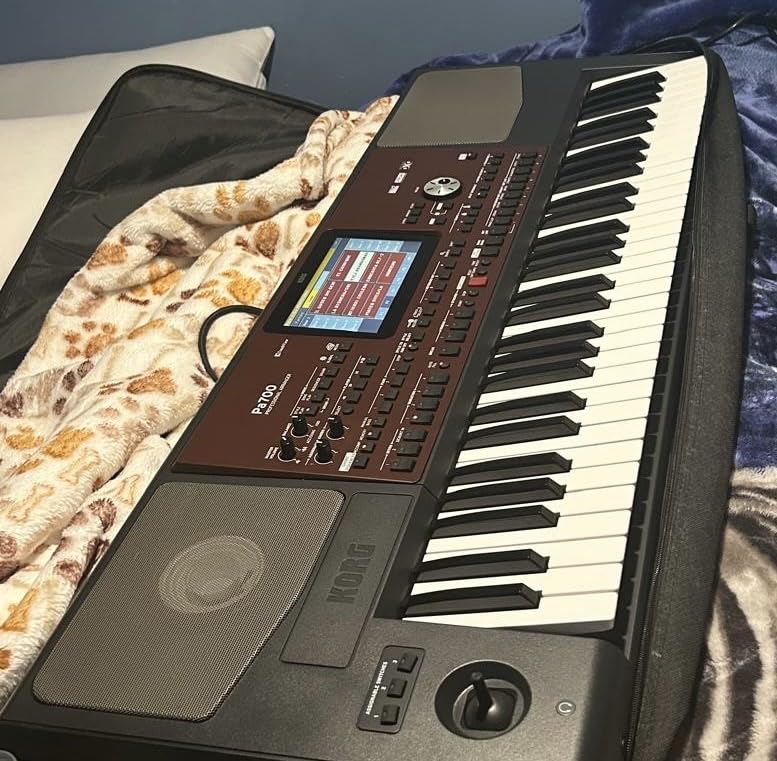
The 2x25W speaker system is powerful enough for small venue performances without external amplification. The 16-track arranger gives you the tools to build complex arrangements with individual track control, which is a significant upgrade from the EK50’s linear recorder.
The 2-year warranty is double what most keyboard manufacturers offer, which shows Korg’s confidence in the Pa700’s build quality. The TFT TouchView display is bright and responsive, making navigation through the extensive sound and style libraries fast.
Who Should Invest in the Pa700
Professional solo performers who need studio-quality sounds and extensive style libraries will find the Pa700 worth every dollar. The sound quality is a clear step above budget arrangers, and the 16-track arranger handles complex arrangements with ease.
MIDI producers who want to prototype arrangements on hardware before exporting to a DAW will appreciate the arranger’s capabilities. You can build a complete arrangement on the Pa700, then export the MIDI data to your DAW for further production.
Things to Keep in Mind
At 2,299 dollars, this is a serious investment. Make sure you need the advanced features and sound quality before committing. If you are a hobbyist or casual performer, the EK50 or i3 may be sufficient.
Some users have reported screen freezing issues on new units. While these appear to be isolated incidents, the risk exists with any complex digital instrument. The 2-year warranty provides some protection, but test your unit thoroughly when it arrives.
11. Korg Pa1000 61-Key Professional Arranger
Korg Pa1000 61-Key Professional Arranger
61 keys
1700 sounds and 420 styles
TC-Helicon Vocal Processor
2x33W speakers
7-inch touchscreen
2-year warranty
Pros
- TC-Helicon Vocal Processor for professional vocal effects
- 420 plus professional music styles more than the Pa700
- Powerful 2x33W speaker system for standalone performance
- 7-inch touchscreen for intuitive control
- DAW compatible with Cubase Logic Pro and Ableton Live
- 2-year warranty
Cons
- High price point at 2999 dollars
- Screen freezing issues reported by at least one user
- Build quality materials questioned by a reviewer
The Korg Pa1000 takes everything great about the Pa700 and adds the TC-Helicon Vocal Processor, which transforms this from a great arranger into a complete solo performance system. The vocal processor handles harmonization, reverb, delay, and hard-tuning, giving you professional vocal effects without needing external gear. For singers who accompany themselves, this integration is a game-changer.
The 420-plus music styles give you even more options than the Pa700’s 370. I found the Latin and Mediterranean styles particularly well-developed, with authentic rhythmic patterns that sound like they were programmed by musicians who grew up playing those genres.
The 2x33W speaker system is the most powerful of any keyboard on this list. It produces clean, full-range sound at volumes suitable for medium-sized venues. For solo performers playing restaurants, bars, and private events, the built-in speakers eliminate the need for an external PA in many situations.
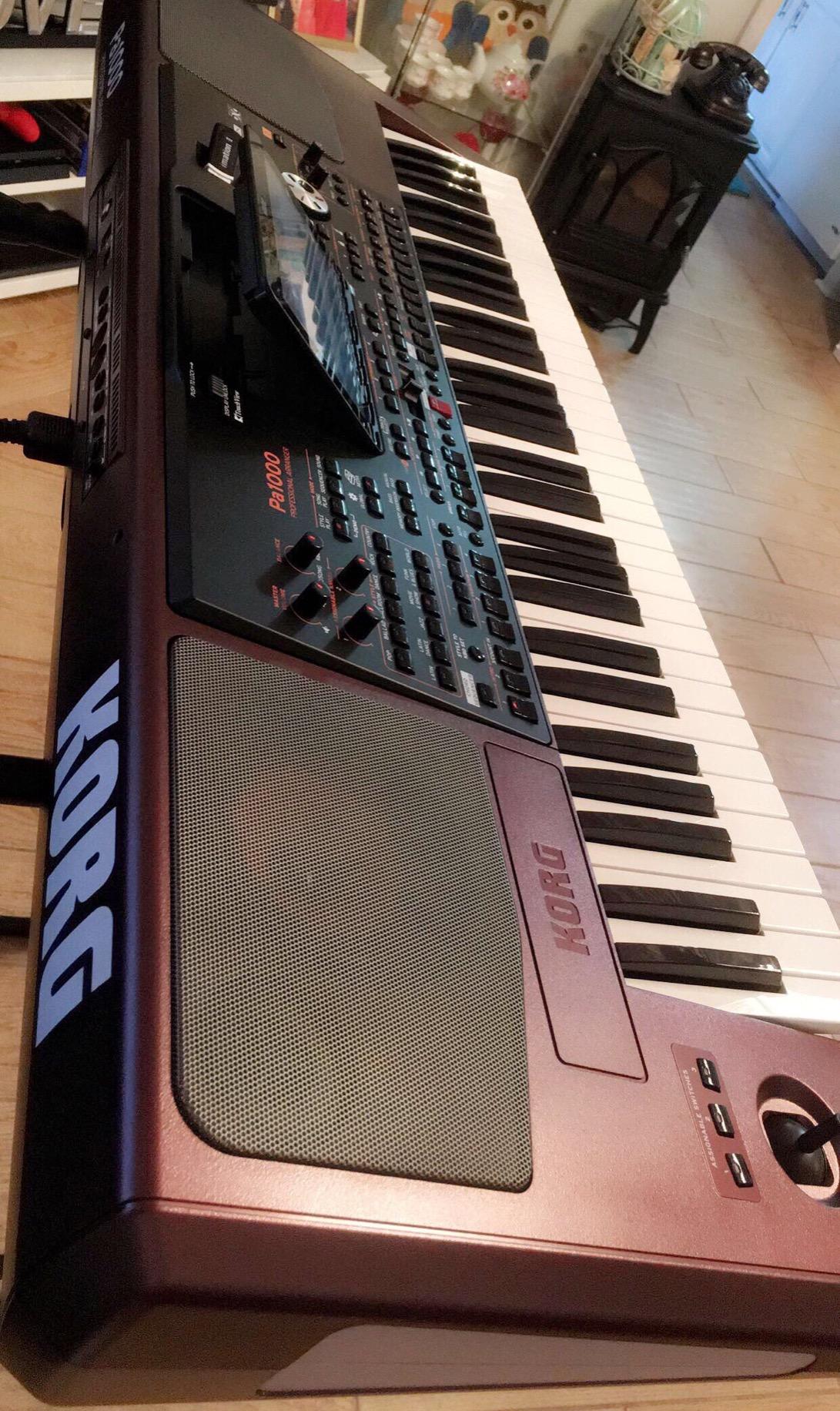
The 7-inch touchscreen is larger and more responsive than the Pa700’s display. Browsing through 1,700 sounds and 420 styles is fast and visually intuitive. The interface is well-designed, with logical organization that minimizes the number of taps needed to find what you want.
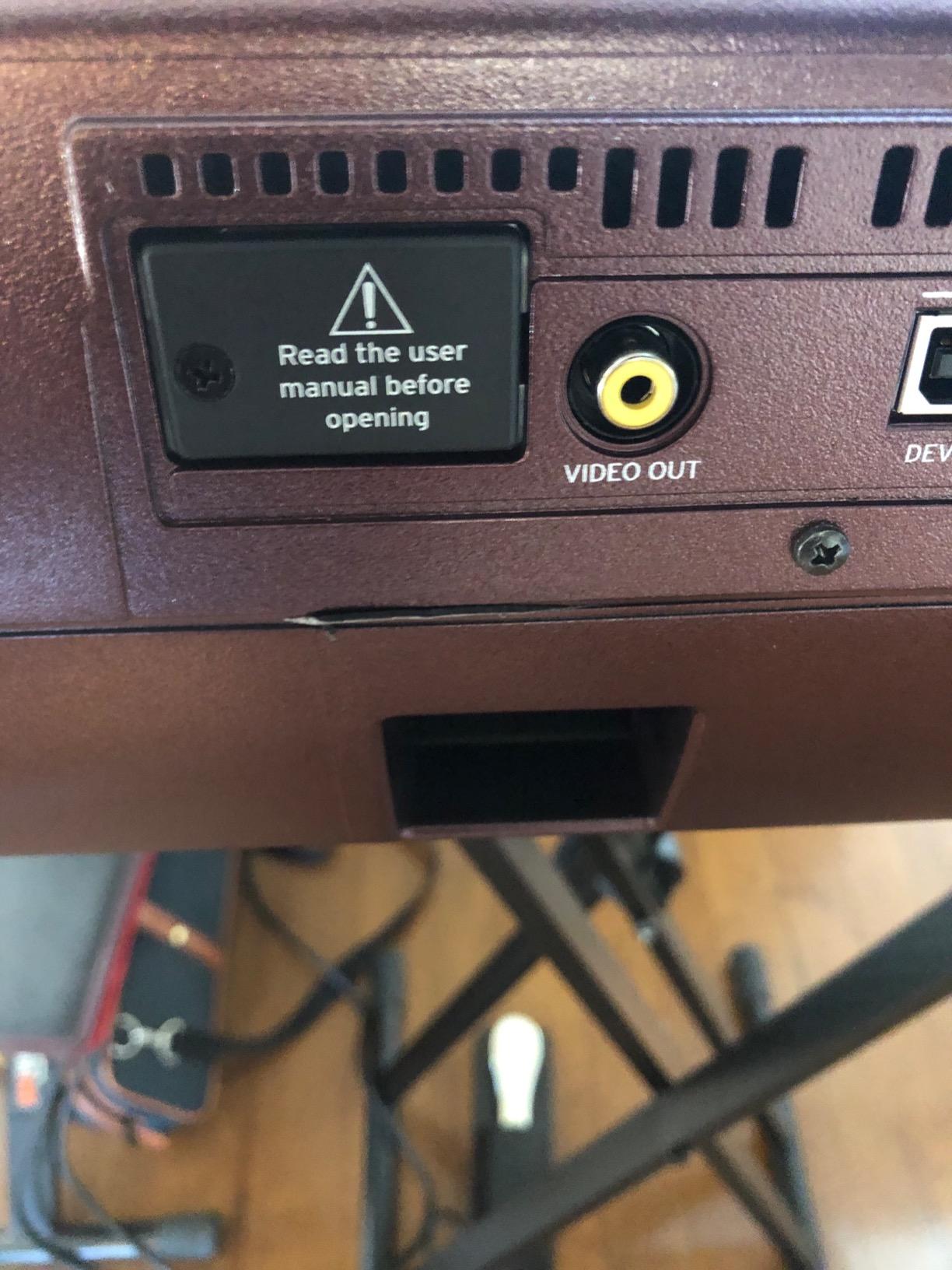
DAW compatibility with Cubase, Logic Pro, and Ableton Live means the Pa1000 integrates smoothly into a studio workflow. You can use it as a sound module, a MIDI controller, or both simultaneously.
Who Needs the Pa1000 Over the Pa700
Singers who perform solo are the primary audience. The TC-Helicon Vocal Processor alone justifies the price difference if you rely on vocal effects during performances. Having harmonization, reverb, and tuning built into your keyboard eliminates a rack of external processing gear.
Professional entertainers who need the widest possible style selection and the most powerful speaker system will appreciate the Pa1000’s capabilities. The extra 50 styles over the Pa700 cover more regional and genre-specific material.
Considerations Before Investing
At 2,999 dollars, you need to be sure the vocal processor and extra styles are worth the premium over the Pa700. If you do not sing or already have external vocal processing gear, the Pa700 offers nearly identical arranger capabilities for significantly less.
One user reported screen freezing on a new unit, and another raised concerns about build quality materials. While these appear to be isolated issues, they are worth noting given the premium price. The 2-year warranty provides reasonable protection.
12. Korg Pa5X 61 Arranger Workstation
Korg Pa5X 61 61-key Arranger Workstation
61 weighted keys
2000 sounds and 500 styles
8-inch tiltable touchscreen
PCM from SV-2 and Nautilus
160-voice polyphony
2-year warranty
Pros
- Over 2000 sounds and 500 plus styles for unmatched versatility
- 8-inch high-resolution tiltable touchscreen
- PCM data borrowed from the flagship SV-2 and Nautilus
- 160-voice polyphony with 24 stereo oscillators
- Smooth Sound Transition between styles and songs
- Weighted keys suitable for piano-style playing
Cons
- Very high price point at 4868 dollars
- Low review count with only 15 user reviews
- Quality control concerns including faders and software bugs
- Korg support infrastructure concerns
The Korg Pa5X 61 is the current flagship of the Pa arranger series, and it packs technology borrowed from the SV-2 stage piano and the Nautilus workstation. The result is an arranger with over 2,000 sounds that represent some of the best tones Korg has ever produced. The acoustic pianos alone are a significant upgrade from previous Pa models.
The 8-inch high-resolution tiltable touchscreen is the largest and most capable display on any Korg arranger. You can tilt it to find the perfect viewing angle whether you are standing or seated, and the high resolution makes navigating through 2,000 sounds and 500 styles fast and visually clear.
With 160 voices of polyphony and 24 stereo oscillators, the Pa5X handles even the most complex arrangements without note stealing. I loaded a dense orchestral style with layered pads, strings, brass, and percussion, and every note rang out clearly without any dropouts.
The Smooth Sound Transition feature eliminates the glitches and cutoffs that occur when switching between styles, songs, and keyboard sets during live performance. This may seem like a small detail, but for performing musicians who change sounds mid-song, it eliminates a long-standing source of anxiety.
The weighted key action makes the Pa5X suitable for piano-style playing, which is unusual for an arranger keyboard. Most arrangers use synth or semi-weighted actions, so having fully weighted keys in this format is a meaningful advantage for pianists who also need arranger functionality.
Who Justifies This Investment
Professional touring musicians who rely on arranger accompaniment for their live shows are the primary market. If your income depends on having the best possible sounds and the most reliable performance features, the Pa5X delivers capabilities that no other arranger in the Korg lineup can match.
Church music directors and worship leaders who need professional-grade sounds across many genres will find the 2,000-sound library and 500 styles cover virtually every musical need. The Nautilus-derived sounds bring studio-quality instruments to live worship settings.
Why You Might Skip It
The price point of nearly 4,900 dollars puts this in a category where only serious professionals should be shopping. If you are a hobbyist, weekend warrior, or even a working solo performer who does not rely on the absolute highest-end sounds, the Pa700 or Pa1000 will serve you excellently for thousands less.
With only 15 reviews and a 3.6-star average, there are real concerns about quality control. Users have reported issues with faders not being level and software bugs. Korg’s support infrastructure has also been questioned, with limited service centers available. At this price, you should expect flawless quality, so proceed with caution and purchase from a retailer with strong return policies.
What to Look for When Buying a Korg Keyboard
Choosing from the best Korg keyboards becomes much easier once you understand the key factors that determine whether a particular model fits your needs. Here is what our team evaluates when recommending Korg keyboards to musicians at different levels.
Key Action and Feel
The key action is the single most important factor in how a keyboard feels to play. Korg offers three main types of key action across their lineup. Synth action, found on the Kross 2-61 and i3, uses spring-loaded keys that are fast and light, ideal for organ, synth, and contemporary styles. Semi-weighted action, like the Liano’s, adds some resistance for developing finger technique without the full resistance of real piano keys. Fully weighted hammer action, found on the Kross 2-88 and Pa5X, simulates the mechanical feel of an acoustic piano with graded resistance across the key range.
For beginners learning piano, semi-weighted or weighted action is essential. For synth players and live performers, synth action offers the speed and responsiveness needed for leads and comping. Match the key action to your primary playing style.
Polyphony
Polyphony determines how many notes a keyboard can produce simultaneously. The Liano and EK50 offer modest polyphony that is fine for simple playing. The Wavestate’s 96 voices and the Pa5X’s 160 voices handle complex arrangements without cutting notes off. If you use sustain pedal heavily, play dense classical pieces, or layer multiple sounds, higher polyphony prevents the frustrating experience of notes disappearing mid-performance.
Sound Engine Quality
Korg uses different sound engines across their lineup. The EDS-i engine in the Kross 2 series delivers solid all-around quality. The EDS-X in the Pa700 and Pa1000 offers richer, more detailed sounds. The Pa5X borrows PCM data from the flagship SV-2 and Nautilus, giving it the best sound quality of any arranger in the lineup. For synthesizers, the XMT engine in the MicroKorg2 and the wave sequencing engine in the Wavestate offer distinctly different approaches to sound generation.
Connectivity
USB connectivity is standard across all current Korg keyboards, handling both MIDI and audio data. Look for USB-to-host if you want to connect to a computer for DAW work, and USB-to-device if you want to load and save files to external storage. MIDI ports matter if you integrate with hardware synths or legacy gear. The headphone jack is essential for silent practice, and line outputs are necessary for connecting to amplifiers or PA systems.
Budget and Value Tiers
Under 500 dollars, the Korg Liano and EK50 offer the best entry points. Between 500 and 1,000 dollars, the MicroKorg2, Wavestate MKII, i3, and Kross 2-61 provide excellent value. From 1,000 to 2,000 dollars, the Kross 2-88 and PA600 deliver professional features at mid-range prices. Above 2,000 dollars, the Pa700, Pa1000, and Pa5X represent Korg’s professional arranger lineup with the features and sound quality to match.
Intended Use Case
For beginners learning piano, the Liano is the best starting point. For gigging musicians who need versatility, the Kross 2-61 or Kross 2-88 cover the most ground. For solo performers who need backing accompaniment, the i3, EK50, or Pa700 are excellent choices depending on budget. For sound designers and electronic music producers, the MicroKorg2, Wavestate, and multiPoly offer creative tools that no digital piano can match.
Korg vs Roland vs Yamaha: How They Compare
This is one of the most common questions on forums, and the answer depends on your priorities. Korg is known for brighter, more detailed sounds with excellent key actions, particularly the RH3 hammer action on their premium models. Roland tends to offer deeper bass and midrange with a slightly warmer overall character. Yamaha sits somewhere in between with a balanced, natural sound that works well across genres.
In terms of value for money, Reddit users frequently note that Korg offers more features per dollar in the mid-range, particularly with the Kross 2 and Pa series. Roland competes strongly in the stage piano category, while Yamaha dominates the entry-level digital piano market. For arranger keyboards, Korg’s Pa series is widely considered the industry standard, especially for professional use.
Build quality is generally comparable across all three Japanese brands, though user experiences vary by model. Korg’s warranty terms, particularly the 2-year coverage on the Pa700, Pa1000, and Pa5X, are competitive with Roland and Yamaha’s offerings.
FAQ’s
What is the most popular Korg synth?
The Korg MicroKorg2 and the Wavestate MKII are currently the most popular Korg synthesizers. The MicroKorg2 builds on the legendary microKORG legacy with a color display, loop recorder, and enhanced vocal processor. The Wavestate MKII is favored by sound designers for its unique wave sequencing engine. For analog synth beginners, the multiPoly with its four oscillators and 60-voice polyphony is also gaining popularity.
What is Korg’s flagship keyboard?
The Korg Pa5X 61 is the current flagship arranger workstation, featuring over 2,000 sounds, 500 styles, an 8-inch tiltable touchscreen, and PCM data borrowed from the SV-2 stage piano and Nautilus workstation. For pure workstation use, the Korg Nautilus and KRONOS 3 remain the flagship models with nine different sound engines and professional-grade key actions.
Which is better, Korg Kronos or Nautilus?
The Korg KRONOS 3 is better for studio professionals who want the full flagship experience with nine sound engines and maximum expandability. The Korg Nautilus is the better choice for gigging musicians who want many of the same core sounds in a lighter, more affordable package. Both share the RH3 key-bed on their weighted versions, so the playing feel is similar. Choose the KRONOS 3 for maximum depth and the Nautilus for value and portability.
Are Korg keyboards any good?
Yes, Korg keyboards are widely considered among the best in the industry. Founded in Japan in 1962, Korg has built a reputation for innovative sound engines, excellent build quality, and responsive key actions. Their RH3 hammer action is frequently rated as one of the best weighted key-beds available. Korg keyboards are used by professional musicians worldwide in studios, churches, and live performance venues, and the brand consistently earns high ratings across their product range.
Final Thoughts on the Best Korg Keyboards
After reviewing 12 models across every category Korg offers, the standout recommendation depends entirely on what you need. For synthesizer enthusiasts and live performers, the MicroKorg2 delivers an unmatched combination of sound quality, portability, and intuitive control. For musicians who want maximum versatility in one instrument, the Kross 2-61 offers a complete workstation at an exceptional value. And for beginners who need 88 keys without breaking the bank, the Liano is the best entry point into the Korg ecosystem.
The best Korg keyboards share common traits regardless of price: responsive key actions, thoughtfully designed interfaces, and sound engines that have been refined over decades of innovation since the company was founded in 1962. Whether you choose a 330-dollar portable piano or a 4,900-dollar flagship arranger, you are investing in an instrument from a brand that has earned its place among the most respected keyboard manufacturers in the world.
Our recommendation is to honestly assess your primary use case before buying. A beginner does not need a Pa5X, and a professional performer will outgrow a Liano quickly. Match the keyboard to your actual needs, and you will have an instrument that serves you well for years to come in 2026.