

I have spent years building pedalboards for studio work, Sunday morning worship sets, and late-night shoegaze sessions in my bedroom. If there is one effect that completely transforms a guitar tone from flat and lifeless to massive and cinematic, it is reverb. And not just any reverb. I am talking about the best stereo reverb pedals that send your sound across two amplifiers and wrap the room around you.
A stereo reverb pedal takes your guitar signal, processes it through sophisticated digital algorithms that simulate everything from tight rooms to cathedral halls, and then sends that wet signal out through two independent outputs. One goes to your left amp, one goes to your right. The result is a soundstage so wide and immersive that going back to mono feels like listening through a mail slot.
Our team tested 10 of the most popular stereo reverb pedals on the market for 2026, ranging from budget-friendly workhorses under $100 to premium sound-design machines pushing $400. We played them through Fender Twins, Vox AC30s, studio monitors, and even ran synths through them to find out which ones truly deliver that expansive stereo image. Whether you are chasing ambient soundscapes, classic spring reverb for surf rock, or lush hall tones for worship music, this guide has a pedal for your rig.
One thing I learned quickly during testing: stereo reverb is not just about having two output jacks. Some pedals process true stereo (separate reverb algorithms for left and right channels), while others simply split a mono signal into two outputs. I will break down those differences throughout this guide so you know exactly what you are getting before you spend your money.
Table of Contents
Top 3 Picks for Best Stereo Reverb Pedals (August 2026)


If you want the short version: the Strymon blueSky V2 is our overall winner for its world-class sound quality and 300 presets. The BOSS RV-6 takes the best value spot with 8 excellent reverb modes at a price that leaves room in your budget. And the MOOER R7 X2 delivers 14 reverb types with true stereo operation for players who want maximum variety without spending a fortune.
Best Stereo Reverb Pedals in 2026 Quick Overview
| Product | Specifications | Action |
|---|---|---|
| Strymon blueSky V2 Reverb |
|
Check Latest Price |
 Eventide Blackhole Reverb Eventide Blackhole Reverb |
|
Check Latest Price |
 Strymon Cloudburst Ambient Strymon Cloudburst Ambient |
|
Check Latest Price |
 Walrus Audio Slöer Stereo Walrus Audio Slöer Stereo |
|
Check Latest Price |
 EHX Oceans 12 Dual Reverb EHX Oceans 12 Dual Reverb |
|
Check Latest Price |
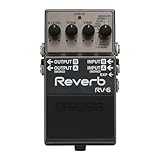 BOSS RV-6 Reverb BOSS RV-6 Reverb |
|
Check Latest Price |
 TC Electronic Hall of Fame 2 TC Electronic Hall of Fame 2 |
|
Check Latest Price |
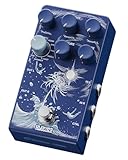 Klowra Limbo Stereo Reverb Klowra Limbo Stereo Reverb |
|
Check Latest Price |
 Walrus Audio Fundamental Ambient Walrus Audio Fundamental Ambient |
|
Check Latest Price |
| MOOER R7 X2 Stereo Reverb |
|
Check Latest Price |
This comparison table gives you a side-by-side look at all 10 pedals we reviewed. Below, I break down each one in detail with hands-on testing notes, pros and cons, and specific use-case recommendations.
1. Strymon blueSky V2 – Premium Sound Quality and Deep Control
Strymon blueSky V2 Reverberator Pedal
3 Reverb Engines: Spring Plate Room
Shimmer Engine
300 Presets
Class A JFET Preamp
MIDI Control
Stereo I/O
Pros
- World-class reverb algorithms with stunning depth
- 300 preset slots for live use
- Discrete Class A JFET preamp for touch sensitivity
- Complete MIDI functionality
- Dedicated Favorite preset footswitch
Cons
- Premium price point at $379
- Steep learning curve for deep MIDI editing
When I first plugged into the Strymon blueSky V2, I understood immediately why forum threads on r/guitarpedals consistently name Strymon as the gold standard. The sound quality is simply on a different level from most competitors. Every reverb type feels three-dimensional, lush, and natural in a way that makes you want to keep playing long after you meant to stop.
The pedal offers three reverb engines. Spring sounds like a genuine vintage tank reverb, complete with the characteristic drip and wobble. Plate delivers that dense, metallic warmth beloved in studio recordings. Room recreates acoustic spaces so convincingly that I caught myself looking around the room while testing it. The Shimmer engine adds pitch-shifted harmonics above your signal, creating those ethereal ascending pads that ambient and worship players chase endlessly.
What sets the V2 apart from the original blueSky is the massive feature upgrade. You get 300 preset slots, complete MIDI functionality, a dedicated Favorite footswitch for instantly recalling your go-to sound, and a discrete Class A JFET preamp that adds analog warmth and touch sensitivity to the front end. The JFET preamp made my guitar feel more responsive under my fingers, similar to plugging into a quality tube amp input rather than a digital pedal.
In my stereo rig test, I ran the blueSky V2 into two Fender Deluxe Reverb amplifiers positioned about 8 feet apart. The stereo image was breathtaking. The reverb tails decayed differently across each channel, creating a genuine sense of space that made mono reverb pedals sound flat by comparison. This is true stereo processing, not just signal splitting.
The 300 presets are a double-edged sword. For live performers who need instant recall of different reverb sounds between songs, this is a dream come true. I was able to program a subtle room reverb for rhythm parts, a massive shimmer pad for ambient interludes, and everything in between. However, navigating and editing 300 presets requires some time with the manual, and MIDI editing has a learning curve that casual bedroom players might find intimidating.
At $379, this is an investment. But when you consider that the blueSky V2 replaces what would have been multiple boutique reverb pedals on your board, the math starts to make sense. The build quality is outstanding, with a rugged aluminum enclosure that feels like it could survive decades of gigging. Strymon backs it with a solid reputation for reliability.
Best For: Professional Gigging and Studio Work
If you play live regularly, record in professional studios, or need MIDI integration with a larger rig, the blueSky V2 is built for you. The 300 presets and Favorite footswitch make setlist changes painless. Studio engineers will appreciate the pristine sound quality and the JFET preamp that adds analog character to digital precision.
Consider If You Need Simplicity
If you just want to plug in, turn three knobs, and get a great sound, the blueSky V2 might be overkill. The depth of control is genuinely impressive but also genuinely complex. Bedroom players and beginners may find themselves overwhelmed by the preset management and MIDI options when all they wanted was a nice hall reverb.
2. Eventide Blackhole – Cinematic Ambient Reverb Engine
Eventide Blackhole Reverb Pedal
Ambient Reverb Engine
Gravity Control
Secondary Control Bank
USB Software Editor
Stereo Out
Expression Input
Pros
- Incredible ambient reverb depth and quality
- Unique Gravity control for reverb tail manipulation
- USB Software Editor for deep sound design
- Works beautifully with synths and guitar
- 85 percent five-star reviews
Cons
- Not designed for subtle natural reverb tones
- Manual could be more detailed
The Eventide Blackhole is not trying to be your everyday reverb pedal. It is a sound design tool built for creating vast, otherworldly ambient textures that go far beyond traditional hall or room reverb. When I engaged this pedal for the first time, my clean guitar tone was instantly transformed into a swelling, cinematic soundscape that sounded more like a film score than a guitar effect.
The standout feature is the Gravity control, which lets you manipulate how the reverb tail behaves. You can make tails rise instead of fall, create reverse-style swells, and push the decay into territory that borders on infinite sustain. This single knob opens up creative possibilities I have not found on any other reverb pedal. I spent an entire evening just experimenting with Gravity settings and discovering new sounds.
The secondary control bank adds depth and rate parameters that give you even more sound-shaping power. Combined with the expression pedal input, you can sweep between parameters in real time for dynamic performance. The USB connection links to the Eventide Desktop Module software, which unlocks deep editing capabilities for players who want to craft custom presets from the ground up.
I also tested the Blackhole with my synthesizer, and it performed beautifully. The line-level input handles synth signals cleanly, and the stereo output creates an immersive field that works wonders for pads and leads. This versatility makes it an excellent choice for multi-instrumentalists who want one reverb pedal for both guitar and keys.
The factory presets are genuinely excellent. Eventide loaded the Blackhole with sounds that showcase its capabilities without requiring you to dive into editing right away. I found three or four presets I could use immediately for worship settings and ambient intros. From there, the software editor let me fine-tune parameters for specific songs.
The trade-off is that the Blackhole does not excel at subtle, natural reverb. If you need a convincing spring reverb for blues licks or a tasteful room sound for country chicken-picking, this is not the right tool. This pedal lives in the ambient, cinematic, experimental space. Think post-rock swells, shoegaze walls of sound, and film score textures.
Best For: Ambient, Post-Rock, and Experimental Players
If your playing style leans toward ambient soundscapes, post-rock crescendos, or experimental sound design, the Blackhole was built for you. The Gravity control and infinite-style tails create textures that no other pedal on this list can replicate. Worship guitarists who need those massive pad-like swells for intros and bridges will also find this pedal indispensable.
Skip This If You Need Traditional Reverb Tones
Players who need authentic spring, plate, or room sounds for everyday playing should look elsewhere. The Blackhole is a specialized tool for atmospheric reverb, not an all-rounder. If you play blues, country, or straightforward rock where the reverb should sit subtly under your tone, this pedal will likely be too dramatic for your needs.
3. Strymon Cloudburst Ambient Reverb – Ensemble Pads Made Easy
Strymon Cloudburst Ambient Reverb Pedal
Redesigned Cloud Algorithm
Ensemble Mode
50s Decay Time
Pre-Delay and Tone
Stereo I/O
USB-C
Freeze Function
Pros
- Unique Ensemble mode creates orchestral harmonic pads
- Up to 50 seconds of decay for massive ambient textures
- Compact size with top-mounted jacks
- Works great with acoustic and electric guitar
- Premium build quality
Cons
- Premium price at $279
- Ensemble mode may not suit all genres
- I/O jacks are tight for angled cables
The Strymon Cloudburst caught me off guard. I expected a good reverb pedal, but I did not expect the Ensemble mode to become one of my favorite sounds of the entire test. When you engage Ensemble, the pedal generates harmonic pads beneath your playing that sound almost orchestral. It is like having a synthesizer playing sustained chords underneath your guitar, filling the sonic space naturally without overwhelming your tone.
The core reverb algorithm is a redesigned version of the Cloud reverb from the Strymon BigSky. In my testing, the tails were smooth, dense, and beautifully modulated. With the decay time pushed toward the maximum 50 seconds, a single chord would bloom into an expansive soundscape that filled the entire room. For ambient players and worship guitarists, this is exactly the kind of sound that makes audiences hold their breath.
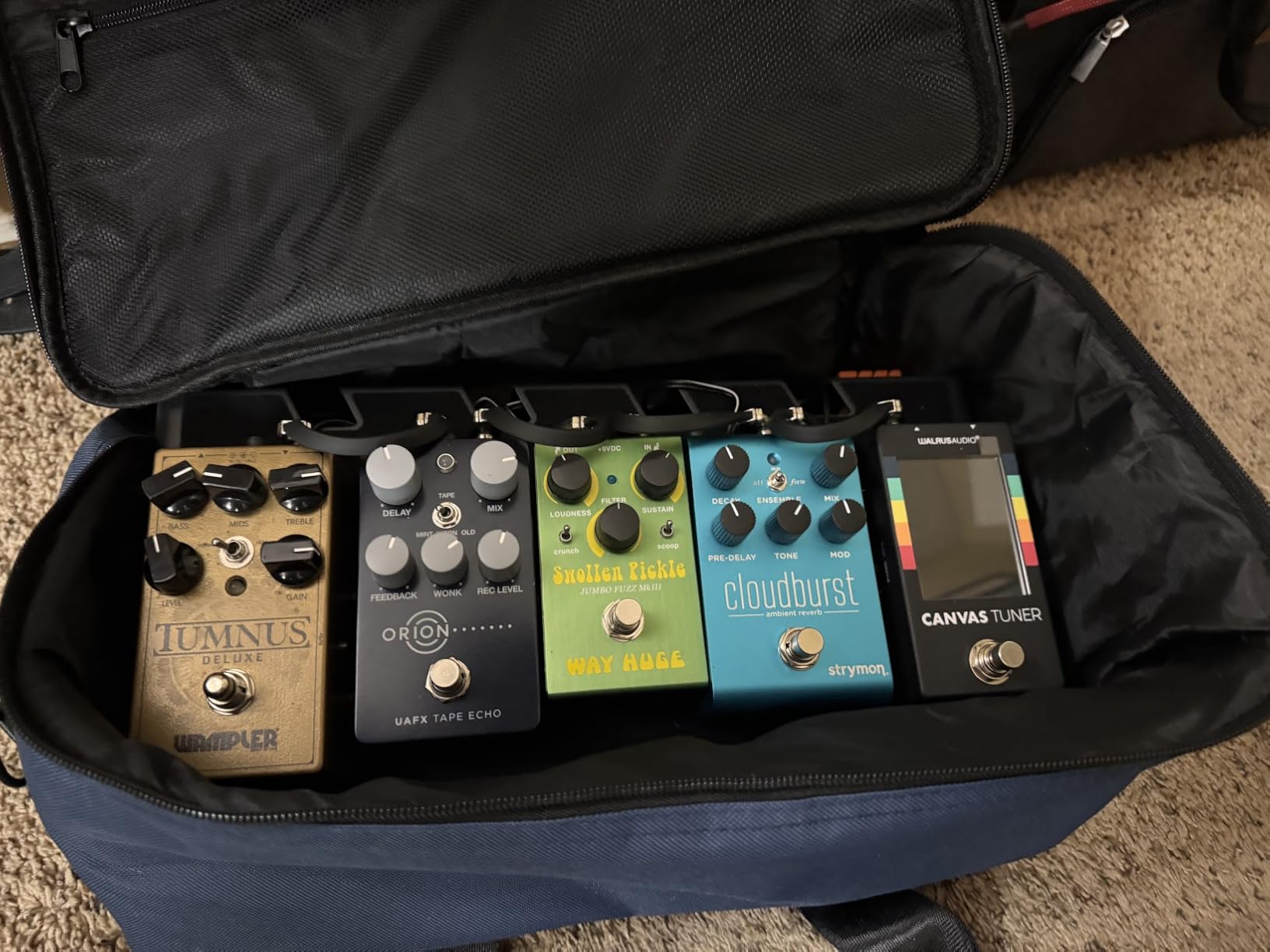
The controls are straightforward and well laid out. You get Mix, Decay, Pre-Delay, Tone, and Mod knobs. The Mod control adds lush modulation to the reverb tails, creating movement and dimension that prevents the sound from feeling static. I found that a moderate Mod setting around 10 o’clock added just enough movement without sounding seasick.
The Cloudburst is significantly more compact than I expected. At 4.8 x 3.35 x 2.55 inches, it takes up minimal pedalboard real estate. The top-mounted jacks are great for tight board layouts, though I did find them a bit cramped when using right-angle cables. Plan your cable routing accordingly.
I tested the Cloudburst with both electric and acoustic guitars. With my Stratocaster through a clean Twin Reverb, the reverb added a gorgeous halo around single-note lines and made chordal work sound massive. With my acoustic guitar plugged directly into the pedal and then into a PA system, the Cloudburst added studio-quality ambience that made my living room feel like a concert hall.
The Freeze function requires an external footswitch (the Strymon MiniSwitch), which is sold separately. When engaged, it sustains your current reverb tail indefinitely, creating a drone pad you can play over. This is incredibly useful for solo performers who want to build layered soundscapes in real time. Just budget for the extra footswitch if Freeze is important to you.
Best For: Worship Players and Acoustic Guitarists
The Cloudburst shines brightest in worship settings and acoustic performances where you need lush, pad-like reverb to fill space between vocal lines. The Ensemble mode is particularly effective for creating those atmospheric intros and transitions that define modern worship music. Acoustic players will appreciate how naturally the reverb enhances their tone without sounding processed.
Know the Ensemble Mode Limitations
The Ensemble mode is polarizing. Some players love the harmonic pads it generates, while others find them intrusive for certain genres. If you play aggressive rock or metal where the reverb needs to stay out of the way, the Cloudburst’s ambient focus might work against you. Demo the Ensemble mode before committing if you are unsure.
4. Walrus Audio Slöer Stereo Ambient Reverb – Modulated Soundscapes
Walrus Audio SLOER Stereo Ambient Reverb, Black
5 Modulation Algorithms
5 Wavelength Functions
3 Preset Slots
Stereo Width Switch
Die Cast Enclosure
Pros
- Five unique modulation algorithms for diverse ambient textures
- Stereo width switch for flexible routing
- Three preset slots for saving favorite sounds
- Ethereal character that stands out from standard reverb pedals
- Durable die-cast enclosure with lifetime warranty
Cons
- Not ideal for traditional spring hall or plate reverb
- Only 3 preset slots compared to competitors
- Limited review sample size at 27 reviews
The Walrus Audio Slöer is the pedal I reached for when I wanted something genuinely different from the standard reverb palette. Reddit users on r/guitarpedals consistently recommend this pedal alongside the Mercury 7 and DBA Rooms, and after extensive testing, I understand why. The Slöer does not try to recreate traditional acoustic spaces. Instead, it builds its own world of modulated, evolving ambient textures.
The five modulation algorithms each have a distinct personality. Some create slow, evolving pitch modulation that makes chords feel like they are breathing. Others add shimmering harmonics or reverse-style effects that transform your guitar into something almost unrecognizable. I spent hours exploring each algorithm and finding the sweet spots where the modulation enhanced rather than distracted from my playing.
The stereo width switch is a thoughtful addition that genuinely affects the stereo image. In the wide setting, the reverb spreads across the stereo field in a way that feels immersive through two amps or headphones. In the narrower setting, the reverb tightens up for a more focused sound that works better in dense mixes.
Three preset slots let you save your favorite sounds for live recall. This is fewer than the Strymon pedals offer, but for most players, three carefully chosen ambient patches cover the majority of performance needs. I programmed one for subtle modulation on clean passages, one for massive ambient swells, and one for a reverse-style effect I used for song intros.
The Slöer excels at ambient, shoegaze, and experimental music. For players in those genres, this pedal is a creative tool that inspires new parts and textures. The modulated reverb tails have a character that I did not find on any other pedal in this test. It became my go-to for recording ambient layers over backing tracks.
However, if you need convincing spring reverb for surf rock, a natural hall for jazz, or a transparent room sound for country, the Slöer is not the right choice. Its algorithms are all heavily modulated and atmospheric. There is no dry, traditional reverb mode here. Know what you need before you buy.
Best For: Shoegaze and Experimental Genre Players
The Slöer was practically designed for shoegaze and experimental musicians who want reverb that becomes a character in the music rather than background ambience. The five modulation algorithms cover an impressive range of atmospheric textures. If your pedalboard already has delay and modulation effects and you want a reverb that holds its own alongside them, the Slöer delivers.
Preset Management for Live Performance
With only three preset slots, planning is essential for live use. I recommend spending time before gigs mapping out exactly which three sounds you need for your setlist. The preset recall is fast and reliable via the footswitch, so switching between songs is smooth once you have your sounds dialed in.
5. Electro-Harmonix Oceans 12 Dual Stereo Reverb – Two Engines, Endless Options
Electro-Harmonix Oceans 12 Dual Stereo Reverb Pedal
Dual Reverb Engines
Series and Parallel Control
24 Presets
Tide Control
Built-in Delay
Stereo I/O
Expression Input
Pros
- Dual reverb engines for layered complex sounds
- 24 presets for extensive sound design
- Tide Control for stereo image manipulation
- Built-in delay with tap tempo adds versatility
- Stereo in/out with mono send/return options
Cons
- Controls are not intuitive without reading the manual
- Small labels are hard to read during performance
- Not Prime eligible
- One user reported mono output defect
The Electro-Harmonix Oceans 12 is the Swiss Army knife of reverb pedals. With two independent reverb engines that can run in series or parallel, 24 preset slots, a built-in delay, and a unique Tide control for stereo image manipulation, this pedal offers more sound design options per square inch than anything else on this list. It took me a full weekend to explore everything it can do.
The dual engine concept is where the Oceans 12 shines. You can run a hall reverb in engine one and a shimmer reverb in engine two, blending them together for rich, layered textures. In series mode, engine one feeds into engine two, creating cascading reverb tails that sound massive. In parallel mode, both engines process your signal independently and sum together. I found parallel mode particularly effective for creating wide stereo images with contrasting reverb types on each side.
The Tide control is unique to EHX and it genuinely affects the stereo image in interesting ways. By rotating the Tide knob, you can shift the balance and width of the reverb across the stereo field. At extreme settings, the reverb almost seems to rotate around your head, which is an effect I have not encountered on any other pedal.
Having 24 presets is a major advantage for live performers. I was able to program different reverb combinations for an entire setlist and recall them instantly. The built-in delay with tap tempo means you can add dotted-eighth delays on top of your reverb without needing a separate delay pedal. For players with limited board space, this combination is incredibly useful.
The learning curve is real, though. The Oceans 12 has a compact interface, and many functions require holding down buttons, pressing combinations, or navigating menus. I read the manual cover to cover before I felt comfortable, and even then, I occasionally found myself reaching for the manual to remember how to access certain features. The labels on the pedal itself are small and difficult to read in dim stage lighting.
In my stereo rig test, the Oceans 12 delivered a wide, immersive image. The stereo in/out configuration worked flawlessly with my two-amp setup. The mono send/return option adds even more flexibility for players who want to integrate external effects into their reverb signal path.
Best For: Sound Designers and Feature-Hungry Players
If you are the type of player who loves deep editing, multiple parameters, and maximum control over your sound, the Oceans 12 was built for you. The dual engines and 24 presets make it one of the most powerful stereo reverb pedals in this price range. It is ideal for musicians who treat their pedalboard as a sound design platform.
Usability Concerns for Live Performance
The compact controls and menu-based editing make the Oceans 12 challenging to adjust on the fly during a gig. If you need to change settings mid-performance without bending down to read tiny labels, consider whether you can pre-program everything you need into the 24 presets. Players who prefer knob-per-function simplicity may find this pedal frustrating.
6. BOSS RV-6 Reverb – The Reliable Workhorse
BOSS RV-6 Reverb Guitar Pedal (RV-6)
8 Reverb Modes
Stereo I/O
Expression Pedal Input
Studio-Grade Algorithms
Buffered Bypass
Compact Design
Pros
- 8 versatile reverb modes including shimmer and dynamic
- Studio-grade algorithms at an accessible price
- Compact and durable BOSS build quality
- Mono or stereo operation
- Expression pedal input for live control
- 5-year warranty from BOSS
Cons
- Dynamic mode can sound artificial with certain styles
- Built-in delay mode is less full-featured than dedicated delays
- Buffered bypass rather than true bypass
The BOSS RV-6 is the pedal I recommend more than any other to friends who ask about stereo reverb. With 1,391 reviews and a 4.7-star rating on Amazon, it has earned its reputation as the reliable workhorse of the reverb world. I have owned one for over three years, and it has never let me down through dozens of gigs, rehearsals, and recording sessions.
The eight reverb modes cover an impressive range. You get standard Hall, Plate, Room, and Spring options that all sound excellent. Then there are the creative modes: Shimmer for those ascending ambient pads, Modulate for lush, chorus-drenched reverb, Dynamics for reverb that responds to your playing intensity, and Delay+Reverb for combining both effects in one patch. The variety means the RV-6 can cover nearly any genre without needing additional pedals.
The Shimmer mode deserves special mention. While it is not quite as refined as the Strymon blueSky’s shimmer engine, it produces beautiful ascending harmonic textures that work wonderfully for ambient passages and worship music. I used the Shimmer mode extensively for Sunday morning services, and it never failed to create the atmospheric sound I needed.
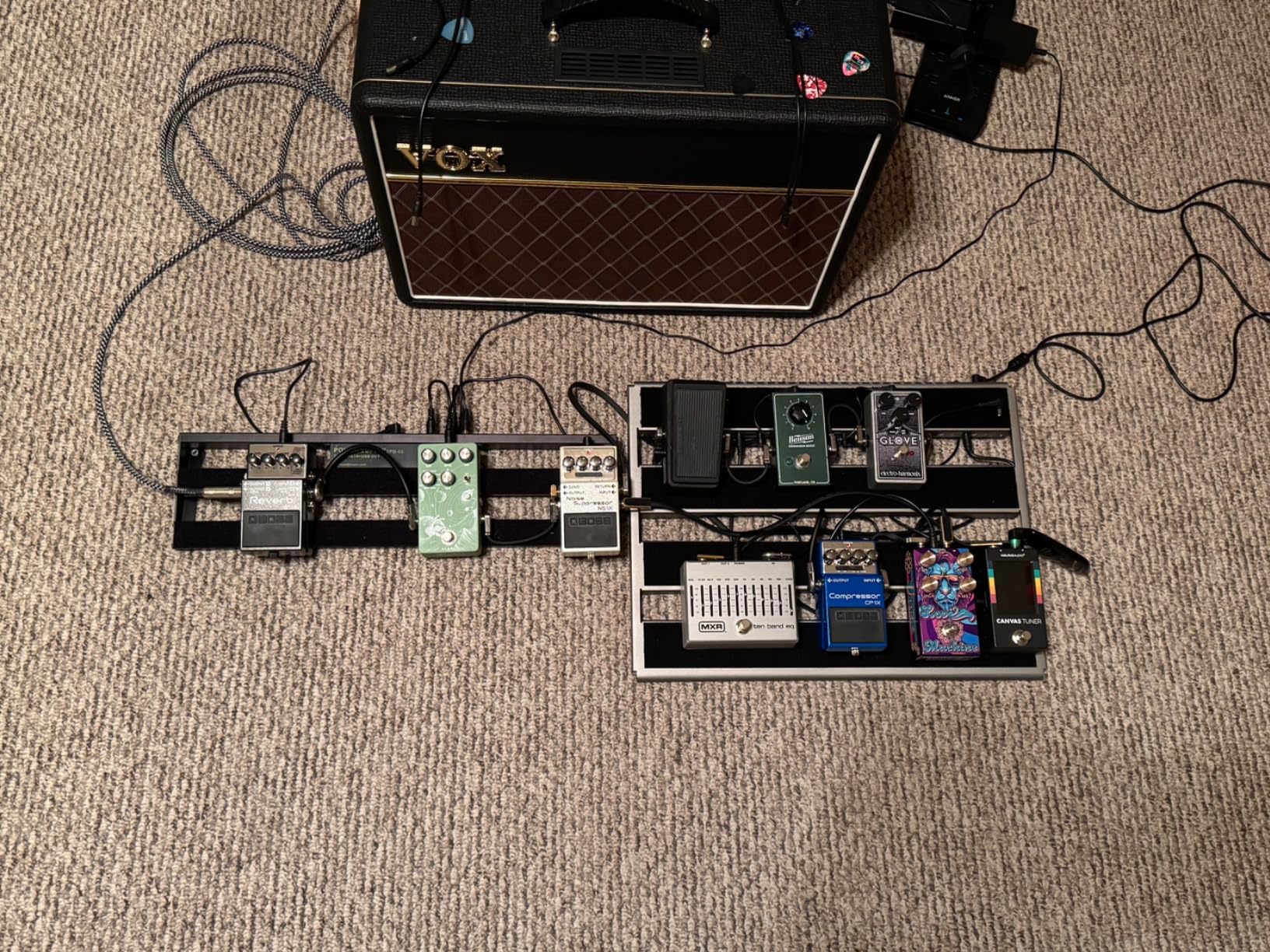
BOSS build quality is legendary, and the RV-6 lives up to that reputation. The compact enclosure is built like a small tank, with a metal body, robust footswitch, and protected knobs. I have accidentally kicked it, dropped it, and spilled drinks near it, and it still works perfectly. The five-year warranty provides additional peace of mind for gigging musicians.
The stereo operation is straightforward. You feed your guitar into the input and take two outputs to your left and right amplifiers. In my stereo rig test with two Fender amps, the RV-6 created a pleasingly wide image, though it is worth noting that this is not true stereo processing. The pedal sums the input to mono and then processes it, sending slightly different reverb treatments to each output. The effect is still noticeably wider than mono, but it is not as immersive as the true stereo processing on the Strymon or Klowra pedals.
The expression pedal input is a feature I use constantly. By connecting an expression pedal, you can control the effect level in real time, swells and controlled decay effects are easy to achieve. This adds a level of expressiveness that you normally find on much more expensive pedals.
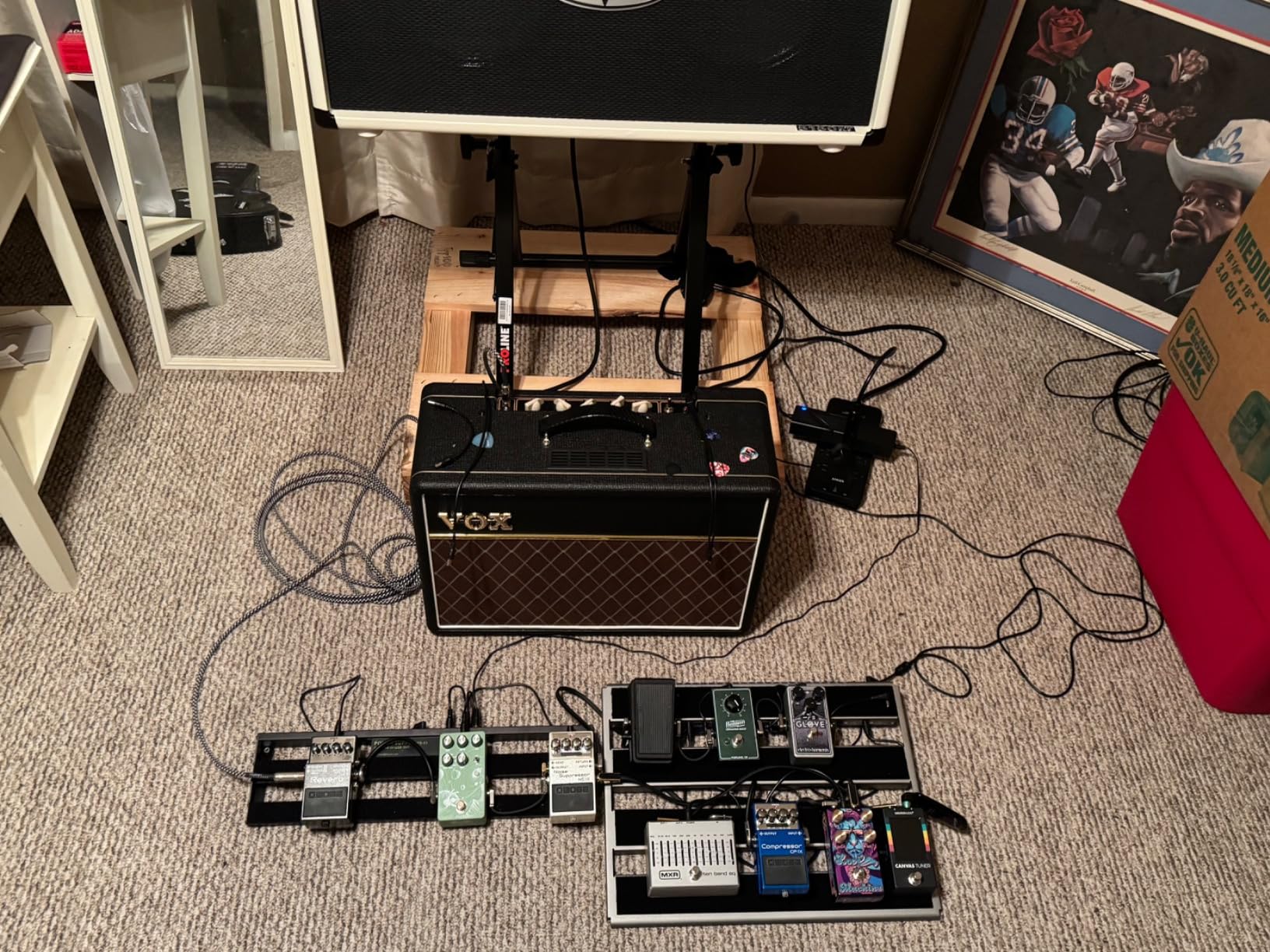
The main drawbacks are minor. The Dynamic mode can sound artificial with certain playing styles, particularly fast lead lines where the reverb ducking feels unnatural. The Delay+Reverb mode is convenient but limited compared to a dedicated delay pedal. And some tone purists prefer true bypass over the RV-6’s buffered bypass, though I have never found the buffer to negatively impact my signal chain.
Best For: Gigging Musicians and First-Time Stereo Builders
The RV-6 is the ideal first stereo reverb pedal. It offers professional sound quality, reliable construction, and enough variety to keep you exploring for months. Gigging musicians appreciate its durability and the peace of mind that comes from BOSS’s five-year warranty. At this price point, there is no better all-around stereo reverb pedal on the market.
Expression Pedal Integration
If you plan to use the expression pedal input, make sure you get a compatible expression pedal with the correct TRS wiring. I use a Boss FV-500L, and it works perfectly for swelling reverb levels during ambient intros. The expression control opens up creative possibilities that make the RV-6 feel like a much more expensive pedal.
7. TC Electronic Hall of Fame 2 – MASH Footswitch Magic
TC Electronic Hall of Fame 2 Reverb Pedal
MASH Pressure-Sensitive Footswitch
TonePrint Customization
Stereo I/O
True Bypass
Analog Dry Through
10 Reverb Types
Pros
- MASH footswitch adds expressive pressure-sensitive control
- TonePrint app allows deep customization and artist presets
- True bypass with analog dry-through
- Stereo in/out for flexible routing
- Excellent shimmer effect quality
Cons
- Known to drain batteries quickly
- TonePrint recognition can be finicky via USB
- Some users feel it is slightly overpriced versus competitors
The TC Electronic Hall of Fame 2 earned its place on this list largely because of one feature: the MASH footswitch. This pressure-sensitive switch acts like an expression pedal built into the footswitch itself. Press harder, and the reverb parameters change in real time. I used it to swell reverb levels, increase decay time, and modulate the effect during sustained notes. It is one of those features that sounds like a gimmick until you try it, and then you cannot imagine playing without it.
The pedal ships with 10 reverb types covering the standard hall, plate, spring, and room options plus more creative sounds like shimmer, modulated, and reverse. Each algorithm sounds clean and professional, with the shimmer effect drawing particular praise. Forum users on r/guitarpedals frequently compare the Hall of Fame 2’s shimmer favorably to boutique pedals costing twice as much.
TonePrint is where the Hall of Fame 2 separates itself from other mid-range reverb pedals. Using the free TonePrint app, you can beam custom artist presets directly to the pedal via USB or even through your guitar pickups using the beam feature. TC Electronic has partnered with dozens of professional guitarists to create signature reverb sounds. I downloaded presets from artists like Guthrie Govan and Steve Vai, and some of them became permanent fixtures on my board.
The stereo in/out configuration works well for two-amp setups. In my testing, I ran the Hall of Fame 2 between a Vox AC30 and a Fender Blues Junior. The stereo image was pleasingly wide, though like the BOSS RV-6, this is not true stereo processing. The reverb algorithms create width through processing tricks rather than independent left-right processing.
True bypass with analog dry-through means your core guitar signal passes through the pedal unaffected when bypassed. This is important for players with long signal chains who want to preserve their tone. The analog dry-through also ensures that the dry component of your wet/dry mix remains pure analog even when the reverb is engaged.
The main drawback is power consumption. The Hall of Fame 2 is known to drain 9V batteries quickly, sometimes in just a few hours of use. I strongly recommend using a dedicated power supply rather than batteries. Some users also report that TonePrint recognition via USB can be temperamental, requiring multiple attempts to load presets successfully.
Best For: Players Who Want Expression Control on a Budget
The MASH footswitch makes the Hall of Fame 2 the most expressive reverb pedal in this price range. If you want reverb swells, dynamic decay control, and real-time parameter manipulation without adding an expression pedal to your board, this is the one. The TonePrint library adds virtually unlimited sound possibilities.
Power Supply Considerations
Do not rely on batteries with this pedal. Plan to use an isolated power supply from the start. The current draw is modest when powered correctly, but battery life is poor enough that you will find yourself stranded mid-gig if you depend on 9V batteries. A quality isolated supply also eliminates ground loop issues that can arise with daisy-chained power.
8. Klowra Limbo Stereo Reverb – Nine Algorithms at a Smart Price
Klowra Limbo Stereo Reverb Pedal with Shimmer, Tide & Freeze – 9 Ambient Effects for Electric Guitar, Bass & Synth – Analog Dry Through for Zero Tone Loss – Ideal for Worship, Shoegaze & Live Gigs
9 Studio-Grade Reverb Algorithms
Freeze and Infinity Mode
True Stereo I/O
RAMP Function
32-bit DSP
USB-C
Expression Support
Pros
- 9 versatile reverb algorithms including unique Tide mode
- Freeze and Infinity mode for sustained drone backgrounds
- True stereo I/O with independent channel processing
- 32-bit floating-point DSP engine
- Excellent value for the feature count
Cons
- Newer brand with less established reputation
- Limited long-term reliability data
- Smaller review base at 102 reviews
The Klowra Limbo is the dark horse of this roundup. As a newer brand with just over 100 reviews, I was initially skeptical. But after two weeks of testing, I came away genuinely impressed. This pedal offers nine studio-grade reverb algorithms, true stereo I/O, a Freeze/Infinity mode, and a 32-bit floating-point DSP engine for $129.99. On paper, that feature set competes with pedals costing twice as much.
The nine algorithms cover Hall, Church, Room, Spring, Plate, Swell, Hazy, Shimmer, and a unique Tide mode. The Tide mode was my favorite discovery. It creates a modulated, wavering reverb tail that sounds like the sound is being carried on waves. I have not heard anything quite like it on other pedals, and it became my go-to sound for creating atmospheric textures during testing.
True stereo I/O means the Limbo processes left and right channels independently. In my stereo rig test, this resulted in a noticeably wider and more defined stereo image compared to pedals that simply split a mono signal. Each channel gets its own reverb treatment, and the result is a genuinely immersive soundscape.
The Freeze and Infinity mode is excellent for solo performers and ambient players. Engaging Freeze sustains your current reverb tail indefinitely, creating a drone pad you can play over. Infinity mode takes it further by allowing the tail to build and layer as you play new notes into it. I used this feature extensively for building ambient soundscapes during live looping sessions.
The RAMP function works with an external expression pedal to smoothly transition between parameter settings. This allows you to sweep from a subtle room reverb to a massive ambient pad with a single pedal motion. The implementation is smooth and musical, and I found it useful for creating dynamic builds during performances.
The 32-bit floating-point DSP engine delivers clean, noise-free processing. Even with decay times pushed to maximum, I did not hear any digital artifacts or unwanted noise. The USB-C port is used for firmware updates, which suggests Klowra plans to improve and expand the pedal’s capabilities over time.
The main concern is longevity. Klowra is a newer brand, and with only 102 reviews, there is limited long-term reliability data. The build quality feels solid with a heavy-duty aluminum alloy enclosure, but only time will tell how it holds up under years of gigging. The one-year warranty is shorter than what BOSS, TC Electronic, or Strymon offer.
Best For: Value-Seeking Ambient Players
If you want maximum features per dollar and are willing to take a chance on a newer brand, the Klowra Limbo offers remarkable value. Nine algorithms, true stereo processing, and Freeze/Infinity mode make it a powerful tool for ambient players on a budget. The unique Tide mode alone justifies the price for players seeking sounds they cannot get elsewhere.
Brand Reputation and Warranty Considerations
The one-year warranty and newer brand status mean you are taking on slightly more risk than with established brands. If reliability is your top priority, the BOSS RV-6 or TC Electronic Hall of Fame 2 offer more proven track records. But if you prioritize features and sound quality, the Limbo punches well above its weight class.
9. Walrus Audio Fundamental Ambient Reverb – Budget Ambient Excellence
Walrus Audio Fundamental Series Ambient Reverb
3 Ambient Algorithms: Lush Haze Deep
Slider Controls
True Bypass
Compact Form
Analog Dry Through
Lifetime Warranty
Pros
- Outstanding ambient reverb quality that rivals pedals costing three times more
- Three distinct atmospheric algorithms
- Simple and intuitive slider-based controls
- True or buffered bypass switch
- Solid build quality with lifetime warranty
- Excellent value under $100
Cons
- Mono only with no stereo I/O
- No MIDI control
- Slider controls may collect dust over time
The Walrus Audio Fundamental Ambient Reverb proves that you do not need to spend a fortune to get gorgeous ambient reverb. At under $100, this pedal delivers sound quality that genuinely competes with pedals costing three times as much. When I first plugged into it, I had to check the price tag twice because the reverb tails sounded that good.
The three algorithms, Lush, Haze, and Deep, each offer a distinct take on ambient reverb. Lush creates wide, modulated reverb with a chorus-like quality. Haze adds shimmering harmonics above your signal for that ethereal ascending sound. Deep produces massive, cavernous reverb tails that seem to go on forever. I found myself gravitating toward Deep for ambient passages and Lush for chordal work.
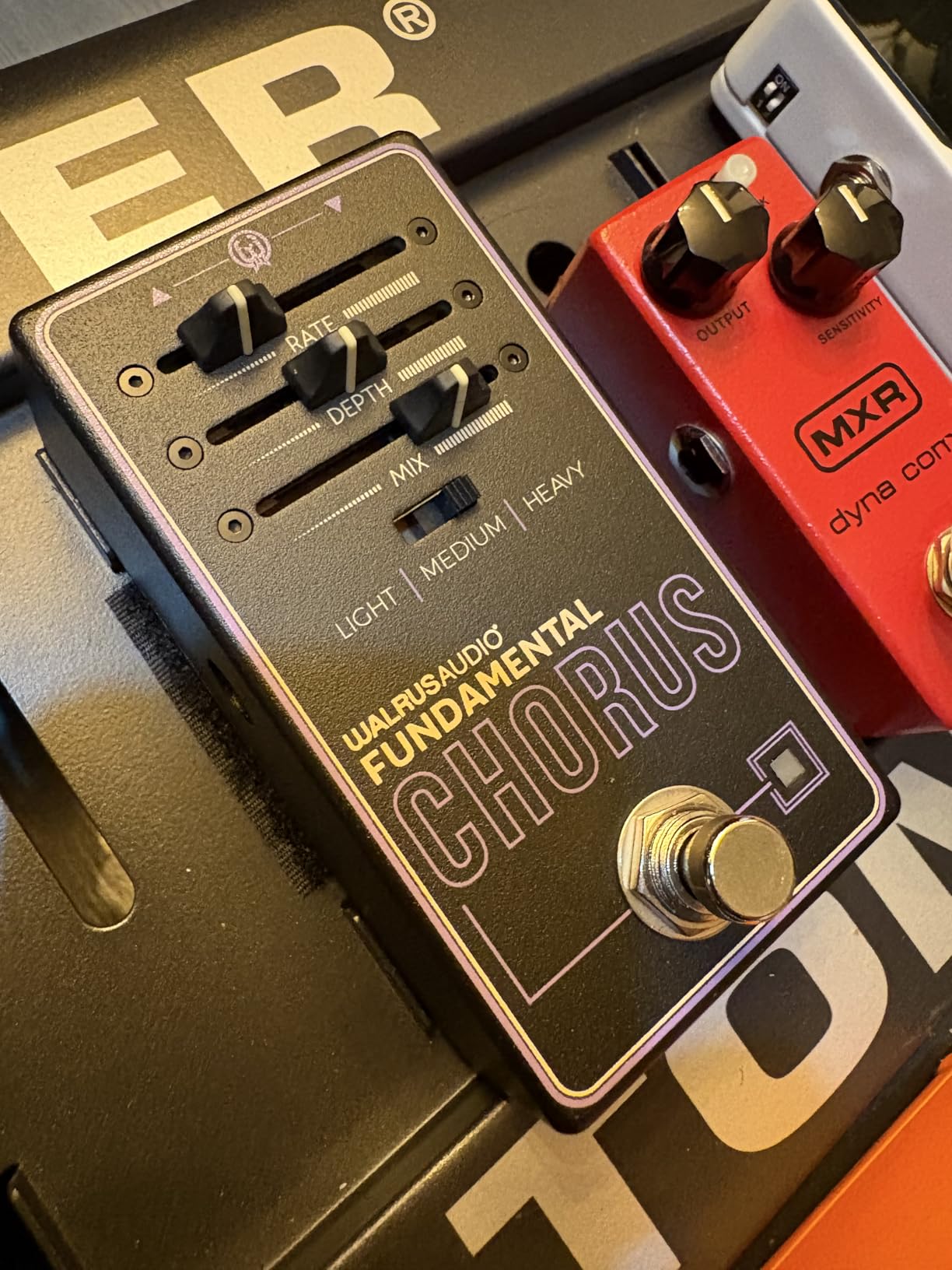
The slider-based controls for Decay, Mix, and Tone are surprisingly intuitive. Sliders give you a visual reference of your settings that is easy to read at a glance, which I appreciated during live performance. The layout is clean and uncluttered, making it simple to dial in great sounds quickly without menu diving.
It is important to note that this pedal is mono only. There is no stereo I/O, which is why it sits at the budget end of this roundup despite its excellent sound quality. I have included it because many players searching for the best stereo reverb pedals also want to know about great budget options, and the Fundamental Ambient is one of the best values in reverb pedals period. If you eventually build a stereo rig, you can always upgrade later.
The analog dry-through ensures your core tone remains uncolored when the effect is engaged. The true or buffered bypass switch lets you choose how the pedal behaves when bypassed, giving you flexibility depending on your signal chain needs. I preferred true bypass for my relatively short pedalboard.
Walrus Audio backs this pedal with a limited lifetime warranty, which is remarkable at this price point. The build quality matches the warranty, with a solid enclosure that feels durable despite its compact size. At 2.4 x 4.57 x 2.24 inches, it takes up minimal board space.
Best For: Bedroom Players and Budget-Conscious Beginners
If you are just starting your pedal journey, playing mostly at home, or working with a tight budget, the Fundamental Ambient is the best entry point into quality ambient reverb. The sound quality punches far above its price class, and the simple controls make it accessible for players who do not want to deal with complex menus.
Understanding the Mono Limitation
The lack of stereo I/O means this pedal cannot be the centerpiece of a stereo rig. If you already own two amplifiers and want to exploit stereo reverb, look at the MOOER R7 X2 or BOSS RV-6 instead. But if you are playing through a single amp or directly into an audio interface, the Fundamental Ambient delivers exceptional sound at a bargain price.
10. MOOER R7 X2 Stereo Reverb – 14 Sounds at a Budget Price
MOOER R7 X2 Stereo Multi Reverb Pedal from Classic Reverb to Modern Ambient, 14 different Reverb types with High Cut, Low Cut, Mix Parameter Knobs and Infinite and Trail-on functions
14 Reverb Types
High Cut and Low Cut EQ
Infinite Function
Trail-On
Stereo I/O
Preset Per Effect
Tap Tempo
Pros
- 14 different reverb types from classic to modern ambient
- Excellent value with stereo operation at a budget price
- High Cut and Low Cut EQ knobs for tone shaping
- Infinite function for endless reverb trails
- Stereo operation capability
- Trail-on function for natural fade-out
Cons
- Average rating of 4.3 is lower than premium competitors
- Limited tweakability per effect compared to higher-end pedals
- Only one save slot per effect type
The MOOER R7 X2 is the pedal I recommend to friends who want maximum variety on a minimum budget. With 14 reverb types, stereo operation, and a price tag under $120, it offers more sounds per dollar than anything else on this list. Over 637 Amazon reviewers agree that the value proposition here is outstanding.
The 14 reverb types span everything from classic room and hall to modern ambient sounds. I was particularly impressed by the variety available. You get standard sounds for everyday playing plus experimental options like reverse, shimmer, and ambient pads. Having all of these in one compact pedal means you can explore different reverb textures without buying multiple pedals.
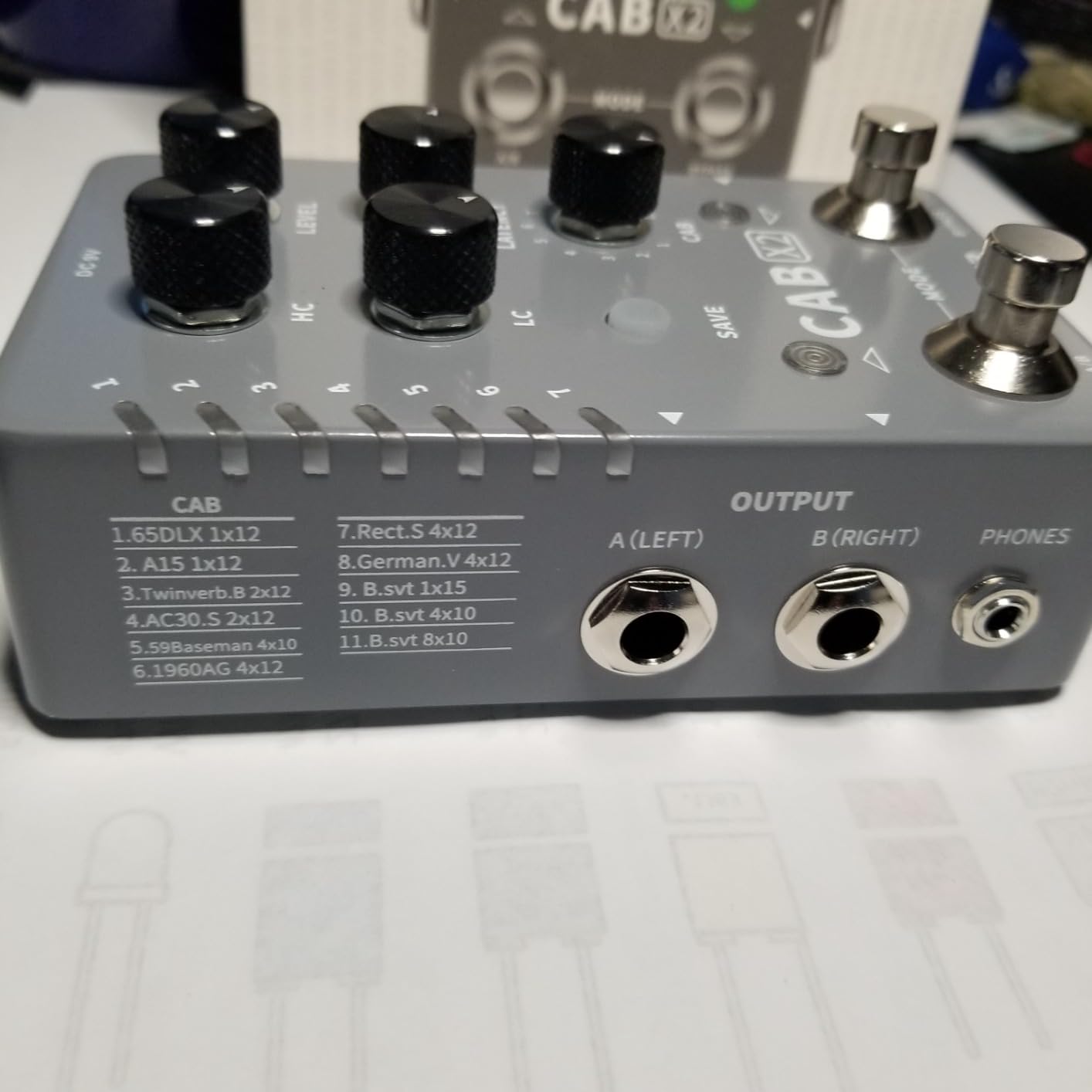
The High Cut and Low Cut EQ knobs are a welcome addition at this price point. They allow you to shape the tonal character of the reverb, taming harsh highs or removing muddy low end. I found that rolling off the High Cut slightly made the ambient reverb types sound smoother and more musical. The Low Cut was useful for keeping the reverb from clashing with bass frequencies in dense mixes.
The Infinite function is a standout feature for ambient players. When engaged, it sustains your reverb tail indefinitely, creating a drone pad effect similar to the Freeze functions on more expensive pedals. I used Infinite to build layered soundscapes during solo practice sessions, and it worked impressively well for a pedal at this price.
The Trail-on function allows reverb tails to continue naturally decaying after you bypass the pedal, rather than cutting off abruptly. This is a small detail that makes a big difference in live performance. The natural fade-out sounds much more professional than a hard cutoff.
Stereo operation is where the R7 X2 really delivers value. At this price point, finding true stereo reverb is difficult. While the processing is not as sophisticated as the Strymon or Klowra pedals, the stereo image is noticeably wider than mono, and it works reliably with two-amp setups. For budget stereo rig builders, this is the entry point.
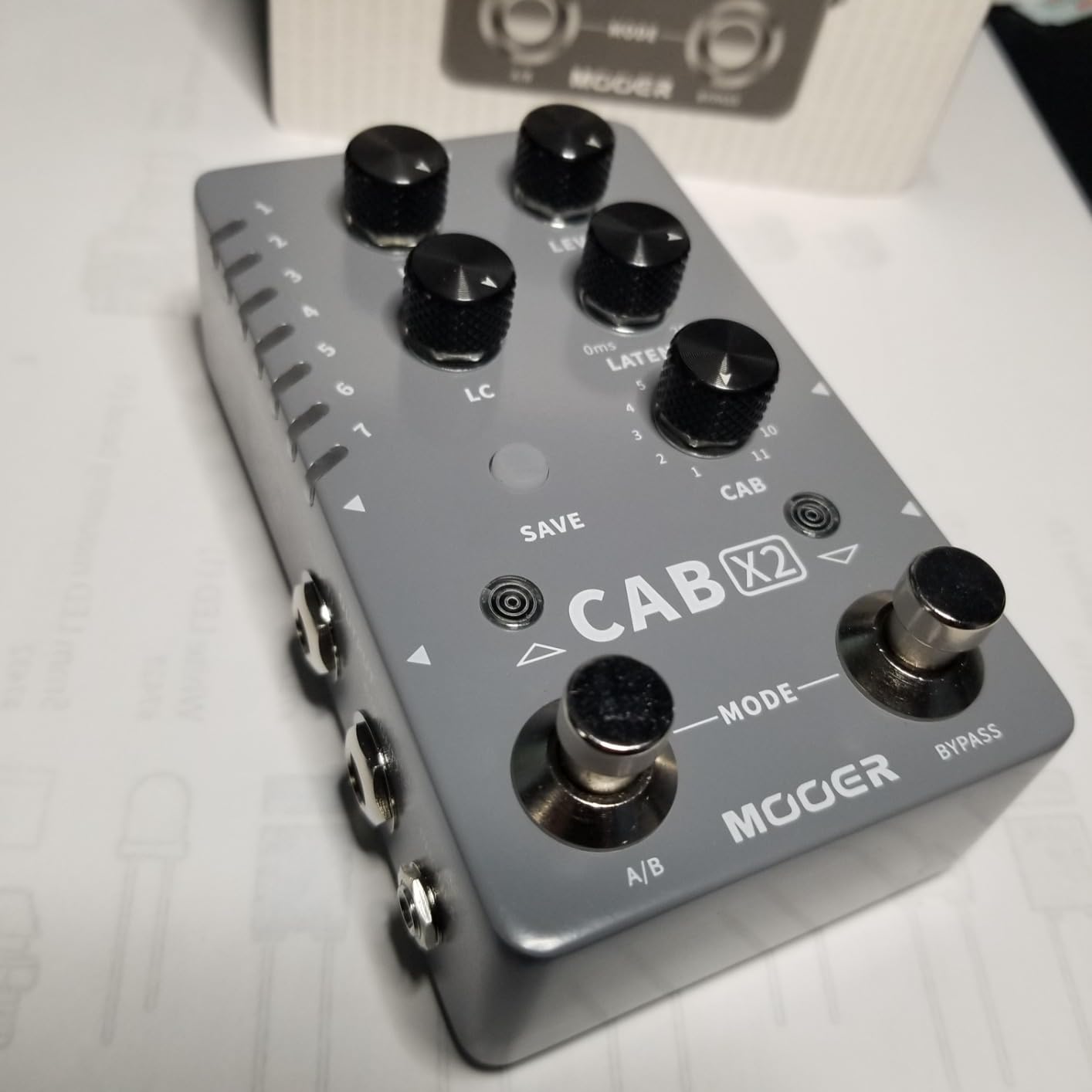
The main trade-off is tweakability. Each reverb type has only one save slot, meaning you cannot create multiple variations of the same reverb type. The parameter controls are also more limited than premium pedals. If you are a sound designer who needs deep editing capabilities, you will outgrow this pedal quickly. But for players who want a variety of good reverb sounds without complexity, the R7 X2 is hard to beat.
Best For: Players Building Their First Stereo Rig on a Budget
The R7 X2 is the most affordable way to add stereo reverb to your pedalboard. If you have just bought your second amplifier and want to experience stereo for the first time, this pedal gives you 14 reverb types and stereo operation for less than the cost of a single premium pedal. It is the perfect starting point.
Managing Expectations on Sound Quality
While the R7 X2 offers excellent value, the sound quality does not match the Strymon, Eventide, or Walrus Audio premium pedals. The algorithms are good but not stunning. For practice, bedroom playing, and casual gigging, the quality is more than sufficient. For professional recording or high-end live sound, you may eventually want to upgrade.
Buying Guide: How to Choose the Best Stereo Reverb Pedal for Your Rig
Choosing from the best stereo reverb pedals comes down to understanding your needs and knowing what features actually matter. I have broken down the key considerations below based on my testing experience and the common questions I see in forums like r/guitarpedals and The Gear Page.
True Stereo vs Pseudo-Stereo: What It Means for Your Sound
This is the most misunderstood aspect of stereo reverb pedals, and it matters more than most players realize. True stereo reverb processes the left and right input channels independently through separate reverb algorithms. This means if you feed different signals into the left and right inputs, each gets its own reverb treatment. The result is a genuinely immersive, three-dimensional soundscape.
Pseudo-stereo, also called mono-to-stereo, takes a single mono input, processes it through one reverb algorithm, and then splits the output into two channels with slight differences. This creates a wider sound than mono, but it is not true independent stereo processing. The Strymon blueSky V2 and Klowra Limbo offer true stereo processing, while the BOSS RV-6 and TC Electronic Hall of Fame 2 use pseudo-stereo approaches.
For most players, pseudo-stereo is perfectly adequate. The difference becomes more noticeable when you feed genuinely different signals into the pedal (like a stereo chorus before the reverb) or when you record in stereo and listen on headphones. If you are a purist or plan to record professionally, true stereo is worth seeking out.
Reverb Types: Which Algorithms Do You Actually Need?
Reverb pedals offer many algorithm types, and understanding them helps you choose the right pedal. Hall reverb simulates large concert halls with long decay times and smooth tails. Plate reverb recreates the dense, metallic sound of vintage plate reverb units used extensively in studio recordings. Spring reverb mimics the tube-driven spring tanks found in vintage amplifiers, essential for surf, rockabilly, and blues.
Room reverb provides shorter, more intimate ambience that sits naturally under your playing. Shimmer adds pitch-shifted harmonics above your signal for ethereal, ascending textures beloved by ambient and worship players. Modulated reverb adds chorus or vibrato effects to the reverb tails for movement and dimension.
For specialized sounds, reverse reverb plays the reverb tail backward for dramatic swells. Freeze or infinite functions sustain the reverb indefinitely for creating drone pads. Convolution reverb uses impulse responses of real acoustic spaces for the most realistic sound possible.
Think about which of these matter to your playing. A worship guitarist needs shimmer and hall. A blues player needs spring. An ambient player needs freeze and modulated textures. Match the pedal’s algorithm list to your musical needs.
Controls and Parameters: Knobs vs Menus
The best stereo reverb pedals fall into two camps: knob-per-function designs and menu-driven interfaces. Knob-per-function pedals like the BOSS RV-6 and Strymon Cloudburst have dedicated physical knobs for each parameter. You can see all settings at a glance and adjust them instantly. This design is faster, more intuitive, and better for live performance.
Menu-driven pedals like the EHX Oceans 12 pack more features into a smaller footprint by hiding parameters behind menus and button combinations. This allows for deeper editing and more sounds, but it requires reading the manual and memorizing navigation sequences. For sound designers who love deep editing, menus are acceptable. For gigging musicians who need to adjust settings quickly, knobs are superior.
Stereo Rig Setup: How to Connect Two Amplifiers
Setting up a stereo reverb pedal with two amplifiers is simpler than many players expect. Start by connecting your guitar to the pedal’s input as normal. Then connect output A to your first amplifier and output B to your second amplifier. Position the amplifiers approximately 6 to 10 feet apart for the best stereo separation.
For pedals with stereo inputs (like the Strymon blueSky V2 or Klowra Limbo), you can take advantage of true stereo processing by feeding different signals into each input. This requires a preceding stereo effect, such as a stereo chorus, or a splitter that sends your guitar to both inputs. The result is independent processing of each channel for maximum stereo width.
Many players place their stereo reverb in the effects loop of their amplifiers rather than in the front-end signal chain. This preserves the preamp distortion character while applying reverb to the post-preamp signal, which generally sounds more natural. Check whether your amplifier has a stereo effects loop or whether you need to use two separate amplifiers.
Power Requirements and Pedalboard Integration
Power consumption varies significantly between stereo reverb pedals. The BOSS RV-6 draws 128mA, the Strymon pedals draw 250-300mA, and the EHX Oceans 12 draws 150mA. Make sure your power supply can handle the current draw of your chosen pedal. Underpowering a digital reverb can cause noise, glitches, or failure to boot.
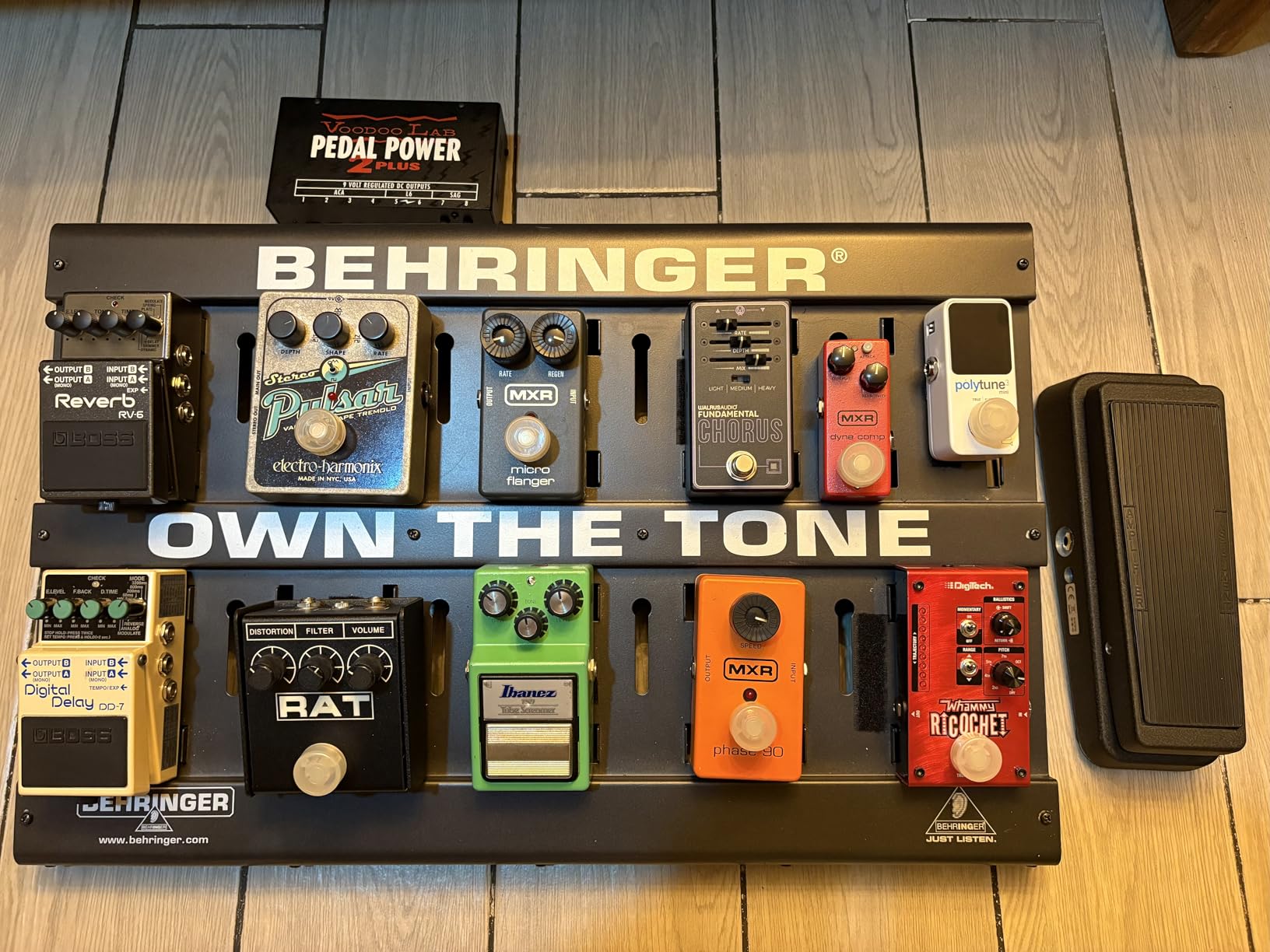
Most pedals on this list require 9V DC center-negative power, which is the standard for guitar effects. Isolated power supplies are recommended to prevent ground loops and noise issues, particularly with digital pedals. I use a Voodoo Lab Pedal Power 2 Plus for my board, and it handles all of these pedals without issue.
Physical size matters for pedalboard planning. The MOOER R7 X2 and Walrus Audio Fundamental are the most compact options, while the Eventide Blackhole and EHX Oceans 12 take up more real estate. Check the dimensions against your available board space before purchasing.
True Bypass vs Buffered Bypass
True bypass means the pedal’s circuitry is completely removed from your signal chain when bypassed, preserving your core tone. Buffered bypass means the pedal’s buffer remains active even when the effect is off, which can help drive long cable runs and prevent high-frequency signal loss.
Most modern pedals offer switchable bypass types or one type optimized for typical use. If you have a short signal chain (three pedals or fewer), true bypass is generally preferred. If you have a long chain with many true bypass pedals, adding a buffer prevents tone loss. The BOSS RV-6 uses buffered bypass, while the TC Electronic Hall of Fame 2 offers true bypass with analog dry-through.
Frequently Asked Questions About Stereo Reverb Pedals
What is the best reverb pedal for stereo?
The Strymon blueSky V2 is our top pick for stereo reverb, offering true stereo processing, 300 presets, and world-class Spring, Plate, Room, and Shimmer algorithms. For budget-conscious players, the BOSS RV-6 delivers excellent stereo reverb with 8 modes at roughly half the price.
Is a stereo reverb pedal worth it?
Yes, if you run two amplifiers, record in stereo, or play ambient, worship, or post-rock music. Stereo reverb creates a significantly wider and more immersive soundscape than mono. However, if you play through a single amp and do not record in stereo, a mono reverb pedal will serve you equally well at a lower cost.
Where do I put a stereo reverb pedal in my signal chain?
Place stereo reverb last in your signal chain, after distortion, modulation, and delay effects. If using amplifier effects loops, connect the reverb in the stereo effects loop for the most natural sound. For two-amp setups, send output A to amp one and output B to amp two.
What is the difference between stereo and mono reverb?
Mono reverb processes a single input and outputs a single wet signal. Stereo reverb processes and outputs two channels, creating a wider soundstage. True stereo reverb processes left and right channels independently through separate algorithms, while pseudo-stereo splits a mono signal into two outputs with slight differences.
Do I need a stereo reverb pedal?
You need a stereo reverb pedal only if you have a stereo rig (two amplifiers or a stereo PA/monitor setup) or record in stereo. If you play through a single amplifier, a mono reverb pedal is sufficient. Players who perform live with in-ear monitors or record with stereo miking will benefit most from stereo reverb.
What 5 pedals should every guitarist have?
The five essential guitar pedals for most players are a tuner, an overdrive or distortion, a delay, a reverb, and a wah or volume pedal. Reverb is considered essential because it adds spatial depth and ambience that makes any guitar tone sound more polished and professional.
Final Thoughts on the Best Stereo Reverb Pedals for 2026
After testing all 10 pedals through stereo rigs, studio monitors, and a variety of guitars and amplifiers, my recommendations come down to three tiers. For players who want the absolute best sound quality and feature set, the Strymon blueSky V2 is unmatched. For those who want professional performance at a fair price, the BOSS RV-6 remains the gold standard of value. And for budget-conscious players building their first stereo rig, the MOOER R7 X2 delivers 14 reverb types and stereo operation for under $120.
The best stereo reverb pedals transform your tone from a flat, one-dimensional sound into a living, breathing soundscape. Whether you choose a premium sound design tool like the Eventide Blackhole, a modulated ambient specialist like the Walrus Audio Slöer, or a reliable workhorse like the TC Electronic Hall of Fame 2, the key is matching the pedal to your musical needs and your rig setup.
Take the time to consider whether you need true stereo processing, how many presets you will actually use, and which reverb types match your playing style. The right stereo reverb pedal will inspire you to play more, explore new sounds, and hear your guitar in ways you never expected.