
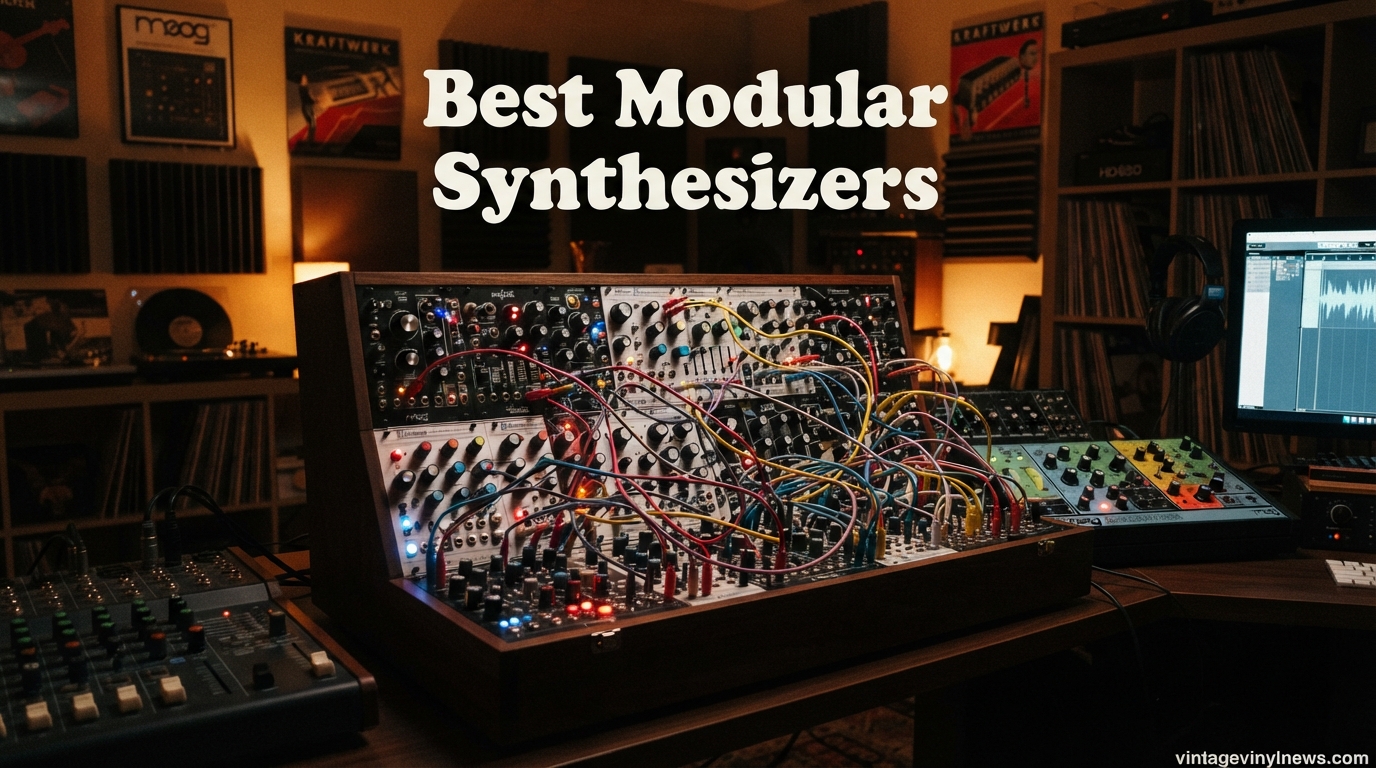
There is something about dropping a needle on a record and hearing analog warmth fill a room that no plugin can quite replicate. Modular synthesizers tap into that same tactile, physical relationship with sound. You are not clicking through menus. You are routing cables, turning knobs, and shaping electricity into music with your hands.
A modular synthesizer is a customizable instrument made of separate modules that connect via patch cables, allowing you to build unique signal paths impossible with fixed-architecture synths. Each module handles one job, like generating a tone, filtering frequencies, or shaping an envelope. You decide how they talk to each other. The result is an instrument that is genuinely yours.
If you collect vinyl, you already understand the appeal of gear that demands your attention and rewards patience. The best modular synthesizers offer that same hands-on satisfaction in a different form. This guide walks through 10 standout options for 2026, from full keyboards to pocket-sized West Coast experiments. Whether you are looking for your first semi-modular or building toward a Eurorack wall, there is a pick here for your studio.
Table of Contents
Top 3 Picks for Best Modular Synthesizers (September 2026)

These three represent the range of what modular synthesis offers in 2026. The Moog Grandmother delivers that classic Moog sound with a real keyboard and spring reverb. The Behringer Neutron packs dual analog oscillators and a deep patch bay into one of the best dollar-per-patch-point values on the market. The Korg Volca Modular runs on batteries and costs less than a single Eurorack module, making it the easiest way to start experimenting.
Best Modular Synthesizers in 2026
| Product | Specifications | Action |
|---|---|---|
 Moog Grandmother Moog Grandmother |
|
Check Latest Price |
 Behringer Neutron Behringer Neutron |
|
Check Latest Price |
 Moog Subharmonicon Moog Subharmonicon |
|
Check Latest Price |
 Moog Mother-32 Moog Mother-32 |
|
Check Latest Price |
 Moog DFAM Moog DFAM |
|
Check Latest Price |
 Moog Mavis Moog Mavis |
|
Check Latest Price |
 Make Noise 0-Coast Make Noise 0-Coast |
|
Check Latest Price |
 Arturia MiniBrute 2 Arturia MiniBrute 2 |
|
Check Latest Price |
| Korg Volca Modular |
|
Check Latest Price |
 Cre8audio West Pest Cre8audio West Pest |
|
Check Latest Price |
1. Moog Grandmother – The Analog Keyboard That Started a Revival
MOOG Grandmother Semi-Modular Analog Synthesizer
32 velocity-sensing keys
41 patch points
Built-in spring reverb
2 analog oscillators
MIDI and USB
Pros
- Rich Moog analog warmth
- Standout internal spring reverb tank
- 41 patch points for deep patching
- Sequencer and arpeggiator built in
- Works standalone without a single cable
Cons
- Limited keyboard pitch range for some players
- Some reports of scratchy pots over time
- Mod wheel response issues noted by a few users
I have spent more hours than I can admit patching the Moog Grandmother, and it remains the semi-modular I recommend most often to vinyl collectors curious about synthesis. The reason is simple. You plug it in, press a key, and that Moog sound is immediately there. No patching, no menu diving, no anxiety. It is the closest thing to dropping a needle on a classic record.
The 41 patch points open up the moment you are ready. You can reroute the envelopes, send the oscillators through the spring reverb independently, or patch in external audio from a drum machine. The spring reverb tank deserves special mention because it has a ghostly, physical character that no plugin reverb captures. Crank it and you hear the springs.
The build feels substantial. The wood side panels echo vintage Moog cabinets, and the keys have a satisfying weight. MIDI in, out, and thru over both DIN and USB means it slots into any DAW setup without friction. I recorded bass lines into Logic within ten minutes of unboxing.
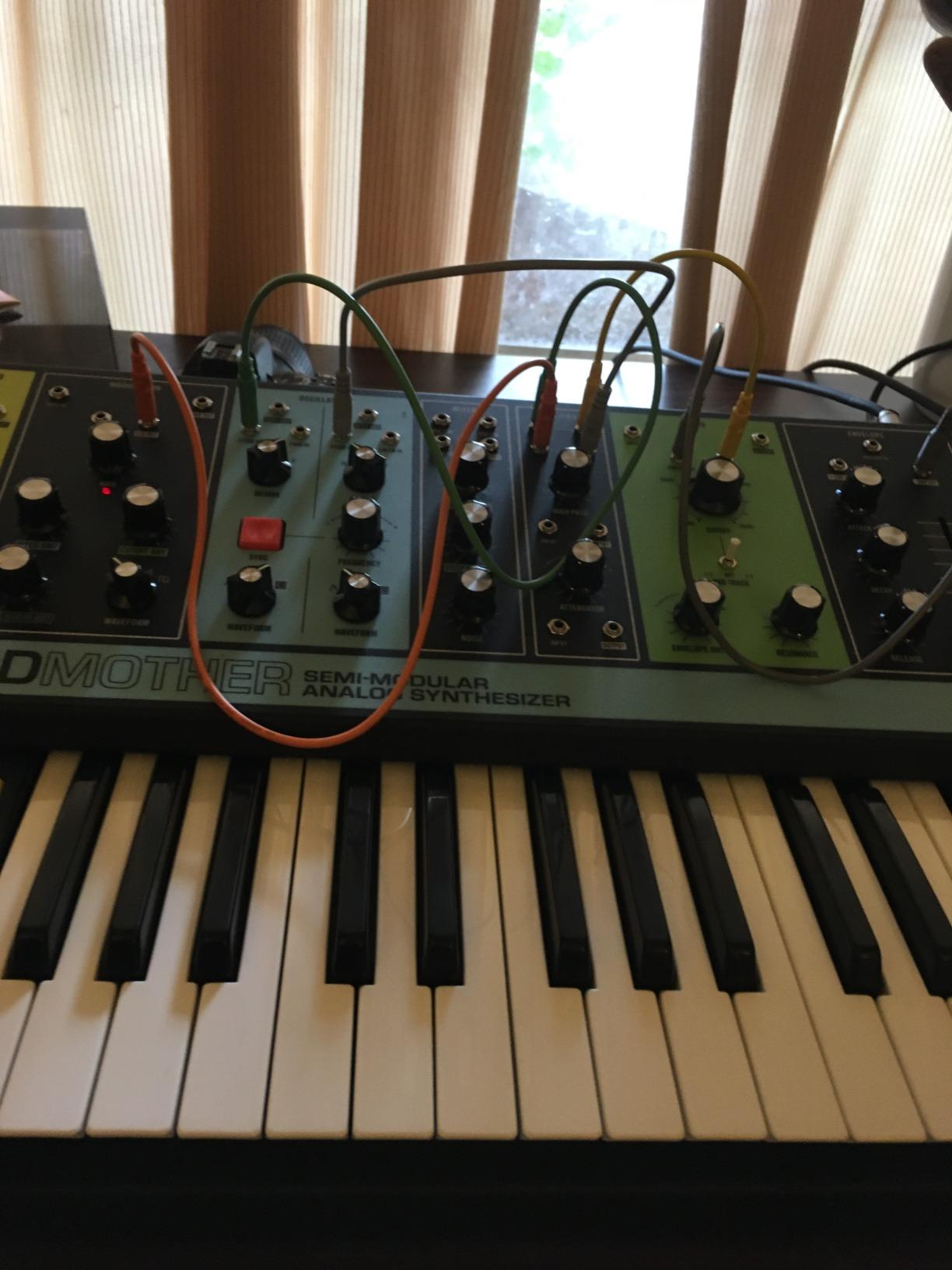
Technically, the Grandmother gives you two analog oscillators with selectable waveforms, a white noise generator, and the classic Moog ladder filter. That filter is the heart of the Moog sound, and it sweeps from sub-shaking lows to buzzy resonance with a single knob. The 256-note sequencer with three sequence slots is genuinely useful for capturing ideas quickly.
The main drawback is the keyboard range. With 32 keys you will run out of real estate during two-handed playing. Some users on the Moog forum have noted scratchy pots developing after a year or two of heavy use, though this has not been my experience. A few players mention the mod wheel feels less responsive than expected.
For whom its good
The Grandmother is ideal for players who want a real keyboard and instant gratification without patching. If you collect vintage gear and crave authentic Moog tone, this is your entry point. It is also perfect for anyone planning to build a Moog ecosystem over time.
Sound designers who want to dive into patching will find 41 points enough to stay busy for months. The Grandmother pairs beautifully with the Mother-32, DFAM, and Subharmonicon for a full tabletop Moog system.
For whom its bad
Pianists who need a full 61-key range will find 32 keys limiting. If your primary goal is to play complex two-handed parts, look at the Arturia MiniBrute 2 instead, which offers aftertouch and a different philosophy.
Buyers on a strict budget may struggle to justify the price tag when the Mavis and Neutron deliver serious analog sound for less. The Grandmother rewards players who want the complete Moog experience, not just the filter.
2. Behringer Neutron – Best Value Patch Point Per Dollar
Behringer Synthesizer (NEUTRON)
Dual 3340 VCOs
Paraphonic
Semi-modular
5 oscillator waveforms
Pure analog signal path
Pros
- Authentic dual 3340 analog oscillators
- Paraphonic design for chord-like pads
- Deep patch bay for the price
- Pure analog signal path
- Three year warranty
Cons
- Limited stock availability reported
- Behringer quality control concerns from some users
- Plastic build in places
The Behringer Neutron is the synth that comes up most often on Reddit r/synthesizers when someone asks for the best value in modular. After patching it for weeks, I understand why. You get dual 3340 analog oscillators, a paraphonic architecture, and a generous patch bay for less than half what comparable Moog gear costs. It is the budget pick that does not feel like a budget pick.
The paraphonic design is the standout. Unlike a traditional monophonic synth, the Neutron lets you play multiple notes across its two oscillators, which means pads and chords are genuinely possible. I built an ambient drone patch in an afternoon that sounded richer than I expected from anything at this price.
The five oscillator waveforms, blendable via a single knob, give you tone control that goes beyond the usual sawtooth-or-square choice. You can morph continuously between shapes, which opens up timbres you normally need a wavefolder to reach.
Technically, the pure analog signal path is the selling point Behringer emphasizes, and it delivers. The sound has weight and grit that digital emulations struggle to match. The semi-modular architecture means default routings are already in place, so you can play immediately. Then you start patching and discover how deep the rabbit hole goes.
The main concerns from the community center on quality control. Behringer has a mixed reputation, and some users report firmware quirks or knob issues over time. The three-year warranty offers peace of mind, but it is worth buying from a retailer with a solid return policy.
For whom its good
The Neutron is the smartest first semi-modular for anyone watching their budget. If you want to learn patching without committing hundreds of dollars per module, this is your instrument. Forum users on Mod Wiggler frequently call it the best dollar-per-patch-point value available.
Ambient and experimental musicians will love the paraphonic pads and the dense drone potential. It pairs well with external effects pedals and records beautifully into a DAW or onto tape.
For whom its bad
Players who want a built-in keyboard will need to look elsewhere. The Neutron is a desktop unit, so you need a controller or sequencer to play it melodically. If you want everything in one box, the Grandmother or MiniBrute 2 are better fits.
Anyone who values brand heritage and long-term resale value may prefer Moog or Make Noise. The Neutron sounds great, but it does not carry the collector appeal of vintage-adjacent gear.
3. Moog Subharmonicon – The Generative Composition Engine
MOOG Subharmonicon Semi-Modular Analog Polyrhythmic Synthesizer
6 tonal sources
Dual 4-step sequencers
32 patch points
Eurorack 60HP
Polyrhythmic engine
Pros
- Unique subharmonic and polyrhythmic generation
- Dense harmonic bed of sound
- Two VCOs plus subharmonic generators
- Eurorack compatible
- Inspires experimental composition
Cons
- Sequencer knobs lack detents
- No power switch
- Limited as standalone mono synth without patching
- Plastic chassis
The Moog Subharmonicon is not a traditional synthesizer. It is a generative composition machine that creates polyrhythms and subharmonic textures you would struggle to program manually. The first time I patched it, I left it running for three hours and it never repeated itself. That is the kind of instrument this is.
The six tonal sources come from two voltage-controlled oscillators, each with two subharmonic generators underneath. Those subharmonics create a dense harmonic bed that sounds like multiple instruments playing in sympathetic resonance. Think of it as the audio equivalent of overtones on a finely pressed vinyl record, layered and alive.
The two four-step sequencers and four rhythm generators interact in ways that produce surprising patterns. Each rhythmic source can drive either sequencer or both, which means a single patch can generate complex, evolving music. I found it perfect for the kind of long-form ambient pieces that work beautifully as background during a listening session.
Technically, the 32 patch points give you meaningful routing control, and the 60HP Eurorack footprint means it drops into a larger modular system. It pairs by design with the Mother-32 and DFAM, and many users build all three into a single Moog rack for a complete tabletop ecosystem.
The downsides are real. The sequencer speed and note value knobs have no detents, so recalling exact settings is difficult. There is no power switch, which is a strange omission. And without patching, the Subharmonicon is limited as a standard monophonic synth. It wants to be patched and explored, not played conventionally.
For whom its good
The Subharmonicon is ideal for ambient composers, generative musicians, and anyone who enjoys letting the machine surprise them. If you make music for late-night listening sessions or film soundtracks, this instrument writes parts you would never conceive manually.
It is also a strong centerpiece for a Moog modular system. Owners of the Mother-32 and DFAM will find the Subharmonicon completes the trio in a way that feels intentional and powerful.
For whom its bad
Players who want a traditional lead or bass synth should look elsewhere. The Subharmonicon is not designed for melodic soloing in the conventional sense. If you want to play riffs, the Grandmother or Neutron will serve you better.
Beginners who want immediate musical results may find the Subharmonicon intimidating. It rewards patience and experimentation, and it can feel directionless if you are not sure what you are doing. Start with VCV Rack to explore generative concepts before committing.
4. Moog Mother-32 – The Tabletop That Started the Modern Moog Line
MOOG Mother-32 Semi-Modular Analog Synthesizer
Analog VCO
Moog ladder filter
32-step sequencer
Eurorack 60HP
MIDI in
Pros
- Pure analog warmth with vintage character
- Beloved Moog ladder filter
- Powerful 32-step sequencer with 64 patterns
- Excellent Eurorack integration
- Great first modular instrument
Cons
- Single oscillator can feel limiting
- Sequencer requires shift-function learning curve
- Buttons have double functions
- Basic once you own multiple synths
The Moog Mother-32 launched in 2015 and effectively reintroduced semi-modular synthesis to a new generation of musicians. I remember the excitement when it dropped. Here was a real Moog, with the ladder filter and analog VCO, in a tabletop format you could afford. It remains one of the best modular synthesizers for anyone who wants authentic Moog tone without buying a full keyboard.
The single analog voltage-controlled oscillator produces a raw, organic tone that pairs perfectly with the legendary ladder filter. That filter is the reason Moog gear sounds like Moog gear. Sweep it slowly and you hear the warmth that has defined decades of recorded music, from Wendy Carlos to modern film scores.
The 32-step sequencer is more powerful than it looks. You can store up to 64 patterns, and two sequencer modes give you different ways to interact with your sequences live. I have used it to build evolving bass lines during live sets, switching patterns on the fly.
Technically, the semi-modular design means no patching is required for basic operation. Plug in power, hit a key or trigger, and you have sound. The 60HP Eurorack footprint means it works as a standalone tabletop unit or slides into a rack alongside the DFAM and Subharmonicon.
The single oscillator is the main limitation. Once you own two or three synths, the Mother-32 can feel basic. The sequencer buttons double up functions, which means a learning curve before everything becomes intuitive. Some users report the shift functions as a frustration during live performance.
For whom its good
The Mother-32 is the best modular synthesizer for someone who wants to learn subtractive synthesis on authentic Moog hardware. If you are building toward a Eurorack system but want a strong foundation unit, this is the smartest starting point in the Moog lineup.
It is also excellent for producers who need a reliable analog bass and lead voice in the studio. The sequencer makes it easy to capture ideas without touching a DAW.
For whom its bad
Players who want polyphony or rich multi-oscillator pads will find the single oscillator restrictive. The Neutron, with its paraphonic design, offers more harmonic density for similar money.
Anyone uncomfortable with menu-diving and shift functions may find the sequencer frustrating at first. If you want instant knob-per-function simplicity, the Grandmother is the friendlier Moog option.
5. Moog DFAM – The Percussion Synth That Doubles as a Sound Design Tool
MOOG DFAM Semi-Modular Analog Percussion Synthesizer
2 analog VCOs
Moog ladder filter
8-step sequencer
24 patch points
Eurorack 60HP
Pros
- Unique analog percussion synthesis
- Classic Moog ladder filter sound
- Excellent for evolving rhythms
- Deep semi-modular exploration
- Pairs perfectly with Mother-32 and Subharmonicon
Cons
- Limited as standalone melodic instrument
- Requires experimentation to get desired sounds
- Not beginner-friendly without patience
The Moog DFAM, which stands for Drummer From Another Mother, is technically a percussion synthesizer. In practice, it is one of the most inspiring sound design tools I have patched. The first time I sent its output through a guitar pedal, it stopped sounding like drums entirely and became a lead synth, a bass, and an ambient texture source in the same session.
The two analog VCOs and the Moog ladder filter produce sounds that range from punchy kicks to metallic clangs and beyond. The 8-step sequencer is built for spontaneous rhythmic creation. You twist knobs while it plays, and the pattern evolves in real time. It feels like jamming with a drummer who never tires.
The 24-point patch bay opens up the moment you want to break out of percussion. You can patch the DFAM into melodic territory, modulate its filter with an external LFO, or sync it to the Mother-32 for a complete tabletop groovebox. I have spent entire evenings just exploring what happens when you cross-patch these two units.
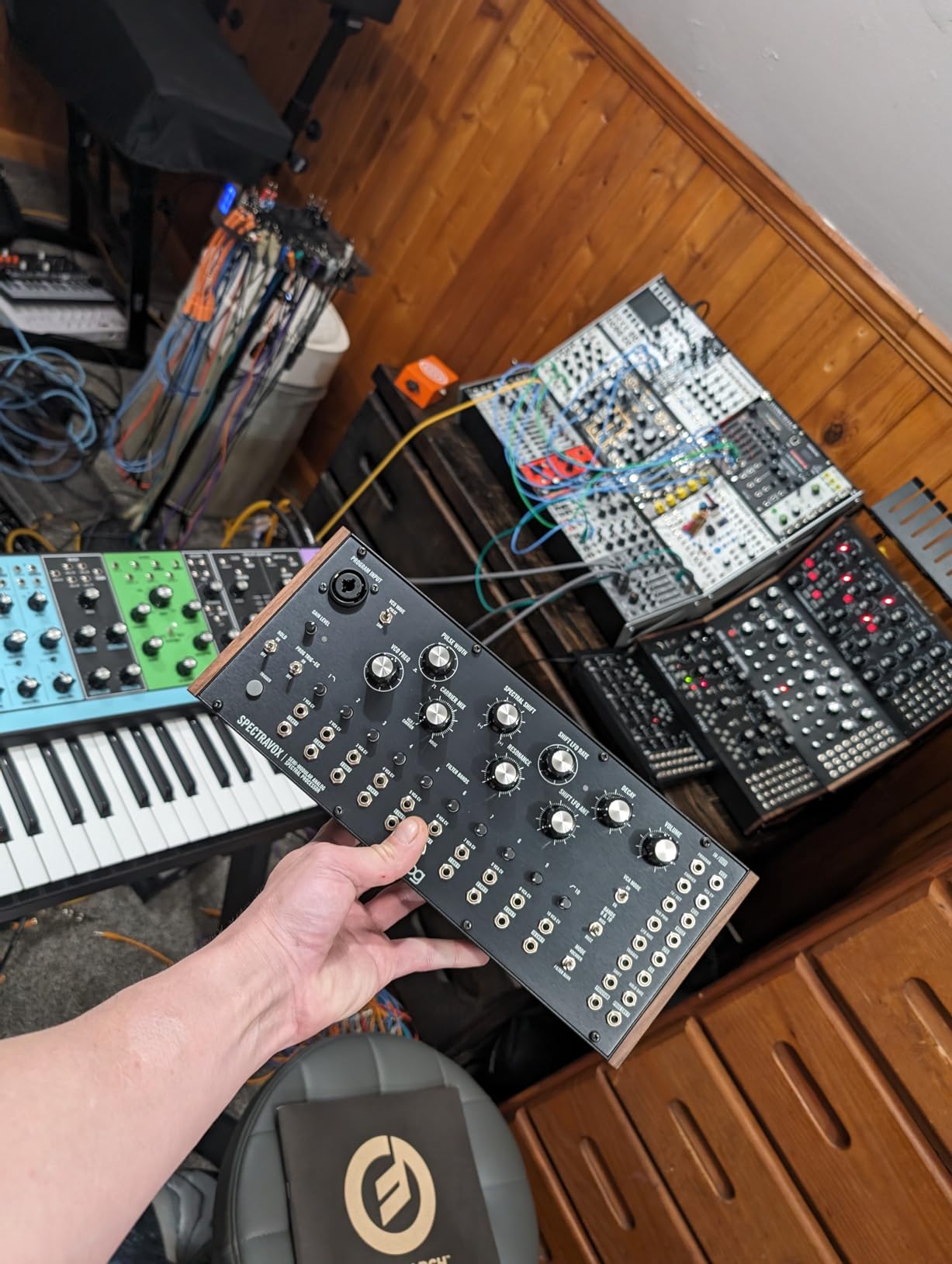
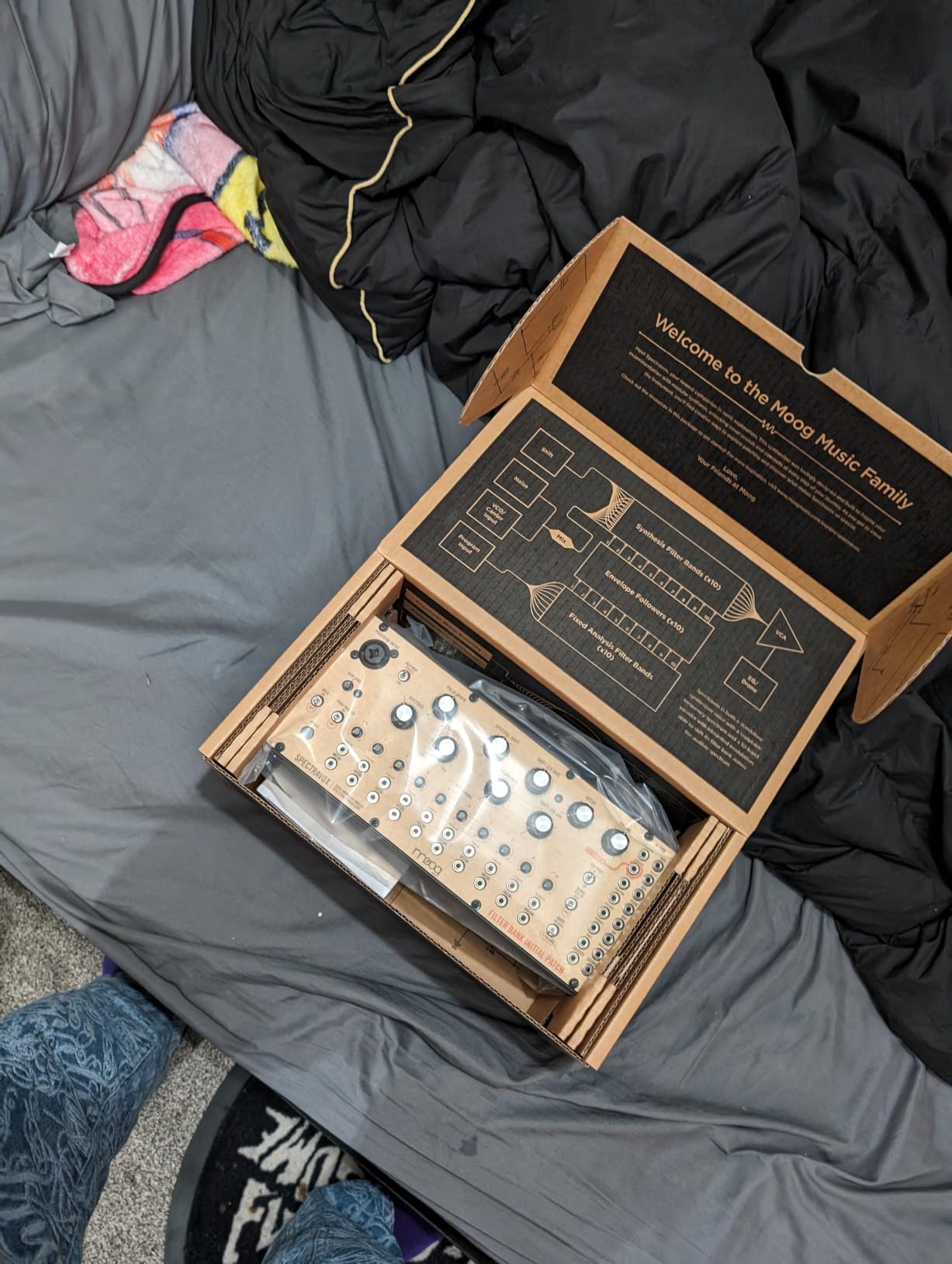
Technically, the DFAM shares the 60HP Eurorack footprint and the build quality of the rest of the modern Moog tabletop line. The all-metal chassis feels built to last. Semi-modular means no cables are required for basic percussion synthesis, so you can make music immediately.
The main limitation is that the DFAM is not designed as a melodic instrument out of the box. Getting it to play conventional bass lines or leads requires patching and patience. Some users on forums note that it takes time to dial in the sounds you want, especially if you are used to sample-based drum machines.
For whom its good
The DFAM is perfect for electronic producers who want analog percussion with character that sampled drums cannot replicate. If you make techno, industrial, or experimental music, this instrument will generate rhythms no one else has.
It is also a must-have for Moog ecosystem builders. Combined with the Mother-32 and Subharmonicon, the DFAM completes a tabletop system that can produce entire tracks without a computer.
For whom its bad
Producers who need traditional drum sounds, realistic kits, or sample playback will find the DFAM frustrating. It synthesizes its sounds from scratch, which means it will never sound like an 808 sample pack.
Beginners looking for instant gratification may struggle. The DFAM rewards experimentation and patience. If you want something that sounds great in five minutes, start with the Grandmother instead.
6. Moog Mavis – The Build-It-Yourself Gateway to Authentic Moog Sound
MOOG Mavis Semi-Modular Analog Synthesizer
DIY synth kit
Diode wavefolder
Eurorack 44HP
Ladder filter
Built-in keyboard
Pros
- Authentic Moog sound at an affordable price
- Diode wavefolder adds unique harmonic character
- Eurorack compatible for expansion
- Complete kit with cables and power supply
- DIY assembly creates real connection to the instrument
Cons
- All-plastic US plug concern reported
- No power switch
- No 1/4 inch output
- Low output volume with some mixers
The Moog Mavis is the most affordable way to own a real Moog synthesizer, and the fact that you build it yourself makes the experience genuinely special. Assembling the kit took me about two hours, and the moment I patched the first cable and heard that ladder filter sweep, the effort felt entirely worth it.
What makes the Mavis stand out beyond price is the diode wavefolder. This is a circuit more associated with West Coast synthesis and Buchla-style instruments than with traditional Moog designs. It adds harmonic complexity that takes the Mavis far beyond what you expect from a single-oscillator analog synth at this price.
The build process is straightforward even if you have never soldered. Moog provides clear instructions, all necessary tools, and a calibration guide. The included patch cables and power supply mean you have everything you need to start making sound the moment assembly is complete.
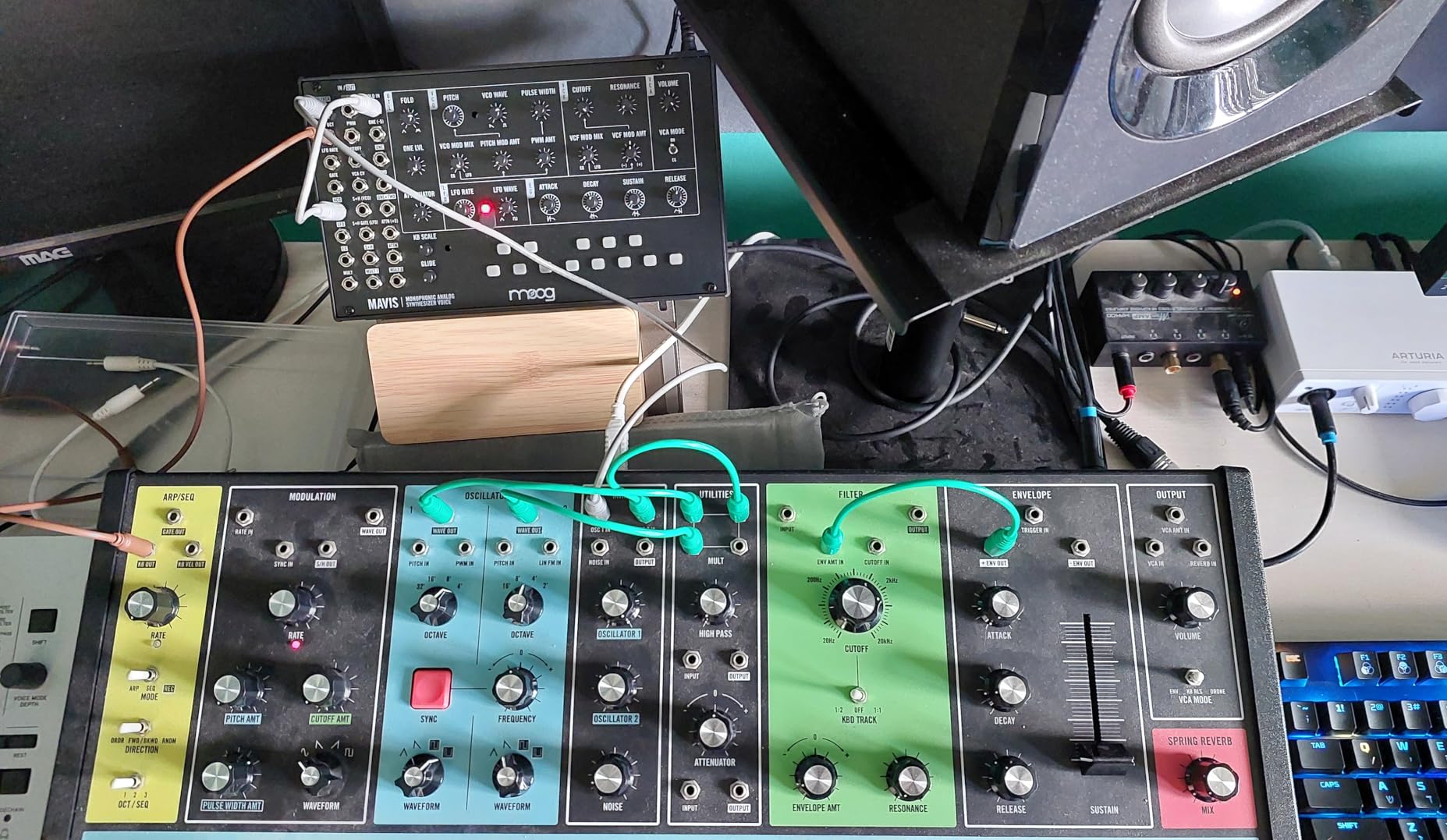
Technically, the Mavis gives you two oscillators, a full ADSR envelope, the Moog ladder filter, sample and hold, wavefolding, attenuators, and mults in a 44HP Eurorack-compatible module. That is a remarkable feature set for the price. The built-in keyboard with glide and keyboard scaling means you can play it standalone without an external controller.
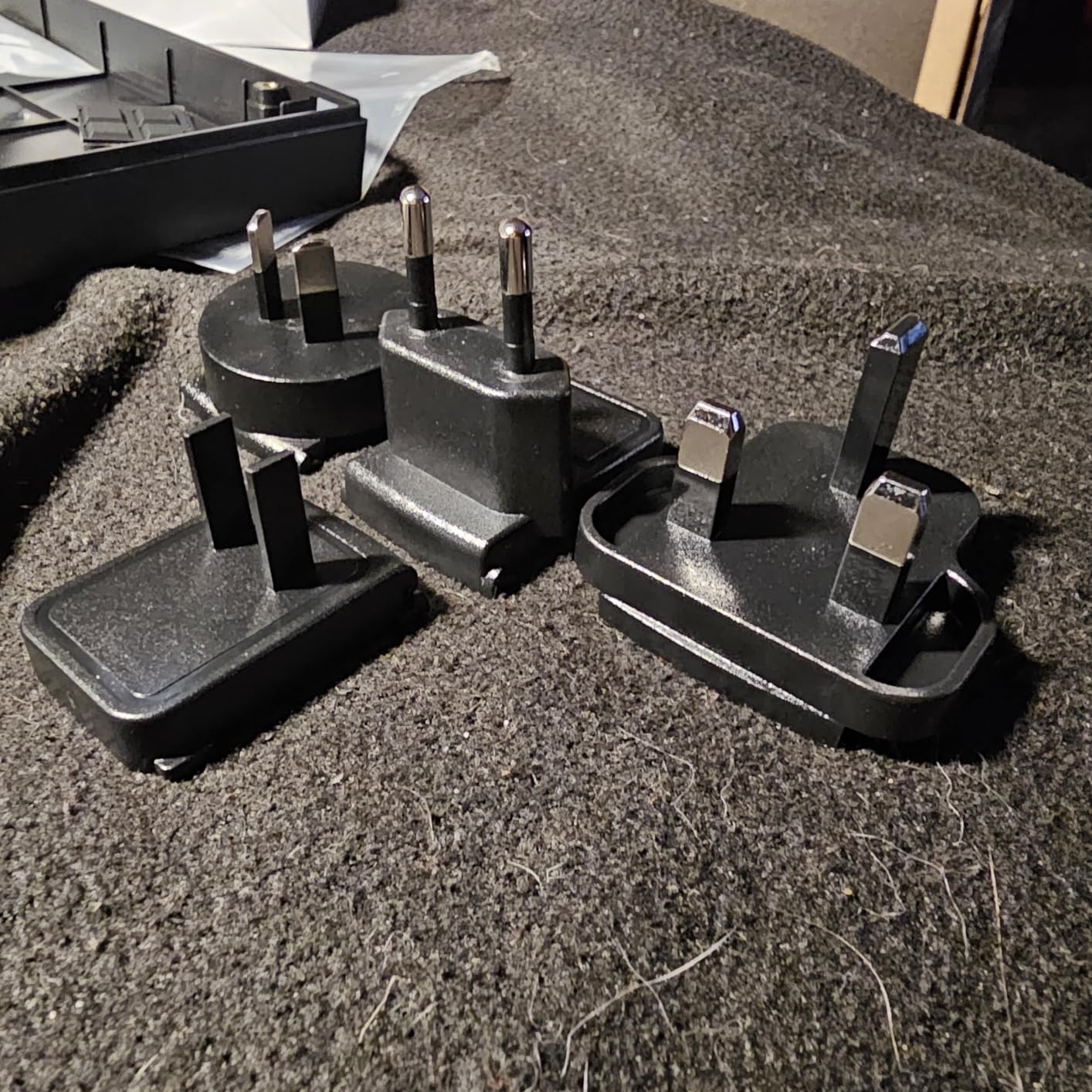
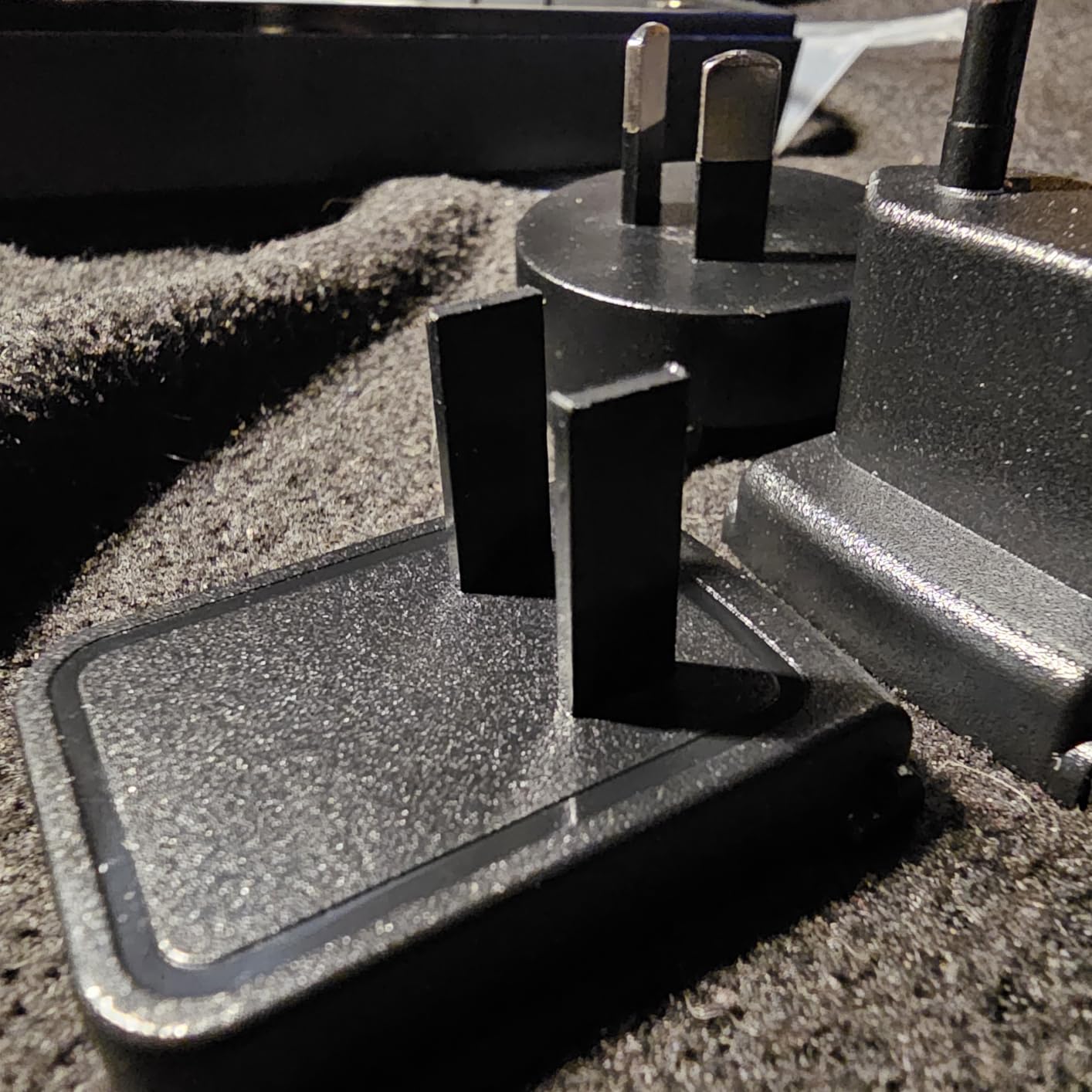
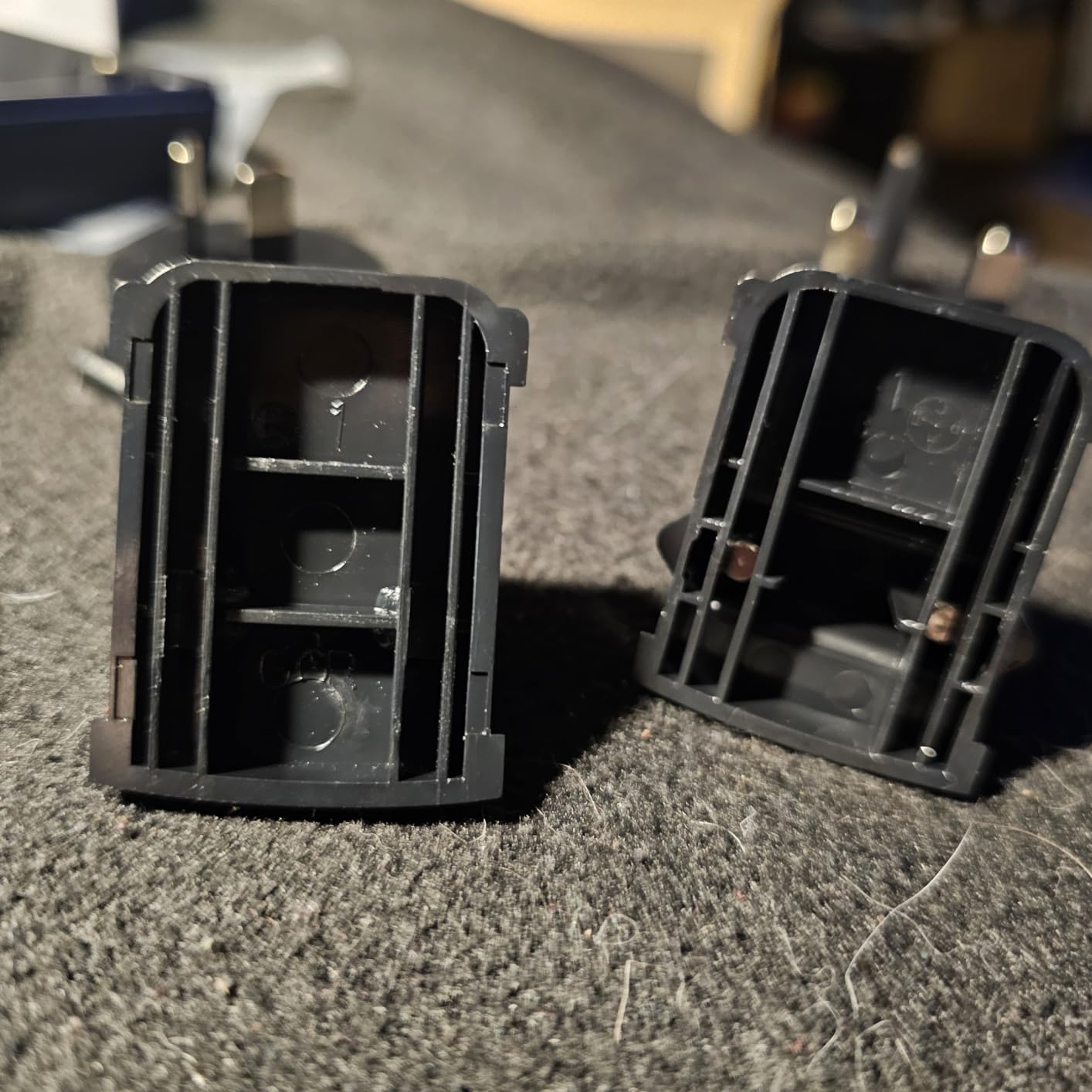
The downsides are mostly practical. Several users report that the US power plug is all-plastic, which feels cheap. There is no power switch, so you unplug to turn it off. The output is 3.5mm rather than 1/4 inch, which means some mixers and audio interfaces need an adapter. Output volume can be low depending on your signal chain.
Despite the practical drawbacks, the sound quality is unmistakably Moog. The ladder filter performs exactly as you would expect from the company that invented it, and the wavefolder adds a dimension of harmonic complexity that distinguishes the Mavis from other budget synths. In a modular setup, it holds its own against modules costing twice the price.
For whom its good
The Mavis is the best modular synthesizer for anyone who wants authentic Moog sound on a tight budget. If you are curious about Eurorack but unsure where to start, building a Mavis teaches you both synthesis fundamentals and modular concepts in one package.
DIY enthusiasts and makers will love the assembly process. There is something deeply satisfying about playing an instrument you built with your own hands, especially when it sounds this good.
For whom its bad
Anyone who wants plug-and-play convenience without assembly should look at the Grandmother or Volca Modular. The Mavis requires time, patience, and careful assembly before it makes a sound.
Players who need professional connectivity, like balanced 1/4 inch outputs, will find the Mavis limited. It works best as a Eurorack module or a tabletop experiment, not as a stage instrument.
7. Make Noise 0-Coast – The West Coast Synthesis Ambassador
Make Noise 0-Coast
West Coast design
MIDI to CV conversion
13 sources 14 destinations
Dual-mode arpeggiator
Eurorack compatible
Pros
- MIDI to CV and MIDI to Gate conversion
- Dual mode arpeggiator
- Eurorack compatible
- Extensive patch points
- Compact and portable
Cons
- Very limited stock availability
- Smaller patch count than larger units
- Less conventional workflow than East Coast synths
The Make Noise 0-Coast is the instrument I recommend to anyone who wants to understand West Coast synthesis without spending Buchla money. The name references the fact that it borrows from both East Coast (Moog-style subtractive) and West Coast (Buchla-style complex wavefolding) traditions. In practice, it is a compact, inspiring desktop synth that sounds like nothing else in this guide.
The workflow is different from a traditional Moog. Instead of starting with a rich waveform and filtering it down, the 0-Coast starts with a simple waveform and adds complexity through wavefolding and modulation. The results are metallic, bell-like, and harmonically rich textures that feel organic and unpredictable.
The 13 sources and 14 destinations give you meaningful patching depth without overwhelming a beginner. The MIDI to CV conversion is genuinely useful if you want to drive the 0-Coast from a DAW or keyboard controller. I connected it to Ableton Live within minutes and was sequencing patches immediately.
Technically, the dual-mode arpeggiator and MIDI clock sync make the 0-Coast surprisingly capable as a performance instrument. The build quality is steel and substantial, and it feels like a proper piece of professional gear despite its compact size. Eurorack compatibility means it integrates into larger systems when you are ready to expand.
The main concern is availability. The 0-Coast frequently runs low on stock, which reflects its popularity but also means you may need to wait or hunt across retailers. The patch point count is smaller than dedicated Eurorack systems, though that is the trade-off for an all-in-one desktop unit.
For whom its good
The 0-Coast is the best modular synthesizer for musicians who want to explore West Coast synthesis philosophy. If you are tired of standard subtractive sounds and crave metallic, complex, evolving timbres, this is your entry point.
It is also excellent for producers who want a portable, self-contained synth for live performance. The arpeggiator and MIDI sync make it easy to integrate into a setup that already includes a DAW or drum machine.
For whom its bad
Players looking for traditional analog warmth and Moog-style filter sweeps will find the 0-Coast unfamiliar. It can produce those sounds with patching, but its strength lies elsewhere.
Anyone building a Moog-centric system may prefer to stay within the Moog ecosystem for compatibility and aesthetic consistency. The 0-Coast speaks a different design language.
8. Arturia MiniBrute 2 – The Keyboard Workhorse With Aftertouch
Arturia MiniBrute 2 Semi-Modular Analog Synthesizer and Step Sequencer
2 VCOs and 2 LFOs
Steiner Parker filter 4 modes
48-point CV patchbay
25 keys with aftertouch
Built-in sequencer
Pros
- 2 VCOs and 2 LFOs for rich sound design
- Steiner Parker filter with 4 modes
- 48-point CV and Gate patchbay
- 25-key keyboard with aftertouch
- Built-in step sequencer
Cons
- Very limited stock availability
- 17 percent 1-star reviews suggest quality concerns
- Plastic build
The Arturia MiniBrute 2 is the keyboard synth in this guide that gives you the most patching depth per dollar if you need real keys. With 25 aftertouch-sensitive keys, two analog VCOs, and a 48-point CV and Gate patchbay, it bridges the gap between a performance instrument and a modular exploration tool.
The Steiner Parker filter is the personality of this synth. Unlike a Moog ladder filter, it offers four modes simultaneously: low pass, high pass, band pass, and notch. Switching between them mid-performance changes the character dramatically. I found it especially useful for aggressive, buzzy leads that cut through a mix.
The 48-point patchbay is where the MiniBrute 2 earns its modular credentials. You can route audio and control signals to and from external Eurorack gear, which means the MiniBrute grows with your system. Two LFOs give you modulation depth that single-LFO synths cannot match.
Technically, the aftertouch on the 25-key keyboard is a feature most competitors at this price omit. Press harder on a held note and you can modulate the filter, pitch, or any patched parameter. The built-in step sequencer captures ideas without needing a computer.
The concerns are notable. The 17 percent 1-star review rate on Amazon suggests quality control issues that some buyers have encountered. Limited stock means availability is inconsistent. The plastic chassis, while keeping weight down, feels less premium than the metal Moog units.
For whom its good
The MiniBrute 2 is the best modular synthesizer for keyboardists who need aftertouch and a playable instrument first, with patching as a bonus. If you perform live and want a synth that doubles as a modular controller, this is your pick.
Sound designers who want aggressive, characterful filters will love the Steiner Parker circuit. It excels at sounds the Moog ladder filter cannot produce.
For whom its bad
Buyers concerned about long-term reliability should approach cautiously given the 1-star review pattern. Buying from a retailer with a strong return policy is wise.
Anyone who wants the prestige and resale value of Moog gear will find the Arturia a different proposition entirely. It is a tool, not a collectible.
9. Korg Volca Modular – The Pocket-Sized West Coast Experiment
Korg Volca Modular Micro Synthesizer Semi Modular w/Eight Modules
8 independent modules
50 patch points
16-step sequencer
Battery powered
Built-in speaker
Pros
- Advanced sequencer with scale and tonic selection
- Gateway to West Coast synthesis
- Compact and portable
- Built-in speaker
- Excellent value with 50 patch points
Cons
- Limited timbre palette with triangle wave modulation
- Envelopes respond slowly to external CV
- Keyboard louder than sequences with external control
- Learning curve for West Coast approach
The Korg Volca Modular is the cheapest entry into semi-modular synthesis in this guide, and it is genuinely remarkable for the price. For less than the cost of a single Eurorack oscillator module, you get eight independent modules, 50 patch points, a 16-step sequencer, and a built-in speaker. It runs on batteries. You can patch it on the couch.
The West Coast synthesis approach means the Volca Modular focuses on wavefolding and complex harmonic generation rather than subtractive filtering. The sounds it produces are metallic, bell-like, and strange in the best way. I have used it to create textures that would cost hundreds of dollars to replicate in Eurorack.
The 16-step sequencer includes scale and tonic selection, which means your sequences stay musical even when you are experimenting wildly. The randomize function generates unexpected combinations that often spark new ideas. Pair it with other Volca units and you can build a complete portable groovebox for very little money.
Technically, the color-coded patch points make routing approachable for beginners. The included reference sheet helps you understand what each module does. Battery power and the built-in speaker mean you can explore synthesis anywhere, which is perfect for musicians who travel or want to patch without setting up a full studio.
The limitations reflect the price. The timbre palette is narrow compared to larger West Coast instruments, partly because the modulation source is limited to a triangle wave. Envelopes and filter gates respond slowly to external CV, which can make integration with other modular gear awkward. The mini keyboard is louder than sequences when controlled externally.
For whom its good
The Volca Modular is the best modular synthesizer for absolute beginners who want to spend less than $200 to understand what modular synthesis is all about. If you are not sure whether modular is for you, this is the cheapest way to find out.
Traveling musicians and producers who want a portable sketchpad will love the battery power and built-in speaker. It is the synth you can take to a hotel room or a park bench.
For whom its bad
Anyone who needs professional sound quality for studio recording will find the Volca Modular noisy and limited. It is a learning and inspiration tool, not a primary studio instrument.
Players who want Eurorack integration should note that the Volca Modular uses different voltage standards. While you can interface it with Eurorack gear using adapters, it is not as seamless as a true Eurorack module.
10. Cre8audio West Pest – The Affordable West Coast Contender
Cre8audio Synthesizer (West Pest)
40HP semi-modular
Wavefolding
32-step sequencer
MIDI
Eurorack compatible
Pros
- 40HP semi-modular design with wavefolding
- Eurorack compatible
- 32-step sequencer included
- MIDI connectivity
- Includes patch cables and MIDI pigtails
Cons
- Limited stock availability
- Smaller brand with less community resources
- Fewer reviews than established competitors
The Cre8audio West Pest is the dark horse in this guide. It is a 40HP semi-modular synth focused on West Coast wavefolding synthesis, and at its price point it directly challenges the Korg Volca Modular for the budget West Coast crown. After spending time with both, I can say the West Pest offers a more substantial build and a different workflow that some players will prefer.
The wavefolding circuit is the heart of this instrument. It takes simple waveforms and folds them back on themselves, creating complex harmonics that sound organic and metallic simultaneously. The 32-step sequencer gives you more compositional depth than the Volca Modular offers, with longer patterns and more programming flexibility.
The inclusion of patch cables and MIDI pigtails in the box means you can start patching immediately without buying accessories. The stainless steel panel and metal construction feel more durable than plastic alternatives, which matters if you plan to integrate the West Pest into a Eurorack case.
Technically, the Eurorack compatibility is genuine. The 40HP footprint fits standard cases, and the module depth and power requirements align with typical Eurorack standards. MIDI connectivity means you can drive it from a keyboard or DAW without needing a separate MIDI-to-CV converter.
The main concern is that Cre8audio is a smaller brand with fewer community resources than Moog, Behringer, or Korg. The review count is low because the user base is smaller, and you may find fewer YouTube tutorials and forum posts to help you troubleshoot. Limited stock is also an ongoing issue.
For whom its good
The West Pest is the best modular synthesizer for budget-conscious players who want West Coast synthesis with Eurorack compatibility. If the Volca Modular feels too toy-like but you cannot afford a Make Noise 0-Coast, the West Pest splits the difference effectively.
Eurorack builders looking for an affordable West Coast voice to fill 40HP will find it a smart addition to a larger system. The included sequencer means it can hold its own as a standalone composition tool.
For whom its bad
Players who want extensive community support, deep YouTube tutorial libraries, and long-term resale value should stick with Make Noise or Moog. The West Pest is excellent value, but it does not have the ecosystem around it.
Anyone who needs guaranteed availability for a gigging rig should be cautious. Stock is inconsistent, and relying on a single retailer for replacement or backup units carries risk.
Buying Guide: How to Choose Your First Modular Synthesizer
Choosing from the best modular synthesizers means understanding a few concepts that traditional synth buyers never encounter. This guide breaks down the decisions that matter most, with the vinyl enthusiast in mind. Modular synthesis rewards informed choices, and the wrong first purchase can discourage exploration.
Semi-Modular vs Full Modular: Where to Start
A semi-modular synthesizer works without any patch cables because its internal routing is pre-wired. You make sound the moment you turn it on. Patch cables let you override those default routings and explore. This is why semi-modular instruments like the Moog Grandmother and Behringer Neutron are the best modular synthesizers for beginners.
A full modular system, by contrast, requires you to patch every connection. Nothing makes sound until you route an oscillator to a filter to an amplifier and trigger them with envelopes. Full modular offers maximum flexibility but demands knowledge, patience, and a significant budget. Most players start semi-modular and graduate to Eurorack over time.
East Coast vs West Coast Synthesis
East Coast synthesis, associated with Moog, uses rich oscillators filtered down to shape tone. It produces the warm bass and lead sounds most people recognize from pop and rock records. If you love the sound of classic analog recordings, East Coast instruments like the Grandmother and Mother-32 will feel like home.
West Coast synthesis, associated with Buchla and Serge, starts with simple waveforms and adds complexity through wavefolding and modulation. The results are metallic, percussive, and otherworldly. Instruments like the Make Noise 0-Coast, Korg Volca Modular, and Cre8audio West Pest embody this philosophy. Many serious modular enthusiasts eventually own both.
Format Landscape: Eurorack and Beyond
Eurorack is the dominant modular format in 2026, and for good reason. Modules are compact, affordable, and interoperable across hundreds of manufacturers. The Moog Mother-32, DFAM, Subharmonicon, and Mavis all fit Eurorack cases despite being designed as tabletop instruments. If you think you might expand later, Eurorack compatibility matters.
Other formats include Moog format (larger modules, used by Moog’s own vintage-style systems), MOTM, and the 5U standard. These formats appeal to players who want larger knobs and more hands-on control, but they offer fewer module choices and higher costs. For most musicians exploring modular for the first time, Eurorack is the practical choice.
Patch Points, Oscillators, and Filters
Patch points determine how much you can reroute the signal internally. More patch points mean deeper exploration but also steeper learning curves. The Korg Volca Modular offers 50 patch points, while the Moog Grandmother has 41, and the Make Noise 0-Coast has 13 sources and 14 destinations.
Oscillators generate the raw sound. Two oscillators give you richer, detuned tones than one. The Behringer Neutron and Arturia MiniBrute 2 both offer dual VCOs, while the Moog Mother-32 is intentionally single-oscillator. Filters shape the tone. The Moog ladder filter is legendary for warmth, while the Steiner Parker filter on the MiniBrute 2 offers four modes and aggressive character.
Integration With DAWs and Vinyl Workflow
Most modern semi-modular synths include MIDI over USB or DIN, which means you can sequence them from a DAW like Ableton Live or Logic Pro. The Moog Grandmother, Make Noise 0-Coast, and Arturia MiniBrute 2 all handle MIDI integration smoothly. This matters if you want to record modular parts into productions that also include digital instruments.
If you record to tape or work in an all-analog workflow, look for instruments with dedicated CV and Gate inputs that sync to analog clocks. The Moog tabletop ecosystem is particularly strong here, since the Mother-32, DFAM, and Subharmonicon are designed to interconnect without any digital conversion.
Budget: Real Cost of Ownership
The sticker price of a semi-modular synth is only the beginning. Plan for patch cables, a case or stand, and eventually additional modules if you catch the modular bug. A realistic starter budget breaks down like this: the synth itself, $200 to $1000 depending on the model; a set of quality patch cables, $30 to $60; and a powered Eurorack case if you plan to expand, $200 to $600.
Forum users on Reddit r/modular frequently emphasize that modular is an ongoing investment. Many recommend starting with VCV Rack, a free software modular environment, before spending any money on hardware. VCV Rack lets you learn the concepts risk-free, so when you do buy hardware, you know what you want.
Frequently Asked Questions About Modular Synthesizers
What is the best modular synthesizer for beginners?
The Moog Grandmother is the best modular synthesizer for beginners because it works immediately without any patching, includes a real keyboard with 32 velocity-sensing keys, and offers 41 patch points that open up as you learn. It delivers authentic Moog analog sound from the first key press, making it the most rewarding entry point for players who want instant musical results.
What is the difference between semi-modular and full modular synthesizers?
A semi-modular synthesizer has pre-wired internal routing that produces sound without any patch cables, while a full modular system requires you to patch every connection manually before any sound is possible. Semi-modular instruments like the Moog Grandmother and Behringer Neutron are the best starting point because they teach patching concepts gradually without the intimidation of a blank canvas.
How much does a modular synthesizer setup cost?
A complete starter modular setup typically costs between $300 and $1200. Budget options like the Korg Volca Modular start around $170, mid-range semi-modulars like the Behringer Neutron and Moog Mother-32 run $490 to $600, and premium options like the Moog Grandmother reach $1000. Add $30 to $60 for patch cables and $200 to $600 if you plan to expand into a Eurorack case later.
Can you use modular synthesizers with a DAW?
Yes, most modern semi-modular synthesizers connect to DAWs like Ableton Live and Logic Pro through MIDI over USB or 5-pin DIN. The Moog Grandmother, Make Noise 0-Coast, and Arturia MiniBrute 2 all handle MIDI integration smoothly, allowing you to sequence and record modular parts directly into your digital productions.
Is Eurorack the best modular format to start with?
Eurorack is the best modular format for most beginners because it offers the largest selection of modules, the most affordable prices, and the widest community support. Moog semi-modular instruments like the Mother-32, DFAM, Subharmonicon, and Mavis are all Eurorack compatible, meaning they work as standalone tabletop units and later integrate into a full Eurorack case.
Are modular synths worth it?
Modular synths are worth it for musicians who value hands-on sound design, experimental textures, and instruments that grow over time. They are not worth it for players who want instant presets, polyphony, or portability. The forum consensus on Reddit and Mod Wiggler is to start with a free tool like VCV Rack to confirm the format appeals to you before investing in hardware.
Final Thoughts on the Best Modular Synthesizers
The best modular synthesizers in 2026 span an extraordinary range of philosophies, formats, and price points. The Moog Grandmother remains my top recommendation for players who want authentic Moog sound with a real keyboard and immediate gratification. The Behringer Neutron delivers the best value per patch point for budget-conscious explorers. The Korg Volca Modular lets anyone sample West Coast synthesis for less than the cost of a single Eurorack module.
If you are coming from the vinyl world, think of modular synthesis as the same kind of commitment to physical, tactile music-making. You are not buying presets. You are buying an instrument that rewards curiosity and evolves with your skills. Start with the pick that matches your budget and musical goals, and let the patch cables lead where they lead.
The instruments in this guide are the ones I would recommend to a friend who collects records and wants to add analog synthesis to their creative life. Each one offers a genuine, hands-on experience that no software plugin can replicate. Pick the one that excites you, and start patching.