
Hardware samplers have come roaring back, and finding the best samplers in 2026 means sorting through a field packed with serious contenders. Our team spent months testing 12 hardware samplers to figure out which ones actually deliver on workflow, sound quality, and value. We covered everything from the cult-favorite Roland SP-404MKII to standalone powerhouses like the Akai MPC Live III.
Whether you are a hip-hop producer chopping vinyl, an electronic musician building DAW-less sets, or a beginner who just wants something fun to make beats on, the right hardware sampler changes how you create. The best samplers in this guide all bring something different to the table.
We organized this guide so you can quickly compare specs, read honest hands-on impressions, and figure out which sampler fits your production style. Every unit here was tested with real-world beatmaking sessions, not just spec-sheet reading.
Table of Contents
Top 3 Picks for Best Samplers (August 2026)

Best Samplers in 2026
| Product | Specifications | Action |
|---|---|---|
 Roland SP-404MKII Roland SP-404MKII |
|
Check Latest Price |
| Akai MPC Live III |
|
Check Latest Price |
 Elektron Digitakt II Elektron Digitakt II |
|
Check Latest Price |
 Akai MPC Sample Akai MPC Sample |
|
Check Latest Price |
 Korg Volca Sample 2 Korg Volca Sample 2 |
|
Check Latest Price |
 Novation Circuit Rhythm Novation Circuit Rhythm |
|
Check Latest Price |
 Elektron Model:Samples Elektron Model:Samples |
|
Check Latest Price |
 Teenage Engineering PO-33 K.O.! Teenage Engineering PO-33 K.O.! |
|
Check Latest Price |
 Roland AIRA Compact P-6 Roland AIRA Compact P-6 |
|
Check Latest Price |
 1010music Blackbox 1010music Blackbox |
|
Check Latest Price |
 Sonicware Lofi-12 XT Sonicware Lofi-12 XT |
|
Check Latest Price |
 Polyend Play Polyend Play |
|
Check Latest Price |
1. Roland SP-404MKII – The Creative Sampler Legend
Roland SP-404MKII Creative Sampler and Effector | The Legendary SP-404 Beat Maker with Some Serious Upgrades | Fast workflow | 16GB Internal Storage | 32-Voice Polyphony | 160 Samples Per Project
16GB internal storage
17 velocity-sensitive RGB pads
32-voice polyphony
Battery or AC powered
Pros
- Versatile for DJs MCs and podcasters
- Real-time effects with DJFX Looper and Vinyl Simulator
- Portable with battery power option
- Massive community and tutorial support
Cons
- Steep learning curve
- No touchscreen like MPC rivals
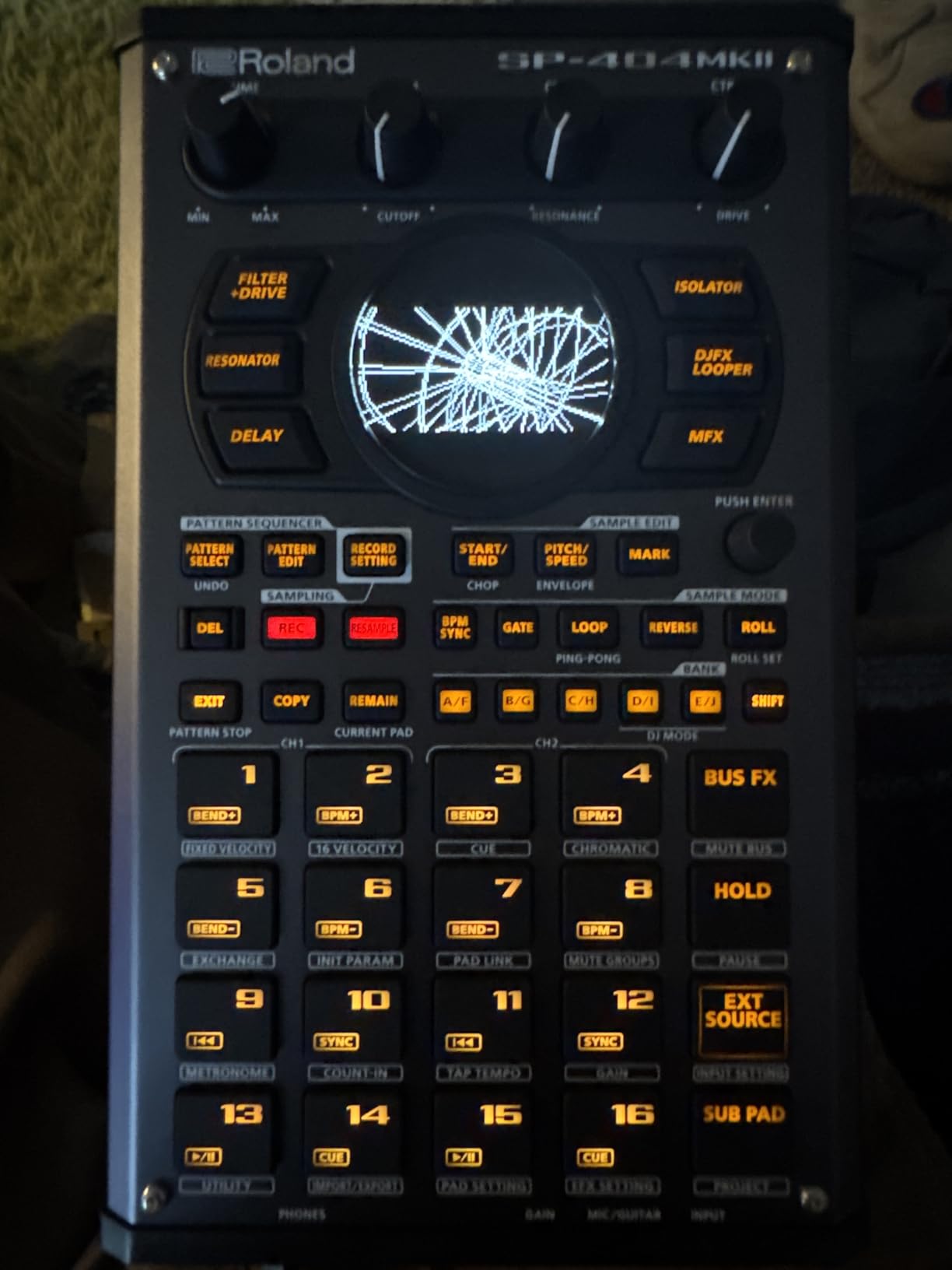
I have used the Roland SP-404MKII for over a year now, and it remains the sampler I reach for first. The workflow is unlike anything else. Once you learn the button combos, you can chop, resample, and add effects faster than on any touchscreen device I have tried.
The 16GB of internal storage is huge for a sampler at this price. I loaded entire sample packs, one-shots, and full loops without worrying about space. The OLED display is a welcome upgrade over the original SP-404, making waveform editing actually usable.
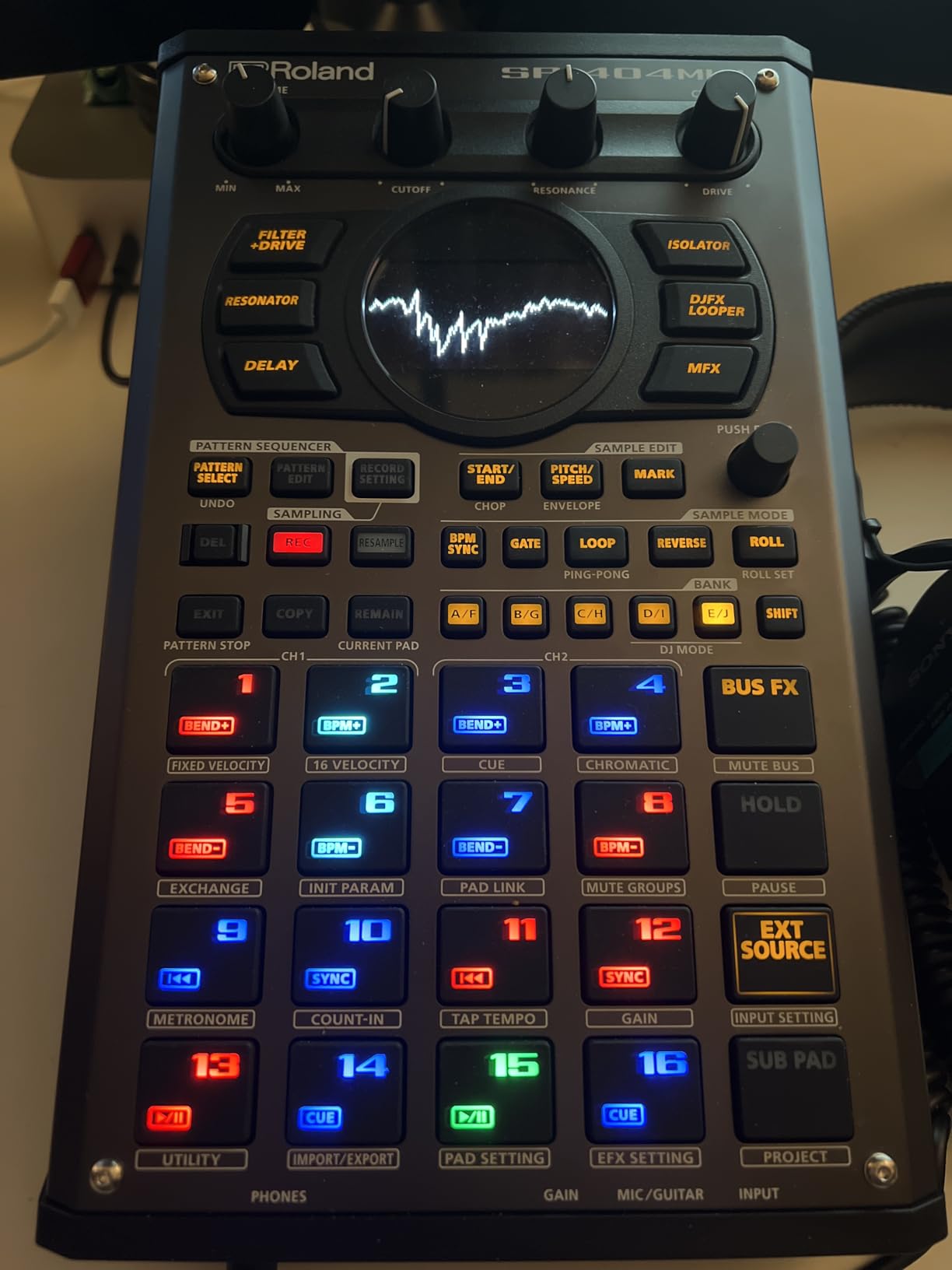
Where this machine shines is the effects. The DJFX Looper, Vinyl Simulator, and Cassette Simulator each add character that is hard to replicate in software. I found myself running guitar loops through the Cassette Simulator just to get that degraded tape sound.
Battery power is a real advantage. I have taken this sampler on planes, to hotels, and to outdoor jam sessions. Six AA batteries or a mobile battery pack keep it running for hours. The best samplers should free you from the desk, and the SP-404MKII does exactly that.
Who Should Buy the SP-404MKII
This sampler is perfect for hip-hop producers, lo-fi beatmakers, and live performers who want hands-on control without a screen getting in the way. The massive community on Reddit and YouTube means tutorials are everywhere.
If you make sample-based music and want something portable that sounds gritty and musical at the same time, this is your machine.
What to Watch Out For
The learning curve is real. There is no touchscreen, so every function requires button combinations. Plan to spend a few weeks before it feels natural.
The interface also assumes you know what you want to do. There is minimal hand-holding, which frustrates some beginners used to app-style workflows.
2. Akai Professional MPC Live III – Standalone Powerhouse
Akai Professional MPC Live III – Standalone Portable Music Production Center with MPCe Pads, Sequencer, Touchscreen, Mic, Stereo Monitors, Audio Interface, Wi-Fi, Bluetooth, Battery, Touchstrip
8-core processor with 8GB RAM
7-inch multi-touch display
128GB storage expandable
Rechargeable battery
Pros
- Fully standalone no computer required
- 8-core processor for fast performance
- Comprehensive connectivity USB-C MIDI CV/Gate
- Built-in mic and stereo monitors
Cons
- Battery life degrades over years
- Higher price point
- Learning curve for new users
The Akai MPC Live III is the most powerful standalone sampler I have tested. With an 8-core processor and 8GB of RAM, it handles complex projects without breaking a sweat. I ran 16 tracks with 32 plugin instances and the machine never stuttered.
The 7-inch multi-touch display changes everything about MPC workflow. Pinching to zoom waveforms, dragging samples onto pads, and adjusting envelopes by touch feels natural. After using this, going back to non-touchscreen samplers felt like stepping back in time.
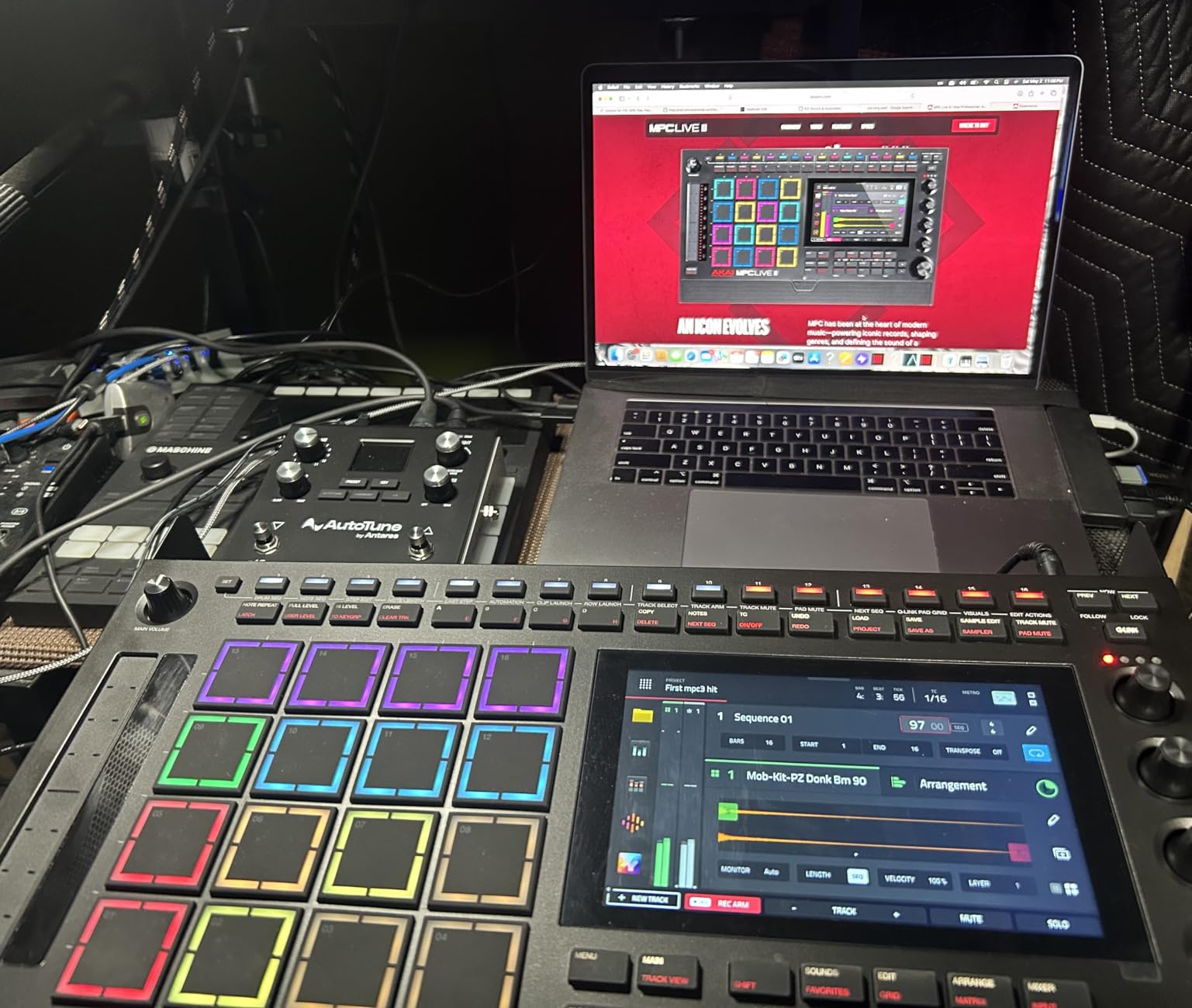
What makes this one of the best samplers available is true standalone operation. No laptop required. The rechargeable battery means you can produce on the couch, in a hotel, or on a train. The built-in microphone is handy for capturing quick ideas.
The MPC3 OS is fast and well-designed. I was chopping samples, building sequences, and arranging full tracks within an hour of unboxing. The AIR pro plugins included sound excellent, especially Reverb Pro and Visual EQ4.
Who Should Buy the MPC Live III
This is for producers who want a complete production studio in one box. If you are tired of being tied to a laptop and want the MPC workflow with modern power, this delivers everything.
It is also ideal for advanced producers who need plugin support, stems separation, and professional sequencing capabilities in a portable format.
What to Watch Out For
The price is steep compared to other samplers on this list. You are paying for the standalone computing power and touchscreen.
Multiple users report the battery degrades after 2-3 years. Plan for potential battery replacement down the road.
3. Elektron Digitakt II – 16-Track Sampling Beast
Elektron Digitakt II 16-Track Drum Computer and Sampler
16 audio tracks stereo or mono
128-step Elektron sequencer
Per-track effects and LFOs
Cast aluminum build
Pros
- Excellent workflow once learned
- High-quality sound and filters
- Professional build quality
- Powerful parameter locks per step
Cons
- Steep learning curve
- No DAW integration
- Limited effects vs competitors
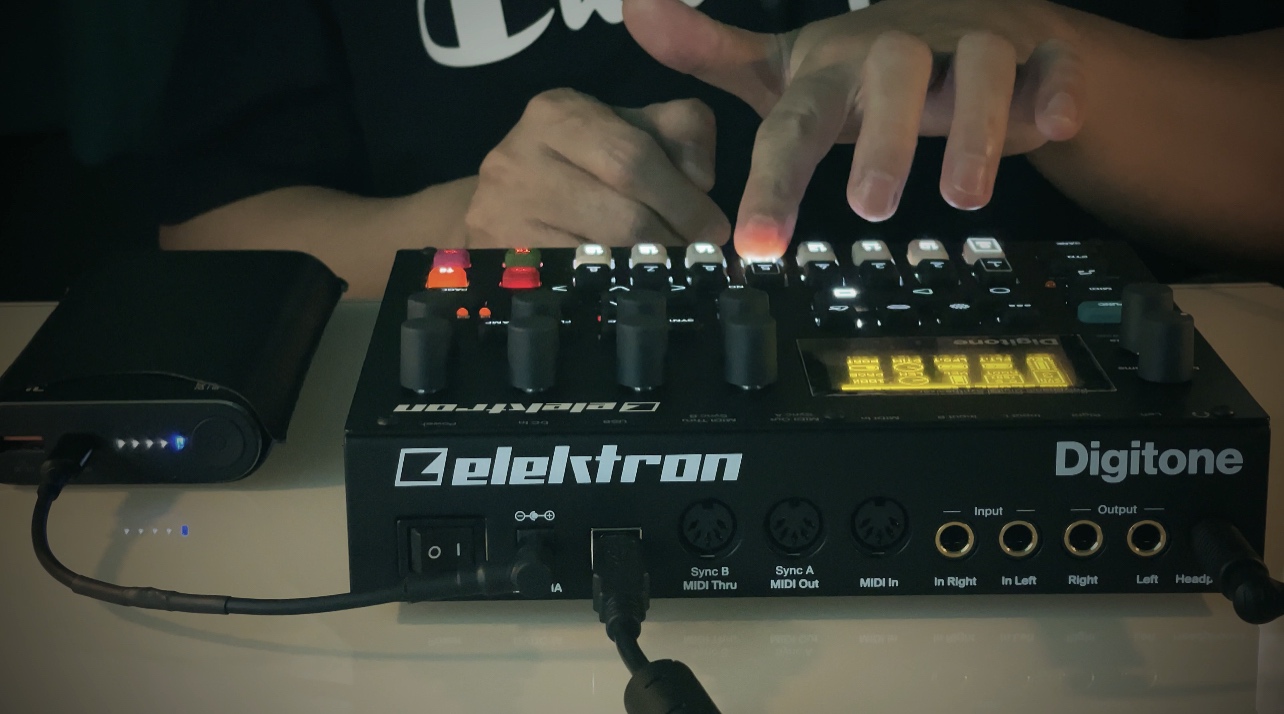
The Elektron Digitakt II is the sampler I recommend to producers who want deep sound design in a compact metal box. The 128-step sequencer with parameter locks lets you automate virtually everything per step, creating evolving patterns that never sound static.
Build quality is exceptional. The cast aluminum housing feels like it could survive a tour bus. At 3.3 pounds, it is solid but still portable enough for studio and stage.
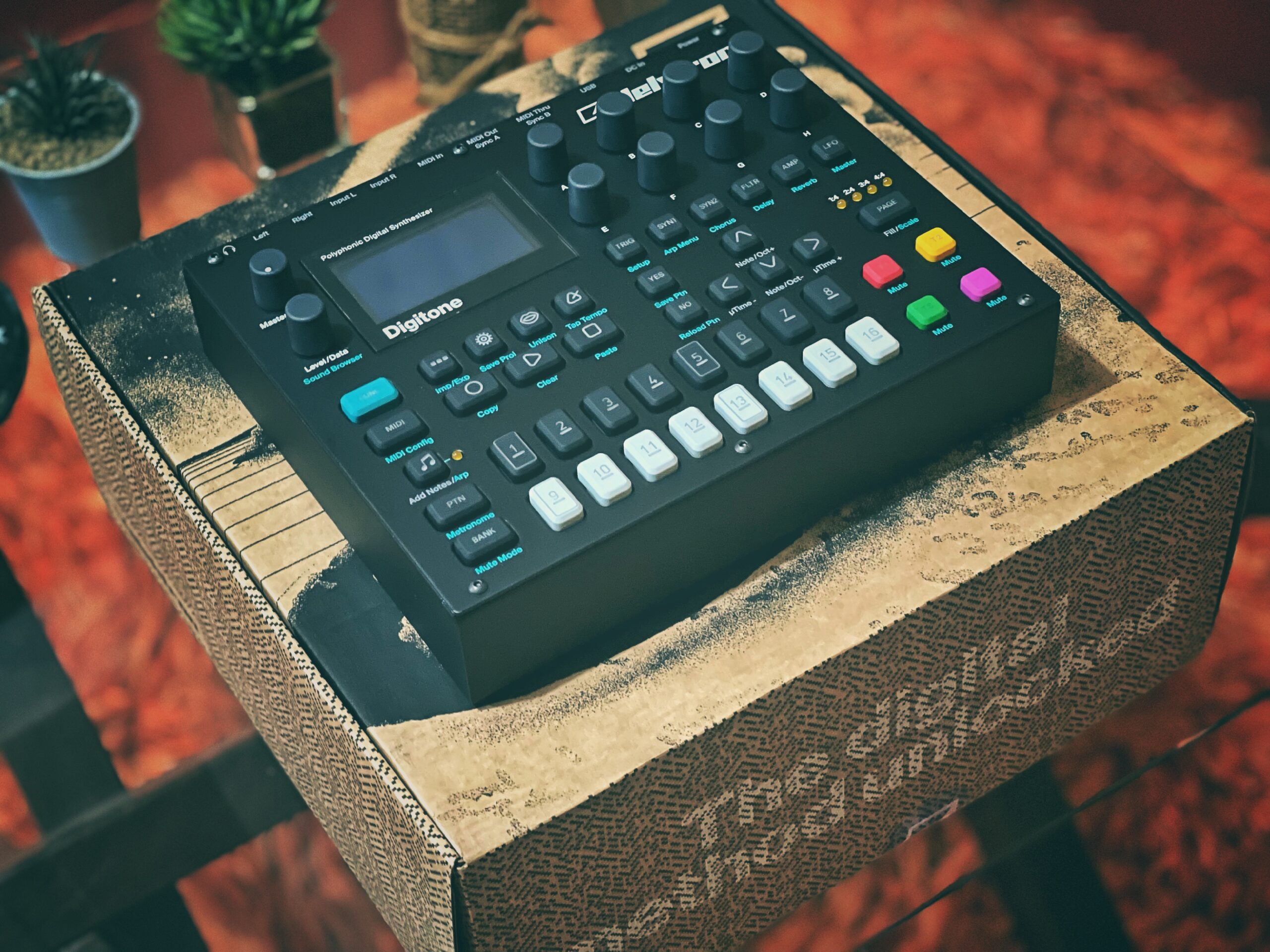
Sixteen audio tracks give you plenty of room for complex arrangements. I built full tracks with drums, bass, melodic samples, and MIDI-controlled external synths all running from one Digitakt II. The swappable filters are a standout feature for sound shaping.
The per-track effects including delay, reverb, chorus, bit reduction, and overdrive cover most sound design needs. The Euclidean sequence generator is fantastic for creating polyrhythms quickly.
Who Should Buy the Digitakt II
This sampler suits electronic music producers who love deep workflow and parameter locking. If you make techno, house, IDM, or experimental music, the Digitakt II feels designed for you.
It is also great for DAW-less enthusiasts who want to build complete tracks without touching a computer.
What to Watch Out For
Elektron’s terminology takes getting used to. Terms like “trigs,” “parameter locks,” and “pattern chaining” are not immediately intuitive if you are coming from MPC or SP-404 workflows.
There is no direct DAW integration. Overbridge software helps with some functions, but this is not designed to be a DAW controller.
4. Akai Professional MPC Sample – Best Portable Sampler
Akai Professional MPC Sample Standalone Portable Sampler, Sequencer and Effects Processor, with Rechargeable Battery, USB-C, Built-in Speaker and Microphone
16 MPC pads with poly aftertouch
2.4-inch color display
Built-in speaker and mic
Rechargeable battery 4-6 hours
Pros
- Portable and battery-powered
- Great entry into MPC workflow
- 16 pads with poly aftertouch
- Excellent value for price
Cons
- Limited resampling options
- Step sequencer can be cumbersome
- Ships with delay
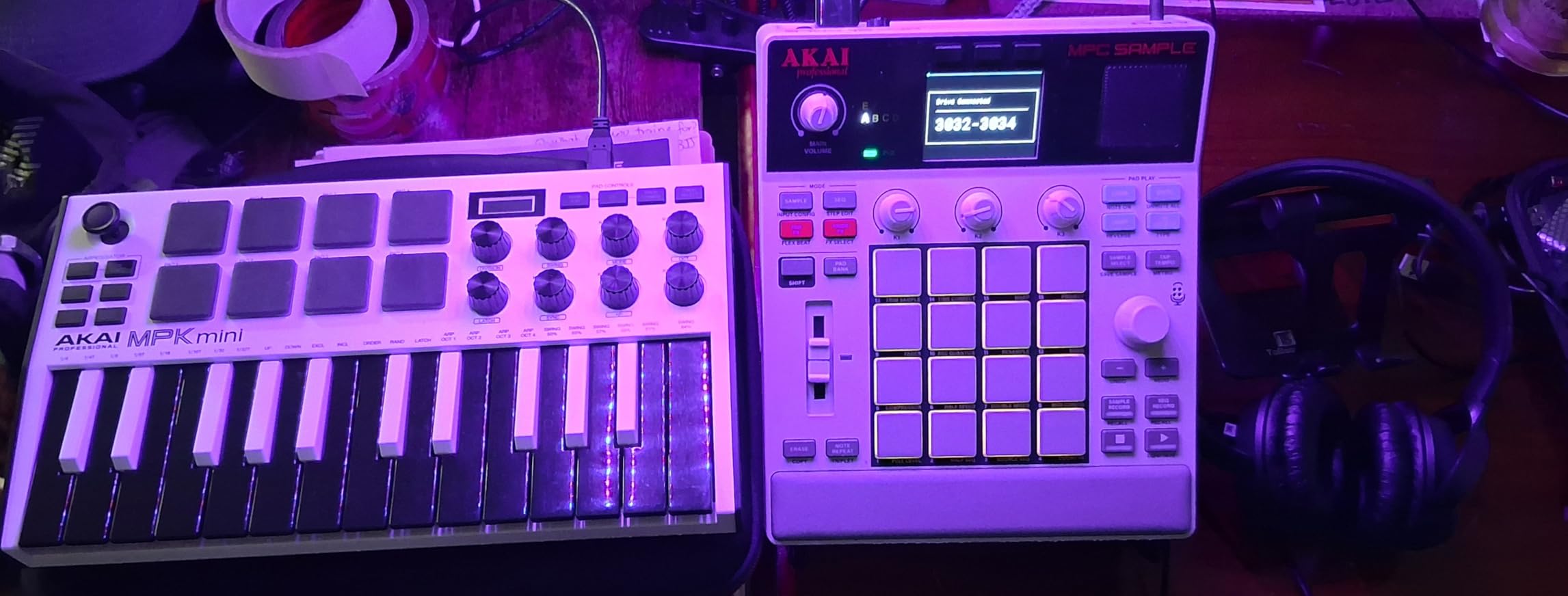
The Akai MPC Sample surprised me. At this price point, I did not expect such a polished sampling experience. The 16 MPC pads feel great, and the poly aftertouch adds expression that most portable samplers lack.
The built-in speaker and microphone are more useful than I expected. I recorded voice memos, sampled ambient sounds from the room, and practiced chopping without needing any external gear. This is the most fun I have had with a sampler under $500.
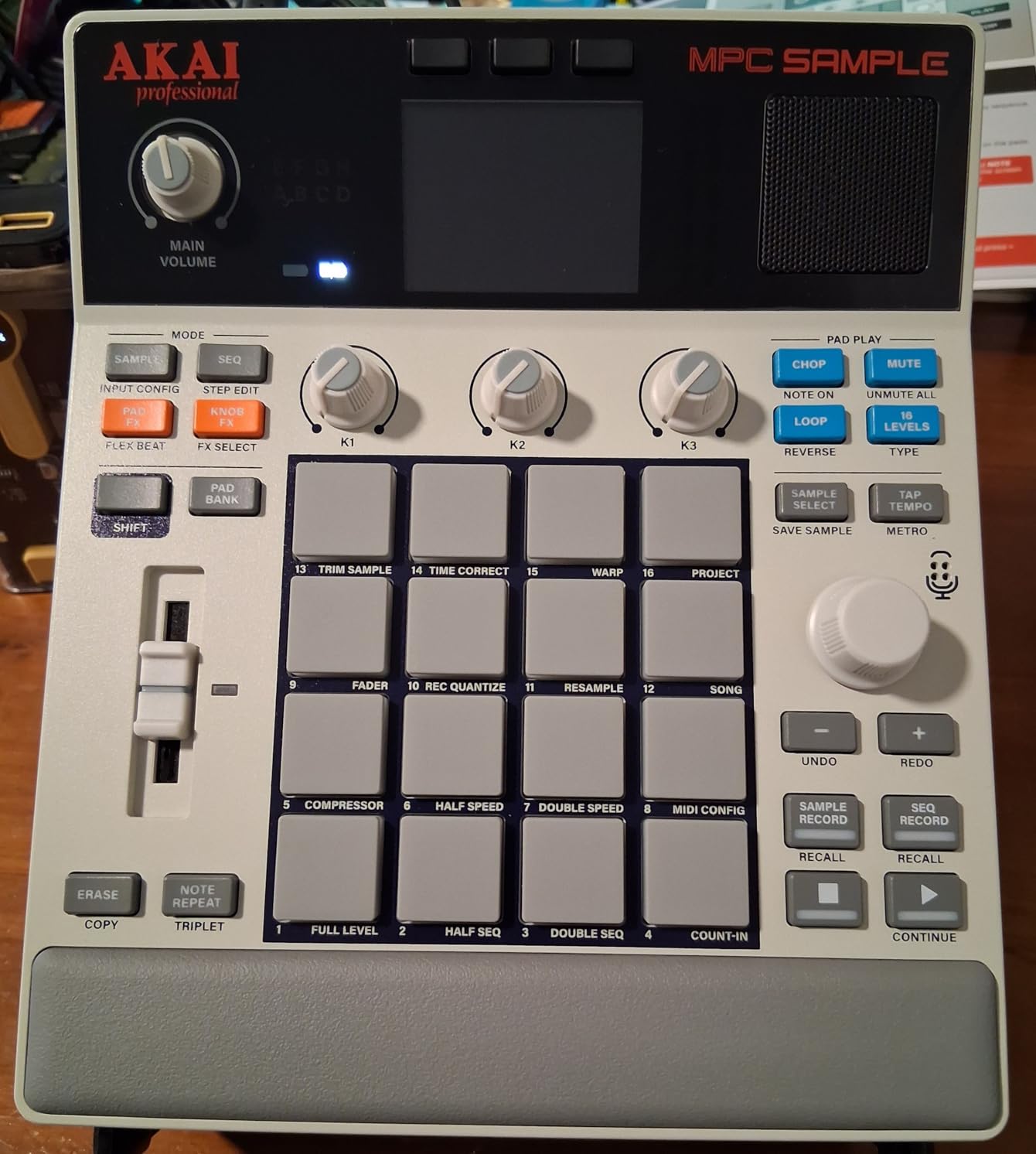
Four to six hours of battery life means you can produce through a full flight or a long cafe session. The MPC OS 3.8 compatibility means projects transfer seamlessly to other MPC devices, which is a big deal if you upgrade later.
The 60 effect types give you plenty of sound-shaping options. I was particularly impressed by the Instant Sample Chop Mode, which slices loops automatically and maps slices across the pads.
Who Should Buy the MPC Sample
Beginners and intermediate producers who want the MPC workflow in a portable package will love this. It is the best entry point into standalone sampling I have found.
Experienced producers who already own an MPC Live or MPC One will appreciate having a battery-powered companion that shares the same OS and project format.
What to Watch Out For
Resampling options are limited compared to the full MPC line. If you need complex resampling workflows, consider stepping up to the MPC Live III.
Stock availability can be an issue. Many listings show 1-2 month shipping delays.
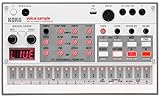
5. Korg Volca Sample 2 – Budget Sample Sequencer
Korg Volca Sample 2 Digital Sample Sequencer Drum Machine w/Pattern Chain Mode and 16-step Sequencer
8-voice polyphony
16-step sequencer with pattern chain
Digital reverb and double filter
Battery powered under 1 pound
Pros
- Compact and extremely lightweight
- Great for lo-fi hip hop and trap
- Double memory from previous model
- Integrated speaker
Cons
- Basic features vs higher-end samplers
- Stock availability issues
- Some learning curve
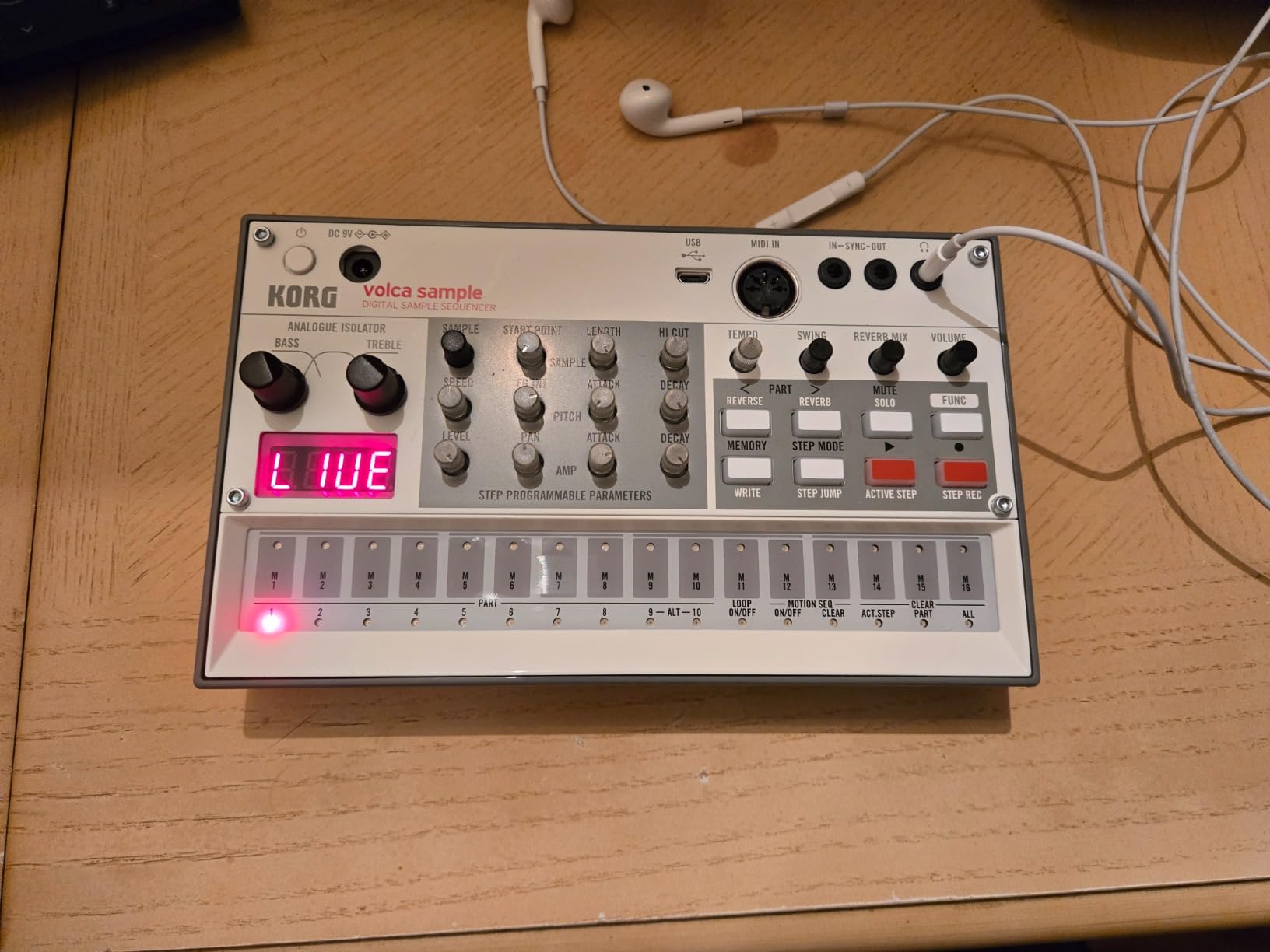
The Korg Volca Sample 2 is the budget champion. At well under $200, it delivers a fun sampling experience that punches above its weight. The 16-step sequencer with pattern chain lets you build full arrangements surprisingly quickly.
The double memory from the original Volca Sample is a welcome upgrade. I loaded custom sample packs without constantly running out of space. The digital reverb and rich double filter add character that makes even basic loops sound musical.
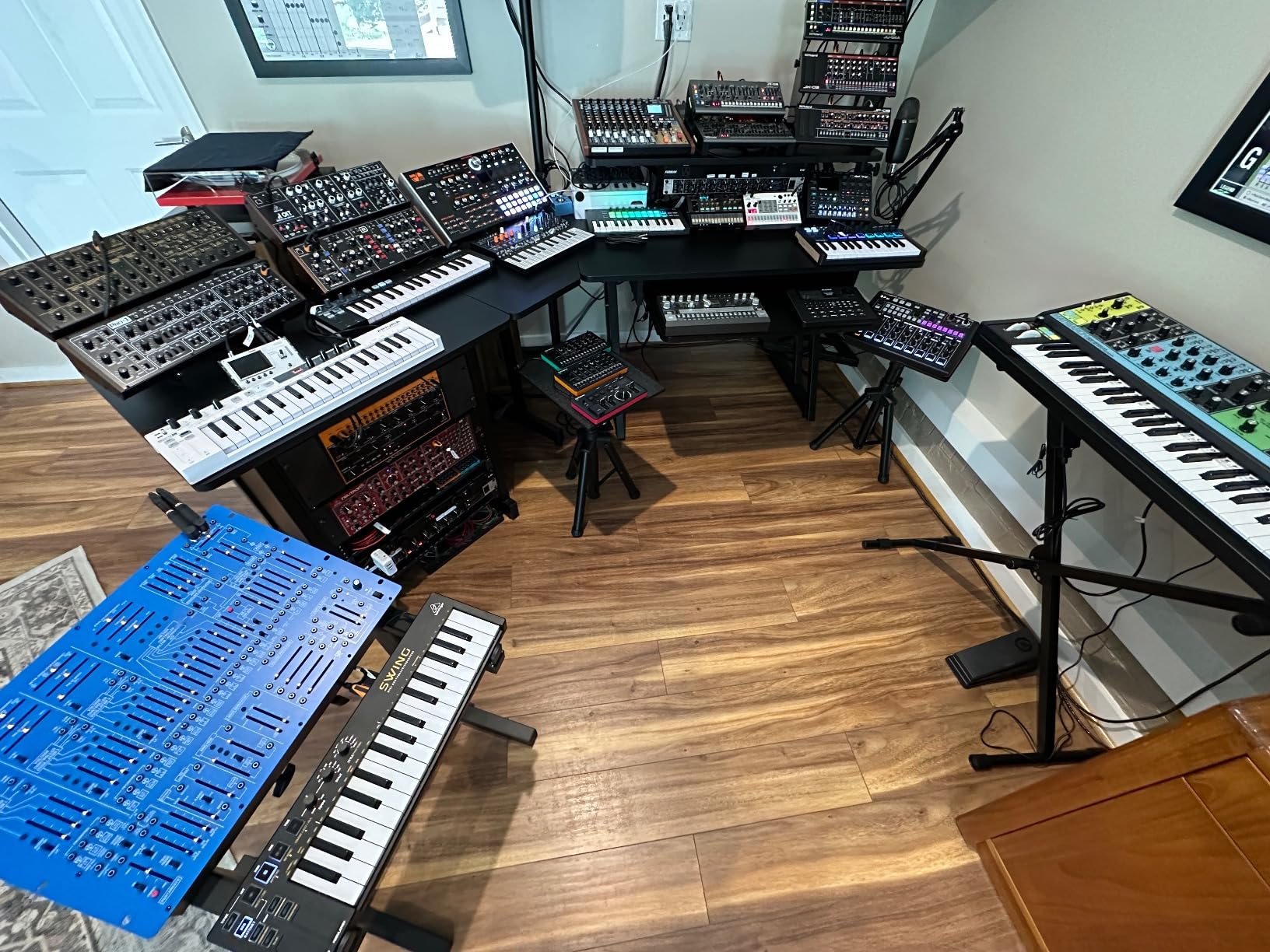
At under 1 pound, this is the lightest sampler on the list. I carried it in a backpack everywhere for a week, sketching beats in coffee shops and airport lounges. The integrated speaker is small but usable for idea generation.
The dedicated Librarian software for Mac and PC makes sample management straightforward. I transferred samples via the micro USB port without any hassle.
Who Should Buy the Volca Sample 2
Beginners exploring hardware sampling for the first time will find this accessible and affordable. It is also great as a secondary device in a larger setup.
Producers making lo-fi hip hop, trap, and future bass will appreciate the gritty sound character that fits those genres perfectly.
What to Watch Out For
The feature set is basic compared to higher-end samplers. No touchscreen, limited effects, and no standalone recording to SD card beyond sample loading.
The micro USB port feels dated compared to USB-C on newer devices. Stock availability can also be spotty.
6. Novation Circuit Rhythm – Sampler and Groovebox
Novation Circuit Rhythm: Sampler and groovebox with eight sample tracks for making and performing beats
8 sample tracks with 32-step patterns
Performance FX with lo-fi tape and beat repeat
Internal battery
MIDI USB-C microSD
Pros
- Intuitive interface and fast workflow
- Excellent for live performance
- Built-in battery
- Pattern chaining up to 256 steps
Cons
- No screen makes workflow hard
- Slow sample saving
- No reverb or delay effects
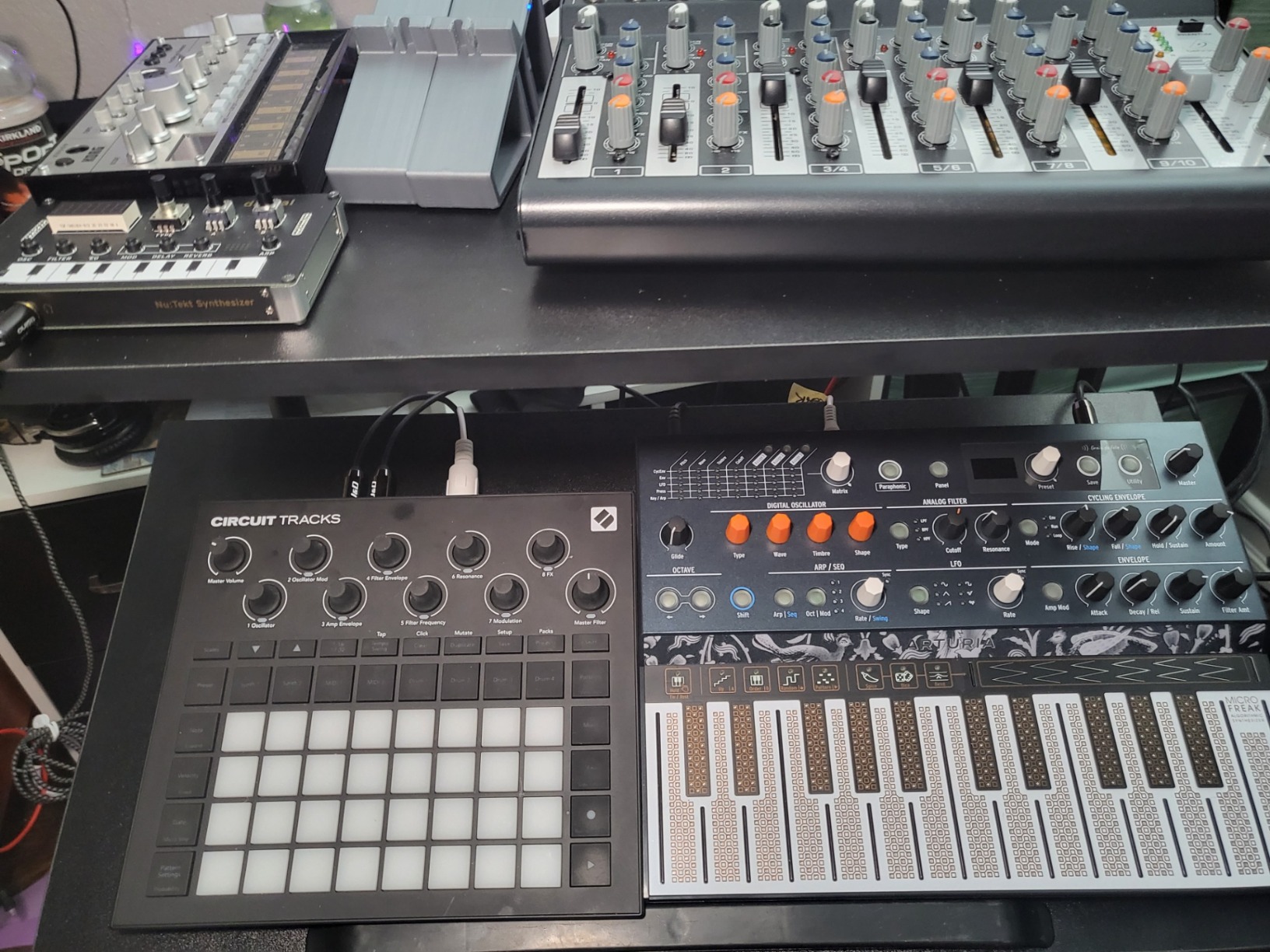
The Novation Circuit Rhythm is built for live performance. The eight sample tracks with hands-on controls make it easy to tweak patterns on the fly. I used it for a live set and loved how quickly I could mute tracks, swap patterns, and add effects.
The performance FX including lo-fi tape and beat repeat are genuinely useful for adding movement to static loops. The internal battery lasts through multi-hour sessions without issue.
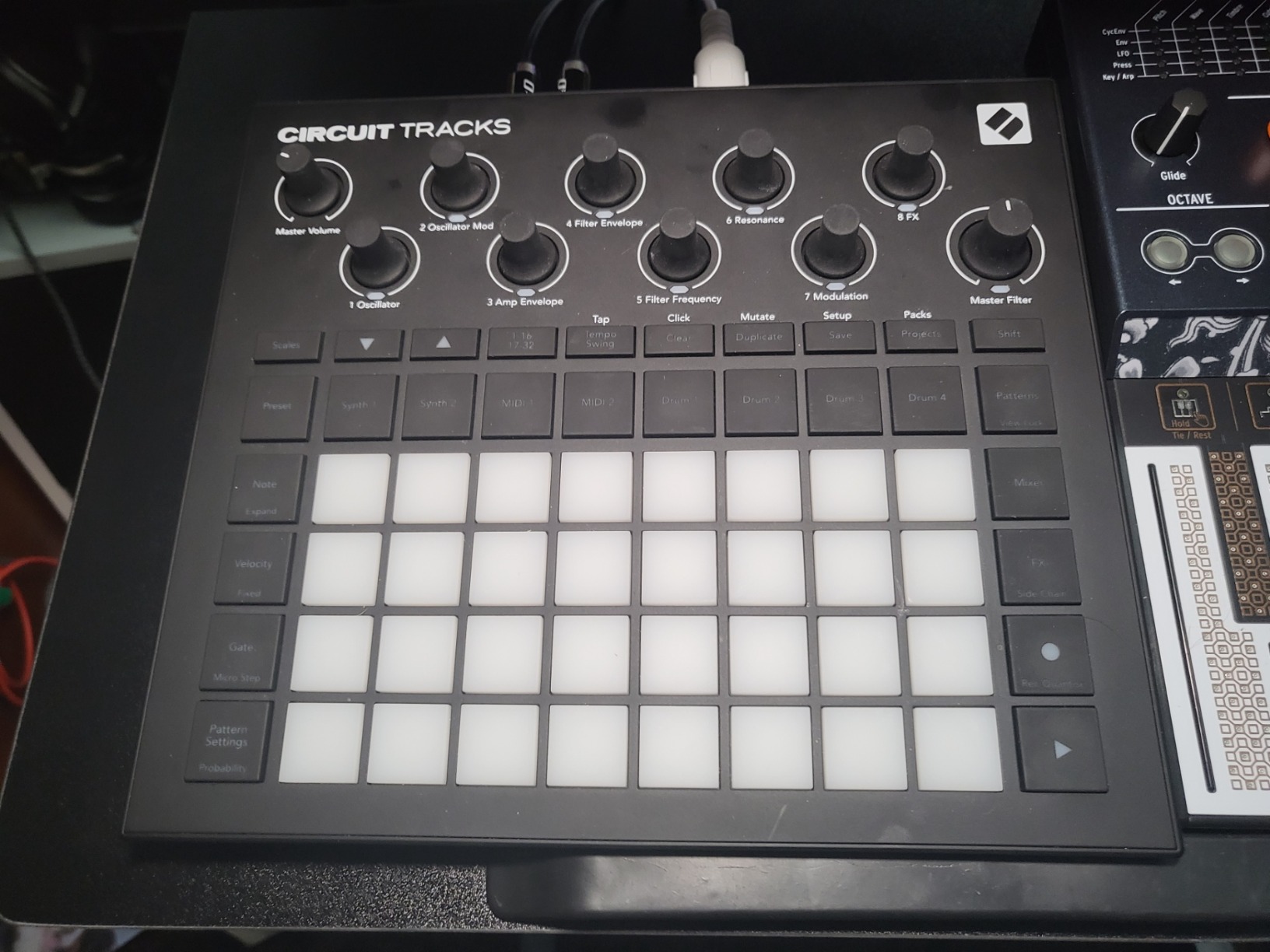
Pattern chaining up to 256 steps per track means you can build full song structures. I created complete arrangements with verses, choruses, and bridges using the sequencer alone.
The direct recording from phone, turntable, or synths is a feature I used constantly. Sampling external sources without a computer keeps the creative flow uninterrupted.
Who Should Buy the Circuit Rhythm
Live performers who need reliable, hands-on control will get the most from this sampler. It is designed for the stage as much as the studio.
Producers who enjoy the Novation Circuit workflow and want sampling capabilities will find this a natural fit.
What to Watch Out For
The lack of a screen is the biggest limitation. Navigating samples and settings requires memorizing button combos and relying on LED feedback.
Saving samples via USB-C is painfully slow. Transferring 10MB of samples took about 7 minutes in my testing.
7. Elektron Model:Samples – Sample-Based Groovebox
Elektron Model:Samples Six Track Sample Based Groovebox
6 velocity-sensitive pads
96 projects with 96 patterns
64MB sample memory 1GB storage
MIDI I/O
Pros
- Excellent build quality
- Parameter locks per trigger
- Large 1GB sample storage
- Easy Elektron workflow
Cons
- Cannot sample directly
- Limited to 24 samples per sequence
- Not a true sampler
The Elektron Model:Samples is the most accessible entry into the Elektron ecosystem. The workflow is simpler than the Digitakt, making it easier to learn while still offering the signature parameter locks that make Elektron sequencers so powerful.
I appreciated the build quality immediately. Despite the plastic housing, the unit feels solid and well-constructed. The six pads are responsive and satisfying to play.
With 96 projects and 96 patterns each, there is plenty of space for creative exploration. The 1GB storage holds a substantial sample library, and the pro-quality factory samples sound excellent right out of the box.
The resonant multimode filter and assignable LFO per track give you real sound-shaping power. I used it as a drum machine, monosynth, and groovebox depending on what samples I loaded.
Who Should Buy the Model:Samples
Producers who want to try Elektron workflow before investing in Digitakt or Octatrack will find this the perfect introduction. It teaches the sequencer philosophy at an accessible price.
It is also great as a companion to other gear, functioning as a sample player and MIDI sequencer in a larger setup.
What to Watch Out For
This is not a true sampler. You cannot record audio directly into it. You load samples via the companion app and play them back, which is an important distinction.
The pads are not velocity-sensitive despite appearances, which disappointed some users expecting dynamic performance.
8. Teenage Engineering PO-33 K.O.! – Pocket Sampler
teenage engineering pocket operator PO-33 K.O.! micro sampler and drum machine with built-in microphone, sequencer and effects
40-second sample memory
Built-in microphone
16 built-in effects
Battery powered 2xAAA
Pros
- Pocket-sized and ultra-portable
- Built-in mic for instant sampling
- 16 effects for creativity
- Affordable and fun
Cons
- Limited 40-second sample memory
- Small buttons
- No velocity sensitivity
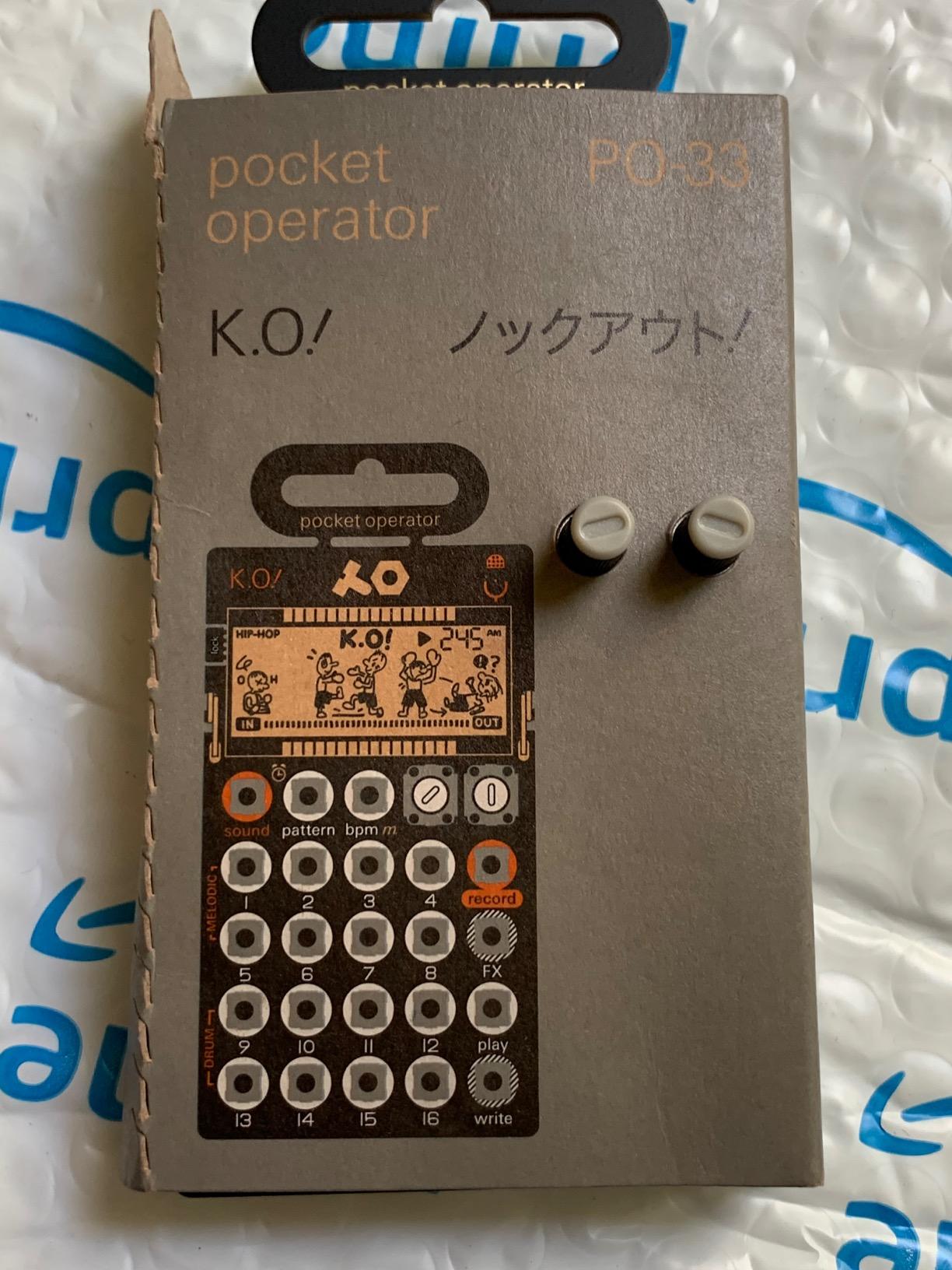
The Teenage Engineering PO-33 K.O.! is the most fun sampler I have ever used. It fits in a shirt pocket, runs on two AAA batteries for a month, and the built-in microphone means you can sample literally anything, anywhere.
I sampled my dog barking, a passing train, and a restaurant kitchen within the first hour of owning it. The 8 melodic slots and 8 drum slots fill up fast, but that limitation forces creative decisions.
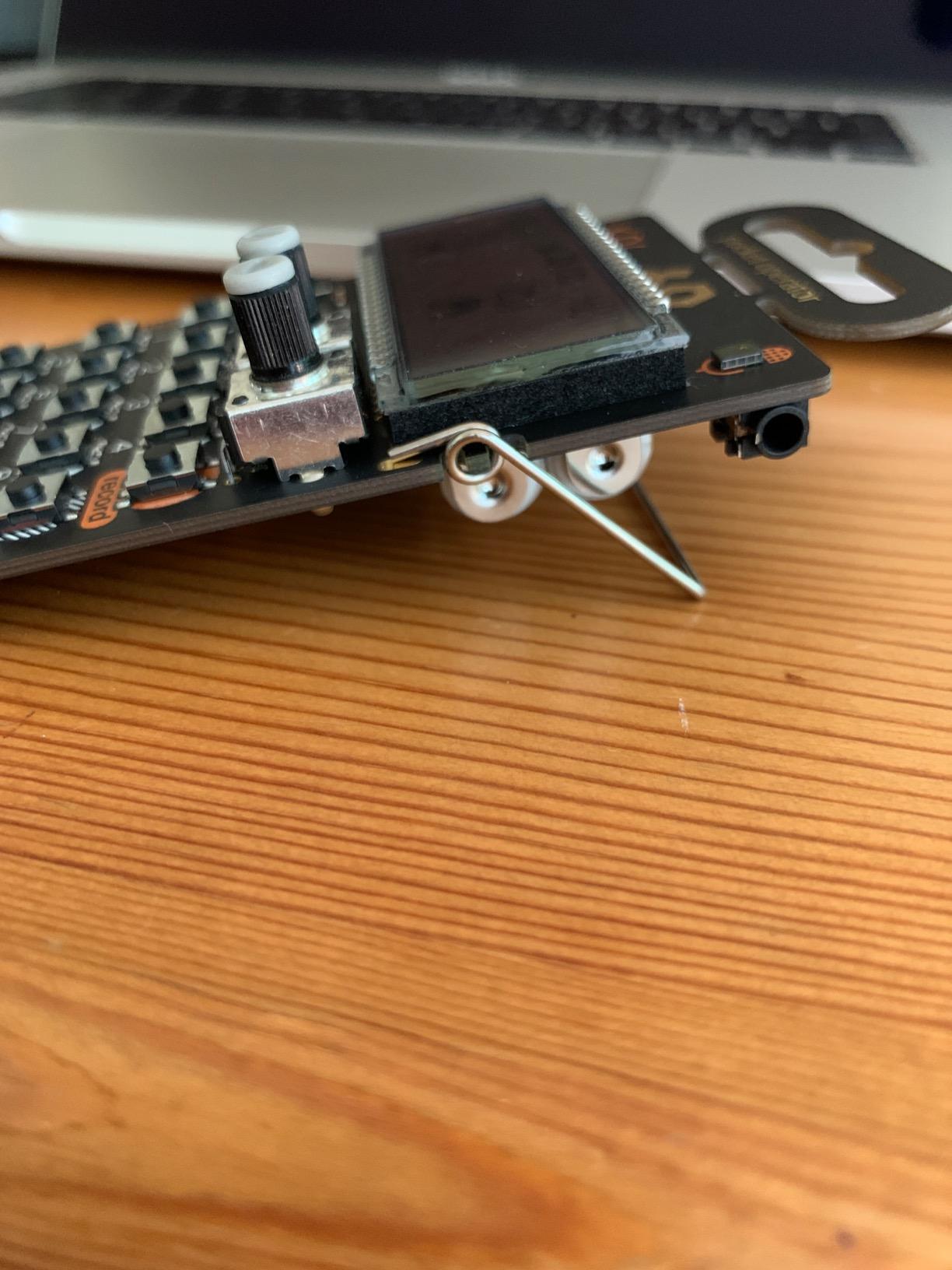
The 16 built-in effects add serious character. The lo-fi and glitch effects turned mundane samples into interesting textures. The sequencer is basic but functional for sketching ideas.
With over 2,200 reviews and a 4.6 rating, this little device has built a massive following. It is not a production tool, but it is the best samplers companion for capturing ideas on the go.
Who Should Buy the PO-33 K.O.!
Anyone who wants a fun, portable, and affordable way to start sampling. It is the perfect gift for a teenager getting into beatmaking.
Established producers will love it as an idea-capture device. Keep it in your bag and never lose a creative thought again.
What to Watch Out For
The 40-second sample memory is tight. You will be managing samples carefully and deleting old ones frequently.
The small buttons are not ideal for fast finger drumming. Consider this a sketchpad rather than a performance instrument.
9. Roland AIRA Compact P-6 – Granular Creative Sampler
Roland AIRA Compact P-6 Creative Sampler | Granular Sound Design | Powerful Sequencer | Onboard Keyboard | Custom Loops | Built-In Mic | Hands-on Effects
Built-in microphone
Granular sound design
64-step sequencer with microtiming
Rechargeable battery
Pros
- Excellent sound quality
- Variable sample rates for mangling
- Same MFX as SP-404MKII
- Portable and lightweight
Cons
- Menu diving is overwhelming
- Tiny screen
- Limited 32MB memory
The Roland AIRA Compact P-6 packs serious sampling power into a pocket-sized device. The granular sound design parameters including detune, head position, and grain control opened up textures I could not get from any other sampler on this list.
The built-in microphone works well for capturing ambient sounds. I recorded birdsong, breaking glass, and street noise, then turned them into completely new instruments using the granular engine.
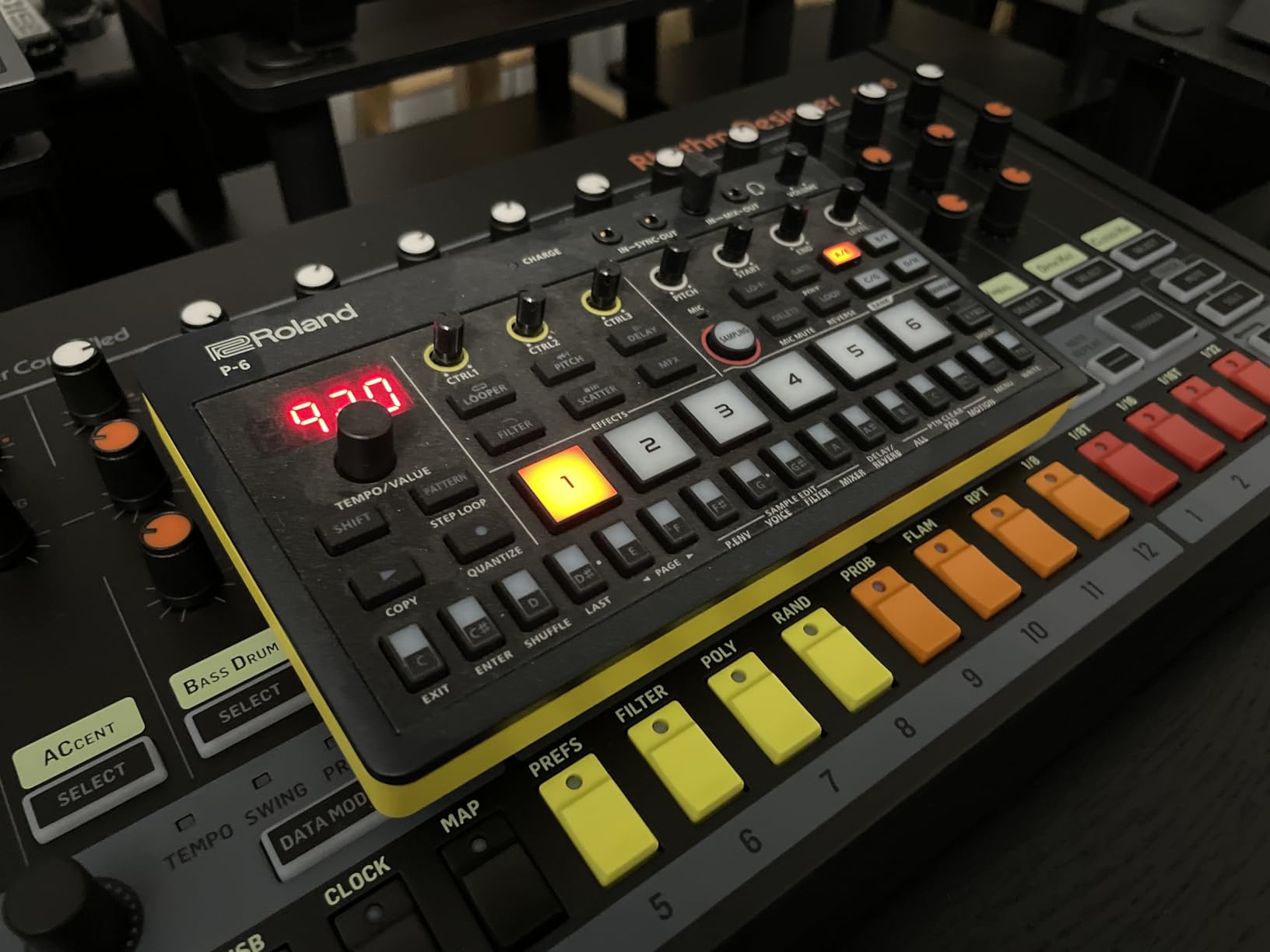
The 64-step sequencer with microtiming is impressive for a device this small. I built complex polyrhythms that would normally require a full workstation. The DJFX Looper, shared with the SP-404MKII, adds the same performance character that made the bigger Roland sampler famous.
Variable sample rates let you degrade audio intentionally for lo-fi textures. This became my go-to technique for creating dirty drum sounds and atmospheric pads.
Who Should Buy the P-6
Sound designers and experimental producers who want granular capabilities in a portable format will love this. It is a creative tool that rewards exploration.
SP-404MKII owners looking for a smaller companion device will appreciate the shared effects engine and similar workflow.
What to Watch Out For
The tiny screen forces extensive menu diving. Setting granular parameters requires patience and good eyesight.
The 32MB memory limit is restrictive. You will be managing samples carefully, and there is no SD card expansion.
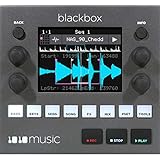
10. 1010music Blackbox – Compact Sampling Studio
1010music Blackbox Compact Sampling Studio
Touchscreen interface
Loop mode for creative workflow
16GB microSD included
MIDI master clock
Pros
- Outstanding build quality
- Touchscreen is well-designed
- Loop mode is excellent
- Compact metal case
Cons
- Steep learning curve for sequencer
- Expensive for feature set
- Limited effects
The 1010music Blackbox is a hidden gem in the sampler world. The touchscreen interface is one of the best I have used on any hardware device, responsive and logically organized. Editing waveforms by touch feels natural and fast.
The Loop mode is the standout feature. I created evolving textures and ambient pieces by layering loops with different lengths. The probability settings on sequencer steps add an element of generative composition that keeps patterns interesting.
Samples are streamed directly from microSD, supporting cards up to 128GB. This means you can carry an enormous sample library without worrying about internal memory limits. The included 16GB card is a good starting point.
The compact metal case feels built to last. I appreciate the versatile audio inputs and outputs, which make it easy to integrate into a modular or hardware setup.
Who Should Buy the Blackbox
Experienced musicians who want a creative sampling tool that integrates with other hardware will find the Blackbox extremely capable. The touchscreen and USB connectivity make it a flexible hub.
Ambient and experimental producers will particularly love the Loop mode and probability features.
What to Watch Out For
The sequencer and song mode have a steep learning curve. The logic is different from MPC or Elektron workflows, so expect a learning period.
The effects are limited compared to the SP-404MKII or Digitakt II. If effects processing is your priority, look elsewhere.
11. Sonicware Lofi-12 XT – 12-Bit Character Sampler
Sonicware Lofi-12 XT [Low-res Digitized Sampler] 12/24kHz Early-Digital Sound Sampling+12-bit Sampler mode, Compact/Lightwight/Battery-powered《Try Now, Intro Deal!》
12-bit sampler mode
8-track sequencer
8 insert FX plus delay and reverb
Battery powered
Pros
- Authentic 12-bit character sound
- Intuitive 8-track sequencer
- Over 2500 included samples
- Compact and battery operated
Cons
- Small screen causes eyestrain
- Limited 40-second live record time
- MicroUSB instead of USB-C
The Sonicware Lofi-12 XT delivers the gritty 12-bit character that producers of lo-fi hip hop and vintage-style electronic music crave. The 12/24kHz early-digital sound sampling mode gives samples a degraded, warm quality that is hard to replicate in software.
I was impressed by the 8-track sequencer. It is intuitive enough for beginners but deep enough for serious beatmaking. The non-stop workflow means you can keep layering tracks without stopping playback.
The 8 insert FX plus delay and reverb sends give you substantial sound-shaping options. Over 2,500 included samples mean you can start making music immediately without loading external packs.
The background mix-tape recording feature is a unique touch. It captures your session continuously, so you never lose a happy accident even if you did not hit record.
Who Should Buy the Lofi-12 XT
Lo-fi hip hop producers, boom bap beatmakers, and anyone who loves vintage sampler character will find this hits the sweet spot.
Producers who want an all-in-one solution with built-in samples, effects, and battery power will appreciate the self-contained design.
What to Watch Out For
The small screen can cause eyestrain during long sessions. Reading parameter values requires squinting.
The 40-second live record time limits how long your incoming samples can be. The MicroUSB port also feels dated.
12. Polyend Play – Audio and MIDI Sampler Groovebox
Polyend Play Audio and MIDI Sampler, Sequencer, and Groovebox
8 audio tracks
8 polyphonic MIDI tracks
64-step sequencer
Built-in effects
Pros
- Hardware groovebox with 8 audio tracks
- 8 polyphonic MIDI tracks
- Lower learning curve than Elektron
- Great for performance
Cons
- Some bugs requiring firmware fixes
- Slow project loading times
- May need firmware updates
The Polyend Play is the easiest-to-learn sampler groovebox I have tested. The 8 audio tracks and 8 polyphonic MIDI tracks give you plenty of creative room, and the workflow makes sense within minutes of picking it up.
The 64-step sequencer is powerful without being overwhelming. I was building patterns immediately, something I cannot say about every sampler on this list. The stainless steel build feels premium and road-worthy.
The included 16GB microSD card, audio cables, and MIDI adapter mean you have everything you need to start producing right out of the box. The Ableton Live compatibility is a bonus for hybrid setups.
What stands out is the fun factor. This sampler makes you want to create. The lower learning curve compared to Elektron gear makes it accessible without sacrificing depth.
Who Should Buy the Polyend Play
Producers who want immediate results without weeks of learning will love the Play. It is the most beginner-friendly groovebox sampler on this list.
Live performers who need reliable hardware with both audio and MIDI sequencing capabilities will find it covers a lot of ground.
What to Watch Out For
Some users report bugs that require firmware updates. Polyend has been responsive with fixes, but expect occasional updates.
Loading times for projects and samples can be slow, especially with large sample libraries on the SD card.
Buying Guide: How to Choose the Best Sampler
Choosing between the best samplers comes down to understanding your needs. After testing all 12 devices in this guide, here are the factors that matter most.
Sample Memory and Storage
Memory determines how many samples you can load and how long they can be. The Roland SP-404MKII offers 16GB of internal storage, while the Akai MPC Live III provides 128GB expandable via SSD. At the other end, the Teenage Engineering PO-33 gives you 40 seconds total.
Think about your production style. If you work with long loops and full song samples, prioritize storage. If you chop one-shots and drum hits, even modest memory works fine.
Sequencer Depth
The sequencer is where samplers differentiate themselves most. Elektron devices offer 128-step sequences with per-step parameter locks. The MPC Live III provides 16 tracks with 32 plugin instances. The Polyend Play delivers 64 steps with an easy learning curve.
For live performance, look for pattern chaining and song mode. The Novation Circuit Rhythm chains patterns up to 256 steps, while the Digitakt II includes a dedicated Song Mode.
Portability
If you produce on the go, battery power is essential. The SP-404MKII, MPC Live III, MPC Sample, Circuit Rhythm, PO-33, P-6, and Lofi-12 XT all run on batteries. Weight ranges from a few ounces for the PO-33 to nearly 4 pounds for the MPC Live III.
The best samplers for travel balance battery life, durability, and weight. The MPC Sample at under 2 pounds with 4-6 hour battery life hits a sweet spot.
Connectivity
Modern samplers connect via USB-C, MIDI, and sometimes CV/Gate for modular integration. The MPC Live III offers the most comprehensive connectivity including USB-C, MIDI I/O, CV/Gate, XLR/TRS inputs, and TRS outputs.
If you use modular gear, look for CV/Gate. If you work with DAWs, USB audio and Overbridge support matter. The Elektron Digitakt II lacks DAW integration, which is a dealbreaker for some.
Workflow and Learning Curve
Some samplers feel intuitive within minutes. Others take weeks. The Polyend Play and Akai MPC Sample have the friendliest learning curves. The Elektron devices and Roland SP-404MKII require more time but reward you with deeper workflows.
Forum users on Reddit consistently recommend starting with something accessible before moving to complex devices. The MPC Sample and Korg Volca Sample 2 are excellent entry points that teach fundamentals without overwhelming.
Standalone vs Computer-Dependent
The biggest decision is whether you want a sampler that works without a computer. The MPC Live III, SP-404MKII, Digitakt II, and most devices on this list operate fully standalone. Only the 1010music Blackbox benefits significantly from computer integration.
DAW-less production is a growing trend, and every sampler in this guide supports it to some degree. The Elektron devices are particularly popular in DAW-less setups.
FAQ’s
What is the best sampler on the market?
The Roland SP-404MKII is widely considered the best overall sampler for its combination of portability, effects, workflow, and community support. For full production power, the Akai MPC Live III leads with its 8-core processor and standalone capabilities. For budget buyers, the Akai MPC Sample offers outstanding value.
What is the easiest sampler to use?
The Akai MPC Sample and Polyend Play are the easiest samplers to learn. The MPC Sample offers an intuitive MPC workflow in a portable format, while the Polyend Play has the lowest learning curve of any groovebox sampler tested. Both are excellent starting points for beginners.
What is the best free sampler?
For budget-conscious producers, the Teenage Engineering PO-33 K.O.! at around $99 and the Korg Volca Sample 2 at around $130 are the most affordable hardware samplers worth buying. For free software, Tracktion Waveform Free includes basic sampling tools, and TX16Wx is a powerful free VST sampler plugin.
Should I get a hardware or software sampler?
Hardware samplers offer hands-on control, portability, and workflow that software cannot match. They are ideal for live performance and DAW-less production. Software samplers are cheaper, offer unlimited tracks, and integrate with existing DAW workflows. If you perform live or want to escape your computer, go hardware. If budget is tight, start with software.
Conclusion: Finding Your Best Sampler in 2026
After testing all 12 samplers, a few clear winners emerged. The Roland SP-404MKII remains the best samplers choice for most producers thanks to its unbeatable combination of effects, portability, and community support. The Akai MPC Live III is the ultimate standalone workstation for producers who need full production power.
For budget-conscious buyers, the Akai MPC Sample delivers remarkable value, while the Teenage Engineering PO-33 K.O.! is the most fun you can have sampling for under $100. Whatever your production style, the best samplers in this guide will transform how you make music in 2026.