

Finding the best Irish flutes means sorting through centuries of instrument-making tradition, a maze of tonewoods, bore profiles, and a wide range of prices that stretch from budget practice instruments to professional handmade flutes with multi-year waiting lists.
An Irish flute (also called a Celtic flute) is a simple-system, typically six-hole wooden or polymer flute in the key of D, based on 18th-century Pratten and Rudall-style designs. It is the primary melodic voice in traditional Irish music sessions, prized for its woody, reedy tone and its ability to execute the fast ornamentation that defines the genre.
Our team spent weeks comparing 12 instruments available right now, from entry-level rosewood practice flutes under $50 to professional-grade aluminum and polymer low whistles. We looked at tone quality, build consistency, playability for different hand sizes, climate resistance, and what real buyers reported after months of session use. Whether you are picking up your first transverse flute or upgrading from a tin whistle, this guide breaks down exactly what to buy and why.
Table of Contents
Top 3 Picks for Best Irish Flutes (September 2026)


Hall Crystal Flute in D
- Pyrex glass construction
- Handcrafted in USA
- Beautiful Celtic design

Best Irish Flutes in 2026 – Quick Overview
Understanding Irish Flutes: The Basics
The Irish flute belongs to a family of instruments called simple-system flutes. Unlike a modern classical flute with its complex Boehm key mechanism, the Irish flute keeps things pared down: six finger holes, a conical or cylindrical bore, and optionally a small number of keys for chromatic notes. That simplicity is exactly what makes it so expressive in Irish traditional music.
The reason Irish musicians gravitate toward this design is all about feel and ornamentation. With open holes, you can half-hole, slide between notes, and execute the rapid cuts and rolls that give Irish tunes their characteristic lift. A fully keyed Boehm flute makes those movements clumsy by comparison. The trade-off is that simple-system flutes demand more from the player technically, especially in the early weeks when you are training your embouchure to produce a clean tone.
Most Irish flutes are pitched in the key of D, which matches the most common keys in Irish traditional music (D and G). You will occasionally find flutes in C or other keys, but D is the standard for sessions. Some players also use low D whistles, which serve a similar melodic role but are blown rather than transversely played across an embouchure hole.
Keyed vs Keyless Irish Flutes
A keyless Irish flute has six open tone holes and nothing else. You can play the standard D and G scales plus a few chromatic notes using cross-fingering and half-holing. For the vast majority of Irish traditional tunes, this is all you need.
A keyed flute adds metal levers that open additional tone holes, giving you access to chromatic notes like C-natural, F-natural, and G-sharp without cross-fingering. Keys come in configurations of 3, 4, 6, or 8. Most session players never need more than a keyless flute. Keys become valuable if you play in non-standard keys, want to play classical repertoire, or perform in ensembles that venture outside traditional Irish music.
For beginners, the community consensus is clear: start keyless. It is cheaper, lighter, and forces you to develop solid fundamental technique. You can always upgrade to a keyed flute later when you know what notes you actually need.
Tonewoods and Materials Compared
The material your flute is made from dramatically affects tone, weight, durability, and maintenance requirements. Here is what you need to know about the most common options.
African Blackwood is the gold standard for professional Irish flutes. It produces a dark, rich, woody tone with excellent projection that cuts through a noisy session. The downside is cost and maintenance: blackwood flutes need regular oiling and can crack in extremely dry or humid climates.
Rosewood is the most common budget tonewood. It produces a softer, warmer tone than blackwood and is significantly cheaper. Rosewood flutes are popular for beginners, though quality varies widely between makers.
Cocuswood was historically the preferred material for 19th-century flutes. It has a bright, focused tone somewhere between rosewood and blackwood. Genuine cocuswood is increasingly rare, making it a premium option.
Polymer and Delrin flutes are modern alternatives that have earned enormous respect in the Irish music community. They sound remarkably close to wood, require zero oiling, never crack, and are completely immune to climate. Players describe them as set-and-forget instruments perfect for travel and sessions.
Glass and aluminum are less traditional but offer unique tonal properties. Glass flutes like the Hall Crystal produce a clear, bell-like tone. Aluminum low whistles like the MK Kelpie offer a haunting, breathy sound with excellent durability.
Irish Flute vs Tin Whistle vs Classical Flute
Many people arrive at the Irish flute from one of two directions: the tin whistle or the classical Boehm flute. Understanding the differences helps you choose the right path.
A tin whistle is a fipple-blown instrument, meaning you blow into it like a recorder rather than across an embouchure hole. It is simpler to get a first sound from, cheaper, and shares the same six-hole fingering as a keyless Irish flute. Many players start on whistle and transition to flute later. The fingering transfers directly, but you must learn a completely new embouchure technique.
A classical Boehm flute is the silver flute you see in orchestras. It is fully keyed, has a cylindrical bore, and is pitched in C rather than D. Transitioning from Boehm to Irish flute means learning open-hole technique, adjusting to a conical bore, and overhauling your entire approach to ornamentation. Some classical players find the transition deeply rewarding; others find it humbling.
How to Choose the Best Irish Flute: Buying Guide
Choosing among the best Irish flutes comes down to matching the instrument to your skill level, budget, playing environment, and physical comfort. Here are the factors that actually matter when making a purchase decision.
1. Skill Level and Budget Tiers
Beginners should plan to spend between $40 and $150 for a first instrument. At this level, polymer flutes and basic rosewood models are your best options. The goal is something playable enough to learn on without a huge financial commitment. Avoid ultra-cheap unbranded flutes from auction sites, as many are unplayable.
Intermediate players in the $150 to $300 range can expect noticeable upgrades in tone, build quality, and intonation. This tier includes quality polymer instruments, better rosewood flutes, and entry-level instruments from respected makers.
Advanced and professional players looking at $300 and above enter the territory of handcrafted instruments from renowned makers. African Blackwood flutes, custom polymer instruments from named makers, and keyed flutes live in this range. Some top makers have waiting lists of a year or more.
2. Material and Climate Considerations
If you live in a climate with extreme dryness or humidity, polymer and Delrin flutes are the safest choice. Wooden flutes can crack or warp when subjected to rapid humidity changes. If you do choose wood, plan to oil the bore regularly and use a humidifier in dry conditions.
For players who travel frequently or play outdoor gigs, polymer and aluminum instruments are practically indestructible. Many session players keep a polymer flute as a backup specifically because it can live in a car or gig bag without concern.
3. Tunability
A tuneable flute has a sliding headjoint or tuning slide that lets you adjust the overall pitch. This is essential if you plan to play with other musicians, as you need to match their tuning. Non-tunable flutes are fine for solo practice but become frustrating in group settings.
Most quality Irish flutes above the budget tier include some form of tuning adjustment. If you see a flute described as tuneable, that typically means the headjoint can be pulled out slightly to lengthen the instrument and lower the pitch.
4. Hole Spacing and Hand Size
This is one of the most overlooked factors and a genuine pain point in the Irish flute community. Standard Irish flutes and low whistles have hole spacing that assumes an average-to-large adult hand. Players with smaller hands may struggle to cover all the holes cleanly, leading to airy notes and frustration.
If you have small hands, look for flutes described as having offset holes, or consider instruments designed with ergonomics in mind. The piper’s grip technique, where you cover holes using the second joints of your fingers rather than the pads, can help but requires practice to master.
5. Where to Buy Safely
The Irish flute community has strong opinions about where to buy, and for good reason. Forum discussions on The Session and Chiff and Fipple are filled with stories of buyers getting scammed on eBay with nameless Pakistani-made flutes that are essentially unplayable.
The safest options are buying directly from a known maker’s website, purchasing from reputable retailers like McNeela Music, Lark in the Morning, or the Irish Flute Store, or buying used instruments through community-trusted channels. Always confirm the seller has a return policy, and listen to sound samples before purchasing.
If you do buy on eBay, only purchase from sellers with established reputations in the flute community. A flute from an unknown maker at a suspiciously low price is almost always a waste of money.
6. New vs Used Irish Flutes
The used flute market is active and can offer excellent value. Well-maintained instruments from respected makers hold their value and can sound even better with age as the wood settles. However, buying used requires knowledge to spot issues like cracks, bore damage, or poor previous maintenance.
For beginners, buying new from a reputable seller with a return policy is the safest path. Once you know what you are looking for, the used market becomes a viable way to access higher-quality instruments at a discount.
1. MK Kelpie Low D Whistle – Professional Aluminum Instrument
MK Kelpie Low D Whistle – Non-Tunable Aluminum Musical Low Whistle for beginners, intermediate, and Professional players/musicians (Polished Aluminium)
CNC-machined aluminum
Low D non-tunable
Two full octaves
Made in Scotland
Pros
- Exceptionally high 4.8 rating with 91 reviews
- Clear even tone across two octaves
- Clog-resistant airway design
- Lightweight and durable for travel
- 1-year guarantee and lifetime after-sales service
Cons
- Large size demands hand stretching
- Non-tunable design limits pitch flexibility
- Requires strong air pressure for upper register
The MK Kelpie Low D Whistle stands out as the highest-rated instrument in our lineup, with a remarkable 4.8 out of 5 stars across 91 customer reviews. That is a 91 percent five-star rate, which is almost unheard of for any musical instrument. Made in Glasgow, Scotland, this whistle is CNC-machined from a single piece of high-grade aluminum and hand-finished in the maker’s workshop.
I was immediately struck by the tone when comparing this to other low D options. It produces a haunting, breathy, mellow sound that sits beautifully in slow airs and works surprisingly well for driving reels. The clog-resistant airway is a genuine engineering feature, not marketing fluff. During extended session use, the windway geometry actively prevents the moisture buildup that causes other whistles to cut out mid-tune.
The Kelpie covers two full octaves with clear, even tone across both registers. Tuning is spot-on at concert pitch (440Hz), which matters enormously when playing with other musicians. The instrument comes with a wool-felt carrying pouch and instruction sheet, and is backed by a one-year guarantee plus lifetime after-sales service from the makers.
The main consideration is physical: at approximately 23 inches long, this is a large instrument. Players with small hands will need to learn piper’s grip technique to comfortably reach all the holes. The non-tunable design is also worth noting, as it means you cannot adjust pitch for group sessions where other instruments might be slightly sharp or flat.
Is This the Right Instrument for Session Playing?
For session use, the MK Kelpie excels in situations where you need reliable tone and volume. The aluminum construction projects well in noisy pub sessions, and the clog-resistant design means you will not be fighting moisture during a three-hour tune set. However, the lack of tunability could be an issue if your session plays at a non-standard pitch.
How Does It Compare to Wooden Low Whistles?
Wooden low whistles can offer a warmer, softer tone but come with maintenance burdens and climate sensitivity. The Kelpie gives you 90 percent of the tonal quality with none of the upkeep. You can leave it in a car in winter, play it in humid conditions, and never oil it. For most players, that trade-off heavily favors the aluminum design.
2. Hall Crystal Flute in D – Donegal Celtic
Hall Crystal Flute 12294 – Inline Glass Flute in D – Donegal Celtic
Pyrex glass construction
Key of D 6-hole
Handcrafted in USA
Foam-lined case included
Pros
- Stunning 4.8 rating across 28 reviews
- Beautiful kiln-fired Celtic decoration
- Lovely clear bell-like tone
- Lightweight and comfortable
- Individually handcrafted in Washington State
Cons
- D key requires good hand span
- Glass collects water quickly
- Swabs not included
- Adjustment period coming from keyed flutes
The Hall Crystal Flute in D is one of the most visually striking instruments in this guide. Each flute is individually handcrafted in Washington State by flute maker James Hall, and the Donegal Celtic variant features kiln-fired decoration in red, green, blue, black, and yellow. It earned a 4.8 out of 5 rating across 28 reviews, with 82 percent of buyers giving it five stars.
What surprised me most about this instrument is the tone. Pyrex glass produces a clear, bell-like quality that is distinctly different from wood or polymer. It has a singing, resonant character that works beautifully for Irish and traditional music. The inline tone holes follow traditional fingering placement, so skills transfer directly to and from other simple-system flutes.
The flute is a six-hole instrument in the key of D, which is exactly what you want for Irish traditional music. It comes with a foam-lined dark-green storage box with a gold-stamped logo and a fingering chart, making it a complete package right out of the box.
The main thing to be aware of is the glass construction. The non-absorbent surface collects moisture quickly during playing, so you will want to purchase a separate swab (one is not included or sold alongside it on Amazon). The D key size also requires a decent hand span to cover all six holes comfortably.
How Durable Is a Glass Irish Flute?
Despite being made of glass, the Hall Crystal Flute is made from Pyrex, which is far more resistant to thermal shock and impact than ordinary glass. It will not crack from climate changes the way wooden flutes do. However, it is still glass, so dropping it on a hard floor would be catastrophic. The included foam-lined case provides good protection during transport.
Who Benefits Most From This Flute?
This flute appeals to players who want something visually unique with a distinctive tonal character. It is ideal for solo performers, recording, and situations where visual presentation matters. For rough-and-tumble session use where instruments get bumped and jostled, a polymer or aluminum option might be more practical.
3. Howard Low D Whistle – Black

Howard Products LOW D WHISTLE, black BLK
Tunable mouthpiece
Thin-wall brass barrel
ABS head
UK designed and made
7.04 ounces
Pros
- Rich resonant tone especially at low end
- Tunable mouthpiece with visual reference line
- Requires relatively little air
- Lightweight at 7.04 ounces
- Includes protective plastic case
Cons
- Fipple can clog during extended playing
- Can flip unpredictably between octaves
- High B natural and above difficult to reach
- Takes time to warm up and stabilize
The Howard Low D Whistle has been a staple in the Irish music community for years, and it earns its place here with a solid 4.5 out of 5 rating across 32 reviews. Made in the UK by Howard Whistles, one of the most recognized names in low whistles, it features a thin-wall brass barrel with an ABS head.
The standout feature is the tunable mouthpiece. The head is movable, and there is a reference line incised around the barrel that gives you a visual tuning aid. This is genuinely useful in practice, as you can see at a glance whether you are pulled out to your standard tuning position. At 7.04 ounces, it is lightweight for a low D whistle, which helps during long playing sessions.
Tone-wise, the Howard produces a rich, resonant sound that players consistently praise, especially in the low register. It has a flute-like quality that experienced players appreciate. It requires relatively little air compared to some competitors, which makes it more accessible for players transitioning from high whistles.
The concerns are real but manageable. The fipple can clog during extended playing, requiring you to clear moisture periodically. The whistle can flip unpredictably between octaves if your breath control is not steady. And it takes about three minutes of playing to warm up and stabilize in tune. These are common characteristics of low whistles in this price range, not unique flaws.
What Makes the Tuning System Stand Out?
The visual reference line on the barrel is a simple but brilliant feature. Instead of guessing how far to pull out the headjoint, you have a marked reference point. Once you find your ideal tuning position for a given environment, you can return to it consistently. This matters because low D whistles are sensitive to temperature changes.
Is This a Good First Low Whistle?
Yes, for most players. The Howard Low D is widely recommended as a first low whistle because it is affordable, tunable, and produces a genuinely good tone. The hole spacing does require piper’s grip for players with smaller hands, but that is standard for any low D instrument. The included protective case adds value and makes transport easy.
4. Tony Dixon TB012D Traditional Polymer Low D Whistle

Tony Dixon TB012D Traditional Polymer Low D Whistle
ABS polymer body
Tunable Low D
Classic traditional style
Polished finish
Pros
- Beautiful sound quality praised by 73 percent five-star reviewers
- Tunable design for pitch flexibility
- ABS polymer for durability and low maintenance
- Excellent value for money
- Good for beginners and intermediate players
Cons
- Lower holes tough to reach for small hands
- Requires piper's grip technique
- Some quality inconsistency reported
The Tony Dixon TB012D is a polymer low D whistle that punches well above its price point. With a 4.2 rating across 11 reviews and 73 percent of buyers giving it five stars, it has built a reputation as one of the best value instruments in the beginner-to-intermediate range.
Tony Dixon instruments are widely respected in the traditional music community, and this model showcases why. The ABS polymer construction means zero maintenance concerns. No oiling, no climate worries, no cracking. The tone is genuinely beautiful for the price, with a warmth that surprises players expecting a plastic-sounding instrument.
The tunable design is a major advantage at this price point. Being able to adjust pitch makes this whistle viable for group sessions, not just solo practice. Many low whistles in this range are non-tunable, so the TB012D stands out by offering that flexibility.
The main issue is consistent with all low D instruments: the hole spacing. Players with smaller hands will need to learn piper’s grip to comfortably cover the lower holes. A small percentage of buyers (16 percent one-star) reported quality inconsistencies, which suggests some variance between units. Buying from a retailer with a return policy is advisable.
How Does Polymer Compare to Wood at This Price?
At this price range, polymer almost always outperforms wood. Cheap wooden whistles often suffer from bore inconsistencies, rough finishes, and tuning problems. The polymer TB012D delivers consistent build quality because it is molded rather than hand-worked, which means less variation between units.
Is This Suitable for Session Use?
For casual sessions, absolutely. The tunable design lets you match pitch with other players, and the tone projects adequately. For louder pub sessions where you need to cut through other instruments, you may eventually want something with more projection, but as a starter session instrument, this works well.
5. Padraic McNeela Tuneable Irish Whistle in D

30cm / 11.5” Tuneable Irish Tin Whistle | Key D | Made by Padraic McNeela
Brass body with Delrin cork
Tuneable Key of D
11.5 inches
Premium padded case
Pros
- Beautiful clear sweet tone with strong resonance
- High notes clear and easy to hit
- Tuneable for pitch adjustment
- Heavy brass body gives great tone quality
- Premium padded case included
Cons
- Intonation issues reported on low D and E notes
- Higher volume challenging for beginners
- Not recommended as a first whistle due to price and loudness
This tuneable Irish whistle is made by Padraic McNeela, a respected name in Irish instrument making. It features a heavy brass body with a Delrin cork fipple and comes in the key of D with a matte black polished finish. The 4.2 rating across 13 reviews reflects solid quality with some specific caveats.
The tone is where this instrument shines. Reviewers consistently describe it as clear, sweet, and resonant, with a strong character that fills a room. The high notes are particularly praised for being clear and easy to hit without any shrillness, which is a common problem on lesser whistles. The heavy brass body contributes to the tone quality by adding mass and resonance.
The tuneable design is a meaningful feature. The ability to adjust pitch makes this whistle practical for group playing, and the included premium soft padded case is a genuine value-add that protects the instrument during transport.
The concerns are specific: some players report intonation issues on the low D and E notes, which can run sharper than expected. The whistle is also notably loud, which is great for sessions but potentially overwhelming for a beginner practicing in close quarters. At this price point, it is better suited as an upgrade for an intermediate player rather than a first instrument.
What Type of Player Benefits From the Brass Body?
The brass construction adds tonal richness and sustain that lighter materials cannot match. Players who perform publicly or record will appreciate the fuller sound. The heaviness also gives the instrument a premium feel that polymer alternatives lack, though it does make it slightly more tiring to hold during marathon sessions.
How Significant Are the Intonation Issues?
The reported intonation issues on low D and E are real but manageable with breath control adjustments. Experienced players can compensate by adjusting air speed on those notes. For beginners still developing breath control, this could be frustrating and is one reason this whistle is better suited to intermediate players.
6. AAR Professional Tunable D Flute – Rosewood
Irish Professional Tunable D Flute with Hard Case 23″ Length 3 Pcs
Rosewood 3-piece body
Key of D
23 inches
Hard case included
Tunable design
Pros
- Warm rich tone from rosewood
- Hard black case included
- Affordable price point
- Suitable for Irish and Celtic traditional music
- Good weight for a beginner instrument
Cons
- Requires cork grease for assembly
- Embouchure may need sanding out of the box
- Takes time to warm up
- Inside hard to clean
The AAR Professional Tunable D Flute is the most affordable true transverse Irish flute in our lineup. At its price point, it offers a rosewood body in a three-piece design with a hard case included. The 3.5 rating across 13 reviews reflects a budget instrument that delivers value but requires some patience.
For someone wanting to try a transverse Irish flute without a major investment, this is a reasonable entry point. The rosewood construction produces a warm, pleasant tone that is genuinely suitable for Irish and Celtic traditional music. The three-piece design allows the flute to be broken down for transport and provides some tunability through the headjoint.
The hard case is a welcome inclusion at this price. It provides basic protection and gives the package a more professional presentation. The flute is 23 inches long and has a good weight that feels substantial in the hands.
The caveats are important to understand. Out of the box, this flute requires setup work. The cork joints need grease for smooth assembly, and several reviewers noted that the embouchure hole may need light sanding to produce a clean tone. The flute also takes time to warm up before producing its best sound. These are common characteristics of budget wooden flutes and are the price you pay for affordability.
What Setup Work Should You Expect?
Plan to spend an hour or two on initial setup. Apply cork grease to all joints before first assembly. Inspect the embouchure hole and use fine-grit sandpaper to smooth any rough edges. After playing, swab the bore to remove moisture, as the raw wood interior absorbs moisture readily. With basic care, this flute can serve well as a learning instrument.
Is This Flute Good Enough to Learn On?
Yes, with realistic expectations. It will not sound like a $500 handcrafted flute, but it will produce a playable tone and teach you the fundamentals of embouchure, fingering, and breath control. If you commit to learning and decide Irish flute is for you, this flute serves as a stepping stone to a higher-quality instrument later.
7. Tony Dixon DX022 Duo-Head Low Whistle/Flute in D

Tony Dixon: DX022 Duo-Head Low Whistle/Flute – Key Of D. Flute, Tin Whistle
ABS construction
Duo-head design
Key of D
Polished finish
Modern style
Pros
- Duo-head design offers whistle and flute capability
- ABS construction for durability
- Polished finish
- Key of D for Irish music
- Versatile two-in-one design
Cons
- Very limited review data with only 1 review
- Not Prime eligible
- Cannot assess long-term quality from limited data
The Tony Dixon DX022 Duo-Head is an interesting instrument that combines two functions in one package. The duo-head design means you get both a low whistle head and a flute head that can be swapped on the same body. This versatility makes it one of the more unique options in our lineup.
Tony Dixon is a respected manufacturer of polymer wind instruments, and their products are generally well-regarded in the traditional music community. The ABS construction means this instrument is durable, weather-resistant, and maintenance-free. For a player who wants to explore both whistle and flute playing without buying two separate instruments, the DX022 offers genuine value.
The key of D is standard for Irish traditional music, making this a practical choice for session use. The polished finish gives it a clean, professional appearance. The modern design is a departure from traditional wooden flutes, but the polymer construction has earned respect for its practical advantages.
The limitation here is data. With only one review available, we cannot assess long-term build quality, tone consistency, or common issues from a broad user base. The instrument is not Prime eligible, which affects delivery options. The concept is sound, but buyers should ensure there is a return policy in case the instrument does not meet expectations.
How Practical Is the Duo-Head Design?
The duo-head concept is clever for explorers. Swapping between whistle and flute heads lets you experience both blowing techniques without doubling your investment. The whistle head is easier for beginners to produce a sound from, while the flute head requires embouchure development. Having both in one package is a genuine learning advantage.
Is the Limited Review Data a Red Flag?
Not necessarily a red flag, but a reason for caution. Tony Dixon has a strong overall reputation, which provides some confidence. However, the lack of user feedback means you are relying on the brand rather than crowd-verified experience. Purchase from a seller with a solid return policy to protect your investment.
8. Nightingale Low Whistle in Key of C by A. Karavaev
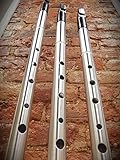
Low Whistle Silver Nightingale/A.Karavaev/Key С/Tuneable/Traditional Irish Whistle/Flute
Aluminum body with ABS mouthpiece
Key of C
Tuneable
650x25mm
Handcrafted
Pros
- Beautiful low sound quality
- Easy to learn and play
- Tuneable with adjustable pitch
- Removable mouthpiece
- Collapsible metal body for transport
- Handcrafted by Russian master
Cons
- Requires large hand span of 3.25 inches
- Extended length demands wrist mobility
- Limited review data with 4 reviews
The Nightingale Low Whistle in Key of C by A. Karavaev is a distinctive instrument handcrafted by a Russian maker. It features an anodized aluminum body with an ABS plastic mouthpiece and is pitched in C rather than the more common D. The 3.7 rating across 4 reviews reflects a quality instrument with a specific ergonomic limitation.
The sound is the selling point. Reviewers describe a beautiful, deep, low tone that has a haunting quality. The key of C sits a whole step lower than D, producing a darker, more contemplative sound that works beautifully for slow airs and moody pieces. The tuneable design with a removable mouthpiece gives you practical pitch control.
The collapsible metal body is a thoughtful design feature. It allows the whistle to be broken down to a shorter length for transport, which is genuinely useful for traveling musicians. The anodized aluminum construction is durable and maintenance-free.
The ergonomic concern is significant. The finger hole spacing requires a 3.25-inch hand span per set of holes, and the extended length demands additional wrist mobility. Players with smaller hands may find this instrument physically uncomfortable or impossible to play well. This is an instrument that rewards large-handed players and punishes smaller ones.
Why Choose Key of C Over Key of D?
Key of C is less common in Irish sessions but valuable for solo performance, recording, and playing in keys that sit awkwardly on a D instrument. The lower pitch produces a darker, more meditative tone. If you already own a D whistle and want to expand your tonal palette, a C whistle is a natural second instrument.
Is the Handcrafting Quality Evident?
Based on available reviews, the craftsmanship is evident in the tone quality and the attention to design details like the collapsible body. The handcrafted nature means each instrument may have slight variations, which can be a positive for tone character but means quality control is less standardized than factory-produced instruments.
9. Brittania Wooden Fife in D – Cocuswood

Brittania Wooden Fife in D – Cocuswood | Used for Civil War Re-Enactment flute, historical Renaissance Baroque instrument, LARP, Fife and Drum Corp Marching Band and parades
Cocuswood body
Key of D
Two-piece design
13.39 inches
Includes fingering chart
Pros
- Beautiful sound with superb tone
- Cocuswood has premium appearance
- Two-piece design aids tuning and cleaning
- Authentic historical instrument design
- Suitable for reenactment and traditional music
Cons
- Does not come with a case
- Some units may have rough bore finish
- Quality may vary between units
- Higher notes can be difficult to reach
The Brittania Wooden Fife in D by Clarke Tinwhistle is a cocuswood instrument with historical roots. It is a cylindrically bored transverse flute with six finger holes and no keys, following the design used for Renaissance, Baroque, and Civil War era music. The 4.6 rating across 12 reviews reflects strong satisfaction with some quality variance.
Cocuswood is a historically significant tonewood that was prized by 19th-century flute makers. It has a bright, focused tone that sits between the warmth of rosewood and the darkness of African Blackwood. The Brittania fife produces what reviewers describe as a beautiful sound with a superb, piercing tone that projects well.
The two-piece design is practical for both tuning and cleaning. Being able to separate the instrument means you can swab the bore effectively and make minor pitch adjustments. At 13.39 inches, this is a compact instrument that is easy to carry and handle, making it accessible for younger players and those with smaller hands.
The main concerns are around quality consistency. Some reviewers noted a rough bore finish that affected playability, and the ability to reach higher notes varied between units. The instrument does not come with a case, so you will need to source protective storage separately. A fingering chart is included, which helps beginners get started.
Is a Fife the Same as an Irish Flute?
A fife and an Irish flute share the same basic six-hole transverse design, but they differ in bore profile and typical key. Fifes are typically cylindrically bored and higher-pitched, while traditional Irish flutes usually have a conical bore and are pitched in D. However, the playing technique transfers directly between them, making a fife a viable practice instrument for building Irish flute skills.
What Should You Know About Cocuswood Maintenance?
Cocuswood, like all wooden instruments, requires regular bore oiling to prevent cracking. Avoid rapid temperature and humidity changes. Store the instrument in its case when not in use, and never leave it in a hot car or near a heater. With proper care, cocuswood instruments can last for generations.
10. Brittania Fife in D – Polymer

Brittania Fife in D – Polymer | Used for Civil War Re-Enactment flute, historical Renaissance Baroque instrument, LARP, Fife and Drum Corp Marching Band and parades
Polymer body
Key of D
Two-piece design
13.39 inches
Includes fingering chart
Pros
- Good sound quality for polymer
- Sturdy and durable construction
- Easy for beginners to start
- Two-piece design for cleaning
- Affordable and lightweight
Cons
- Does not come with a case
- May feel less premium than wood
- Embouchure may need minor alteration
- Not extremely durable long-term
The Brittania Fife in D Polymer is the polymer sibling of the cocuswood model above, offering the same historical design in a maintenance-free material. It carries an identical 4.6 rating across 12 reviews, suggesting that Clarke Tinwhistle maintains consistent quality across material variants.
The polymer construction is the primary draw here. You get the same six-hole transverse design, the same traditional playing technique, but without any of the maintenance concerns of wood. No oiling, no climate sensitivity, no cracking risk. For a beginner who wants to focus on learning rather than instrument care, this is a smart choice.
Reviewers describe the sound as good for a polymer instrument, with the sturdy feel giving confidence in its durability. The two-piece design allows for easy cleaning, and the polymer material means you can swab the bore without worrying about moisture absorption. The instrument is lightweight and portable, making it practical for carrying to lessons or sessions.
The polymer material does have trade-offs. It may feel slightly less premium in the hands compared to wood, and the tonal character lacks some of the warmth and complexity of a wooden instrument. The embouchure may need minor alteration out of the box for optimal sound production. These are minor issues that reflect the price point.
Polymer vs Cocuswood: Which Should You Choose?
If low maintenance and durability are your priorities, choose polymer. If tonal richness and traditional materials matter more, choose cocuswood. The polymer version costs slightly more but saves money long-term on maintenance supplies and carries zero risk of climate damage. For travel, outdoor use, and rough handling, polymer is clearly superior.
How Does It Sound Compared to the Wooden Version?
The wooden cocuswood version has a slightly warmer, more complex tone with better projection. The polymer version is brighter and more consistent but lacks some depth. For learning purposes, the difference is minimal. For performance and recording, the wooden version has a clear tonal advantage.
11. Irish Professional Tunable D Flute – 4 Piece Wood

Irish Professional Tunable D Flute with Hard Case 23″ Length 4 Pcs
Wood body
4-piece design
Key of D
23 inches
Hard case included
Tunable
Pros
- Professional tunable design
- Hard black case included
- Rosewood natural finish
- 4-piece body for transport
- Suitable for Celtic and traditional music
- Prime eligible
Cons
- No reviews yet to verify quality
- Generic brand with unknown reputation
- Ships in 11 to 12 days
- Limited product information available
The Irish Professional Tunable D Flute in its 4-piece configuration is a rosewood instrument aimed at the budget-to-mid-range market. It features a natural finish, comes with a hard black case, and follows the four-piece design that allows for breakdown and transport. As a newer listing, it has no reviews yet, making assessment challenging.
Based on the specifications and product description, this flute follows the same general design language as the AAR 3-piece model but adds an additional section. The four-piece design means the flute breaks down into more compact segments, which is useful for travel. The included hard case provides protection during transport.
The rosewood construction should produce a warm tone suitable for Irish and Celtic traditional music. The tunable design is a practical feature that allows for pitch adjustment. Being Prime eligible is an advantage for delivery speed and return policy, though the listed shipping time of 11 to 12 days is longer than typical Prime delivery.
The lack of reviews is the primary concern. Without user feedback, we cannot assess tone quality, build consistency, intonation accuracy, or common issues. The generic brand means there is no maker reputation to rely on. Buyers should ensure they can return the instrument if it does not meet expectations, and should be prepared for potential setup work similar to other budget rosewood flutes.
What Does the Fourth Piece Add?
In a four-piece Irish flute, the sections typically include the headjoint, upper body, lower body, and footjoint. This allows for more precise assembly adjustment and more compact breakdown for transport. Some four-piece designs also allow you to swap footjoints for different keys or tuning configurations.
Is It Worth Buying an Unreviewed Flute?
Only with a strong return policy. The Prime eligibility provides some protection through Amazon’s return system. If the flute arrives with significant intonation problems or build defects, you can return it. However, the 11 to 12 day shipping time means you wait longer to discover whether you have a good instrument.
12. Irish D Flute Professional 4-Piece with Hard Case

Irish D Flute Professional 4-Piece with Hard Case | 6-Hole C/D High Tone Irish Whistle | Detachable Body for Clear Projection & Smooth Fingering | Suitable for Celtic Performance, Practice Sessions
Plastic body
4-piece design
Key of D
Hard case included
Detachable body
Yellow finish
Pros
- Four-piece body for easy transport
- Protective hard case included
- Crisp bright projection
- Balanced air channel for stable pitch
- Smooth fingering for extended playing
- 1 month warranty
Cons
- No reviews available to assess quality
- Plastic construction may limit tone depth
- Generic brand with no reputation
- Very limited product information
The Irish D Flute Professional 4-Piece rounds out our list as the most affordable option. It features a plastic construction with a yellow polished finish, a four-piece detachable body, and comes with a hard case. As a brand-new listing, it has no reviews, placing it firmly in the speculative purchase category.
The product description emphasizes crisp, bright projection with clean articulation, balanced air channel for stable pitch, and hole spacing that supports fluid hand movement. These are ambitious claims for an instrument at this price point, and without user verification, they should be treated as marketing language rather than tested performance.
The four-piece structure is practical for transport and storage. The hard case is a value inclusion at any price point. The one-month warranty provides minimal but real protection against defects. The plastic construction means zero maintenance concerns, which is appropriate for an absolute beginner instrument.
Realistically, this flute is designed for someone who wants to spend the absolute minimum to try a transverse Irish flute. It will not produce the tone of a wooden or aluminum instrument, and the plastic construction limits the depth and warmth of sound. However, if your goal is simply to discover whether you enjoy playing the Irish flute before investing more, this serves that purpose at minimal financial risk.
What Can You Realistically Expect at This Price?
Expect a basic, functional instrument that produces a sound when blown across correctly. The tone will be thin compared to pricier alternatives. Intonation may be approximate rather than precise. Build quality should be adequate for learning purposes but will not withstand heavy use. This is a trial instrument, not a long-term musical companion.
When Should You Upgrade From This Flute?
Plan to upgrade within three to six months if you are practicing regularly. Signs that you have outgrown this instrument include frustration with intonation, desire for richer tone, and developing the breath control to take advantage of a better-quality flute. When you upgrade, look at the polymer and rosewood options higher on this list for a meaningful step up in quality.
Frequently Asked Questions About Irish Flutes
What brand makes the best Irish flutes?
Top Irish flute makers include McNeela, Sam Murray, Hammy Hamilton, Pat Olwell, Michael Grinter, Seery, and Carbony. Each specializes in different price tiers: McNeela for beginners to intermediates, Sam Murray for intermediate to professional, and Grinter, Olwell, and Hamilton for high-end professional instruments. For modern polymer options, Carbony and Tony Dixon are highly regarded.
What flute is used in Celtic music?
Celtic and Irish traditional music uses the simple-system Irish flute, a six-hole wooden or polymer keyless or lightly keyed flute based on 18th-century Pratten designs, typically pitched in the key of D. This flute produces the characteristic woody, reedy tone that defines the genre.
What is the difference between a Boehm flute and an Irish flute?
The key difference is the scale and key system. A simple-system Irish flute is in the key of D with six open holes and uses a Pratten-style conical bore. A Boehm classical flute is in the key of C, has a fully keyed system with a cylindrical bore, and is designed for classical technique rather than traditional Irish ornamentation like cuts, rolls, and crans.
How much does a good Irish flute cost?
A good beginner Irish flute costs between $40 and $150. Intermediate quality instruments range from $150 to $300. Professional handcrafted flutes from renowned makers typically cost $800 to $3,000 or more, with some premium keyed flutes reaching $6,000. Polymer flutes offer the best value at every tier.
Is the Irish flute hard to learn?
The Irish flute has a moderate learning curve. Producing a clean tone from the embouchure takes a few weeks of daily practice. Learning the six-hole fingering is straightforward if you have tin whistle experience. Mastering Irish ornamentation (cuts, rolls, crans, slides) takes years but is part of the instrument’s enduring appeal.
Should I start with a keyed or keyless Irish flute?
Start with a keyless flute. It is cheaper, lighter, and forces you to develop solid fundamental technique. Most Irish traditional tunes can be played fully on a keyless flute. You can always upgrade to a keyed flute later when you know which chromatic notes you actually need for your repertoire.
Do polymer Irish flutes sound as good as wooden ones?
High-quality polymer and Delrin flutes from respected makers sound remarkably close to wooden instruments. Many experienced players cannot distinguish them in blind listening tests. Polymer offers the practical advantages of zero maintenance, climate immunity, and lower cost, making it an excellent choice for travel and session use.
Conclusion: Choosing Your Best Irish Flute in 2026
The best Irish flutes span a remarkable range of materials, prices, and playing levels. For most players, the MK Kelpie Low D Whistle represents the sweet spot of professional build quality, outstanding tone, and zero-maintenance durability. If you want something visually unique with a bell-like clarity, the Hall Crystal Flute in D delivers exceptional quality and craftsmanship.
For budget-conscious beginners, the AAR Rosewood D Flute and Tony Dixon polymer models offer playable starting points without a major financial commitment. The Howard Low D Whistle remains a community favorite for its tunable design and rich tone, while the polymer and cocuswood Brittania fifes serve double duty as practice instruments and historical reenactment tools.
Whatever you choose, the most important thing is to start playing. The Irish flute tradition is built on practice, listening, and participation in sessions. A modest instrument played daily will always sound better than an expensive one gathering dust. Pick the flute that fits your budget and hand size, learn your first tune, and let the music carry you forward.