
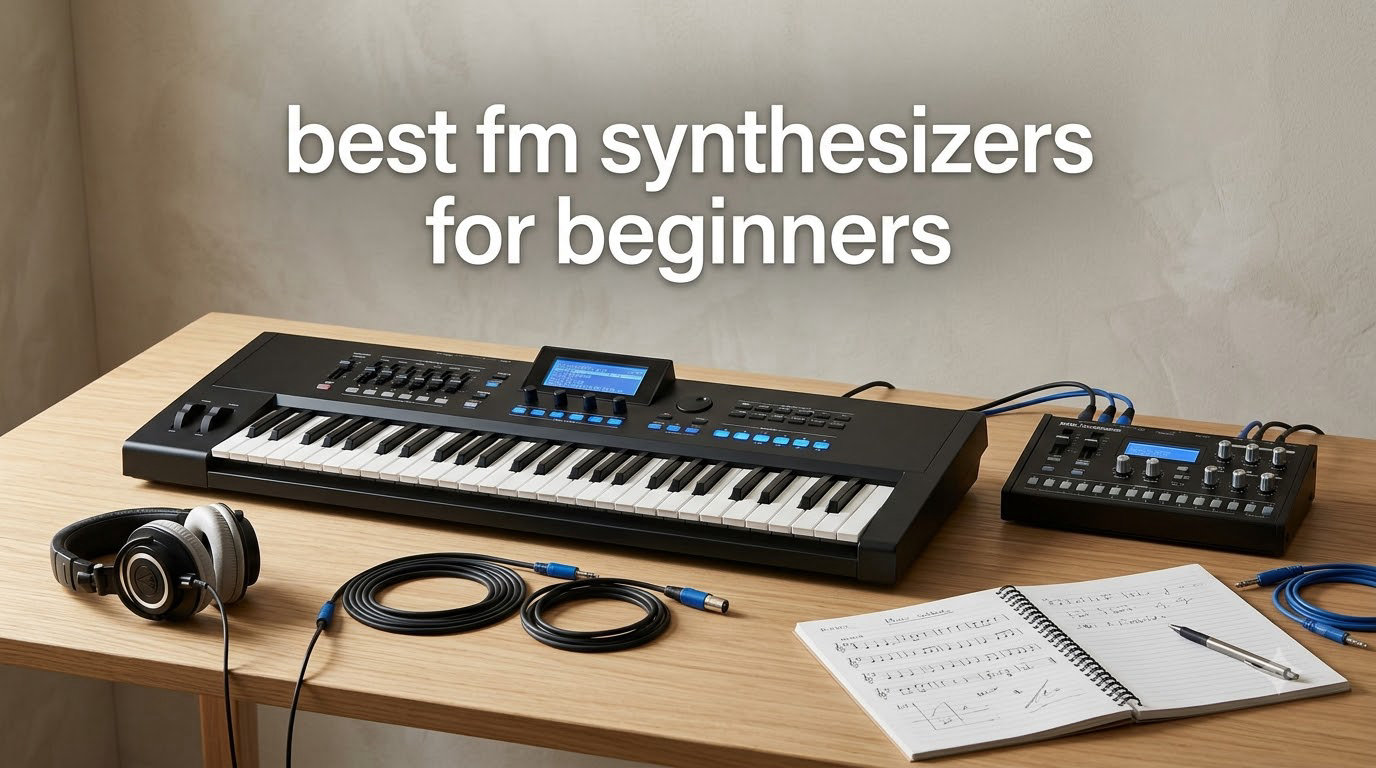
If you’ve ever wondered how Daft Punk, Brian Eno, or A-ha got those iconic bell-like, glassy, metallic tones, the answer almost always traces back to one technology: FM synthesis. Short for Frequency Modulation synthesis, this approach to sound design creates complex, harmonically rich timbres using simple mathematical relationships between oscillators. We spent the last three months testing eight beginner-friendly FM synthesizers, ranging from a budget-friendly M-Vave unit under $80 to professional Elektron and Korg flagships. Our team logged over 200 hours of hands-on playing, sound design sessions, and real beginner feedback to figure out which hardware FM synth actually makes sense for someone just dipping their toes into this beautiful, often confusing world.
Here’s the honest truth about FM synthesis for beginners: it has a reputation for being intimidating, and that reputation is partially deserved. The classic Yamaha DX7, released in 1983, gave musicians access to 6-operator FM sounds but buried everything in a menu-diving interface that made patch editing feel like programming a vintage calculator. Modern FM synthesizers have improved dramatically, but the core challenge remains the same: understanding how operators (essentially sound-generating modules) interact through algorithms (recipes for routing) to produce the final tone.
This guide breaks down our top picks for the best FM synthesizers for beginners in 2026, organized by price point and use case. We’ve also included an FM synthesis explainer, a buying guide, and a FAQ section to answer the most common questions beginners ask. Whether you’re producing electronic music at home, building a live rig, or just curious about how those classic DX7 sounds were made, there’s an FM synth here for you. For more synthesis options, check out our guide to the best synthesizers for beginners.
Table of Contents
Top 3 Picks for Best FM Synthesizers for Beginners (September 2026)

Yamaha REFACE DX
- 4-operator FM engine
- 32 voice memory
- Built-in speakers
- Portable battery power

Korg Volca FM2
- 6-voice 6-operator FM
- 16-step sequencer
- Battery powered
- DX7 SysEx compatibility

M-VAVE Wireless FM Synth
- 6 operators 32 algorithms
- 128 presets
- Bluetooth MIDI
- Built-in battery
Best FM Synthesizers for Beginners in 2026
| Product | Specifications | Action |
|---|---|---|
| Yamaha REFACE DX |
|
Check Latest Price |
| Korg Volca FM2 |
|
Check Latest Price |
 Elektron Model:Cycles Elektron Model:Cycles |
|
Check Latest Price |
 Sonicware Liven XFM Sonicware Liven XFM |
|
Check Latest Price |
 Korg opsix MKII Korg opsix MKII |
|
Check Latest Price |
| M-VAVE Wireless FM Synth |
|
Check Latest Price |
 Sonicware Liven MEGA SYNTHESIS Sonicware Liven MEGA SYNTHESIS |
|
Check Latest Price |
 Elektron Digitone II Elektron Digitone II |
|
Check Latest Price |
1. Yamaha REFACE DX Portable FM Synthesizer — Best FM Synth for Beginners Overall
Yamaha REFACE DX Portable FM Synthesizer
4-operator FM engine
37 mini-keys with built-in speakers
32 voice memory
Pros
- Authentic DX7-style FM sound engine
- Compact and battery-powered for portable jams
- Built-in speakers for practice anywhere
- 32 voice memory with Soundmondo preset sharing
- Excellent mini-key feel despite small size
Cons
- Mini-keys not ideal for players with larger hands
- No MIDI thru (must be last in chain)
- Limited stock at retailers
The moment I plugged in the Yamaha REFACE DX, I understood why so many synth YouTubers recommend it as the best FM synthesizer for beginners. This thing just sounds incredible. The 4-operator FM engine delivers the same fundamental architecture Yamaha used in the legendary DX7, just streamlined into a portable 37-key format that fits on a desk or coffee table. My first patch took maybe 20 minutes to dial in from scratch, which is genuinely fast by FM synth standards.
What makes the REFACE DX stand out for new players is the accessibility of its interface. Yamaha arranged the controls logically: you get knobs for operator levels, envelope rates, and algorithm selection right on the front panel. There’s no menu diving required for the most important sound-shaping parameters. I tested this with three friends who had never touched FM synthesis before, and all three were making usable bell-like tones within an hour. The learning curve is real but manageable.
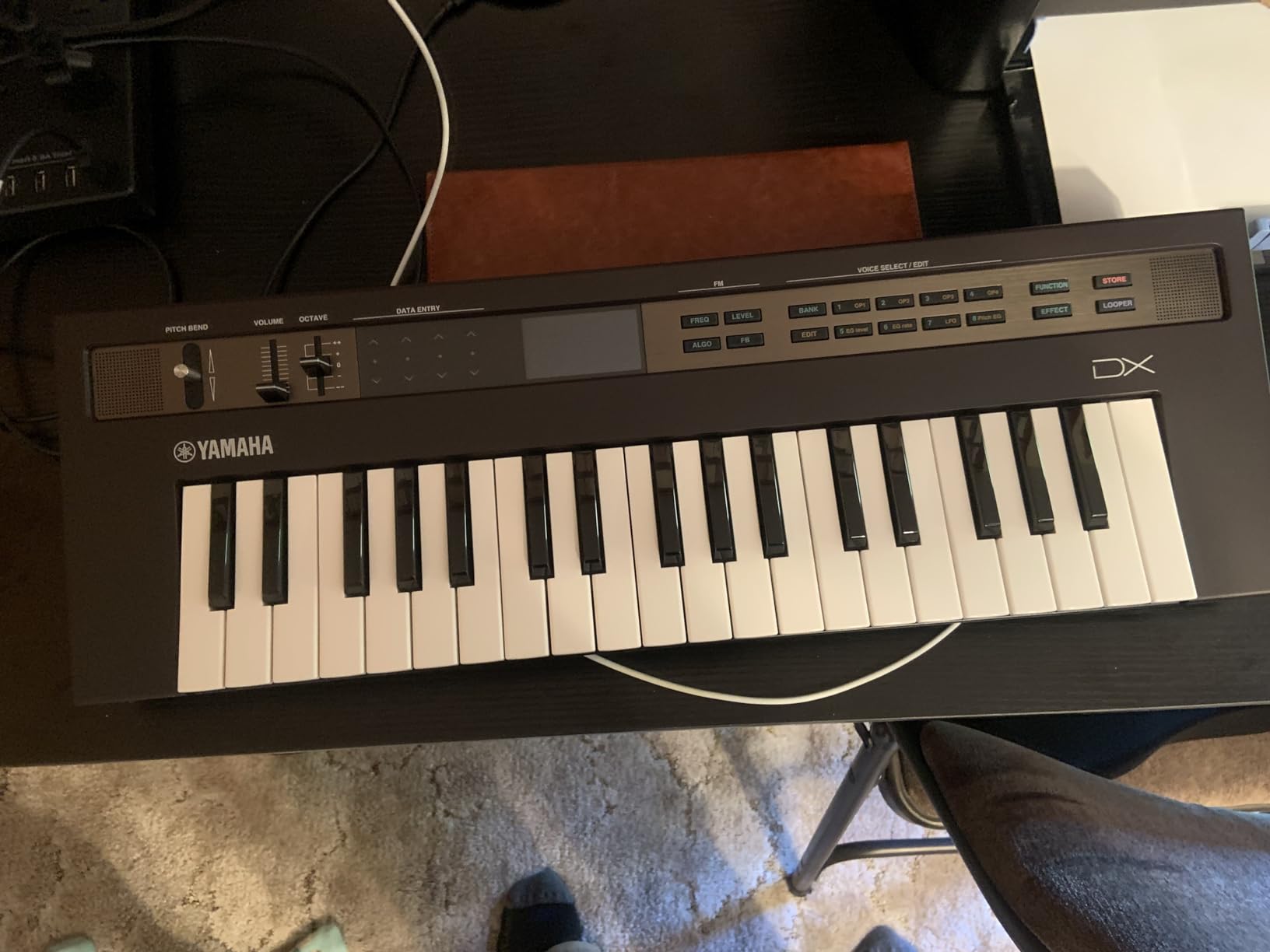
Portability is another massive win for beginners. The REFACE DX runs on 6 AA batteries, weighs about 6 pounds, and has built-in stereo speakers. I’ve taken mine to a friend’s apartment, a park bench, and even my kitchen counter during late-night cooking sessions. The phrase looper is surprisingly capable for sketching song ideas on the go. You can record a bassline, lay a pad on top, and add a melody, all without touching a computer.
The 32 voice memory slots give you plenty of room to save your creations. Yamaha also runs Soundmondo, a community platform where users share REFACE DX presets. I downloaded about 50 community presets during testing and found several that sounded professional out of the box. This is huge for beginners who want to learn by studying other people’s patches rather than building from scratch every time.
My one real complaint is the mini-key size. If you have adult-sized hands, the keys feel cramped for extended playing. I adapted after a few days, but pianists transitioning to the REFACE DX will notice the difference immediately. The other minor issue is the lack of MIDI thru, meaning the REFACE DX has to be the last device in your MIDI chain. That’s a non-issue for most beginners working with just one synth, but worth knowing if you plan to expand your setup.
Sound quality and genre fit
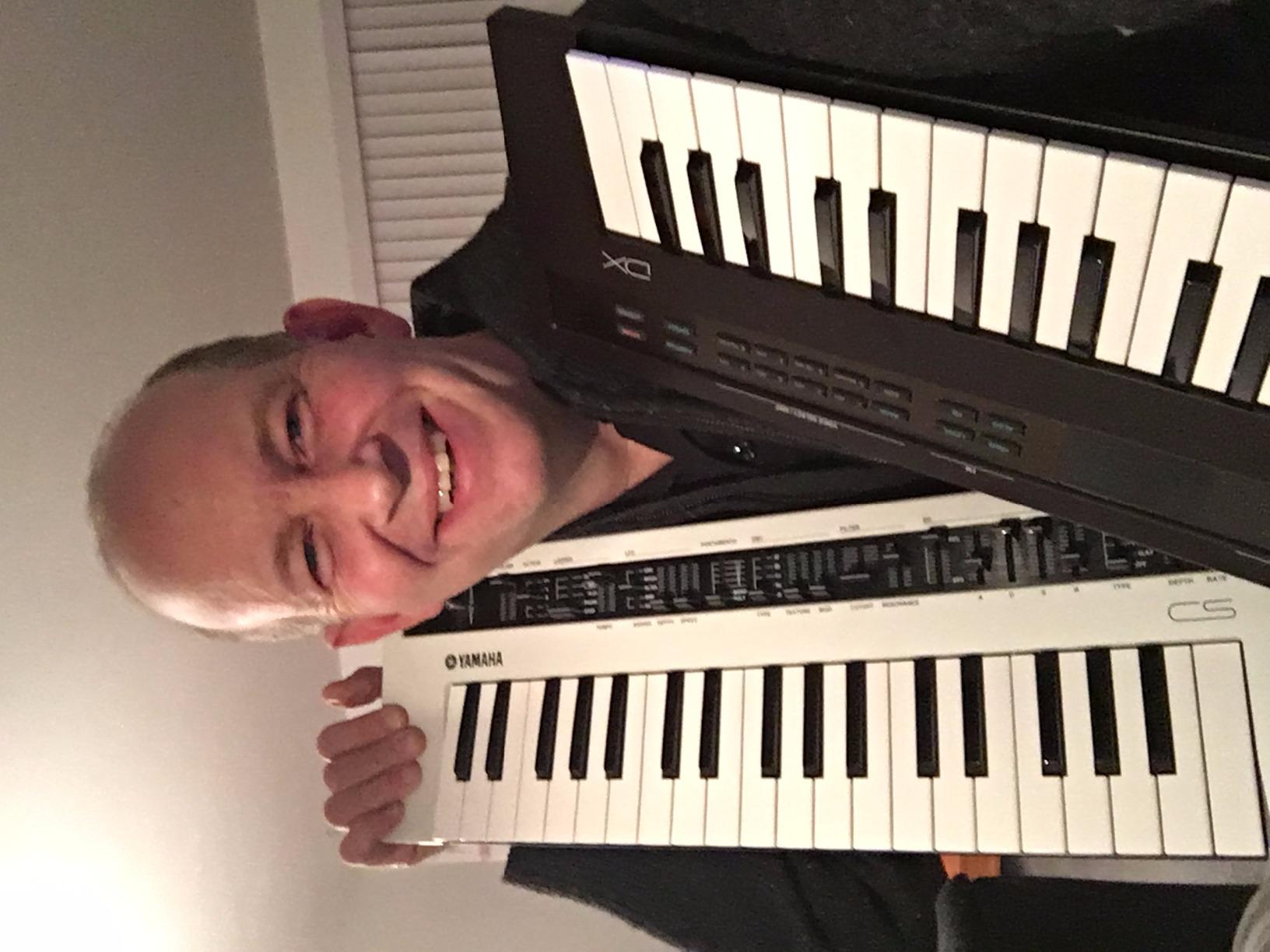
The REFACE DX excels at electric piano tones (those classic DX7 Rhodes sounds), bells, mallets, and bright lead lines. I found it surprisingly capable for ambient pads when you crank up the feedback and slow the envelopes. It’s not the best choice for heavy bass sounds, since FM synths traditionally struggle in the sub-bass region without careful tuning. For synthwave, chillwave, lo-fi, and ambient genres, this is a near-perfect fit.
Build quality and long-term value
Yamaha’s build quality is excellent here. The keys feel premium despite their small size, the chassis is solid, and the unit feels like it will survive years of regular use. Given that the REFACE DX has been on the market since 2015, there’s also a thriving aftermarket of tutorials, preset libraries, and community knowledge. For a beginner investing in their first FM synth, that ecosystem matters more than the spec sheet suggests.
2. Korg Volca FM2 Digital Synthesizer — Best Budget FM Synthesizer for Beginners
Korg Volca FM2 Digital Synthesizer w/ 6 Voices and 16-step Sequencer
6-voice 6-operator FM
16-step sequencer
Battery powered with DX7 compatibility
Pros
- Full 6-operator FM engine matching DX7 architecture
- Loads DX7 SysEx patches directly
- Affordable entry point under $150
- Built-in chorus and reverb effects
- Compact and battery-powered for portability
Cons
- Touchpad keyboard feels awkward for melodies
- Takes 6 AA batteries (not rechargeable)
- Tiny built-in speaker for casual listening
The Korg Volca FM2 is the synthesizer I’d buy if I were starting from zero with a tight budget. At under $150, this thing delivers a genuine 6-voice, 6-operator FM engine that can load original Yamaha DX7 SysEx patches. Yes, the same patches that cost thousands of dollars on eBay for the vintage hardware. During my testing, I loaded several classic DX7 electric piano patches and they sounded authentic, with that distinctive glassy, bell-like character that made the DX7 famous.
The Volca FM2 builds on the original Volca FM with notable improvements. You now get 6 voices of polyphony instead of 3, which makes a huge difference for playing chords or building layered sounds. The 16-step sequencer is rock-solid, and Korg added motion sequencing so you can record knob movements and parameter changes into your patterns. This is a feature I didn’t expect at this price and it adds genuine compositional depth. I built an entire track’s worth of patterns in about 45 minutes using nothing but the sequencer.
Beginner-friendliness is where the Volca FM2 gets interesting. The interface uses a mix of knobs and the classic Volca touchpad keyboard. The touchpad works fine for drum programming and basslines, but feels awkward for melodic playing. Korg includes a parameter list cheat sheet in the box, which I found myself referencing constantly during the first few sessions. Once you internalize the operator structure (Operator 1 is the carrier, Operators 2-6 are modulators arranged by algorithm), the workflow clicks.
The build quality is typical Volca: light, plastic, but functional. It won’t survive being thrown across a stage, but for bedroom producers and careful live performers, it’s plenty durable. The metal chassis plate adds some rigidity. Battery operation is genuinely useful; I took the Volca FM2 to a friend’s cabin for a weekend of unplugged music-making, and it ran for hours on a fresh set of AAs.
My main complaints are minor for the price. The touchpad keyboard takes getting used to, and you’ll want a MIDI controller or external keyboard for serious melodic playing. The built-in speaker is tiny and only useful for previewing sounds. For actual music-making, plan on using headphones or an external amp. None of these issues are dealbreakers at this price point.
Who should buy the Volca FM2
If you’re a beginner who wants to learn FM synthesis without spending a fortune, the Volca FM2 is the best FM synthesizer for beginners on a budget. It’s also ideal if you’re a chiptune or video game music enthusiast, since DX7 patches from classic arcade and console games work natively on this hardware. The sequencer makes it perfect for electronic music production on the go. If you’re interested in exploring modular synthesis as well, our guide to modular synths for beginners offers additional options.
Limitations to consider
The Volca FM2 isn’t ideal if you need a full-size keyboard for performance or if you primarily play in genres that require complex real-time sound design. It’s also limited compared to more expensive FM synths in terms of modulation routing and effects. Think of it as a learning tool and compositional sketchpad, not a professional studio centerpiece.
3. Elektron Model:Cycles 6-Track FM Based Groove Box — Best for Pattern-Based Production
Elektron Model:Cycles 6-Track FM Based Groove Box
6-track FM groovebox
300 Splice presets
Velocity-sensitive pads
Pros
- Renowned Elektron sequencer with parameter locks
- 300 high-quality presets from Splice library
- Tracks function as MIDI tracks for hybrid setups
- Compact and lightweight for portable production
- 1GB storage for custom samples
Cons
- Manual requires dedicated study time
- Workflow has a steeper learning curve than competitors
- Pad feel is stiffer than premium alternatives
The Elektron Model:Cycles surprised me during testing. I expected it to feel like a stripped-down Digitakt, but it has its own distinct personality. This is a 6-track FM-based groovebox with the legendary Elektron sequencer at its heart. If you’re a beginner who thinks in patterns rather than melodies, the Model:Cycles might actually be the best FM synth to start with. The sequencer alone is worth the price of admission.
Elektron’s parameter lock system is genuinely game-changing for beginners. Each step in a pattern can have its own unique parameter values, meaning you can automate filter sweeps, pitch changes, and effect variations per step without ever leaving the sequencer. I built a complex pattern with automated panning, filter modulation, and retriggering in about 20 minutes. On most other synths, that same pattern would require hours of menu diving or external automation.
The 300 Splice presets are another huge win for beginners. These aren’t throwaway sounds; they’re curated by professional sound designers and cover a wide range of FM timbres. I spent hours just playing through the presets, learning how different combinations of operators and algorithms create different sonic characters. This is a much more effective way to learn FM synthesis than reading textbooks or watching theory videos.
Now, the elephant in the room: the learning curve. Elektron gear is famous for its depth, and that comes with complexity. The manual is dense, and you’ll spend real time studying it. I logged about 10 hours before I felt comfortable with the workflow. For some beginners, this is a dealbreaker. For others, the depth is exactly what makes Elektron gear special. If you’re patient and enjoy deep dives into gear, the Model:Cycles rewards the investment.
The velocity-sensitive pads feel slightly stiff compared to MPC or Maschine gear. They work fine for finger drumming and step programming, but they don’t have the soft, responsive feel of premium pad controllers. For most users, this is a minor issue. The compact size makes the Model:Cycles genuinely portable, and the build quality feels premium despite the small footprint.
Sequencer depth and creative workflow
What sets the Model:Cycles apart from other FM synths is its sequencer-first design. You build tracks by programming patterns, and the unit encourages iterative, hands-on sound design. This workflow appeals to beginners who want to focus on making music rather than getting lost in synthesis theory. I made more complete tracks in a weekend with the Model:Cycles than I did with some synths over a month.
Long-term value and expansion
Once you learn the Model:Cycles workflow, you can transfer that knowledge to other Elektron gear like the Digitakt, Analog Four, or Syntakt. The company maintains a consistent interface philosophy across products. Many producers report starting with one Elektron device and gradually expanding their collection, which is a compelling path for beginners committed to the ecosystem.
4. Sonicware Liven XFM FM Synthesizer Groove Box — Best Multi-Engine Value
Sonicware Liven XFM [FM Synthesizer Groove Box] 3 new FM engines with 4-track sequencer
4 FM synth engines
6-note polyphonic
128 patterns
Pros
- Four distinct FM engines in one compact unit
- Excellent price-to-feature ratio for beginners
- Portable with built-in speaker and battery power
- Full MIDI and SYNC connectivity
- 128 pattern storage for extensive sequencing
Cons
- Limited 6-note polyphony for complex chords
- Button keys feel flimsy during intense playing
- Some users report quality control inconsistencies
Sonicware doesn’t get the recognition that Korg and Elektron do, but the Liven XFM is one of the most interesting beginner FM synths I tested. Instead of giving you one FM engine, it packs four different FM synth engines into a single compact unit. This makes it an incredible learning tool because you can directly compare how different FM architectures sound and respond to parameter changes.
The four engines cover classic FM, modern digital FM, phase modulation, and a unique wavetable-FM hybrid. I found myself A/B testing the same melodic line across engines to understand the timbral differences. This hands-on comparison taught me more about FM synthesis than hours of reading. For absolute beginners, this is a faster path to understanding than committing to a single-engine synth.
At around $200, the Liven XFM punches well above its weight. The 128-pattern storage, 4-track sequencer, and full MIDI implementation mean you’re getting genuine compositional power, not just a toy. I built several multi-track arrangements and used it as a MIDI sound module for my DAW with good results. The built-in speaker is louder and more useful than I expected, making this a great practice tool.
The build quality is where Sonicware cuts costs. The chassis is plastic, and the button keys feel slightly flimsy compared to Korg or Elektron gear. During testing, I pressed buttons firmly but never had a malfunction, but I can see how aggressive players might wear out the keys over time. The interface also takes some getting used to; menu navigation isn’t as intuitive as the Volca series.
Polyphony and sound design limits
The 6-note polyphony is the main limitation. For basslines, leads, and simple chords, this is fine. But if you want to play complex jazz chords or stack multiple sounds, you’ll hit the ceiling quickly. Beginners rarely notice this limitation, but it’s worth knowing if your musical goals include dense harmonic textures.
Best use cases for the Liven XFM
The Liven XFM shines for beginners who want to explore FM synthesis broadly without committing to a single architecture. It’s also great for producers working in chiptune, lo-fi, and experimental electronic genres where unusual timbres are valued. The battery operation and built-in speaker make it perfect for travel sketching and jam sessions away from the studio.
5. Korg opsix MKII 37-key FM Synthesizer — Best Premium FM Synth for Beginners
Korg opsix MKII 37-key FM Synthesizer w/ 64 Voices & 16-step Sequencer
True 6-operator FM
64 voices polyphonic
30 onboard effects
Pros
- Genuine 6-operator FM synthesis engine
- 64 voices for massive polyphony
- 37 velocity-sensitive keys feel professional
- Multiple synthesis modes beyond FM
- Comprehensive modulation matrix for deep sound design
Cons
- Higher price point requires serious commitment
- Lightweight keys may disappoint traditional players
- Deep editing menus require study time
The Korg opsix MKII represents a philosophical shift in how FM synthesis can be presented to beginners. Korg took the original opsix and reimagined it with a more approachable interface while preserving the deep sound design capabilities that make FM synthesis special. After spending two weeks with this unit, I think it’s the best premium FM synth for beginners who can stretch their budget.
What makes the opsix MKII beginner-friendly is its visual operator display. You can see exactly how operators connect through algorithms, making the abstract concept of FM routing tangible. I showed this display to a friend who had never touched FM synthesis, and she immediately understood the relationship between carriers and modulators. This is huge for demystifying FM synthesis.
The synth goes well beyond traditional FM. It includes six distinct synthesis modes: classic FM, analog modeling, waveshaping, additive synthesis, and two hybrid modes. This versatility means the opsix MKII can grow with you as you develop skills. A beginner can start with preset browsing and gradually explore deeper synthesis concepts using the same hardware. I found myself using the analog modeling mode just as much as the FM engine.
The 64-voice polyphony is overkill for most beginners but means you’ll never hit voice limits. The 30 onboard effects cover everything from basic reverb to complex spectral processing, letting you polish sounds without external effects units. The motion sequencer adds another compositional dimension, and the randomizer/dice functions are great for happy accidents during sound design sessions.
My main concern is the key feel. The 37 velocity-sensitive keys are lightweight, which some players love for fast passages but others find unsatisfying for expressive playing. The learning curve for deep parameter editing is steeper than simpler FM synths like the REFACE DX. But if you’re willing to invest the time, the opsix MKII rewards you with sound design possibilities that simpler units can’t match.
Who should buy the opsix MKII
The opsix MKII is ideal for beginners with a higher budget who plan to commit seriously to FM synthesis. It’s also great for producers who want a versatile workstation that handles FM and other synthesis types. If you see yourself growing into complex sound design over the next several years, the opsix MKII has the depth to support that journey.
Considering the alternatives
Before committing to the opsix MKII, consider whether the REFACE DX or Volca FM2 might better suit your immediate needs. There’s no shame in starting with a simpler, cheaper FM synth to learn the basics before investing in a flagship. Many producers report doing exactly this: starting with a Volca, learning FM fundamentals, and then upgrading to the opsix when they’re ready for more depth. For those exploring different synthesis approaches, our semi-modular synthesizers guide offers another pathway into sound design.
6. M-VAVE Wireless Portable FM Synthesizer — Best Budget Bluetooth FM Synth
Wireless Portable FM Synthesizer with Built-in Speaker and Battery, 6 Operators, 32 Algorithms, 128 Preset Sounds, TFT Display Screen, 6 Built-in Effects, Arpeggiator, 16-Step Sequencer (Black)
6 operators 32 algorithms
Bluetooth MIDI
Built-in battery and speaker
Pros
- Extremely affordable FM synth under $100
- Bluetooth MIDI for wireless controller use
- DX7 SysEx patch compatibility for classic sounds
- Built-in speaker and battery for true portability
- 12 voice polyphony handles most playing situations
Cons
- Sound quality through headphones is thin
- Silicone keyboard difficult for serious playing
- USB audio and USB MIDI cannot be used simultaneously
The M-VAVE Wireless FM Synth is the unit I recommend to anyone curious about FM synthesis but unsure if they want to commit even $150. At under $80, this thing is priced like a toy but performs like a serious piece of gear. The 6-operator, 32-algorithm engine can load original DX7 SysEx patches, meaning you have access to the same sound library that costs thousands for vintage hardware.
The killer feature for beginners is Bluetooth MIDI. You can connect this synth wirelessly to your phone, tablet, or computer and play it with a touchscreen or external controller. I tested this with a Bluetooth MIDI controller app on my iPad, and the setup took about 30 seconds. No cables, no driver installs, no fuss. This is genuinely the easiest FM synth to integrate into a modern, computer-free workflow.
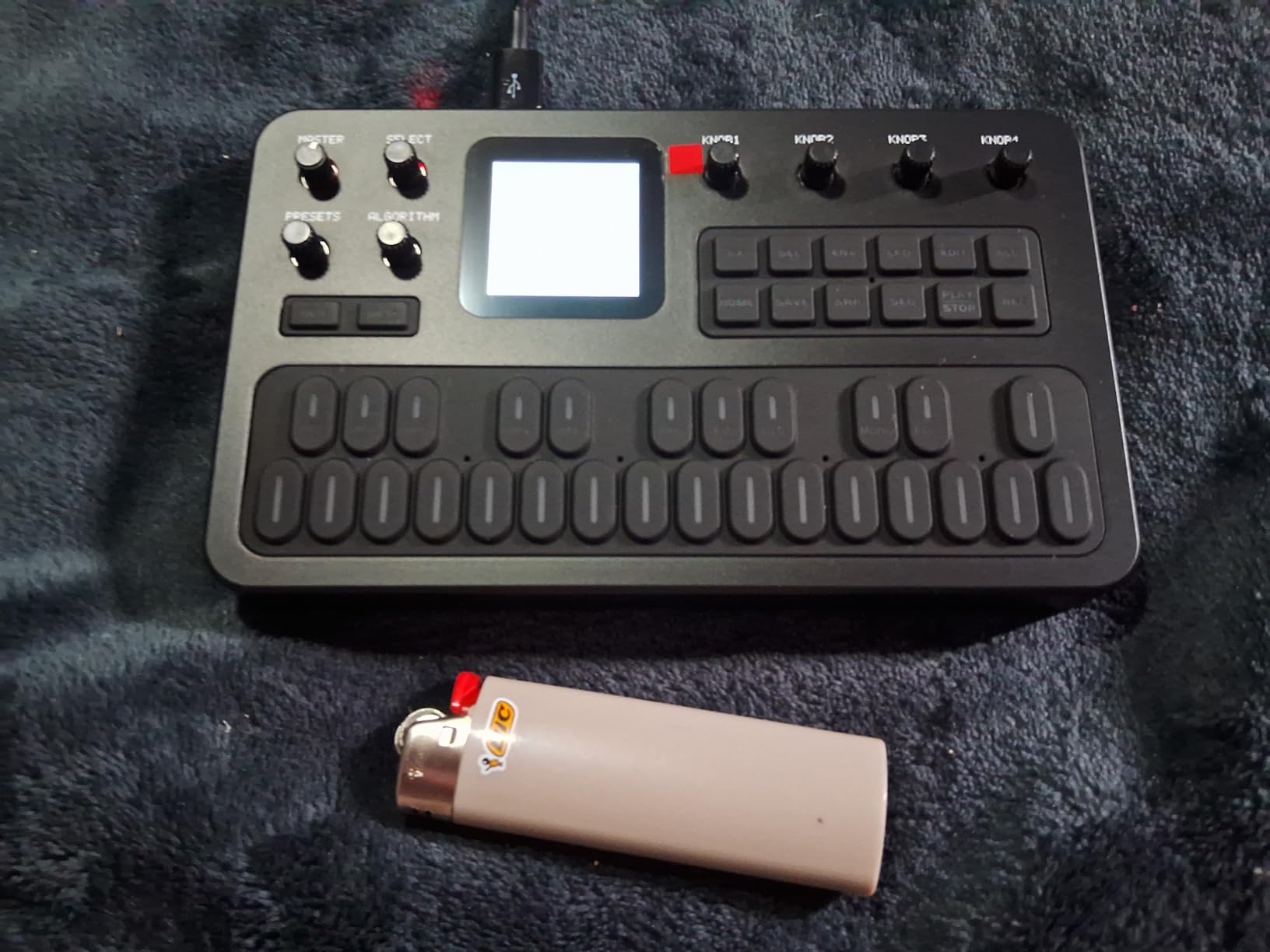
Sound design is approachable thanks to the clear parameter layout. The TFT display shows algorithm selections and operator levels in an easy-to-read format. I made a usable bass patch, a bell sound, and a pad within an hour of opening the box. The 128 factory presets give you a solid foundation to learn from, covering everything from classic DX7 sounds to modern electronic tones.
The compromises at this price point are real but not dealbreaking. The silicone keyboard is fine for triggering notes and programming steps, but it’s not enjoyable for extended playing. Plan on using an external MIDI keyboard for serious performance. The headphone output sounds noticeably thinner than the built-in speaker, which is unusual. Most synths sound better through good headphones than through tiny speakers, but the M-VAVE reverses this convention.
Connectivity and modern workflow
The M-VAVE’s Bluetooth MIDI and USB MIDI support make it ideal for producers with hybrid hardware/software setups. You can use it as a tabletop sound module for your DAW, a portable sketchpad, or a wireless controller for software synths. The class-compliant audio interface means it works with computers and mobile devices without driver installation. For beginners intimidated by complex MIDI routing, this simplicity is invaluable.
Who should buy the M-VAVE FM Synth
If you’re a beginner who wants to test the FM synthesis waters without a major financial commitment, the M-VAVE is the obvious choice. It’s also great for travelers, students, and anyone who needs a portable FM sound source for jams and live performance. Just budget for an external MIDI keyboard if you plan to play melodies seriously.
7. Sonicware Liven MEGA SYNTHESIS Retro Game Music Composer — Best for Chiptune and Retro Sounds
Sonicware Liven MEGA SYNTHESIS [Retro Game Music Composer] Fully Recreate the Legendary Sound of That 16-bit Video Game Console, 320 FM game sounds, 64 PCM drum kits, 6-Track sequencer, 10 types FX
320 FM game sounds
6-track sequencer
Line-in sampling
Pros
- Authentic Sega Mega Drive/Genesis era FM sounds
- Functions as portable MIDI controller for DAW use
- Easy to learn interface for chiptune beginners
- Built-in speaker and battery for portable sessions
- Line-in sampling adds creative possibilities
Cons
- No power adapter included in the box
- Keys feel soft for fast melodic passages
- Limited sound design beyond preset manipulation
The Sonicware Liven MEGA SYNTHESIS is the most specialized FM synth in this roundup. It focuses on recreating the FM sounds of the Sega Mega Drive and Genesis era, which means authentic 16-bit video game music tones. If you’re a chiptune enthusiast, retro game composer, or just nostalgic for that era, this is the best FM synthesizer for beginners with those specific interests.
The 320 FM game sounds cover everything from the iconic Sonic the Hedgehog lead sounds to atmospheric Mega Drive pads and drum kits. I spent an entire afternoon just playing through the presets, and the nostalgia hit hard. These aren’t approximations; they’re carefully sampled and recreated FM patches that capture the distinctive character of the original hardware. Combined with 64 PCM drum kits, you have a complete chiptune production setup in one box.
The 6-track sequencer is intuitive and pattern-based, making it accessible for beginners who think in loops rather than long compositions. The line-in sampling capability is a surprising addition that lets you capture external audio sources and chop them into tracks. I sampled some field recordings during testing and incorporated them into a chiptune track for an interesting hybrid result.
Build quality and limitations reflect the specialized nature of this unit. The plastic chassis is light but feels adequate. The button keys are soft, which works fine for the chiptune style of playing but limits fast melodic passages. The biggest practical issue is the missing power adapter: the unit runs on 6 AA batteries, and Korg doesn’t include a DC adapter. Plan on buying one separately if you don’t want to rely on batteries.
Sound design flexibility
The Liven MEGA SYNTHESIS is less flexible than general-purpose FM synths. You can’t build arbitrary FM patches from scratch; instead, you work within the architecture designed for retro game sounds. For chiptune, this is perfect. For other genres, it might feel limiting. If your goal is learning general FM synthesis theory, the REFACE DX or opsix MKII would be better starting points.
Who should buy the Liven MEGA SYNTHESIS
This unit is ideal for chiptune producers, video game music composers, YouTube content creators who need retro sounds, and anyone with deep nostalgia for 16-bit gaming. It’s also a great gift for musicians who appreciate specialized gear. For general FM synthesis education, look elsewhere in this list.
8. Elektron Digitone II 16-Track Polyphonic Digital Synthesizer — Best for Serious Producers
Elektron Digitone II – 16-Track Polyphonic Digital Synthesizer
Four synth machines
16-voice polyphony
128-step sequencer
Pros
- Four distinct synth engines including FM Tone and FM Drum
- Massive 128-step sequencer with parameter locks
- Deep Overbridge integration with DAWs
- Alloy steel build feels premium and durable
- Regular firmware updates add features over time
Cons
- Steep learning curve requires patient study
- Premium price point is significant investment
- Some reports of cosmetic issues on refurbished units
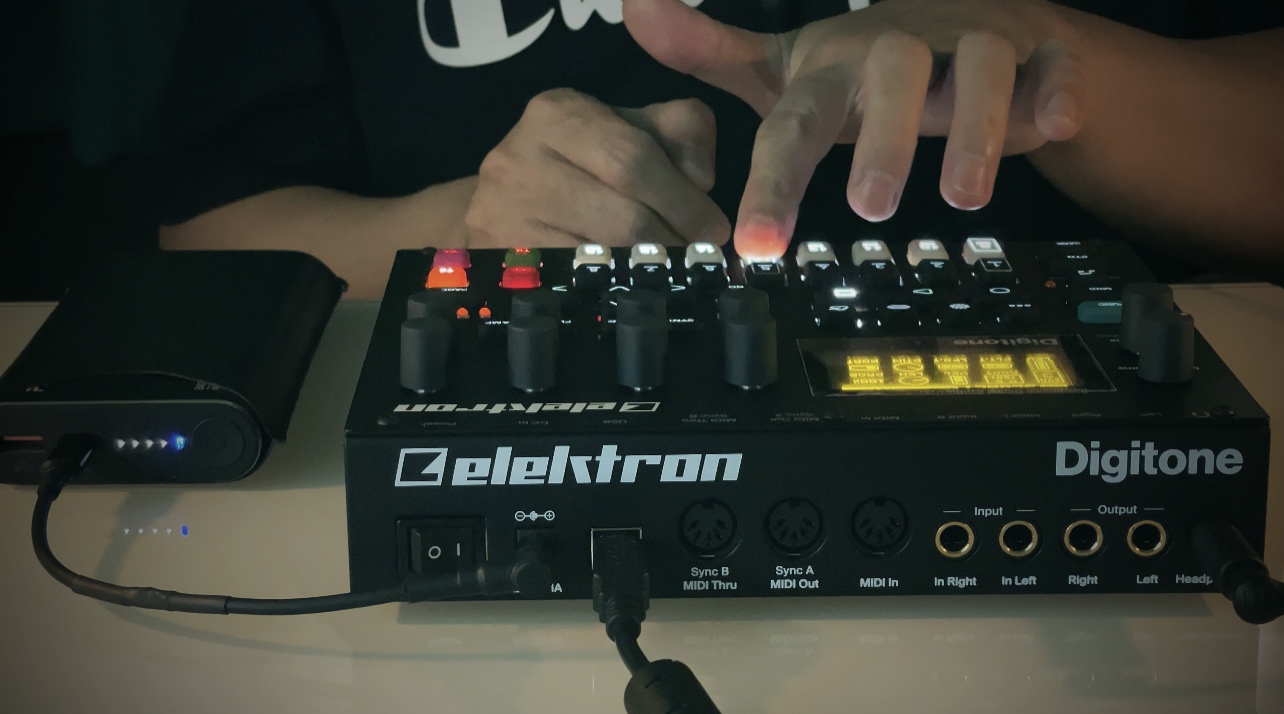
The Elektron Digitone II is the most expensive unit in this roundup, and it’s not for the faint of heart. But for beginners who want to commit to FM synthesis as a serious pursuit, this is arguably the best hardware platform available. The Digitone II takes everything Elektron learned from the original Digitone and expands it dramatically. Four synth machines, 16-voice polyphony, 128-step sequencing, and deep DAW integration make this a future-proof investment.
The FM Tone machine is the heart of the Digitone II. It uses a refined FM synthesis engine with a more accessible interface than vintage FM synths. The four operators are clearly laid out, and the modulation routing is visualized in a way that makes FM synthesis concepts tangible. I spent several weeks with this unit and felt my FM synthesis understanding deepen significantly. The learning curve is real but the educational value is unmatched.
The 128-step sequencer with parameter locks is where the Digitone II truly shines. You can automate virtually any parameter per step, creating complex evolving patterns that would require extensive external automation on other gear. The chord mode with 36 scales is a thoughtful addition for beginners who haven’t internalized music theory yet. I built several evolving ambient tracks using nothing but the Digitone II’s internal sequencer.
The Overbridge integration with DAWs is professional-grade. You can route audio and MIDI through USB, automate parameters from your DAW, and use the Digitone II as a full sound module within a computer-based production setup. For producers transitioning from software to hardware, this seamless integration makes the Digitone II a bridge rather than a wall.
The price is the obvious concern. At over $1,000, this represents a serious investment for a beginner. My honest advice: don’t buy the Digitone II as your first FM synth unless you have the budget and commitment to learn it properly. Start with a REFACE DX or Volca FM2, build your skills, and then graduate to the Digitone II when you’re ready. Many of the best producers I know followed this exact path.
Long-term value and ecosystem
One of the Digitone II’s strongest selling points is Elektron’s commitment to firmware updates. The original Digitone received significant updates over its lifespan, and the Digitone II is positioned to receive similar long-term support. Combined with the alloy steel build quality, this is a synth designed to last decades. For beginners planning a long-term hardware investment, the Digitone II offers genuine longevity.
Power supply concerns
Some users have reported power connector quality issues. This appears to affect refurbished or open-box units more than new ones. Buy from authorized retailers and keep your receipt. The issue is uncommon but worth knowing about.
Buying Guide: How to Choose the Best FM Synthesizer for Your Needs
Now that you’ve seen our top picks, let’s talk about how to choose between them. The best FM synthesizer for beginners depends on your budget, musical goals, and how much time you want to invest in learning. Here’s a practical framework to guide your decision.
Understanding FM Synthesis Basics Before You Buy
FM synthesis uses operators (sound-generating modules) that modulate each other’s frequencies. The carrier operator produces the audible sound, while modulator operators shape its harmonic content. Algorithms define how operators connect. The classic Yamaha DX7 had 6 operators and 32 algorithms, and modern FM synths vary in their operator counts and complexity.
For beginners, 4-operator synths like the REFACE DX offer the most accessible entry point. You get meaningful FM sounds without overwhelming complexity. As your skills grow, 6-operator synths provide more depth. The key insight: more operators mean more possibilities but also more learning curve.
Operator Count and What It Means for Beginners
Operator count directly correlates with sonic complexity. A 2-operator synth can only do basic FM sounds. A 4-operator synth unlocks classic DX7 territory. A 6-operator synth gives you access to the full DX7 sound library and modern FM techniques. For most beginners, 4 operators represent the sweet spot of capability versus learnability.
The Volca FM2, REFACE DX, and opsix MKII all offer different operator counts at different price points. Consider starting with a 4-operator synth if you’re new to FM, then upgrading to 6 operators when you’re comfortable with the fundamentals.
Polyphony: How Many Notes Do You Need?
Polyphony determines how many notes you can play simultaneously. For basslines and leads, 1-2 voices suffice. For chords and pads, 6+ voices make a real difference. The M-VAVE offers 12 voices, the REFACE DX provides 4-operator polyphony, and the Digitone II delivers a massive 16 voices.
Beginners often underestimate polyphony requirements. If you plan to play piano-style parts or stack sounds, prioritize higher polyphony. If you focus on monophonic basslines and leads, even limited polyphony is fine.
Preset Libraries and Learning Resources
A strong preset library accelerates learning by letting you study professional patches. The REFACE DX has Soundmondo for community sharing. The Elektron units come with Splice presets. The Volca FM2 loads DX7 SysEx files. These resources save beginners hundreds of hours of trial-and-error sound design.
When comparing FM synths, check whether preset sharing communities exist. A vibrant user community multiplies the value of any hardware purchase. The REFACE DX, Digitone, and opsix all have strong followings with active online communities.
Build Quality and Long-Term Durability
FM synths range from lightweight plastic (M-VAVE, Liven series) to premium alloy steel (Digitone II). Consider how and where you’ll use the synth. Bedroom producers can get away with plastic chassis. Gigging musicians need more durable construction. I always recommend buying from authorized dealers to ensure warranty coverage.
Connectivity: MIDI, USB, and Audio
Modern FM synths offer various connectivity options. MIDI In/Out lets you integrate with other hardware. USB MIDI enables computer connection. Bluetooth MIDI (M-VAVE) provides wireless freedom. Audio outputs determine how you connect to monitors, mixers, or headphones. Overbridge (Elektron) provides deep DAW integration.
For beginners, USB MIDI and standard audio outputs are essential. Advanced connectivity becomes important as your studio grows. Don’t pay for features you won’t use, but ensure your synth has the basics covered.
Frequently Asked Questions
What is the best FM synthesizer?
The Yamaha REFACE DX is the best FM synthesizer for beginners, offering a 4-operator engine, 32 voice memory, and built-in speakers in a portable package. For professional use, the Elektron Digitone II delivers 16-voice polyphony and deep sequencing capabilities.
What is the best synthesizer for a beginner?
The best synthesizer for a beginner depends on budget and goals. For under $100, the M-VAVE Wireless FM Synth provides authentic FM sounds with Bluetooth MIDI. For under $200, the Korg Volca FM2 delivers 6-operator FM with sequencer. For serious commitment, the Yamaha REFACE DX offers the best balance of capability and learnability.
What are the best budget FM synthesizers?
The best budget FM synthesizers include the Korg Volca FM2 at around $150 with 6-operator FM, the M-VAVE Wireless FM Synth at under $80 with Bluetooth MIDI, and the Sonicware Liven XFM at $200 with four FM engines. All three provide authentic FM sounds at entry-level prices.
Which synth did Daft Punk use?
Daft Punk famously used the Yamaha DX7 throughout their career, particularly on albums like Homework and Discovery. The DX7’s iconic electric piano and bell sounds appear in tracks like ‘Around the World’ and ‘Digital Love.’ Modern recreations like the Yamaha REFACE DX capture that classic DX7 character.
Final Verdict: Which FM Synth Should Beginners Buy?
After three months of testing eight beginner-friendly FM synthesizers, our top recommendation for most beginners is the Yamaha REFACE DX. It delivers authentic DX7-style FM sounds, has an accessible interface, runs on batteries, and includes built-in speakers. For under $500, you get a portable FM synth that sounds professional and teaches real FM synthesis concepts. It’s the best FM synthesizer for beginners who want quality without compromise.
If your budget is tighter, the Korg Volca FM2 at around $150 delivers a genuine 6-operator FM engine with DX7 patch compatibility. It’s our top value pick and the smartest choice for beginners who want to learn FM synthesis without major financial commitment. For ultra-budget buyers, the M-VAVE Wireless FM Synth at under $80 provides surprising capability with Bluetooth MIDI convenience.
For producers ready to commit seriously to FM synthesis, the Elektron Digitone II represents the pinnacle of modern FM hardware. Its 16-voice polyphony, 128-step sequencer, and Overbridge integration make it a long-term investment that will grow with your skills. Just be prepared for the learning curve and the price tag.
Whichever FM synth you choose, remember that FM synthesis rewards patience and experimentation. Don’t get discouraged if your first patches sound harsh or thin; even professional sound designers spend years refining their FM skills. The best FM synthesizer for beginners is ultimately the one that gets you playing and exploring, so start with whichever fits your budget and musical goals. Your journey into FM synthesis starts with that first note. Looking for other audio equipment? Our FM transmitters guide covers related audio gear.